
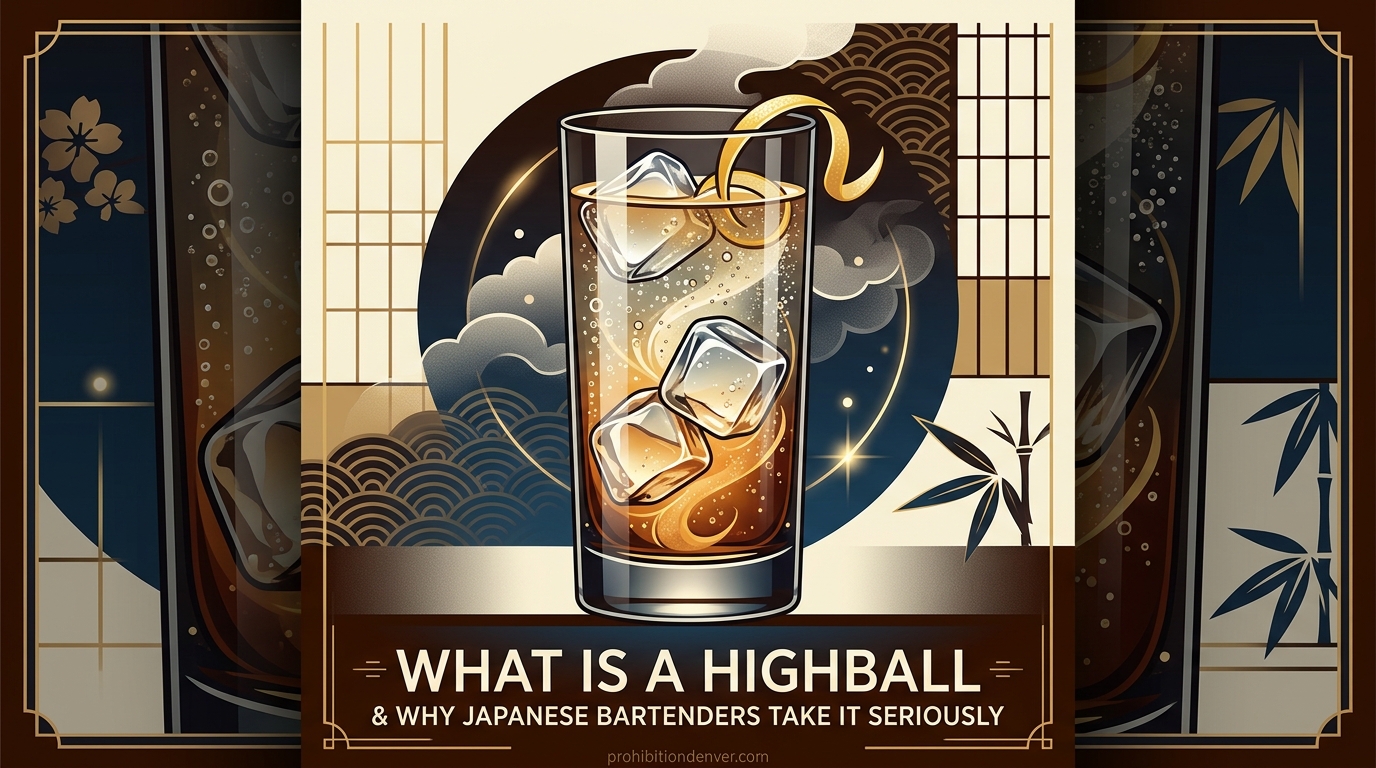
A highball is deceptively simple. Two ingredients. One tall glass. Ice. Yet in Japan, this humble combination of whiskey and soda water receives treatment most Western bartenders reserve for elaborate craft cocktails. Walk into any standing bar in Tokyo, and you’ll witness what looks like a choreographed performance – precise movements, deliberate timing, and an almost theatrical attention to detail.
Our team spent three months studying Japanese bartending techniques, and we discovered something that changed how we think about this drink. The Japanese highball isn’t just a cocktail. It’s a philosophy.
In this guide, I’ll explain what makes a highball a highball, why Japanese bartenders treat it with such reverence, and how you can appreciate (or even recreate) this cultural ritual at home.
Table of Contents
What Is a Highball?
A highball is a cocktail consisting of a spirit mixed with a carbonated mixer, served over ice in a tall glass. The classic version combines whiskey with soda water, though the category technically includes gin and tonic, rum and cola, and any spirit-plus-soda combination.
The name itself carries history. According to cocktail lore, the term originated in Irish golf club bars during the 1890s. When a bartender would spot a train approaching in the distance (a “ball” of steam on the horizon), they’d call “high ball” to signal patrons to finish their drinks before the train arrived. The American ear heard “highball,” and the name stuck through Prohibition to become a staple category.
Despite its Irish-English origins, the highball found its true home in Japan. After World War II, the drink emerged as a national favorite – affordable, refreshing, and with an alcohol content comparable to beer. Today, you can buy highballs from vending machines at most Japanese train stations. The drink has become that woven into daily life.
The Japanese Highball Culture
Step off any train in Tokyo, and you’ll understand immediately how deeply the highball runs through Japanese drinking culture. Standing bars (called “tachinomi”) serve them alongside yakitori to office workers unwinding after long days. Izakayas offer them as the default accompaniment to shared plates. Convenience stores stock pre-made versions in cans.
What makes this ubiquity remarkable is the quality standard that accompanies it. Even in casual settings, the Japanese highball follows strict conventions. The drink must be served very cold. It must be stirred precisely. The carbonation must be preserved, not destroyed. And the presentation must respect the guest.
This cultural integration explains part of the reverence. The highball isn’t a special occasion drink in Japan – it’s an everyday ritual. When something becomes daily practice, the culture naturally develops ways to elevate it. Think of Japanese tea ceremony, where the preparation of a simple beverage becomes an art form. The highball follows similar principles.
The low alcohol content (roughly half the strength of neat whiskey) also contributed to its popularity. Japanese drinkers could enjoy multiple rounds with food without the rapid intoxication that comes with straight spirits. The highball became the social lubricant of choice – refreshing, sessionable, and food-friendly.
Our research turned up something interesting from Reddit’s r/cocktails community. Multiple users who visited Japan reported discovering highballs during their trips and falling in love with them – not because of expensive whiskey, but because of the care in preparation. One user noted that “the ritual and presentation are as important as taste.” This captures the essence of Japanese highball culture.
Why Japanese Bartenders Take Highballs Seriously
The seriousness comes down to one word: omotenashi. This Japanese concept of hospitality goes beyond simple customer service. It means anticipating needs, exceeding expectations, and treating every interaction as an opportunity to demonstrate respect and care.
In bartending, omotenashi manifests as visible effort. When a Japanese bartender prepares a highball, they’re not just making a drink – they’re creating an experience. The guest watches the entire process. Every movement is intentional. Nothing is hidden. The preparation becomes a performance that honors the guest.
There’s also a connection to traditional Japanese aesthetics. The tea ceremony (chanoyu) taught generations of Japanese that the simplest actions, performed with complete attention, become profound. Making a highball follows the same philosophy. The drink has only two ingredients, which means technique becomes everything. There’s nowhere to hide shortcuts.
Precision serves another purpose: consistency. Japanese bartenders understand that guests return because they trust the experience. Whether you order a highball at a standing bar in Osaka or a luxury hotel in Tokyo, you should receive the same quality. The ritual ensures this consistency across thousands of establishments.
Forum discussions on r/JapaneseWhisky revealed another layer. Experienced home bartenders reported struggling to recreate the authentic Japanese highball taste despite using the same ingredients. The difference, they concluded, was technique – particularly the stirring method and ice handling. Japanese bartenders take this seriously because technique IS the recipe.
Finally, there’s cultural pride. Japan has elevated numerous crafts to art forms – sushi, sake brewing, knife making. The highball represents bartending’s place in this tradition. To treat it casually would be to disrespect the craft itself.
The Japanese Highball Ritual Explained
Understanding the ritual requires breaking down each step. Here’s how a Japanese bartender approaches this simple drink:
Step 1: Glass Preparation
The bartender starts with a chilled highball glass – typically a tall, slender collins glass. They may store glasses in a freezer or chill them with ice water before service. Temperature matters from the first moment.
Step 2: Ice Selection
Ice isn’t an afterthought. Many Japanese bars use hand-carved clear ice blocks that melt slowly and don’t introduce off-flavors. The bartender selects pieces that fit the glass perfectly, often with a specific size and shape in mind. The ice should fill the glass without crowding.
Step 3: The Whiskey Pour
The bartender pours whiskey (usually 1.5 to 2 ounces) directly over the ice without stirring. This prevents immediate dilution and preserves the whiskey’s character. The pour itself is slow and controlled.
Step 4: Soda Addition
High-quality soda water comes next, poured down the side of the glass or over the back of a bar spoon to preserve carbonation. The ratio matters – typically 3 to 4 parts soda to 1 part whiskey.
Step 5: The Stir
Here’s where precision enters. The bartender inserts a long bar spoon and stirs exactly – often 13.5 times (or 13 and a half turns, to be precise). This specific count developed through trial and error to achieve proper dilution without over-chilling or flattening the carbonation.
Step 6: The Swizzle
After stirring, the bartender lifts the spoon and swizzles it between their palms, spinning it to remove excess liquid while aerating the drink. This final touch introduces oxygen and ensures the carbonation stays lively.
Step 7: Service
The highball arrives with the spoon still in the glass, positioned precisely. Some bartenders add a lemon peel expressed over the top, though purists often skip this. The drink should be consumed immediately while cold and effervescent.
Each step serves a purpose. The cold glass maintains temperature. The clear ice dilutes slowly. The stirring count balances dilution and carbonation. The swizzle preserves the bubbles. Nothing is arbitrary.
FAQ
Why do Japanese like highballs?
Japanese drinkers appreciate highballs for their refreshing quality, low alcohol content comparable to beer, and food-friendly nature. The drink became popular after World War II as an affordable alternative to beer and has remained a staple of social drinking culture. Japanese bartenders elevate the simple preparation through ritual and precision, making it more than just a mixed drink.
What is a highball in Japan?
In Japan, a highball refers specifically to whiskey mixed with soda water, served over ice in a tall glass. While technically any spirit-plus-soda qualifies as a highball, the Japanese version follows strict preparation standards including precise stirring counts, clear ice, and careful carbonation preservation. It’s available everywhere from high-end bars to vending machines.
What is the reason for calling highball a highball?
The name originated in Irish golf club bars during the 1890s. Bartenders would spot trains approaching as a ball of steam on the horizon and call high ball to signal patrons to finish their drinks. American drinkers heard highball, and the name stuck through Prohibition to become the standard term for spirit-and-soda cocktails.
What is the most annoying drink for a bartender to make?
Opinions vary, but many bartenders find elaborate blended drinks or drinks requiring muddling during busy periods annoying due to time constraints. Interestingly, while the Japanese highball requires precision, bartenders trained in that tradition don’t find it annoying – they view the ritual as an opportunity to demonstrate craft and hospitality (omotenashi).
Conclusion
The highball Japanese bartenders make represents something larger than a two-ingredient drink. It embodies cultural values of precision, hospitality, and respect for craft. When you watch a Japanese bartender prepare this simple cocktail with theatrical care, you’re witnessing omotenashi in action – the belief that even everyday moments deserve complete attention.
I’ve tried making Japanese-style highballs at home using the techniques described above. The difference is real. The precise stirring count, the careful soda pouring, the attention to ice quality – these details transform a basic mixed drink into something genuinely special.
If you visit Japan, order a highball at a standing bar. Watch the preparation. Appreciate the ritual. And when you return home, try recreating that care yourself. The highball may be simple, but as Japanese bartenders have proven, simplicity demands mastery.