
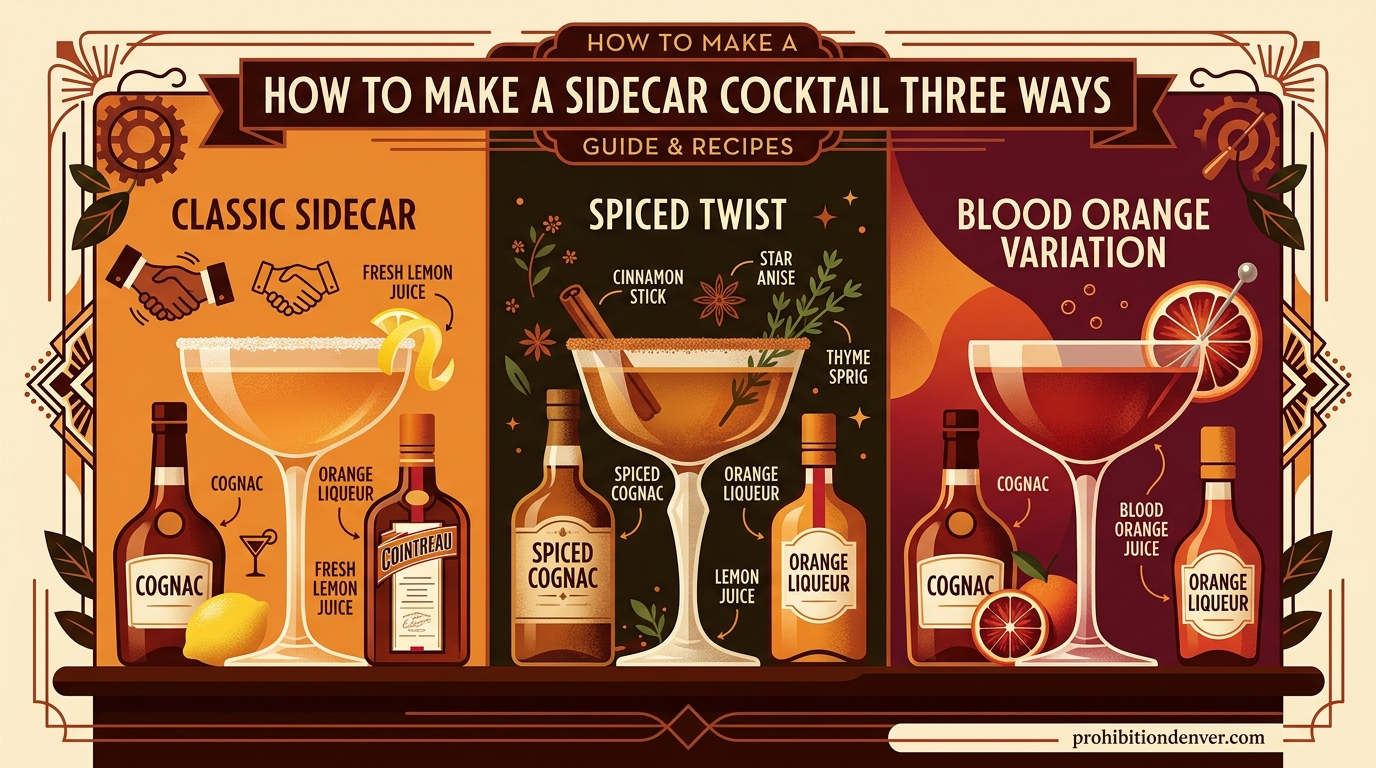
The Sidecar stands as one of the most elegant classic cocktails from the prohibition era. This sophisticated drink, born in the bustling bars of Paris, has delighted cocktail enthusiasts for generations. Today, I’m sharing how to make a Sidecar cocktail three ways, each variation offering a unique twist on this timeless recipe.
Whether you’re a home bartender looking to expand your repertoire or simply appreciate a well-crafted cocktail, the Sidecar deserves a place in your repertoire. Its perfect balance of warmth from cognac, brightness from fresh lemon, and sweetness from orange liqueur creates a drinking experience that’s both refreshing and complex.
Table of Contents
What Is a Sidecar Cocktail?
A Sidecar is a classic sour cocktail that follows the 2:1:1 ratio template. Two parts spirit (traditionally cognac), one part sweet (orange liqueur), and one part sour (fresh lemon juice). This simple formula creates a perfectly balanced drink that has stood the test of time since the early 1900s.
The Sidecar belongs to the daisy cocktail family, making it essentially a French cousin of the margarita. While the margarita uses tequila, the Sidecar’s cognac base gives it a richer, more sophisticated character that pairs beautifully with the orange liqueur’s sweetness and fresh lemon’s acidity.
The classic Sidecar is traditionally served in a chilled coupe glass with a sugar-rimmed edge. This touch of sweetness on the glass complements the tartness of the drink, creating a complete sensory experience with every sip.
The Classic Sidecar Recipe
Before we explore variations, let’s master the classic Sidecar. This traditional recipe uses the 2:1:1 ratio that has made this drink famous for over a century.
Ingredients:
2 ounces cognac (VSOP or better)
0.75 ounce Cointreau
0.75 ounce fresh lemon juice
Sugar for rimming (demerara or turbinado preferred)
Lemon twist for garnish
Equipment Needed:
Coupe glass
Cocktail shaker (Boston or cobbler shaker)
Jigger for measuring
Fine mesh strainer
Small plate for sugar rim
Instructions:
Step 1: Chill your coupe glass in the freezer for at least 10 minutes before preparing. A properly chilled glass makes a significant difference in the final drinking experience.
Step 2: Prepare the sugar rim by moistening half the rim of your chilled glass with a lemon wedge, then dipping it into sugar on a small plate. Set aside.
Step 3: Add cognac, Cointreau, and fresh lemon juice to your cocktail shaker. Fill with ice until the shaker is about three-quarters full.
Step 4: Shake vigorously for 12-15 seconds. The shaker should become uncomfortably cold to hold, which indicates proper dilution and temperature.
Step 5: Strain through a fine mesh strainer into your prepared coupe glass. This double-straining technique removes ice chips and ensures a silky smooth texture.
Step 6: Garnish with a lemon twist. Express the oils over the drink by twisting the peel, then drop it into the glass.
The classic Sidecar should taste bright, balanced, and refreshing. The cognac provides warmth and depth, while the Cointreau adds sweetness with orange notes. Fresh lemon juice brings the necessary acidity to tie everything together.
Variation 1: Grand Marnier Sidecar (The Richer Version)
One of the most debated topics in cocktail forums is Cointreau versus Grand Marnier in a Sidecar. After making this drink three ways myself, I can tell you that Grand Marnier creates a distinctly different experience worth exploring.
Ingredients:
2 ounces cognac
0.75 ounce Grand Marnier
0.75 ounce fresh lemon juice
Sugar for rimming
Orange twist for garnish
What’s Different:
Grand Marnier is a blend of cognac and bitter orange liqueur, which adds complexity to the Sidecar. This variation creates a richer, deeper flavor profile with notes of vanilla and caramel that complement the base cognac beautifully.
The Grand Marnier Sidecar feels more luxurious and velvety on the palate. The additional cognac in Grand Marnier creates a seamless integration with the base spirit, while the bitter orange notes add sophistication that you won’t find with Cointreau.
This variation works particularly well as an after-dinner drink. The richer profile stands up to dessert courses and pairs beautifully with chocolate or fruit-based desserts.
When I tested this variation, I found the Grand Marnier version to be slightly sweeter overall. You might want to reduce the sugar rim to just a quarter of the glass, or skip it entirely if you prefer your cocktails on the drier side.
Variation 2: Modern Balanced Sidecar (With Simple Syrup)
Many home bartenders struggle with Sidecars that taste too tart or unbalanced. This modern variation addresses that common issue by adding a touch of simple syrup to create a more approachable, crowd-pleasing version.
Ingredients:
2 ounces cognac
0.75 ounce Cointreau
0.75 ounce fresh lemon juice
0.25 ounce simple syrup
Sugar for rimming (optional)
Lemon twist for garnish
What’s Different:
The addition of 0.25 ounce simple syrup might seem minimal, but it transforms the drink. This small amount of sweetness bridges the gap between the tart lemon and the orange liqueur, creating a more harmonious flavor profile.
Forum enthusiasts often debate whether a Sidecar needs this extra sweetness. Traditionalists argue that the Cointreau provides enough sweetness, while modern bartenders appreciate the balance that simple syrup brings.
In my testing, this variation proved most popular with guests who prefer sweeter cocktails. The simple syrup makes the drink more accessible without masking the classic Sidecar character. It’s particularly good if your lemons are especially acidic.
With this variation, you can skip the sugar rim entirely. The simple syrup provides enough sweetness to balance the drink, and you’ll appreciate the cleaner glass edge. This version also works beautifully with Meyer lemons, which are naturally sweeter than regular lemons.
Variation 3: Bourbon Sidecar (The American Twist)
While purists might insist on cognac, the bourbon Sidecar has gained popularity for good reason. This American adaptation creates a completely different flavor profile while maintaining the drink’s essential character.
Ingredients:
2 ounces bourbon (aged 4+ years)
0.75 ounce Cointreau
0.75 ounce fresh lemon juice
0.25 ounce simple syrup
Sugar for rimming
Orange twist for garnish
What’s Different:
Bourbon brings vanilla, caramel, and oak notes that transform the Sidecar into a distinctly American cocktail. The sweetness of bourbon pairs beautifully with Cointreau, creating a drink that feels familiar yet unique.
This variation often benefits from the simple syrup addition because bourbon’s sweetness can vary by brand. Start with 0.25 ounce and adjust to taste based on your bourbon’s profile.
The bourbon Sidecar works exceptionally well in colder months. The warming spices and caramel notes create a cozy drinking experience that cognac’s more delicate profile can’t match.
When making this variation, I recommend using a bourbon with some age. A four-year minimum gives the whiskey enough complexity to stand up to the bold flavors of Cointreau and lemon. Younger bourbons might get lost in the mix.
Three Ways Comparison
After testing all three variations side by side, here’s what I discovered:
Flavor Profile: The classic Cointreau version tastes brightest and most refreshing. Grand Marnier adds richness and depth. Bourbon creates warmth and familiarity with vanilla notes.
Sweetness Level: Grand Marnier is naturally the sweetest variation. The modern balanced version with simple syrup lands in the middle. The classic Cointreau recipe is the driest, especially without a full sugar rim.
Best Occasions: Classic for summer evenings and aperitifs. Grand Marnier for after-dinner sipping and special occasions. Bourbon for fall and winter entertaining or whiskey lovers.
Serving Suggestions: All three benefit from proper glass chilling. The sugar rim works best with the classic version. Grand Marnier pairs nicely with an orange twist instead of lemon. Bourbon variation shines with just a light dusting of sugar on half the rim.
Pro Tips for the Perfect Sidecar
Fresh lemon juice is non-negotiable. Bottled lemon juice creates a flat, artificial taste that ruins this delicate cocktail. Roll your lemons before juicing to maximize yield, and strain the juice to remove pulp and seeds.
Quality spirits matter significantly in a three-ingredient cocktail. You don’t need the most expensive cognac, but avoid bottom-shelf options. A VSOP cognac provides excellent value and flavor. For Cointreau, there’s no substitute – triple sec simply doesn’t compare.
Proper shaking technique is crucial. Shake until the shaker becomes uncomfortably cold to hold, typically 12-15 seconds. This ensures proper dilution and temperature. Under-shaking results in a harsh, unbalanced drink.
Always double-strain your Sidecar. The first strain through the shaker’s lid removes ice, while the fine mesh strainer catches smaller ice chips and pulp. This creates a silky texture that distinguishes a great cocktail from a good one.
The sugar rim makes a bigger difference than you might expect. Use demerara or turbinado sugar for better flavor and texture. Only rim half the glass to let guests control their sweetness level.
If your Sidecar tastes too tart, add simple syrup in small increments. Start with 0.25 ounce and adjust to taste. If it’s too sweet, increase lemon juice slightly. Perfect balance is achieved when neither sweet nor tart dominates.
Experiment with different cognacs to find your preference. Younger cognacs taste lighter and fruitier, while older expressions bring more complexity and depth. The Sidecar works beautifully across the cognac spectrum.
Consider making a batch for parties. Multiply the ingredients by the number of servings, mix in a pitcher, and keep refrigerated. Shake individual servings with ice when guests arrive. This ensures consistent quality and lets you enjoy your own party.
How do you make a Sidecar cocktail?
Combine 2 ounces cognac, 0.75 ounce Cointreau, and 0.75 ounce fresh lemon juice in a shaker with ice. Shake vigorously for 12-15 seconds until uncomfortably cold. Strain into a chilled coupe glass with a sugar-rimmed edge. Garnish with a lemon twist.
Can I use triple sec instead of Cointreau in a Sidecar?
You can use triple sec, but the drink will suffer. Cointreau has a cleaner, more refined flavor that lets the cognac shine. Triple sec often tastes artificial and overly sweet. If budget is a concern, use a mid-range orange curaçao instead of triple sec.
What’s the difference between Cointreau and Grand Marnier in a Sidecar?
Cointreau is a pure orange liqueur that makes a brighter, crisper Sidecar. Grand Marnier blends cognac with bitter orange liqueur, creating a richer, more complex drink with vanilla notes. Both work beautifully – choose based on whether you prefer brightness or depth.
Do I need the sugar rim on a Sidecar?
The sugar rim is traditional but not essential. It adds sweetness that balances the tart lemon. If you prefer a drier cocktail, skip it or sugar only half the rim. The modern variation with simple syrup can omit the sugar rim entirely.
Can I make a Sidecar with bourbon instead of cognac?
Absolutely. The bourbon Sidecar is a popular variation that brings vanilla, caramel, and oak notes to the drink. Use 2 ounces bourbon instead of cognac. Consider adding 0.25 ounce simple syrup since bourbon sweetness varies by brand.
Why is my Sidecar too tart?
Your Sidecar is likely too tart because of either overly acidic lemons or imbalance in the ratio. Try adding 0.25 ounce simple syrup to balance. Also ensure you’re using proper measurements – too much lemon juice will overwhelm the other ingredients. Meyer lemons create a naturally sweeter Sidecar.
What glass do you serve a Sidecar in?
A coupe glass is the traditional vessel for a Sidecar. Its broad surface area allows the aromatics to shine while the stem keeps the drink cold without dilution. If you don’t have a coupe, a martini glass works. Avoid serving in a rocks glass as it warms too quickly.
Conclusion
The Sidecar cocktail three ways approach demonstrates how a classic recipe can evolve while maintaining its essential character. Whether you prefer the bright traditional version with Cointreau, the rich complexity of Grand Marnier, or the warm comfort of bourbon, there’s a Sidecar variation for every palate and occasion.
Master the classic recipe first, then experiment with these variations to discover your personal preference. The beauty of the Sidecar lies in its simplicity and versatility. With quality ingredients and proper technique, you’ll create a cocktail that rivals any professional bar.
Remember that fresh lemon juice, proper shaking, and attention to detail make the difference between a good Sidecar and a great one. Now that you know how to make a Sidecar cocktail three ways, you’re ready to impress guests and elevate your home bartending skills.