

The first thing anyone notices about an udu drum is how quiet it is. You slap the top opening with your palm, the air inside the chamber pushes out through the side hole, and you get that deep liquid bass note that no djembe or cajon can give you. It is also, acoustically, one of the quieter instruments in hand percussion. If you have ever tried to play one in a band rehearsal room without amplification, you already know that this changes which drum you should buy.
That is the lens we used for this list of the best udu drums for musicians. We looked at ten of them and judged each one on the things a working player actually runs into: how loud it is with a microphone in it, whether the body survives being loaded into a van, whether the pitch sits in a key you can play against, and how many distinct voices you can get out of the shell. We are not ranking wall thickness or kiln temperature here. We are ranking which drum will hold up in practice in 2026.
If you are building out a wider hand percussion rig, our picks for other instruments sit alongside this one: travel didgeridoos for musicians, harmonica sets for musicians, and professional ocarinas for musicians all reward the same thinking about acoustic volume and durability.
Table of Contents
What Is an Udu Drum?
An udu drum is a hand percussion vessel drum: a hollow clay, ceramic or fibreglass pot with a large opening on top and a smaller side hole. You strike the top opening with the flat of your palm, and the air compressed inside the sealed chamber escapes through the side hole as a deep, breathy, resonant bass tone. In Igbo the word udu means vessel or pot.
Three things about that design explain every udu you will ever play:
It is an air instrument, not a skin instrument. There is no drumhead on a standard udu. The shell itself vibrates and the trapped air column does the rest.
The side hole is the pitch control. Covering and uncovering it with your lower hand bends the note up and down, which produces the wavering, bubbling quality everyone recognizes as the udu sound.
Pitch is set by size. A larger chamber pushes more air and sits lower. A 12 inch drum sits comfortably above a 16 inch one.
The instrument comes from the Igbo people of southeastern Nigeria, where it was traditionally used in women’s ensembles alongside pot drums, rattles and the ekwe slit drum. Its modern reach is a twentieth century story: Frank Giorgini brought the form to Western percussion, and the LP models below are descendants of that work.
Top 3 Picks for Musicians

LP1400-C1 Claytone #1
- 12 inch teardrop clay body
- Wet liquid bass tone
- Built-in mic cable hole
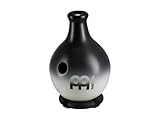
Meinl Ibo ID9BK/WH
- Fiberglass body
- Liquid-filled bottom chamber
- Mic port and XLR
- Two-year warranty

The Claytone #1 is the default answer because it does the most things well without any one of them being weak. The Meinl Ibo is the one to buy if the drum has to survive being moved. The Mbwata is the one to buy if a single drum has to cover a whole rhythmic palette.
All 10 Udu Drums at a Glance
| Product | Specifications | Action |
|---|---|---|
| LP1400-C1 Claytone #1 |
|
Check Latest Price |
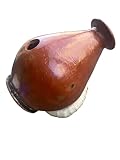 Terre Udu Clay Drum with Goat Skin Terre Udu Clay Drum with Goat Skin |
|
Check Latest Price |
| Meinl Ibo ID9BK/WH |
|
Check Latest Price |
| LP1400-MB Mbwata |
|
Check Latest Price |
 LP1400-C2 Claytone #2 LP1400-C2 Claytone #2 |
|
Check Latest Price |
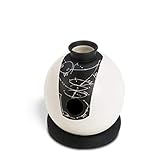 Schlagwerk U10H Twin Udu Schlagwerk U10H Twin Udu |
|
Check Latest Price |
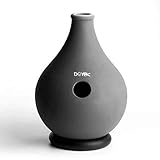 DOYEK UDL2 Large Kuzeh DOYEK UDL2 Large Kuzeh |
|
Check Latest Price |
 DOYEK UDS1 Small Kuzeh DOYEK UDS1 Small Kuzeh |
|
Check Latest Price |
 SODEF Medium Udu Drum SODEF Medium Udu Drum |
|
Check Latest Price |
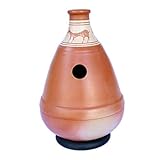 Emin Percussion EP-020B Emin Percussion EP-020B |
|
Check Latest Price |
1. Latin Percussion LP1400-C1 Claytone #1 – The One Most Players Should Own
Latin Percussion LP1400-C1 LP Udu Drum Claytone #1
Clay body
12 inch H by 8 inch W
1900 g
Wet liquidy tone
Mic cable hole
Pros
- Wet liquidy bass tone reviewers consistently praise
- Light at 1900 g for a clay vessel
- Teardrop body sits well on a lap or between the knees
- Built-in mic cable hole for stage amplification
- Three sibling sizes with complementary tones
Cons
- Thick clay walls on some units mean it needs a mic to project
- Sits higher than the larger Claytones so it is not a solo bass voice
- No case included
This is the drum I reach for when I want the udu sound and I do not want to think about it. The teardrop body is 12 inches high and 8 inches wide, which is small enough to sit across your thighs while seated and still large enough to get a real bass note out of the chamber. At 1900 g it carries in one hand without feeling like a prop.
The tone is what LP calls wet and liquidy, and that is an accurate description. It is a bass-forward voice with a quick, clean decay rather than a long ringing sustain. Players who like the tabla-adjacent character of the udu will recognise it straight away. LP describes the upper chamber of its dual-chamber Mbwata as similar to an Indian tabla, and that reference point holds across the Claytone bodies.
There is a microphone cable hole with a plug fitted in the shell, which matters more than it sounds like it should. It is a small port, so you are not dropping a mic into the chamber, but it is enough to get a clean capture without a stand hovering over the drum. On a quiet stage that is the difference between being heard and not.
Where the Claytone #1 sits in a kit
Because the Claytone series is sold in four sizes with complementary tones, the #1 is really a kit part. It sits above the larger bodies as the high voice of the family, and it fills the space between the deep bass of a #3 and a floor tom. Players who build multi-udu setups almost always start with this size for that reason.
Buy it alone and you have a good sounding drum with a narrower role. Buy it beside a #3 and you have a two-drum setup that covers a full rhythmic range. The reviewers who rated it most highly tend to be the ones already running a full Claytone group.
When to skip it
Skip it if your first outing is an unamplified band rehearsal. This is a quiet drum with thick walls, and even the players who love the tone will tell you it wants a microphone. It is also not the drum to pick if you need a sustained low note that holds under a bass guitar.
Skip it if you plan to move it between venues regularly. Clay is clay, and this one comes with no case. A padded gig bag is the first thing I would buy to go with it.
2. Terre Udu Clay Drum with Goat Skin – Warmest Tone and a Real Head
Terre Udu Clay Drum with Goat Skin (Udu)
Clay body with goat skin
17 inch length
14 inch diameter
4 pounds
Pros
- Goat skin head gives a second playable surface
- Thinner clay walls make it very responsive
- Warm organic tone suits fingerstyle playing
- Highest average rating among the well-reviewed models at 4.7
- Handmade with natural materials
- Thin clay walls produce real volume from a light touch
Cons
- May not match the product photo
- Delicate and needs a padded carry bag
- Takes up more room in a bag than a 12 inch model
This is the only drum in the group with a genuine membrane on it. A bottle-form clay body is capped with an 8 inch goat skin, and that changes the whole instrument. You get a playable head to tap and slap alongside the palm stroke, which roughly doubles the vocabulary of a standard vessel drum.
The body is 17 inches long and 14 inches across, weighing 4 pounds. It is not a small instrument. What earns it a place on this list is responsiveness. The clay walls are thinner than the LP models, and players report that a light touch produces real volume, which is unusual for a clay udu and removes the usual complaint about needing a microphone for everything.
Rating-wise it sits at the top of the well-reviewed models at 4.7, though the review base is smaller at 17. What those reviews agree on is the variety: thin strikes on the goat skin, full palm slaps on the body, and hole modulation across the range.
Why the goat skin changes the sound
A head on a vessel drum does two jobs. It gives you a second surface with its own pitch and attack, and it changes how the body behaves because the top is no longer fully open. The result is a rounder, more complex instrument that suits fingerstyle playing far better than a pure palm instrument.
If your interest in the udu is partly the texture of the hand against a smooth surface, this is a different experience. It is closer to a small doumbek in feel. The sound is warm and resonant, which is why it earns the warm tone place on this list.
When to skip it
Skip it if you want a matching set, because the only listed companion is the Udu Oben variant rather than a second size in the same body. Skip it if you travel, because a handmade clay drum with a skin head is the most vulnerable object in this list to a knock.
Several reviewers mentioned that the drum they received did not look exactly like the product photo. That is normal for handmade work, but it does mean you should not buy it expecting a factory-standard finish.
3. Meinl Ibo ID9BK/WH – The One That Survives the Van
large, premium fiberglass, black/white
Fiberglass body
11.61 x 12.01 x 14.96 inch
2.96 kg
Liquid-filled chamber
XLR mic port
Pros
- Unique liquid-filled chamber for pitch bends and wah effects
- Microphone hole on the neck plus XLR connector
- Foam padded base keeps it stable
- Two-year manufacturer warranty
Cons
- Reports of cosmetic flaws under the clear coat
- Rough finish around the sound holes
- Liquid chamber sound takes time to learn
Meinl do not call this an udu. They call it an Ibo, and if you search for udu drums you will not find it, which is a shame because for touring players it is one of the most practical options available. It is a large fibreglass body with a liquid-filled bottom section, a microphone hole in the neck and a two-year warranty.
Durability is the headline. On DrumForum, players have described the Meinl version as effectively indestructible compared to the clay options, and that is the most commonly volunteered unprompted positive across every player forum in this category. For someone who loads gear into a car park in the rain, that is worth more than a warmer tone.
The liquid-filled bottom is the interesting part. Moving the liquid inside lets you change the timbre on the fly, producing pitch bends and wah-wah effects that no clay udu can make. It is a genuinely different instrument rather than a compromise, and once you find how much liquid to move you get a second layer of colour.

Warranty matters here too. A two-year manufacturer warranty is the community benchmark for this category, and Meinl is the maker that set it. A one-year warranty on a clay drum is thin by comparison when you consider how the instruments actually fail.
What the liquid chamber actually does
The liquid sits in the lower section and acts as a moving mass inside the chamber. Sliding it changes how much air space the resonating column has, which shifts both pitch and timbre while your hand is moving. It is a between-the-notes effect rather than a melodic one, but on a looped or ambient track it is a very effective colour.
Budget a few sessions with it before you judge the sound. Some reviewers found the liquid chamber did not meet their expectations at first, which usually means the effect had not been dialled in yet rather than that the concept does not work.
Where it falls short
The cosmetic complaints are consistent and specific: hair trapped under the clear coat, a rough edge around the sound holes, and a sticker on the playing surface that is difficult to remove. None of these affect play, but on a drum you will look at closely on stage they are annoying.
It is heavier than the other single-chamber clay options here at 2.96 kg, so if you are carrying a full rig on public transport it is a real consideration. The foam padded base is excellent for keeping it stable on a stage, but it is a base, not a stand.
4. Latin Percussion LP1400-MB Mbwata – Two Voices in One Shell
Latin Percussion LP1400-MB Udu Drum Mbwata,Brown
Clay body
15.75 x 15.75 x 20.47 inch
12.9 pounds
Dual chamber
Pros
- Two genuinely distinct voices in one drum
- Lower chamber gives a dry round bass
- Comes with a rattan ring stand
- Excellent recorded and quiet-room volume
Cons
- Paint chips easily on the textured finish
- Heavy at 12.9 pounds and fragile to travel with
- Mic access holes are only about 1 cm
The Mbwata packs the most into a single shell. It is a dual-chamber udu: a lower rounded chamber that produces mellow, round, dry bass tones, and a smaller flat upper chamber that gives bright, sharp, wet tones. LP describes the upper chamber as similar to an Indian tabla or a Middle Eastern dumbek, and that comparison holds up in use.
That combination means a single drum can cover the deep palm stroke and the cutting slap that normally needs a second instrument. For a solo performance where you cannot add another player, that is the main argument for this one.
It is also the quietest instrument in the group for a drum this size. Reviewers describe it as rarely exceeding talking volume, which is a genuine asset in a bedroom or a small studio and a genuine problem in a room with a drum kit in it.
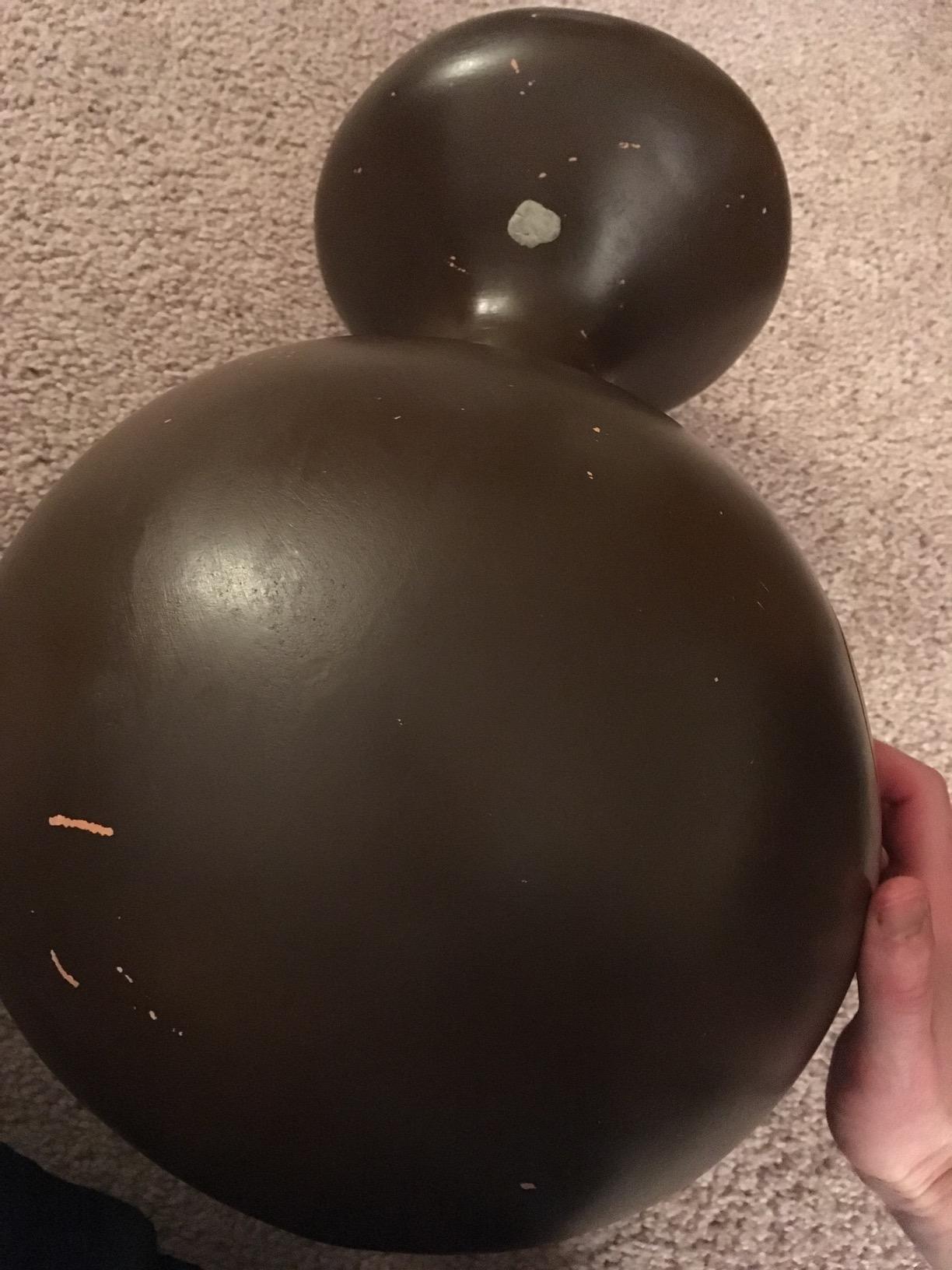
Both chambers have holes fitted with putty plugs for microphone access. The rattan ring stand is included, which is a nice touch, although players report it is not especially stable when playing energetically. At 12.9 pounds it is a heavy instrument to balance in one hand for a full set.
Working the two chambers together
The technique is simple and the payoff is immediate. Use the larger lower chamber for the downbeat pulse, where you want weight and a dry attack, and switch to the upper chamber for the offbeat and ghost notes, where you want the slap to cut through. Practising a single rhythm across both chambers is the fastest way to hear how much material one drum contains.
Because the two chambers are different sizes, the pitch relationship between them is fixed by the shell rather than by you. That is worth knowing before you build a part around it.
When to skip it
Skip it if you play live without amplification. Twelve point nine pounds of unbalanced clay is a lot to hold up for an hour, and the volume simply will not compete. If you travel regularly, the fragility and the weight are both problems.
The 1 cm mic holes are the other practical limit. They take a small-diaphragm capsule on a short clip, but they will not take a standard full-size mic without an adapter. Plan your signal chain around that.
5. Latin Percussion LP1400-C2 Claytone #2 – The Best Lap Player
Latin Percussion LP1400-C2 Udu Drum
Clay body
13.3 x 13.5 x 18.1 inch
2980 g
Mic plug removable
Pros
- Weight keeps it stable on the lap while playing
- Crisp high slap tones with resonant depth below
- Good volume match for acoustic guitar
- Attractive enough to leave on display
- Internal mic provision with a removable plug
Cons
- Thick clay makes it very quiet
- Needs force or a microphone to get real output
- Coating can chip near the mic hole
- Finish quality varies between individual drums
The Claytone #2 sits between the small #1 and the larger bodies, and it is the one we would pick for playing seated in a chair rather than standing. At 2980 g it is heavy enough to stay put on your lap without a stand, and that single property removes a lot of friction from practice.
Sonically it gives you both ends of the range in a moderate body. Players describe crisp high ceramic slap tones sitting over resonant deeper tones, which makes it a good match for an acoustic guitar, where a udu that only sits in the low register tends to disappear.
It is manufactured in Thailand and comes with a one-year warranty. The internal microphone provision uses a removable plug, which is a slightly different arrangement from the fitted cable hole on the #1 and gives you a cleaner route to the chamber when you want one.
Choosing between the #1 and the #2
The #1 is smaller at 12 inches and 1900 g. The #2 is 13.3 inches and 2980 g. That is the whole argument. If you are a standing player who moves around a kit, take the lighter one. If you sit, or you play seated in front of a class or a drum circle, take the heavier one and let the weight do the work.
Tone-wise the #2 is the more complete of the two, because it has the body to register the deep strokes as well as the slaps.
When to skip it
Skip it if you are unamplified in a live setting. Reviewers are blunt that the clay is quite thick and the drum is very quiet as a result, needing force or a microphone to get much sound. The coating chipping near the mic hole is a recurring cosmetic complaint.
Also expect some variation in the finish between individual units. It is a hand-finished multi-coloured surface, not a moulded shell.
6. Schlagwerk U10H Twin Udu – Two Vessels in One Frame
Schlagwerk U10H Twin Udu – High Tonal Range
Stainless steel construction
13 x 15 x 13 inch
6 pounds
Made in Germany
Pros
- Twin udu design gives a wide tonal range in one instrument
- Stainless steel shell is far more robust than clay
- Made in Germany with a one-year defect warranty
- Compact at 6 pounds for a two-voice instrument
Cons
- No customer reviews available on this listing
- Stainless steel gives a different tone to traditional clay
- Part of a wide range so the specific variant matters
Schlagwerk builds its instruments in Germany, and the twin udu design is their answer to the problem of wanting two pitches from one object. Instead of two separate chambers stacked on one axis like the Mbwata, this is two vessels you can play independently, which means the interval between them is more open and easier to articulate.
The material is the headline here. It is stainless steel, not clay, and the Schlagwerk family includes bass, basic, twin and skin variants so you can build a matched set. Steel changes the harmonic profile: more ring, more overtone, less of the damped warmth of a fired clay shell.
We want to be straight about the evidence here. This specific variant has no customer reviews on its listing, so we are going on the build specification and the position of the model in the Schlagwerk range, not on a body of player feedback.
Who this model suits
It is a high-tonal-range design, so it reaches further upward than the single-vessel models here. That makes it a good fit for a player who wants a cutting accent voice rather than only bass, and the stainless steel shell means you can hit it hard without the risk that comes with a clay shell.
For a matching set, the same manufacturer makes bass, basic, twin and tunable skin models, so the family cross-references cleanly.
What to weigh up first
Understand what you are buying. The Schlagwerk range includes the U30 Twin Udu set of two, the U10H High Tonal Range, the U60 Bass Udu, the U70S Skin Udu Tunable and the U62 Basic Udu. Model names in this range are close together and the listings differ, so confirm the exact model number before you commit.
Second, be honest that you are buying ahead of the reviews. There is no community consensus on this one yet, so you are taking a calculated risk on a well-made instrument.
7. DOYEK UDL2 Large Kuzeh – Sustain and a Real Case
Udu Drum (Kuzeh) Large By DOYEK UDL2
Ceramic body
1.5 kg
Flat bottom design
Protective case included
Pros
- Flat bottom design increases body sustain
- Ceramic construction for an authentic kuzeh tone
- Protective case is included in the box
- Large size for a deep chamber
Cons
- Only one customer review at the time of writing
- Lighter than its size suggests
- Less community history than the LP models
The DOYEK is a Turkish take on the kuzeh form, and it is one of only two drums in this list that come with any carrying protection. For a ceramic vessel of this size that is a genuinely significant inclusion, because ceramic without a bag is an expensive mistake waiting to happen in a car boot.
The flat bottom is the other thing worth noting. Instead of a rounded base, the shell has a flat bottom, which the manufacturer credits with more body sustain. It is the large size in this pair and weighs 1.5 kg, so you get a bigger chamber without much added mass, and the note rings longer than the clay models.
Be careful with the review data here. There is a single customer review on this listing, and it is a five. That tells you almost nothing about the instrument. We include it because the build specification is coherent and the case is a real practical advantage, not because the rating is meaningful.
Why ceramic behaves differently from clay
Ceramic is fired harder and denser than the clay used in the LP bodies. The result is a brighter fundamental, more pronounced upper overtones and a longer decay. Where a clay udu thuds into a dry bass note, a ceramic kuzeh rings.
That makes it a strong pairing with a clay drum. If you already own a Claytone and want a second voice with a different character, this is a clean contrast rather than a bigger version of the same thing.
When to skip it
Skip it if you want a well-documented instrument with a large body of player feedback. There is very little written about the DOYEK range from players, and the one review tells you nothing.
Skip it if you are on a tight budget for a first udu. A large ceramic body is a significant step up in size, and a first-time player usually does better starting with something in the 12 inch range where the technique is easier to read.
8. DOYEK UDS1 Small Kuzeh – Light and Packable
SALA MZIK ALETLERI Udu Drum (Kuzeh) Small By DOYEK UDS1 – Ceramic – Natural Ceramic – 1.5kg – 31cm x 23.5cm – With Padded Bag and Black Hoop
Ceramic body
31 cm by 23.5 cm
1.5 kg
Padded bag and hoop
Pros
- Only 1.5 kg so it moves between venues easily
- Padded bag and stabilising hoop both included
- Natural unfinished ceramic for an authentic tone
- Small body suits seated and lap playing
Cons
- No customer reviews available
- Small size limits the bass response
- Unfinished ceramic surface is more vulnerable
This is the small half of the DOYEK pair, and it solves a specific problem. At 1.5 kg it is one of the lighter ceramic options here, and the padded bag and black stabilising hoop are both in the box, which means it is genuinely carryable rather than theoretically portable.
The measurements are 31 cm by 23.5 cm, so it is a small instrument. The trade-off is the one that always comes with a small vessel: less bass. The chamber has less air volume to move, so the fundamental sits higher and the low end is thinner than a large clay or ceramic body.
As with the larger DOYEK, there is no customer review history on this listing. Judge it on the specification and on the fact that it is the most sensibly packaged small ceramic udu we found.
Practical reasons to choose a small ceramic udu
Portability is the obvious one. At 1.5 kg with a padded bag, it is the drum on this list you can genuinely move between a teaching space, a session and a small stage without thinking about it.
The hoop is more useful than it sounds. It gives you a stable grip for seated playing without needing a stand, which is exactly what a small lap instrument needs. The C2 Claytone achieves the same thing with mass; this achieves it with hardware.
Where the trade-off bites
You will not get a deep bass note out of it. If you are building a voice that sits underneath a guitar or under a band, this is the wrong end of the range. It works well as the upper voice in a two-drum pairing, or as a teaching instrument for a room where volume matters less than portability.
The unfinished ceramic surface is also more vulnerable than a glazed one. That is a fair trade for tone, but it means the padded bag gets used every time, not just on flights.
9. SODEF Medium Udu Drum – A Spec Sheet to Think About
Udu Drum Medium Size by Yudm1, Gray, Authentic Percussion Instrument for World Music – Gray
Mixed material body
Cherry, plastic, rosewood
Medium size
Gray finish
Pros
- Medium size sits in a usable range for a first instrument
- Light build is easy to hold while learning
- Distinctive gray finish
Cons
- No warranty provided
- Mixed materials are unusual for a traditional udu
- No customer reviews and limited published specifications
- Brand is not known in the percussion community
We are including this one because it is in the category, not because we would push it. The listed materials are cherry, plastic and rosewood, which is not a material combination you would normally expect from a vessel drum, and the drum has no warranty and no customer reviews behind it.
The medium size is a sensible starting point in principle. Around that range a first-time player gets enough chamber to produce a real bass note while the shell is still small enough to control with one hand. That reasoning is sound, and the specification list also gives a gray finish and markets it for world and traditional music.
The problem is what is missing. There is no published weight, no chamber detail, no mic provision, no warranty and no player feedback. You are buying on the word medium and the finish.
What we would want to know before buying
Ask three questions. Is the body a closed vessel or an open shell? Is there a side hole, and how large is it? Is there a microphone port? Those three details determine whether the drum is playable and whether it can be amplified, and none of them are answered in the listing.
If the answer to the first question is anything other than a closed vessel with a side hole, it is not functioning as a udu and you should look elsewhere.
Why it is still on the list
Category coverage matters. Readers searching for a medium udu drum will land on this listing alongside better-documented options, and knowing why we would not lead with it is as useful as knowing why we would.
If you have handled one and know the build, that is different information. Our caution is about buying blind, not about the instrument being unplayable.
10. Emin Percussion EP-020B – A Professional Clay Drum at 900 g
Professional Udu Drum By Emin Percussion EP-020B
Clay body
900 g
Model EP-020B
Professional grade
Pros
- Lightest clay drum in this group at 900 g
- Professional grade designation
- Clay construction for the traditional tone
- Easy to carry in one hand
Cons
- No warranty and no customer reviews
- Limited published specification
- Brand is not widely recognised in percussion
Weight is the headline number on this one. At 900 g it is well under half the mass of the Mbwata and lighter than every other clay drum in this roundup. For a player who carries a full rig, plays standing and moves around a stage, that is a meaningful advantage.
The body is clay and it is sold as a professional grade instrument, model EP-020B. Emin Percussion is a Turkish maker with a name that players know, though this specific model does not appear in the discussions we read.
Like the SODEF above, there is no review history and no warranty on this listing. The published specification is short: clay body, 900 g, model number. We include it as a lightweight clay option and rate it on that basis.
Lightweight clay and what it costs you
Lower mass generally means thinner or lighter construction, and thinner clay walls mean a more responsive drum with a shorter sustain. That is a real tonal trade. A heavy clay vessel has mass in the walls that damps the upper overtones and gives a dry fundamental.
At 900 g you are likely trading some of that dryness for sensitivity. On a quiet stage with a microphone close, that is a good trade. In a loud room playing hard, you may find yourself wanting more body than the shell provides.
Before you order
Confirm the dimensions. A drum listed at 900 g with no published height or diameter is hard to place against the other options on this list, and size determines pitch more than anything else about a vessel drum.
Also check the return terms. Buying a clay instrument with no warranty and no reviews is only sensible if returning it is straightforward.
How to Choose the Right Udu Drum
Choose the material first, because it decides how the drum handles and how long it lasts. Choose the size second, because size decides pitch. Chamber count third, and amplification fourth. Everything else is preference.
Clay is the traditional and by far the most common material. It gives the warm, damped, liquid tone that most people mean when they describe the udu sound. The cost is fragility. Clay drums chip, crack in transit and will not survive being thrown in a car boot. If you move with your instrument, clay is a real risk.
Fibreglass, as on the Meinl Ibo, trades tone for durability. On DrumForum, players rate the Meinl body as effectively indestructible next to the clay options. The tone is brighter and more controlled, and the shell has no fear of a hard strike. This is the material for touring.
Ceramic, as on the DOYEK kuzeh models, is fired harder and rings longer than clay. You get more overtone and a longer decay on the bass note, and less of the damped thud. Ceramic is as fragile as clay, so the durability case over fiberglass does not apply.
Steel, as on the Schlagwerk U10H, is a different proposition again. It is a robust shell with a brighter, more ringing harmonic profile, and it is not trying to imitate a traditional clay instrument.
Next, size. Pitch is set by chamber volume, so larger is lower. Around 12 inches is the usual recommendation for a first single-chamber udu because it is controllable in the hand and still produces a proper bass note. Above 16 inches you are looking at an instrument you play seated, often between the knees, and often with a ring stand.
Then chamber count. A single chamber gives you the classic udu palette: palm bass, modulated bends, finger taps. A dual chamber, as on the Mbwata, adds a second surface with a different pitch and attack, which is effectively a second instrument in one shell. Dual-chamber drums are heavier and cost more, and they complicate a mic setup because each chamber needs its own port.
Finally, amplification. Every udu here is quiet. Reviewers describe them as sitting at or below talking volume, and none of them will cut through a live drum kit unamplified. If you perform, factor in how you will mic it before you factor in tone. Several models in this list include a mic port, and that is the single most useful feature for a working player.
If you also build out other parts of a hand percussion rig, our guide to analog theremins for musicians covers another quiet instrument that lives or dies on the same signal chain decisions.
How to Mic and Amplify the Udu for Stage and Studio
Place one microphone roughly 12 inches above the top opening, angled slightly down into it. That position captures the fundamental and the slaps without picking up the room. This is the standard starting point and it works on every drum in this list.
Add a second microphone at the side hole if you play dynamically. The side hole is where the pitch bends live, and a dedicated mic there lets you bring those up in the mix independently of the bass. On a dual-chamber drum, one mic per chamber is the cleanest approach.
Use a dynamic microphone for punch rather than a large diaphragm condenser. Recording players on forums such as Gearspace reach for the Countryman Isomax 2 or a stage dynamic for close-miking, because the udu transients are percussive and a condenser tends to exaggerate room noise and handling.
If the drum has a built-in mic port, use it. Several models here include one, either in the neck or in each chamber, and they are sized for a small-diaphragm capsule on a short clip. The Mbwata holes are around 1 cm, so plan for a compact mic and check the fit before the rehearsal.
Set gain conservatively and watch for feedback. Dual-chamber drums are the most likely to howl, because the two ports can pick up each other. If you hit feedback, pull the stage mic further from the drum port rather than reaching for the EQ first.
Can You Tune an Udu Drum?
No, not in the way a drum with a shell and hoops can be tuned. A standard udu is a sealed vessel with a fixed air volume. You change the pitch with your hand, by covering and uncovering the side hole, but the instrument itself does not have a tuning mechanism. Nothing you do to the shell will change its fundamental.
There are two exceptions worth knowing about. Membrane models such as the Schlagwerk skin udus put a fish skin membrane on the base, giving a second playing surface whose tension can be changed and which responds to pressure, so pitch genuinely moves under your hand. Liquid-chamber designs, like the Meinl Ibo’s filled bottom section, let you shift the mass inside the chamber to bend timbre and pitch mid-note.
The Terre with the goat skin sits in a related category. It does not tune, but a head changes the top opening from a fully open one to a partially closed one, which alters the resonance in a different way from a pure vessel.
So if tunability matters to you, buy a membrane or liquid model. If it does not, do not let a salesperson imply that any udu can be tuned like a conga. The side hole is the instrument’s real voice, and that is not a compromise.
Frequently Asked Questions
Where do udu drums come from?
Udu drums come from the Igbo people of southeastern Nigeria, where they were traditionally played by women in ensembles alongside pot drums, rattles and the ekwe slit drum. The word udu means vessel or pot in Igbo. The instrument reached wider audiences in the twentieth century through Frank Giorgini, whose work with Latin Percussion produced the modern clay models most players know today.
What is an udu drum and how do you play it?
An udu drum is a hollow clay, ceramic or fibreglass vessel with a large opening on top and a smaller side hole. You strike the top opening with the flat of your palm, which compresses air inside the sealed chamber and forces it out through the side hole as a deep bass tone. Varying how much you cover the side hole with your lower hand bends the note up and down.
Can you tune an udu drum?
Not in the usual sense. A standard udu is a sealed vessel with a fixed air volume and no tuning mechanism, so you change pitch by covering and uncovering the side hole rather than by adjusting the drum. Membrane models with a fish skin base and liquid-chamber designs are the exceptions, because both can genuinely change pitch and timbre under your hand.
Are udu drums hard to play?
No. The basic palm strike and side-hole modulation can be learned in minutes, and most players find the technique within a few sessions. The harder part is quiet volume rather than difficulty, because udus are genuinely quiet instruments and usually need a microphone to compete in a live band setting. Start with a single-chamber drum around 12 inches tall.
How do you mic an udu drum?
Start with one microphone about 12 inches above the top opening, angled slightly down into it, and use a dynamic rather than a large diaphragm condenser for punch. Add a second microphone at the side hole if you rely on pitch bends, or one microphone per chamber on a dual-chamber drum. If the instrument has a built-in mic port, use it with a small-diaphragm capsule, and set your gain low to avoid feedback.
Final Verdict by Player Type
For most people, the LP1400-C1 Claytone #1 is the right first udu drum. It is light, it has the classic tone, it has a mic port, and it belongs to a family of sizes so you can grow into a kit rather than out of it.
Buy the Meinl Ibo ID9BK/WH instead if the drum has to survive being moved. Two years of warranty, a fibreglass shell and a liquid chamber that gives you effects nothing else here produces. Buy the LP1400-MB Mbwata if one drum has to cover a whole palette and your playing is quiet-room or studio based.
For a lighter travel kit, the DOYEK UDS1 comes with a padded bag and a stabilising hoop. For a warmer, more responsive feel, the Terre goat skin drum is the most interesting instrument on the list, and the best rated of the models with real player feedback behind them at 4.7. Wherever you land, buy the case. In 2026, a clay udu without a bag is a gamble you do not need to take.