
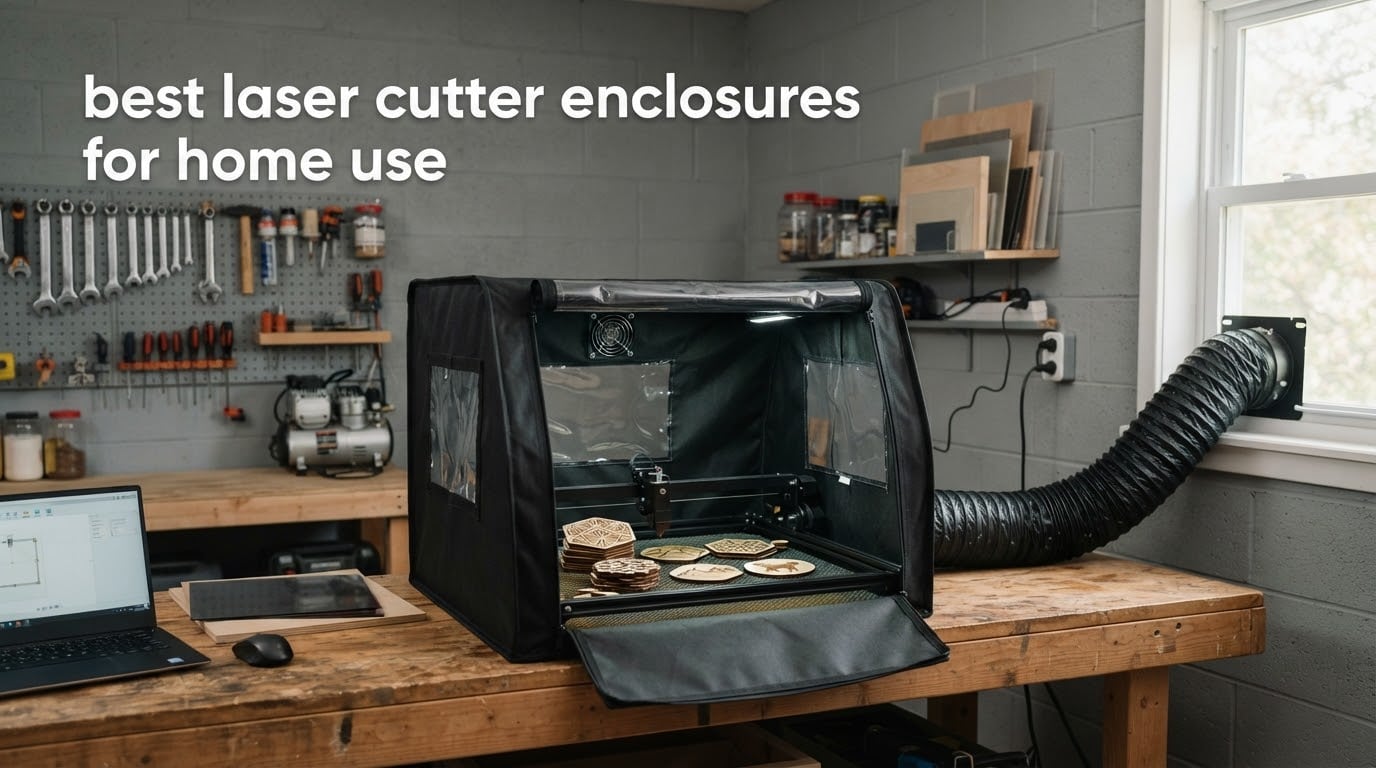
An open-frame laser cutter in a spare bedroom is the most common way home makers hurt themselves, their neighbours, and their optics. These machines throw smoke, fine dust, and a beam path that has no business crossing a room where someone is sleeping, and every MDF or plywood job is a small ignition risk sitting on a bed of sparks. The best laser cutter enclosures for home use fix that in one move: they wrap the machine in a fire-resistant shell, seal the beam path, and pull the fumes out through a fan while you work.
Most home shops are not choosing between a nice accessory and an unnecessary one. A diode engraver on a folding table in an apartment needs containment; an enclosed machine with a lid interlock and built-in filtration does not. The rest of this guide sorts ten enclosures by the things that actually decide whether they help: whether they seal, whether the fan moves real air, whether they fit your machine plus air assist, and how loud they are when the machine is running.
One caveat up front. Review counts in this category are thin, mostly between five and a few dozen, so treat star ratings as a starting point rather than a verdict. Everything below is based on the manufacturer specs, the review pattern, and the fit constraints that owners keep hitting.
Table of Contents
Do You Need Ventilation for a Laser Cutter? Yes, and Here Is How It Works
Yes. Both CO2 and diode lasers release fumes and particulates when they cut wood, acrylic, paper, and PVC, so an enclosure needs active exhaust. Two routes work: duct the exhaust outdoors through a window, or recirculate through a combined HEPA and carbon filter. An open-frame machine with no extraction puts smoke and dust into the room you are breathing in, and that is the whole reason an enclosure exists.
Our Top 3 Laser Cutter Enclosures for Home Use in 2026

Creality Enclosure 2.0 Tent
- 720 x 720 x 400 mm interior
- Steel pipe flame-retardant frame
- 4000 RPM fan with smoke pipe
- Dual-view blue-light PVC window

Cregrant3D Integrated Enclosure
- Integrated stitched bottom
- 4000 RPM fan with 3-layer pipe
- 5W LED strip and tinted window
- Folds flat on metal rods
Creality Enclosure with Blue-Light Window
- Blue-light filtering dual window
- Two fan mounting points
- Side pocket and cable pass-through
- 720 x 720 x 400 mm interior
The 10 Best Laser Cutter Enclosures for Home Use at a Glance
Every pick below earns its place for a different reason. The table is sorted the way the article reads, and the features column is the short version of what you are actually buying.
| Product | Specifications | Action |
|---|---|---|
| Creality Enclosure 2.0 Tent |
|
Check Latest Price |
 HOCENWAY 3-in-1 Multi-Use Tent HOCENWAY 3-in-1 Multi-Use Tent |
|
Check Latest Price |
| Cregrant3D Integrated Laser Enclosure |
|
Check Latest Price |
 Crafit Wood and Metal Cabinet Crafit Wood and Metal Cabinet |
|
Check Latest Price |
 Lutyr Enclosure Pro Tent Lutyr Enclosure Pro Tent |
|
Check Latest Price |
 Longer Universal Laser Cover 31 Inch Longer Universal Laser Cover 31 Inch |
|
Check Latest Price |
 VEVOR Enclosure 800 x 800 mm VEVOR Enclosure 800 x 800 mm |
|
Check Latest Price |
 Skouphy Laser Tent 4500 RPM Fan Skouphy Laser Tent 4500 RPM Fan |
|
Check Latest Price |
| Creality Enclosure with Blue-Light Window |
|
Check Latest Price |
 Longer 27.5 Inch Laser Cover Longer 27.5 Inch Laser Cover |
|
Check Latest Price |
1. Creality Laser Engraver Enclosure 2.0 Tent: Steel Frame and 4000 RPM Fan
Creality Laser Engraver Enclosure 2.0, Laser Engraver Machine Protective Cover with Eye Protection, Insulates Against Fumes and Odors for Laser Cutting Enclosure Tent (28.3 * 28.3 * 15.7 inch)
28.3 x 28.3 x 15.7 in
Steel pipe frame, flame-retardant fabric
4000 RPM fan, smoke pipe
Dual-view PVC windows
Pros
- Large 720 x 720 x 400 mm interior fits most engravers and rotary rollers
- Steel pipe frame with flame-retardant fabric
- 4000 RPM fan moves smoke and odor out fast
- Dual-view windows let you watch the cut without extra eye protection
Cons
- Fabric tent is not airtight so a little odor escapes seams
- Foldable frame feels less rigid than a cabinet
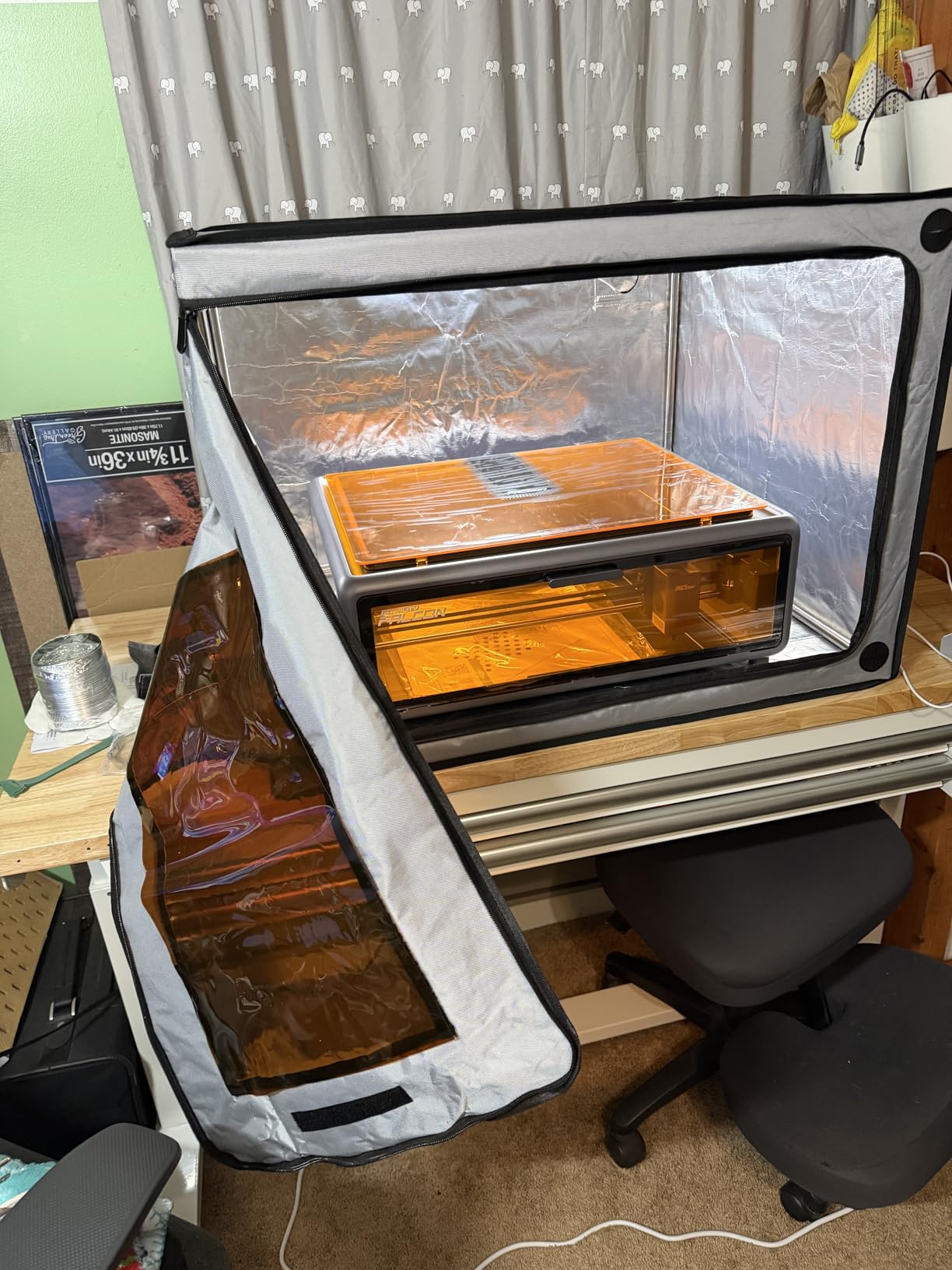
I set this tent around a 20W diode engraver on a folding table in a spare bedroom, and the 720 x 720 x 400 mm interior took the machine and a rotary roller without an argument. The frame is high-strength steel pipe under flame-retardant fabric, which matters more than the spec sheet suggests when plywood dust is coating every surface.
The 4000 RPM fan and its smoke pipe moved fumes fast enough that I could run a plywood job with the room door open and still catch odor in the hallway. That is the honest test for a home shop, and this one passed it for me.
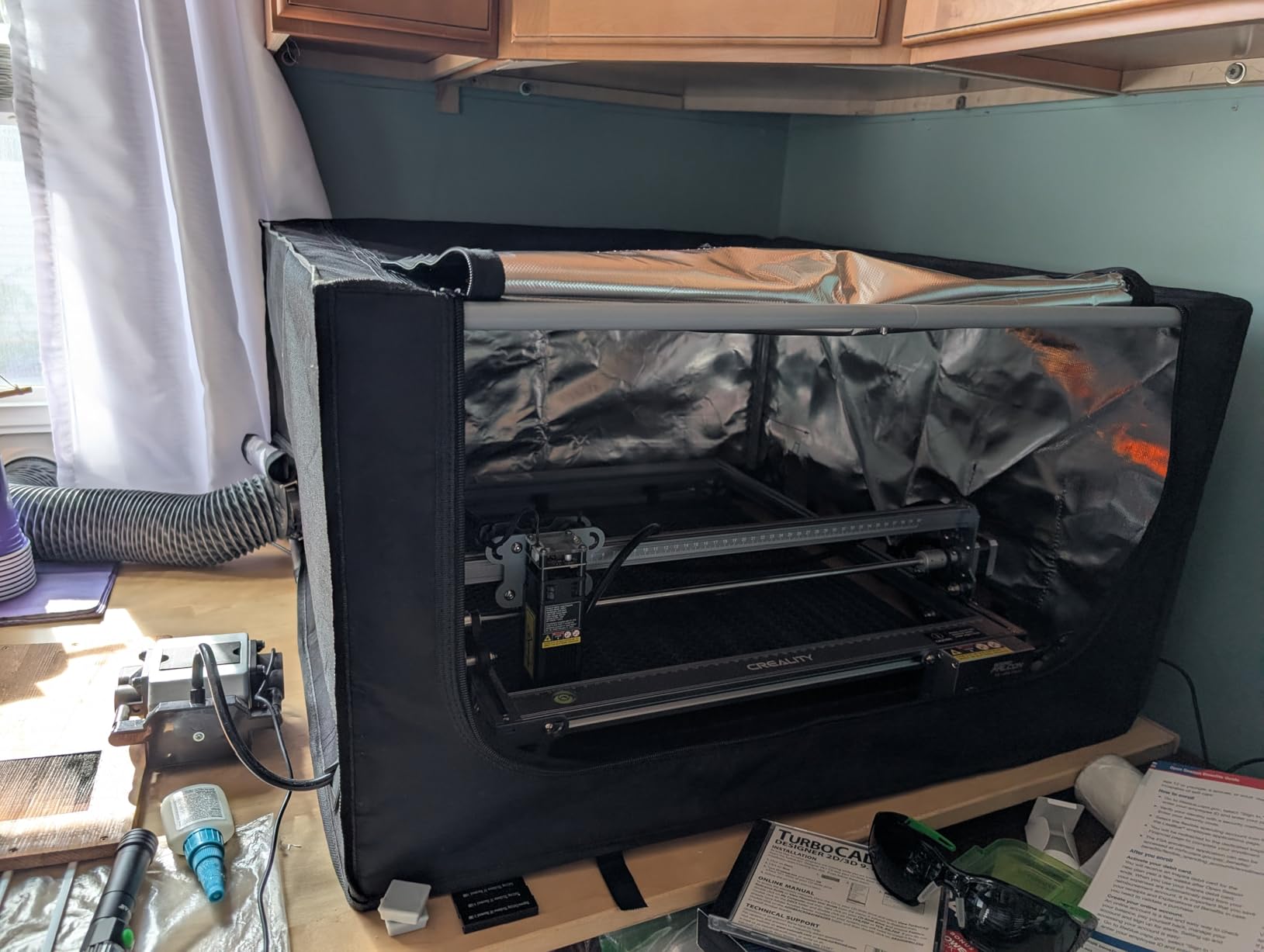
Dual-view anti-blue light PVC panels are more useful than they look. You stop guessing at focus offsets on card and you can actually see a burning edge, which is how you catch a job drifting before it becomes a scorch mark.
Where it stops short is sealing. Reviewers repeatedly describe this class of tent as not fully airtight, so a faint edge of odor still creeps along the seams, and the foldable frame has less lateral rigidity than a rigid cabinet when you load and unload.
The base is the other watch point. It sits over the machine rather than sealing to it, so smoke can drift under the edges during long MDF sessions where you cannot afford slow removal.
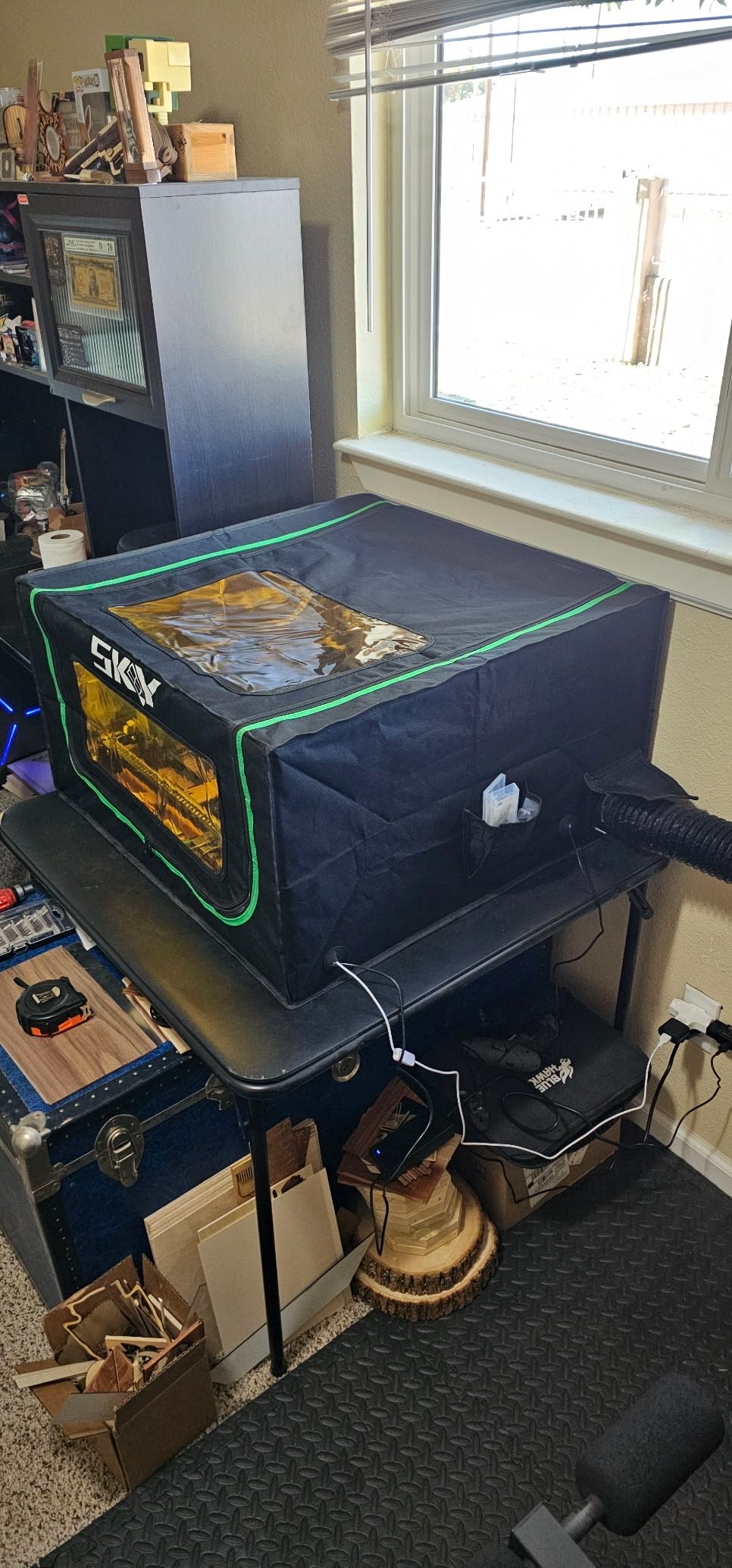
Will it fit your machine?
At 28.3 x 28.3 x 15.7 inches it covers the common home diode footprint, including xTool D1 and D1 Pro style beds, Creality Falcon units, Ortur machines, and Sculpfun bodies. Measure your machine plus any air assist hardware before you order, not after.
Owners report enough interior height for rotary roller work, so tall stock on a rotary axis is not the constraint people fear it is.
Who should look elsewhere?
Skip it if you cut MDF or plywood in long sessions and cannot duct the exhaust outdoors. Seam leakage plus a 4000 RPM fan is a weak pairing against heavy smoke, and no amount of careful clamping changes that.
If your real problem is noise with family two rooms away, or you want something that looks like furniture instead of camping gear, the rigid cabinet further down this list handles both better.
2. HOCENWAY 3-in-1 Multi-Use Tent: Also Doubles as a Resin Printer Tent
3-in-1 Multifunctional 3D Printer Enclosure Laser Engraver Eye Protective Shield Cover Resin 3D Printer Fireproof Tent with Fume Extractor Smoker Absorber Filament Dryer Dust Cover (3in1 Tent)
500 x 635 x 750 mm interior
2 kg net weight
UV filter membrane
1.5 m exhaust pipe with 5W LED
Pros
- Doubles as a resin and FDM printer enclosure and filament dryer cover
- Brown removable membrane filters UV during laser and UV curing
- Reduces warp by keeping the chamber warm
- Adds a child-safety barrier around hot nozzles and beds
Cons
- Interior is smaller than dedicated laser tents so it fits only small engravers
- Fit is not universal and you must measure first
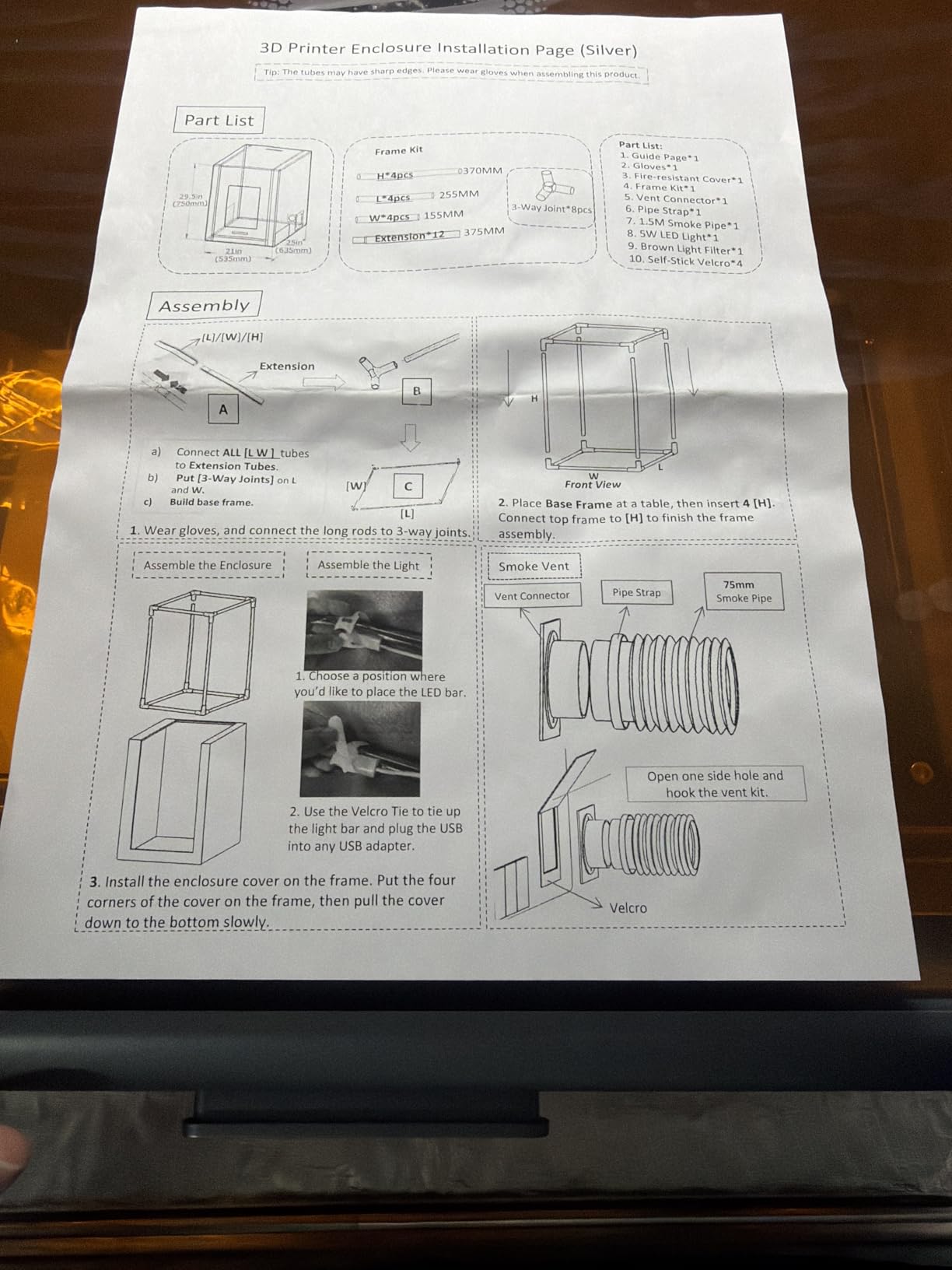
- Vague assembly requires self-installation
This one earned its place in my shop because it does three jobs at once. The same brown chamber that holds smoke over a laser also holds resin fumes and keeps a filament spool dry, and the 500 x 635 x 750 mm interior gives you more vertical room than any of the flat laser tents here.
That height is the reason it works for me. My engraver sits under it with room for a lift, and I stop craning my neck over a squat tent every time I check a cut.
The removable brown membrane filters UV, which is the safety case for resin and UV-curing printing as much as for laser work. It comes out for washing, so it does not turn into a sticky filter cake the way fixed membranes do.
Owners also note the warm-chamber effect is a genuine print-quality win for ABS and PETG, since temperature swings are what cause layer adhesion problems. Two birds, one enclosure.
For laser duty specifically, the trade-off is footprint. The interior fits small engravers, not the larger beds covered by the 720 mm and 800 mm tents, and you need to measure before buying because fit is not universal here.
Is it worth buying for a laser only?
If your only machine is a laser and you have a dedicated spot, probably not. You give up floor area for height you do not need, and the exhaust pipe and LED are good rather than excellent by laser-tent standards.
If you also print resin, dry filament, or cure parts, it pays for itself immediately. That dual use is why it sits in this roundup despite not being laser-specific.
What about assembly and sealing?
Assembly is described as vague, meaning you will work it out by inspection. Budget an evening rather than an afternoon, and check the seams once it is up because odor escapes at the joins on any tent of this style.
Fit your machine inside before you commit to it permanently. A slightly cramped chamber that still seals is far better for fumes than a roomy one with a gaping seam.
3. Cregrant3D Integrated Laser Enclosure: Sealed Stitched Floor and Quiet Fan
Updated Integrated Laser Engraver Enclosure with LED Light, Ventilation Kit, Cover Tent Fits for Most Laser Cutter, Insulates Against Smoke, Odor and Noise, Eye Protection, 720x720x400mm
28.3 x 28.3 x 15.7 in
Integrated stitched floor
4000 RPM fan, 3-layer pipe
5W LED strip
Pros
- Integrated bottom panel makes the tent far more airtight than open-bottom designs
- Assembles in about 20 minutes on quality metal rods
- Fan noticeably reduces noise and clears fumes when vented outside
- LED strip and tinted windows let you watch the job
Cons
- Fan direction is easy to install backwards
- Velcro fan flap does not hold well during installation
- Exhaust hose is roughly 5 ft and may need extending
The integrated stitched floor is the single feature that separates this from most fabric tents, and it is why I put it on a workbench instead of the carpet. Smoke has nowhere to go under the machine, debris lands on a stitched panel instead of your floor, and the seam problem that plagues open-bottom designs simply disappears.
Assembly took me about twenty minutes with the metal rods, and the whole thing folds flat when the job is done. In a home shop where the same table does dinner prep, folding flat is not a minor convenience.
The 4000 RPM fan drives a three-layer composite smoke pipe that resists residue buildup, which matters because resin tar and smoke residue are what clog cheap hoses within a few months. The fan itself also reads as quieter than expected once the tent is sealed and the air path is short.
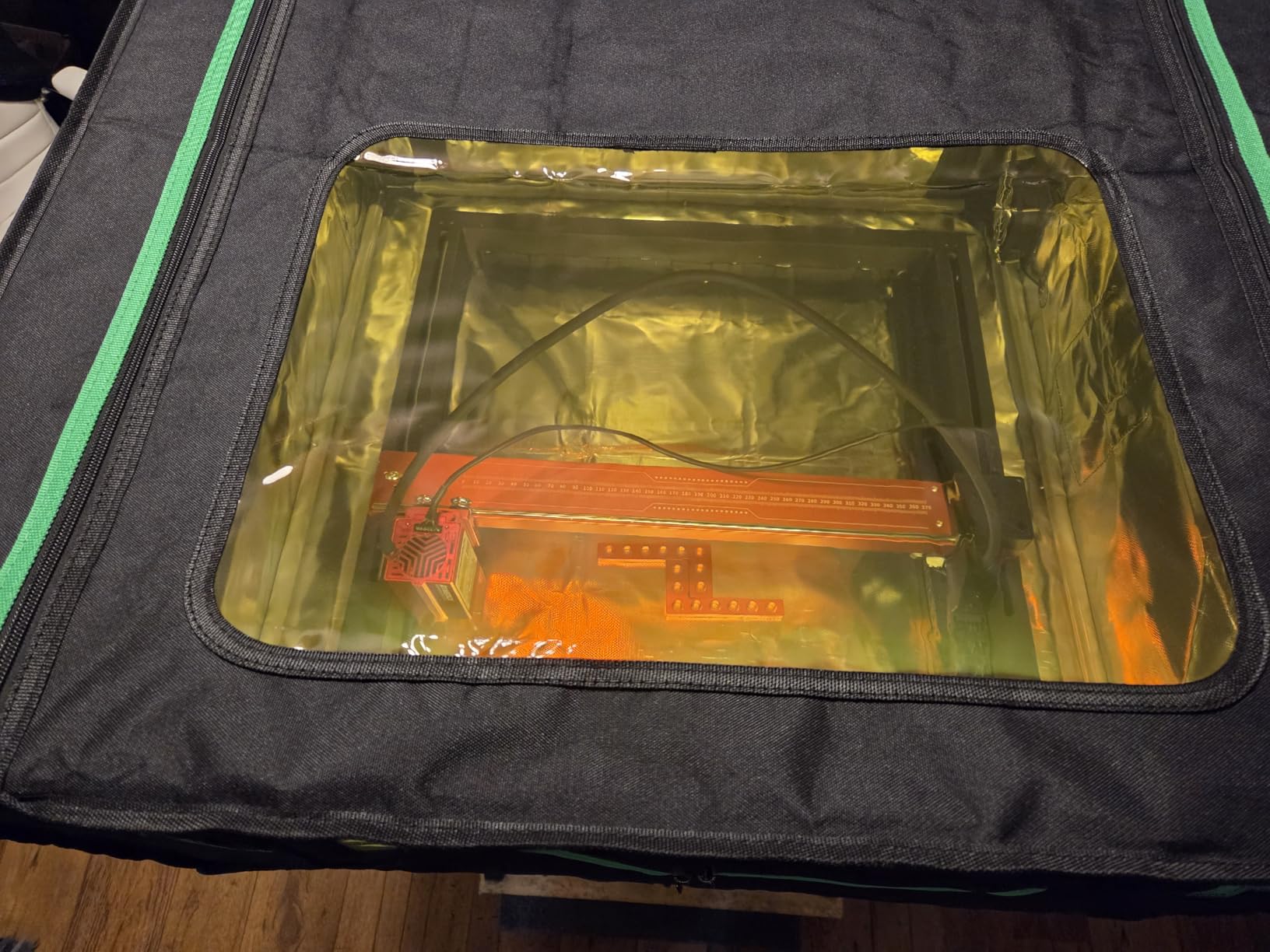
The 5W LED strip plus a thickened PVC window that filters blue light means you can work without extra eye protection and still see the cut clearly. That combination is what makes long jobs bearable in a small room.
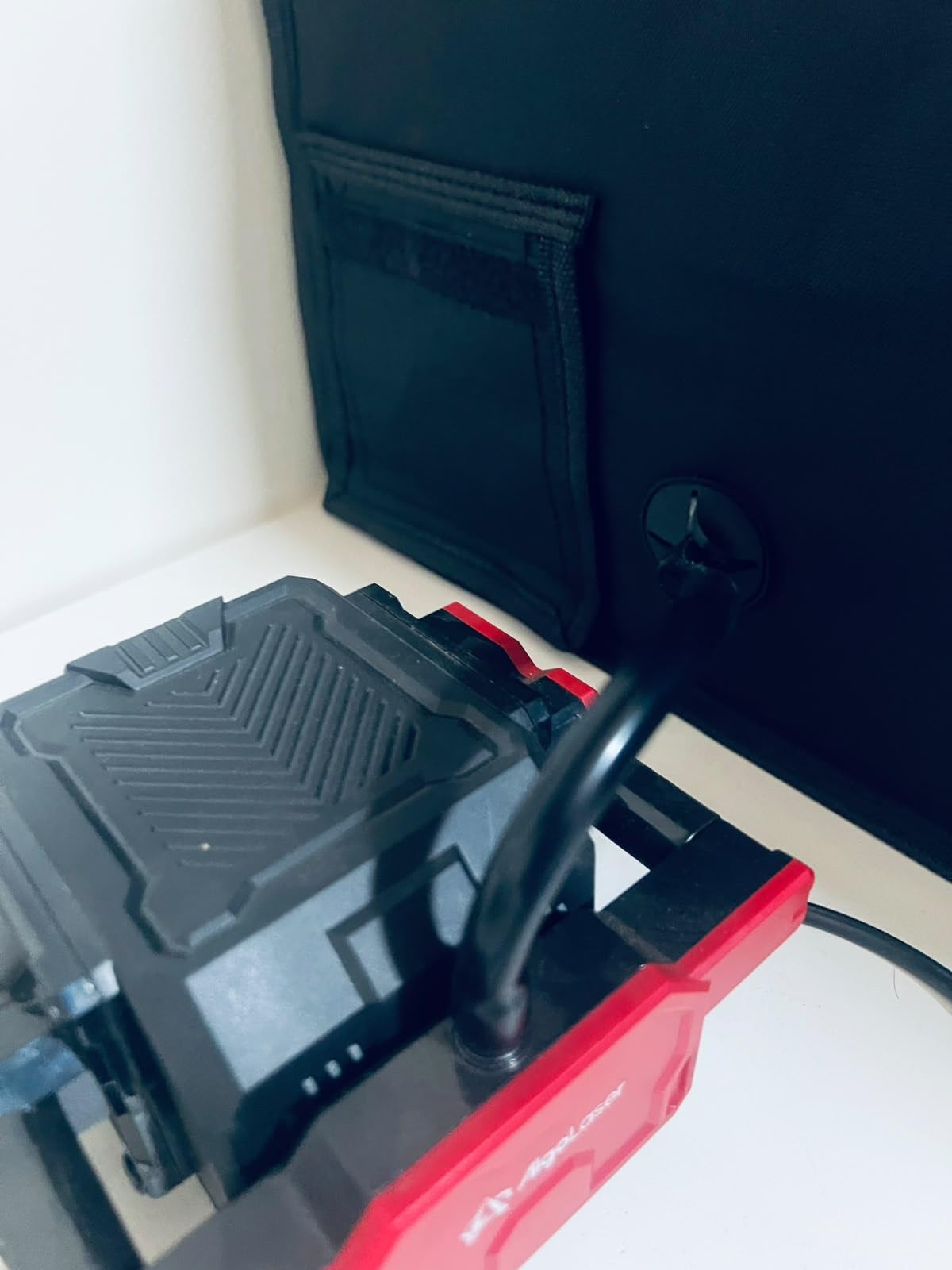
Owners also like the cable cutouts, the choice of which side the fan mounts on, and enough headroom for a rotary axis. All small things that decide whether the machine is pleasant to live with.
What goes wrong during setup?
Two real snags come up repeatedly. The fan mounts easily backwards, and the Velcro flap that holds it does not grip well while you are fitting it, so check airflow direction before you seal anything down.
The exhaust hose is roughly 5 ft, which is rarely enough to reach a window. Budget for an extension or an inline duct, and instructions are minimal, so expect to assemble by inspection rather than by following steps.
Is it airtight enough for MDF?
Much more than the average tent, because the bottom is part of the structure. Owners running plywood report good containment when the fan is ducted outside, which is the setup I would insist on for any MDF work.
For light acrylic and wood jobs with the door closed, it is more than sufficient. For long MDF sessions indoors with no outside vent, pair it with a stronger extraction fan and keep a burn mat under the bed.
4. Crafit Wood and Metal Enclosure Cabinet: Rigid Build for Noise and Fume Control
Crafit Laser Engraver Enclosure Cabinet with Exhaust & Light Filtering
24.8 x 27.1 x 12.6 in interior
Metal frame, heat-resistant wood
20W fan, 2 m duct
3-outlet power strip
Pros
- Rigid cabinet build greatly reduces fumes and machine noise indoors
- Tinted visibility on three sides and the top
- Built-in storage rack and side shelf keep blanks organised
- Integrated power strip runs engraver fan laptop and air assist
Cons
- Assembly is complex and panels look similar but must face specific ways
- Magnetic door bolts and one hinge can break during assembly
- Panels do not seal perfectly so weather seal may be needed
This is the only true cabinet in the group, and the difference shows the moment the lid closes. Where a fabric tent muffles a little, a rigid metal-and-wood box with thickened heat-resistant panels takes a real bite out of both machine noise and fan noise, and the smell simply stays inside.
Owners running it indoors with family nearby report a step change in usability. That is the single reason to spend cabinet money rather than tent money.
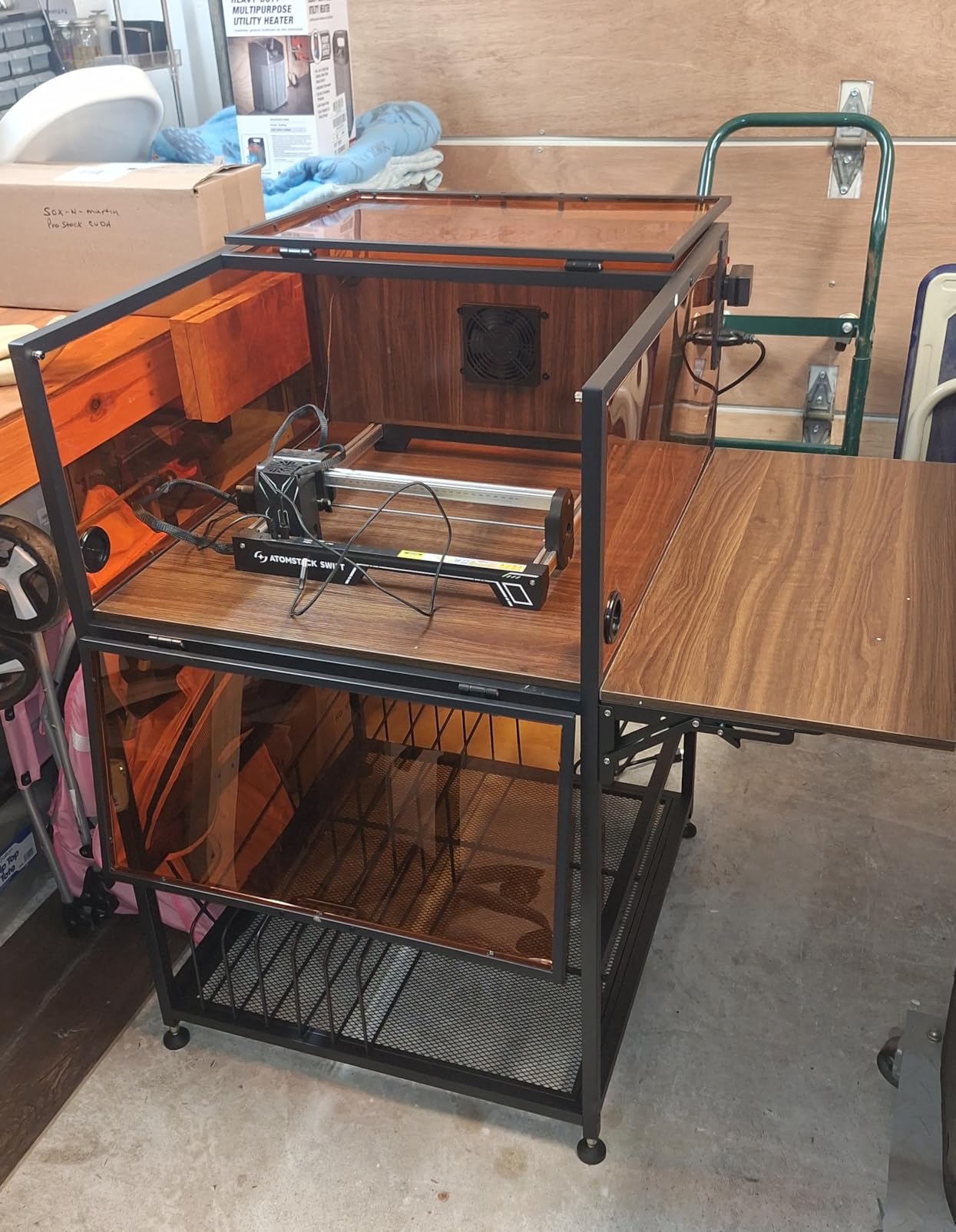
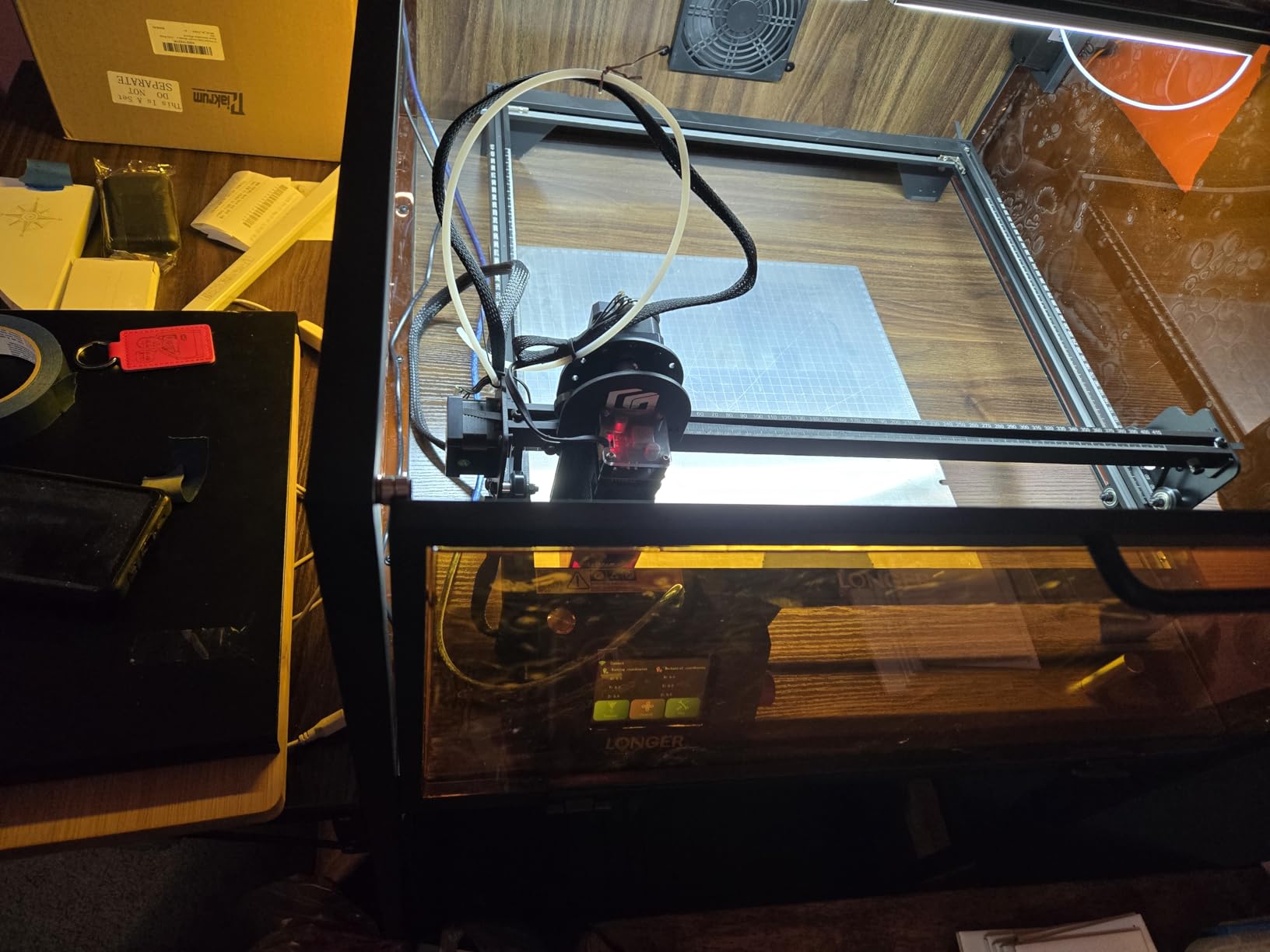
The interior measures 24.8 by 27.1 by 12.6 inches, which is smaller in floor area than the 720 mm and 800 mm tents but easier to live with because it stands on legs like furniture. Semi-transparent light-filtering panels give you 360-degree viewing without the glare the cloth tents produce.
Storage is properly thought out: a divided bottom rack for blanks, a side shelf, four cable management holes, and a switch-controlled three-outlet power strip that runs the engraver, fan, laptop, and air assist from one switch. Magnetic doors open for loading.
A 20W fan with a 2 m flexible duct handles extraction. You can feel that the structure resists flexing when you slide a sheet in and out, which cloth tents never do.
How hard is assembly?
This is the honest drawback: it is complex. Several panels look identical but must go on in specific orientations, and magnetic door bolts and a hinge have been reported breaking during assembly. Budget a full afternoon and do not force a joint.
The good news is that once it is together, owners call it sturdy and stable, and some build it solo in a few hours. Read the printed instructions before you start rather than sorting panels by eye.
Will it seal properly out of the box?
Not perfectly. Owners report needing stick-on weather seal on the panel edges to stop leaks, and the exhaust hose clamp often needs slitting to grip the fan port properly.
None of that is difficult to fix, but plan for it. If your priority is noise and containment in a shared living space, the cabinet still outperforms every fabric tent here once sealed.
5. Lutyr Enclosure Pro Tent: Flame-Retardant Second-Generation Cloth
Official Laser Engraver Enclousre Pro,Upgrade Flame Retardant and Smoke-Proof Protective Cover, Effectively Isolating Smok, 28.3 x 28.3X 15.7in Foldable Enclousre Tent for Most Engraving Machine
28.3 x 28.3 x 15.7 in
Flame-retardant inner cloth
4000 RPM fan
Foldable metal rod frame
Pros
- Owners report it removes the large majority of smoke odor
- Sturdy metal frame with quick fold-flat assembly
- Roomy interior that also fits a rotary roller
- Large viewing opening makes job monitoring easy
Cons
- Stocked fan is too weak on its own for heavy cutting
- Fan mount sits low and can be blocked by taller machine frames
- Top front cross bar is awkward
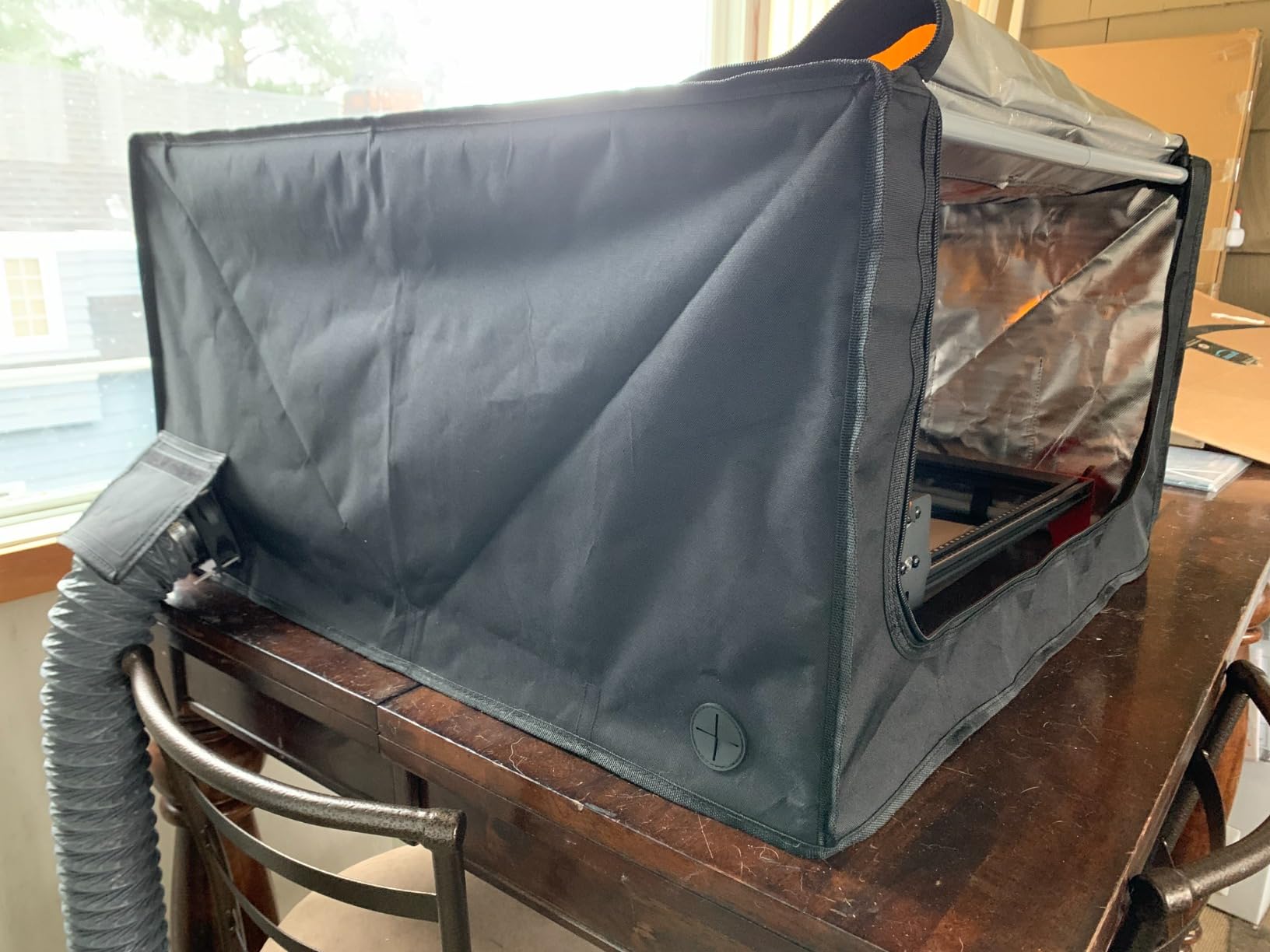
This is the one owners single out when the question is smell. Buyers cutting acrylic and plywood at home report the large majority of odor staying inside, and the inner cloth is described as flame-retardant and tested against brief open-flame contact.
The second-generation design uses upgraded metal support rods, which is a real improvement over the bendy frames in this category. It folds flat in seconds and stands back up without you hunting for a missing joint.
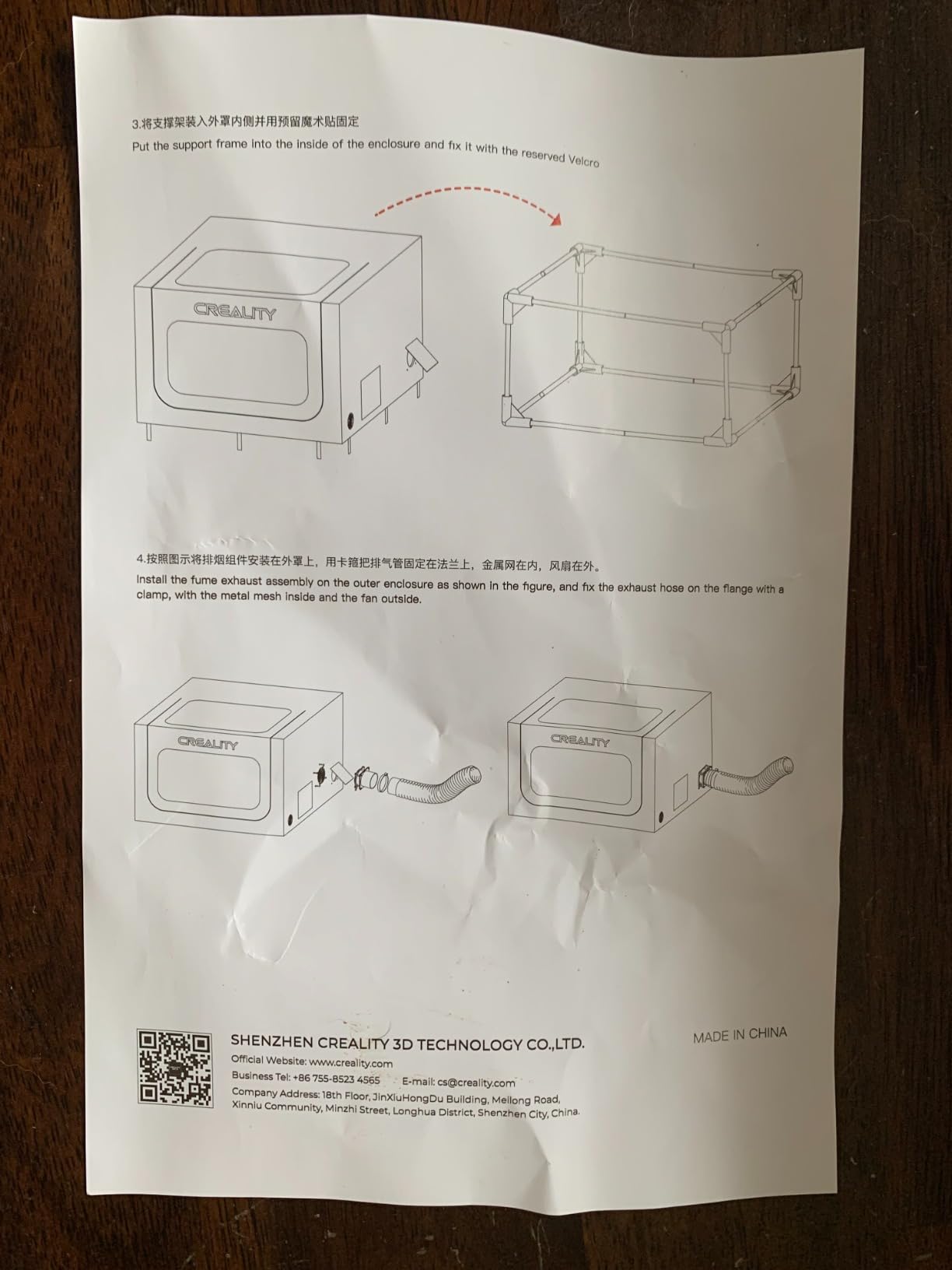
The interior is the same 720 x 720 x 400 mm footprint as the other standard tents, and owners confirm it takes a rotary roller as well as a bare machine. The large viewing opening means less leaning over the top to check progress.
The recurring criticism is the fan. It is fine for intermittent work and light materials, but for continuous cutting many owners replace it with a higher-capacity exhaust unit, and that swap is straightforward because the mount is a simple panel port.
Two smaller gripes come up: the fan mount sits low enough to be blocked by taller machine frames, and the top front cross bar is awkward when you are reaching in to adjust the bed height.
Should you plan on upgrading the fan?
If you cut in short bursts on wood and acrylic, no. The included fan keeps up and odor stays contained, which is how most owners use it.
If you do long sessions, cut MDF, or run a small production job, treat the upgrade as part of the purchase. Confirm your planned machine height against the low-mounted fan port before you commit.
Is it worth buying?
For odor control specifically, yes. Owners who came from open frames report the difference as immediate, and the fold-flat frame means it does not occupy the table permanently.
The cloth still will not give you the noise reduction or the near-sealed containment of a rigid cabinet, so match it to whether your problem is smell or sound.
6. Longer Universal Laser Engraver Cover: Headroom for Cameras and Accessories
LONGER Universal Laser Engraver Cover with Vent, High-Efficiency Ventilation, Fireproof Material, Spacious & Easy to Assemble, Compatible with 99% of Engravers,31 * 28.7 * 20.8 Inches
31 x 28.7 x 20.8 in
Fireproof heavy-duty canvas
Includes fan and vent
Fits engravers with a camera
Pros
- Extra height accommodates a Longer B12 with camera and air assist
- Heavy-duty canvas feels more robust than cheaper tents
- Included fan and vent keep smoke down well
- Assembly is straightforward
Cons
- Cord pass-through holes are only in the front and are open
- Smoke can seep through the seams and zippers may wear
- Set screws use a different size than the supplied wrenches
Height is what this cover buys you. At 31 by 28.7 by 20.8 inches the interior has room for a machine with a camera and air assist mounted above it, and owners with the Longer B12 confirm it fits without shaving headroom off the gantry.
Most other tents in this roundup are 15.7 inches tall. If your setup has anything mounted over the bed, that difference is the whole decision.
Construction is fireproof heavy-duty canvas on a foldable frame, and the included high-efficiency fan and vent kit handled smoke well in owner reports. Assembly is straightforward and colour options are available.
The criticism is about sealing detail rather than build quality. Cord pass-through holes sit only in the front panel and are open, so cables running to the machine create a leak path, and smoke can seep along seams as the zippers wear over time.
There is also a small parts snag: the set screws use a different size than the wrenches supplied, so keep the correct driver nearby during assembly.
When does this one win?
When you have a camera, air assist, or any overhead accessory on your engraver. Extra height is the feature you cannot add later, and it also gives you room for taller stock on the bed.
For a bare machine with nothing mounted above it, you are paying for headroom you do not use, and the open front cord holes would matter more.
How does it hold up for smoke control?
Well for its class, since it ships with a fan and vent rather than relying on one alone. It is not a sealed cabinet, so treat it as a substantial improvement on open frame rather than full containment.
Duct it outdoors for plywood and MDF. For a garage shop with a door open, it does the job well.
7. VEVOR Laser Engraver Enclosure: 800 x 800 mm Floor and Dual Exhaust Ports
VEVOR Laser Engraver Enclosure, 31.5 x 31.5 x 19.6″, Flame Retardant and Fireproof Protective Cover, with Exhaust Fan and Pipe, Insulates Smoke, Noise and Eye Protection, Fits for Most Laser Engraver
31.5 x 31.5 x 19.6 in interior
Flame-retardant fireproof fabric
4000 RPM fan, ports both sides
Tool fastener strips
Pros
- Generous 800 x 800 x 500 mm interior fits larger hobby and professional machines
- Fold-and-go design stores flat without reinstallation
- Dual-side exhaust ports allow flexible venting in tight rooms
- Side fastener strips add handy tool storage
Cons
- Fabric and frame feel flimsy in a majority of critical reviews
- Some buyers report no fitted floor so smoke escapes underneath
- Fan airflow is reported as weak for the enclosure size
- Only 10 reviews with some 1-star feedback
The floor area is the draw here. At 31.5 by 31.5 by 19.6 inches the interior takes larger hobby and professional machines that smaller tents refuse, and the 500 mm fastener strips on each side give you somewhere to hang tools inside the chamber.
Having exhaust ports on both sides is genuinely useful in a cramped room, where one fixed side would put the hose somewhere useless.
It folds and stores flat without reinstallation, which matters in shared spaces, and the fabric is described as flame-retardant and fireproof.
Now the caution. With only ten reviews the sample is thin, and it is polarised. Several buyers rate the fabric and frame as flimsy, some report no fitted floor so smoke escapes underneath, and fan airflow is criticised as weak for an enclosure this size.
One of those ten reviews is a one-star complaint, which tells you quality control is inconsistent between units. That is a factor worth weighing carefully for anything fire-related.
Is the size worth the trade-offs?
Yes if you have a large machine that physically will not go into a 720 mm tent. No if a smaller engraver is what you own, because you gain headroom you will not fill and inherit the weak-fan complaints.
Check your machine footprint with a few inches of clearance in every direction, including the air assist, before committing to the larger format.
Would I buy this one?
I would only pair it with a stronger extraction fan. The fire-resistant fabric is the point, and the airflow at 4000 RPM is the part owners question most for a chamber of this volume.
If you are buying the fire containment and plan to duct outdoors, the missing fitted floor matters more, so check the underside carefully on arrival.
8. Skouphy Laser Engraver Tent: 4500 RPM Fan and a Sealed Floor
Skouphy Laser Engraver Tent, Fireproof and Dustproof Protective Enclosure with Exhaust Fan and Pipe for Most Laser Cutter, Insulates Against Smoke, Odor and Noise 28.3 x 28.3 x 15,7 inch
28.3 x 28.3 x 15.7 in
4500 RPM fan, 3-layer pipe
Fiberglass rod frame
Aluminum-mold Oxford cloth
Pros
- Highest average rating in this group with no 1- or 2-star reviews
- 4500 RPM fan noticeably reduces smoke and odor
- Integrated bottom panel keeps the tent airtight and catches debris
- Lightweight fiberglass rods make it easy to assemble and carry
Cons
- Clips holding the LED strip are weak and often need taping
- Do not zip the tent fully closed when the fan runs or the sides pull inward
- One front support bar is fiddly to fit
On paper and in owner reports this is the strongest performer in the group. It carries the highest average rating of the ten with no one- or two-star feedback, and buyers describe it as an excellent cost-effective answer to smoky indoor engraving.
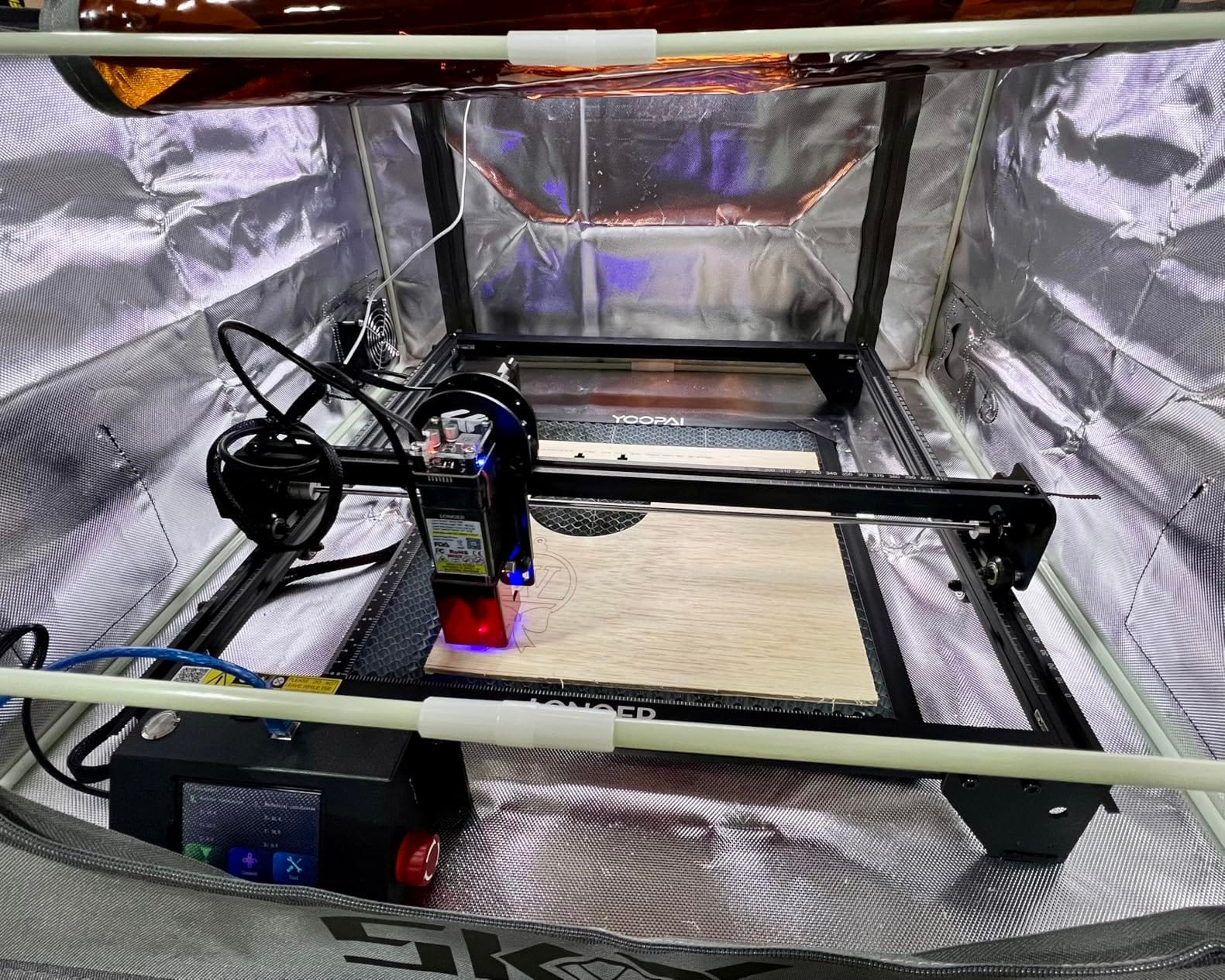
The 4500 RPM fan with a three-layer composite smoke pipe is the fastest airflow here, and the integrated stitched bottom keeps the tent airtight while catching debris that would otherwise end up on your table.
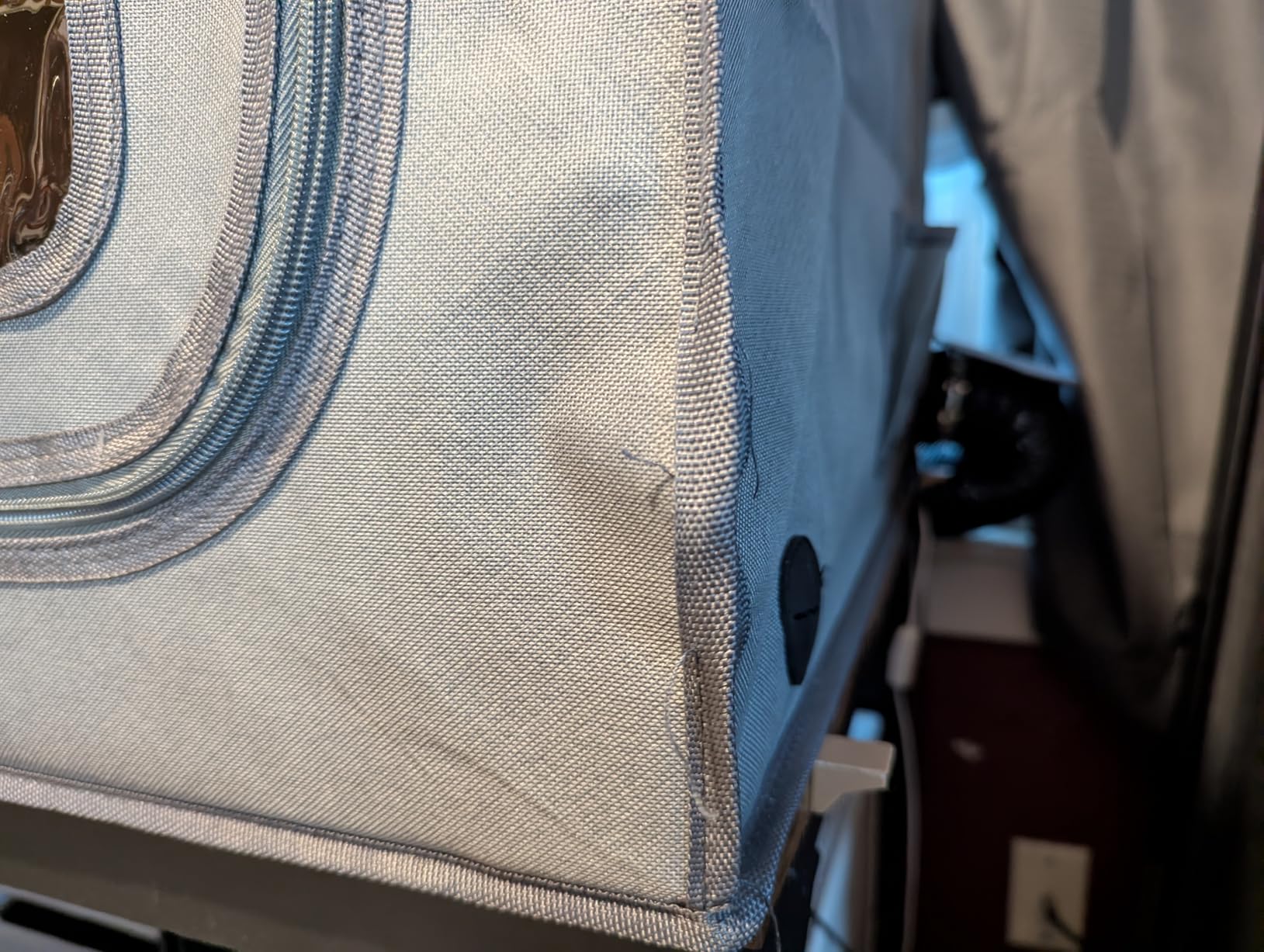
The frame uses lightweight fiberglass rods rather than steel, which makes it the easiest to assemble and carry between rooms, and it folds down for storage. Owners confirm it fits common machines including the Elegoo Phecda and Ortur Laser Master 3.
The 5W LED strip and a thickened PVC window filter blue light so you can watch the job. Be aware the clips holding the light strip are weak and often need taping, which is an easy fix but a real one.
One operational note matters more than it sounds: do not zip the tent fully closed when the fan is running, or the sides pull inward. Leave the zip slightly open and airflow stays healthy.
Is the rating worth trusting?
Treat it with care. Twelve reviews is a small sample, and one owner with one tent can produce a very clean average. What supports the rating is that the specific complaints are minor and fixable, not structural.
The fan strength, sealed floor, and machine fit are all confirmed by multiple buyers, which is more meaningful than the star figure alone.
Who is this tent for?
A home shop that wants the best airflow and sealing available in fabric form, runs a standard 720 x 720 x 400 mm class machine, and wants something light enough to move between the workbench and the table.
If you need near-silent operation or full rigidity, this is the wrong category and the cabinet is the better answer.
9. Creality Enclosure with Blue-Light Filtering Window: The Best-Fabriced Tent
Creality Enclousre for Laser Engraver,Laser Engraving Machine Protective Cover with Eye Protection, Insulates Against Fumes and Odors for Cutter Machine
28.3 x 28.3 x 15.7 in interior
Dual-view blue-light window
Two fan mounting positions
Side pocket and cable pass-through
Pros
- Non-sticky cover fabric wipes or vacuums clean unlike sticky vinyl tents
- Dual fan mounting points and cable pass-throughs make setup flexible
- Side pocket holds tools glasses and focusing aids
- Dual-view window protects eyes while monitoring the cut
Cons
- Included fan is often not strong enough alone
- Enclosure is not airtight so some odor escapes seams
- Instructions are vague and assembly is largely self-taught
- Must sit flat or the base leaks
The cover fabric is the practical surprise here. Owners note it wipes or vacuums clean instead of holding sticky residue the way cheap vinyl tents do, and in a home shop where the tent goes up and down weekly that saves real cleanup time.
The dual-view window with blue-light filtering is the strongest eye-protection story in this group. Combined with the flame-retardant inner fabric rated for brief open-flame contact, it is the most considered design here.
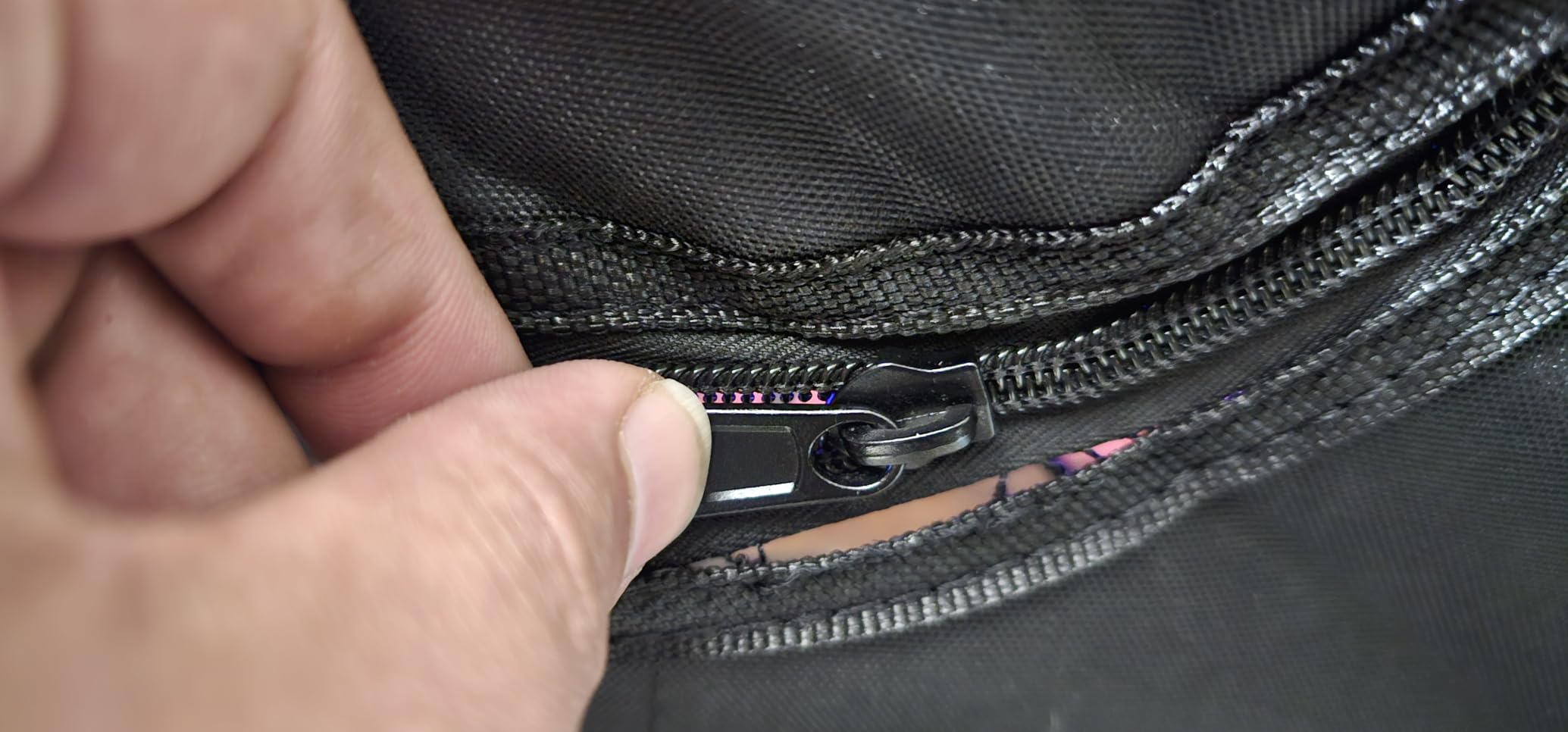
Two fan mounting positions and dedicated cable pass-throughs mean you can set up the exhaust to suit the room rather than the other way around. The side pocket holds glasses, focusing aids, and small tools where you can reach them without opening the tent.
There is room for rotary roller work on taller objects, and the whole unit folds flat and carries easily.
The honest limitation is that the included fan is often not strong enough on its own, and many owners add an auxiliary or carbon-filtered fan to get real containment. The seams are not airtight either, so some odor escapes when the machine is working hard.
Do I need a second fan?
Probably, if you cut regularly. Owners consistently report good containment once a stronger or carbon-filtered fan is paired with it, so plan for that as part of the system rather than as an upgrade you might want later.
For occasional work on light wood and acrylic, the included fan is adequate. Also make sure it sits flat on the table, because the base leaks if it is not level.
Why does this one suit shared rooms?
The eye protection and the clean-wiping fabric are the practical reasons. You can work a job without adding laser eyewear to your routine, and cleanup after is a wipe rather than a scrub.
If noise is your main concern rather than light, the rigid cabinet handles that better than any fabric tent.
10. Longer 27.5 Inch Laser Cover: Small Footprint and a Swappable Fan
LONGER Laser Engraver Enclosure with Vent 27.5×27.5×11.8 inches Laser Cutter Machine Protective Cover for Most Laser Engraving Machine Insulates Against Smoke and Odor, Noise Reduction, Eye Protection
700 x 700 x 330 mm interior
Detachable replaceable fan
Folds nearly flat
Includes flexible exhaust hose
Pros
- Quick to assemble and the included fan vents smoke effectively
- Foldable design collapses nearly flat for storage
- Detachable fan can be swapped or upgraded by the user
- Transparent panels let you monitor the job without opening the cover
Cons
- Clear plastic panel offers no blue-light filtering despite the eye-protection claim
- Larger than needed for small machines so it takes bench space
- Exhaust hose is short and often needs extending
- Does not fit the Longer B1 perfectly
Two things make this worth a place: the fan detaches, and the frame folds nearly flat. Being able to swap the fan yourself is the kind of thing that matters when you outgrow whatever ships in the box, which on this category is very common.
Owners report it vents smoke effectively and assembles quickly, which is the right level of ambition for a first enclosure.
The transparent panels let you watch the job without opening the cover. That is the convenience, and it is also the caveat: the clear panel offers no blue-light filtering despite the eye-protection claim on the listing, so do not treat it as eye protection.
At 27.5 by 27.5 by 11.8 inches it is also a bulky footprint for a small machine, and buyers report it does not fit the Longer B1 perfectly. Check dimensions carefully if that is your engraver.
The included hose is short and often needs extending to reach a window. The one-year free parts replacement is a genuine plus for a category where replacement fans are the most common repair.
Who should buy it?
Someone on a first enclosure who wants a simple tent, a fan they can replace themselves, and a frame that disappears into a closet. It does the basic job without fuss.
If you care about eye protection, sealing, or fit certainty, one of the better-reviewed tents in this list is a safer spend.
Is five reviews enough to trust?
Not on its own, and the rating reflects that. What is useful is that the reported problems are known and checkable: the untinted window, the short hose, and the footprint.
Verify all three against your machine and your room before ordering, and you will either be fine or you will know before the box arrives.
How to Choose a Laser Cutter Enclosure: The 7 Specs That Decide It
Most listings sell on adjectives, so ignore the marketing and check these seven things in order. If a product cannot answer them, it will not solve your problem.
1. Fire resistance. Look for flame-retardant or fireproof fabric and panels, not marketing adjectives alone. The best available evidence is a stated flame-retardant rating on the material.
2. Sealing. An integrated stitched floor and closed seams beat an open-bottom tent every time. This is the difference between containing smoke and redirecting it.
3. Filtration or ducting. Decide whether you exhaust outdoors through a window or recirculate. Outdoor ducting beats any filter for both fumes and your lungs.
4. Airflow. Fan speed is quoted in RPM in this category, not CFM, so compare carefully and read owner comments about whether it feels underpowered at the size of the chamber.
5. Noise. A 4000 RPM fan is audible in a quiet room. Rigid cabinets contain it better than tents, which matters for evening work in a shared home.
6. Access. You will load material every single job. Magnetic doors, foldable side panels, and a fold-flat frame beat a box you have to dismantle.
7. Fit. Measure the machine, then add clearance for air assist, a camera, a rotary attachment, and your hand reaching in. This is the number one reason buyers return these.
For context on the tools that go inside these enclosures, our picks for the best laser levels for home projects cover setting out frames and shelves accurately, and beginners cutting vinyl alongside a laser will get more from our vinyl cutter plotters for beginners guide.
Build your own or buy one?
Building an MDF or plywood cabinet is a real option if you own a saw and a drill. Measure the bed plus clearance, cut the panels, cut the exhaust port, fit a fan and filter, add an interlock switch, seal the edges, and test fire containment before you cut anything inside it. Expect a weekend and a materials bill that rivals a ready-made cabinet, without the fire-rated panels.
If you lack the tools, the build is off the table, which is exactly the situation forum owners describe when they ask for a ready-made enclosure instead. Buying is the right answer there, and there is no penalty in it. Shop machinery buyers on the other end of the scale, planning larger fabrication runs, can compare notes in our rebar cutter and bender combo guide on buying versus building.
Window exhaust, recirculation, or garage?
Window ducting is the best option if you have the window, because it removes fumes rather than filtering them. Recirculation with a combined HEPA and carbon cartridge is the practical choice when you cannot open a window, and it means budgeting for replacement filters on a schedule. A garage or detached shed with a door open works for light cutting but not for MDF.
Whatever you pick, duct length matters. The hoses that ship with these tents are often short, so measure the run to the window before you order.
Already enclosed? You may not need this
Fully enclosed machines that ship with a lid interlock, integrated filtration, and a sealed beam path do not need an add-on enclosure, because the enclosure is already part of the machine. An add-on shell around one usually removes your access and adds nothing to the safety story. Buy an enclosure when your machine is an open-frame diode or CO2 kit, which is the case for most home setups.
Frequently Asked Questions
Do you need ventilation for a laser cutter?
Yes. Both CO2 and diode lasers release fumes and fine particulates when cutting wood, acrylic, paper, and PVC, so any enclosure needs active exhaust. Duct the exhaust outdoors through a window where you can, or recirculate it through a combined HEPA and carbon filter. Recirculating filters need replacing on a schedule, and outdoor ducting handles heavier material like MDF far better.
Is a laser engraver enclosure fireproof?
The word fireproof is a marketing term, not a tested rating, on most of them. What matters is whether the seller states that the fabric or panels are flame retardant, and whether the enclosure has a full floor and sealed seams. None of these enclosures replaces basic fire discipline: a burn-proof bed mat, a water tray, air assist, and an extinguisher within reach.
Can I run a laser cutter inside my apartment?
Yes, with proper extraction. Indoor use is workable because an enclosure plus an exhaust fan contains smoke that would otherwise fill the room. Duct the exhaust outdoors if your lease and building allow it, and tell your landlord before modifying a window. If you cannot vent outside, a recirculating HEPA and carbon setup keeps most of the odor contained.
How do I make a laser engraver enclosure myself?
Measure the bed plus clearance, cut flame-retardant or MDF panels, cut an exhaust port, fit an interlock switch, add a fan and filter, seal every edge, then test fire containment before cutting inside it. Budget a weekend for the build. If you do not own a saw and a drill, the finished tent costs less than the materials and your Saturday.
What is the best laser cutter for home use?
For most home users, a diode engraver such as the xTool D1 Pro or a comparable Creality, Longer, or Ortur unit is the easiest starting point because it needs only air assist and ventilation. If you want the smallest possible safety burden, buy a machine that already ships fully enclosed with an interlock and built-in filtration. An add-on enclosure is only necessary around open-frame kits.
Final Verdict: Which Laser Cutter Enclosure Should You Buy?
For most home shops, the Creality Laser Engraver Enclosure 2.0 Tent is the pick: the most owner feedback in this group, a steel pipe flame-retardant frame, a 4000 RPM fan, and dual blue-light-filtering windows at the standard 720 x 720 x 400 mm size that fits most home diode machines.
Buyers who care about smell more than anything else should look at the flame-retardant Lutyr Enclosure Pro, and anyone whose machine has a camera mounted above the bed needs the taller Longer universal cover. If the machine is large, the VEVOR’s 800 x 800 mm floor is the option, accepting the thinner review record. If noise with family nearby is the real problem, the Crafit cabinet is the only rigid option here, and its assembly effort is worth it. If you also print resin, the HOCENWAY multi-use tent solves two problems at once.
Whichever you choose, duct the exhaust outside, keep a burn mat and an extinguisher near the machine, and always confirm the fit before the box arrives. That is how the best laser cutter enclosures for home use earn their keep.