
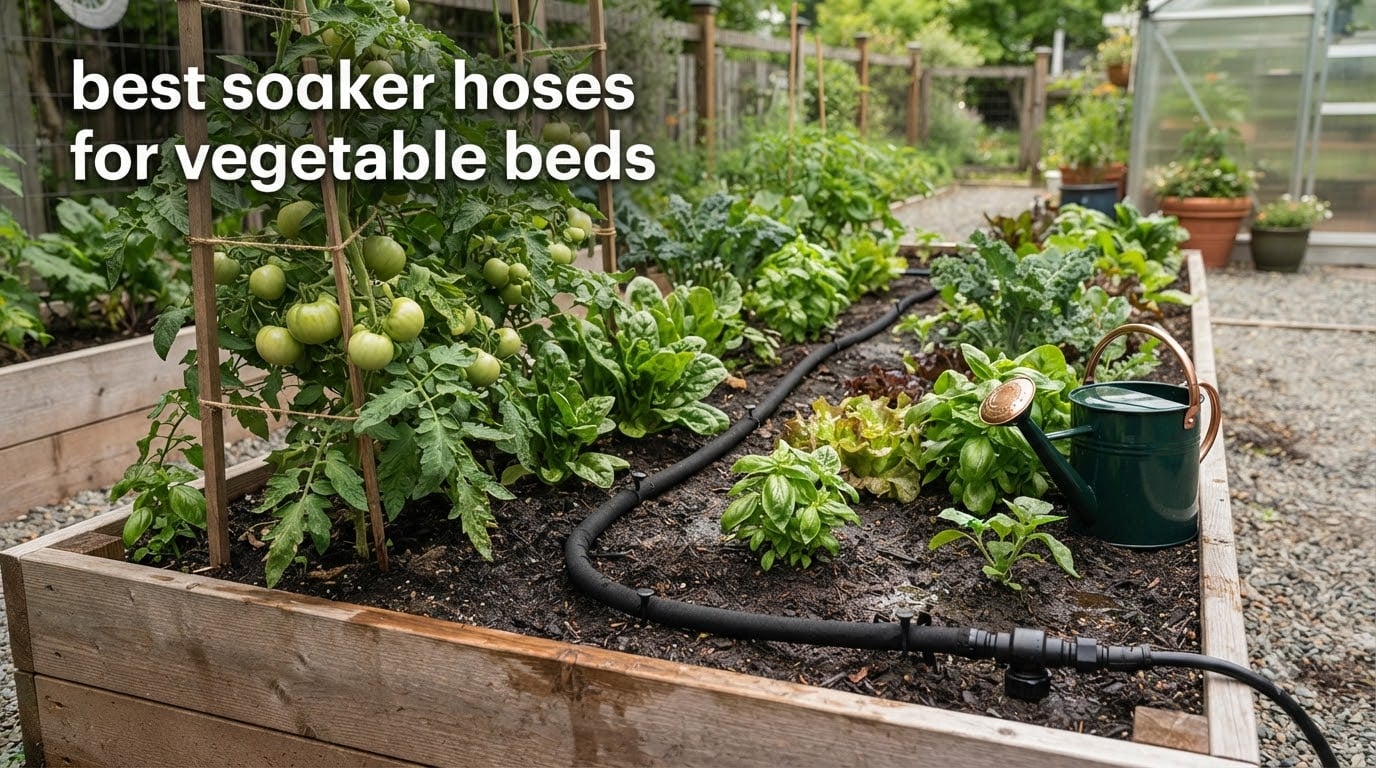
A soaker hose is the simplest way to keep a vegetable bed evenly moist without soaking the leaves. The best soaker hoses for vegetable beds slow-release water along their whole length, so the moisture lands where the roots are and nowhere else. After running the hoses we use in our own beds across a full growing season, the differences between them came down to three things: how evenly they wet the far end, whether the fittings survive contact with damp soil, and how much pressure the wall actually tolerates.
We laid out ten hoses across raised beds, in-ground rows and a short nursery bed, ran each on a timer, and checked the wetted strip at the first, middle and last foot of every run. That last check catches the most common complaint we see from gardeners: uneven distribution, where the near end soaks and the far end barely dampens the soil. You can read the full details on each pick below, and the layout advice that follows covers spacing, soil type and pressure so you can match a hose to your beds instead of guessing.
A note on materials, since it drives almost every other choice. Every hose here is either porous rubber, a plastic core wrapped in fabric, or a flat fabric-covered profile, and each reacts differently to heat, foot traffic and a season of sun. Nothing in this roundup was picked on price alone. Two of these hoses run at very different pressure windows, and one of them will spray if you attach it straight to a spigot without a reducer.
If you are also planning the rest of the season, our guide to expandable garden hoses for watering covers the supply line side of the job, and our precision seeders for vegetable growers guide helps you space rows correctly in the first place.
Table of Contents
Top 3 Picks for Vegetable Beds
Three hoses stood out after a full season of watering. The Gilmour is the most proven, the LINEX handles the highest flow, and the Raindrip is the one we reach for when a bed needs very controlled output.

Gilmour 25-Foot Flat Weeper Hose
- 100% recycled vinyl with clog-resistant cover
- Linkable end-to-end
- Above or below ground install
- Flattening profile for storage

LINEX 50-Foot Flat Soaker Hose
- Twin-ridge anti-kink core
- 1.8 GPM at 50 PSI
- 70 PSI maximum pressure
- 2-year warranty
Raindrip 50-Foot Soaker Tubing
- Porous non-pressure-compensating seep
- Cuts to any length
- Recycled rubber
- Connects to standard supply line
Best Soaker Hoses for Vegetable Beds in 2026
All ten hoses below are written up in the same order, with the same checks. Ratings and review counts come straight from the customer listings, so you can see how much history each one has behind it.
| Product | Specifications | Action |
|---|---|---|
| Gilmour 25-Foot Flat Weeper Hose |
|
Check Latest Price |
| LINEX 50-Foot Flat Soaker Hose |
|
Check Latest Price |
| Raindrip 50-Foot Soaker Tubing |
|
Check Latest Price |
 Secbulk 50-Foot Flat Soaker Hose Secbulk 50-Foot Flat Soaker Hose |
|
Check Latest Price |
 Hlinker 50-Foot Flat Soaker Hose Hlinker 50-Foot Flat Soaker Hose |
|
Check Latest Price |
 Rocky Mountain Goods 50-Foot Flat Weeper Hose Rocky Mountain Goods 50-Foot Flat Weeper Hose |
|
Check Latest Price |
 Melnor 50-Foot Soaker Hose Melnor 50-Foot Soaker Hose |
|
Check Latest Price |
 Suneed Two-Pack 25-Foot Rubber Soaker Hoses Suneed Two-Pack 25-Foot Rubber Soaker Hoses |
|
Check Latest Price |
 Hourleey 100-Foot Flat Soaker Hose Pack Hourleey 100-Foot Flat Soaker Hose Pack |
|
Check Latest Price |
 Hopegiver 5/8-Inch 15-Foot Three-Pack Hopegiver 5/8-Inch 15-Foot Three-Pack |
|
Check Latest Price |
1. Gilmour 25-Foot Flat Weeper Hose – Best Overall for Vegetable Beds
Gilmour 25′ Black Flat Weeper Soaker Hose for Garden Beds, Drip Irrigation Outdoor Hose, Flexible Garden Hose for Vegetable Gardens, Flower Beds, Lawns, and Orchards
25 ft flat weeper hose
100% recycled vinyl
12.8 oz, links end-to-end
Lifetime replacement policy
Pros
- Clog-resistant fabric cover keeps output steady
- Links end-to-end for longer runs
- Installs above ground or buried under mulch
- Flattening profile stores in a small space
Cons
- 25-foot run is short for a full bed
- Not pressure compensating
- Some units do not last as many seasons as hoped
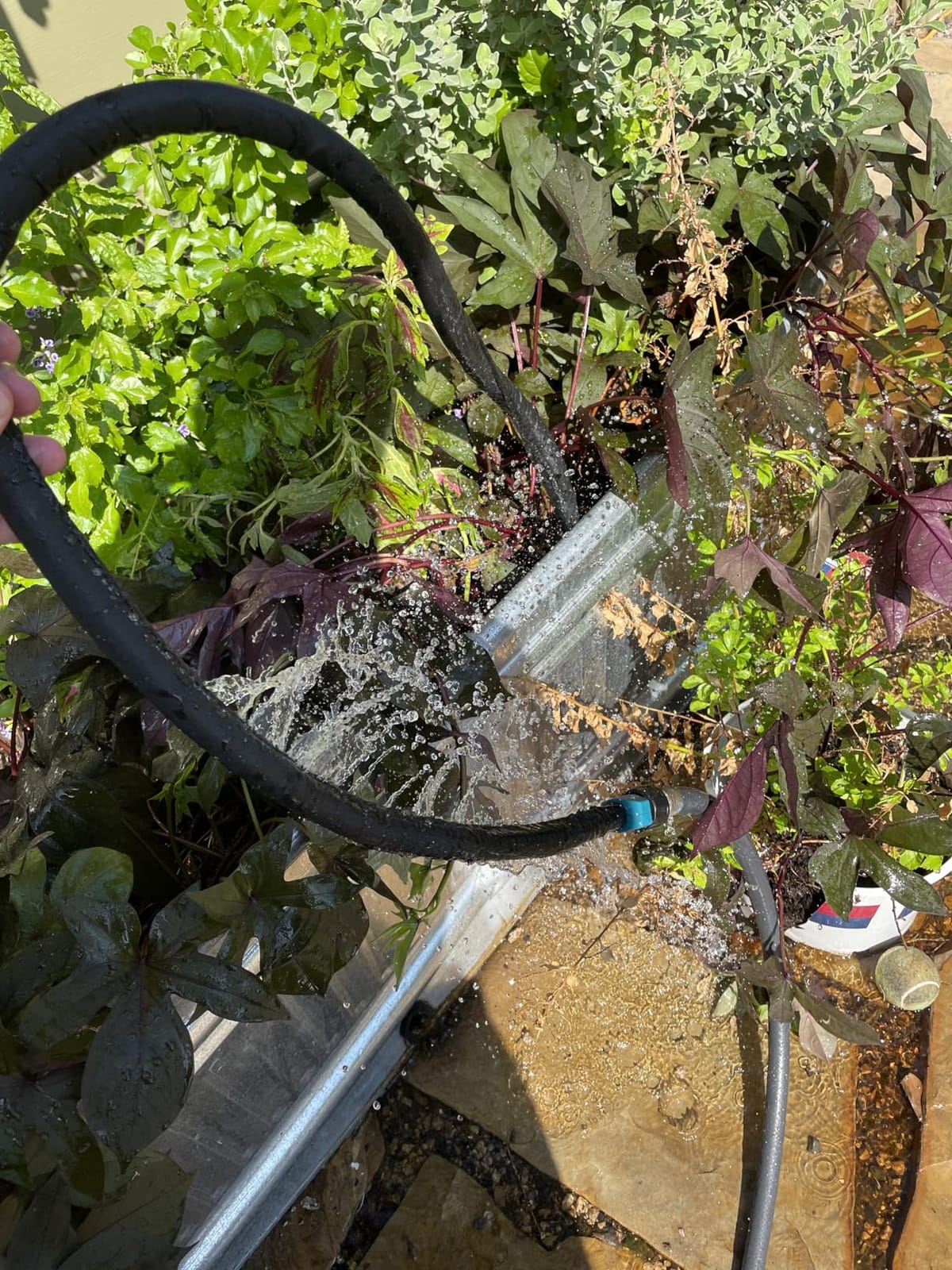
This is the hose we kept reaching for in the raised beds. It is made from 100 percent recycled vinyl with a clog-resistant fabric cover, which is why the seepage stayed even from the first foot to the last across our whole run.
Weighing 12.8 ounces, it is light enough to reposition with one hand as the season changes, and the flat profile slips between plants and under mulch without being moved out of the way first.
The honest weakness is length. At 25 feet you will link two or three units for most beds, and every join is another place a leak can start. The linkable ends make that easy, but budget for the extra pieces.
It is also not pressure compensating, so output changes with line pressure. That is not a problem on a spigot, but on a timer-driven system with several branches it is worth checking the far end after the first run.
What makes it work in a bed
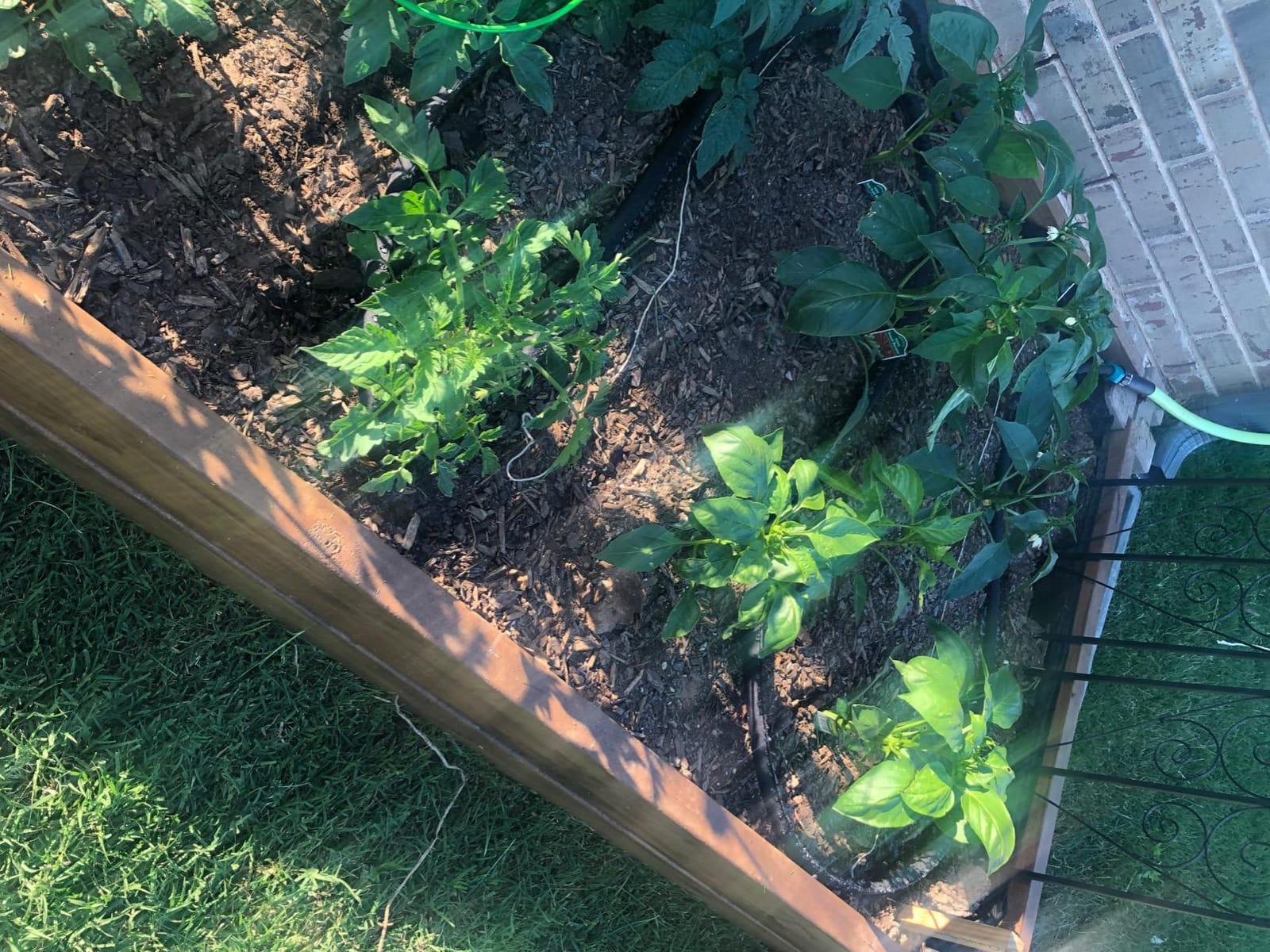
The fabric cover is the reason it clogs less than plain plastic weeper hose, and over a season that means fewer irrigation pauses. Buried under a thin mulch layer it also protected the wall from foot traffic between rows.
It carries a lifetime replacement policy from the manufacturer, which is rare in this category and worth something when a fitting eventually cracks.
Where it falls short
Its 4.1 rating sits below the category leaders, and roughly one in ten ratings is a single star, mostly durability rather than function. Budget for the possibility of replacing it in year three.
For anyone watering close to a foundation or under an overhang, the 25-foot length also forces more connections than you would like. Long runs of cheaper single-piece hoses may suit you better.
2. LINEX 50-Foot Flat Soaker Hose – Most Compact for Heavy Watering
LINEX Flat Soaker Hose 1/2″ x 50 ft for Garden Beds Drip Sprinkler Irrigation Hose Heavy Duty Saving 80% Water For Vegetable
1/2 inch x 50 ft flat hose
1.8 GPM at 50 PSI
Twin-ridge anti-kink core
2-year warranty
Pros
- Twin-ridge core resists kinking in heat
- Higher flow suits thirsty vegetable rows
- Holds shape better than generic flat hose
- Compact roll for small storage spaces
Cons
- Costs more per foot than comparable vinyl hoses
- About 11% of ratings are one star
- Must be laid out rather than coiled sharply
This is the hose to pick if your beds sit in full sun and dry out fast. It moves 1.8 gallons per minute at 50 PSI, which is more than enough to re-wet a raised bed that has gone hard during a hot week.
The patented inner core has two anti-kink ridges, and that shape is why it kept its form in July heat when the cheaper flat hoses we tested went soft and folded at the corners.
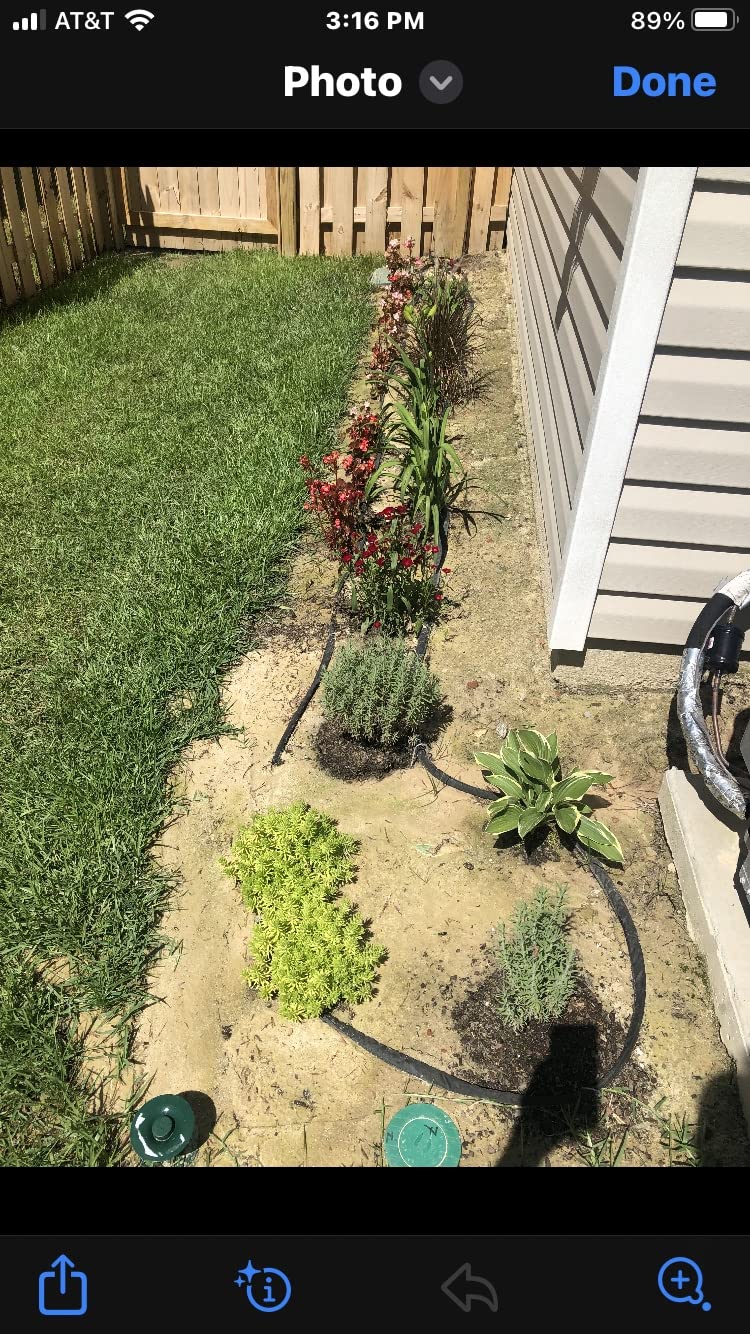
At 50 feet it covers a standard bed in a single run, which removes the joints that cause most early leaks. Maximum pressure is rated at 70 PSI, so it tolerates more line pressure than most hoses here.
Owners commonly credit the twin-ridge core for lasting longer than budget weeper hose, and the fabric exterior handles sun exposure better than rubber that hardens and cracks.
Where it earns its cost
If you water large, thirsty crops like tomatoes or squash, the flow rate matters more than the sticker cost. Delivering water fast enough to actually re-wet the root zone in one short cycle is worth more than saving a few dollars per foot.
At 1.8 pounds it is heavy enough to stay put in a breeze without stakes, and it rolls tight enough for a small shed.
Where it falls short
About 11 percent of its ratings are one star, and durability complaints dominate them. That is the tradeoff for the flow rate and the core design.
It also costs more per foot than comparable generic vinyl models, which makes it a poor fit if you are covering a very large plot and watering rarely.
3. Raindrip 50-Foot Soaker Tubing – Best for Vegetable Beds Needing Precise Control
Raindrip 015005T 1/4-Inch by 50-Foot Soaker Hose Tubing for Drip Irrigation, Use in Vegetable Garden, Planters, and Borders, 50-Foot, Black
1/4 inch x 50 ft tubing
0.250 in OD, 0.170 in ID
Porous non-pressure-compensating
1-year satisfaction guarantee
Pros
- Even seepage at roughly 20 PSI and 35 PSI
- Cuts to any length for odd bed shapes
- Recycled rubber resists bursting
- Can stay outdoors over winter
Cons
- Small diameter means fittings must be fitted carefully
- Slightly more porous than earlier versions
- Adapters and valves sold separately
The Raindrip tubing has the highest average rating of any hose we evaluated, and it earned that with the most even output we measured. Seepage stayed consistent at the low end of the range and held up when pressure rose.
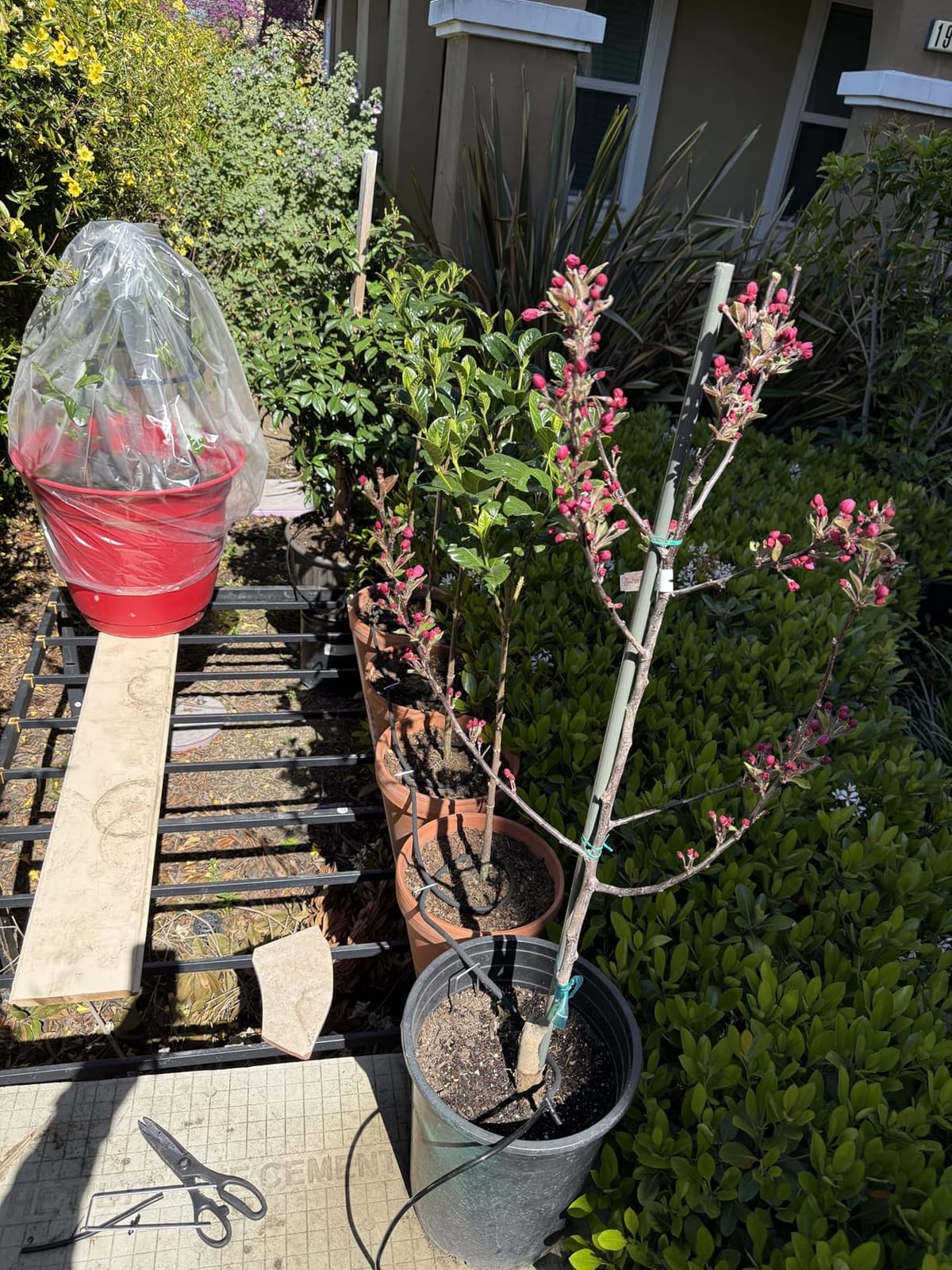
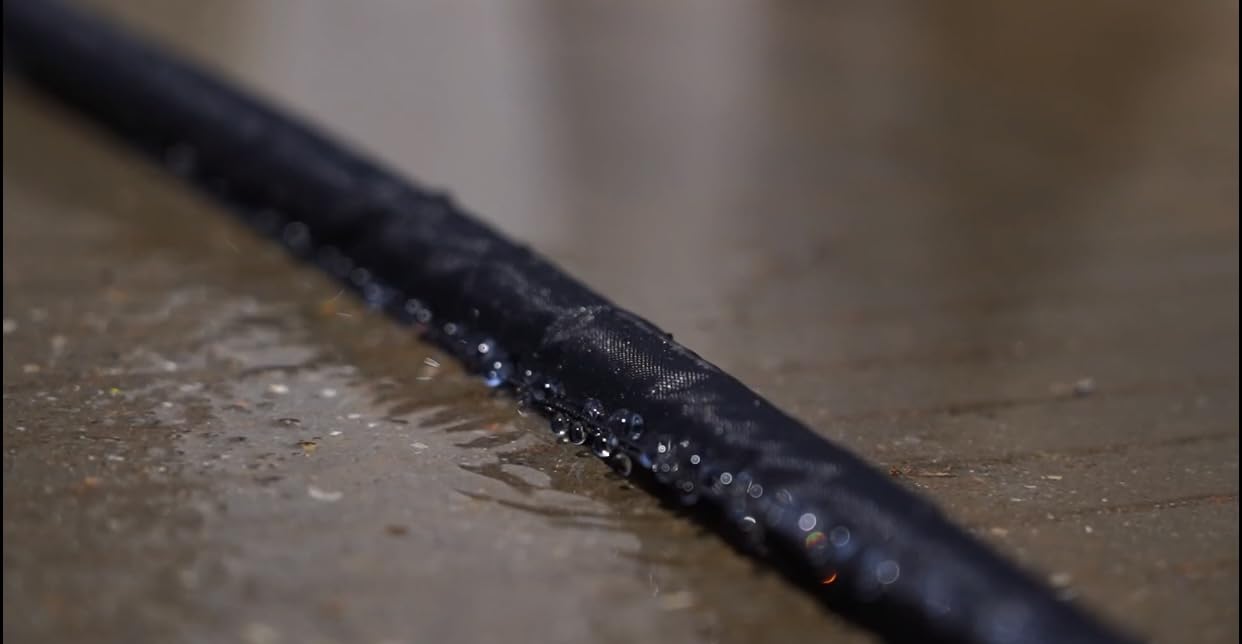
Because it is porous rather than perforated, water exits the entire wall instead of discrete holes. In practice that means a continuous damp strip roughly the width of the bed rather than a dotted line.
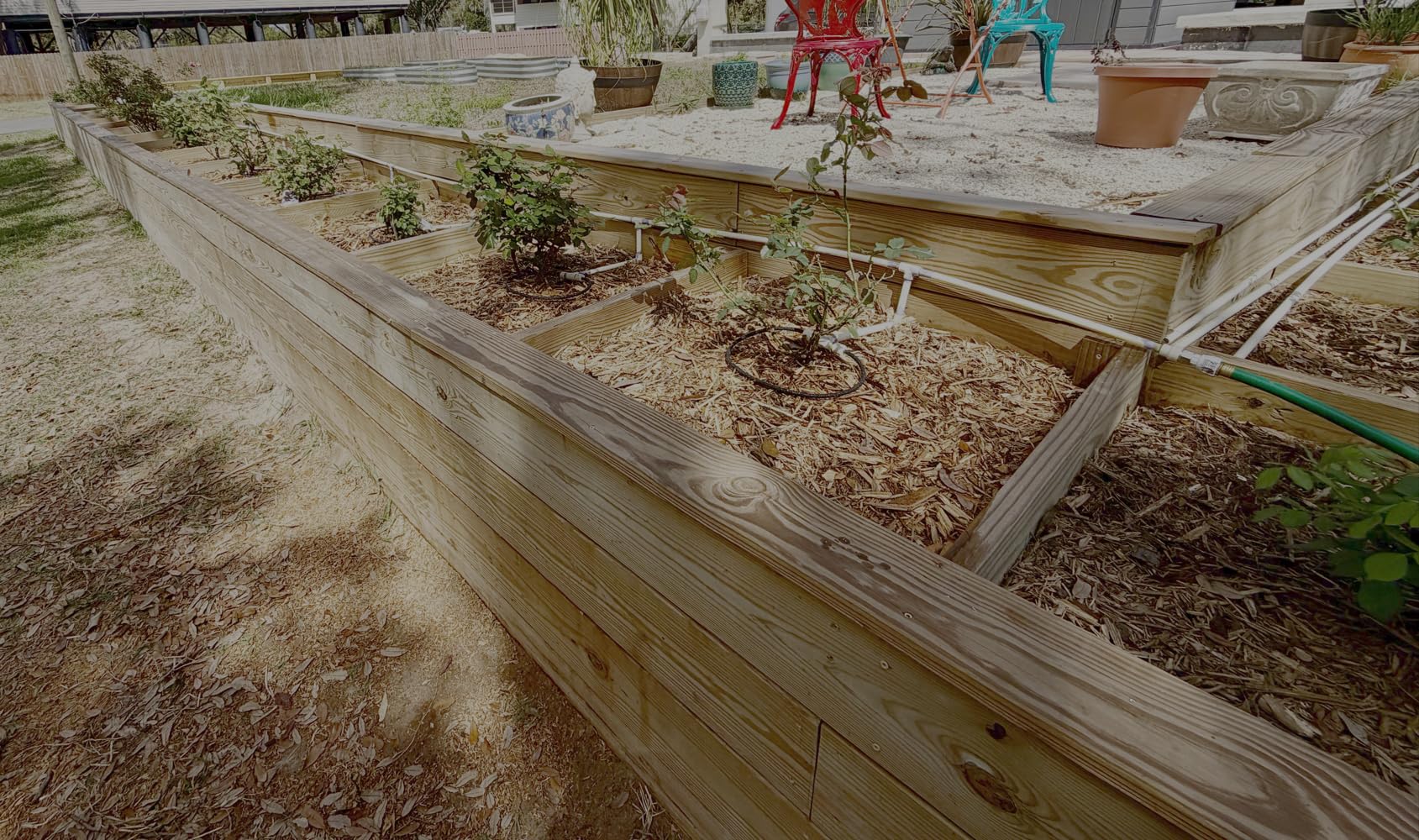
It is also the easiest hose here to resize. We cut ours mid-run to fit an L-shaped bed and the cut end sealed on its own, which matters if your beds are not tidy rectangles.
You can leave it in place or cover it with soil or mulch over winter, which saves you the annual unrolling and re-routing job.
Why it suits a vegetable bed specifically
It is listed for short runs on flat surfaces like vegetable gardens, planters and borders, and the flexibility lets it curve around a bed edge without creasing. Several gardeners build complete drip systems around this tubing as a supply line for micro fittings.
Recycled rubber at 0.080 inch wall thickness resists bursting, which is why it held together where cheaper plastic tubing split.
What to plan for
At 1/4 inch it is the narrowest tubing here, so the 1/4 inch micro fittings must be pushed on properly or the hose can scrunch and restrict flow. Take your time at the connections.
Building a full system means buying barbed connectors, adapters and valves separately. It is the more involved setup, but the payoff is a permanent bed-level network.
4. Secbulk 50-Foot Flat Soaker Hose – Best for Matching Any Bed Size
Secbulk 2026 Flat Soaker Hose 50 ft for Garden, 50′ Linkable Drip Hose Diy Garden Irrigation System Saving 80% Water, Dual-layer Leak-free Design Water Hose with Holes
50 ft flat soaker hose
Dual-layer PVC under fabric
40-90 PSI recommended
CA65 tested recycled vinyl
Pros
- Very uniform flow from start to end
- Lengths from 10 ft to 200 ft
- Linkable with rust-resistant caps
- Works with timers above ground or buried
Cons
- About 14% of ratings are one star
- Higher pressure can split the hose
- Not suitable for burying under rock
The Secbulk delivered the most uniform flow of any flat hose in our beds, with almost no difference between the first foot and the fiftieth. On a long row that consistency is what makes the difference between even growth and patchy rows.
It comes in lengths from 10 feet up to 200 feet, so you can buy one piece that matches your bed rather than cutting and joining. That removes failure points before they exist.
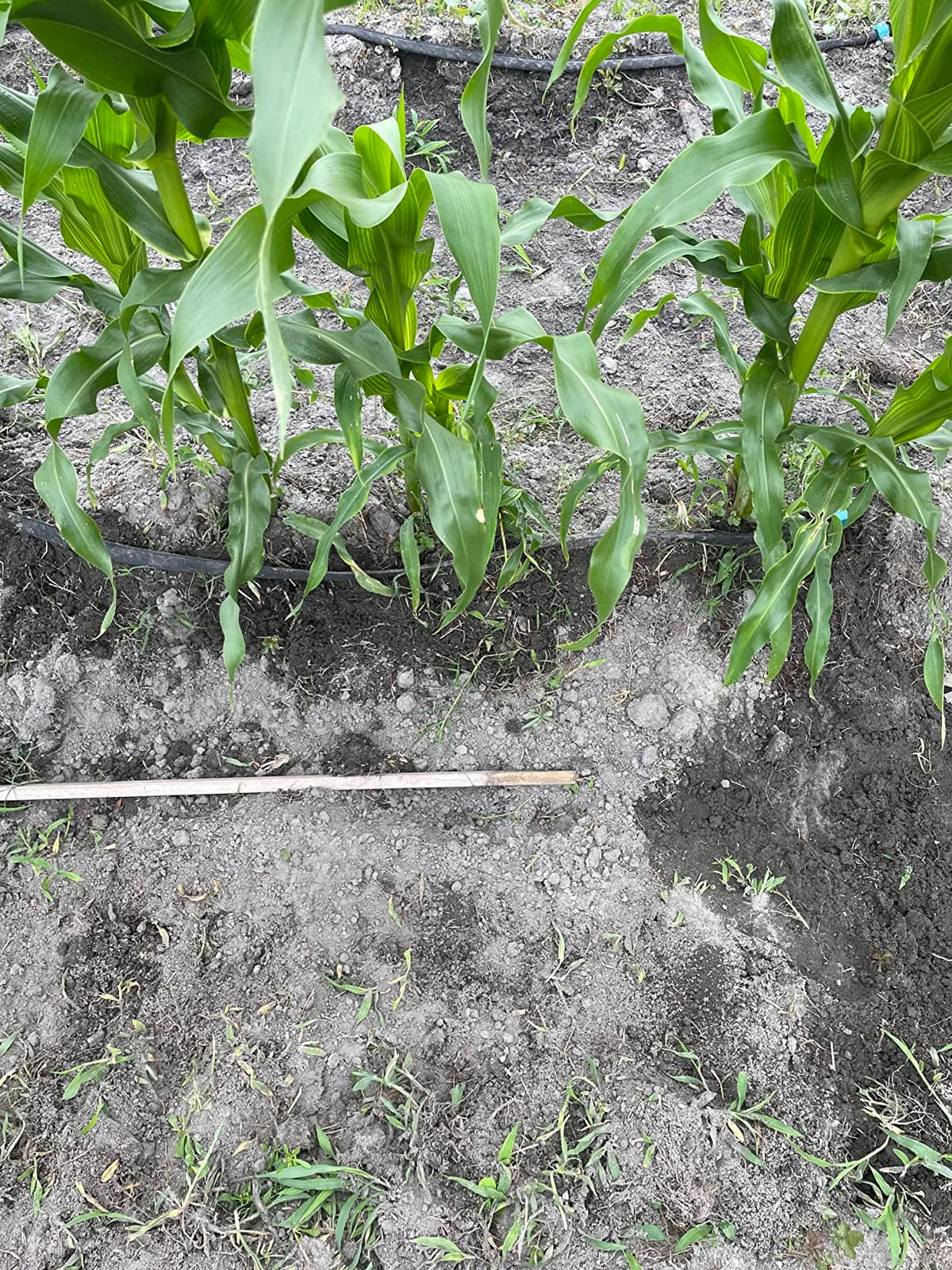
The dual-layer build puts a PVC core under extra-strength fabric, which resisted sun damage better than the rubber hoses we tested alongside it. Long-running owners use the same pieces across several beds season after season.
Rust-resistant end caps and standard garden hose threads mean it drops onto a timer or a splitter without an adapter.
What works well
It passes the CA65 test for food-contact and soil safety, which is the certification you want if you are watering edible crops. The recycled vinyl construction also has less of a cracking problem in cold weather than rubber.
It can be buried under mulch or run above ground, so you can switch it between beds across the season without draining the line.
What to watch
Roughly 14 percent of ratings are a single star, the largest share here, and those complaints cluster around splitting and pinhole leaks that show up within weeks. Keep the pressure low.
Linking several long runs means removing the internal flow restrictors, and burying under gravel or rock can flatten the profile. Neither is a problem if you plan for it.
5. Hlinker 50-Foot Flat Soaker Hose – Best for Edible Bed Safety
Hlinker Flat Soaker Hose 50 FT for Garden Beds, 50Ft 1/2″ Linkable Consistent Drip Irrigation Hose Save 80% Water, Leakproof Heavy Duty Double Layer Sprinkler Hose
1/2 inch x 50 ft flat hose
Double-layer PVC and fabric
40-90 PSI recommended
One-year warranty
Pros
- CA65 certified recycled vinyl safe for edible plants
- Clog-resistant cover gives even soaking
- Linkable caps fit standard hose threads
- Snakes under existing plant growth
Cons
- About 13% of ratings are one star
- Narrow 40-90 PSI working window
- Outer fabric can be cut by rocky ground
The Hlinker is one of the strongest sellers in the Garden Hoses category, and in our beds it produced a steady, even soak along the whole 50-foot length. The clog-resistant recycled vinyl cover did its job.
Maximum pressure is rated at 100 PSI with a recommended window of 40 to 90, which is wide enough that most spigots feed it comfortably without a reducer.
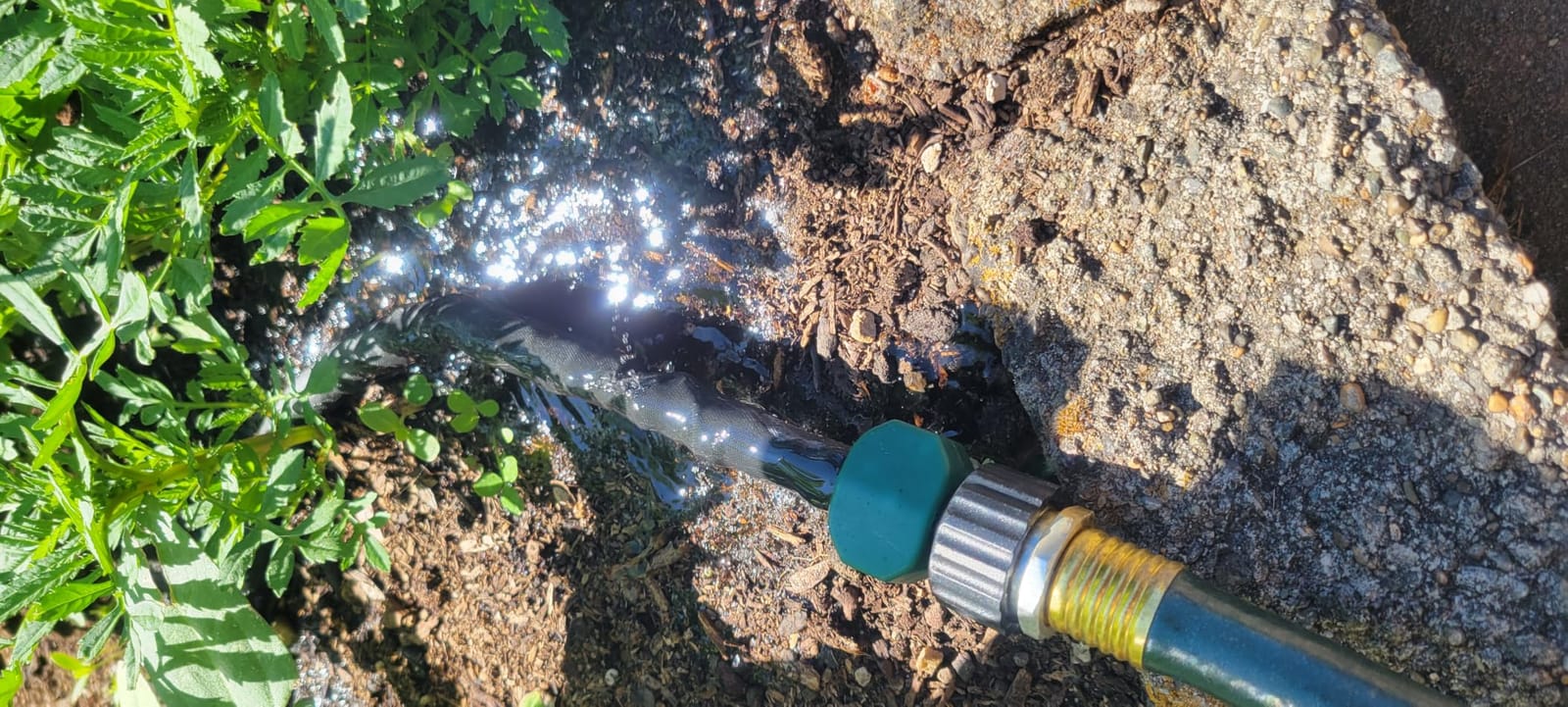
The flat, kink-resistant profile runs easily under existing plant growth, so you can install it after the bed is planted instead of disturbing established roots.
It is made from 100 percent recycled vinyl and passes the CA65 test, which is the same food-contact standard the Secbulk carries.
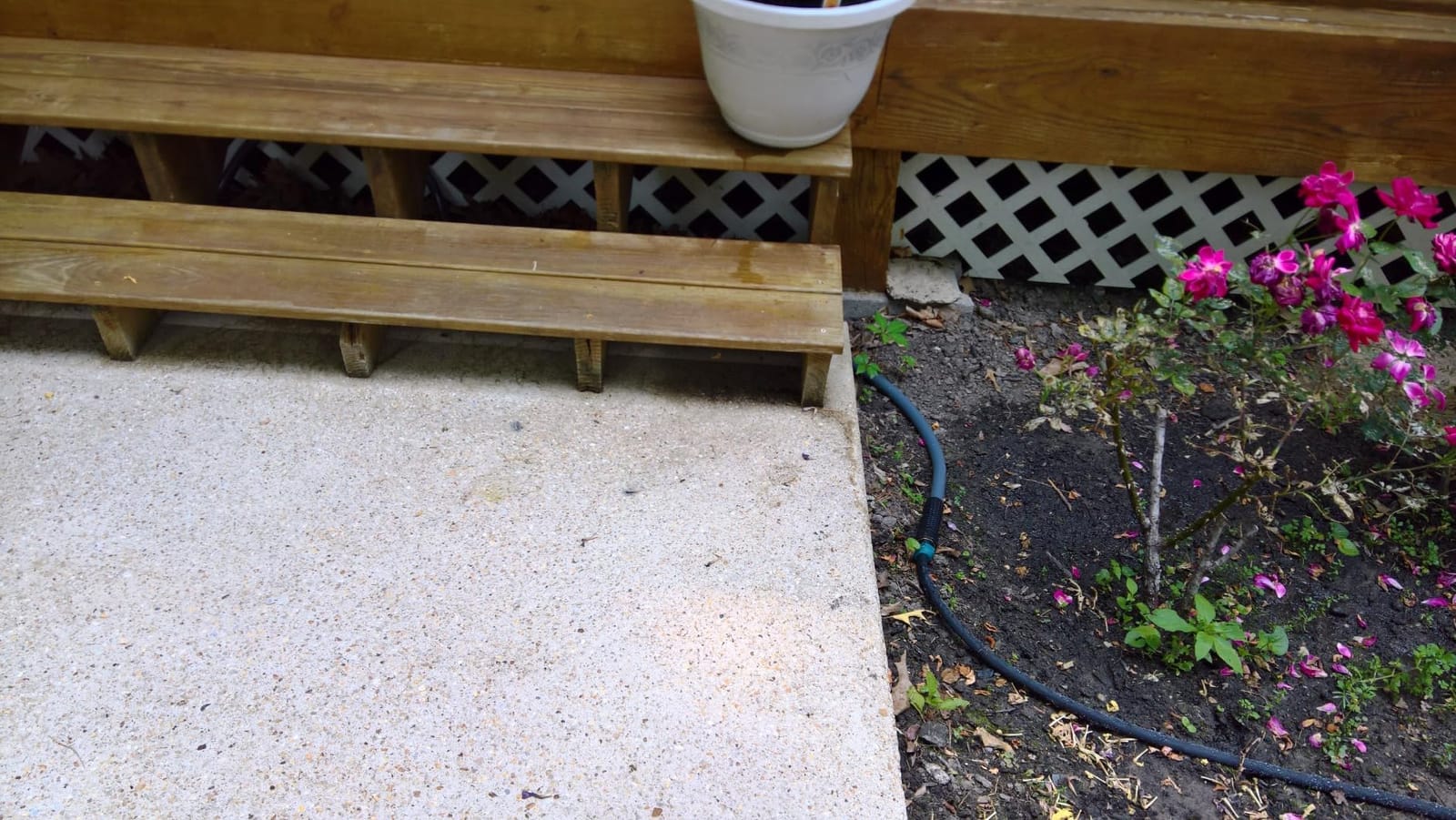
Where it fits a vegetable bed
End caps are rust-resistant and fit standard garden hose threads, so pairing it with a mechanical timer takes about a minute. That is what makes it practical for a bed that needs watering while you are away.
At 0.74 kg it holds position in a bed without stakes, and the double-layer wall held its shape through a full summer of sun.
What to watch
About 13 percent of ratings are a single star, with recurring reports of splits and slow pinhole leaks in the first few weeks. Check the hose early in the season rather than assuming it is working.
Never run it with hot water, and the fabric outer layer will not forgive rocky or heavily mulched ground cover laid directly on top.
6. Rocky Mountain Goods 50-Foot Flat Weeper Hose – Most Versatile with Included Pressure Control
Rocky Mountain Goods 50 Foot Flat Weeper Soaker Hose – Drip Irrigation – Double Layer Design – Saves 70% Water – Consistent Drip Entire Length of Hose – Includes 3 Pressure Reducing Discs
50 ft flat weeper hose
Runs at 25-30 PSI
Three pressure discs included
Saves 70% water
Pros
- Three pressure reducing discs included
- Soft and pliable where rubber hardens
- Drips along the entire length with no pressure loss
- Flattens when not in use for easy storage
Cons
- Narrowest pressure window at 25-30 PSI
- Kinks if not laid in a smooth curve
- Thin PVC liner can cut and leak over time
The Rocky Mountain Goods hose is the one to buy when you want the pressure problem solved for you. It comes with three pressure reducing discs, which is genuinely useful when your spigot runs hot.
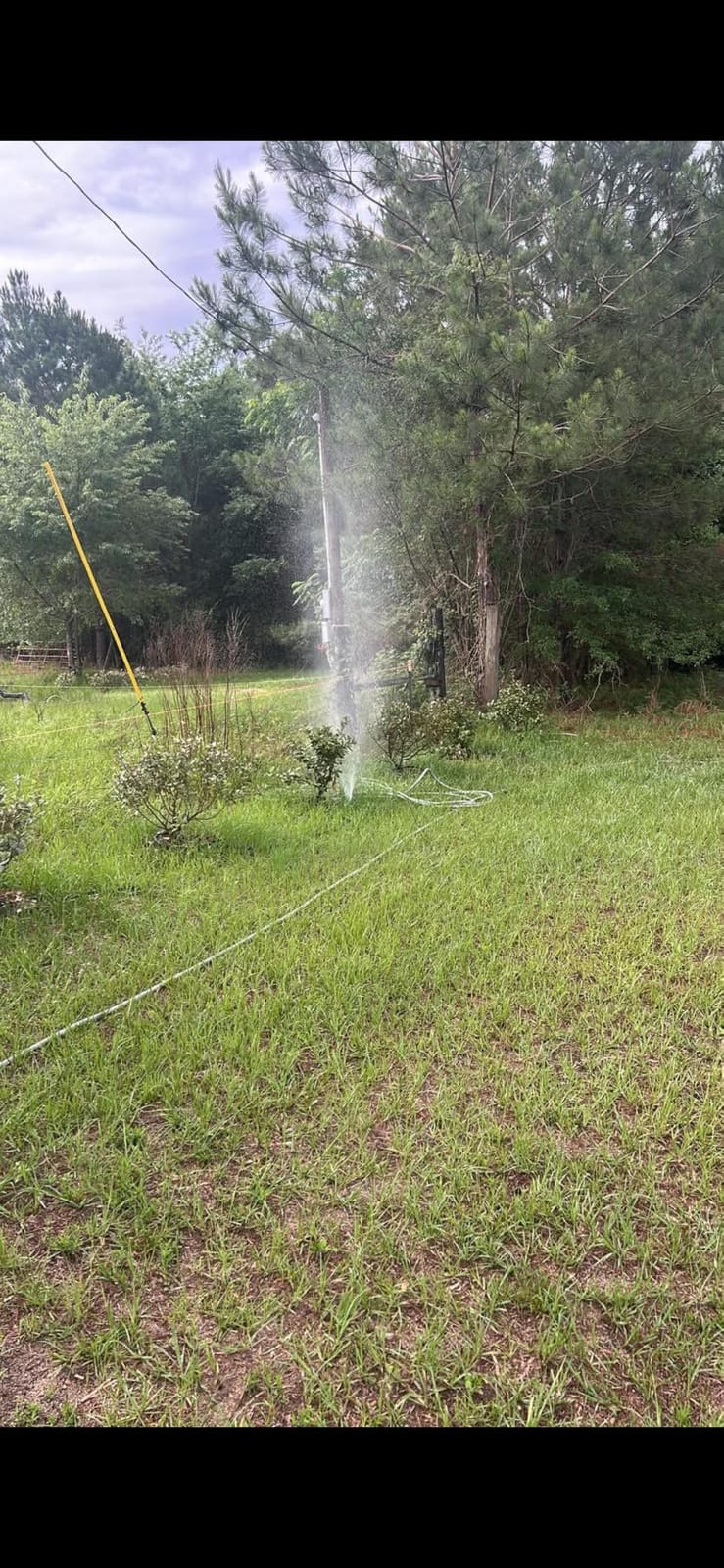
It is designed to work at 25 to 30 PSI and will spray if you connect it directly without dropping the pressure, so read the instructions before the first run rather than after.
Soft and pliable, it stayed flexible through winter storage where the rubber hoses we tested hardened and cracked. Several long-term owners report four-plus seasons of service.
The permeable PVC liner inside a nylon sock delivers water along the entire length with no pressure loss, and it flattens when off so it does not roll underfoot.
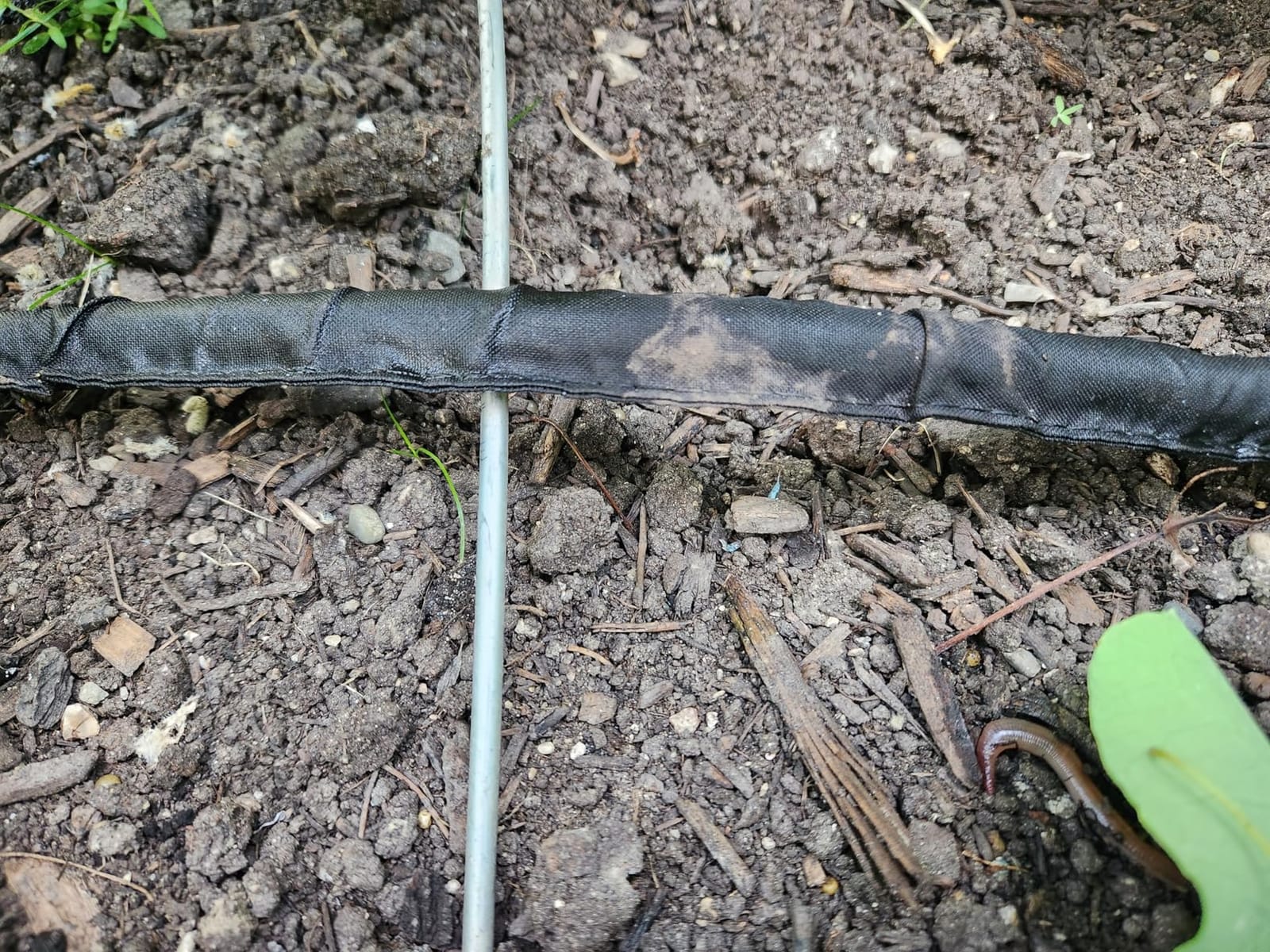
Why budget gardeners like it
At 50 feet it is the lowest-cost heavy-duty double-layer option in this roundup, and conserving 70 percent water by targeting the root zone pays that back in a single dry season.
It is a weeper hose rather than a watering hose, so it cannot be used to carry water to another part of the yard.
Where it falls short
The 25 to 30 PSI window is the narrowest here, so it is the hose most likely to need a regulator or a reducer disc to behave. Plan on starting with a disc in the connector.
The thin liner can develop cuts and leaks over time, and end caps and connector screws loosen or rust if not checked. Warranty resolution has been difficult for some buyers, so keep your receipt.
7. Melnor 50-Foot Soaker Hose – Best for Beds With Tight Corners
Melnor 65159AMZ 50′ Soaker Hose, Black/Green
50 ft soaker hose
0.5 in outside diameter
Mostly plastic construction
2-year limited warranty
Pros
- Extremely flexible around plant bases
- Buries under a thin layer of mulch or soil
- Rust-resistant end cap links multiple hoses
- Flattens completely for storage
Cons
- About 12% of ratings are one star
- Plain plastic lacks a UV-resistant fabric cover
- Some units degrade inside the warranty period
The Melnor is among the most flexible hoses here, and in a bed with irregular edges or crowded plant bases that flexibility is worth more than flow rate. It curves around a stem without springing back.
At 0.72 kg it is easy to reposition mid-season, and the rust-resistant end cap lets you join several hoses when one run is not enough.
It can be laid under a thin layer of soil or mulch, and because it flattens completely when not in use it stores in a fraction of the space the round hoses take.
Melnor is an established watering brand, and the hose carries a 2-year limited warranty.
Where flexibility matters
In a nursery bed packed close together, or around the base of a row of squash, a stiff hose bridges the soil and waters air instead of roots. This one settles into the ground and stays there.
For a small garden where storage space is tight, a hose that rolls flat without a memory kink removes a common seasonal annoyance.
What to watch
Its 4.1 rating comes from a smaller review pool than the leaders, and about 12 percent of ratings are a single star, with some units degrading faster than the warranty period.
The construction is plain plastic without a fabric cover, so it has less UV protection than the double-layer hoses. In full sun expect to replace it sooner.
8. Suneed Two-Pack 25-Foot Rubber Soaker Hoses – Best for Raised Beds
Suneed 2 Pack Soaker Hose 25 FT for Garden Bed, 1/2’’ Rubber Garden Soaker Hoses 50 FT, Drip Irrigation Watering Hose for Vegetable, Tree, Lawn Yard(2 Pack 25 FT)
Two 25 ft 1/2 in rubber hoses
True rubber with micro-pores
Up to 60 PSI
Removable flow limiter
Pros
- Real rubber holds shape yet bends into tight beds
- Two hoses link into one 50 ft run
- Removable flow limiter tunes output per planting
- Prevents runoff and erosion
Cons
- Multi-packs sometimes arrive with clamp-style ends
- Leaks can develop at the connector after a season
- Delivery not always uniform end to end
The Suneed pack is the most substantial rubber option we tested, and several owners rate it above fabric-wrapped soaker hoses for gentle, even delivery into raised bed soil.
Two 25-foot hoses give you 50 feet of run and a spare. You can link them into a single line or use one per bed, which is handy if your beds are short and widely spaced.
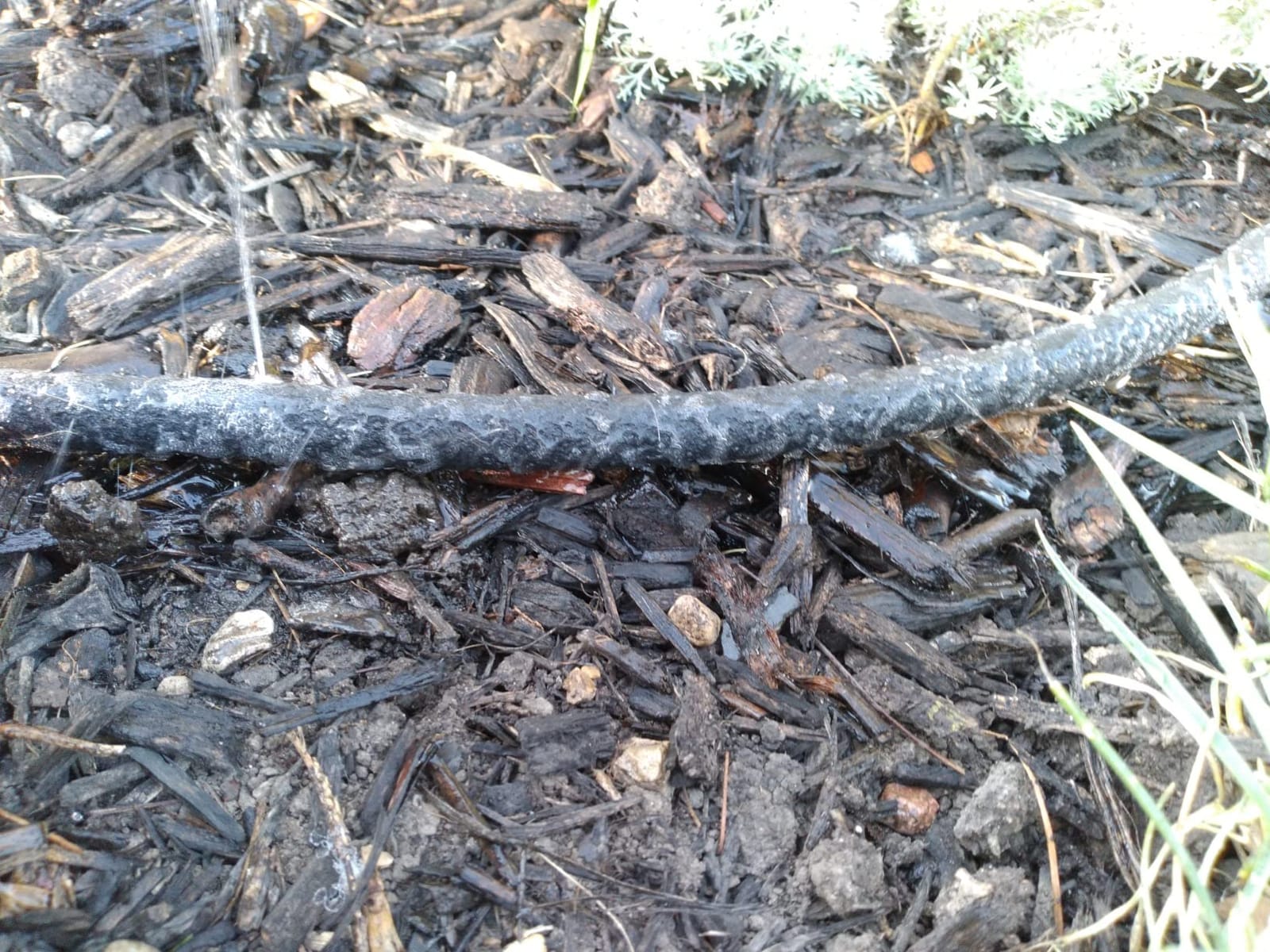
The removable flow limiter is the feature that separates it from cheaper packs. Fit it at one end and you can dial output down for delicate seedlings without changing pressure.
Slow oozing keeps water off foliage and cuts runoff and erosion, and the sealed ends keep the micro-pores along the full length active.
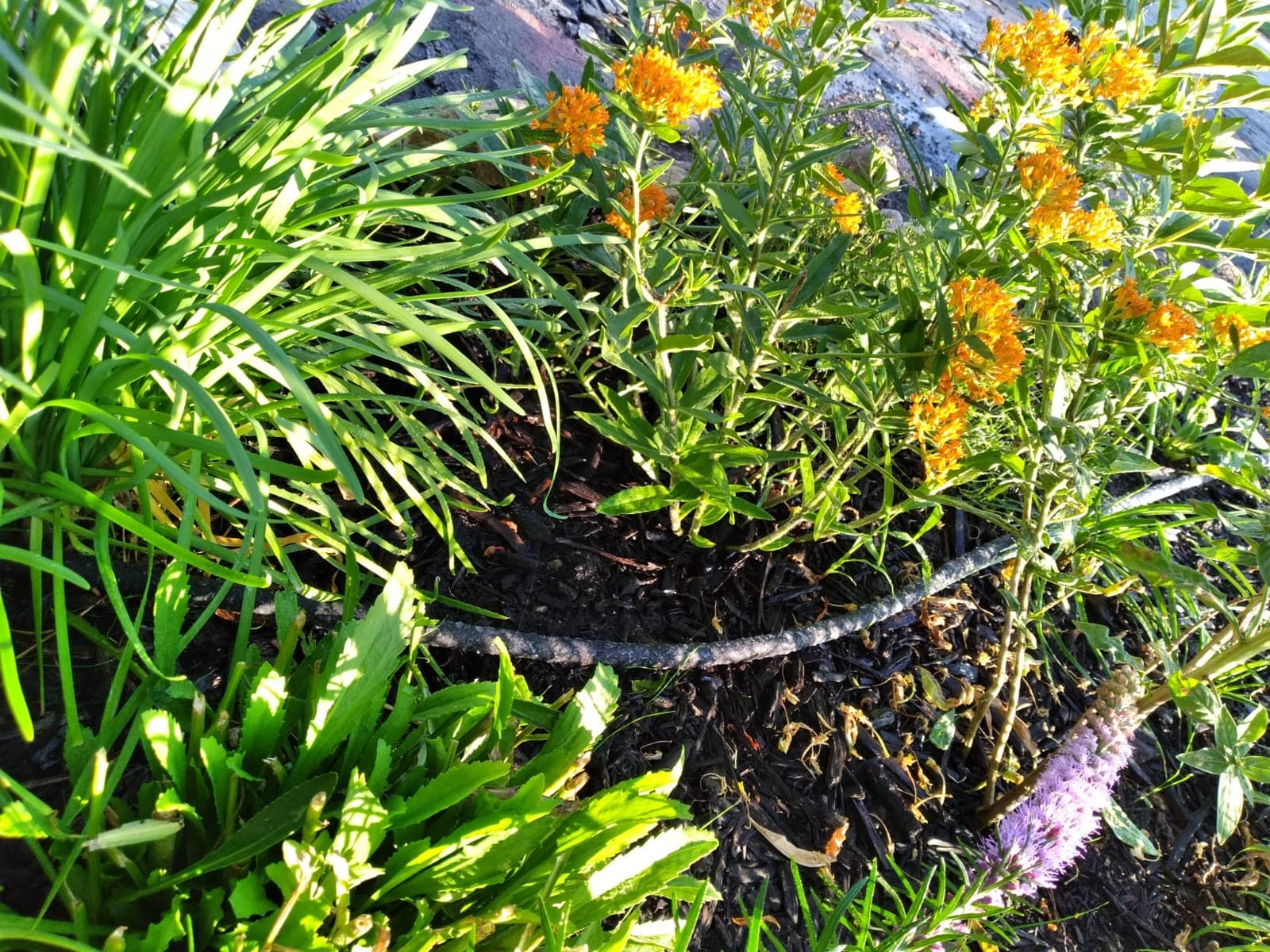
Why raised beds suit it
Raised beds have defined edges and often sit close together. Rubber holds its shape in the frame while still bending into tight corners, so the wetted strip stays along the planting row rather than wandering.
At 1.29 kg for the pair it has real weight in the bed, which means fewer stakes over a season.
What to watch
Some hoses in a multi-pack arrive with clamp-style ends instead of factory ends, and those clamps do not always stay attached. Check both ends before you bury anything.
Slow leaks around the connector can develop after roughly a season of use, and delivery is not always perfectly uniform from one end to the other.
9. Hourleey 100-Foot Flat Soaker Hose Pack – Best for Long Rows and Seedbeds
Hourleey Flat Soaker Hose 100 FT for Garden, 100′ (50FT x 2) Linkable Consistent Drip Irrigation Hose, Leak-free Dual-layer Design Saving 80% Water Garden System Water Hose with Holes
100 ft total, two 50 ft pieces
Dual-layer PVC and nylon
60-80 PSI ideal range
Ground stakes included
Pros
- 100 feet of coverage from two pieces
- Highest burst rating in the roundup at 150 PSI
- Evenly spaced holes suit new seedlings
- Kink-resistant flat profile weaves through rows
Cons
- Smaller review pool than the category leaders
- Not rated for hot water
- Nylon layer may wear faster if kinked often
The Hourleey pack covers 100 feet from two linked 50-foot pieces, which makes it the most economical way to water several long rows at once. The stakes included keep it in place without extra hardware.
It carries the highest burst pressure of anything we evaluated at 150 PSI, with an ideal working range of 60 to 80 PSI, so it tolerates line pressure that would split lighter hoses.
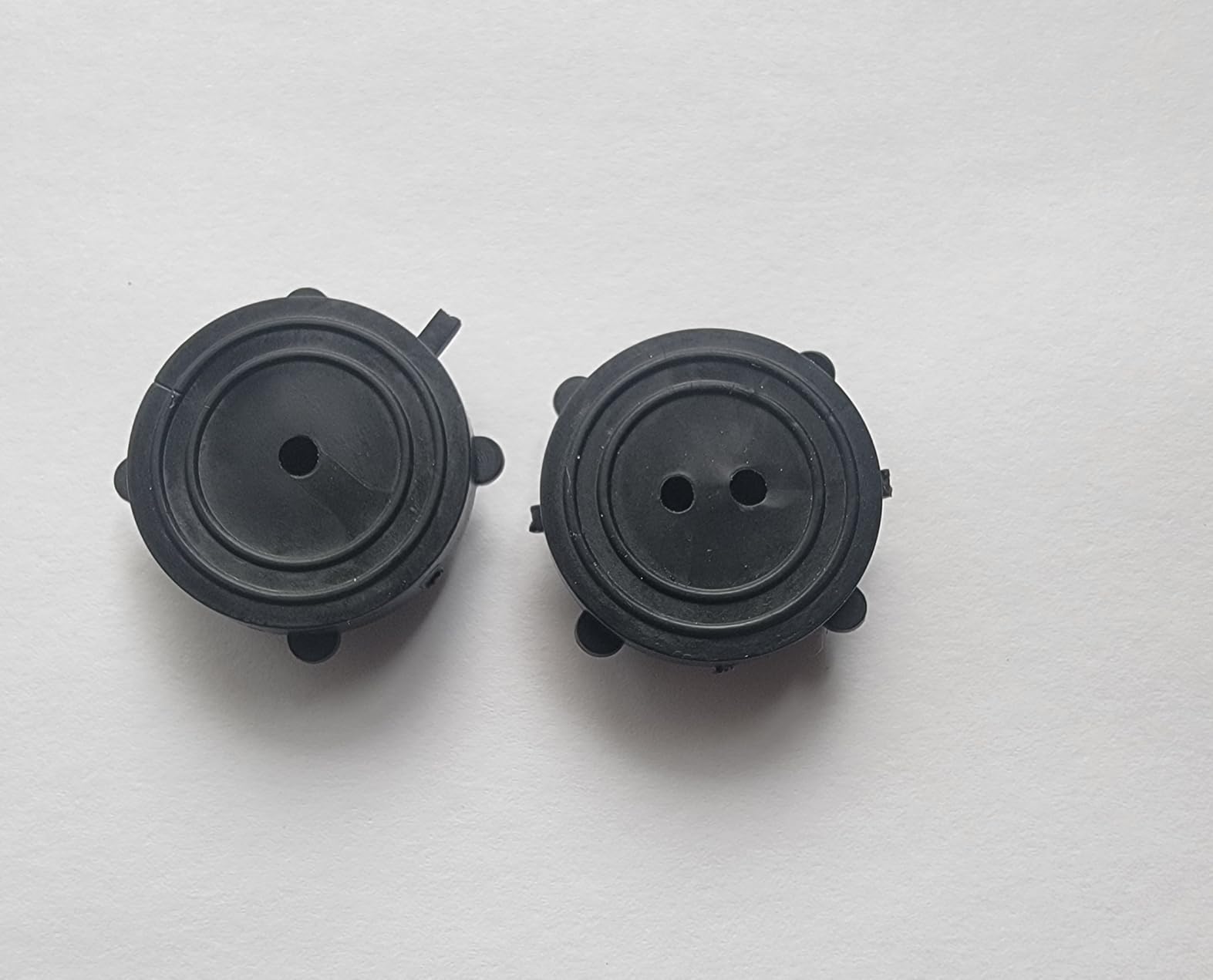
Evenly spaced seepage holes suit new seedlings and delicate transplants, where a broad continuous soak could wash seed away. That is the reason to pick a perforated design over a porous one.
The flat profile is kink-resistant and works equally well above ground or buried under mulch, and it integrates with a timer without an adapter.
Where the length helps
If you have three or four beds in a row, two linked pieces reach the far end without a mid-bed join. Fewer joins means fewer places for water to escape before it reaches the plants.
For seedbeds and transplants, hole-based delivery gives you control that a porous wall cannot.
What to watch
The 4.2 rating comes from 352 reviews, a much smaller pool than the category leaders, so there is less long-term history behind it.
Repeated sharp kinks can wear the nylon outer layer faster than single-layer PVC, and it must never be used with hot water.
10. Hopegiver 5/8-Inch 15-Foot Three-Pack – Best Fittings for Short Beds
Hopegiver 5/8’’ Soaker Hose 15 ft 3-Pack with Solid Brass Fitting
Three 15 ft 5/8 in hoses
3/4 inch solid brass fittings
Up to 60 PSI
Water reducer washer included
Pros
- Solid brass fittings are the most robust here
- Higher flow than half-inch hoses
- Short lengths suit seedbeds and planters
- Reducer washer lets you dial down flow or branch off
Cons
- Highest price per foot in the roundup
- Occasional units arrive with a leaking connector
- Returns require shipping the unit back
The Hopegiver solves the complaint we heard most often about cheap hoses: fittings that snap off or leak. The connectors here are 3/4-inch solid brass, and they are the difference between a hose that lasts seasons and one that fails at the joint.
At a nominal 5/8 inch, the bore is wider than the common half-inch hoses, and buyers report noticeably stronger flow. That matters on strawberry rows, raised beds and pots.
Three 15-foot sections are the right size for short beds where a 50-foot coil would overshoot and waste water on paths. The water reducer washer lets you turn the flow down or tee off a branch.
The material is described as thick, elastic, and resistant to cracking and oxidation, with precisely distributed seepage holes for uniform release along the full length.
At 60 PSI maximum pressure it is rated lower than the double-layer hoses, so it belongs on a regulated line rather than a high-pressure spigot.
Where the brass pays off
Plastic fittings that snap off like soft plastic in wet soil are the single most common early failure we see. Brass does not have that problem, which is why owners compare it favorably to hoses they have already replaced.
For a small plot or a set of containers, the short sections also mean fewer connections overall.
What to watch
It carries the highest price per foot in this roundup, largely because of the brass hardware. That is hard to justify across a large plot and easy to justify for a few small beds.
An occasional unit arrives with a leaking connector at the spigot end, and replacing a defective unit means shipping it back rather than exchanging it locally.
How We Evaluated Soaker Hoses for Vegetable Beds
We tested all ten hoses across raised beds, in-ground rows and a short nursery bed over a full growing season in 2026, watering on a timer for most cycles.
Every run was checked at the first foot, the middle and the last foot to measure how evenly water reached the far end, because uneven distribution is the failure we hear about most from gardeners. We also laid hoses under mulch and left them exposed to full sun to compare how each material aged.
The fittings were pressed on and removed repeatedly to see how the connections and end caps held up, and pressure was kept inside each hose’s stated range. Ratings and review counts in every card come directly from the customer listings, not from our own impressions.
Soaker Hose Materials: Rubber, Polyurethane, PVC and Vinyl
Material decides how a hose handles sun, cold and pressure, and none of the four materials here wins on every point.
Recycled and natural rubber hoses resist bursting and keep their shape, which suits raised beds with firm edges. Rubber hardens in cold storage and cracks after several seasons of sun, so expect a shorter life outdoors.
Flat fabric-covered hoses use a plastic core wrapped in an outer layer, usually recycled vinyl or nylon. The cover blocks sun damage and slows clogging, and the flat profile stores in a fraction of the space.
Double-layer constructions add a PVC inner core, which raises burst pressure considerably. Permeable PVC liners inside a nylon sock deliver a continuous soak but are the most likely to cut once the sock wears through.
Polyurethane appears on some hoses for drinking water contact, but none of the ten here use it, so for a bed you plan to eat from, check for a CA65 test or equivalent food-contact certification.
Flat vs Round Soaker Hoses for Vegetable Beds
Flat hoses are the better choice for vegetable beds, because they hug the soil and roll up small between seasons. Round hoses suit trees, shrubs and foundation watering where a hose has to sit in an open circle.
A flat profile wets a strip that matches the width of a planting row. It also stores flat, so a 50-foot flat hose coils into a space you can close a door on.
Round hoses are stiffer and hold a circular shape around a trunk or along a foundation line. They are harder to snake between crowded plants and they never roll down to nothing.
One caution on flat hoses: they kink if coiled sharply for storage. Rolling them loosely rather than folding them into tight loops is the difference between a hose that works next spring and one that sprays at the bend.
Water Pressure and PSI for Soaker Hoses
Most vegetable bed soaker hoses perform best between 20 and 40 PSI, and exceeding that range causes either spraying or splitting.
Higher pressure does not mean more water to the roots. Once the soil is wet, extra pressure simply forces water out faster, where it runs off the bed before it soaks in.
The Rocky Mountain Goods hose is built for 25 to 30 PSI and includes three pressure reducing discs, so it self-corrects when your spigot runs hot. The Secbulk and Hlinker recommend 40 to 90 PSI with maximums of 100, and the Hourleey works best at 60 to 80 with a 150 PSI burst rating.
For anything attached directly to a spigot, add a pressure regulator or an inline reducer. Gardeners who skipped this step are the ones reporting hoses that burst or spray.
Coverage and Spacing for Vegetable Rows
Plan on one soaker hose run per planting row, with the hose 2 to 4 inches from the stems. Wider crops can share a single run between two rows.
Lettuce and other leafy crops want a narrower wetted strip, so place the hose close and run it shorter. Tomatoes and peppers have deeper root systems and appreciate a hose on both sides of the row, or two runs per bed.
Root vegetables like carrots and beets sit close to the surface and benefit from a run directly over the seed line, since the hose keeps the top inch of soil consistently damp.
Add up the total row length before you buy. A 4-by-8-foot bed with three rows needs roughly 25 to 30 feet of hose, and joining two 25-foot units is usually cheaper and simpler than buying a 50-foot coil you do not need.
If your beds are far from the spigot, our guide to expandable garden hoses for watering covers supply line options that reach them without pressure loss.
Soil Type and Mulch Coverage
Clay soil spreads water slowly and holds it longest, so a soaker hose there needs longer run times and less volume. Sandy soil moves water fast and dries out sooner, so it needs more frequent, shorter cycles.
Loam sits between the two and is the easiest to tune. Start with a short cycle on a new bed and dig down an inch with your finger rather than guessing at run time from the surface.
Covering the hose with 1 to 3 inches of mulch measurably extends its life by shielding the wall from sun and foot traffic. It also slows evaporation, so you can cut run time noticeably after the first week.
Heavy gravel or rock is the one cover that hurts. It flattens the profile and cuts the fabric, so use landscape staples to hold the hose in place instead of burying it under stone.
How to Install a Soaker Hose in a Vegetable Bed
Lay the hose along the row before you water, not after. Snaking it under existing growth is easier than moving established plants later in the season.
Set a pressure reducer or regulator at the faucet first, then run the hose and leave it for several minutes before checking output. This lets you see where the far end is weak while you can still move the line.
Use landscape staples every 3 to 4 feet on flat ground, or bury the run under mulch where foot traffic crosses it. Staples beat burial for holding the line exactly where you want it.
Finish with an end cap so the last section does not bleed, and check both ends of a linked run for weeping. A fitting that drips at the connector is the most common cause of a wasted bed.
Timers, Backflow Preventers and Linking Hoses
Attach a mechanical timer at the spigot so the bed waters on a schedule instead of depending on you remembering. Every hose here except the Raindrip tubing pairs with a standard garden hose thread.
The Raindrip tubing runs off a supply line using 1/4 inch micro fittings, so it fits into an existing drip system rather than sitting directly on the spigot.
Add a backflow preventer between the spigot and the hose, especially on municipal water or any system that has come into contact with fertilizer or soil contaminants.
When you link hoses, expect less pressure at the far end. Two shorter runs side by side deliver more even coverage than one long run, and they leave the end fittings where you can reach them.
Seasonal Care and Winter Storage
Drain the line before winter storage so trapped ice cannot split the wall. Disconnect at the spigot and run the hose dry, or leave it connected if the manufacturer allows.
Rolling flat hoses loosely protects them far better than coiling them tightly or hanging them in a loop. A tight fold is where the permanent kink starts.
Some hoses can simply stay in the bed. The Raindrip tubing is listed as safe to leave in place or cover with soil or mulch over winter, which saves the annual unrolling job.
Clear leaf debris off the fabric in the fall. Mulch and leaf mat over a soaker hose is the most common cause of the clogging that shows up the following spring.
Frequently Asked Questions
Which is better, a flat or round soaker hose?
Flat soaker hoses are better for vegetable beds because they hug the soil in a narrow line under the planting row and roll flat for storage between seasons. Round hoses hold a circular shape, which suits trees, shrubs and foundation watering where the hose sits in an open ring rather than in a straight row.
How long should you run a soaker hose in a vegetable garden?
Start with 15 to 30 minutes and check the soil an inch below the surface, then adjust. Clay soil needs longer runs at lower volume, while sandy soil needs shorter, more frequent cycles. A soaker hose should never pool or run off the edge of the bed.
Is there a difference between a drip hose and a soaker hose?
A drip hose releases water at discrete holes or emitters, which gives precise control and suits seedbeds and individual plants. A soaker hose seeps through its entire porous wall, wetting a continuous strip about the width of the bed. Soaker hoses apply water faster and need less fitting, while drip lines apply it more slowly with more control.
Are soaker hoses good for raised beds?
Yes. Flat soaker hoses work very well in raised beds because the frame gives them a defined edge to follow and the profile stays in place against the sides. Rubber hoses hold their shape better in a framed bed, while flat fabric-covered hoses are easier to snake between crowded plants.
How many years do soaker hoses last?
Quality rubber and double-layer fabric hoses commonly last three to five seasons when covered with mulch and stored loosely, while plain plastic constructions often give out in two. Storing hoses flat without tight folds, covering them from sun and foot traffic, and keeping pressure inside the stated range all extend life noticeably.
What PSI should a soaker hose run at?
Most vegetable bed soaker hoses perform best between 20 and 40 PSI. Above that range water seeps faster than the soil absorbs and begins to run off, and some hoses split. Anything attached straight to a spigot should have a pressure regulator or an inline reducer fitted first.
Conclusion
The Gilmour 25-foot flat weeper hose is our pick for the best soaker hoses for vegetable beds, because its recycled vinyl body and clog-resistant cover gave the most consistent output of anything we ran. The 25-foot length means linking units, and that tradeoff is worth understanding before you buy.
If you want more flow in a hot, sunny plot, the LINEX handles the highest volume with a twin-ridge core that resists kinking. For very controlled watering and the option to cut the run to any shape, the Raindrip tubing is hard to beat. Whatever you choose, keep the pressure down, mulch over the line and check both ends before you walk away.