
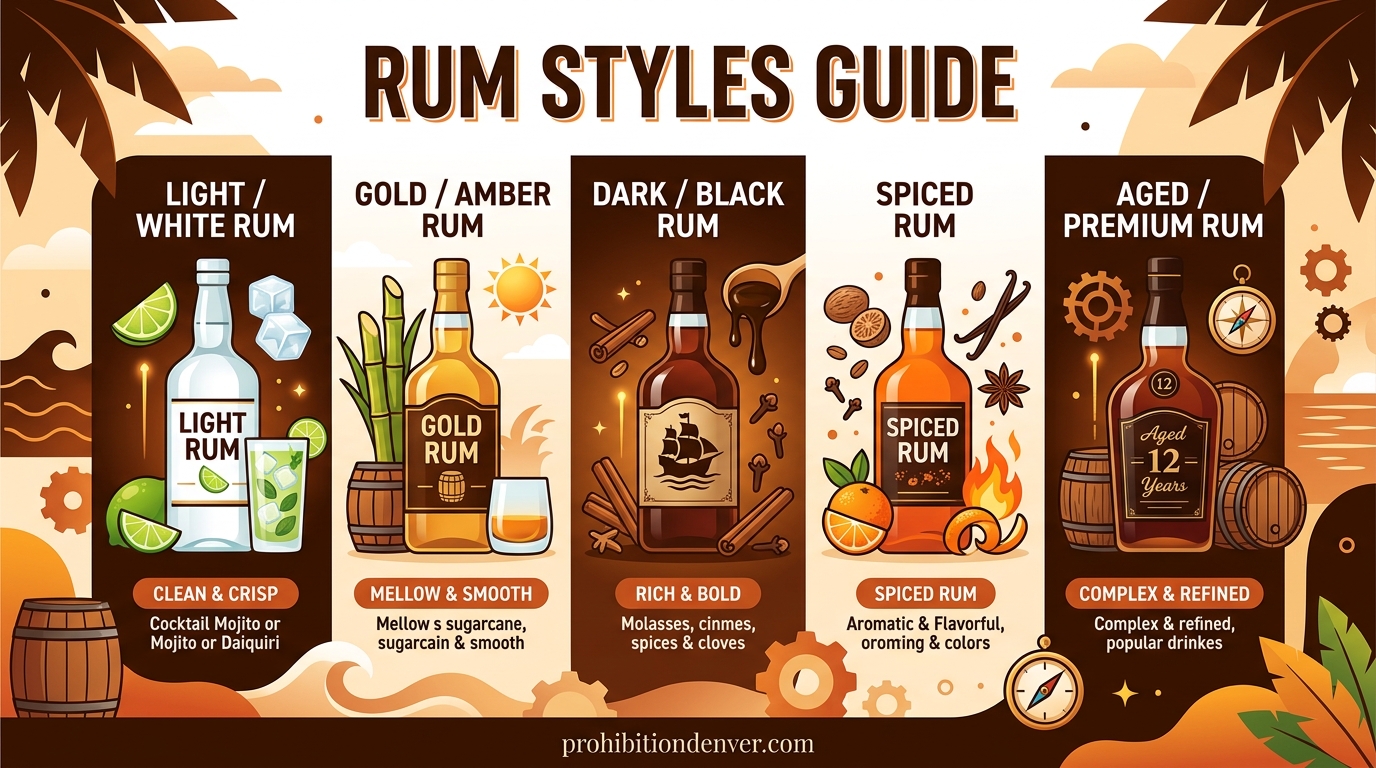
You are standing in the liquor aisle, staring at a wall of rum bottles, and honestly, they all start to look the same after a while. White, gold, dark, spiced, aged — the labels blur together, and you just want something that tastes good in a cocktail or sipped neat on a Friday evening. I have been exactly there, and it is frustrating.
That confusion is exactly why I put together this beginner’s guide to rum styles. Whether you are building a home bar from scratch or just curious about what makes a dark rum different from a spiced one, this guide breaks it all down without the pretentious jargon. By the time you finish reading, you will know exactly which bottle to reach for and why.
We will walk through the major rum styles — white, gold, dark, spiced, and aged — plus a few regional specialties that are worth knowing about. Along the way, I will share practical tips drawn from real rum enthusiasts, cocktail recipes that highlight each style, and honest advice about what to look for (and what to avoid) when shopping for rum in 2026.
Table of Contents
What Is Rum Exactly?
Rum is a distilled spirit made from sugarcane or its byproducts. That is the simple version. The more complete answer is that rum can be produced from three different sugarcane sources: molasses (the thick, dark syrup left over from sugar refining), fresh sugarcane juice, or cane syrup. Each starting material gives the finished rum a different character, which is part of why rum has such a wide range of flavors.
Most of the rum produced worldwide starts with molasses. It is cheap, abundant, and creates a rich, sweet base spirit that takes beautifully to barrel aging. Fresh cane juice rum — known as Rhum Agricole — is less common but prized for its grassy, herbal qualities. Cane syrup rum falls somewhere in between, offering a natural sweetness without the heaviness of molasses.
Legally speaking, the United States Alcohol and Tobacco Tax and Trade Bureau (TTB) defines rum as a spirit distilled from the fermented juice of sugarcane, sugarcane syrup, molasses, or sugarcane byproducts, produced at less than 190 proof and bottled at no less than 80 proof. That broad definition is one reason rum styles vary so wildly from country to country and brand to brand.
Rum’s history runs deep. Originating in the Caribbean in the 1600s, it became tied to trade, piracy, naval tradition, and colonial economies. Countries like Jamaica, Barbados, Puerto Rico, and Martinique each developed their own distinct rum traditions, many of which still define those regions today.
How Rum Is Made: From Sugarcane to Glass
Understanding how rum is made helps explain why each style tastes the way it does. The production process has four main steps, and decisions made at each stage shape the final product in your glass.
Step 1: Fermentation
The process starts by combining the sugarcane base — molasses, cane juice, or cane syrup — with water and yeast. The yeast eats the sugar and produces alcohol and flavor compounds over a period ranging from 24 hours to several weeks. Shorter fermentation tends to produce lighter, cleaner spirits, while longer fermentation (especially in open vats with wild yeast and ambient bacteria) creates the bold, funky flavors associated with Jamaican rum. Some producers in Jamaica use a traditional technique called “dunder,” which involves adding residue from previous distillations to the new batch, creating deeper, more complex flavors.
Step 2: Distillation
After fermentation, the liquid (called the “wash”) is distilled to concentrate the alcohol and isolate desirable flavors. There are two main types of stills used in rum production, and they produce very different results.
Pot stills are the traditional copper kettles you might picture when thinking of whiskey production. They work in batches and produce a heavier, more flavorful spirit with lots of character. Many Jamaican and Barbadian rums rely on pot still distillation, which is why those rums tend to be bold and full-bodied.
Column stills (also called continuous stills) are tall, industrial-looking towers that run nonstop. They produce a lighter, cleaner spirit with higher alcohol content and fewer impurities. Puerto Rican and Cuban-style rums typically use column stills, which gives them their signature smooth, approachable profile.
Some rum producers blend spirits from both types of stills, combining the richness of pot still rum with the smoothness of column still rum for a balanced final product.
Step 3: Aging
After distillation, most rum is aged in oak barrels. The barrels were previously used for bourbon in many cases, and they contribute flavors like vanilla, caramel, toasted coconut, and baking spices. The tropical climate where most rum is produced accelerates aging — the heat causes the spirit to expand into and contract out of the barrel wood more rapidly than in cooler climates. This means a 5-year-old Caribbean rum may have extracted as much barrel character as a 12-year-old Scotch.
The type of barrel, its char level, and how many times it has been used all influence the rum’s final flavor. New charred oak imparts strong flavors quickly, while refill barrels offer a more subtle, gradual influence.
Step 4: Blending and Filtration
Before bottling, rums from different barrels (and sometimes different ages and still types) are blended together to achieve a consistent flavor profile. Some rums are filtered through charcoal to remove color and impurities — this is how white rum stays clear even when it has been aged. Others skip filtration entirely to preserve the natural color and character gained from the barrels.
White Rum (Silver or Light Rum)
White rum — also called silver rum or light rum — is the most approachable entry point into the rum world. It is clear in color and has a clean, subtle flavor profile with mild sweetness and very little oak influence. If you have had a mojito or a daiquiri, you have already tasted white rum in its element.
Here is something that surprises a lot of people: white rum is not necessarily unaged. Many white rums spend time in oak barrels and then undergo charcoal filtration to strip away the color while leaving a smooth, clean spirit. This is why some white rums have more flavor complexity than you might expect from something that looks like water. Other white rums are genuinely unaged and bottled straight from the still, offering a raw, vibrant sugarcane character.
The flavor profile of white rum typically includes light vanilla, subtle coconut, and a clean sweetness. It is not meant to be sipped on its own — it is built for cocktails. White rum serves as the backbone of classic warm-weather drinks like the mojito, daiquiri, and piña colada. Its mild flavor lets the other ingredients shine without overpowering them.
When shopping for white rum, look for bottles that list a short aging period or mention charcoal filtration. These tend to have more body and character than the cheapest options, which can taste like little more than neutral spirits. A quality white rum is an essential staple for any home bar, even if it is not the bottle you reach for when sipping neat.
Gold Rum (Amber Rum)
Gold rum sits right in the middle of the rum spectrum. It has a warm amber color and a richer flavor than white rum, but it is not as heavy or intense as a full dark rum. Think of gold rum as the comfortable middle ground that works in cocktails and can also be enjoyed on the rocks.
The golden color comes from time spent in oak barrels. As the rum ages, it absorbs color from the wood along with flavors like caramel, vanilla, toasted nuts, and gentle baking spices. Some gold rums are aged for one to three years, though the exact aging period varies by producer and region. The tropical heat in most rum-producing countries means even a couple of years in a barrel can develop significant flavor.
I should mention something important: some gold rums get their color from added caramel rather than aging. This is completely legal and common, but it means the color alone does not tell you everything about the quality or the actual age of the spirit inside. Checking the label for an age statement or production details can help you understand what you are buying.
Gold rum works beautifully in cocktails that benefit from more depth than white rum can provide. It is the traditional choice for a Mai Tai, and it holds up well in rum punches and tropical drinks where you want a more pronounced rum presence. It also sips nicely over a single large ice cube on a warm afternoon.
Dark Rum: Bold and Full-Bodied
Dark rum is where things get serious. This is the category that produces some of the most complex, flavorful spirits in the entire rum world. Dark rums typically spend extended time aging in heavily charred oak barrels, which gives them a deep brown color and an intensely rich flavor profile.
When you pour a quality dark rum, expect layers of molasses, brown sugar, toffee, dark chocolate, dried fruit, and sometimes smoky or leathery undertones. The best dark rums have a long, warming finish that lingers well after the last sip. These are rums meant for savoring, not shooting.
One thing that came up repeatedly in forum discussions among rum enthusiasts is the confusion between aging and coloring. Some inexpensive “dark” rums achieve their color through added caramel coloring rather than actual barrel aging. While there is nothing wrong with caramel coloring, it does not deliver the same depth and complexity as genuine time spent in oak. If you want a true aged dark rum, look for bottles with age statements or production details on the label.
Dark rum shines in cocktails that can stand up to its intensity. The Dark ‘n Stormy (dark rum and ginger beer) is a classic pairing that works because the spice of the ginger beer complements the richness of the rum. Dark rum also works in a rum Old Fashioned, where its bold flavors replace the whiskey you might normally use. And in tiki cocktails, dark rum serves as the heavy base note that grounds the tropical flavors.
For sipping, pour dark rum into a snifter or a rocks glass and take your time. Let it sit for a minute after pouring so the aromas open up. Good dark rum rewards patience and attention — rushing through it means missing half the experience.
Spiced Rum: Warmth in Every Sip
Spiced rum is exactly what it sounds like: rum that has been infused with spices and sometimes other flavorings. The result is a warm, approachable spirit that tends to be sweeter and more immediately likable than other rum styles. It is the gateway rum for many people, and for good reason — it is easy to drink and even easier to mix.
The most common spices used in spiced rum include cinnamon, nutmeg, vanilla, clove, allspice, and sometimes black pepper or ginger. Each brand has its own proprietary blend, which is why spiced rums from different producers can taste remarkably different from one another. Some also include citrus peel, anise, or even chili for extra complexity.
There is an important distinction to understand about spiced rum, and it is one that experienced rum drinkers bring up frequently in online discussions: many spiced rums contain added sugar. This is not inherently bad — the sweetness is part of what makes spiced rum so accessible and enjoyable for casual drinkers. But if you are looking for a “pure” rum experience, added sugar can mask the underlying spirit’s character. Some producers are transparent about added sweeteners, while others are not. Checking reviews and community discussions can help you find spiced rums that strike the right balance between spice, sweetness, and genuine rum character.
Spiced rum is incredibly versatile. It works well in simple mixed drinks (spiced rum and cola is a crowd-pleaser for a reason), in hot buttered rum during colder months, or simply poured over ice and sipped on its own. It also adds a warming kick to holiday cocktails and punches. For beginners building a home bar, a good spiced rum is one of the most useful bottles you can own.
Aged Rum: For Sipping and Savoring
Aged rum deserves its own category because it represents the top tier of what this spirit can achieve. While dark rum and gold rum may also be aged, the “aged rum” label typically refers to premium rums with specific age statements — often 7, 10, 12, 15, or even 21+ years. These are the rums that whiskey lovers tend to appreciate, because they offer similar complexity and craftsmanship at often lower prices.
During extended barrel aging, rum develops an extraordinary range of flavors. You might find rich toffee, dried fruits like figs and raisins, toasted oak, leather, tobacco, baking spices, and a lingering vanilla sweetness that ties everything together. The tropical climate where most aged rum is produced means it matures faster than spirits aged in cooler regions, so a 12-year-old rum from Barbados can be remarkably complex compared to a similarly aged spirit from Scotland or Kentucky.
Some aged rums are produced using the solera method, a blending technique borrowed from sherry production. In a solera system, barrels of different ages are stacked in rows, and rum is gradually drawn from the oldest barrels while being replenished from younger ones. This creates a consistent flavor profile year after year, and the age statement on the bottle refers to the youngest rum in the blend. Solera-aged rums tend to be smooth and well-integrated, with a complexity that comes from the blend of many vintages.
When shopping for aged rum, the same caveat applies as with dark rum: an age statement is a helpful guide, but it does not guarantee quality on its own. The base spirit, the distillation method, the barrel type, and the climate all play roles. Rum enthusiasts in online communities frequently recommend starting with well-regarded aged rums from established producers in Jamaica, Barbados, or Guatemala as an entry point. These tend to offer genuine quality and complexity at reasonable prices.
Serve aged rum neat or with a single large ice cube. Use a snifter or a tulip-shaped glass to concentrate the aromas. Take small sips and pay attention to how the flavor evolves from the first taste through the finish. Aged rum is not about getting through the glass quickly — it is about the experience.
Regional Rum Styles Worth Knowing
Beyond the color-based categories, rum is also classified by regional tradition. The three main regional styles — English, Spanish, and French — each have distinct characteristics tied to their production methods and histories. Understanding these styles adds another layer to your appreciation and helps you predict what a bottle will taste like based on where it was made.
English-Style Rum (Jamaica, Barbados, Guyana, Trinidad)
English-style rums are traditionally made from molasses and often distilled in pot stills. They tend to be bold, flavorful, and full-bodied. Jamaican rums in particular are known for a flavor profile that enthusiasts call “funk” or “hogo” — a term derived from the French word “haut goût,” meaning high taste. This funk comes from esters produced during long fermentation with wild yeasts and dunder, and it gives Jamaican rums a fruity, almost overripe quality that some people love and others need time to appreciate.
Barbadian rums from producers like Mount Gay and Foursquare tend to be more balanced than Jamaican rums, with smooth caramel and vanilla notes alongside a gentle spice. Guyanese rums, particularly from the Demerara region, are rich and heavy, often described as having dark toffee and burnt sugar characteristics. English-style rums are excellent for sipping and for cocktails that need a strong rum backbone.
Spanish-Style Rum (Puerto Rico, Cuba, Dominican Republic, Venezuela)
Spanish-style rums — labeled as “ron” — are typically made from molasses and distilled in column stills. They are lighter, smoother, and more refined than English-style rums, with a clean sweetness and subtle flavor profile. Puerto Rican rums like Bacardi and Don Q exemplify this style: they are approachable, mixable, and easy to drink.
Venezuelan rums are a notable subset of the Spanish style, often with more aging and complexity than their Caribbean counterparts. Venezuelan law requires a minimum of two years of aging for all rum, which means even the entry-level bottles have some barrel character. Cuban rum, while difficult to find in the United States due to trade restrictions, is historically significant and known for its smooth, delicate profile that works exceptionally well in classic cocktails like the daiquiri.
French-Style Rum: Rhum Agricole (Martinique, Guadeloupe, Haiti)
Rhum Agricole is the most distinctive of the three regional styles. Instead of being made from molasses, it is distilled from fresh sugarcane juice — and that single difference changes everything. Rhum Agricole has a grassy, herbaceous, and vegetal character that sets it apart from all other rum styles. It tastes like the sugarcane itself, not the cooked-down byproducts.
Martinique holds the prestigious Appellation d’Origine Contrôlée (AOC) designation for its Rhum Agricole, which is the same type of quality certification given to French wines and cheeses. This means Martinique Rhum Agricole must meet strict production standards, including using only fresh cane juice, specific fermentation and distillation methods, and defined aging requirements. Young Rhum Agricole (blanc) is vibrant and perfect for Ti’ Punch, the national cocktail of Martinique. Aged versions develop extraordinary complexity with notes of flowers, tropical fruits, and spices.
Navy Strength Rum
Navy Strength rum is not a regional style per se, but it is a category worth knowing about. These rums are bottled at 57% ABV (114 proof) or higher. The name comes from the British Royal Navy’s historical practice of testing rum purity by mixing it with gunpowder — if the gunpowder still ignited, the rum was “proof” that it had not been watered down. Today, Navy Strength rums are prized by cocktail enthusiasts because their bold flavors stand up to dilution in mixed drinks, particularly tiki cocktails. They are not for the faint of heart, but they deliver an intensity that regular-proof rums simply cannot match.
Quick Rum Style Comparison
Here is a straightforward comparison of the main rum styles to help you keep everything straight at a glance. Use this as a quick reference next time you are browsing the rum aisle or planning cocktails.
- White Rum — Clear color, light and clean flavor with subtle sweetness. Best for mojitos, daiquiris, and piña coladas. Typically 35-40% ABV.
- Gold Rum — Amber color, caramel and vanilla notes with mild spice. Best for Mai Tais, rum punches, and sipping on ice. Typically 35-40% ABV.
- Dark Rum — Deep brown color, rich molasses, toffee, and smoky notes. Best for Dark ‘n Stormy, tiki cocktails, and sipping neat. Typically 40-50% ABV.
- Spiced Rum — Ranges from gold to dark, warm cinnamon, nutmeg, and vanilla. Best for rum and cola, hot drinks, and casual sipping. Typically 35-40% ABV.
- Aged Rum — Varies in color, complex toffee, dried fruit, and oak. Best for sipping neat or with a single ice cube. Typically 40-45% ABV.
- Rhum Agricole — Clear to gold, grassy, herbal, and vegetal. Best for Ti’ Punch and cocktails requiring a distinctive flavor. Typically 40-50% ABV.
- Navy Strength — Varies in color, intense and bold across all flavors. Best for tiki cocktails and experienced palates. Typically 57%+ ABV.
Getting Started: Tips for Rum Beginners
After spending time in rum communities and talking with experienced drinkers, a few practical tips come up over and over. These are the things I wish someone had told me when I first started exploring rum.
Start with a quality gold or aged rum. White rum is essential for cocktails but not the best introduction to what rum can actually taste like. A moderately aged gold rum from Barbados or Jamaica gives you a sense of the spirit’s character without being overwhelming or too subtle.
Try different styles before committing to expensive bottles. Buy smaller bottles or visit a bar with a good rum selection and taste your way through the styles. Your palate will tell you what you prefer better than any review can.
Look for age statements and production details. Bottles that proudly display their age, distillation method, and origin tend to be produced by makers who care about transparency and quality. This does not mean every age-statement rum is great, but it is a useful signal.
Darker does not automatically mean better. As we discussed, some dark rums get their color from caramel coloring rather than extended aging. Learn to read the label and do not assume that a darker rum is inherently higher quality than a lighter one.
Explore beyond the grocery store shelf. Many beginners start with the most visible brands and miss out on the incredible variety that exists. Specialty liquor stores, online retailers, and rum communities are great sources for discovering lesser-known but excellent producers. The difference between a mass-produced rum and a carefully crafted one can be revelatory.
Frequently Asked Questions About Rum Styles
What are the main types of rum?
The main types of rum are white (silver/light), gold (amber), dark, spiced, and aged rum. There are also regional styles like Rhum Agricole (French-style from fresh cane juice) and Navy Strength rum (57% ABV or higher). Each style has distinct flavor profiles and best uses, from mixing in cocktails to sipping neat.
What is the difference between white rum and dark rum?
White rum is clear, light-bodied, and has a clean, subtle flavor — ideal for cocktails like mojitos and daiquiris. Dark rum has a deep brown color from extended oak barrel aging, with bold flavors of molasses, toffee, and spices. White rum is primarily for mixing, while dark rum works in cocktails and can also be sipped on its own.
How is spiced rum made?
Spiced rum is made by infusing rum with natural spices and flavorings, typically including cinnamon, nutmeg, vanilla, clove, and sometimes ginger or pepper. The base rum can be white, gold, or dark, and many spiced rums also include added sugar for sweetness. The infusion process varies by producer, with some soaking whole spices in the rum and others using extracts.
What is aged rum and how is it different?
Aged rum is rum that has spent significant time in oak barrels — typically 7 years or more — developing complex flavors like toffee, dried fruit, toasted oak, and vanilla. The tropical climate where most rum is produced accelerates aging, so a 10-year-old rum can be remarkably complex. Aged rum is primarily meant for sipping rather than mixing, similar to how you would enjoy a fine whiskey.
What rum should a beginner start with?
Most experienced rum drinkers recommend starting with a quality gold or aged rum from Barbados or Jamaica. These offer approachable flavors like caramel, vanilla, and gentle spice without being either too subtle or too intense. From there, explore white rum for cocktails, then branch into dark and spiced styles. Trying a tasting flight at a bar is a great way to sample several styles before buying full bottles.
Wrapping Up Your Rum Journey
This beginner’s guide to rum styles has covered a lot of ground, from the basics of how rum is made to the specific characteristics that make each style unique. White rum for cocktails, gold rum for versatility, dark rum for boldness, spiced rum for warmth, and aged rum for savoring — each has its place in a well-rounded rum collection.
The best advice I can give is to keep exploring. Start with one or two bottles that interest you, make some cocktails, try sipping them neat, and pay attention to what you enjoy. Your preferences will evolve as your palate develops, and that is part of the fun. Rum is one of the most diverse spirits in the world, and no two bottles are exactly alike.
Do not be afraid to venture beyond the familiar brands on the grocery store shelf. The rum world is full of small producers making exceptional spirits with real character and tradition behind them. Whether you end up drawn to the grassy freshness of Rhum Agricole, the bold funk of Jamaican pot still rum, or the smooth elegance of an aged Barbadian sipping rum, there is a bottle out there that will change how you think about this spirit. Here is to finding yours.