
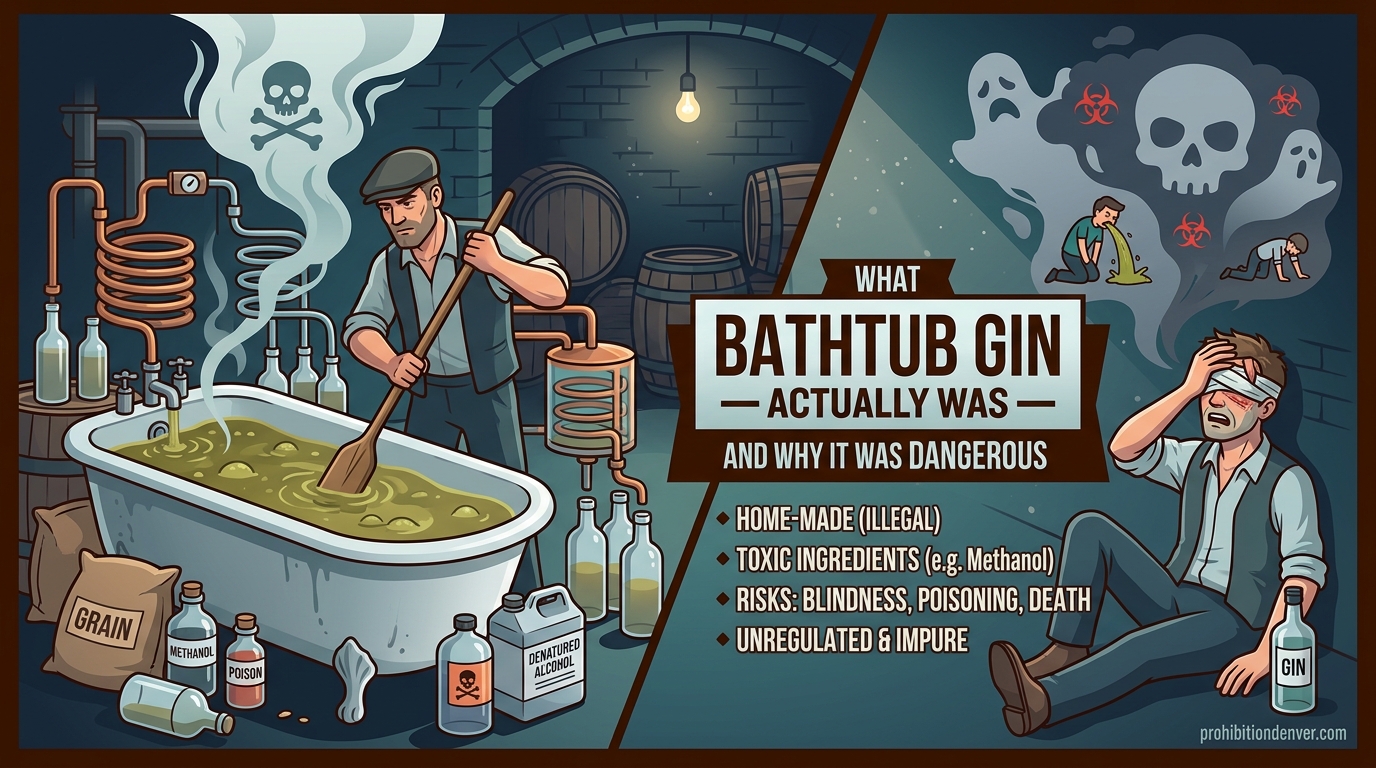
Bathtub gin was a dangerous, illegally-produced homemade spirit made during American Prohibition (1920-1933), often contaminated with toxic compounds like methanol that could cause blindness or death. The term refers to any amateur-distilled gin created in makeshift conditions when the Volstead Act made alcohol production and sale illegal across the United States.
I’ve spent months researching Prohibition-era drinking culture, and the reality of bathtub gin is far more disturbing than most people realize. This wasn’t just about crafty bootleggers making rough moonshine. Thousands died from drinking this toxic rotgut, and understanding why helps explain one of the darkest chapters in American drinking history.
Table of Contents
What Exactly Was Bathtub Gin?
Bathtub gin was homemade liquor produced by amateur distillers during the 13 years of federal Prohibition in America. The Volstead Act, which took effect in January 1920, banned the manufacture, sale, and transportation of alcoholic beverages nationwide.
With legitimate distilleries shut down, Americans turned to illegal production. Bootleggers and home distillers fermented mixtures of sugar, corn syrup, or fruit, then distilled the resulting mash into high-proof alcohol. They added juniper berries or juniper oil to mimic the flavor of legitimate gin, though many substituted cheaper alternatives like turpentine when supplies ran scarce.
The quality varied wildly. Some family operations took care to produce relatively safe spirits. Many others prioritized speed and profit over safety, creating dangerous concoctions that contained lethal concentrations of toxic byproducts.
The Truth Behind the Name
Contrary to popular belief, bathtub gin was not actually fermented or distilled inside bathtubs. The persistent myth that people filled their tubs with alcoholic mash is just that, a myth.
The real story is more mundane but equally telling. Wash boilers, large copper vessels used for laundry, served as the actual containers for small-scale distillation operations. These sat on kitchen stoves or basement burners, not in bathrooms.
The bathtub connection came later in the process. Bootleggers needed to dilute their high-proof alcohol with water to make it drinkable. They filled bottles and jars with the concentrated spirits, then topped them off with water from the tap. Bathtubs had the only spigots that could accommodate large bottles, so that’s where the mixing happened.
This distinction matters because it reveals how improvised and unhygienic the entire production chain was. Nothing about bathtub gin followed professional standards for cleanliness, temperature control, or safety.
Why Bathtub Gin Was So Dangerous
The dangers of bathtub gin came from multiple sources, but methanol poisoning topped the list. When amateur distillers fermented fruit, grains, or sugar, the process naturally produced both ethanol, the alcohol humans can safely consume, and methanol, a related compound that is highly toxic.
Professional distilleries have equipment and expertise to separate these compounds. Home distillers usually did not. Drinking methanol, even in small amounts, attacks the optic nerves and can cause permanent blindness. Larger doses destroy the central nervous system and lead to death.
The death toll was staggering. Historical records estimate that up to 50,000 Americans died from drinking tainted alcohol during Prohibition. Many of these deaths came from bathtub gin and other bootleg spirits that contained dangerous concentrations of methanol, also known as wood alcohol.
The federal government actually made the problem worse. To discourage industrial alcohol from being diverted to drinking, regulators required manufacturers to add toxic denaturing agents. Bootleggers stole industrial alcohol anyway and tried to remove these additives, but dangerous traces remained in the final product.
The Toxic Compounds in Bootleg Gin
Bathtub gin contained a horrifying cocktail of dangerous substances beyond just methanol. Understanding what bootleggers and their customers were actually drinking explains why this era was so deadly.
Methanol (Wood Alcohol): This byproduct of fermentation causes metabolic acidosis, blindness, and organ failure. It only takes about 30 milliliters of pure methanol to kill an adult. Bootleg gin often contained enough to be lethal.
Fusel Oils: These higher alcohols form during fermentation at incorrect temperatures. They cause severe headaches, nausea, and long-term health damage.
Government-Added Toxins: Industrial alcohol contained mandated poisons including pyridine, benzene, kerosene, and acetone. Bootleggers tried to boil these out, but imperfect processes left dangerous residues.
Turpentine Substitutes: When juniper berries became scarce or expensive, some bootleggers used turpentine to flavor their gin. This industrial solvent causes chemical burns to the throat and digestive tract.
Lead Contamination: Many homemade stills used soldered joints containing lead, which leached into the final product and caused chronic poisoning over time.
Bathtub Gin vs Moonshine: What’s the Difference?
People often use bathtub gin and moonshine interchangeably, but they refer to distinct traditions with different characteristics.
Moonshine traditionally described homemade corn whiskey produced in rural areas, particularly Appalachia. It has roots stretching back before Prohibition as a way to use surplus corn and avoid taxes. Moonshiners were often skilled practitioners who passed techniques through generations.
Bathtub gin, by contrast, was primarily an urban phenomenon. It emerged specifically because of Prohibition’s ban on imported spirits. Where moonshiners aimed to produce whiskey, bathtub gin makers tried to recreate gin, a clear spirit flavored with juniper.
The ingredients differed too. Moonshine started with corn mash. Bathtub gin could begin with almost any fermentable sugar source, including grapes, raisins, or straight corn sugar.
Both were dangerous when made by amateurs, but bathtub gin had the added risk of trying to mimic a complex botanical spirit using crude methods and questionable ingredients.
Cocktails That Masked the Taste
Speakeasies developed elaborate cocktails specifically to make bathtub gin drinkable. The base spirit tasted so terrible, often described as rubbing alcohol with perfume, that it needed heavy disguise.
The Bee’s Knees combined bathtub gin with lemon juice and honey. The tart citrus and sweet honey covered the harsh chemical flavors.
The Southside mixed gin with lime juice, mint, and sugar. The fresh herbs and sharp citrus distracted from the underlying rotgut.
The Bronx cocktail added orange juice and vermouth. The juice provided both flavor and dilution.
Even the classic Dry Martini served a purpose during Prohibition. The heavy proportion of vermouth to gin helped mask inferior spirits.
These cocktails weren’t just fashionable. They were survival mechanisms for a generation forced to drink dangerous alcohol.
Frequently Asked Questions
Why was bathtub gin dangerous?
Bathtub gin was dangerous because amateur distillers lacked the equipment and knowledge to separate toxic methanol from drinkable ethanol. It often contained wood alcohol that causes blindness and death, plus industrial additives like acetone, benzene, and kerosene that the government required in industrial alcohol to discourage drinking.
What was bathtub gin made of?
Bathtub gin was made by fermenting sugar, corn syrup, or fruit, then distilling the mash into high-proof alcohol. Bootleggers added juniper berries or oil for flavor, though some substituted turpentine. The spirit was diluted with water and often contaminated with methanol and industrial denaturing agents.
Was bathtub gin actually made in a bathtub?
No, bathtub gin was not fermented or distilled in bathtubs. Wash boilers served as the actual stills. The name came from the dilution process, where bootleggers topped off bottles with water from bathtub spigots, as these were the only faucets large enough to fit bottle openings.
Why was it called bathtub gin?
The name bathtub gin comes from the practice of filling bottles with distilled spirits and topping them off with water from bathtub spigots. Bathtubs had the only taps that could accommodate large bottles. The term became shorthand for any homemade gin produced during Prohibition.
Is bathtub gin the same as moonshine?
No, bathtub gin and moonshine are different. Moonshine refers to homemade corn whiskey, traditionally made in rural areas. Bathtub gin specifically refers to homemade gin produced during Prohibition, primarily in urban settings, using various sugar sources and flavored to imitate London dry gin.
The Legacy of Bathtub Gin
Bathtub gin represents one of the most tragic consequences of Prohibition. The Volstead Act intended to improve public health and morality by banning alcohol. Instead, it pushed drinkers toward dangerous homemade alternatives that killed tens of thousands.
The bathtub gin era finally ended in 1933 when the 21st Amendment repealed Prohibition. Legal distilleries reopened, and Americans could once again buy professionally-made spirits that met safety standards.
Today, a modern brand called Bathtub Gin produces legitimate craft gin using traditional methods. This product has nothing in common with its dangerous namesake beyond the name itself. When you see Bathtub Gin on a shelf today, you’re buying a carefully distilled, quality-controlled spirit, not the toxic rotgut that poisoned Prohibition-era drinkers.
The lesson of bathtub gin endures. When government policy drives markets underground, quality and safety standards disappear. The resulting products can be deadly.
Understanding what bathtub gin actually was helps us remember why Prohibition failed and why quality control matters in any industry affecting public health.