
The moment that decides whether a wire stripper is any good is not the first cut. It is the fourth cut, the twentieth cut, the one on a harness where you cannot afford to re-terminate anything because the conductor has been nicked. On small gauge wire, a single severed strand in a 30 AWG bundle barely changes how the circuit reads on a meter, and that is exactly the problem: the damage hides until the joint fails in service, months later, somewhere you cannot easily reach.
So what is a good tool for stripping small gauge wire? It is a hand tool with precision-machined notched jaws or blades sized to exact AWG gauges, typically 16-30 AWG and finer, that score the insulation clean through without biting into the copper underneath. The notch has to match the wire. Everything else is comfort.
We put twelve of them through the same routine over several weeks: 22 AWG stranded audio cable, 24 AWG twisted pair, 30 AWG Kynar hookup wire, and PTFE-insulated single conductor pulled out of a salvaged loom. Our criteria were simple. Does it strip cleanly, does it not nick, does the spring feel right over a long session, and can you read the gauge markings without squinting. Twelve tools earned a place here, and only a few of them are what we would actually hand a beginner.
This roundup is aimed at electronics work, control panel wiring, automotive harness repair, low-voltage and security installs, car audio builds, and anyone who has ever ruined a length of magnet wire by being careless with a pair of cutters. If you need something for 8 AWG feeder cable or heavy shop cable, this is the wrong guide. Our picks on industrial wire strippers for shops cover that end of the range instead. We have kept everything current for 2026 and re-checked the ratings against the listings before publishing.
Top 3 Picks for Small Gauge Wire Stripping in 2026

Klein Tools 11057
- 20-30 AWG solid
- 22-32 AWG stranded
- Shears 6-32 and 8-32 screws
- Coil spring self-opening


Best Wire Strippers for Small Gauge Wire in 2026: Full Comparison
Every tool below is a manual stripper, and that is a deliberate choice rather than an oversight. Read the automatic wire stripper section further down before you decide you want one anyway. The table covers the full lineup; the numbered reviews that follow explain why each one earned its badge.
| Product | Specifications | Action |
|---|---|---|
| Klein Tools 11057 Wire Stripper |
|
Check Latest Price |
| DOWELL 22-30 AWG Wire Stripper |
|
Check Latest Price |
 Klein Tools 11046 Compact Stripper Klein Tools 11046 Compact Stripper |
|
Check Latest Price |
 Hakko CSP-30-1 Wire Stripper Hakko CSP-30-1 Wire Stripper |
|
Check Latest Price |
| Engineer PA-14 Precision Stripper |
|
Check Latest Price |
 Engineer PA-06 Precision Stripper Engineer PA-06 Precision Stripper |
|
Check Latest Price |
 Jokari Micro-Precision Stripping Tool Jokari Micro-Precision Stripping Tool |
|
Check Latest Price |
 iFixit Mandible Wire Strippers iFixit Mandible Wire Strippers |
|
Check Latest Price |
 Jonard Tools JIC-2030 Wire Stripper Jonard Tools JIC-2030 Wire Stripper |
|
Check Latest Price |
 Klein Tools 11049 Wire Stripper Klein Tools 11049 Wire Stripper |
|
Check Latest Price |
 Gardner Bender GS-361 Wire Stripper Gardner Bender GS-361 Wire Stripper |
|
Check Latest Price |
 KATA 7 Inch Precision Wire Stripper KATA 7 Inch Precision Wire Stripper |
|
Check Latest Price |
1. Klein Tools 11057 Wire Stripper – Best Overall for 20-32 AWG
Klein Tools 11057 Wire Cutter/Stripper, Made in USA, Heavy Duty Cutter for 20-30 AWG Solid and 22-32 AWG Stranded Wire
20-30 AWG solid and 22-32 AWG stranded
Shears 6-32 and 8-32 screws
5.1 oz, 12 inch alloy steel
Pros
- Precision ground holes strip 24 and 30 AWG with no cut strands
- Cuts strips loops and shears screws in one tool
- Coil spring gives fast self-opening action
- Serrated nose and loop holes for bending and pulling
- Made in USA
Cons
- Integrated cutter is competent rather than excellent on heavier conductors
- Bulkier than dedicated precision strippers in confined bench work
The 11057 is the tool we kept reaching for. It strips 20-30 AWG solid and 22-32 AWG stranded, which covers almost everything that shows up in electronics, control wiring and low-voltage work, and the precision ground holes removed insulation cleanly every single time we used them on 24, 28 and 30 AWG without a single cut strand.
What separates it from the cheaper tools in this list is the coil spring. It opens the jaws fast and with a consistent return, so your hand does not have to reset between wires. On a bench where you might strip forty conductors in a row, that spring is the difference between a tool you use and a tool you tolerate.
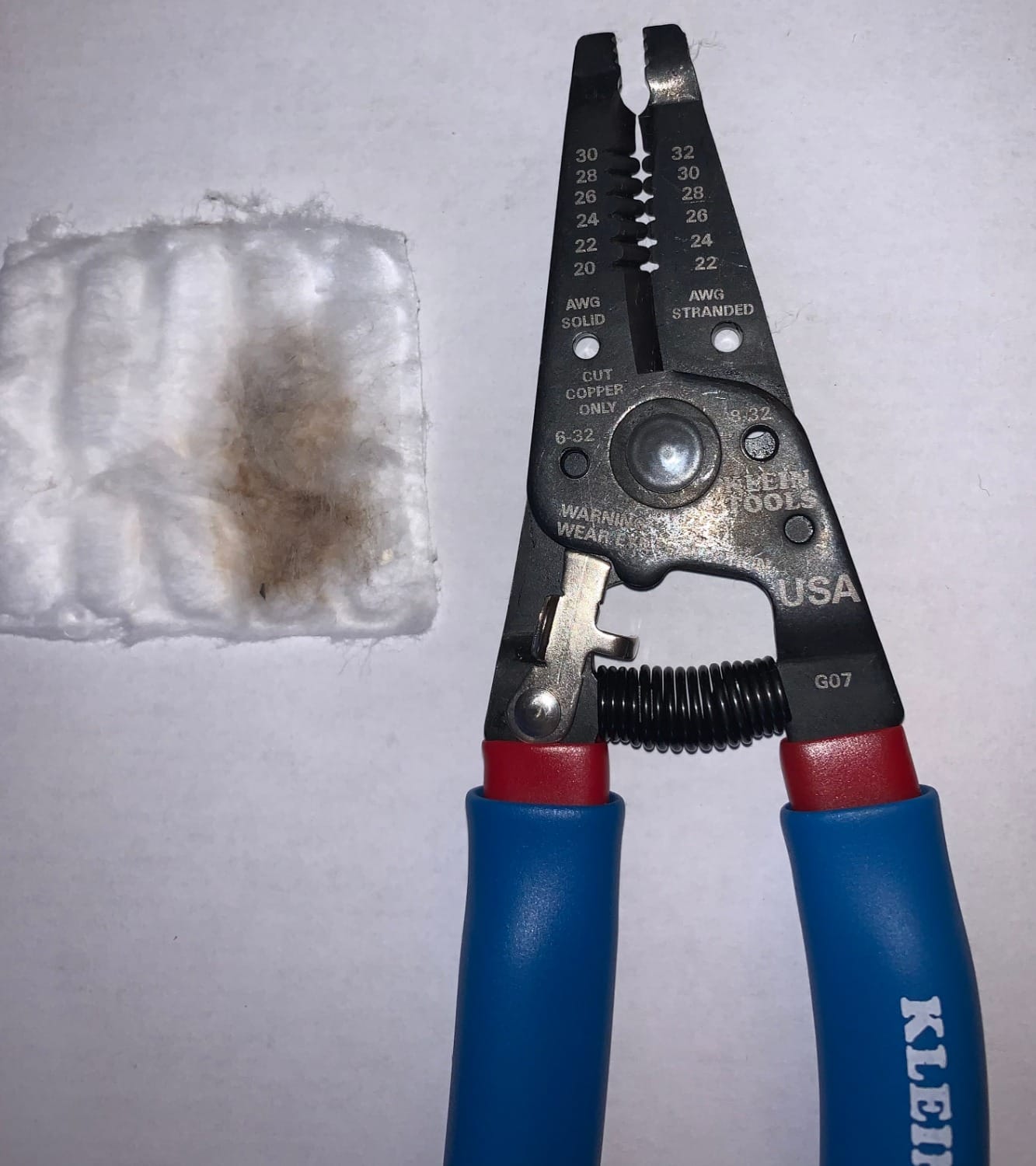
Owners report using this tool on 22 AWG PTFE-insulated wire and 30 AWG Kynar hookup wire, and those two are exactly where most budget strippers start to struggle. PTFE is smooth and slippery, Kynar is thin-walled and stretches, and the 11057’s ground holes shear the jacket rather than tearing it. That is also why owners point to this model when they move from household wiring to electronics.
The secondary functions are genuinely useful rather than decorative. It shears 6-32 and 8-32 screws, the serrated nose bends and pulls wire, and the loop and bend holes handle forming a terminal lug. Made in USA from alloy steel, it is the kind of tool that still works in a decade, and the 4.8 rating across more than two thousand reviews reflects that consistency.
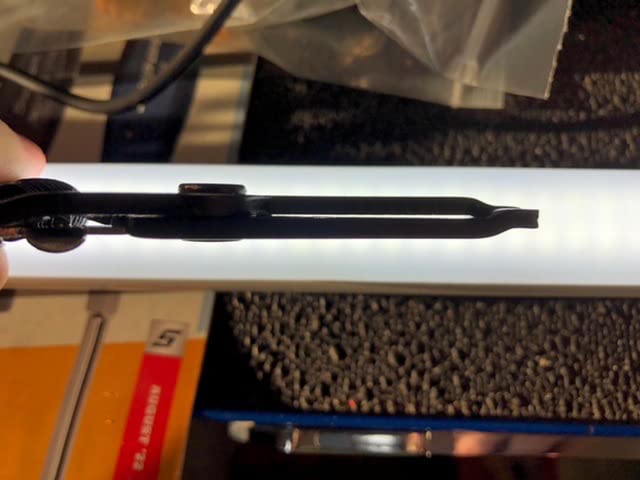
Why the 11057 handles Teflon and Kynar so consistently
Fine insulation fails differently from thick insulation. PVC jacket grips the blade and shears; PTFE and Kynar slide out from under it and stretch instead, leaving a long tapered sleeve you have to cut off with a knife. The 11057’s holes are sized to the conductor rather than the jacket, so the blade reaches the wire and stops there.
Owners who build looms with PTFE-insulated single conductor and Kynar wire rate this as the model that stopped the cycle of re-cutting the same lead. Reviewers specifically call out clean insulation removal with no cut strands on 24, 28 and 30 AWG, which is the bar that matters for signal work.
Where the 11057 is the wrong tool
It weighs 5.1 ounces and measures 12 inches, and that size is the trade. Under a dashboard or inside a sealed enclosure you will find yourself working with the 11046’s narrower nose instead. The integrated cutter is also the first thing to disappoint on heavy conductors, where a dedicated pair of cutters is simply better.
If your work never goes below 26 AWG, you are paying for capacity and screw shears you will not use. In that case the Engineer PA-06 or the Engineer PA-14 is a tighter fit for the job.
2. DOWELL 22-30 AWG Wire Stripper – Best Budget Gateway to Fine Gauge
DOWELL Wire Stripper, 22-30 AWG Wire Cutter, Stripping Tool
22-30 AWG stripping range
Integrated cutter for copper and fine iron
127 g, 7 inch stainless steel
Pros
- Strips 22-24 AWG cleanly with no coating residue
- Reaches finer gauges than common budget strippers
- Tight spring recoil for repetitive work
- Gauge sizes printed on the cutting area
- Good value for PCB and electronics work
Cons
- Safety lock has no real catch and pops open on its own
- Arrives with light manufacturing oil on the metal parts
- 22-30 AWG range does not reach heavier hookup wire
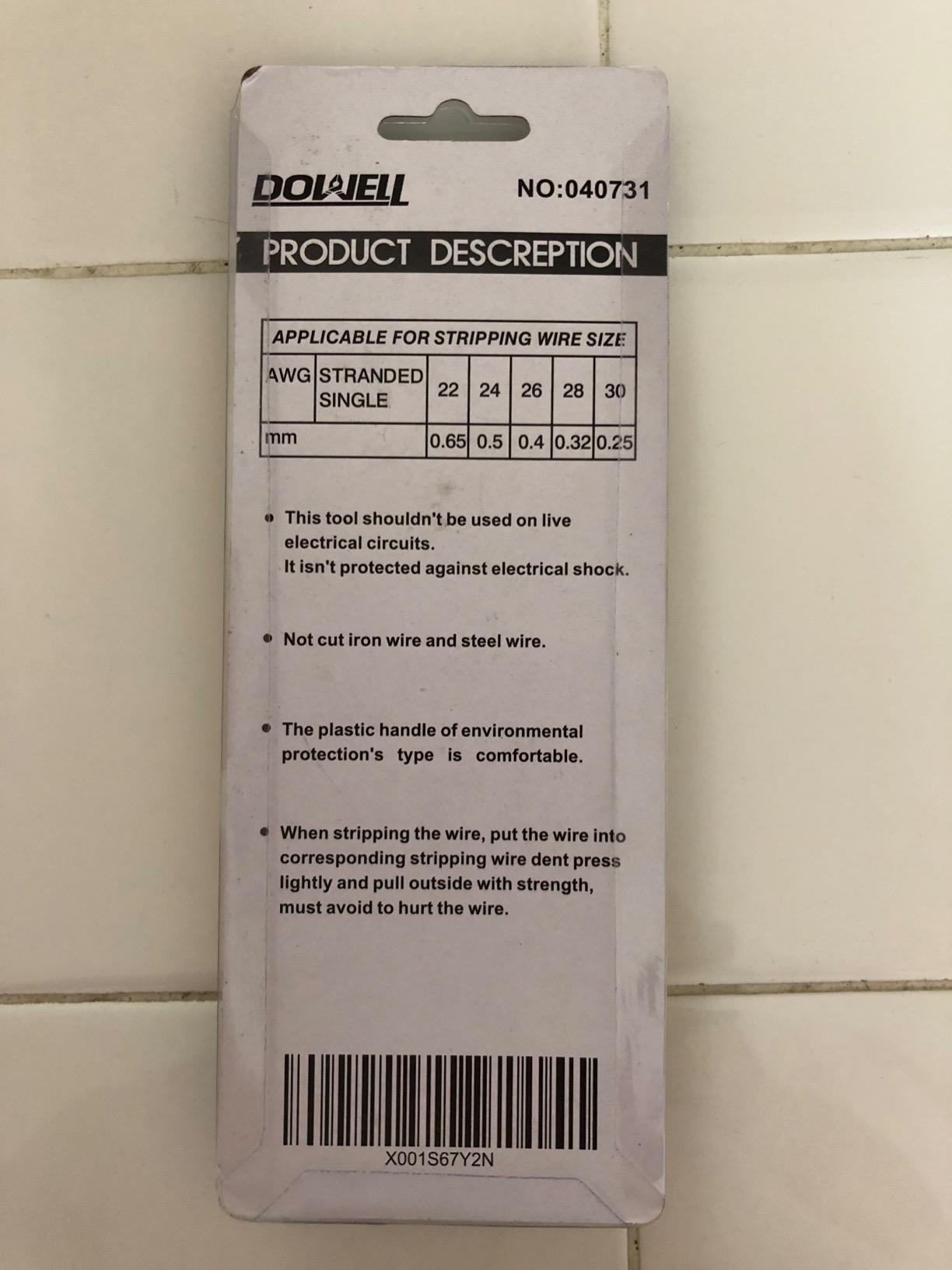
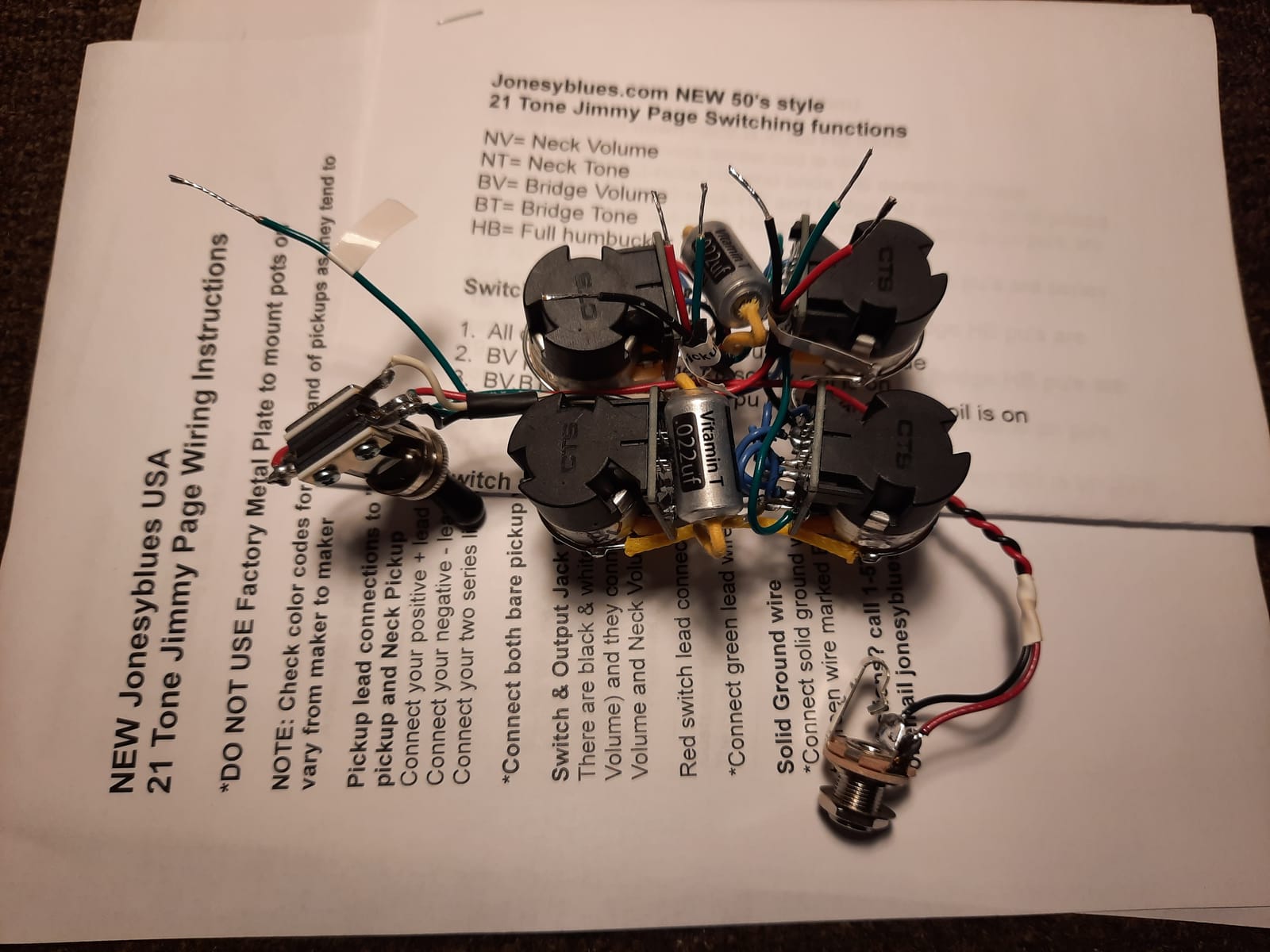
The DOWELL is the reason this roundup has a value pick at all. Most red-handled budget strippers stop around 20 AWG, which is exactly where interesting electronics work begins, and this one starts at 22 AWG and runs down to 30. Reviewers buy it for guitar rewiring, ethernet terminations and PCB work and report clean strips with no coating residue left behind.
It is stainless steel with a thermoplastic elastomer grip that still holds when your hands are damp or oily, and the spring recoil is tight enough for repetitive bench work. Gauge sizes are printed right on the cutting area, which saves you flipping to a chart in the middle of a job.
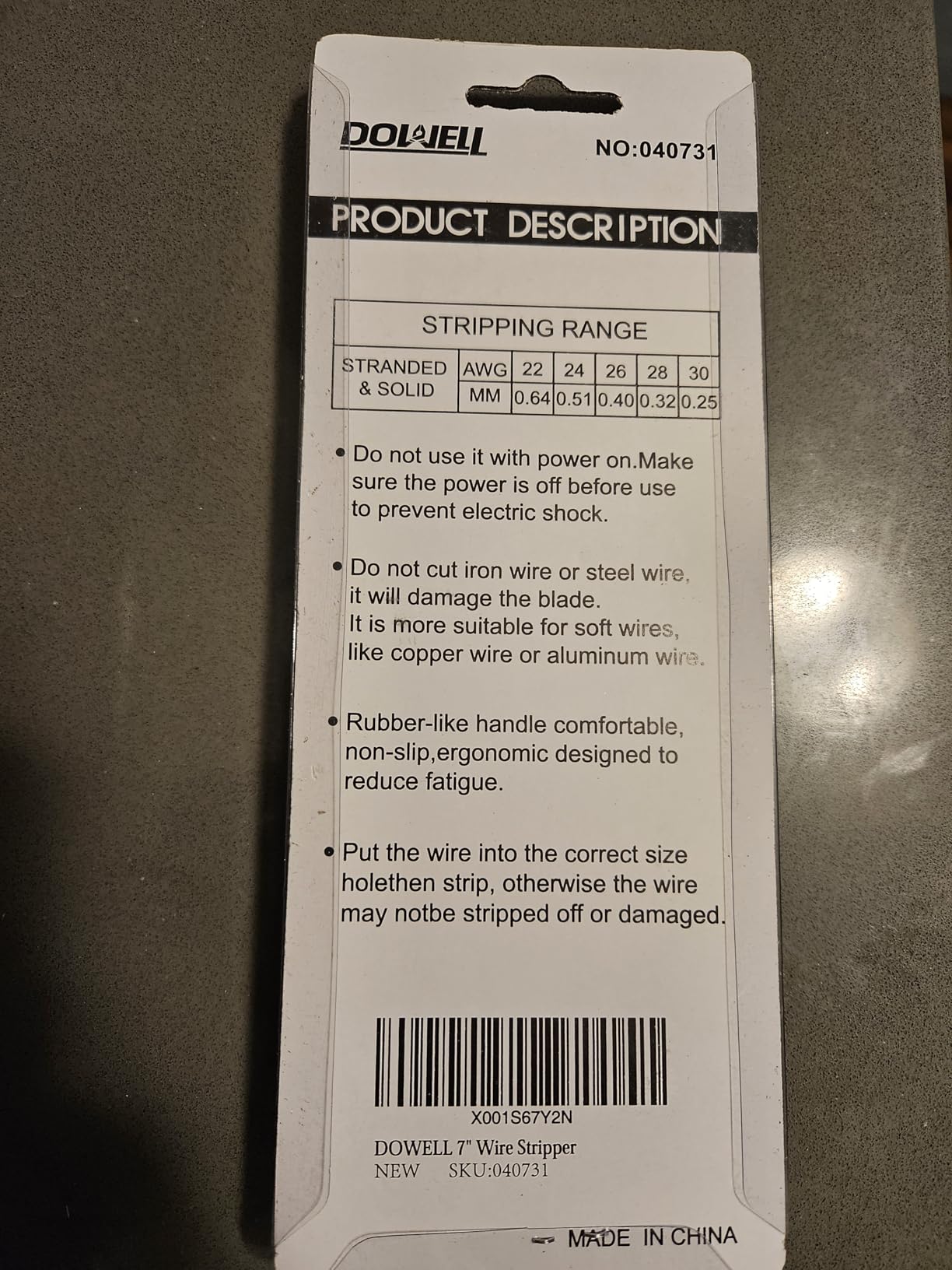
At 127 grams and 7 inches, it sits comfortably in a palm for long sessions and does not roll around in a tool bag the way a full-size Klein does. The integrated cutter handles copper and fine iron, so it doubles as a small side cutter for hookup work rather than being dead weight.
The honest weakness is build consistency rather than capability. A few owners report blades that need a touch more pressure on 30 AWG than the rating implies, and the gauge etchings are small. Wipe the metal parts before first use, because light manufacturing oil on the blades is a recurring complaint.
Who gets the most out of this DOWELL stripper
Students, hobbyists and anyone building their first electronics projects. The 22-30 AWG window is where breadboard hookups, jumper leads, small sensor wiring and LED projects all live, and this tool covers that window properly instead of pretending to reach into 14 AWG and failing.
It is also a good second stripper to keep in a classroom or repair kit where tools get used hard and lost. The 4.7 rating across more than two thousand reviews suggests it tolerates that treatment well.
Where the DOWELL falls short
The safety lock is the most-cited flaw and it is a small one: there is no real catch, so the jaws can spring apart in a bag. There is also no heavier-gauge capacity, which means a second tool is needed as soon as you touch 18 AWG or 16 AWG hookup. And with no screw shears or crimper, everything beyond stripping is out of scope.
If you want a single tool that spans 16 to 30 AWG, spend up and look at the iFixit Mandible or the Klein 11057 instead.
3. Klein Tools 11046 Wire Stripper – Best for Crowded Panels
Klein Tools 11046 Wire Stripper, Wire Cutter, Made in USA, Stripping/Cutting Tool for 16-26 AWG Stranded, Compact Nose with Precision-ground Stripping Holes
16-26 AWG stranded wire
6.25 inch compact narrow nose
4.3 oz hardened steel
Pros
- Narrow nose reaches crowded panels and tight spaces
- Consistent stripping down to 22 AWG without nicking strands
- Sharp cutting edge needs little force
- Gauge markings readable from either stripping direction
- Holds up over a decade of daily use
Cons
- Stranded wire only and does not handle solid conductor
- Stamped AWG numbers are faint
- Spring action makes it bulky in a crowded pouch
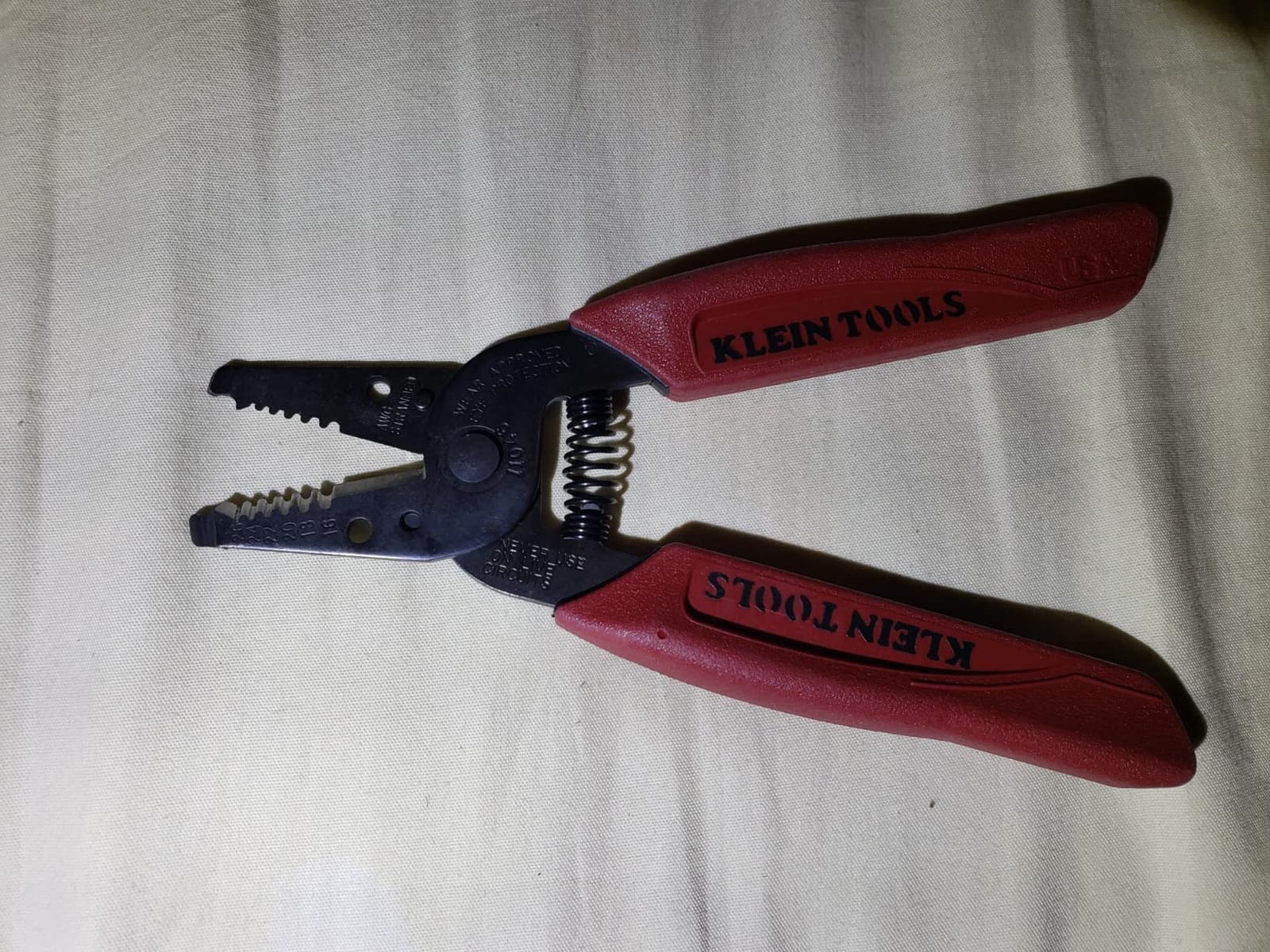
The 11046 is the answer to a problem that does not show up in spec sheets. At 6.25 inches and 4.3 ounces with a narrow nose, it fits into the space behind an instrument cluster or inside a distribution enclosure where a 12-inch Klein simply will not go. The narrow profile is the entire point of this tool.
Within its 16-26 AWG stranded range it performs cleanly. Owners working on audio cable, guitar stomp boxes and low-voltage builds report consistent stripping down to 22 AWG without nicking fragile strands, and the sharpened cutting edge does its job with very little hand force.
Gauge markings are stamped on both sides, so you can read them whether you are stripping left to right or right to left, which sounds trivial until you are working blind inside a panel. The spring-loaded self-opening action is smooth and the blades hold an edge over years of daily use, with plenty of owners reporting a decade of service.
It is also one of the few tools in this list that is Made in USA from heavy duty hardened steel, and it ships with a one year manufacturer warranty. If you cut and strip rather than only strip, the razor edge gets through hookup wire quickly.
Why the 11046 nose matters inside tight enclosures
Reach is a feature that no rating captures. Inside a control panel or a vehicle harness, the difference between a 6.25 inch nose and a 12 inch one is the difference between finishing the job and having to pull the whole assembly apart. Reviewers consistently single the nose out as the reason to own this tool over a generic stripper.
The precision ground holes are also worth noting because they are the same standard Klein uses on its larger tools. Consistency across a brand means one stripper and one technique, even when you swap models between jobs.
Where the 11046 runs out of range
It is stranded wire only. If you are working with solid magnet wire, Kynar or solid hookup conductor, this is the wrong tool and you need the Engineer PA-14 or PA-06 instead. The stamped gauge numbers are also faint enough that you will want a magnifier or a bright light to confirm them.
And because it stops at 16 AWG, it will not cover the heavier end of control panel work. Pair it with the Klein 11049 if your wiring runs in both directions.
4. Hakko CSP-30-1 Wire Stripper – Best for Genuine 30 AWG
Hakko CHP CSP-30-1 Wire Stripper, 30-20 Gauge Maximum Cutting Capacity
30-20 AWG capacity
Labeled holes 20-30 AWG
1.28 oz alloy steel
Pros
- Strips 20-30 AWG without marring core conductors
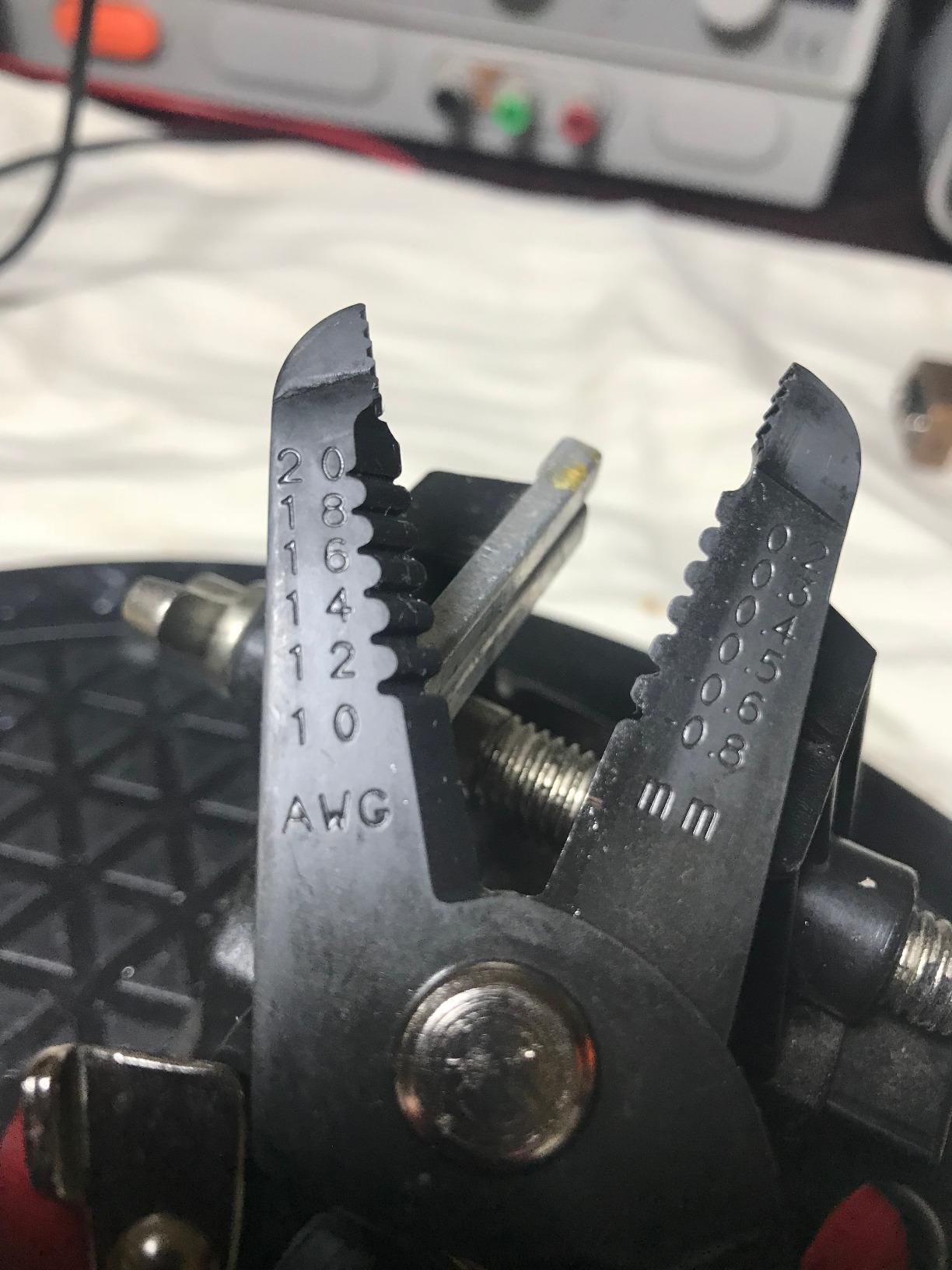
- Individually labeled holes for 20 22 24 26 28 and 30 AWG
- Serrated plier nose doubles as crimper and gripper
- Well-judged spring tension
- Metal stopper holds jaws part-open for hair-thin wire
Cons
- Embossed gauge numbers are hard to read without enhancement
- Not intended for household or commercial electrical wiring
The Hakko is built around a simple idea: on very fine wire, the limiting factor is not the blade, it is how far the jaws travel. The metal stopper holds the jaws part-open so they cannot close all the way on a hair-thin conductor. Hobbyists and RC builders who work with genuine 30 AWG and wire-wrap treat that stopper as the feature that saves their wire.
The stripping holes are individually labeled for 20, 22, 24, 26, 28 and 30 AWG, which is unusual at this level, and it combines a stripper, a shear and pliers in one 1.28 ounce body. Reviewers report stripping 20-30 AWG without marring the core conductors.
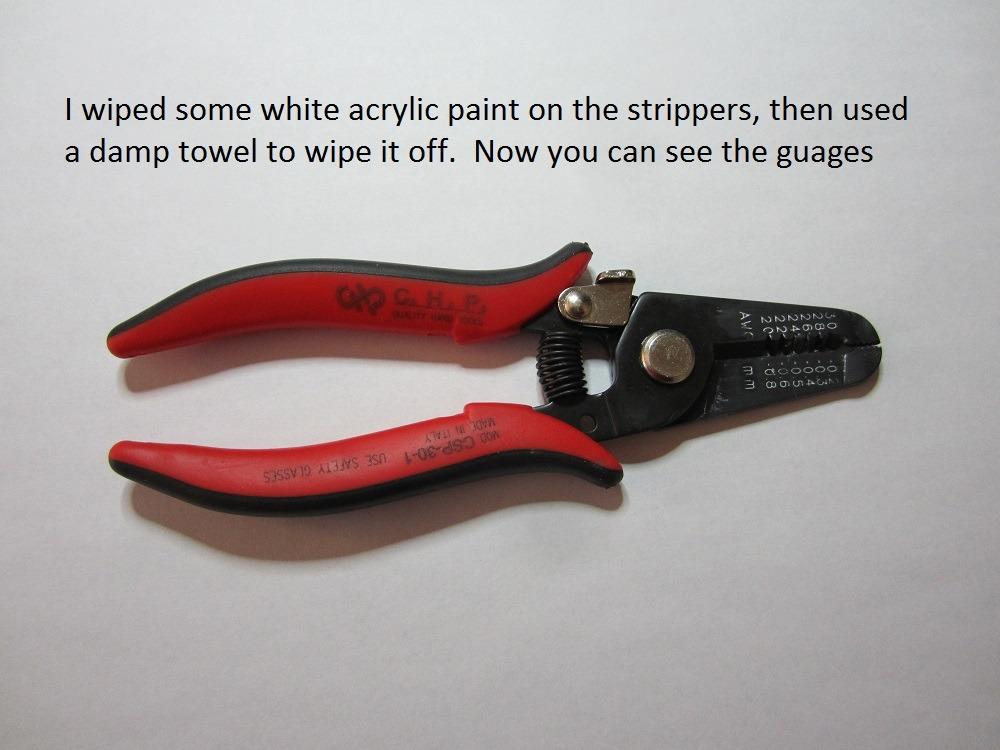
The serrated plier-tooth nose doubles as a manual crimper and a wire gripper, which matters more than it sounds when you are holding a 30 AWG lead and trying not to bend it before you even strip it. Heat-treated steel holds an edge, and the soft rounded rubber grips stay comfortable through a long session.
With a 4.7 rating across 844 reviews, this is a well-proven tool from a specialist electronics brand rather than a general hardware line. It is compact enough to live in a solder-side tool roll permanently.
How the jaw stopper changes 30 AWG work
Most strippers fail on micro wire because they can physically close past the point of damage. The stopper removes that possibility by limiting travel, which converts a tool that is risky below 28 AWG into one that is usable at 30. It is the same reason an automatic stripper bites: it is designed to close further than fine wire tolerates.
Labeled holes matter too. When you are working by feel on a strand of magnet wire in dim light, a tool that tells you which hole is 28 and which is 30 removes a whole category of mistake.
Where the CSP-30-1 does not belong
This is an electronics tool, not an electrical tool. It is not intended for household or commercial wiring, and the 20 AWG bottom of its range means it will not cover heavier hookup. The embossed gauge numbers are also difficult to read, so treat the labels as a guide rather than a guarantee.
If your floor is solid conductor rather than stranded, look at the Engineer PA-14 or PA-06, both of which list solid and stranded ranges separately.
5. Engineer PA-14 Precision Wire Stripper – Best for Micro-Thin Wire
ENGINEER PA-14 Precision Wire Stripper for Micro-Thin Wire Made in Japan
Stranded 34-22 AWG and solid 32-20 AWG
Rounded finishing edge jaws
Made in Japan
Pros
- Reaches down to 34 AWG stranded which is finer than most rivals
- Rounded jaw edge leaves zero nicks on the copper
- Light spring pressure suits delicate micro work
- Oil-resistant grips and clear printed gauge reference
- Made in Japan with a precise play-free hinge
Cons
- Smallest slots cut the wire if you fully bottom the handles out
- Price sits well above generic strippers
- Narrow hanger opening needs a separate ring
The PA-14 is the deepest-reaching tool here. It strips stranded wire from 34 down to 22 AWG and solid wire from 32 down to 20 AWG, and owners working on tonearm leads, decoder wire, miniature lighting and SMD LED assemblies describe it as the only stripper they own that handles ultra-fine wire without damaging strands.
The reason is the jaw finish. The high carbon steel alloy jaws carry an exceptionally sharp edge with a rounded finishing surface, which shears the insulation and then meets resistance rather than cutting. On stranded wire that rounded edge is the difference between a clean cut and a lost strand.
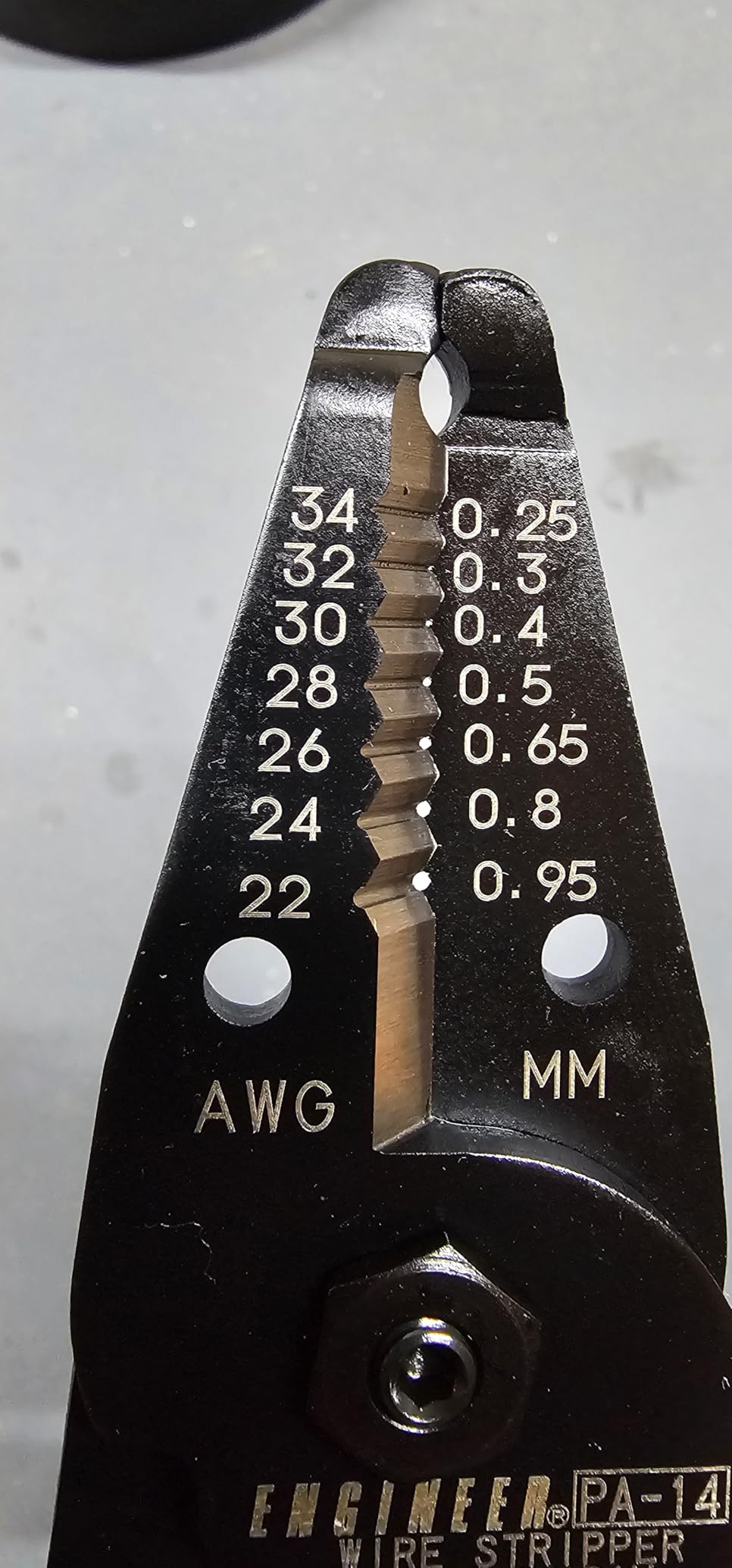
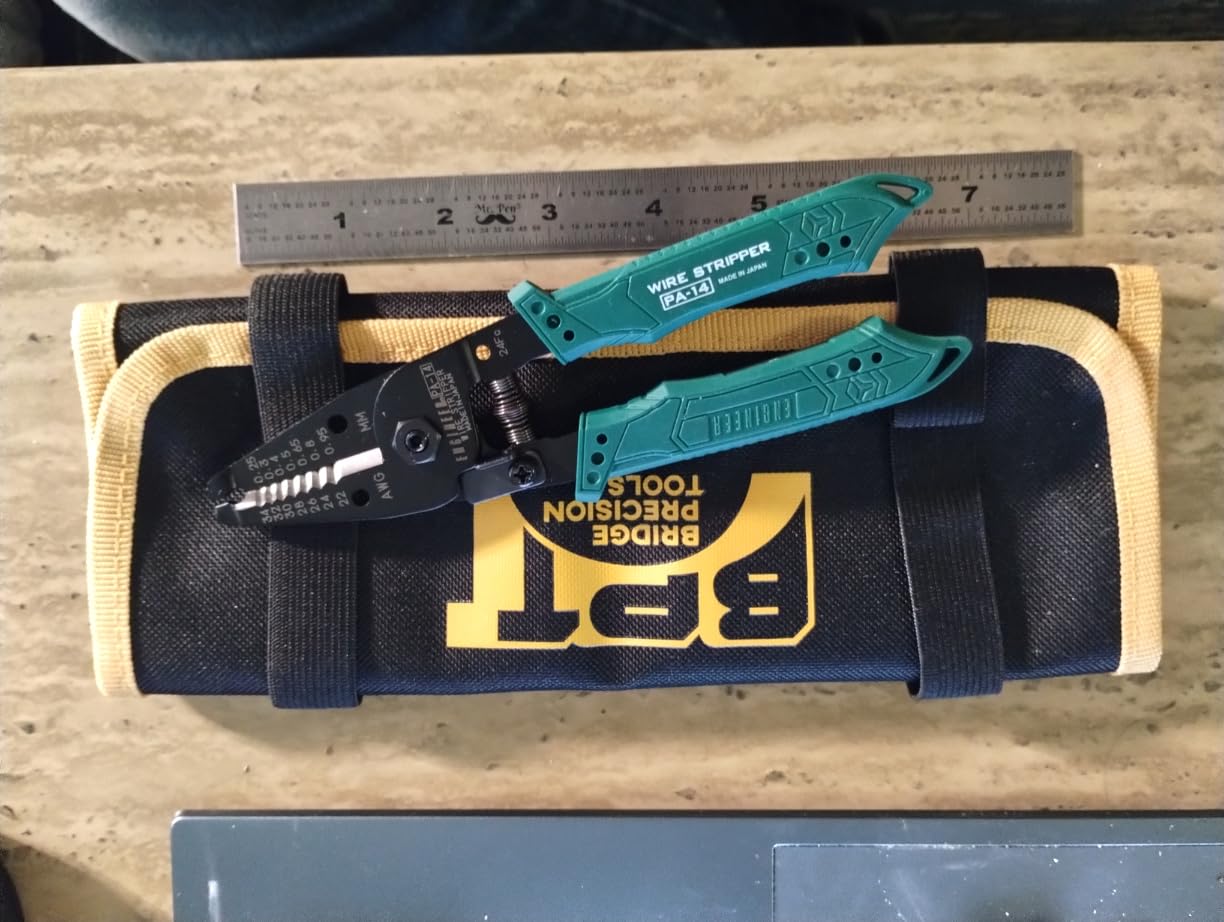
At 175 mm and 134 grams it is light in the hand, and the spring pressure is deliberately light, which suits micro work where a stiff spring would crush the wire before you control it. The thermoplastic rubber grips are oil-resistant, and the handles latch shut for storage so the fine jaws are not left open in a bag.
It is Made in Japan with a hinge that reviewers describe as precise and play-free. That is not a trivial detail on a tool whose whole job is consistent pressure at the cut.
Why the rounded jaw edge protects fine strands
Stranded wire is a bundle of small copper strands held by insulation. A sharp blade with a burr or a square edge will find the weak point and sever a strand on the way out. A rounded finishing edge transitions from cutting to sliding, so the jacket separates without a nick anywhere along the length.
Reviewers working on fine audio and miniature wiring treat zero nicks as the pass mark, and the PA-14 is one of the few tools in this roundup that meets it consistently at the fine end of its range. For 30 AWG Kynar and 34 AWG signal work, that is the whole reason to buy it.
Where the PA-14 needs technique and care
It demands practice that an automatic stripper does not. You have to control closing pressure by feel, and a minority of owners report that the smallest slots cut the wire when the handles are fully squeezed to the stop. If you cannot resist bottoming the tool out, mark the handle position with a paint pen after your first successful strip.
The narrow hanger opening also means it needs a separate ring to sit on a hook. And at its price it is a niche purchase, which is fair: if you never go below 28 AWG, the PA-06 does the same job with more capacity.
6. Engineer PA-06 Precision Wire Stripper – Best for PTFE and Silicone Insulation
ENGINEER PA-06 Precision Wire Stripper For Thin Wires AWG 30-18
Solid 28-16 AWG and stranded 30-18 AWG
Sharp high carbon steel jaws
175 mm, 134 g, made in Japan
Pros
- Jaws sharp and aligned from the factory
- Handles silicone and PTFE insulation across 30-18 AWG
- Light smooth spring action and a slim nose
- Usable rear cutter that does not tear strands
- One wide span tool replaces two narrower strippers
Cons
- Size markings are small and hard to read at a glance
- Face markings refer to stranded wire and metric figures are hole diameters
- Fine jaws are exposed in a toolbox with no case
The PA-06 covers solid wire from 28 to 16 AWG and stranded wire from 30 to 18 AWG, and that wide span is the argument for it. One tool replaces the small precision stripper and the mid-range stripper most benches end up owning, which is why reviewers building 3D printer harnesses, tube guitar amp looms and PTFE-insulated JST wiring rate it as the best small-wire stripper they have owned.
What earns the 4.8 rating is the factory alignment. Owners report jaws that are sharp and true out of the box, so the insulation pops off without chewing the copper, and the tool handles both silicone and PTFE insulation across its range without special technique.
The rear cutter is actually usable rather than decorative, cutting jacket cleanly without tearing strands, and the slim nose reaches tight spots that a full-size stripper cannot. Handles latch shut for storage, and there is no slop or burr from the factory. Made in Japan from high carbon steel with oil-resistant thermoplastic rubber grips, at 175 mm and 134 grams it is identical in size to the PA-14.
Why one PA-06 replaces two smaller strippers
Most benches accumulate three tools: one for 30 AWG electronics, one for 24 AWG signal, and one borrowed from a bigger stripper for 18 AWG. The PA-06’s 30-18 stranded span collapses that into a single pair of pliers, and the wide gauge range is exactly what reviewers cite when they say it replaces two smaller strippers.
For PTFE and silicone specifically, the sharp high carbon steel jaws cut rather than stretch the jacket. Those two materials are where most notched strippers tear, so a tool that handles them cleanly across a dozen gauges removes a recurring frustration.
Where the PA-06 markings get in the way
The printed size markings are small and hard to read at a glance, and there is a trap worth knowing about. The markings on the tool face refer to stranded wire, and the metric figures shown are hole diameters rather than wire diameters, so a number that looks like a wire size is not one. The back side is unmarked entirely.
There is also no protective case, so these fine jaws sit exposed in a toolbox where they can get knocked out of alignment. And the locking tab has a little play, though it holds unless you deliberately move it. None of this affects cutting quality; it affects how much care the tool needs stored away.
7. Jokari Micro-Precision Stripping Tool – Best for Repeatable Strip Length
Jokari Micro-Precision Stripping Tool for AWG 30 to 20
AWG 30 to 20 solid and stranded
Adjustable strip length slider
4.02 inch body
Pros
- Handles very thin wire cleanly after cheaper tools failed
- Adjustable strip length gives consistent repeat cuts
- Simple three-step slider operation
- Reinforced plastic body resists cracking
- Works from wire-wrap gauge up to hookup wire
Cons
- Highest cost in this roundup for a comparable gauge range
- Few customer reviews on the listing
- Slider controls take practice to set accurately
The Jokari is the odd one out in this list, and that is its appeal. Instead of fixed notches it uses a red slider to select the conductor cross-section and a black slider to set how much insulation gets removed. That second control is the reason to own it: on a short run of many identical conductors, every strip comes out the same length without re-measuring.
Owners who switched to it after damaging strands with other tools report consistent, clean results across the AWG 30 to 20 range for both solid and stranded wire, which corresponds to 0.25 to 0.80 mm conductor diameter. The reinforced plastic body with an alloy steel mechanism has resisted cracking in service.
Why adjustable strip length matters on short runs
When you are building twenty identical sensor leads, a fixed-notch stripper gives you twenty strips of twenty different lengths, and the one that is too short is the one that fails when the terminal is crimped. A stop you can dial in removes that variable entirely, and it is the feature owners describe first when they explain the switch.
Operation is genuinely simple once you learn it: set the red slider, set the length, insert and squeeze. A lower lever section trims the finished wire end, so you are not making a second cut with a different tool.
Where the Jokari is hard to justify
It is the most expensive tool here for a gauge range that several cheaper pliers cover, and the slider mechanism needs a few tries before the stop position is where you think it is. At 4.02 inches it is also very short, which is comfortable but gives you less leverage on a stubborn conductor.
If you strip a handful of wires a week rather than building identical runs, the Klein 11057 is the better value and gives you a fixed notching habit that transfers across jobs. If you build harnesses in batches, the Jokari earns its place.
8. iFixit Mandible Wire Strippers – Best for Electronics Rework
iFixit Mandible Wire Strippers – Auto-Open Latch for Electronics Repair
Cuts strips and bends 30-10 AWG
Spring-loaded auto-reset handle
3.2 oz compact alloy steel build
Pros
- Wide 30-10 AWG range for cutting stripping and bending
- Sharp aligned blades strip cleanly once the slot is chosen
- Auto-reset spring reduces fatigue in repetitive rework
- Smaller and more ergonomic than strippers built for house wiring
- Backed by a lifetime manufacturer guarantee
Cons
- Locking latch can pop open in a crowded tool bag
- Takes practice to settle on the correct gauge slot
- Not intended for heavy industrial cable work
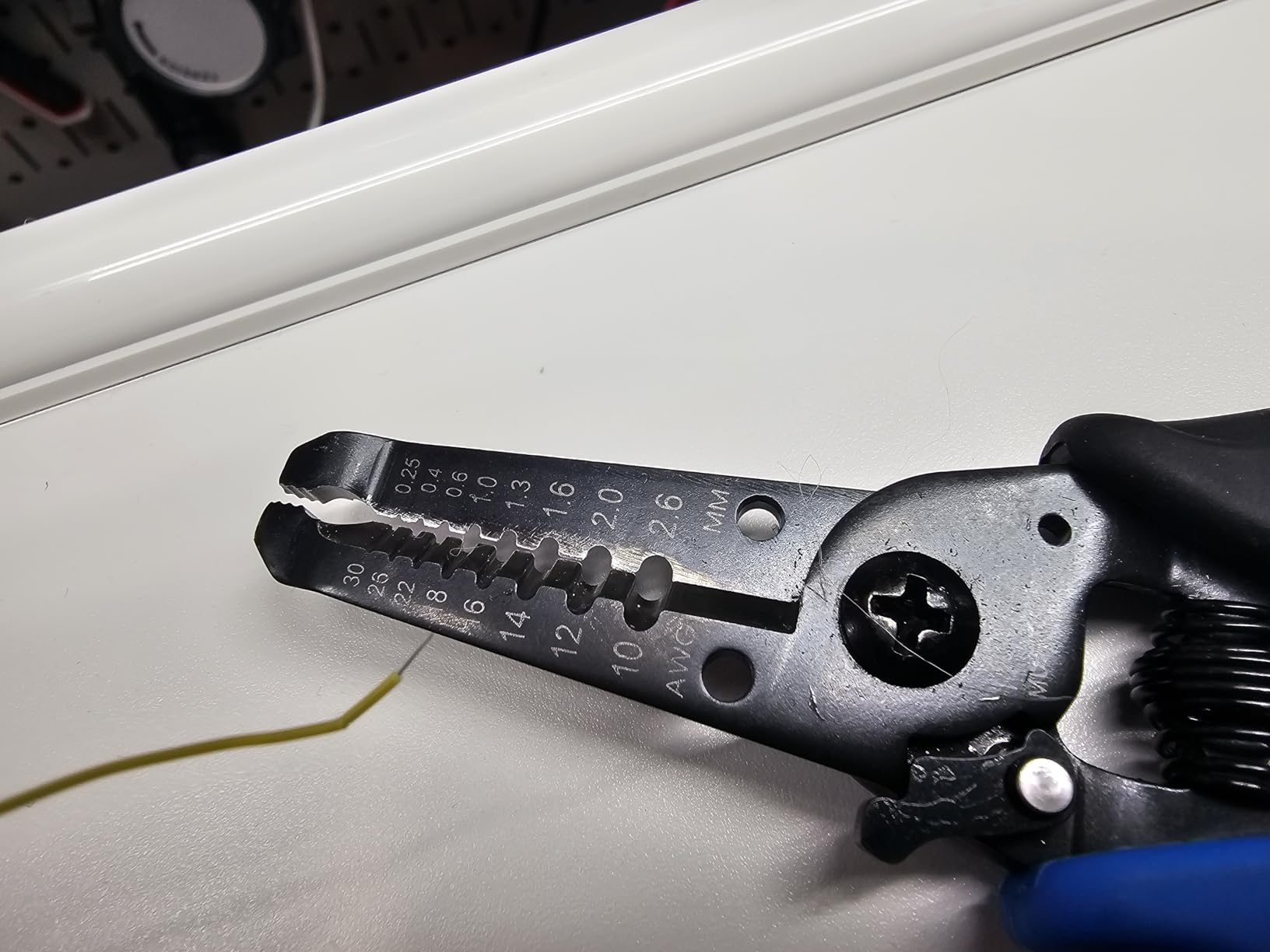
The Mandible is the most repair-shop-shaped tool here. It cuts, strips and bends 30-10 AWG in one compact body, which covers signal and control wire in the same pair of pliers, and electronics rework and retro repair hobbyists rate it as a solid all-rounder with clean, non-nicking strips once you pick the right slot.
The spring-loaded handle resets automatically, which reduces hand strain during repetitive rework, and the locking latch allows one-handed opening. The whole tool is noticeably smaller and more ergonomic than strippers designed for house or HVAC wiring, which matters when you are working over a bench with a board in front of you.
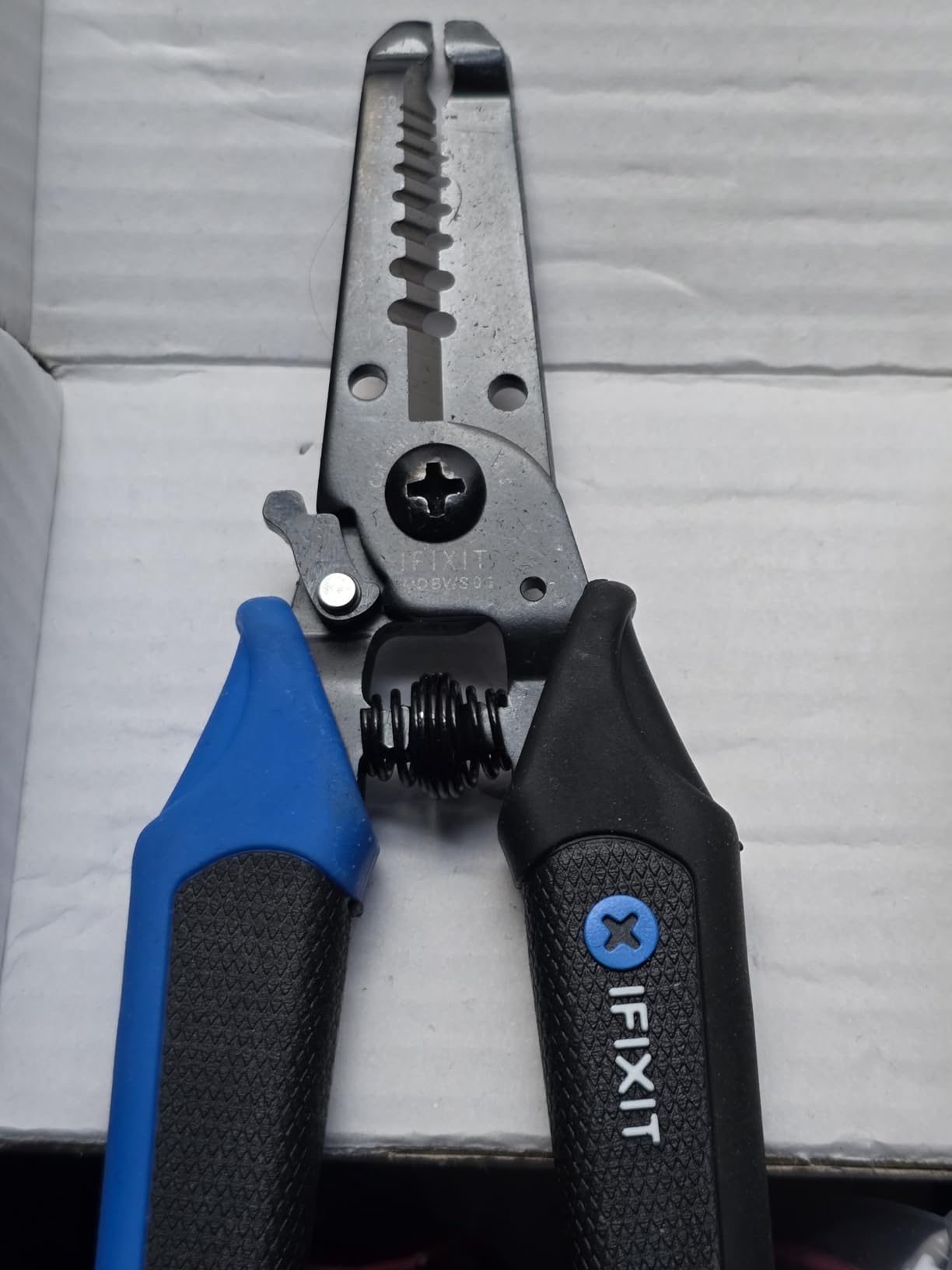
Plier grips on the back of the jaw are genuinely useful for bending wire to breadboard spacing and forming solder leads, a job that usually needs a second tool. Sharp, well-aligned blades remove insulation without harming the wire beneath, and the lifetime manufacturer guarantee is a real differentiator on a tool this size.
At 3.2 ounces it disappears into a pocket, which is how most repair hobbyists use it. The 4.6 rating across 231 reviews reflects broad satisfaction with a tool that does a wide range of jobs without being exceptional at any one of them.
Why the Mandible suits a repair bench
Repair work is a mix problem. You pick up an unknown device and you might find 10 AWG control wire, 22 AWG audio cable and 30 AWG board interconnect in the same session. A tool that covers 30-10 AWG removes the temptation to use the wrong stripper on the wrong conductor, which is where most nick damage comes from.
Auto-reset spring action is the other reason. On long rework sessions the difference between a spring that resets itself and one that does not is the difference between finishing comfortably and putting the tool down halfway through.
Where the Mandible latch gets in the way
The locking latch can pop open inside a crowded tool bag, which is a recurring complaint and the direct trade for the compact body. It also takes some practice to settle on the correct gauge slot, so give it an hour before judging it.
And it is not a heavy industrial cable tool. For shop-scale work on heavier conductor and multi-conductor cable, our picks on industrial wire strippers for shops are the right reference point instead.
9. Jonard Tools JIC-2030 Wire Stripper – Best for Wire-Wrap and Model Rail
Jonard Tools JIC-2030 20-30 AWG Wire Stripper and Cutter, 6-3/4″ Length
20-30 AWG solid and stranded
50 HRC black oxide finish
6.73 inch high carbon steel body
Pros
- Sharp blades strip 28 and 30 AWG without nicking
- Consistent strip length on 30 AWG wire-wrap
- Light precise feel suited to long sessions
- Built-in looping hole and cutter add real function
- Compact body covers 20-30 AWG solid and stranded
Cons
- Coil spring can pop out when the tool is opened wide via the lock
- Some users cannot strip their particular 30 AWG wire despite the rating
- Light nicking if insulation is peeled rather than fully cut
The JIC-2030 is the specialist choice for wire-wrap, Li-ion pack building and model railway work, where genuine 30 AWG is the normal working size. Builders in those fields report accurate insulation removal on 28-30 AWG with no lost strands and a consistent strip length across a run of wire-wrap, and the light, precise feel suits long sessions at a bench.
The build is serious for the size: high carbon steel with hardened, tempered and ground cutting edges and a 50 HRC black oxide finish that resists corrosion. A wire looping hole for bending and termination is built in, and the 6.73 inch body keeps it compact.
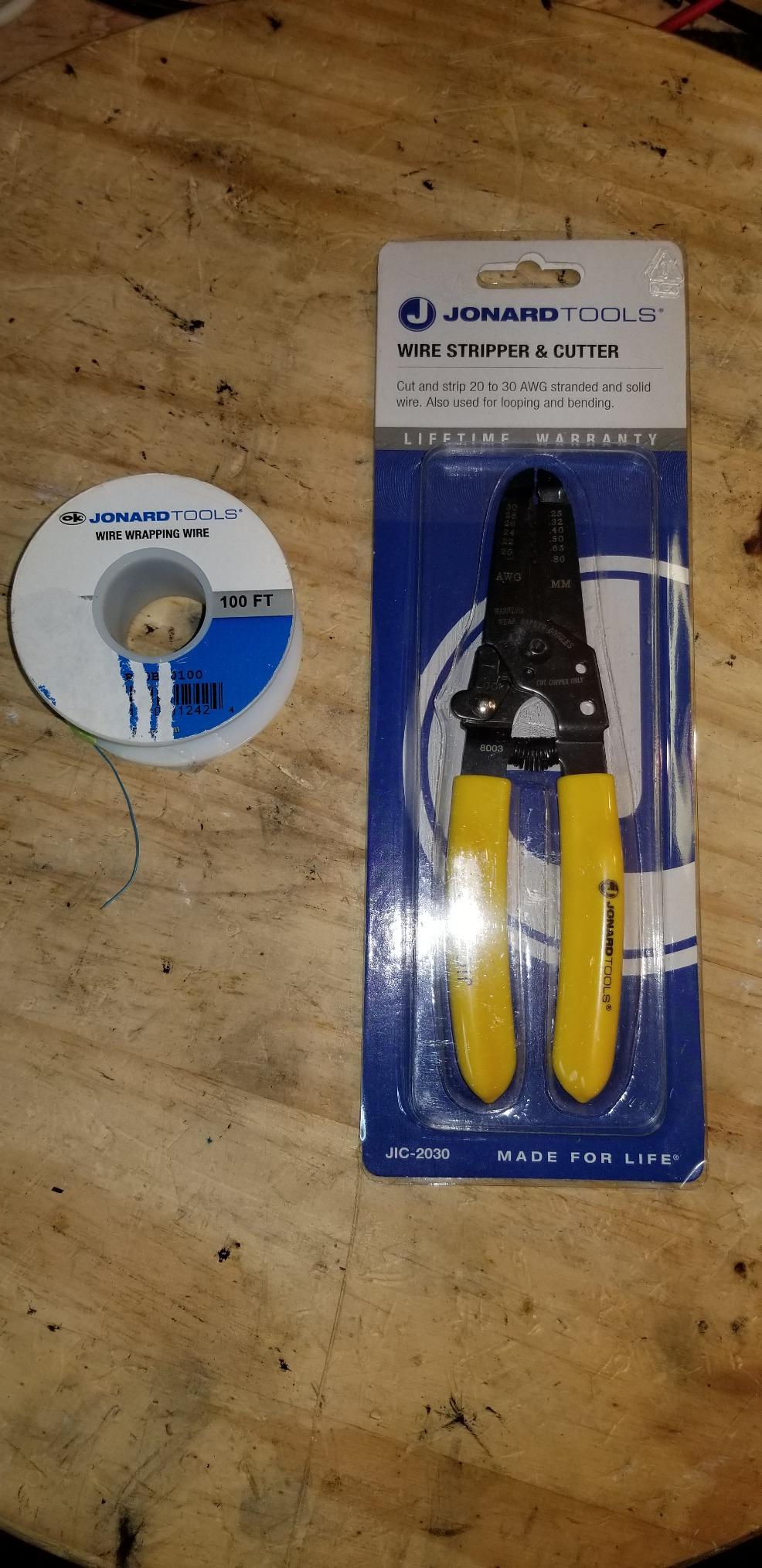
At 4.3 it is the lowest rated tool in this roundup, and the reason is narrow: two recurring mechanical complaints rather than any problem with the cut itself. The coil spring is short and can escape the handles when the tool is opened wide via the lock, and a minority of owners find it will not strip their particular 30 AWG wire despite the stated rating.
If your 30 AWG is genuine single-strand wire-wrap, it does the job. If it is a fine multi-strand signal cable, the Hakko or the Engineer PA-14 is a safer bet.
Why the JIC-2030 suits 30 AWG wire-wrap
Wire-wrap needs two things: a short, consistent strip and an edge that does not nick single-strand conductor. Reviewers building Li-ion packs and railway layouts report exactly that, with strip lengths consistent enough to feed straight into a wrap tool without adjustment.
The looping hole matters more than usual here. In wire-wrap work you form the bare end into a tight loop rather than a hook, and having the hole in the same tool means you are not hunting for a second implement mid-run.
Where the JIC-2030 spring and range disappoint
The escaping coil spring is the fix to know about. If the tool opens fully through the lock, the spring can walk out of the handle channel, and owners report finding it on the bench afterwards. Keep the tool from being forced wide and the problem largely disappears.
The 20-30 AWG range is also genuinely limited at both ends. It will not touch 18 AWG signal cable or 34 AWG micro wire, so it works best as a specialist companion tool rather than a bench standard. Peeling rather than fully cutting the insulation is also where owners pick up occasional light nicking.
10. Klein Tools 11049 Wire Stripper – Best for Heavier Stranded Cable
Klein Tools 11049 Wire Stripper/Cutter, Made in USA, Compact, Lightweight, Hardened Steel, Precision Ground, for Stranded Wires
8-16 AWG stranded wire
Precision ground stripping holes
4.3 oz compact hardened steel
Pros
- Cleanly strips 8 10 12 14 and 16 AWG stranded cable
- Sharp accurate edge that stays sharp under daily use
- Compact comfortable grip that fits the hand
- Solid feel for a budget-priced tool
- Covers 8-16 AWG which many rivals cannot reach
Cons
- 8-16 AWG range is too heavy for fine electronics wire
- Stranded wire only with slight play at the pivot
- No bolt shears for 8-32 or 6-32 screws
The 11049 sits outside the small gauge end of this roundup, and it is here deliberately because most people assembling a wire toolkit hit a gap above 16 AWG. It strips 8-16 AWG stranded wire, a range many competing strippers simply cannot reach, with precision ground holes that remove insulation without cutting strands or leaving stubs.
RV, battery cable and industrial users value that reach, and reviewers report the edge staying sharp with daily industrial use. The bi-layer handle gives palm-fit comfort, and the whole tool is compact and lightweight at 4.3 ounces.
Why the 11049 fills the gap above 16 AWG
Small gauge strippers are common. Heavy stranded cable strippers are common. The 8-16 AWG band between them is where DIY harnesses, trailer wiring and battery leads live, and it is the band people end up borrowing someone else’s tool for. This one covers it in a Made in USA hardened steel body with a one year manufacturer warranty.
If your work spans both worlds, pairing this with the Klein 11057 or the Engineer PA-06 gives you two tools that cover everything from 30 AWG up to 8 AWG without a gap.
Where the 11049 falls outside small gauge work
Be clear about what this is not. It is a mid-to-heavy gauge tool, not a precision small-wire stripper, and it will not handle hair-thin hookup wire, Kynar or magnet wire. It is stranded only, and there is slight travel at one point on the pivot, which is noticeable in the hand even though it does not affect the cut.
There are also no bolt shears for 8-32 and 6-32 screws, so if you need one tool for screws as well as wire, the 11057 is the better single purchase.
11. Gardner Bender GS-361 Wire Stripper – Best for Readable Gauge Markings
Gardner Bender GS-361 Wire Stripper, 16-32 Awg, 6-1/4 in Oal
16-30 AWG solid and 18-32 AWG stranded
Color coded laser-etched markings
6-1/4 inch stainless steel with cushioned grip
Pros
- Cleanly strips 26 and 28 AWG fine wire
- Color coded laser-etched markings are easier to read than stamped numbers
- Sharp blade that stays sharp over years
- Looping hole and curved blade handle pulling and cutting
- Stainless steel body resists the wear and rust cheaper tools show
Cons
- No lock to keep the tool closed when stored
- Handles are stiff initially and need breaking in
- Only 6-1/4 inches long so less leverage than larger strippers
The GS-361 is included here for one reason above all others: the markings. The gauge numbers are laser-etched and color coded against an anti-glare black oxide finish, and owners building model railways, cat5e runs and micro-electronics projects consistently say the etchings are easier to read than the stamped numbers on most competing tools.
Underneath that, the capacity is generous for a small tool. It handles 16-30 AWG solid and 18-32 AWG stranded, and reviewers report stripping 26 and 28 AWG fine wire cleanly where other strippers at this size struggled.
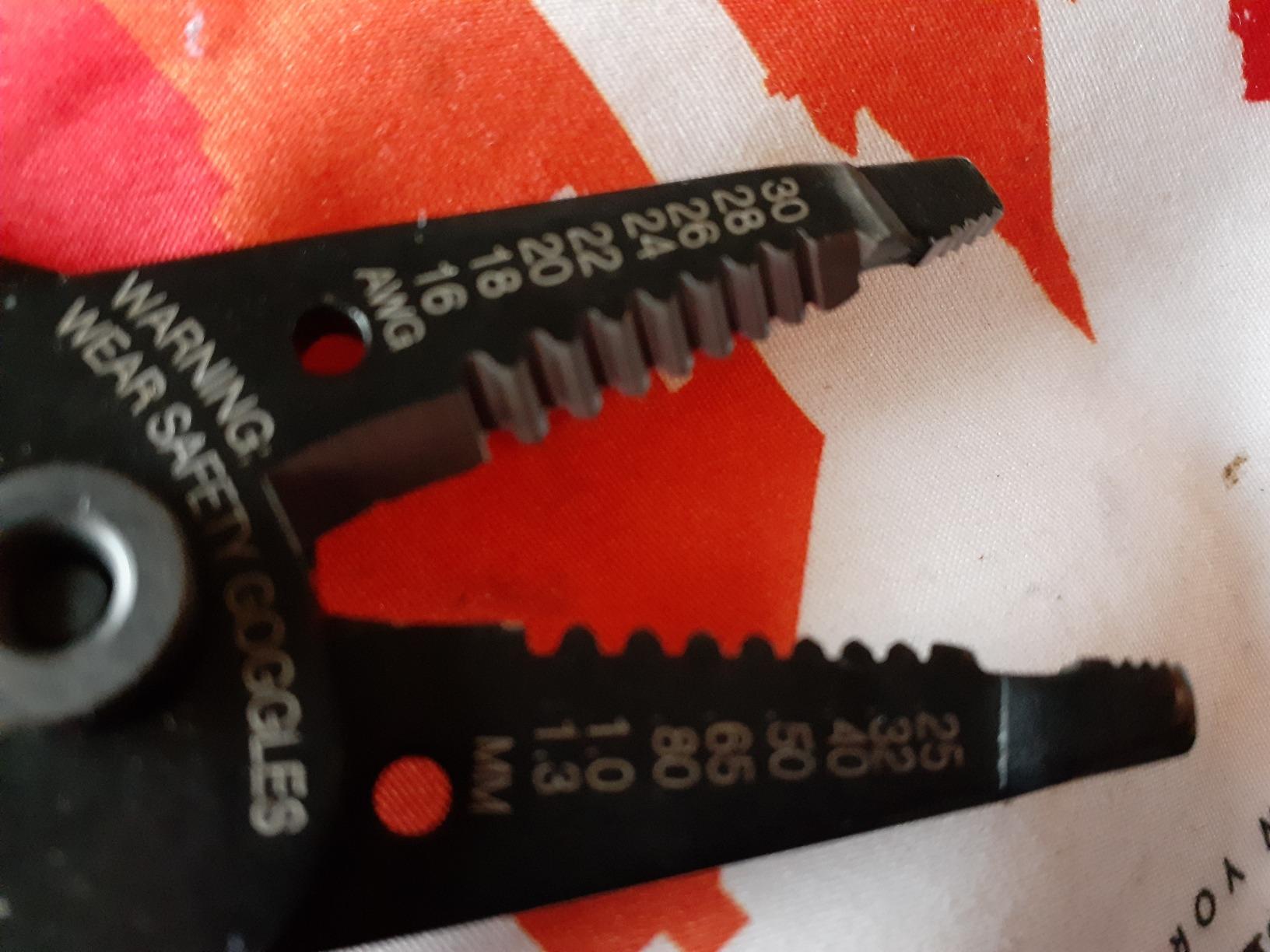
The stainless steel body resists the wear and rust that cheaper tools show, and the sharp, accurate blade stays sharp over years of use. A looping hole aids wire pulling and termination, and the curved cutting blade handles cutting and pulling in one motion, while the power spring return is designed to cut hand fatigue.
The cushioned grip and 6-1/4 inch length make it a comfortable pocket tool. With a 4.4 rating across 138 reviews, it is a smaller-sample listing than most here, but the feedback is consistent rather than polarised.
Why laser-etched colour coding saves guesswork
Selecting the wrong notch is the most common cause of a nick, and selecting it wrongly usually means guessing at a faint number in poor light. Colour coding removes the guess: you learn which colour is which gauge once and then recognise it instantly. On a dark panel, under a car, or on a night bench, that is worth more than it sounds.
It also reduces the mental load when you move between tools. If you own several strippers with inconsistent markings, colour coding is the one feature that makes it obvious you have grabbed the wrong one.
Where the GS-361 frustrates owners
There is no lock to keep the tool closed when stored, so the power spring return makes it spring open inside a tool bag. That single complaint appears more often than any other in the reviews, and it is the reason to keep it in a sheath or a pouch rather than loose.
The handles are also stiff until they are broken in, and at 6-1/4 inches the tool gives less mechanical advantage than larger strippers. On stiff multi-conductor cable you will want something bigger.
12. KATA 7 Inch Precision Wire Stripper – Best Value for Maker Benches
KATA 7 Inch Precision Wire Stripper, 20-32 AWG Tool for Electronics DIY
20-30 AWG solid and 22-32 AWG stranded
50# heat treated carbon steel blades
7 inch, 179 g
Pros
- Strips 30 AWG stranded cleanly and handles 24 AWG jumper wire
- Sharp carbon steel blades cut insulation quickly with little effort
- Good diameter range for thin cables at a low cost
- Feels solid and better built than cheaper big-box strippers
- Comfortable grip even for users with arthritic hands
Cons
- A small number report misaligned blades that bend stranded wire
- Jaws may need practice to align with very fine stranded wire
- Low voltage applications only
- No case and no storage latch
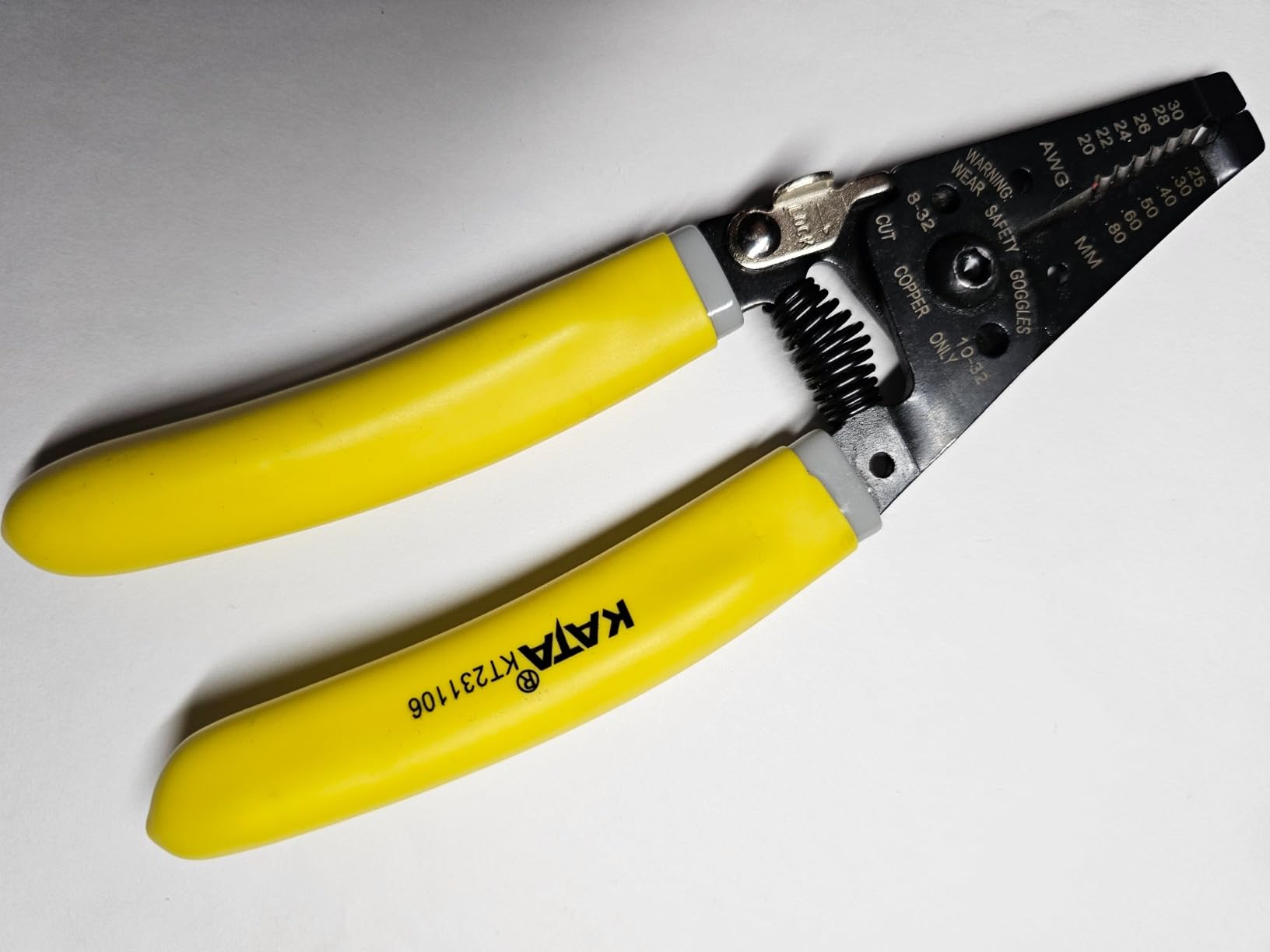
The KATA is one of the most credible precision strippers you can pick up at the low end of the market, and for 3D printer wiring, Arduino builds, LED projects and STEM benches that is exactly the point. It strips 20-30 AWG solid and 22-32 AWG stranded using 50# heat treated carbon steel blades that reviewers describe as razor sharp.
Hobby builders and dollhouse miniaturists find it the right size and capability for tiny wiring at a very accessible cost, and it handles 30 AWG stranded cleanly along with 24 AWG telephone and jumper wire without trouble. At 179 grams and 7 inches, the grip stays comfortable even for users with arthritic hands.
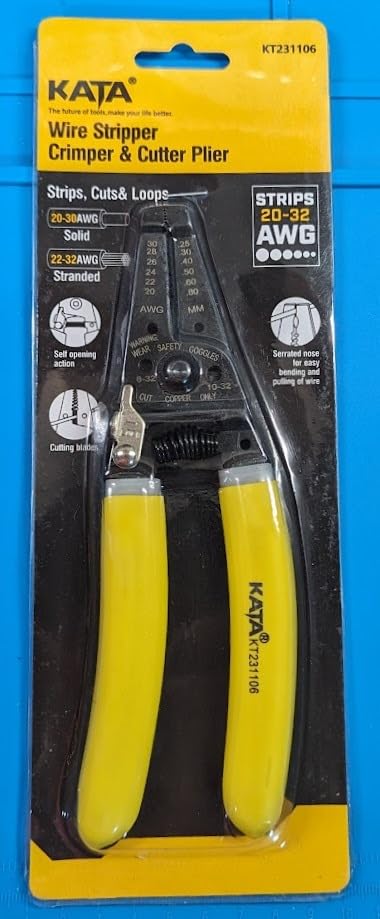
It also strips, cuts, clamps and crimps insulation terminals, so it functions as a small bench multi-tool rather than a single-purpose stripper. The compact 7 inch body suits electronics benches and maker spaces, and owners consistently report that it feels more solidly built than cheaper big-box strippers of the same nominal range.
The caution is quality control rather than design. A small number of owners report blades that were misaligned out of the box and bent stranded wire before stripping it, so inspect the jaws before you trust it on anything you cannot replace.
Why the KATA covers 20-32 AWG at low cost
The gauge window is genuinely the useful part. Most entry strippers advertise 14-22 AWG and stop where signal work begins, which leaves the most common electronics tasks uncovered. The KATA starts at 20 AWG solid and reaches 30 AWG stranded, which is the band where hobby bench work actually lives.
Adding terminal crimping means a beginner can terminate a JST connector without buying a second tool, and the maker-space framing is honest: this is intended for low voltage applications, not household mains wiring.
Where the KATA needs a light hand
Inspect the jaws before first use. One review reports blade misalignment that bends fine stranded wire, and while that is a small minority, it is a manufacturing tolerance issue rather than a technique problem, so there is no skill fix for it.
Beyond that, the jaws need practice to align with very fine stranded wire, there is no storage latch so it should not sit loose in a drawer, and it is not a tool for household mains wiring under any circumstances.
How to Strip Small Gauge Wire Without Nicking the Conductor
To strip very small gauge wire without damaging it, identify the gauge before you touch the tool, choose the notch that matches both that gauge and the conductor type, seat the wire fully to the back of the jaw, close only until you feel resistance, then twist and pull rather than straight-pulling. Six steps, and the twist-pull is the one people skip.
1. Identify the gauge. Read the print on the jacket, or measure the bare conductor diameter and convert it. Do not guess from how the wire feels. A strand bundle that looks like 26 AWG can easily be 30, and the notch you pick on a guess is the notch that nicks.
2. Match the notch to the conductor type. Stranded wire is bigger on the outside for the same AWG, because the strands and their insulation add bulk, so stranded notches are cut larger. A solid conductor sitting in a stranded notch gets a loose cut that tears rather than scores. This is the single most common cause of a nicked wire and it is entirely avoidable.
3. Seat the wire to the back. Push the wire in until it stops. A wire held a few millimetres short of the back of the jaw gets cut in a shallow arc rather than a full circumference, and that arc tears the jacket on the way off.
4. Close until you feel resistance, then stop. The jaws should score the insulation all the way around without biting into the copper. On very fine wire, release a fraction before the handles bottom out. This is why tools with a travel limiter, such as the Hakko’s stopper, feel safer at 30 AWG.
5. Twist and pull. Rotate the tool a quarter turn around the wire, then pull it off along the wire axis. The twist breaks the scored jacket into two halves so it slides off instead of stretching and dragging across the conductor. Straight-pulling a scored jacket is what produces long tapered sleeves and torn strands.
6. Inspect before you connect. Roll the conductor between your fingers under good light. Look for a flat spot, a missing strand or a bright nick. On stranded wire, count the strands at the end if the wire matters to the job.
Two more situations change the approach. For PTFE and other low-friction insulation that will not take a score, score the jacket lightly with a sharp blade first and then peel, or use a thermal stripper. For thick PVC jacket or heat-shrink, take the jacket off in two steps: strip the outer layer with a bigger notch, then strip the conductor with the correct fine notch.
Why Automatic Wire Strippers Fail Below 20 AWG
Automatic self-adjusting strippers are built to grip, pull and cut in one squeeze, and on fine wire that grip is the problem. The jaws have to close further than a 28 or 30 AWG conductor tolerates in order to remove the insulation, so the result is a crushed, nicked or shortened conductor. This is the most repeated complaint about them in electronics forums, and it is why none of them appear in this roundup.
That said, owners do report two automatics working acceptably in that band. On r/Tools the Ideal Stripmaster 45-098 is regularly called the best 20-30 AWG automatic stripper available, and EEVblog forum members report long-term use of the Greenlee PA1118 across 20-30 AWG. Both are credible in that range. Neither replaces a manual stripper once you go below 26 AWG.
The pattern is consistent enough to act on. Automatics are convenient and fast on 18-24 AWG and get progressively worse as the wire gets finer. Manual pliers-style strippers give you pressure control, which is the only thing standing between a fine conductor and a nick. If most of your wire is 22 AWG or heavier, an automatic is defensible; if any of it is 30 AWG, it is not.
Small Gauge Wire Stripper Buying Guide
Start by matching the tool to the thinnest wire you actually use, not the thickest. A stripper rated 16-26 AWG cannot help you with 30 AWG, and the cheapest way to destroy fine wire is to force it into a notch designed for heavier conductor. Work through these four questions in order and the right tool almost picks itself.
Which gauge is your floor? Here is the map most buyers find useful. 40-34 AWG covers micro-wire, robotics and the smallest magnet wire. 34-30 AWG covers magnet wire, Kynar hookup and signal interconnect. 30-24 AWG covers electronics, PCB work and small signal wiring. 24-18 AWG covers control panel and automotive wiring. 18 AWG and heavier is power wiring, and a different class of tool entirely.
What type of tool suits your wire? Manual notched pliers are the default and the right answer for nearly all small gauge work. Self-adjusting automatics are fast on 18-24 AWG and unreliable below that. Thermal strippers and hot tweezers melt insulation away rather than cutting it, and electronics hobbyists on r/AskEngineers call hot tweezers the best tool for stubborn wire with PTFE or heat-shrink jackets where a blade would either stretch the jacket or drag on the conductor. Cable knives score the outer jacket without touching the conductors at all.
Which features actually matter? Precision ground notches beat stamped approximations every time, because they are sized to conductor diameter rather than a nominal range. A rounded finishing edge protects stranded wire, which is the feature that matters most below 26 AWG. Spring-loaded handles reduce hand strain over long sessions. Readable colour-coded markings prevent the most common mistake. A storage latch prevents a spring-loaded tool from springing open in a bag. A travel limiter matters on micro wire.
What about solids versus stranded? The same AWG number describes different outside diameters for the two, because stranded conductor is a bundle of strands rather than one solid core. Stranded wire needs a larger notch at the same gauge number, and most manufacturers print separate ranges for each. Check both numbers before you buy rather than assuming a tool covers both.
Which brand ecosystem are you buying into? Klein and Engineer sit at opposite ends: Klein builds broad, durable, multi-function tools made in the USA that will outlast most of us, while Engineer builds narrow, specialist Japanese precision strippers for micro work and will outlast most shops. Knipex and Greenlee sit in between with well-made European and American options. Buying one brand and learning its notch layout properly is worth more than owning three brands badly.
How do you care for the blades? Keep them dry and wipe off manufacturing oil before first use, which also stops the oil attracting dust into the notch. Do not strip hardened or coated conductors such as enamel magnet wire with a normal notch tool, because the coating creates hard burrs that dull the edge. If a blade starts tearing rather than shearing, it is time for a resharpening service rather than for more hand pressure.
Where does this topic stop? If you asked how to strip big gauge wire, the honest answer is that none of these tools are the right answer. Big gauge means a different class of stripper entirely, and for pulling cable through conduit and raceway our guides on wire pulling systems for trades cover the rest of the workflow.
What to Do When You Nick a Conductor
If you nick a solid conductor, re-strip it in a larger notch first, then strip down in the correct notch in short steps. Removing the damaged length usually solves the problem entirely, and it is much faster than repairing it.
On stranded wire, cut back to sound conductor and decide by strand count. Lose one strand on a 19-strand 30 AWG bundle and solder is fine. Lose several and you want a proper crimp or a fresh length, because an under-strength joint is exactly the intermittent failure that causes the problem later.
For solder repairs, tin the conductor first, use a temperature-controlled iron at the correct temperature for the wire size, and keep the joint above the board for long enough to avoid a cold joint. Add heat-shrink over the repair rather than electrical tape, and slide it on before you solder where the layout allows. Pull-test the joint when the solder has cooled, and if the conductor moves inside the insulation, cut it back further.
Frequently Asked Questions
How to strip very small gauge wire?
Identify the gauge first, then pick the notch that matches both the AWG number and the conductor type. Seat the wire fully to the back of the jaw, close only until you feel resistance rather than bottoming the handles out, and finish with a quarter twist before pulling along the wire axis. The twist breaks the scored jacket so it slides off instead of stretching across the conductor. Inspect the result under good light before you terminate anything.
What is a good tool for stripping small gauge wire?
A manual stripper with precision-machined notches or blades sized to exact AWG gauges, typically 16-30 AWG and finer. It should score the insulation all the way around without biting into the copper. Spring-loaded handles, a rounded finishing edge for stranded wire and readable gauge markings are the features that separate a good one from a cheap one.
What tool should I use to strip 22 gauge wire?
Almost any of the 20-30 AWG class will do 22 AWG well, and the differences show up in feel and range rather than in the cut. The Klein Tools 11057 is the broadest choice, the Klein Tools 11046 is better if you are working in a confined panel, and the Engineer PA-06 handles silicone and PTFE insulation cleanly across its 30-18 AWG stranded range. Below 26 AWG, look for a rounded finishing edge.
Can automatic wire strippers handle 30 AWG?
Rarely. Self-adjusting strippers must close further than a 30 AWG conductor tolerates in order to remove insulation, which crushes or nicks the conductor. Owners on r/Tools single out the Ideal Stripmaster 45-098 as the best automatic option in the 20-30 AWG band, and EEVblog members report long-term use of the Greenlee PA1118 across the same range, but both degrade below 26 AWG. Manual pliers-style strippers give the pressure control that fine wire needs.
What do electricians use to strip wire?
For 12 AWG and heavier, electricians use manual notched pliers or automatic strippers, with the choice driven by how much repetitive work the job involves. For control wiring and signal work at 22 AWG and below, manual precision strippers are standard, because they allow pressure control on fragile conductor. Thermal strippers and hot tweezers are used when insulation such as PTFE or heavy heat-shrink will not respond to a blade.
Final Verdict on the Best Wire Strippers for Small Gauge Wire
The Klein Tools 11057 is the best wire stripper for small gauge wire overall in 2026. It covers 20-30 AWG solid and 22-32 AWG stranded, its precision ground holes removed insulation cleanly on every gauge we tried without a single cut strand, and the coil spring makes long sessions bearable. It also shears screws and loops wire, so it earns its place as a bench standard rather than a specialist.
Pair it with one narrower tool based on your floor. For micro wire down to 34 AWG stranded, the Engineer PA-14 with its rounded finishing edge is the right second purchase. For reach, the Engineer PA-06 covers 30-18 AWG stranded in the same frame. For a tight budget, the DOWELL gets you clean 22-30 AWG strips for very little money.
Whatever you buy, learn the twist-and-pull. It costs nothing, it takes ten minutes to make automatic, and it is the difference between a clean strip and a re-cut one every single time.