
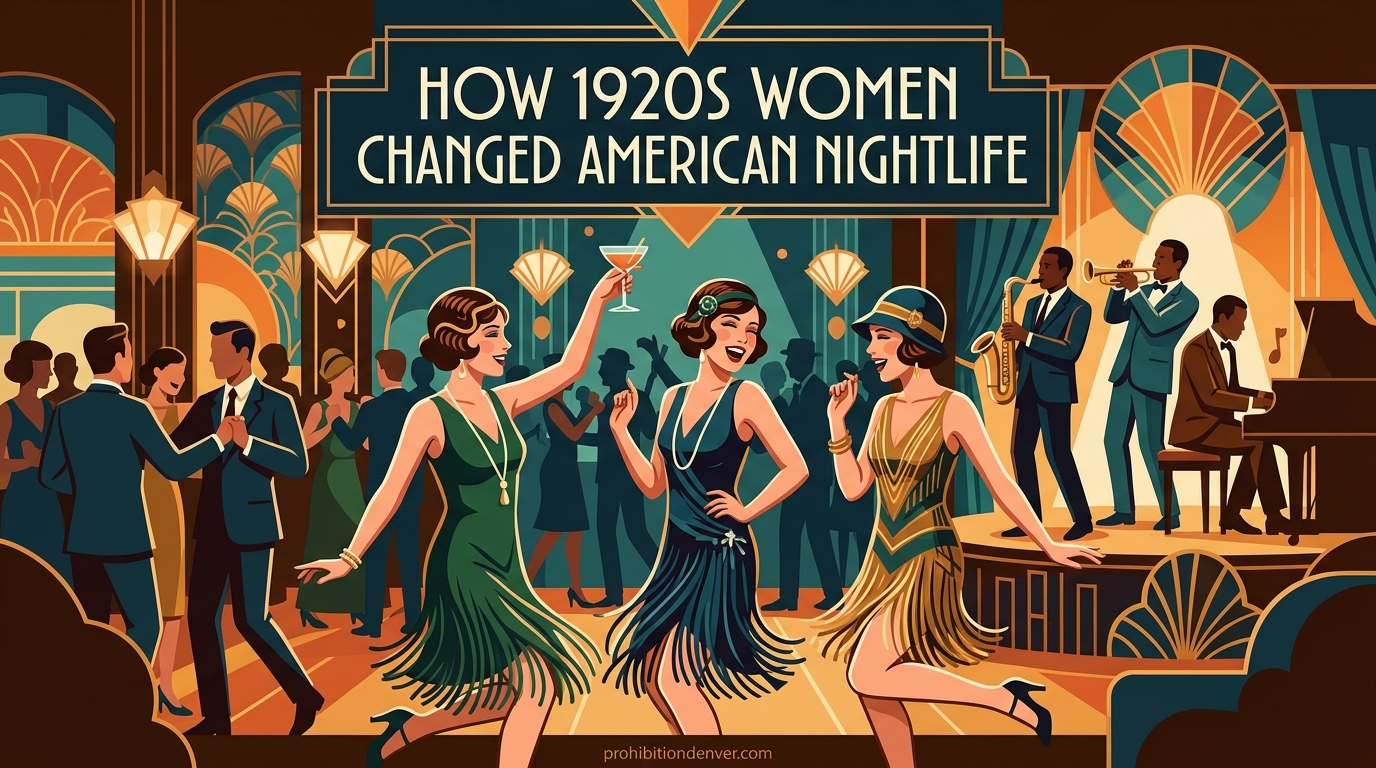

The 1920s marked a dramatic turning point in American history, particularly for women. The flapper emerged as the quintessential symbol of this transformative era, challenging centuries of Victorian restrictions and fundamentally reshaping American nightlife culture. These young women, with their short bobbed hair, kohl-rimmed eyes, and beaded fringe dresses, did not merely follow fashion trends; they actively dismantled social conventions and created new spaces for women’s participation in public life. From the grand ballrooms of New York to the underground speakeasies of Chicago, flappers redefined what it meant to be a woman in America, leaving an indelible mark on the nation’s cultural landscape that resonates to this day.
The flapper movement represented far more than a change in fashion or behavior. It signaled a fundamental shift in the relationship between men and women, between the individual and society, and between tradition and modernity. While the Roaring Twenties conjures images of jazz-filled nights, illegal liquor, and carefree revelry, the deeper story is one of women claiming autonomy over their bodies, their choices, and their place in the public sphere. Understanding how flapper culture emerged and the specific ways it transformed American nightlife requires examining the historical context, the fashion revolution, the music that soundtracked their rebellion, and the diverse women who participated in this cultural earthquake.
Table of Contents
The Rise of the Flapper: A Post-War Revolution
Defining a Cultural Movement
The term “flapper” entered the American lexicon in the early 1920s, though its precise origins remain somewhat mysterious. Some historians trace it to the British slang for a young girl, while others connect it to the image of a fledgling bird learning to fly. By 1922, the word had become synonymous with a new type of young woman who refused to conform to the modest, restrained ideals of her Victorian predecessors. The flapper was not simply a demographic category but an attitude, a way of moving through the world that prioritized youth, independence, and personal freedom above all else.
World War I played a crucial role in creating the conditions for flapper culture to flourish. The Great War drew millions of women into the workforce for the first time, proving that they could handle responsibilities traditionally reserved for men. Meanwhile, the horrors of the trenches and the upheaval of global conflict shattered Victorian certainties about progress, morality, and social order. Young women who had come of age during the war returned home with new expectations and new appetites for adventure. They had witnessed death on an unprecedented scale and developed a “live for today” philosophy that valued experience over propriety.
The Flapper Look and Lifestyle
The flapper lifestyle was characterized by an embrace of pleasure, independence, and mild rebellion against established social conventions. Flappers were known for their willingness to stay out late, dance until dawn, drink alcohol, smoke cigarettes in public, and engage in romantic encounters without the solemn commitment that previous generations had demanded. They frequented dance halls, movie theaters, and roadhouses, places that respectable women had rarely visited unaccompanied by male escorts. The flapper drove her own automobile, made her own money when possible, and spent it freely on entertainment and consumer goods.
Perhaps most significantly, the flapper rejected the idea that a woman’s value resided primarily in her virtue, domestic skills, or role as a wife and mother. While flappers certainly did marry and have children, they insisted on living fully before settling down and on maintaining aspects of their independence afterward. They challenge the notion that women must choose between respectability and enjoyment, between virtue and vitality. This tension would define much of the cultural debate surrounding flapper culture and make the movement both celebrated and controversial.
Flapper Fashion: Dress, Hair, and Makeup
The Bob Cut and Visible Makeup
The transformation of women’s appearance began with the hair. The bob cut, a short hairstyle that ended at jaw level or higher, represented a radical break from the long tresses that had defined feminine beauty for centuries. The shingle bob and the Eton crop became particularly popular among flappers, with the latter being so severe that it exposed the nape of the neck. This was not merely a fashion statement but a declaration of independence from the elaborate grooming rituals that Victorian and Edwardian society had required of respectable women.
Along with shorter hair came dramatically different approaches to makeup. Where proper women of earlier generations had used cosmetics sparingly or not at all, flappers embraced visible makeup as a form of self-expression and social defiance. They applied dark eyeliner to create the distinctive “刀痕眼” or knife-edge eye effect, painted their lips in vivid reds and corals, and dusted their cheeks with rouge. This was excessive by the standards of the day, leading critics to denounce flappers as brash, vulgar, and masculine. Flappers wore their makeup as armor, claiming the right to display their sexuality openly rather than concealing it behind a mask of modesty.
Dresses, Fringe, and the Garçonne Silhouette
The flapper dress became perhaps the most iconic symbol of 1920s femininity. These garments featured dropped waists, straight silhouettes, and hemlines that rose to the knee for the first time in centuries of Western fashion. The garçonne look, named after the French word for a young boy, flattened the chest and hips to create an androgynous figure that stood in stark contrast to the hourglass curves that had dominated feminine ideals. Made popular by designers like Coco Chanel, this style represented a rejection of the corsets and bustles that had constricted women’s movement for generations.
Beaded fringe became a signature element of flapper evening wear, with thousands of glass beads attached to silk or chiffon fabric. The fringe served both aesthetic and practical purposes, as it caught the light in dimly lit speakeasies and jazz clubs while allowing for the free-flowing movement that dancing required. Sequins, feathers, and metallic threads added visual interest to cocktail dresses and party attire. Accessories like cigarette holders, long pearl necklaces, cloche hats, and T-strap heels completed the flapper look. These fashion choices were not frivolous; they were statements about women’s right to occupy space, move freely, and seek pleasure in the public world.
Nightlife Transformation: How Flappers Changed American Entertainment
From Home to Nightclub
<
Before the rise of flapper culture, respectable women in America occupied a primarily domestic sphere. Evening entertainment for middle and upper-class women typically meant gatherings in private homes, church socials, or perhaps a rare theater performance with family. Public nightlife spaces like saloons, taverns, and gambling establishments were strictly male domains where women of reputation simply did not venture. The flapper shattered this division between public and private, claiming the right to participate fully in the nation’s nightlife entertainment.
This shift had profound implications for the entertainment industry itself. Dance halls expanded dramatically in the 1920s, with venues like the Savoy Ballroom in Harlem and the Dreamland in Chicago becoming cultural institutions. Movie theaters, which had previously catered primarily to working-class audiences, attracted middle-class women seeking affordable entertainment and air conditioning during summer months. Jazz clubs, basement bars, and rooftop gardens opened their doors to female patrons, fundamentally transforming the social geography of American cities. The nightlife industry recognized that women were not merely accessories to male entertainment but a market unto themselves.
The Speakeasy Experience
Prohibition, enacted in 1920 through the 18th Amendment and the Volstead Act, did not eliminate the demand for alcohol but instead drove it underground and gave birth to the speakeasy. These illegal bars ranged from sophisticated establishments with live orchestras and plush décor to dingy basement rooms with sawdust floors and questionable hygiene. Flappers were among the most enthusiastic patrons of speakeasy culture, viewing the consumption of illegal alcohol as both thrilling and symbolic of their rejection of traditional morality.
Entering a speakeasy required knowing the right words, the right handshake, or the right connections. The thrill of circumventing the law added an element of adventure that conventional entertainment lacked. Speakeasies often featured dance floors where the Charleston, the Shimmy, and other energetic dances of the era could be performed. Women smoked cigarettes, drank cocktails, and mingled with men without the chaperoning that Victorian propriety demanded. The speakeasy was a space where the normal rules of social conduct were temporarily suspended, and flappers took full advantage of this freedom.
The Role of Jazz and Speakeasies
Jazz as the Soundtrack of Rebellion
Jazz music and flapper culture were inseparable, each fueling the rise of the other. The syncopated rhythms, blue notes, and improvisational character of jazz embodied the same spirit of rebellion and creativity that animated the flapper movement. Jazz originated in African American communities, particularly in New Orleans and Chicago, before spreading to become the dominant popular music of the 1920s. White audiences initially encountered jazz through vaudeville performances and race records, but by the early 1920s, jazz orchestras were performing in dance halls and nightclubs across the country.
The Jazz Age, as the 1920s came to be known, saw jazz渗透every aspect of nightlife entertainment. Hotel ballrooms featured big bands playing fox-trots and tangos, while smaller venues offered more intimate jazz performances. The music’s association with alcohol, dancing, and interracial social interaction made it a lightning rod for cultural critics who denounced both jazz and flapper culture as threats to American civilization. Yet for young women seeking escape from the constraints of their upbringing, jazz represented liberation in its most auditory form. The music’s emphasis on individual expression and spontaneous creativity mirrored the flapper’s own rebellion against social conformity.
Prohibition and the Birth of Underground Nightlife
Prohibition fundamentally altered the landscape of American nightlife in ways that outlasted the amendment itself. The closure of legal saloons and the criminalization of alcohol production and distribution created a massive black market that attracted organized crime figures like Al Capone, who became quasi-celebrities through their provision of illegal pleasures. Flappers and respectable women of all classes patronized speakeasies, normalizing the consumption of alcohol in public spaces and among mixed company. This represented a significant shift in public attitudes toward drinking and female sociability.
The speakeasy era also fostered innovations in cocktails and mixed drinks that remain part of American drinking culture today. Bartenders, deprived of legal employment, refined their craft in underground establishments, creating elaborate drinks to disguise the poor quality of bootleg liquor. The social dynamics of the speakeasy also differed from those of the traditional saloon. Speakeasies were more likely to serve women, more likely to feature entertainment that appealed to diverse tastes, and more likely to operate continuously rather than closing at legally mandated hours. When Prohibition ended in 1933, many of these characteristics persisted in the legal bars and nightclubs that replaced speakeasies.
Social and Political Impact
Women and the Vote: The 19th Amendment Connection
The rise of flapper culture coincided with one of the most significant political developments in American women’s history: the passage of the 19th Amendment in 1920, which granted women the right to vote. While the relationship between suffrage and flapper culture is complex, historians generally agree that both movements emerged from the same broader shift in women’s roles and expectations that had begun in the late 19th century. The suffragists who had fought for decades to secure the vote laid the groundwork for flappers’ more radical challenges to social conventions.
Flappers, however, were not primarily interested in politics as traditionally defined. Many felt that voting was less exciting than dancing, that political activism was less appealing than consumer pleasure. This distinction led some critics to argue that flapper culture trivialized the gains of the women’s movement by reducing feminine liberation to fashion and entertainment. Yet the flapper’s insistence on personal freedom and self-determination can be understood as an extension of the suffrage struggle into the social realm. By claiming the right to vote, to work, to own property, and to control their own bodies, women of the 1920s built on suffrage achievements in ways that would not be fully recognized until later generations.
Workforce, Marriage, and Sexuality
The 1920s saw significant changes in women’s participation in the workforce and in attitudes toward marriage and sexuality. While most women still worked in traditionally female occupations like domestic service, clerical work, and teaching, new opportunities opened in retail, manufacturing, and even some professional fields. Young women in particular were more likely to work before marriage and to view employment as a temporary rather than permanent situation. The flapper embodied this new relationship to work, viewing wages as spending money for entertainment rather than as essential family income.
Perhaps most controversially, flappers challenged Victorian attitudes toward sexuality and romantic behavior. The concept of “petting,” or engaging in sexual activity short of intercourse, became more acceptable among young people of the 1920s. Flappers were rumored to be sexually available, though historians debate how accurately this reputation reflected actual behavior. The double standard that had long permitted male sexual exploration while demanding female chastity came under increasing scrutiny. Birth control became more widely available, though still illegal in many states, giving women greater control over their reproductive lives. These changes did not represent a complete revolution in sexual attitudes, but they did mark the beginning of a gradual shift toward greater sexual freedom for women.
Black Women and Working-Class Flappers
Harlem’s Role in Shaping Flapper Culture
The contribution of Black women to flapper culture has often been overlooked in mainstream historical accounts, which tend to focus on white, middle-class flappers. Yet the Harlem neighborhood of New York City was one of the most vibrant centers of 1920s nightlife culture, and Black women played central roles as performers, entrepreneurs, and patrons. The Harlem Renaissance, the cultural flowering of the 1920s, produced Black female writers, singers, and dancers who embodied the flapper spirit while also navigating the specific challenges of racism and segregation.
Black women in Harlem and other urban centers developed their own variations on flapper fashion and behavior, adapting mainstream trends to their own aesthetics and values. The nightlife scenes of Black neighborhoods often featured more intermingling of classes and ages than equivalent white venues, creating spaces where working-class Black women could participate alongside their middle-class sisters. Jazz, which originated in Black communities, spread to white audiences largely through Black performers, though white musicians often received greater recognition and compensation. The contributions of Black women to the Jazz Age remain an essential chapter in the broader story of flapper culture.
The Overlooked Contributions of Black Women
A storied figure in 1920s nightlife was the champagne Charlie, a type of Black female performer who sang, danced, and entertained audiences in cabarets and nightclubs. Performers like these challenged stereotypes about Black women’s respectability while also exploiting them for commercial gain. The racist assumptions of the era meant that Black female performers were often typecast in roles that emphasized exoticism or primitivism, yet within these constraints, many found opportunities for creative expression and economic independence.
Working-class white women also participated in flapper culture without necessarily adopting all its标志性的 fashion choices or attitudes. Factory girls, shop girls, and waitresses found escape in the nightlife venues that dotted American cities, though they often lacked the resources to achieve the polished flapper aesthetic. The democratization of fashion through mass production and mail-order catalogs meant that women across class lines could access the basic elements of flapper style. For working-class women, nightlife offered not merely pleasure but a temporary respite from the physical demands of industrial labor and domestic service.
Legacy: How 1920s Women Changed American Nightlife Forever
From Flapper to Feminist
The stock market crash of 1929 and the Great Depression that followed brought the Roaring Twenties to an abrupt end, taking much of flapper culture with it. The economic devastation of the 1930s made the carefree consumerism of the 1920s seem frivolous, while the return to traditional gender roles during wartime would further marginalize the gains women had made. Yet the spirit of the flapper did not disappear entirely but rather evolved into subsequent waves of feminist activism and cultural rebellion. The women who came of age in the 1920s raised daughters who would participate in the feminist revival of the 1960s and 1970s.
The connection between flapper culture and later feminist movements is a matter of historical interpretation. Some scholars see the flapper as a precursor to modern feminist consciousness, arguing that her rejection of Victorian constraints and claim to public space represented a significant step toward gender equality. Others are more critical, arguing that flapper culture primarily benefited white, middle-class women and that its emphasis on beauty standards and consumer culture ultimately reinforced rather than challenged patriarchal values. Regardless of how we evaluate the flapper’s legacy, there is no doubt that she opened doors that would not be closed again.
The End of an Era and Its Lasting Influence
The passage of the 21st Amendment in 1933 repealed Prohibition, legalizing alcohol and allowing nightclubs and bars to operate openly once again. Yet the nightlife that emerged from Repeal was fundamentally different from what had existed before 1920. Women were now expected to be present in bars and restaurants as customers rather than merely as servers or entertainers. The social mixing of genders that had occurred in speakeasies became the norm rather than the exception in post-Repeal establishments. In these ways, the flapper’s revolution in nightlife behavior became institutionalized in American social life.
Today, the flapper remains an iconic figure in American cultural memory, remembered for her fashion, her defiance, and her embrace of modern life. The bob cut that once scandalized conservative observers is now considered a classic hairstyle. The attitudes toward sexuality, independence, and pleasure that flappers championed have become mainstream, at least among younger generations. When contemporary women claim the right to work, to dress as they choose, and to participate fully in public life, they build on foundations that flappers laid nearly a century ago. The transformation of American nightlife from a male-dominated sphere to an inclusive space of mixed-gender sociability stands as one of the most enduring legacies of 1920s flapper culture.
Conclusion
The story of flapper culture is ultimately a story about the transformation of American society in the aftermath of World War I and the persistent struggle for women’s rights and recognition. Flappers did not achieve equality, nor did they intend to challenge the fundamental structures of American capitalism or democracy. What they did accomplish was demonstrating that women could claim space in the public sphere, challenge conventional morality, and pursue pleasure without sacrificing their identity or self-respect. The nightlife culture that flappers helped create was not merely a backdrop for their antics but an essential medium through which they enacted their rebellion.
The transformation of American nightlife from Victorian restraint to flapper freedom represented a watershed moment in the nation’s cultural history. Bars, nightclubs, dance halls, and speakeasies became the laboratories in which new forms of gender relations were experimented with and eventually normalized. The jazz that soundtracked this transformation continues to influence popular music, while the fashion choices of flappers have become timeless references for designers and trendsetters. By understanding flapper culture in its full complexity, we gain insight not only into the 1920s but into the ongoing struggle to define what it means to be a woman in American society.
Frequently Asked Questions
How did the flapper girls impact society?
Flappers challenged Victorian-era restrictions on women’s behavior, paving the way for greater social and political freedom. They demonstrated that women could participate fully in public life, from nightlife entertainment to the political process. Their embrace of fashion, cosmetics, and consumer culture created new industries and markets, while their casual attitudes toward sexuality helped shift broader cultural norms.
What are two ways women’s social behavior changed in the 1920s?
First, women began smoking and drinking in public spaces, activities that had been considered inappropriate for respectable females just a decade earlier. Second, women challenged traditional dating norms by embracing more casual romantic relationships, including petting and necking, which represented a rejection of the rigid courtship rituals of previous generations.
What cultural changes were represented by the flapper?
The flapper represented youth culture, rebellion against tradition, the rise of consumer culture, and the shift toward women’s liberation in post-WWI America. She embodied the tension between tradition and modernity, between Victorian morality and modern permissiveness, and between women’s domestic role and their aspirations for public participation.
Why were flappers considered scandalous?
Flappers were considered scandalous for wearing excessive makeup, drinking alcohol in speakeasies, smoking cigarettes in public, driving automobiles, and treating sex in a casual manner. They challenged the Victorian double standard that demanded female chastity while permitting male sexual exploration. Their short skirts, bobbed hair, and visible cosmetics represented a rejection of the modesty and restraint that had defined feminine propriety.