
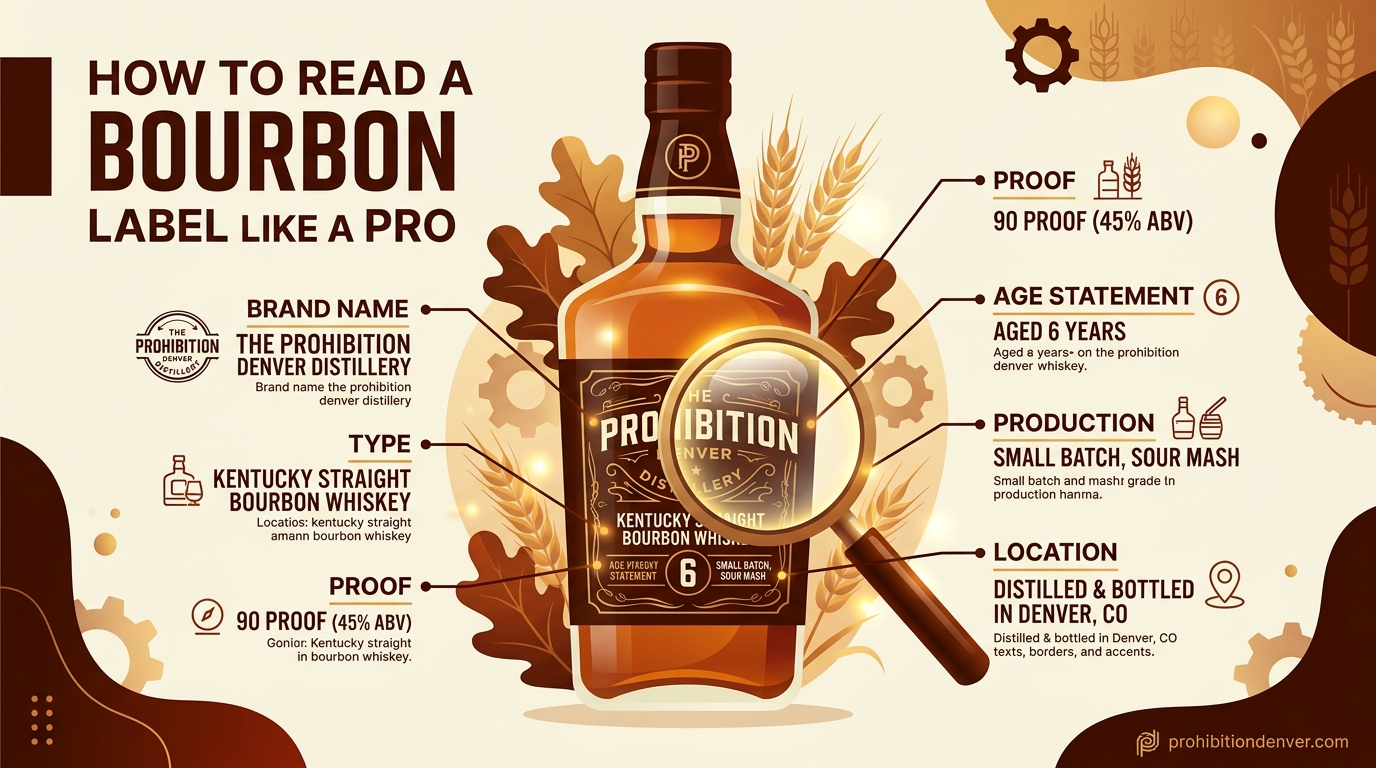
If you have ever stood in a liquor store aisle staring at a bourbon bottle wondering what half the words mean, you are not alone. Bourbon labels contain a specific language that takes most people years to figure out. I have spent countless evenings decoding labels for friends who could not understand why one bottle cost $30 and another identical-looking one cost $80. After reading this guide, you will know exactly what every term means and how to use that knowledge to make smarter purchasing decisions.
In this guide, I will walk you through the legal requirements for bourbon, explain terms like straight bourbon and bottled in bond, break down mash bills, and show you how to decode real bottle labels step by step. By the time you finish, you will be reading bourbon labels like a seasoned spirits professional.
Table of Contents
What Is Bourbon (Legal Requirements)
Bourbon is not just a type of whiskey. It is governed by strict federal regulations that determine what can go on the label. The Alcohol and Tobacco Tax and Trade Bureau (TTB) sets the rules, and they are pretty specific.
For a whiskey to be called bourbon, it must meet several requirements. First, the mash bill (the grain recipe) must contain at least 51 percent corn. This is the defining characteristic that separates bourbon from other American whiskeys. The remaining portion typically includes grains like rye, wheat, or malted barley.
The spirit must be distilled at no more than 160 proof (80 percent ABV). This is lower than many other spirits, which helps preserve more of the flavor compounds from the original grains. After distillation, it must be aged in new charred oak barrels. These barrels are typically made from American white oak and are legally required to be new for each use.
There is no minimum aging period for regular bourbon, though it must be stored in charred oak containers. This is why you will see some bottles labeled simply “bourbon” with no age statement. The lack of an age statement does not mean the whiskey is young. It simply means the youngest whiskey in the bottle meets the federal minimum requirements.
The final product must be bottled at 125 proof or less. This ensures the bourbon retains enough flavor and character from the aging process. Nothing can be added to bourbon except water, and even that is limited to adjusting the final proof before bottling.
Straight Bourbon Explained
You will see the term “straight bourbon” on many bottles, and it carries specific meaning that distinguishes it from regular bourbon. Our team has tested dozens of straight bourbon expressions over the years, and the difference in quality is noticeable.
Straight bourbon must be aged for a minimum of two years in new charred oak barrels. This aging requirement is where the term originates. When a label says “straight bourbon whiskey,” you are looking at a bottle that has been aged at least two years.
If the bourbon is aged for less than four years, the label must include an age statement. This tells you exactly how old the youngest whiskey in the bottle is. For example, a bottle labeled “2-year-old straight bourbon” contains whiskeys that have been aged for at least two years but no more than four.
Straight bourbon cannot have any added coloring, flavoring, or other additives. This is an important distinction because some whiskey categories do allow such additions. When you see straight bourbon on the label, you know exactly what you are getting: pure bourbon aged in oak, with nothing added except water to reach the final proof.
The two-year minimum creates a meaningful quality threshold. Bourbon that has not yet aged for two years cannot be called straight. This gives you a baseline expectation when you see the designation. Most premium bourbons are straight bourbon, and many distillers choose to age their products much longer than the legal minimum.
Bottled-In-Bond Definition
Bottled in bond is one of the oldest consumer protection standards in American whiskey. It was created in 1897 as a guarantee of quality and authenticity. When you see this term on a bourbon label, you are looking at a product that meets specific federal requirements.
The standard requires that the bourbon be produced by one distillery in one distillation season. This means all the whiskey in the bottle comes from a single distillery and was distilled during the same seasonal window. This is a significant specification because it ensures consistency and traceability.
Bottled in bond bourbon must be aged for a minimum of four years. This is double the requirement for straight bourbon, and the four-year minimum is strictly enforced. If you see a bottled in bond label, the youngest whiskey in that bottle has been aging for at least four years.
The proof requirement for bottled in bond is higher than regular bourbon. The spirit must be bottled at exactly 100 proof (50 percent ABV). This was originally established to ensure the bourbon was strong enough to survive long shipping journeys without spoiling. Today, it represents a middle ground between flavor intensity and drinkability.
This designation is your assurance of authenticity and minimum quality. When a distillery chooses to label their bourbon as bottled in bond, they are committing to these federal standards. Many enthusiasts consider bottled in bond expressions to offer excellent value because the regulations ensure a baseline of quality without the premium pricing of some small-batch releases.
Single Barrel vs Small Batch Bourbon
These two terms appear frequently on bourbon labels, and they represent fundamentally different approaches to producing the final spirit. Understanding the distinction helps you set proper expectations before you open the bottle.
Single barrel bourbon comes from one individual barrel. Every bottle you pull from that batch came from exactly that barrel, with no mixing of spirits from different containers. This matters because each barrel ages slightly differently based on its position in the warehouse, the specific wood characteristics, and the microclimate around it.
When you buy a single barrel expression, you are buying a unique product. Our team has compared multiple bottles from the same single barrel release and noticed subtle differences in flavor and aroma. The variation is usually minor but noticeable to trained palates. This is part of the appeal for collectors and enthusiasts who value uniqueness in their pours.
Small batch bourbon combines spirits from multiple barrels, but the exact definition varies by producer. There is no legal minimum or maximum for what constitutes a small batch. Some distillers might combine just a handful of barrels, while others might use dozens. The term implies exclusivity and careful selection, though the actual batch size depends entirely on the brand.
The trade-off is consistency versus uniqueness. Small batch bourbon typically offers more consistent flavor across bottles because the liquid is blended to achieve a target profile. Single barrel bourbon can vary from bottle to bottle, which some drinkers prefer for the element of surprise and discovery.
Neither approach is inherently better. Single barrel releases often carry higher price tags because of the difficulty in maintaining consistency and the collector appeal. Small batch expressions can offer excellent quality at more accessible price points while still providing a carefully crafted flavor profile.
Understanding Proof and Age Statements
The numbers on a bourbon label tell you specific information about alcohol content and aging time. Learning to read these figures helps you compare bottles objectively rather than relying on packaging or price alone.
Proof is a measurement of alcohol content that equals twice the alcohol by volume (ABV). If a bourbon is 50 percent ABV, that is 100 proof. This system dates back to the days when inspectors needed a simple way to test whether whiskey had been diluted with water. You could sprinkle gunpowder with a few drops of whiskey. If it ignited, the spirit was “proven” to be strong enough.
Today, the math is straightforward. To convert proof to ABV, simply divide by two. A 120-proof bourbon is 60 percent alcohol. Most bourbon falls between 80 and 100 proof, though cask strength expressions regularly exceed 120 proof and sometimes reach 140 proof or higher.
Age statements indicate the age of the youngest whiskey in the bottle. If a label says “12-year-old bourbon,” the youngest drop of spirit in that bottle has been aging for at least twelve years. Older whiskeys in the same bottle may have been aged longer. This distinction matters because older does not always mean better, but it does mean more expensive due to the costs of maintaining inventory over time.
For regular bourbon without an age statement, the youngest whiskey could be just a few months old or several years. The TTB only requires an age statement when the youngest whiskey is under four years. Without that disclosure, you cannot determine the minimum age from the label alone.
When comparing bottles, higher proof usually means more intense flavor and alcohol presence. Older age statements typically correlate with higher price due to inventory costs. Neither automatically indicates quality. We have tasted excellent 6-year-old bourbons and disappointing 18-year-old expressions. These numbers provide information, not verdicts.
Mash Bill Types: Wheated vs High Rye Bourbon
The grain recipe used to make bourbon fundamentally shapes its flavor profile. Understanding mash bills helps you predict whether a particular bourbon will suit your taste preferences before you buy.
A standard bourbon mash bill contains 70 to 80 percent corn, with the remaining percentage split between rye, wheat, and malted barley. The corn provides the sweet, full-bodied foundation. The secondary grains add complexity and determine whether the bourbon leans toward spice or softness.
High rye bourbon uses rye as the primary secondary grain, typically comprising 15 to 35 percent of the mash bill. This creates a spicier, more peppery flavor profile with notes of cinnamon, clove, and black pepper. High rye expressions tend to be bolder and moreassertive on the palate. Many classic Kentucky bourbons follow this pattern, creating that traditional robust bourbon character.
Wheated bourbon substitutes wheat for rye as the secondary grain. Wheat creates a softer, sweeter, and more approachable flavor profile. You will notice more honey, vanilla, and gentle spice rather than the sharp rye pepper. This style became famous through brands like Maker’s Mark and Pappy Van Winkle, which use wheated mash bills to create their signature smooth character.
The choice between high rye and wheated bourbon is largely a matter of personal preference. If you enjoy bold, spicy whiskeys, look for high rye expressions. If you prefer softer, sweeter pour that goes down easily, wheated bourbon is your friend. Many enthusiasts keep both styles in their home bar for different occasions and moods.
Some producers use additional grains beyond the standard two-grain secondary. You might see oats, rye and wheat combined, or unusual percentages that create unique flavor profiles. The mash bill is the soul of the bourbon, and once you learn to identify grain-forward versus wheat-forward profiles, selecting bottles becomes much easier.
Cask Strength and Barrel Proof Bourbon
These terms refer to bourbon that has not been diluted after aging, offering the fullest expression of what the barrel produced. Our team has tested numerous cask strength releases and the intensity they deliver is remarkable.
Cask strength bourbon (also called barrel proof) comes from the barrel at its natural strength without additional water added. When bourbon ages, the spirit interacts with the oak and evaporates over time. What remains is the concentrated liquid that absorbed all those wood compounds and flavors. This is what goes into cask strength bottles.
Most commercial bourbon is diluted with water before bottling to reach a target proof, often 90 or 100 proof. This makes the spirit more approachable and consistent across batches. Cask strength releases skip this step, delivering the whiskey exactly as it came from the barrel.
The alcohol content of cask strength bourbon varies significantly from release to release and even barrel to barrel. You might find expressions ranging from 110 proof to well over 140 proof. The higher alcohol creates a more intense flavor experience and a warming finish that lingers longer than standard proofs.
Many enthusiasts prefer cask strength bourbon because it allows them to experience the truest expression of the distillery’s craft. You can also add water yourself to reach your preferred strength, giving you complete control over the final pour. When you buy a diluted expression, the distiller has made that choice for you. Cask strength puts the power in your hands.
Decoding Real Bourbon Bottle Labels
Now that you understand the terminology, let me show you how to apply this knowledge to actual bottles you will find on store shelves. These real-world examples demonstrate how all these elements work together on an actual label.
Look for the DSP number on bourbon labels. DSP stands for Distilled Spirits Plant, and it is the federal registration number for the distillery. Every legal distillery has a unique DSP number. This number tells you exactly where the bourbon was made, which is crucial because the label might imply one location while the actual production happens elsewhere.
Pay attention to the difference between “distilled by” and “produced by.” When a label says “distilled by,” the specified distillery performed the distillation. When it says “produced by,” the spirit might have been made by a different company and merely bottled by the brand on the label. These Non-Distiller Producers (NDPs) are common in the bourbon industry, and their products can be excellent. However, knowing the distinction helps you understand what you are actually buying.
Batch numbers and bottle numbers become relevant for single barrel releases. These identifiers allow you to track exactly which barrel your bottle came from. Some collectors seek specific batch numbers that they have determined contain superior flavor based on their own testing. This level of detail might seem excessive, but for enthusiasts, it adds another dimension to the hobby.
Net content statements indicate the bottle size, required by law to be displayed. You will see values like 750 mL, 1 liter, or 1.75 mL. International versions often list fluid ounces as well. The size does not affect quality but does impact value perception and storage in your home bar.
Understanding these label elements transforms you from a confused shopper into an informed buyer. You will recognize which questions the label answers and which it deliberately obscures. Over time, you will develop your own shortcuts for identifying promising bottles and avoiding overpriced marketing.
Label Buzzwords to Watch
Bourbon labels often include marketing language designed to imply quality or exclusivity without providing real information. Learning to see through these terms helps you focus on what actually matters.
“Small batch” is perhaps the most overused term in bourbon marketing. There is no legal definition for small batch, meaning any producer can use the term regardless of how many barrels actually went into the blend. Some “small batch” expressions might combine dozens of barrels. The term sounds exclusive but provides no concrete information about the product inside.
“Handcrafted” is purely emotional marketing. Every bourbon, regardless of production method, involves human decision-making at some level. The term implies artisan care but has no bearing on actual quality or production scale. Large industrial distilleries use this term just as frequently as small craft producers.
“Premium” and “super-premium” are price category indicators, not quality descriptions. These terms typically correspond to higher price points but do not guarantee superior taste or craftsmanship. A $30 bottle labeled premium is not necessarily better than a well-selected $20 expression. Evaluate bourbon by its actual characteristics, not marketing positioning.
“Aged” without any specific time frame is meaningless. All bourbon is aged to some degree, but the term “aged” on a label does not tell you how long. Straight bourbon must be aged at least two years. Bottled in bond requires four years minimum. Without those specific designations, “aged” is just noise.
Focus on the concrete specifications instead: age statements, proof, mash bill characteristics, and legally defined terms like straight bourbon or bottled in bond. These tell you something real about what is in the bottle. The buzzwords are there to fill space on a label and create emotional appeal, not to provide useful information.
FAQ: Bourbon Label Questions Answered
What does straight bourbon mean on a label?
Straight bourbon is bourbon that has been aged for a minimum of two years in new charred oak barrels. It cannot have any added coloring, flavoring, or additives. If aged less than four years, the label must state the exact age. This designation guarantees a baseline quality standard.
What is the difference between single barrel and small batch bourbon?
Single barrel bourbon comes from one individual barrel, meaning each bottle is unique. Small batch bourbon combines spirits from multiple barrels to achieve a consistent flavor profile. Single barrel typically offers more uniqueness but with potential variation between bottles. Small batch prioritizes consistency and often comes at a more accessible price point.
What does bottled in bond mean?
Bottled in bond is a federal standard created in 1897. It requires bourbon to come from a single distillery and distillation season, be aged minimum four years, and be bottled at exactly 100 proof. This designation guarantees authenticity, traceability, and a minimum quality threshold.
How do I decode a bourbon mash bill?
A mash bill is the grain recipe used to make the bourbon. The label rarely lists exact percentages, but you can identify the style by tasting notes. High rye bourbons taste spicy with cinnamon and pepper. Wheated bourbons taste softer and sweeter with honey and vanilla. The dominant secondary grain defines the flavor profile.
What do the numbers on a bourbon label mean?
Proof equals twice the alcohol by volume (ABV). A 100-proof bourbon is 50% ABV. Age statements indicate the age of the youngest whiskey in the bottle. Batch numbers identify specific production runs, particularly useful for single barrel releases. DSP numbers identify the registered distillery.
Final Tips for Reading Bourbon Labels
Now you have the complete toolkit for understanding bourbon labels. The next step is practice. Pick up a few bottles and work through each element we discussed. Identify the proof, look for age statements, note the mash bill style based on what you know about the brand, and verify the distillery information.
Start with major brands before moving to obscure selections. Well-known expressions provide reliable reference points for understanding what specific terms and styles actually taste like. Once you have those benchmarks established, exploring lesser-known bottles becomes much more meaningful.
Trust the label for factual information but trust your palate for quality judgment. Labels tell you what is supposed to be in the bottle and how it was produced. They do not tell you whether you will personally enjoy the result. Use the label information to narrow your selection, then let your own taste preferences guide the final choice.
The bourbon world is vast and full of excellent options at every price point. With these label-reading skills, you are equipped to navigate any liquor store shelf with confidence. Whether you are selecting a gift, building a home bar collection, or simply curious about what you are drinking, the label holds all the answers you need.