
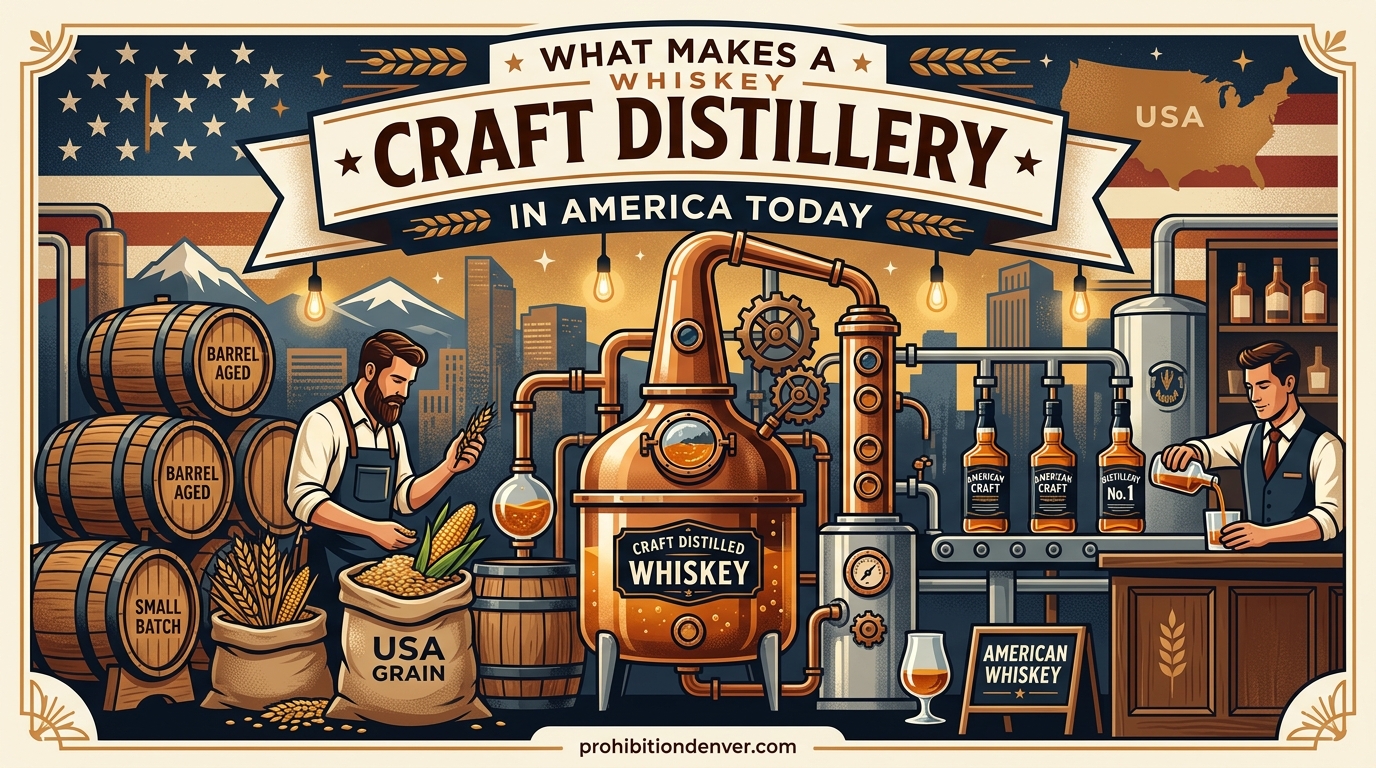
Walk into any whiskey bar today and you will see more American craft distillery names on the menu than ever before. The question I hear most from readers is simple: what actually makes a whiskey craft distillery in America today? The answer matters because the word “craft” gets thrown around constantly, and not everyone using it deserves the label. I spent weeks researching industry definitions, visiting distilleries, and talking to the people who make American whiskey to give you a clear answer.
In this guide, you will learn exactly what the American Craft Spirits Association defines as a craft distillery, why that definition matters, and how the industry has evolved to reach this moment. You will also discover the key differences between truly independent craft producers and large distillers who have launched “craft” divisions to capture the label without the substance. By the end, you will know precisely what to look for when choosing your next bottle.
Table of Contents
What Makes a Whiskey Craft Distillery in America Today: The ACSA Definition
The American Craft Spirits Association sets the standard that most serious craft distilleries follow. According to the ACSA, a craft distillery is an independently-owned United States distillery that produces fewer than 750,000 proof gallons annually. That production limit alone separates craft producers from the vast majority of American whiskey makers.
The independently-owned requirement is equally important. A craft distillery cannot be a subsidiary or owned by a larger alcohol company. When you buy from a true craft distillery, you are supporting an independent business with direct ownership in the distilling decisions. This matters because ownership structure affects everything from mashbill recipes to aging decisions.
Beyond production limits and ownership, the ACSA definition emphasizes transparency. Craft distillers commit to being forthcoming about their ingredients, their process, and their aging. You should be able to visit a craft distillery or read their website and learn exactly what grains go into their whiskey, where those grains come from, and how long they age their products. This transparency stands in stark contrast to mass producers who treat their recipes as closely guarded secrets.
The production math is worth understanding. At 750,000 proof gallons per year, a craft distillery could theoretically produce roughly 375,000 750ml bottles annually. Most craft distilleries operate far below this ceiling. Many produce between 5,000 and 50,000 cases per year. When you compare this to major bourbon brands that produce tens of millions of cases annually, the scale difference becomes immediately apparent.
The History of American Craft Distilling: From Prohibition to Today
To understand what makes a craft distillery today, you need to understand how we got here. The craft distillery movement in America is relatively young, but distilling itself has deep roots that were nearly erased by Prohibition. When Prohibition ended in 1933, the American spirits industry consolidated rapidly. For decades, a handful of large distilleries dominated the market, producing consistent, affordable whiskey for a nation that had largely forgotten about small-batch craft production.
The year 2000 marks a useful benchmark. At that time, you could count the number of American whiskey distilleries on your fingers and toes. whiskey Advocate published a cover story on the craft distilling movement back in 2013, and even by then, the landscape was shifting rapidly. The movement had taken hold, but many of today’s most respected craft distilleries were still years away from releasing their first bottles.
What changed between 2000 and today? Several factors aligned. State laws relaxed to make distillery licensing more accessible. Consumer interest in locally-produced, artisanal goods grew across food and beverage categories. The success of craft breweries showed entrepreneurs that American drinkers would pay premiums for products with genuine stories and local connections. Most importantly, the first generation of post-Prohibition craft distillers learned their craft, invested in aging inventory, and began releasing whiskeys that demonstrated quality could indeed come in smaller packages.
Today, the United States has more than 3,000 active distilleries, with craft producers representing a significant and growing segment. The industry has matured beyond its startup phase. Many craft distilleries that launched in the 2000s now have 10-year-old to 15-year-old whiskeys in their catalogs, proving that their business models can sustain the long aging cycles that quality American whiskey requires.
Current State of the Craft Whiskey Industry in America
The American craft whiskey industry in 2026 represents a fascinating paradox. On one hand, we have more distilleries, more innovation, and more quality options than at any point in American history. On the other hand, many of these same distilleries face serious business challenges that threaten their long-term survival.
Regional identity has become one of the craft movement’s defining characteristics. Where once American whiskey meant Kentucky bourbon, today you will find respected craft distilleries in nearly every state. Colorado produces mountain-aged whiskeys with unique grain profiles. Texas distilleries have developed styles adapted to hot-climate aging. New York and Michigan distillers experiment with heirloom grains that would be lost without small-scale production. This geographic diversity benefits whiskey lovers because it means more flavor variations, more regional styles, and more reasons to explore beyond the familiar.
The industry has also learned from its early mistakes. The first generation of craft whiskeys often suffered from under-aging. Distilleries rushed products to market before they had sufficient aging inventory, selling young whiskeys as craft expressions. Today’s better-informed craft producers typically maintain robust aging programs, with age statements becoming more common as stocks mature. Heirloom grains have also gained traction, with craft distillers leading the way in bringing back heritage wheat, rye, and corn varieties that large distillers abandoned decades ago.
Consumer education has improved dramatically. Enthusiasts now understand questions to ask about sourcing, aging, and production methods. This educated consumer base rewards transparency and holds craft distillers accountable for their claims. The result is a healthier market where genuine craft producers can build lasting businesses while less scrupulous operators face increasing scrutiny.
What Sets Craft Distilleries Apart from Large-Scale Producers
The distinction between craft and large-scale whiskey production goes beyond simple size. While production volume matters, the real differences emerge in philosophy, process, and priorities. Understanding these differences helps you make informed purchasing decisions and find whiskey that genuinely matches your values.
Craft distilleries typically favor copper pot stills over column stills. Copper interacts with the spirit during distillation, helping remove sulfur compounds and contributing to a cleaner, more flavorful whiskey. Column stills are far more efficient and produce spirit faster, but they lack the character that copper pot stills develop over time. Most craft producers view this efficiency trade-off as acceptable because their model prioritizes quality over volume.
Locally-sourced ingredients represent another significant differentiator. Many craft distillers build their brands around regional grain sourcing. Some partner directly with farmers within their state, using grain varieties adapted to local soil and climate. This farm-to-table approach extends to mashing and fermentation, where craft producers often experiment with techniques that larger distillers cannot justify given their scale requirements. The result is whiskey with a genuine sense of place that mass-produced spirits cannot replicate.
The grain-to-glass philosophy means craft distillers control every step of production. From grain selection through distillation, aging, and bottling, craft producers make decisions at each stage based on quality rather than efficiency. This hands-on approach requires more labor and more expertise, but it also allows for the kind of iterative improvement and experimentation that transforms good whiskey into exceptional whiskey.
Aging presents particular challenges for craft distillers. Large distilleries can invest billions in climate-controlled warehouses that maintain consistent aging conditions. Craft producers often use simpler facilities, accepting greater variation between batches in exchange for authenticity. Many craft whiskeys age in smaller barrels that expose more spirit surface to oak, accelerating maturation but also increasing risk of over-oaking or oxidation. These trade-offs define craft whiskey’s character and represent conscious choices rather than cost-cutting measures.
Transparency in labeling serves as the ultimate differentiator. True craft distillers have nothing to hide. They list all ingredients, provide age statements when accurate, and explain their production methods clearly. When a craft distillery sources spirit from another producer, they disclose this openly. This honesty stands in contrast to contract-distilled products that some companies market as craft while outsourcing actual production to industrial facilities.
Challenges and Opportunities for American Craft Distilleries
Running a craft distillery in America today means navigating serious challenges that would challenge any small business. The most fundamental challenge is the 10-year business model. Unlike beer or wine, whiskey requires years of aging before it can be sold. A distillery that opens today cannot realistically release its first bottled whiskey for at least three to five years, and premium expressions may require ten years or more of barrel time. This timeline creates immense cash flow pressure that has forced many promising craft distilleries to close before their whiskey was ready.
Contract distillation represents a controversial practice that undermines genuine craft producers. Some companies label bulk whiskey purchased from large distilleries as their own product, leveraging marketing budgets and distribution networks to compete under a “craft” label while skipping the actual distilling work. While legal, this practice frustrates consumers who believe they are supporting independent producers. Distilleries that distill on-site, use their own equipment, and control their own production deserve recognition for their commitment that contract operations cannot match.
Direct-to-consumer shipping has opened new revenue channels for craft distillers, though regulations vary dramatically by state. In states where it is permitted, DTC shipping allows small producers to reach customers beyond their immediate geographic area, building national audiences while maintaining the personal relationships that define craft brands. Several states still prohibit or heavily restrict DTC shipping, limiting which distilleries can leverage this channel effectively.
Craft distillery tourism has emerged as a significant opportunity and a genuine differentiator from mass-produced spirits. Many craft distillers now build their business models around tasting room experiences, offering visitors the chance to see distillation firsthand, sample experimental releases, and purchase bottles unavailable elsewhere. This tourism dimension creates economic development opportunities for local communities and builds brand loyalty that cannot be replicated through advertising.
Despite these challenges, the opportunity for American craft whiskey remains enormous. Consumer interest in craft spirits continues to grow, driven by curiosity about regional styles, transparency about sourcing, and appreciation for artisanal production methods. Distilleries that survive their first decade typically develop loyal following that sustains their business through maturity.
Frequently Asked Questions
What makes a distillery a craft distillery?
A craft distillery, according to the American Craft Spirits Association, is an independently-owned U.S. distillery producing fewer than 750,000 proof gallons annually. The distillery must be transparent about ingredients, process, and aging, and cannot be owned by a larger alcohol company. This definition separates genuine craft producers from large-scale operations or contract-distilled products marketed under craft labels.
Is hobby distilling legal in the US?
Hobby distilling exists in a legal gray area. Federal law permits personal distillation for personal use without a license, but selling home-distilled spirits is completely illegal. Anyone wishing to produce spirits for sale must obtain a Federal Distilled Spirits Permit and comply with TTB regulations. Many states have additional licensing requirements. The distinction between personal hobby production and commercial craft distilling is fundamental and legally enforced.
What is considered a craft distillery?
A craft distillery is considered craft based on three main criteria: production volume under 750,000 proof gallons annually, independent ownership with no parent company, and commitment to transparency about ingredients, sourcing, and production methods. Most craft distilleries also distil on-site using copper pot stills, source grains locally when possible, and bottle their products at the distillery rather than shipping bulk spirit for bottling elsewhere.
How is craft whiskey different from regular whiskey?
Craft whiskey typically differs from mass-produced whiskey in several ways: smaller production volumes allow more attention to each batch, copper pot stills and locally-sourced grains create distinctive flavor profiles, transparency about aging and sourcing builds consumer trust, and regional identity often shines through in grain selection and production methods. Craft whiskey may cost more due to smaller scale production, but enthusiasts often find the quality difference and unique characteristics justify the premium.
What Makes a Whiskey Craft Distillery in America Today: The Bottom Line
The craft distillery definition in America today balances three key elements: production scale that maintains quality over volume, independent ownership free from corporate consolidation, and transparent practices that let consumers verify what they are buying. The ACSA standards provide a useful framework, but discerning whiskey enthusiasts should look beyond labels to understand actual production practices.
What makes a whiskey craft distillery in America today matters more than ever given how crowded the market has become. Not every distillery calling itself craft meets the standards that the term originally implied. The best craft distilleries distinguish themselves through genuine on-site distillation, locally-sourced ingredients, honest aging statements, and a willingness to let visitors see exactly how their whiskey is made. When you find a craft distillery that checks these boxes, you are not just buying a bottle. You are supporting an independent business, a local community, and a tradition of American craftsmanship that nearly disappeared during the consolidation of the twentieth century.
The future of American craft whiskey looks bright for producers who survive their first decade. As aging stocks mature and consumer education continues, we can expect even greater diversity in styles, grains, and regional expressions. Whether you are exploring your first local distillery or expanding your knowledge of American whiskey’s renaissance, the craft movement offers something genuinely worth supporting.