
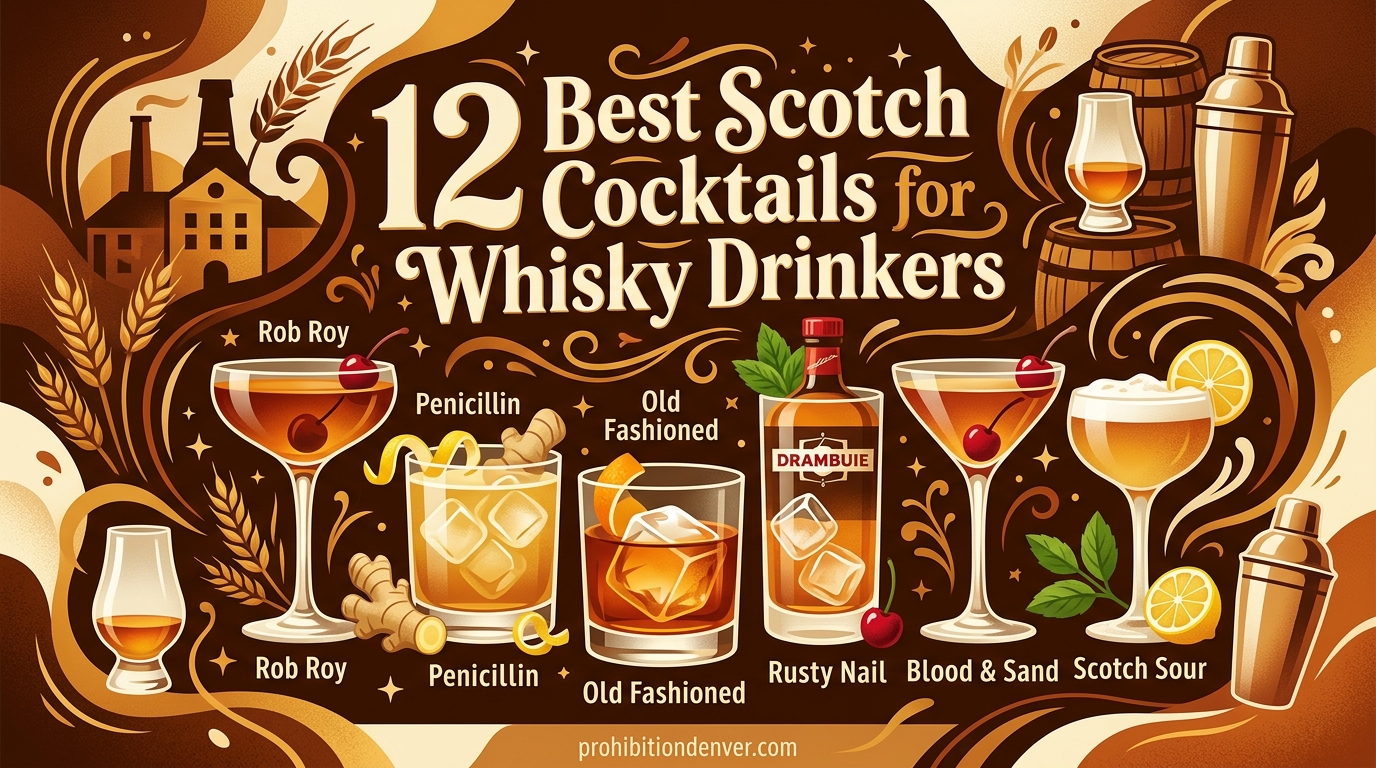
Scotch whisky carries a reputation that precedes it. Many drinkers believe it should only be enjoyed neat, perhaps with a drop of water to open up the spirit.
But here’s the truth I’ve learned after years behind the bar and countless experiments in my home kitchen: some of the best scotch cocktails in the world rival anything made with bourbon or rye. Scotch brings a complexity to mixed drinks that other whiskies simply cannot match. The malt character, the subtle smoke, the honeyed sweetness – these flavors create cocktails with depth and dimension.
In this guide, you’ll discover 12 scotch cocktails that range from century-old classics to modern creations that have taken the cocktail world by storm. Each recipe includes exact measurements, preparation methods, and the story behind the drink. Whether you’re new to scotch or a seasoned enthusiast, you’ll find something worth mixing tonight.
Table of Contents
At a Glance: 12 Best Scotch Cocktails
Before diving into the full recipes, here’s a quick reference table showing all 12 cocktails at a glance. Use this to find the perfect drink based on your skill level, flavor preferences, or occasion.
| Cocktail | Difficulty | Flavor Profile | Best For |
|---|---|---|---|
| Penicillin | Intermediate | Smoky, Ginger, Honey | Adventurous drinkers |
| Rob Roy | Easy | Spirit-forward, Herbal | Classic cocktail fans |
| Rusty Nail | Very Easy | Sweet, Honeyed | After-dinner sipping |
| Blood and Sand | Easy | Fruity, Balanced | Whisky skeptics |
| Godfather | Very Easy | Nutty, Smooth | Simple elegance |
| Bobby Burns | Easy | Herbal, Complex | Special occasions |
| Scotch Sour | Intermediate | Citrus, Creamy | Brunch or daytime |
| Scotch and Soda | Very Easy | Clean, Refreshing | Showcasing good scotch |
| Whisky Mac | Very Easy | Spiced, Warming | Cold winter nights |
| Hot Toddy | Very Easy | Warming, Spiced | Sick days or winter |
| Scotch Old Fashioned | Easy | Spirit-forward, Bitter | Slow sipping |
| Mamie Taylor | Very Easy | Citrus, Refreshing | Summer afternoons |
1. The Penicillin
The Penicillin is arguably the most important scotch cocktail created in the last 30 years. Sam Ross invented this modern classic in 2005 while working at Milk & Honey in New York City. It has since become a staple on craft cocktail menus worldwide.
This drink showcases what makes scotch cocktails special. The base of blended scotch provides a solid foundation. Fresh lemon juice adds brightness. Honey-ginger syrup brings sweetness and spice. But the real magic happens with the float – a small amount of heavily peated Islay scotch sits on top, delivering an aromatic smoke that hits your nose before every sip.
Ingredients:
- 2 oz blended scotch (Monkey Shoulder or Famous Grouse)
- 3/4 oz fresh lemon juice
- 3/4 oz honey-ginger syrup*
- 1/4 oz Islay scotch float (Laphroaig 10 or Ardbeg 10)
- Candied ginger for garnish
Instructions:
- Combine blended scotch, lemon juice, and honey-ginger syrup in a cocktail shaker.
- Add ice and shake vigorously for 12-15 seconds until well-chilled.
- Strain into a rocks glass over one large ice cube.
- Gently float the Islay scotch on top by pouring over the back of a bar spoon.
- Garnish with candied ginger.
*Honey-Ginger Syrup: Combine equal parts honey, water, and fresh ginger juice. Heat gently until honey dissolves. Store refrigerated for up to 2 weeks.
2. The Rob Roy
If you enjoy a Manhattan, you owe it to yourself to try its Scottish cousin. The Rob Roy replaces American whiskey with scotch, creating a drink that’s simultaneously familiar and completely distinct.
This cocktail first appeared in 1894 at the Waldorf Astoria in New York. The name honors Robert Roy MacGregor, the Scottish folk hero whose exploits inspired the term “robbery.” The drink quickly became a favorite of bar patrons who wanted something more sophisticated than a simple highball.
Ingredients:
- 2 oz blended scotch (Johnnie Walker Black works beautifully)
- 1 oz sweet vermouth (Carpano Antica or Dolin Rouge)
- 2 dashes Angostura bitters
- Brandied cherry for garnish
Instructions:
- Add scotch, sweet vermouth, and bitters to a mixing glass.
- Fill with ice and stir for 20-30 seconds until well-chilled.
- Strain into a chilled coupe or Nick & Nora glass.
- Garnish with a brandied cherry.
Variations: Replace sweet vermouth with dry vermouth for a Dry Rob Roy. Use equal parts sweet and dry with a dash of orange bitters for a Perfect Rob Roy.
3. The Rusty Nail
The Rusty Nail proves that sometimes the simplest drinks are the most satisfying. With just two ingredients, this cocktail has remained popular for over 80 years. It was reportedly a favorite of the Rat Pack – Frank Sinatra and his crew drank these by the dozens.
The key ingredient here is Drambuie, a honeyed Scotch liqueur flavored with herbs and spices. When combined with scotch, it creates a drink that’s sweet but not cloying, complex but not complicated. The name supposedly comes from the rusty color the drink takes on when properly mixed.
Ingredients:
- 2 oz blended scotch
- 1/2 oz Drambuie
- Lemon twist for garnish
Instructions:
- Add scotch and Drambuie to a rocks glass.
- Add one large ice cube.
- Stir gently to combine and chill.
- Express lemon oils over the drink, then drop in the twist.
Tip: Adjust the Drambuie to taste. Some prefer a 3:1 ratio for a drier drink, while others like equal parts for more sweetness.
4. Blood and Sand
The Blood and Sand breaks every rule about what should work in a whisky cocktail. It contains orange juice – an ingredient that sounds terrible with scotch until you taste it. The result is surprisingly balanced and approachable.
The drink takes its name from the 1922 film starring Rudolph Valentino. The original recipe appears in Harry Craddock’s Savoy Cocktail Book from 1930, though cocktail historians debate whether it predates the movie. Some bartenders call this “the cocktail for whisky haters” because it converts skeptics with its fruity, approachable profile.
Ingredients:
- 3/4 oz blended scotch
- 3/4 oz Cherry Heering
- 3/4 oz sweet vermouth
- 3/4 oz fresh orange juice
- Orange peel for garnish
Instructions:
- Add all ingredients except garnish to a shaker.
- Add ice and shake vigorously for 12 seconds.
- Double strain into a chilled coupe glass.
- Express orange oils over the drink and garnish with the peel.
5. The Godfather
The Godfather is a drink of few ingredients and many stories. Everyone agrees it combines scotch and amaretto. No one agrees on the ratio. Some insist on equal parts. Others prefer a 2:1 scotch to amaretto split. The truth? Make it the way you like it.
The name supposedly references the famous film, though no one can confirm whether Marlon Brando actually drank these. What matters is the flavor profile – nutty, smooth, and dangerously easy to sip. The amaretto’s almond sweetness complements scotch’s malt backbone without overwhelming it.
Ingredients:
- 2 oz blended scotch
- 1/2 oz amaretto (Disaronno or Luxardo)
- Orange peel (optional garnish)
Instructions:
- Add scotch and amaretto to a rocks glass.
- Add one large ice cube.
- Stir gently until chilled.
- Express orange oils over the drink if desired.
6. Bobby Burns
Named after Scotland’s national poet Robert Burns, this cocktail elevates the Rob Roy with the addition of Benedictine. The herbal French liqueur adds layers of complexity that make this drink feel special enough for celebrations.
Despite its name, the Bobby Burns appears to be an American invention rather than Scottish tradition. The earliest printed recipe comes from the 1940s, though it likely existed in bars before then. The combination of scotch, sweet vermouth, and Benedictine creates a drink that’s simultaneously familiar and unique.
Ingredients:
- 2 oz blended scotch
- 3/4 oz sweet vermouth
- 1/4 oz Benedictine
- Lemon twist for garnish
Instructions:
- Add scotch, sweet vermouth, and Benedictine to a mixing glass.
- Fill with ice and stir for 20-30 seconds.
- Strain into a chilled coupe glass.
- Garnish with a lemon twist.
7. Scotch Sour
The Whisky Sour is a template, not a single drink. Replace bourbon with scotch and you get something entirely different. The malt character shines through the citrus, creating a sour that’s more complex than its American counterpart.
I recommend adding egg white for the traditional preparation. It creates a silky texture and beautiful foam cap that makes the drink look as good as it tastes. If you’re nervous about raw egg, you can skip it, but you’re missing part of the experience. Modern bartenders often use aquafaba as a vegan alternative.
Ingredients:
- 2 oz blended scotch
- 3/4 oz fresh lemon juice
- 1/2 oz simple syrup
- 1 egg white (or 3/4 oz aquafaba)
- Angostura bitters for garnish
Instructions:
- Add scotch, lemon juice, simple syrup, and egg white to a shaker (no ice yet).
- Shake vigorously for 15 seconds to emulsify the egg white.
- Add ice and shake again for 12 seconds until chilled.
- Strain into a rocks glass over fresh ice, or into a coupe without ice.
- Add a few drops of bitters on top of the foam, and drag a toothpick through to create a design.
8. Scotch and Soda
Sometimes the best cocktail is barely a cocktail at all. The Scotch and Soda – also called a Presbyterian – lets the whisky speak for itself. This is my go-to recommendation when someone wants to understand why people love scotch.
The drink works because it dilutes the alcohol just enough to open up the flavors without masking them. The carbonation from the soda water adds texture and helps carry aromatics to your nose. Use a scotch you enjoy drinking neat – this isn’t the place for bargain bottles.
Ingredients:
- 2 oz scotch (blended or single malt)
- 4 oz chilled club soda
- Lemon wedge for garnish
Instructions:
- Add scotch to a highball glass.
- Fill with ice.
- Top with club soda.
- Gently stir to combine.
- Garnish with a lemon wedge.
Tip: Pour the soda gently down the side of the glass to preserve carbonation. The drink should be effervescent, not flat.
9. Whisky Mac
The Whisky Mac – short for Whisky Macdonald – is a simple marriage of scotch and ginger wine. It’s warming, spicy, and perfect for cold winter nights. The drink has been popular in Britain since the late 19th century.
Stone’s Original Green Ginger Wine is the traditional choice, though other ginger wines work well. The combination creates a drink that feels medicinal in the best possible way. Some bars serve it warm in winter, though it’s traditionally built over ice.
Ingredients:
- 2 oz blended scotch
- 1 oz ginger wine (Stone’s Original)
- Lemon twist for garnish
Instructions:
- Add scotch and ginger wine to a rocks glass.
- Add ice.
- Stir gently to combine.
- Garnish with a lemon twist.
Variation: For a warm version, gently heat the ginger wine (don’t boil) and add room temperature scotch. Serve in a heatproof mug.
10. Hot Toddy
The Hot Toddy is less a specific recipe and more a category of warming drinks. At its core, it combines spirit, sweetener, citrus, and hot water. The scotch version is particularly satisfying on cold nights or when you’re fighting a cold.
The drink’s origins trace back to British India in the 1600s, where “toddy” referred to a fermented palm wine. Over time, the definition shifted to mean any warming alcoholic drink. The medicinal reputation comes honestly – the combination of alcohol, warmth, and vitamin C actually does help with cold symptoms.
Ingredients:
- 2 oz blended scotch
- 1/2 oz honey
- 1/2 oz fresh lemon juice
- 4 oz hot water
- Cinnamon stick and lemon wheel for garnish
Instructions:
- Add honey to a heatproof mug or glass.
- Pour hot water over the honey and stir to dissolve.
- Add scotch and lemon juice.
- Stir to combine.
- Garnish with a cinnamon stick and lemon wheel.
Variations: Add a few cloves and a star anise pod for extra warmth. Substitute maple syrup for honey for a different flavor profile.
11. Scotch Old Fashioned
The Old Fashioned proves that good cocktails never truly go out of style. This version swaps bourbon for scotch, creating a drink that highlights the malt character while maintaining the bitter-sweet balance that makes the original so satisfying.
The name “Old Fashioned” first appeared in the 1880s at the Pendennis Club in Louisville, Kentucky. Patrons asked for their whisky cocktails made the “old-fashioned way” – meaning with sugar, bitters, and water rather than the complicated new drinks appearing at the time. The scotch version likely followed soon after as Americans discovered Scottish whisky.
Ingredients:
- 2 oz scotch (blended or single malt)
- 1 sugar cube or 1/4 oz simple syrup
- 2 dashes Angostura bitters
- 1 dash water (if using sugar cube)
- Orange peel and brandied cherry for garnish
Instructions:
- If using a sugar cube, place it in a rocks glass and saturate with bitters and water. Muddle until dissolved.
- Add scotch and stir to combine.
- Add one large ice cube.
- Stir for 20 seconds until chilled and diluted.
- Express orange oils over the drink, add the peel, and garnish with a cherry.
12. Mamie Taylor
The Mamie Taylor is named after a famous opera singer from the early 1900s. It combines scotch with lime and ginger ale, creating a refreshing highball that works beautifully on summer afternoons. Despite its age, this cocktail remains surprisingly modern in its flavor profile.
According to cocktail historian David Wondrich, the drink was created in 1899 and became wildly popular in the early 1900s. It faded from popularity during Prohibition but deserves rediscovery. The combination of smoky scotch, bright lime, and spicy ginger ale creates a drink that’s greater than the sum of its parts.
Ingredients:
- 2 oz blended scotch
- 1/2 oz fresh lime juice
- Ginger ale to top
- Lime wedge for garnish
Instructions:
- Add scotch and lime juice to a highball glass.
- Fill with ice.
- Top with ginger ale.
- Gently stir to combine.
- Garnish with a lime wedge.
How to Choose the Best Scotch for Cocktails
One question I hear constantly from home bartenders: should I use my good scotch for cocktails? The answer depends on the drink.
Blended vs Single Malt: Blended scotch is generally your best bet for cocktails. Brands like Monkey Shoulder, Johnnie Walker Black Label, and Famous Grouse are specifically designed for mixing. They offer consistent flavor profiles at prices that won’t make you wince when you pour them over ice.
Single malts work well in spirit-forward drinks like the Old Fashioned or Scotch and Soda, where the whisky’s character shines through. Just don’t use your rare 25-year-old bottle – the mixers will mask the subtle notes you’re paying for.
Peated vs Unpeated: Peated scotch adds smoky intensity to cocktails. Use it sparingly – a float on a Penicillin, for example. Islay malts like Laphroaig 10 or Ardbeg 10 work beautifully when used as accents. Unpeated scotches work better as base spirits in most cocktails.
Budget-Friendly Recommendations: Monkey Shoulder remains the bartender’s favorite for mixing – it’s blended specifically for cocktails. Johnnie Walker Black Label offers consistency and availability. Famous Grouse delivers quality at a lower price point. For a slight upgrade, Compass Box Spice Tree adds interesting complexity.
Pro Tips for Better Scotch Cocktails
After years of making these drinks, I’ve learned a few tricks that make a real difference.
Ice Quality Matters: Use large ice cubes or spheres for stirred drinks. They chill the cocktail without diluting it too quickly. For shaking, standard cocktail ice works fine. Cloudy ice from your freezer is fine for shaking but invest in clear ice molds for rocks glasses.
Fresh Citrus Only: Bottled lemon and lime juice taste flat and metallic compared to fresh. Squeeze your citrus right before mixing. If you’re making multiple drinks, squeeze into a container and refrigerate – but use within a few hours for best results.
Glassware Makes a Difference: Serve stirred cocktails in chilled coupe or Nick & Nora glasses. Rocks glasses work for built drinks. Highballs need tall, narrow glasses to preserve carbonation. The right glass improves both presentation and drinking experience.
Batching for Parties: You can pre-batch many of these cocktails. Stirred drinks like the Rob Roy scale beautifully – mix a pitcher with the proper ratios, refrigerate, and pour over ice when guests arrive. Avoid batching drinks with egg white or fresh citrus juice – they don’t hold well.
Common Mistakes to Avoid: Never shake a drink that should be stirred – you’ll over-dilute and add unwanted air bubbles. Don’t over-muddle ingredients when making syrup. And perhaps most importantly, taste as you go – recipes are starting points, not commandments.
Food Pairings for Scotch Cocktails
Most cocktail guides ignore food pairings entirely. That’s a shame because the right snack or meal can elevate your drink from good to memorable.
Smoky Cocktails (Penicillin, drinks with Islay floats): Pair with grilled meats, smoked salmon, or aged cheeses. The smoke in the food and drink complement each other. Try the Penicillin with barbecue ribs – the ginger and honey match beautifully with sweet-savory sauces.
Sweet Cocktails (Rusty Nail, Godfather): These work well as after-dinner drinks alongside desserts. The Rusty Nail’s honey notes pair beautifully with dark chocolate or pecan pie. The Godfather’s almond character matches biscotti or amaretti cookies.
Citrus-Forward Cocktails (Blood and Sand, Scotch Sour, Mamie Taylor): These drinks cut through rich foods beautifully. Serve them with fried seafood, creamy pasta dishes, or fatty steaks. The acidity in the cocktail cleanses the palate between bites.
Spirit-Forward Cocktails (Rob Roy, Bobby Burns, Old Fashioned): These demand equally substantial food. Aged cheeses, charcuterie, or dark chocolate work well. The strong flavors in the drink won’t be overwhelmed by the food.
Refreshing Cocktails (Scotch and Soda, Mamie Taylor): These pair with lighter fare – salads, grilled vegetables, or white fish. They’re also excellent aperitifs before dinner.
Frequently Asked Questions
What is a good scotch cocktail for beginners?
Start with the Rusty Nail or Godfather. Both use just two ingredients and require no special technique – just pour and stir. The Blood and Sand is also approachable because the orange juice and cherry flavors mask the alcohol bite that sometimes puts off new whisky drinkers.
What is a famous Scottish cocktail?
The Rob Roy is the most famous cocktail associated with Scotland, named after Scottish folk hero Robert Roy MacGregor. The Bobby Burns, honoring Scotland’s national poet, is another classic with Scottish connections. Interestingly, both were likely invented in America rather than Scotland.
What mixes well with scotch whisky?
Scotch pairs beautifully with ginger (fresh, syrup, wine, or ale), honey, sweet vermouth, citrus juices, amaretto, Drambuie, and Benedictine. Smoky Islay scotches work well with bold flavors like ginger and honey. Lighter blends mix nicely with citrus and soda water.
What is the best scotch for mixing?
Blended scotches work best for cocktails. Monkey Shoulder is the bartender favorite – it was specifically created for mixing. Johnnie Walker Black Label offers consistent quality and wide availability. Famous Grouse provides excellent value. For specific cocktails, Compass Box Spice Tree adds interesting complexity.
Should you use expensive scotch in cocktails?
Generally no. Premium single malts have subtle flavors that get lost when mixed. Save your rare bottles for sipping neat. That said, don’t use the cheapest scotch either – it will taste harsh. Aim for the $25-40 range for mixing. The exception is simple drinks like Scotch and Soda or Old Fashioned, where a nicer bottle will shine through.
What’s the difference between blended and single malt scotch for cocktails?
Blended scotch combines malt and grain whiskies from multiple distilleries, creating consistent, approachable flavor profiles ideal for mixing. Single malt comes from one distillery using only malted barley. Single malts have more distinct character but can be trickier to balance in cocktails. Most bartenders prefer blends for shaken drinks and save single malts for simple stirred cocktails.
Conclusion
Scotch whisky deserves its place in the cocktail canon alongside bourbon, rye, and every other spirit. These 12 best scotch cocktails prove that mixing scotch isn’t sacrilege – it’s an opportunity.
Whether you’re drawn to the smoky complexity of the Penicillin, the timeless elegance of the Rob Roy, or the simple refreshment of a Scotch and Soda, there’s a scotch cocktail waiting for you. The key is starting with quality ingredients and paying attention to technique.
This week, I encourage you to pick one drink from this list and make it at home. Start with the Rusty Nail if you’re new to scotch cocktails, or challenge yourself with the Penicillin if you’re ready for something more adventurous. Either way, you’ll discover why bartenders have been mixing with scotch for over a century.
Remember: the best scotch cocktail is the one you enjoy making and drinking. Don’t get too caught up in rules or tradition. Experiment, adjust ratios to your taste, and find your own favorites. That’s what cocktail culture is all about.