
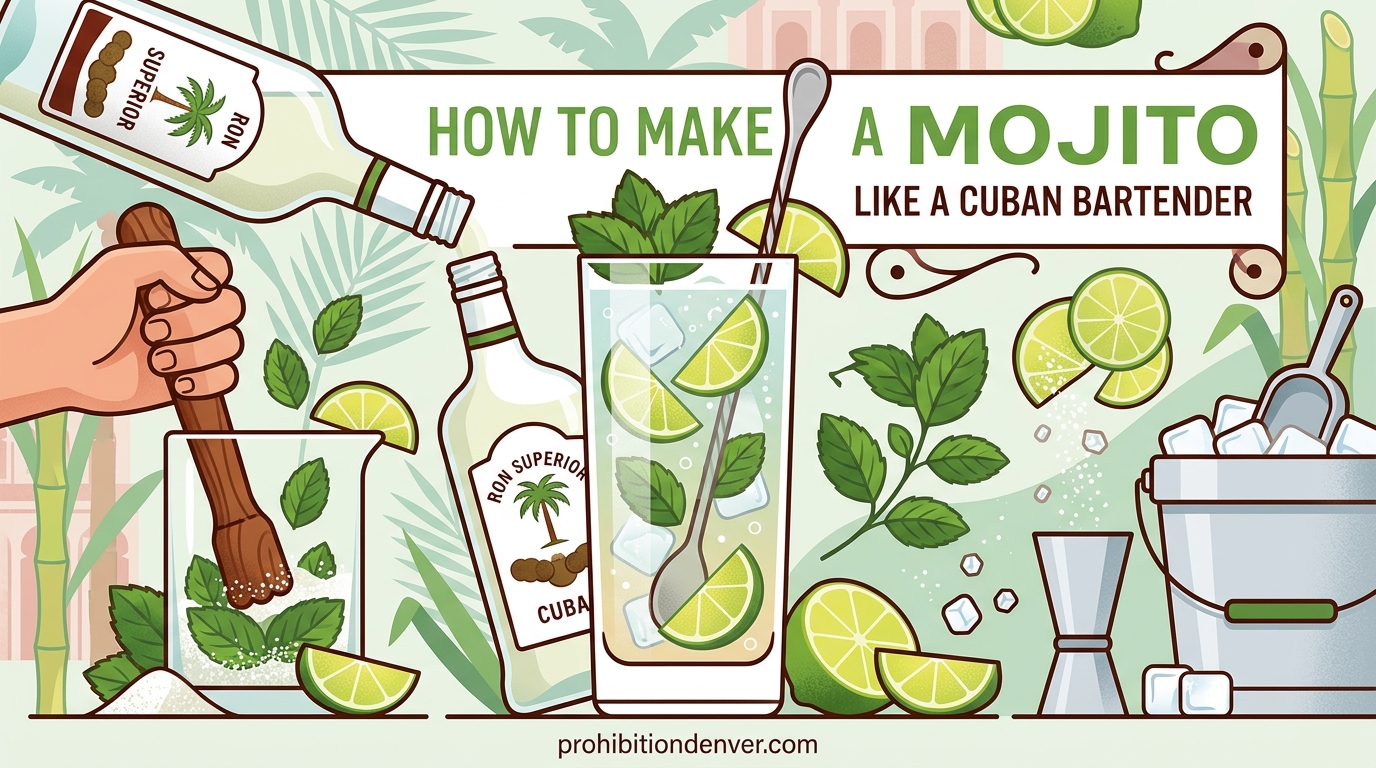
There is something almost magical about watching a Cuban bartender make a mojito. I spent three weeks in Havana learning from locals who have been perfecting this cocktail for generations. The technique they use is different from what most home bartenders do.
This guide will teach you how to make a mojito like a Cuban bartender. You will learn the authentic method that produces a perfectly balanced, refreshing drink every single time.
Table of Contents
What Makes a Cuban Mojito Different
A Cuban mojito is a classic cocktail made with five simple ingredients: white rum, fresh lime juice, sugar, soda water, and mint leaves. The difference between an authentic Cuban mojito and a regular mojito comes down to technique and balance.
Cuban bartenders focus on subtlety. They do not overpower the drink with too much mint or sugar. The goal is harmony between the rum’s sweetness, the lime’s acidity, and the mint’s cool freshness.
Most home versions fail because they over-muddle the mint or use the wrong proportions. Cuban bartenders have a specific method that prevents bitterness while maximizing flavor.
The Traditional Ingredients
Authenticity starts with quality ingredients. Here is exactly what you need for one serving:
White rum (2 ounces / 60ml): Havana Club 3 Anos is the traditional choice, but Bacardi Superior works well too. Look for a light, dry white rum without heavy vanilla or oak notes.
Fresh lime juice (3/4 ounce / 22ml): Never use bottled lime juice. Squeeze fresh limes just before mixing. The oil from the peel adds essential aromatics.
Simple syrup (1/2 ounce / 15ml): Cuban bartenders prefer simple syrup over granulated sugar. It dissolves instantly and creates a smoother texture. Make your own by dissolving equal parts sugar and water.
Fresh mint leaves (6-8 leaves): Use spearmint, not peppermint. Peppermint is too strong and menthol-heavy. Look for bright green leaves without dark spots.
Soda water (2 ounces / 60ml): Club soda adds the signature effervescence. Do not use tonic water or flavored sparkling water.
Crushed ice: This is essential for proper dilution and texture. Cubed ice will not create the same refreshing experience.
Step-by-Step: How to Make a Mojito Like a Cuban Bartender
Follow these steps exactly as Cuban bartenders do. The order and technique matter more than you might think.
Step 1: Prepare Your Glass and Mint
Start with a Collins or highball glass. Add 6-8 fresh mint leaves. Here is the secret: do not muddle yet.
Instead, gently clap the mint leaves between your palms once or twice. This releases the aromatic oils without bruising the leaves. Bruised mint becomes bitter.
Step 2: Add Lime and Sweetener
Pour in your fresh lime juice and simple syrup. The liquid will help distribute flavors when you do muddle.
Add one lime wedge to the glass. This provides additional citrus oil and makes a nice garnish later.
Step 3: The Gentle Muddle
Now muddle gently. Press the mint leaves against the bottom of the glass with a muddler or the back of a spoon. Twist lightly 3-4 times.
You are not trying to pulverize the mint. You just want to release the oils. Over-muddling extracts chlorophyll from the leaves, which tastes bitter and grassy.
Step 4: Add Rum and Ice
Pour in 2 ounces of white rum. Fill the glass three-quarters full with crushed ice.
Crushed ice is non-negotiable for an authentic Cuban mojito. It chills the drink quickly and creates the right dilution as you sip.
Step 5: Churn, Do Not Shake
Here is where Cuban technique diverges from common practice. Use a bar spoon to churn the drink. Insert the spoon to the bottom of the glass and lift while stirring.
This mixes ingredients without bruising the mint further. Shaking a mojito destroys the delicate balance and over-dilutes the drink.
Step 6: Top and Garnish
Top with soda water, leaving about an inch of space at the top. Give it one final gentle stir.
Garnish with a fresh mint sprig. Slap it between your palms first to release aroma. Place it near the straw so the scent hits with every sip.
The Secret Cuban Bartender Technique
After talking with bartenders across Havana, I discovered several techniques that separate amateur from professional mojitos.
The Mint Clap: Professional Cuban bartenders never muddle mint without clapping it first. This releases surface oils without damaging the leaf structure. Try it. The aroma difference is immediate.
The Churn Method: Cuban bartenders never shake mojitos. They churn with a bar spoon or swizzle stick. This preserves the carbonation from the soda water and prevents over-dilution.
Ice Matters: Crushed ice creates the perfect drinking experience. It cools fast and melts slowly enough to maintain dilution balance. Some high-end Cuban bars use pebble ice specifically.
The Straw Placement: Place your straw right next to the mint sprig. This channels the mint aroma directly to your nose with each sip, enhancing the perceived freshness.
Choosing the Right Rum
Your rum choice significantly impacts the final drink. Here is what works best.
Havana Club 3 Anos: This is the authentic Cuban choice. It is light, slightly sweet, and designed specifically for cocktails. The 3-year aging adds subtle complexity without heaviness.
Bacardi Superior: Widely available and a solid alternative. It is clean and neutral, letting other ingredients shine. Many Cuban expat bartenders use this outside Cuba.
Other Options: Plantation 3 Stars, El Dorado 3 Year, and Cana Brava all work well. Avoid spiced rums or anything with added flavoring.
What to Skip: Do not use aged rum. The oak and vanilla notes fight with the mint and lime. Dark rum makes a completely different drink.
Common Mistakes to Avoid
These are the errors I see most often when people try to make mojitos at home.
Over-Muddling: This is the number one mistake. Aggressive muddling makes mint bitter. Be gentle. Think massage, not mashing.
Granulated Sugar: Using sugar instead of simple syrup leads to gritty texture and uneven sweetness. The sugar may not fully dissolve in cold liquid.
Bottled Lime Juice: It tastes flat and artificial compared to fresh. The difference is night and day. Fresh limes are worth the effort.
Wrong Glass: Use a tall highball or Collins glass. Short glasses do not provide enough room for proper mixing and ice.
Too Much Soda: Soda water should top the drink, not dominate it. More than 2 ounces waters down the flavor profile.
Peppermint Instead of Spearmint: Peppermint contains too much menthol. It overwhelms the other flavors. Look for spearmint at your grocery store.
A Brief History of the Mojito
The mojito has a history stretching back over 500 years. Legend says Sir Francis Drake’s crew created an early version in the 1500s using aguardiente, a primitive sugarcane alcohol.
The drink evolved over centuries as rum production improved. By the 1800s, it resembled the modern mojito. Cuban sugar plantations provided abundant rum and lime.
Havana became famous for its bartenders in the early 20th century. American tourists flocked to Cuba during Prohibition, discovering the mojito and bringing appreciation back home.
Ernest Hemingway helped popularize the drink internationally. His love for Cuban bars and simple cocktails made the mojito synonymous with Cuban culture.
Today, it remains Cuba’s national cocktail. Cuban bartenders treat it as both art and tradition, passing techniques through generations.
Variations and Twists
Once you master the classic, try these Cuban-approved variations.
Mango Mojito: Muddle 2-3 fresh mango chunks with the mint. Reduce simple syrup slightly as mango adds sweetness.
Passion Fruit Mojito: Add 1/2 ounce passion fruit pulp. The tropical tartness pairs beautifully with mint.
Coconut Mojito: Use coconut water instead of soda water. This creates a richer, more tropical variation popular in Cuban beach resorts.
Mojito Mocktail: Replace rum with coconut water or additional soda water. Add a splash of grapefruit juice for complexity. The technique remains identical.
Frequently Asked Questions
What are the ingredients in a Cuban mojito?
A Cuban mojito contains five ingredients: white rum, fresh lime juice, simple syrup, fresh mint leaves, and soda water. The traditional proportions are 2 ounces rum, 3/4 ounce lime juice, 1/2 ounce simple syrup, 6-8 mint leaves, and 2 ounces soda water.
What is the difference between a Cuban mojito and a regular mojito?
The difference lies in technique and balance. Cuban bartenders use the churn method instead of shaking, gently muddle mint to avoid bitterness, and focus on subtle harmony between ingredients. Regular mojitos often over-muddle, use granulated sugar instead of syrup, and lack the refined balance of authentic Cuban preparation.
What is the secret to a good mojito?
The secret is gentle handling of mint. Cuban bartenders clap mint leaves between palms before adding to release oils without bruising. They muddle lightly, churn instead of shake, and use crushed ice for proper dilution. Fresh ingredients and correct proportions matter more than expensive rum.
Should you shake or stir a mojito?
Neither. Cuban bartenders use the churn method: insert a bar spoon to the bottom of the glass and lift while stirring. This preserves carbonation and prevents over-dilution. Shaking destroys the delicate balance and makes the drink watery.
Can I make a mojito without a muddler?
Yes. Use the back of a wooden spoon or even a rolling pin. The key is gentle pressure. Some Cuban bartenders actually prefer tearing mint leaves by hand instead of muddling, then clapping them to release oils. This prevents over-extraction entirely.
Conclusion
Learning how to make a mojito like a Cuban bartender transforms your home cocktail game. The difference between a good mojito and a great one comes down to technique.
Remember the key principles: clap your mint, muddle gently, churn instead of shake, and always use fresh ingredients. These small details create the authentic Cuban experience.
Practice this method a few times and you will taste the difference. Your guests will notice too. The refreshing balance of rum, lime, and mint is worth the extra attention to detail.
Now grab your ingredients and make your first authentic Cuban mojito. Salud.