
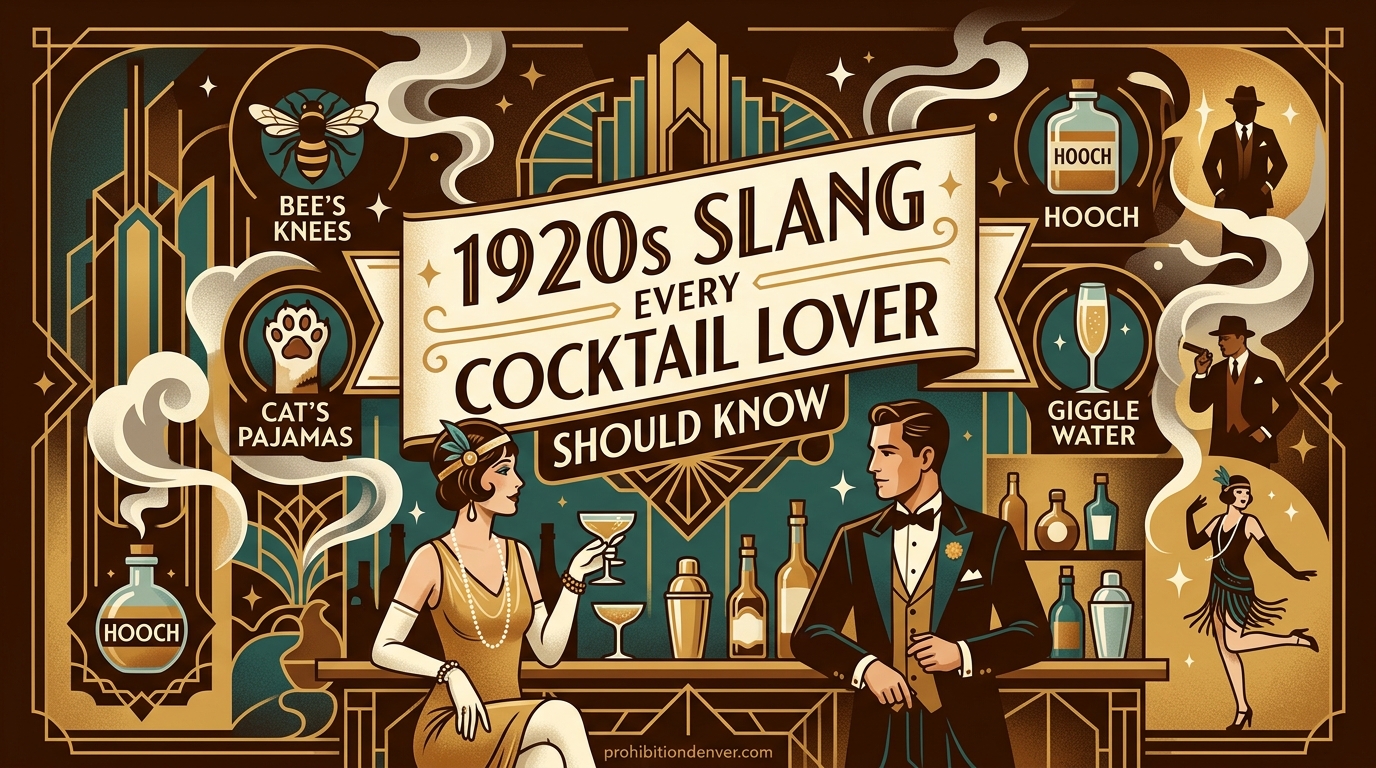
Step into any modern craft cocktail bar, and you’ll notice something fascinating. We’re still speaking the language of the speakeasy. That 1920s slang your great-grandparents used? It’s alive and well in today’s best bars. As someone who’s spent years studying cocktail culture and Prohibition history, I’ve found that understanding this vocabulary does more than just make you sound cool at themed parties. It connects you to a rebellious, inventive era that shaped American drinking culture forever.
The Prohibition era forced an entire underground culture to develop its own coded language. Bartenders, bootleggers, and barflies needed ways to talk about illegal activities without attracting attention. What emerged was one of the most colorful and creative periods in American English. Today’s best cocktail bars still use these terms, whether they realize it or not. From “giggle water” to “spifflicated,” these expressions add flavor and authenticity to the modern drinking experience.
I’ve spent countless hours diving into Prohibition-era newspapers, speakeasy accounts, and historical records to compile the most authentic 1920s slang every cocktail enthusiast should know. This isn’t Hollywood invention—this is the real language spoken in gin mills and blind pigs across America during the Roaring Twenties.
Table of Contents
The Prohibition Context: How 1920s Slang Was Born
The 18th Amendment didn’t stop Americans from drinking. It just forced them to get creative. When alcohol became illegal in 1920, an entire underground economy sprang up overnight. Speakeasies operated in secret, bootleggers ran illegal liquor, and ordinary people became criminals for enjoying a cocktail. This pressure cooker environment created the perfect conditions for a secret language to develop.
1920s slang served practical purposes. It allowed speakeasy patrons to discuss illegal activities without drawing attention. It helped distinguish friend from foe—a stranger using the wrong terminology might be a federal agent. But this language also expressed the rebellious, joyous spirit of the Jazz Age. The terms people invented were playful, irreverent, and deliberately over-the-top. They reflected a culture determined to have fun despite Prohibition’s attempts to sober up America.
The speakeasy became the laboratory where this language evolved. In these hidden bars, jazz musicians, flappers, bootleggers, and ordinary citizens mixed and mingled. They needed words for their new reality. Thus was born terminology for illegal alcohol (hooch, giggle water), hidden bars (blind pig, juice joint), and the various states of intoxication (spifflicated, ossified, zozzled). The language spread from major cities to small towns, carried by traveling musicians, smugglers, and adventurous drinkers.
What’s remarkable is how much of this 1920s slang has survived. Walk into a craft cocktail bar today, and you’ll still hear references to “bathtub gin,” “the real McCoy,” and being “served.” The Prohibition era may have ended in 1933, but its language remains part of our permanent drinking vocabulary.
Essential Alcohol and Drinking Slang
The heart of 1920s slang revolves around alcohol itself. When the manufacture and sale of liquor became illegal, Americans needed a whole new vocabulary to discuss their favorite forbidden substance. These terms weren’t just colorful—they were practically survival tools in the Prohibition era.
Types of Alcohol
Giggle water: Perhaps the most delightful term in the entire Prohibition lexicon. Giggle water meant any alcoholic beverage, but especially champagne or other sparkling wines that made people giddy and laugh. The term captures the playful spirit of the speakeasy era perfectly. I love using this one when describing lighter cocktails to customers—it instantly conveys the mood we’re trying to create.
Hooch: The universal Prohibition term for illegal alcohol. Originally derived from “Hoochinoo,” a Native American tribe known for making strong liquor, hooch came to mean any bootleg liquor regardless of quality. It could be smooth whiskey or harsh moonshine. The beauty of hooch was its ambiguity—you could ask for hooch without specifying exactly what you wanted, which was prudent when dealing with illegal substances.
Bathtub gin: The infamous homemade gin that defined the Prohibition era. The name comes from the common practice of mixing grain alcohol with juniper flavoring in actual bathtubs (though any large container would do). The quality varied wildly. Some bathtub gin was surprisingly smooth, while other batches could be dangerous. This term has stuck around as shorthand for any questionable homemade liquor.
Moonshine: High-proof distilled spirits made secretly, usually at night to avoid detection. While moonshine predates the 1920s, Prohibition turned it into a major industry. Mountain dew, white lightning, and corn whiskey were all variations on the same theme. Modern craft distillers have reclaimed moonshine as a premium product, but in the 1920s it meant illegal, untaxed liquor of varying quality.
Panther sweat: Strong whiskey. The imagery here is fantastic—it evokes something powerful, wild, and slightly dangerous. Panther sweat was typically reserved for the hardest liquors, those that could make even experienced drinkers feel the effects immediately.
Coffin varnish: The lowest quality bootleg alcohol, potentially dangerous or even deadly. The term gruesomely suggests that drinking this liquor was like drinking the liquid used to preserve corpses. Coffin varnish was typically poorly made moonshine or industrial alcohol repurposed for drinking. It represented the dangerous side of Prohibition—when people drank anything to get drunk.
Quality Indicators
The real McCoy: Genuine, high-quality alcohol. This might be the most enduring Prohibition-era term still in use today. The origin is disputed—some say it refers to a famous rum runner named Bill McCoy, who never watered down his product. Others claim different origins. But in the 1920s, asking for “the real McCoy” meant you wanted authentic, premium liquor, not some watered-down or dangerous substitute.
Rotgut: Poor quality, harsh alcohol. The term suggests liquor so bad it could rot your gut from the inside. Rotgut was the opposite of the real McCoy—cheap, poorly made, and potentially dangerous. Speakeasy patrons quickly learned to distinguish between quality bootleg liquor and rotgut that could leave you regretting everything the next morning.
Mountain dew: Before it was a soda, mountain dew was Prohibition slang for high-quality moonshine, especially from the Appalachian region. The name suggests something pure, natural, and potent. Mountain dew was prized for its smoothness compared to harsher rotgut varieties.
Speakeasy Venues
Speakeasy: An establishment that illegally sold alcoholic beverages. The term supposedly comes from patrons speaking quietly about the place (“speak easy”) so as not to attract attention. Speakeasies ranged from grimy basements to glamorous nightclubs. They required passwords or special knowledge to enter, creating an air of exclusivity that made them even more alluring.
Blind pig: A lower-class speakeasy, often in a poorer neighborhood. The term supposedly comes from establishments charging admission to see a “blind pig” or other attraction, then serving “free” drinks. Blind pigs were generally rougher, cheaper alternatives to more upscale speakeasies. The term has largely faded from use, but it captures the gritty reality of Prohibition-era drinking.
Gin mill: A bar or speakeasy, especially one that served gin. During Prohibition, gin became the bootlegger’s spirit of choice because it was relatively easy to make and flavor. A gin mill might be a fancy club or a dive bar, but gin was always the specialty. The term survives today in some cities to describe bars known for their gin cocktails.
Juice joint: Another term for a speakeasy or bar. “Juice” was slang for alcohol, so a juice joint was simply a place that served it. The term has a playful, slightly illicit feel that captures the speakeasy atmosphere perfectly.
Intoxication Levels
The 1920s had an entire vocabulary for being drunk, with terms that described different levels and types of intoxication. This wasn’t just colorful language—it served practical purposes in an era when public drunkenness could lead to arrest.
Bent: Slightly buzzed or tipsy. Being bent meant you’d had a few drinks and were feeling the effects, but you were still functional. It’s a perfect term for that pleasant early stage of intoxication when everything seems funny and the night feels full of possibility.
Spifflicated: (pronounced spif-li-KAY-ted) Drunk. This wonderfully expressive term supposedly comes from “spifflicate,” meaning to treat with spiff or polish. In the 1920s, being spifflicated meant you were well on your way to being drunk. It captures the slightly ridiculous, over-polished feeling of having one too many.
Ossified: Extremely drunk. The term suggests that you’re so intoxicated you’ve turned to stone. Ossified was beyond spifflicated—you were thoroughly, comprehensively drunk. At this point, speakeasy patrons might need help finding their way home.
Zozzled: (pronounced ZOZ-uld) Completely drunk. The origin is unclear, but the sound of the word perfectly conveys a wobbly, unsteady state of intoxication. Being zozzled meant you were past the point of no return. The term has a playful quality that softens the reality of being very, very drunk.
People and Social Terminology
The Prohibition era created new social dynamics, and with them came new ways to describe people. Speakeasies brought together diverse groups who might never have mixed in legal drinking establishments. Flappers, sheiks, bootleggers, and ordinary citizens all needed terms to describe each other.
Women’s Terms
Flapper: The iconic 1920s woman who defied traditional social norms. Flappers wore short skirts, bobbed their hair, and openly enjoyed alcohol and nightlife. They were the shock troops of the Jazz Age, pushing boundaries and challenging expectations. In speakeasies, flappers were often the life of the party, dancing to jazz music and ordering giggle water without shame.
Dame: A woman, sometimes with a slightly disreputable connotation. Calling someone a dame could be affectionate or dismissive depending on context. It wasn’t necessarily an insult, but it did suggest a woman who was perhaps a bit too worldly or experienced. In speakeasies, dames were often the regular female patrons who knew their way around a gin mill.
Doll: An attractive woman. Unlike dame, doll was almost always complimentary. A doll was someone you wanted to buy a drink for, someone who made the speakeasy feel more glamorous. The term survives today, though it can sound patronizing in modern contexts.
Gold digger: A woman who pursued relationships primarily for money. The term took on new relevance in the 1920s, when speakeasies brought together wealthy men and attractive women in unprecedented numbers. Gold diggers weren’t necessarily evil—they were often just pragmatic in an era when women had limited economic opportunities.
Sugar daddy: A wealthy older man who financially supported a younger romantic partner. Sugar daddies were common fixtures in upscale speakeasies, where they would entertain their companions with expensive giggle water and champagne. The term has survived largely unchanged into modern usage.
Men’s Terms
Sheik: A fashionable, attractive young man. The term comes from the popularity of Rudolph Valentino’s film “The Sheik,” which created a craze for exotic, romantic leading men. In speakeasies, sheiks were the male counterparts to flappers—stylish, confident men who knew how to dress well and charm the dolls.
Cake eater: A wealthy, effete man who enjoyed luxury and pleasure. The term suggests someone soft and pampered, perhaps a bit decadent. Cake eaters were regular customers at upscale speakeasies, where they could spend their money on the finest giggle water and impress dolls with their generosity.
Big cheese: An important person, a boss, a leader. The big cheese might be the bootlegger who controlled the local liquor supply, or the speakeasy owner who called the shots. Big cheeses commanded respect and got the best tables and the real McCoy.
Authority Figures
Dry: Someone who supported Prohibition and didn’t drink. Dries were the enemy of speakeasy culture. They were the ones who voted for the 18th Amendment and wanted to shut down all the gin mills and juice joints. In speakeasies, identifying a dry was crucial—you didn’t want to accidentally serve giggle water to someone who might report you.
The fuzz: Police officers. The term suggests something annoying and persistent, like fuzz stuck to your clothes. The fuzz were the constant threat to speakeasy operations, always potentially raiding the establishment and arresting patrons. Speakeasies developed elaborate systems to warn customers when the fuzz were coming.
G-man: A federal agent, especially from the Bureau of Prohibition. G-men (for “government men”) were more sophisticated and dangerous than local police. They were the ones conducting major raids and busting bootlegging operations. Speakeasy regulars learned to spot G-men and keep their mouths shut.
Expressions and Exclamations
Beyond specific terminology, the 1920s developed colorful expressions for describing things as good, bad, or just plain surprising. These phrases added flavor to speakeasy conversation and helped create the distinctive atmosphere of the Jazz Age.
Positive Descriptors
The bee’s knees: Excellent, outstanding. The origin is uncertain, but it may be a corruption of “business.” Regardless, the bee’s knees became the quintessential 1920s term for something wonderful. A speakeasy with the real McCoy and the best jazz band was the bee’s knees. A beautiful doll could be the bee’s knees. The term has become almost a cliché of the era, but it captures the playful, slightly ridiculous quality of 1920s slang.
The cat’s pajamas: Similar to the bee’s knees—something excellent or stylish. The cat’s pajamas suggests something so good it’s almost absurd. Why would a cat wear pajamas? The very image is ridiculous, which is part of the charm. The cat’s pajamas was slightly more sophisticated than the bee’s knees, but they meant essentially the same thing.
Berries: Something wonderful or excellent. “That giggle water is berries!” The term suggests something sweet and enjoyable. Berries was less common than the bee’s knees or cat’s pajamas, but it had a nice ring to it and captured the optimistic spirit of the Jazz Age.
Hotsy-totsy: Perfect, just right, excellent. The term has a playful, almost childish quality that makes it fun to say. A perfectly made cocktail was hotsy-totsy. A successful night at the speakeasy was hotsy-totsy. The term suggests everything working together in harmony.
Exclamations
Cuffow: An expression of surprise or shock, similar to “wow!” or “holy cow!” The origin is unclear, but cuffow was a common exclamation in speakeasies when something unexpected happened. The police raiding the establishment? Cuffow! Finding out your bootlegger had the real McCoy? Cuffow!
Baloney: Nonsense, rubbish. “That’s baloney!” you might say when someone told you an obvious lie. The term has survived into modern usage, though it’s usually spelled “bologna” or “boloney” today. In speakeasies, calling out baloney was a way to detect dishonesty in an era of deception.
Applesauce: Similar to baloney—nonsense or lies. “Pure applesauce!” was a common retort to something unbelievable. The term suggests something sweet but insubstantial, perhaps appealing but ultimately not nourishing. Applesauce was a playful way to call out dishonesty without being too aggressive.
Insults and Put-downs
Wet blanket: Someone who ruins the fun or dampens the mood. A wet blanket at a speakeasy might refuse to drink, complain about the jazz music, or generally kill the vibe. The term suggests something that smothers fire and warmth—exactly what a wet blanket does to a good party.
Wallflower: Someone who stands along the wall at a party or dance, not participating. Wallflowers were common in speakeasies, where confident flappers and sheiks dominated the dance floor. The term has a sympathetic quality—wallflowers weren’t necessarily bad people, just shy or awkward in the high-energy speakeasy environment.
Lemon: Something disappointing or worthless. A speakeasy serving rotgut instead of the real McCoy was a lemon. A date who turned out to be boring might be a lemon. The term has survived to describe defective products, especially cars.
Practical Ways to Use 1920s Slang Today
Understanding 1920s slang is more than just a history lesson—it’s a practical tool for modern bartenders and bar owners. When used authentically, these terms add flavor and depth to the cocktail experience. They connect today’s drinkers to the rich history of American drinking culture.
5 Ways to Use 1920s Slang in Modern Bars
1. Cocktail Menu Descriptions: Use era-appropriate terminology in your menu descriptions. A gin cocktail could be described as “smooth giggle water with botanical notes.” A whiskey drink might be “the real McCoy of aged spirits.” This adds personality and historical authenticity to your offerings.
2. Themed Events and Parties: Host Prohibition-themed nights with servers using period-correct language. “What’ll it be, mac? We’ve got giggle water that’s the bee’s knees.” This creates an immersive experience that transports customers back to the speakeasy era.
3. Bartender Training: Teach your staff key terms so they can sprinkle them into service naturally. “This is our bathtub gin-style martini, made in-house.” “Be careful with this one—it’ll leave you spifflicated if you’re not careful.”
4. Social Media and Marketing: Use 1920s slang in your Instagram captions and promotional materials. “Join us for a night of giggle water and jazz music. Our speakeasy has the real McCoy.” This creates brand personality and sets you apart from generic bars.
5. Educational Elements: Add brief historical notes to your menu explaining terms like “blind pig” or “gin mill.” Customers love learning the stories behind the language. This positions your establishment as knowledgeable and authentic.
Example Cocktail Menu Descriptions
The Bee’s Knees Cocktail: “Honey-infused gin with fresh lemon. This classic cocktail gave its name to our favorite expression for excellence. The bee’s knees of Prohibition-era mixology.”
Speakeasy Old Fashioned: “The real McCoy of whiskey cocktails. Aged bourbon, bitters, and a touch of sugar. Served in our hidden gin mill for those in the know.”
Giggle Water Spritz: “Light, bubbly, and guaranteed to make you giggle. Our take on the classic Prohibition-era term for champagne and sparkling wines.”
Spifflicated Sour: “Warning: This potent whiskey sour will leave you thoroughly spifflicated. Not for the faint of heart.”
Appropriateness Guidelines
While 1920s slang adds flavor, it’s important to use it thoughtfully. Some terms that were common in the 1920s haven’t aged well and should be avoided. Terms like “gold digger” or “doll” can sound patronizing or sexist in modern contexts. Focus on the alcohol and venue terminology—giggle water, speakeasy, the real McCoy—which has aged better and feels more playful than problematic.
The key is authenticity without affectation. Don’t force the language. Sprinkle it in naturally, like seasoning in a dish. A little goes a long way. Your goal is to enhance the cocktail experience, not to perform a caricature of the 1920s. When used judiciously, 1920s slang connects modern drinkers to a fascinating period in cocktail history and adds personality to your bar program.
FAQ
What was the slang for drinks in the 1920s?
The most common 1920s slang for alcohol included giggle water (any alcoholic drink, especially champagne), hooch (illegal liquor), bathtub gin (homemade gin), moonshine (homemade distilled spirits), and panther sweat (strong whiskey). Lower quality alcohol was called rotgut or coffin varnish, while premium liquor was known as the real McCoy.
What is giggle water?
Giggle water was 1920s slang for any alcoholic beverage, but especially champagne or sparkling wines. The term captured the playful spirit of the speakeasy era, suggesting alcohol that made people giddy and laugh. It’s one of the most delightful Prohibition-era terms that’s still recognizable today.
What does spifflicated mean?
Spifflicated (pronounced spif-li-KAY-ted) was 1920s slang for being drunk. The term described that pleasantly intoxicated state when you’d had enough drinks to feel the effects but weren’t completely ossified yet. It’s a wonderfully expressive word that captures the slightly ridiculous feeling of being tipsy.
What is a speakeasy in 1920s slang?
A speakeasy was an establishment that illegally sold alcoholic beverages during Prohibition. The term supposedly comes from patrons speaking quietly (‘speaking easy’) about these secret establishments to avoid attracting attention. Speakeasies ranged from gritty basement bars to glamorous nightclubs and required passwords or special knowledge to enter.
What is the difference between a speakeasy and a blind pig?
While both were illegal drinking establishments during Prohibition, blind pigs were generally lower-class, rougher speakeasies located in poorer neighborhoods. The term supposedly came from places that charged admission to see a ‘blind pig’ or other attraction, then served ‘free’ drinks. Regular speakeasies were often more upscale and catered to wealthier clientele.
Which 1920s slang terms are still used today?
Several 1920s terms have survived into modern usage, including the real McCoy (genuine, high-quality), hooch (illegal alcohol), speakeasy (hidden bar), and gin mill (bar that serves gin). Terms like bee’s knees and cat’s pajamas are still recognizable as 1920s expressions, though they’re mostly used ironically or in historical contexts today.
How do you pronounce these 1920s slang terms?
Spifflicated is pronounced spif-li-KAY-ted. Zozzled is pronounced ZOZ-uld (rhymes with ‘fuzzled’). Hooch is pronounced HOOCH (rhymes with ‘butch’). Most other terms are pronounced as they appear, though it’s worth noting that regional accents in the 1920s would have affected pronunciation in cities like New York, New Orleans, and Chicago.
Conclusion: Keeping the Spirit of the Speakeasy Alive
1920s slang isn’t just colorful language from a bygone era. It’s a living connection to one of the most fascinating periods in American drinking culture. The Prohibition era forced Americans to be creative, resilient, and boldly defiant in pursuit of a good time. The language they invented reflects that spirit—playful, resourceful, and uniquely American.
Today’s best cocktail bars are keeping the speakeasy spirit alive, whether they realize it or not. Hidden entrances, password-protected doors, craft cocktails made with house-infused spirits—these are all echoes of the 1920s. Understanding the 1920s slang every cocktail lover should know enriches the modern drinking experience. It adds depth and authenticity to our enjoyment of cocktails. It connects us to a lineage of bootleggers, bartenders, and barflies who refused to let Prohibition kill the American cocktail culture.
So next time you’re enjoying a craft cocktail, take a moment to appreciate the linguistic legacy of the speakeasy era. Order something that’s the bee’s knees. Sip on some giggle water. And remember that you’re participating in a tradition that survived prohibition, flourished in secret, and emerged stronger than ever. The 1920s may be gone, but in the best bars and cocktail lounges, the spirit of the speakeasy lives on in every clink of the glass.