
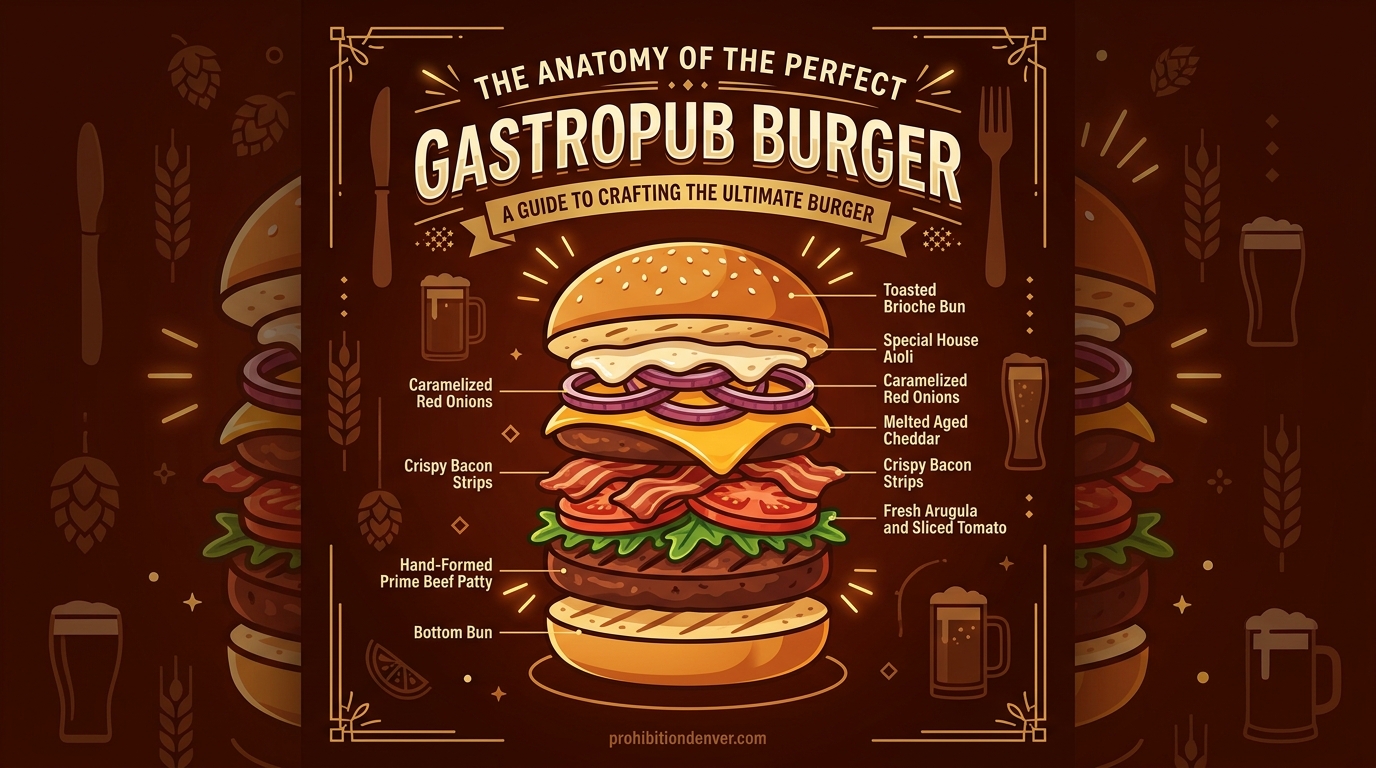
A perfect gastropub burger is two things at once: 60% flavor and 40% structure. Nail both, and even simple ingredients taste legendary. After years of burger obsession and countless hours testing recipes in my own kitchen, I have learned that the difference between a good burger and a transcendent one comes down to understanding each layer and how they work together.
This is not about fancy techniques or expensive equipment. This is about the fundamentals that separate a gastropub burger from the fast-food versions we grew up with. Whether you are building one at home or trying to understand why that $18 pub burger tastes worth every penny, this guide breaks down every component.
Table of Contents
The Anatomy of the Perfect Gastropub Burger: Understanding the Components
A gastropub burger elevates the classic American hamburger through quality ingredients, proper technique, and attention to the details that most home cooks overlook. The word “gastropub” itself combines “gastronomy” with “pub,” signaling a focus on elevated food in a casual setting. When applied to burgers, this means premium beef, house-made components, and execution that respects each element.
I have eaten burgers at over fifty gastropubs across the country. The best ones share common DNA: a proper bun-to-patty ratio, beef with enough fat to stay juicy, cheese that melts into every crevice, sauce that complements rather than masks, and toppings that add texture without sliding off.
The Foundation: Choosing the Right Bun
The bun is the plate you can eat, and it needs to do serious work. Too soft, and it disintegrates. Too firm, and it fights the patty. After testing every option, I have settled on a clear hierarchy for gastropub-quality burgers.
Brioche buns offer that slight sweetness and rich texture that pairs beautifully with savory beef. They toast beautifully and hold their structure better than standard white buns. Potato rolls provide a softer, more traditional experience with subtle flavor that lets the beef shine. Pretzel buns bring chewiness and salt, though they can overwhelm delicate toppings.
The non-negotiable: edge-to-edge toasting. Butter both halves and toast them face-down in a hot skillet until golden. This creates a moisture barrier and adds textural contrast.
Size matters enormously. Your bun should match your patty diameter almost exactly. A bun that overhangs by more than a quarter inch creates the dreaded “all-bun first bite” problem that ruins the experience.
The Patty: Fat Content, Grind, and Technique
Beef is the star, and 80/20 is the magic ratio. That is 80% lean meat to 20% fat. Go leaner, and your burger dries out. Go fattier, and it falls apart on the grill while creating flare-ups that char the exterior before the interior cooks.
The grind size affects texture significantly. Coarse grind creates those loose, jagged edges that crisp up beautifully. Fine grind produces a denser, more uniform patty. For gastropub style, I prefer a medium-coarse grind that holds together while still providing texture.
Chuck is the standard cut, and for good reason. It offers the right fat content and deep beef flavor. Some high-end spots blend in brisket for richness or short rib for complexity. At home, a straight chuck grind from a trusted butcher beats most pre-packaged options.
Here is what most people get wrong: do not overwork the meat. Handle it just enough to form a loose patty. Compress it too much, and you get a dense, tough burger. Season the exterior right before cooking with coarse salt and fresh pepper.
The Sear: Creating the Perfect Crust
The Maillard reaction is your friend. This chemical process between amino acids and reducing sugars creates that brown, flavorful crust that defines a great burger. It happens above 300 degrees Fahrenheit, which means you need serious heat.
A cast iron skillet or flat-top griddle works better than an open grill for most home cooks. The consistent contact surface promotes even browning. Get it ripping hot before the patty touches the surface.
For smash burgers, place the ball of meat on the hot surface and press it flat within the first 30 seconds. Use parchment paper and a sturdy spatula. For pub-style thick patties, place gently and let it develop a crust before flipping.
The flip once rule is gospel. Every flip releases juices and interrupts the crust formation. Cook one side until it releases easily from the pan, flip once, finish to your desired doneness. For food safety, ground beef should reach 160 degrees Fahrenheit internally.
The Cheese: Melting Science and Selection
American cheese gets mocked, but it melts better than anything else. The emulsifiers and lower melting point create that glossy, draped coverage that Instagram dreams are made of. Cheddar brings sharper flavor but requires more attention to melt properly without breaking.
Swiss, pepper jack, blue cheese crumbles, and brie all have their place in the gastropub burger world. The key is coverage: your cheese should extend nearly to the edges of the patty. No sad little square sitting in the center.
Timing is everything. Add cheese during the final 30-60 seconds of cooking. For extra melt, add a splash of water to the pan and cover briefly to create steam. Some chefs use a dome or cover to trap heat and accelerate melting.
Gastropub elevations might include aged cheddar, gruyere, pimento cheese, or even a cheese sauce poured over the top. The principle remains the same: melted, integrated, and covering the beef.
The Sauce: Your Moisture Insurance Policy
Sauce serves two purposes: flavor enhancement and moisture management. The right sauce brings elements that the other ingredients lack: acid, sweetness, heat, or umami depth.
Classic thousand island or burger sauce combines mayonnaise, ketchup, mustard, and pickle relish. Simple, balanced, effective. Gastropubs often elevate this base with additions like sriracha, roasted garlic, smoked paprika, or Worcestershire.
Distribution technique matters. Too much sauce saturates the bun. Too little leaves bites dry. Apply a thin, even layer to both bun halves. Some chefs do a zigzag on the bottom bun and a spread on the top.
Truffle aioli has become a gastropub cliche, but when made with real truffle oil or fresh shaved truffle, it adds an earthy luxury that justifies the premium price point. House-made options might include beer cheese sauce, chimichurri, or specialty mustards.
The moisture barrier concept: your sauce should interact with the toasted bun surface rather than soaking into the soft interior. This is why toasting is non-negotiable.
The Toppings: Crunch, Acid, and Heat
Toppings add the final dimension: texture contrast and flavor complexity. But restraint is a virtue. Every topping needs a purpose.
Lettuce: Iceberg brings crunch and moisture resistance. Butter lettuce adds elegance but wilts faster. Romaine splits the difference. Place lettuce directly on the bottom sauce layer to create a moisture barrier between the warm patty and the bun.
Tomato: Seasonal, ripe tomatoes only. Winter tomatoes have no place on a quality burger. Slice thick enough to provide presence but thin enough to bite through cleanly. Season with salt.
Onions: Raw red onion brings sharp bite. Caramelized onions add sweetness and depth. Pickled onions bring acid that cuts richness. Some gastropubs offer all three and let you choose.
Pickles: House-made pickles separate good gastropubs from great ones. Quick-pickled vegetables, pickled jalapeños for heat, or bread-and-butter chips for sweetness all work. The acid component balances fatty beef.
Bacon: Thick-cut, properly rendered until crisp. Chewy bacon ruins the texture balance. One or two strips, placed on top of the cheese so it adheres slightly.
Elevated options: Fried eggs, avocado, sautéed mushrooms, crispy shallots, or even foie gras at the highest end. Each addition should complement, not compete.
How to Build the Perfect Burger Stack
Build order determines structural integrity. Do it wrong, and your burger slides apart halfway through. Do it right, and every bite contains all elements in perfect proportion.
Step 1: Bottom bun. Spread your sauce here. This becomes the foundation.
Step 2: Lettuce. Place it directly on the sauced bun. It acts as a moisture barrier and provides crunch at the bottom of the stack.
Step 3: Tomato. On top of the lettuce. The slices should not extend beyond the bun edges.
Step 4: The patty. Place it gently but firmly. The cheese should already be melted on top.
Step 5: Warm toppings. Bacon, caramelized onions, or sautéed mushrooms go here. They integrate with the warm cheese.
Step 6: Cold toppings. Pickles, raw onions, or other room-temperature items.
Step 7: Top bun. Sauce spread on the underside, then placed sauce-down onto the stack.
Press gently to set everything in place. Serve immediately while the contrast between warm patty and cool toppings is at its peak.
Gastropub Elevations: What Sets It Apart
A gastropub burger differs from fast food or casual dining versions through attention to ingredients and execution. The differences are real and worth understanding.
House-made components: Brioche baked fresh daily. Pickles made in-house from seasonal vegetables. Sauces mixed from scratch rather than poured from bottles. This level of care adds cost but creates flavor profiles that cannot be replicated with mass-produced ingredients.
Premium sourcing: Grass-fed beef from local ranches. Aged cheddar from artisan producers. Produce from nearby farms when possible. The gastropub ethos emphasizes quality and provenance.
Craft beer pairings: Many gastropubs design their burger menu around their beer selection. A rich, malty porter with a blue cheese burger. A hoppy IPA cutting through bacon fat. The combination elevates both elements.
In Denver’s gastropub scene, I have noticed a preference for locally raised beef and green chile additions that reflect regional tastes. The best spots blend local character with fundamental technique.
The price premium at gastropubs reflects these upgrades. A $16-20 burger is not uncommon, and when executed properly, the value becomes apparent in every bite.
Common Mistakes and How to Avoid Them
After years of burger experiments and conversations with chefs, I have cataloged the errors that separate amateur attempts from professional results.
Overworking the meat: Your ground beef is not dough. Handle it minimally. Form loose patties without compressing the meat. Dense burgers result from overhandling.
Pressing while cooking: Never press down on a cooking patty with your spatula. You are squeezing out juices and flavor. Let it be.
Wrong bun-to-patty ratio: This is the most common flaw I see in restaurant burgers. If the bun significantly overhangs the patty, the texture balance is ruined. Match sizes precisely.
Soggy bun syndrome: Wet lettuce, excessive sauce, and untoasted buns combine to create a disintegrating mess. Toast your buns and use lettuce as a moisture barrier.
Overloading toppings: More is not better. Each topping should contribute something distinct. If you cannot taste the beef, you have failed.
Cold cheese: Cheese needs to melt. Cold cheese on a warm burger creates textural dissonance. Warm your cheese slightly before applying, or give it time and steam to melt properly.
FAQ
What makes a gastropub burger different from a regular burger?
A gastropub burger emphasizes quality ingredients, house-made components, and proper technique. Unlike fast-food versions, gastropub burgers typically use 80/20 beef with proper sear, premium cheese that melts completely, house-made sauces, and fresh toppings. The focus is on execution and ingredient sourcing rather than speed or cost reduction.
What is the best fat percentage for burger patty?
80/20 beef (80% lean, 20% fat) is the ideal ratio for most burgers. This provides enough fat for juiciness and flavor without causing excessive shrinkage or flare-ups on the grill. Leaner blends like 90/10 tend to dry out, while fattier blends like 70/30 can fall apart and create too much grease.
How do you keep a burger bun from getting soggy?
Toast the bun edges and interior surface to create a moisture barrier. Place lettuce directly on the bottom bun as a protective layer between sauce and bun. Apply sauce thinly and evenly rather than soaking the bun. Serve immediately after assembly while the contrast between warm and cool ingredients is optimal.
What is the ideal build order for a burger?
Start with the bottom bun with sauce, then lettuce as a moisture barrier, followed by tomato slices. Place the warm patty with melted cheese next. Add warm toppings like bacon or caramelized onions, then cold toppings like pickles. Finish with the top bun, sauce-side down. This order ensures structural integrity and balanced bites.
Conclusion
The anatomy of the perfect gastropub burger comes down to understanding the 60/40 rule. Sixty percent of your success depends on flavor: quality beef, proper seasoning, melted cheese, balanced sauce. Forty percent depends on structure: toasted bun, proper build order, texture contrast, and moisture management.
Master both sides of this equation, and you will understand why the best gastropub burgers command premium prices. You will also be able to replicate that experience at home, creating burgers that satisfy on every level.
Start with one element at a time. Perfect your sear before worrying about house-made pickles. Nail the bun-to-patty ratio before experimenting with cheese blends. Build your skills layer by layer, just like the burger itself.