

Steel drum means two different instruments, and picking the wrong one is the single biggest beginner mistake I see. A Caribbean steel pan is a bowl of chromatically tuned notes played with sticks, and a steel tongue drum — sold as a tank drum, hang drum or handpan — is a flat round shell with cut tongues around the rim played with rubber-tipped mallets. My default pick for a first instrument is the HOPWELL 13-inch 15-note tongue drum: alloy steel, D Major, 5.7 pounds, and a numbered note system matched to the included music book.
This guide covers both families so you know what you are actually buying, then spends most of its time on the ten drums worth a beginner’s attention. I grouped them by what they are good at rather than by brand, because the two decisions that matter most are size and instrument type. Everything here is based on published specifications, review counts, and the failure modes buyers actually report.
If you want a second opinion on the drum-shaped things in your life, we also rank the best cajon drums for gigging musicians and take a completely different look at carbon steel pans for the workshop. Neither competes with what follows.
Top 3 Steel Drums for Beginners in 2026

HOPWELL 13 Inch 15 Note D Major
- Alloy steel body
- 15 notes in D Major
- 5.7 pounds
- Music book and case included

AKLOT 10 Inch 11 Note Titanium
- Titanium alloy body
- 11 notes in C key at 440 Hz
- Largest accessory kit in the group
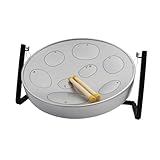
Panyard Jumbie Jam Tabletop Kit
- One-octave 16 inch Caribbean steel pan
- Made in the USA in G Major
- Table top stand and case included
Those three cover the realistic paths. The HOPWELL is the most forgiving first drum, the AKLOT is the best kit for the money, and the Panyard Jumbie Jam is the only genuine steelpan on this list if you want the Caribbean instrument rather than the tongue-drum lookalike.
All 10 Steel Drums at a Glance in 2026
| Product | Specifications | Action |
|---|---|---|
| HOPWELL 13 Inch 15 Note D Major |
|
Check Latest Price |
 REGIS 6 Inch 8 Note Malachite REGIS 6 Inch 8 Note Malachite |
|
Check Latest Price |
| AKLOT 10 Inch 11 Note C Key |
|
Check Latest Price |
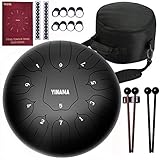 Yinema 11 Note 10 Inch Black Yinema 11 Note 10 Inch Black |
|
Check Latest Price |
 Sounds Of Silence 6 Inch 8 Note Sounds Of Silence 6 Inch 8 Note |
|
Check Latest Price |
| Panyard Jumbie Jam Tabletop Kit |
|
Check Latest Price |
 Yasisid 12 Inch 15 Note Green Yasisid 12 Inch 15 Note Green |
|
Check Latest Price |
 Panyard Jumbie Jam Floor Stand Panyard Jumbie Jam Floor Stand |
|
Check Latest Price |
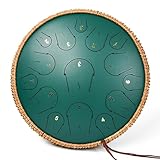 Lidguni 14 Inch 15 Note Green Lidguni 14 Inch 15 Note Green |
|
Check Latest Price |
 Panda Drum Plus 11 Inch Sandstone Panda Drum Plus 11 Inch Sandstone |
|
Check Latest Price |
Diameter is the fastest way to sort this list. Six-inch drums are children’s and travel instruments, ten and eleven-inch drums are the general-purpose sweet spot, and twelve to fourteen-inch drums give you a deeper bass note and a longer sustain but get heavy fast. If you have never played one, start at ten or eleven inches.
1. HOPWELL 13 Inch 15 Note Steel Tongue Drum — Best Overall for Beginners
HOPWELL Steel Tongue Drum – 13 Inches 15 Notes Tongue Drum – Hand Pan Drum with Music Book, Handpan Drums Mallets and Carry Bag, D Major (Navy Blue)
13 inch 15 note D Major
Alloy steel and titanium build
5.7 pounds
Includes music book and case
Pros
- Clear melodic D Major tone
- Numbered tongues and music book speed up learning
- Handles hard playing without damage
- Carrying case included
- Reports of a first song within an hour
Cons
- Higher notes resonate less than lower ones
- Finger pads take practice
- Case padding is thin and the strap is weak
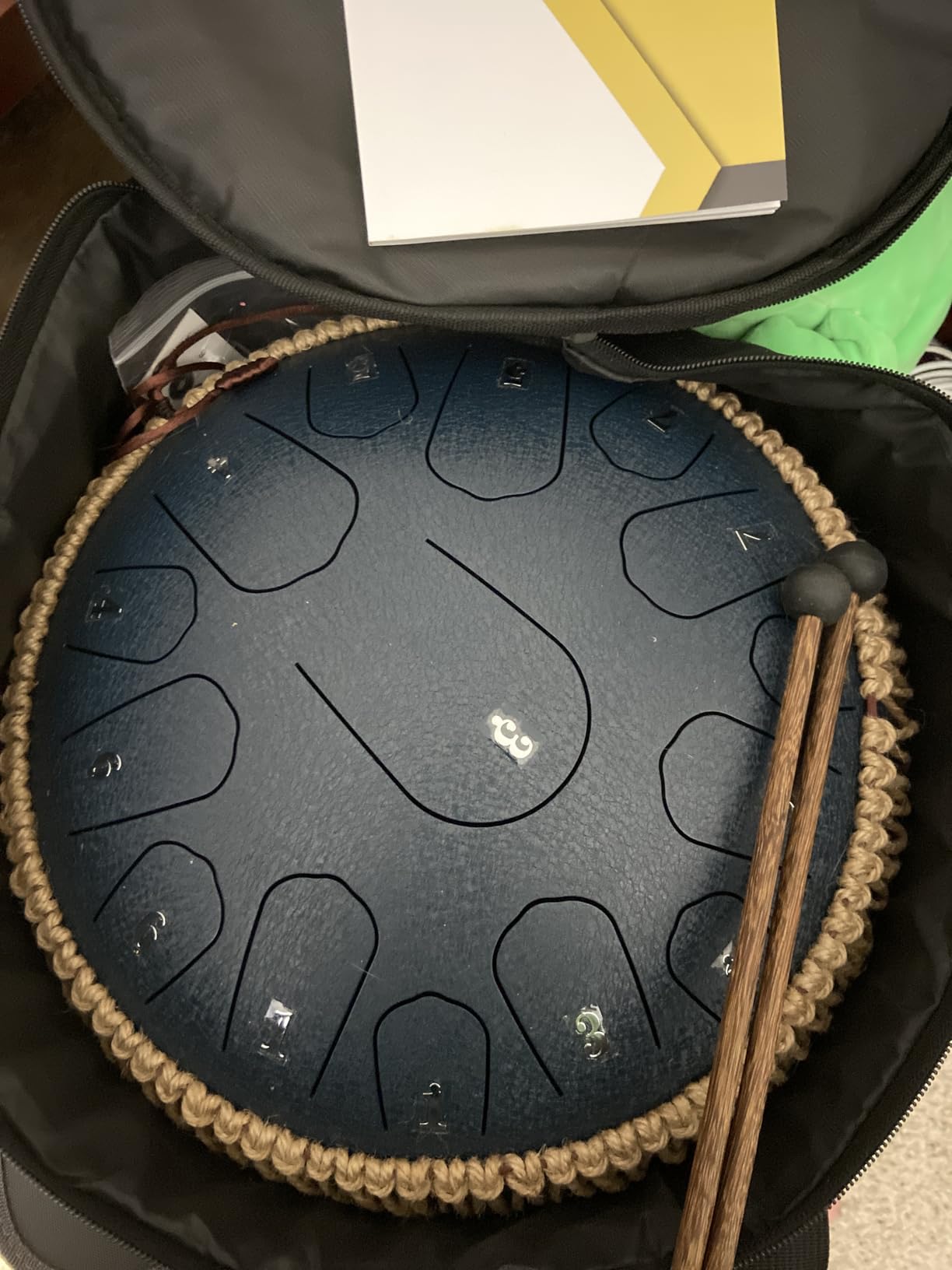
This is the drum I hand to friends who say they have no musical background. At 13 inches and 15 notes it is wide enough to feel substantial in the lap and to give you a real low note, but the tongues are numbered and the music book maps those numbers back to actual songs, so there is nothing to decode before you start.
Reviewers consistently describe a warm, relaxing D Major sound and a learning curve that is shorter than they expected. With a 4.7 rating across more than two thousand reviews, it is the best-proven drum in this group, and the best-seller ranking in Steel Drums reflects that volume of use.
The 5.7-pound weight is worth thinking about before you buy for a young child. It is portable with the case but it is not a lap drum for a five-year-old, and forum discussion about handpans and tongue drums keeps circling the same complaint about heavy units in the nine-to-twelve-pound range making long sessions uncomfortable.
Two honest weaknesses showed up repeatedly. The smallest tongues at the top of the layout carry less resonance, which is normal for any tongue drum at this size, and the included finger pads take real practice to get used to. The music book also lists notes as numbers instead of note names, so it teaches you this drum’s numbering rather than general music reading.
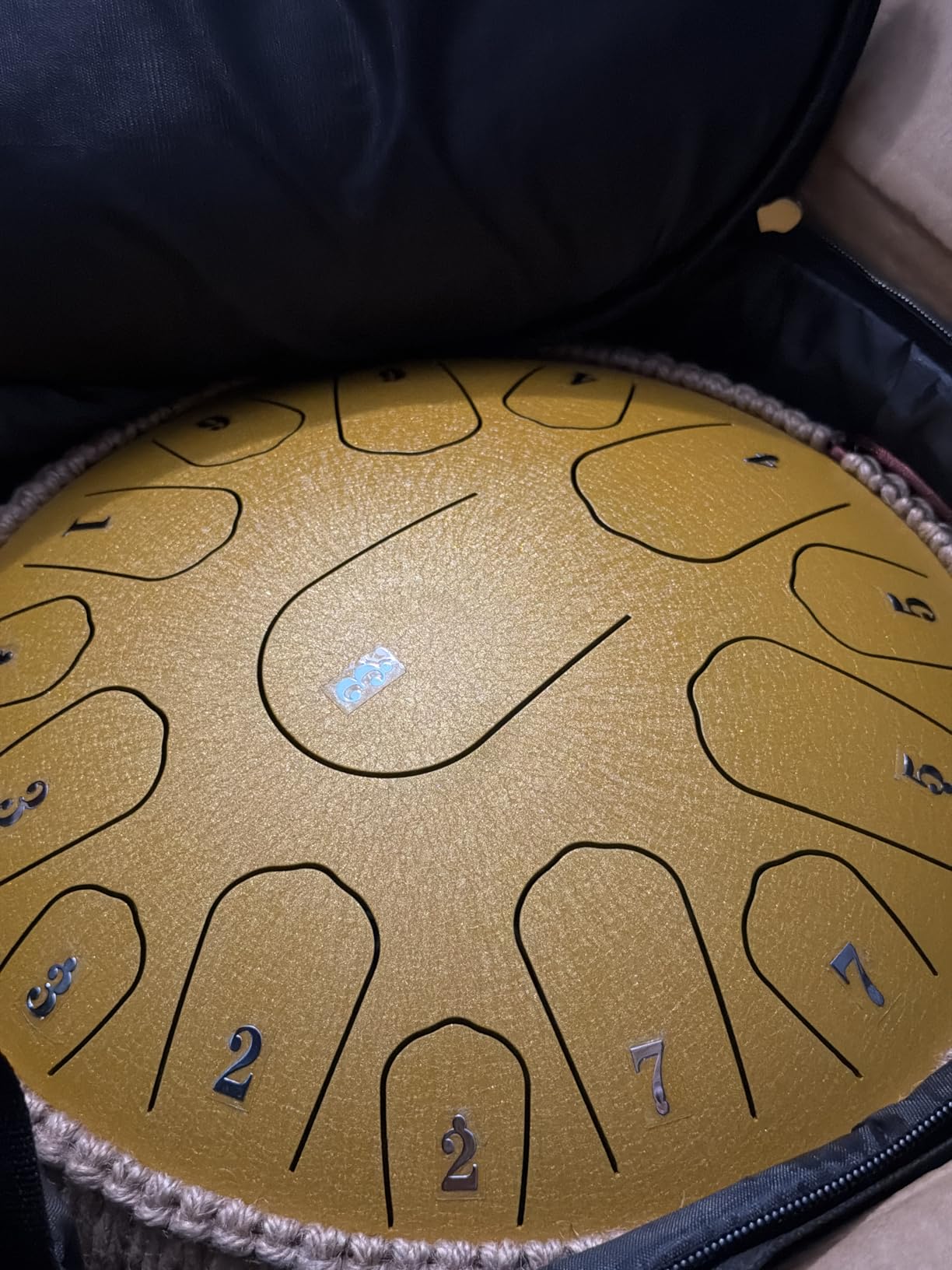
Check the note numbering before you learn songs
Numbered tongues are the reason this drum is beginner friendly, and they are also its most common confusion point. The dots on each tongue mark whether it sits low, middle, or high in the scale, and beginners routinely read those dots as sharps and flats. Learn that the dots mean register, not accidentals, and the rest follows naturally.
Worth it if you want a second instrument later
Because it is tuned to a single scale, this drum will not teach you chord progressions, but it will teach you rhythm, dynamics, and the habit of listening to intervals. Players who buy the 13-inch version tend to graduate to larger tongue drums or a handpan later, and reviewers on handpan forums describe exactly that progression.
2. REGIS 6 Inch 8 Note Steel Tongue Drum — Best for Outdoors and Travel
REGIS Steel Tongue Drum 6 Inch 8 Notes, Rain Drum Style Calming Percussion Instrument for Relaxation & Meditation, Musical Gift for Adults & Beginners(malachite)
6 inch 8 note rain drum style
Alloy steel body
1.6 pounds
Padded travel bag and mallets
Pros
- Deep tone from a very small shell
- Lightest and most portable drum here
- Built for outdoor rain drum use
- Bag and mallets included
Cons
- Eight notes limit the songs you can play
- Smaller than buyers often expect
- Seller states it is not for children under 14
The most common reaction to this drum is that it is much smaller than expected, and much better sounding than expected. At 1.6 pounds it is the only drum in this group light enough to genuinely carry around, and the padded travel bag makes it a bag-in-a-bag item rather than a floor instrument.
With over three thousand reviews at 4.5, it is the most thoroughly owner-tested drum here. Owners talk about surprising depth from eight cut tongues, and a large share buy it as a gift or set it up outside where rain drops on the shell produce the effect the product is named after.
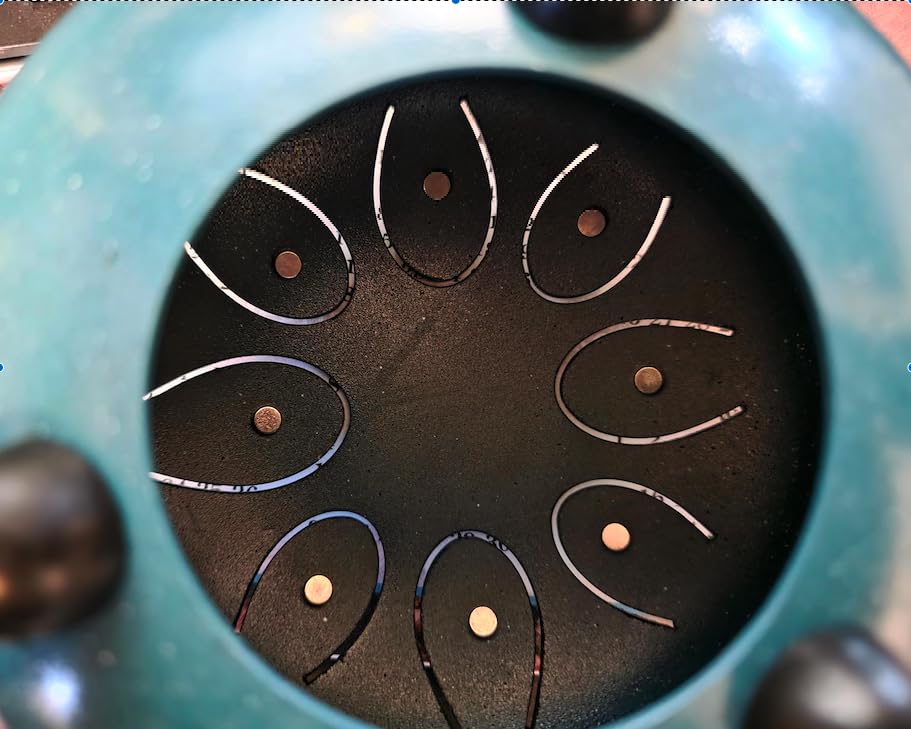
It is designed to withstand outdoor elements, which is a genuine claim rather than marketing language, and it is the cheapest legitimate entry into the category by a wide margin. That makes it a good first drum for an adult who wants to try the instrument without committing to a larger instrument.
The limitation is structural rather than a defect. Eight notes covers pentatonic melodies, rain drum patterns, and simple sound bath work, but it will not play the songs in a full music book. The seller also states the drum is not intended for children under 14, which is worth respecting if this is a gift.
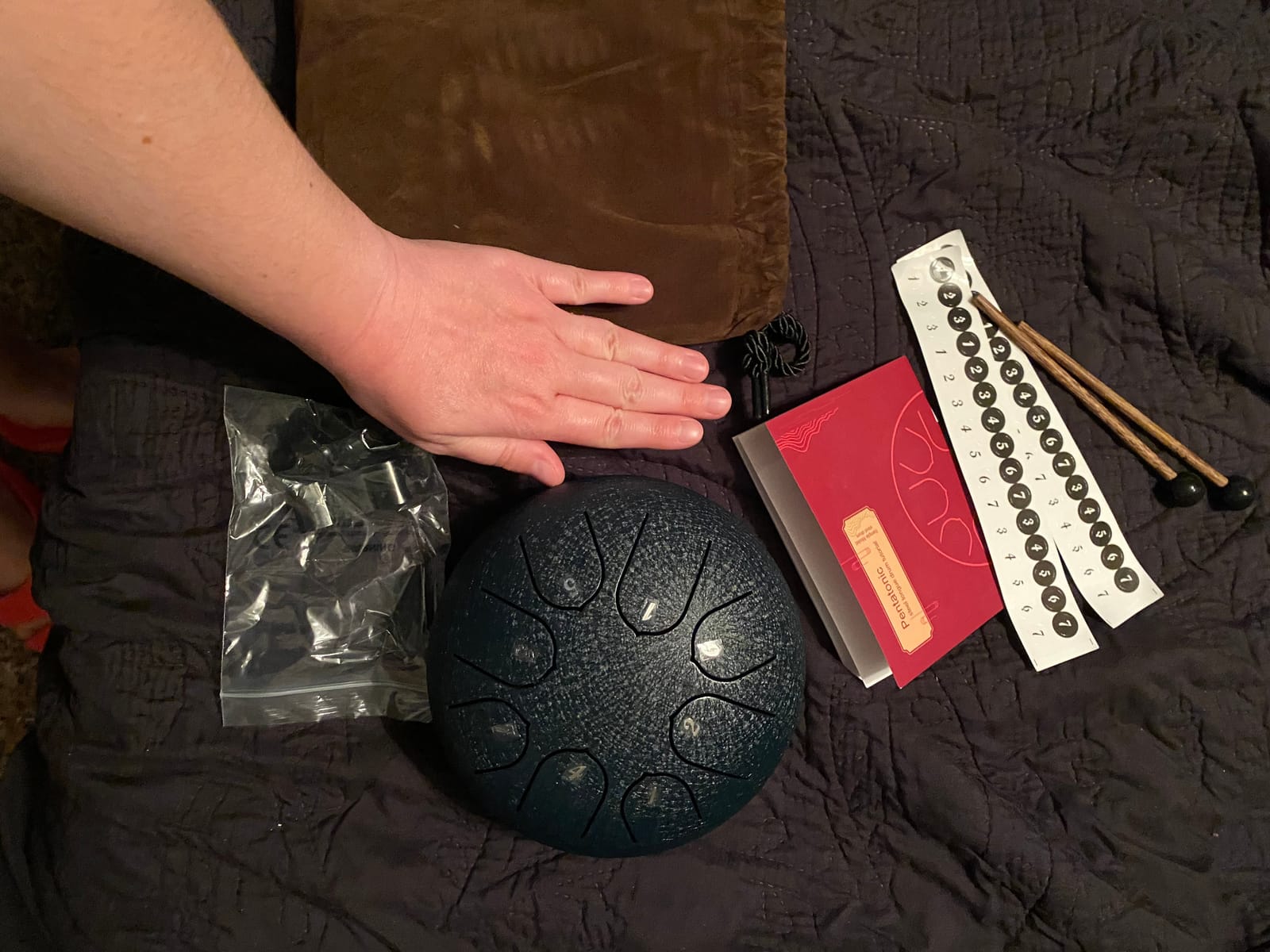
Know that it is a rain drum first
Buying this for music and being disappointed is the classic mistake. It was designed to sit outdoors and sound beautiful when water hits the shell, and that goal shapes the eight-note layout. If you want to learn songs, look at a 10-inch model instead.
Great travel companion, poor practice instrument
Because it packs small and weighs almost nothing, it works well in a car, a tent, or a bag on a flight. It does not develop your technique the way a larger drum does, since there are fewer notes to move between and less sustain to control.
3. AKLOT 10 Inch 11 Note Titanium Steel Tongue Drum — Best Value Kit
Steel Tongue Drum, AKLOT 10 inch 11 Notes Tank Drum C Key Percussion Steel Drum Kit w/Drum Mallets Note Stickers Finger Picks Mallet Bracket and Gig Bag
10 inch 11 note C key at 440 Hz
Titanium alloy body
2.2 pounds
Full accessory kit included
Pros
- Consistently in tune at standard 440 Hz
- Titanium alloy resists corrosion
- Ten inch size sits comfortably in the lap
- Most complete accessory kit in the group
Cons
- Finger picks produce little resonance
- A single tongue sometimes arrives flat
- Bottom plug does not always hold
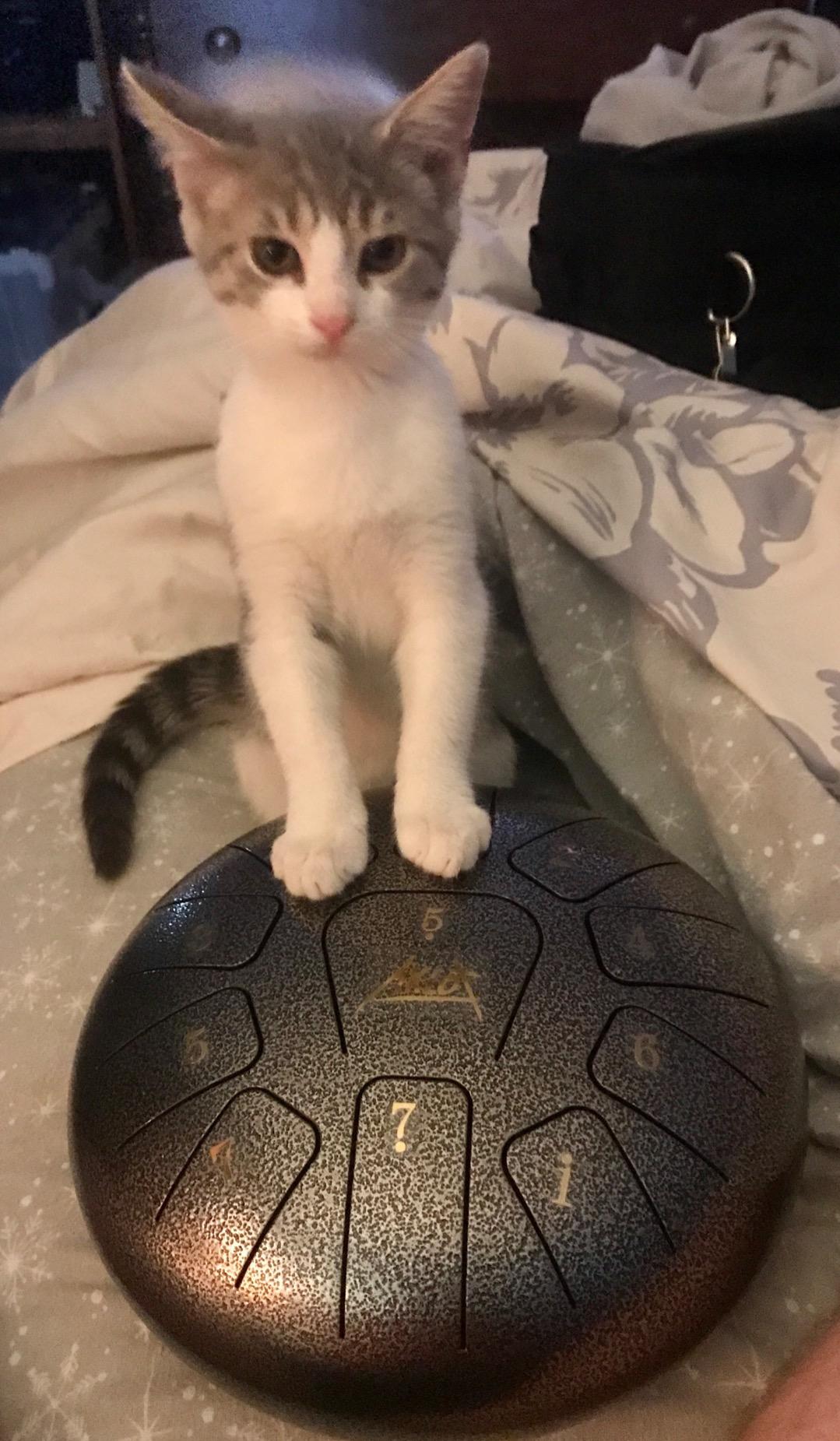
The AKLOT is the drum I recommend to anyone who wants the complete package without paying for the brand name. You get the drum, two mallets, a mallet bracket, six finger picks, note stickers, a music book, and a travel bag, and the 10-inch titanium alloy shell weighs only 2.2 pounds while sitting in your lap like a real instrument.
Tuning is the headline. Owners note the tongues come in tune in C at 440 Hz standard tuning, which matters more than it sounds: 440 Hz is the tuning most other instruments and every tuner app assume, so this drum sits inside an existing ensemble instead of fighting it.
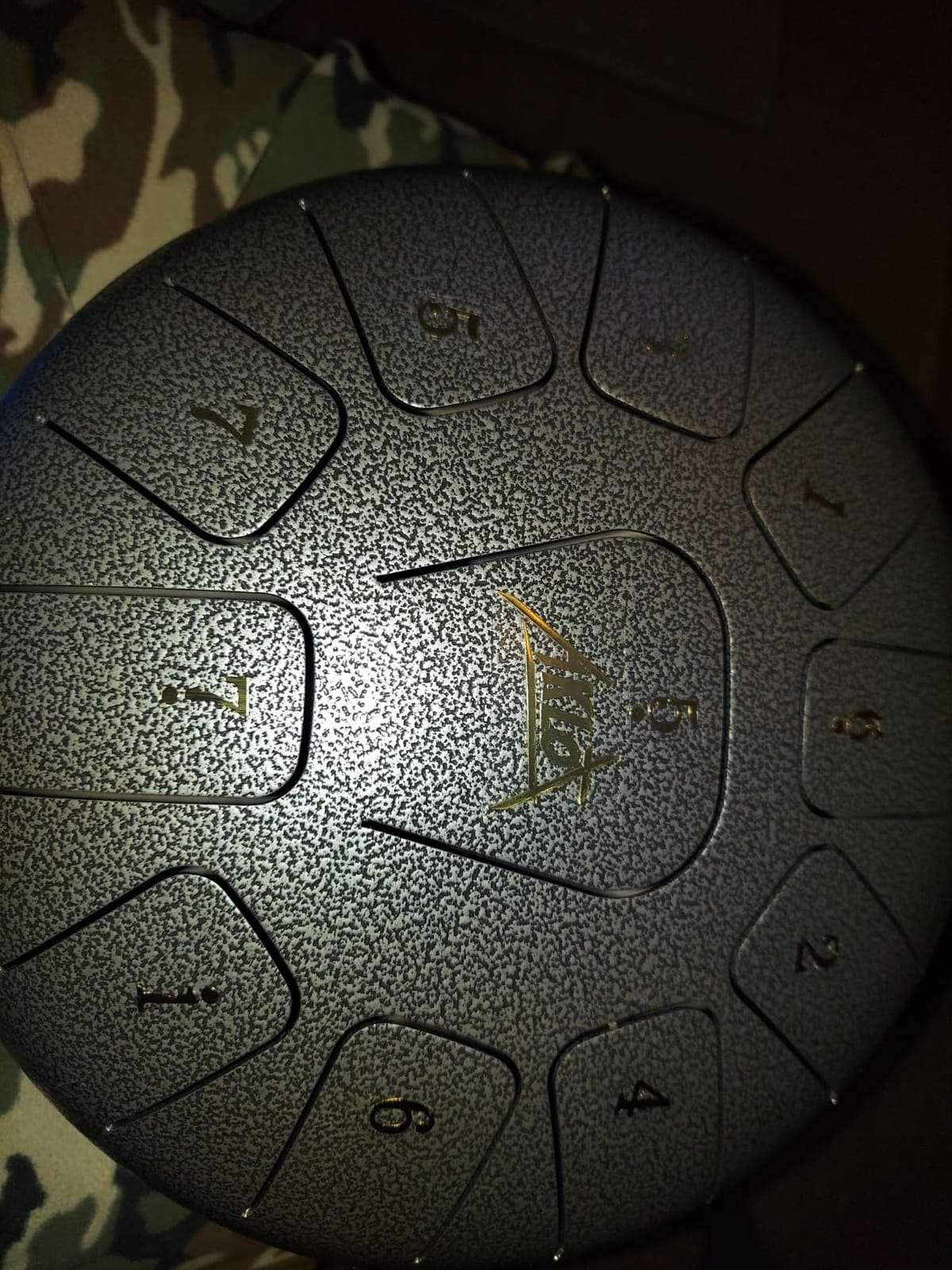
The same 440 Hz standard is worth understanding properly. Some tongue drums are tuned to 432 Hz, a slightly flatter reference used in sound healing circles, and a drum on one reference will sound wrong against an instrument on the other. Know which one you are buying before you plan to record or play with others.
A minority of owners report a single tongue arriving slightly out of tune, and some report a bottom plug that does not hold. Both are fixable or returnable issues, and both are worth checking in the first week rather than living with. The finger picks are the weakest part of the kit — the best tone comes from the mallets.
Why the titanium alloy shell matters
Titanium alloy is listed as stronger and more corrosion resistant than carbon steel, and for a beginner that means the drum tolerates humidity and hand contact better over years. It is the main reason this drum holds its tuning in a way that cheaper carbon steel models do not.
Check it is tuned to 440 Hz or 432 Hz
The listing says C key at 440 Hz standard tuning. If you plan to play alongside guitars, keyboards, or other tuned instruments, that reference is the one you want. Sound healers who pair two drums together will want to confirm the reference before combining them.
4. Yinama 11 Note 10 Inch Steel Tongue Drum — Best for Playing Together
Yinama Steel Tongue Drum Percussion Instrument 11 Notes 10 inches Black
11 tongues 10 inch diameter
Steel titanium alloy lacquered
5 pounds
Two mallet pairs and case
Pros
- Each tongue checked with a tuner before shipping
- Includes two mallet pairs so two people can play
- Well made padded double zip case
- Hard to play a wrong note
Cons
- Sound is smaller than on larger drums
- Song book is thin for beginners
- Mallet quality makes or breaks the tone
Yinema is the only drum on this list that includes two pairs of mallets, and that single detail changes who can play it. Two people can sit down and play together from the first session, which is a much faster way to learn than working through a book alone.
It is also one of the few mass-market drums where tuning consistency is part of the manufacturing claim rather than a hope. Each tongue is checked with a tuner for minimum pitch fluctuation, and owners confirm it usually arrives in tune. At 4.7 across more than a thousand reviews it holds its own with anything here.
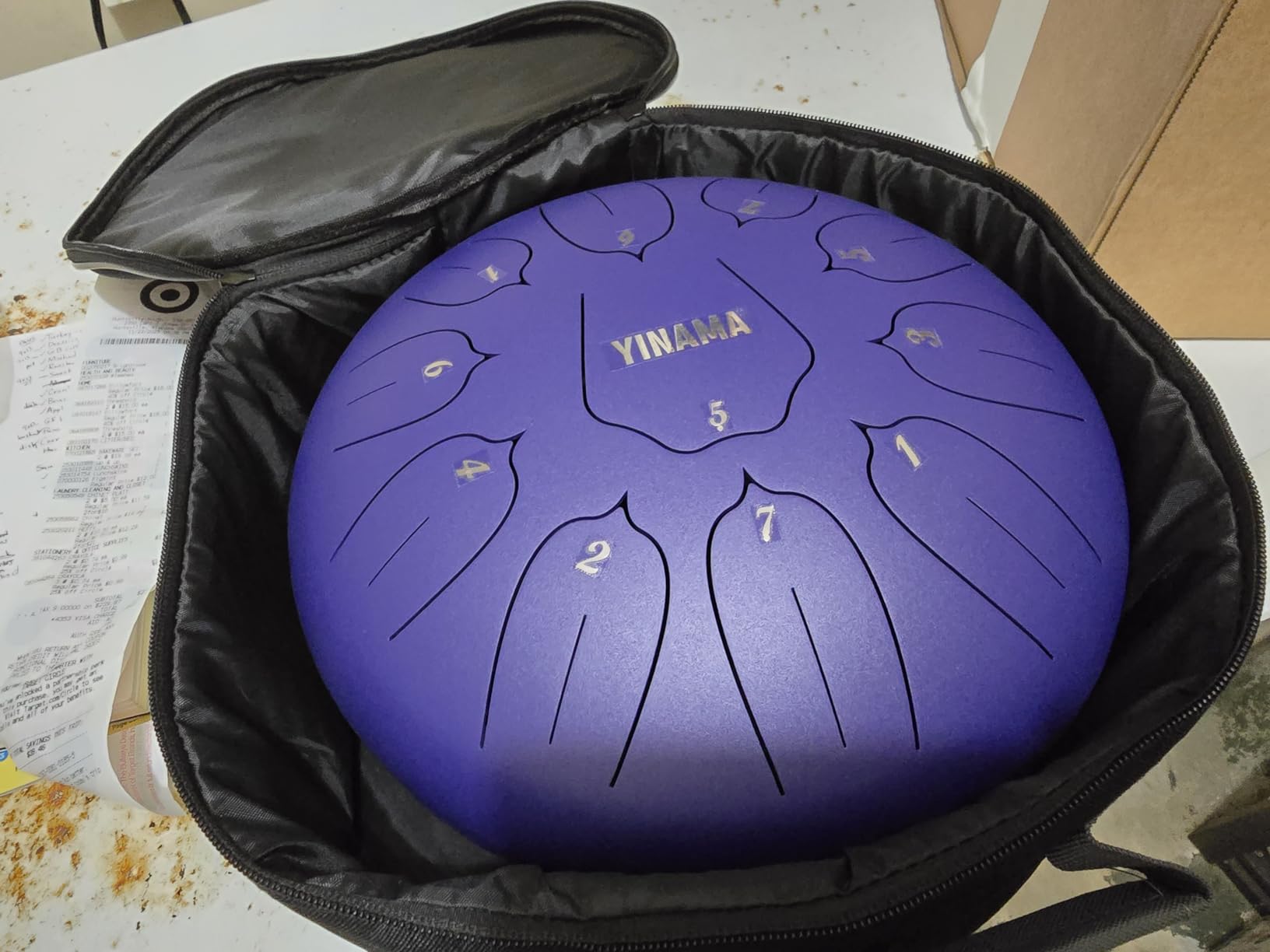
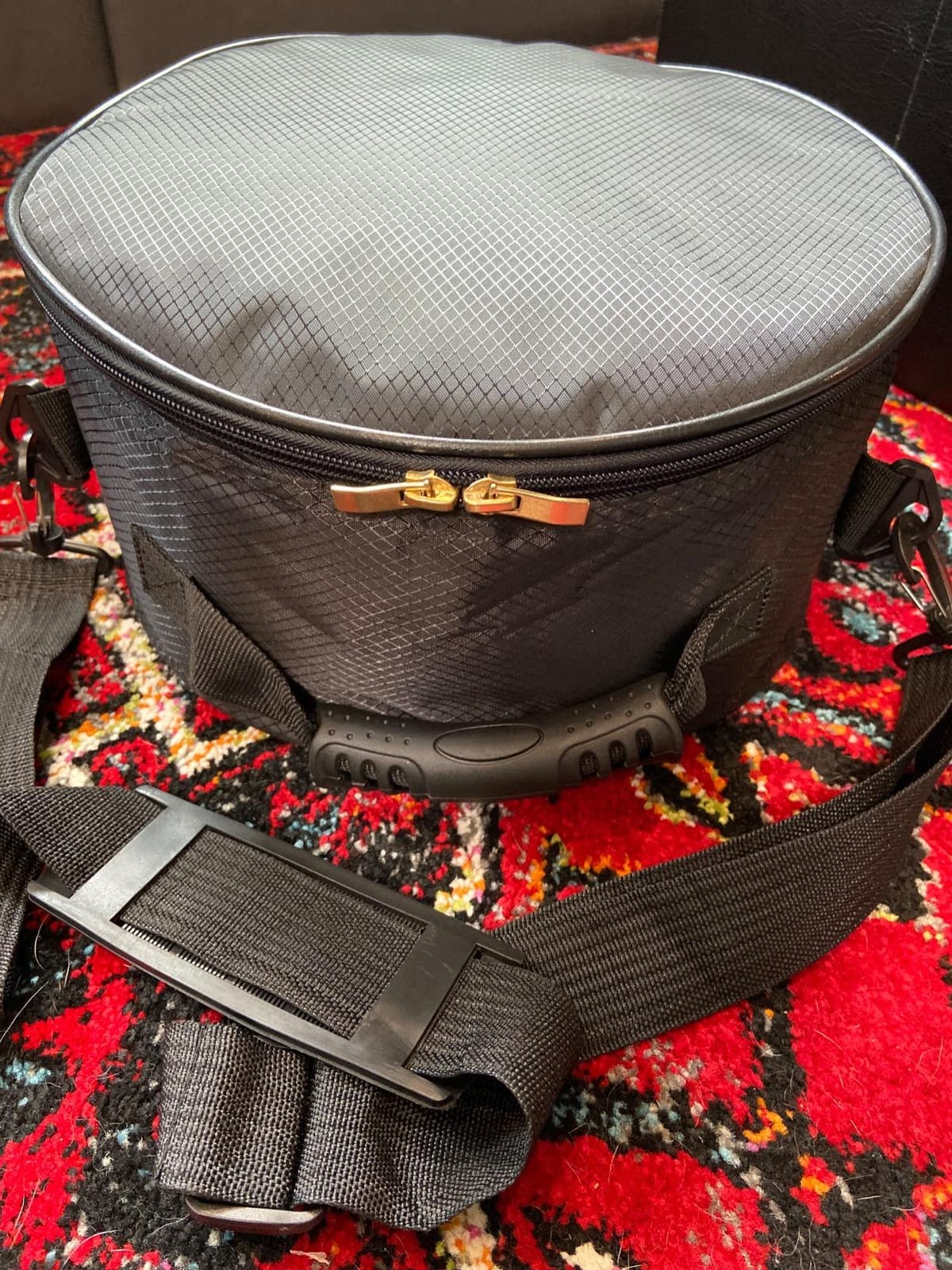
The build is a hand-made steel-titanium alloy body with a sprayed coating and a lacquered finish, finished in a lotus flower style that looks considerably more expensive than the drummers who own it. The padded double-zipped case with a handle and shoulder strap is the most substantial bag in this group.
Two cautions. At 5 pounds the sound is smaller and less resonant than a 13 or 14 inch drum, which is a fair trade for portability. And the included song book is thin enough that several owners recommend buying a separate one — a recurring theme across budget tongue drums rather than a fault specific to this model.
Mallets decide whether this sounds good or bad
Owners are blunt that a poor mallet turns this drum into a metal lid being hit. The bundled mallets are usable, but if the tone sounds harsh, buy a proper pair of rubber-tipped concert mallets before blaming the drum.
Two players, one drum, no lessons
Because every tongue belongs to one scale, two people can improvise over each other without clashing. That makes this the easiest drum here to hand to a partner, a child, or a music teacher who wants to demonstrate something in five minutes.
5. Sounds Of Silence 6 Inch 8 Note Drum — Best Steel Drum for Kids
Sounds Of Silence Steel Tongue Drum for Kids with Storybook and Songbook
6 inch 8 note tuned to 432 Hz
Alloy steel body
Ages 3 plus
Storybook songbook mallets and bag
Pros
- Calming tone suited to bedtime and quiet play
- Color coded characters and notes for ages 3 plus
- Light enough for a small child to hold
- Holds up to being thrown around
Cons
- Smaller than buyers expect
- Mallet heads come off easily
- Bundled mallets are very small
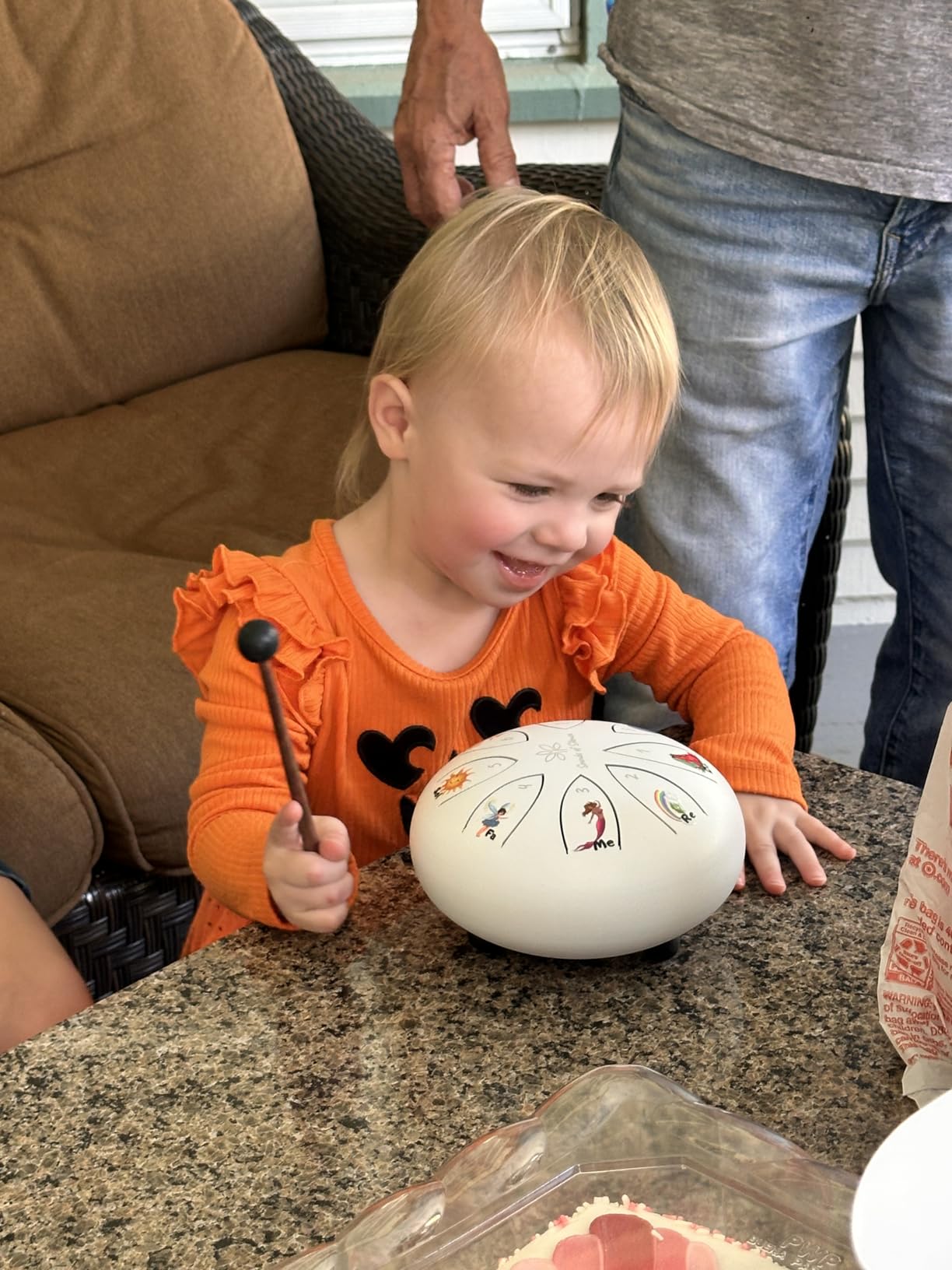
This is the one drum here built around a child rather than around an adult player. The clockwise tone scale layout is the key design choice: notes run around the shell in playing order, so a small hand lands on the next note in the melody instead of hunting for it.
Parents and grandparents describe the sound as genuinely musical rather than noisy, and several report it settling hyperactive toddlers at bedtime. The storybook and colour-coded songbook turn the drum into a shared activity rather than a toy a child abandons in a week.
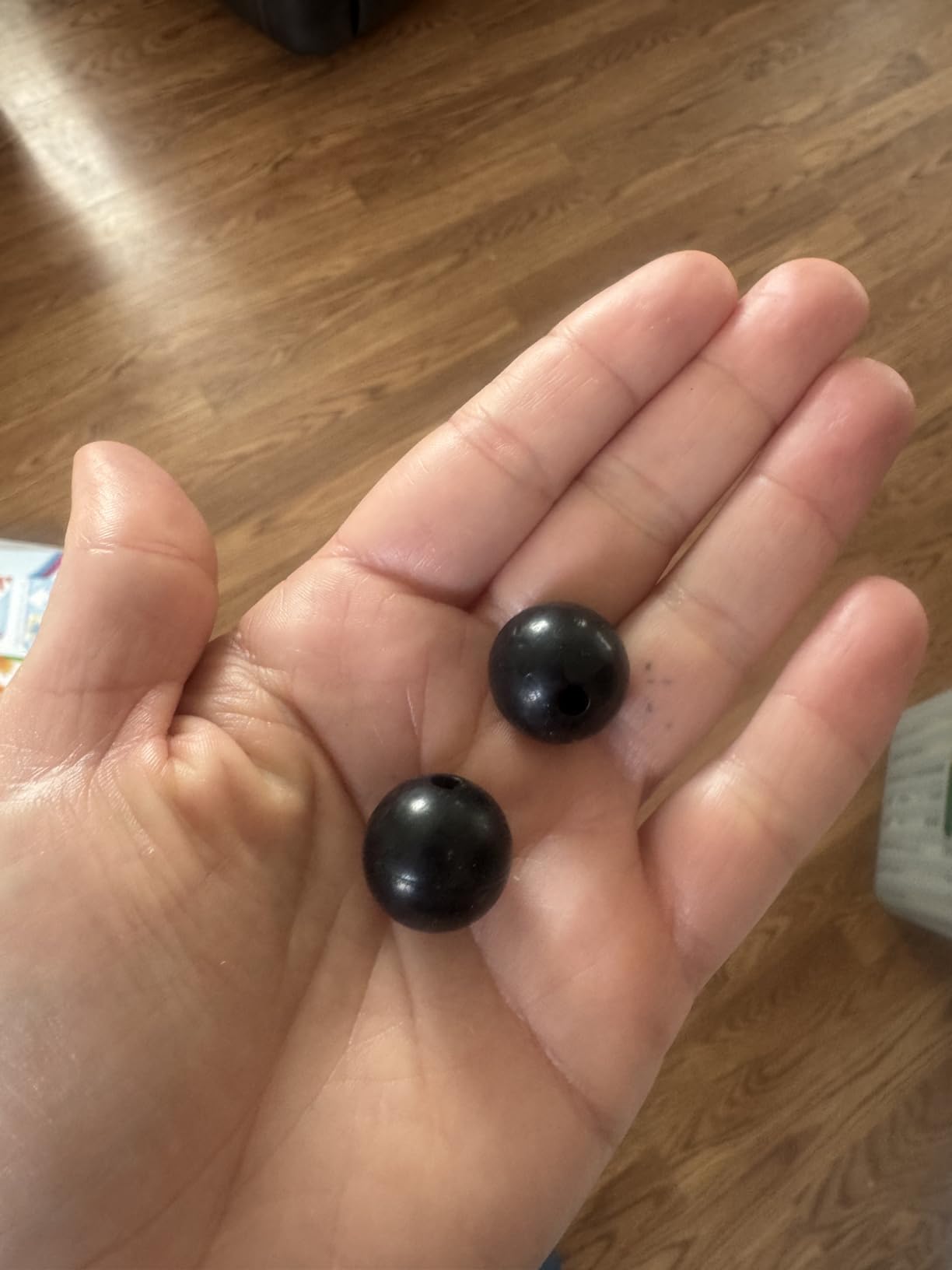
Size is the recurring surprise. At 6 inches this is a small object, and a number of buyers wish it were larger. It is also tuned to 432 Hz rather than the 440 Hz most music theory assumes, which is common in sound therapy and relaxation contexts and rarely an issue for a first instrument.
One safety note worth taking seriously: the mallet heads on this drum come off easily, and a detached small ball is a choking hazard for a toddler. That is a recurring complaint in the reviews. Supervise small children playing with any tongue drum, and keep the mallets out of reach of children under three.
Built for ages 3 and up, with supervision
The listing marks this for ages three and older, and the light 6-inch format is genuinely holdable by a small child. The detachable mallet heads are the caveat, so it works best with an adult in the room for the first few sessions.
Not a toy, and not a music course
What a child gets here is sensory enrichment, motor coordination, and an introduction to pitch. It will not teach reading music, and after a year many families move up to a 10-inch drum. Treat it as a first step rather than a final instrument.
6. Panyard Jumbie Jam Tabletop Steel Drum Kit — Best Authentic Caribbean Pan
Panyard JJ Jumbie Jam Steel Ready to Play Kit-Silver G-Major with Table Top Stand-Made in USA (W1084)
One octave 16 inch steel pan kit
G Major with lettered notes
Made in the USA
Table top stand and case
Pros
- Authentic Caribbean tone from a specialist maker
- Ready to play kit with stand and case
- Compact tabletop footprint for seated play
- Note letters marked for song books
Cons
- One octave limits the melodies you can play
- Bundled mallets are basic
- Costs well above tongue drum options
If what you actually want is a steel pan rather than a tongue drum, this is the honest answer. The Panyard Jumbie Jam is a real Caribbean steel pan, professionally tuned, made in the USA by a family-owned specialist, and it sounds like an instrument rather than an imitation of one.
The pitch is a bright, authentic G Major, and note letters are marked on the pan to match the song books, so reading music is not required. Owners call it a satisfying step up from toy steel drums, and it is genuinely the only instrument on this list that is not a tongue drum.
What you give up is range. One octave is a limited set of melodies, and it means learning calypso and Caribbean material by ear and by letter rather than by playing long tunes. The steel pan demands more from a beginner than a tongue drum, which is exactly why most people who want the sound start with a tongue drum instead.
The tabletop metal stand is included and keeps the pan stable for seated play, and the kit ships with a carry case, so storage is not a problem. The bundled mallets are the weak point — reviewers call them basic compared with aftermarket pairs.

Know that a steel pan is a harder first instrument
A steel pan is a real drum with real note intervals, so a beginner needs to learn where the notes are. That is a bigger ask than a tongue drum, where every option already harmonises. Budget months rather than an afternoon, and consider a teacher or a school programme.
Table stand or floor stand?
This version includes a table top stand, which suits seated play at a desk or dining table and takes up almost no floor space. If you want to stand and play, the floor stand version is the one you want instead, and it is covered separately below.
7. Yasisid 12 Inch 15 Note Steel Tongue Drum — Best for Yoga and Meditation
Rain Drum for Outside Garden,Steel Tongue Drum 12 Inches 15 Notes Musical Instruments, Handpan Drum Percussion Instrument, with Soft Bag, Music Book, 2 Mallets, for Meditation or Yoga (Green)
12 inch 15 note C key
Carbon steel with round cavity
1 pound
Seven piece accessory set
Pros
- Long ethereal sustain from the hollow cavity
- Very light for its 12 inch size
- Soft carry bag makes it portable to sessions
- Bears pattern center tongue
Cons
- A few higher notes are slightly flat
- Finger sleeves weak compared with mallets
- Not tuned for a trained ear
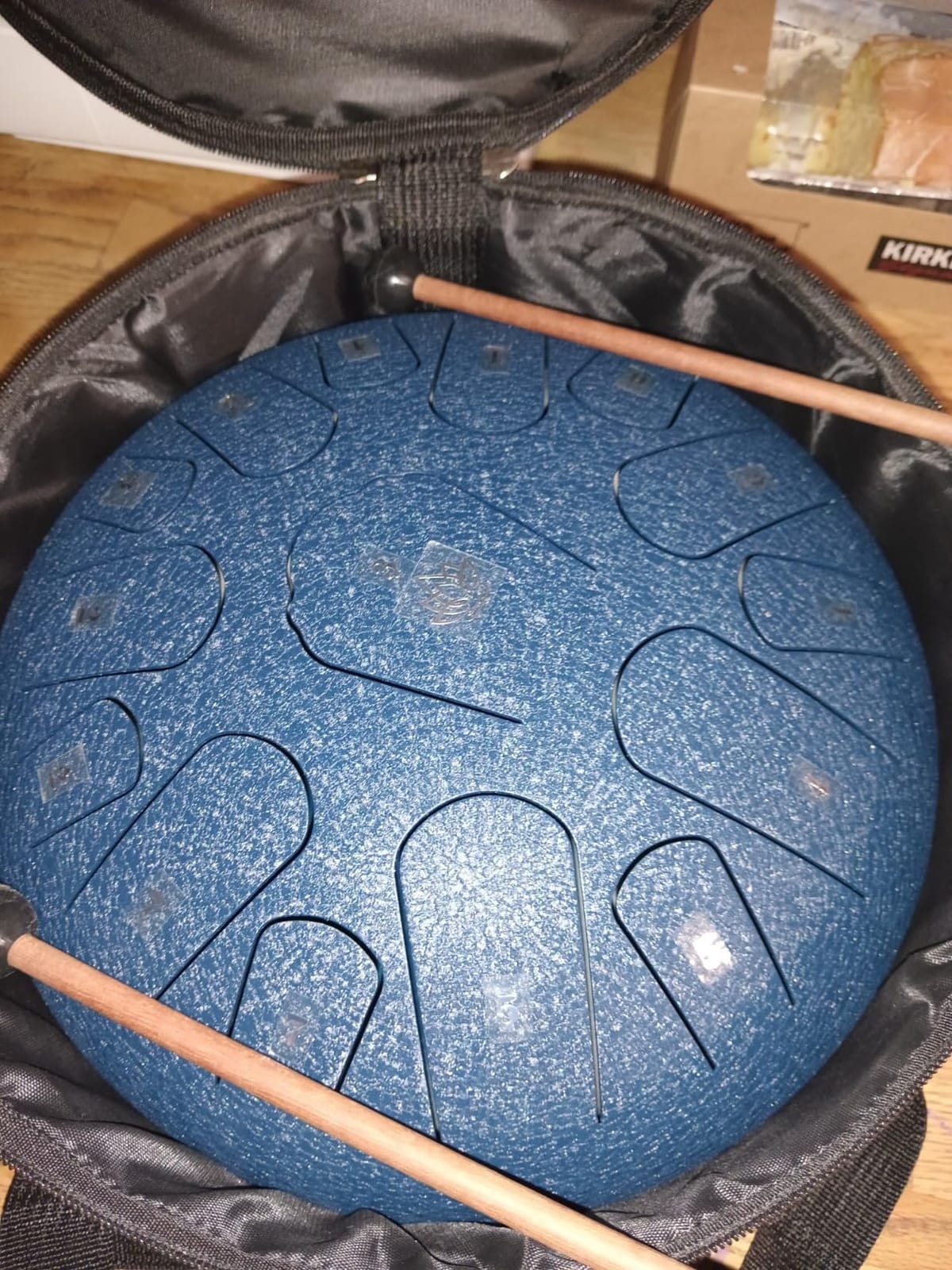
The 12-inch Yasisid is built around sustain, and the round smooth hollow cavity inside the shell is what produces it. The sound profile is described as ethereal, closer to a wind chime than a percussion hit, which is precisely what you want for a yoga or sound bath setting where long ringing notes matter more than rhythm.
At one pound it is remarkably light for a 12-inch drum, so carrying it to a studio or a class is not a chore. The included set is generous: two drumsticks, a mallet bracket, two sets of note stickers, four finger sleeves, a music book, and a soft bag with a strap.
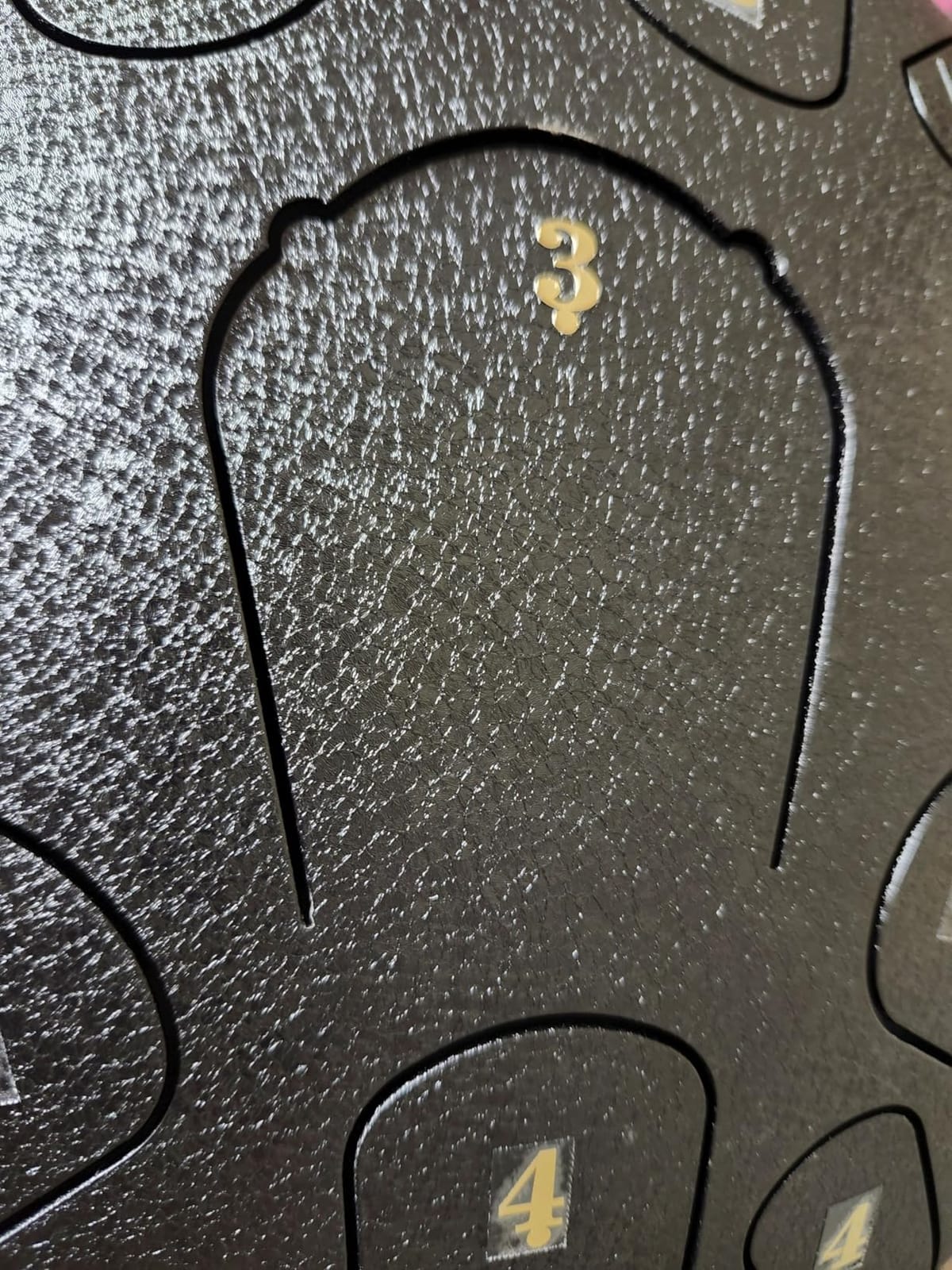
The note layout is a full 15-note C key range with treble, midrange, and bass tongues marked, which supports more song material than the smaller drums here. Owners also use it outdoors as a rain drum, and many bought it for meditation and report it suits that purpose.
The honest criticism comes from trained musicians, who report that one or two of the higher notes are slightly flat. That is inaudible in a meditation setting and very audible in a performance. The finger sleeves are the other soft spot — the mallets carry the sound, not the fingers.
Long sustain is the whole point
If you are playing for relaxation, the round cavity and 15-note layout make this the most meditative drum in the group. If you are chasing accurate pitch for practice or recording, look at a drum with per-tongue tuner checks instead.
Note the weight advantage
One pound for a 12-inch drum is unusual and it is the practical reason to pick this over a comparable size. Longer sessions and travel to sessions stop being a problem, and the soft bag with a strap is what makes that possible.
8. Panyard Jumbie Jam Steel Drum With Tube Floor Stand — Best for Classrooms
Jumbie Jam Authentic Steel Drum Steel Finish with Tube Floor Stand
One octave 16 inch steel pan
Height adjustable Z floor stand
8 pounds with stand
Beginner guide with play along audio
Pros
- Professionally tuned pan with a real instrument tone
- Height adjustable stand suits adults and children
- Beginner guide includes play along audio
- Tears down and packs into the carry box
Cons
- Stand is the weakest part and can break
- Base described as not very sturdy
- Only one octave of melodies
This is the same Jumbie Jam pan family as the tabletop kit, bundled with a height-adjustable collapsible metal Z floor stand instead of a table stand. That stand is the reason to choose it: it lets a teacher run a group session where adults and children of very different heights all play the same pan comfortably.
Note letters are marked on the drum to match the song books, so a classroom can be playing a song in minutes without anyone reading notation. The package includes a downloadable beginner’s guide with play-along audio, which is a genuinely useful teaching aid.
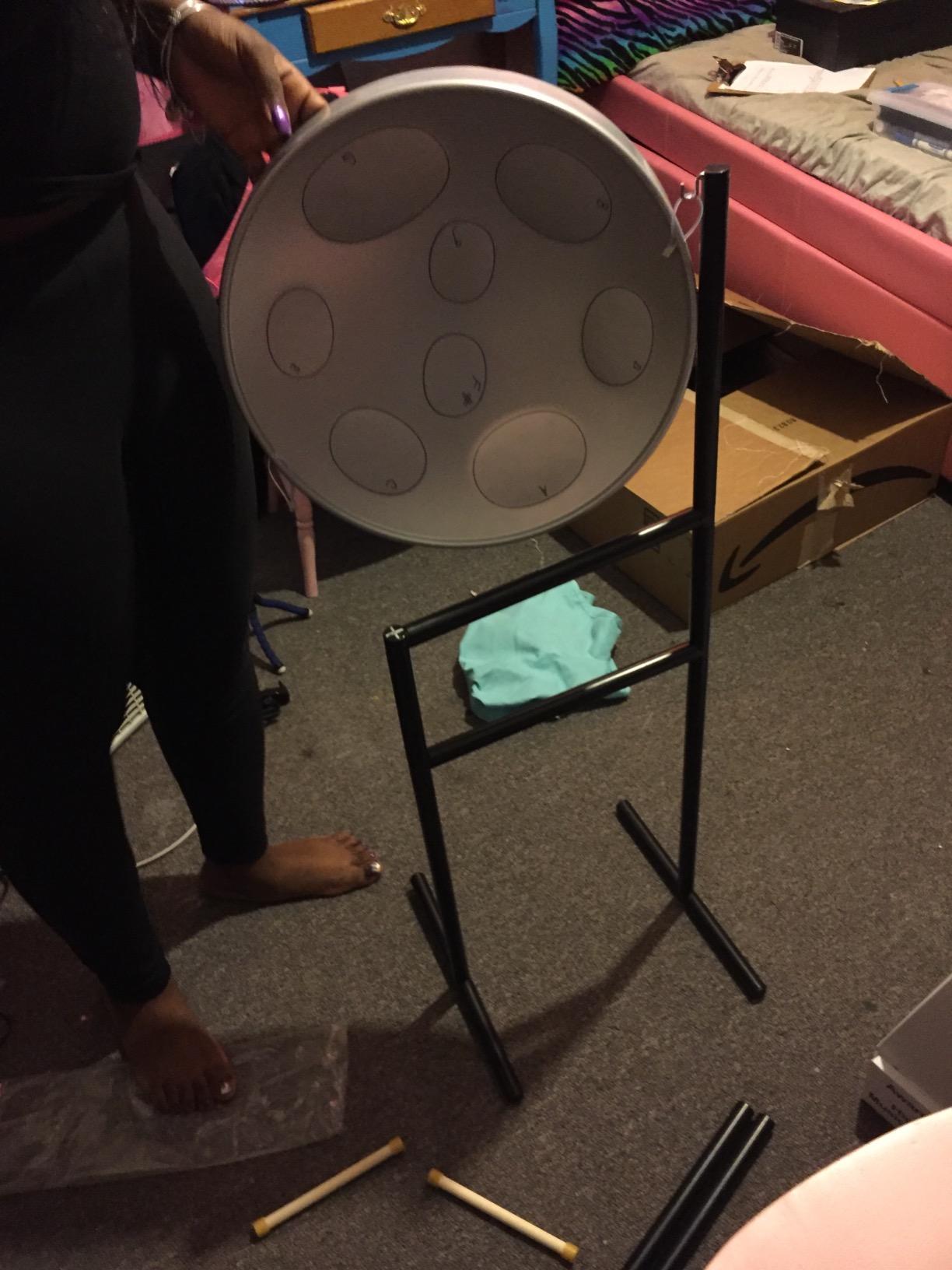
The pan itself is almost universally praised for tone and professional tuning, with users reporting children playing songs within minutes of unboxing. It is also rated for ages three and up and is used in classroom music education and music therapy settings, which is why it keeps showing up in school programmes.
The stand is the dominant complaint. Multiple reviews describe it as plastic feeling, flimsy, or breaking, and buyers report difficulty finding a replacement. This product carries the lowest average rating in the roundup at 4.4, and the rating reflects the stand rather than the drum.
Check the stand before you commit
At 8 pounds with the stand, this is a substantial object, and the height adjustment is what makes it usable across ages. Inspect the base and the locking mechanism on arrival, because that is the part most likely to disappoint you.
Best value route into a real steel pan
For a school, therapy practice, or family with more than one player, the free-standing format and the play-along guide are worth the extra weight. For a single player at a desk, the tabletop kit is the more sensible version of the same instrument.
9. Lidguni 14 Inch 15 Note Steel Tongue Drum — Best for a Warm Tone
Steel Tongue Drum – 14 Inch 15 Note Tongue Drum – Hand Pan Drum with Music Book, Handpan Mallets and Carry Bag, C Major, Green
14 inch 15 note C Major
Carbon steel with titanium alloy
7.3 pounds
Case songbook sticks and finger covers
Pros
- Rich warm tone several owners rate above pricier drums
- Very solid build quality
- Non musicians make music within minutes
- Carrying case included
Cons
- Note numbers are stickers rather than part of the finish
- Quality control varies between drums
- One of the highest shares of one star reviews
At 14 inches this is the largest tongue drum here, and the extra diameter is what produces the low note and the long sustain that owners describe as rich and warm rather than thin or tinny. Several buyers compare its tone favourably to instruments they have played in music shops for considerably more.
The body is listed as carbon steel with titanium alloy, hand crafted with a paint finish that does not fade. Fifteen notes in C Major is enough range for real melodies, and the included case makes it portable to gatherings even at this size.
The catch is consistency. Several reviews describe two tongues arriving noticeably out of tune, and this listing has the highest share of one-star reviews in the group at 6 percent. If you are buying a 14-inch drum, play every tongue the day it arrives rather than trusting the packaging or assuming every drum from this maker is identical.
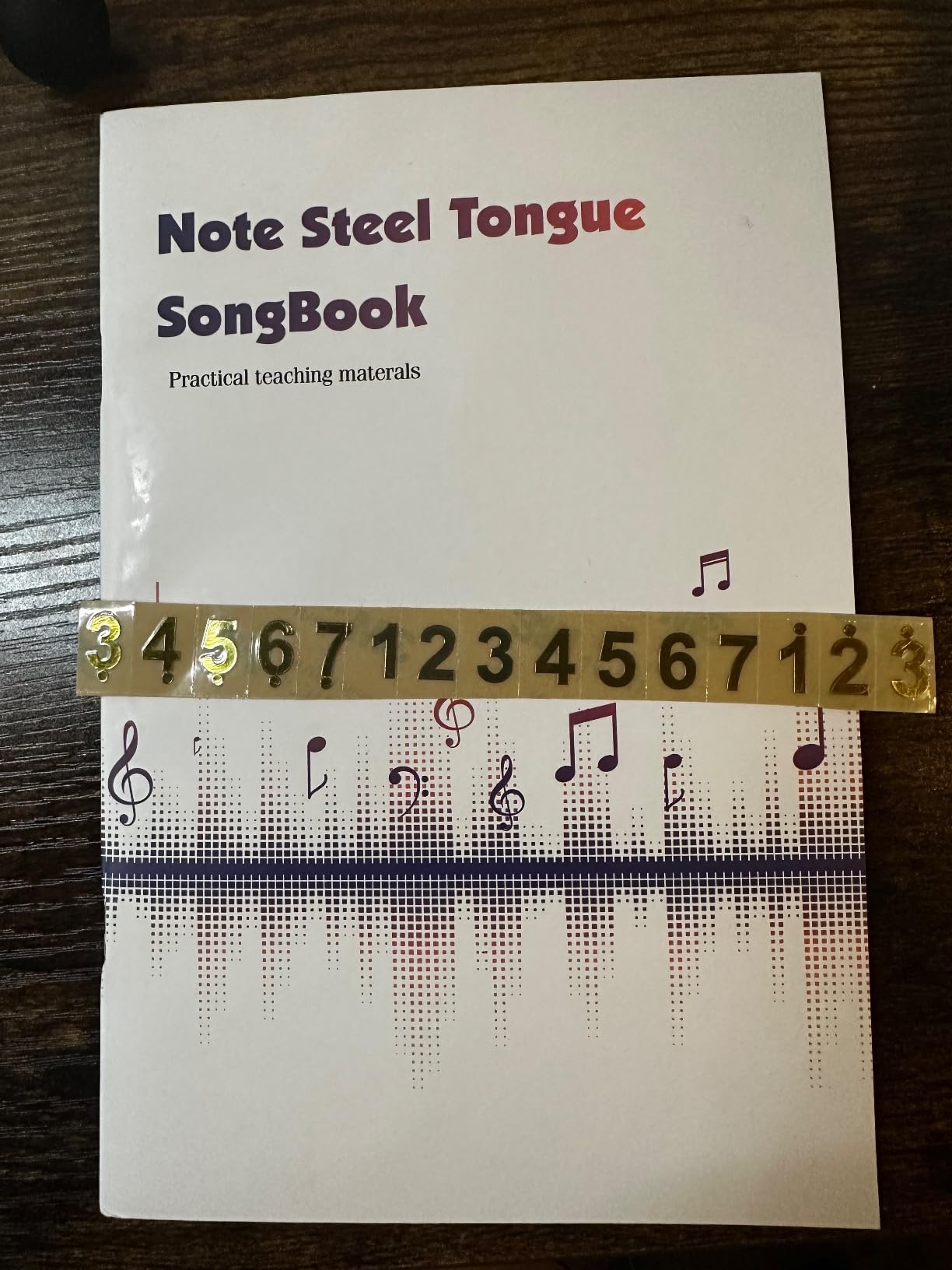
Weight is the other practical issue. At 7.3 pounds this is a two-handed object that will not sit comfortably in a lap, and reviewers who use it for long sessions describe it as stationary. The note numbers are also applied as stickers rather than etched, so they can lift with use.
Playtest every tongue on arrival
This drum’s single biggest risk is tuning inconsistency between units. Any tuner app will identify a flat tongue in under a minute, and knowing which tongues are off on day one saves you from blaming the drum for a scale that does not work.
Bigger is not easier for a beginner
A 14-inch shell needs a stand and a clear surface. The extra note range is a genuine advantage once you know the scale, but it does not speed up the first week, and the weight is a real barrier for a child or for long sessions.
10. Panda Drum Plus 11 Inch Steel Tongue Drum — Best for Sound Healing
Panda Drum Plus (Sandstone) | Steel Tongue Drum | 11 Inch | Calming Handpan
11 inch steel tongue drum
432 Hz tuning
Protective coating for indoor and outdoor
Lifetime warranty
Pros
- Sweet warm resonant tone without harsh reverberation
- Sturdy enough for children and adults
- Light enough for a young child to carry
- Backed by a lifetime warranty
Cons
- Tuning does not read clearly on tuning apps
- May not pair with 440 Hz or 432 Hz instruments
- Costs more than most tongue drums
The Panda Drum Plus is the one drum here built explicitly for therapeutic and meditation use, and the tone reflects that brief. Owners describe it as sweet, warm, and resonant, and specifically free of the harsh reverberation that makes cheaper tongue drums tiring to play for long stretches.
It produces deep hand pan-like tones the manufacturer compares to gongs, chimes, and marimba, which is a fair description of a 11-inch tongue drum at 432 Hz. A protective coating makes it usable indoors and out, and the lifetime warranty is the strongest guarantee in this group by a wide margin.
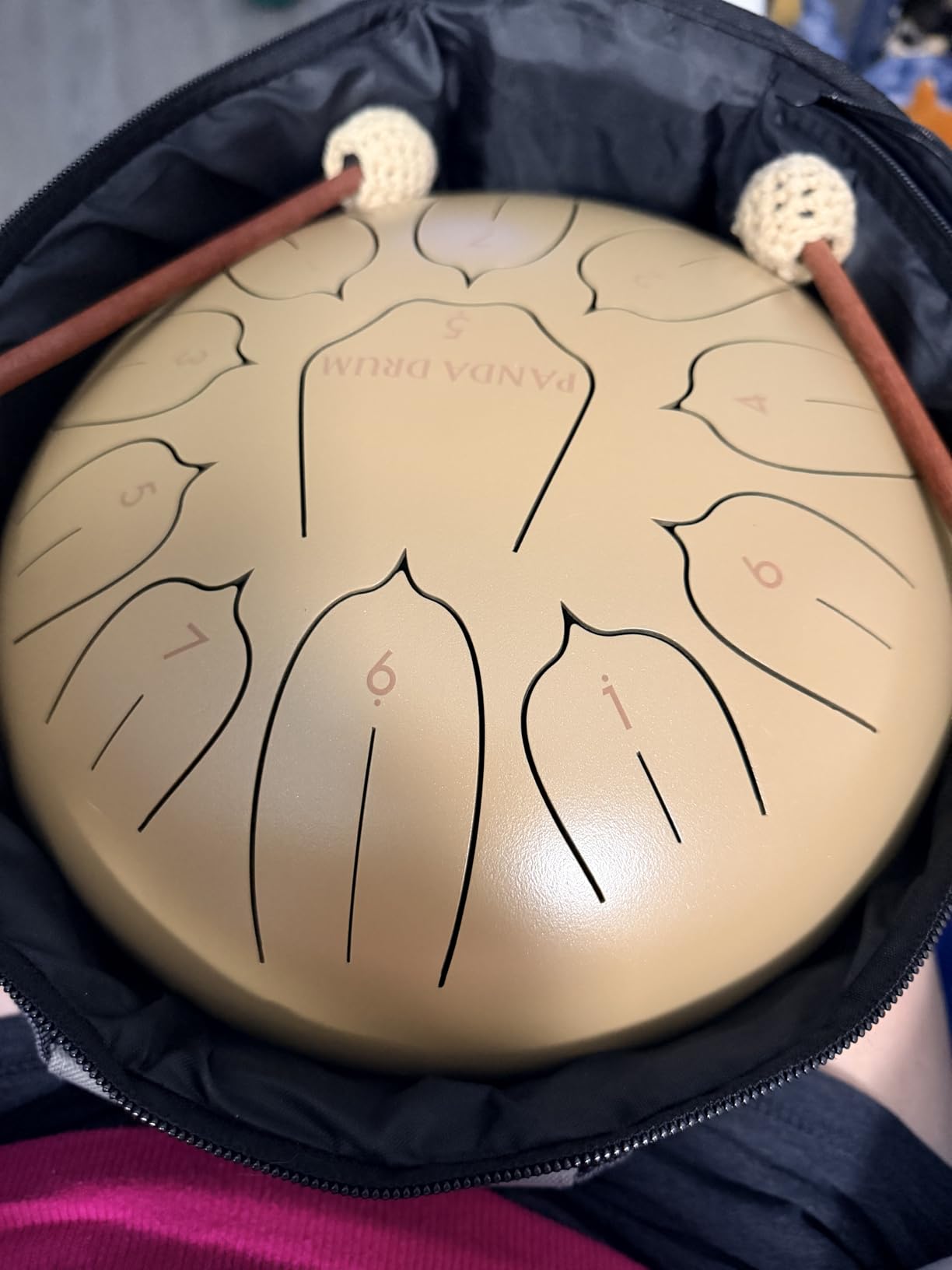
Here is the fact to know before you buy it. A professional sound healer reviewing this drum reports that its tuning does not match either the 440 Hz or 432 Hz reference instruments, which makes it hard to read on a tuner and hard to pair with other tuned drums in a session.
For solo meditation, that matters very little — nobody is playing alongside a reference pitch. For a sound bath where you combine two drums or match a singing bowl, it matters a great deal. The 4.7 rating is the highest five-star share in the group at 84 percent, and the criticism is specific rather than general.

Check your reference pitch before combining drums
If you plan to pair this with a bowl, gong, or another tuned drum, confirm the reference first. Tuning apps struggle with this drum, so you will need a physical tuner or the manufacturer’s specification rather than your phone.
Does the extra spend buy anything real?
The lifetime warranty and the coating are genuine differences, and the tone is the warmest on test. But you are paying well above the budget tier for a finish quality rather than a range quality, and a 10-inch drum at the entry tier will sound perfectly acceptable in a home practice.
Which Type of Steel Drum Should a Beginner Buy?
Three instruments get called a steel drum, and they are not interchangeable. Before comparing sizes or brands, decide which of these you are actually shopping for, because the answer rules out most of the list.
Steel tongue drum is what most people mean. Round shell, cut tongues, mallets or fingers, tuned to one scale so nothing you play clashes. Entry tier, portable, forgiving, and playable in five minutes. If you are unsure, this is the answer.
Handpan is a different instrument in the same family: hand-shaped dimples rather than cut tongues, more notes across multiple octaves, a far more demanding instrument to play well. One commenter on r/handpan put the price floor plainly — a decent handpan runs roughly a thousand dollars or more, with better quality well beyond that, which is exactly why tongue drums are recommended as the affordable on-ramp.
Caribbean steel pan is a bowl with chromatically tuned notes played with rubber-tipped sticks. It is the real cultural instrument, it sounds the way most people picture a steel drum, and it is a substantially harder first instrument. The two Panyard Jumbie Jam kits on this list are genuine steel pans.
One more myth worth killing early, because buyers discover it late: a tongue drum is tuned by cutting the tongues, which means you cannot retune it yourself if it drifts. A handpan can be tuned by a maker. Ask about the tuning reference before you buy, and if you will ever play alongside other instruments, buy something at 440 Hz.
Buyers on handpan forums describe the intent clearly — most are looking for the closest affordable substitute for an instrument they cannot yet justify. If that is you, a 10 or 11 inch tongue drum is the rational choice rather than a compromise.
How to Play a Steel Tongue Drum in Five Steps
Most beginners start by hitting the middle of the drum with the hardest mallet they can find, which is why they conclude the instrument is disappointing. A short sequence fixes that faster than any amount of reading.
Sit with the drum on your lap or a low table, and prop it up so it does not slide. A 10-inch drum is the most forgiving to hold this way.
Hold the mallets loosely near the tip, like holding a pen. Gripping tight kills the rebound and tires your hand.
Start on the lowest tongue and work upward around the circle, one note at a time, listening to the interval between each pair before you add rhythm.
Use the mallets for tone, fingers for accents. Owners across this group consistently report the bundled finger picks and sleeves produce far less resonance than the mallets, so play the drum with the mallets until your technique is solid.
Play two notes at once once single notes feel easy. A root plus a fifth is the first thing every beginner discovers, and it is where the “no wrong notes” promise really pays off.
If the sound feels harsh, the problem is almost always the mallet rather than the drum. Softer rubber tips change the character of the note completely, and a proper pair of concert mallets costs very little.
Care, Rust, and Outdoor Use
Steel tongue drums are tolerant instruments, but they are not weatherproof in the way a rain drum is. The 6-inch REGIS is explicitly built for outdoor use, and the Panda Drum Plus has a protective coating for it, which is the language to look for when a listing mentions outdoor play.
Can you leave a steel tongue drum in the rain? Not as a habit. A light shower is not the problem, but standing water, morning dew, and salty coastal air will eventually mark the surface, and the note stickers are the first casualty. Bring it inside, dry the shell with a cloth, and let it air fully before you put it in its case.
Two habits cover almost everything. Wipe the shell after playing if your hands are damp, and store the drum somewhere with airflow rather than sealed in a bag while it is still warm — a padded case traps moisture against the metal and encourages spotting at the rim, which is the most common cosmetic complaint in this category.
Temperatures matter more than most buyers expect. A drum that spends a winter in a cold garage and then warms up quickly can shift pitch, and because you cannot retune it, that shift is permanent until the tongues are cut again.
If rust spotting appears, a metal polish and a light coat of oil will bring the surface back, but check the tongues and the rim first — those are where buyers most often report spotting on arrival, especially in humid climates.
Buying Guide: How to Choose Your First Steel Drum
Start with size, because it changes the character of the instrument more than any other spec. Six-inch drums are light, portable, and limited; 10 and 11-inch drums are the general-purpose sweet spot; 12 to 14-inch drums add a real low note and long sustain at the cost of weight and a stand.
Note count is the second decision. Eight to eleven notes is genuinely beginner friendly. Fifteen notes gives you a fuller scale and more song material, but there are more tongues to learn the layout of. Pentatonic layouts have fewer awkward intervals, so a pentatonic 15-note drum is often easier than a diatonic one with fewer notes.
Material is the third. Carbon steel is the commonest and the cheapest. Stainless steel and stainless-titanium alloy resist corrosion and hold pitch better. Nitrided steel is a further step up in surface hardness. If you live somewhere damp or you plan to play outdoors, pay for the alloy or coating.
Tuning reference is the decision people forget. 440 Hz is the standard and plays well with other instruments. 432 Hz sits slightly flat and is common in sound healing. Some drums, like the Panda Drum Plus, do not read clearly on either, so check before you combine instruments.
Then be honest about price tiers. Below the entry band you are buying a thin alloy shell and a thin bag. The mid band is where 10 to 12 inch titanium alloy drums with full accessory kits sit. Above that, you are paying for handmade construction, corrosion protection, and warranty rather than for extra range.
Accessories matter more than buyers expect. The bundled kit — mallets, bag, note stickers, music book — is the part people mention most, and a drum that arrives with a decent case and a usable music book feels complete. A drum that arrives with a flimsy bag and a two-page song book feels broken, even when the instrument is fine.
Finally, the arrival checklist. In the first week, play every tongue, check the rim for rust spotting, confirm the note stickers are attached, and test the bag zip. Tongue drums cannot be retuned by the player, so a dead or flat tongue found early is a return, and a dead tongue found in month three is a permanent disappointment.
If you are buying for a different reason than music — a kid, a therapy practice, a garden feature — the decision changes again. Just make sure the drum you pick is the one built for that job rather than the one with the most notes.
One last comparison worth making before you commit: how a steel tongue drum compares with a stainless steel growler or any other stainless steel item you may be shopping for. Same material family, completely different category. Our steel target roundup covers the other end of the steel spectrum.
Frequently Asked Questions
What is the best steel drum for beginners?
The HOPWELL 13-inch 15-note tongue drum is the most beginner-friendly pick in this roundup. It is tuned to D Major, weighs 5.7 pounds, and numbers every tongue to match the included music book, so you can play songs without reading notation. Its 4.7 rating across more than 2400 reviews is the strongest track record here.
What is the easiest drum to play for beginners?
A steel tongue drum is the easiest, because every tongue is tuned to a single scale such as C major or D Major. That means almost any note you strike harmonises with the rest, so a total beginner can play immediately. A Caribbean steel pan is much harder because its notes are chromatic and you must learn where each one lives.
Is a tongue drum a better choice than a handpan?
For a beginner, yes. A handpan has hand-shaped dimples rather than cut tongues, spans more notes and octaves, and is a far more demanding instrument, with an entry price of roughly a thousand dollars or more. A tongue drum covers the same relaxation and melodic role for a fraction of the cost, and is the recommended on-ramp on handpan forums.
What is the best material for a tongue drum?
Stainless steel and stainless-titanium alloy are the best materials for a first drum, because they resist corrosion, tolerate damp hands, and hold pitch longer than plain carbon steel. Carbon steel is fine indoors on a shelf. Nitrided steel goes further still. The AKLOT 10-inch on this list is a titanium alloy shell at standard 440 Hz tuning.
Can you leave a steel tongue drum in the rain?
Do not make it a habit. A light shower will not hurt, but standing water, dew and salty air will spot the shell over time, and the note stickers lift first. Bring it inside, dry the surface, and let it air out before storing it. Drums sold explicitly as rain drums, such as the 6-inch REGIS, are built for standing water and are the exception.
How do I choose the right steel tongue drum for me?
Pick 10 or 11 inches for a first drum, choose 8 to 11 notes if you want the gentlest learning curve and 15 if you want a fuller scale, then confirm the tuning reference. Buy 440 Hz if you will play with guitars or keyboards and 432 Hz if you are pairing bowls for sound healing. Buy the mallets and case you will actually use.
Which brand of tongue drum is considered the best?
Review volume is the most honest quality signal in this category, and the highest-rated listings with the most owners are the HOPWELL, AKLOT, REGIS and Yinama drums covered here. Hand-made and USA-made makers such as Panyard command a premium that buyers treat as a quality marker. Ratings and review counts tell you more than brand name alone.
The Steel Drum We’d Buy First in 2026
If you want one recommendation from this roundup, it is the HOPWELL 13-inch 15-note tongue drum. The 4.7 rating across more than two thousand reviews, the numbered tongues matched to a music book, and the 5.7-pound weight make it the most forgiving place to start, and it costs a fraction of what a real handpan or a larger steel pan requires.
Buy a 10-inch AKLOT if you want the largest accessory kit and a titanium alloy shell, and buy a Panyard Jumbie Jam kit if what you actually want is a Caribbean steel pan rather than a tongue drum. Either way, play every tongue in the first week — a tongue drum cannot be retuned by the player, so what arrives is what you get.