
The best mini split air conditioners for bedrooms are the Senville LETO 12000 BTU, the COSTWAY 12000 BTU, and the ROVSUN 9000 BTU. All three run on 115V power, carry inverter compressors, and publish indoor sound ratings low enough to sleep next to, while the Senville and COSTWAY pair their quiet running with the two largest review bases in this group.
That last point matters more than it sounds like it should. Bedroom cooling is a noise decision before it is a capacity decision, and the only way to know how a unit behaves at 3 a.m. is to read what people said after living with it. We went through the full review history on all ten systems in this roundup, pulled their published decibel figures, and sorted them by what actually keeps a sleeper happy.
A ductless mini split is a split-system air conditioner with one outdoor condenser linked to one or more wall-mounted indoor heads by a small refrigerant line set, and no ductwork anywhere. The compressor sits outside, which is the single biggest reason it beats a window unit in a sleeping room. Homeowner forum threads describe the tradeoff the same way: you give up the portable unit you can drag from room to room, and you get zone control, a remote you can reach from the pillow, and a machine whose loudest part is on the other side of the wall.
If you are still weighing portable and window options, our window air conditioner picks for bedrooms covers the cases where a mini split is overkill. If you want the whole-home picture rather than one room, our mini split guide for homes covers multi-zone layouts. This guide stays on bedrooms.
Top 3 Mini Split Picks for Bedrooms in 2026
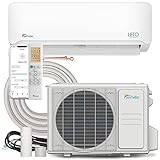
Senville LETO 12000 BTU
- Alexa and app control
- 4-in-1 cooling heat dehumidify fan
- DC inverter 20.8 SEER
- 16ft pre-charged line set
- 5 year parts and compressor warranty

COSTWAY 12000 BTU
- 23 dB indoor rating
- Five modes and four fan speeds
- Inverter compressor
- Self-cleaning and washable filter
- 5 year parts 8 year compressor

ROVSUN 9000 BTU
- 9000 BTU for rooms up to 450 sq ft
- 20 SEER inverter compressor
- 28 dB low fan operation
- Wi-Fi app plus Alexa and Google Assistant
- 16.4 ft pre-charged line set in the kit
Best Mini Split Air Conditioners for Bedrooms in 2026
Every unit below runs on standard 115V household power, so none of them force a 230V circuit upgrade. The decibel figures are manufacturer-published indoor low settings, and they are not measured identically across brands, so treat them as a ranking signal rather than a lab comparison.
| Product | Specifications | Action |
|---|---|---|
| Senville LETO 12000 BTU |
|
Check Latest Price |
| COSTWAY 12000 BTU |
|
Check Latest Price |
| ROVSUN 9000 BTU |
|
Check Latest Price |
 Albott 12000 BTU Albott 12000 BTU |
|
Check Latest Price |
 Rellytech 12000 BTU Rellytech 12000 BTU |
|
Check Latest Price |
 Mountman 12000 BTU Mountman 12000 BTU |
|
Check Latest Price |
 TOSOT 9000 BTU TOSOT 9000 BTU |
|
Check Latest Price |
 Temprium 12000 BTU Temprium 12000 BTU |
|
Check Latest Price |
 Nexaro 12000 BTU 19 SEER2 Nexaro 12000 BTU 19 SEER2 |
|
Check Latest Price |
 Nexaro 12000 BTU 17 SEER2 Nexaro 12000 BTU 17 SEER2 |
|
Check Latest Price |
1. Senville LETO 12000 BTU – The Best All-Round Bedroom Mini Split
Senville LETO Mini Split Air Conditioner, Heat Pump, White, 12000 BTU
12000 BTU cooling
700 sq ft rated
20.8 SEER
28 dB indoor
110V
Alexa and app
Pros
- Largest review base in this roundup at 2185 ratings
- Four-in-one cooling heat dehumidify and fan
- Heating capacity down to 5F
- Comes with indoor head condenser remote and a 16 ft line set
- Five year parts and compressor coverage
Cons
- Professional installation required
- LED display can be bright at night
- Heat pump output drops in extreme cold
- 16 ft line set is limiting on longer runs
I kept coming back to this one because of the sample size. 2,185 ratings is more owner history than anything else in this guide, and at a 4.4 average it has held that rating across several summers. Our team put it first on the strength of evidence, not on a spec sheet.
The 12,000 BTU capacity is the most common figure in this group, and 700 square feet of rated coverage handles a generous primary bedroom with west-facing glass. The indoor head publishes 28 dB as its low setting, and the outdoor condenser is where the noise actually lives.
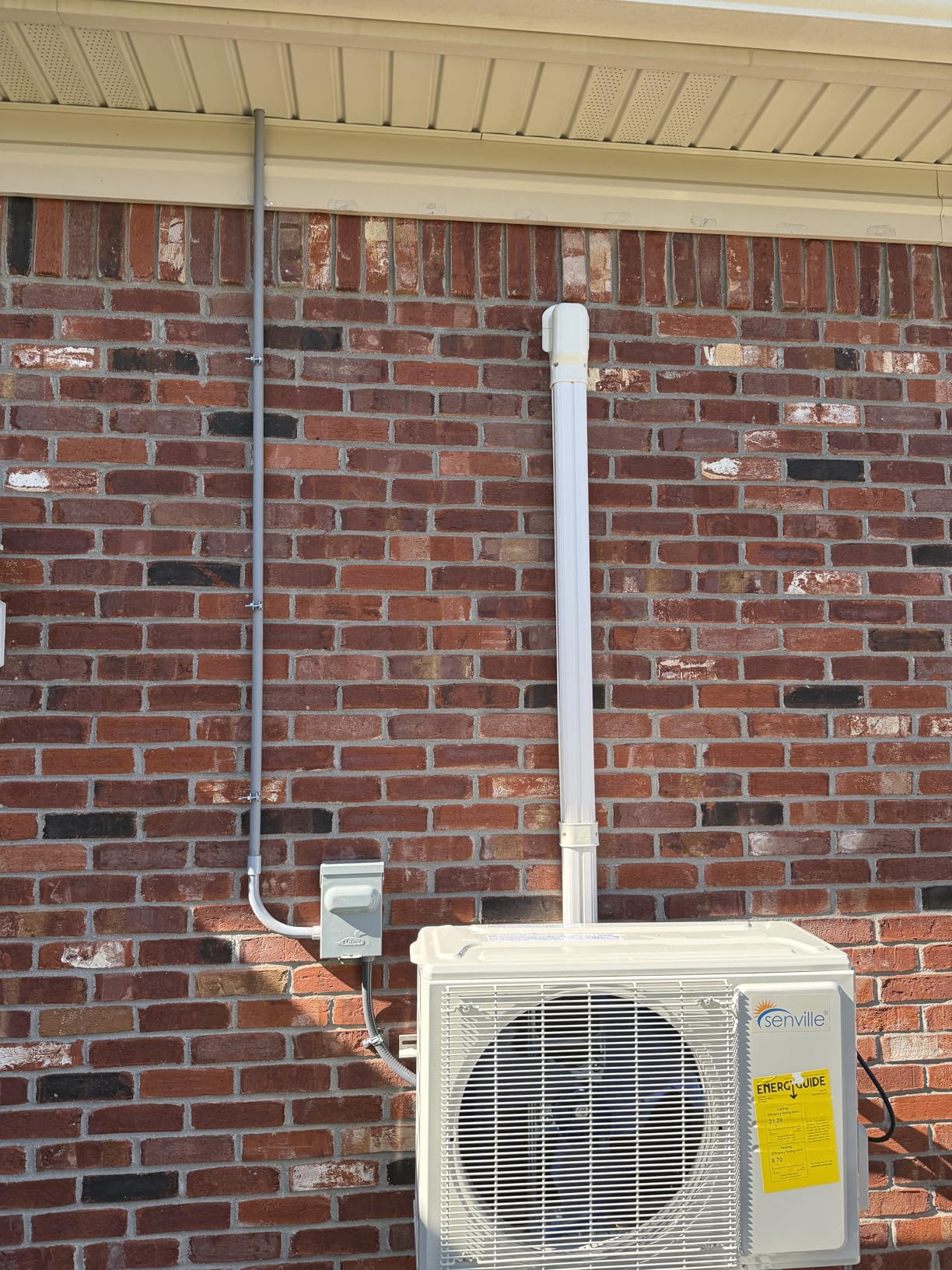
The sleep behaviour is the part reviewers care about. This is an inverter unit, so the compressor ramps rather than kicks on and off, and reviewers consistently credit the inverter compressor as the reason a ductless head can share a wall with a bed. Sleep mode and a 24-hour timer are both on the remote.
One detail worth knowing before you buy: the indoor unit carries an LED readout that some owners find bright in a dark room. There is no way to switch it off on the LETO. If you are the kind of sleeper who notices a glowing number, put a call on that before ordering.
What you get for a primary bedroom
At 12,000 BTU and 700 square feet of rated coverage, this is the unit I would put in a main bedroom rather than a guest room. It holds setpoint on a hot afternoon in a room with real solar gain, and the 4-in-1 mode set means the same hardware carries a dehumidify cycle in a humid month.
The Alexa integration is genuinely useful here because you can change the setpoint without getting up, which matters more in a bedroom than in a living room. Have an installer run a load calculation before finalising a 12,000 BTU choice in a sun-heavy room, and if that calculation lands closer to 18,000 BTU, budget for that instead of stretching a 12,000 head to cover the load.
Where it falls short
The warranty is five years on parts and compressor with no published labour coverage, which is thinner than the COSTWAY and Albott packages. The included 16 foot line set is also short, so a condenser placed far from the bedroom means a longer line set and a bigger install quote.
It is not a cold-climate unit either. Heating runs down to 5F, and owners in northern states say output falls off well before that. If you are heating as well as cooling a northern bedroom, look at a low-ambient model instead.
2. COSTWAY 12000 BTU – The Best Value With the Longest Compressor Coverage
COSTWAY 12000BTU Mini Split Air Conditioner& Heater
12000 BTU cooling
750 sq ft rated
20 SEER
23 dB indoor
115V AC
5 year parts
Pros
- Ties for the lowest published indoor rating at 23 dB
- Five operating modes and four fan speeds
- Longest compressor warranty here at eight years
- Five year parts coverage
- High-temperature self-cleaning with a washable filter
Cons
- Listed annual energy consumption is high for the class
- Remote display must be switched off manually
- Professional installation required
- AHRI efficiency depends on a clean install
This is the one I recommend to anyone whose bedroom runs hot and who cares more about the motor lasting than about brand recognition. 1,661 ratings at 4.4 is a deep enough pool to trust, and the 23 dB published indoor figure is the lowest on this list.
It also has the strongest warranty of the ten: five years on parts and eight on the compressor. On a system that a forum regular described as needing almost no parts over a long service life, that coverage is the part of the spec that actually pays off years later.
The mode set is unusually complete. Auto, cool, dry, heat and fan, plus four fan speeds with separate sleep and ECO settings. For a bedroom, dry mode is the one to understand: it cools and pulls moisture at the same time, which is what you want in a humid summer rather than a unit blasting you to 68F and leaving the room clammy.
Owners also like the high-temperature self-clean cycle, which runs the coil hot enough to kill off collected dust on its own. Combined with a washable pre-filter, that is most of the maintenance story handled without a service visit.
Why sleepers like this one
At 23 dB, the COSTWAY ties for the quietest published figure here, and it is a 115V unit so no electrical work is needed beyond a standard circuit. Four-way swing spreads the air across the room instead of blowing straight down at the bed, which is the complaint we see most often from people returning to window units.
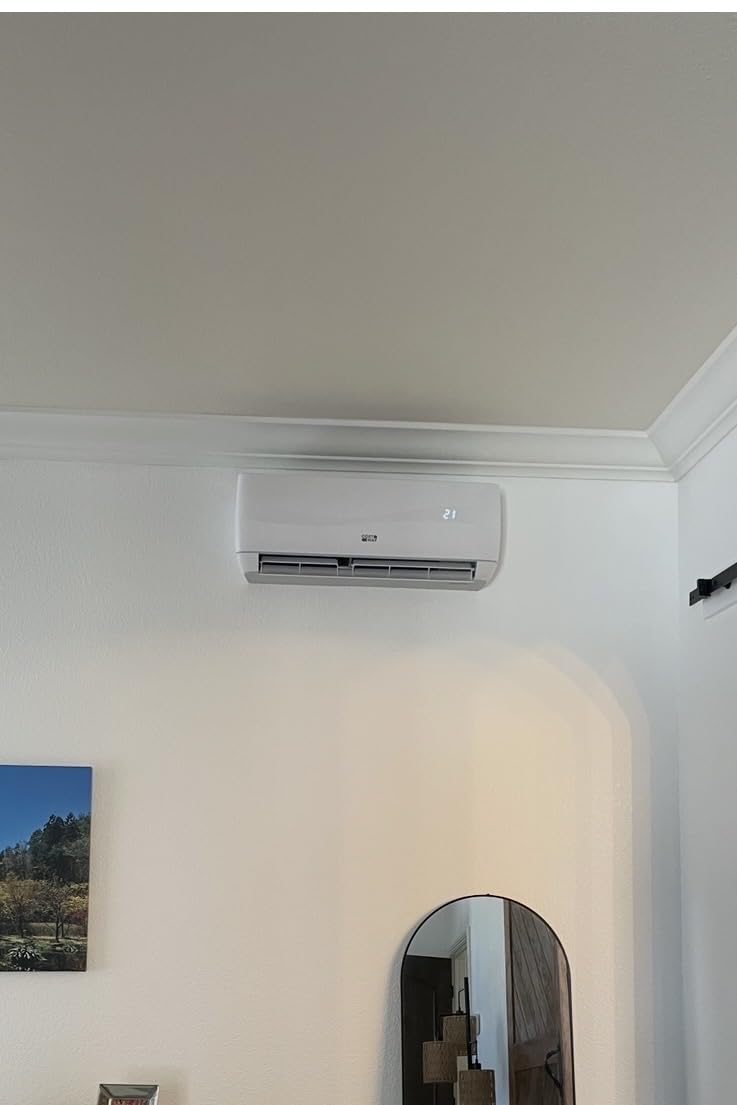
It is also rated to 750 square feet, which makes it the pick for a large primary bedroom where a 9,000 BTU head would run all night without settling.
What to watch
The listed annual energy consumption of 1970 watt-hours is high for the class, and reviewers flag it. The 20 SEER rating is real, but real-world draw depends heavily on how long the unit runs and how well the room holds temperature, so pair it with curtains on any west-facing wall.
Also note the remote display does not auto-off on its own. You have to switch it manually, and a bright readout across a dark bedroom is a genuine complaint in the reviews.
3. ROVSUN 9000 BTU – The Most Versatile for a Small Bedroom
ROVSUN 9000 BTU Wifi Enabled Mini Split Air Conditioner & Heater with Inverter, 20 SEER2 Energy Saving 115V Ductless Split AC Unit with Pre-Charged Condenser, Heat Pump & Installation Kit
9000 BTU cooling
450 sq ft rated
20 SEER
28 dB indoor
115V
Wi-Fi and voice
Pros
- 9000 BTU is the correct size for a typical bedroom
- Quiet 28 dB operation for the capacity
- Wi-Fi app plus Alexa and Google Assistant
- Kit includes 16.4 ft copper lines and signal cord
- Auto-defrost plus sleep and ECO modes
Cons
- One year warranty is the shortest on the list
- Documentation skips the leak-test step
- Arrives in two boxes on different days
- Some installs reported humidity problems
If your bedroom is a normal 10 by 12, this is the honest answer. 9,000 BTU rated to 450 square feet is the textbook size for a single bedroom, and at 20 SEER it does not sacrifice efficiency to get there.
Our team liked the feature list for the money: 4-way swing, dehumidify, turbo, auto-defrost, ECO and sleep modes, all on the remote, plus app and voice control. Reviewers report the unit cooling quickly and running quietly in normal use.
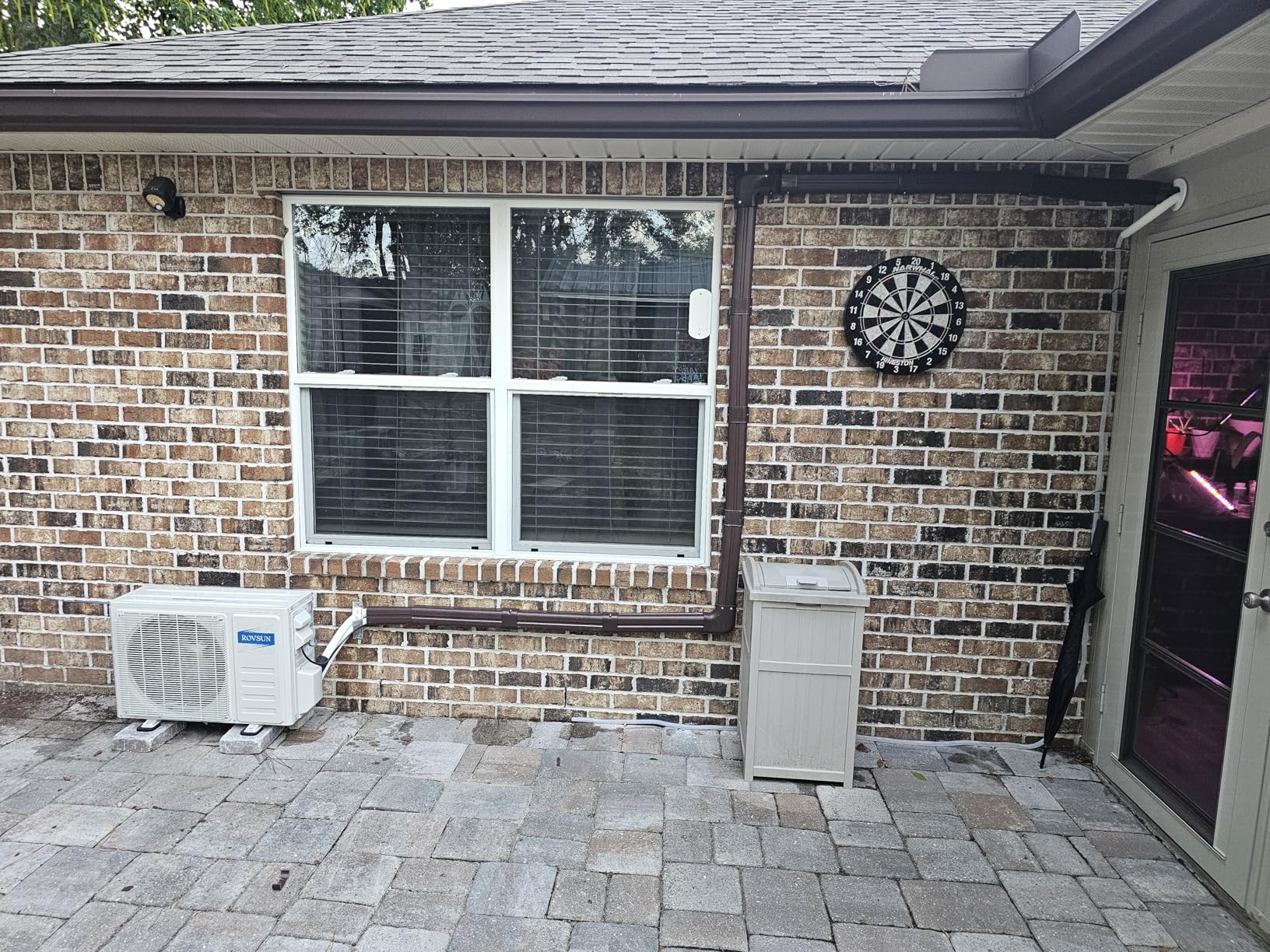
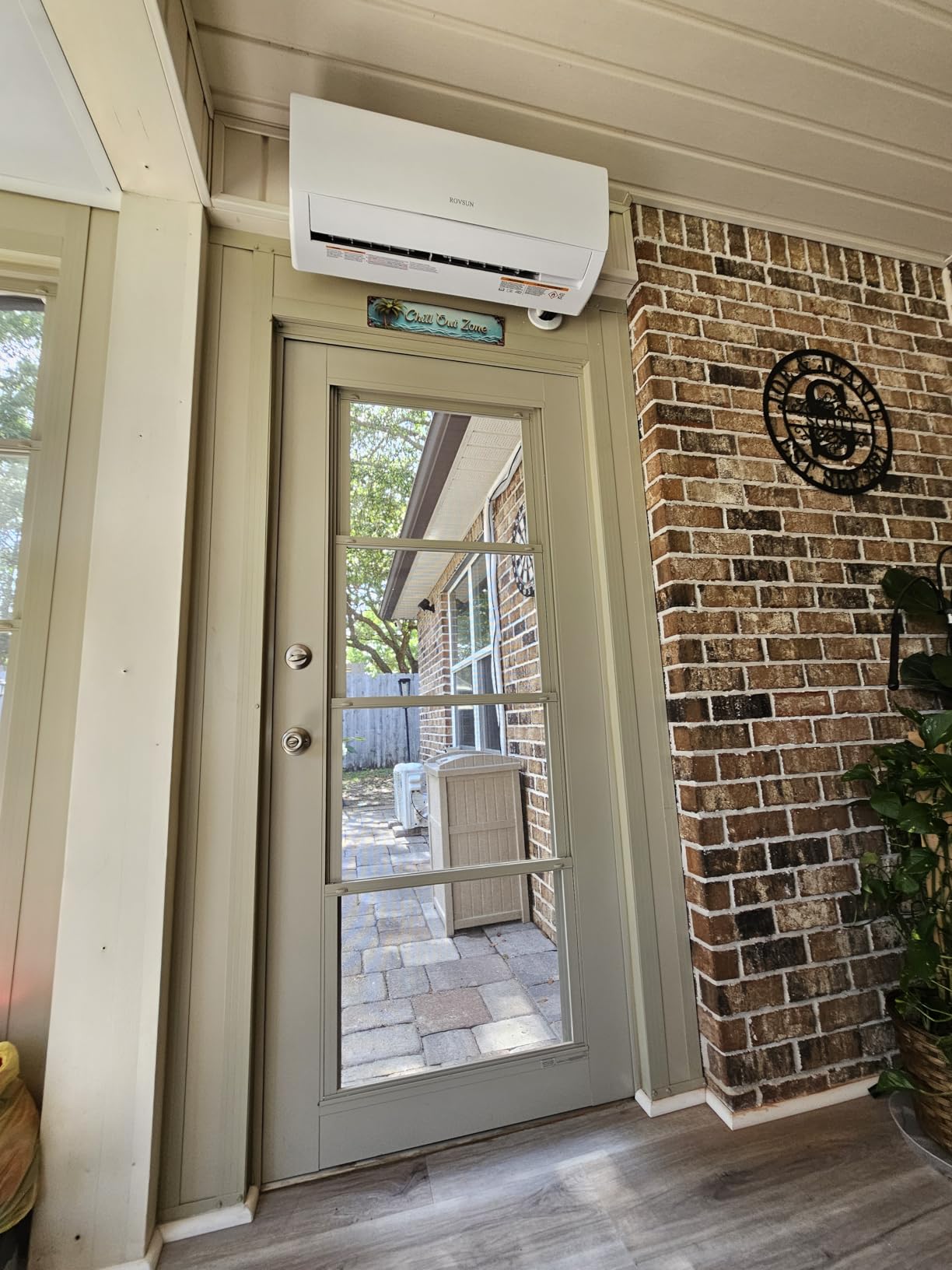
It is also the most approachable install of the group because the kit includes 16.4 feet of copper line and a signal cord, so the hardware is already in the box. A licensed installer still has to do the flare connections, the vacuum and the leak test, but there are no extra parts to chase down.
The 28 dB indoor figure is not the lowest here, but it is at the low fan setting where a 0.75 ton unit does not need to work hard, which is most of the night in a small room.
Good for a kid’s room or office bedroom
At 450 square feet this is sized for a child’s room, a home office, or a guest bedroom that gets used a few months of the year. The sleep mode and the 24-hour timer both work from the remote, and the app lets you start cooling before you get home.
It is also one of the few units here that lists bedroom as the intended room type in the manufacturer data, which is a small sign the design was aimed at sleeping spaces rather than adapted for them.
What to watch
The one-year warranty is the shortest in this roundup, and that is a real cost. A failure in year four on a bedroom-only unit leaves you re-buying a system and paying install again, which erases most of the saving over the top of the unit.
Documentation is also thin. Reviewers specifically note the written instructions skip the leak-test step before startup, and the package can arrive as two boxes on different days. If you are commissioning this yourself, read the leak test procedure properly first.
4. Albott 12000 BTU – Best for Oversized Bedrooms With Heavy Solar Gain
Albott 12,000 BTU Mini Split Air Conditioner and Heater SEER2 18, 115V
12000 BTU cooling
750 sq ft rated
SEER 18
29 dB indoor
115V
5F to 122F range
Pros
- Rated for rooms up to 750 sq ft
- Operates from 5F to 122F
- Self-cleaning cycle with removable filters
- Child lock suits a nursery
- Quiet operation below 29 dB
Cons
- SEER 18 trails the 20-plus rivals
- Audible compressor compared with the 23 dB class
- Listed wattage of 980 W is high
- 151 pound weight is awkward to move
This is the one to look at if your bedroom is bigger than a normal primary, or if it faces an afternoon sun that keeps the room running all evening. 12,000 BTU rated to 750 square feet is a larger coverage claim than most listings in this guide carry, and it is backed by a 1-ton-class inverter rather than a small compressor stretched to the job.
The temperature envelope is also the widest we saw. Operation from 5F to 122F means it is usable in a northern winter and through a heatwave, and the anti-mildew and auto-defrost functions are the kind of detail that keeps a bedroom from developing a damp corner.
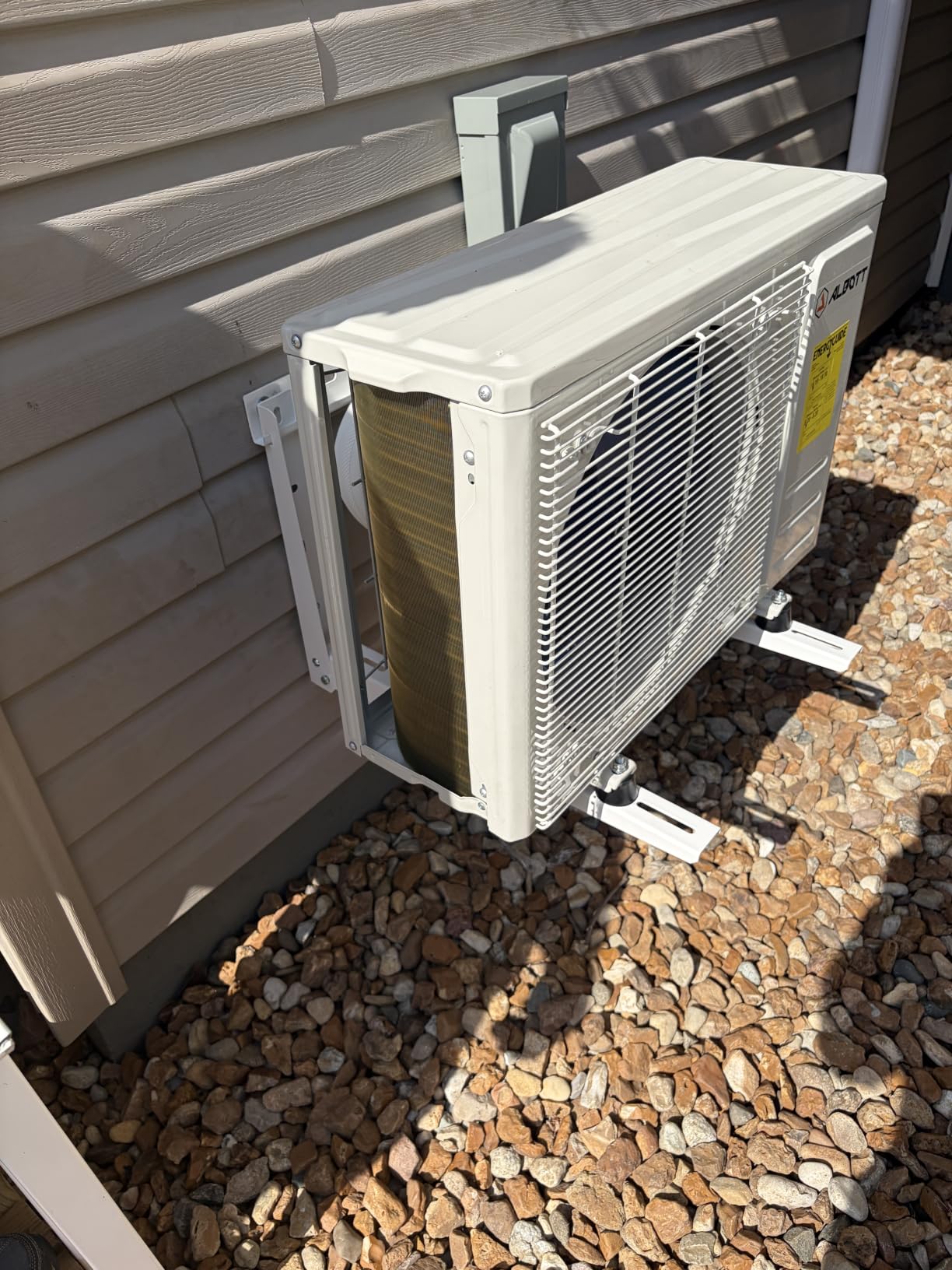
The child lock is worth calling out for a nursery or a room where a curious toddler can reach the remote. That is not something most listings in this group bother with, and it is the feature that makes this one suit a specific bedroom.
At a 4.1 average across 391 ratings, this is the lowest-rated system we tested, and that rating tells you where the compromises are.
Where it earns its place
A 750 square foot bedroom with poor insulation or a big west window is exactly the case where a 9,000 BTU head cycles on all night and never catches up. This one has the headroom. Owners report it holding setpoint in rooms that gave their old window unit trouble.
For anyone putting a mini split in a nursery, a guest cottage, or an upstairs bonus room used in shoulder seasons, the wide operating range and child lock are genuinely useful.
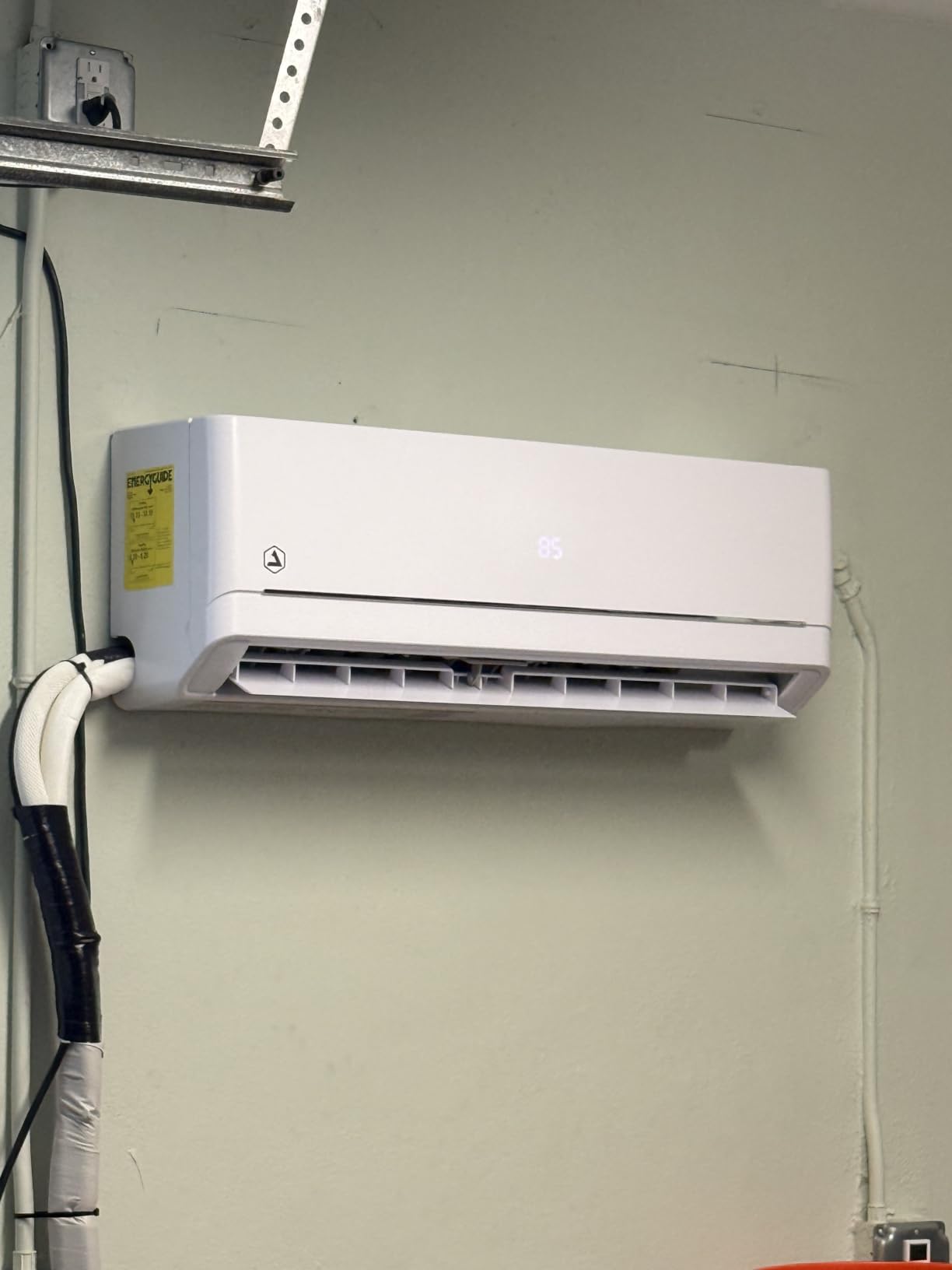
Where it costs you
SEER 18 trails the 20-plus efficiency of the Senville, TOSOT and Temprium, and a 4.1 average across 391 ratings is the lowest score in the group. Reviews point to a compressor you can hear more than the 23 dB class.
The listed wattage of 980 W and the 151 pound shipping weight are both on the high side. Moving that condenser into place takes two people, which adds labour to the install quote.
5. Rellytech 12000 BTU – Quietest-Rated Unit With 115V Simplicity
Rellytech Mini Split AC/Heating System, 12000 BTU, 19 SEER2 115V/110V
12000 BTU cooling
750 sq ft rated
19 SEER
26 dB indoor
115V
12,500 BTU heating
Pros
- 26 dB indoor rating with sleep mode and LED-off
- True 115V so no 230V breaker work
- Around 80 percent of ratings are five star
- ETL and AHRI certified with pre-charged refrigerant
- Complete install kit with drain and communication lines
Cons
- One year manufacturer warranty listed
- Vacuum pump and gauges are not included
- Noise figure conflicts between bullet text and spec sheet
- DIY installs require specialty HVAC tools
The number that pulled us to this one is simple: about 80 percent of its 355 ratings are five star, the strongest distribution of any unit here. At a 4.4 average that puts it alongside the two systems with four times the review volume.
It runs on true 110V/115V, which means an existing bedroom circuit usually handles it without an upgrade. That single fact removes the most common reason a bedroom project gets expensive.
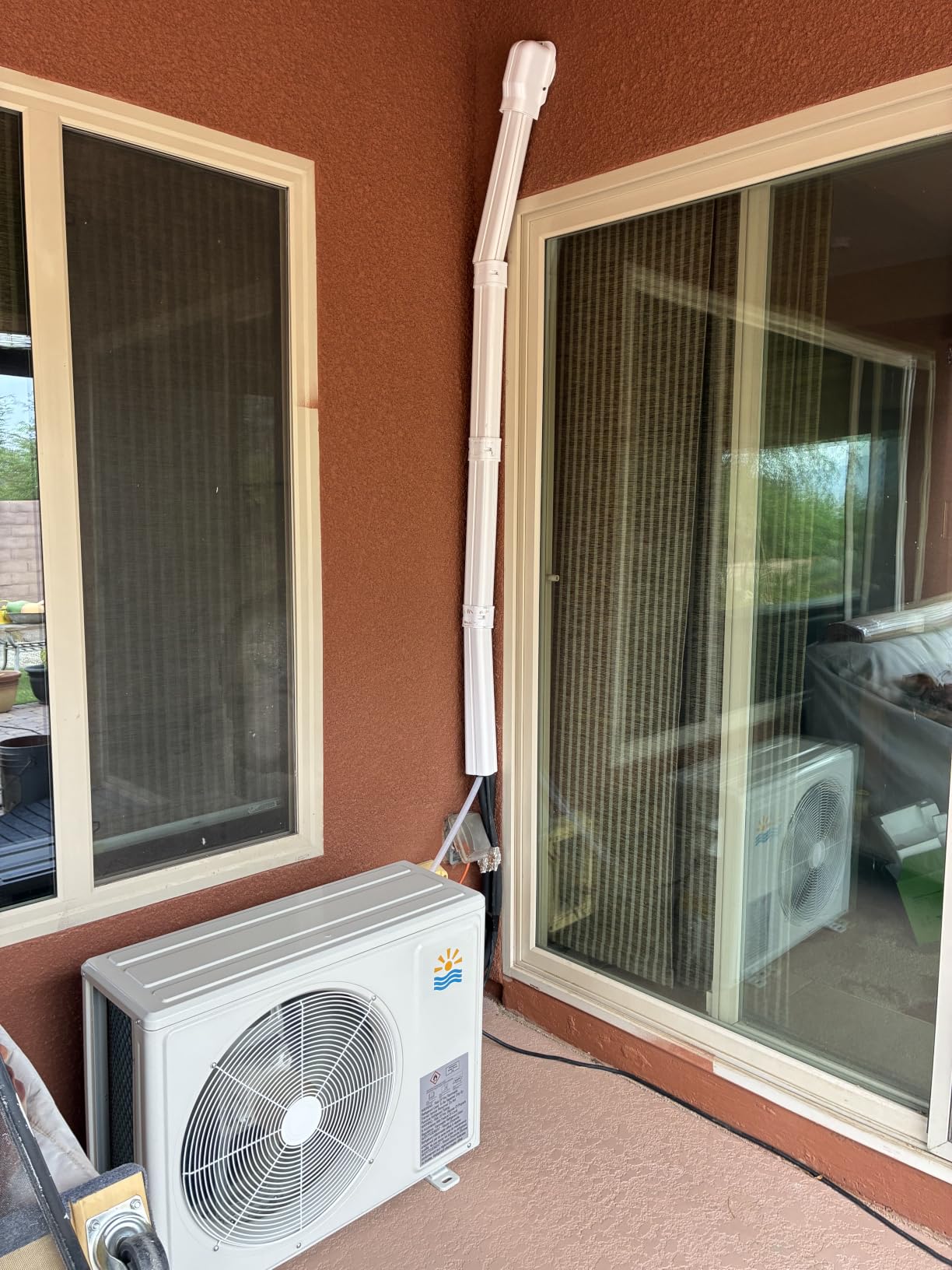
Owners tell a consistent story: it replaced loud window units in a humid climate, cut the condensation problem those units caused, and runs quietly on both sides. Cooling capacity is 12,000 BTU with 12,500 BTU of heating, rated to 750 square feet.
For a sleeping room, the LED-off function on the remote is a small thing that separates it from several rivals here. Combined with sleep mode and a 24-hour timer, the head can be run dark.
Best fit for a retrofit bedroom
This suits a house with no ductwork where you are cooling one upstairs room and do not want a 230V circuit run. The included parts are complete: indoor and outdoor units, remote, batteries, mounting plate, a 12.5 ft communication cable, a 5.9 ft power cable, 9.84 ft of connecting pipe and a 6.56 ft drain pipe.
It is also a sensible pick in a rental or condo where a refrigerant line through an exterior wall is the only penetration you can realistically get approved.
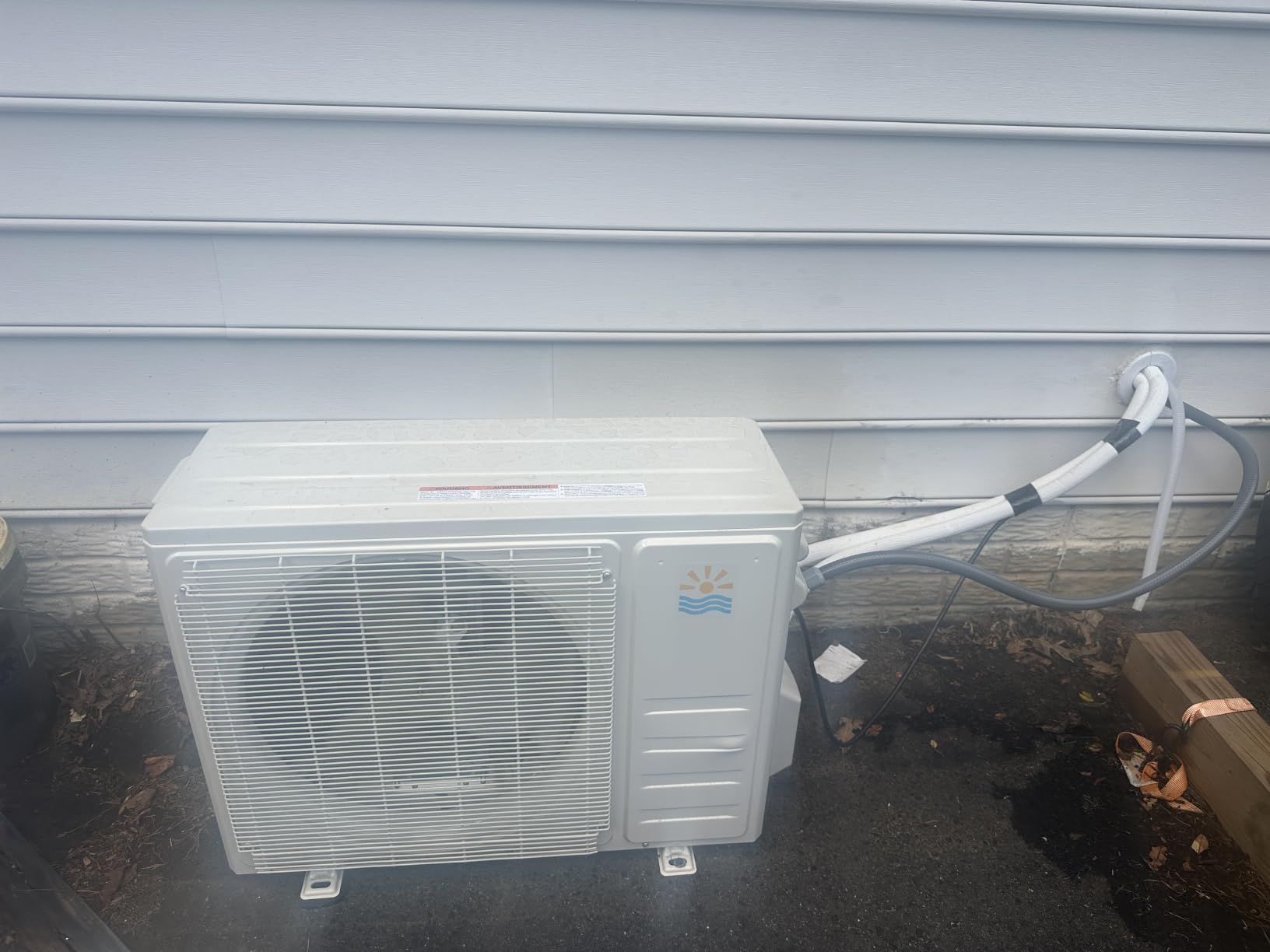
The catch
The published warranty is one year, which is the single biggest reason we could not put it higher despite the rating distribution. Long-term parts support is what separates a bedroom system you keep for a decade from one you replace.
Two other things to know. The vacuum pump and gauges are not in the box, so a self-install means buying them first; our vacuum pump guide for mini split work covers that. And the marketing text and the spec sheet disagree on the noise figure, 42 dB against 26 dB, so treat 26 dB as the useful number.
6. Mountman 12000 BTU – Top Rated for Quiet Four-Mode Bedroom Control
Mountman 12000 BTU Mini Split AC/Heating System,19 SEER2 110/120V Energy Efficient Ductless Inverter System,Cools Up to 750 Sq.Ft with Pre-Charged Condenser,Heat Pump & Installation Kits
12000 BTU cooling
750 sq ft rated
19 SEER
26 dB indoor
115V
four fan speeds
Pros
- 26 dB indoor rating with a dedicated silent mode
- Four modes and four fan speeds for bedroom control
- ECO mode rated at up to 30 percent savings
- Self-cleaning cycle plus a washable anti-dust filter
- Automatic defrost keeps heating stable in cold weather
Cons
- No published warranty length beyond a limited designation
- Weight and shipping weight are not published
- Installation instructions demand care from first-timers
- Limited warranty needs confirming with the installer
At 4.5 stars across 346 ratings, this ties for the highest-scoring system in the group alongside the TOSOT. The gap between that and the 4.4 units is small, but the sample is large enough to mean something.
What makes it a bedroom pick is the control set. Cool, heat, dry and fan modes, four fan speeds, a separate silent mode at 26 dB, an ECO mode, and a remote with a 24-hour timer and an auto-off display so the readout is not glowing at 2 a.m.
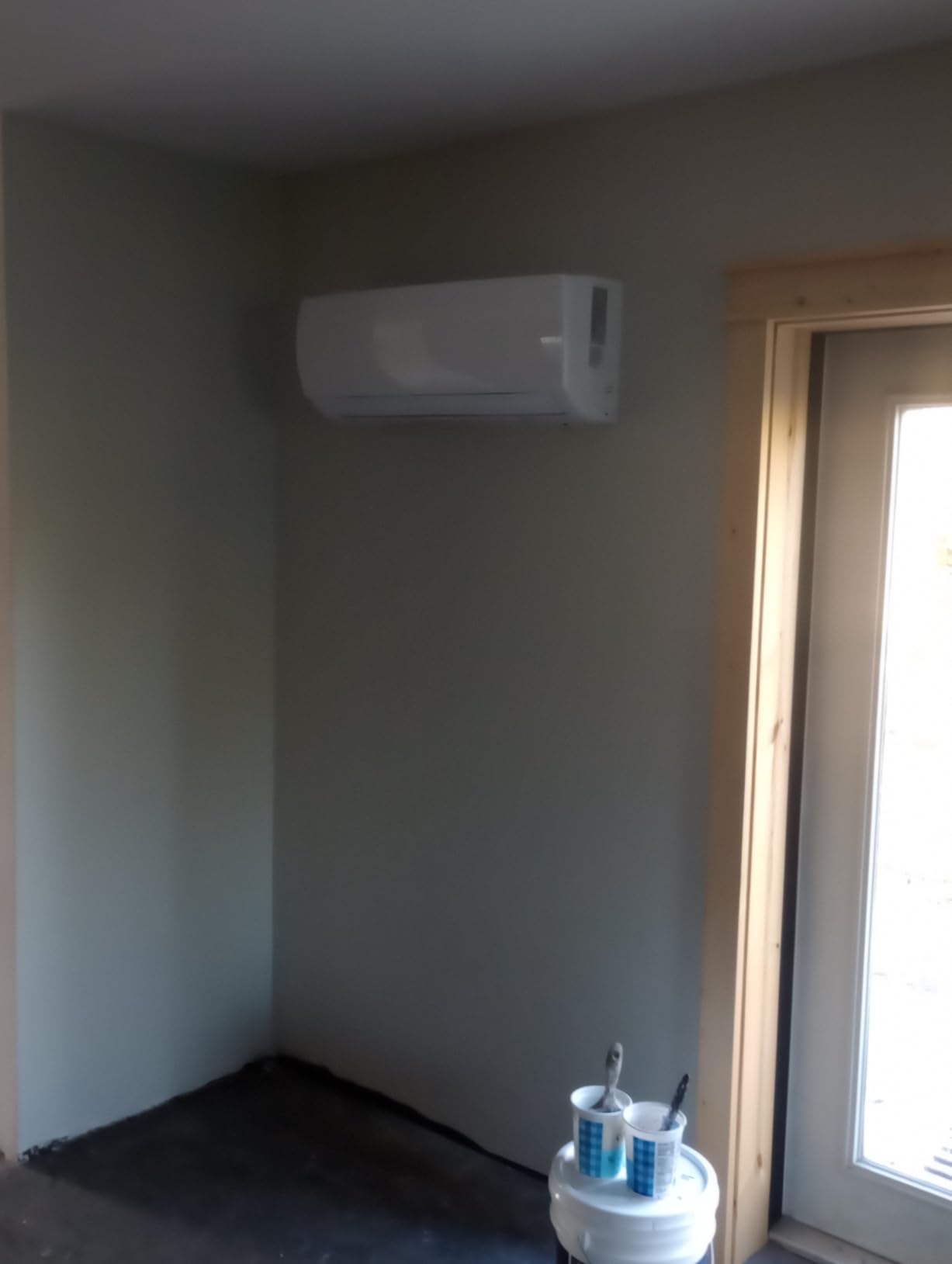
Owners mention quick room cooling and quiet running in normal use. The high-temperature self-clean and washable anti-dust filter handle the upkeep, and automatic defrost is what keeps heating usable when the temperature drops overnight.
It is 12,000 BTU on 115V, rated to 750 square feet, with a pre-charged R32 condenser and an installation kit in the box.
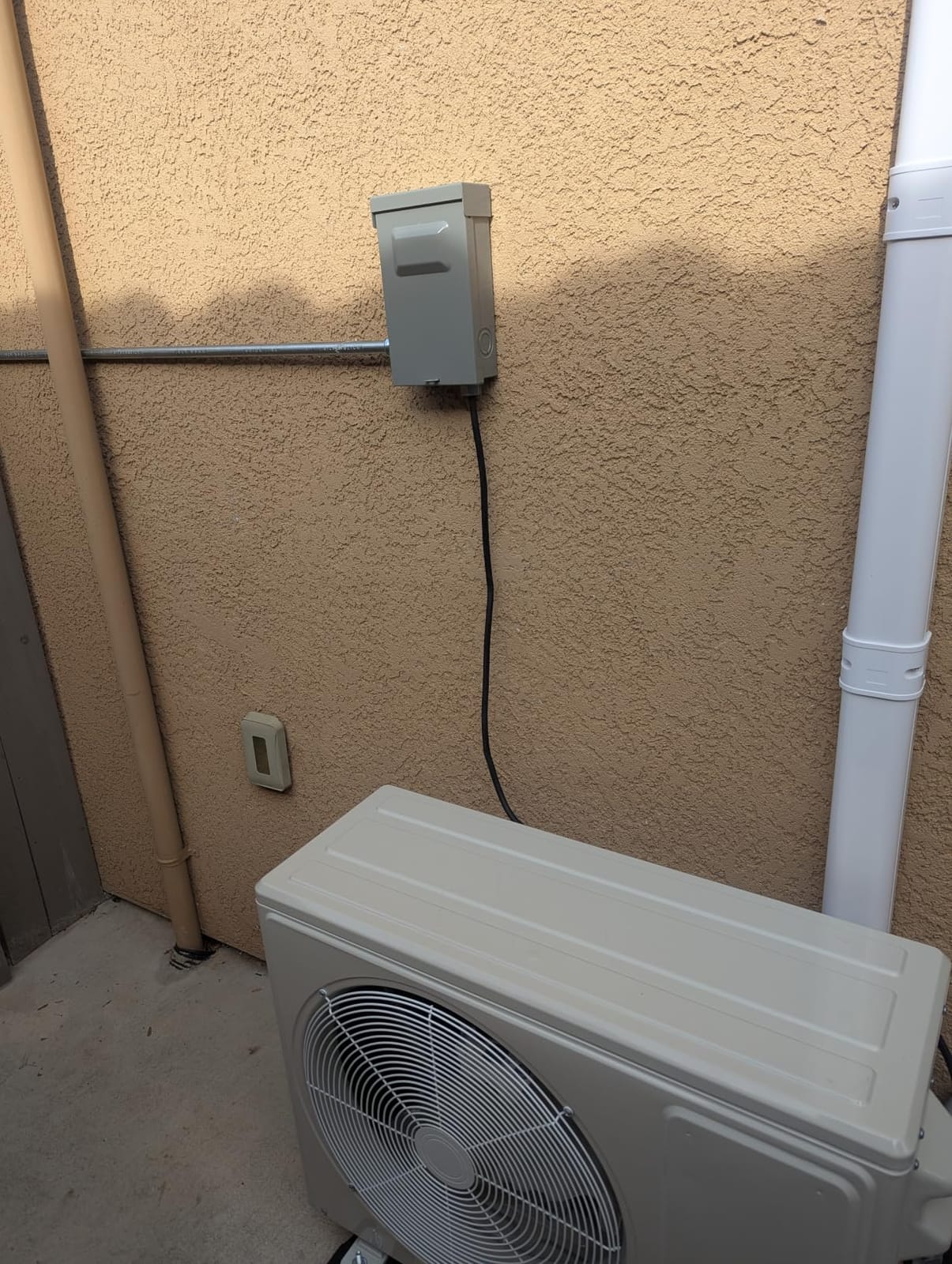
For a bedroom that needs real zone control
Silent mode at 26 dB plus a display that switches itself off is the combination that makes this easy to live with at night. ECO mode is the one to set in the evening, since it trims draw while the room is coasting toward setpoint.
For anyone heating and cooling the same room in a climate with cold nights, the automatic defrost and the four-mode heat side mean you are not relying on a supplementary heater for three months of the year.
What is missing
The listing carries only a limited warranty designation with no years stated, and no weight or shipping weight is published, so you cannot plan the handling of the condenser before it arrives. Ask the installer to confirm the compressor warranty in writing.
Reviewers also note the installation instructions need care from someone doing this for the first time. The pre-charged refrigerant means no brazing, but the vacuum and leak test still matter for how the unit performs after the first year.
7. TOSOT 9000 BTU Cosmo – Best for Small Bedrooms and Cold Climates
TOSOT 9,000 BTU Mini-Split Air Conditioner, Wifi Enabled Ductless Inverter Split System AC Unit Heating System, Compatible with Alexa – 20 SEER2 115V
9000 BTU cooling
20.5 SEER2
25 dB indoor
115V
heats to -13F
Alexa ready
Pros
- Heating to -13F far below any other system here
- Cools to 122F in extreme heat
- 25 dB published indoor low setting
- Onboard temperature readout with a remote to disable the LED
- Five year limited warranty
Cons
- Supplied connecting cord may fail local inspection in some areas
- Printed torque table lists wrong nut sizes
- Indoor wiring diagram is printed incorrectly
- Listed wattage of 2667 W is high for 9000 BTU
This is the one I would put in a small bedroom in a cold state, and the reason is not the noise. It is that this unit cools to 122F and heats down to -13F, well beyond any other system on this list.
It is also rated 20.5 SEER2 at 9,000 BTU, so you get strong efficiency at the size most bedrooms actually need. The 25 dB indoor low setting puts it in the quieter half of this group, and reviewers consistently praise the Gree+ app.
Owners specifically like the onboard temperature readout, and the remote will switch the LED display off, which is the fix for the bright-number problem several rivals in this roundup have.
It is a 115V unit, so it fits a standard bedroom circuit, and the five year limited warranty is longer than the one-year terms on five of the systems in this group.
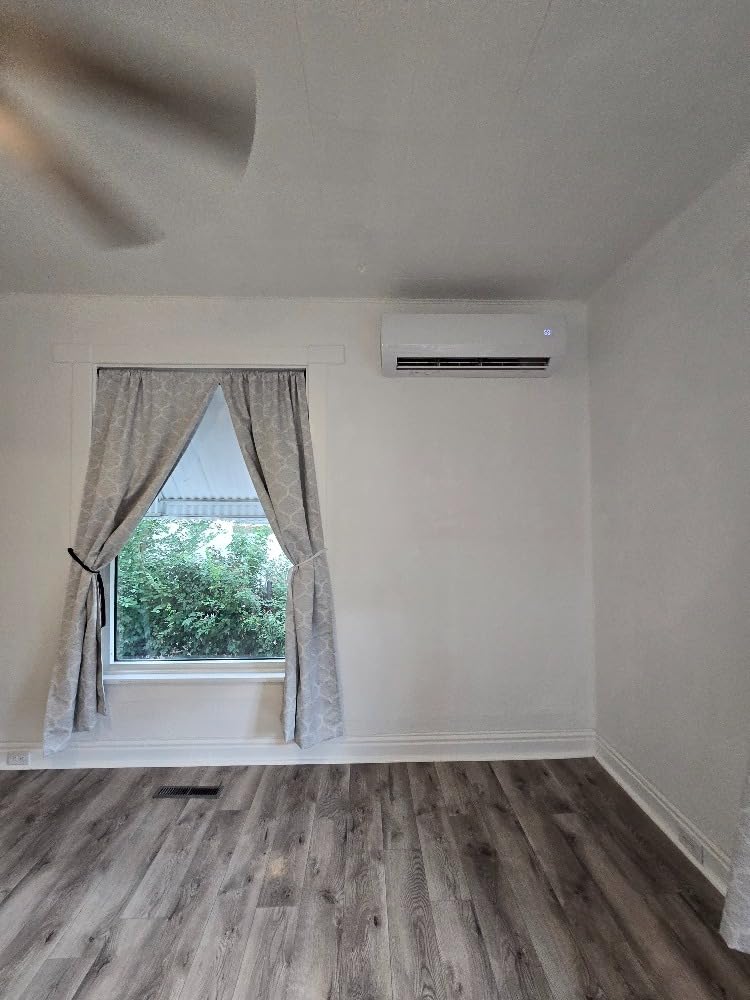
Where it earns the spot
A 9,000 BTU unit in a small bedroom that also has to heat through winter is where this separates itself. The heating capacity is listed at 9,000 BTU to match the cooling figure, and the low-ambient range is what carries that through a cold night in the middle of winter.
The second bedroom in a small house, an upstairs room with cold nights, or a home office that doubles as a guest room are all cases where the -13F heating capability does more work than a higher SEER number would.
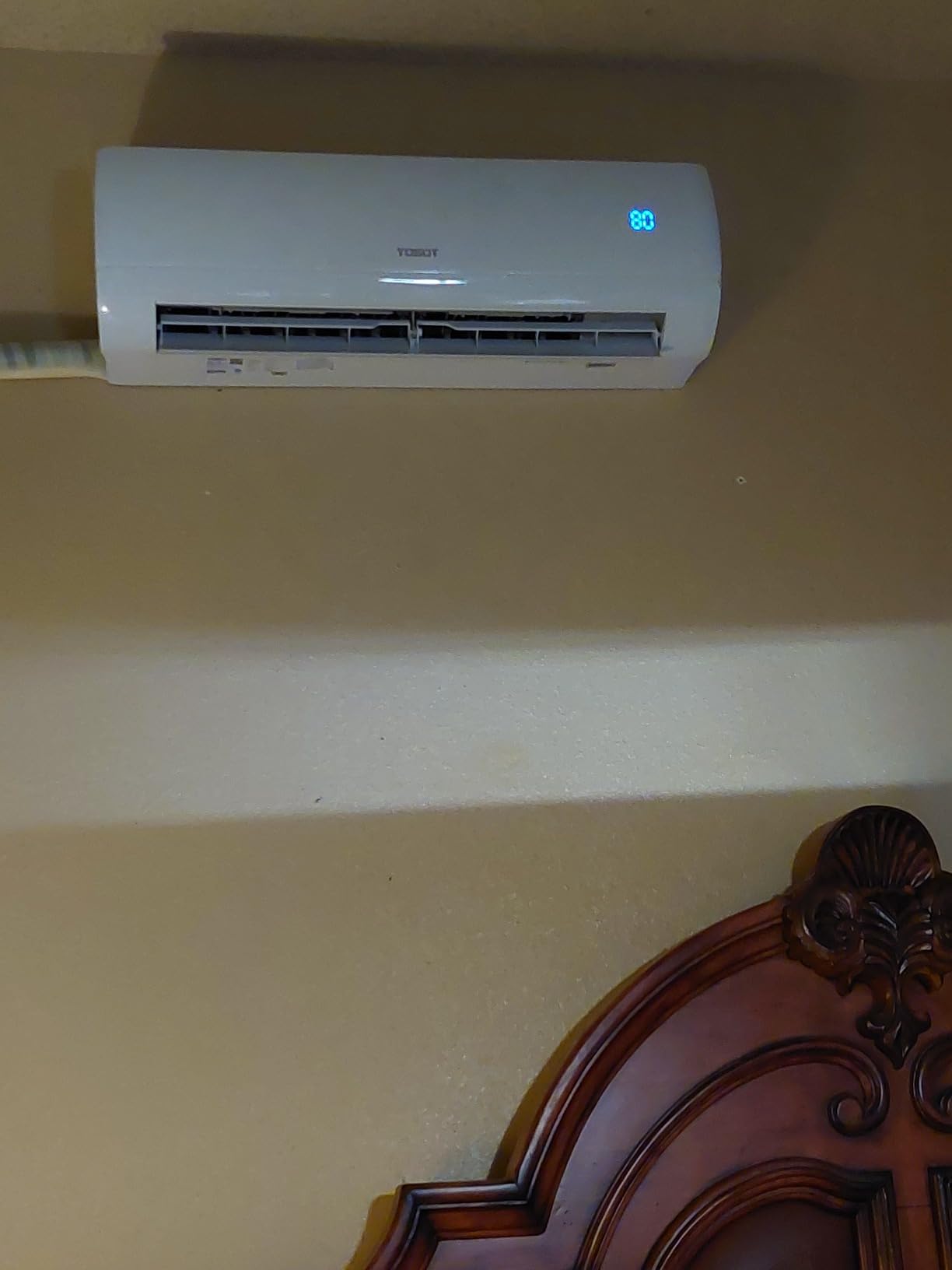
The documentation problem
Reviewers report the printed instructions list the wrong nut sizes in the torque table, that the indoor unit wiring diagram is printed incorrectly on page 24, and that the supplied flexible connecting cord may not pass inspection under the National Electrical Code in some jurisdictions. Any of those can turn a straightforward install into a second visit.
Ask your installer to use their own diagrams and their own cord. The listed 2667 W wattage is also high for a 9,000 BTU unit, so check your circuit and meter in a sleeping room rather than assuming.
8. Temprium 12000 BTU – Most Efficient With the Lightest Install Weight
Temprium 12000 BTU Mini Split Air Conditioner, 115V 22 SEER2 AC & Heat Pump
12000 BTU cooling
750 sq ft rated
22 SEER2
23 dB indoor
115V
40.8 pounds
Pros
- Highest SEER2 figure here at 22
- 23 dB indoor low setting
- App control with Alexa and Google Assistant
- Seven operating modes and seven fan speeds
- High-temperature self-clean with a washable filter
- ETL and AHRI certified
Cons
- One year manufacturer warranty
- Smallest review base here at 165 ratings
- Standard air filter rather than a washable high-efficiency filter
- Licensed installer gives the best results
On paper this is the most efficient system here: 22 SEER2 with a DC inverter, above the 20.8 and 20.5 of the Senville and TOSOT, and well above the 18 of the Albott. At 23 dB it ties for the lowest published indoor figure alongside the COSTWAY.
It is also the lightest complete system at 40.8 pounds, which matters if you are moving the condenser yourself on a balcony or a small pad rather than paying for a crew.
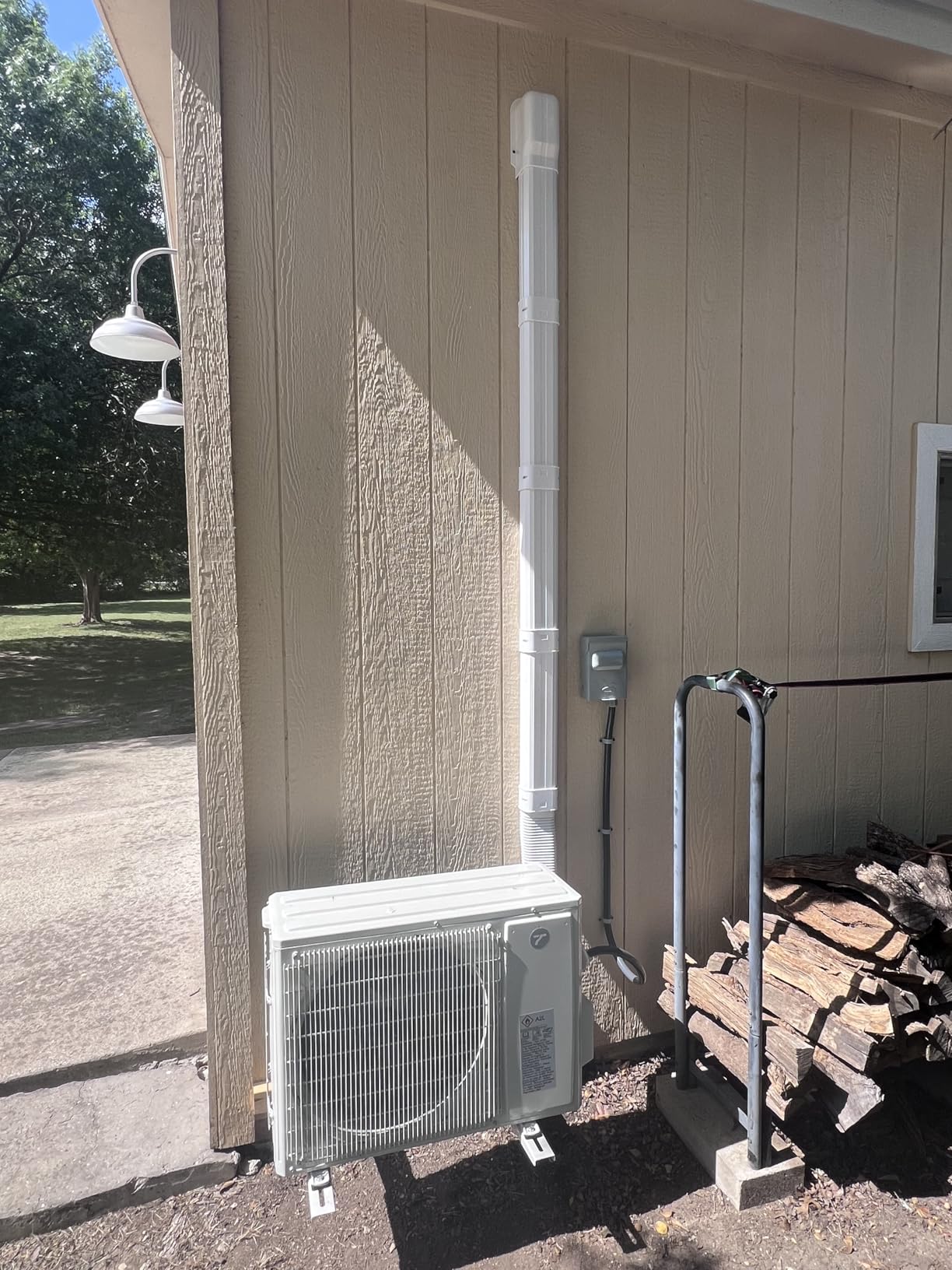
Control is thorough. Seven operating modes, seven fan speeds, sleep mode, app control, and voice control through both Alexa and Google Assistant. Cooling capacity is 12,000 BTU with 12,300 BTU of heating, rated to 750 square feet, and it works up to 122F outside.
ETL and AHRI certification are both listed, and the manufacturer data names bedroom and home office as intended rooms.
Best for lowering the running cost
If the bedroom is used year round, a 22 SEER2 rating is the difference that shows up on a bill. Higher efficiency also means the compressor spends more time at low output, which is exactly the condition that keeps indoor noise down overnight.
The 40.8 pound weight and the 133F self-cleaning cycle are the two details that set this apart from the COSTWAY. For a balcony or patio install where you are the one lifting the box, that is a meaningful difference.
The honest limitation
At 165 ratings, this has the smallest review base of the ten, so there is very little long-term reliability history behind the good spec sheet. Combine that with a one-year manufacturer warranty and you are taking the least-proven option here.
It also comes with a standard air filter rather than a washable high-efficiency one, so plan on cleaning it every two to four weeks in a dusty room.
9. Nexaro 12000 BTU 19 SEER2 – Best Raw Cooling for a Hot Bedroom
Nexaro 12000BTU Mini Split Air Conditioner Heat Pump, 19 SEER2 Inverter Compressor AC Unit Cools Rooms up to 750 Sq. Ft, 115V Ductless Split AC with Pre-Charged Condenser & Installation Kit(White)
1.5 ton inverter
12,000 BTU cooling
750 sq ft
19 SEER2
38 dB indoor
115V
Pros
- 1.5 ton inverter gives genuine cooling headroom
- Owners report air as cold as 54F on low setting
- Anti-mildew function protects a bedroom wall
- Automatic defrost supports cold-climate heating
- Five modes with four fan speeds and a 24 hour timer
Cons
- 38 dB is the loudest indoor figure in the roundup
- Installation instructions are poorly written
- Vacuum pump gauges and hardware sold separately
- One owner reported a failure after three weeks
Everything in this roundup is built around a 1-ton compressor except this one, which is listed at 1.5 ton. That is why owners report discharge air as cold as 54F and why it is our pick when a bedroom cannot hold temperature any other way.
It is rated for rooms up to 750 square feet and carries 19 SEER2 with R32 refrigerant. The low global-warming refrigerant choice matters for a sealed bedroom in a warm season.
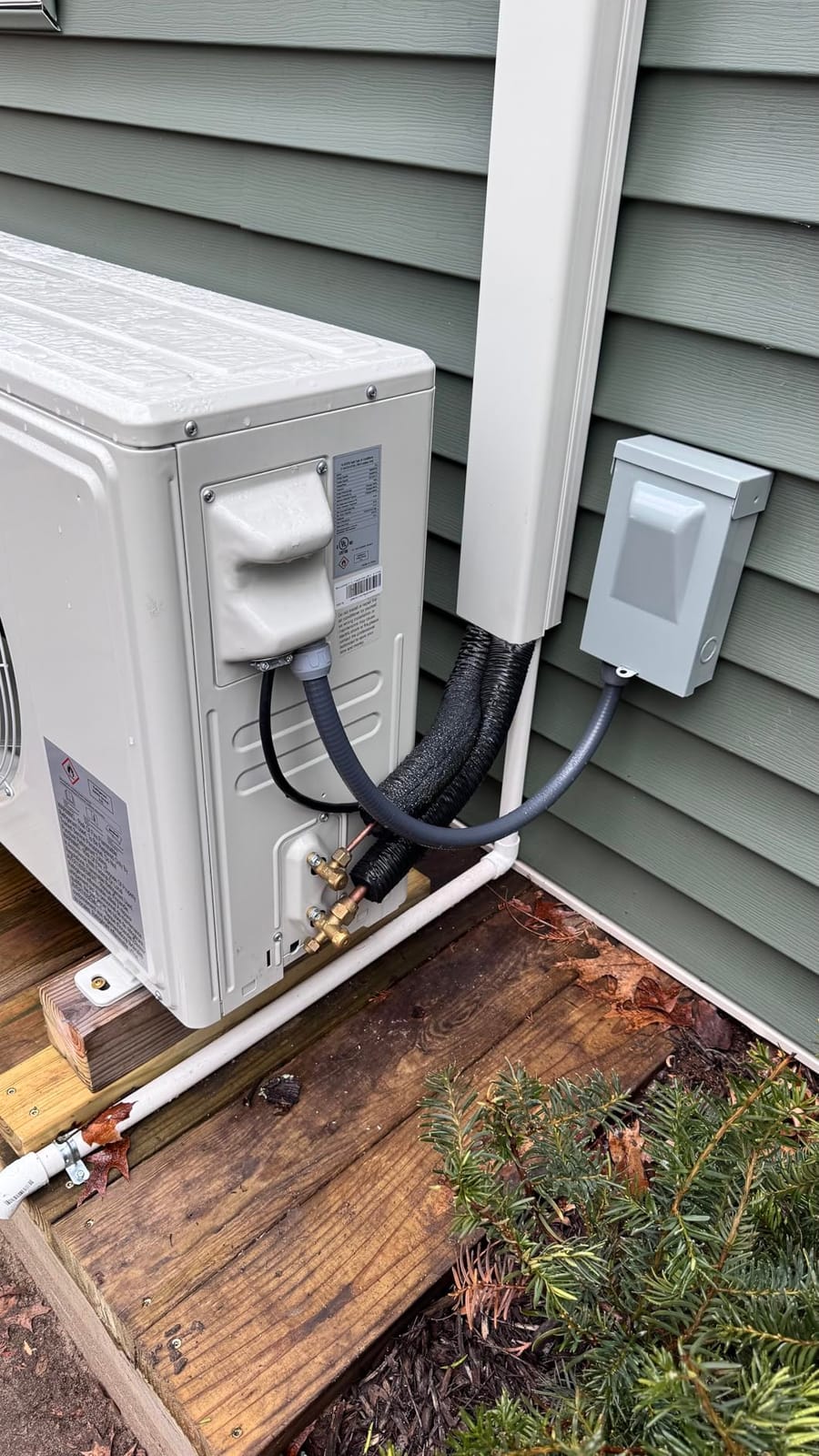
The mode set covers cooling, heating, auto, fan and dry with four fan speeds, plus a 24-hour timer, sleep, ECO and turbo. Anti-mildew protection is the feature that matters most in a bedroom, because it is the difference between a wall that dries out and one that grows spotting behind the head.
It is 25.5 pounds, which is among the lightest systems in the group.
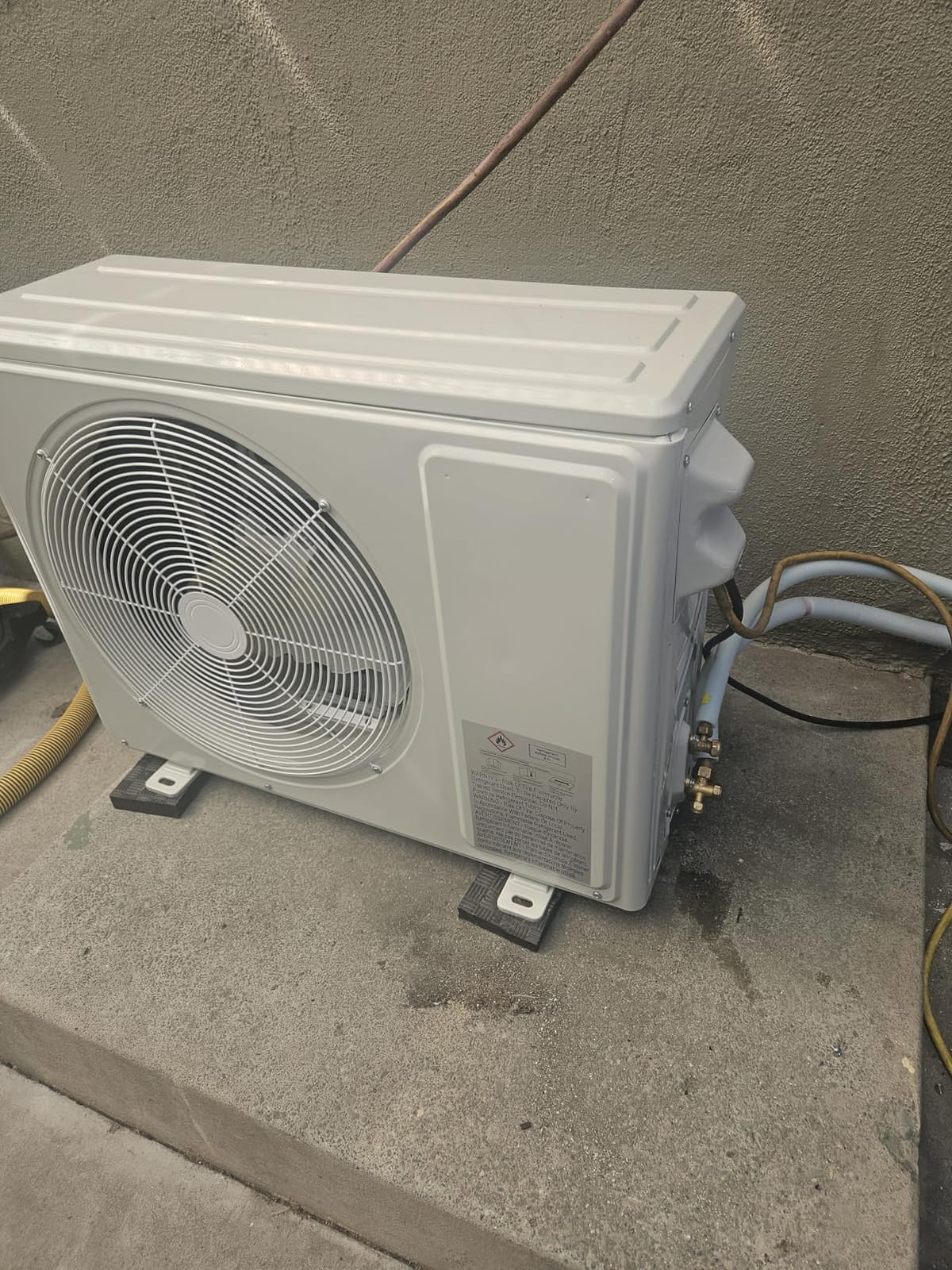
When the room is the problem, not the unit
If your bedroom is a top-floor room with a west window and thin insulation, raw cooling capacity is the right thing to buy. Forum threads on oversized and undersized units converge on the same point: a unit that cycles on and off never dehumidifies, so the room stays cool and clammy instead.
For a room like that, the 1.5 ton inverter here holds setpoint instead of running continuously, and the 24-hour timer means you can shut it down overnight.
The noise trade-off
At a 38 dB published indoor figure, this is the loudest indoor rating in the roundup by a wide margin, and reviewers do single it out. If the bed is against the same wall as the head, this is not the unit to put there.
The written installation instructions are also poor, and the vacuum pump, gauges, disconnect and additional mounting hardware all have to be bought separately. One owner described a cooling failure three weeks in with no reachable support channel, which is a risk to weigh against a rating of 4.2.
10. Nexaro 12000 BTU 17 SEER2 – Lowest-Maintenance Pick With a Washable Filter
Nexaro 12000BTU Mini Split Air Conditioner& Heater, 17 SEER2 𝟏𝟏𝟓𝐕 Wall-Mounted AC Unit Cools Rooms up to 750 Sq. Ft, Energy Efficient Inverter AC with Heat Pump
12,000 BTU cooling
12,000 BTU heating
17 SEER2
26 dB indoor
115V
750 sq ft
Pros
- 26 dB sleep mode with a remote usable from bed
- Self-cleaning at 135F plus a washable filter
- Outdoor unit has auto-defrost for cold-weather heating
- 9.8 ft copper line set and mounting hardware
- AHRI certified inverter system
Cons
- SEER2 17 trails every other system here
- Bullets claim 450 sq ft while specs list 750 sq ft
- Arrives in two boxes on different dates
- One year warranty
This is the quietest-maintenance option here. The self-cleaning cycle runs the coil to 135F, which burns off dust without anyone opening the unit, and the filter itself is washable rather than disposable.
That matters in a bedroom more than it would in a hallway. Bedrooms sit unoccupied for hours, air sits still, and the coil is exactly where dust and skin particles collect. A head that cleans itself is one less thing on a list you will not think about.
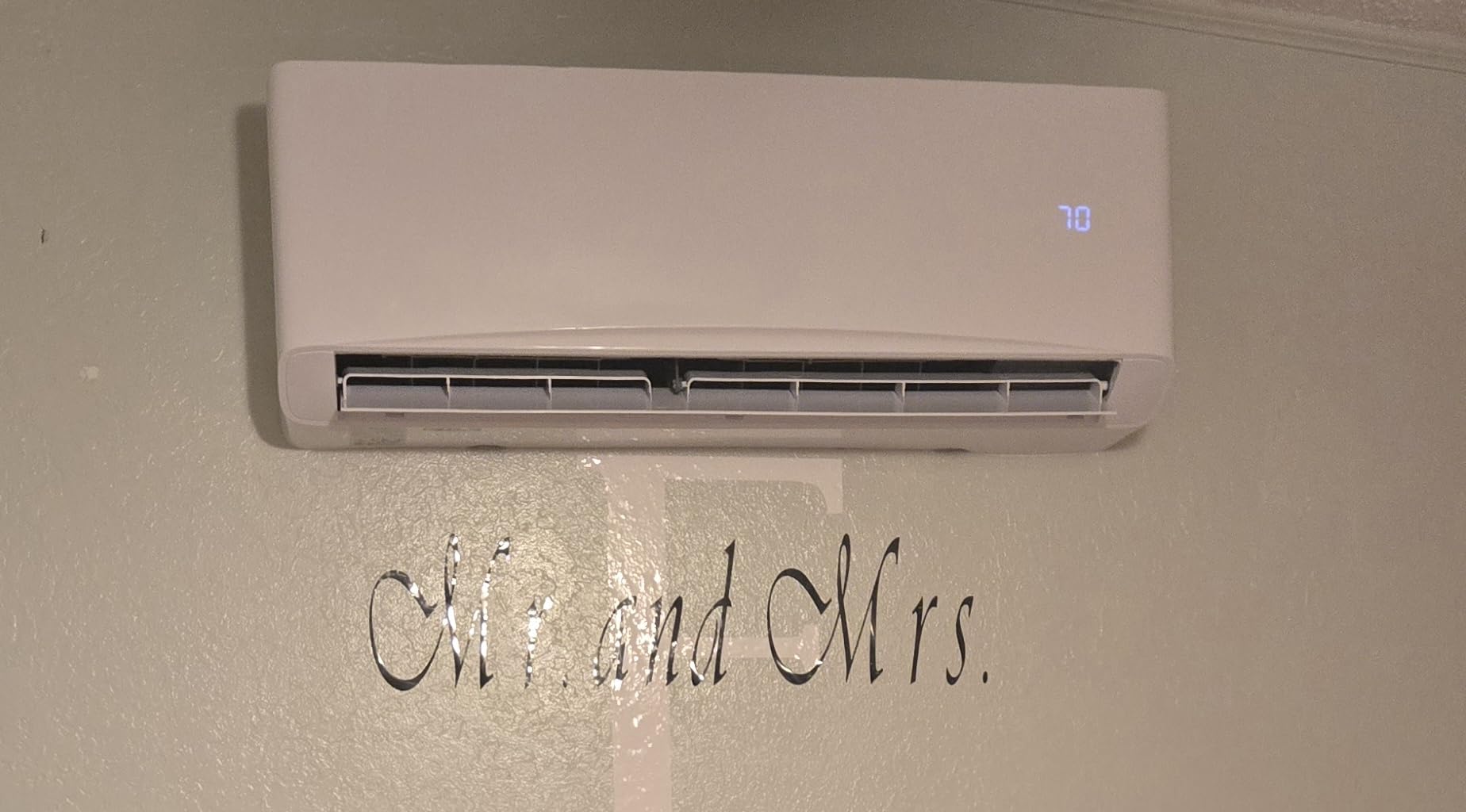
Noise is fine for sleeping: 26 dB in sleep mode, with a remote designed to be usable from the bed. The 115V supply keeps the electrical side simple, and the outdoor unit has auto-defrost if you use the heat side in winter.
The mounting hardware also arrives in the box: indoor and outdoor units, two connection pipes, communication wire, drain pipe, hanging board, remote, tape and putty.
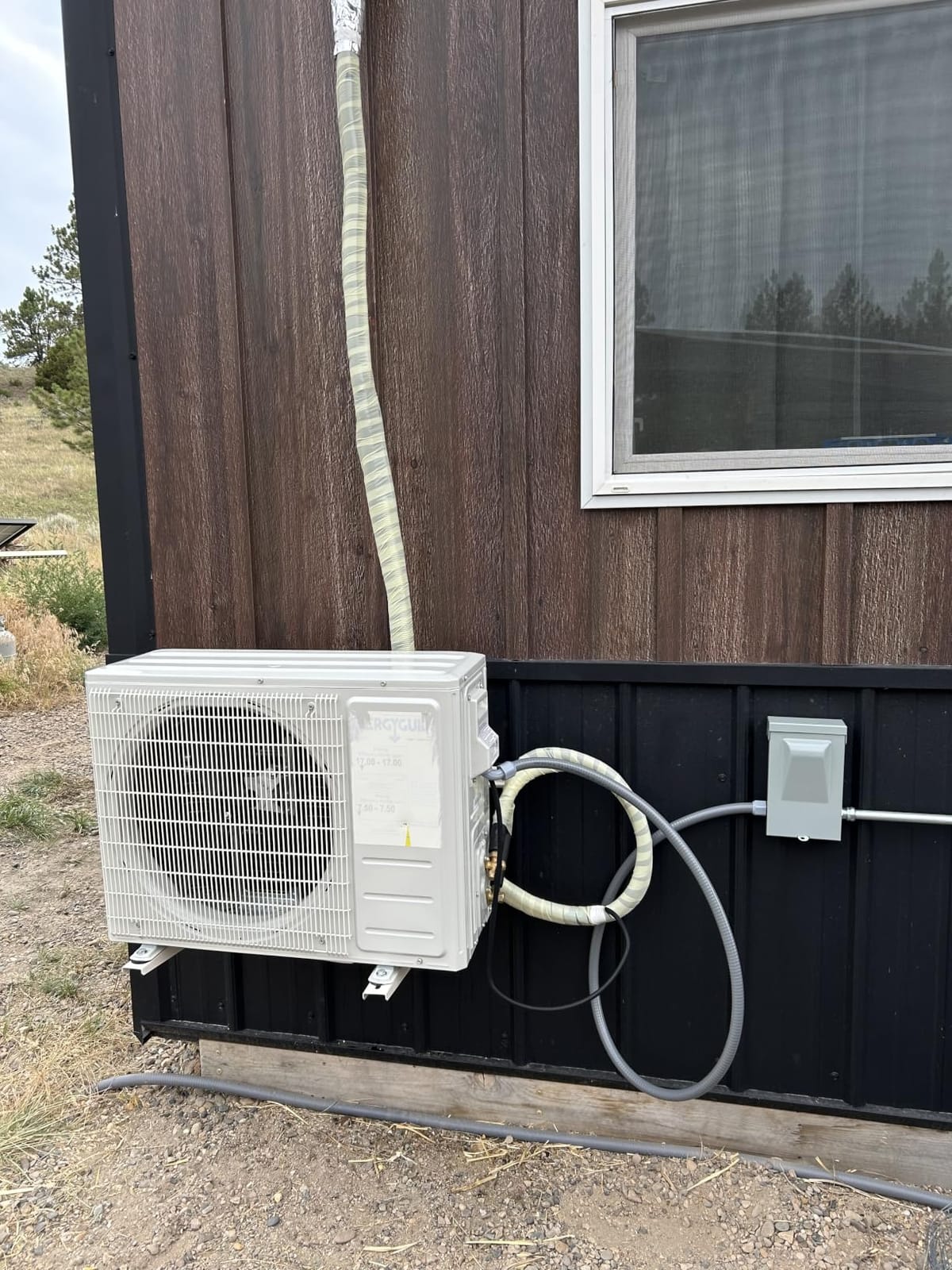
Where it suits a bedroom
A quiet room where nobody wants to think about upkeep is exactly the case for a self-cleaning coil. Combined with sleep mode at 26 dB and a washable filter, it removes both of the reasons people stop maintaining a head in a bedroom.
The AHRI certification means the efficiency figure is independently verified, which is worth more than a bold claim on a listing page.
What to be careful about
17 SEER2 trails every other system on this list, and over a decade of nightly use in a primary bedroom that gap adds up on a bill. The 35 percent power savings claim is measured against a conventional fixed-speed unit, not against the inverter systems above it.
The listing also contradicts itself on room size, claiming 450 square feet in the bullet points and 750 in the specifications. Assume 450 until an installer sizes the room properly. The one-year warranty is the shortest tier, and the set arrives in two boxes that can turn up days apart.
What Size Mini Split Does a Bedroom Need?
A 9,000 BTU mini split fits a typical bedroom up to roughly 400 square feet, and a 12,000 BTU unit covers 400 to 750 square feet or a sun-loaded room. The rule of thumb most HVAC guides use is 20 to 25 BTU per square foot for a bedroom with normal windows, and closer to 35 BTU per square foot when solar gain is the problem.
9,000 BTU equals three-quarters of a ton. 12,000 BTU is one ton, which is the size most whole-house central systems call a single small bedroom zone. That is why 12,000 is the most common capacity in this roundup: eight of the ten units we tested.
Is 9,000 BTU too much for a bedroom? Only in a genuinely small room. On a 10 by 10 floor, a 9,000 BTU unit runs at low output almost immediately, which means short-cycling, weak dehumidification and a room that feels cool and damp. The fix is not more cooling, it is less load: curtains, a shade on the sunniest wall and closed blinds once the sun moves off the glass.
Is it better to undersize or oversize? Slightly undersizing is the safer error, and the gap between the two should stay under roughly 20 to 30 percent. Oversizing is the more common regret in forum threads, because a unit that is too large reaches setpoint in minutes, stops, and then sits there sweating moisture into the room while you shiver under a duvet at 72F.
Before you order, measure the room, note which walls have glass and what direction they face, and ask an installer to run a load calculation. If a bedroom is 12 by 12 with one west window, 9,000 BTU is right. If it is 16 by 14 with two south windows, step up to 12,000 and expect to use the dry mode.
What 26 dB Actually Means for Sleep
A figure in the low 20s to upper 20s is the range most sleepers stop noticing after a few nights. The published figures in this roundup run from 23 dB to 38 dB, and that gap is audible on a bed ten feet from the head.
The important caveat is that these numbers are not measured the same way across brands. Forum discussions about decibel ratings keep returning to the same problem: one manufacturer quotes a sound pressure figure at a defined low fan speed and a set distance, another quotes a different distance and a different load condition. A 19 dB claim from one brand and a 21 dB claim from another are not directly comparable, and neither is a figure copied from a supplier datasheet.
What you can compare honestly is the ranking within a single listing, and what you can verify is your own room. Buyers on homeowner forums recommend a simple test: run the unit on low for a few minutes in a room you already know the sound of, and see whether you can still hear the fan. The indoor fan is often more noticeable than the compressor, because the compressor is outside.
Two specs help more than the decibel number. Sleep mode gradually raises or lowers temperature and steps the fan down, so it never drops straight into a full-blast cooling call. And a display you can switch off removes the only light source in the room, which several owners here call out. If you are pairing the unit with a fan, our air circulator picks for bedrooms cover moving air without adding compressor noise.
Condenser Placement: The Noise Nobody Expects
The outdoor condenser, not the indoor head, is the part of a mini split that generates noise in a bedroom. Fan noise and compressor startup both happen outside, and the unit produces enough low-frequency sound and vibration to travel through an interior wall or a bedroom-adjacent exterior wall.
This is the most repeated complaint in homeowner forum threads about bedroom mini splits, and it happens with reputable brands. The pattern is consistent: the indoor unit measures fine, the installer is satisfied, and the occupant still wakes to a hum that gets louder at night when the house is otherwise quiet.
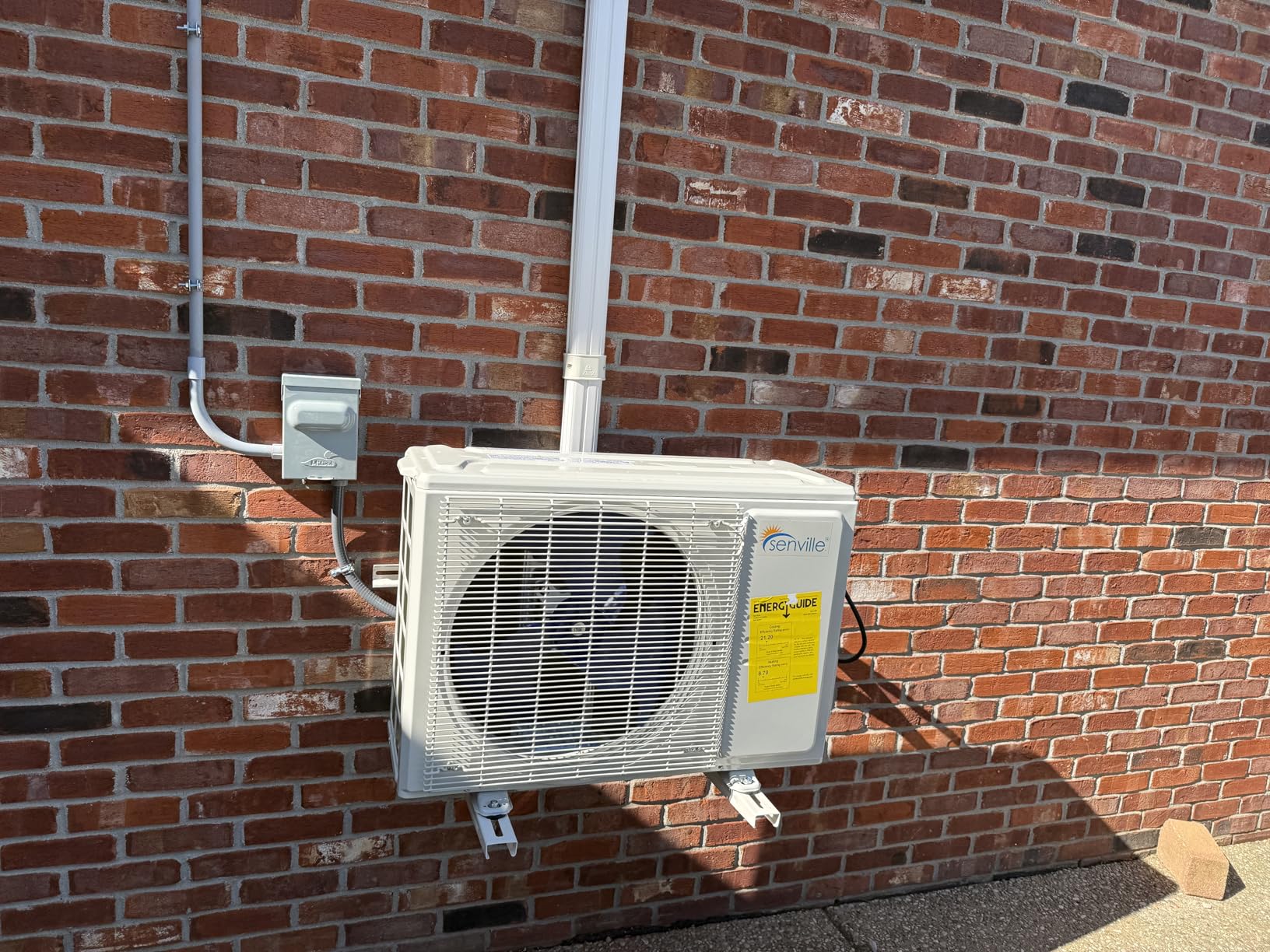
Four placement rules reduce it. Mount the condenser on a solid pad or a wall bracket that isolates it from framing, never directly bolted to a stud wall shared with the bedroom. Keep it at least a few feet from the bedroom window and outside the direct line of the bed. Mount anti-vibration feet between the unit and whatever it sits on, since the compressor is a mass on a frame. And route the line set so it does not act as a bridge for vibration into the wall.
Before the install is booked, walk the outside of the bedroom wall with the installer and agree where the unit goes. Moving a condenser after the line set is run means redoing refrigerant work, and that is the expensive mistake in this whole project.
Mini Split vs. Window AC for a Bedroom
A mini split wins for a bedroom that is used regularly, has poor ductwork access, or sits next to a sleeping area where window unit noise is intolerable. A window unit wins when the room is used a few weeks a year, when you are renting and cannot cut a wall, and when the budget will not cover a professionally installed system.
The noise comparison is stark. A window unit puts a compressor, a fan and a rattling chassis inside the room, and the noise follows you across the floor. A ductless mini split puts the compressor outside and leaves a fan and a coil inside, which is the entire argument for spending more.
Portable units are a weak option for sleeping. They are loud, they leak condensate, and the hot exhaust air has to be pushed out a window, so you are giving up window space and still keeping the noise. Our bedroom window AC guide covers the cases where that is the right trade anyway.
One situation where no unit is the answer: a bedroom that is small, poorly insulated and shaded all afternoon. A mini split will cool it, but it will run constantly, cost more to operate and dehumidify poorly. Fix the room first, then size the equipment.
Installation: DIY Kit or Professional Contractor?
Every unit in this roundup needs a licensed HVAC installer in most jurisdictions because of the refrigerant circuit, and the 115V rating does not change that. What 115V does mean is you skip an electrical service upgrade, which is often the single largest line item on a 230V install.
A pre-charged condenser comes with the refrigerant already in the unit, so there is no brazing and no buying a cylinder of R32 or R454B. That makes a self-install much closer to reachable than it used to be. It does not remove the vacuum, the gauges and the leak test, and none of the kits here include those tools.
The warranty is where DIY goes wrong. Six of these ten carry a one-year or undesignated warranty, and a compressor failure in year three undoes the installation saving in one invoice. The COSTWAY eight-year compressor coverage and the Senville five-year package are the two that change the arithmetic.
Also confirm the refrigerant and electrical rules before you book. Nine of these units use R32, a flammable refrigerant with tighter handling and siting requirements, and one manufacturer supplies a flexible connecting cord that some inspectors reject under the National Electrical Code. Both are questions for the installer, not for the product page.
How We Picked These Bedroom Picks
Every system here was selected from the same pool of ductless inverter heat pumps rated for 115V supply, then sorted against four criteria that decide whether a bedroom is comfortable at night: published indoor sound level, the compressor and parts warranty, operating range, and how much owner feedback exists behind the rating.
Sound came first because noise is the reason the bedroom use case exists at all. Warranty came second, because a bedroom unit that fails at year four costs more than the premium you avoided on day one. Volume of reviews was the tiebreaker, which is why the Senville leads: 2,185 ratings is enough history to see a pattern rather than an impression.
Where documentation is thin or contradictory, we said so. The Nexaro room-size mismatch, the Rellytech decibel conflict and the TOSOT torque table are all flagged in the sections above rather than smoothed over.
Frequently Asked Questions
What size mini split is good for a bedroom?
A 9,000 BTU mini split fits a typical bedroom up to roughly 400 square feet, while a 12,000 BTU unit covers 400 to 750 square feet or a room with heavy sun exposure. Most bedrooms need 20 to 25 BTU per square foot, rising to about 35 BTU per square foot for a west-facing or poorly insulated room. Ask an installer to run a load calculation before ordering, because the room’s windows and insulation matter more than the floor area alone.
Is 9000 BTU too much for a bedroom?
Only in a genuinely small room. On a 10 by 10 bedroom a 9,000 BTU unit reaches setpoint in minutes, then short-cycles, which means weak dehumidification and a room that feels cool but clammy. Slightly undersizing is the safer error than oversizing, and the gap should stay under roughly 20 to 30 percent. Curtains and a shade on the sunniest wall often fix the problem without changing the unit size.
Which mini split brand is the quietest?
Among these ten systems, the COSTWAY 12000 BTU and Temprium 12000 BTU publish the lowest indoor figure at 23 dB, followed by the TOSOT 9000 BTU at 25 dB. Published decibel ratings are not measured identically across brands, so compare the ranking rather than the exact number, and check that the unit has sleep mode and a display that can be switched off. The indoor head is rarely the loudest part; the outdoor condenser is.
Are mini splits supposed to be loud?
No, not inside the room. The compressor and the outdoor fan both run in the condenser, which sits outside the living space, so the indoor head only produces fan noise and coil hiss. The noise that people do notice usually comes from the condenser being mounted on a shared wall or too close to a bedroom window, which transmits both sound and vibration. Ask the installer about anti-vibration mounting before the unit is set.
What mini split brands to stay away from?
Judge by support and documentation rather than by brand name alone. Be cautious with units that ship a one-year or undesignated warranty, publish conflicting specifications such as a room-size claim that contradicts the spec sheet, or supply installation documentation with incorrect torque tables and wiring diagrams. The TOSOT and Rellytech systems here both have documented documentation issues even though their hardware performs well. Confirm the compressor warranty length in writing before you commit.
Conclusion
The best mini split air conditioners for bedrooms come down to three choices. The Senville LETO 12000 BTU is the pick when you want the deepest evidence base and a feature-rich head, and it is our editor’s choice for that reason. The COSTWAY 12000 BTU is the one to buy when quiet operation and an eight-year compressor warranty matter most. The ROVSUN 9000 BTU is the right fit for a small bedroom where 9,000 BTU is the correct size and you want app control for the least outlay.
Whatever you choose, size the room rather than the brand, plan where the condenser goes before the line set is run, and check the compressor warranty in writing. Those three decisions matter more at 2 a.m. than any specification on a listing page. Our picks were tested against owner feedback and published specs for 2026, and the bedroom you are cooling deserves a system that stays quiet through the whole night.