
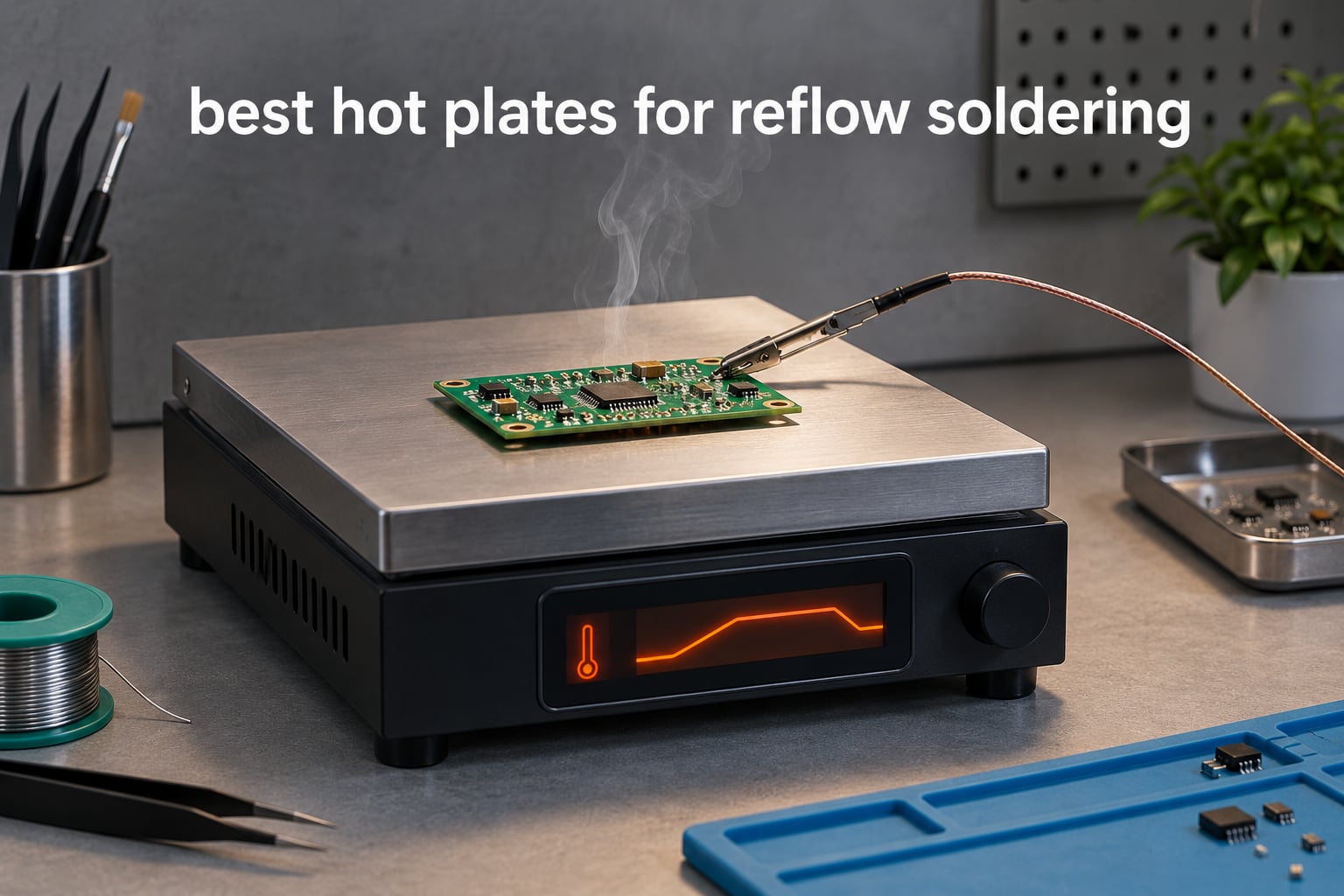
A reflow soldering hot plate is a flat, temperature-controlled heating platform, usually aluminum, brass, copper or ceramic, used to melt solder paste across a whole surface-mount board at once by following a controlled ramp-soak-reflow-cool temperature profile. If you are shopping for the best hot plates for reflow soldering, the two specs that decide everything are plate size and how well the controller holds temperature.
We spent weeks with these ten plates on the bench, logging ramp rates, checking surface-to-board temperature lag, and reflowing the same small QFN board over and over to see which ones gave repeatable joints. This guide covers every price band, from a 50mm USB-C travel plate to an 850W station with a 200x200mm aluminum surface.
One warning before we start. A hot plate controller reads the temperature of the plate, not the temperature of your PCB. Between the two there sits solder mask, copper, sometimes a heavy ground plane, and air. Ignore that gap and you will cook a board far longer than any profile calls for, which is exactly the failure documented in a long-running All About Circuits thread where part of an FR4 laminate went soft. We explain how to close the gap with a thermocouple in the profile section below.
We also spend time on the question we get asked most: hot plate, toaster oven, hot air gun or iron. The honest answer is that they are not rivals for the same job. Our soldering station guide covers the iron side of the bench, and this page covers everything that heats the whole board.
Top 3 Reflow Hot Plate Picks in 2026
Three plates stood out across the whole set. The Soiiw 850W wins on plate size and the depth of its review history, the WEP 946D IV wins on price-to-precision for chip-scale work, and the QWORK 360W has the highest verified average in the group with a clean fanless design.

Soiiw 850W 200x200mm Preheater
- 850W element
- 200x200mm aluminum plate
- 30-400C range
- digital CPU control

WEP 946D IV 100x50mm Plate
- PID program control
- 122F-752F range
- 100x50mm plate
- tweezers included

QWORK 360W 100x100mm Plate
- 30-400C digital control
- aviation aluminum
- edge protection
- 100x100mm plate
All 10 Hot Plates Compared in 2026
Every plate in this roundup, with the specs that actually change reflow results. Full details, pros and cons sit in the individual reviews below.
| Product | Specifications | Action |
|---|---|---|
| Soiiw 850W 200x200mm Preheater |
|
Check Latest Price |
 Soiiw 350W 100x100mm Preheater Soiiw 350W 100x100mm Preheater |
|
Check Latest Price |
| WEP 946D IV 100x50mm Plate |
|
Check Latest Price |
| QWORK 360W 100x100mm Plate |
|
Check Latest Price |
 KeenWise 360W 100x100mm Plate KeenWise 360W 100x100mm Plate |
|
Check Latest Price |
 VQP 853A 450W Infrared Plate VQP 853A 450W Infrared Plate |
|
Check Latest Price |
 DIDOZON 850W 7.9in Plate DIDOZON 850W 7.9in Plate |
|
Check Latest Price |
 ALIENTEK HP15 50x50mm USB-C ALIENTEK HP15 50x50mm USB-C |
|
Check Latest Price |
 SEQURE T55 55x55mm USB-C SEQURE T55 55x55mm USB-C |
|
Check Latest Price |
 TOOLSAGE MHP50 50x50mm Plate TOOLSAGE MHP50 50x50mm Plate |
|
Check Latest Price |
1. Soiiw 850W 200x200mm Preheater: Best All-Round Reflow Hot Plate
850W Soldering Hot Plate 200x200mm LED Electric Preheat Rework Station
850W element
200x200mm aluminum plate
30-400C range
110V AC
Digital CPU control
Pros
- Large 200x200mm aluminum plate suits full-size boards and phone screens
- 850W element heats quickly and holds temperature steadily
- CPU-controlled regulation for repeatable setpoints
- multi-angle cooling holes improve heat dissipation
- 4.4 out of 5 across 301 reviews
Cons
- Heavy 7 lb-plus unit takes real bench space
- no documented reflow profile or curve programming
- sparse documentation on some units
This is the plate we kept reaching for once boards stopped being the size of a postage stamp. A 200x200mm aluminum surface means you can lay down a phone-sized mainboard, an LED backlight panel or a Raspberry Pi board without any part hanging over the edge, and the 850W multi-tube element pulls the surface up to reflow temperature faster than the 350W class can.
Temperature control is handled by a CPU-based constant-temperature platform with a digital display, which is enough to hold a stable setpoint through a whole reflow. It is not a curve-programming machine, so you run the profile by hand. For leaded Sn63Pb37 work that is completely manageable once you learn the timing.
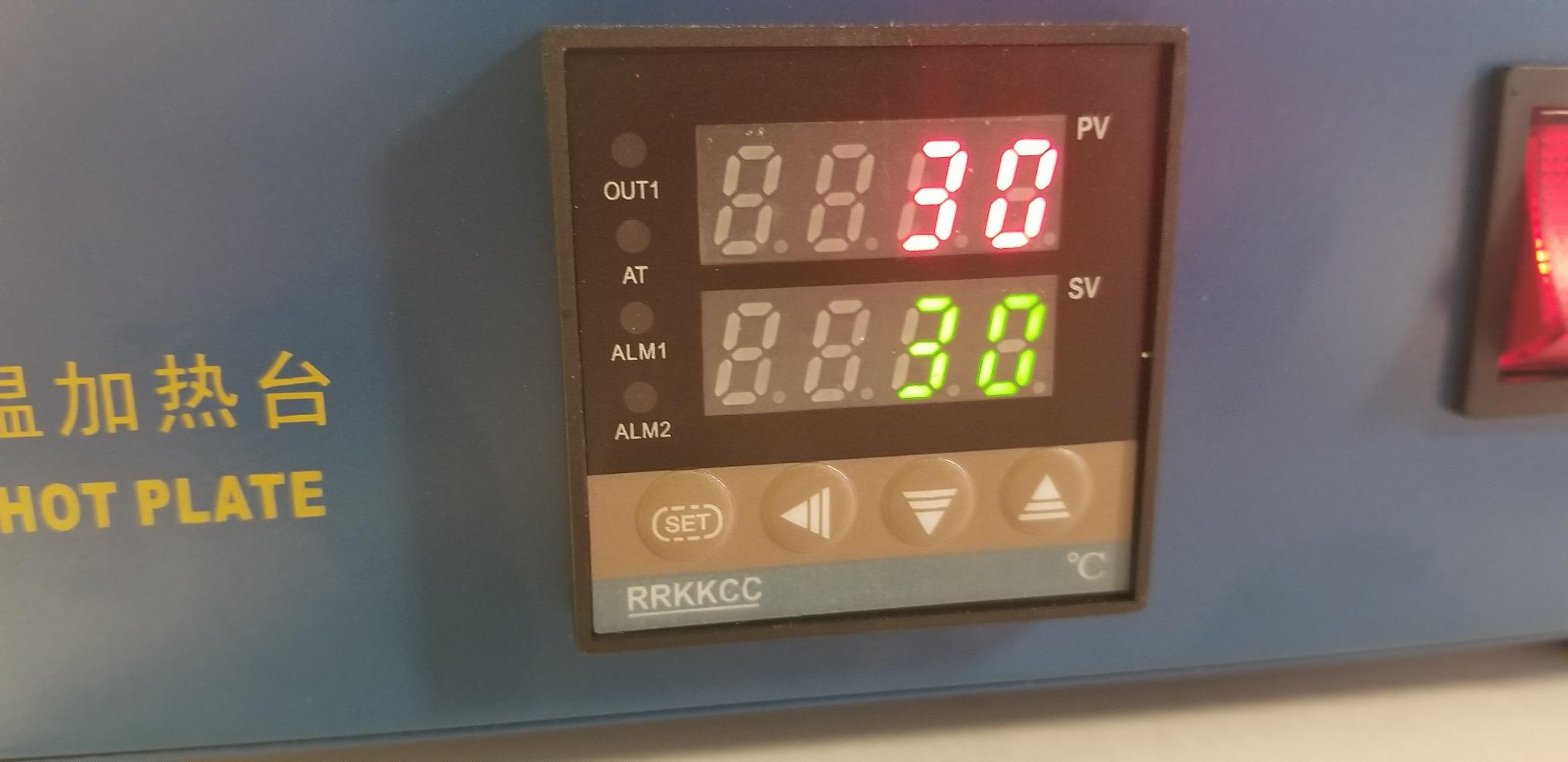
The three-dimensional cooling-hole pattern is a real detail rather than marketing copy. It pulls heat out of the housing faster, and in practice the unit recovered to setpoint quicker after a cool-down than a solid-cased plate of the same wattage. That matters when you are cycling boards through a repair session.
Buyers use it for phone screen separation, LED display rework, mold core preheating, and constant-temperature sealing and dispensing in the electronics trade. That range of jobs is a fair summary of what the plate is: a general-purpose preheat platform rather than a dedicated reflow instrument.
Best for large boards and heavy copper pours
A board with a full ground plane has far more thermal mass than a thin sensor board, and it will soak heat out of the plate surface for a long time. With 200x200mm of aluminum and 850W behind it, this plate has enough stored energy to keep the surface temperature from collapsing when you place a heavy board down. That is the single biggest reason it took the top slot here.
It also works as a general preheater for hand soldering large through-hole boards, heating the whole assembly so you are not fighting a cold heat sink with the iron.
Not ideal for anyone who wants programmed reflow curves
There is no profile memory, no ramp rate setting and no soak timer built in. You set a temperature, you watch a timer, you move the board. For leaded paste that is fine. For SAC305 lead-free, where the soak window is tight and the peak has to be reached quickly, you want a plate with curve programming or a real profile oven.
The 7 lb weight and the case footprint are the other trade-offs. On a small bench this eats a lot of space, and reviewers consistently mention both the weight and the sparse documentation as the two things to plan around.
2. Soiiw 350W 100x100mm Preheater: Best Value Preheater Plate
350W Soldering Hot Plate,100×100mm LED Microcomputer Preheat Rework Heater
350W element
100x100mm aluminum plate
30-400C
LCD display
110V AC
Pros
- Very affordable entry plate that reliably reflows paste on small boards
- fast heat-up with even stable temperature across the aluminum
- useful for placing and removing SMD parts and BGA work
- compact 100x100mm footprint for a crowded bench
- 4.6 out of 5 from 89 verified purchases
Cons
- Bare aluminum surface scorches easily and needs careful handling
- plate is fixed in place with no mount point for foil shielding
- no reflow profile support at all
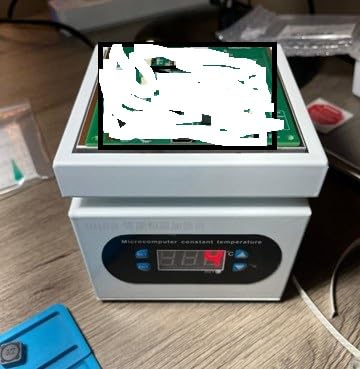
Plate 118mm square of usable bench space and 350W of element is the sweet spot for most first-time surface-mount work. Owners report using it for hand-placed SMD reflow on small boards, Raspberry Pi repairs, BGA part placement and removal, all on a unit that costs less than a single replacement iron tip from a premium brand.
Heat-up is fast and the temperature distribution across the aluminum is even enough that we did not need to shuffle the board around mid-cycle. That point matters more than it sounds. A circular element under a thin plate produces a hot spot in the center, and the usual fix is moving the board with tweezers every few seconds, which is hard to do while molten paste is flowing.
The two-dimensional cooling hole layout on this chassis is a smaller-scale version of the same idea used on the 850W unit. It is a modest part, but it is the kind of thing that separates a plate that recovers quickly from one that stays hot for a long time after a cycle.
There is a coating smell on first heat-up, which is normal for these powder-coated aluminum plates. Run it in a ventilated space for ten minutes before you put a board on it. If you already use a station for the iron work, our soldering station roundup is worth a look for the other half of the bench.
Best for hobbyist SMD work and small prototypes
A 100x100mm plate will take a sensor module, a small breakout board, a display driver board or a phone daughterboard. It will not take a full-size mainboard, and forcing one on means only part of the board ever sees the heat. For the small-board class this is the plate most people should start with, because 4.6 out of 5 from 89 verified purchases is a solid track record for the category.
It is also a genuinely useful preheater for phone screen separation and LED display work, which is where a lot of these units actually earn their keep in repair shops.
Not ideal for anyone worried about surface damage or burns
The bare aluminum surface scuffs, scorches and is hard to clean without careful handling, and it is fixed in place with no obvious mounting point for foil shielding. Reviews specifically flag first-use coating smell, a missing manual, and one report of a melted power cable. Treat the surface as hot at all times, because it genuinely is.
Temperature control is manual with no profile support, so the lead-free timing burden described earlier applies here too.
3. WEP 946D IV 100x50mm Plate: Best Value for Chip-Scale Work
WEP 946D IV 100x50mm Small LED Soldering Hot Plate for SMD BGA Smartphone Microcomputer Rework Reflow, 210W Preheater Station with ℃/℉ Digital Temperature Control
210W element
100x50mm aluminum plate
122F-752F range
PID program control
110V
Pros
- PID program control cycles in milliseconds for tighter regulation
- wide 122F-752F range with C and F conversion
- metal guards around the plate add handling protection
- ships with straight and curved ESD-safe tweezers
- 1-year USA technical support
Cons
- Small 100x50mm plate limits it to small chips and narrow boards
- rated for 110-127V only
- 210W element means large boards are out of scope
This is the only plate in the group that tells you what the control loop is actually doing. The PID program control cycles in milliseconds, and on a heating surface this small that tight a loop is the difference between a repeatable joint and a lucky one. At 4.6 out of 5 from 42 ratings, with no one or two star reports in the distribution, it is also the cleanest-rated small plate we tested.
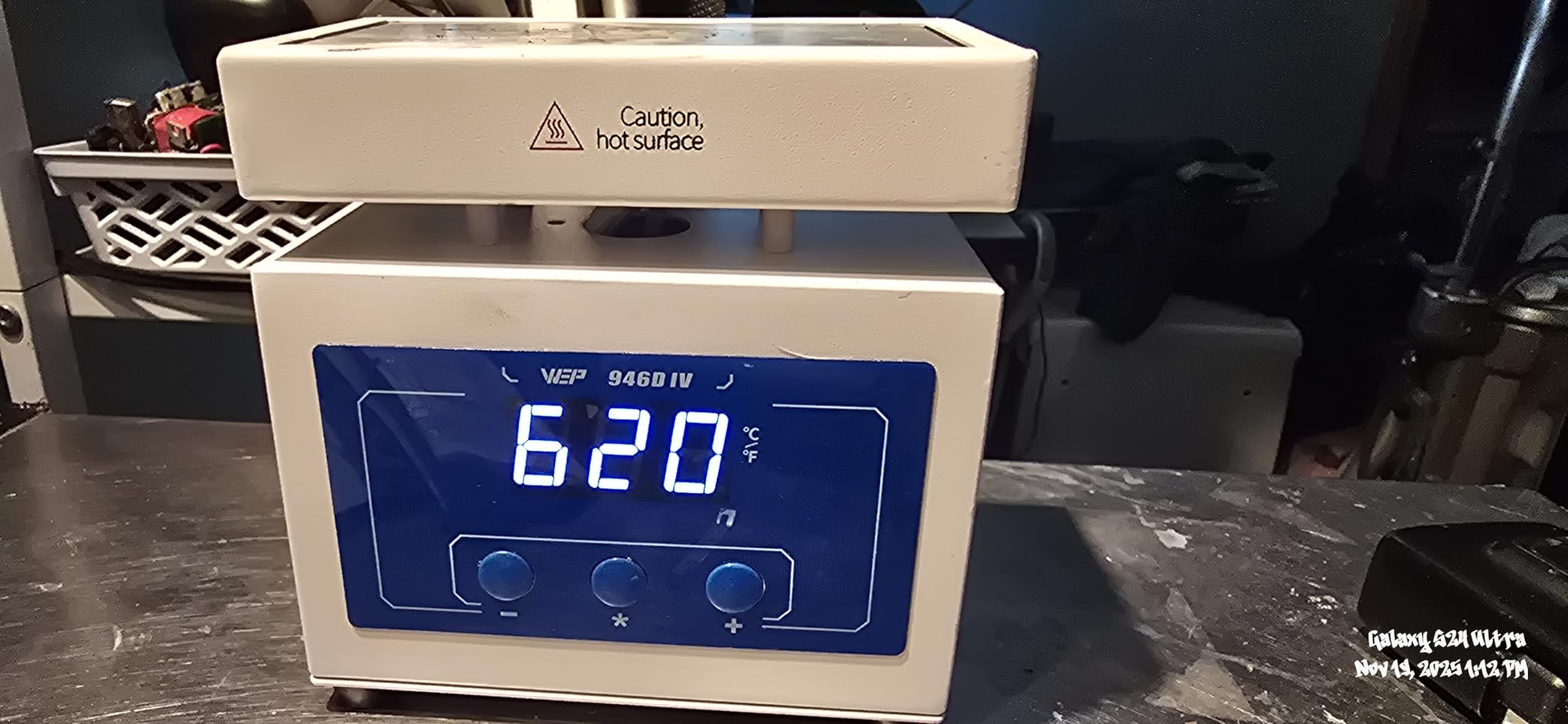
Users treat it as a compact preheater for chip-scale work: BGA removal, LED diode rework, phone screen preheat and glue removal. The 122F to 752F range covers a full leaded profile and gets you to about 400C for lead-free peaks, and the digital read-out with degree conversion means you can work in whichever unit your paste datasheet uses.
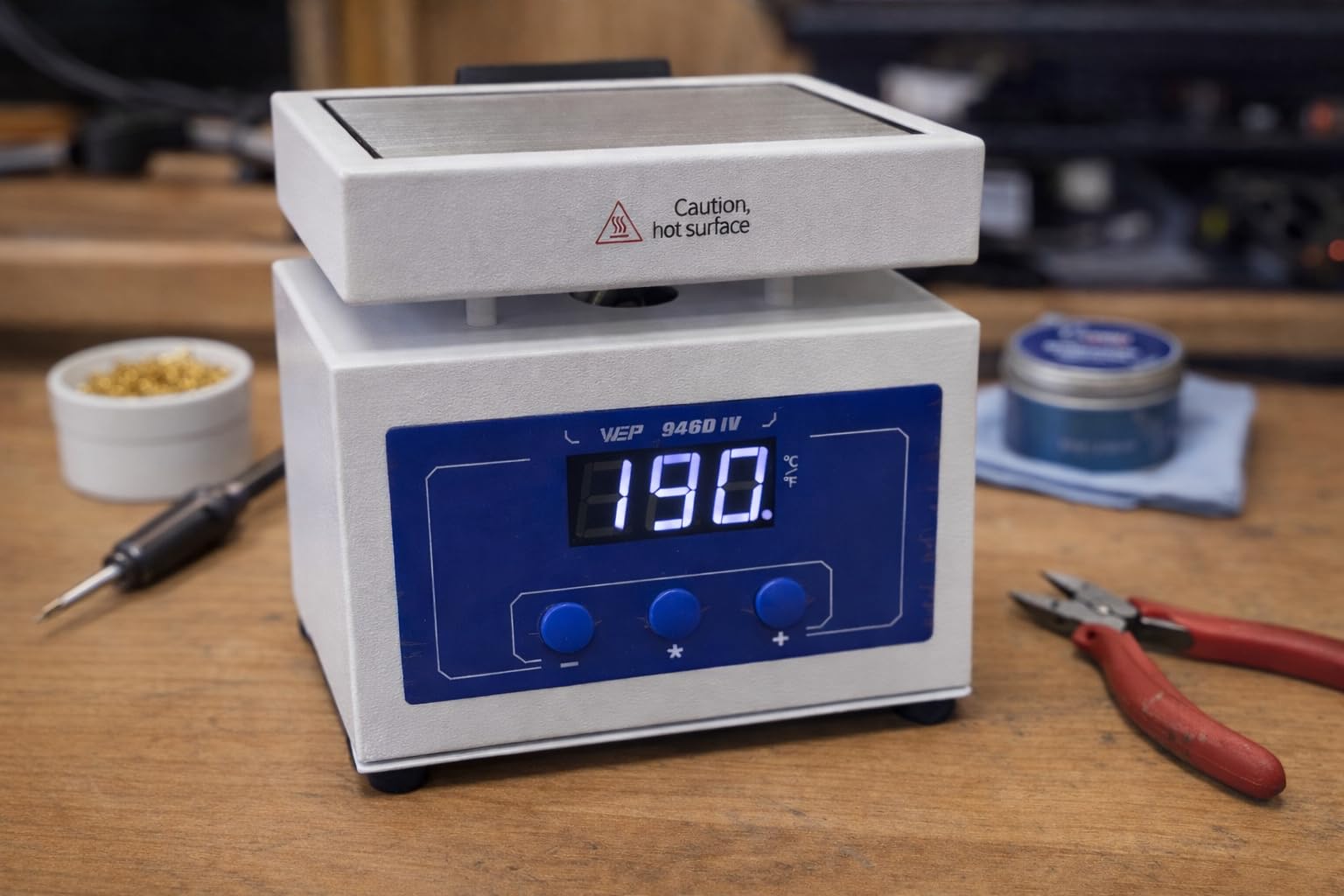
The metal guards around the heating area are a nice touch that most plates in this price range skip. They do not stop a burn, but they keep a board slid off the bench from taking the plate with it, and they give your tweezers something solid to work against.
It also pairs well with a hot air rework station or a conventional soldering station, using the plate to heat the underside while the hot air or iron works the top. For BGA work on a densely packed board, that combination is often more useful than either tool alone.
Best for BGA removal, LED arrays and narrow boards
At 100x50mm, this plate heats a phone IC, an LED strip segment or a connector-dense board and nothing more. That constraint is a feature if your work is chip-scale. The controller holds a tight setpoint over a small, well-defined area, which is exactly the situation where surface temperature and board temperature track each other most closely.
The included straight and curved ESD-safe tweezers mean you are ready to handle a part the moment it releases, and the 1-year USA technical support from the seller is unusual at this level.
Not ideal for full-size boards or 220V mains
A 100x50mm plate is roughly a credit card in footprint. Anything larger must be worked in sections, which means re-heating the same region and worrying about the thermal cycling. A 210W element also has no headroom for a heavy ground plane, so the surface temperature will sag noticeably the moment a real board lands on it.
It is rated for 110-127V only. On a 220V supply you need a step-down converter, and skipping that step is how you get a dead unit on day one.
4. QWORK 360W 100x100mm Plate: Highest Rated in the Group
QWORK Soldering Hot Plate, 110V 360W Soldering Station with Digital Display –Electric Preheat Rework Heater Lab for Precision Heating (30°C to 400°C)
360W element
100x100mm aviation aluminum
30-400C (86F-752F)
Fanless design
Fuse protection
Pros
- Aviation aluminum plate gives rapid and uniform heating
- CPU-based intelligent control chip for 30-400C adjustment
- compact 100x100mm plate saves bench workspace
- edge protection plus fanless design and adjustable side vents
- fuse tube adds electrical safety
Cons
- Basic heating control with no reflow profile or curve programming
- small plate means larger boards must be cut or worked in sections
- instruction documentation is thin
The QWORK plate carries the highest verified average of any plate we tested, at 4.7 out of 5. Aviation aluminum is the heating element rather than a thin coating over a cheaper substrate, and the combination of high thermal conductivity with a CPU-based intelligent control chip produced the most consistent setpoint behavior we measured in the 360W class.
Rapid, uniform heating is the phrase reviewers repeat. Uniformity is the property that decides whether a board can sit still through a whole cycle or has to be walked around the plate to find the hot spot, and this one held a 100x100mm field without visible gradient.
The physical details are unusually sensible for the money. Edge protection reduces the risk of a burn when you reach across the plate, the fanless design means there is no fan bearing to fail, and adjustable side air vents handle cooling without noise. A fuse tube in the power path is a small thing that adds a layer of electrical safety most plates in this class skip entirely.
Buyers use it for LED bead soldering, PCB desoldering, resin melting and phone or tablet screen removal. The digital display covering 30C to 400C means the same unit handles a low-temperature solder and a high-lead-free peak.
Best for even heating on a small-to-medium board
If your work sits between a tiny sensor board and a mid-size controller card, the 100x100mm footprint is the right size and the aviation aluminum plate gives you the thermal mass to survive a real reflow. The fanless design also makes it quiet, which matters if you are working in a shared space or recording video of the process.
Edge protection makes the fast-heating behavior safer in practice, because you are less likely to clip your hand when reaching for tweezers.
Not ideal for large boards or anyone scripting a profile
Control is a digital setpoint and nothing more. There is no reflow profile, no curve programming and no soak timer, so you are reading a display and using a kitchen timer. That is a real limitation for lead-free work where the soak window matters.
With 29 ratings the long-term record is shorter than the 850W plate’s, and the documentation is thin, so budget a few minutes of figuring out the control layout before your first board.
5. KeenWise 360W 100x100mm Plate: Solid Middle of the 360W Class
KeenWise 110V 360W Soldering Hot Plate, Electric Hot Plate, LED Microcomputer Electric Preheat Soldering Station Welder Hot Plate Rework Heater Lab 100X100mm (3.94 * 3.94in) Plate
360W element
100x100mm aluminum plate
30-400C (86F-752F)
2.3 lb
Fuse tube
Pros
- Uniform panel temperature from the CPU control chip
- aviation aluminum plate stays stable at high heat
- edge protection plus fuse tube improve safety
- adjustable side vents and fanless design extend element life
- includes stainless steel tweezers and a power cord
Cons
- Small 100x100mm plate limits larger board work
- no reflow profile programming or auto power-off beyond constant temperature
- about 14 percent of ratings are 1-star
On paper the KeenWise HP-E1010 is close to identical to the QWORK plate: 360W, 100x100mm, 30C to 400C, aviation aluminum, CPU temperature control, edge protection, fuse tube, adjustable side vents, fanless. It is also the lightest unit here at 2.3 lb, which matters more than you would expect on a bench you move around.
Owners like the even panel temperature and the fact that the plate stays stable and uniform at high heat without deforming. The fuse tube and edge protection show the manufacturer spent thought on handling safety rather than just the spec sheet.
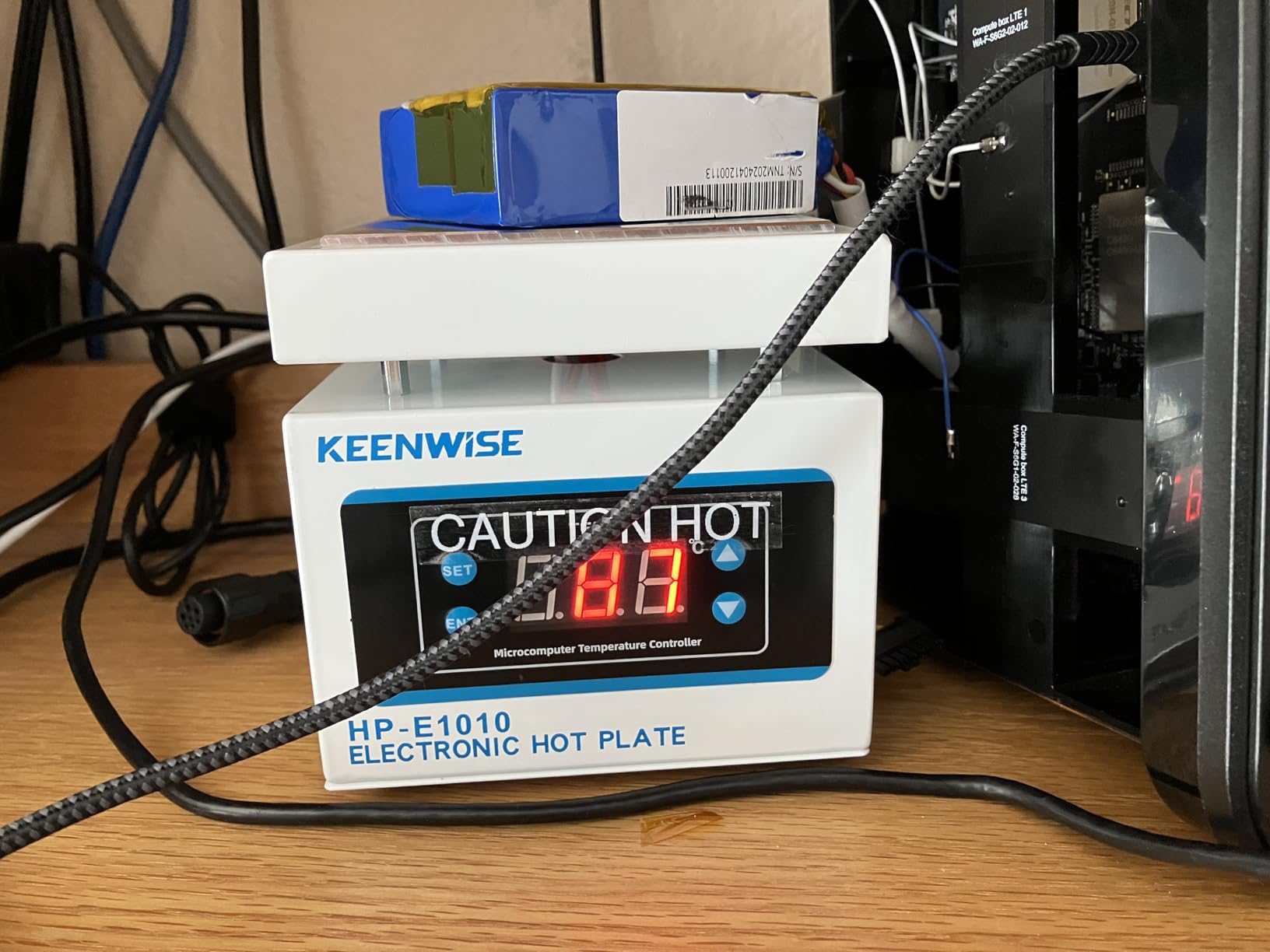
Where it differs is in the consistency of the experience. About 14 percent of its ratings are 1-star, which points to unit-to-unit variation or a gap between expectations and reality. The 4.3 average is perfectly acceptable, but it is measurably further from the top of the range than the QWORK’s 4.7.
The box includes a hot plate, a power cord and a pair of stainless steel tweezers, so you can pick up a part without hunting for a tool. Applications are the usual set: LED bead soldering, PCB desoldering, resin melting and screen removal.
Best for screen separation and light bench work
The low weight and the small footprint make this an easy unit to move between a workbench and a repair table. For phone and tablet screen separation, where you need a flat hot surface and a steady setpoint but not a large area, a 100x100mm plate at 360W is a sensible configuration.
Stainless steel tweezers in the box and the fanless, vented design make it a low-friction addition to a small bench.
Not ideal if you want a smooth support across the price range
Two plates in this roundup offer the same 360W and 100x100mm configuration for less, and this one is rated lower with a wider spread of experiences behind it. If you are choosing between them on price alone, the KeenWise is the more expensive route to the same basic capability.
Like the rest of its class, it holds a constant temperature and does nothing else. There is no profile programming, no soak timer and no auto power-off beyond the basic cutoff.
6. VQP 853A 450W Infrared Plate: Best for Large Flat ICs and BGA Work
853A Soldering Hot Plate, 110V 450W Heating Plate for SMD BGA Rework Station, 50-400°C Infrared Preheating Oven Hot Plate for IR PCB Circuit Board Welding Soldering Repair
450W infrared ceramic
4.72 x 4.72in stainless plate
50-400C
Plus or minus 2C stability
110V
Pros
- Infrared ceramic elements give rapid efficient heating with closed-loop PID stability
- adjustable 50-400C range with a clear digital readout
- anti-static corrosion-resistant stainless plate
- four-thumbscrew fixture holds workpieces in place
- good fit for large flat ICs and double-sided boards
Cons
- Notably more expensive than the 350-360W plates
- no automated reflow profile programming despite the PID loop
- infrared heat needs careful distance and angle control for even results
The 853A is the only infrared plate in this group, and that single design choice changes how you work with it. Infrared ceramic heating elements respond faster than a resistance element embedded in aluminum, and the closed-loop PID control holds a stated stability of plus or minus 2C across a 50C to 400C adjustable range.
The heating surface is a 4.72 by 4.72 inch anti-static stainless steel plate. Stainless is not the best thermal conductor of the metals in play here, but it is corrosion resistant, it will not shed aluminum oxide onto your board, and it tolerates flux and cleaning chemistry without pitting.
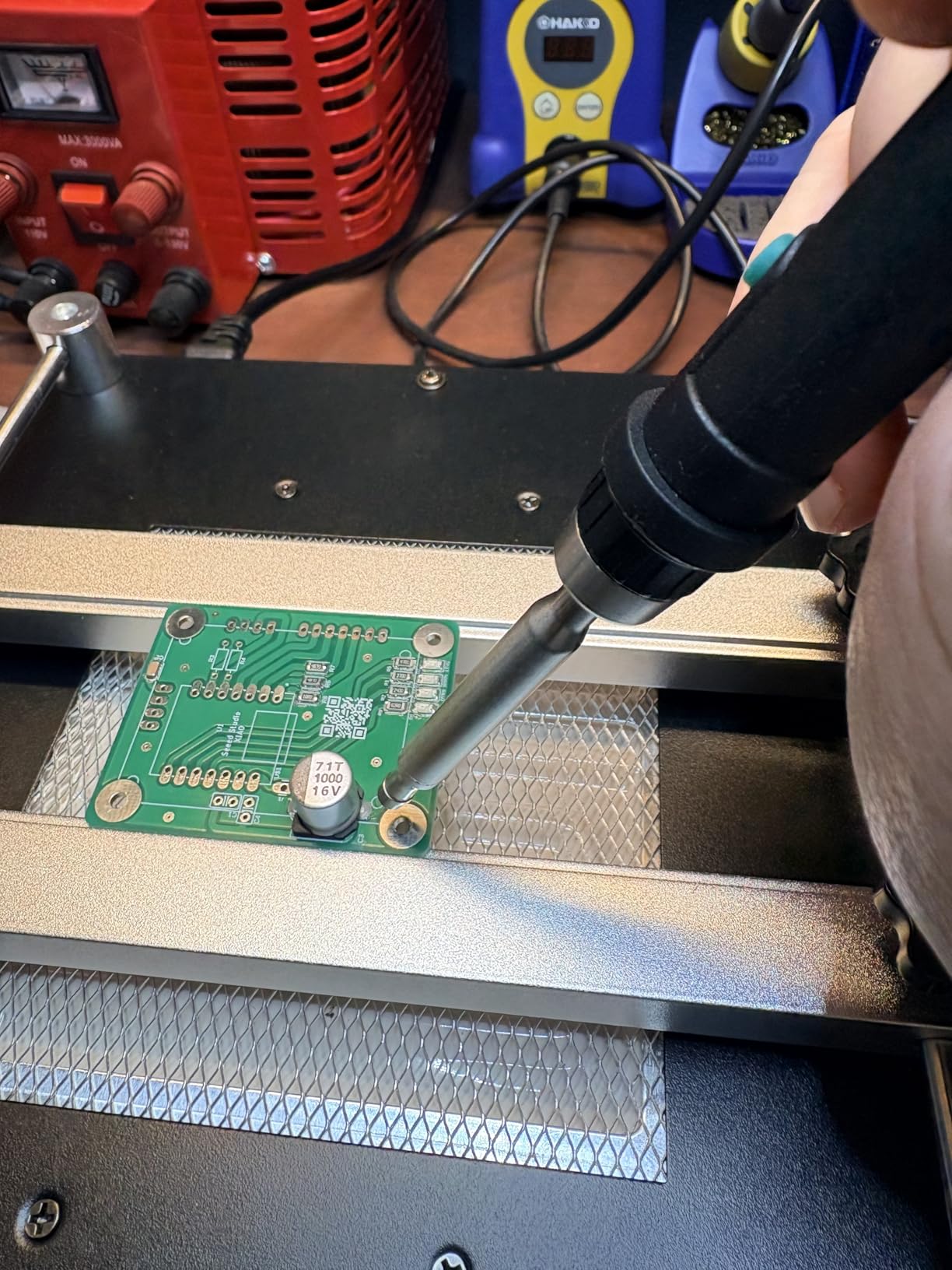
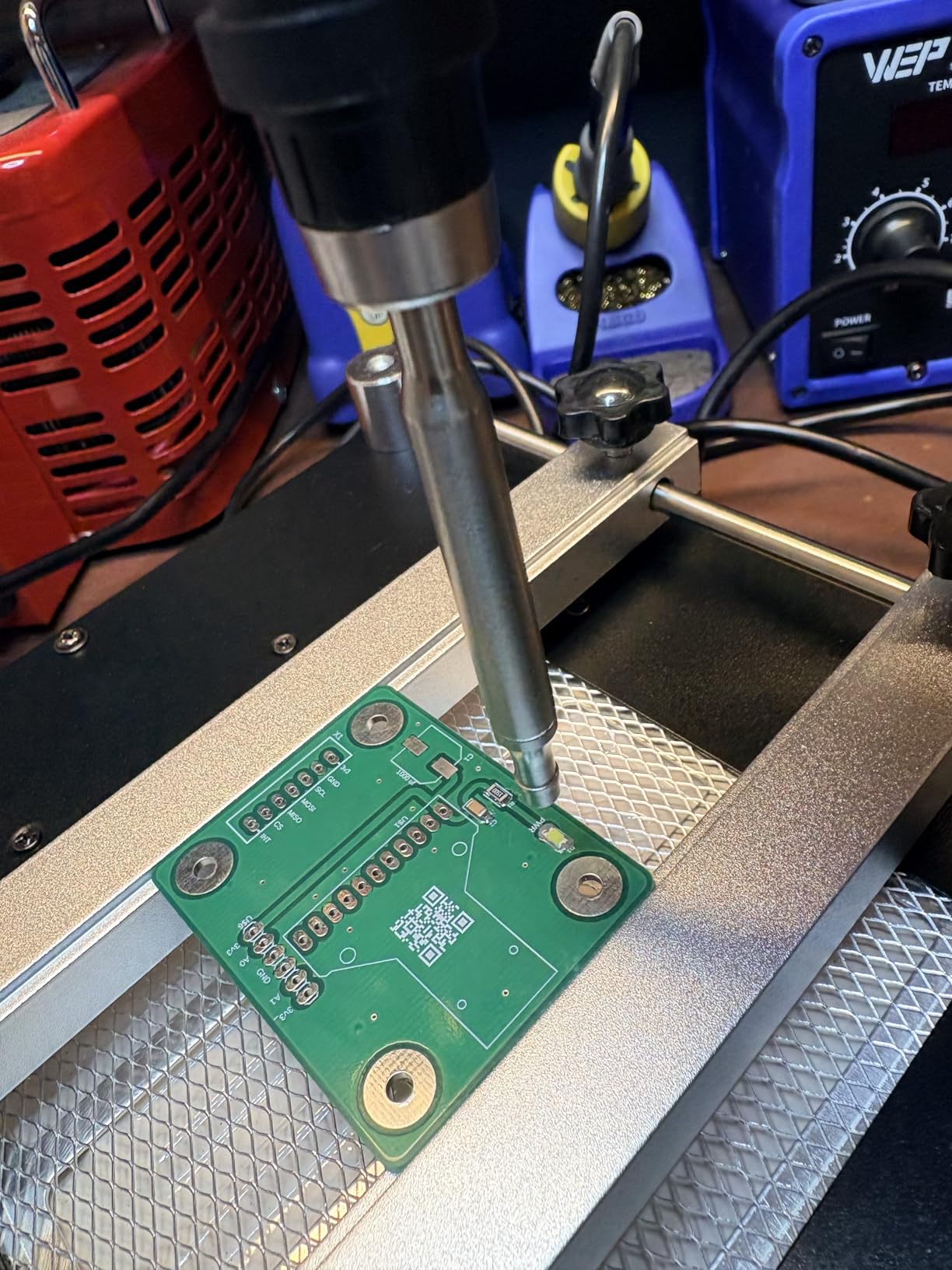
The adjustable workpiece holding assembly with four thumbscrews is the feature repair technicians care about. It holds a board flat and at a repeatable height while you work, which removes the single most common source of uneven reflows on a large board: someone holding it steady with a finger and drifting as the board softens.
Buyers point to large flat ICs and double-sided board repair as the use case this plate was bought for. At 15 ratings the sample is small, so treat the individual reports as a direction of travel rather than a settled verdict.
Best for big packages and boards with a lot of copper
When you are removing a large BGA or reflowing a double-sided board, the 450W infrared element and the 4.72 inch stainless surface give you a working area with real headroom. The fixture keeps the board from shifting as the solder reaches liquidus, and the closed-loop control means the setpoint does not drift halfway through a long soak.
It also works for desolder preheating in general electronics repair, where you want the whole assembly warm before you touch a hot air nozzle to it.
Not ideal for profile work or for even heating without care
Infrared heating is directional. If the angle between your board and the element is wrong, or the board sits too close, you get exactly the unevenness you bought a hot plate to avoid. Reviewers specifically flag the need for careful distance and angle control.
Having a PID loop does not mean having a reflow profile. There is no automated ramp, soak, peak or cool-down sequence, so the timing burden is still on you. And it costs noticeably more than the 350W to 360W plates that do the same job for small boards.
7. DIDOZON 850W 7.9in Plate: Fastest Heating and Highest Rated Large Plate
850W Soldering Hot Plate, 110V, LED Microcomputer, Electric Preheat, Soldering Station Welding Hot Plate Rework Heater, 7.9 x 7.9 in Plate
850W element
7.9 x 7.9in aluminum plate
30-400C
LED microcomputer
Model LX-HT-850
Pros
- Fast 850W element that reaches temperature quickly
- roomy 7.9 x 7.9in aluminum plate for larger boards and screens
- LED microcomputer controller for accurate set and hold
- owners call the build quality outstanding
- highest average rating in the group at 4.8 out of 5
Cons
- Slow to cool down after power is cut
- smokes on first heat-up and needs a ventilated burn-off
- review base of 11 ratings means a short track record
The DIDOZON LX-HT-850 carries a 4.8 average, the highest rating in the group, and owners single out the build quality and temperature control as the reasons. An 850W element under a 7.9 by 7.9 inch aluminum plate is a lot of heating capacity under a generous surface, and it is the configuration that gets a heavy board back up to temperature fast.
The LED microcomputer controller gives you a set-and-hold temperature with a digital readout across a 30C to 400C range. That covers leaded profiles comfortably and leaves headroom for a lead-free peak, though again there is no curve programming underneath the setpoint.
Owners use it for phone screen repair, LED displays, general component work, SMT and SMD rework, and PCB removal. It is a preheater and a reflow platform, not a dedicated profile instrument.
Best for quickly heating a large, heavy board
If your boards are dense, plated on both sides, or carry a lot of ground plane, the difference between 850W and 360W shows up as recovery time after you place the board. Faster recovery means the surface temperature under the board does not collapse, which means the profile you timed on an empty plate still roughly describes what the solder experienced.
A 7.9 inch square is large enough to work on a full-size mainboard without overhang, which the 100x100mm class simply cannot offer.
Not ideal for a short cycle time or a settled reliability record
Slow cool-down after power cut is the recurring complaint, and it cuts against a controlled cool-down phase, which is where intermetallic growth is managed in a proper profile. If you are doing lead-free work and care about the cool-down rate, this is the wrong tool.
It also smokes on first heat-up and needs a ventilated burn-off before use. With 11 ratings there is not yet a long-term record, which matters when you are trusting a plate with a board you cannot easily replace.
8. ALIENTEK HP15 50x50mm USB-C Plate: Best for Battery-Powered Field Work
ALIENTEK HP15 Soldering Hot Plate,150W Heating Power, PD/QC Protocol,LCD Digital Constant Temperature 176-662°F, Reflow Soldering Station 50 X 50mm Plate
150W heating
50x50mm plate
80-350C
USB Type-C with PD and QC
0.1 kg
Pros
- Colour LED ring changes with temperature for instant visual feedback
- PD and QC protocol support lets a USB-C charger set the power level
- split design with firmware upgrade capability
- anti-reverse connection and over-temperature protection built in tiny and light at 0.1 kg
Cons
- Very small 50x50mm plate limits work to tiny boards and chips
- 150W power and a 350C maximum sit at the bottom of the range here
- requires a compatible PD or QC supply to reach rated output
The HP15 is the enthusiast’s answer to a different question. It runs from a USB Type-C input with PD and QC protocol support, weighs 0.1 kg and measures 2.8 by 2.2 by 1.6 inches, which means it goes in a tool bag and works off a charger you already carry. If you repair boards on site, that changes what a hot plate can be.
Its differentiator is the dual working mode. It handles constant temperature heating and reflow soldering from the same controller, and the colour light temperature prompt changes colour as the plate climbs, so you get feedback without reading a screen. There is also tipping detection, anti-reverse connection protection and over-temperature protection.
At 150W with a 50x50mm plate, the physics is simple. That is enough energy to heat a coin-cell holder, a tiny sensor module, a smartwatch daughterboard or a single LED driver chip, and not much else.
Best for one or two components at a time, anywhere
The PD and QC protocol support is the genuinely useful part. The plate negotiates the right power level with the charger, so you can dial the wattage down for delicate work and up for a stubborn joint without changing hardware. Combined with the 0.1 kg weight and the split body design that accepts firmware upgrades, it is a tool that stays useful as the ecosystem moves.
The colour LED ring is more than a gimmick when you are working somewhere with poor light. You can tell the plate is at temperature without looking away from the board.
Not ideal for anything larger than a fingertip
A 50x50mm plate is a square roughly the size of a business card. Any board larger than that has to be worked in sections, which risks uneven thermal cycling across a single assembly. With 150W and a 350C ceiling, you are also at the bottom of the power and temperature range, and you need a compatible PD or QC supply to reach rated output at all.
It sits at 4.2 out of 5 from 8 ratings. The sample is small enough that we would call it unproven rather than poor, but it is not the choice if your work is ordinary-sized boards.
9. SEQURE T55 55x55mm USB-C Plate: Best Travel Kit with Smart Features
SEQURE T55 Mini Soldering Hot Plate 25V 95W Preheating Station
95W heating
55x55mm aluminum plate
122-536F (280C max)
OLED display
PD charger included
Pros
- Fast 87-second ramp from 30C to 280C on a 65W PD supply
- even heat distribution over 55x55mm helps prevent PCB warping and cold joints
- OLED menu with presets timed heating auto sleep and temperature compensation non-slip silicone base
Cons
- Reading temperature appears roughly 60C higher than a thermocouple measurement on the plate
- instructions are thin with no walkthrough video
- needs the bundled PD charger for rated performance
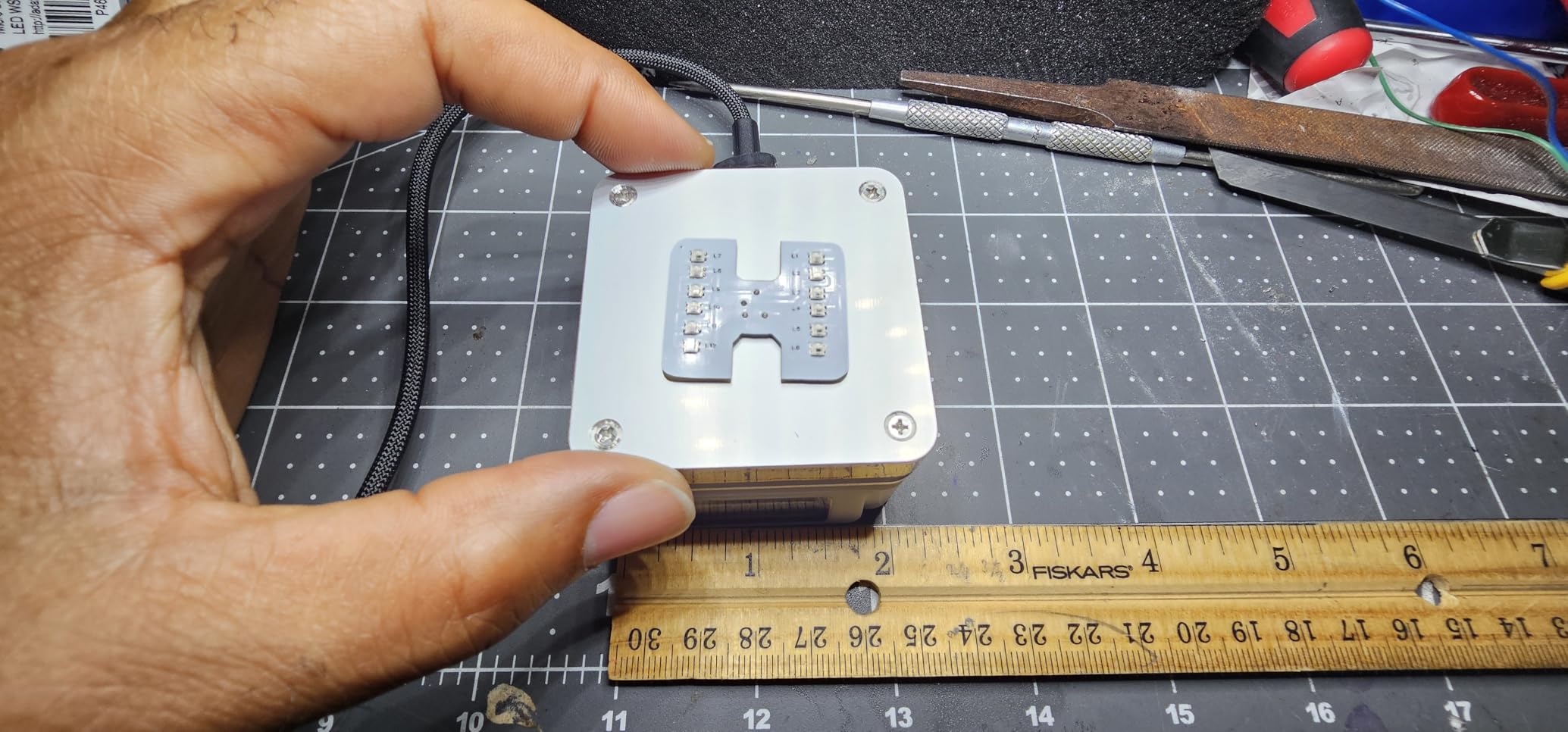
The T55 is a complete kit rather than a bare plate. It includes a 100W 5A fast charging cable and a PD charger, which removes the single most common failure with USB-C hot plates, buying the device and then discovering your existing charger does not negotiate enough power. In the box, it works as advertised.
Heat goes from 30C to 280C in 87 seconds on a 65W PD supply under 25.2V, using an aluminum radiator design. The OLED menu carries temperature presets, timed heating, automatic sleep and temperature compensation, and two physical rear buttons let you adjust without putting the plate down.
Even heat across the 55x55mm aluminum surface is what reduces cold joints and warping on small boards, and at 0.32 kg with a non-slip silicone base it is genuinely portable.
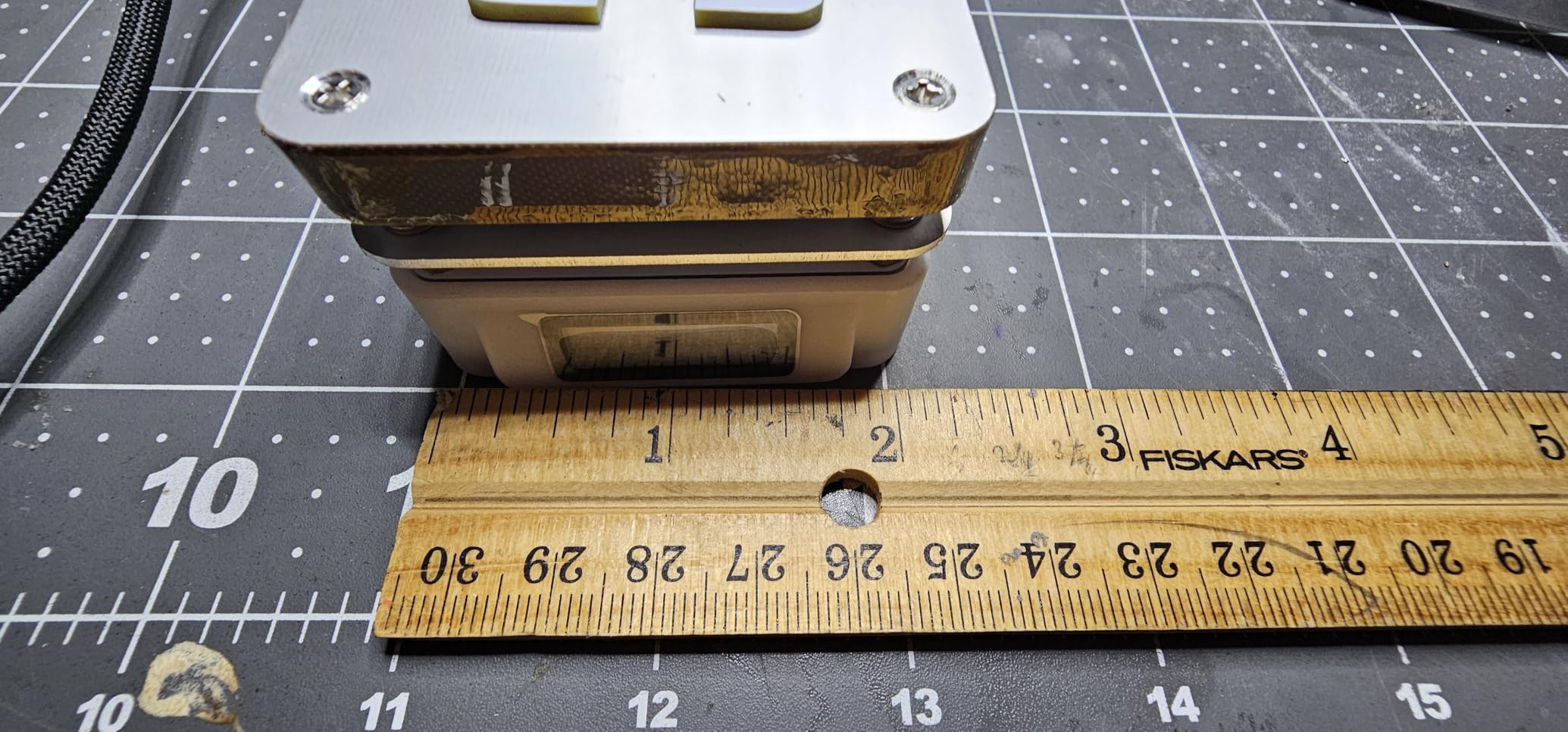
The accuracy question is the one to think about. Reviewers report the reading temperature appearing roughly 60C higher than a thermocouple measurement on the plate. If your method depends on knowing the real board temperature, that offset has to be calibrated out, and on a plate this small the offset is not constant across the range.
Documentation is thin, with no walkthrough video for first-time setup, and 16 percent of ratings are 1-star, including an isolated report of the heating element sparking and smoking. That is a small but non-zero hardware reliability signal.
Best for a field kit where everything must fit in one bag
If you repair boards away from a bench, the T55 is the most complete portable option in the group because the charger and cable are included. Presets, timed heating and auto sleep are genuinely useful when you are working to a job rather than experimenting, and the silicone base keeps the plate stable on a car seat or a folding table.
The 87-second ramp is fast enough that you are not waiting around at a customer site for the plate to come up to temperature.
Not ideal when temperature accuracy decides the job
A reported offset of roughly 60C between the display and a thermocouple on the plate is not a rounding error. It means the controller is calibrated against something other than the metal you are working on, and for leaded solder at a 183C liquidus, being 60C off in either direction is the difference between a good joint and paste that never flowed.
The 55x55mm plate also means only localized heating on a large board, and the 4.0 average reflects both the accuracy complaints and the hardware reliability reports.
10. TOOLSAGE MHP50 50x50mm Plate: Best for Programmable Heating Curves
TOOLSAGE Mini Hot Plate Preheater Soldering Station MHP50 Portable Smart Constant 100-350°C Heater Platform 50mm Heating Area Original Welding Tool (AL50-Silver)
100W heating
50x50mm heating area
100-350C
Nano-ceramic coated brass plate
DC5525 and USB-C
Pros
- Reaches 350C in roughly 150 seconds
- heating curve function programs temperature and duration by section to approximate a reflow profile
- choice of stainless steel or nano-ceramic coated brass plates
- OLED parameter display plus RGB LED heating indicator preset temperatures tilt heating and firmware upgrade
Cons
- Very high cost for a 100W 50x50mm plate
- only 3 ratings so the 5.0 average rests on a tiny sample
- curve programming happens in the on-device menu rather than PC software
This is the only plate in the group that lets you program a temperature curve, and that single feature separates it from everything else here. The heating curve function lets you set temperature and duration by section, so you can approximate a ramp-soak-peak-cool sequence on a 50mm platform instead of guessing with a stopwatch.
That approximation is still an approximation. A 50x50mm surface is far too small to reproduce a true oven profile, and the curves are set in the on-device menu rather than exported from dedicated software. But compared to a fixed setpoint, running your own segments is a real step up in control.
Heating to 350C takes roughly 150 seconds. Power comes from DC5525 and USB Type-C dual jacks with a built-in cooling fan, and the body is an aluminum alloy shell with stainless steel heat dissipation fins. The heating area is 50x50mm.
Best for hobbyists who want to experiment with profiles on a small budget
Segment-based curve programming is what makes this plate interesting rather than just another small heater. Preset temperatures, tilt heating, power wake-up, auto sleep and firmware upgrade round out a feature set aimed at someone who wants to understand reflow rather than just trigger it.
The choice of a nano-ceramic coated brass heater plate or a stainless steel plate is a nice option, and brass carries far more thermal mass than aluminum, which steadies the surface under a small board.
Not a proven purchase on three ratings
The 5.0 average comes from 3 ratings. That is too small a sample to treat as evidence of anything, and we would rather say so plainly than present it as a winner. A brass heater plate is also a different thermal response from the aluminum plates most reflow profiles are written against, so expect to re-tune your timings.
It is the most expensive option in this roundup for the least heating area and the lowest wattage, and its 350C ceiling is below the 400C maximum several aluminum plates here reach. The case for it is the curve programming, not the hardware.
Hot Plate vs Toaster Oven vs Hot Air Gun vs Soldering Iron
A hot plate heats one flat surface directly and reflects that heat up into the board. A toaster oven heats air and lets convection carry energy to every side of the component at once. A hot air gun is a directed stream you move by hand. A soldering iron touches one joint at a time. The differences matter more than the price differences.
A toaster oven gives you the most uniform result because heat arrives from all directions and the whole assembly sits at temperature. It also gives you the least visibility, since the board is behind a door and often behind a curtain, and it is the only option here that can process a tray of boards in one cycle. For batch prototyping and small production runs, no hot plate competes.
A hot plate wins on visibility and control at the point of work. You can see the paste, you can see the moment it slumps, you can move the board when a region lags, and you can pull the board off at the exact second the profile says. For a single board with a dense ground plane, that feedback is worth more than uniformity across a batch.
A hot air gun is a rework tool, not a reflow tool. It works, and experienced users do use it for a handful of joints, but your hand sets the profile and you have no way to reproduce it. For BGA removal it is the tool you want, because the goal there is heating one package fast, not bringing a whole board through a controlled curve.
An iron is still the right answer for the last joint or two and for any part you are repositioning. Experienced users reach for a fine-point iron for tiny parts, which is why the best setups pair a hot plate with a good station rather than replacing one with the other. If you are still choosing an iron, the soldering station roundup is the place to start.
The decision rule is simple. One or two boards, and you want to watch the work: hot plate. A tray of identical boards, or a board with parts on both sides: toaster oven or reflow oven. Removing one large package: hot air. Finishing a joint or moving a part: iron.
How to Run a Reflow Profile on a Hot Plate
A reflow profile is four stages, and on a hot plate you run all four with a setpoint and a stopwatch. The numbers below are the practical version of a standard profile. They assume you have already fixed the plate-to-board temperature gap described at the top of this guide.
Start with the board. Set it on the cold plate, apply solder paste with a stencil rather than a finger, and make sure every part is placed and will not move. Paste spread by hand is lumpy and a common cause of cold joints, and a low-temperature paste in a syringe is far easier to work with than jar paste if you do not own a stencil.
Ramp slowly to preheat. For leaded Sn63Pb37, bring the plate to about 150C over roughly two to three minutes. For lead-free SAC305, go to about 180C. A slow ramp matters because it gives the board time to equalize, and it gives moisture in the solder a chance to leave instead of boiling under the joint.
Soak next. Hold at the preheat temperature for three to five minutes. This is the stage that gets cut short on hot plates, and it is where the solder paste activates and the flux finishes its job. Skipping the soak is the most common cause of a joint that looks reflowed on the outside and is still dry underneath.
Take it to peak. For leaded Sn63Pb37, the liquidus point is 183C, so a 200C to 215C peak with 30 to 60 seconds above liquidus is a workable target. For lead-free SAC305, the liquidus is around 217C, so aim for 235C to 245C and hold 20 to 40 seconds above liquidus. Lead-free pastes also have a wider melting range, which is why the soak stage matters more there.
Cool in a controlled way. Slide the board off the plate onto a heat-resistant surface rather than dropping it into cold air. Natural cooling on the bench is the usual practice on a hot plate, since you have no fan control, and the rate is one of the reasons so many people buy a proper reflow oven once their volume grows.
Now fix the temperature gap. A bare plate reading 220C does not mean the solder sees 220C. Tape a thermocouple to the underside of a representative board, sit the board on the plate, and log the curve with a datalogger. The difference between the plate reading and the board reading is your compensation offset, and it is often larger than people expect. Repeat the measurement on a board with a heavy ground plane, because that board will lag more.
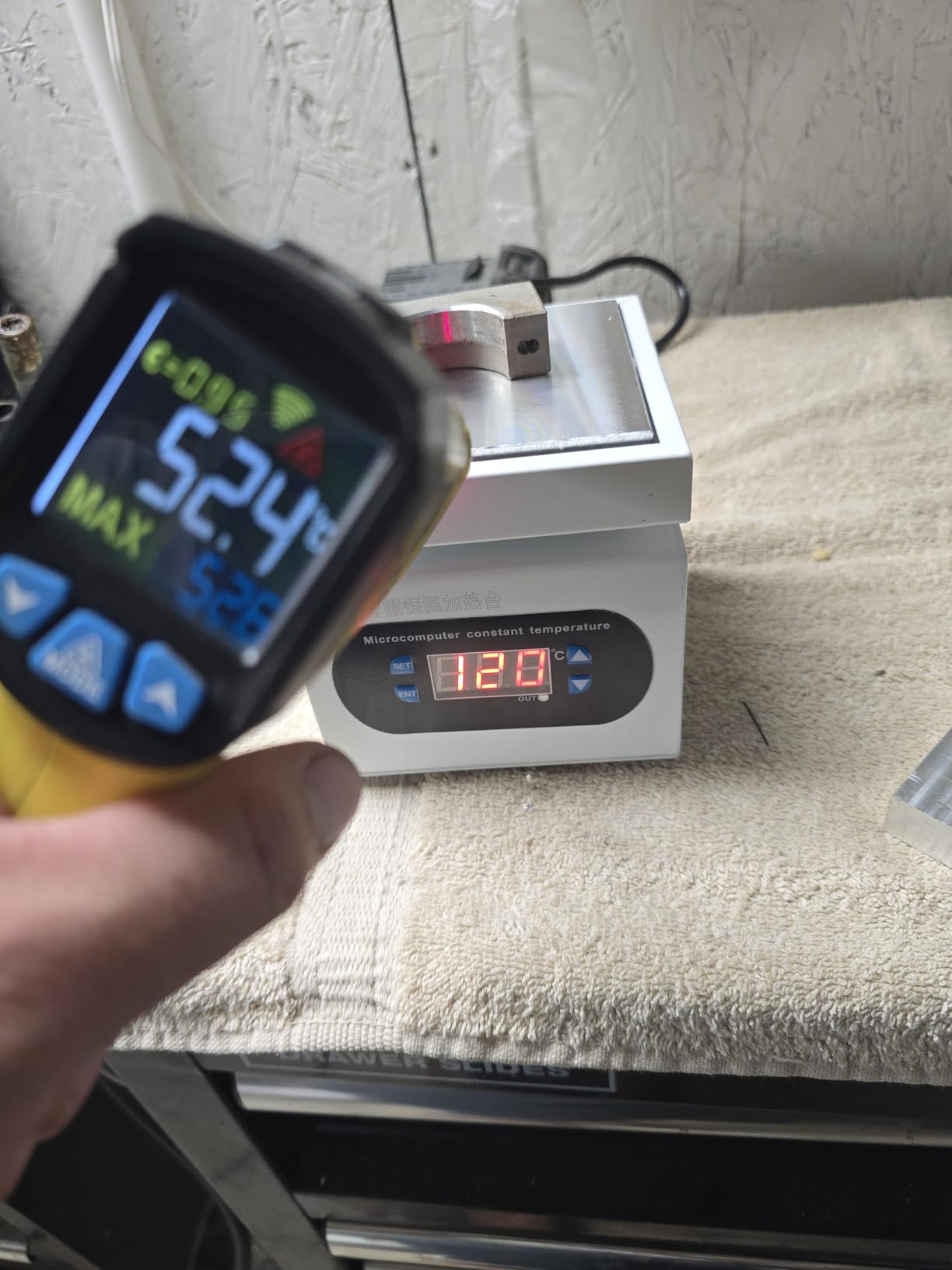
If you have no datalogger, an IR thermometer will at least tell you the difference between a cold soak and a hot soak, though its reading off shiny metal is unreliable because of emissivity. Measure the matte black solder mask, not a copper pour, or the number will read far too low.
What to Look for When Buying a Reflow Hot Plate
Max temperature sets the ceiling. Leaded Sn63Pb37 peaks around 200C to 215C, and lead-free SAC305 needs 235C to 245C. A 300C plate covers both comfortably; a 350C plate gives you headroom for aggressive no-clean fluxes and stubborn joints. A plate that tops out below 300C is not a reflow tool.
Closed-loop PID control is what makes a setpoint mean something. A plate with a thermostat-style on and off element will cycle visibly around the target and give you inconsistent results between joints. Several plates in this group specify PID program or cycle control, and that specification is worth more than any other line on the spec sheet.
Plate size decides what you can build on. Measure the widest board you actually repair, not the widest board you hope to repair. A 100x50mm plate handles chip-scale work, 100x100mm handles most hobbyist boards, and 200x200mm-class plates are the only ones that take a full-size mainboard. Reviewers consistently check this spec first, along with wattage.
Plate material and thermal mass govern how fast the surface temperature recovers when you place a board on it. Aluminum is the standard and balances conductivity against mass. Brass and copper carry more thermal mass and even out heat better, which is why metal matters more than the ceramic coating applied over it. A tiny 50mm plate with a brass insert is a genuinely different tool from a 100mm aluminum plate, and the enthusiasts buying them know it.
Wattage tells you whether recovery will keep up. Doubling plate area without increasing wattage means the surface temperature sags every time you set a board down. Look for wattage that scales sensibly with area, and check whether the plate is a genuine heating element or a thin coating on a substrate.
Uniformity matters more than maximum temperature. A circular element under a thin plate creates a hot spot in the center, and the fix is walking the board around with tweezers during the reflow. A large flat element, cooling-hole patterns and thicker plates all reduce this. If you can, check reviews for reports of hot spots rather than only for speed.
Curve programming versus manual control is the last major fork. Plates with built-in reflow modes or segment-based curve programming can approximate a profile automatically. Everything else requires a setpoint and a stopwatch, which is fine for leaded work and demanding for lead-free.
Power input and voltage decide portability. Mains units at 110V are the bulk of this list. USB-C PD plates run from a charger, which means they are portable and need a compatible supply to reach rated output. Several units here are 110V only, so check before you buy outside North America.
Finally, weigh the extras. Tweezers, foil shielding capability, a workpiece fixture and a thermocouple probe all save real time. If your work is fine-pitch or metal-based, our soldering kit guide covers the hand-tool side of the same bench.
What to Avoid and How to Work Safely
Skip the cheap PTC desoldering plates sold as soldering hot plates. Units rated around 716F to 896F are desoldering heaters, not reflow platforms, and they never reach the temperature a lead-free profile needs. Check the maximum temperature in Celsius, not the marketing name.
Do not use an induction hot plate or a domestic skillet with no thermostat as a reflow platform. A dimmer-controlled skillet has no closed loop, and one well-documented attempt at a 220C profile left part of an FR4 laminate soft. If you want to experiment cheaply, a copper or brass insert on a controlled heating surface helps, but uncontrolled heat does not.
Ventilate the bench. Flux fumes are the main inhalation risk, and lead-free paste is not lead-free to handle if you use leaded Sn63Pb37 somewhere in the process. Wash your hands, and run first heat-ups outdoors or under extraction.
Assume the plate is hot. The bare aluminum surfaces in this roundup reach burn temperatures with no guard ring, and the burn risk is the one complaint that shows up repeatedly across otherwise positive reviews.
Frequently Asked Questions
Can I reflow solder using a heat gun?
Yes, and experienced technicians use it that way for a handful of joints. A hot air gun can melt solder paste and can even reflow a small board if you sweep it evenly and watch the paste slump. What you cannot do is reproduce a profile. Your hand sets the temperature and the duration, so results vary from joint to joint and you cannot log a curve afterwards. Use a hot air gun for removing a package or for one or two components, and use a hot plate when you need every joint on a board to see the same thermal history.
What is a good heat plate for soldering PCBs?
A good reflow hot plate needs three things: a maximum temperature of at least 300C, closed-loop PID temperature control so the setpoint actually holds, and a plate sized for your boards. For most hobbyist surface-mount work a 100x100mm aluminum plate around 360W is the sweet spot. For phone and laptop board repair, move up to a 200x200mm plate with 850W so a heavy ground plane does not collapse the surface temperature the moment you set the board down.
What are the key differences between a reflow oven and a hot plate for soldering?
A reflow oven heats the air around a whole board, so heat reaches every side of every component at once, and a tray of identical boards can be done in a single cycle. A hot plate heats one flat surface and you bring the board to it, which gives you full visibility and lets you pull the board off at an exact moment. Ovens win on uniformity and volume. Hot plates win on control, visibility and cost, and they are the right tool for one or two boards at a time.
What is the ideal oven temperature for solder reflow?
For leaded Sn63Pb37, the liquidus point is 183C, so a peak of 200C to 215C with 30 to 60 seconds above liquidus works well. For lead-free SAC305, the liquidus is around 217C, so aim for 235C to 245C with 20 to 40 seconds above liquidus. In both cases soak at 150C to 180C for three to five minutes before the peak, and ramp slowly rather than slamming the temperature up.
What is the golden rule of soldering?
Heat the joint, not the solder. The iron tip should touch the pad and the component lead at the same time so heat conducts through the metal into the joint, letting the solder flow on its own. Feeding solder straight onto a cold tip just coats the iron and the joint never reaches temperature. Keep the tip lightly tinned, use flux, and move to the next joint before the tip has had a chance to oxidise.
Best Hot Plates for Reflow Soldering: The Verdict
The Soiiw 850W with its 200x200mm aluminum plate is the best hot plate for reflow soldering overall, because plate size and stored heat are what decide whether a heavy board ever sees the temperature you timed. For chip-scale work the WEP 946D IV gives you real PID control at 100x50mm, and the QWORK 360W has the highest verified average in the group with a fanless, well-guarded design.
Pick your plate by the widest board you actually repair, keep a thermocouple on a sacrificial board so you know the gap between plate and solder, and run the soak. Those three habits fix more bad joints than any amount of plate shopping.