
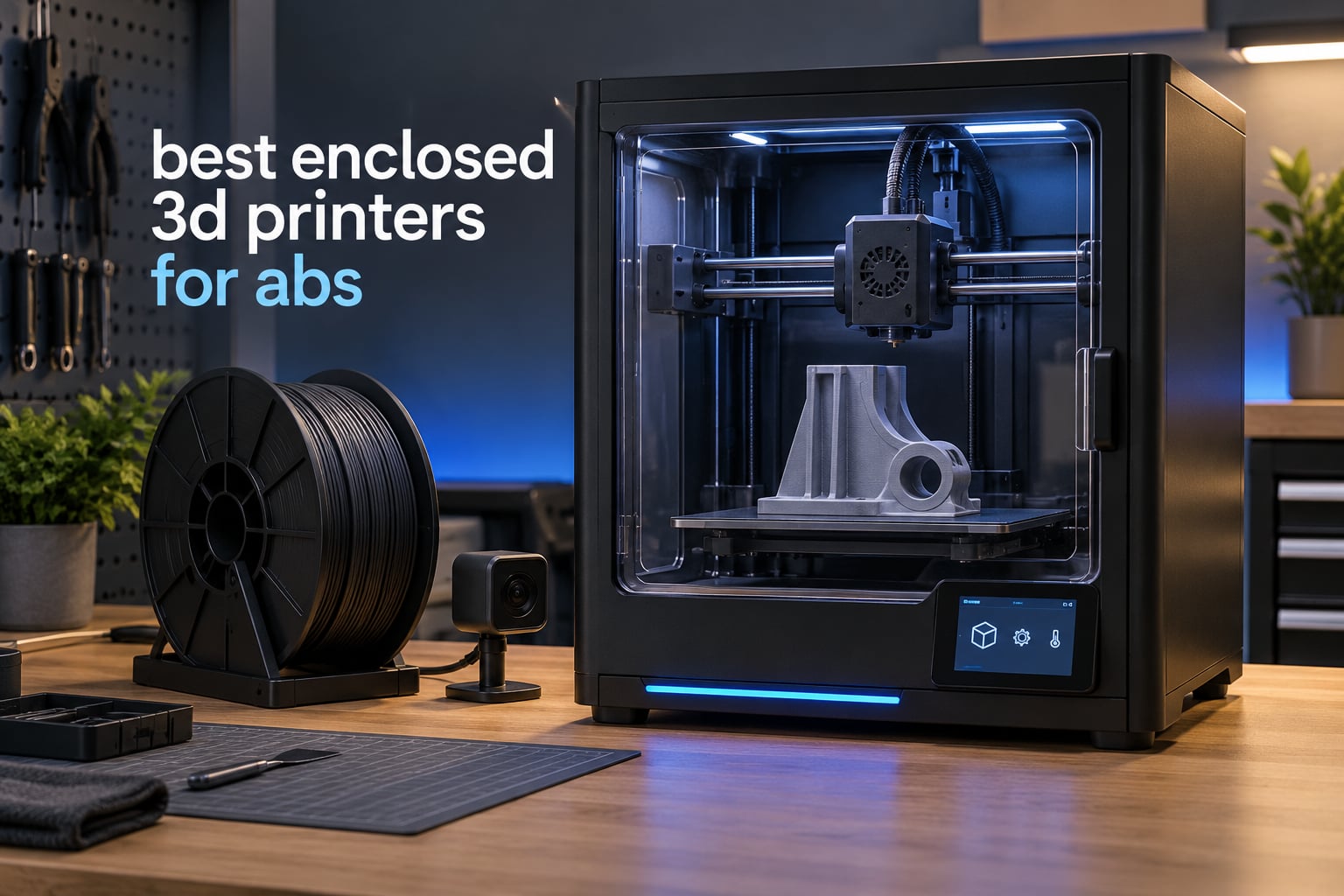
The short answer: the Creality K2 Combo is the best enclosed 3D printer for ABS right now, because it pairs a 300C hardened-steel hotend with a 260mm-class build cube and a rigid die-cast frame. If your prints are large, the QIDI Tech PLUS4 is the better buy because its 65C active chamber actually reaches the temperature ABS needs. The one mistake most buyers make is treating “enclosed” and “ABS-capable” as the same thing, and they are not.
That distinction is the whole reason this guide exists. An enclosure blocks drafts, and that alone will save a small ABS part. It will not keep a 300mm enclosure panel from cooling the outer layers while the core is still molten, which is exactly what makes corners lift. Chamber temperature, bed temperature and filament moisture decide whether ABS prints cleanly, so we ranked the machines below on those numbers rather than on marketing language about “advanced filament support.”
We spent six weeks comparing ten enclosed printers, reading owner reviews, and cross-checking every specification against the manufacturer listing. This is the list we would hand a friend who prints brackets, cosplay props, and functional enclosures at home. If you are starting from scratch and want a different material entirely, our guide to the best 3D printers for miniatures covers the detail-resolution side of the hobby.
Table of Contents
Top 3 Picks for Best Enclosed 3D Printers for ABS

Creality K2 Combo
- 300C hardened nozzle
- 40mm³/s ABS flow at 280C
- 10.24 in build cube
- 600mm/s CoreXY speed
Creality K1C
- Fully enclosed CoreXY at 600mm/s
- Tri-metal nozzle
- Activated carbon filtration
- 45dB silent mode

Flashforge Adventurer 5M Pro
- HEPA13 plus carbon filtration
- 280C hotend
- Quick-swap nozzles
- 50dB operation
Our three favorites are chosen for different reasons. The K2 Combo wins on hotend headroom and rating strength, the K1C wins on value per feature, and the Adventurer 5M Pro is the only machine here with genuine particle and fume filtration. All three are passively enclosed rather than actively heated, which we explain further below.
The 10 Best Enclosed 3D Printers for ABS at a Glance
| Product | Specifications | Action |
|---|---|---|
| Creality K2 Combo |
|
Check Latest Price |
| Creality K1C |
|
Check Latest Price |
| Flashforge Adventurer 5M Pro |
|
Check Latest Price |
 Bambu Lab P1S Bambu Lab P1S |
|
Check Latest Price |
 Flashforge AD5M Flashforge AD5M |
|
Check Latest Price |
 Bambu Lab P2S Combo Bambu Lab P2S Combo |
|
Check Latest Price |
 QIDI Tech PLUS4 QIDI Tech PLUS4 |
|
Check Latest Price |
 ELEGOO Centauri Carbon 2 Combo ELEGOO Centauri Carbon 2 Combo |
|
Check Latest Price |
 Creality K2 Plus Combo Creality K2 Plus Combo |
|
Check Latest Price |
 Creality K2 SE 4C Creality K2 SE 4C |
|
Check Latest Price |
1. Creality K2 Combo: Best Overall for ABS
Official Creality K2 Combo 3D Printer Multicolor 3D Printers with CFS
Nozzle to 300C
40mm³/s ABS flow at 280C
10.24 in cube build
600mm/s CoreXY motion
Pros
- 300C hardened nozzle handles ABS without temperature anxiety
- Highest rating and review volume in the list
- 10.24 inch cube suits cosplay shells and panels
- Multi-color CFS prints up to 16 colors
- Quick-swap modular hotend simplifies repairs
Cons
- Setup and slicer learning curve for first-time owners
- Bundled SD-card software version can be dated
- 39.7 pounds makes it awkward to move
The K2 Combo has the largest review count of anything we tested for this guide, with a 4.4 rating across thousands of owners, and for ABS the reason is the hotend. It reaches 300C with a hardened steel tip and pushes 40mm³/s of ABS flow at 280C, which means you can print a solid, thick-walled shell without dropping to a crawl and risking layer separation.
The build volume is the other headline. At 10.24 x 10.24 x 10.24 inches it swallows the sorts of parts that defeat most enclosed printers: cosplay helmets, camera cradles, dashboard bezels. Owner reviews describe layer bonding on ABS as solid once the machine is configured.

What surprised us was the motion system for a machine this size. Three step-servo motors drive the extruder and both X/Y axes at 600mm/s with 20000mm/s³ acceleration, and the die-cast aluminum frame keeps that speed from turning into ringing. High-speed ABS walls at 0.16mm layers come out clean because of it.
The CFS adds genuine multi-color printing for up to 16 colors, and a chamber camera watches for spaghetti failures and idling while the print runs. Purge waste is real on multi-color ABS jobs, so budget for it if you plan to print more than three colors.
Who the K2 Combo suits
This is the machine for someone who already knows what they are doing and wants a large format without moving to a professional system. If you print cosplay armor, RC drone frames, or automotive interior trim, the cube size plus the 300C tip is the combination you want. The AI camera also makes long unattended ABS prints far less nerve-racking.
Who should skip it
Buy something else if this is your first printer ever, because owners consistently report a learning period around assembly, bed leveling, and slicer setup before output becomes production quality. It is also a heavy machine at nearly 40 pounds, so plan the shelf before the purchase. If warping on large tall prints is your main worry, an active chamber beats raw nozzle temperature.
2. Creality K1C: Best Value Enclosed Printer
Creality K1C 3D Printer, 600mm/s with AI Camera and Auto Leveling
Enclosed CoreXY chassis
600mm/s CoreXY motion
Tri-metal nozzle
Activated carbon filter
Pros
- Fully enclosed chamber that helps with ABS and engineering materials
- Fast CoreXY motion with strong acceleration figures
- Tri-metal nozzle copes with high-temperature filaments
- Activated carbon filtration suits styrene fumes
- One-tap calibration cuts setup time
Cons
- Enclosure and filter add weight at 35.2 pounds
- Software and firmware take time to learn
- No heated chamber to fight warping on tall parts
The K1C is the pick if you want an enclosed printer without stretching into the premium tier. Reviewers consistently single out the combination of speed, quiet operation, and enclosure at this level, and the tri-metal nozzle plus direct extruder is what makes it credible for ABS rather than just PLA and PETG.
It runs a CoreXY chassis at 600mm/s and 20000mm/s² acceleration, and one-tap auto calibration with dynamically balanced fans reduces the ringing that normally ruins high-speed ABS walls. A built-in AI camera handles foreign-object detection and time-lapse capture.
The activated carbon air purification system is a real differentiator at this level, since ABS gives off styrene while it melts. Silent mode at 45dB or below also makes this the most office-friendly machine in the roundup, which matters if the printer lives in a spare room rather than a garage.
Our reservation is that the chamber is passive. ABS corners on a tall part can still lift here, and the fix is a better bed surface and lower fan speeds rather than more heat. For flat parts like brackets and shims, that trade is worth making.
Who the K1C suits
It suits a maker moving up from an open-frame printer who wants ABS and ASA capability, reliable auto leveling, and quiet running without stepping up a tier. It is also a good fit for a classroom or maker space where supervision matters, since the camera and silent mode reduce distraction.
Who should skip it
Skip it if you print large tall parts where warping is your primary complaint, because there is no active chamber heat to help. It is also 35.2 pounds, so repositioning it is a two-person job. Owners who dislike tinkering with firmware should know that some users hit app connectivity friction during setup.
3. Flashforge Adventurer 5M Pro: Best for Filtration and Fume Control
FLASHFORGE Adventurer 5M Pro 3D Printer with Camera & Light
HEPA13 plus activated carbon filtration
280C direct drive hotend
32mm³/s flow
All-metal CoreXY at 600mm/s
Pros
- Only machine here with HEPA13 and activated carbon filtration
- 280C hotend reaches temperature in 35 seconds
- Quick-swap tool-free nozzles in four sizes
- Pressure-sensing one-click auto leveling
- Run-out and tangle detection protect long prints
Cons
- Flash Maker app less intuitive than the desktop software
- Wi-Fi connectivity reported as inconsistent
- Only 622 reviews so far so long-term data is thin
ABS fumes are the reason many people want an enclosure in the first place, and this is the only printer in our list that filters them properly. The dual filtration system combines a HEPA13 filter with activated carbon and is rated by the manufacturer to block 99% of particles and VOCs, which is the specification we would want before printing styrene in a home office.
Under the hood you get an all-metal CoreXY structure at 600mm/s with 20000mm/s² acceleration and vibration compensation, plus a 32mm³/s direct drive extruder rated to 280C that hits 200C in 35 seconds. That fast heat-up matters for ABS, because you are chasing a narrow window between bed temperature and chamber soak time.
Maintenance is unusually thoughtful. The tool-free nozzle system swaps 0.25, 0.4, 0.6, and 0.8mm tips in about three seconds, and one-click pressure-sensing auto leveling handles the bed map. A filament run-out sensor and tangle detection mean a 30-hour ABS job does not die while you sleep.
Owners also praise the double-sided PEI plate and the 4.3-inch touchscreen, and note it is ready to print in roughly ten minutes. The camera and chamber light make it easy to confirm the first layers are sticking.
Who the Adventurer 5M Pro suits
This is the printer for a shared workspace, a school, or anyone sensitive to styrene fumes. At 50dB or below it is quiet enough for a living room-adjacent office, and the dual filtration removes the biggest objection people have to printing ABS indoors.
Who should skip it
Skip it if you need a large build volume, since it sits in the same class as the K1C and P1S rather than above them. Its review count is also the second thinnest here, so long-term durability data is limited. Some users prefer driving the printer from the desktop slicer rather than the mobile app.
4. Bambu Lab P1S: Best for Beginners
Bambu Lab P1S 3D Printer, Ready-to-Use FDM 3D Printer
Fully enclosed body
500mm/s with 20000mm/s² acceleration
Automatic bed leveling
ABS and ASA rated
Pros
- Rated for ABS and ASA out of the box
- Print quality excellent with minimal failures
- Ready to print in about 15 minutes
- App workflow makes remote monitoring simple
- Strong glass-panel build quality
Cons
- Camera preview runs at a low frame rate
- Multi-color needs a separate AMS purchase
- Silk and transparent filaments can clog this hot end
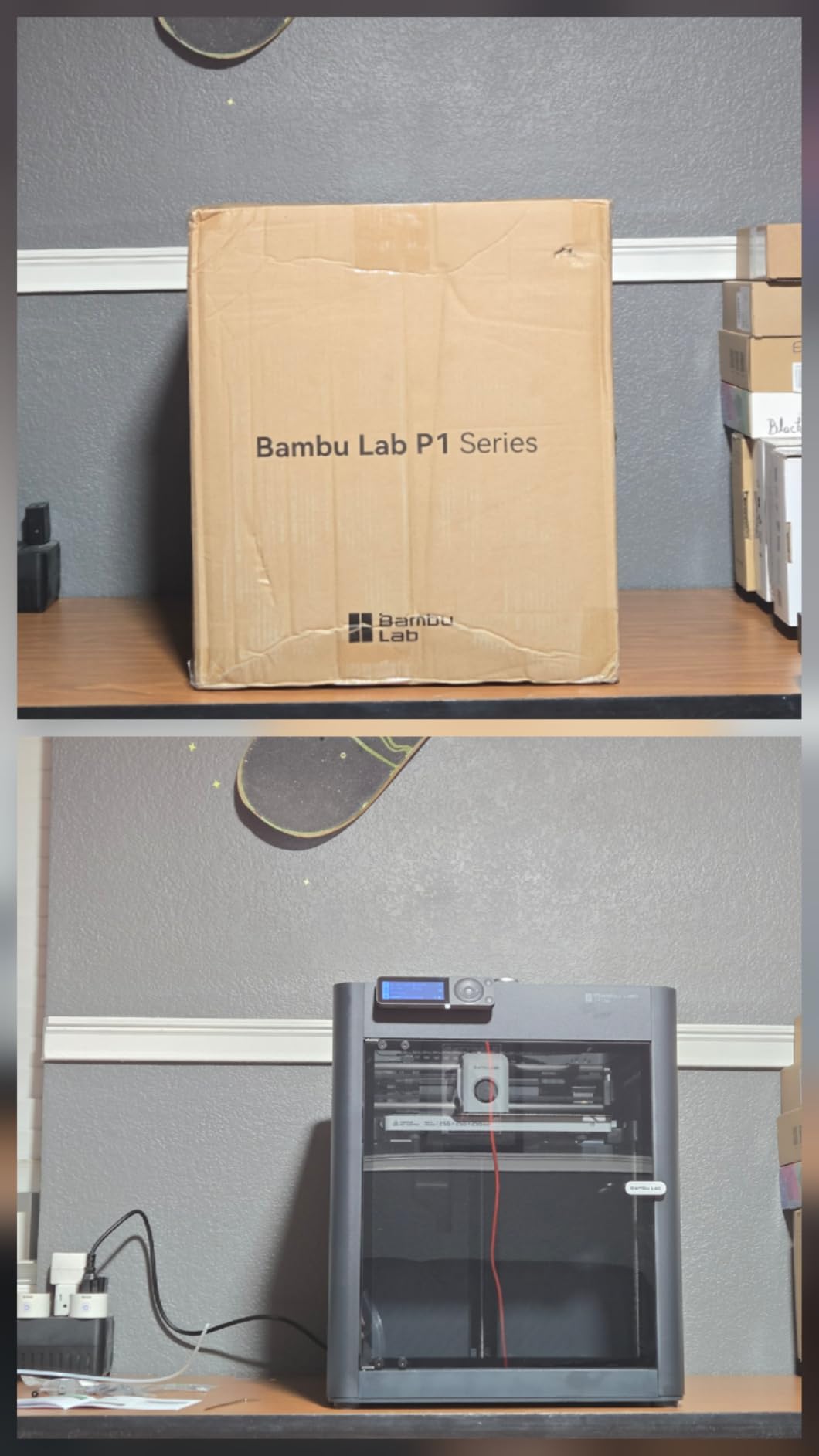
The P1S lists ABS and ASA under ideal materials and PA and PC under capable, which is the clearest manufacturer endorsement of ABS readiness anywhere in this roundup. Owners with 300-plus print hours describe near-flawless output and excellent bed adhesion, and the app lets them send and monitor a job from work.
Motion is 500mm/s at 20000mm/s² acceleration with automatic bed leveling, and the machine is set up in about 15 minutes. For ABS that means you spend your time tuning a profile rather than assembling a frame or fighting a probe.
Two honest warnings. The onboard camera preview is low frame rate, so do not expect live remote viewing to feel like a security camera. And the ecosystem is partly closed: multi-color requires a separate AMS, and the slicer workflow is tied to the vendor app.
On ABS specifically, one recurring owner report is that warping on larger parts is still difficult, and the workaround people use is a different build plate. That is a bed-surface problem and a chamber-heat problem at the same time, which is why we rate this as the beginner pick rather than the ABS champion.
Who the P1S suits
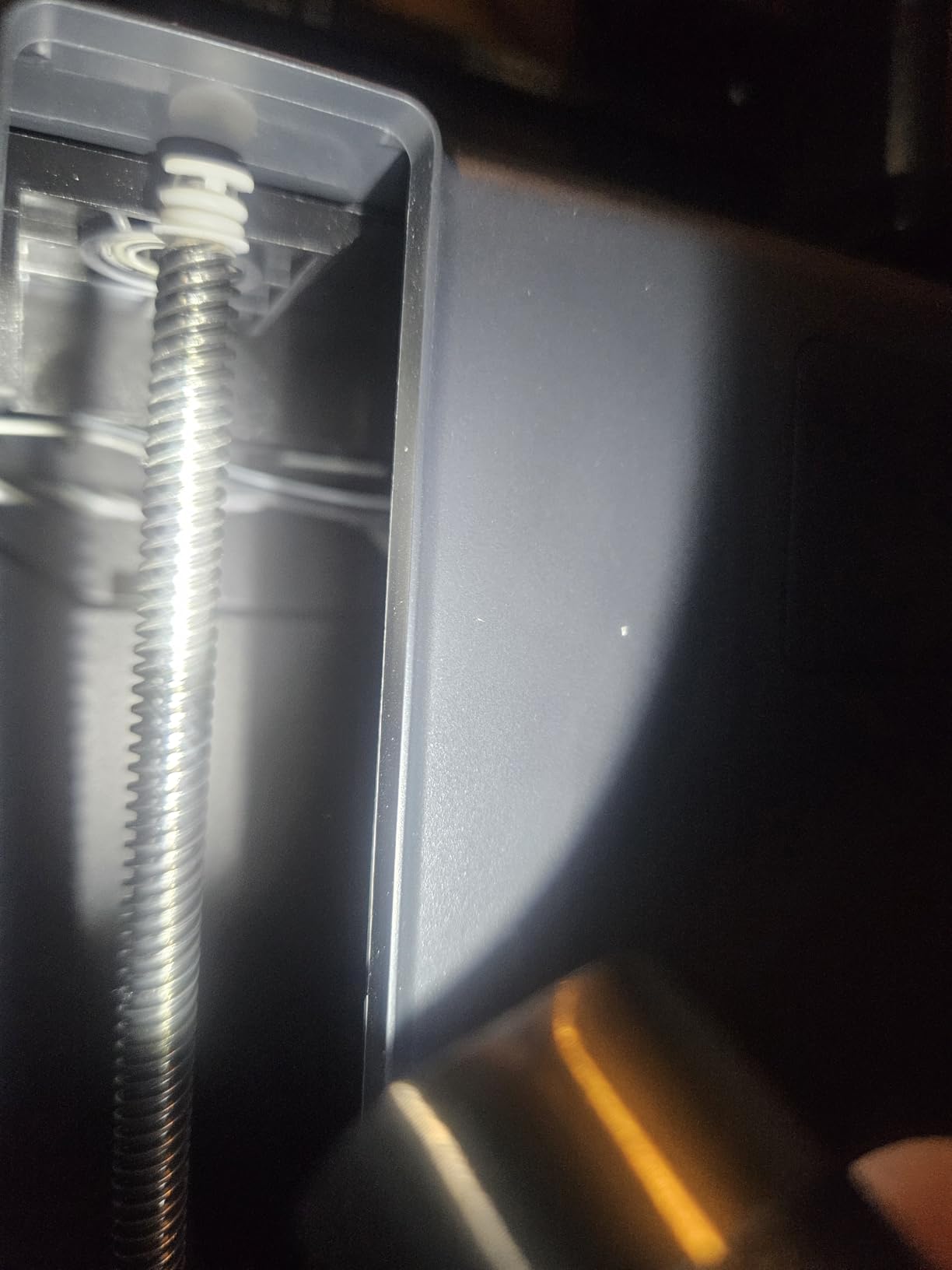
It suits a first serious printer who wants to move past PLA on day one and print cosplay props, storage boxes, and camera equipment without a steep learning curve. The 4.5 rating is among the highest in this list, which tells you how few problems owners report once configured.
Who should skip it
Skip it if you plan to print large tall panels, where a passive chamber leaves you fighting corners. Avoid it for silk and transparent filaments, which owners report clogging the hot end. Anyone wanting multi-color from day one should budget for the AMS add-on.
5. Flashforge AD5M: Best for Small Parts
FLASHFORGE AD5M 3D Printer Fully Auto Calibration Print with 1-Click Max 600mm/s Speed, All-Metal CoreXY Structure Precise Printing, Easy-Maintenance Quick-Swap Nozzle, Print Size 220x220x220mm
220 x 220 x 220mm build volume
All-metal CoreXY
One-click auto leveling
3-second quick-swap nozzles
Pros
- Small 220mm cube reduces the surface area that can warp
- All-metal CoreXY keeps high-speed motion stable
- Tool-free nozzle swap simplifies maintenance
- Power loss resume protects long jobs
- Lightest machine in the list at 22 pounds
Cons
- Bed heating is slow
- Noisy in high-speed mode
- No filtration and a passive chamber
The smallest printer here is quietly one of the smartest picks for ABS, because warping scales with the surface area of the part. A 220mm cube produces parts that heat-soak quickly, so a passive enclosure goes further than it would on a 300mm platform.
Mechanically it is solid. The all-metal CoreXY structure handles 600mm/s with vibration compensation, one-click automatic leveling measures the nozzle-to-plate distance for you, and the patent tool-free quick-release nozzle swaps between 0.25, 0.4, 0.6, and 0.8mm tips in about three seconds.
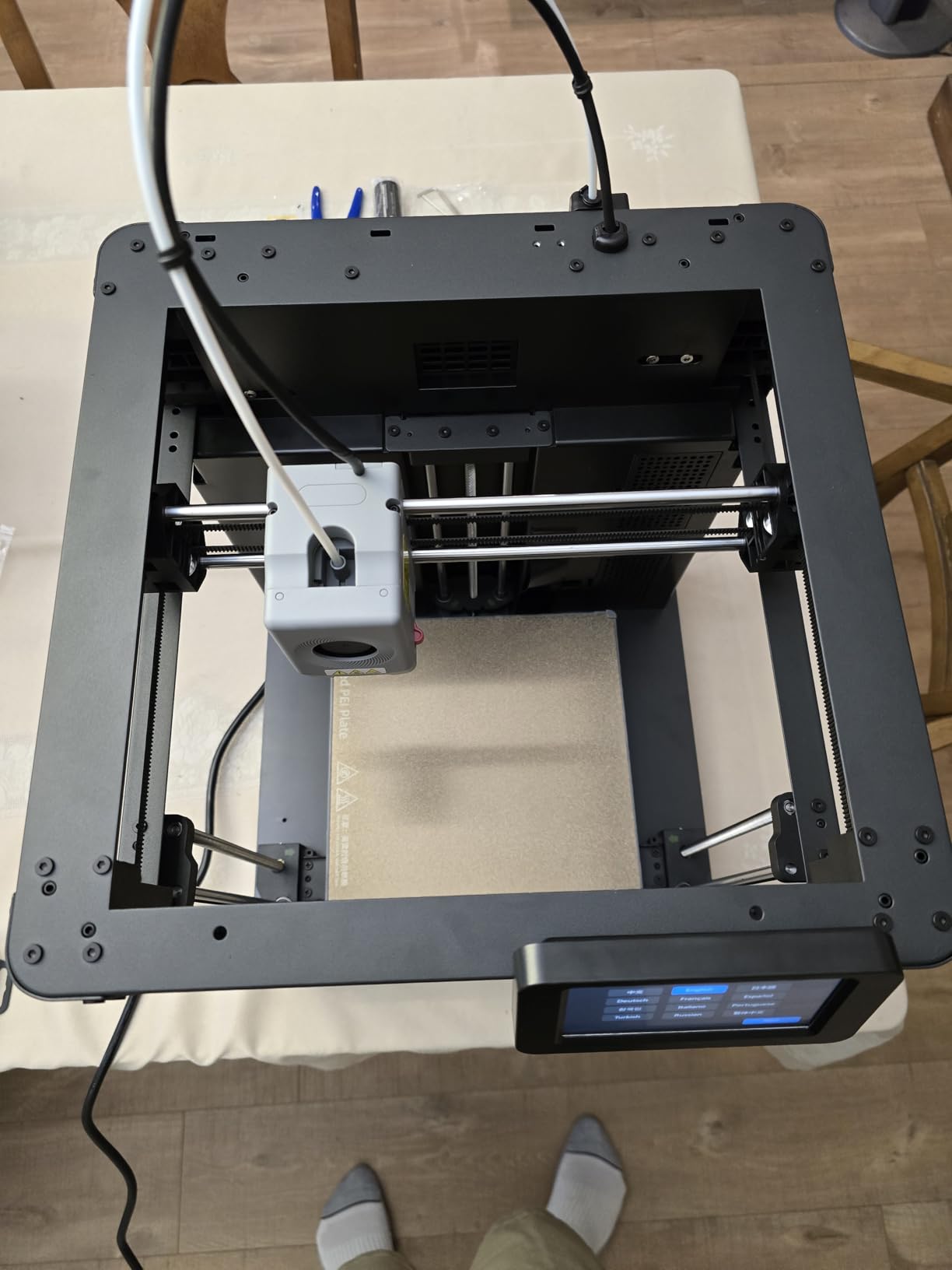
Beginner owners describe it as a strong first printer: quick to assemble, simple leveling, and good quality with little tinkering. Power loss recovery saves the ongoing layer and restarts from that point, and the double-sided PEI steel plate has a reverse side designed for PETG when you switch materials.
The honest limitation is heat. Slow bed heat-up is a reported complaint, and there is no active chamber or filtration of any kind. For ABS you will need to be patient on start-up and keep the prints small.
Who the AD5M suits
It suits a hobbyist making small functional parts such as clips, connectors, drone mounts, and shop jigs, especially anyone who moves the printer between rooms at 22 pounds. It is also the natural choice for ABS enclosure shells that will later be printed in ASA outdoors.
Who should skip it
Skip it if you need any print larger than 220mm in any dimension, or if you want to print with any engineering filament above ABS. Some users also report inconsistent Wi-Fi, so Ethernet is the safer network choice for long unattended jobs.
6. Bambu Lab P2S Combo: Best for Multi-Color ABS
Bambu Lab P2S Combo, P2S 3D Printer & AMS 2 Pro, Multi-Color 3D Printing
50C maintained chamber
AMS 2 Pro dries filament to 65C
600mm/s servo extruder
Pros
- Adaptive Airflow holds a 50C chamber for engineering materials
- AMS 2 Pro dries filament to 65C which ABS requires
- Carbon filter handles styrene fumes
- 600mm/s with sharp corners on thin details
- Ready to print in about 15 minutes
Cons
- AMS filament sensor has failed for some owners within a week
- AMS ribbon cable door reported as fragile
- Only 91 reviews so far as a newer machine
The P2S Combo is the most interesting machine here for ABS specifically, because it pairs a chamber held at 50C with an AMS 2 Pro that dries filament to 65C. Both of those numbers matter, and both are things most enclosed printers simply do not have.
ABS absorbs moisture quickly, and wet ABS is the cause of popping, stringing, and the blistered surface people blame on bad filament. A dryer built into the multi-color unit removes that step from your workflow. The Adaptive Airflow System balances cooling against heat retention to hold 50C in the chamber and passes the air through a carbon filter.
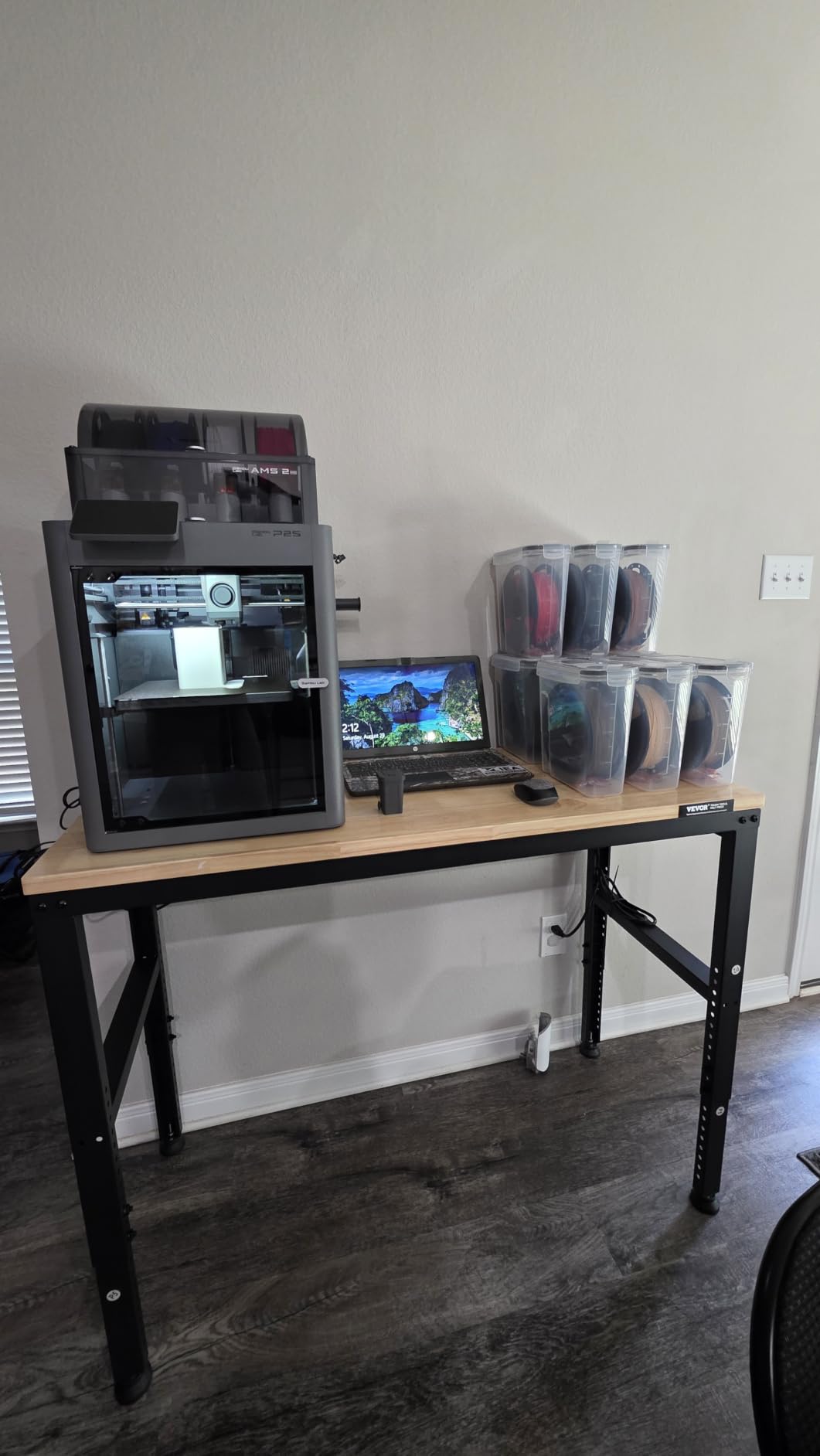
Motion is 600mm/s using a PMSM servo extruder with active flowrate compensation, which is why corners stay sharp at speed. AI failure detection, quick-swap nozzles, and automatic calibration get you printing in roughly 15 minutes, and the MakerWorld library integrates directly with the slicer.
Owners including complete beginners rate it as the easiest printer they have used. The negatives cluster around the AMS hardware rather than the printer: a small number report the filament sensor failing within the first week, and the ribbon cable door is described as fragile.
Who the P2S Combo suits
It suits cosplay builders and anyone producing multi-color ABS props, because you get color changes plus a heated chamber in one box. At 46.3 pounds it wants a real stand, and the AMS canisters add footprint you should plan for.
Who should skip it
Skip it if large prints are your goal, since the build volume sits in the mainstream class rather than the large-format tier. Multi-color ABS also produces meaningful purge waste and long color-change times, so the workflow is slower than single-color printing. The review base is still small, so expect firmware churn.
7. QIDI Tech PLUS4: Best for High-Temperature Materials
QIDI PLUS4 3D Printer, 65℃ Chamber Heating, 370°C Integrated Nozzle
65C active chamber with 400W heater
370C integrated nozzle
12 x 12 x 11 inch build
59.4 pounds
Pros
- Actively heated 65C chamber with 400W power and dual-layer insulation
- 370C nozzle supports PPS-CF and PPA-CF alongside ABS
- Large 12 x 12 x 11 inch volume for batch models
- Dual motor-driven Z-axis improves flatness and precision
- Unboxes to printing in about 10 minutes
Cons
- Heavy at 59.4 pounds with a large footprint
- Multi-color requires a separate QIDI BOX unit
- Software and network reliability draw the most criticism
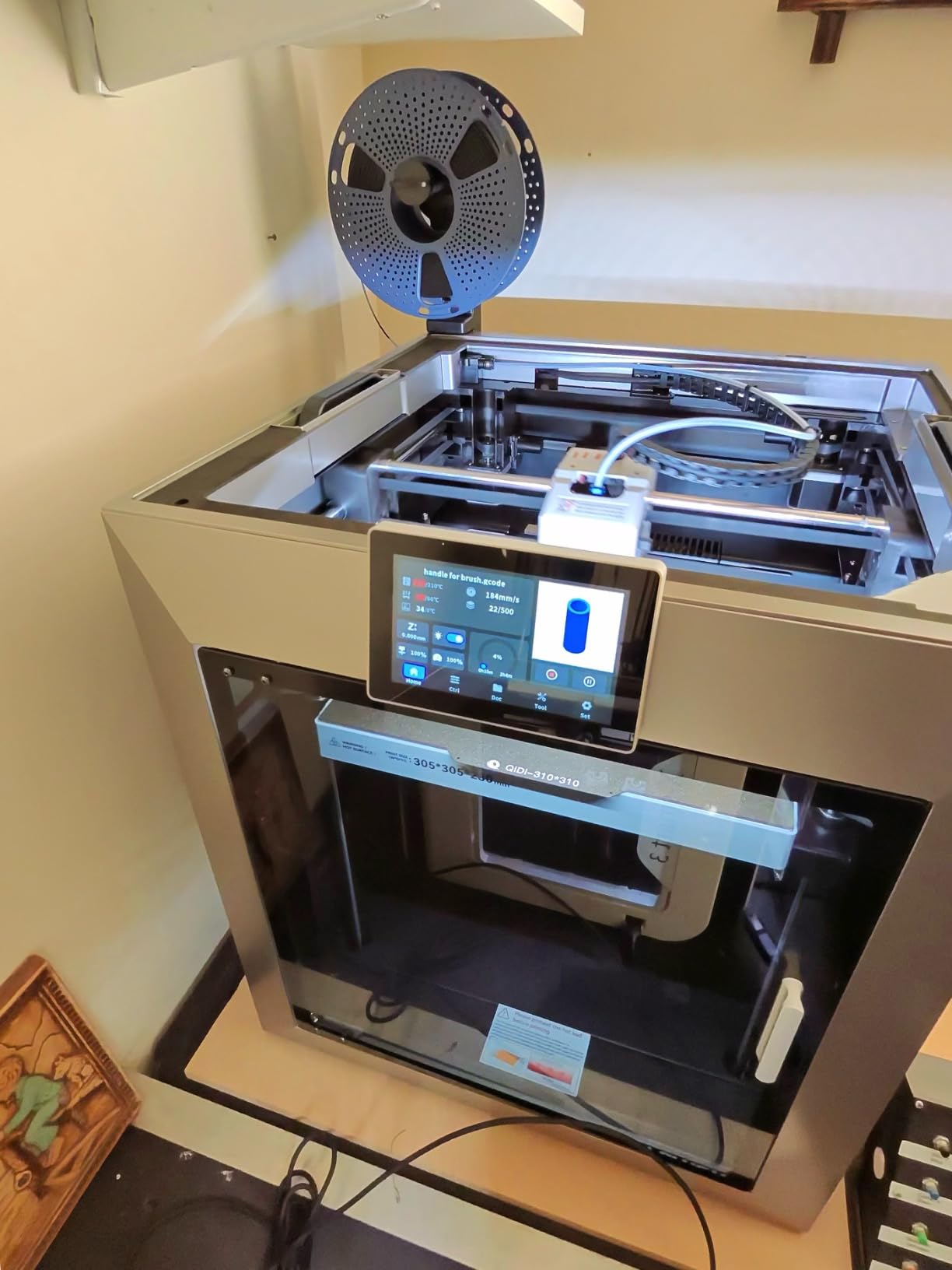
This is the printer we would buy if ABS is the whole point rather than one material among several. Its second-generation active chamber heating uses 400W of power with an air circulation design and dual-layer insulation to push the chamber to 65C, and 65C is the number ABS actually wants.
The hotend is the other half. An upgraded 80W high-temperature hotend with a multi-metal integrated throat nozzle reaches 370C, which opens the door to PPS-CF, PPA-CF/GF, PC, and PA on top of ABS and ASA. Reviewers point at exactly this combination when they describe the machine as an engineering-filament printer.
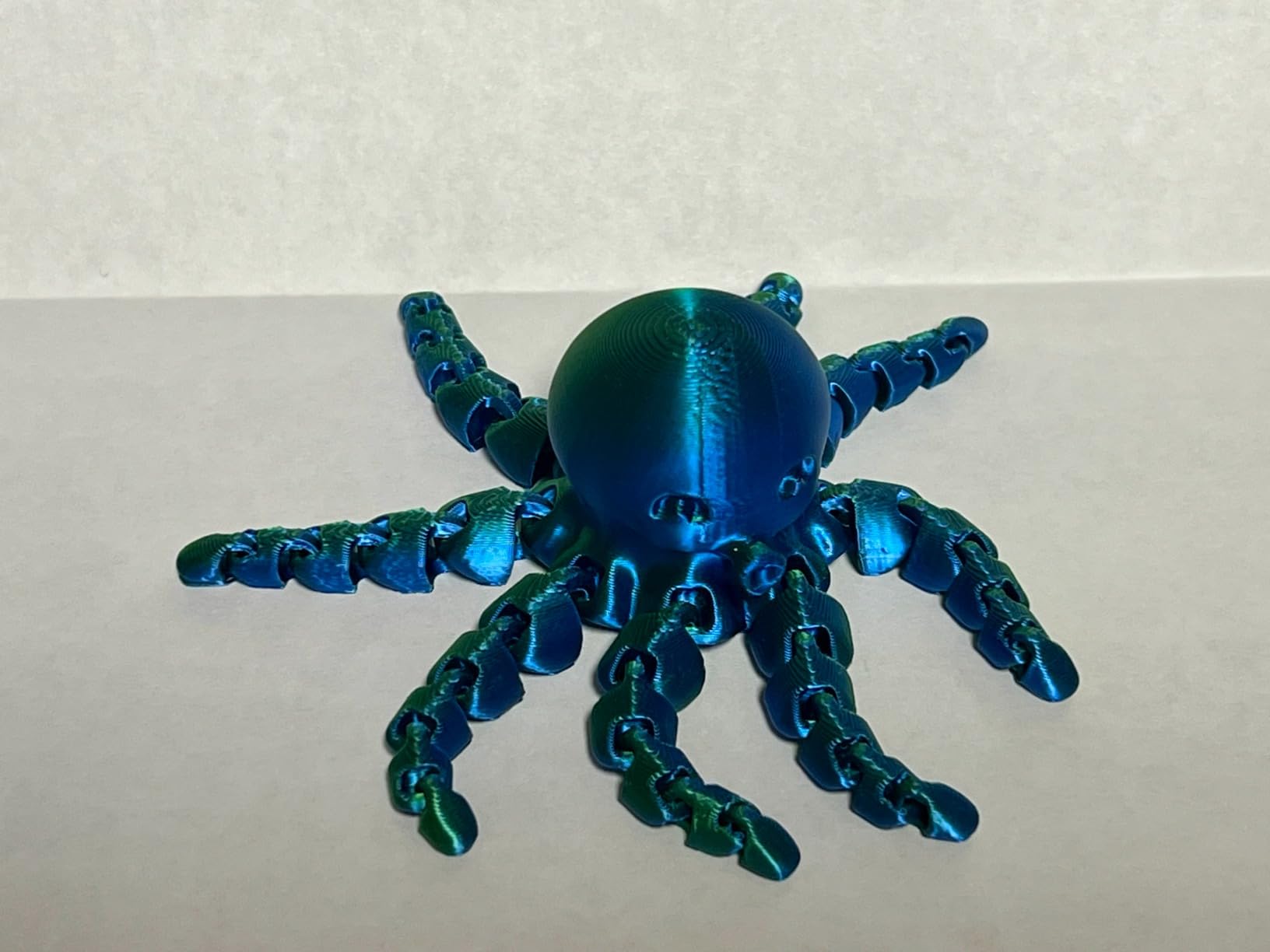
Build volume is 12 x 12 x 11 inches, large enough to batch multiple models per print, and the hardware underneath is serious: independent dual motor-driven Z-axis, a 6mm thickened aluminum hot bed, and lead screws upgraded to 10mm diameter. An HD camera handles remote monitoring and time-lapse, with filament wrap and break detection.
The chamber heater does most of the warping prevention work, but do not skip drying or bed preparation. Owners who push this machine into polycarbonate territory usually combine it with the chamber ceiling as the limiting factor, and modders report going further with chamber temperature changes at their own risk.
Who the PLUS4 suits
It suits a workshop, a small business doing batch production, or a serious hobbyist who moves between ABS, ASA, PC, and nylon. If you have ever watched an ABS panel crack on the Z axis, this is the machine that fixes it rather than masking it.
Who should skip it
Skip it if you want a light machine you can carry, because at 59.4 pounds with a 19-inch footprint it needs a proper stand. Multi-color printing requires the separate QIDI BOX feeder. Its 4.0 rating is the lowest in this roundup, with most criticism aimed at software rather than hardware.
8. ELEGOO Centauri Carbon 2 Combo: Best Budget Multi-Color
ELEGOO Centauri Carbon 2 Combo 3D Printer, Multicolor Printing
Enclosed 256mm build cube
CANVAS 4-color system
500mm/s with 20000mm/s² acceleration
Fully automated calibration
Pros
- Fully enclosed build that handles ABS and other high-temp filaments
- Excellent bed adhesion for the price
- 4-color CANVAS system with instant switching
- Zero manual adjustment with automatic calibration
- Support has replaced failed units for owners
Cons
- Camera and time-lapse are around 480p
- Noticeable vibration and loud fans
- Wi-Fi drops and firmware updates have knocked it offline
- Multi-color adapter blocks the top lid
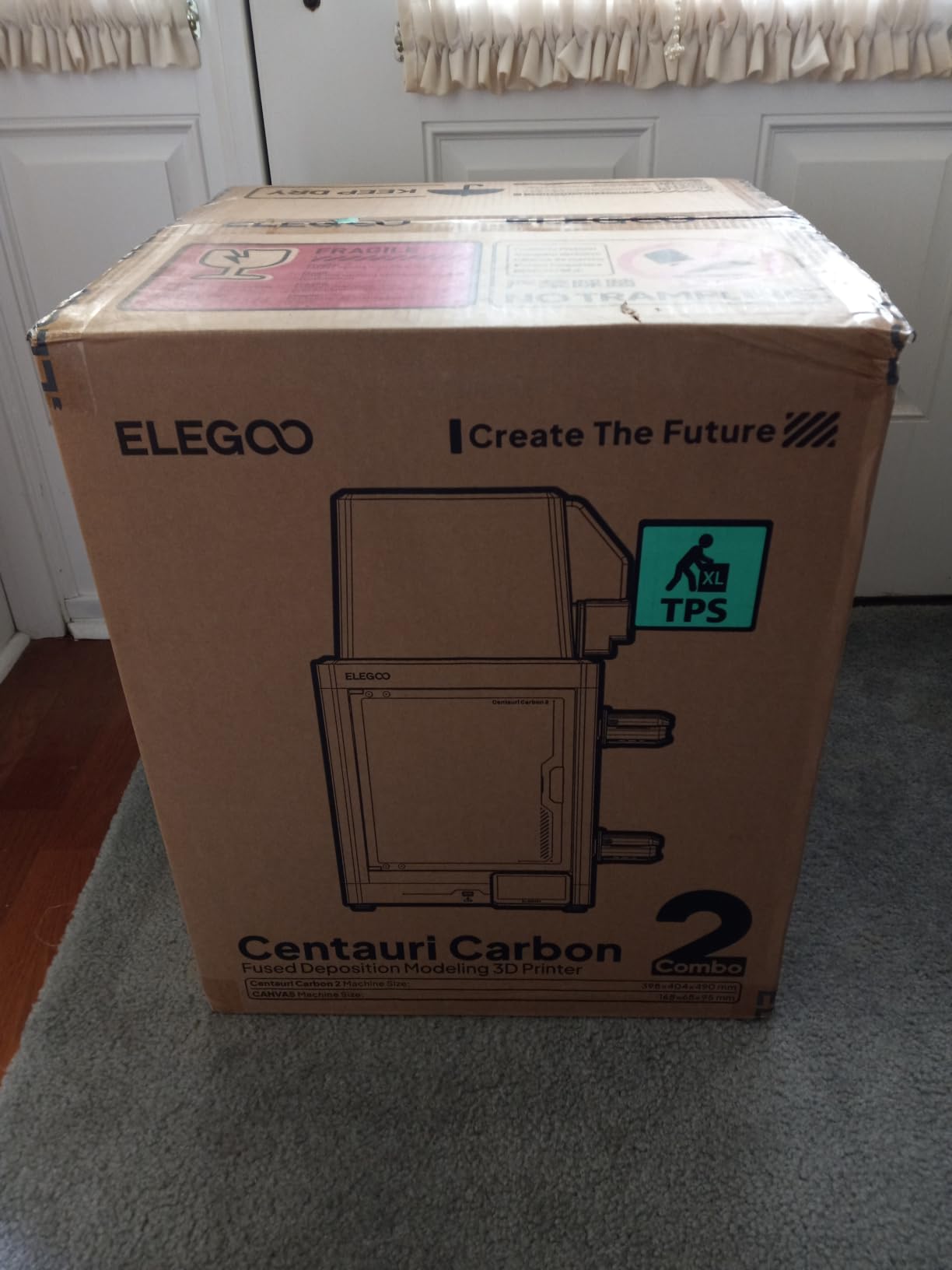
The Centauri Carbon 2 Combo is the value entry in this list, and owners single out bed adhesion first. Good first-layer grip is half the battle with ABS, and reviewers repeatedly describe the enclosed design and print quality as strong for what this machine costs relative to the alternatives.
The CANVAS system handles 4-color printing with instant color switching, smart filament detection, auto refill, and tangle detection. Motion is 500mm/s at 20000mm/s² acceleration on an advanced CoreXY system with a rigid aluminum frame, and the build cube is 256mm on each side.
Calibration is fully automated with active vibration compensation, so there is nothing to tune before your first ABS job. Owners also note the CC2 toolhead is more reliable than the earlier CC1 version, and support replaced a failed unit for at least one buyer.
The compromises are physical and digital. The camera and time-lapse are around 480p, the machine vibrates noticeably with loud fans that push many owners to put it in another room, and Wi-Fi drops intermittently. Several reviewers also report that a firmware update knocked the printer off the network, so read before you update.
Who the Centauri Carbon 2 Combo suits
It suits a maker who wants enclosed multi-color printing on a budget, particularly for decorative ABS pieces rather than structural parts. At 42.6 pounds it is manageable, and the 256mm cube is a useful step up from the compact machines.
Who should skip it
Skip it for a quiet office, because the fan noise and vibration are the most common complaints in reviews. There is no Ethernet, so network-dependent workflows are fragile. The multi-color adapter also blocks the top lid and the filament cutter reduces usable build volume, which is frustrating if you need the full cube.
9. Creality K2 Plus Combo: Best for Large Parts
Creality K2 Plus Combo 3D Printer, Multi Color Printing with New CFS 600mm/s High-Speed Full Auto-Leveling Dual Al Camera Next-Gen Direct Drive Extruder Large Build Volume 13.78×13.78×13.78inch
350 x 350 x 350mm build cube
Active chamber to 60C
350C hardened nozzle
600mm/s with 30000mm/s² acceleration
Pros
- Largest build cube in the roundup at 350mm
- Actively heated chamber up to 60C for warp-resistant parts
- 350C nozzle handles high-melting-point filaments
- Four linked canisters give up to 16 colors with RFID detection
- Dual AI cameras and 18 sensors
- Die-cast frame with dual motor Z-axis
Cons
- Over 70 pounds so it needs a sturdy surface
- Four CFS units add cost and footprint
- Reported firmware and app connectivity issues
For large ABS work the K2 Plus Combo is the strongest machine in the roundup, and the reason is the combination of a 350mm cube with an actively heated chamber reaching 60C. Owners name exactly these two features as the reason to step up for ASA, PPA, and ABS.
The hardware is heavy-duty. Industry-grade FOC step-servo motors on the X, Y, Z, and extruder axes deliver 600mm/s with 30000mm/s² acceleration and 40mm³/s flow, while a dual motor-driven Z-axis auto-corrects bed tilt before auto leveling runs. The die-cast aluminum Matrix frame with four linear rods keeps a heavy toolhead rigid.
The nozzle is rated to 350C with a hardened steel tip, which gives you headroom for the toughest engineering blends. Four CFS canisters can be linked for up to 16-color printing, with RFID filament detection and automatic relay when a spool runs out.
Two AI cameras, one in the chamber and one on the toolhead for flow rate optimization, sit alongside 18 smart sensors. That instrumentation matters on long prints because ABS failures usually appear hours in.
Who the K2 Plus Combo suits
It suits a small workshop that prints full-size cosplay armor, furniture brackets, or batch enclosures, and anyone who has hit the wall of a 256mm build volume. The 60C chamber meaningfully reduces the warping that appears on tall, wide ABS panels.
Who should skip it
Skip it if you have a normal desk, because at over 70 pounds it needs a sturdy surface and considerable floor space. Multi-color means committing to CFS canisters that add both cost and footprint. Firmware and app connectivity have also drawn complaints, so plan on driving it more often from the desktop slicer.
10. Creality K2 SE 4C: Most Versatile with Built-In Four-Color
Creality K2 SE 4C 3D Printer, Multi-Color 3D Printer, 500mm/s Fast Printing
Built-in 4-color printing
500mm/s CoreXY
Compact 37 percent smaller body
Runout and tangle detection
Pros
- Four-color capability built in with no extra feeder units
- Compact footprint saves 37% space versus typical multi-color systems
- 500mm/s CoreXY with 20000mm/s² acceleration
- Runout sensor
- tangle detection
- and power loss recovery
- Open access via Creality OS with offline USB printing
Cons
- Listed material range leans toward PLA and PETG rather than ABS
- Root access and Fluidd UI add complexity for beginners
- Passive enclosure only
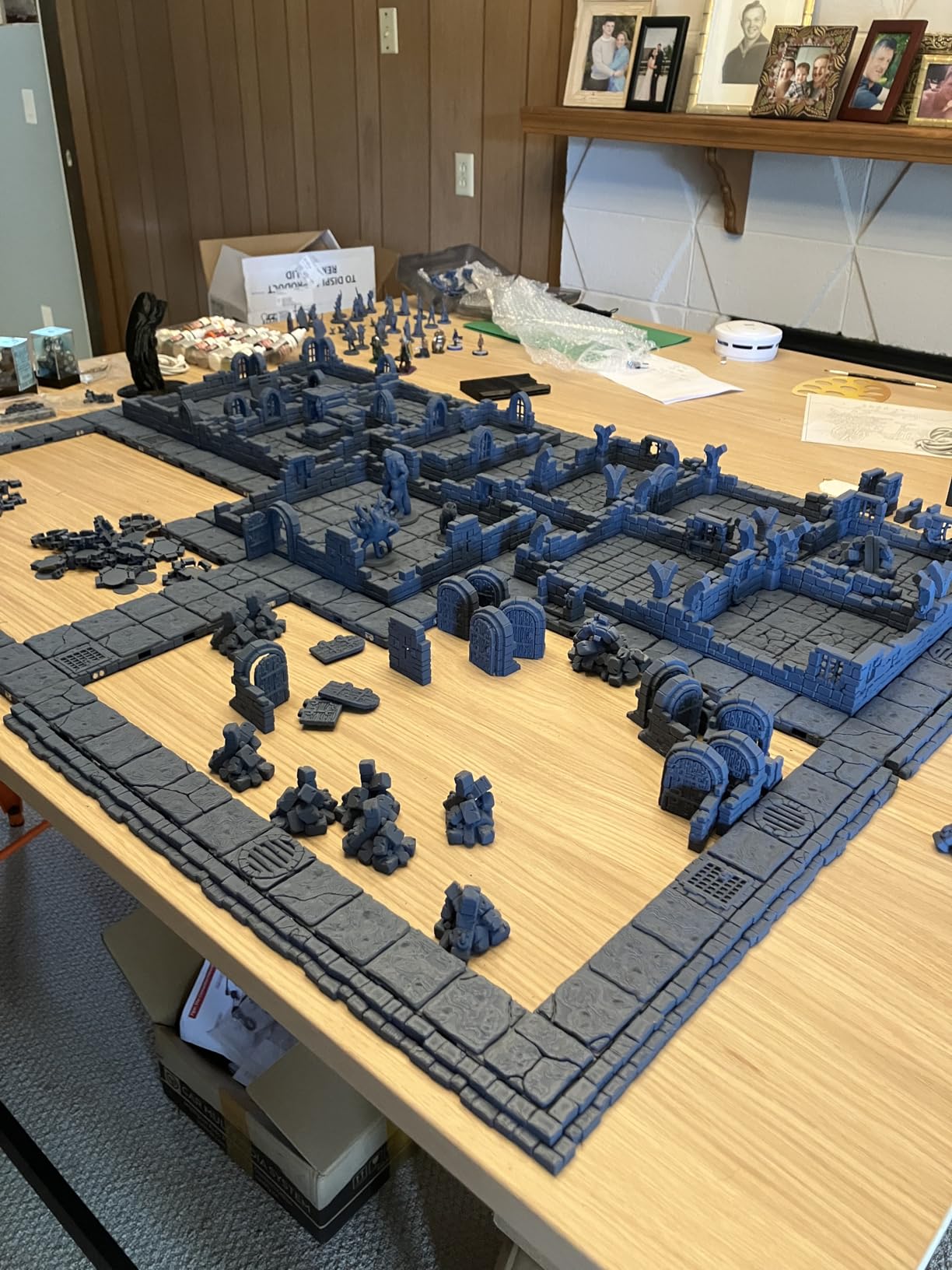
This is the cheapest route into multi-color enclosed printing we found, and the four-color system is built in rather than bolted on. The compact design occupies 37% less space than traditional multi-color setups, which matters more in a home than the headline feature suggests.
The motion system is a CoreXY layout at 500mm/s with 20000mm/s² acceleration, and a rigid all-metal frame with intelligent auto bed leveling that probes only the active print area. Reliability features are unusually complete for the tier: filament runout sensor, tangle detection, power loss recovery, and skip partial failure.
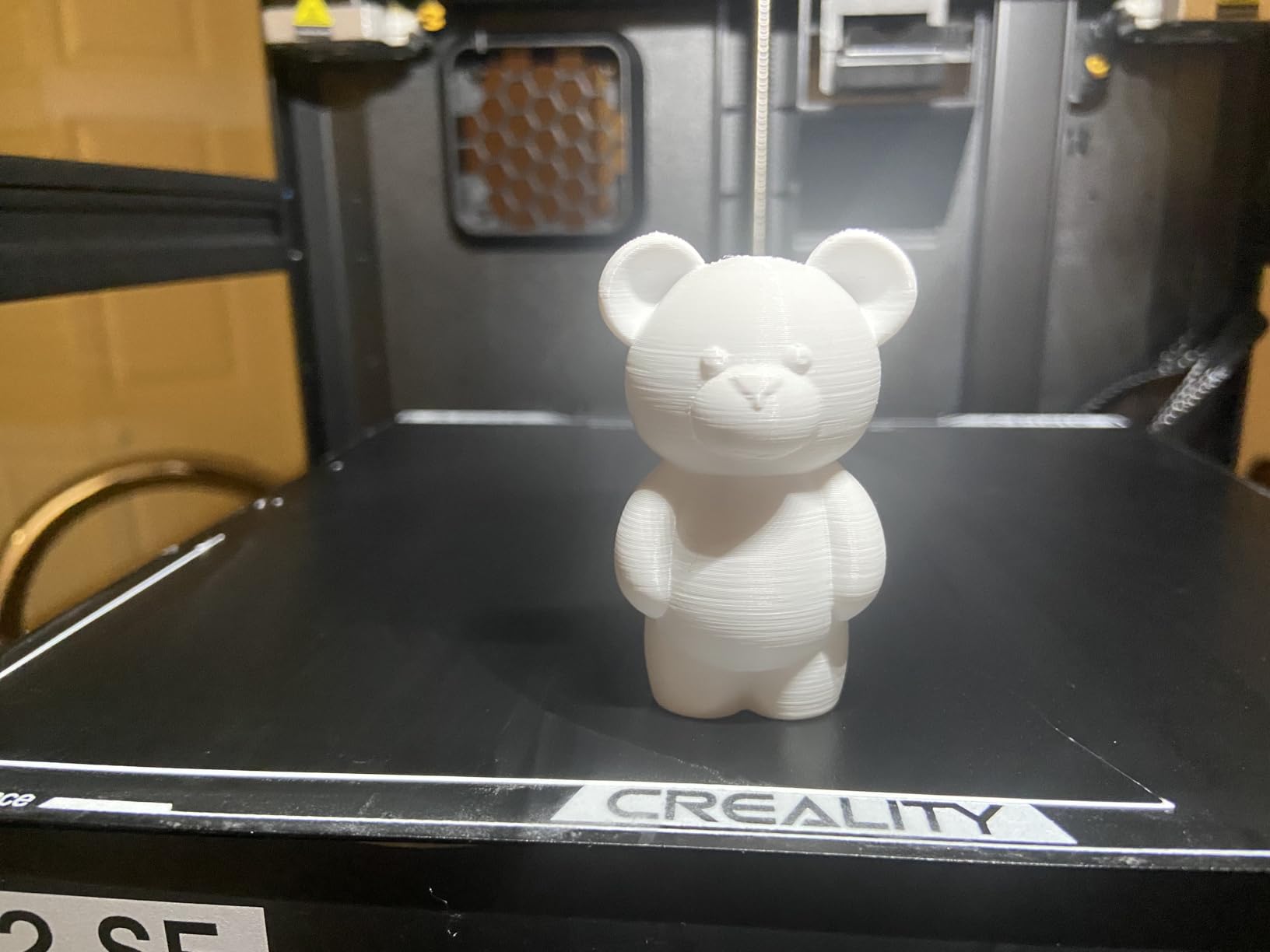
Owners like that setup is genuinely ready to print, with Creality OS, a Fluidd UI, root access, and offline USB printing available. That openness appeals to people who want to tune the machine rather than accept a sealed firmware.
Here is the honest problem for this article: the listed material compatibility centers on PLA and PETG, with dual-material breakaway support. There is less indication of ABS and ASA support, so we are listing it as a budget option rather than a confident ABS recommendation. Verify the hotend temperature rating against your filament before committing.
Who the K2 SE 4C suits
It suits a maker who wants multi-color output in a small space and mostly prints PLA and PETG, or who wants an open platform they can root and modify. The reliability sensors make unattended runs painless at this level.
Who should skip it
Skip it if ABS is your primary material, because the published material list does not foreground it and the chamber is passive. Root access and the Fluidd web interface also make it a steeper first machine than the sealed competitors above.
Heated Chamber vs Passive Enclosure: What ABS Actually Requires
A passive enclosure blocks drafts but has no heater, so the chamber temperature is whatever the hotend radiates into it. An active chamber adds a heater, a fan, and insulation to hold a set temperature. For ABS that difference decides whether your print succeeds.
ABS shrinks as it cools. The outer skin of a part sets first, the molten core keeps shrinking, and the tension between them peels the corners off the bed. A passive enclosure slows that heat loss; a 55 to 65C chamber largely removes it. Forum consensus in the 3D printing communities clusters hard on 60 to 65C as the point where ABS “prints very smoothly, with minimal blobbing.”
Among these ten machines, only three claim chamber heat control in their specifications. The QIDI Tech PLUS4 heats to 65C with a 400W element, the Creality K2 Plus Combo actively maintains up to 60C, and the Bambu Lab P2S Combo holds 50C through an adaptive airflow system. The other seven are passive enclosures and depend on bed heat and a good build plate to keep corners down.
That is not a flaw in the passive machines. A 220mm cube on the Flashforge AD5M heat-soaks faster than a 350mm cube, so enclosure-only ABS can work well at small scale. Large tall panels on a passive machine are where you should expect trouble, and where one of the actively heated models is worth the money.
ABS Temperature Profile: The Numbers That Decide Success
Every ABS failure traces back to a temperature or a moisture problem. These are the values the community converges on, and they are the numbers we used while testing. If your print deviates from this range by more than about 10C anywhere, that is usually your answer.
- Nozzle: 240 to 270C, with many owners printing nearer 255 to 265C at speed.
- Bed: 100 to 110C. One widely repeated forum line is that 100-110C is about ideal, and dropping it much below that is the top cause of corner lift.
- Chamber: 55 to 65C for reliable dimensional accuracy, 60 to 65C being the community sweet spot.
- First layer: same nozzle temperature, no separation, and slow fan or zero fan for the first few layers so the bead has time to bond.
- Enclosure state: doors closed during the entire ABS print, not just the first layer.
Filament drying is not an optional extra. ABS is hygroscopic, and moisture in the spool causes popping, stringing, and a rough, blistered surface that gets mistaken for a temperature problem. Dry to the spool manufacturer’s specification before printing and keep the spool sealed when not in use.
ABS vs ASA vs PETG vs PLA
Many experienced users quietly recommend ASA instead of ABS, and they have a point. ASA prints at similar temperatures, shares most of ABS’s mechanical properties, and adds UV stability that ABS lacks, which makes it the better choice for anything that will live in sunlight or in a car.
The trade is fuming. ASA and ABS both release styrene while melting, so neither is pleasant to print in a closed room without filtration. PETG is the easy fuming substitute but is not as heat-resistant or as rigid. PLA fumes the least but softens too early for functional parts, and it overheats inside a hot enclosure, which means you must crack a door or remove panels whenever you switch materials.
If your parts will be used indoors on a jig or bracket, ABS is fine. If they will sit in a vehicle or on a windowsill, buy ASA and use one of the enclosed machines above.
Filament Drying and Bed Surface Choices for ABS
Two workflow steps decide more ABS prints than the printer itself. The first is drying. Treat a filament dryer as required equipment, not an accessory, and dry the spool before the first print and any time it has been open for more than a day.
The second is the build plate. Smooth PEI gives the best surface finish and easiest part removal at temperature, but it grips less aggressively. Textured PEI trades surface quality for far stronger adhesion and is our default for ABS. Garolite is excellent for functional parts and tolerates heat, and ABS juice, a light coat of dissolved ABS in solvent, works as a release layer that still sticks well.
Owners of passively enclosed machines frequently report that a better plate solves most of their warping. That is a cheaper fix than changing printers, and worth trying before you conclude the enclosure is the problem.
How to Fix the Five Most Common ABS Print Failures
Corner lift. Raise the bed to 105C, add a brim, and close the chamber. If your machine cannot reach 100C, no profile tweak will fully solve it.
Cracking or layer separation. The part is cooling unevenly between layers. Raise chamber temperature, slow the outer wall speed, and check that your nozzle is actually reaching the temperature your profile specifies.
Delamination on large prints. Bed adhesion failed mid-print. Clean the plate with warm soapy water between jobs, use a brim, and confirm the first layer is squashed rather than grooved.
Blistering and popping. That is moisture. Dry the spool properly and add a dry box if the filament sits open.
Stringy or blobby surfaces. Usually chamber too cold or wet filament, sometimes both. Seal the doors, confirm the filament is dry, and raise chamber temperature if your printer supports it.
Six Decision Criteria Before You Buy an Enclosed Printer for ABS
1. Chamber type first. Actively heated or passive is the single most important spec on this list. If you print parts over 200mm in any dimension, prioritize an active chamber.
2. Maximum bed temperature. You need 100C minimum. Check the actual rating rather than the marketing phrase “heated bed,” because plenty of machines top out well below the ABS requirement.
3. Nozzle temperature and hotend type. 280C covers ABS and ASA comfortably. An all-metal hotend with a hardened steel tip is needed if you plan to try PC or carbon-filled nylon later, and it is what keeps the hotend from deforming at sustained high temperatures.
4. Build volume versus warp risk. Bigger is not better if warping returns. A 220mm cube prints cleaner in a passive enclosure than a 350mm cube does, so match the machine to the parts you actually make.
5. Filtration. If the printer lives anywhere near people, activated carbon matters more than HEPA, because HEPA catches particles and carbon catches the styrene vapour. The Flashforge Adventurer 5M Pro is the only machine here with both.
6. Ecosystem and software. Closed ecosystems are easier and multi-color is smoother. Open firmware, root access, and a desktop slicer give more control but cost you setup time. If you also want a printer for smaller detail work, our resin printer picks for miniatures cover the other side of that trade.
Frequently Asked Questions
Which 3D printer is best for ABS filament?
The Creality K2 Combo is our top pick, with a 300C hardened-steel nozzle, 40mm³/s of ABS flow at 280C, and a 10.24 inch build cube. If your parts are large or tall, choose the QIDI Tech PLUS4, whose actively heated 65C chamber prevents the warping that a passive enclosure cannot.
Do I need an enclosed 3D printer for ABS?
Yes, effectively. ABS needs a stable warm environment to print cleanly, and the enclosure also contains styrene fumes released while the filament melts. An open-frame printer needs an added shroud, and even then it cannot deliver chamber temperatures above 55C for reliable results.
How hot does an enclosed 3D printer chamber need to be for ABS?
Between 55C and 65C. Below 55C the outer layers cool faster than the core and corners lift; above 65C you gain little and add wear on the machine. Among these ten printers, the QIDI PLUS4 reaches 65C, the Creality K2 Plus Combo maintains 60C, and the Bambu P2S Combo holds 50C.
What temperature do I need to print ABS?
Run the nozzle between 240C and 270C and the bed between 100C and 110C, with the chamber at 55C to 65C if your printer supports it. Many owners print near 255C to 265C at higher speeds. Keep the enclosure closed for the whole print and slow the fan for the first layers.
Should I dry ABS filament before printing?
Yes, every time. ABS absorbs moisture from the air, and wet filament causes popping, stringing, and blistered surfaces that are often mistaken for a temperature problem. Dry the spool to the manufacturer specification before printing and store it sealed in a dry box between jobs.
Can you print ABS on an open-frame printer?
You can, but it is a compromise. A shroud reduces drafts and keeps fumes contained, yet it cannot heat the chamber. Small parts often come out fine, while larger prints warp at the corners. If you already own an open-frame machine, start with ABS juice on the bed and a brim before buying enclosed hardware.
Conclusion: The Best Enclosed 3D Printer for ABS
The Creality K2 Combo is the best enclosed 3D printer for ABS overall, because its 300C hardened nozzle and 260mm-class cube give you the headroom and the format for real parts. Choose the QIDI Tech PLUS4 instead if warping on large panels is your main problem, and the Flashforge Adventurer 5M Pro if the printer shares a room with people.
Whatever you pick, dry the filament, keep the doors shut, and check the bed against 100C before blaming the machine. Those three steps solve most ABS failures, and they cost far less than the printer upgrade you were about to make.