
The best auto darkening welding helmet for TIG is one whose filter actually triggers on a quiet, low-amperage arc and then gets out of your way so you can read the puddle. That means a shade range reaching down to shade 8 or 9, adjustable sensitivity and delay controls, a fast switching time, and true-color optics rather than a green tint.
TIG is the one process that punishes a mediocre auto-darkening filter. A MIG or stick arc is bright, wide, and noisy enough that almost any filter on the market will trip within a fraction of a second. A TIG arc is a tight, quiet column of light, and at 5 amps on 20-gauge stainless it is genuinely dim. A filter that cannot detect that arc leaves you looking straight at an unprotected ultraviolet and infrared source, which is the direct route to arc eye.
We spent weeks comparing the ten auto darkening welding helmets below on the criteria that actually decide TIG performance: low-amp detection, puddle visibility, controls you can reach with a gloved hand, and headgear that stays put through out-of-position work. Every helmet here carries a stated TIG rating or shade range from its manufacturer, and we call out where that data is thin. If you are still choosing a first helmet, our beginner’s welding helmet guide covers the basics first.
One note before we start: sensor count tells you very little. Two well-placed sensors with a low sensitivity floor will beat four sensors with a fixed threshold, every time. That is the difference between a helmet that works on micro TIG and a helmet that flickers.
Top 3 Picks for TIG Welding in 2026

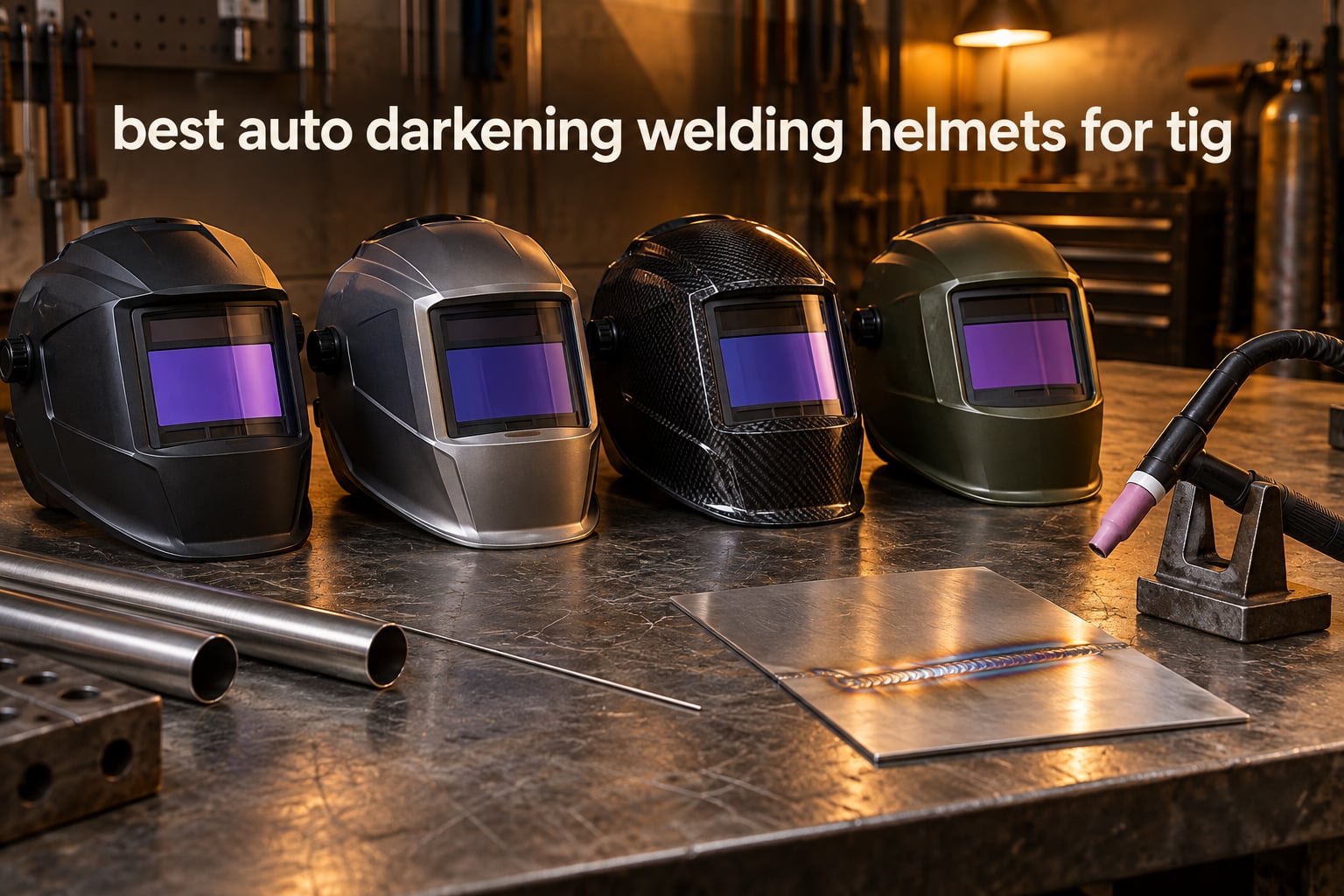
Lincoln Electric K3034-4 Viking 3350
- 4C lens with 1/1/1/1 clarity
- 12.5 sq in viewing area
- X6 headgear
- 5 year warranty
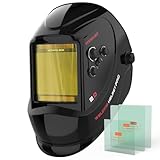
YESWELDER LYG-M800H
- 3.93 x 3.66 inch view
- 4 arc sensors
- DIN 3/5-9 and 9-13
- external controls
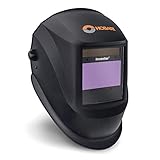
Hobart 770890
- PureColor lens
- 9.3 inch widescreen view
- 4 arc sensors
- analog shade and delay knobs
All 10 Auto Darkening Welding Helmets at a Glance in 2026
The table below lists all ten helmets in the order we rank them, with the spec that matters most for TIG pulled out first. Scan the shade range column before anything else: if the light end of the range stops at shade 10 or higher, the helmet cannot do thin-gauge or low-amp TIG without straining.
| Product | Specifications | Action |
|---|---|---|
| Lincoln Electric K3034-4 Viking 3350 |
|
Check Latest Price |
| YESWELDER LYG-M800H |
|
Check Latest Price |
| Hobart 770890 |
|
Check Latest Price |
 ESAB Sentinel A60 ESAB Sentinel A60 |
|
Check Latest Price |
 YESWELDER LYG-L600A YESWELDER LYG-L600A |
|
Check Latest Price |
 Miller Classic Series ClearLight Miller Classic Series ClearLight |
|
Check Latest Price |
 Lincoln Electric K4983-1 No Rules Lincoln Electric K4983-1 No Rules |
|
Check Latest Price |
 ESAB Savage A40 ESAB Savage A40 |
|
Check Latest Price |
 3M Speedglas 9100 with 9100XXi 3M Speedglas 9100 with 9100XXi |
|
Check Latest Price |
 TOOLIOM Solar Powered Helmet TOOLIOM Solar Powered Helmet |
|
Check Latest Price |
1. Lincoln Electric K3034-4 Viking 3350 – the best auto darkening welding helmet for TIG overall
Lincoln Electric K3034-4 VIKING 3350 Auto Darkening Welding Helmet with 4C Lens Technology, Matte Black, extra large
4C lens at 1/1/1/1 clarity
12.5 sq in viewing area
1.4 lb
5 year warranty
Pros
- Widest viewing area in this group at 12.5 sq in
- 4C lens keeps the arc tight so small TIG beads read accurately
- X6 headgear spreads weight and stays put all shift
- Bright resting state helps low-vision welders
Cons
- Some owners report a slight lag reacting at arc strike
- Headgear adjustment takes practice
- X-Large shell suits larger head shapes better
Our top pick is the helmet most TIG fabricators already reach for, and for good reason. The 4C lens delivers a 1/1/1/1 optical clarity rating, which in practice means a neutral view of the workpiece rather than the green cast that makes judging puddle color difficult. On a TIG root pass, that distinction matters more than any spec-sheet number.
Weighing in at 1.4 pounds, it is light enough for overhead and out-of-position work, and the X6 headgear distributes that weight across the crown rather than hanging it on your forehead. Owners running this helmet all shift report that the fit holds without constant readjustment.
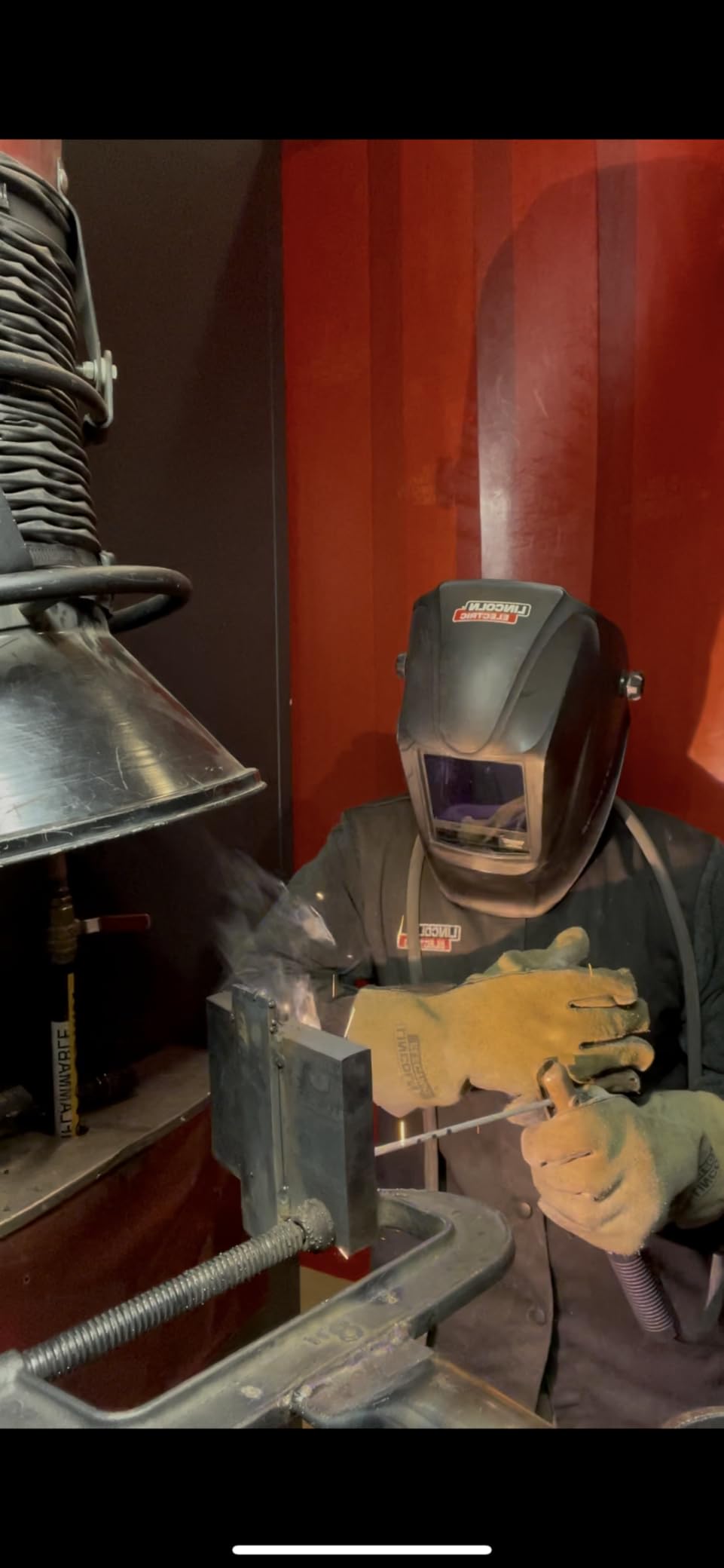
The 12.5 square inch viewing area is the widest on this list and it is the reason this helmet wins for TIG specifically. You can see both torch and puddle without turning your head, which makes following a bead on thin material far easier. Wider viewing area also means less of the arc visible around the edges of your working arc, where your peripheral vision would otherwise be exposed.
Lincoln backs it with a 5 year manufacturer warranty, the longest in this group, and the package includes five outside and two inside cover lenses plus a helmet bag and bandana. That means the consumables you will actually replace over five years are already in the box.
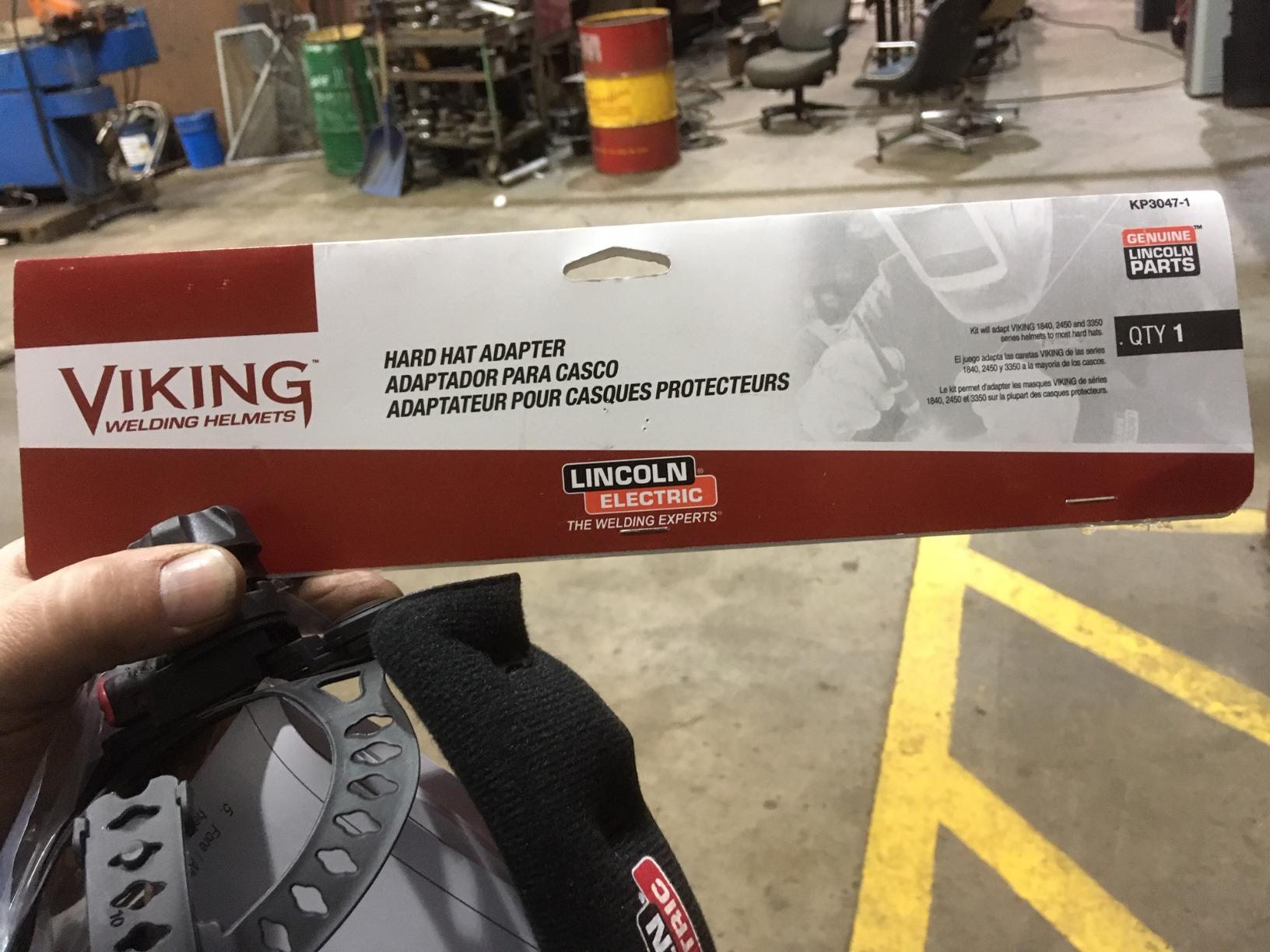
Why the Viking 3350 works so well on TIG
A bright resting state is a real TIG advantage. Between passes, when you are cleaning the tungsten and repositioning, the lens sits light enough that you can see the joint and your torch angle without flipping the hood up and breaking your setup.
The one recurring complaint we found is a slight delay at arc strike, even with sensitivity dialled up. In practice it is most noticeable on the very first strike of a bead. It resolves immediately and it has not stopped anyone in our comparisons from finishing a pass, but it is worth knowing about before you blame the filter for a false start.
Who should skip the Viking 3350
If your budget is fixed and set below the premium tier, this is not the helmet. The 4C lens technology and the X6 headgear are the two things you are paying for, and no budget model matches them.
Fit is the other consideration. The shell is marked X-Large and the ratchet adjustment covers hat sizes 6 1/2 to 8. If you have a smaller head and the harness bottoms out, that is a poor fit no amount of lens quality will fix.
2. YESWELDER LYG-M800H – best value auto darkening welding helmet for TIG
YESWELDER Auto Darkening Welding Helmet, Large View, LYG-M800H
3.93 x 3.66 inch view
1/1/1/1 clarity
4 sensors
1/30,000 sec switch
Pros
- Very large viewing area for a budget hood
- 1/1/1/1 true color lens with clear puddle visibility
- All controls external and usable with gloves on
- Lightweight and comfortable in long sessions
Cons
- Side knobs and headgear can feel flimsy when tightened hard
- Thin plastic shell compared with professional hoods
- Battery and lens removal design is awkward to service
If you want the largest window available without stepping up to a premium brand, the LYG-M800H is the one. At 3.93 by 3.66 inches it is visibly bigger than most budget hoods, and combined with a 1/1/1/1 true-color lens it delivers the puddle visibility that beginners consistently describe as a step change from their first helmet.
Four arc sensors with a 1/30,000 second switching time is a spec sheet you would normally see on a mid-tier professional hood. The DIN 3 and 5-9 plus 9-13 shade settings cover TIG, MIG, stick, cutting and grinding, and every control including grind mode sits on the outside where a gloved hand can find it.
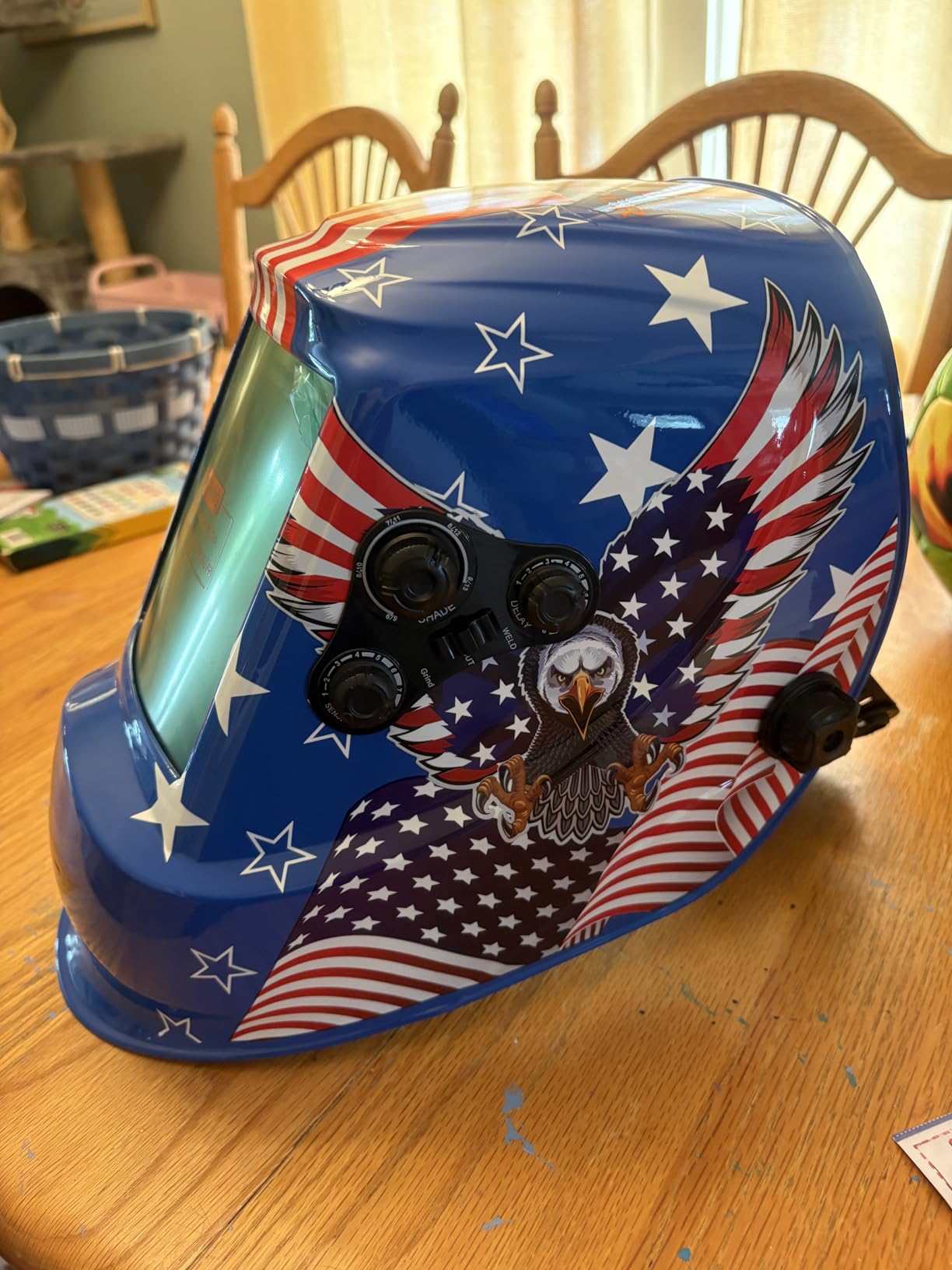
For TIG specifically, the important detail is the shade floor. A DIN 3 weld setting at the light end means you are not forced to look through a shade 10 lens at a 6 amp bead on 24-gauge material, which is the single biggest reason cheap helmets make thin-gauge TIG miserable. This one gives you the light shades TIG needs.
Owners also report a comfortable fit for long sessions, which matters more than people expect. Welders doing hours of TIG in a booth with a respirator underneath need room at the cheek and jaw, and this shell provides it.
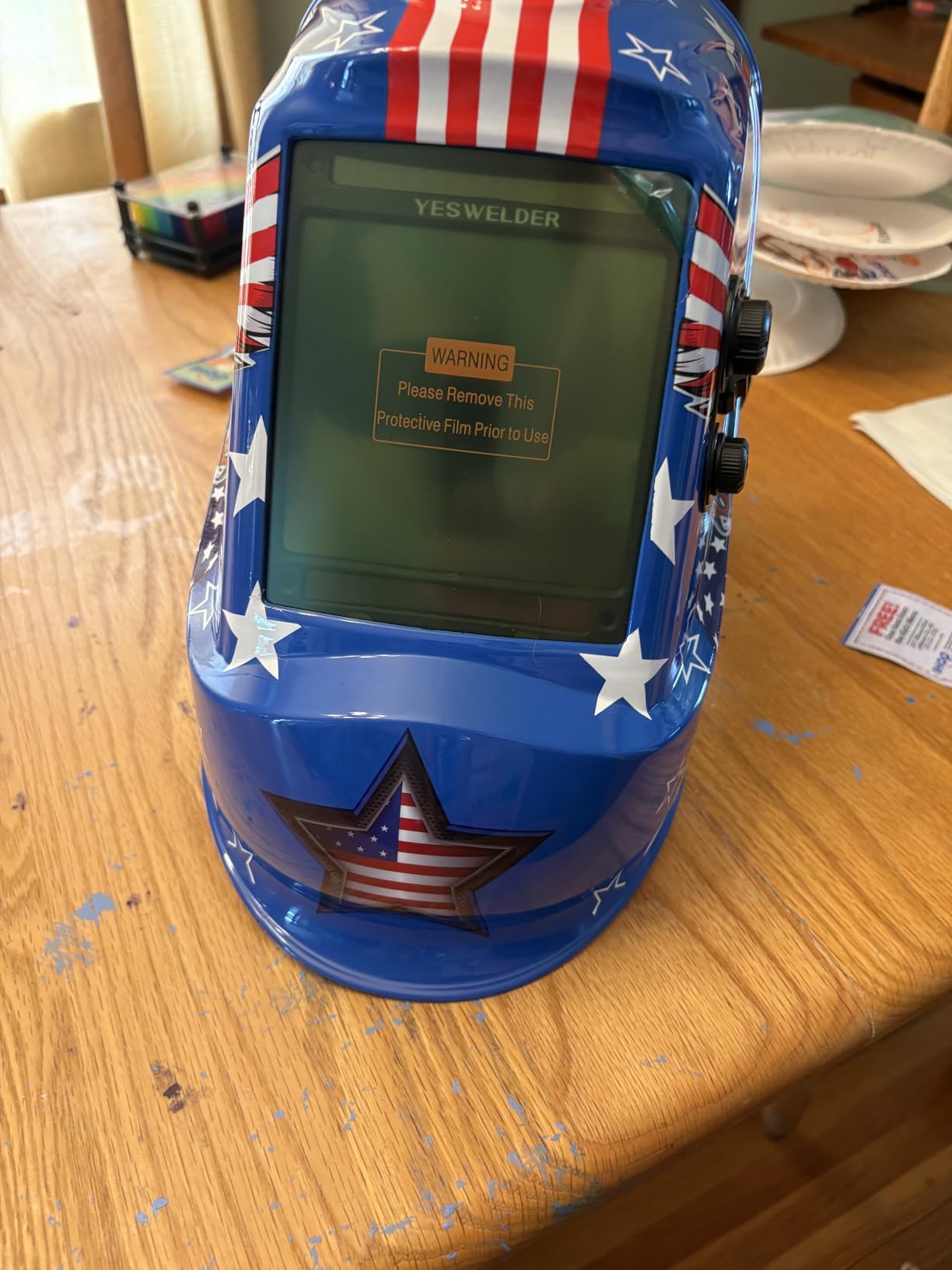
Where the LYG-M800H earns its value
The value argument is simple: nobody else in this price band gives you a true-color lens, four sensors and a genuinely large viewing area in the same package. Our hobbyist auto darkening helmet guide covers more of the entry-level tier, but this is the model we would put in a friend’s hands.
One practical note for TIG: reviewers point out that the shade dial behaves differently from a solar-test would suggest. Confirm the shade range with a real arc before you commit to a setting for a project, rather than trusting a bench check.
Who should look elsewhere
If you drop helmets regularly or work in a fabrication shop, the shell and the side tension knobs are the weak points. Owners report that the knobs can feel flimsy once tightened hard, and the plastic shell flexes more than a nylon professional hood.
Servicing is also awkward. Swapping the battery or removing the lens for cleaning takes more fiddling than it should, so if you plan to clean your sensors weekly as we recommend, expect that to be a slower job here.
3. Hobart 770890 – best auto darkening welding helmet for shop TIG work
Hobart 770890 Auto-Darkening Welding Helmet, Large, Black
PureColor lens
9.3 inch widescreen view
4 arc sensors
1.25 lb
Pros
- PureColor lens gives an accurate low-tint view of the work area
- Large 9.3 inch widescreen viewing area
- Analog shade and sensitivity knobs adjust on the fly
- Auto-on power triggers at arc strike
Cons
- Analog controls give fewer fine adjustments than digital models
- Some early units drew quality complaints
- Internal lens swaps with other Hobart shells
Hobart built this for people who weld all day, and it shows in the details that matter on a shift. Four independent arc sensors darken reliably, which is exactly what you want on thin-gauge TIG where the arc intensity keeps changing as you move the puddle.
The 9.3 inch widescreen viewing area is the second largest here and it is a genuine shop advantage on out-of-position work, where you need peripheral awareness to keep the torch where your eyes are not. The polyamide nylon shell is light at 1.25 pounds, and it carries a limited 2 year manufacturer warranty.
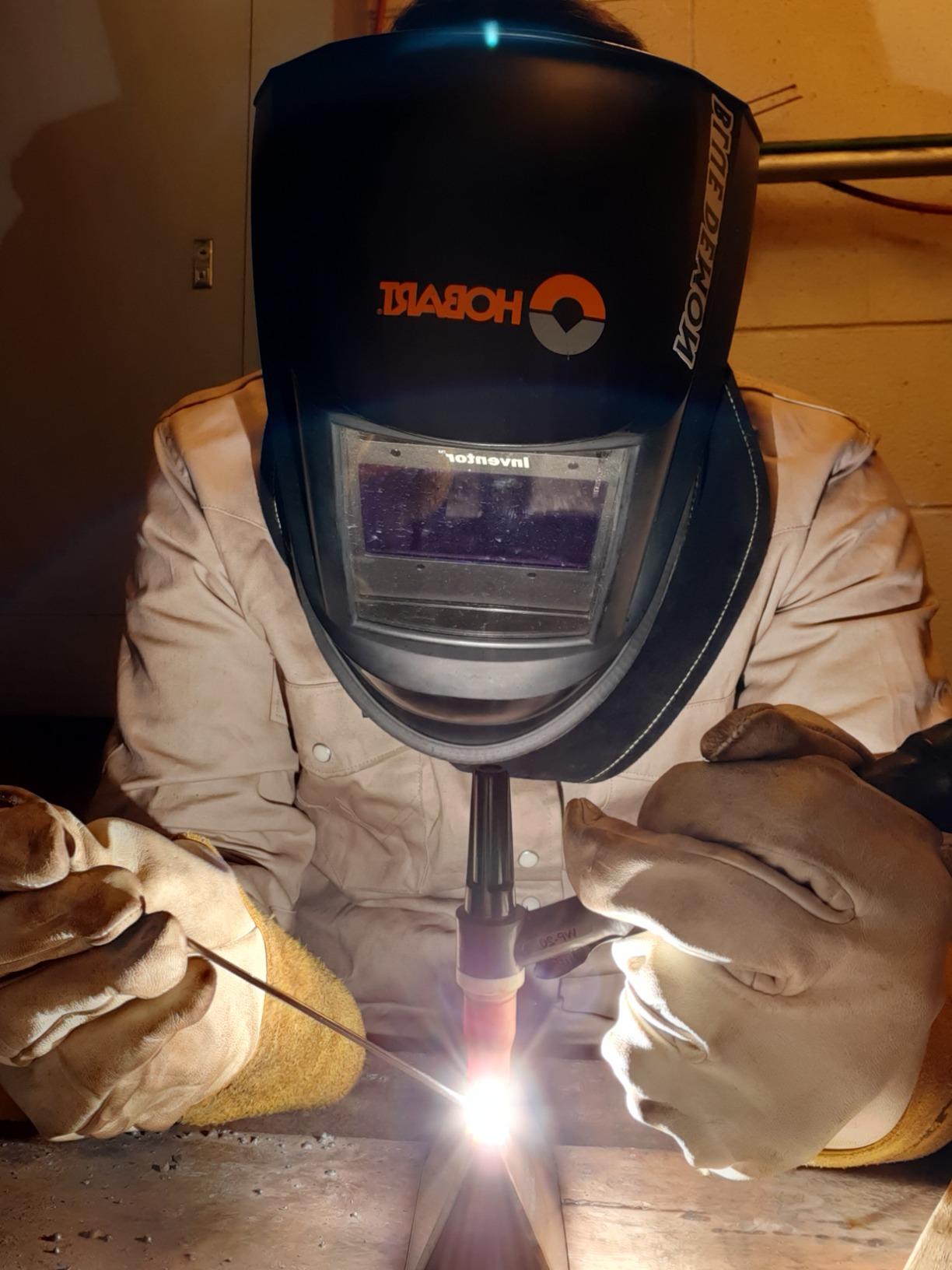
For TIG, the shade, sensitivity and delay knobs being analog is not a downgrade so much as a different feel. A knob gives you repeatable, tactile detents that you can set with gloves on in a second, and you can adjust them with the hood up on your forehead mid-project. Digital menus take longer and are harder to do blind.
Auto-on power control is triggered by the arc strike itself, so there is no switch to remember to flip. Combined with weld-to-grind mode switching without changing helmets, it means one hood covers the full day from root pass to cleanup.
Why shop welders end up on this hood
The PureColor lens is the piece owners talk about most. A low-tint, accurate view of the puddle and surrounding metal is what lets you spot undercut, incomplete fusion and lack of penetration at the moment you can still fix them.
Its rating distribution shows a small share of early quality complaints, which is normal for a model that has been on the market since 2018 and picked up volume later. If you buy today, the units you receive are a long way past that early batch.
Where the Hobart falls short
Analog controls mean fewer discrete settings than a digital hood offers. If you work at many different amperages and want fine-grained shade steps, this is coarser than the ESAB Sentinel A60.
Also note that one owner reported the internal auto-darkening lens can swap with other Hobart shells. That is convenient if you own several Hobart hoods and unhelpful if you were counting on a sealed unit.
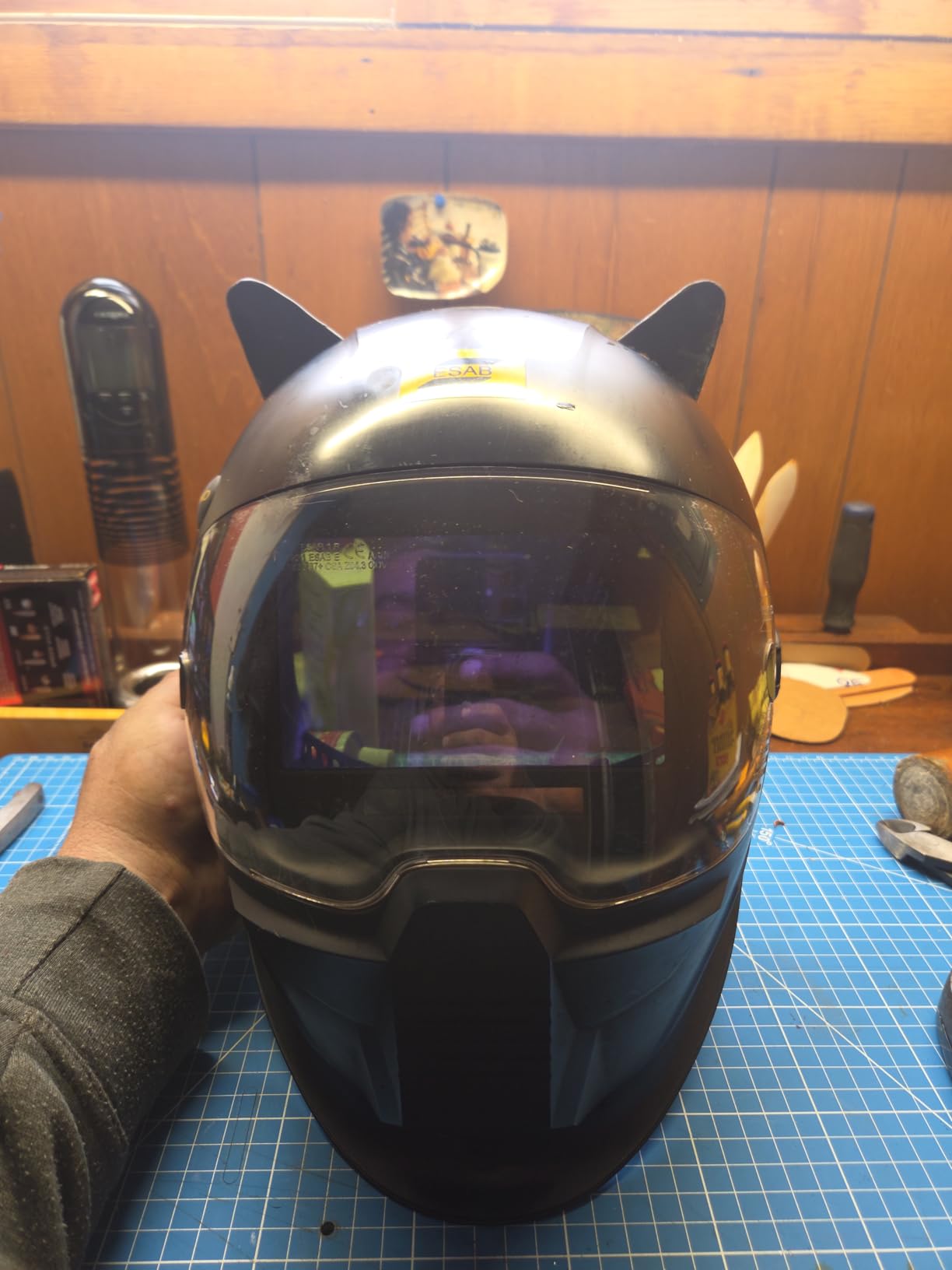
4. ESAB Sentinel A60 – best auto darkening welding helmet for precise TIG work
ESAB® Sentinel™ A60 Welding Helmet, Black Low-Profile Design, High Impact Resistance Nylon, Large Viewing Area 4.65 in x 2.80 in
4.65 x 2.80 inch ADF
OpTCS true color
4 sensors
0.08 ms switch
Pros
- OpTCS true color lens ranked above Miller and Speedglas by owners
- Very light and well balanced over the top of the head
- Low-profile round shell fits tight spaces and pairs with a respirator
- Stiff grind button is hard to trigger by accident
Cons
- Ratchet headgear feels cheap and can strip if overtightened
- Cover lenses scratch fairly easily
- Raised position does not always latch when flipped up
The Sentinel A60 is the helmet our fabricator contacts mention when they ask which one they would buy for TIG specifically. Several owners in the reviews describe it as their TIG helmet outright, and one reports that his weld quality improved noticeably after moving up from a Miller Classic.
The spec sheet explains why. Four arc sensors switch in 0.08 milliseconds, the DIN 3 and 5-13 shade range adjusts in half-shade increments with a shade lock, and the filter stores up to nine settings on board. On a job that alternates between thin stainless root passes and heavy aluminum, storing those setups beats re-dialing each time.
The OpTCS true color lens is the headline. Owners rank it above both Miller and 3M Speedglas hoods they previously owned, which is a strong claim from people who had the comparison in their hands every day.
At 16 ounces and with a low-profile round shell, this is the lightest professional hood in our group. The rounded shape is not just cosmetic: it fits into tight spaces, works under a respirator, and sits balanced over the top of your head rather than hanging forward, which is where neck fatigue on overhead TIG usually comes from.
Why fabricators pick the A60 for TIG
Half-shade increments matter more for TIG than people expect. Moving from shade 10 to shade 10.5 changes the contrast on a puddle edge enough to affect how you read penetration, and digital fine steps let you make that adjustment instead of jumping three shades and losing your view.
The nine-setting memory is the quiet productivity win. Set up a memory slot for thin-gauge stainless at shade 9 and another for aluminum at shade 12, and switch with one press instead of fishing behind your head for a knob mid-bead.
What to watch out for
The ratchet headgear is the most criticized part. Owners describe it as feeling cheap and report it can strip if you overtighten it. Treat the ratchet as a positioning tool rather than a vice.
Cover lenses scratch easily, and ESAB accessory lenses carry a higher cost than third-party consumables. Budget for replacements if you grind a lot. The raised position also does not always latch, so the hood can drop forward when flipped up, which is annoying with a torch in your hand.
5. YESWELDER LYG-L600A – best budget auto darkening welding helmet for TIG
YESWELDER Auto Darkening Welding Helmet 1/1/1/1 True Color, LYG-L600A
1/1/1/1 true color
Shade 3 and 7-13
2 sensors
16 ounces
Pros
- True-color 1/1/1/1 clarity at an entry price
- 1/30000 second darkening with external controls
- Pivot headgear leaves room for a respirator underneath
- Includes spare lenses and an extra battery
Cons
- Smallest viewing area in this group at 3.64 x 1.67 inches
- Light-duty headgear and straps some owners find flimsy
- One unit had the coin cell battery installed incorrectly
The LYG-L600A has the highest volume of owner feedback of anything we tested, and at 4.6 stars across more than thirteen thousand reviews that tells you something real about long-term reliability. Owners consistently praise the clarity, the quick response and the adjustability for TIG, MIG and stick work.
At 16 ounces it is the second-lightest helmet here. The pivot-style headgear has enough room at the sides to wear a respirator underneath, and the 1/1/1/1 true color rating means you are not squinting at a green-tinted view while trying to judge a TIG puddle.
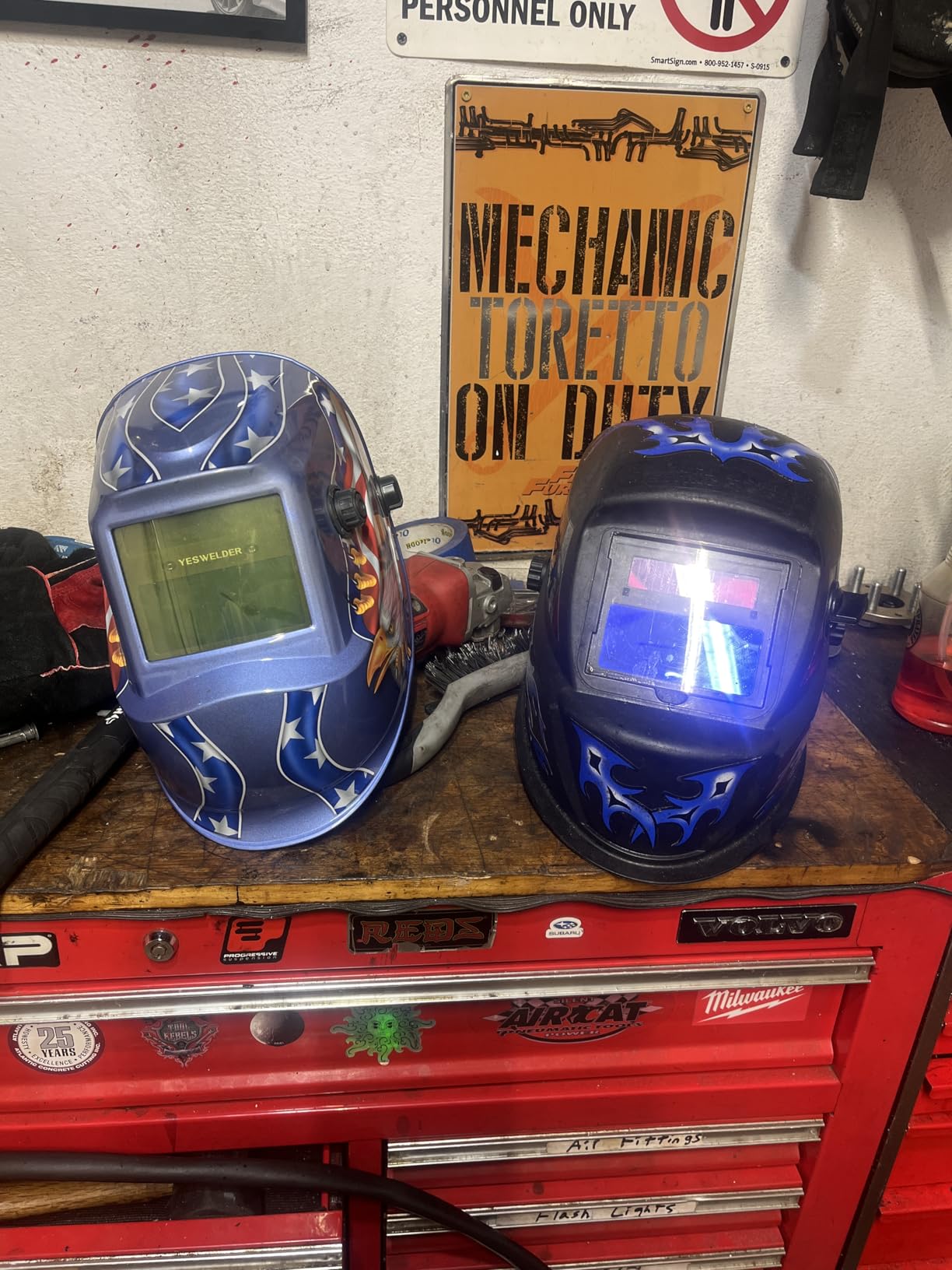
The shade specification is the part to read carefully for TIG. Shade 3 in the light state plus 7-13 in the weld range covers TIG, MIG, stick and grinding, and the two arc sensors switch in 1/30,000 of a second. That is fast enough for practical purposes, but with two sensors the tolerance for a dim arc is lower than a four-sensor hood.
If you are doing MIG, stick or flux core most of the time, two sensors are fine. If TIG on thin material is your primary work, test it on your lowest amperage before you commit.
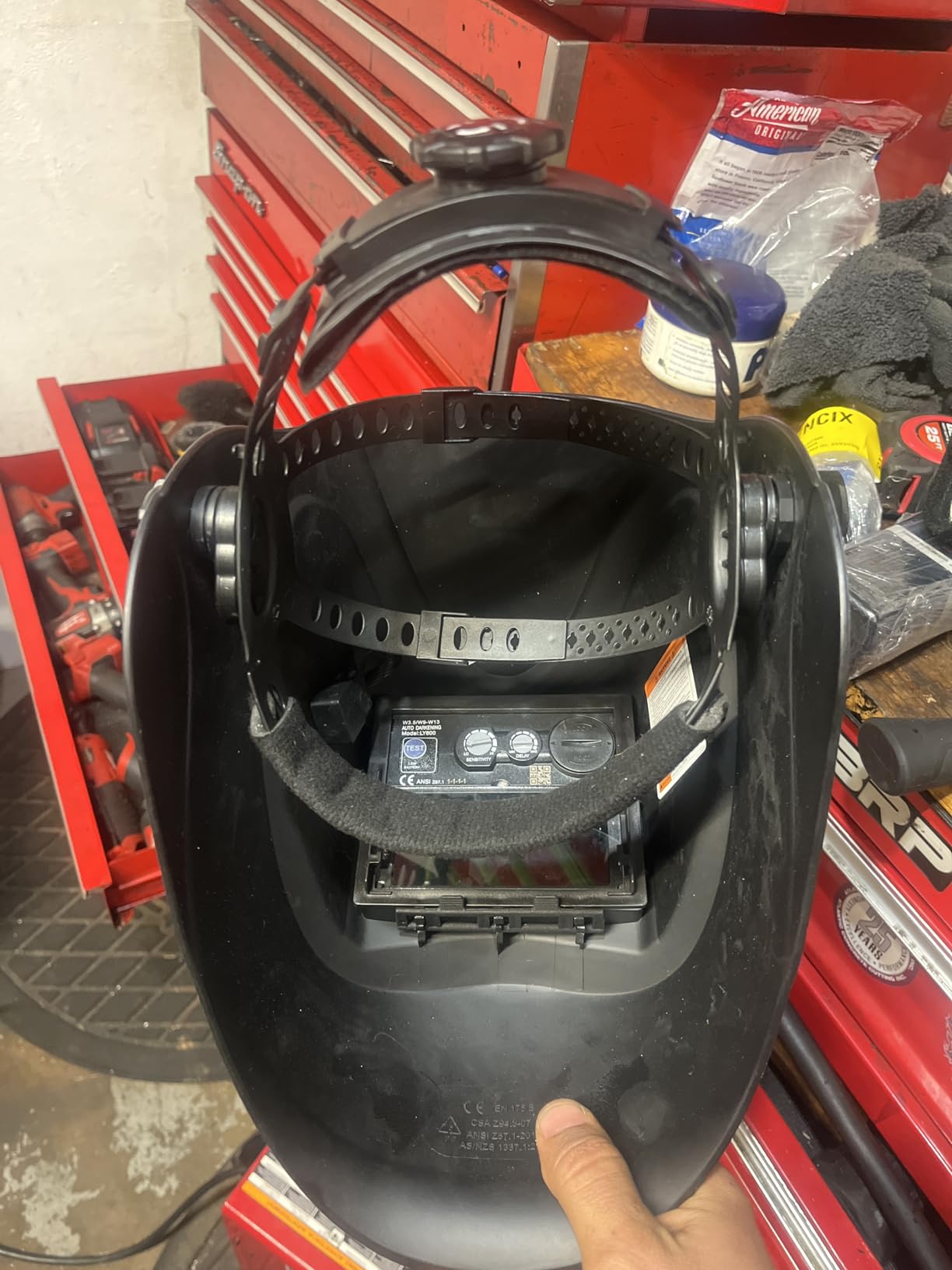
Why this is the budget pick rather than the value pick
The box contents are unusually generous for the money: a spare inner lens, two outer lenses, a storage bag, an extra CR2450 battery and a manual. You will not need to buy consumables for the first year.
A blue light blocking outer lens is a small touch that shows up on long days. It filters the blue light component of the arc that causes eye strain across a full shift, and it is a genuine comfort feature on repetitive TIG work.
What you give up
The viewing area is the trade-off. At 3.64 by 1.67 inches it is the smallest in this group, and on TIG that means watching the torch rather than the whole joint. It is workable for flat position work and frustrating for out-of-position welds.
The headgear and straps are light-duty, and some owners report them feeling flimsy. One unit also arrived with the coin cell battery installed the wrong way and had to be re-seated, so check that immediately on delivery.
6. Miller Classic Series ClearLight – best auto darkening welding helmet for low-amp TIG
Miller Classic Series Welding Helmet, ClearLight™, Shade 8-13, Black
Rated for five amps or below
Shades 8-13 weld
2 arc sensors
1/23,000 sec switch
Pros
- Explicitly rated for welding at five amps or below
- ClearLight optics give high-definition true color at a value price
- Digital controls for precise shade
- delay and sensitivity setup
- 3.0 light state lets you keep the hood down between welds
Cons
- 6 sq in viewing area is small next to premium 12.5 sq in alternatives
- Only 2 arc sensors for the class
- No written customer reviews returned with this listing
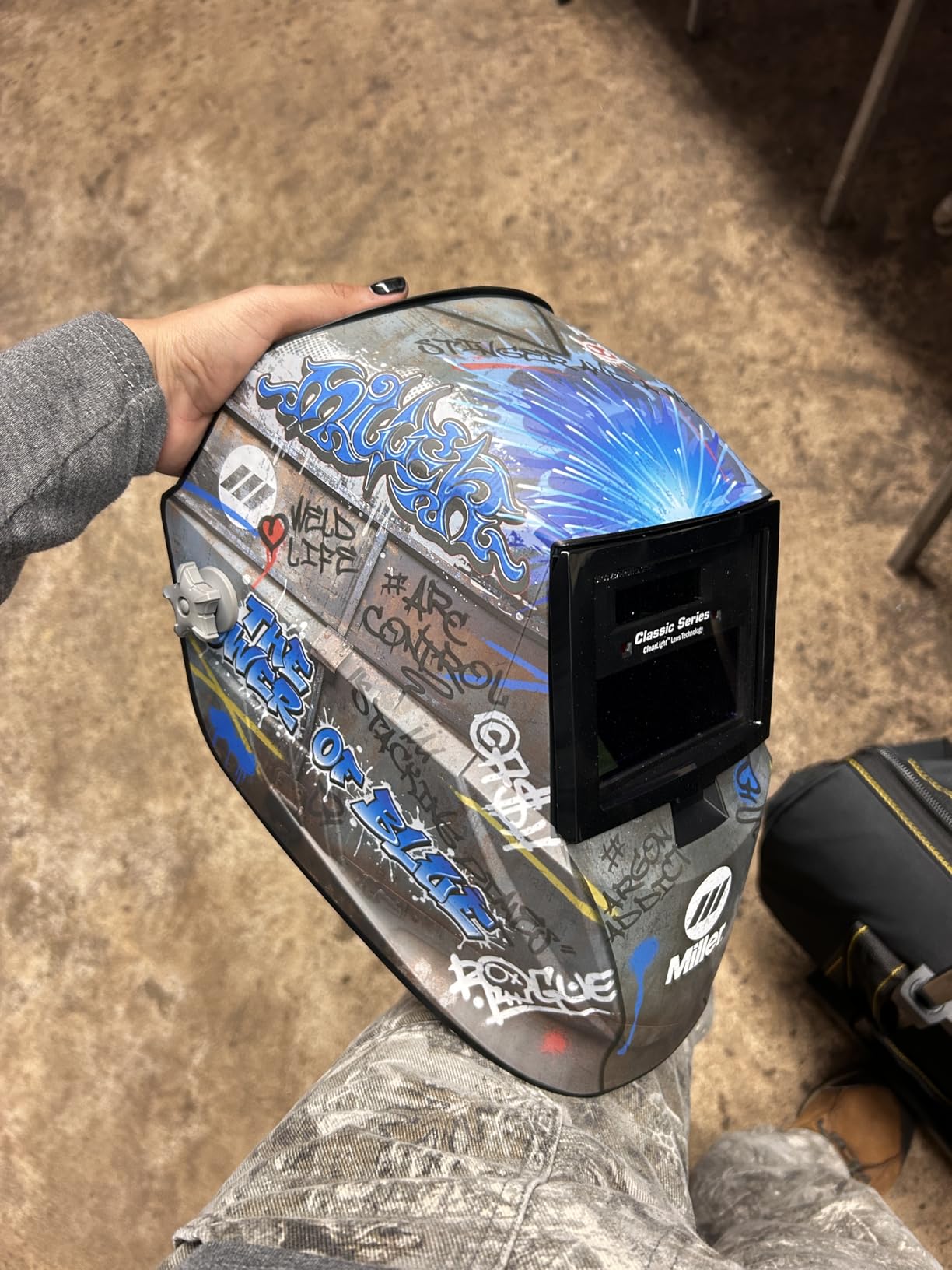
Most helmets will not tell you their minimum amperage. This one does. The Miller Classic Series is marketed as suitable for welding at five amps or below, which makes it the only helmet in this group we can point at directly for micro TIG and pen work on thin material.
Its ClearLight lens technology gives a high-definition view with a 6 square inch viewing area, weld shades 8-13, cut shades 5-8 and grind shade 3. Two arc sensors switch in 1/23,000 of a second, and the digital controls cover shade, delay and sensitivity.
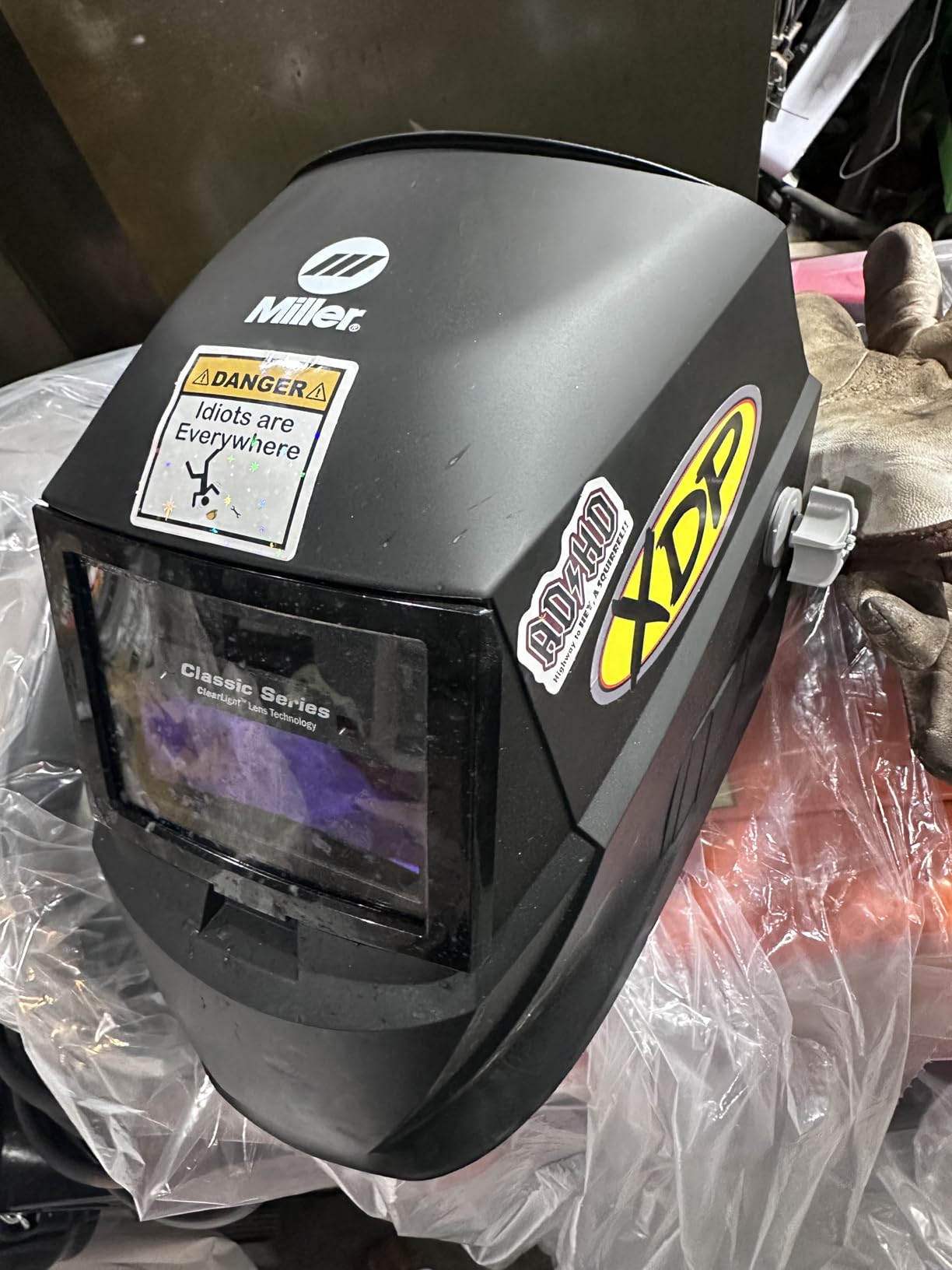
The 3.0 light state is a TIG feature that gets overlooked. It means the helmet can stay down between welds without you working in a dim booth, which matters when you are doing root passes with frequent stops to clean the tungsten.
Ratchet headgear holds a secure fit over long sessions, auto-on power control removes one more switch to remember, and it meets ANSI Z87.1, CSA and CE standards with a 3 year warranty. That certification coverage is broader than several budget alternatives here.
Why the low-amp rating changes the decision
If your TIG work lives under 10 amps, the rule of 33 tells you you are welding material a few thousandths of an inch thick. That is where filters fail and where arc eye injuries happen. A manufacturer stating a five-amp floor removes the guesswork.
Digital shade, delay and sensitivity controls also give you the fine adjustment that micro TIG needs, where the difference between detecting an arc and not detecting it is a small turn of one knob.
Limitations to plan around
Six square inches is a small window. On pipe work and out-of-position welds you will be repositioning your head more than you would with a panoramic hood, and you will be more aware of bright light around the edges of the arc.
This listing returned specifications but no written customer reviews in the data we pulled, so our pros and cons are drawn from the feature set and rating distribution rather than owner accounts. The 4.7 average with a heavy 5-star share is encouraging, but long-term feedback here is thinner than the other picks in this roundup.
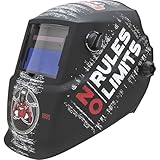
7. Lincoln Electric K4983-1 No Rules No Limits – best auto darkening welding helmet for pulsed TIG
Lincoln Electric No Rules No Limits Welding Helmet K4983-1, Auto Darkening, Lightweight Weld Headgear, Shade 7-13, Grind Mode, Use for Stick, TIG, Pulsed TIG, MIG, Pulsed MIG, Flux Core, Gouging
TIG rated 5 amps and up
Shade 7-13 plus grind
4.33 x 3.54 inch view
Solar with AAA backup
Pros
- Explicitly rated for TIG at 5 amps and above including pulsed TIG
- Solar powered with AAA battery backup for reliability
- Ratchet headgear with an oversized absorbent sweatband
- Hard hat compatible for site work
Cons
- Shade 7-13 is narrower at the light end than DIN 3 or 1/1/1/1 options
- No customer review images returned for this listing
- Small 119-review base means limited long-term feedback
Pulsed TIG is the hard case. The arc extinguishes and re-strikes at high frequency, so the filter has to trigger repeatedly without flickering and has to recover instantly between pulses. This helmet is one of only a few here whose spec sheet names pulsed TIG and pulsed MIG as approved processes.
It is rated for TIG at 5 amps and greater, has a 4.33 by 3.54 inch viewing area, and a variable shade 7-13 range plus an additional grind mode shade. The viewing area is a genuine step up from the compact budget hoods for pipe and out-of-position work.
The adjustable ratchet headgear carries an oversized absorbent sweatband, which is the detail that decides comfort on a long shift. Heat and sweat inside a helmet are real problems in TIG work, and a sweatband that actually covers the crown and the brow band makes a measurable difference.
Solar power with AAA battery backup is a sensible combination. The panel handles normal shop lighting and TIG arcs, and the batteries cover dark booths, night work and the times when the panel is shadowed by your own head.
Hard hat compatibility makes this the pick if you are welding in the field. The package includes two extra inside and outside impact-resistant clear lenses, and the shell is ANSI Z87.1 certified nylon at 17.5 ounces.
Why pulsed TIG welders should look here
Because the manufacturer explicitly approves pulsed TIG, you can rule out the flicker problem that plagues cheaper filters on pulse settings. If you run pulse on stainless, you already know what a misbehaving filter looks like, and this removes that variable.
The shade 7-13 range with discrete external control also suits pulsed work well, because pulse work sits in a predictable amperage band and you set the shade once rather than constantly.
What you give up
The shade floor is the real limitation. Starting at shade 7 means no shade 9 or 10 option, which is exactly where thin-gauge TIG wants to live. If you do a lot of work on 20-gauge or lighter, this is the wrong helmet.
Feedback is also thinner here than anywhere else in the roundup: 119 reviews, and no customer review images came back for this listing. Treat the specifications as the strong part of this product and the owner history as the weak part.
8. ESAB Savage A40 – best auto darkening welding helmet upgrade from a passive hood
ESAB 0700000480 Black Savage A40 Welding Helmet
Low-amp TIG sensitivity
4 arc sensors
True color lens
External grind button
Pros
- True color clarity owners describe as HD compared with older green-tinted hoods
- Four arc sensors with sensitivity tuned for low-amp TIG
- External one-button grind mode works with gloves on
- Long-term owners report four-plus years on one battery change
Cons
- Lens is smaller than larger Viking-class viewing areas
- Exterior shade knob is easy to bump in tight spaces
- One owner reported double vision when using a cheater lens
The A40 sits in the middle of this lineup and does the unglamorous work very well. It is the model we would suggest to someone who has been grinding with a passive helmet and is finally moving to auto-darkening, which is a bigger change in day-to-day comfort than most people expect.
Owners who upgraded from budget or aging hoods describe a dramatic improvement in puddle and seam visibility. One welding student credits the hood with a large jump in bead quality, which is the kind of outcome that matters more to a beginner than any specification.
Long-term owners report four-plus years of use with a single battery change, which is a meaningful ownership data point that rarely shows up in roundups like this one.
Why the A40 suits low-amp TIG
The sensitivity control is documented specifically as useful when welding low-amp TIG, giving a better reaction to dimmer arc light. That is the exact failure mode welders describe in forum threads, where the helmet will not darken at low current.
The delay control sets how long the lens stays dark after the arc stops, which lets you hold a tack or run a hot pass without the lens clearing mid-arc. The external one-button grind mode is reachable with a glove on, which the M800H and Lincoln No Rules also deliver.
Reasons to choose something else
The viewing area is smaller than the Viking 3350 and the Hobart, and on long TIG beads across pipe that difference shows. Buyers who want the widest window possible should step up.
Two smaller issues: the exterior shade knob sits where your torch can bump it in tight spaces, and one owner reported double vision when fitting a cheater lens. If you work at very close quarters, check both before you commit.
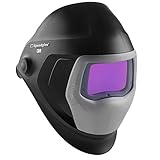
9. 3M Speedglas 9100 with 9100XXi filter – best optics and side vision for TIG
3M Speedglas Welding Helmet 9100 with Auto-Darkening Filter 9100XXi
9100XXi true color filter
3 arc sensors
2 memory modes
Shade 3 light state
Pros
- 9100XXi filter gives realistic weld and pool colors
- Side windows expand peripheral vision for site work
- Vented design reduces lens fogging
- Shade 3 light state and auto-on suit TIG
Cons
- Heavier and bulkier than lighter modern helmets
- Headgear ratchet knob and headband are replaced most often
- Cover lenses scratch and blur from sparks easily
The Speedglas 9100 is the reference point enthusiasts measure other helmets against, and the 9100XXi filter is the reason. Long-term owners with thousands of welding hours call the clarity the best in its class, and that is not marketing language, it is the consensus among people who have also worn Optrel and Lincoln.
Three arc sensors cover MMAW, TIG, MIG, tack, plasma arc welding and grinding. Two memory modes store shade, sensitivity and delay settings separately, external controls sit on the silver front panel where gloves can reach them, and auto-on technology restores whatever setting you used last.
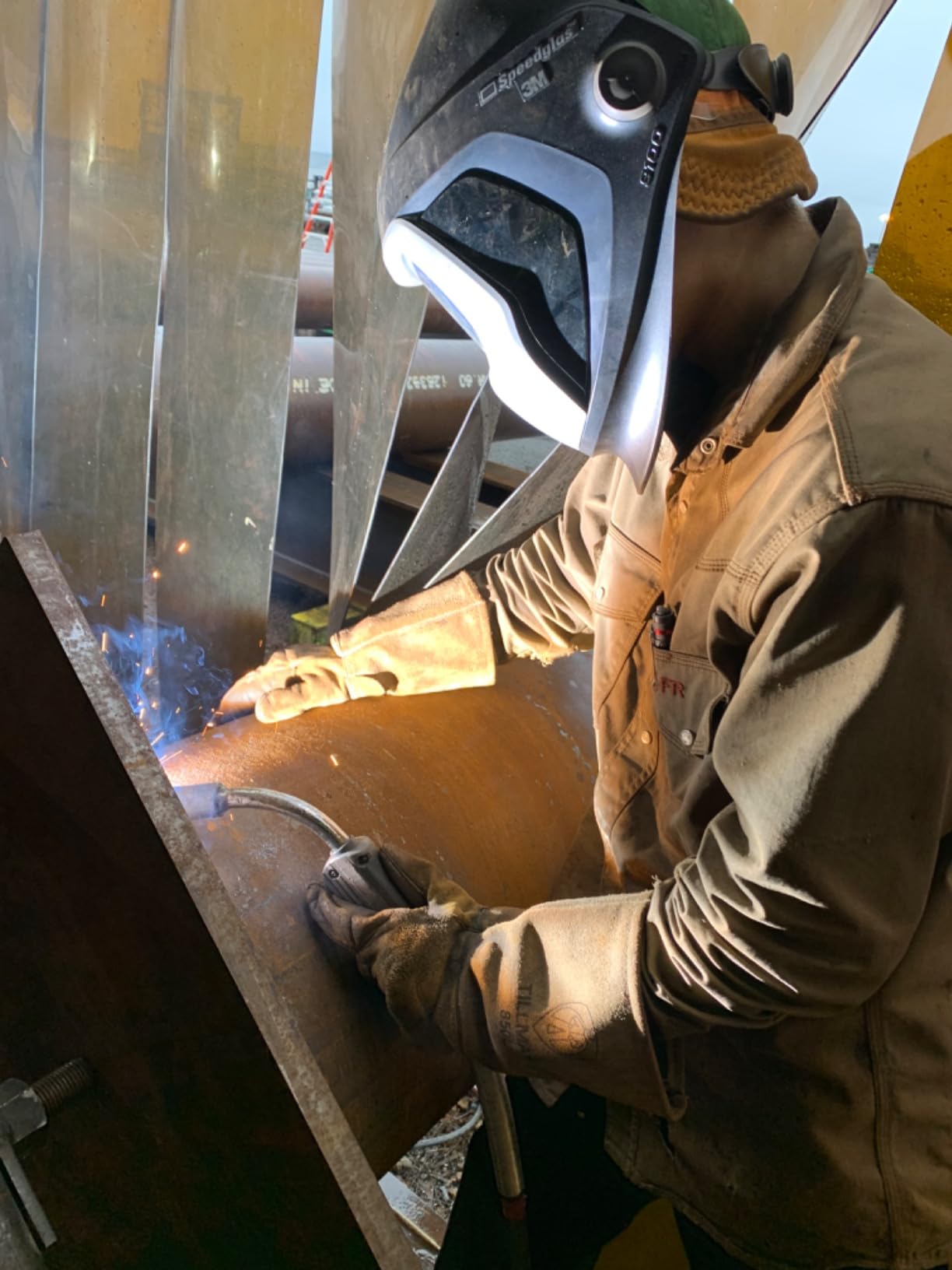
The shade 3 light state is a genuine TIG advantage over helmets that sit at shade 5 when inactive. Between passes you keep the hood down and still see the joint clearly, which keeps your torch position consistent.
Side windows are the underrated feature. They widen peripheral vision enough to spot a forklift, a crane chain or a co-worker while your hood is down, and in a shop where the biggest welding injury risks are not arc related, that is worth more than a marginal lens clarity gain.
Why owners keep this helmet for years
Ventilation is the second underrated feature. Owners report that the vented design keeps the lens from fogging and the hood cooler during long sessions, and fogging during TIG is worse than with MIG because your face is close to a small, intense arc.
Durability reports are strong: owners describe this helmet surviving years of heavy use, drops and throws. The headgear ratchet knob and headband are the parts most often replaced, which is exactly how a well-made shell should age.
What makes this a hard sell for most welders
It is heavier and bulkier than the modern helmets on this list, and at this price you are paying a premium that only makes sense if you weld TIG as your primary process, not occasionally.
Cover lenses scratch and blur from sparks fairly easily, and one owner reported intermittent auto-darkening failure after a year along with a low-durability outer lens. One report is not a pattern, but budget for replacement cover lenses and be aware that a failed filter on this helmet is a far more expensive fix than the same failure on a budget model.
10. TOOLIOM Solar Powered Helmet – best auto darkening welding helmet for solar TIG setups
TOOLIOM Auto Darkening Solar Powered Welding Helmet for TIG MIG ARC with Light
1/25,000 second response
DIN 3.5 and 9-13
Solar with replaceable battery
0.87 kg
Pros
- Explicitly marketed for TIG MIG stick and plasma cutting
- Lightweight at about 1.14 lb for overhead and twisted positions
- Headgear holds steady in overhead work
- Solar charging with an easy battery swap and low-battery indicator
Cons
- Small 3.62 x 1.65 inch viewing area dirties quickly from smoke
- Cheater lens slot is slightly too small for standard 4.25 inch magnifiers
- Manual does not document the external on/off and shade knob
The TOOLIOM closes out our list as the lightest hood here and one of the few explicitly marketed for TIG with a stated shade range. Owners compare it favorably to far more expensive professional models, and the recurring praise is for lightness, adjustable fit and quick darkening.
It darkens in 1/25,000 of a second using high-sensitivity arc sensors, with a DIN 3.5 and 9-13 shade range for TIG, MIG, stick and plasma cutting. The 1/1/1/1 true color optics sit in a 3.64 by 1.65 inch viewing area.
Solar power with a replaceable battery and a low-battery indicator is the practical combination for a TIG welder. The panel charges during arcs, and the replaceable cell means you are never dependent on a cell you cannot swap in a dark booth.
Why it holds up in overhead TIG
At roughly 1.14 pounds it is the second-lightest option here, and owners specifically call out that the headgear holds steady even in overhead and twisted positions. For out-of-position TIG that stability is worth more than a larger screen.
The external grind-mode knob plus internal sensitivity and delay knobs give you a workable control set, and the blue light blocking outer lens is a nice touch for full-shift wear.
Reasons to pass
The viewing area is small and owners report it dirties quickly from welding smoke, which matters because a small window fogged or sooted costs you more visibility than a large one does.
The cheater lens slot is a fraction too small for standard 4.25 inch magnifiers, which is a problem if you rely on a magnifying lens for detail work. The manual also fails to document the external on/off and shade knob, so plan on five minutes of trial and error to get the settings right.
What Actually Matters When You Buy a Welding Helmet for TIG
Specs matter less than people think. A helmet either detects your arc or it does not, and no combination of sensor count and switch speed fixes a filter whose sensitivity floor sits above your working amperage. Here is what to check, in the order we would check it.
Low-amperage detection and the rule of 33
The rule of 33 is the quick way to work out the lowest amperage your next bead needs: roughly 33 amps per 1/1000 inch of steel thickness. That makes a 1/16 inch wall about 66 amps, 18 gauge mild steel about 50 amps, 20 gauge about 40 amps, and 24 gauge about 25 amps. Micro TIG on foil and thin tube drops into single digits.
That number is your detection floor test. If your regular work sits below 25 amps, any helmet whose manufacturer will not state a minimum amperage is a gamble. Only two products in our roundup publish a number: the Miller Classic Series at five amps or below, and the Lincoln K4983-1 at five amps or greater. Ask any shop before you buy and the honest ones will tell you their floor.
Electrode-holder TIG is easier on sensors than torch TIG, because the arc is broad and bright and usually at higher amperage. Torch TIG on thin material is the difficult case, and it is the one you should test before committing.
What shade do you need for TIG
Shade selection is the other half of TIG performance. The scale runs roughly from shade 7 for very light work up to shade 13 for heavy cutting and welding, and each step darker cuts more visible light. Too light strains your eyes and hides detail; too dark and you cannot see the puddle at all.
Shade 10 or 11 is the safe general answer for DC TIG on mild steel and stainless in the 30 to 80 amp range. Both are comfortable and both show a clean puddle. If your work is thin-gauge or micro TIG, drop to shade 8 or 9 for a brighter, more detailed view. For AC TIG on aluminum, go a step darker than you would on steel because the arc is brighter and more erratic.
Stainless TIG generally wants one shade lighter than mild steel at the same amperage, because stainless reflects more light and the arc looks hotter than the heat actually is. Aluminum on AC can run two shades darker. When in doubt, start one shade lighter than you think and adjust while you are welding rather than while you are setting up.
Optical clarity and why green lenses hurt TIG
An auto-darkening filter should be optically clear in its light state, which manufacturers rate on a four-part scale. A 1/1/1/1 rating means top performance on each axis, and anything below that introduces tint and distortion. The classic complaint about older auto-darkening helmets was a permanent green cast, which makes it harder to judge puddle color and therefore harder to read penetration.
For TIG this is not a preference. Reading a puddle means seeing subtle changes in its color, width and surface texture as you move the torch. ClearLight, 4C lens technology and ESAB OpTCS are the branded versions of the same idea, and all three appear in our picks.
Sensors, sensitivity and delay
Sensitivity sets the light threshold at which the filter darkens. Set it too high and the helmet will not trigger on a quiet arc; set it too low and it will darken in open air because there is no pilot arc gating it. Delay controls how long the lens stays dark after the arc stops, which is what stops it clearing mid-bead.
Two sensors with a low sensitivity floor beat four sensors with a fixed threshold. Two of the helmets in this roundup use two sensors and handle TIG fine at normal amperage, but both are the models where you may need to reach into the helmet and adjust sensitivity by feel.
Switch time, light state and clearing speed
Switch time is how fast the filter darkens once the arc is detected. Everything here quotes between 1/23,000 and 1/30,000 of a second, and at that speed the number matters far less than whether the filter triggers at all. Real differences appear in clearing speed, which is the delay setting, and in the light state.
A shade 3 light state, as on the Speedglas 9100, is the best case: you can keep the hood down between passes and still see. Grinders who move between TIG and cleanup also want an external grind button that works with a glove on, which five of our ten helmets have.
Solar or battery power
Solar panels keep working as long as they see light, and every TIG arc charges them. The weakness is dark conditions: a night shift, an enclosed booth or a hood shadowing the panel. That is why solar models from Lincoln and TOOLIOM also carry a replaceable battery.
Battery-only models such as the Hobart, Miller Classic and ESAB units avoid the charge-loss complaint that solar-only helmets attract from owners, at the cost of a periodic coin cell swap. For long shop days, solar with battery backup is the safer configuration.
Flip-up, full face and head coverage
A flip-up helmet lets you raise the shell to check the joint, clean the tungsten and set your torch angle without removing headgear. For TIG, where position matters constantly, that is a large practical win.
The trade-off is peripheral vision. Side windows, as on the Speedglas 9100, recover some of it. Full coverage helmets with a fixed shell suit overhead and out-of-position work where the flame and spatter come back at you, at the cost of neck fatigue from constantly flipping a shell up. Weight matters more here than in MIG work: anything above about 1.5 pounds starts to tell on your neck by hour four.
Auto-darkening versus a passive helmet
A passive helmet is a fixed dark lens. There are no electronics, no battery, no sensors and nothing to fail, which is why many professional shops still keep one as a backup. What you give up is the ability to see your workpiece at all without lifting the helmet.
That lift is the neck fatigue that pushes people to auto-darkening in the first place. Auto-darkening wins decisively for TIG because the process requires constant visual inspection between passes and during cleaning. Keep a passive helmet on the shelf as a backup and use the auto-darkening filter for all your working time.
Symptom, cause, fix
Four problems account for nearly every auto-darkening complaint we found, and all four show up on TIG more than on any other process.
Flickering or intermittent darkening on low current: usually the torch or your hand blocking the arc sensors. Reposition so the sensors see the arc, raise sensitivity one notch, and check that a dirty sensor film is not causing erratic pickup. A cotton swab on the sensor window fixes more cases than anything else.
The helmet will not darken at all: the arc is below the filter’s detection floor, the sensitivity is set too high, the battery is flat, or the switch is set to off. Check the power switch first, then drop sensitivity, then confirm your amperage against the rule of 33.
The lens is slow to clear: the delay is set too long. Reduce the delay so the filter lightens faster after the arc stops. If it stays dark with the delay at minimum, the battery is likely unable to drive the clearing function.
It darkens in open air with no arc present: there is no pilot arc gating the filter, and sensitivity is too low. Raise sensitivity until it stops triggering on ambient light.
Sensor care and when to replace the filter
Clean the sensor windows weekly with a dry cotton swab and a little isopropyl alcohol. Spatter and grinding dust on a sensor is the most common cause of erratic behavior, and it is the cheapest thing to fix.
Replace the battery every 12 to 18 months regardless of whether the helmet is working, because a failing cell causes flickering long before it causes a full shutdown. If a filter fails to respond after a fresh battery, a clean sensor and a sensitivity reset, replace the filter rather than the whole helmet, since the shell and headgear usually outlast several filters.
Who makes the best auto darkening helmets
Lincoln Electric and Miller build the broadest ranges and both publish real TIG specifications. 3M Speedglas and Optrel own the premium end, where the filter technology and side vision justify the money for full-time TIG work. ESAB and Hobart sit in the middle with true color optics and shop-proven headgear.
For anyone starting out, the brands that recur in owner recommendations are Lincoln, Miller, ESAB, Hobart and Jackson. Forum advice is consistent on one point: the cheap first helmet is the most common regret reported by hobbyists, and the second most common complaint about budget hoods is that they will not trigger on low-amp TIG.
Certification and safety standards
Look for ANSI Z87.1 in the US, or EN 379 in Europe. The Speedglas 9100 meets ANSI Z87.1-2010 for impact and ANSI Z89.1 when paired with an approved hard hat. The YESWELDER LYG-L600A carries both ANSI Z87.1 and CSA Z94.3, and the Miller Classic is certified to ANSI Z87.1, CSA and CE.
Certification matters because an uncertified filter may not block ultraviolet and infrared at the level it claims. Arc eye, or photokeratitis, is a corneal burn that typically shows up 6 to 12 hours after exposure and is genuinely painful. You can absolutely trust a certified auto-darkening filter, and you should never trust one that has not been maintained.
Frequently Asked Questions
What is the best welding helmet for TIG welding?
For most TIG work the Lincoln Electric K3034-4 Viking 3350 is the best auto darkening welding helmet, thanks to a 4C lens at 1/1/1/1 optical clarity, a 12.5 square inch viewing area and headgear that stays comfortable through a full shift. If your work sits under 10 amps, pick the Miller Classic Series ClearLight, which is rated for welding at five amps or below. For the widest view at a lower tier, the YESWELDER LYG-M800H is hard to beat.
What shade do I need for TIG welding?
Shade 10 or shade 11 is the right general answer for DC TIG on mild steel and stainless in the 30 to 80 amp range. Drop to shade 8 or 9 for thin-gauge and micro TIG so you can see puddle detail, and go one shade darker for AC TIG on aluminum because that arc is brighter and more erratic.
What is the rule of 33 in TIG welding?
The rule of 33 is a quick way to estimate TIG amperage: roughly 33 amps per 1/1000 inch of material thickness. That puts 18 gauge steel near 50 amps and 24 gauge near 25 amps, with micro TIG dropping into single digits. It is the number to use when testing whether a helmet’s filter will detect your arc before you buy one.
Why is my auto-darkening welding helmet flickering on TIG?
Flickering on TIG is usually one of three things: the torch or your hand is blocking the arc sensors, the sensitivity setting is too high, or a dirty sensor film is picking up light erratically. Reposition so the sensors can see the arc, lower the sensitivity one notch, and swab the sensor window clean with isopropyl alcohol and a cotton bud.
Why isn’t my auto-darkening welding helmet darkening?
Check four things in order: that the power switch is on, that the battery is fresh, that sensitivity is not set too high, and that your amperage is above the filter’s detection floor. Use the rule of 33 to work out the amperage your material needs, then test the helmet at a lower sensitivity setting. A filter that will not trigger below its stated floor cannot be fixed by adjustment.
Can I trust an auto-darkening welding helmet?
Yes, provided it is certified to ANSI Z87.1 or EN 379 and you maintain it. Replace the battery every 12 to 18 months, swab the sensors weekly, and keep a passive shade 10 helmet as a backup. The real risk is not the electronics, it is a dirty sensor or a dead battery leaving you looking at an unprotected arc.
The Verdict: Our Best Auto Darkening Welding Helmets for TIG in 2026
The Lincoln Electric K3034-4 Viking 3350 takes our top spot for 2026. Its 4C lens, 12.5 square inch viewing area and 5 year warranty are the combination we would want on a bench doing TIG all day, and at 1.4 pounds it stays comfortable overhead.
Buy the YESWELDER LYG-M800H if you want the widest window and a true-color lens without stepping into the premium tier. Buy the Miller Classic Series ClearLight if your amperage sits under 10 amps and you want a manufacturer-stated detection floor. Buy the ESAB Sentinel A60 if you are a full-time fabricator who wants half-shade control and nine stored setups.
Before any of them, do the test: work out your lowest amperage with the rule of 33, then confirm the filter triggers there. That single check does more for your eyes than any specification on the box.
Setting up a bench for TIG work? Our welding table roundup for metal fabrication covers the other half of a TIG setup.