
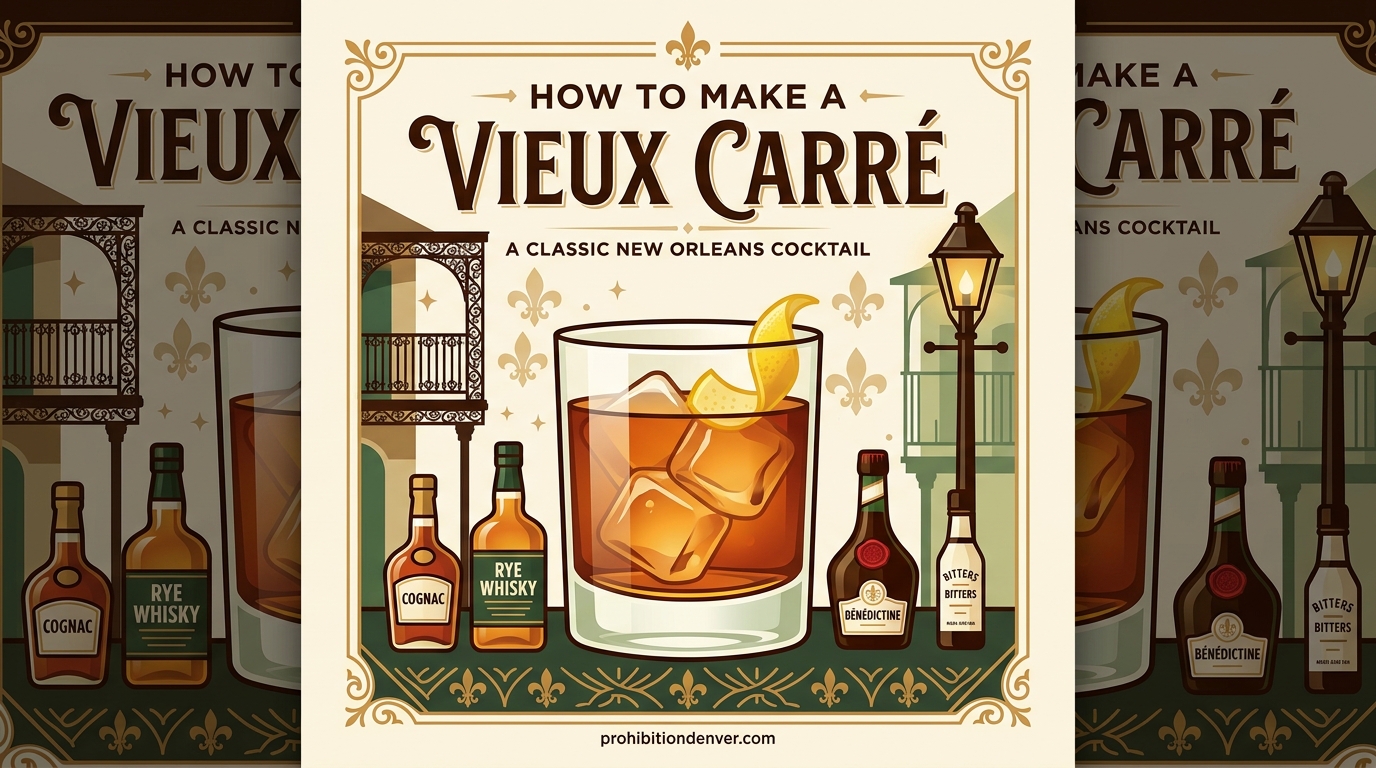
The Vieux Carré remains one of the most underrated classics in the cocktail world. While everyone orders Manhattans and Old Fashioneds, this sophisticated New Orleans creation quietly delivers more complexity and character than either of those crowd-pleasers.
I spent three months perfecting my technique with this drink after discovering it at the Carousel Bar in New Orleans. The name translates to “old square,” referring to the French Quarter where Walter Bergeron invented this masterpiece in the 1930s while tending bar at the Hotel Monteleone.
If you want to learn how to make a Vieux Carré properly, this guide covers everything from authentic ingredients to pro techniques that elevate this drink from good to unforgettable.
Table of Contents
What Is a Vieux Carré and Why Is It Underrated?
Vieux Carré literally means “old square” in French, the historic nickname for New Orleans’ French Quarter. At its core, this cocktail represents a brilliant fusion of American and French drinking traditions.
Think of it as a Manhattan that went to finishing school in Paris. Where the Manhattan relies solely on whiskey, the Vieux Carré uses a split base of rye whiskey and cognac. This combination creates a more layered, sophisticated foundation that most whiskey drinks simply cannot match.
The drink earns its “underrated” status honestly. You rarely see it on cocktail menus outside of New Orleans, yet bartenders who know their craft consistently rank it among the finest classic cocktails ever created. Reddit’s r/cocktails community regularly praises it as “always so complex, different, herbal, sweet, spirit forward.”
Part of the problem is accessibility. The Vieux Carré requires Benedictine, a French herbal liqueur that home bartenders often skip when stocking their bars. That one extra bottle keeps this gem hidden from casual drinkers who stick to simpler recipes.
Vieux Carré Ingredients and Measurements
The beauty of this cocktail lies in its balance. Equal parts form the foundation, making it easy to remember and scale.
The Core Ingredients
Rye Whiskey (3/4 ounce): Look for 100-proof rye with spice and backbone. Rittenhouse remains the bartender favorite, but Colorado distilleries like Laws Whiskey House and Breckenridge Distillery produce excellent local alternatives.
Cognac (3/4 ounce): VS or VSOP quality works perfectly. You do not need XO or expensive bottle here. The cognac adds roundness and fruit notes that complement the rye’s spice.
Sweet Vermouth (3/4 ounce): Carpano Antica Formula brings the richest flavor, though Dolin Rouge works well for a lighter style. Keep your vermouth refrigerated and use within a month for best results.
Benedictine D.O.M. (1 barspoon or 1/4 ounce): This French herbal liqueur defines the drink. Twenty-seven herbs and spices create its distinctive honey-saffron complexity. There is no substitute.
Peychaud’s Bitters (2 dashes): The New Orleans original. These anise-forward bitters provide the signature Creole character.
Angostura Bitters (2 dashes): Adds warmth, spice, and depth that rounds out the profile.
Orange Peel: Express the oils over the drink, then drop it in or discard based on your preference.
Denver and Colorado Spirit Recommendations
For local flavor, substitute the standard rye with Laws Whiskey House Four Grain Bourbon or Stranahan’s Diamond Peak. Both Denver-area distilleries produce spirits that work beautifully in this cocktail. For cognac, stick with traditional French brands as Colorado brandy production remains limited.
Equipment You Will Need
No fancy gadgets required. You probably own everything already.
A mixing glass or pint glass works for stirring. You need a bar spoon or long-handled spoon for proper stirring technique. A jigger ensures accurate measurements. A Hawthorne strainer or fine mesh strainer removes ice chips. Finally, serve in a chilled coupe glass or rocks glass depending on your preference.
How to Make a Vieux Carré: Step-by-Step Instructions
Follow these steps for a perfectly balanced cocktail every time.
Step 1: Chill Your Glass
Place your coupe or rocks glass in the freezer for five minutes, or fill it with ice water while you prepare the drink. A cold glass maintains proper temperature and dilution.
Step 2: Add Ingredients to Mixing Glass
Measure and pour the rye whiskey, cognac, sweet vermouth, and Benedictine into your mixing glass. Add two dashes each of Peychaud’s and Angostura bitters.
Step 3: Add Ice and Stir
Fill the mixing glass with large, fresh ice cubes. Stir with your bar spoon for 25 to 30 seconds. You want proper dilution and chilling without over-diluting. The liquid should feel cold to the touch on the outside of the glass.
Step 4: Strain and Garnish
Discard the ice from your chilled serving glass. Strain the cocktail using your Hawthorne strainer. Express the oils from a fresh orange peel over the surface by pinching it skin-side down, then rub the peel around the rim and drop it into the drink.
Step 5: Serve Immediately
The Vieux Carré tastes best within the first few minutes of preparation. Serve without delay and enjoy the complex interplay of flavors.
What Does a Vieux Carré Taste Like?
The first sip reveals why this cocktail commands such respect among professionals. It is undeniably spirit-forward and strong, yet remarkably balanced.
The rye delivers spicy, peppery backbone. Cognac contributes dried fruit and warm richness. Sweet vermouth brings wine-like depth and subtle bitterness. Benedictine layers in honeyed herbal complexity that ties everything together. The two bitters styles create an aromatic symphony that evolves as you drink.
Is a Vieux Carré a strong cocktail? Absolutely. With nearly three ounces of spirits and minimal dilution, this packs serious punch. It belongs in the same category as other stirred classics like the Manhattan and Sazerac. Sip slowly and respect its power.
The History: Walter Bergeron and Hotel Monteleone
Every classic cocktail needs a good origin story, and the Vieux Carré delivers.
Walter Bergeron created this drink in the 1930s while working at the Carousel Bar inside New Orleans’ Hotel Monteleone. The bar actually rotates slowly, making a complete circle every fifteen minutes, which must have made Bergeron’s job interesting.
He designed the cocktail to honor the diverse cultural influences of the French Quarter. The split base of American rye and French cognac represents the meeting of Old World and New World drinking traditions. The Benedictine adds monastic European heritage, while Peychaud’s bitters bring distinctly New Orleans Creole flavor.
The Hotel Monteleone still serves this cocktail today, and bartenders there will tell you that Bergeron got the ratios exactly right from the start. The recipe has not changed in nearly a century.
The International Bartenders Association recognizes the Vieux Carré as an official cocktail, cementing its place in the canon of great drinks.
Pro Tips and Variations
Once you master the classic recipe, experiment with these variations.
Bitters Substitutions
Try Creole bitters instead of Peychaud’s for a slightly different anise profile. Some bartenders add a dash of orange bitters for extra citrus brightness.
The Barrel-Aged Vieux Carré
For parties, batch the recipe and age it in a small oak barrel for two to four weeks. The oak softens the edges and adds vanilla notes that complement the Benedictine beautifully.
Batch Recipe for Entertaining
Multiply the recipe by the number of guests. Combine all ingredients except bitters in a bottle and refrigerate. When serving, pour three ounces per person over ice, add bitters, and stir briefly.
Food Pairings
The herbal complexity pairs beautifully with rich foods. Try it with duck confit, creamy cheeses, or dark chocolate desserts. The strong profile stands up to bold flavors that would overwhelm lighter cocktails.
Troubleshooting Common Issues
If your drink tastes too sweet, reduce the Benedictine slightly or switch to a drier vermouth. If it tastes too harsh, stir longer for more dilution or try a softer cognac. If the herbal notes overpower everything, cut back to one dash of each bitters.
Frequently Asked Questions
Is a Vieux Carré a strong cocktail?
What does Vieux Carré literally mean?
What does a Vieux Carré taste like?
Which is the oldest cocktail in the world?
Conclusion
Learning how to make a Vieux Carré opens the door to one of cocktail history’s most rewarding creations. This underrated classic delivers complexity that rivals any famous drink while remaining surprisingly approachable once you understand the technique.
The split base of rye and cognac, the herbal magic of Benedictine, and the Creole spice of Peychaud’s bitters come together in perfect harmony. Master this recipe, and you will have a sophisticated cocktail in your repertoire that impresses guests and satisfies your own palate.
Next time you reach for the whiskey, consider skipping the usual suspects. The Vieux Carré has waited nearly a century for its moment in your glass.