
I remember the first time I tasted American Single Malt. It was nothing like the Scotch I had grown comfortable with. The flavors were bolder, more experimental, almost rebellious. That bottle changed how I think about whiskey entirely.
If you are curious about American Single Malt Whiskey, you are in the right place. This guide explains everything you need to know without the pretension that often surrounds whiskey culture. Whether you are a Bourbon drinker looking to branch out or completely new to whiskey, I will walk you through what makes this category special.
By the end of this article, you will understand exactly what American Single Malt Whiskey is, how it differs from Scotch and Bourbon, and how to start tasting it like someone who knows what they are doing.
Table of Contents
What is American Single Malt Whiskey?
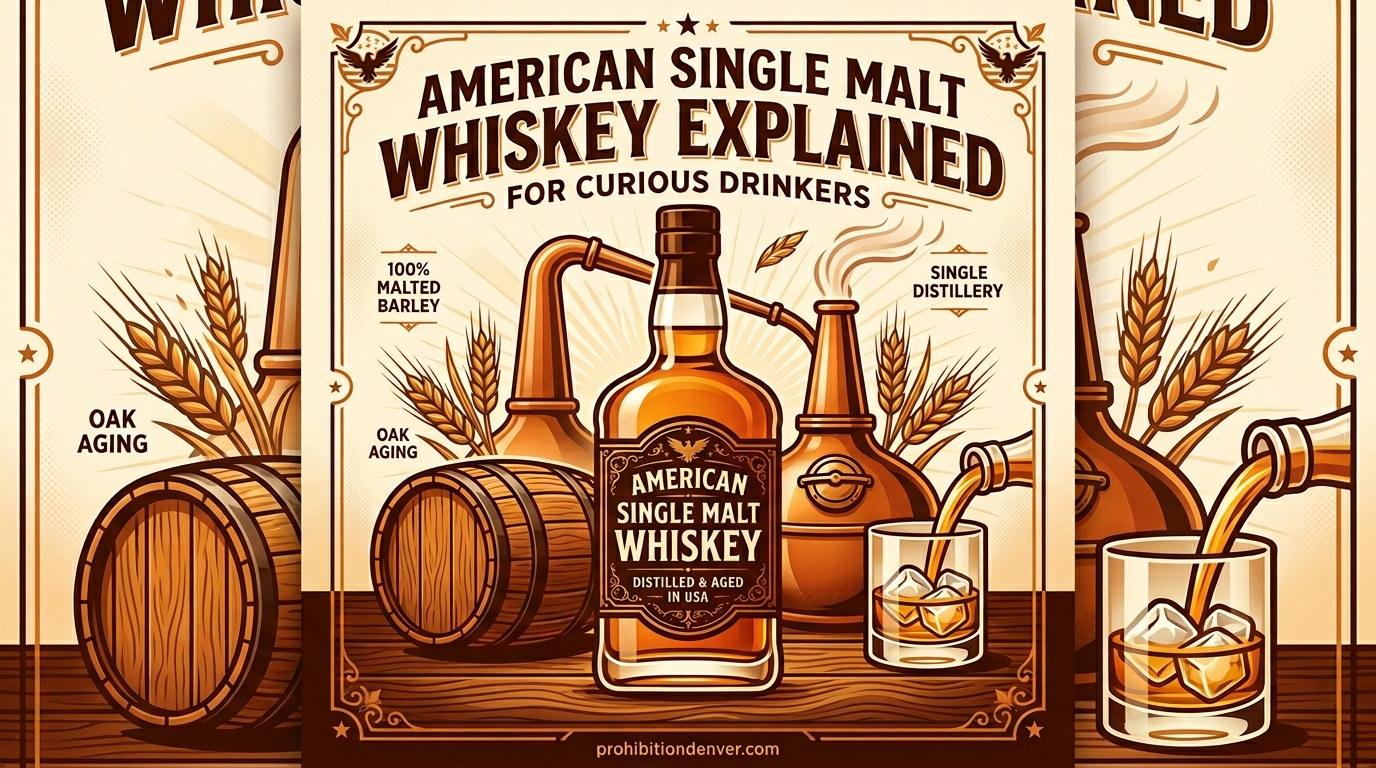
American Single Malt Whiskey is whiskey made from 100% malted barley, distilled entirely at one distillery in the United States, and matured in oak casks. It became an official whiskey category in January 2025 when the Alcohol and Tobacco Tax and Trade Bureau (TTB) finally recognized it with formal standards.
Think of it as America’s answer to Scotch, but with its own personality. While Scottish distillers have followed tradition for centuries, American producers took a different path. They combine the single malt tradition with American creativity and regional ingredients.
The “single” in Single Malt means all the whiskey comes from one distillery. The “malt” means it starts with 100% malted barley. No corn, no rye, no wheat. Just barley that has been soaked, germinated, and dried to develop the enzymes needed for fermentation.
The Official Rules: What Makes It Legitimate
In January 2025, the TTB officially recognized American Single Malt Whiskey as a distinct category. This ruling ended years of ambiguity and gave craft distillers the legitimacy they had been fighting for.
Here are the six official requirements that define American Single Malt Whiskey:
- 100% Malted Barley: The mash must contain only malted barley. No other grains allowed.
- Single Distillery: All production must happen at one distillery. You cannot blend whiskey from multiple locations.
- Made in the USA: Mashing, distillation, and maturation must occur entirely within the United States.
- Oak Cask Maturation: The whiskey must be aged in oak casks. These can be new or used barrels.
- Distilled to Less Than 80% ABV: The spirit must come off the still at no more than 160 proof.
- Bottled at Minimum 40% ABV: The final product must be at least 80 proof.
These rules matter because they protect both producers and consumers. Before this ruling, bottles labeled “American Single Malt” could contain almost anything. Now you know exactly what you are getting.
The Craft Revolution That Started It All
American Single Malt Whiskey did not emerge from tradition. It was born from rebellion. In the 1990s, a few pioneering distillers looked at the craft beer revolution and asked why whiskey could not follow the same path.
Stranahan’s in Colorado became one of the first dedicated American Single Malt distilleries when they opened in 2004. They proved that American malted barley could produce whiskey every bit as complex as Scottish imports.
Westland Distillery in Seattle launched in 2010 with a clear mission: create something distinctly American, not just a Scotch imitation. They work with local barley varieties and Pacific Northwest climate conditions that produce flavors you will not find anywhere else in the world.
Balcones in Texas took things even further, experimenting with Texas-grown barley and extreme temperature swings that accelerate aging. Their approach proved that terroir matters just as much in whiskey as it does in wine.
The American Single Malt Whiskey Commission formed in 2016 to push for official recognition. After nearly a decade of advocacy, the TTB ruling in January 2025 finally legitimized what these pioneers had been building.
American Single Malt vs Scotch vs Bourbon: What’s the Difference?
This is where most people get confused. Let me break down the key differences clearly.
Grain Bill
American Single Malt uses 100% malted barley. Scotch also uses 100% malted barley for single malts, but Bourbon must contain at least 51% corn. This difference in grain creates fundamentally different flavor foundations.
Production Location
Scotch must be made in Scotland. Bourbon must be made in the United States. American Single Malt must also be made in the United States, but the comparison to Scotch often confuses people. They share the 100% malted barley requirement but nothing else.
Barrel Requirements
Bourbon must age in new charred oak barrels. Scotch typically ages in used barrels, often former Bourbon or Sherry casks. American Single Malt has no restrictions beyond oak casks, so producers use new oak, used Bourbon barrels, wine casks, and experimental finishes.
Flavor Profile
Bourbon tends to be sweet with notes of vanilla, caramel, and oak. Scotch ranges from light and floral to smoky and peaty depending on the region. American Single Malt sits somewhere in between, with malty sweetness, but often more experimental and varied than either.
Comparison Summary
American Single Malt: 100% malted barley, single distillery, USA only, any oak casks, 40%+ ABV, experimental and varied.
Scotch Single Malt: 100% malted barley, single distillery, Scotland only, oak casks (usually used), 40%+ ABV, traditional regional styles.
Bourbon: 51%+ corn, any distillery, USA only, new charred oak only, 40%+ ABV, sweet and oak-forward.
From Grain to Glass: How American Single Malt is Made
Understanding the production process helps you appreciate what is in your glass.
Malting
Barley grains are soaked in water and allowed to germinate. This process develops enzymes that convert starches into fermentable sugars. The maltster then dries the barley in a kiln to stop germination. Some American producers use peated barley for smoky flavors, though most stay unpeated.
Mashing
The malted barley is ground and mixed with hot water in a mash tun. The hot water activates enzymes that break down starches into sugars, creating a sweet liquid called wort. The spent grains are removed, leaving only the sugary wort for fermentation.
Fermentation
Yeast is added to the wort in fermentation tanks. Over several days, the yeast consumes sugars and produces alcohol along with flavorful compounds called congeners. American Single Malt producers often use longer fermentation times than commercial Bourbon distilleries, creating more complex flavors.
Distillation
The fermented liquid, now called wash, goes into copper pot stills or column stills for distillation. Copper pot stills are traditional and produce fuller-bodied spirits. Column stills create lighter, cleaner spirits. Most American Single Malt distillers use pot stills or hybrid setups.
The distillation process separates alcohol from water and concentrates flavors. The first run produces low wines. The second run refines these into new make spirit, the clear, high-proof liquid that will become whiskey.
Maturation
The new make spirit goes into oak casks for aging. American Single Malt distillers experiment here more than anyone. You will find whiskey aged in new American oak, used Bourbon barrels, wine casks, Sherry butts, and even barrels that held beer or cider.
The climate matters enormously. In hot, dry places like Texas, whiskey ages faster and interacts more intensely with the wood. In cooler, humid climates like the Pacific Northwest, aging is slower and more gentle. This is terroir in action.
What Does American Single Malt Taste Like?
Here is the honest answer: American Single Malt tastes like whatever the distiller wants it to taste like. Without the strict tradition of Scotch or the legal requirements of Bourbon, American producers have incredible freedom to experiment.
The Nose
When you first smell American Single Malt, look for malted cereal notes, honey, and ripe orchard fruits. Many expressions show vanilla and caramel from oak contact. Some have citrus zest, chocolate, or coffee. Peated versions bring smoke, iodine, and maritime notes.
The Palate
On the tongue, expect a malt-forward sweetness that differs from Bourbon’s corn sweetness. You might taste toasted bread, brown sugar, stone fruits, or baking spices. The oak influence varies dramatically depending on barrel type. Wine cask finishes add berry notes and tannins.
The Finish
The finish is how the whiskey feels and tastes after you swallow. Good American Single Malts have a lingering finish that evolves over time. You might notice spice building, sweetness fading, or new flavors emerging. Length and complexity separate exceptional bottles from ordinary ones.
Regional Variations
Pacific Northwest producers like Westland often create whiskey with chocolate, coffee, and dark fruit notes. Texas distilleries like Balcones produce bolder, more intense expressions with dried fruit and spice. Colorado whiskey tends to show mountain water character and high-altitude aging effects.
How to Start Your American Single Malt Journey
If you are ready to explore, here is how I recommend starting.
Find a Tasting Flight
Many craft cocktail bars and whiskey shops now offer American Single Malt flights. This lets you compare multiple producers side by side without committing to full bottles. Look for flights that include different regions or barrel types.
Start with Accessible Bottles
Westland’s flagship expression offers an excellent introduction to the style. Stranahan’s Original is widely available and shows the Colorado approach. For something bolder, try Balcones Texas Single Malt. These bottles typically cost between $60 and $100, making them serious but not outrageous investments.
Join the Community
The r/AmericanSMW subreddit is active and welcoming to newcomers. Members share tasting notes, new release information, and honest opinions. You will learn more from fellow enthusiasts than from marketing materials.
Consider a Subscription
Several whiskey clubs now include American Single Malt in their rotations. This gives you exposure to limited releases and small distilleries you might never find otherwise. Just be sure the club actually sources American Single Malt and is not just sending you Scotch.
Taste Properly
Start neat in a proper glass, something with a tulip shape that concentrates aromas. Take your time with the nose before sipping. Add a few drops of water if the alcohol feels overwhelming. Water often opens up new flavors.
Common Questions About American Single Malt Whiskey
What is American single malt whiskey?
American Single Malt Whiskey is whiskey made from 100% malted barley, distilled entirely at a single U.S. distillery, and matured in oak casks. It became an official whiskey category in January 2025 when the TTB established formal standards.
What are the rules for American single malt whiskey?
The TTB requires six things: 100% malted barley mash, production at a single distillery, production entirely in the USA, aging in oak casks, distillation to less than 80% ABV, and bottling at minimum 40% ABV.
Is American single malt similar to Scotch?
They share the 100% malted barley requirement, but differ in location (USA vs Scotland), barrel flexibility (American producers experiment more), and flavor approach. American Single Malt tends to be more experimental while Scotch follows stricter regional traditions.
What does American single malt taste like?
Flavor varies widely but typically includes malted cereal sweetness, honey, orchard fruits, vanilla, and caramel from oak. Some show chocolate, coffee, or dried fruit. Peated versions have smoke and maritime notes. Regional variations create distinct profiles.
What is the best American single malt whiskey for beginners?
Westland’s flagship expression is widely recommended for beginners. Stranahan’s Original is approachable and available. For something bolder, try Balcones Texas Single Malt. Start with tasting flights to compare styles before buying full bottles.
How is American single malt different from Bourbon?
American Single Malt uses 100% malted barley while Bourbon uses at least 51% corn. Bourbon must age in new charred oak barrels, while American Single Malt can use any oak casks. This creates different flavor profiles: malty and varied vs sweet and oak-forward.
Your Next Pour
American Single Malt Whiskey Explained is really about one thing: possibility. This category represents what happens when craft distillers refuse to follow rules written by someone else. The TTB recognition in 2026 just made official what drinkers already knew.
If you are curious about whiskey, American Single Malt offers something genuinely new. It is not Scotch. It is not Bourbon. It is American innovation in liquid form.
Start with a flight, trust your palate, and do not let anyone tell you what you should taste. The best whiskey is the one you enjoy drinking.