
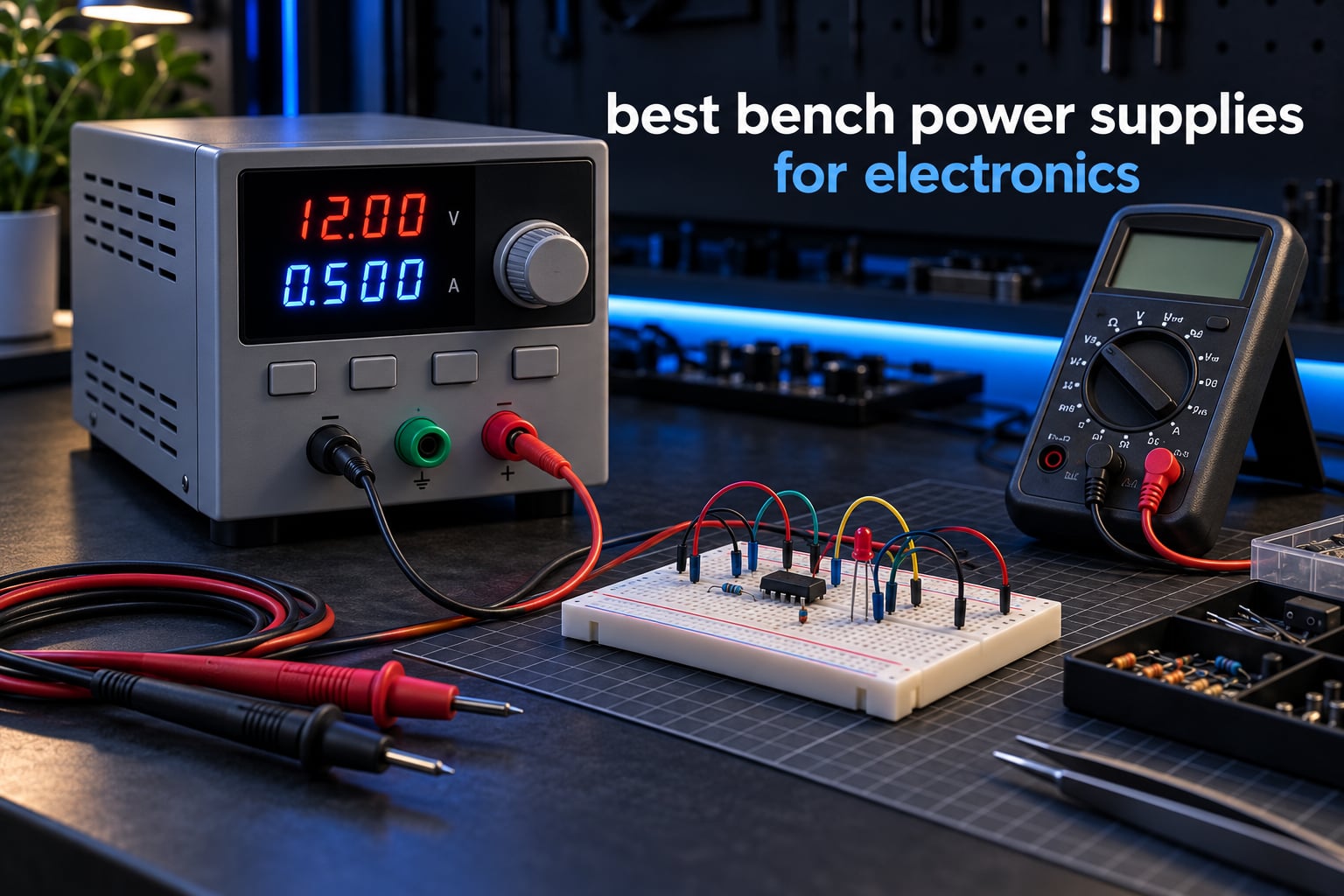
The best bench power supplies for electronics fall into one clear default: a 0-30V / 0-5A adjustable DC supply with constant voltage and constant current modes, over-current protection, and a readout that shows what the circuit is actually drawing. That single spec class covers breadboard prototypes, phone and laptop repair, LED work, and most small power rails you will ever diagnose. The step above it is a 0-30V / 0-10A switching unit for lithium charging, automotive 12V accessories, and electroplating. The step below it is a three-channel linear supply for op-amp rails and multi-rail testing.
Why 30V? Because the internal DC rail of a mains-powered device is seldom higher than that, even when the device runs on 240V AC. An expert on electro-tech-online made this point explicitly: a 30V DC bench supply is normally enough for 240V mains repair work, because what you end up probing is the secondary side, not the mains side. Buying a 0-60V unit to service a kettle is spending money on headroom you will never touch, and you still cannot safely work on mains from a DC supply at all.
Why current limiting instead of voltage alone? Because current is what destroys components. Set a voltage, set a low current limit, and apply power to an unknown board. If the board draws its normal startup current and settles, it is probably fine. If it slams into the current limit immediately, you have a short and you have found it before the smoke. If it draws almost nothing and does nothing, you have an open circuit. That single habit, backed by a supply with a real over-current protection circuit, is the reason a bench supply exists. A wall adapter cannot do it, and neither can a battery.
How we picked: we read the datasheet-level detail behind all twelve units below, checked that the protection circuitry described actually exists as claimed, and cross-referenced what buyers report after the novelty wears off. We focused on what changes your work, not on display styling. Before you sit down with any of these, our soldering station guide and USB microscope picks cover the other two tools you need to see what a bad joint looks like.
Top 3 Picks for Bench Power Supplies in 2026

Kungber SPS3010B 30V 10A
- 0-30V / 0-10A at 300W
- Encoder knob with 18W USB port
- Intelligent charging mode with Ah readout
- OCP alarm and seven protection circuits

Wanptek DPS3010U 30V 10A
- 0-30V / 0-10A at 300W
- Coarse and fine encoder knobs
- USB-A and USB-C at 5V 3.6A
- Automatic 110V / 220V input detection
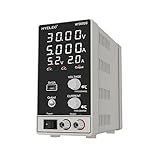
Hyelec HY3005S 30V 5A
- 0-30V / 0-5A switching output
- Encoder entry at 0.01V and 0.001A
- Dedicated output enable button
- 5V USB output with own readouts
All 12 Bench Power Supplies Compared Side by Side in 2026
| Product | Specifications | Action |
|---|---|---|
| Kungber SPS3010B |
|
Check Latest Price |
| Wanptek DPS3010U |
|
Check Latest Price |
| Hyelec HY3005S |
|
Check Latest Price |
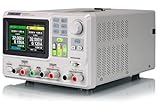 Siglent SPD3303X-E Siglent SPD3303X-E |
|
Check Latest Price |
 Jesverty SPS-3010 Jesverty SPS-3010 |
|
Check Latest Price |
 Jesverty SPS-3010V Jesverty SPS-3010V |
|
Check Latest Price |
 Nankadf 30V 10A Nankadf 30V 10A |
|
Check Latest Price |
 Tekpower TP3005T Tekpower TP3005T |
|
Check Latest Price |
 Korad KD3005D Korad KD3005D |
|
Check Latest Price |
 Wanptek TPS-C3010H Wanptek TPS-C3010H |
|
Check Latest Price |
 Nice-Power SPS-E305 Nice-Power SPS-E305 |
|
Check Latest Price |
 Nice-Power SPS-E3010 Nice-Power SPS-E3010 |
|
Check Latest Price |
1. Kungber SPS3010B – Best Overall, 0-30V / 0-10A With Built-In Charging Logic
DC Power Supply Variable, 30V 10A Adjustable Switching Regulated DC Bench Power Supply with Intelligent Charging Mode, 18W USB Interface, Precision Encoder Knob (Black)
0-30V / 0-10A at 300W
Switching topology
Encoder knob
18W USB port
2.3 lb
Pros
- Largest reviewed base in the group with 2775 ratings
- Intelligent charging mode shows Ah and stops at full
- OCP button cuts output and sounds an alarm
- Seven protection circuits including leakage and thermal
- Small enough to store away between sessions
Cons
- Switching ripple is higher than a linear bench unit
- Supplied leads are basic for sustained high-current runs
- 30V ceiling blocks 48V rail work
- Encoder takes practice to hit exact values
Best overall value / prosumer, and the unit I keep reaching for: the Kungber SPS3010B is a 0-30V / 0-10A switching supply rated to 300W, controlled by a precision encoder knob. Why buy it: it is the rare budget-class unit that does more than output a voltage, because the intelligent charging mode reports accumulated Ah in real time and stops when the pack is full. That single feature turns it from a bench supply into a charger.
Buyers consistently use it that way. Owners report running LiFePO4 and Li-ion cell balancing, topping up car-audio lithium banks, and dialling fan speed from a bench, and they say the constant voltage to constant current crossover behaves as the datasheet claims rather than hunting. At 2.3 lb and 7.59 x 3.35 x 6.1 inches it is roughly the size of a paperback, which matters when bench space is the scarce resource.
The protection stack is the part that separates it from the more basic units in this list. A dedicated OCP button arms over-current detection; when a short hits, the output stops and an alarm sounds. Grounding, leakage, thermal, voltage overload, power overload and short-circuit protection are all present, and the thermal protection brings the cooling fan in above 50C. For powering up a board of unknown condition, that is the specification set you actually need.
Two limits are worth stating plainly. It is a switching supply, so the ripple and noise on the output are higher than anything linear in this roundup, which rules it out for low-level analogue or audio amplifier rails. The included banana-jack leads are also basic, and reviewers running sustained high current replace them. The 30V ceiling means 48V telecom rails and 24V amplifier work are out of reach.
Who this supply suits
It suits anyone who charges batteries on the bench, because the Ah readout and the full-battery stop remove the guesswork from setting a charge rate. It also suits the fault-finder working on unknown boards, since the OCP alarm gives instant confirmation that you have a short. For a student, the encoder knob means you set numbers rather than hunting with a potentiometer.
Who should buy something else
Buy a linear supply instead if you are building audio amplifiers, low-noise analogue circuits, or anything where ripple shows up as hum or measurement error. Buy a wider-voltage unit if your work involves 48V rails. If you only ever need 5A and want the quietest possible output, the Korad or the Tekpower will serve you better.
2. Wanptek DPS3010U – Coarse and Fine Encoder Knobs in a 2.6 lb Box
DC Power Supply Variable 0-30V 0-10A, Adjustable Switching Regulated Bench Power Supply with Encoder Coarse & Fine Knob, 3.6A USB & Type-C Quick-Charge, OCP Overcurrent Protection
0-30V / 0-10A at 300W
Coarse and fine encoder
USB-A and USB-C
OCP short-circuit alarm
2.6 lb
Pros
- Highest five-star share in the group at 83 percent
- Separate coarse and fine encoder knobs speed up exact setpoints
- USB-A and USB-C with 5V 3.6A Type-C output
- Automatic 110V / 220V detection removes the rear toggle
- OCP alarm cuts output automatically
Cons
- No output enable switch so leads must be pulled before changing settings
- Alligator clips are cheap and the sleeves are hard to open
- USB-C is power-delivery only and independent of the main output
- Key beep is loud until you hold a knob to mute it
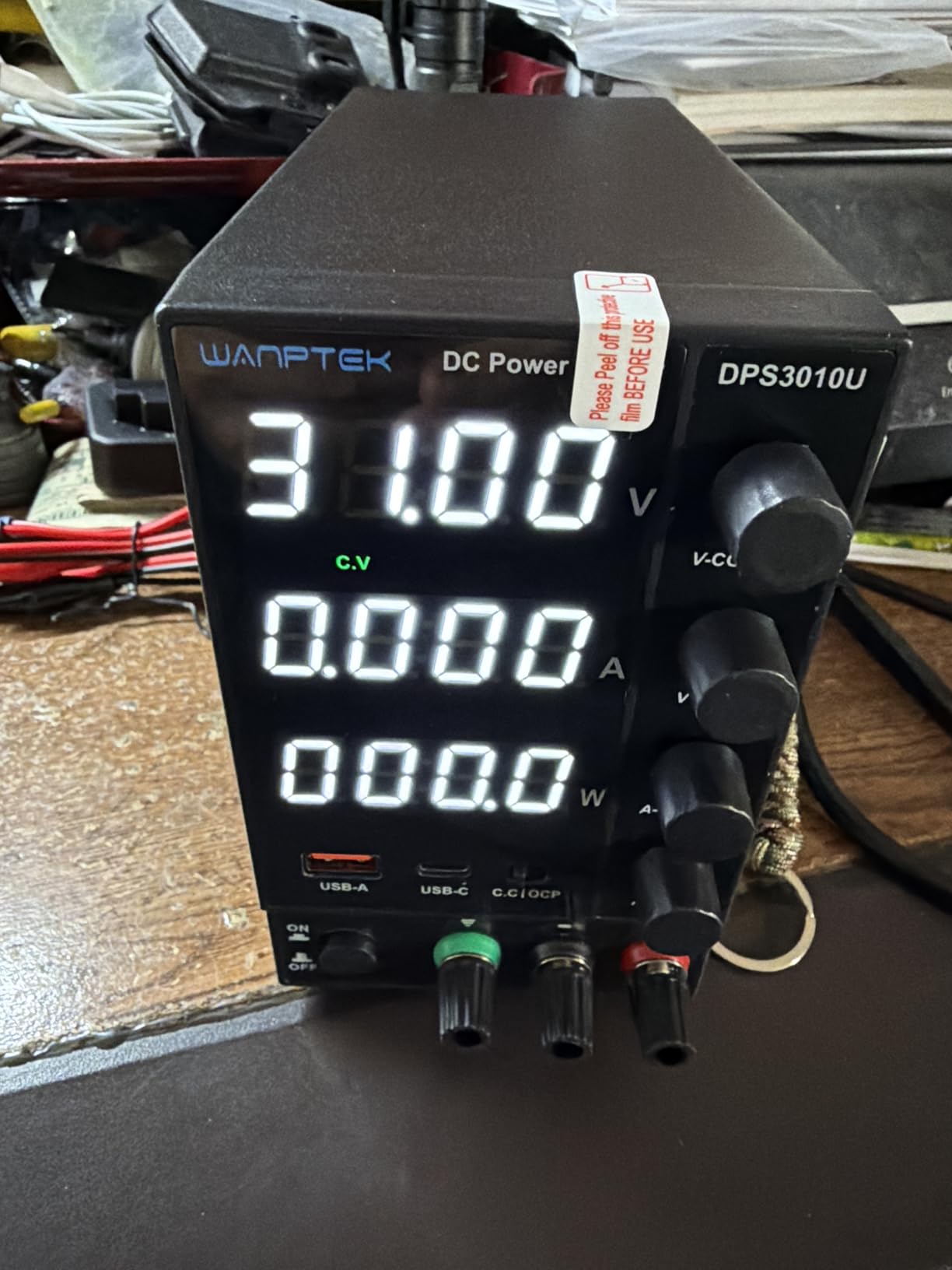
Top rated in the group, and the one I recommend to anyone who has never used an encoder control before. The Wanptek DPS3010U is a 0-30V / 0-10A switching supply with 300W of output, and its defining feature is a pair of encoder knobs split into coarse and fine. Why buy it: the coarse knob sets the digits before the decimal point and the fine knob sets the digits after it, so a 5.00V setpoint takes seconds instead of a minute of turning.
This is the control layout experienced users on electro-tech-online specifically ask for, and the reasoning is sound. With a rotary encoder, the value is stored in a chip. You cannot brush a potentiometer sideways with your sleeve and change the output voltage on a live board, which is the failure mode that makes older coarse and fine knob units unpopular in professional service work.
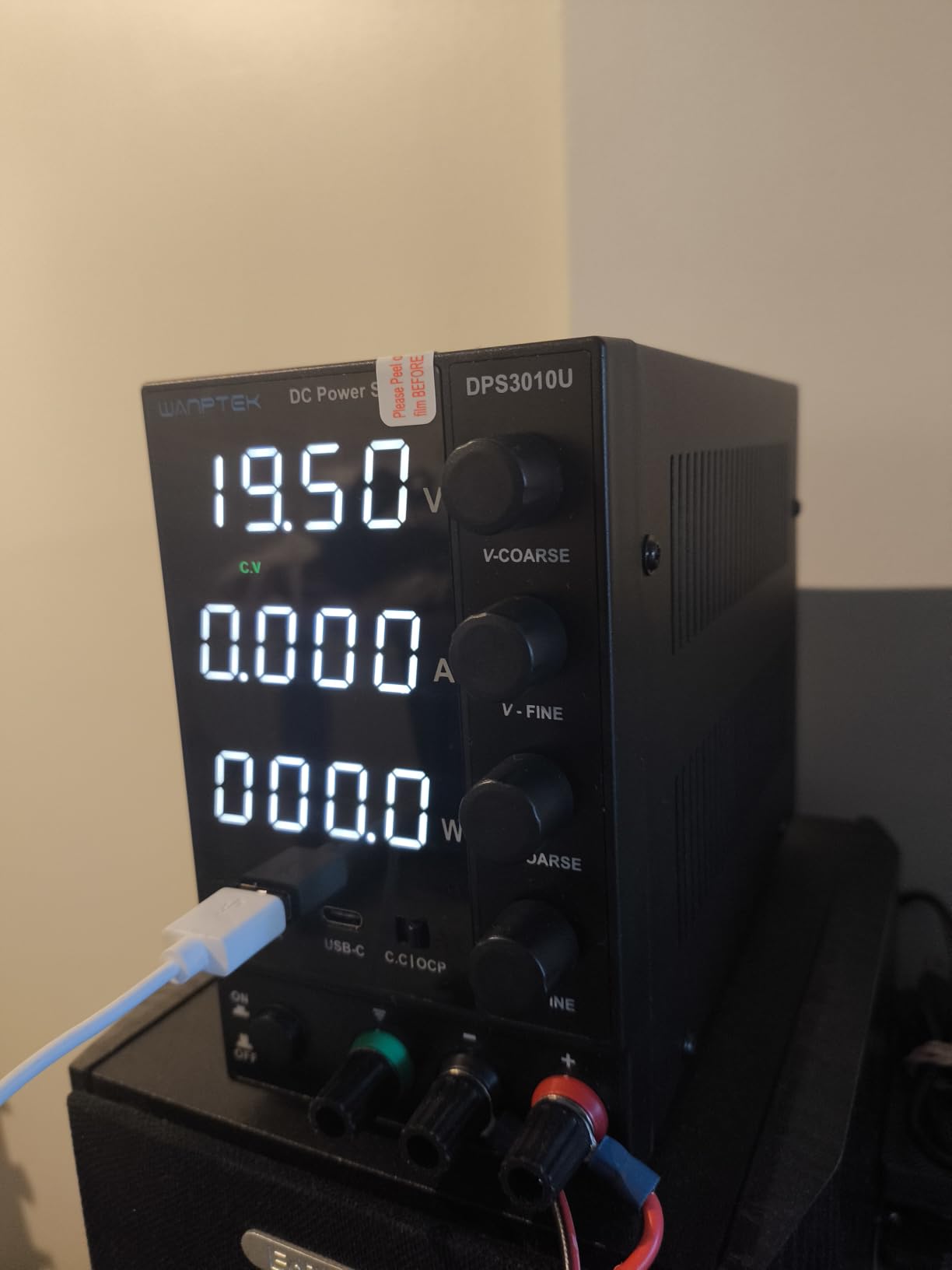
On the feature side, USB-A and USB-C ports sit on the front panel, with the Type-C port delivering 5V at 3.6A for charging a phone or powering the device you are about to repair. A short circuit triggers an audible buzzer and an automatic stop of the output, alongside grounding, leakage, over-temperature, voltage overload and power overload protection. A temperature-controlled fan and a heat sink handle sustained load, and users report holding 300W constant-current loads for extended periods in hot conditions without complaint.
One upgrade stands out and it is not on the front panel. The automatic voltage detection means the unit adapts to 110V and 220V AC inputs without manual switching, and the rear toggle has been removed entirely. That is a genuine safety and convenience win over older models in the same class.
Who this supply suits
It suits repair work where you set the same handful of voltages repeatedly, and communication equipment maintenance and production line work where the unit has to sit on a bench and survive being used all day. The fine knob makes 3.3V and 1.8V rail work far less tedious. It is also a good second supply for anyone who already owns a bigger linear unit.
Who should buy something else
Anyone working with sensitive analogue or audio circuits should step up to a linear supply, because switching ripple is present and audible on quiet rails. If you work with a heavy load constantly, note the absence of an output enable switch, which means unplugging leads rather than muting the output. Non power-delivery devices will draw nothing from the USB-C port.
3. Hyelec HY3005S – The Most Accurate Readout Per Amp in the Group
DC Power Supply Variable 30V 5A, Hyelec Adjustable Switching Regulated Power Supply with 4-Digit LED Display, Coarse and Fine Adjustments,5V2A USB Interface,110V Input Voltage
0-30V / 0-5A switching
Encoder at 0.01V / 0.001A
Output enable button
5V USB with readouts
1.65 lb
Pros
- Highest average rating in the roundup at 4.7 stars
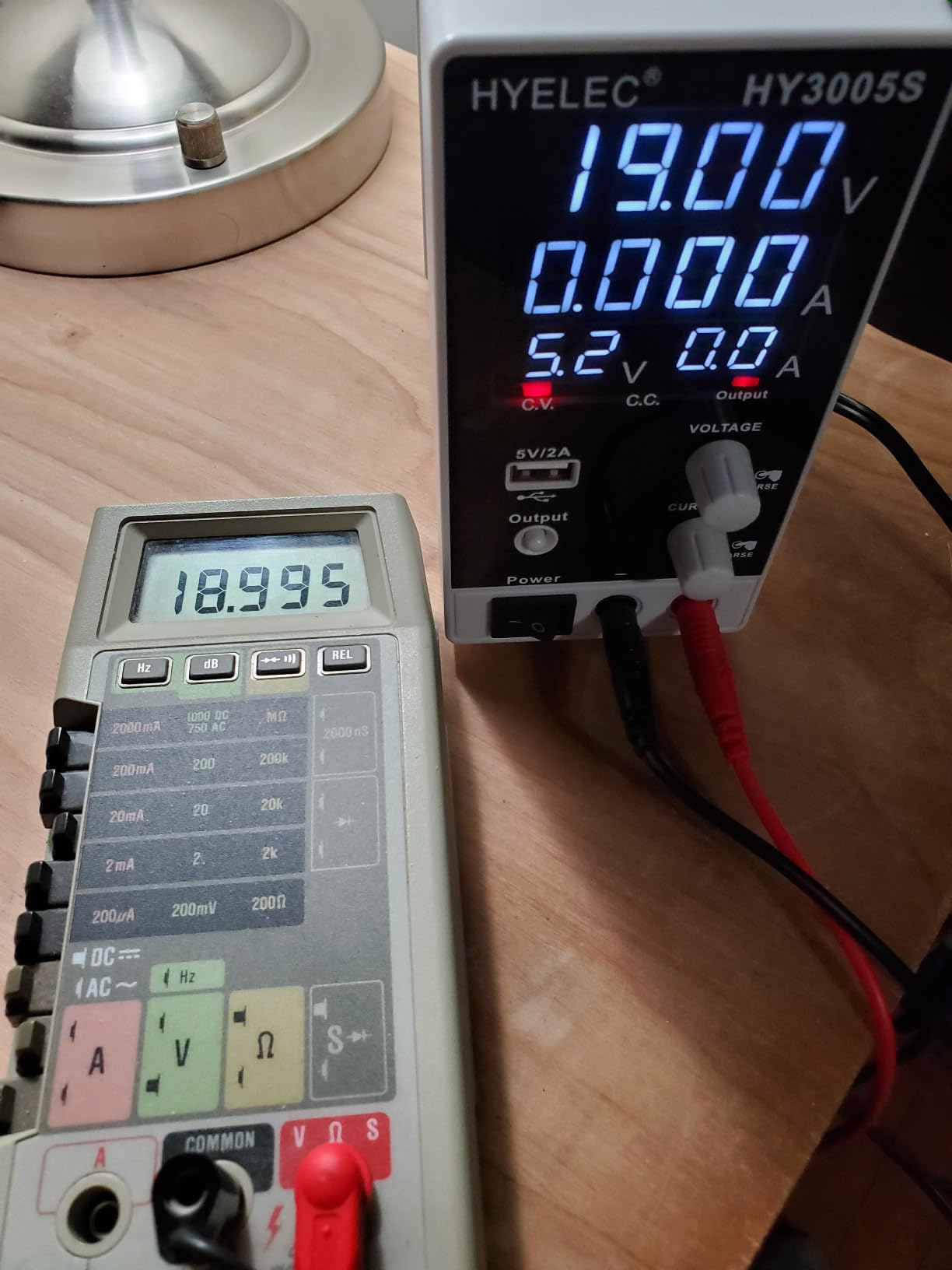
- Verified within 5mV of a bench Fluke at a 20.00V setpoint
- Dedicated output button lets you set values before energizing a load
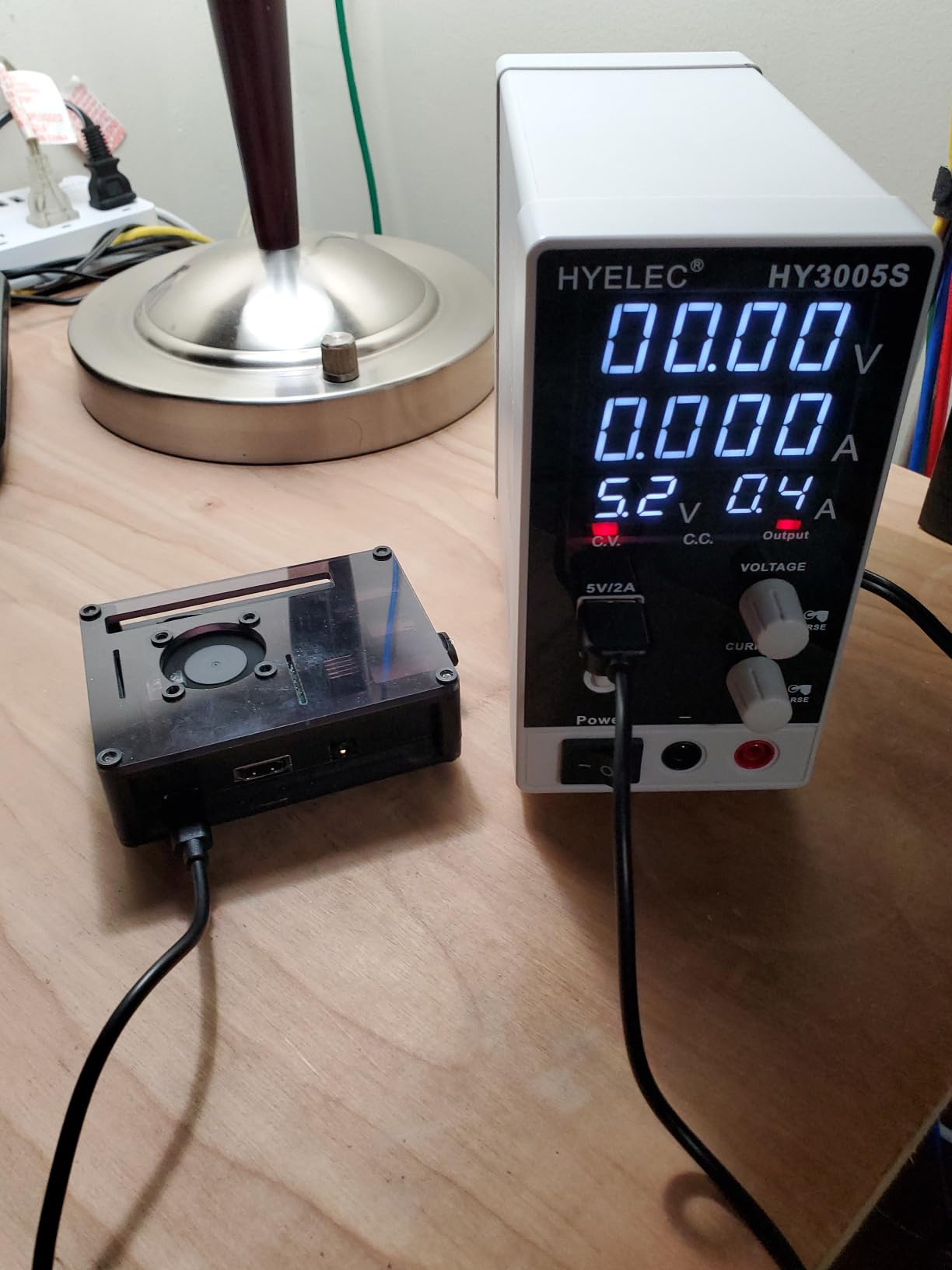
- Separate 5V USB output with its own readouts for a Raspberry Pi
- Binding post terminals simplify breadboard work
Cons
- 110V input only and will not run on 230V mains
- Switching ripple makes it unsuitable for noise-sensitive analogue work
- Only a 5A and 150W class output limits charging work
- Light chassis gets nudged when pressing buttons
Best value for a first serious bench. The Hyelec HY3005S is a 0-30V / 0-5A switching supply, and it earns the highest average rating in this roundup at 4.7 stars. Why buy it: the encoder knob gives true 0.01V and 0.001A entry, and buyers who checked it against a bench meter found a 20.00V setpoint measuring 19.995V, an error of 5mV.
That is the kind of accuracy that matters more than raw amperage. When you are bringing up a 3.3V rail on a breadboard, a supply that is 200mV optimistic at the low end is useless. This one is not. Several reviewers cite that comparison directly as the reason they kept it, and the readout itself is described as stable rather than flickering through digits.
Two design choices go beyond the usual feature list. The dedicated output button lets you set and read back the voltage and current on the display while the load is disconnected, then energise the circuit with one press, which is exactly the controlled power-up procedure you want for a board of unknown condition. And the separate 5V USB output carries its own voltage and current readouts, so a Raspberry Pi can be powered from the same box as the main rail with a real measurement of what it is drawing.
Binding post output terminals replaced the banana jacks used on earlier models, which makes connecting to a breadboard and to screw terminals far easier. Short circuit, over-temperature and over-load protection sit behind a temperature control fan, and the manufacturer states it can run at full load long term.
Who this supply suits
It suits students and hobbyists working at low voltages, particularly 3.3V and 5V rail prototyping, and anyone who wants to verify a supply against a known-good meter rather than trusting a number on a case. At roughly laptop weight and 7.5 x 3.15 x 5.9 inches it is the easiest unit here to live with on a small bench, and the output button makes it the safest to attach to an unfamiliar board.
Who should buy something else
If your bench runs on 230V mains, this unit is wrong for you, because the input is fixed at 110V. It is also the wrong choice for lithium charging at high rates given the 5A / 150W class output, and for any analogue work where ripple matters. The light chassis is pleasant until you press buttons one-handed and slide the unit across the bench.
4. Siglent SPD3303X-E – Three Isolated Channels With Series and Parallel Modes
Siglent Technologies SPD3303X-E Triple Output Power Supply
32V / 3.2A on two channels
220W total power
Linear and isolated
Series and parallel modes
3-year warranty
Pros
- Three isolated and independently controlled output channels
- 220W spread across two adjustables and a fixed low-voltage rail
- Independent
- series and parallel modes cover most bench configurations
- Linear design keeps noise low for sensitive measurement
- Timing output function and trending graphs support test sequences
- Three-year warranty
Cons
- Costs several times more than comparable switching supplies
- 16 x 14 x 11 inch chassis and 17.6 lb build eat bench space
- Each adjustable channel stops at 3.2A
- No front-panel USB charging ports
- Not SCPI programmable despite the lab positioning
The Siglent SPD3303X-E is the only unit here built for multi-rail work, and it is the right answer if you need plus and minus 15V op-amp rails from one box. It is a 220W linear supply with three fully isolated, independently controlled outputs: two channels adjustable to 32V at 3.2A, and one fixed low-voltage channel covering 2.5V, 3.3V and 5V at 3.2A.
Why buy it: the channels can run independent, in series, or in parallel. Two channels in series give you a 64V adjustable output for higher rail work, which is exactly the technique a well-regarded answer on electro-tech-online recommends for anyone who needs more voltage than a single channel reaches. The fixed low-voltage channel covers 3.3V and 5V logic rails without spending an adjustable channel on them.
The timing output function and the trending graphs take this beyond a manual bench. You can define a voltage and current sequence and watch the draw over time, which turns a power supply into part of an automated power-up test. Combined with the linear design, that makes it a sensible anchor for a small lab or a technician who needs a quiet rail for sensitive measurement work.
The three-year manufacturer warranty is the longest offered anywhere in this roundup, which tells you something about how the maker expects the unit to be treated. Owners justify the cost with the three isolated channels, the series and parallel flexibility and the low noise, and their reservations are practical rather than electrical.
Who this supply suits
It suits anyone building op-amp or audio amplifier circuits that need symmetrical plus and minus rails, and anyone running a mixed-rail test sequence. Because the channels are isolated from each other, it also suits split-supply work where a shared output would be a problem. Students working toward analogue electronics will grow into this unit rather than out of it.
Who should buy something else
A hobbyist on a tight budget should not buy this. The bulk is real at 16 x 14 x 11 inches and 17.6 lb, and the cost puts it far above comparable switching units. The 3.2A per-channel ceiling rules out high-current charging, and there are no front-panel USB ports for powering the phone you are working on. It is also not SCPI programmable, so if your work runs on remote control you need a different instrument.
5. Jesverty SPS-3010 – The Most Popular Starter Supply in This Roundup
Jesverty DC Power Supply Variable, 0-30V 0-10A Adjustable Switching DC Regulated Bench Power Supply with High Precision 4-Digit LED Display, 5V/2A USB Port, Coarse and Fine Adjustment SPS-3010
0-30V / 0-10A at 300W
4-digit V / A / W readout
Automatic CV / CC
5V 2A USB
2.4 lbs
Pros
- Best selling rank in both lab and life science supply categories
- 4-digit display shows live voltage current and wattage
- Automatic constant voltage and constant current crossover
- Compact 7.1 x 3.35 x 6.1 inch body at 2.4 lb
- Short circuit overload grounding and thermal protection
Cons
- Switching topology gives higher ripple than linear supplies
- Manufacturer states the included leads are give-away grade
- No physical output enable or disable switch
- Three-digit precision pots rather than true encoder entry
- No memory presets
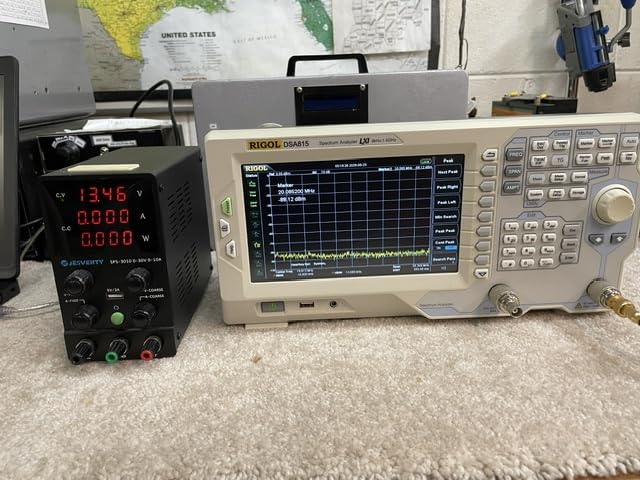
The Jesverty SPS-3010 is the most widely bought unit in this roundup, sitting at the top of both the lab power supply and life science supply sales rankings with 1664 ratings. It is a 0-30V / 0-10A switching supply rated to 300W. Why buy it: the big 4-digit LED display shows measured voltage, current and wattage in real time, at 0.01V, 0.001A and 0.1W resolution.
That live wattage readout is more useful than it sounds. During a power-up test, the current number tells you what the board is doing and the wattage number tells you whether that draw is plausible for the circuit you expected. Reviewers single out the accuracy of the display and the automatic constant voltage and constant current handling as the two reasons it is repeatedly recommended as a first bench supply.
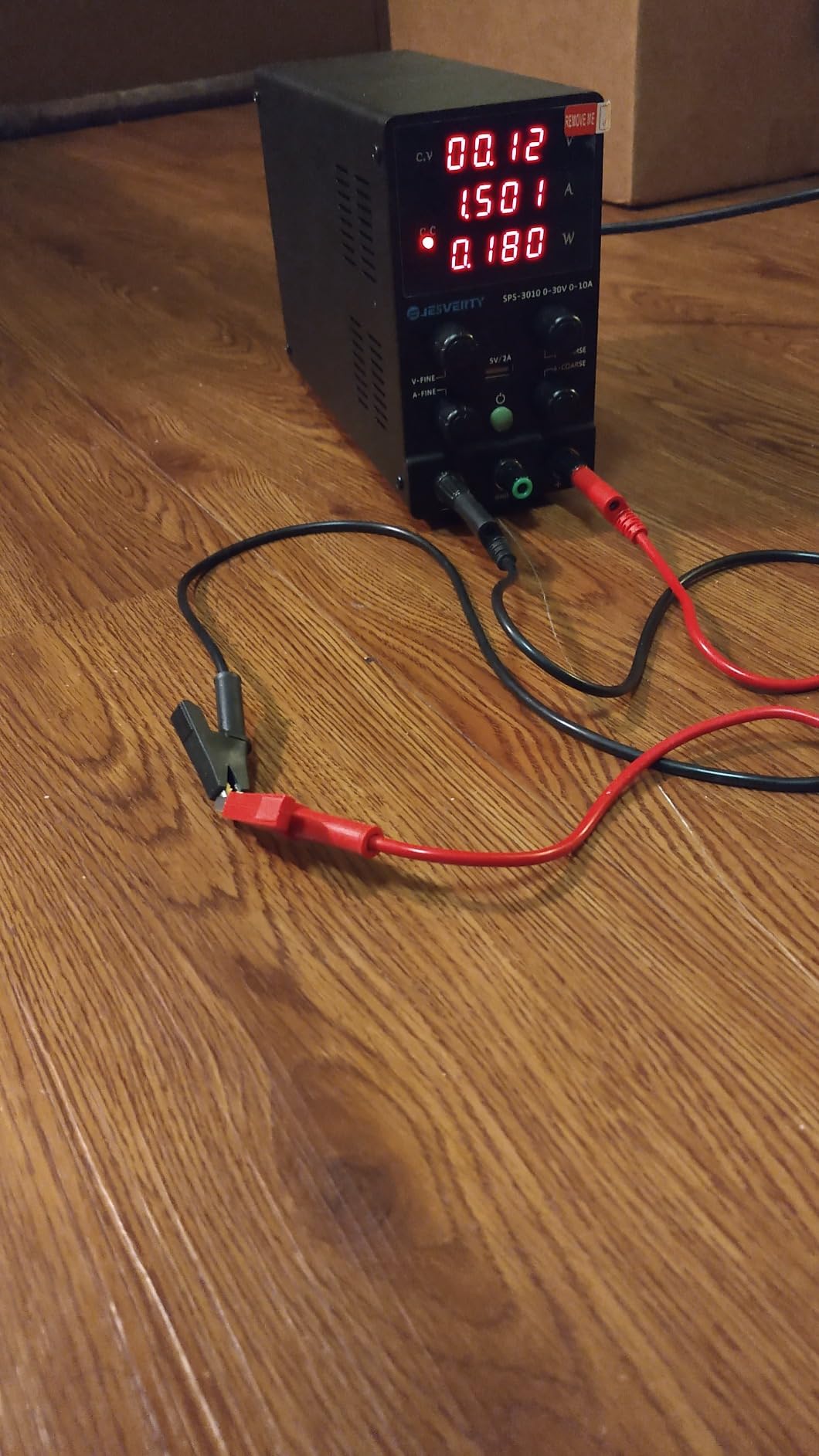
The auto crossover is worth understanding. You set both a voltage and a current, and those two numbers are the crossover point. Below it the supply behaves as a stiff voltage source; the moment the load asks for more than the current limit, it becomes a current source and holds the current instead. That is the whole fault-finding mechanism in one sentence, and this unit does it automatically without you touching anything.
Protection covers short circuit, overload, a grounding terminal and a temperature-regulated fan. A 5V / 2A USB port on the front handles small accessory charging, and at 2.4 lb in a 7.1 x 3.35 x 6.1 inch tower it stores easily between sessions.
Who this supply suits
It suits students and first-time buyers, and it suits anyone who wants a live wattage figure while diagnosing a board. Constant-voltage and constant-current handling is automatic, so nothing about the interface needs explaining before you get to the actual repair. If you already own one of the encoder-knob units elsewhere on this list and it bothers you that you must unplug leads to change settings, this is a reasonable second machine.
Who should buy something else
Do not buy it for low-noise analogue or audio work, because switching ripple is real. There is no physical output switch, so changing setpoints on a live circuit means pulling the leads. The bundled leads are described by the manufacturer as give-away grade, so plan on replacing them for sustained high-current work. It also lacks memory presets, which matters if you repeatedly return to the same setpoints.
6. Jesverty SPS-3010V – Extra Voltage Headroom and a Real Output Switch
Jesverty DC Power Supply Variable, 0-32V 0-10A Switching Bench Power Supply with 20W USB & Type-C Quick-Charge, Encoder Corase & Fine Adjustment Knob, Output Switch, 4-Digit LED Display – SPS-3010V
0-32V / 0-10A at 320W
Coarse and fine encoder
USB-A and USB-C at 20W
Output ON / OFF button
2.5 lb
Pros
- 32V ceiling is the highest among the budget switching units
- Coarse and fine encoder entry at 0.01V and 0.001A
- Output ON / OFF button lets you pre-set values before energizing
- USB-A and USB-C both rated 20W for a Raspberry Pi or phone
- OCP protection with a temperature-regulated fan
- Selectable 115V / 230V AC input
Cons
- Switching topology gives higher ripple than linear bench supplies
- Bundled leads are described by the manufacturer as give-away grade
- Encoder adjustment still takes practice to get used to
- Key beep on adjustment is a common annoyance
- Not programmable and no memory presets
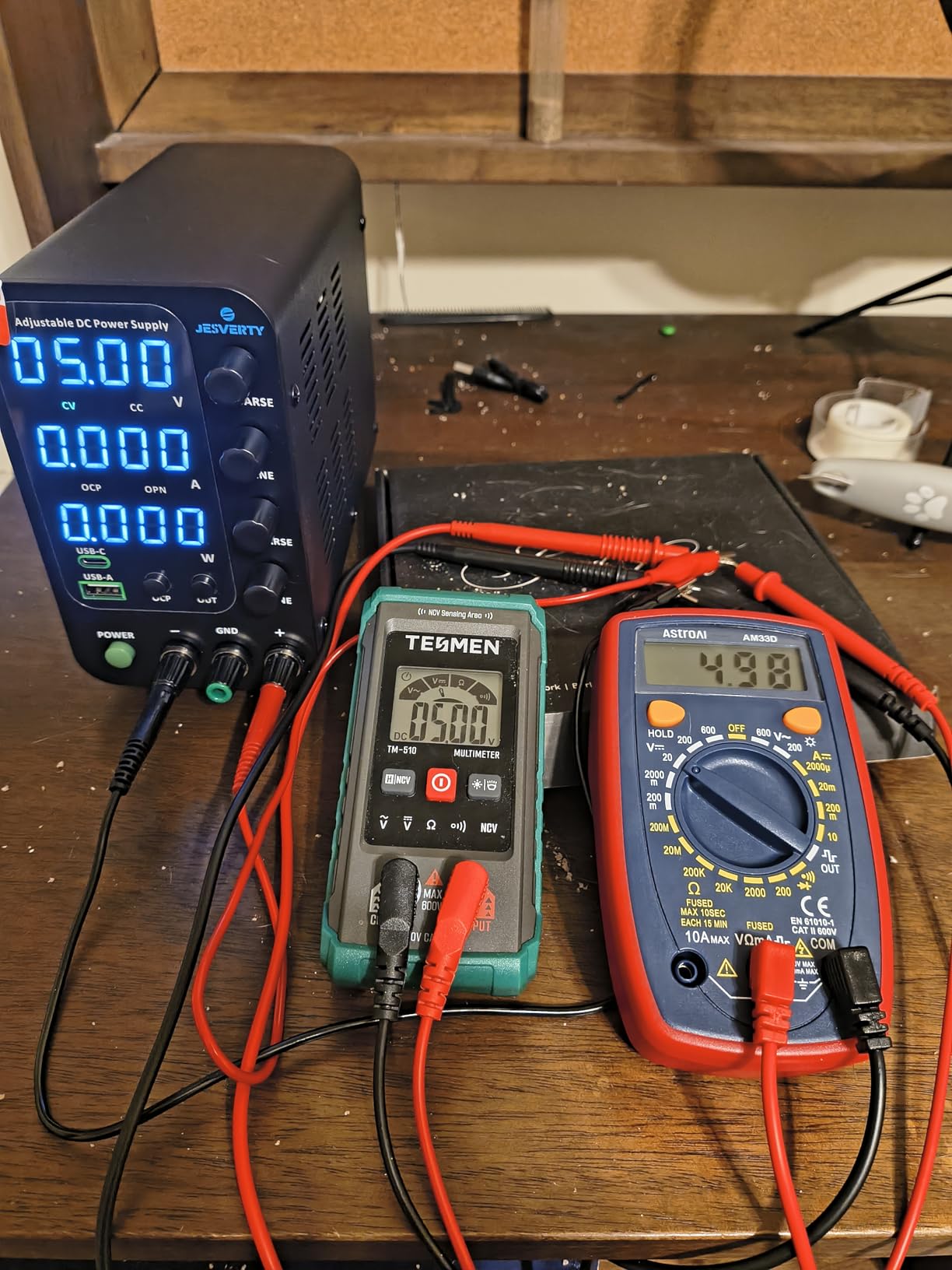
The Jesverty SPS-3010V is the feature-maxed version of the entry-level line, and the spec that actually matters is the ceiling: 0-32V / 0-10A at 320W. That is the highest voltage headroom among the budget switching units here. Why buy it: the coarse and fine encoder knobs give true digit-by-digit entry at 0.01V and 0.001A, replacing the traditional coarse and fine potentiometer pair.
Two safety features separate it from the base model in the same range. An output ON and OFF button means you can set the voltage and current, read them back on the display, and only then energise the load, which is the correct procedure for a board of unknown condition. And an OPN mode is provided for users who prefer the supply to output immediately on power-up instead of waiting for that button press.
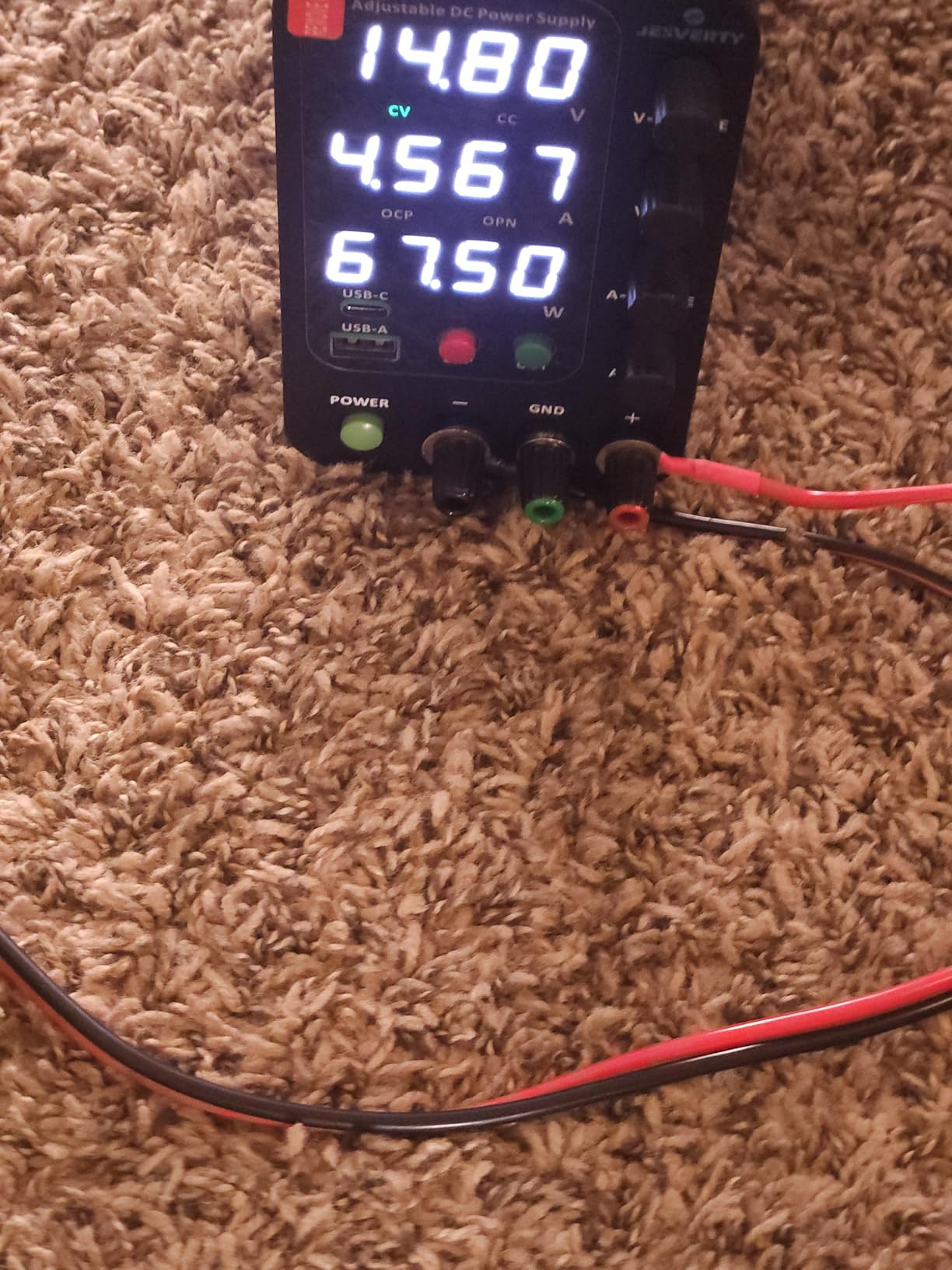
The USB story is stronger here than on most of this list. Both the USB-A and the USB-C ports are rated 20W, which is enough to run a Raspberry Pi, an Arduino UNO, or to charge a phone while you work on it. The 4-digit display reports live voltage, current and wattage, and over-current protection cuts the output on a short with a temperature-regulated fan managing the heat.
Input is selectable between 115V and 230V, so unlike several competitors it works on both mains standards once the rear switch is set correctly. The enclosure is aluminium and polycarbonate rather than all-plastic, measuring 7.09 x 3.35 x 6.1 inches at roughly 2.5 lb.
Who this supply suits
It suits Raspberry Pi and Arduino work where a 20W USB supply and an adjustable main output in one box saves a second piece of equipment, and it suits anyone who powers up boards of unknown condition and wants the output switch. The extra two volts of ceiling also help with 24V accessory work and higher-voltage hobby circuits than the 30V units allow.
Who should buy something else
Ripple rules it out for analogue and audio work. The encoder workflow takes practice, and the key beep is a recurring complaint across this model family even though the tone is useful for confirming a press registered. There are no memory presets, so recurring setpoints mean re-entering them. The bundled leads still need replacing for sustained high-current use.
7. Nankadf 30V 10A – Built for Days of Continuous Electropolishing Work
DC Power Supply Variable, Bench Power Supply with Encoder Adjustment Knob, Output Enable/Disable Button, Adjustable Power Supplies with USB Quick-Charge, Short Circuit Alam (30V 10A Black)
0-30V / 0-10A at 300W
Encoder digit entry
Output enable button
OCP with buzzer
18W USB
Pros
- Accuracy measured dead-on below 15V and within 0.005V higher
- Encoder knobs give error-free entry of setpoints
- Output button lets you verify values on the display before energizing
- OCP shuts down on a short and keeps your setpoints
- Reported running 10 days straight powering an electroplating cell
- Settings survive unplugging
Cons
- Output ramps down slowly when voltage is lowered or the unit is switched off
- Encoder reverts to the third digit after a short delay
- No integrated storage or hangers for test leads
- Displayed readings update more slowly than ideal
- Switching ripple only
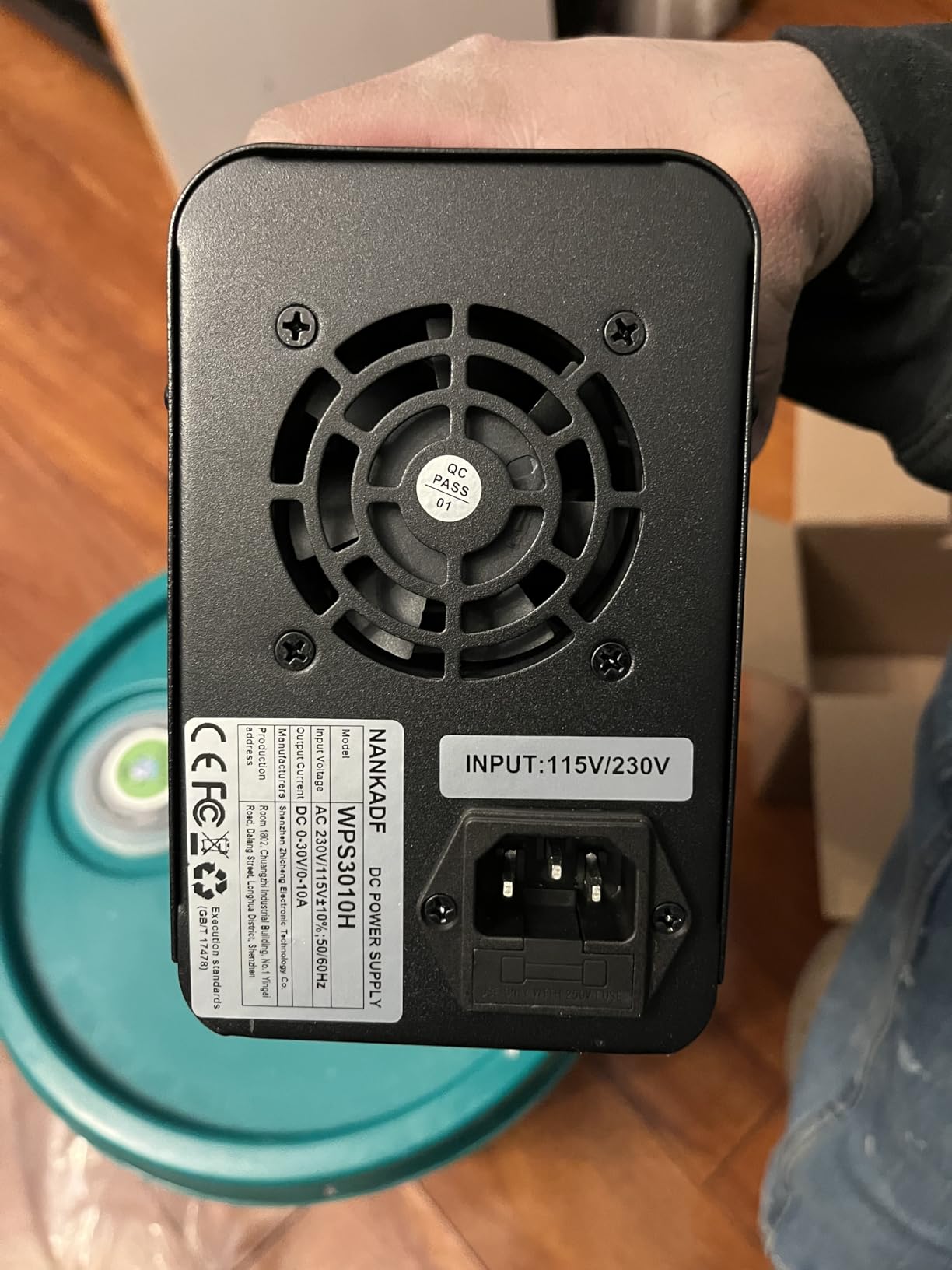
The Nankadf 30V 10A is the endurance pick, with 1166 ratings behind it. It is a 0-30V / 0-10A switching supply rated to 300W, and the detail that convinced us is measurement accuracy. Why buy it: reviewers who tested it report dead-on accuracy below 15V and within 0.005V at higher voltages, which they describe as better than the wall-wart adapters and on-board regulators the unit replaces.
That claim matters for a specific reason. When you are reverse-engineering a device by measuring rails, the instrument has to be better than the thing you are measuring. A supply with optimistic readings sends you chasing a regulator fault that does not exist.
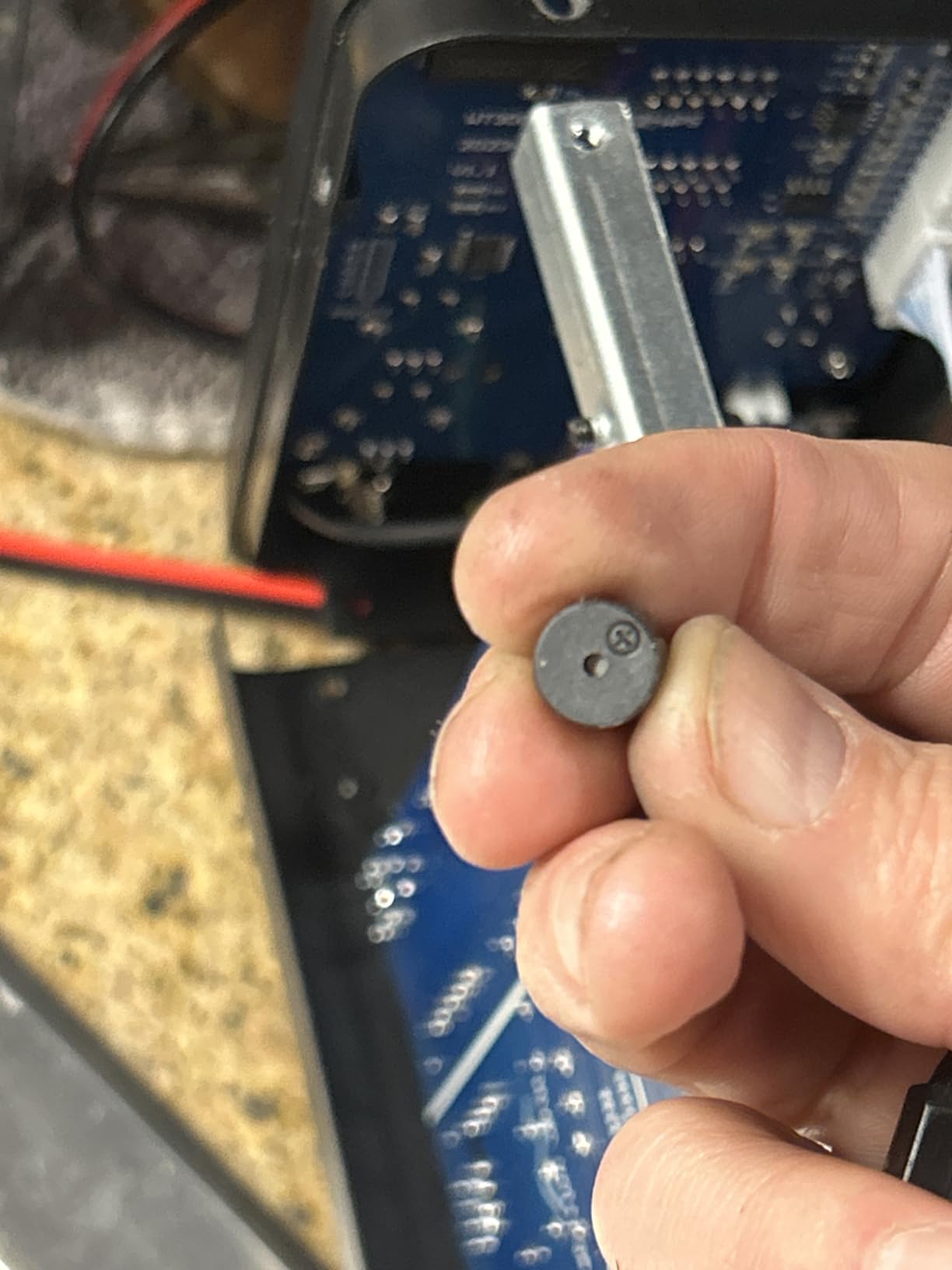
The control scheme is the familiar press-to-select-digit encoder, with an output enable and disable button in front of it so you can confirm the numbers before they reach the board. Over-current protection, once armed, stops the output on a short and sounds a buzzer without losing your setpoints, and the settings survive even being unplugged. The 4-digit display reads to 0.01V and 0.001A with adjustable screen brightness, and an 18W USB fast-charging port handles phones and repair devices.
The heavy-use reports are the standout. Owners describe running this unit continuously for ten days straight powering an electroplating cell without failure, and using it as a constant-voltage battery charger. At 1.48 kg it is light enough to move around a bench without fuss.
Who this supply suits
It suits electroplating, anodising and burn-in work where the supply runs for hours or days, and it suits reverse-engineering and rail measurement where instrument accuracy is the priority. The buzzer on a short gives instant audible confirmation, which is useful when your eyes are on a board rather than on the display. The USB port is genuinely handy for powering the device under repair.
Who should buy something else
The slow ramp-down when you lower the voltage or switch the unit off is a genuine limitation, and if your application needs the output to fall quickly it will not suit you. The encoder forgetting which digit you selected after a short delay adds friction to fine millivolt work. Displayed readings update more slowly than ideal, there is nowhere to hang test leads, and switching ripple rules out analogue applications.
8. Tekpower TP3005T – The Heavy Linear Bench That Keeps Working
Tekpower TP3005T Variable Linear DC Power Supply, 0-30V @ 0-5A with Alligator Test Leads
0-30V / 0-5A linear regulated
300W
Back-lit LED at 0.1V / 0.01A
Thermo-sensor fan
12 lb metal body
Pros
- True linear topology gives cleaner and quieter output than switching units
- Solid 12 lb metal chassis stays planted on the bench
- Constant voltage and constant current modes both clearly available
- Back-lit display stays readable in a dim workspace
- Thermo-sensor fan stays silent until the unit heats up
- Alligator test leads included in the box
Cons
- Maximum current stops at 5A
- Display resolution of 0.1V and 0.01A is coarse next to encoder units
- Large 11.7 x 9.7 x 7.9 inch footprint consumes bench space
- Dated beige styling and panel design
- No USB ports
- memory presets or output switch
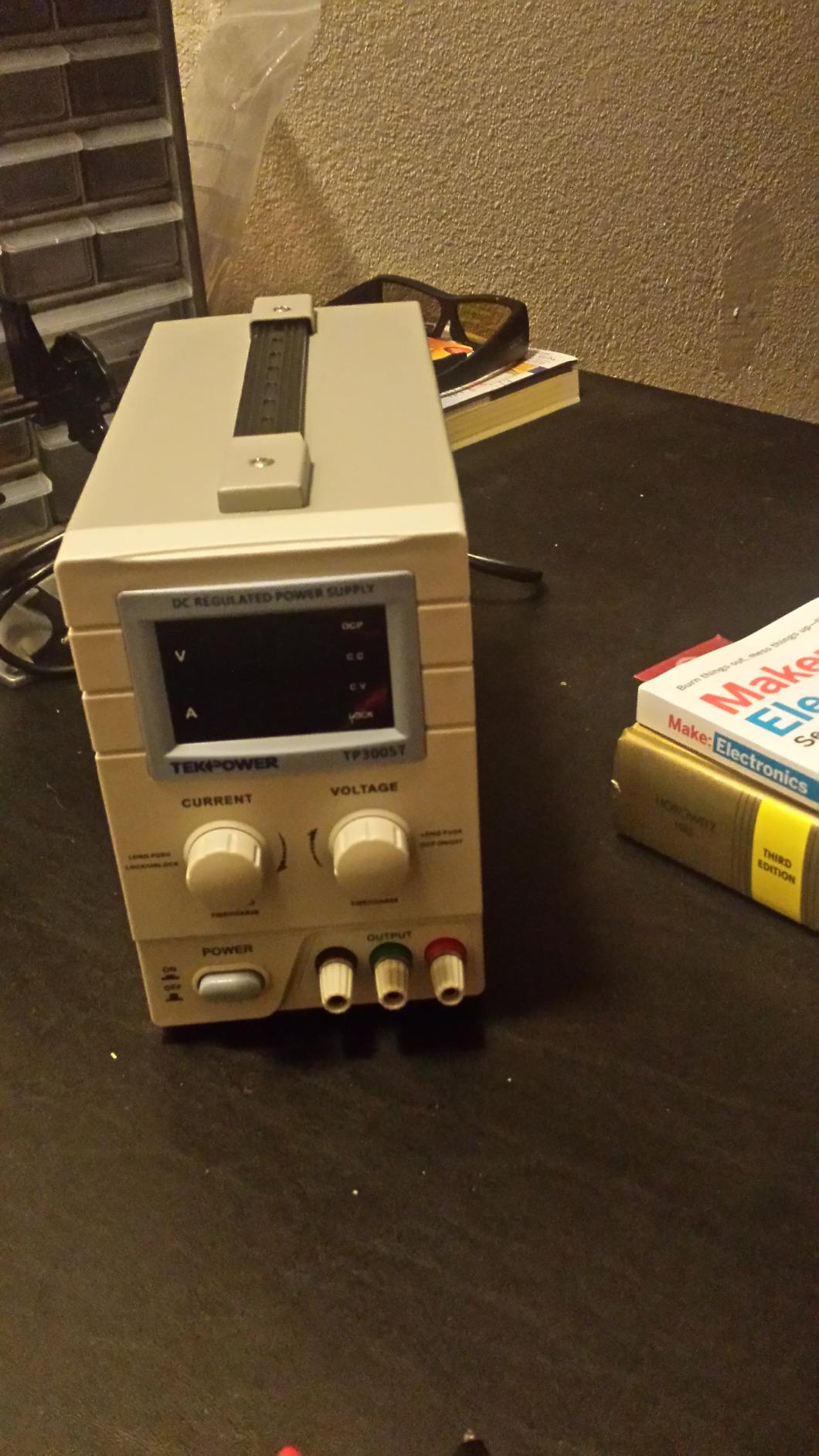
The Tekpower TP3005T is the one to buy if you are moving from wall adapters to something that feels like an instrument, and it is a genuine linear supply: 0-30V at 0-5A in a 12 lb metal chassis. Why buy it: linear regulation produces lower noise and lower ripple than any switching unit in this roundup, which matters when you are feeding audio, low-level analogue, or a measurement.
It is also a repair-shop unit in the literal sense. The metal body does not slide, does not flex, and does not feel like it will be damaged by being knocked. A cooling fan driven by a built-in thermo-sensor stays off until the supply actually heats up, so the unit is silent in normal use rather than running constantly like many of the compact switching models here.
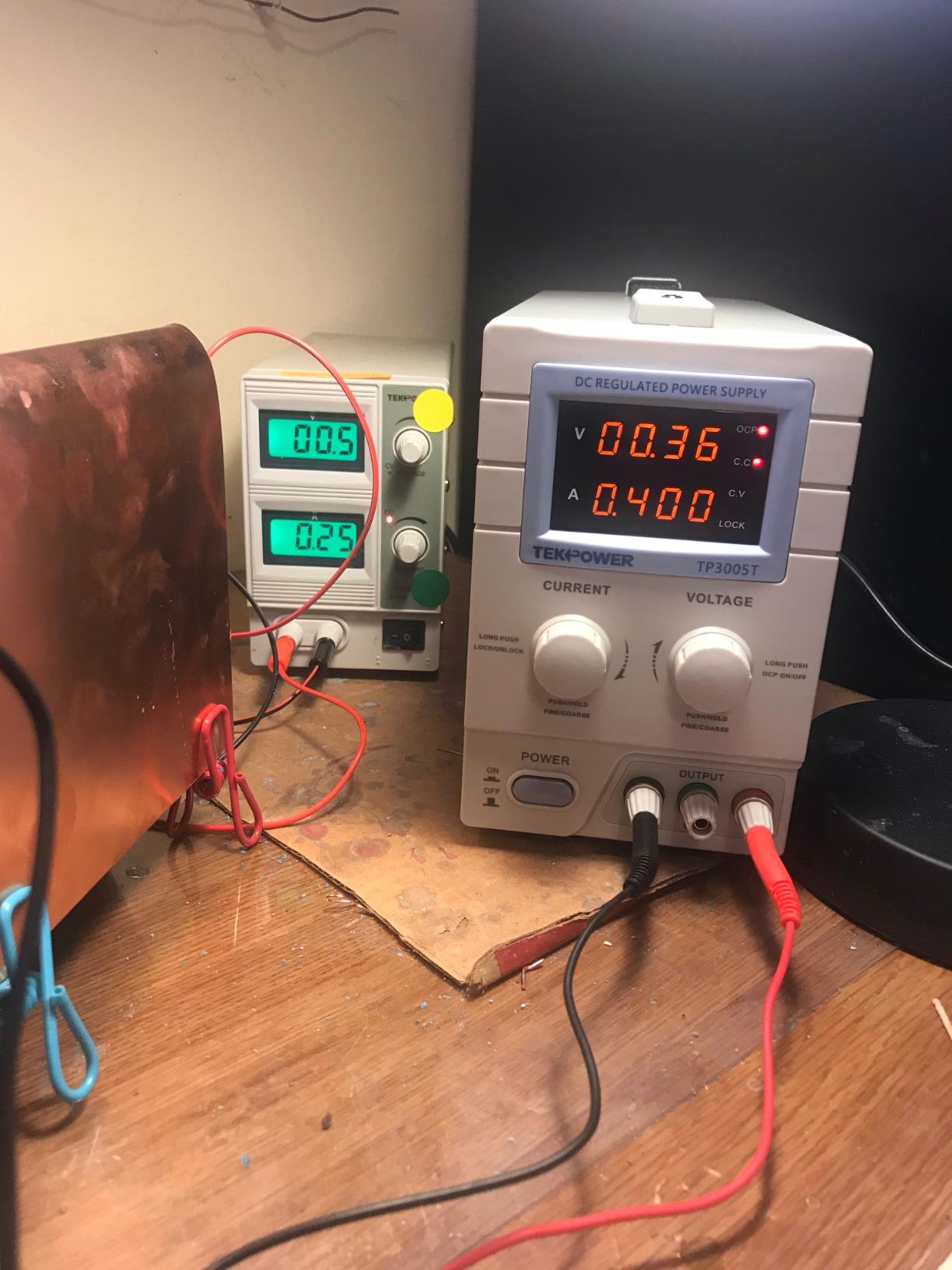
Both constant voltage and constant current modes are available and clearly labelled, which is the minimum for fault-finding. The back-lit LED display reads to 0.1V and 0.01A, and the backlight is worth having when you are working under a bench lamp with the overheads off. Alligator test leads come in the box, and a one-year manufacturer warranty is included.
Owners describe it in the same terms consistently: no frills, linear-clean output, and a unit that simply always works. It has been on the market long enough to accumulate 667 reviews at 4.4 stars, which is a useful signal for a component you intend to keep for years.
Who this supply suits
It suits audio amplifier work, low-noise analogue prototyping, and any bench where acoustic or electrical noise matters more than footprint. It also suits classrooms and shared benches, because the weight means nobody accidentally carries it off and the simple interface needs no explanation. If you work in the dark, the back-lit display is a real practical advantage.
Who should buy something else
The 5A ceiling is the main limitation, half of what most modern 30V supplies offer, so it rules out high-current battery charging. Display resolution of 0.1V and 0.01A is coarse compared with 0.01V encoder-entry units, which makes it a poor choice for sub-3V rail work. The 11.7 x 9.7 x 7.9 inch footprint is large, the styling is dated, and there are no USB ports or memory presets.
9. Korad KD3005D – Digital Controls on a Linear Supply at a Mid Price
KORAD KD3005D – Precision Variable Adjustable 30V, 5A DC Linear Power Supply Digital Regulated Lab Grade…
0-30V / 0-5A linear at 300W
Dual 4-digit LED displays
Digital setpoint controls
Auto mA / A switching
9 lb metal
Pros
- Linear regulated topology is quieter and cleaner than switching units
- Dual 4-digit LED displays give separate voltage and current readouts
- Digital controls improve setpoint repeatability
- Automatic mA and A display switching removes menu fiddling
- Overload short circuit and over-temperature protection
- Switchable 110V / 220V input
- Includes 5A test leads
Cons
- Maximum current of 5A is low next to 10A switching alternatives
- No USB ports encoder knobs memory presets or output switch
- Bulky 14 x 10 x 10 inch footprint for a 300W rating
- Single output channel only
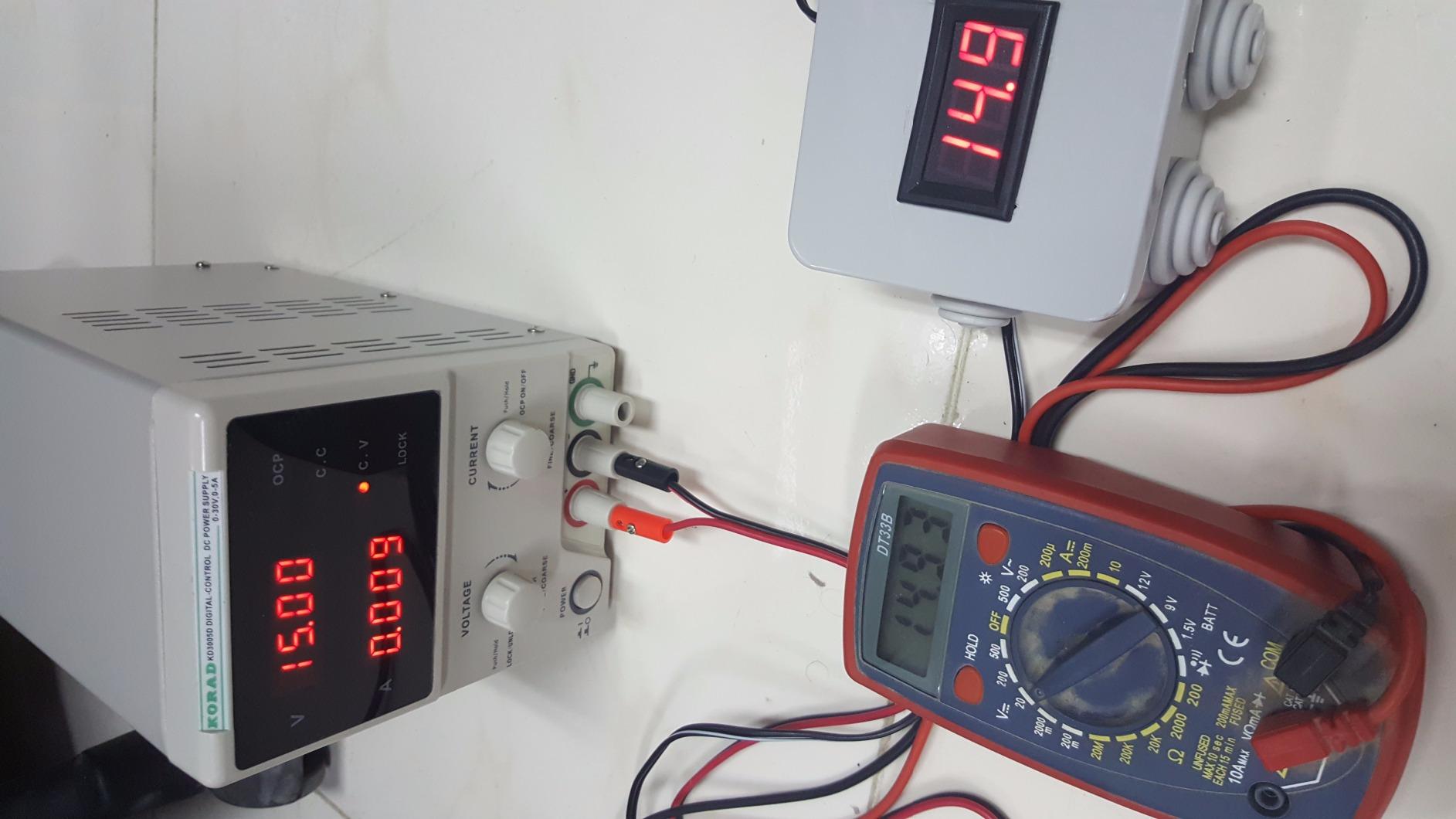
The Korad KD3005D is the middle ground between the no-frills linear units and the digital switching crowd: 0-30V at 0-5A linear, rated to 300W, with digital setpoint controls. Why buy it: dual 4-digit LED displays give you voltage and current on separate readouts at the same time, and the digital controls give far better setpoint repeatability than the coarse potentiometers used on older linear supplies.
One small feature earns more use than its description suggests. The display switches automatically between mA and A, so when you set a limit for a low-current circuit you do not have to reconfigure the meter view. It is the kind of thing you touch a dozen times an hour, which is exactly where automation pays back.
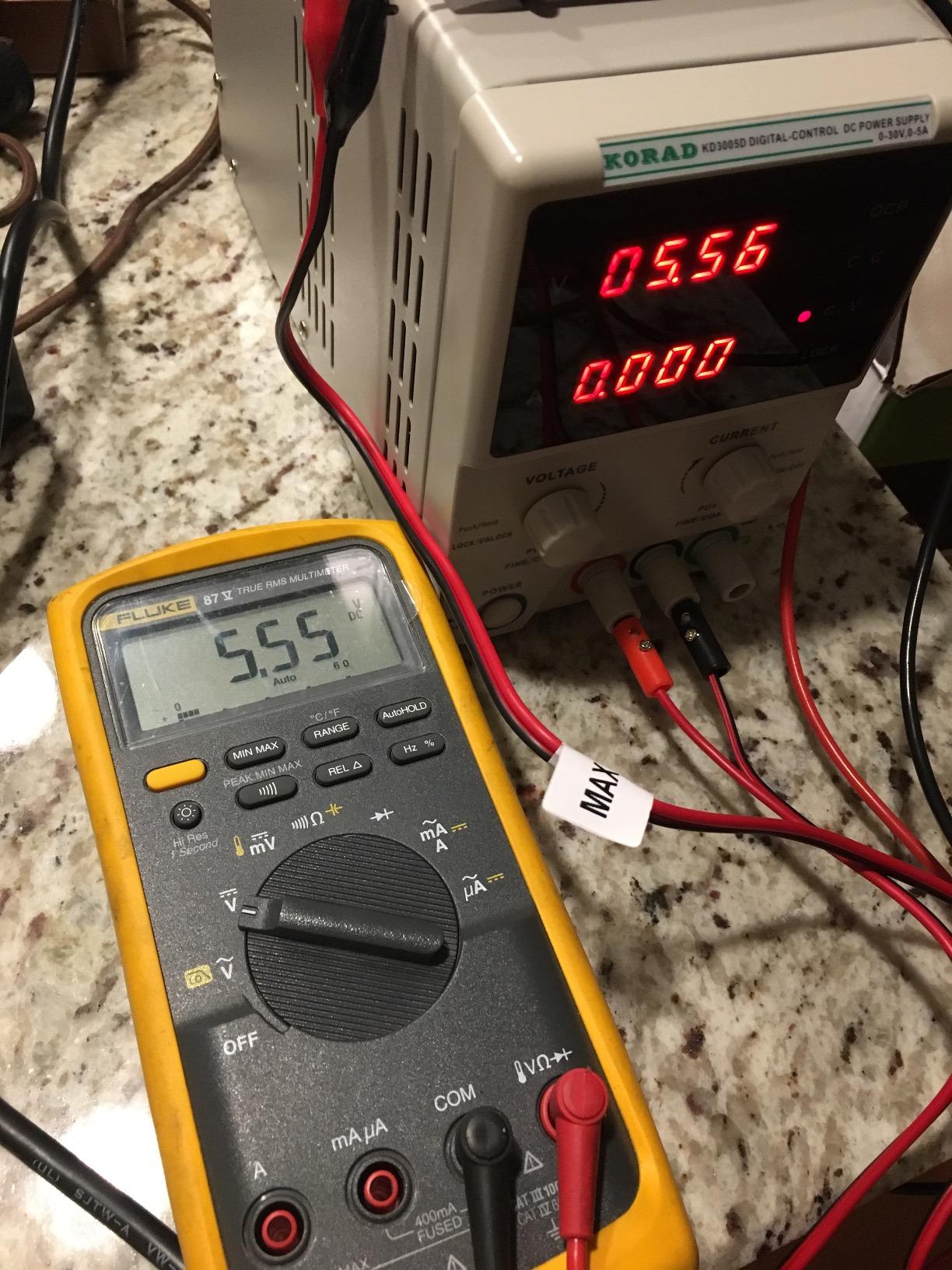
The protection set covers overload, short circuit and over-temperature, and the AC input is switchable between 110V and 220V, so the same unit works in either mains region. The 9 lb metal chassis stays planted on the bench, and 5A test leads are included in the box. Buyers treat this as dependable rather than exciting, which is the point.
The Korad brand itself carries weight in this field. On EEVblog, members recommend the Korad KA3005 series as a solid value pick, and it is one of the names that comes up repeatedly when working engineers discuss what to buy. That kind of community backing is worth something on a device you intend to keep for a decade.
Who this supply suits
It suits someone moving up from a wall adapter who wants a linear supply but does not want to pay for laboratory instrumentation, and it suits anyone who needs the same unit to work on 110V or 220V mains. Separate voltage and current readouts make it a good fit for rail measurement work, and the automatic mA and A switching helps when you are working with small-signal circuits.
Who should buy something else
The 5A ceiling is the constraint, and it rules out high-current charging. There is a single output channel only, so multi-rail testing means buying a second supply, and the 14 x 10 x 10 inch footprint is large relative to the 300W it delivers. There are no USB ports, no encoder knobs, no memory presets and no output enable switch, so you are back to unplugging leads to change setpoints safely.
10. Wanptek TPS-C3010H – The One With Memory Presets and a Key Lock
WANPTEK DC Bench Power Supply 30V 10A, Regulated Variable Lab Power Supply with Memory Presets, Encoder Knob,OCP Protection, Output Switch, 4-Digit LED, USB Fast Charge and Key Lock for Repair
0-30V / 0-10A at 300W
Three M1 M2 M3 memory presets
Output ON / OFF switch
OCP auto-resume
Key lock
Pros
- Three memory presets store and recall recurring setpoints instantly
- Output ON and OFF switch prevents arcing when rewiring
- One-key lock blocks accidental knob presses during delicate work
- OCP cuts output on a short and resumes once cleared
- Compact horizontal layout at 1.2 kg
- 4-digit display shows measured current not just the setpoint
Cons
- Rear 115V / 230V selector must be set manually or voltage will not hold
- Power-on beep cannot be disabled
- Supplied leads are ring terminals rather than banana plugs
- Preset buttons sit close to the knobs and are easy to press by accident
- Ammeter readings reported as slightly imprecise
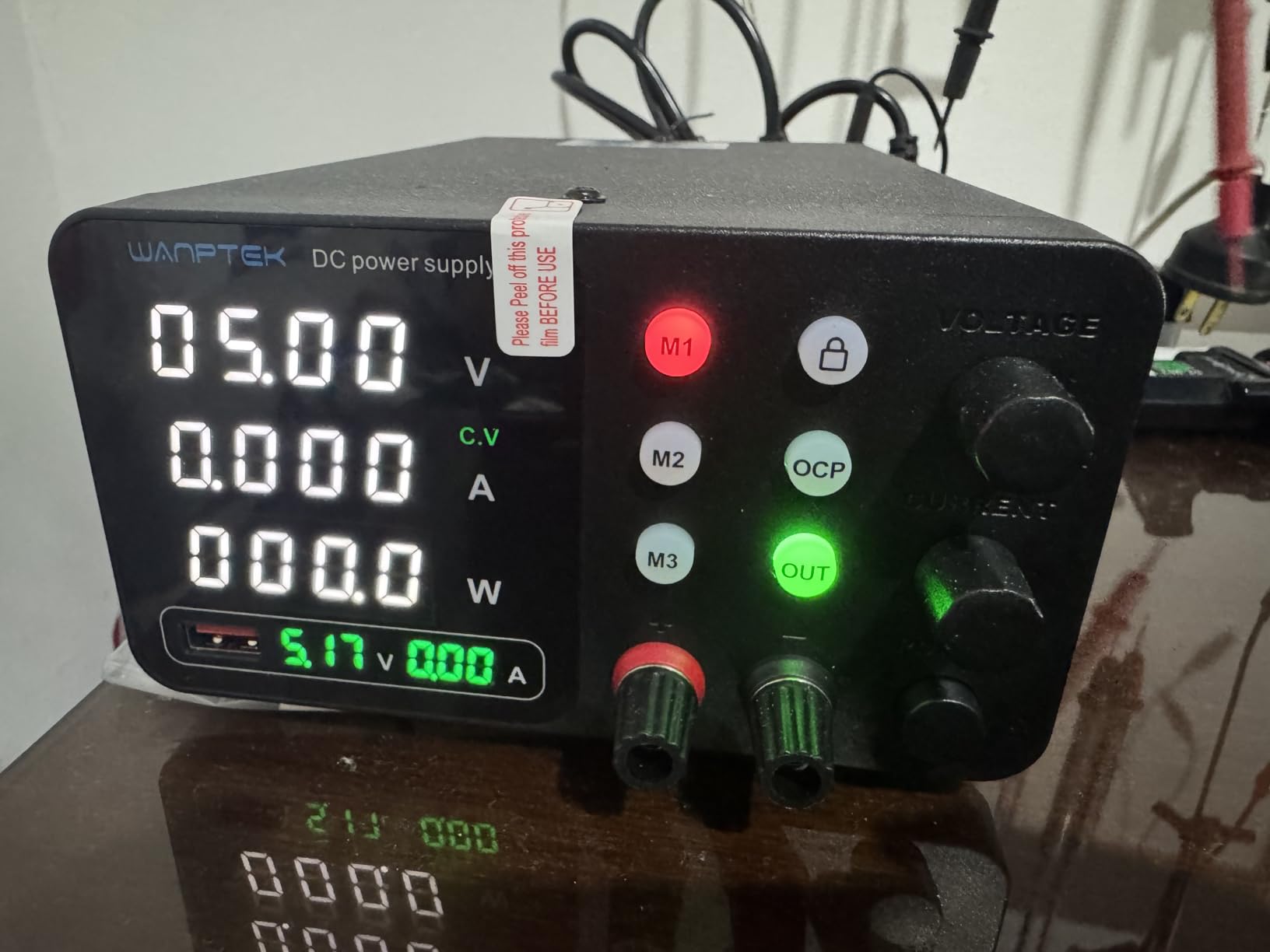
The Wanptek TPS-C3010H is a 0-30V / 0-10A supply rated to 300W, and the feature that changes repetitive work is the three memory presets. Why buy it: M1, M2 and M3 store the setpoints you return to constantly and recall them instantly, which removes the single most tedious part of testing a series of boards at the same voltage.
The output ON and OFF switch is the second one. It prevents arcing when you rewire a live board, because you can silence the output before touching the leads rather than after. Combined with the one-key lock, which blocks accidental knob presses during delicate work, it is the most bench-aware design in this roundup at the entry level.
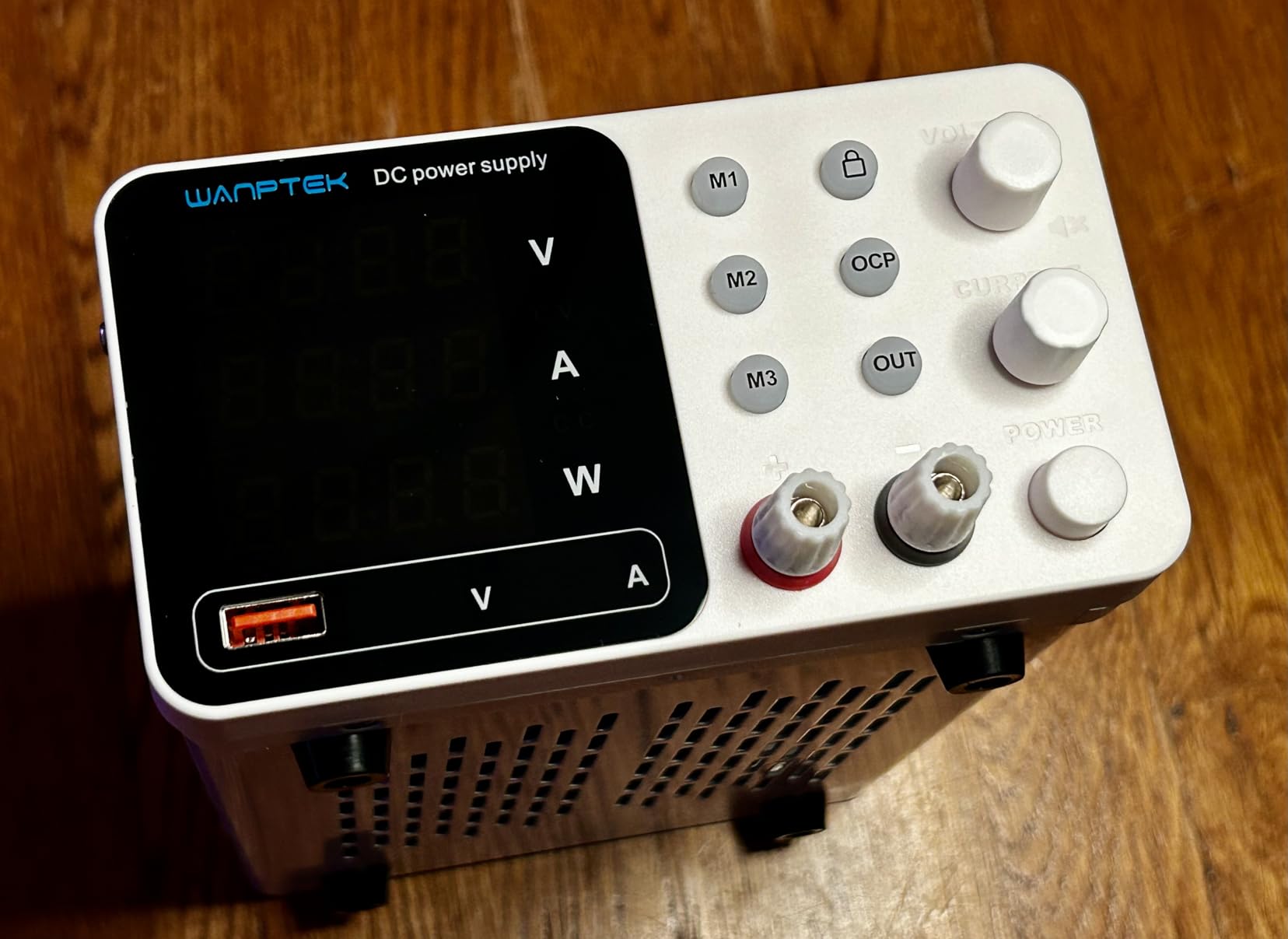
Control runs through encoder knobs with digit-by-digit entry, and the key beeper can be muted by long-pressing the encoder. Over-current protection cuts the output during a short and resumes automatically once the fault is cleared, so you do not have to power-cycle between tests. The 4-digit display reports continuously measured actual current rather than only the setpoint value, which is the number you actually want during a power-up test.
The layout is horizontal at 8.27 x 5.71 x 3.15 inches and 1.2 kg, which fits a repair bench better than a tower, and it runs quietly at low working loads. A built-in USB fast-charge port handles bench devices.
Who this supply suits
It suits production and repetitive repair work where the same three setpoints come up all day, and it suits anyone testing sensitive boards who wants the output killed before they touch a probe. The key lock is useful when a supply sits unattended during a long test. The compact horizontal format also suits benches where depth behind the unit is the limit.
Who should buy something else
Check the rear 115V / 230V selector before first use. Several users initially reported the unit not holding 24V and only found the cause afterwards, which is exactly the kind of confusion you can avoid in ten seconds. The power-on beep cannot be disabled, the supplied leads are ring terminals rather than banana plugs, and the preset buttons sit close enough to the knobs to be pressed by accident. Ammeter readings are described as slightly imprecise by some owners.
11. Nice-Power SPS-E305 – Compact, Certified, and Honest About Its Limits Below 1V
NICE-POWER DC Power Supply Variable, 30V 5A Adjustable Switching Regulated Power Supply with Encoder, Upgraded 3-Digits LED Display, Electroplating DIY LED Test Mini Regulated DC Bench Power Supply
0-30V / 0-5A at 150W
Encoder digit entry
100-240V universal input
FCC and CE certified
1.54 lb
Pros
- Very compact 6.5 x 4 x 3.2 inch body at 1.54 lb
- FCC and CE certified with five protection circuits
- Delivered full 30V at 5A drawing 175W input in testing
- Case stayed cool through an hour-long hard load test
- Universal 100-240V input works on 110V and 230V mains
- Bright back-lit 3-digit display
Cons
- Output is unstable below roughly 0.9V
- Around 1 to 2 percent voltage error between 0.7V and 3.3V
- Several hundred millivolts of noise under hard load
- Cooling fan runs constantly and is noisy
- Display shows 3 digits but the interface has 4
The Nice-Power SPS-E305 is a 0-30V / 0-5A supply with a 150W output, and it is the one to pick for electroplating, burn-in testing and any job where heat over time is the enemy. Why buy it: detailed testing found it delivered full 30V at 5A while drawing 175W of input, and the case stayed cool through an hour-long hard load test.
Efficiency like that is not just a spec-sheet number. A supply that runs cool runs its electrolytics, fan bearings and solder joints cool too, which is why this class of unit is popular for long plating runs and aging tests. Popular uses reported by buyers include Arduino and Raspberry Pi work, LiPo chargers and long automotive lithium bank topping.
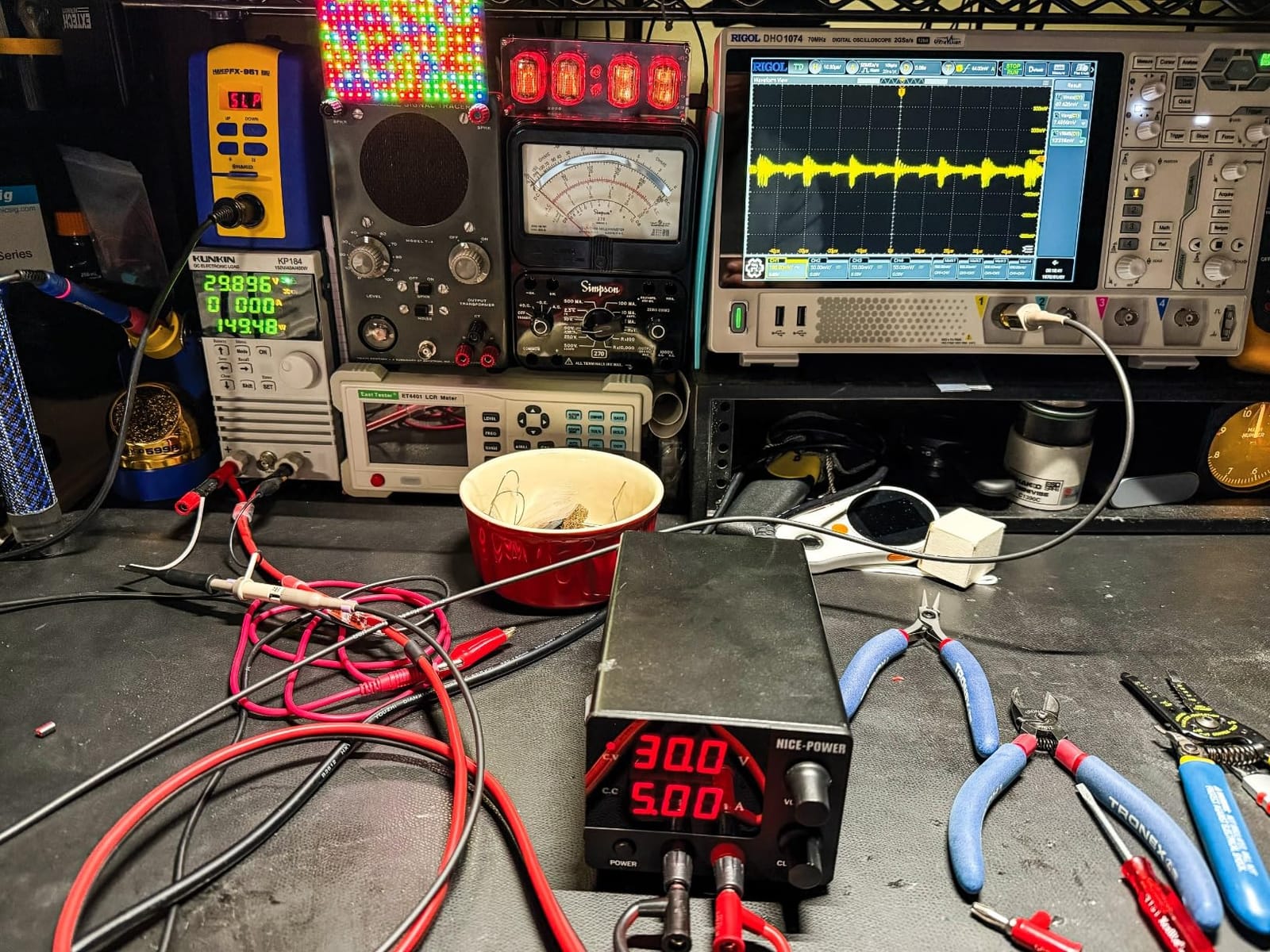
It is also certified. FCC and CE markings are stated, and the protection set covers over-voltage, over-current, over-power, over-temperature and short circuit. The input is a universal 100-240V AC range, so it works on 110V and 230V mains without a transformer, which removes one of the most common trip-ups with entry-level units.
Control is by high-precision encoder knob where you press the voltage or current knob to select the digit, then rotate to set the value from 0 to 9. That replaces the fiddly potentiometer hunting that defines older budget supplies. A 12-month repair policy and technical support back it up.
Who this supply suits
It suits plating, etching and burn-in work where the unit runs hot for a long time, and it suits anyone travelling between benches because 6.5 x 4 x 3.2 inches at 1.54 lb is roughly the size and weight of a laptop. LED strip testing and ZVS driver work are also cited uses, and low noise and low ripple suit those loads well.
Who should buy something else
Do not buy it for low-voltage calibration work. Testing found the output unstable below roughly 0.9V, and about 1 to 2 percent voltage error between 0.7V and 3.3V, accurate only above 3.3V. Several hundred millivolts of noise appear under hard load, the fan runs constantly and is noticeably loud, and one reviewer reported it failing to reach a 12V 5A load, stalling near 7V and 3.2A. There is also a hidden fourth encoder digit you have to discover and zero.
12. Nice-Power SPS-E3010 – All-Metal Case, Under a Kilogram, Dual Current Profiles
NICE-POWER DC Power Supply Variable 0~30V 0~10A, 3-Digits LED Display Current and Voltage Adjustable 150W Fixed with Encoder DC Bench Power Supply 15V 10A/30V 5A,Electroplating DIY etc PSU
0-30V / 0-10A, 150W total
Metal case under 1 kg
Encoder digit entry
100-240V input
3-digit LED
Pros
- Compact 10 x 18.5 x 8 cm case weighing under 1 kg
- All-metal case is sturdier than the mixed plastic cases of older units
- Switchable 15V 10A and 30V 5A output profiles
- Encoder buttons set values digit by digit
- Universal 100-240V input works in more than 90 percent of countries
- Works well as a constant-voltage battery charger
Cons
- Cooling fan runs continuously and is loud
- The listed 15V and 30V mode toggle has no control to activate it
- Very light so it can slide across the bench
- 150W ceiling means 30V is only available to 5A
- 3-digit display at 0.1V is less precise than 4-digit rivals
The Nice-Power SPS-E3010 closes the list as the most portable serious bench supply, at 10 x 18.5 x 8 cm and under 1 kg. It is a 0-30V / 0-10A supply with a 150W total ceiling. Why buy it: the case is all metal rather than the mixed plastic used by older competing units, and owners consistently notice the difference in how it sits on the bench.
The output profile is worth understanding before you rely on it. The unit can be used at 15V with up to 10A, or at 30V with up to 5A, and it can only ever output 150W total. In practice that means 30V is available to 5A and not beyond, so a load that draws heavily at high voltage will not get it.
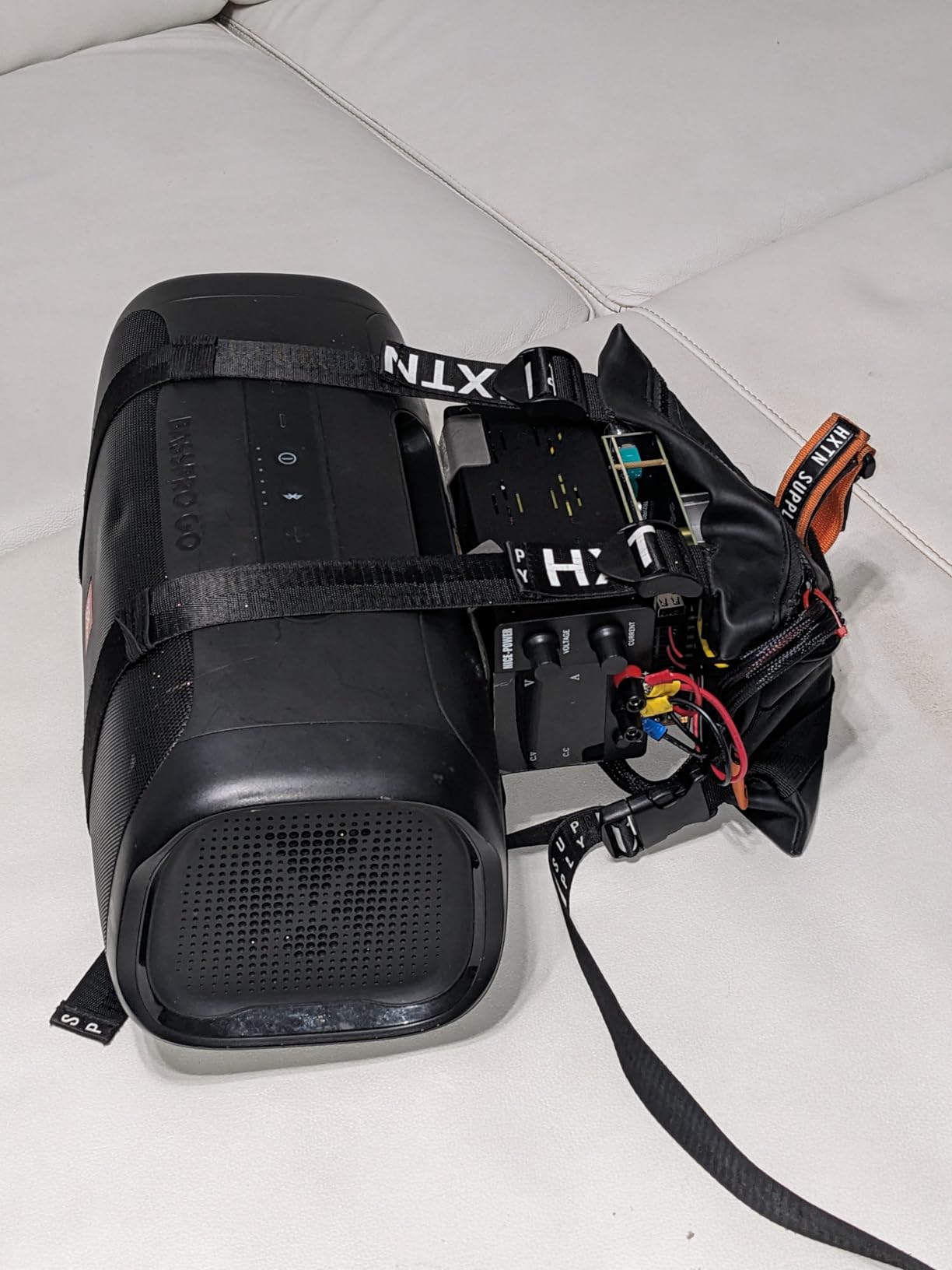
Adjustment runs through encoder buttons on a 3-digit display reading 0.1V and 0.01A. Press the voltage or current encoder to select the digit, then rotate to set the value between 0 and 9. Buyers report the output as clean and the unit working well as a constant-voltage battery charger, and several note that at this price point the setpoints are simply accurate.
Input is a universal 100-240V AC at 50-60Hz, so it needs no transformer in the large majority of countries. Owners also note that the unit quietly replaces a drawer full of wall adapters, which is the practical argument for it. A 24-hour technical support commitment is included.
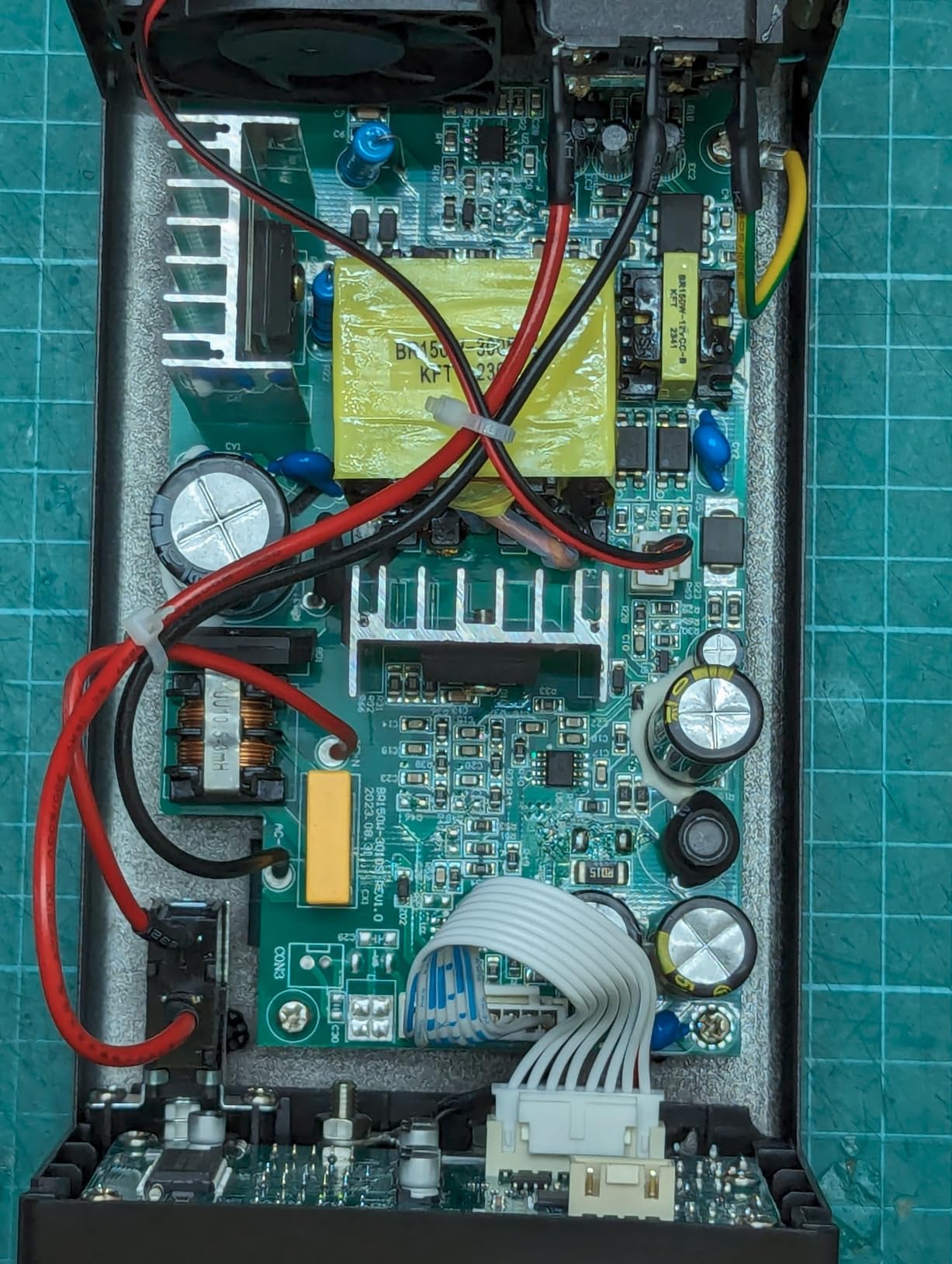
Who this supply suits
It suits anyone who needs a working supply in more than one place, from a classroom to a field repair kit, because it is half the height of a typical supply and light enough to carry. It suits constant-voltage battery charging, and it suits a first bench where the goal is replacing a pile of fixed adapters with one adjustable source. The all-metal case also survives a van bench better than a plastic one.
Who should buy something else
The cooling fan runs continuously and is somewhat loud, which is irritating in a quiet room. The advertised 15V and 30V switching mode has no control to activate it, contrary to what the listing claims, so treat that as a fixed internal profile. The unit is very light and can slide across the table or be knocked off a bench, and 30V is only available to 5A because of the 150W ceiling. For precision work, the 3-digit readout is coarse next to 4-digit encoder units.
Bench Power Supply Brands to Avoid and How to Spot a Knockoff
The brands and units to avoid are the ones that skip over-current protection, skip over-voltage protection, or ship without a datasheet. That description covers a large share of unbranded marketplace listings, including rebranded generic units sold under names that change every few months, so treat an unrecognisable brand with caution rather than with a blanket rule. The more useful question is not what a brand is called but what the unit can prove about itself.
Two categories cause the most trouble. The first is any supply with no real over-current protection, where the alarm sounds but the output keeps running. The second is any unit with no over-voltage protection, which means a failed regulator stage on the supply itself can push more voltage into your board than you set. Both failures are invisible until the board is already damaged, which is why a wall adapter and a no-protection supply are not substitutes for a bench supply.
Five physical tell-tales of a knockoff
No model number, serial number or rating plate on the case, or a rating plate that does not match the manual.
No datasheet and no brand website, so the protection specifications cannot be confirmed.
Protection menu items that exist on the display but cannot actually be configured or disarmed.
An alarm that sounds on a short circuit while the output continues to be delivered.
No over-current protection at all, meaning the current limit knob sets a target but nothing enforces it.
Two softer signals are worth weighing. A unit with no output enable switch forces you to unplug leads to change setpoints safely, which is poor design for a device whose whole job is testing live circuits. And a manufacturer that instructs you to stop using the supply if it becomes too hot has told you its thermal design is marginal before you have discovered it yourself.
Counterfeit fear is the stated motivation on the second-ranking result for this query, where the poster wanted something reliable rather than a cheap knockoff that would not survive use. The practical answer is to buy a named brand with a published datasheet, buy from a distributor rather than a marketplace listing when the price gap is extreme, and check that the ratings on the unit match the ratings in the manual. A supply you can verify is a supply you can trust on an unknown board.
How to Use a Bench Power Supply for Fault-Finding
Fault-finding with a bench power supply is a procedure, and the procedure is what turns an unknown board into a diagnosis. Set the supply to the rail voltage you expect, set the current limit to roughly twice the expected operating current, connect the load, and then watch two numbers instead of one. Voltage tells you whether the rail is present. Current tells you what the board is doing with it. The current reading is the one that finds the fault.
The six-step repair workflow
Inspect the board visually before power. Look for burnt parts, cracked solder joints, swollen or leaking electrolytics, and residue around a voltage regulator.
Check for a short with a multimeter in resistance mode, with the board unpowered. A near-zero reading across a rail means you already know where to start.
Apply controlled power. Start at a low current limit, well below what you think the circuit should draw.
Observe current during power-up. Watch the first instant, not the settled value, because startup inrush reveals shorted capacitors.
Isolate the fault. Disconnect sections one at a time and watch which one is holding the current up. Power rails, logic sections and output stages can be tested independently.
Verify after repair. Reconnect the load, confirm the current returns to the expected value, and only then raise the limit.
Reading the current tells you what is broken
Normal voltage with current immediately at the limit means a short circuit. The rail is present and something is drawing too much.
Low current with no function at all means an open circuit. The supply is fine and the path is broken somewhere.
Current that fluctuates or climbs slowly means a failing component, typically a capacitor charging through a leaking device or a transistor going into thermal runaway.
A steady current slightly above expectation means a leaky or partly failed component rather than a hard short.
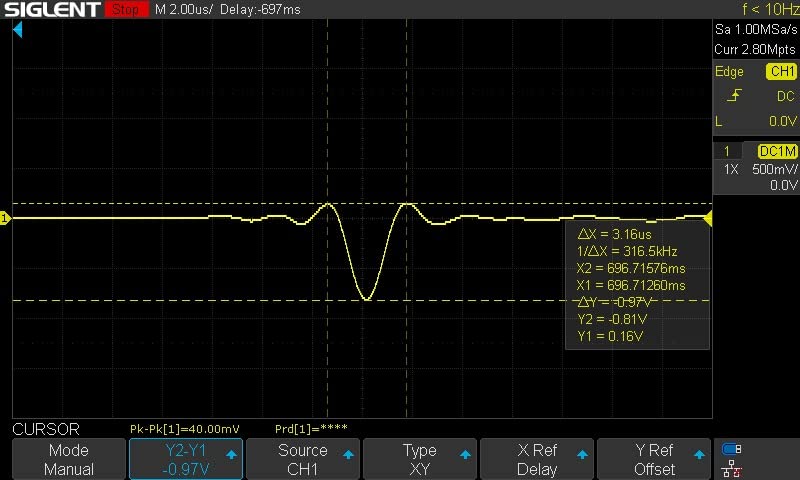
Always disconnect the load before switching the supply off. A forum regular who measured this on his own triple-output unit reported turn-off transients above 50V, which is more than enough to destroy a connected circuit. His method is worth adopting for any supply you have not trusted before: put a scope on the output, sweep roughly 1ms, and set the trigger just above the set voltage to see what happens at switch-off.
Two more points on safe practice. Do not work on mains from a DC supply at all, and if you need AC or isolation for mains work, the answer is a variac combined with an isolation transformer, not a bench supply. And a supply is a measurement instrument, not a battery charger, unless it explicitly has a charging mode that terminates the charge. Feeding a lithium pack into a plain adjustable supply with no full-battery stop is how packs get damaged.
How to Choose a Bench Power Supply in 7 Steps
Choosing a bench power supply comes down to seven decisions taken in this order: voltage headroom, current, topology, channels, controls, protection and budget tier. Work through them in sequence and the specification sheet writes itself. Skip a step and you will either overbuy on voltage or underbuy on the feature that actually affects your work.
Step 1: Size the voltage from your highest rail plus 25 percent headroom
Find the highest DC rail in the devices you service, then add about 25 percent. A 24V rail needs a 30V supply. A 12V automotive rail also fits a 30V unit, and the headroom lets you compensate for supply drop. Going to 60V only makes sense if you genuinely service 48V telecom equipment or higher-voltage amplifier rails, and the 30V ceiling covers the overwhelming majority of electronics work.
Step 2: Size the current from measured draw, not intuition
Measure what your loads actually draw, or read it from the datasheet, then add 50 percent. Users routinely overestimate here, particularly with LED loads, where an expert on electro-tech-online notes that LED headlights need far less current than the assumption that a car implies. Buying 10A when you need 2A costs money and desk space; buying 2A when you need 5A costs you the ability to do the job. Cross-reference: an Arduino or phone repair job needs 3A, an LED strip generally fits in 5A, and car 12V accessories reach for 10A.
Step 3: Pick linear or switching by noise sensitivity
Linear: lower ripple and noise, heavier, larger, warm at low output voltage, and typically quieter under light load. Choose it for audio, low-level analogue and measurement work.
Switching: higher ripple, far lighter, smaller, more efficient, and thermally easier. Choose it for digital work, charging, electroplating and anything portable.
Both: note that a linear supply’s ripple peaks at low output voltage, which is precisely where low-voltage digital work happens, so a good switching unit can beat a weak linear one.
Step 4: Count output channels, and check series linking
One adjustable channel covers most bench work. Two channels matter if you need symmetrical plus and minus rails for op-amps, or if you want to run outputs in series for a higher combined voltage. A three-channel supply with a fixed low-voltage rail is worth it once you start working on mixed-rail boards, because you stop sacrificing an adjustable channel to provide 3.3V or 5V.
Step 5: Choose encoder knobs over coarse and fine potentiometers
This is the purchasing heuristic working engineers repeat most often. A rotary encoder stores the setpoint in a chip, so you cannot accidentally change the output voltage by brushing the knob with your sleeve mid-test. A potentiometer stores the setpoint in the mechanical position, and every bump changes your rail. If you can only choose one control type, choose the encoder, and prefer one with separate coarse and fine stages if you set precise values often.
Step 6: Treat OVP and OCP as mandatory, not optional
Over-current protection is what caps the damage a shorted board can do, and over-voltage protection is what stops a failed supply stage from pushing too much voltage into your circuit. Both should be real, configurable and testable. An output enable switch is close to mandatory in practice, because it lets you silence the output before rewiring instead of unplugging live leads. A temperature-controlled fan and thermal shutdown are worth having for any unit you will run near its rating.
Step 7: Match the budget tier to the work you actually do
Work out the project types you will actually do, not the one on your bench today, and buy for that list. If the list includes symmetrical op-amp rails, 5V at several amps, and low-voltage digital work, budget for a multi-channel supply. If it is charging, plating and automotive 12V testing, a 10A switching unit covers it. If it is one fixed 5V rail, you may not need a bench supply at all, and a bench supply you will not use is a shelf ornament.
Why Are Bench Power Supplies So Expensive?
Bench power supplies cost what they cost because of physical mass, heat, calibration and certification, and the cheap switching units give up all four. The cost drivers in order are the mains transformer, the heatsinking, low-volume precision components, factory calibration and ripple characterisation, and safety certification. A 30V / 5A linear unit needs a genuinely heavy transformer to deliver that power, and that transformer is the single most expensive part in the case.
Transformer mass: a 30V / 5A linear supply needs a large toroidal or EI core, and copper and steel are priced by weight.
Heat sinking: a linear supply drops the excess voltage across a regulator and turns it into heat, so it needs a large heatsink and a fan to move that heat away.
Low-volume components: instrument-grade regulators, precision resistors and connectors are made in small quantities, not in the volumes that make a switching supply cheap.
Calibration and characterisation: every unit is trimmed, load-tested and measured for ripple and regulation before it ships, on a line that cannot run at consumer scale.
Safety certification: UL and CE testing is a fixed cost per product family, and a small-volume instrument maker cannot spread it over a large run.
Switching units are 5 to 10 times cheaper because they throw away the two heaviest cost drivers. A high-frequency transformer is small and light, and there is no large heatsink because the conversion is efficient. What you trade is noise on the output, and that trade is worth it for most digital work while being unacceptable for audio and low-level analogue. One more thing worth knowing: modern switchers using gallium nitride and silicon carbide devices are quieter than the advice from five years ago suggests, so treat older guidance about switching noise with some suspicion.
Frequently Asked Questions
What is the most reliable power supply brand?
Rigol, Korad, Keysight, Bu0026amp;K Precision and Extech are the names working engineers name most often when they discuss reliable bench power supplies, and Siglent covers the multi-channel laboratory end. Reliability is easier to verify than brand loyalty, though. Look for a published datasheet, a serial number and rating plate on the case, real over-voltage and over-current protection that can be configured, and a stated calibration specification. Among the units in this roundup, the Kungber SPS3010B and the Korad KD3005D combine named-brand credibility with the largest volumes of owner feedback.
How do I choose a bench power supply?
Work through seven decisions in order. First, voltage: take the highest rail you will service and add 25 percent headroom, which is why 30V is the near-universal choice. Second, current: measure what your loads really draw and add 50 percent, since users routinely overestimate. Third, topology: linear for low-noise analogue, switching for digital, charging and portable work. Fourth, channels: two if you need symmetrical op-amp rails or series linking. Fifth, controls: encoder knobs over coarse and fine potentiometers. Sixth, protection: over-voltage, over-current and an output enable switch are mandatory. Seventh, match the tier to your project list.
What are some PSU brands to avoid?
Judge the unit rather than the name, because unbranded marketplace listings get rebranded every few months. Avoid any supply with no real over-current protection, where the alarm sounds but the output keeps running, and any unit with no over-voltage protection, since a failed stage can then push more voltage into your board than you set. Physical tell-tales include no model number or serial on the case, no datasheet, protection menu items that cannot be configured, and no output enable switch. Buy a named brand with published specifications from a distributor rather than the cheapest marketplace listing.
Why are bench power supplies so expensive?
Four things drive the cost. The mains transformer in a 30V / 5A linear unit is heavy and expensive. Linear regulation turns the excess voltage into heat, so a large heatsink and fan are needed. Instrument-grade components are made in low volumes, and every unit is calibrated, load-tested and measured for ripple before it ships. Safety certification adds a fixed per-family cost. Switching units skip the heavy transformer and the heatsink, which is why they cost 5 to 10 times less, and the price you pay for that is output noise.
Is a linear bench power supply better than a switching one?
Linear is quieter. It is the right choice for audio amplifiers, low-level analogue circuits and any measurement where ripple would show up as hum or error. Switching is smaller, lighter, cooler and far more efficient, which makes it the right choice for digital work, battery charging, electroplating and portable use. One caveat that surprises people: a linear supply’s ripple is worst at low output voltage, which is exactly where low-voltage digital work happens, so a good switching unit can beat a weak linear one on a 3.3V rail.
What is a bench power supply used for?
A bench power supply powers and tests circuits at a voltage and current you set, with a hard current limit that protects both the circuit and the supply. In practice it is used for controlled power-up testing of unknown boards, finding short circuits by watching current, isolating power rails one section at a time, LED and LED strip testing, battery charging on units with a proper charging mode, and replacing a pile of fixed wall adapters and batteries with one adjustable source. The current reading is what makes it a diagnostic instrument rather than just a battery.
Which Bench Power Supply Should You Buy?
Buy the Kungber SPS3010B if you want one unit to do everything. It is the best overall pick in this roundup because it pairs the largest volume of owner feedback of any supply here with features that most competitors leave out, namely an intelligent charging mode with a real Ah readout and a one-button over-current cut with an audible alarm. At 0-30V / 0-10A it covers prototyping, repair, LED work, automotive 12V accessories and battery charging, and it does it in a box light enough to store away.
Buy the Wanptek DPS3010U if your priority is control. Separate coarse and fine encoder knobs, automatic mains detection and a short-circuit alarm make it the least frustrating unit to dial in, and it holds the highest five-star share of any product in this list. Buy the Hyelec HY3005S instead if you want the most accurate readout per amp and the simplest first bench, provided your mains is 110V.
For noise, go linear: the Tekpower TP3005T for a heavy, quiet single channel, or the Korad KD3005D if you want digital controls and switchable 110V / 220V input. For multiple rails, the Siglent SPD3303X-E is the only unit here with three isolated channels that can be run in series or parallel. Everything else in the list trades quietness for size, current headroom or features, and for most digital work that is the right trade.
Whichever you choose, set the current limit before you connect the load, and read the current on power-up. That one habit is the whole reason to own a bench power supply instead of a wall adapter, and it works just as well in 2026 as it did the first time you tried it. If you are still building a bench from scratch, our circuit kit guide for teens is a good first project to point it at.