
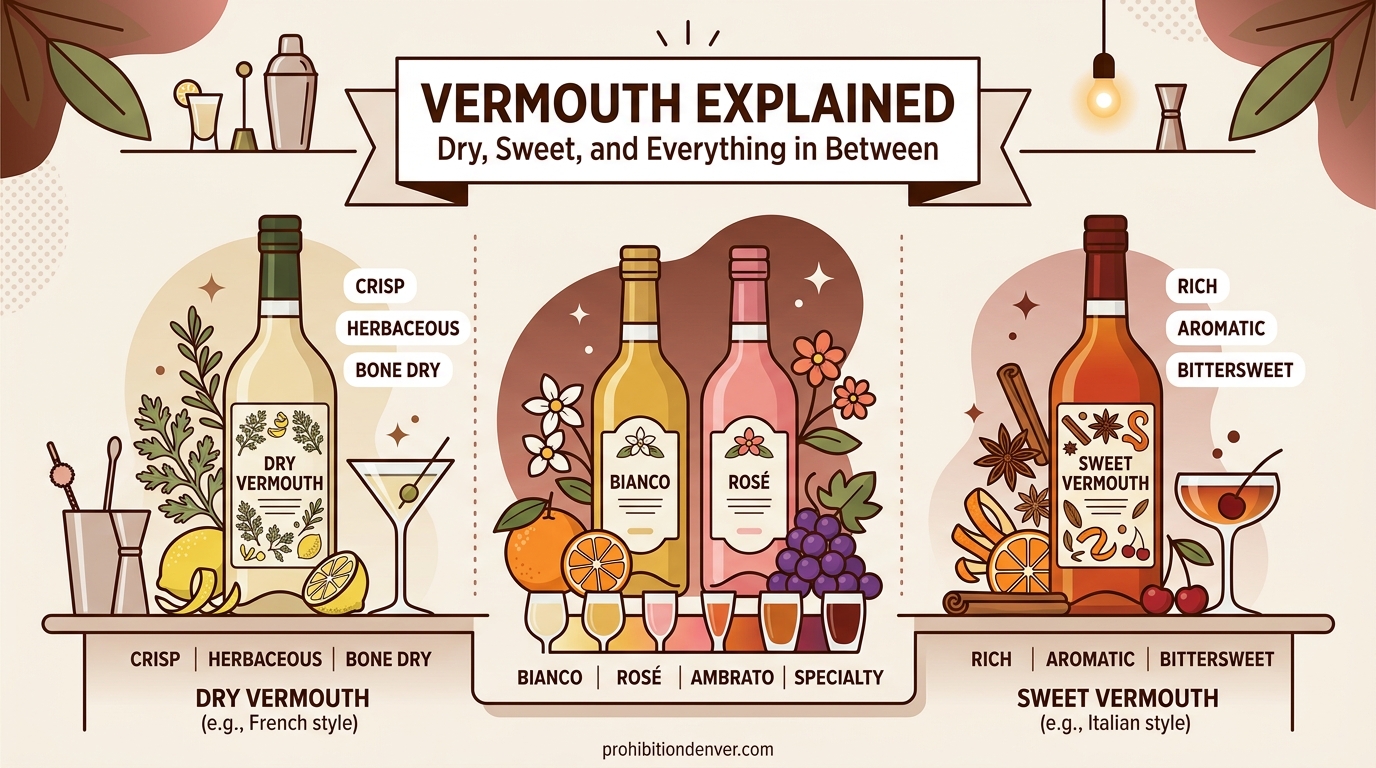
If you have ever ordered a Martini, a Manhattan, or a Negroni at our bar, you have already tasted vermouth whether you realized it or not. Vermouth is the quiet workhorse behind some of the most iconic cocktails ever invented, yet most people outside the bartending world barely know what it is. In this guide, we break down everything you need to know about vermouth, from its centuries-old Italian roots to the practical differences between dry, sweet, bianco, and rosato varieties. By the end, you will know exactly which bottle to reach for and why it matters for your next cocktail.
Table of Contents
What Is Vermouth?
Vermouth is a fortified, aromatized wine infused with a blend of botanicals, herbs, and spices. The word itself comes from wermut, the German word for wormwood, which was historically the defining botanical in the recipe. A typical vermouth clocks in between 15% and 18% ABV, making it stronger than regular wine but far lighter than most spirits.
The story of modern vermouth begins in Turin, Italy, in 1786, when Antonio Benedetto Carpano combined a white wine base with over 30 botanicals and offered it as an aperitivo to the Duke of Savoy. It was a hit. Within decades, production spread across Italy and into France, and vermouth became a staple of European café culture.
So how is it actually made? Producers start with a neutral white wine base, then macerate or distill a proprietary blend of botanicals into it. Common ingredients include wormwood, chamomile, citrus peel, coriander, juniper, and cinnamon. The wine is then fortified with a neutral grape spirit to bring the alcohol content up, and sweetened with sugar or caramel depending on the style being produced. The result is a complex, layered ingredient that adds depth and balance to cocktails.
Types of Vermouth: Dry, Sweet, and Beyond
Most people think of vermouth as either “dry” or “sweet,” but the reality is more nuanced. Here is a breakdown of the four major styles you will encounter behind any good bar.
Dry Vermouth
Dry vermouth, sometimes called French-style vermouth, is pale gold or completely clear. It contains less than 30 grams of sugar per liter, giving it a crisp, light body with pronounced herbal and floral notes. Think fresh green herbs, lemon zest, and a faint bitterness on the finish.
Dry vermouth is the backbone of the classic Martini and the Gibson. Because it is so lean, it softens the harsh edges of gin or vodka without adding noticeable sweetness. If you want a bracing, spirit-forward drink, dry vermouth is your friend.
Sweet Vermouth (Rosso)
Sweet vermouth, also called rosso or Italian-style vermouth, has a deep amber or reddish-brown color and clocks in at roughly 100 to 150 grams of sugar per liter. The flavor is rich and layered, with notes of caramel, dark cherry, baking spice, and a bitter-herbal finish.
This is the vermouth that powers the Manhattan, the Negroni, the Boulevardier, and the Americano. It brings warmth and complexity to whiskey- and gin-based cocktails, acting as a bridge between the spirit and the bitters. Sweet vermouth also works beautifully served on its own over ice with an orange twist.
Bianco (Blanc) Vermouth
Bianco vermouth sits in a middle ground. It has a golden or pale straw color, which sometimes leads people to assume it is dry. It is not. Bianco is semi-sweet, with pronounced vanilla, honey, and white-flower notes that make it approachable and easy to sip on its own.
Bianco has become increasingly popular in modern cocktail bars for lighter, spritz-style drinks. It works well in variations on the Martini where you want a touch more richness, and it pairs nicely with elderflower liqueur or prosecco for a refreshing aperitivo.
Rosato (Rose) Vermouth
Rosato is the newest style to gain mainstream attention. It gets its pink hue from brief contact with red wine during production, and its sweetness typically falls somewhere between dry and sweet vermouth. Expect red berry, citrus, and floral aromatics with a slightly warmer finish than bianco.
Bartenders love rosato for Negroni variations and spritz-style cocktails where you want a pop of color and fruit-forward flavor. It is still less common than the other styles, but it is showing up on more back bars every year.
Dry vs Sweet Vermouth: The Key Differences
This is the question we get asked most often, so let us lay it out clearly. Here are the key differences between dry and sweet vermouth at a glance:
- Color: Dry vermouth is pale gold to clear. Sweet vermouth is deep amber or reddish-brown.
- Sugar content: Dry vermouth has less than 30g per liter. Sweet vermouth ranges from 100 to 150g per liter.
- Flavor profile: Dry is herbal, floral, and crisp. Sweet is rich, spiced, and full-bodied with caramel notes.
- Classic cocktails: Dry goes in Martinis and Gibsons. Sweet goes in Manhattans, Negronis, and Boulevardiers.
- Serving style: Dry is almost always mixed into cocktails. Sweet can be enjoyed on its own over ice as an aperitivo.
- Common confusion: Color does not always indicate sweetness. Bianco vermouth is light in color but semi-sweet. Always check the label.
A simple rule of thumb: if your cocktail base is gin or vodka, reach for dry vermouth. If your base is whiskey or you are building something bitter-forward, reach for sweet.
Vermouth in Cocktails: When to Use What
Vermouth is not just a supporting actor. It is the ingredient that turns a glass of cold gin into a Martini, or a pour of bourbon into a Manhattan. Here is a practical guide to which vermouth belongs in which cocktails.
Dry Vermouth Cocktails: The Martini is the obvious one, typically built with a 2:1 or 5:1 ratio of gin to dry vermouth depending on how wet you like it. The Gibson uses the same ratios but swaps the olive garnish for a cocktail onion. The Corpse Reviver #2 calls for equal parts gin, Cointreau, Lillet Blanc, and lemon juice, but many bartenders swap the Lillet for dry vermouth with excellent results.
Sweet Vermouth Cocktails: The Manhattan is the sweet vermouth showcase: typically 2 parts rye or bourbon to 1 part sweet vermouth, with a dash of bitters. The Negroni mixes equal parts gin, sweet vermouth, and Campari for a bitter, boozy, perfectly balanced drink. Swap the gin for bourbon and you have a Boulevardier. Mix sweet vermouth with Campari and soda water and you get an Americano, one of the lightest aperitivo drinks around.
Bianco Vermouth Cocktails: Bianco is versatile in modern drinks. Try it in a Robin Hood (bianco vermouth, gin, and maraschino liqueur) or simply mixed with tonic water and a slice of cucumber for an easy summer sipper.
One important tip from behind our bar: vermouth is not optional in these recipes. It provides the acidity, sweetness, and herbal complexity that balances the base spirit. Skip it and your Martini is just cold gin. Your Manhattan is just bourbon on the rocks. Respect the vermouth.
As for ratios, a good starting point for most classic cocktails is 2 ounces of spirit to 1 ounce of vermouth. Adjust from there based on your taste. If you prefer a drier drink, pull back on the vermouth. If you want something rounder and more aromatic, pour a little heavier.
How to Store Vermouth (and Why It Matters)
This is where most people get into trouble. Vermouth is wine, not vodka. Once you open the bottle, it starts to oxidize, and its flavor degrades steadily. We have seen too many home bars with a bottle of vermouth that has been sitting on the shelf for six months. That bottle is past its prime.
Here are the storage rules we follow at the bar and recommend for your home setup:
- Refrigerate after opening. Always. Every time. Vermouth is wine, and wine spoils at room temperature.
- Use within 1 to 2 months of opening. Sweet vermouth may hold up slightly longer than dry because the higher sugar content acts as a mild preservative, but do not push it past 3 months.
- Use a wine preserver. Products like Private Preserve (an inert gas spray) can extend the life of an opened bottle by displacing oxygen in the headspace. Vacuum-sealed stoppers also help.
- Signs your vermouth has gone bad: A flat or muted aroma, a vinegary or cooked-fruit smell, or a flavor that tastes hollow and tired. If it does not smell vibrant and aromatic, it is time to replace it.
- Unopened bottles are shelf-stable for years if stored in a cool, dark place. Check the bottle for a production date if you are unsure.
Treat vermouth the way you would treat a nice bottle of white wine. Keep it cold, use it within a couple of months, and replace it when it loses its spark.
Frequently Asked Questions About Vermouth
What is vermouth in bartending?
Vermouth is a fortified, aromatized wine infused with botanicals like wormwood, chamomile, and citrus peel. In bartending, it is used to add acidity, sweetness, and herbal complexity to cocktails. It is the essential ingredient in classic drinks like the Martini, Manhattan, and Negroni.
How to tell the difference between sweet and dry vermouth?
Sweet vermouth (rosso) is dark amber with caramel and spice notes and contains 100-150g of sugar per liter. Dry vermouth is pale gold or clear, tastes herbal and crisp, and has less than 30g of sugar per liter. In short: sweet is dark and rich, dry is light and lean.
What are the three types of vermouth?
The three primary types of vermouth are dry (pale, crisp, low sugar), sweet or rosso (dark, rich, high sugar), and bianco or blanc (golden, semi-sweet, vanilla-forward). A fourth style called rosato (rose) is also gaining popularity and sits between sweet and dry in sweetness.
When to use sweet or dry vermouth?
Use dry vermouth in gin- and vodka-based cocktails like the Martini and Gibson. Use sweet vermouth in whiskey-based drinks like the Manhattan and in bitter-forward cocktails like the Negroni and Boulevardier. A simple rule: clear spirit, dry vermouth. Brown spirit, sweet vermouth.
What is the purpose of vermouth in a cocktail?
Vermouth adds balance to cocktails by contributing acidity, sweetness, and herbal complexity. Without vermouth, a Martini would be just cold gin and a Manhattan would be plain bourbon. It softens the harsh edges of the base spirit and creates a more rounded, drinkable cocktail.
Does vermouth go bad after opening?
Yes. Vermouth is a wine-based product and will oxidize once opened. It should be refrigerated after opening and consumed within 1 to 2 months. Signs it has gone bad include a flat aroma, vinegary smell, or muted, tired flavor. Unopened bottles are shelf-stable for years.
Bringing It All Together
Vermouth is one of those ingredients that transforms good cocktails into great ones. Once you understand the basics, the whole world of classic cocktails opens up. Dry vermouth brings crisp herbal balance to gin drinks. Sweet vermouth adds warmth and richness to whiskey cocktails. Bianco and rosato give you room to experiment and build something unexpected.
Remember the shortcut: clear spirits pair with dry vermouth, brown spirits pair with sweet vermouth. And please, whatever you do, keep your vermouth in the fridge after you open it. Your cocktails will taste dramatically better, and you will waste far fewer bottles.
Next time you are at Prohibition or mixing drinks at home, take a moment to appreciate what vermouth brings to the glass. It is not a background ingredient. It is the reason your Martini tastes like a Martini and not just chilled gin.