
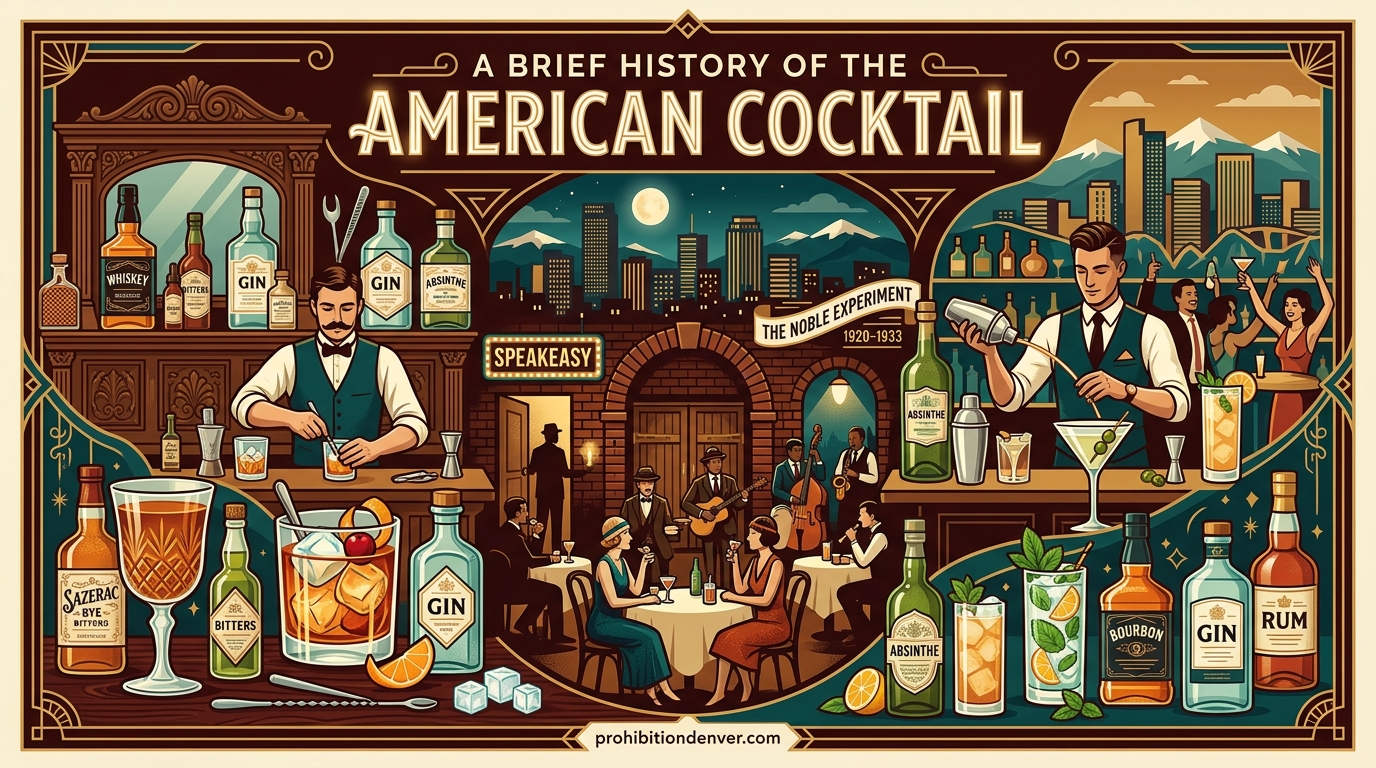
The history of the American cocktail begins with a simple definition printed in 1806. A cocktail, according to The Balance and Columbian Repository of Hudson, New York, is “a stimulating liquor composed of any kind of sugar, water and bitters, vulgarly called a bittered sling.” This single sentence launched what would become a distinctly American art form.
I have spent years studying how this humble combination transformed into the sophisticated craft we know today. From British punch houses to Prohibition speakeasies, the cocktail has weathered every storm while evolving into something uniquely American.
In this guide, you will discover the origins of your favorite drinks, meet the legends who shaped cocktail culture, and understand how Denver played its own role in this fascinating story.
Table of Contents
Origins and Early History
The cocktail did not appear out of thin air. Before Americans claimed it as their own, British sailors and merchants had been enjoying punches in dedicated punch houses since the 18th century. These establishments served communal bowls of spirits mixed with water, sugar, citrus, and spices.
The first printed reference to something called a “cocktail” appeared in 1798 in a London newspaper. However, this early mention referred to a ginger-based drink, not the spirits-forward concoction we recognize today.
The 1806 Definition That Changed Everything
Everything changed on May 13, 1806, when The Balance and Columbian Repository responded to a reader’s question. The editor defined a cocktail as “a stimulating liquor composed of any kind of sugar, water and bitters, vulgarly called a bittered sling.”
This definition matters because it established the four essential components that would define cocktails for the next two centuries: a spirit, sugar, water, and bitters. The term “bittered sling” referenced an earlier drink, but the cocktail made it respectable.
The Etymology Mystery
Why “cocktail”? The origin of the word remains one of history’s small mysteries. One popular theory involves a ginger-enhanced horse that held its tail high like a rooster. Another suggests it came from the French coquetier, an egg cup used for serving drinks in New Orleans. A third theory connects it to the practice of stirring drinks with a rooster’s feather.
Whatever the origin, the name stuck. By the 1820s, American taverns were advertising cocktails alongside their traditional offerings.
The Golden Era and Jerry Thomas
The mid-19th century marked what historians call the Golden Era of American cocktails. This period saw the birth of professional bartending as a respected craft and the creation of many drinks we still order today.
The Professor Who Wrote the Book
Jerry Thomas, known as “The Professor,” published The Bartender’s Guide in 1862. This was the first book of its kind in America, containing recipes for hundreds of drinks including the original cocktails that defined the form.
Thomas was more than a recipe collector. He was a showman who toured the country performing elaborate mixing techniques. He worked in the most prestigious hotels in New York, San Francisco, and Chicago. His book established the standards that bartenders would follow for generations.
The Ice King and Cold Drinks
None of this would have happened without Frederic Tudor, the “Ice King.” Tudor pioneered the ice trade in the early 1800s, harvesting blocks from New England ponds and shipping them as far as India. By the mid-century, ice had become affordable enough for ordinary Americans to chill their drinks.
Cold cocktails replaced warm punches. Ice changed everything about how drinks were constructed, allowing for new techniques like shaking and stirring that became standard practice.
The Four Basic Cocktail Flavors
During this era, bartenders established the four basic cocktail flavors: sweet, sour, bitter, and strong. A balanced cocktail contains elements of all four. This principle guides mixologists to this day.
The Old Fashioned emerged as perhaps the first true cocktail by the 1806 definition. The Manhattan followed in the 1870s. The Sazerac appeared in New Orleans around 1850. These foundational drinks established patterns that bartenders would elaborate upon for decades.
Prohibition and Its Impact
On January 17, 1920, the Volstead Act took effect. Prohibition banned the manufacture, sale, and transportation of alcoholic beverages in the United States. The cocktail culture that had flourished for a century was driven underground.
How Prohibition Changed Cocktails
Prohibition did not stop Americans from drinking. Instead, it transformed how they drank. Quality spirits became scarce and expensive. Bootleggers supplied bathtub gin and rough moonshine that tasted terrible on its own.
Bartenders adapted by masking bad spirits with juice, syrups, and other mixers. The cocktail became sweeter and more diluted. Drinks like the Bee’s Knees and the Sidecar emerged during this era, designed to hide the taste of poor-quality alcohol.
The Speakeasy Culture
Speakeasies flourished in every major city. These underground bars required passwords, hidden entrances, and discretion. The culture of the speakeasy created rituals around drinking that persist today: the password at the door, the unmarked entrance, the intimate atmosphere.
Women began drinking in bars during Prohibition, something that had been rare before. The speakeasy became a democratic space where social classes mixed. This cultural shift would have lasting effects on American drinking habits.
The Quality Decline
By the time Prohibition ended in 1933, a generation of skilled bartenders had retired or died. Knowledge of classic recipes disappeared. The American cocktail entered a dark age that would last for decades.
Post-Prohibition and Modern Revival
The decades following Prohibition saw little innovation in American cocktails. Bars served simple highballs and mixed drinks made from bottled mixers. The craft that Jerry Thomas had championed seemed lost forever.
Tiki Culture and Escapism
The 1930s and 1940s brought tiki culture to America. Don the Beachcomber in Hollywood and Trader Vic’s in Oakland created elaborate rum-based drinks served in ceramic mugs. These Polynesian-themed bars offered escapism during difficult times.
The Mai Tai, Zombie, and Hurricane emerged from this movement. While tiki drinks were complex and creative, they represented a departure from the classic cocktail tradition rather than a continuation of it.
The Dark Ages
From the 1950s through the 1980s, American cocktail culture declined. Vodka replaced gin and whiskey as the spirit of choice. Sweet, fruity drinks dominated. The Martini was corrupted into a vodka concoction served in glasses the size of fishbowls.
True bartending craft nearly disappeared. Most bars used pre-made sour mix and bottled juices. The Old Fashioned became a fruit salad drowned in soda water. The Manhattan was an afterthought.
The Craft Cocktail Revival
Everything changed in the 1990s. Dale DeGroff, working at the Rainbow Room in New York City, began reviving classic recipes using fresh ingredients and proper techniques. His 2002 book The Craft of the Cocktail became the bible for a new generation.
Young bartenders rediscovered Jerry Thomas and the Golden Era. They studied pre-Prohibition recipes and techniques. Fresh juice replaced bottled mixers. Bitters returned to prominence. The cocktail renaissance had begun.
Denver and Colorado Cocktail History
Colorado has its own cocktail story to tell. When Prohibition arrived, Denver had over 200 licensed saloons. Many simply went underground.
Prohibition in the Mile High City
Denver’s speakeasies operated with surprising openness. Some estimates suggest that for every legitimate bar that closed, three illegal ones opened. Corruption was rampant, and enforcement was inconsistent.
Colorado had actually gone dry before the federal Volstead Act, passing prohibition in 1916. This gave Denver four extra years of underground drinking culture before the rest of the nation joined.
The Modern Denver Scene
Today, Denver ranks among America’s best cocktail cities. Bars like Williams and Graham, which requires a password for entry, deliberately evoke speakeasy tradition. The Green Russel hides behind an unmarked door in Larimer Square.
Colorado distilleries have joined the craft spirits movement. Local bartenders compete in national competitions. The Denver Cocktail Week attracts enthusiasts from across the region. The city has reclaimed its place in American drinking culture.
Frequently Asked Questions
Who invented the cocktail?
No single person invented the cocktail. The first definition appeared in 1806 in The Balance and Columbian Repository, but cocktails evolved from British punch traditions. Jerry Thomas, who published The Bartender’s Guide in 1862, became known as the father of American mixology for codifying cocktail recipes and techniques.
What was the first ever cocktail?
The Old Fashioned is generally considered the first true cocktail by the 1806 definition. It contained the four essential components: spirits, sugar, water, and bitters. The Sazerac, originating in New Orleans around 1850, also claims the title of first cocktail, though historians debate which came first.
Why are cocktails called cocktails?
The exact origin of the word cocktail remains uncertain. Popular theories include a reference to ginger-enhanced horses holding their tails high like roosters, the French word coquetier meaning egg cup used for serving drinks in New Orleans, or the practice of stirring drinks with a rooster’s feather. The term first appeared in print in 1798 but gained meaning in 1806.
What happened to cocktails during Prohibition?
Prohibition (1920-1933) drove cocktail culture underground into speakeasies. Quality spirits became scarce, so bartenders masked rough bootleg alcohol with juices and syrups. The era created sweeter, more diluted drinks designed to hide bad flavors. Many classic recipes were lost as skilled bartenders retired or died during the thirteen-year ban.
How did the craft cocktail revival start?
The revival began in the 1990s when Dale DeGroff started serving classic cocktails at the Rainbow Room in New York City. His 2002 book The Craft of the Cocktail inspired a new generation of bartenders to study pre-Prohibition techniques and recipes. Fresh ingredients replaced bottled mixers, and traditional bartending methods returned to prominence.
Conclusion
The history of the American cocktail spans over two centuries of innovation, prohibition, and revival. From the 1806 definition of a “bittered sling” to today’s craft cocktail renaissance, this distinctly American tradition has survived every challenge.
Denver holds its own place in this story, from Prohibition speakeasies to modern craft bars. Whether you prefer an Old Fashioned made the traditional way or a contemporary creation from a local bartender, you are participating in a living history.
The next time you raise a glass, remember the generations of bartenders who kept this craft alive. The American cocktail is more than a drink. It is a testament to creativity, resilience, and the pursuit of something perfectly balanced.