
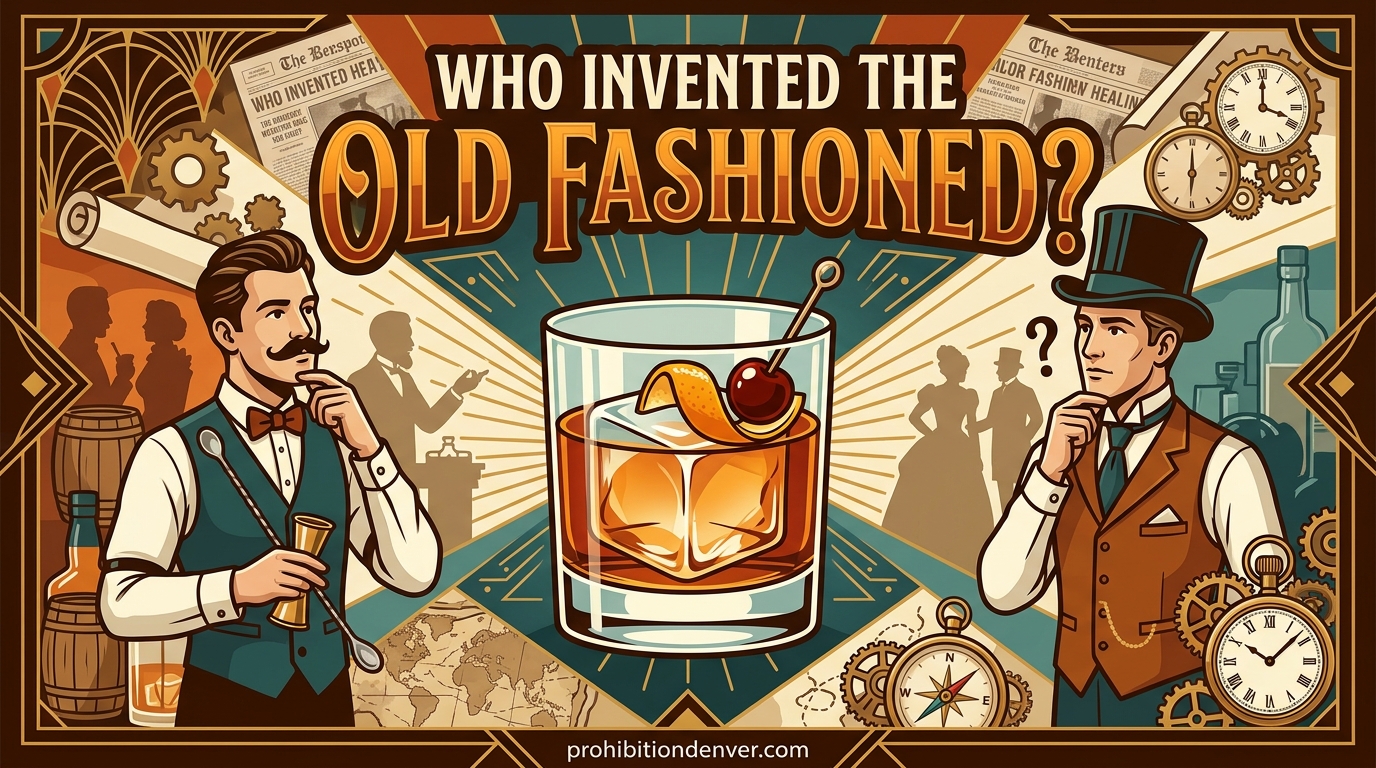
Ask most bourbon enthusiasts who invented the Old Fashioned and you’ll hear a familiar tale: a Louisville gentleman named James E. Pepper, the Pendennis Club, the 1880s, maybe even the Waldorf-Astoria in New York. It’s a compelling story, steeped in Kentucky charm and American whiskey heritage. But here’s the problem: it’s mostly wrong. The real story of who invented the Old Fashioned goes back 75 years earlier, to a newspaper office in 1806, and involves no single inventor at all. Let’s pour ourselves a drink and trace the actual origins of America’s most iconic cocktail.
Table of Contents
The 1806 Definition: The Earliest Known Reference
The first known written reference to what would become the Old Fashioned appeared on May 6, 1806, in The Balance and Columbian Repository, a New York newspaper. The editor, in response to a reader’s query about what constituted a “cocktail,” provided a definition that effectively described the Old Fashioned formula centuries before the name existed.
“Cocktail is a stimulating liquor, composed of spirits of any kind, sugar, water, and bitters—it is said (and known) to be an excellent electioneering preparation.”
— The Balance and Columbian Repository, May 6, 1806
This definition laid out the exact formula we still use today: spirits, sugar, water, and bitters. The newspaper didn’t call it an “Old Fashioned”—it simply called it a cocktail, or more specifically, a “bittered sling.” But this is the earliest documented evidence of what we now recognize as the Old Fashioned recipe. The drink predates the name by nearly 80 years.
What makes this significant is that the 1806 definition established the template for what would become American cocktail culture. Spirits (typically whiskey), sugar (or simple syrup), water (to dilute the spirit’s intensity), and bitters (for complexity and flavor)—these four components formed the foundation. Bartenders in the early 1800s were already mixing drinks this way; the newspaper simply gave it a name and formal definition.
How ‘Cocktail’ Became ‘Old Fashioned’: The Name Emerges
By the 1880s, American cocktail culture had exploded into an era of increasingly elaborate drinks. Bartenders were adding everything from fruit juices to cream to eggs to carbonated beverages. Cocktails became complex, multi-ingredient affairs that bore little resemblance to the simple four-ingredient drinks of the early 19th century.
Into this landscape came a reaction. Gentlemen at upscale establishments began ordering drinks made “the old fashioned way”—spirits, sugar, bitters, and water. No frills, no fruit muddling, no elaborate garnishes. The phrase described a category of drinks, not a specific invention. You weren’t ordering an “Old Fashioned” so much as asking for your whiskey cocktail prepared old fashioned—the way cocktails used to be made.
This linguistic shift was gradual. The earliest documented use of “Old Fashioned” as a specific drink name appears in the 1880s, though historians have found references to “old fashioned cocktails” in Chicago newspapers as early as 1882. The name emerged organically from the lexicon of American bar culture, not from a single bartender’s moment of inspiration.
The story that would eventually crystallize around James E. Pepper and the Pendennis Club was one of several origin narratives circulating at the time. But the drink itself—the simple combination of whiskey, sugar, water, and bitters—existed long before any club in Louisville.
The Pendennis Club Story: America’s Most Famous Bourbon Legend
The tale you’ve likely heard goes like this: In the 1880s, a Louisville businessman and bourbon distiller named James E. Pepper frequented the Pendennis Club, a private gentlemen’s establishment in Louisville, Kentucky. Pepper reportedly loved his whiskey with sugar, water, and bitters—prepared simply, the old way. One day, he asked the bartender for his drink “the old fashioned way,” and the bartender either created the recipe for him or gave it that name.
The story continues: Pepper eventually brought the drink north to New York, where it was served at the legendary Waldorf-Astoria hotel. The combination of Louisville bourbon heritage, exclusive gentlemen’s club atmosphere, and the grandeur of the Waldorf-Astoria proved irresistible to bourbon brands and tourism marketers alike.
Louisville’s connection to bourbon is genuine and deep. Kentucky was (and remains) the heart of American bourbon production. The city of Louisville built its identity on whiskey, and the Pendennis Club—founded in 1881—remains one of America’s most prestigious private clubs. The story fits perfectly with bourbon brand narratives and Louisville tourism promotion.
Jerry Thomas, the legendary “father of American mixology” who wrote Bar-Tenders Guide in 1862 (later updated as How to Mix Drinks), included recipes for drinks essentially identical to the Old Fashioned. His “Whiskey Cocktail” recipe—spirits, sugar, water, and bitters—predates any Pendennis Club claim by decades. Thomas’s recipes represented the “old fashioned” style even as his own era produced increasingly complex drinks.
Debunking the Myth: Why the Pendennis Story Falls Short
Here’s where the Pendennis Club story unravels. The historical problems with this origin tale are significant enough that serious cocktail historians have largely dismissed it as apocryphal—though it persists stubbornly in bourbon marketing materials and travel brochures.
First, the timeline doesn’t work. James E. Pepper was born in 1858, which means he would have been a young man in his 20s or early 30s during the 1880s—the supposed golden age of the Pendennis Club Old Fashioned. While not impossible, he’s more likely a popularizer than an inventor at this age. More critically, the 1806 definition predates him by 75 years, proving the drink existed long before his involvement.
Second, there’s no primary source documentation. Despite exhaustive research into the Pendennis Club’s historical records and James E. Pepper’s papers, historians have found no contemporaneous documentation linking Pepper to the creation of the Old Fashioned. No letters, no diary entries, no club minutes, no recipes from the era attribute the drink to him. The story exists as oral tradition and later recollections—convenient for marketing, but weak as historical evidence.
Third, the Chicago connection predates Louisville. Historical researchers have found references to “Old Fashioned” as a named drink in Chicago newspapers predating the height of the Pendennis Club story. The drink was circulating under that name in multiple cities during the same period, undermining the claim of single-origin invention in Louisville.
Finally, the story emerged primarily in the 20th century. Bourbon brands and tourism boards didn’t begin heavily promoting the Pendennis Club origin story until decades after the supposed events. The legend was constructed retroactively, combining historical elements (real people, real places) with fabricated narrative to create a compelling origin myth.
The Pendennis Club story persists because it’s a good story. It has drama, heritage, a famous hotel, and a distinguished spirit. Bourbon brands love it because it connects their products to American history. Louisville tourism loves it because it draws visitors. But good stories aren’t the same as historical facts.
Colonel James E. Pepper: A Real Man, But a Limited Role
To be clear, James E. Pepper was a real person—a bourbon distiller from Louisville, Kentucky. His family operated the Pepper family distillery, which produced whiskey before and after Prohibition. Pepper wasn’t a fictional character or a marketing invention. He genuinely existed, and his family genuinely made bourbon in Kentucky for generations.
But there’s a meaningful difference between “popularizing a drink” and “inventing a drink.” James E. Pepper may well have been instrumental in bringing the Old Fashioned to the attention of New York’s elite at the Waldorf-Astoria (assuming the hotel connection is true). He may have helped establish bourbon as the spirit of choice for the drink in certain circles. But the Old Fashioned as a category existed for 75 years before his birth.
The distillery connection matters here. Pepper’s family business was bourbon production, not bar culture innovation. His interest in the Old Fashioned likely stemmed from wanting to promote bourbon consumption—and what better way than a simple, spirit-forward drink that showcases whiskey’s flavors? The attribution of “invention” to Pepper served bourbon marketing interests then and continues to do so today.
There’s also the Elijah Pepper connection to consider. Elijah Pepper was James E. Pepper’s grandfather, who founded the family distillery in the early 1800s. Some bourbon brands have attempted to connect Elijah Pepper to the Old Fashioned story, but this is even more tenuous—the timeline doesn’t work, as Elijah Pepper died in 1869, still decades before the name “Old Fashioned” emerged.
Rye vs. Bourbon: The Great Old Fashioned Debate
If you’ve ordered an Old Fashioned at a craft cocktail bar in recent years, you’ve likely noticed something: some bartenders reach for rye whiskey, while others prefer bourbon. This debate has passionate advocates on both sides, but what does history actually tell us?
Rye was the original American whiskey. In the early days of American whiskey production (late 1700s through the 1800s), rye was the dominant spirit east of the Appalachians. Rye whiskey was what colonists drank; bourbon (a sweeter, smoother whiskey made primarily from corn) didn’t become prominent until the mid-to-late 1800s. When the 1806 definition described the cocktail template, the “spirits” in question were almost certainly rye.
The bourbon connection that defines modern Old Fashioned culture developed later, particularly in Louisville, where bourbon production was already well-established by the 1880s. The Pendennis Club story essentially canonizes the bourbon Old Fashioned, which is why bourbon enthusiasts embrace it so strongly. But historically, the “correct” Old Fashioned spirit was rye.
Modern interpretation accepts both. Today’s craft cocktail movement generally considers either bourbon or rye acceptable for an Old Fashioned. Bourbon produces a sweeter, more approachable drink; rye delivers more spice and a drier finish. Many bartenders suggest experimenting to find your preference. The spirit-forward nature of the drink means the whiskey’s character will dominate regardless of your choice.
The revival of rye whiskey in the 2010s brought increased attention to the historical accuracy question. Brands like WhistlePig and Sagamore Spirit marketed rye specifically for Old Fashioned preparation, appealing to purists who wanted historical authenticity alongside their cocktail.
The Evolution of the Old Fashioned Recipe Over Time
The Old Fashioned hasn’t remained static over two centuries. Like any living cocktail tradition, it has evolved in response to ingredient availability, cultural preferences, and bartending trends. Understanding this evolution helps clarify why “original” recipes are somewhat mythological—every era has believed its version was the “original.”
The 1806 template described spirits, sugar, water, and bitters—a simple “bittered sling” that could be made with any whiskey or even other spirits. This was a template, not a strict recipe. Bartenders and home enthusiasts would adjust proportions to taste.
Theodore Proulx’s 1888 recipe is considered the first Old Fashioned recipe published under that name. His version included sugar, water, bitters, and spirits with a lemon twist. The recipe was specific about proportions for the first time, establishing the pattern of sweet (sugar), bitter (bitters), and spirit (whiskey) that defines the drink.
By the mid-20th century, the Old Fashioned had accumulated additions that most modern craft bartenders would consider heretical: muddled oranges, maraschino cherries, even slices of pineapple. Some versions added soda water orsprite. The drink had become a sweet, fruity confection—delicious in its own way, but far from the spirit-forward simplicity of the 1806 definition.
The craft cocktail revival (accelerated by Mad Men’s cultural impact in 2007) stripped these additions away, returning to the spirit-forward, minimal-ingredient approach. Modern Old Fashioneds typically include whiskey, sugar (demerara syrup is popular), Angostura bitters, and sometimes a citrus twist. Rocks glass or old fashioned glass is the standard vessel, and the drink is stirred, never shaken.
The Modern Revival: Mad Men and Beyond
For a period in the mid-to-late 20th century, the Old Fashioned nearly disappeared from American bar culture. The cocktail had become associated with a certain mid-century stodginess—something your grandfather ordered, not a trendy young professional. Most American bars in the 1970s and 1980s didn’t know how to make a proper one, and many had forgotten the drink existed at all.
The revival began quietly in the early 2000s with the craft cocktail movement. Bars like Milk & Honey in New York City (opened by Sasha Petraske in 2004) led the charge, educating bartenders and patrons about classic cocktails and proper technique. But the Old Fashioned’s mainstream rediscovery came from an unlikely source: a television drama about advertising.
When Mad Men premiered in 2007, it introduced millions of viewers to Don Draper—a character who drank Old Fashioneds with understated sophistication. The show’s period accuracy extended to its cocktail culture, and suddenly the Old Fashioned became a symbol of refined, classic taste. Orders for the drink increased dramatically industry-wide; some bars reported tripling their Old Fashioned sales in the years following Mad Men’s debut.
Today, the Old Fashioned consistently ranks as one of the most ordered cocktails in America. It’s a staple of craft cocktail bars, a comfort drink for whiskey enthusiasts, and often the first cocktail newbies order when exploring whiskey. Its simplicity makes it approachable; its history makes it meaningful. Few drinks can claim both attributes simultaneously.
The Honest Answer: Who Really Invented the Old Fashioned?
After examining all the evidence, what can we confidently conclude about who invented the Old Fashioned?
No single person invented the Old Fashioned. The drink evolved naturally from the “bittered sling” tradition of early American mixology, with the name emerging in the 1880s to describe cocktails made the traditional way. The 1806 newspaper definition provides the earliest documented template, but the underlying practice of mixing spirits with sugar, water, and bitters almost certainly predates written records.
The Pendennis Club story is a marketing legend, not a historical fact. James E. Pepper was a real person who may have helped popularize the bourbon-based Old Fashioned in Louisville and New York, but he didn’t invent a drink that had existed for 75 years before his birth. The legend persists because it’s useful for bourbon brands and tourism interests.
James E. Pepper’s honest legacy is as a popularizer, not an inventor. If he contributed anything specific, it was likely helping establish bourbon as the preferred Old Fashioned spirit in certain circles. That’s still a meaningful contribution to American drinking culture, even if it’s less dramatic than the marketing version suggests.
The Old Fashioned’s true origin lies not in a moment of invention but in the evolution of American drinking culture itself. From the first bartender who thought whiskey might taste better with a little sugar and bitters, through the 1806 definition, through the 1880s naming, through Prohibition’s disruptions and the craft revival, the Old Fashioned has continuously reinvented itself while remaining fundamentally itself.
Frequently Asked Questions
Who made the first Old Fashioned drink?
No single person made the first Old Fashioned. The drink evolved from “bittered sling” recipes described in the 1806 newspaper definition of a cocktail. The name “Old Fashioned” emerged in the 1880s to describe cocktails made the traditional way—spirits, sugar, water, and bitters.
Who made the Old Fashioned famous?
James E. Pepper and the Pendennis Club in Louisville, Kentucky are often credited with popularizing the Old Fashioned in the 1880s. However, the drink’s modern popularity surge came after Mad Men premiered in 2007, when Don Draper’s preference for the drink sparked a nationwide classic cocktail revival.
What is the oldest cocktail in America?
The Old Fashioned is widely considered America’s oldest cocktail, with the earliest known written reference dating to 1806 in The Balance and Columbian Repository newspaper. This 1806 definition essentially described what we now call an Old Fashioned.
Where was the Old Fashioned invented?
The Old Fashioned wasn’t invented at a single location. Its roots trace to the 1806 newspaper definition in what was then the United States. The Pendennis Club in Louisville, Kentucky is associated with the drink’s name and bourbon variation in the 1880s, but the drink predates this by 75 years.
Was the Old Fashioned originally made with rye?
Yes, historically the Old Fashioned was made with rye whiskey, not bourbon. Rye was the dominant American whiskey until the late 1800s. The bourbon variation became popular later, particularly through the Pendennis Club connection in Louisville.
Conclusion
The Old Fashioned’s true origin lies not in a single invention but in the organic evolution of American drinking culture. The 1806 definition, the 1880s naming, and James E. Pepper’s role all contribute to its story—but none can claim sole credit. The drink that started as a simple “bittered sling” became an American icon through countless bartenders, enthusiasts, and cultural moments over more than two centuries.
What makes the Old Fashioned enduring isn’t its origin story, however compelling. It’s the drink itself: spirit-forward, balanced, complex, and supremely adaptable. Whether you prefer it with rye or bourbon, with Angostura or orange bitters, with a sugar cube or simple syrup, the Old Fashioned welcomes personal interpretation while remaining fundamentally itself.
The next time you raise a rocks glass with a perfectly stirred Old Fashioned, you’re participating in a tradition that stretches back to the early days of the American republic. The drink has survived Prohibition, the mid-century dark ages of bad cocktails, and countless competing fads. It doesn’t need a single inventor to be authentic. It simply is authentic—and that authenticity is why it remains America’s most beloved cocktail.