
Counterfeit bourbon has become an unfortunate reality in the whiskey world. As allocated bottles like Pappy Van Winkle, Weller, and Buffalo Trace Antique Collection command prices in the hundreds or thousands of dollars on the secondary market, scammers have found motivation to create convincing fakes. Learning how to spot a counterfeit bourbon bottle can save you from losing money and potentially consuming unsafe liquids.
I have spent years collecting bourbon and have learned to identify red flags that separate authentic bottles from clever reproductions. This guide will walk you through the exact steps I use to verify every bottle before purchase.
Whether you are buying from a private seller, an online auction, or an unfamiliar retailer, these authentication techniques will help you make informed decisions and avoid costly mistakes.
Table of Contents
Quick Overview: How to Spot Fake Bourbon
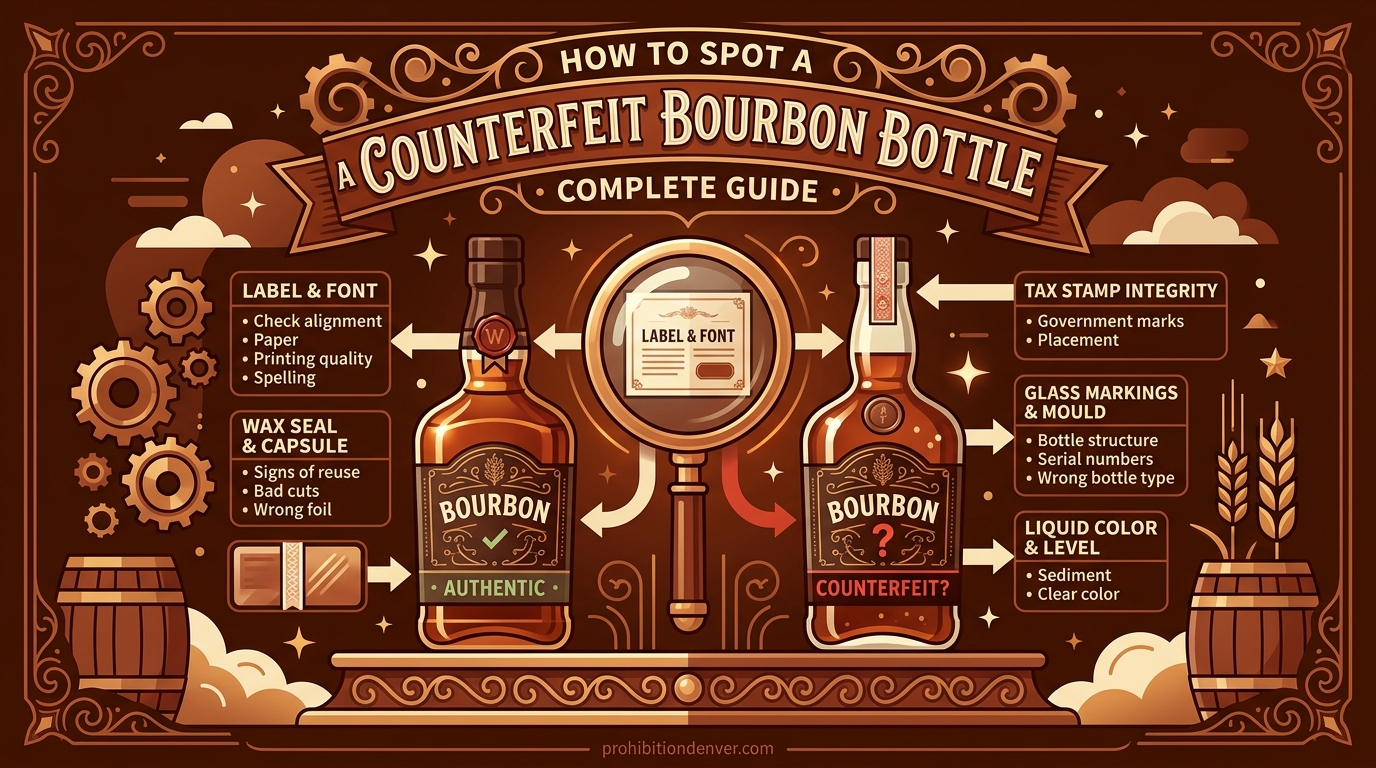
To spot a counterfeit bourbon bottle, examine six key areas: label fonts and print quality, seal integrity and tampering evidence, laser codes and dating, cork style and capsule glue, tax strips on older bottles, and any bottle drips or staining that indicate refilling. Authentic bottles feature precise labeling, consistent laser codes that match production dates, and professional sealing without signs of tampering.
Red flags include mismatched or missing laser codes, blurry or off-center labels, unusual glue patterns under the capsule, vertical stains on labels from previous pouring, and prices that seem too good to be true for rare bottles.
Step-by-Step Visual Inspection Process
Step 1: Examine the Label Details
Start your inspection with the label, as this is where counterfeiters often make mistakes. Authentic bourbon labels use high-quality printing with sharp, consistent fonts and colors. Compare the label to official photos from the distillery website or trusted sources.
Look for these specific indicators:
Font consistency: Fake bottles often use incorrect fonts or have subtle differences in lettering. The spacing between letters should be even, and trademark symbols should appear crisp and properly sized.
Print quality: Counterfeit labels may show pixelation, blurry text, or colors that do not match the authentic version. Genuine labels use professional printing that looks sharp even under magnification.
Label alignment: Check that the label sits straight on the bottle and is positioned at the correct height. Authentic bottles have consistent placement with minimal variation.
Spelling and grammar: Obvious but worth checking. Counterfeiters sometimes make spelling errors or use incorrect terminology that a major distillery would never allow.
Step 2: Check the Seal and Cap
The seal is your first line of defense against tampering. Examine it carefully before considering any purchase.
Shrink bands: Many bourbons use clear or colored shrink bands over the cap. These should fit tightly without wrinkles or gaps. Clear shrink bands are easily replicated, so do not rely on them alone. Look for consistent band thickness and proper alignment.
Wax seals: Some premium bottles feature wax seals. Authentic wax should have consistent texture and color. Buffalo Trace products with wax seals use specific colors that can be verified. Counterfeit wax may look too perfect or have unusual textures.
Cap fit: The cap should fit snugly without wobbling. Twist it gently to check for looseness that might indicate previous opening. Authentic caps have consistent threading and quality materials.
Security strips: Some brands include security strips or holographic elements. Verify these match known authentic examples from the same production year.
Step 3: Inspect the Bottle Itself
The physical bottle can reveal important clues about authenticity.
Bottle drips: This is a critical red flag. Look for vertical streaks or stains on the label that indicate previous pouring. These “bottle drips” suggest the bottle was opened and potentially refilled. The liquid should not have touched the label on a sealed bottle.
Glass quality: Authentic bourbon bottles use quality glass with consistent thickness and clarity. Cheap or cloudy glass may indicate a fake.
Mold seams: Check the mold seams on the bottle. They should be clean and consistent. Poorly made bottles may have rough seams or irregular shapes.
Fill level: The liquid should reach a consistent level appropriate for the bottle size. Unusually low fill levels may indicate leakage or evaporation, but could also suggest tampering.
Laser Code Verification
Laser codes represent one of the most reliable authentication methods for modern bourbon bottles. Buffalo Trace and its affiliated brands use laser-etched codes that provide production information.
These codes typically appear on the bottle glass itself, not the label, and include letters and numbers that indicate the distillery, warehouse, barrel, and date information. The exact format varies by brand and year.
Counterfeiters often struggle with laser codes. They may be missing entirely, appear in the wrong location, or show signs of being ground down and rewritten. Some scammers scratch off original codes and attempt to add new ones that match rare releases.
To verify laser codes:
First, locate the code on the bottle. For Buffalo Trace products, check the lower portion of the bottle near the base. The code should be cleanly etched into the glass.
Second, research what the code should indicate. Online bourbon communities maintain databases of laser code formats. The code should logically correspond to a production date that makes sense for the bottle you are examining.
Third, check for tampering. Look for scratched or polished areas around the code that might indicate someone tried to remove or alter it. Authentic codes are permanently etched and should not show damage.
Buffalo Trace has begun implementing NFC (Near Field Communication) technology on some bottles, allowing verification through a smartphone app. This technology is currently limited but represents the future of bourbon authentication.
Brand-Specific Authentication Tips
Pappy Van Winkle Authentication
Pappy Van Winkle represents the most counterfeited bourbon on the market due to its extreme scarcity and high prices. Extra vigilance is required when considering any Pappy purchase outside official retail channels.
Authentic Pappy bottles feature handwritten bottle numbers on the label. These should be written in permanent marker with consistent handwriting style. Counterfeiters may print numbers or use inconsistent handwriting.
The 23 Year Old, 20 Year Old, and 15 Year Old expressions each have specific label characteristics. Research the exact release you are considering, as labels have changed slightly over the years. Compare against verified photos from the Van Winkle website.
Wax seals on Pappy bottles should be the correct color for the vintage and show natural variation. The wax should not look too perfect or machine-applied.
Price should raise immediate suspicion. Any Pappy Van Winkle sold at or near retail price in the secondary market is almost certainly fake. Current secondary market prices for these bottles range from several hundred to thousands of dollars depending on the expression and year.
Weller Bourbon Verification
Weller has become increasingly targeted by counterfeiters as prices have risen for this wheated bourbon line. The most commonly faked expressions include Weller 12 Year Old and Weller Antique 107.
Weller bottles feature laser codes that can be verified with Buffalo Trace. Check that the code format matches the production period and that the etching is clean and professional.
Pay attention to the label placement and print quality. Weller labels should have consistent coloration and sharp text. Older bottles may show natural aging, but the underlying quality should still be apparent.
The screw caps on standard Weller bottles should fit tightly and show no signs of previous opening. Any looseness or damage to the cap threads indicates potential tampering.
Buffalo Trace Antique Collection (BTAC) Authentication
The BTAC lineup includes George T. Stagg, William Larue Weller, Thomas H. Handy Sazerac Rye, Eagle Rare 17 Year Old, and Sazerac Rye 18 Year Old. These limited annual releases attract counterfeiters due to high demand.
BTAC bottles present unique authentication challenges because the labels are relatively small, making seepage harder to detect. Examine carefully under good lighting for any staining or drips.
Check for NFC tags on newer releases. Buffalo Trace has been rolling out authentication technology that allows smartphone verification. Download the official Buffalo Trace app to scan bottles when available.
Laser codes on BTAC bottles should follow the standard Buffalo Trace format. Verify that codes match the expected date range for the release year.
Be especially cautious with “vertical collections” sold together. Scammers sometimes package one authentic bottle with several fakes to build credibility.
How to Verify Retailer Authenticity
Buying from reputable retailers dramatically reduces your counterfeit risk. The three-tier system in the United States provides significant protection when purchasing through licensed channels.
Verify these credentials before purchasing:
Physical address: Legitimate retailers maintain real physical locations you can verify. Be wary of sellers operating only through social media or marketplace accounts with no established business presence.
Operating history: Established businesses have track records you can research. Look for reviews, mentions in bourbon communities, and years of operation. Newly created accounts selling rare bourbon should raise red flags.
Professional presentation: Authentic retailers use professional packaging, provide receipts, and handle transactions appropriately. Poor packaging, handwritten labels, or unusual payment requests indicate potential problems.
Return policies: Reputable sellers stand behind their products. Ask about return options if you discover authenticity issues. Refusal to discuss returns suggests the seller knows something you do not.
Community reputation: Search bourbon forums and social media for mentions of the seller. Experienced collectors share information about both trustworthy sources and known scammers.
Secondary Market vs. Retail: Understanding Your Risk
Where you buy bourbon matters enormously for authenticity. The three-tier system in the United States requires producers to sell to distributors, who sell to retailers, who sell to consumers. This chain provides accountability at each step.
When you purchase from licensed liquor stores, grocery stores, or directly from distilleries, you are protected by this system. Counterfeit bottles rarely enter these channels because each participant is licensed and regulated.
The secondary market operates outside this protection. Private sales, online auctions, Facebook Marketplace, and unlicensed trading groups carry significantly higher risk. These transactions rely entirely on seller honesty without regulatory oversight.
Secondary market purchases require extra diligence. Insist on detailed photos before meeting. Examine bottles in person whenever possible before payment. Use payment methods that offer buyer protection rather than cash or irreversible transfers.
Trust your instincts. If a deal seems too good to be true, the bottle is likely fake. Scammers exploit buyer excitement and greed to move counterfeit products quickly.
Vintage bottles purchased at estate sales or found in old collections present unique challenges. Older bottles lack modern security features like laser codes. Research the specific bottle and era thoroughly before purchasing dusty bottles.
What to Do If You Suspect a Counterfeit
If you believe you have encountered or purchased a counterfeit bourbon bottle, take these steps:
Do not consume the liquid: Counterfeit alcohol may contain dangerous substances. The liquid could be cheap whiskey, industrial alcohol, or other harmful liquids. Do not risk your health.
Document everything: Take detailed photos of the bottle, label, codes, and any packaging. Preserve receipts, messages with the seller, and any other transaction records.
Contact the distillery: Major distilleries take counterfeiting seriously. Buffalo Trace and others have processes for reporting suspected fakes. They can sometimes verify authenticity based on your documentation.
Report to authorities: Counterfeit alcohol violates federal law. Report serious cases to the Alcohol and Tobacco Tax and Trade Bureau (TTB) and local law enforcement. Your report could protect other buyers.
Share information: Bourbon communities rely on member vigilance. Share your experience with appropriate forums to warn others about the seller and help collectors learn from your situation.
Pursue resolution: If you paid with a credit card or through a platform with buyer protection, initiate a dispute. While recovery is not guaranteed, documented evidence strengthens your case.
Frequently Asked Questions
How to tell if bourbon is counterfeit?
To tell if bourbon is counterfeit, examine the label fonts and print quality for sharpness and consistency, check seal integrity for tampering evidence, verify laser codes match production dates, inspect cork style and capsule glue patterns, and look for bottle drips or staining that indicate refilling. Counterfeit bottles often show blurry labels, mismatched or missing laser codes, unusual glue patterns, and prices that seem too good to be true for rare bottles.
What are the 5 rules for bourbon?
The five rules for bourbon are: it must be made in the United States, the mash bill must contain at least 51 percent corn, it must be distilled to no more than 160 proof, it must be aged in new charred oak barrels, and it must be bottled at no less than 80 proof. These legal requirements define what can be labeled as bourbon whiskey.
Do people sell fake bourbon?
Yes, people do sell fake bourbon, particularly targeting high-value allocated bottles like Pappy Van Winkle, Weller, and Buffalo Trace Antique Collection. The secondary market for rare bourbon has created profitable opportunities for scammers who refill empty authentic bottles with cheap whiskey or create convincing reproductions with fake labels and packaging.
How to tell if Buffalo Trace is real?
To tell if Buffalo Trace bourbon is real, check for laser-etched codes on the glass bottle that indicate distillery, warehouse, barrel, and date information. Newer bottles may include NFC technology for smartphone verification through the Buffalo Trace app. Examine label print quality, cap seal integrity, and verify the seller is a licensed retailer. Mismatched or missing laser codes are common indicators of counterfeit Buffalo Trace products.
Conclusion
Learning how to spot a counterfeit bourbon bottle protects both your wallet and your health. The authentication techniques in this guide have saved me and many collectors from costly mistakes.
Remember that buying from licensed retailers through proper channels eliminates most counterfeit risk. When the secondary market tempts you with rare bottles, apply these inspection methods carefully.
Trust your instincts. If something feels off about a bottle or seller, walk away. The bourbon community is generous with knowledge, so seek advice from experienced collectors when uncertain.
Stay vigilant, buy smart, and enjoy authentic bourbon with confidence.