
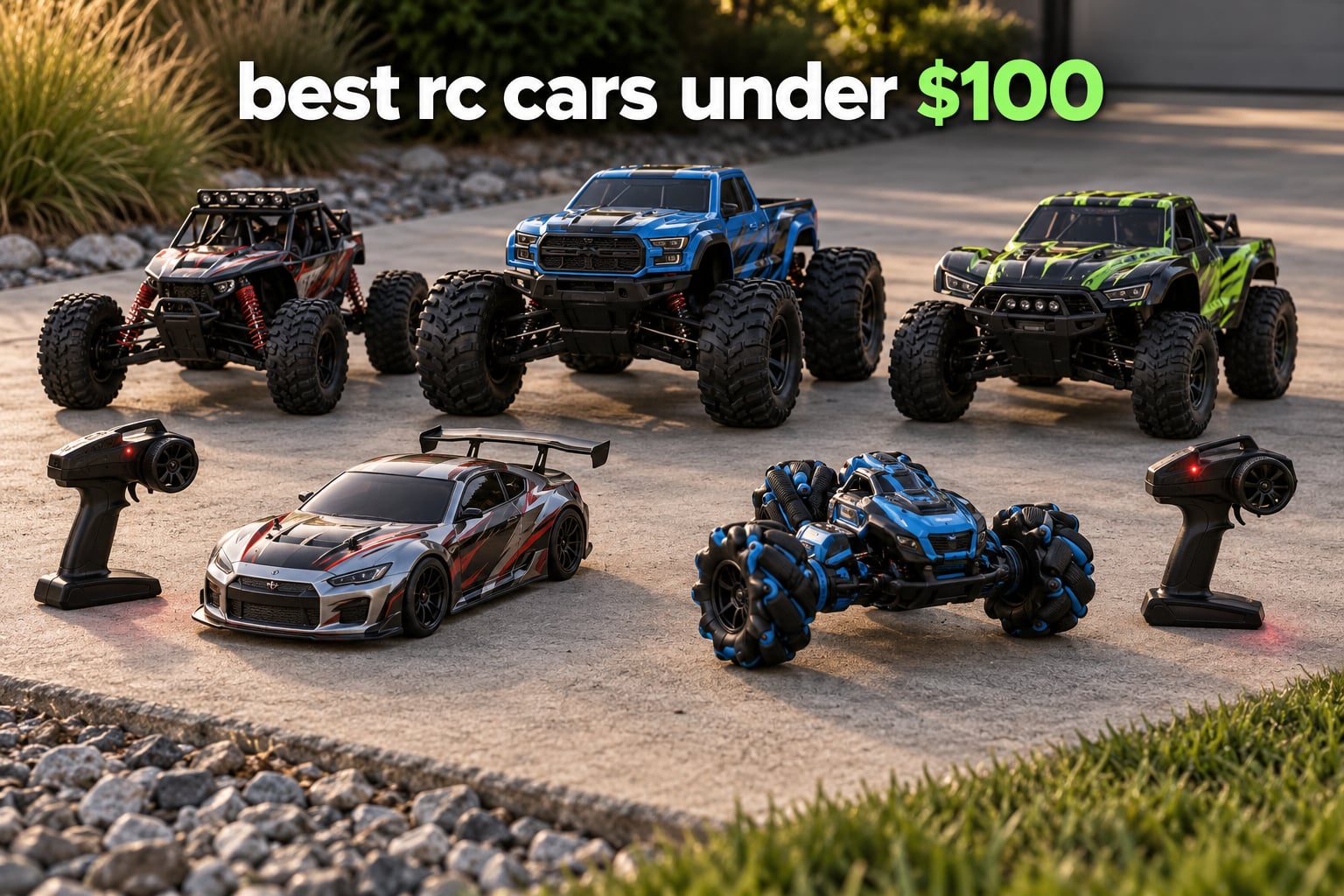
A good RC car under 100 dollars comes down to three things: a chassis that survives being crashed, a 2.4GHz radio system you can actually control, and replacement parts that exist when something snaps. Speed is the easiest thing to buy at this budget and the least useful one to optimize for. That is the filter we applied to every pick below, with the strict 100 dollar ceiling in mind.
We put 12 ready-to-run cars through the same review: reading the spec sheets, weighing the drivetrain hardware, checking what the owners actually complain about after a month of use, and mapping each one to the terrain it handles well. Nothing on this list needs a separate build. Every car ships with a radio, a motor, and at least one battery so you can drive it the same afternoon it arrives.
What separates the picks is parts access. Forum consensus over on r/rccars and RCTalk keeps circling the same point: cheap cars are not expensive, they are disposable. A truck with a sealed transmission and no available gears is a two-week toy no matter what its listing claims. The models that get recommended again and again are the ones where a broken shock, worn tire or stripped screw can be replaced for a few dollars.
One thing worth knowing before you pick: the under-100-dollar category is heavily sale-driven, and the same model can move between the high thirties and the high nineties depending on the week. Use the buttons below to see the current figure before you commit, and read the running-cost section further down, because the cheapest sticker price rarely includes a charger worth trusting.
So where will you drive it most? On a smooth indoor floor, over backyard gravel, or up a dirt trail? The answer matters more than any spec, and it changes which of these twelve you should end up with.
Top 3 Picks for the Best RC Cars Under 100 Dollars (October 2026)

DEERC 9206E 1:10 4WD Monster Truck
- 48+ km/h top speed
- Two 7.4V 1500mAh batteries
- Metal oil-filled shocks
- DIY extra shell

HAIBOXING 18859 1:18 4WD Truck
- 36 km/h
- Two LiPo packs
- Ball bearings and solid gear diff
- Splash-proof electronics

QUNREDA 1:24 Stunt Car
- Two swappable USB-C batteries
- Nine stunts with flips
- 2.4GHz to 50 meters
- Screw-secured battery bay
The DEERC 9206E takes the top slot because it is the only car here that pairs a genuinely large 1:10 chassis with metal oil-filled shocks and a second battery in the box, and it does so while carrying more owner feedback than anything else on this list. The HAIBOXING 18859 takes the value slot on the strength of its hobby-class hardware: ball bearings, a solid gear differential and independent suspension at a size most buyers assume is only for toys. The QUNREDA earns the kid slot for one reason that no other car here matches, which is the two-battery swap system that keeps play going while one pack charges.
All 12 Picks at a Glance in 2026
| Product | Specifications | Action |
|---|---|---|
| DEERC 9206E 1:10 4WD Monster Truck |
|
Check Latest Price |
| HAIBOXING 18859 1:18 4WD Truck |
|
Check Latest Price |
| QUNREDA 1:24 Stunt Car |
|
Check Latest Price |
 Tecnock 1:18 2WD Off-Road Buggy Tecnock 1:18 2WD Off-Road Buggy |
|
Check Latest Price |
 BLUEJAY 1:12 4WD Truck BLUEJAY 1:12 4WD Truck |
|
Check Latest Price |
 X-TMAGA 1:14 4WD Truck X-TMAGA 1:14 4WD Truck |
|
Check Latest Price |
 Desdoni 1:24 4WD Drift Car Desdoni 1:24 4WD Drift Car |
|
Check Latest Price |
 BEZGAR 1:20 Monster Truck BEZGAR 1:20 Monster Truck |
|
Check Latest Price |
 HYPER GO H16DR 1:16 4WD Truck HYPER GO H16DR 1:16 4WD Truck |
|
Check Latest Price |
 Cheerwing 1:18 Rock Crawler Cheerwing 1:18 Rock Crawler |
|
Check Latest Price |
 Jiakora 1:12 4WD Truck Jiakora 1:12 4WD Truck |
|
Check Latest Price |
 ACAMMZAR 1:24 4WD Drift Car ACAMMZAR 1:24 4WD Drift Car |
|
Check Latest Price |
Twelve cars, three terrain types. Nine of these are off-road or trail trucks, two are indoor drift cars built for smooth floors, and one is a stunt car for kids. Read the table as a shortlist, then use the individual verdicts below to confirm the fit.
1. DEERC 9206E 1:10 4WD Monster Truck – Our Pick for the Best RC Car Under 100 Dollars
DEERC 9206E DIY Extra Shell 1:10 Scale Large RC Cars,48+ KM/H Hobby Grade High Speed Remote Control Car for Adults Boys,All Terrain 4WD 2.4GHz Off Road Monster RC Truck with 2 Battery for 40+ Min Play
1:10 scale 4WD
48+ km/h top speed
2 x 7.4V 1500mAh
2490 g
Pros
- Full proportional throttle and steering with adjustable speed switch
- Two batteries for roughly 40+ minutes of combined driving
- Metal oil-filled shocks you can fill and tune
- Extra transparent shell included for customization
Cons
- Runtime per battery closer to 15-20 minutes than advertised
- Motor and batteries heat up during sustained full-throttle runs
- Small cotter-pin body clips are easy to lose
This is the car that convinced me the 100 dollar ceiling is not a compromise. It is a genuine 1:10 scale four-wheel-drive truck with a 2490 gram chassis, and that size matters more than people expect: bigger tires find grip on gravel, grass and loose dirt that a 1:18 chassis simply cannot, and the higher mass keeps it planted when it lands a jump.
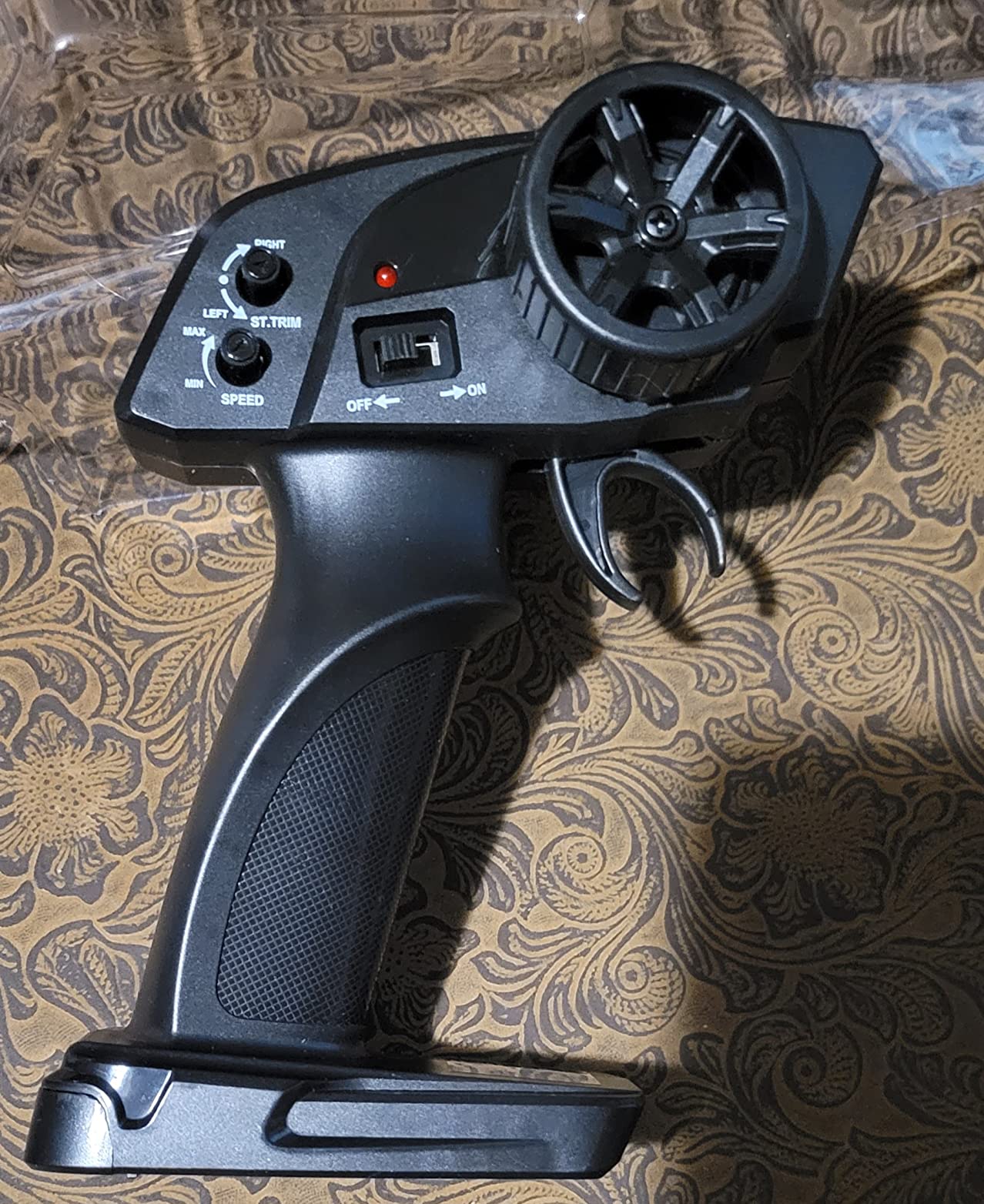
The specification sheet is the most complete on this list. Full-scale synchronous proportional control on both throttle and steering with a 100 meter range, metal oil-filled shock absorbers that accept fluid, LED headlights, and an extra transparent body shell so the car looks different on the second weekend. Two 7.4V 1500mAh packs are in the box, which is rare at this level.
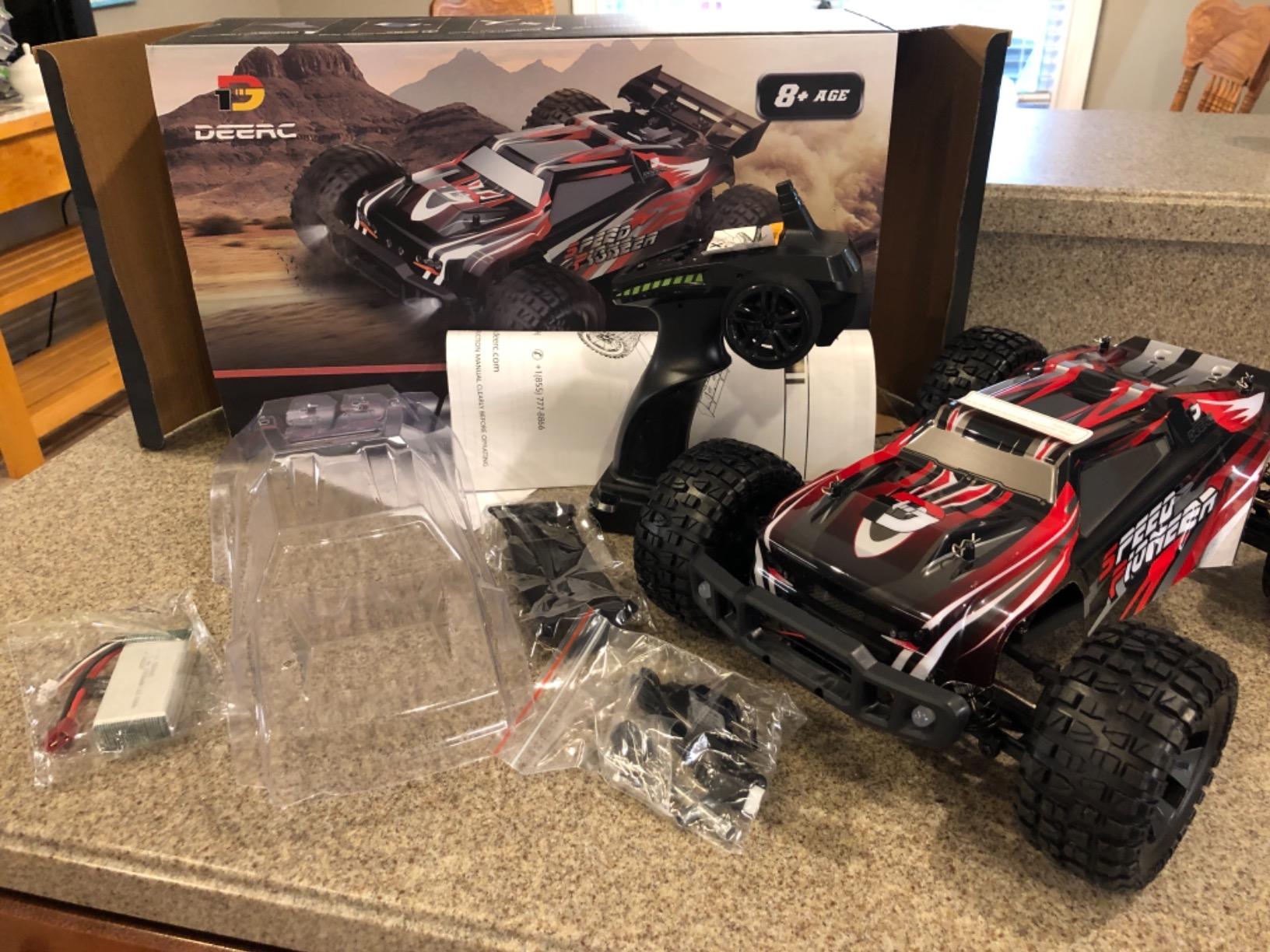
Owner feedback is where the caveat shows up. The 40-plus-minute runtime claim assumes you swap packs halfway rather than run one flat, and individual pack runtime sits closer to 15 to 20 minutes for most people. Motor heat after a long full-throttle run is the second repeated note, so I would give it a breather between hard runs rather than driving it continuously.
It also collects debris. The open underside platform gathers grass clippings and dirt, and you will want to clear it periodically if you drive in wet grass, otherwise the drivetrain slows down over time. The cotter-pin body clips are tiny and get lost; spares are included, which is a small mercy.
Who should buy the DEERC 9206E
Buy it if you want the biggest car you can find under the ceiling and you plan to drive outdoors on mixed terrain. It is also the one to pick if a second set of hands will be helping in the workshop, because the extra transparent shell gives you something to build together rather than a sealed toy you can only run.
It suits adults and older kids who already have a feel for throttle control. The speed is real, so start it in the low range on the transmitter speed switch before handing it to a younger driver.
Who should skip the DEERC 9206E
Skip it if your driving surface is a hardwood floor or a carpeted living room. A 2490 gram truck with metal oil-filled shocks is not an indoor car, and the speed makes it twitchy on low friction surfaces. It is also heavier than most people expect to lift repeatedly, which matters for younger drivers.
If you need a car that can sit in a small bag and run for twenty minutes, one of the 1:24 models further down is a better fit.
2. HAIBOXING 18859 1:18 4WD Truck – Best Value Off-Road Pick
HAIBOXING 18859 1:18 Scale All Terrain RC Car, Hobby 4WD Remote Control Car
1:18 scale 4WD
36 km/h top speed
Two 7.4V LiPo packs
280 ft range
Pros
- Ball bearings
- solid gear diff and independent suspension
- Two LiPo packs for back-to-back running
- Splash-proof electronics tolerate wet grass and mud
- Proportional throttle with normal and slow modes
Cons
- Included USB charger does not balance cells well
- Stock plastic friction shocks bind after a few months
- Thin body shell and shed-prone body clips
- Brushed motor on this version
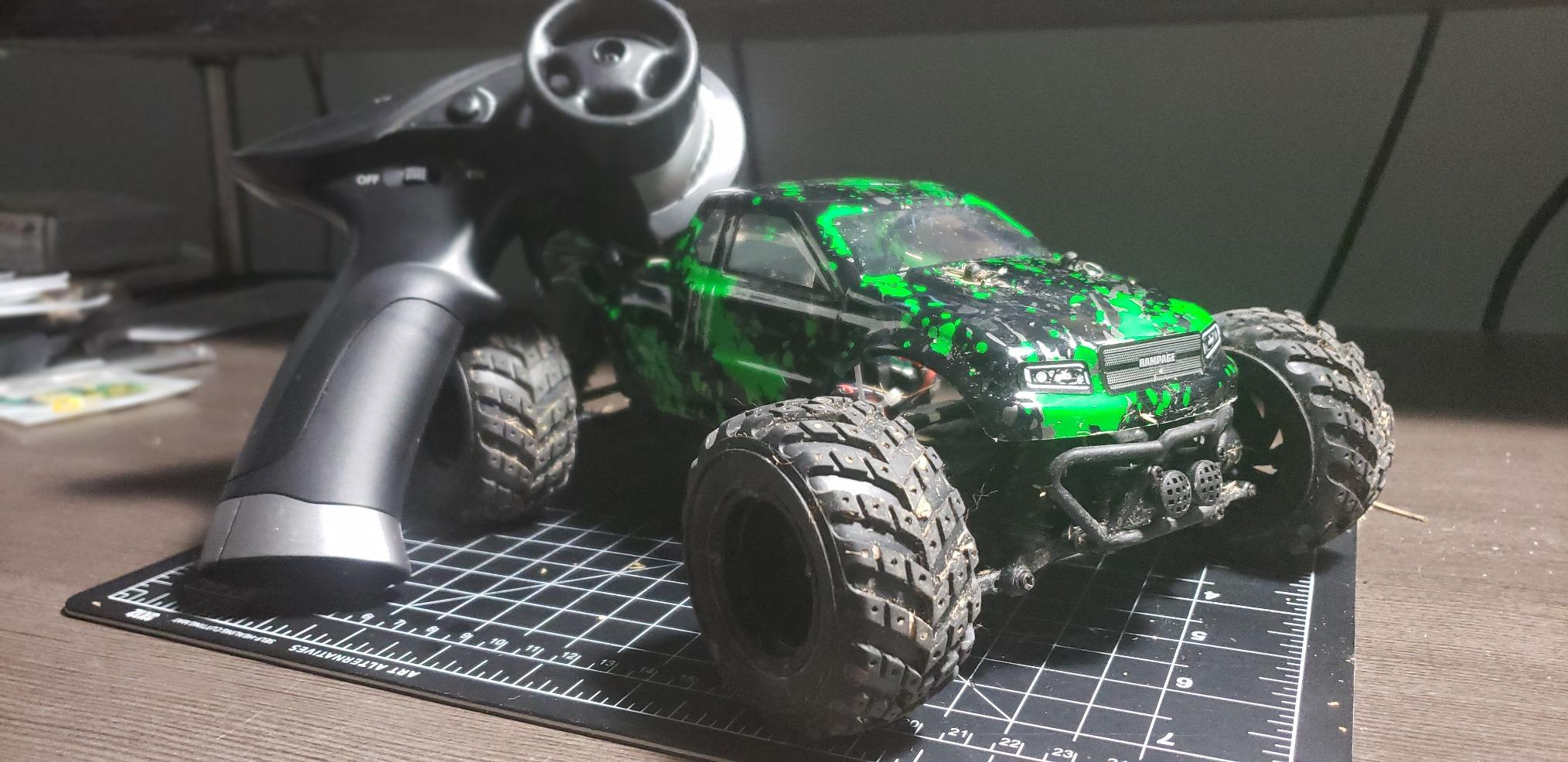
Most people assume 1:18 is the budget scale and 1:10 is where real hardware starts. The 18859 breaks that assumption. It carries ball bearings, a solid gear differential and independent suspension, which are the components hobbyists look for first when judging whether a chassis will survive a season rather than a weekend.
Splash-proof electronics are the sleeper feature. Wet grass and mud are normal conditions for an off-road truck, and sealed electronics are the difference between a car that keeps running after a puddle and one that does not. The 280 foot control range, high-grip knobby tires and a 36 km/h top speed make it a genuinely capable backyard runabout.
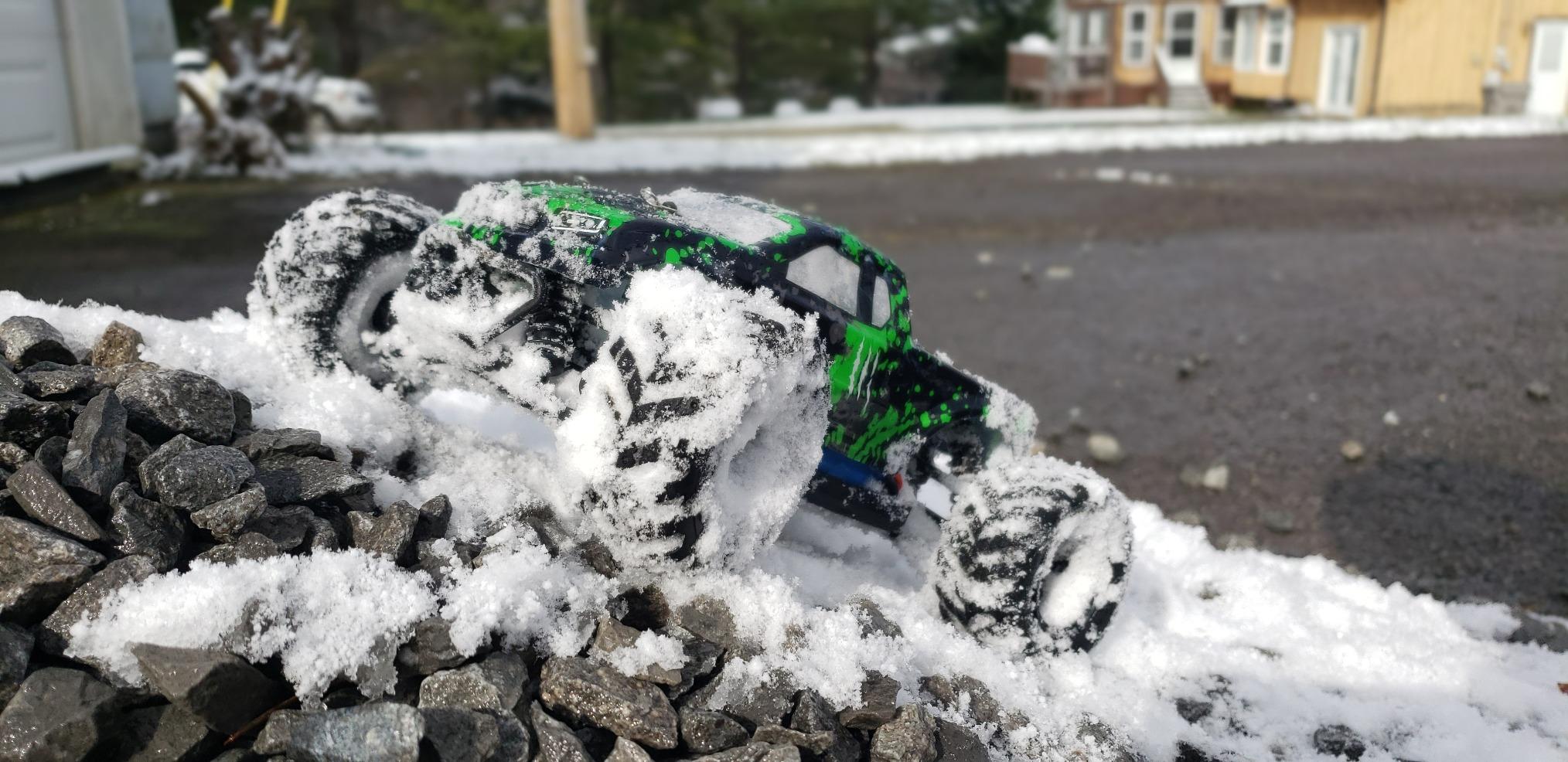
Hobbyists on r/rccars repeatedly single out Haiboxing as fast for what you pay, and that reputation holds up. Two 7.4V LiPo packs ship in the box, so you are not waiting on a charge between drivers, and the proportional throttle has both a normal and a slow mode that parents will appreciate.
The included USB charger is the weak point and the first thing most owners replace. It does not balance cells properly, which shortens pack life over a season of use. The stock plastic friction shocks also bind after a few months, and the thin body shell cracks easily with body clips that shed readily.
Who should buy the HAIBOXING 18859
This is the pick for a first hobby-grade truck when the budget is fixed. The hardware spec sheet reads like a car costing considerably more, and the two included batteries make it the most practical package for households where two kids share driving time.
Choose it over the DEERC if you want something lighter to carry and easier to store, or if you drive in wet conditions regularly. Replacement parts for this chassis circulate well, which is the main reason it keeps appearing in enthusiast recommendations.
Who should skip the HAIBOXING 18859
Skip it if you plan to run it on loose sand or deep mud at speed. The 1:18 size and plastic-gear-era weight distribution mean it will dig in where a larger truck would climb, and the brushed motor has no headroom for a battery upgrade later.
Avoid it as a first car for a very young child unless an adult supervises. It is fast for its size and the proportional control still takes practice to modulate.
3. QUNREDA 1:24 Stunt Car – Best Pick for Ages 6 to 8
QUNREDA Remote Control Car, RC Cars Toys for Kids Ages 6-12, 4WD Stunt Car with LED Lights & 360° Flips, 2.4GHz, Upgraded USB-C Modular Batteries, 8-10 Year Old Boys Birthday Gift 1-Blue
1:24 class stunt car
10 km/h
2 x 500mAh USB-C
50 m range
Pros
- Two detachable batteries so one charges while the other runs
- Nine stunts including 360-degree flips and spins
- ABS tires and frame survive repeated flips and drops
- Screw-secured battery compartment children cannot open
- 50 meter 2.4GHz range allows racing multiple cars
Cons
- Steering offers sharp turns only with no proportional fine control
- Not water resistant and clogs on dirt or carpet debris
- Will not charge on a fast USB-C adapter
The dual battery system is the reason this car ranks where it does. Two detachable 500mAh packs run in sequence for up to 50 minutes total, and because one charges while the other drives, the wait for a full pack basically disappears. Almost every other car in this roundup forces you to stop and wait unless you buy a spare.
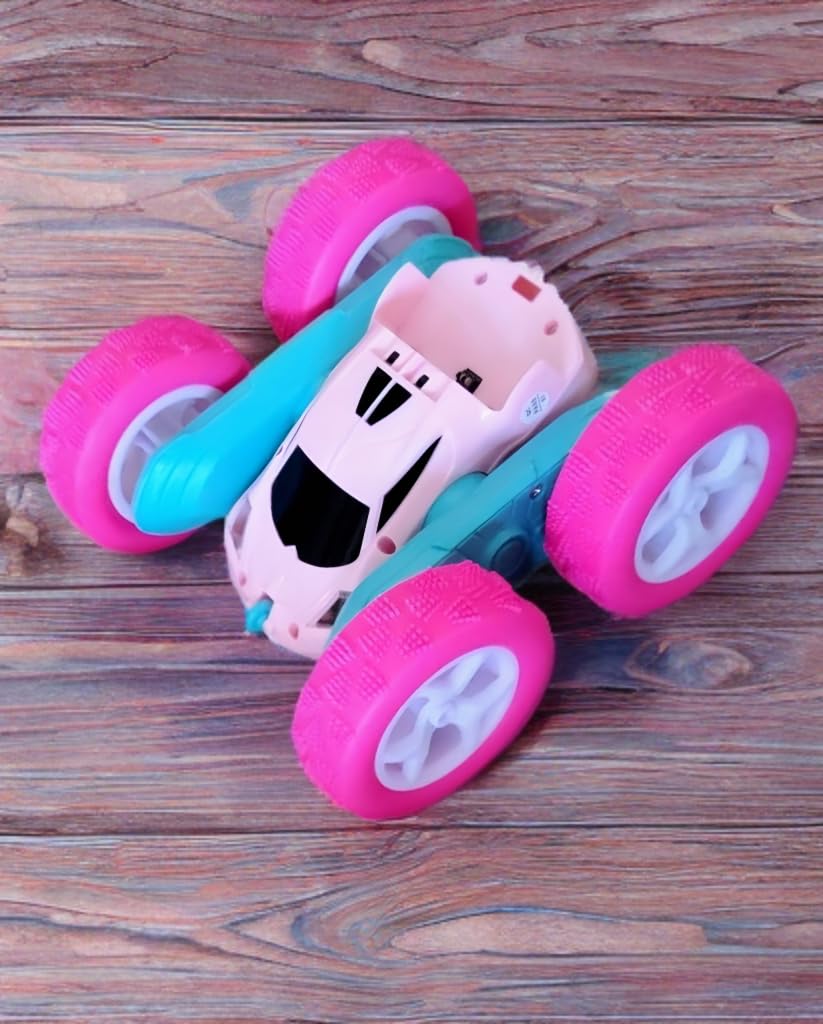
For a six-year-old this is a well-judged gift. The controller is two buttons, there are nine stunts including 360-degree flips and spins, and the red-eye LED headlights make it feel substantial. The battery compartment is screw-secured so a curious child cannot get at the cells, and the ABS frame survives being flipped repeatedly.
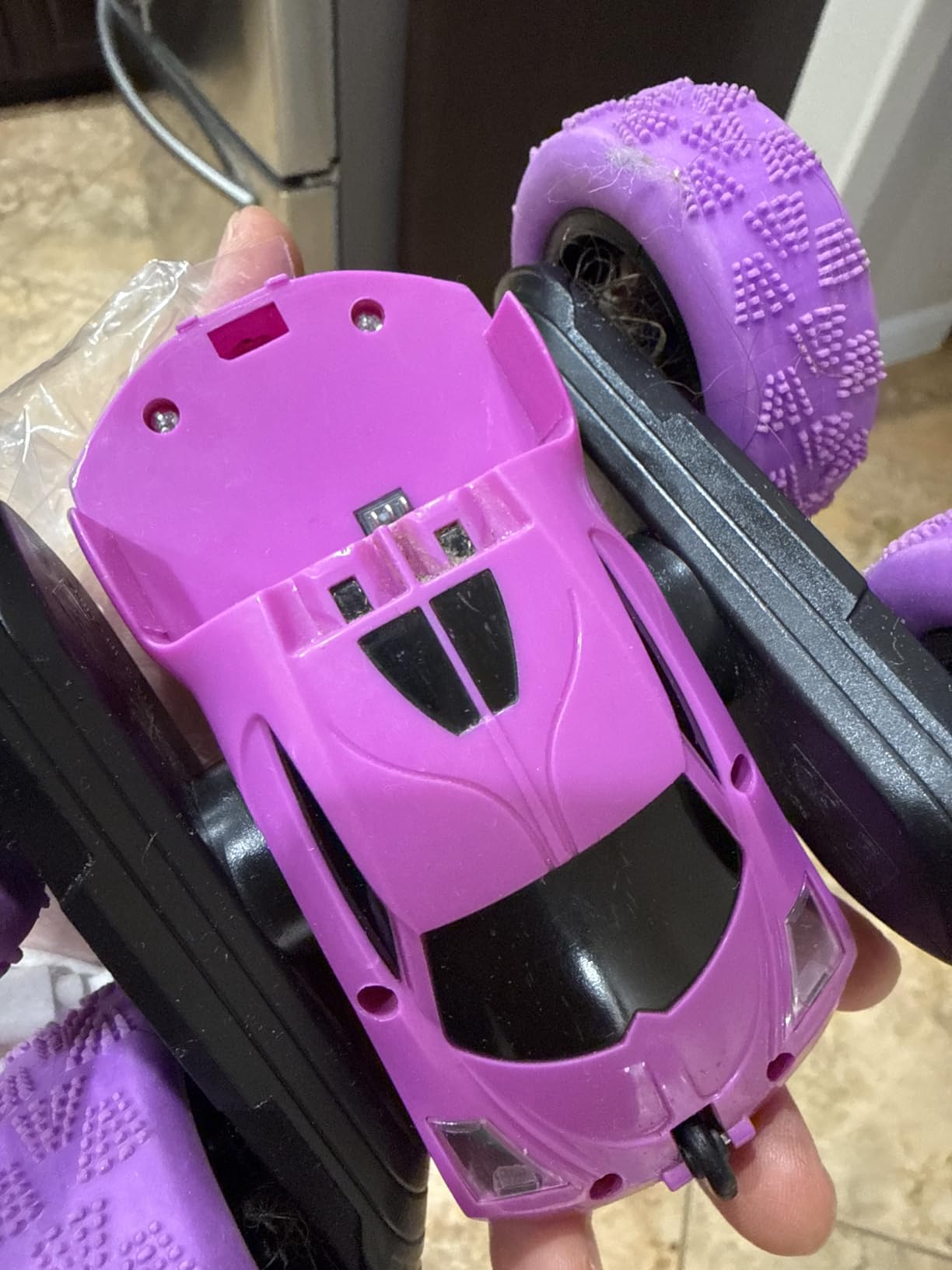
It also handles several cars in the same room. The 2.4GHz anti-interference system works to 50 meters, so two kids can drive at once without cutting each other out. A screwdriver and the USB-C cable are in the box along with the two AA controller batteries.
The trade-off is control precision. Steering is sharp-turn only with no proportional fine control, which makes it hard to place the car exactly or drive in a straight line slowly. It is also an indoor car, and the wheels pick up hair and carpet debris quickly.
Who should buy the QUNREDA stunt car
Buy it as a birthday gift for a child between six and eight who is still learning to handle a transmitter. Two-button control removes the steering frustration that makes new drivers quit, and the flip stunts give an immediate payoff that keeps them engaged past the first session.
It is also a good second car for a household with siblings, since the range supports two running at once and the swap battery means nobody waits.
Who should skip the QUNREDA stunt car
Skip it for anyone who will drive outdoors. It is not water resistant, the wheels clog on dirt, and there is no suspension to absorb a drop from a step or a curb. On gravel it will simply dig in and stop.
Adults looking for a drifter should look at the 1:24 drift models instead, which have proper throttle control and interchangeable tires for that.
4. Tecnock 1:18 2WD Off-Road Buggy – Cheapest Way Into the Hobby
Tecnock RC Cars Remote Control Car for Kids, 1:18 Scale 20 KM/H 2WD Offroad Buggy, 2.4GHz RC Racing Car with USB-C Easy Charging & 50 Mins Playtime, Toys Gifts for Boys & Girls
1:18 scale 2WD
20 km/h top speed
1500mAh built-in
USB-C charging
Pros
- USB-C direct charging with no separate charger to buy
- Built-in 1500mAh battery claims up to 50 minutes of play
- 2.4GHz system supports several cars racing at once
- Shock absorbers plus front bumper and rear spoiler
Cons
- 2WD drivetrain has less traction on loose surfaces than 4WD rivals
- Lowest average rating in this roundup at 4.1
- Not fast or tough enough for adult hobbyists
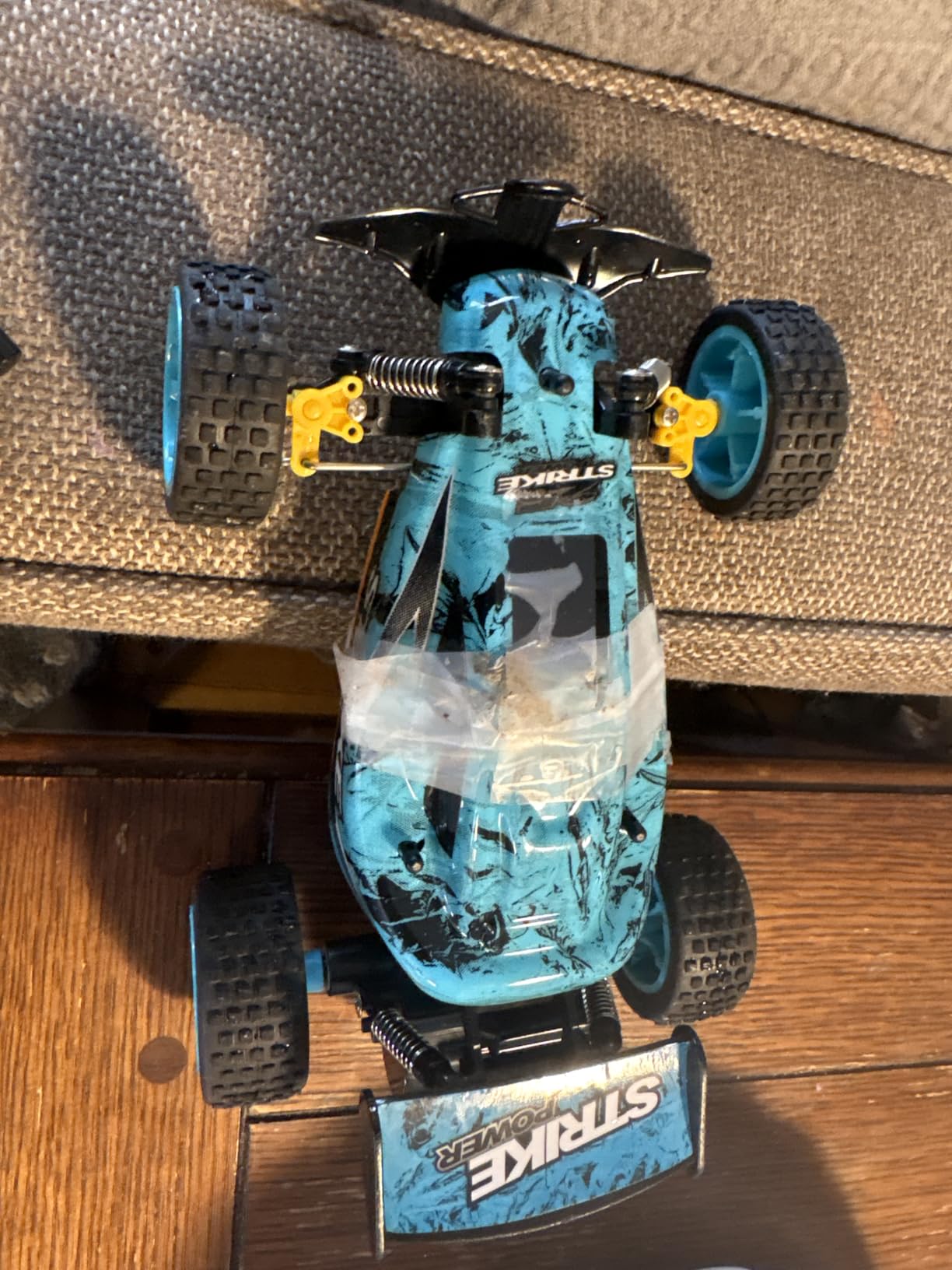
At the bottom of this list you are not buying performance, you are buying a starting point for a very small amount of money. For a child who just discovered remote control cars, or an adult who wants to see whether the hobby holds their attention past one afternoon, that is a legitimate use of money.
The practical details are better than the rating suggests. USB-C charging means no wall charger to hunt for, the 1500mAh battery is built in rather than removable, and the claimed runtime of up to 50 minutes is one of the longer figures in this roundup. Shock absorbers, a front bumper and a rear spoiler take the sting out of ordinary collisions.
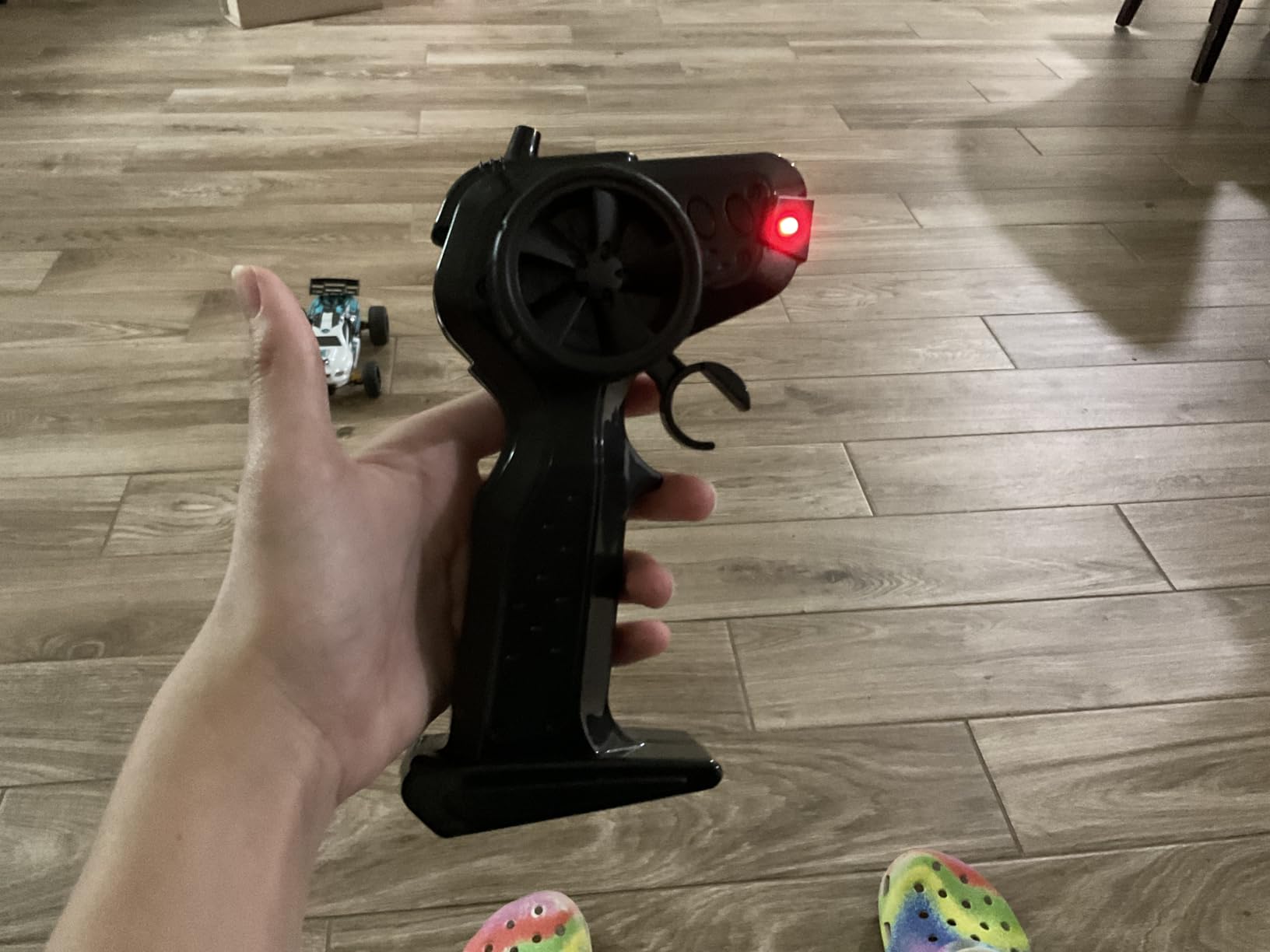
Control range is about 98 feet on 2.4GHz, and the system supports multiple cars without interference, so it works for a sibling pairing. Slip-resistant tires and a PVC shell handle floors, grass and sand without any special treatment.
The 2WD drivetrain is the honest limitation. It spins on loose gravel and wet grass where a four-wheel-drive car would just go, and the 20 km/h ceiling is unexciting for anyone who has driven a modern four-wheel-drive truck. The 4.1 average rating reflects mixed durability feedback rather than a specific defect.
Who should buy the Tecnock buggy
Buy it for a child aged eight to fourteen as a low-stakes first car, or for an adult testing whether they want to spend more later. Nothing breaks your heart if this one gets bashed immediately, and the USB-C charging removes the most common beginner frustration.
It also makes sense as a second car for racing indoors, since the 2.4GHz system handles multiple units and the buggy is light enough to run on a hard floor.
Who should skip the Tecnock buggy
Skip it if you plan to drive on anything loose. Two-wheel drive plus a small chassis means it will sit still in dirt and gravel while a four-wheel-drive truck of similar size walks away from it.
Also skip it if you already own RC cars. There is no upgrade path here, no proportional throttle worth speaking of, and no realistic aftermarket support, so it is a dead end rather than a stepping stone.
5. BLUEJAY 1:12 4WD Truck – Best for Night Driving and Long Sessions
BLUEJAY Remote Control Car, 2.4GHz High Speed 33KM/H RC Cars Toys
1:12 scale
33 km/h top speed
2 x 7.4V 1400mAh
50 m range
Pros
- Two 7.4V 1400mAh batteries give roughly 70 minutes combined
- LED headlights plus chassis lights for evening driving
- ABS chassis with aluminium alloy body at low weight
- 380 motor reaches 33 km/h on light dirt
Cons
- Low ground clearance leaves it prone to getting stuck
- Lightweight chassis flips easily on uneven ground
- Limited turning radius with a rear-wheel-drive layout
The headline number here is runtime. Two 7.4V 1400mAh packs give roughly 70 minutes of combined driving, which is the longest total figure in this roundup and the closest thing to a car that survives a full afternoon without a charge break. Several families buying for older kids mention the lighting as the feature that gets used most.
That is worth understanding properly: the LED headlights and chassis lights are not decoration here. The car is meant to be driven after dinner in the dark, and on a 1:12 scale at 33 km/h it is quick enough on a path to make night running genuinely fun rather than a novelty crawl.
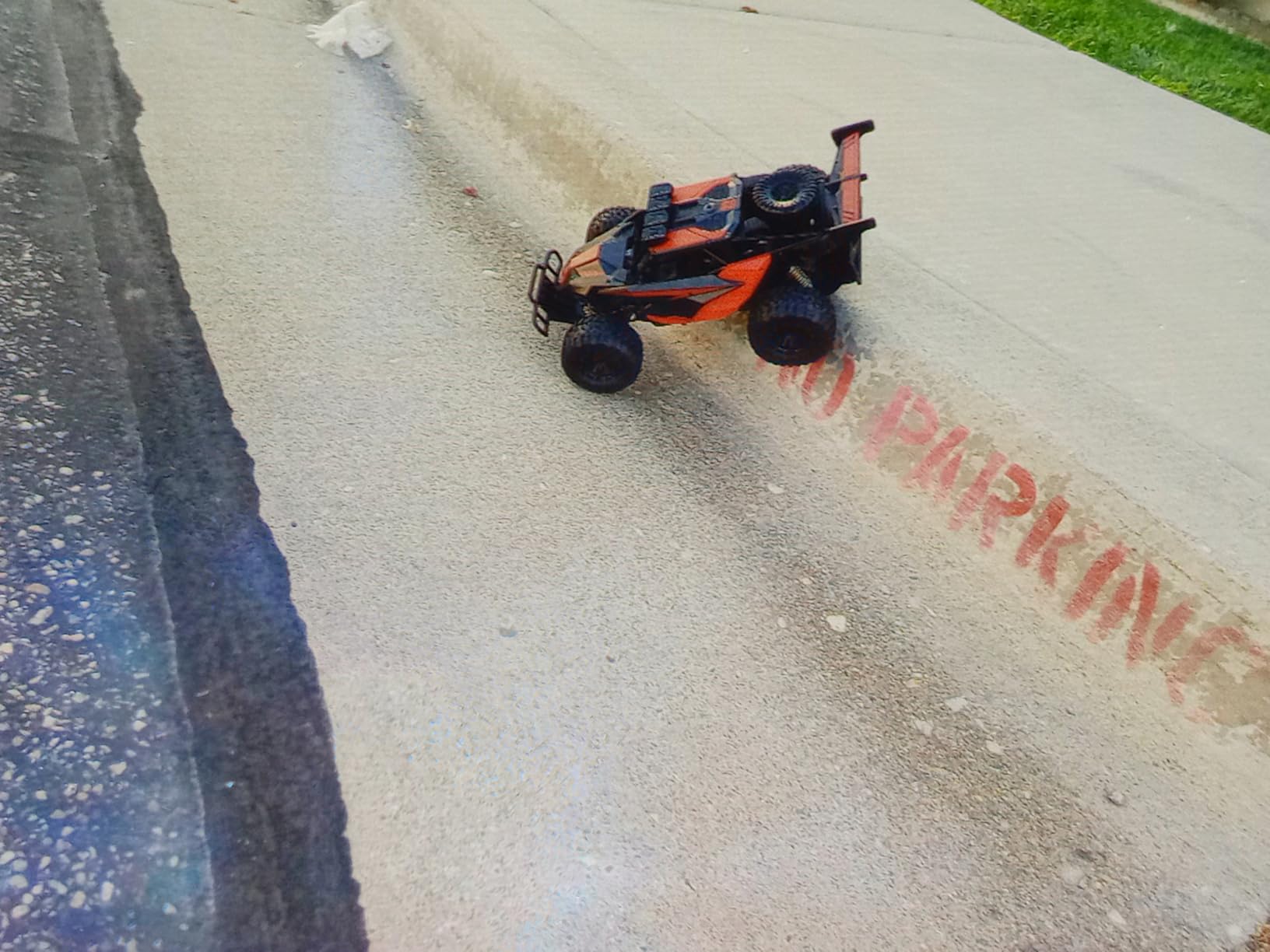
The 380 motor handles light dirt and grass without complaint, and the ABS chassis with aluminium alloy body keeps weight down while resisting impacts. Sellers for this model are also reported to send replacements under warranty when motors fail, which removes one of the usual budget-car risks.
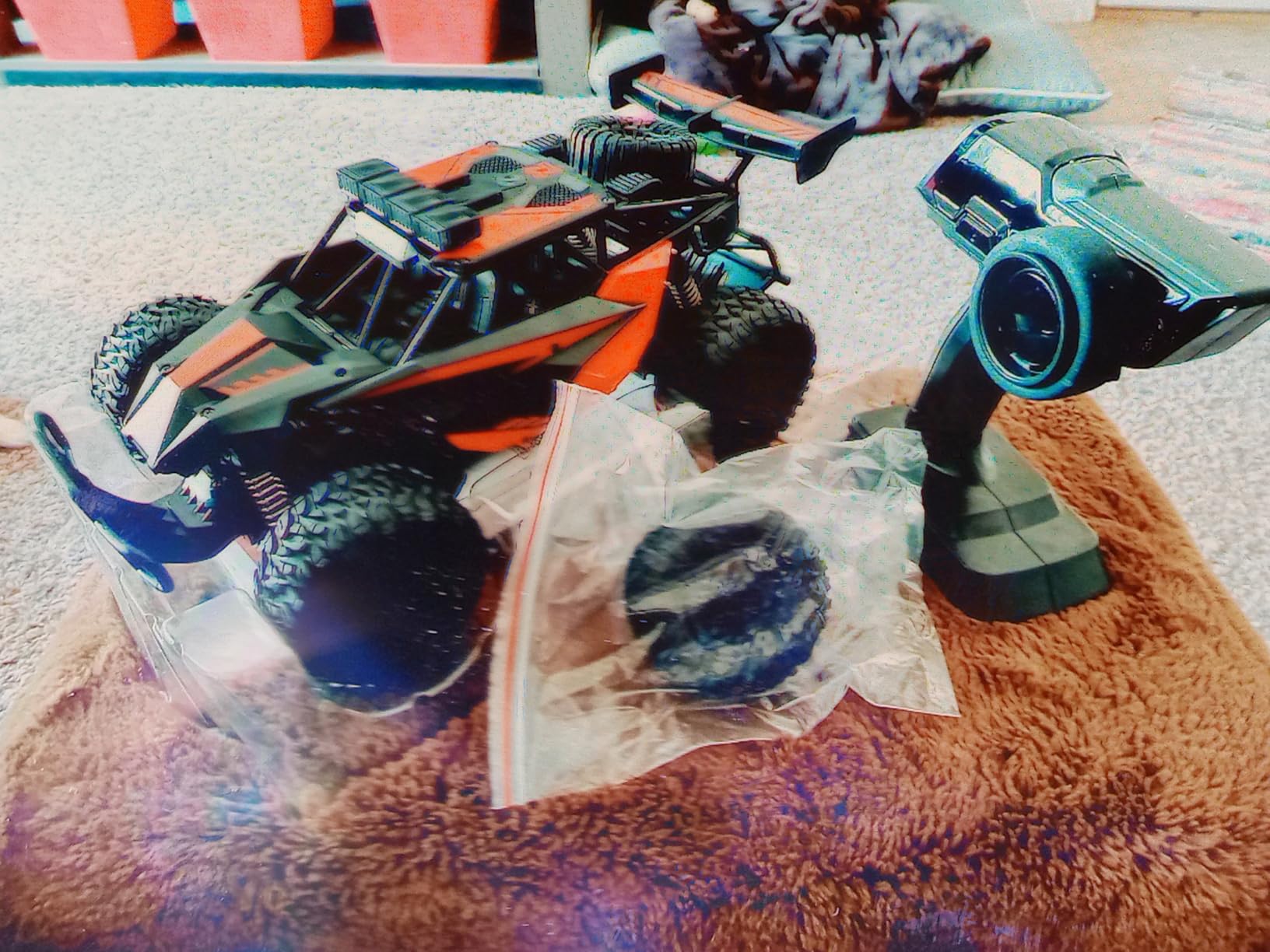
Now the compromises. Ground clearance is low, so rocks and curbs are where this one gets stuck. The lightweight chassis flips easily on uneven ground, the rear tires can come off the bead during hard off-road running, and the rear-wheel-drive drivetrain limits the turning radius.
Who should buy the BLUEJAY 1:12
Buy it for evening use, or for any session where 20-minute runtimes would end the fun early. It is also a reasonable first 1:12-scale step for an older child who is ready for more than a toy but does not need a large chassis.
Choose it when your driving surface is a flat path, a driveway or mown grass. Those are exactly the conditions the low clearance and light weight handle well.
Who should skip the BLUEJAY 1:12
Skip it for rough trails, rocky ground or anything with a real step in it. Low clearance plus a light chassis means a lot of flipping and a lot of getting stuck, and the rear-wheel-drive layout will not climb what a four-wheel-drive truck climbs easily.
Adult hobbyists looking for a modding platform should skip it too, since the chassis layout does not support the aftermarket ecosystem the larger hobby-grade trucks enjoy.
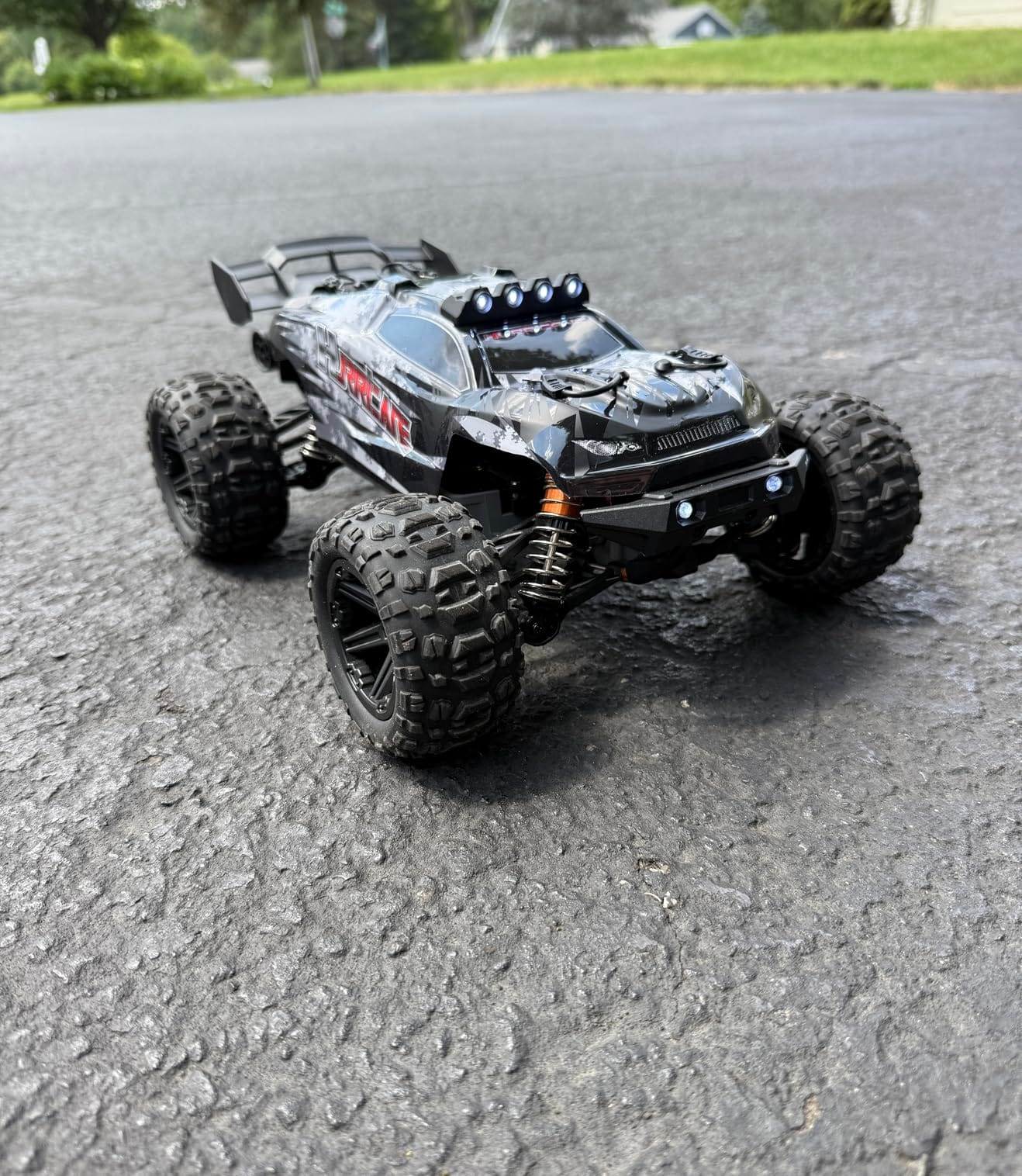
6. X-TMAGA 1:14 4WD Truck – Highest Rated and Toughest Per Owner Reports
X-TMAGA 1:14 All Terrain RC Cars, 4WD Off-Road Remote Control Car (HS14323)
1:14 scale 4WD
40 km/h top speed
2 x 7.4V 1300mAh
90mm tires
Pros
- Handles grass dirt gravel and uneven ground without stalling
- Adjustable alloy spring shocks keep it stable at speed
- 90mm multi-terrain tires rated for mud sand and snow
- Multiple owners report it survives hard play and large jumps
Cons
- Wheel-retention screws strip easily and the included driver can break
- Tire swaps need disassembly with fragile hardware
- Brushed 390 motor rather than brushless
This is the highest-rated car we reviewed, and the reason owners keep it is durability rather than speed. Several people describe it as the only RC they have owned that survived weeks of hard play and large jumps without a major failure, which is exactly the reputation a sub-100-dollar car is supposed to have and almost never does.
The 1:14 scale sits in a useful middle ground. It is big enough to run 90mm multi-terrain airless tires and clear real obstacles, and small enough to handle in one hand. The adjustable alloy spring shock absorbers are the component that makes a difference in practice, because they let you tune preload and damping rather than living with whatever spring came fitted.
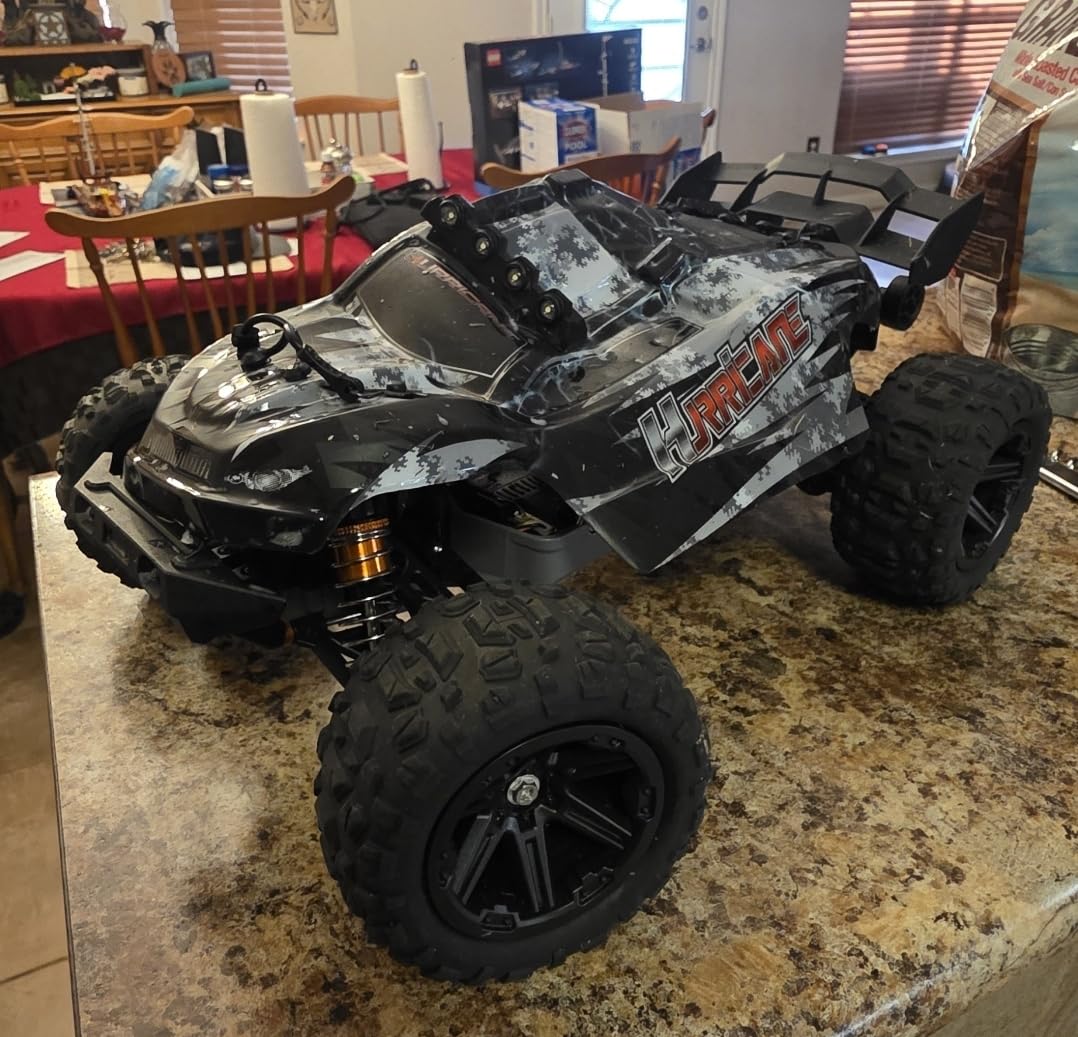
Two 7.4V 1300mAh LiPo packs with protection circuits deliver roughly 50 minutes of play, and the 2.4GHz controller with trim and speed buttons is deliberately beginner-friendly. The customized 390 brushed motor reaches 40 km/h on good road conditions with linear throttle rather than a jumpy on-off input.
The complaints are narrow and mechanical. Wheel-retention screws strip easily and the supplied driver can snap, and changing a tire means disassembly with hardware that is easy to damage. The motor is brushed, so there is no efficiency headroom for a bigger pack.
Who should buy the X-TMAGA 1:14
Buy it if durability is your first priority and your terrain is mixed. Grass, gravel, dirt, sand and even snow are within what the 90mm tires and adjustable shocks handle, and the 1:14 size stores far more easily than the 1:10 model at the top of this list.
It is a strong first hobby-grade truck for an adult or a teen who will treat it hard rather than carefully. The 50-minute dual-battery package also means shared driving works without a long wait.
Who should skip the X-TMAGA 1:14
Skip it if wheel changes will be a frequent thing. Anyone who drives through a lot of debris and pops tires will strip the retention hardware, and replacing that hardware properly is part of the cost of ownership with this chassis.
Also skip it if you want to crawl slowly over technical rock at walking pace. This is a fast all-terrain truck, not a trail crawler, and it is quick to overshoot obstacles rather than creep over them.
7. Desdoni 1:24 4WD Drift Car – Best Ready-Made Drift Set
Desdoni Remote Control Car RC Drift Car 2.4GHz 1:24 Scale 4WD 15KM/H High Speed Model Vehicle with LED Lights Drifting Tire Racing Sport Toy Car for Adults Boys Girls Kids Gift
1:24 scale 4WD
15 km/h
165 ft range
Two rechargeable batteries
Pros
- Drifts convincingly on hard floors with the included drift tires
- 4WD drive gives smooth controllable power slides
- Ships with both racing and drift tires plus six traffic cones
- Two rechargeable batteries so one charges while the other runs
Cons
- No throttle or speed adjustment with full-on forward and reverse only
- Spins easily and is hard for beginners to control
- No suspension so it cannot handle jumps
Drifting is the one driving style nothing else in this roundup is built for, and this car is sold as a complete set. It includes interchangeable racing tires and drift tires, six traffic cones to lay out a course, two rechargeable batteries, a USB charging cable, and front LED lights. You can have a running drift battle on a hard floor within minutes of opening the box.
The 4WD drivetrain is what makes it work. Rather than relying on a rear-wheel-drive slide that snaps into a spin, four-wheel drive produces a smoother, more controllable power slide at the 15 km/h ceiling. For learning drift angles, that difference is enormous.
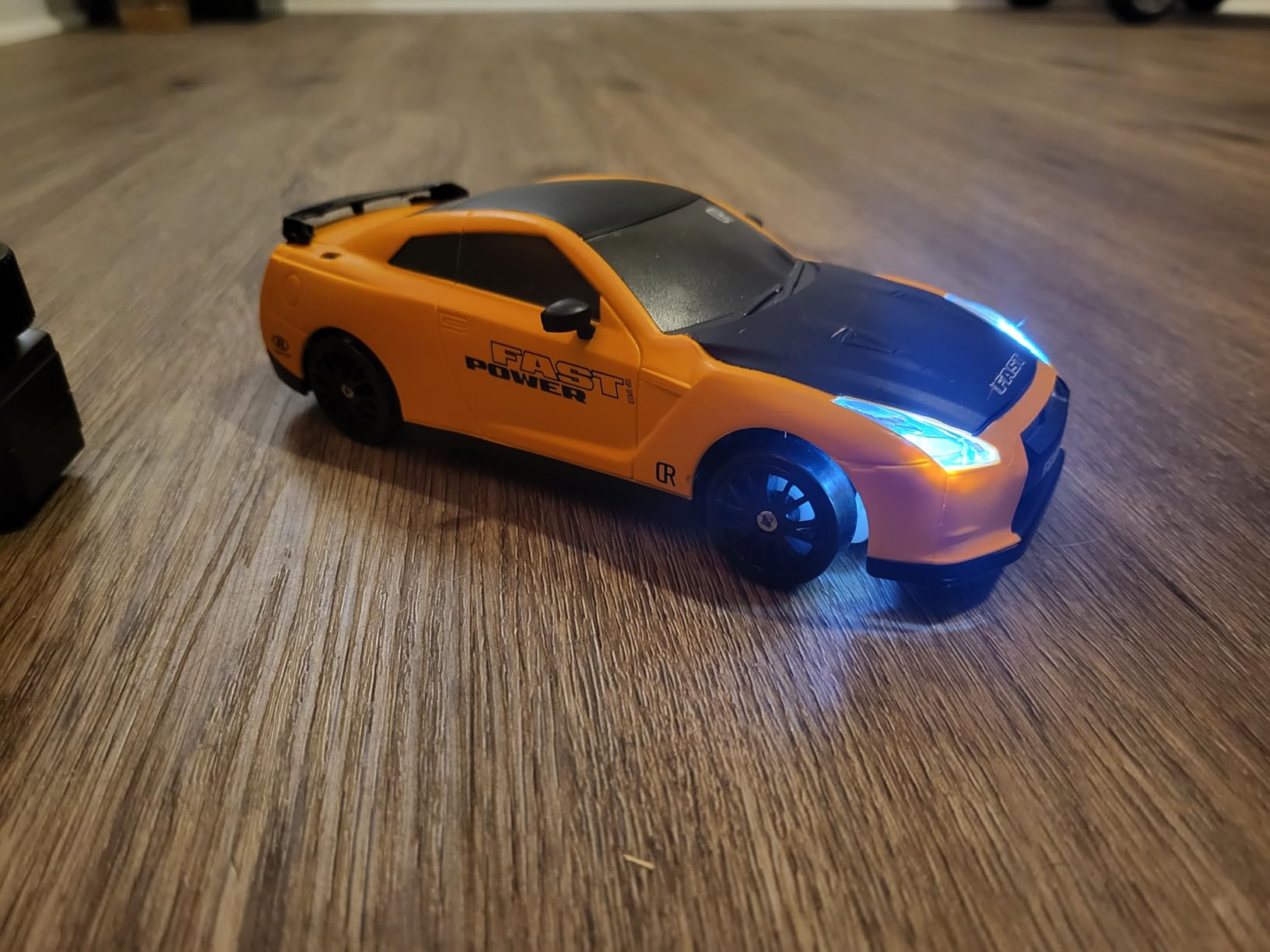
Owners like how tough it is. Reviewers report it taking a beating, including from pets pawing at it, without cracking, and the automatic pairing and 165 foot range mean no setup fuss. Charging takes about two hours for 20 to 30 minutes of play.
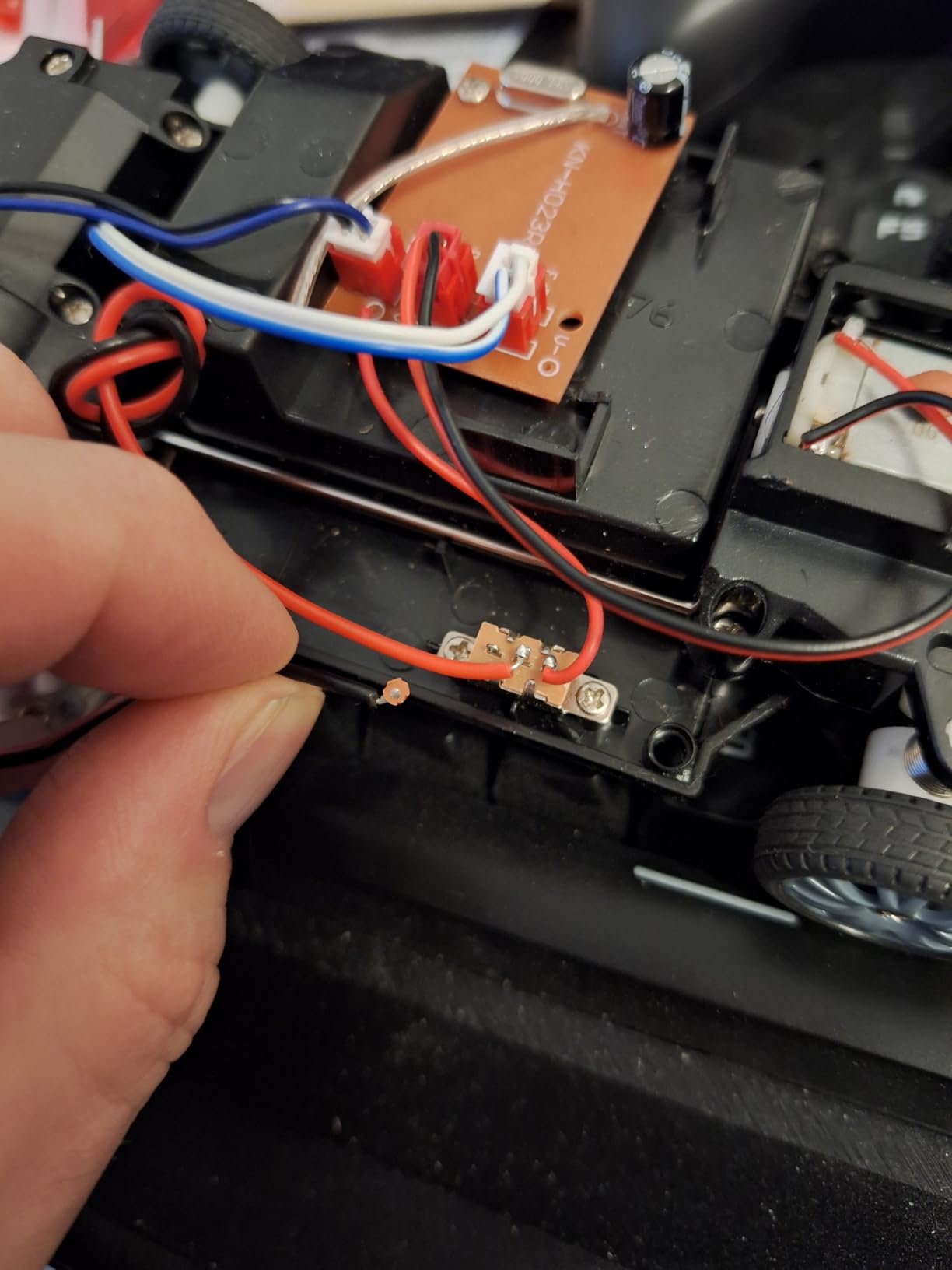
The control layout is the real limitation. There is no throttle or speed adjustment at all, only full-on forward and reverse, so a first-timer will spin it repeatedly. A small steering trim switch on the underside also pops off easily and is awkward to put back.
Who should buy the Desdoni drift car
Buy it if you want to try drifting without building a course or buying cones separately. The tire set and six cones turn a blank hardwood floor into a drift track, and the automatic pairing means no binding process to learn.
It is a good pick for an adult testing whether drift driving is interesting, and for older kids who have already mastered proportional control on a slower car.
Who should skip the Desdoni drift car
Skip it for a first RC car of any kind. Full-on throttle with no fine control is exactly the wrong introduction, and beginners tend to blame the car for the spins rather than learning the technique.
Also skip it outdoors. There is no suspension, the tires are designed for hard surfaces, and grass or gravel simply stops it.
8. BEZGAR 1:20 Monster Truck – Best for the Youngest Drivers
BEZGAR Monster Truck Toys, 1:20 Remote Control Car with Light & Music
1:20 scale
115 ft range
About 25 minutes of play
Three LED modes
Pros
- Performs 360-degree spins
- drifts and standing wheelies
- Three LED lighting modes plus music and sound effects
- 2.4GHz supports multi-truck play without interference
- Dinosaur-themed body appeals to younger drivers
Cons
- Roughly 20 to 25 minutes of play per charge
- Toy-grade plastic build rather than hobby hardware
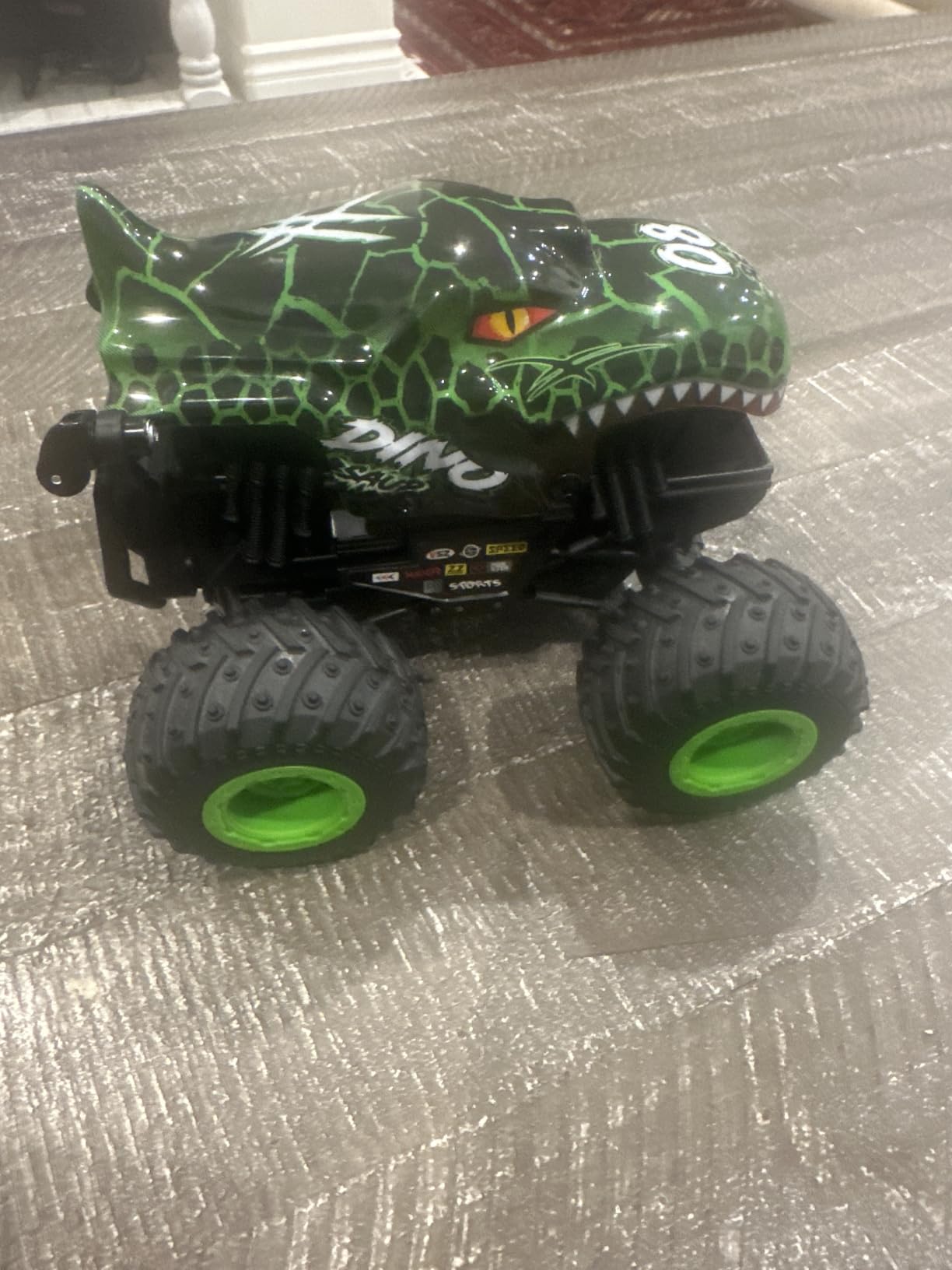
This is the car to buy when the driver is three or four years old and the priority is delight rather than performance. The dinosaur-themed body, the music and sound effects during driving, and three LED lighting modes do more work here than any mechanical specification would.
The stunts are real: 360-degree rotations, drifts and standing wheelies all happen on carpet or a smooth floor. The 1:20 scale is larger than the 1:24 models, which helps small hands, and the 2.4GHz system supports several trucks at once up to 115 feet, so siblings can race in the same room.
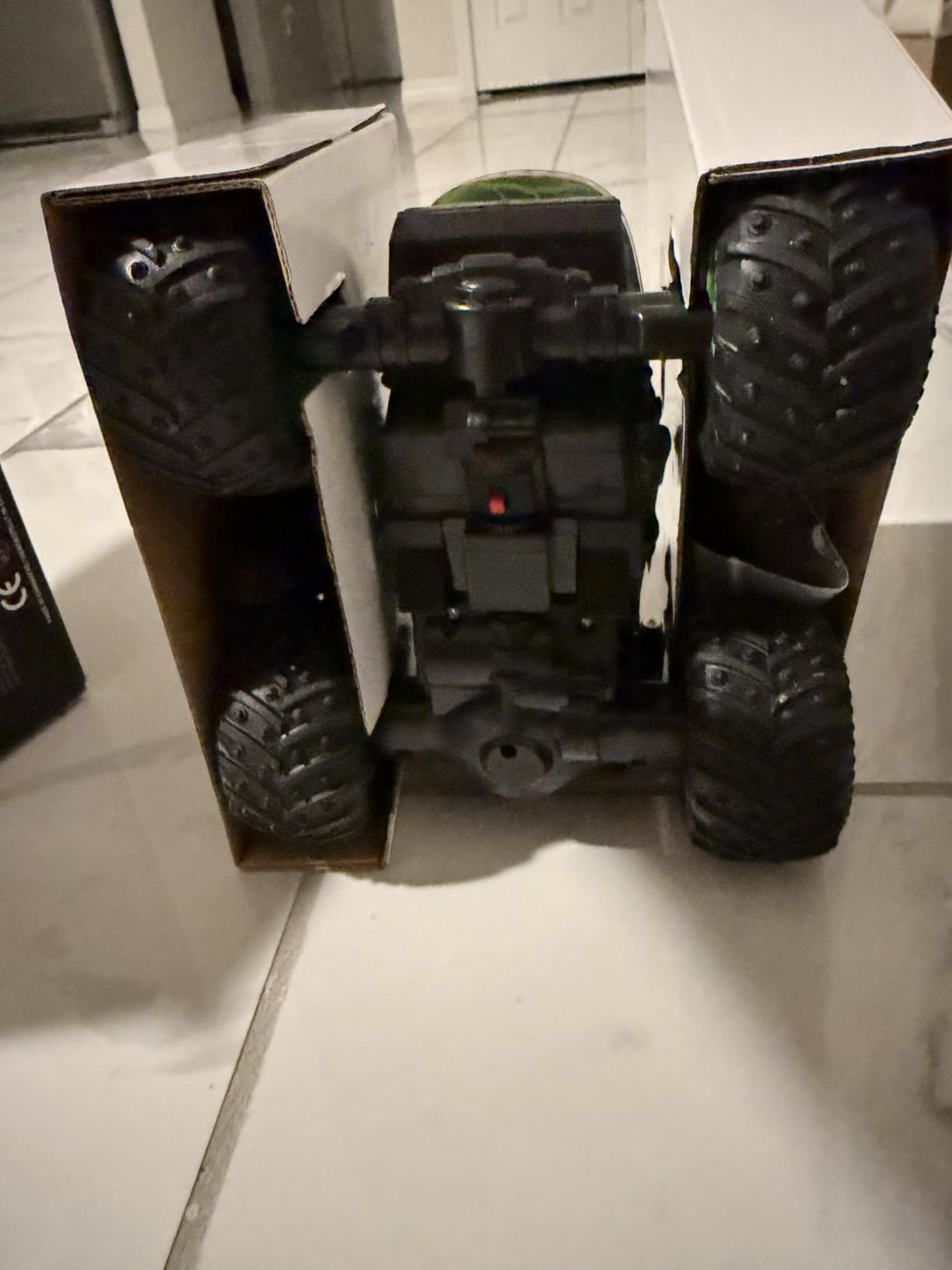
Owners confirm the feature set works as advertised and that interference-free multi-truck play works well in a busy room. The lights and sound effects are consistently called out as the reason the truck holds a child’s attention.
Runtime is about 25 minutes per charge, which is the real constraint here, and the build is toy-grade plastic rather than hobby hardware. For a preschooler that is acceptable. For anyone planning to grow into the hobby, it is not.
Who should buy the BEZGAR monster truck
Buy it for a toddler or preschooler who is not yet ready for proportional steering. A stunt-focused toy with lights and music holds attention in a way that a slow, accurate car does not at that age.
It also works well as a birthday gift alongside the QUNREDA stunt car, since the two serve clearly different ages and both support multi-car play.
Who should skip the BEZGAR monster truck
Skip it for anyone who might grow into the hobby. The toy-grade plastic build has no meaningful upgrade path, and 20 to 25 minutes per charge is short enough to end a session early every time.
It is also not an outdoor car. It has no sealed electronics and no suspension, so wet grass and rough ground are out.
9. HYPER GO H16DR 1:16 4WD Truck – Best Upgrade Path Under 100 Dollars
HYPER GO H16DR 1:16 Scale Ready to Run Fast Remote Control Car, High Speed Jump RC Monster Truck, Off Road RC Cars, 4WD All Terrain RTR RC Truck with 2 LiPo Batteries for Boys and Adults
1:16 scale 4WD
20+ mph on 2S
Aluminum oil-filled shocks
2S/3S ESC
Pros
- 20+ mph out of the box with jumps wheelies and flips supported
- Aluminum capped oil-filled shocks reduce high-speed shaking
- Honeycomb chassis with alloy steel driveshaft and metal ball bearings
- 70 percent throttle limit switch makes it usable for beginners
- Smart 2S/3S ESC allows a later jump to 3S
Cons
- Manufacturer lists a 14 years and up recommended age
- Brushed 390 motor rather than brushless
- Listed item weight is far below the real truck weight
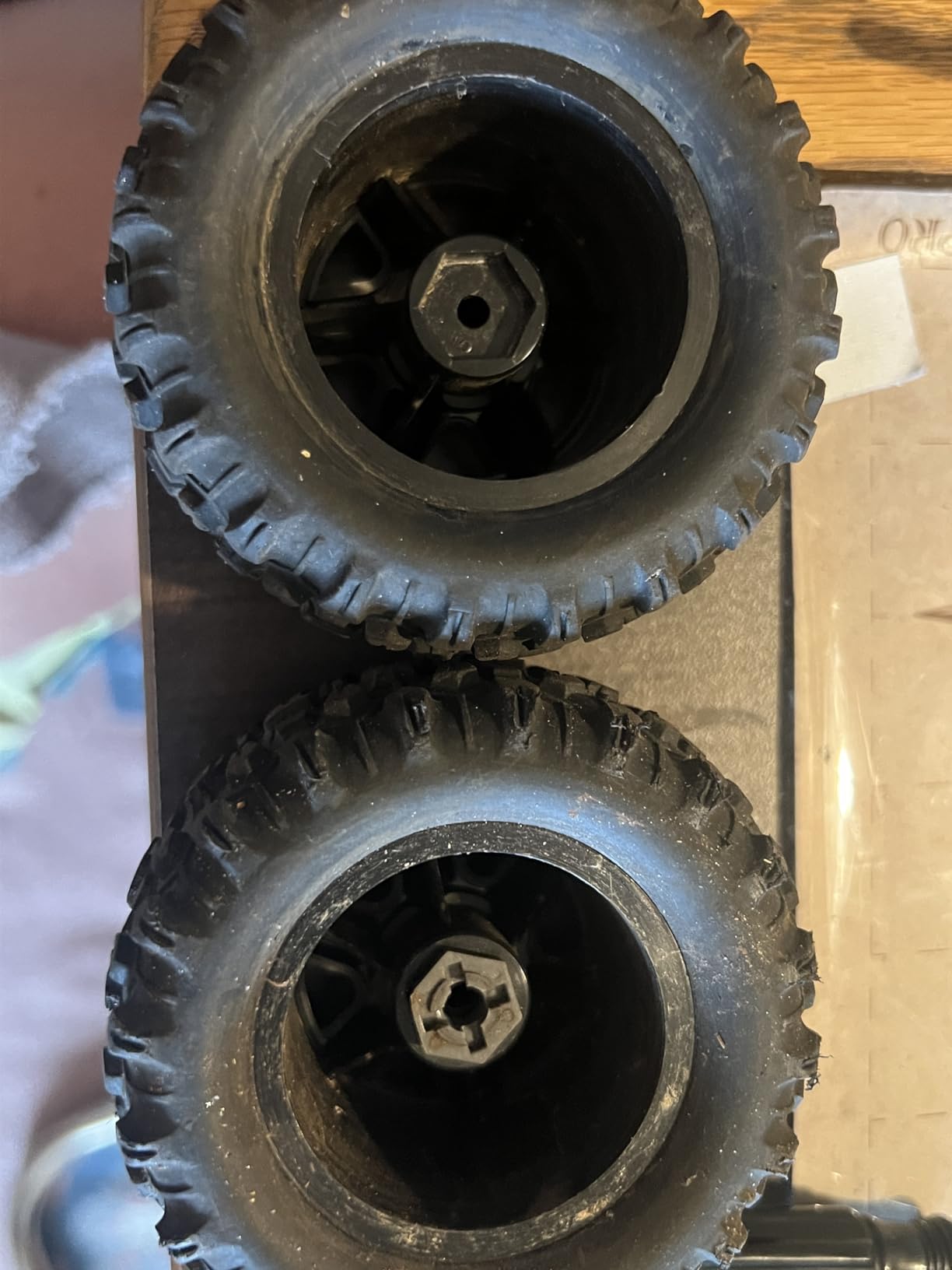
This is the most hobby-grade chassis in the roundup and the only one with a genuine upgrade path. The honeycomb chassis, alloy steel drive shaft, reinforced front and rear sheet, metal ball bearings and a gear differential are components you normally find on cars well above this bracket.
The smart 2S/3S ESC is what makes it future-proof. It arrives as a 2S 7.4V 1050mAh 25C LiPo setup delivering 20-plus miles per hour, and the same ESC accepts a 3S pack for 27-plus mph, or 45 kph. Rather than replacing the car when you outgrow it, you change a battery.
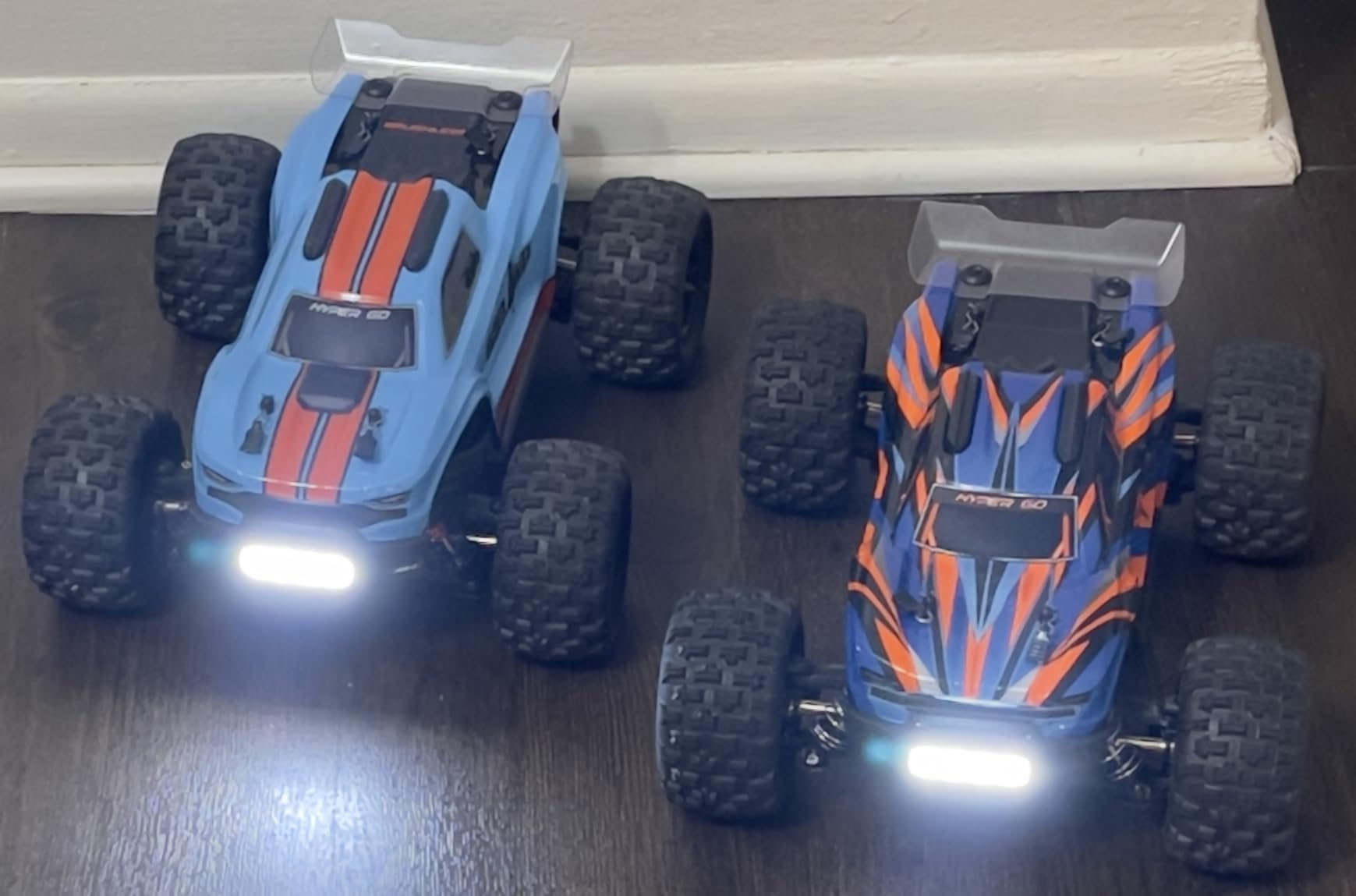
Aluminum capped oil-filled shocks are the other reason it feels better than its price suggests. They damp the chassis movement that makes cheaper trucks feel like they are bouncing rather than driving, and they are serviceable. A 70 percent throttle limit switch on the transmitter lets you tame the power for a newer driver and then remove the limit later.
Two things work against it. The manufacturer lists a recommended age of 14 and up, which is unusually adult-leaning for this price band, and the motor is a brushed 390 rather than brushless. The listed item weight of 100 g is also far below the real truck, so do not use it to judge how the car handles.
Who should buy the HYPER GO H16DR
Buy it if you are an adult or teen who intends to stay in the hobby and wants a chassis that can grow. The 3S upgrade path means your first battery is a starting point rather than a commitment, and the metal drivetrain survives the abuse that comes with learning jumps and flips.
It is also the pick if the idea of hunting for spare parts scares you. Components at this level are straightforward to source and the design is conventional enough that a hobby shop can help.
Who should skip the HYPER GO H16DR
Skip it as a gift for a young child despite the throttle limit switch. The speed, the jumps and the 14-and-up rating all point the same way, and younger drivers need an adult on the throttle for the first several sessions regardless.
Also skip it if you want a crawl. This truck is built for speed and stunts, and its 1:16 size and low chassis are not designed for slow technical rock lines.
10. Cheerwing 1:18 Rock Crawler – Best Entry Rock Crawler
Cheerwing 1:18 Rock Crawler 2.4Ghz Remote Control Car 4WD Off Road RC Monster Truck 2 Battery (Blue)
1:18 scale 4WD
2.4GHz
Ni-Cd pack and charger included
16 oz
Pros
- Crawls over pebbles and larger stones on strong shock action
- Oversize tires handle mud shallow water grass and paving
- Anti-collision structure and 4WD help it avoid getting stuck
- Ships complete with battery pack charger manual and transmitter batteries
Cons
- Older Ni-Cd battery pack rather than modern LiPo
- Lowest average rating in this roundup at 4.0
- Plastic body and simple electronics limit long-term durability
Rock crawling has its own rules, and this car is built for them rather than for speed. The 4WD drivetrain feeds torque to all four wheels, the strong shock action lets the suspension articulate over individual rocks, and the anti-collision structure keeps the chassis off the ground when it noses into an obstacle.
The oversize tires are the reason it works. They handle mud, shallow water, grass and paving, which is a wider surface list than most cars in this roundup can claim, and a crawler that can cross a wet lawn without a waterproofing caveat is refreshingly honest hardware.
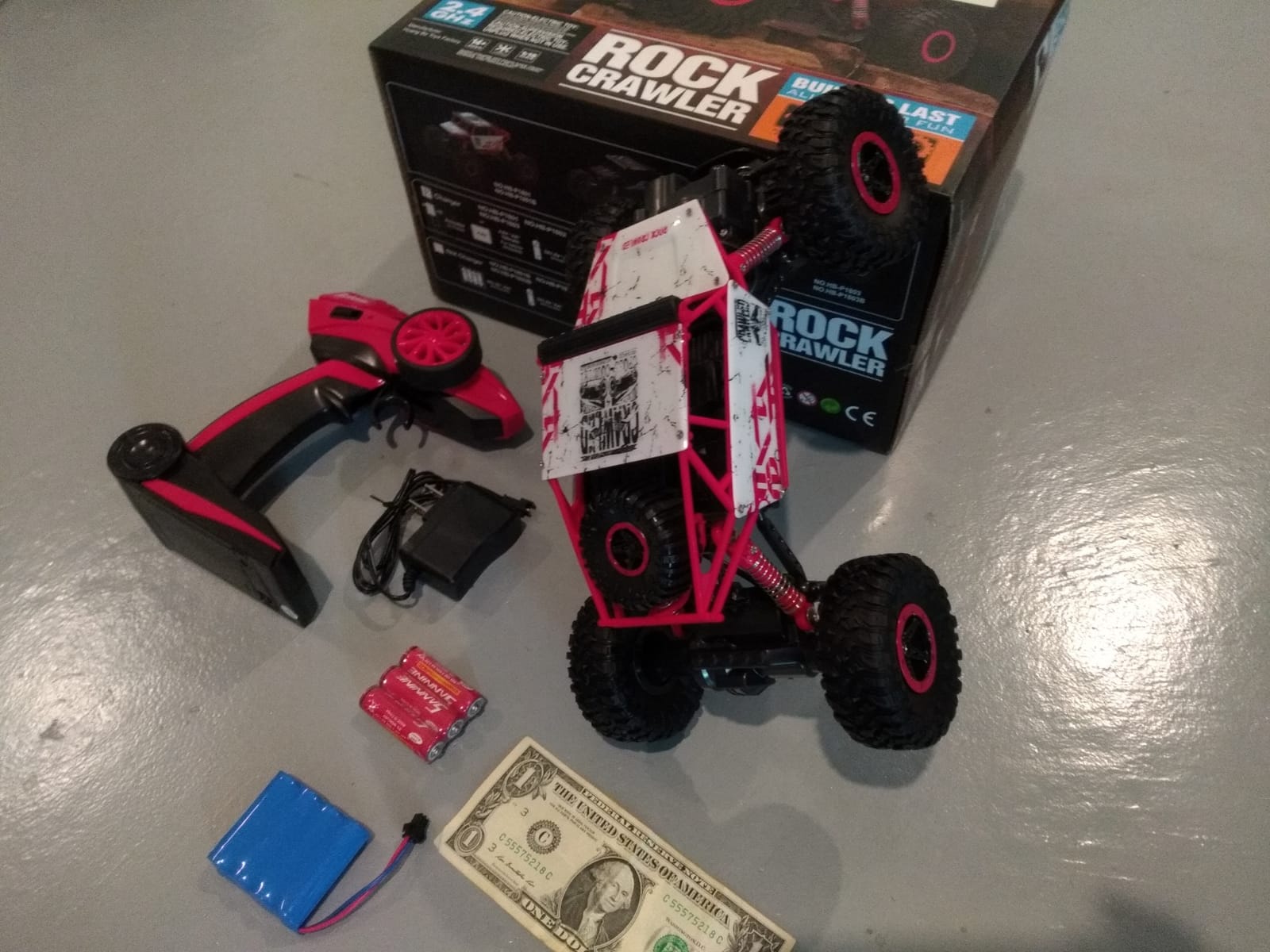
It also arrives genuinely complete. The 4.8V 700mAh Ni-Cd pack, the charger, the manual and the three AA transmitter batteries are all in the box, which for a first crawler removes the most common setup problem entirely.
The battery chemistry is the weakness. Nickel-cadmium is dated technology with lower energy density and a real memory effect, and the 4.0 rating reflects durability complaints about the plastic body and simple electronics. It is a car you will eventually want to upgrade rather than keep.
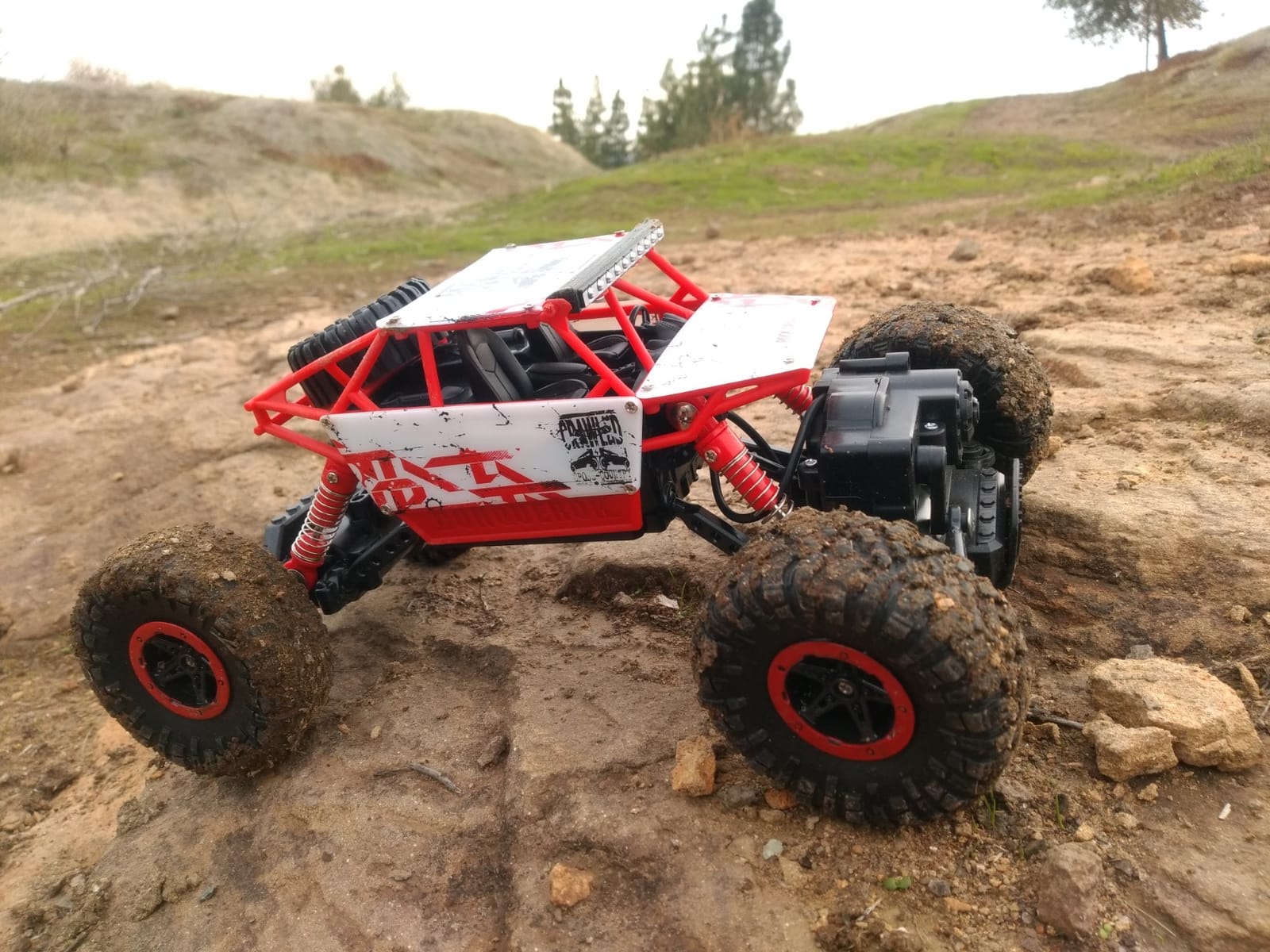
Who should buy the Cheerwing crawler
Buy it if rock crawling is the specific thing you want to try and you would rather not assemble anything. The complete ready-to-run bundle including the charger is unusual at this level and it means the car works out of the box on a driveway full of loose stone.
It is also a reasonable first crawler for a child who will drive slowly and carefully, since low speed suits a young operator better than a fast basher does.
Who should skip the Cheerwing crawler
Skip it if you care about the car surviving several seasons. The plastic body, simple electronics and Ni-Cd pack are the three things enthusiasts most often complain about, and the parts ecosystem is thinner than the four-wheel-drive trucks in this roundup.
Skip it for anyone who wants to go fast. There is no top speed story here, and the crawler tradeoff is deliberate.
11. Jiakora 1:12 4WD Truck – Best for Steep Slopes
Jiakora RC Cars Remote Control Car 1:12 Off Road Truck, Metal Shell LED Headlights Offroad Monster RC Truck, 4×4 All Terrain Hobby RC Cars Toys for Boys Kids Adults Gifts 8-12
1:12 scale 4WD
20 km/h
Climbs 45-degree slopes
1700 g
Pros
- Climbs 45-degree slopes and moves quickly on four large silicone tires
- Independent front and rear suspension with metal shock absorbers
- Two rechargeable batteries give 50 to 70 minutes of play
- ABS chassis with aluminium alloy body resists impacts
Cons
- Runs noticeably smaller than the 1:12 marketing suggests
- All-plastic suspension feels fragile to some owners
- Power switch failure reported within six weeks by one buyer
The headline capability is the 45-degree slope claim, and the four large silicone tires are what make it plausible. Grip rather than power gets you up a steep bank, and this truck has the rubber to do it while still moving at up to 20 km/h once it crests.
Independent front and rear suspension with metal shock absorbers is a step above the plastic friction dampers fitted to cheaper trucks, and it shows in stability. Owners report less rolling at speed and better behavior on uneven ground than the size class suggests.
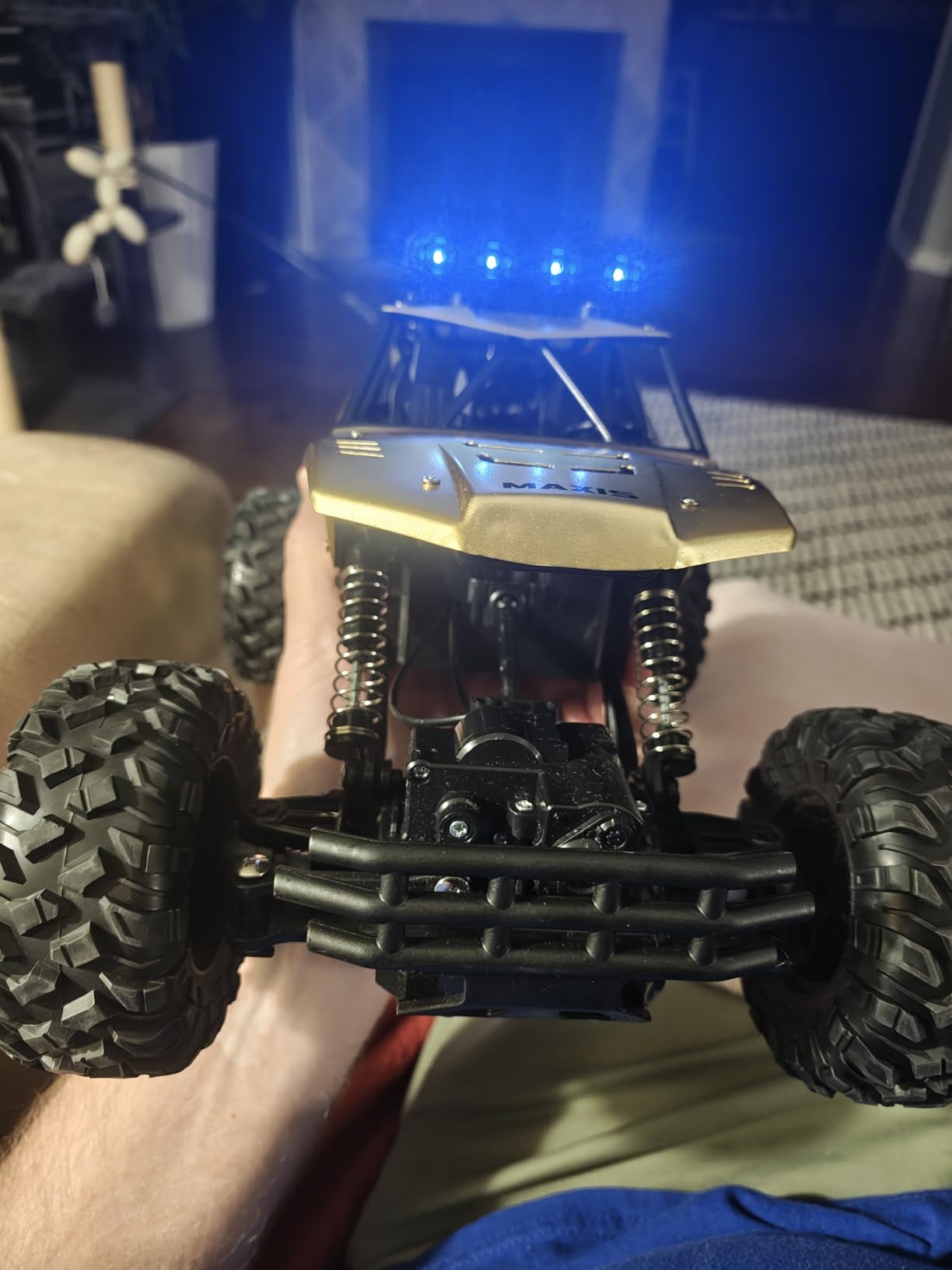
Two rechargeable batteries plus a USB cable deliver 50 to 70 minutes of play, which puts it among the longer-running packages here. The front and rear anti-collision bumpers and LED headlights round out a chassis that is clearly aimed at outdoor terrain rather than a bedroom floor.
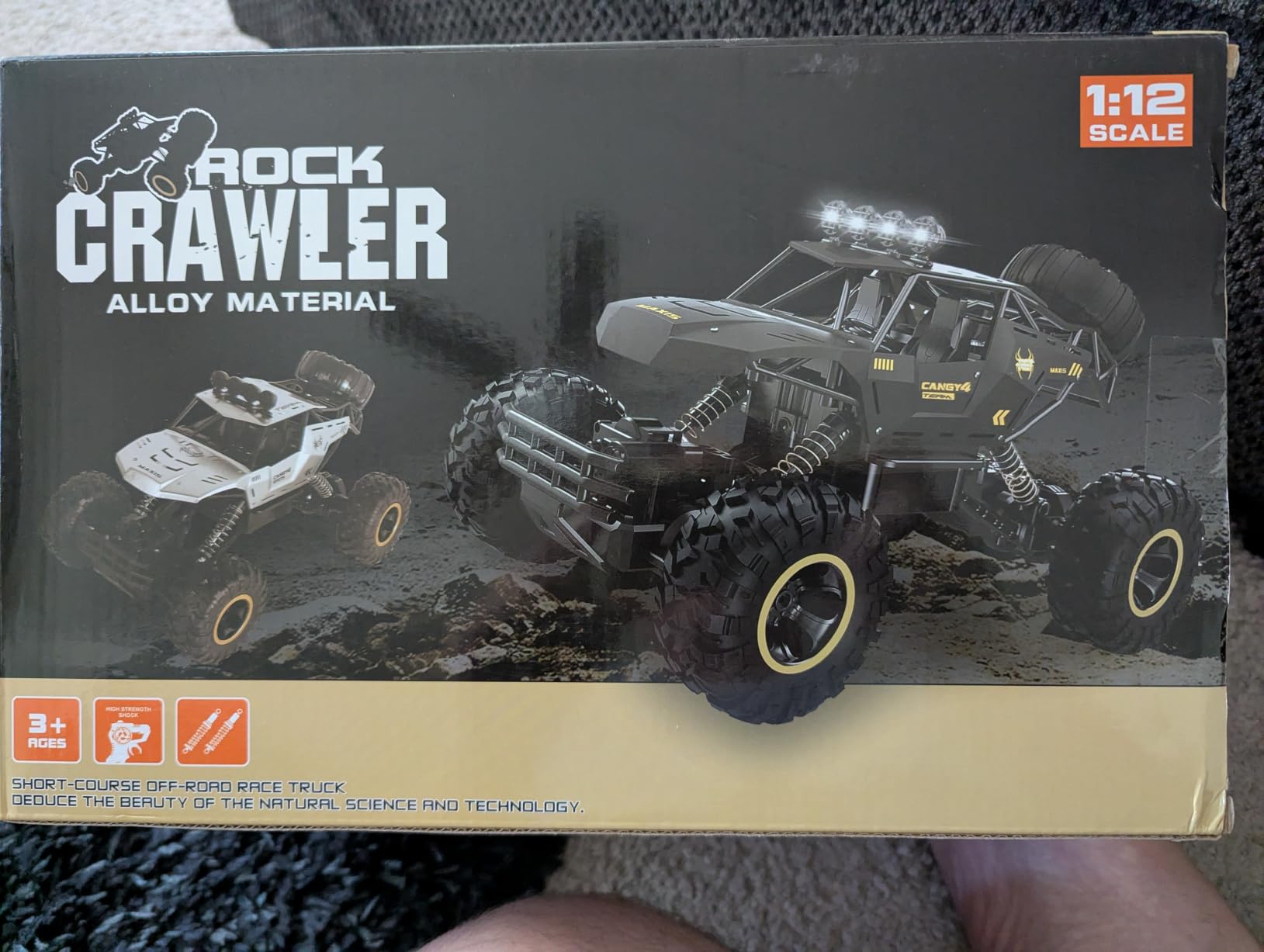
Expect it to be smaller than the listing photographs suggest. Owners consistently flag that the truck runs noticeably smaller than its 1:12 marketing implies, so measure before you commit to a tight storage spot. The suspension itself is still largely plastic, and one buyer reported a power switch failure within six weeks.
Who should buy the Jiakora 1:12
Buy it if your driving is on hills, banks or loose ground where traction is the constraint. The silicone tires and 4WD layout make it the steepest-slope capable option in this roundup at its size.
It is also a reasonable middle ground for a parent: quick enough to feel like a real truck, slow enough that a 20 km/h ceiling is manageable for a child learning throttle control.
Who should skip the Jiakora 1:12
Skip it if you want a large car. The scale labelling oversells the physical size, and anyone expecting a 1:12 monster truck will be disappointed on arrival. Judge the real dimensions from the measurements rather than the ratio.
The 4.1 rating and the plastic suspension also make it a poor choice for anyone who will hard-bash it repeatedly, since that is exactly the use that breaks the dampers.
12. ACAMMZAR 1:24 4WD Drift Car – Best for Controlled Drifting
ACAMMZAR RC Drift Car, 1:24 Remote Control Car for Kids, 20KM/H 4WD High Speed RC Cars with LED Lights, Two Batteries, Extra Drifting Tires, Vehicle for Adults Boys Girls
1:24 scale 4WD
20 km/h
Full proportional throttle
Two speed modes
Pros
- Full proportional throttle gives better speed control than most 1:24 drift cars
- Two selectable speed modes make it usable for beginners
- 4WD delivers stable drifting rather than wild spins
- Ships with drift tires racing tires and a barricade accessory
- Two 500mAh batteries give about 50 minutes of play
Cons
- Proportional throttle and steering feel insensitive and imprecise
- Indoor range is limited to roughly 10 to 15 meters
- Can scratch hard floors if driven carelessly
This is the drift car to buy if you have any interest in control. Most 1:24 drift cars offer full-on or full-off throttle, which makes them fun for ten minutes and then frustrating. The ACAMMZAR has full proportional throttle plus two selectable speed modes, so you can learn the technique instead of fighting it.
Adults buying a cheap indoor drift car are consistently the most enthusiastic reviewers of this model, and the reason is the control layout. The 4WD system produces smooth, stable slides rather than the wild spins its size class usually delivers, and 20 km/h is fast enough to hold an angle on a hard floor.

The box is well thought out for the price. You get drift tires, racing tires, a barricade accessory for setting up a course, two 3.7V 500mAh batteries totaling about 50 minutes of play, headlights and taillights, and a screwdriver. Two cars can be raced against each other out of the box.
The controls are still not what a hobby-grade transmitter offers. Sensitivity is imprecise, so fine corrections take practice, and the practical indoor range is closer to 10 to 15 meters rather than the stated 50. It will also scratch a hard floor if you slide it carelessly, and it needs regular cleaning to keep hair and dust out of the electronics.
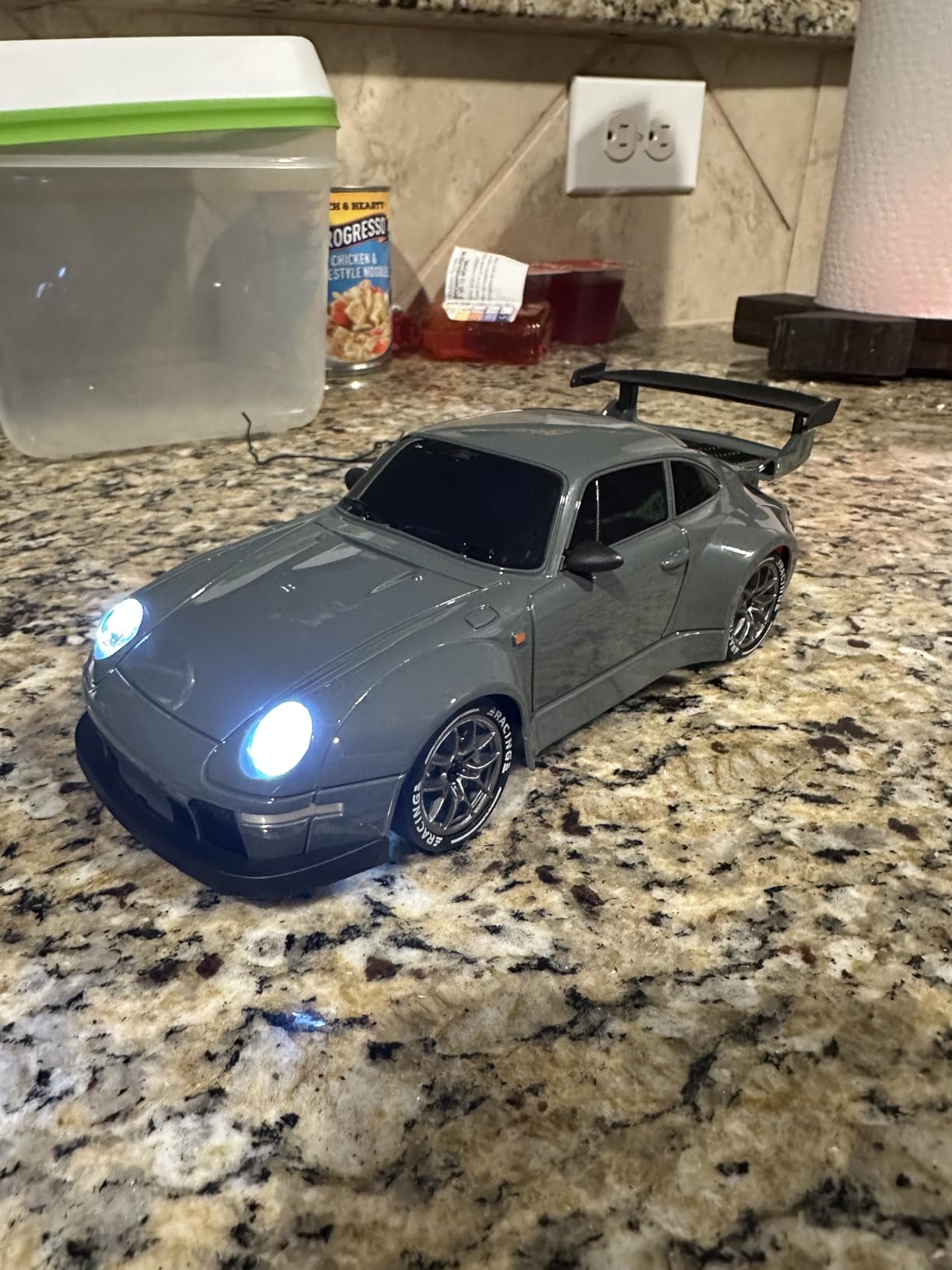
Who should buy the ACAMMZAR drift car
Buy it if you want to learn drifting properly on a budget. Proportional throttle with two speed modes is the correct teaching setup, and the included barricade lets you build a small course on a table or in a hallway.
It suits an adult picking up a hobby car casually as much as it suits a teen, because the speed modes let you back off as you get comfortable rather than being overwhelmed at full power.
Who should skip the ACAMMZAR drift car
Skip it if you want to drift outdoors. Grass and dirt kill a 1:24 car with no suspension, and the short practical range means it is an indoor-only vehicle despite the stated figure.
Also skip it if you have a delicate floor. Drift tires on hardwood or laminate will mark it, so test on a rug first if that matters.
How to Choose an RC Car Under 100 Dollars
Now that you have seen the field, the selection criteria matter more than any individual model. Five questions decide the purchase, and the forums are unusually consistent about the answers: which surface you drive on, whether the driver is a child or an adult, whether parts exist, whether the speed is controllable, and whether the battery plan makes sense.
Pick the terrain first. A smooth indoor floor calls for a 1:24 drift or stunt car. Gravel and mixed backyard terrain call for a four-wheel-drive truck with real ground clearance. A dirt trail with rocks and roots calls for a crawler with slow speed and long-travel suspension. This single decision eliminates most of the list for most people.
Brushed or brushless: which motor type matters at this budget
Brushed motors use carbon brushes that wear against the commutator. They are cheap, simple, tolerant of abuse and easy to replace, which is why nearly every car on this list uses one. Brushless motors run cooler, quieter and more efficiently, and they deliver noticeably more speed from the same battery.
At this price, brushed is the right call for a beginner because a brushed motor tolerates a stall and a hard landing without failing. A brushless motor does not. The exception is the HYPER GO H16DR, whose smart ESC accepts a larger 3S battery later, which is a cleaner upgrade path than replacing a motor.
For orientation, our best RC cars for adults guide covers what changes when you move into brushless hardware and proper hobby-grade transmitters.
2S or 3S LiPo: what the S number changes
The S number on a LiPo battery is the number of cells in series, and it is directly proportional to voltage. A 2S pack is 7.4V, which is the standard for this entire roundup, and a 3S pack is 11.1V. Roughly 50 percent more voltage means roughly 50 percent more speed from the same motor, and noticeably more heat as well.
You cannot simply fit a 3S pack to any car. The ESC has to be rated for it, which is why the H16DR is the only model here with that path explicitly supported. Running a 3S pack on a 2S-rated ESC will overheat it, and the failure mode is a burned controller.
Where two batteries are included, the practical benefit is session length rather than speed. You swap packs when the first runs down, and with a 70-minute combined figure the BLUEJAY 1:12 gives you the longest single session of any car here.
1/10, 1/12, 1/16, 1/18 or 1/24: picking a scale you can actually drive
Scale is a ratio against the real vehicle, so a 1:10 truck is roughly the size of a small hatchback and a 1:24 drift car is roughly the length of your hand. Larger cars have more ground clearance, larger tires and more room for suspension travel, and they store less conveniently. Smaller cars are cheaper to run, easier to carry and limited by available space.
A practical rule: pick 1:10 to 1:14 if you drive outdoors on rough ground and want obstacle clearance. Pick 1/16 to 1/18 if you want a mix of outdoor and driveway use with easier storage. Pick 1/24 if you are driving indoors on a floor and want agility rather than durability.
For scale-specific buying criteria across other vehicle types, our RC helicopter guide and RC plane guide apply the same budget logic to different airframes.
Will It Survive and Can You Fix It?
This is the section that decides most purchases, and it is the one competitors almost never cover. Ask on r/rccars what a first RC car should be and the same answers repeat: buy something durable, and buy something with parts available. A car that survives the crash is a car you keep driving; a car without a parts ecosystem is a car you replace.
Look at the drivetrain and the shocks before anything else. Metal oil-filled shocks, metal drive shafts, ball bearings, a metal gear differential and independent suspension are the components that tell you whether a crash is a cosmetic event or a write-off. The DEERC 9206E and the HYPER GO H16DR score well here, and the Tecnock and BEZGAR cars do not.
Then check whether the transmission is serviceable. A sealed gearbox with no available replacement is the deal-breaker forum users name most often. Brands with real parts ecosystems in this range are Haiboxing, DEERC, MJX and HyperGo, plus the mainstream hobby names that appear repeatedly in enthusiast threads for durability and parts support.
Finally, factor in what breaks first. On this list, that is usually the body clips, the tires, the shock shafts and the steering assembly. All four are replaceable on the 1:12 to 1:18 trucks. On the toy-grade 1:20 and 1:24 cars, they are frequently not, which is the practical difference between a hobby-grade vehicle and a toy.
If you want the adult-oriented view of durability and parts support, our drift RC car guide goes deeper on the indoor side of the same question.
What 100 Dollars Does Not Cover
Almost every car in this roundup includes at least one battery, which is unusual and welcome. What several of them do not include is a charger worth trusting. That is the hidden cost in this category, and it is why the sticker price is a poor guide to what you will actually spend in the first month.
Plan for a balance charger rather than the included USB cable if you intend to keep the car for more than a season. A cable charger that does not balance cells shortens pack life noticeably, and replacing two or three packs over a year removes most of the money you thought you saved by picking the cheapest car.
A second battery is the other line item, and here the math is simpler. Most cars here ship with two packs, which is why we ranked runtime so heavily. For the single-battery models, budget for a matching pack before the first weekend rather than after the first complaint.
LiPo safety is worth a sentence of its own. Store packs at partial charge, keep them away from heat and direct sun, and use a proper charger. Puffed or damaged packs should not be flown or charged, and if a pack has been stored fully charged and cold for months, expect reduced runtime until it is cycled a few times.
Finally, think about what a sub-100-dollar car leaves out. You are not getting a proper hobby-grade transmitter, a sealed waterproof electronics package, a genuinely metal-geared transmission across the board, or a parts catalogue you can order from a specialist shop. You are getting a good weekend car with a real chance of becoming a hobby if you pick one with an upgrade path.
Frequently Asked Questions
What is the best RC car for under 100 dollars?
The best RC car under 100 dollars is the DEERC 9206E 1:10 4WD monster truck, which pairs a large chassis with metal oil-filled shocks, proportional throttle and steering, and two batteries in the box. The HAIBOXING 18859 1:18 is the better value pick, and the HYPER GO H16DR is the one with a genuine battery upgrade path. The right choice depends mainly on whether you drive indoors or outdoors.
What is the best RC car for a first-time beginner?
For a first-time beginner we would start with proportional throttle and steering rather than raw speed, because that is what makes a car controllable. The HAIBOXING 18859 1:18 fits that brief, with a slow speed mode, two batteries and hardware that tolerates crashes. Adults who want to stay in the hobby should consider the HYPER GO H16DR, which can be upgraded to 3S later.
Are cheap RC cars under 100 dollars any good?
Yes, within limits. Cars in this range that use metal oil-filled shocks, metal drive shafts, a gear differential and independent suspension survive real use, and several carry owner reports of months without a major failure. What they lack is parts depth and electronics sealing. Cars built entirely from plastic with a sealed transmission are disposable regardless of what the listing claims.
What scale RC car is best for a beginner?
A 1:18 scale truck is the most useful starting point for most beginners. It is big enough to handle gravel and grass, small enough to store easily, and available with the ball bearings and solid gear differentials that make a chassis durable. Choose 1:10 or 1:14 for rough outdoor terrain and maximum clearance, or 1:24 if you plan to drive indoors on a smooth floor only.
Should I buy a brushed or brushless RC car?
Buy brushed at this budget. Brushed motors are cheaper, easier to replace and far more tolerant of stalls, crashes and beginner mishandling. Brushless motors are faster, quieter and more efficient but need a matching ESC and behave badly when stalled. The exception is a car with a smart 2S/3S ESC, which lets you gain speed later with a bigger battery instead of replacing the motor.
Can you find replacement parts for cheap RC cars?
It depends entirely on the brand. Haiboxing, DEERC, MJX and HyperGo have circulating aftermarket parts for common models, and mainstream hobby names have deep catalogues. Toy-grade cars with sealed transmissions usually have nothing available beyond generic shells. Before buying, search the exact model number plus the part you are likely to need, and check that the listing exists before you commit.
Which RC Car Under 100 Dollars Should You Buy?
If you are buying for a child, match the car to the age rather than the specification. A three- to five-year-old gets the BEZGAR monster truck with its lights, music and stunts. A six- to eight-year-old gets the QUNREDA stunt car, where the swappable batteries and simple two-button control prevent frustration. An older child heading outdoors gets the HAIBOXING 18859 1:18.
If you are an adult buying your first RC car, the DEERC 9206E is our pick for the best RC cars under 100 dollars. It is the largest chassis we could find at this ceiling, the hardware is the most complete, and the two included batteries mean you can keep driving while one charges. Choose the HYPER GO H16DR instead if you expect to stay in the hobby, since its 3S-capable ESC turns a starter car into a faster one without a new purchase.
For specific driving styles: the Cheerwing 1:18 crawler is the one for slow rock lines, the ACAMMZAR is the one for learning to drift on a hard floor, and the Desdoni drift set is the one if you want cones and both tire types included. For the steepest hill outside your house, the Jiakora 1:12 grips well on slopes where other trucks in the roundup bog down. The X-TMAGA 1:14 is the toughest per owner reports, and the Tecnock buggy is the cheapest way to find out whether any of this is for you.
Whatever you choose, buy a balance charger if the included one is a basic USB cable, keep spare LiPo packs charged at partial charge between sessions, and start on the low speed setting. The best RC cars under 100 dollars are the ones still running three months from now, and that outcome depends more on how you treat the battery than which model you pick.