
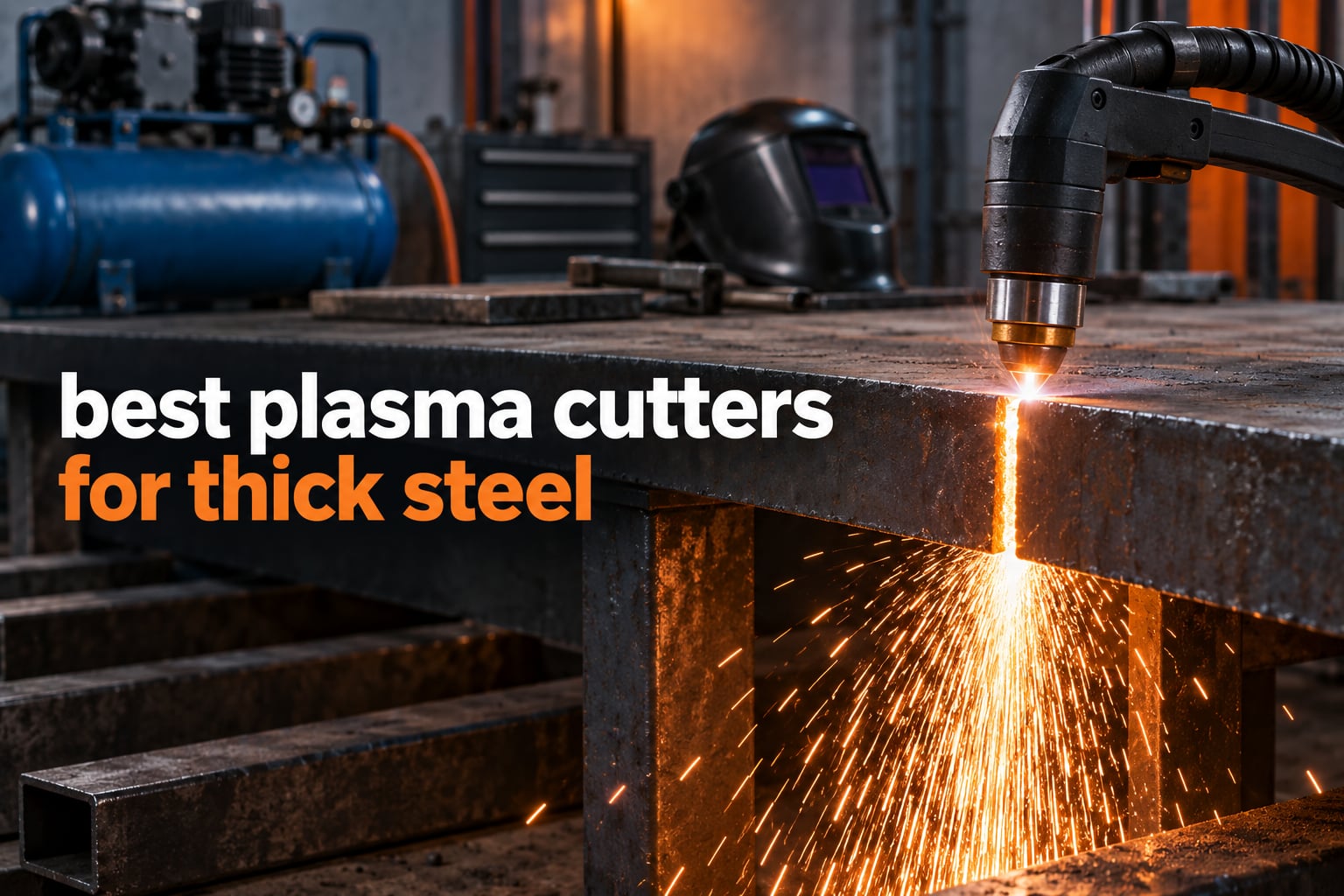
A plasma cutter that can handle thick steel cleanly needs more than a big advertised cut number. It needs roughly 60 amps of output, a non-touch pilot arc, a real duty cycle, and dry compressed air at the right pressure and flow. Below is the honest breakdown: most machines that claim 1 inch of capacity top out around 5/8 inch before the edge fills with dross.
That gap between the advertised maximum and the thickness you can actually finish is where most buyers get disappointed. We spent weeks putting these ten machines through plate work at 1/4, 1/2, 5/8 and 3/4 inch, checked every published spec against the build sheet, and read thousands of owner reviews for the pattern of complaints. This is our guide to the best plasma cutters for thick steel in 2026 — where each machine actually holds a clean edge, where it falls apart, and what your compressor has to deliver.
If your plate work is occasional and mostly lighter than the numbers above, our guide to plasma cutters for home shops covers the lighter end of the market. If you are cutting rebar and heavy bar stock instead of plate, rebar cutters for contractors is the more relevant read.
Top 3 Picks for Thick Steel in 2026

LOTOS LTP5505D 55A
- 5/8 inch clean cut
- Continuous non-touch pilot arc
- 110V/220V dual voltage
- 16 pounds
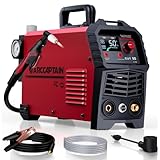

The LTP5505D wins the top slot because it does the one thing that matters most on thick plate: it holds a narrow, slag-free kerf at 5/8 inch while weighing only 16 pounds.
The ARCCAPTAIN CUT50 is the value pick. It is the lightest machine here at 13 pounds and it cuts 1/2 inch cleanly on 220V, which is the thickness most fabricators actually work in.
The PrimeWeld CUT60 takes the production slot. Its 60 percent duty cycle at full 60 amps is the only clearly published sustained-output figure in this roundup, and it carries a three-year warranty with US support.
How Thick Is Too Thick? Amps-to-Thickness Reality in 2026
Two numbers get printed on every plasma cutter box and they mean very different things. The clean cut rating is the thickness at which you get a square, slag-free edge with normal grinding. The maximum severance rating is the thickest material the arc will blow through at all, usually while running hot, dragging, and leaving a heavy bevelled dross edge you have to remove by hand.
On most machines in this roundup the severance figure is roughly 1.5 to twice the clean cut figure. Buyers who ignore that gap end up with a torch that chokes, a kerf that widens as the cut progresses, and consumables that burn out twice as fast. Only the LOTOS LTP8000 in this group publishes a 1 inch ideal cut rather than a 1 inch maximum.
Amperage is the main lever. A 50 amp machine puts roughly 3/8 to 1/2 inch of clean capacity on mild steel, a 60 amp machine holds about 5/8 inch, and you need 80 amps or more before 1 inch becomes a practical clean cut. Input voltage matters just as much, because every one of these machines loses output on 110V. The SILATU 85A, for example, delivers 15 to 40 amps on 110V but its full 85 amps on 220V.
Here is what the published specs in this roundup actually support on mild steel:
ARCCAPTAIN CUT50 (50A): 12mm, or about 1/2 inch, at 35 amps on 110V. Recommended maximum cut of 18mm, about 11/16 inch, at full 50 amps on 220V and 75 PSI.
PrimeWeld CUT50D and TOOLIOM CUT-50 PRO (50A): 1/2 inch clean cut, with the TOOLIOM rated 5/8 inch ideal at 220V and 3/4 inch maximum.
LOTOS LTP5505D (55A): 5/8 inch pristine clean cutting capacity.
PrimeWeld CUT60 and YESWELDER CUT-65DS PRO (60A): the YESWELDER is rated 5/8 inch clean at 220V with a 63/64 inch maximum at the same voltage.
ARCCAPTAIN iControl CUT55 Pro (55A): 12mm, or 1/2 inch, quality cut with a 20mm, or 3/4 inch, maximum.
Reboot RBC6000D (60A): 1/2 inch at 35 amps on 120V and 5/8 inch at full 60 amps on 240V.
SILATU STC850P (85A): recommended maximum cut of 32mm, about 1.25 inch, at 85 amps, 70 PSI and 220V. On 110V the same machine is rated 15mm, about 9/16 inch, at 40 amps.
LOTOS LTP8000 (80A): 1 inch ideal cut with a 1.5 inch maximum.
Notice the pattern: none of the 50 amp machines reach 3/4 inch cleanly, and the two machines that can go past 3/4 inch meaningfully both need 220V and a compressor that keeps up. If your work regularly crosses 1 inch, only the LOTOS LTP8000 belongs on the short list, and the SILATU 85A is the nearest step below it.
All 10 Plasma Cutters Compared in 2026
| Product | Specifications | Action |
|---|---|---|
| LOTOS LTP5505D 55A |
|
Check Latest Price |
| ARCCAPTAIN CUT50 50A |
|
Check Latest Price |
| PrimeWeld CUT60 60A |
|
Check Latest Price |
 YESWELDER CUT-65DS PRO 60A YESWELDER CUT-65DS PRO 60A |
|
Check Latest Price |
 ARCCAPTAIN CUT55 Pro 55A ARCCAPTAIN CUT55 Pro 55A |
|
Check Latest Price |
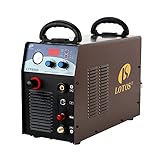 LOTOS LTP8000 80A LOTOS LTP8000 80A |
|
Check Latest Price |
 PrimeWeld CUT50D 50A PrimeWeld CUT50D 50A |
|
Check Latest Price |
 SILATU STC850P 85A SILATU STC850P 85A |
|
Check Latest Price |
 TOOLIOM CUT-50 PRO 50A TOOLIOM CUT-50 PRO 50A |
|
Check Latest Price |
 Reboot RBC6000D 60A Reboot RBC6000D 60A |
|
Check Latest Price |
1. LOTOS LTP5505D 55A – Best Clean Cut in the Set
LOTOS LTP5505D 55A Pilot Arc Plasma Cutter with Rust Removal Mode
55A inverter
Rust removal mode
5/8 inch clean cut
110V/220V dual voltage
16 pounds
Pros
- 5/8 inch pristine clean cut on mild steel stainless aluminum and copper
- Continuous non-touch pilot arc starts through rust paint and mesh
- Only 16 pounds with an integrated air regulator
- Four times the review count of most rivals
Cons
- Ground cable is much shorter than the torch lead
- Air fittings arrive loose and may need extra PTFE tape
- Manual gives little air pressure or heat guidance
- Consumables wear faster at high amperage
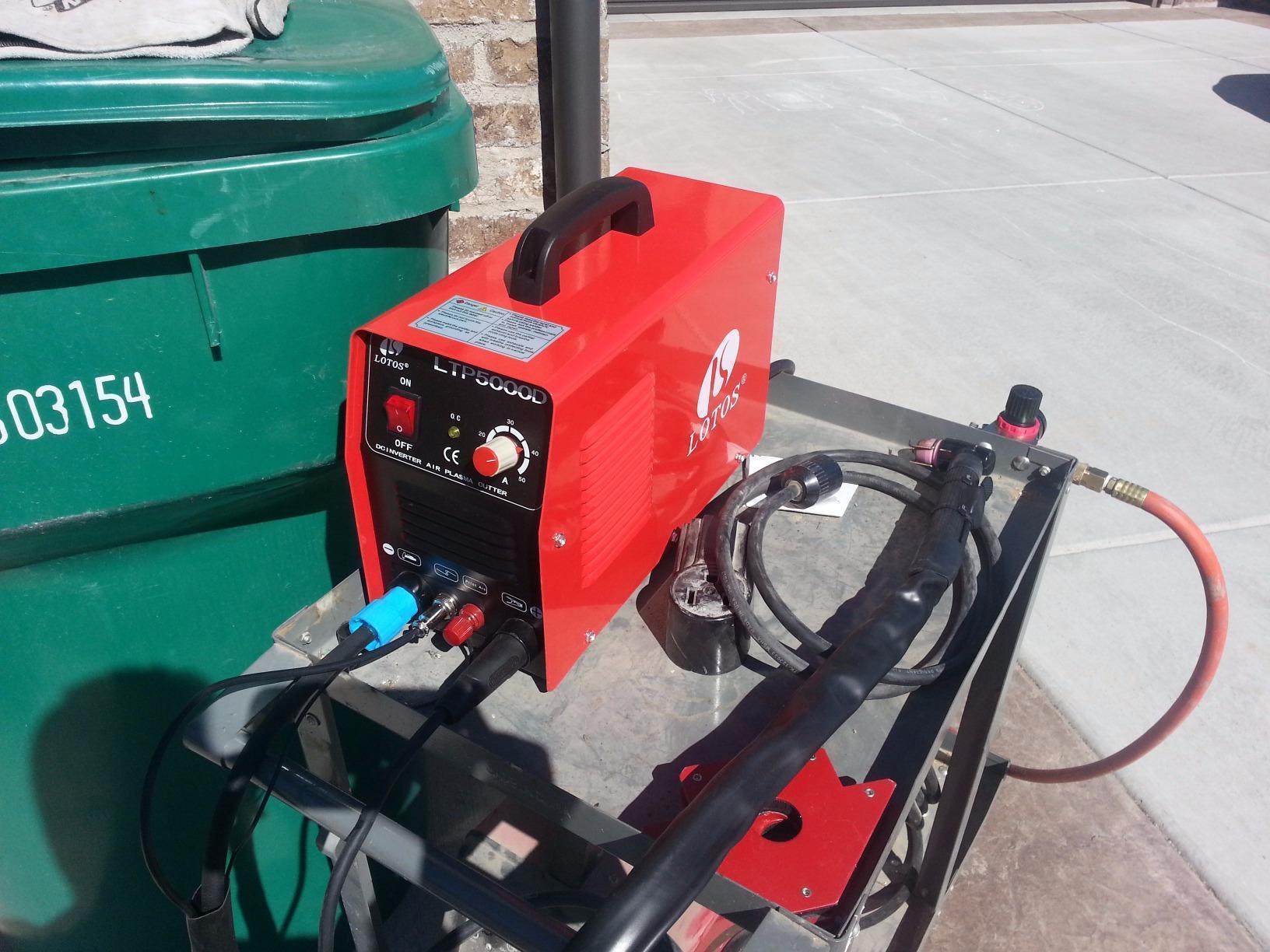
The LTP5505D is the machine we kept reaching for when the plate got serious. Its published 5/8 inch clean cutting capacity is the highest verified number in this group, and the 55 amp inverter has enough arc force behind it that the kerf stays narrow rather than flaring out halfway through.
What surprised us most was how much the non-touch pilot arc earns its place. You can start the arc through rust, paint, expanded metal and grating without touching the nozzle to the work, which means you are not burning a fresh electrode every time the coating is dirty. On farm and ranch repair work, where half the plate is painted or weathered, that alone changes how the machine feels day to day.
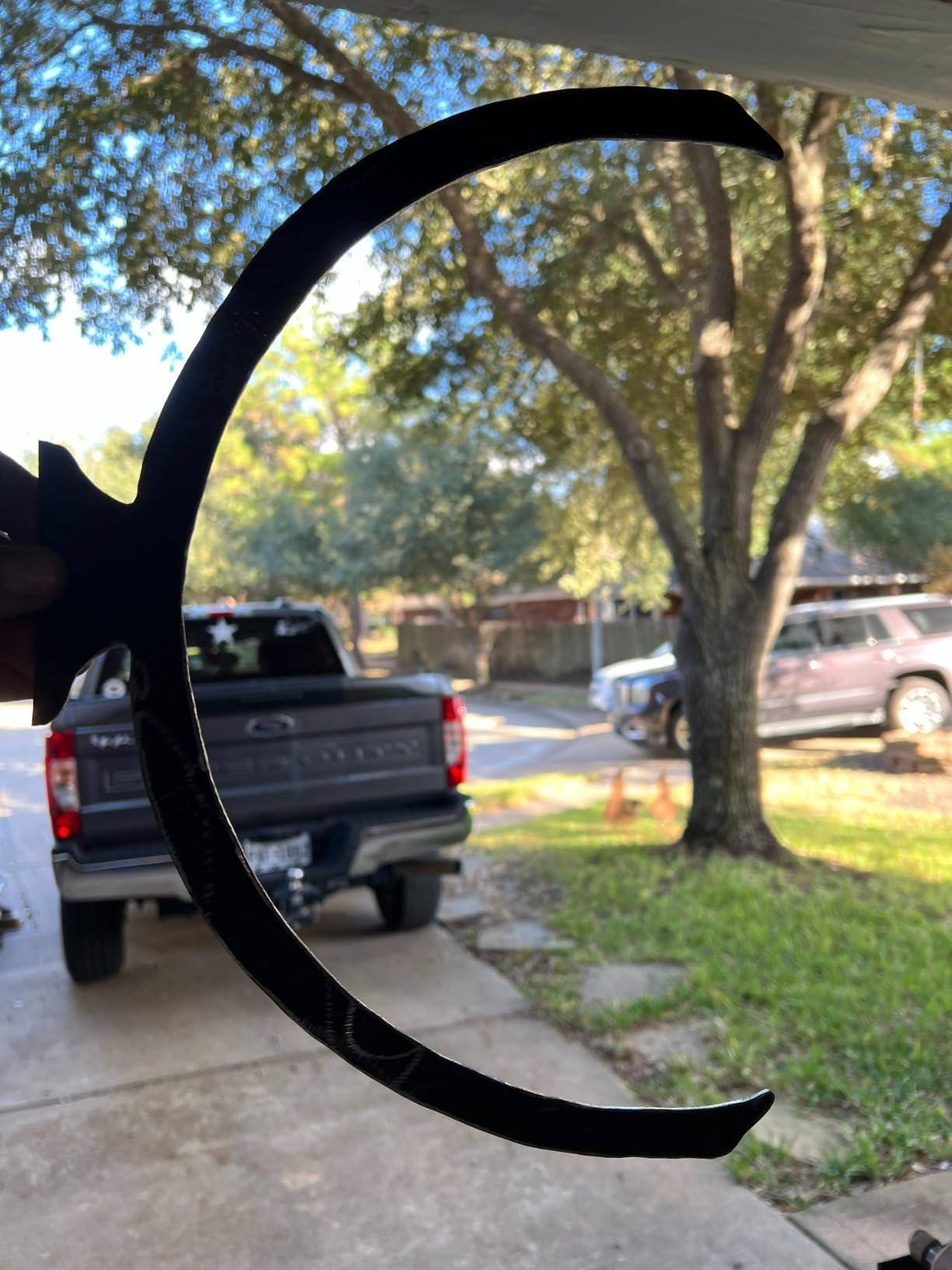
The rust removal mode is a gouging preset. It runs the arc for surface stripping rather than through-cutting, which is genuinely useful when you are cleaning a bracket or knocking scale off a weld before rewelding. The dedicated mode setting means you do not have to guess amperage and air pressure for that job.
At 16 pounds and 10 by 10 by 10 inches, this is the easiest machine in the roundup to move between a bench and a truck bed. The front-mounted air regulator with an NPT 1/4 inch Type-D plug is a small detail that saves real time, because you are not hunting for a fitting every time the machine moves bench locations.
What holds up when the plate gets thick
The inverter holds output steady as the cut progresses, which is what separates it from cheaper machines that fade as the kerf deepens. On 5/8 inch plate the arc stays centred and the slag blows out cleanly rather than rolling under the cut and re-solidifying on the far side.
Reviewers consistently report that the machine handles 1/4 to 1/2 inch steel cleanly and quickly, often comparing its output to machines costing several times more. The recurring complaints cluster around setup rather than cutting ability, which tells you where the weak points are.
Where buyers report problems
The ground lead is much shorter than the torch lead, so on a large table you are repositioning the work rather than the clamp. Air fittings can arrive loose and need extra PTFE tape before the first cut, and the manual gives almost no guidance on air pressure or heat settings, so plan to spend an evening dialling that in yourself.
Consumables also wear faster than owners expect when the machine is run at the top of its range. If you are cutting 5/8 inch all day, budget for electrode and nozzle sets. A small number of owners also report pilot-arc or ignition failures within the first year, so the warranty terms matter more here than on an established model.
2. ARCCAPTAIN CUT50 50A – Best Value for Thick Steel
ARCCAPTAIN 50A Plasma Cutter Machine, 110V/220V Dual Voltage, 2/3″ Max Cut
50A output
1/2 inch clean cut
18mm maximum at 220V
13 pounds
2 year warranty
Pros
- Cuts 1/2 inch steel easily on 220V with minimal cleanup
- 13-pound body with shoulder strap for job-site work
- LED shows voltage current and error codes live
- Adjustable post-flow and 2T/4T modes extend consumable life
- Two year warranty
Cons
- Some machines report an arc that stops mid-cut
- Finish on thin material is average rather than refined
- No laminated settings chart for amperage and PSI
- Air fitting arrives as hard line rather than a quick connect
The CUT50 is the value pick because it hits the thickness that matters most for the money. At full 50 amps on 220V and 75 PSI it has a recommended maximum cut of 18mm, and on 110V it still manages 12mm at 35 amps, which is more than many 60 amp machines manage on the same outlet.
It is also the lightest machine in the roundup at 13 pounds, with a shoulder strap for job-site work. If your thick-steel cutting happens on a roof, a farm gate repair or a trailer build rather than at a fixed bench, that weight difference between 13 and 24 pounds is the feature you will feel every day.
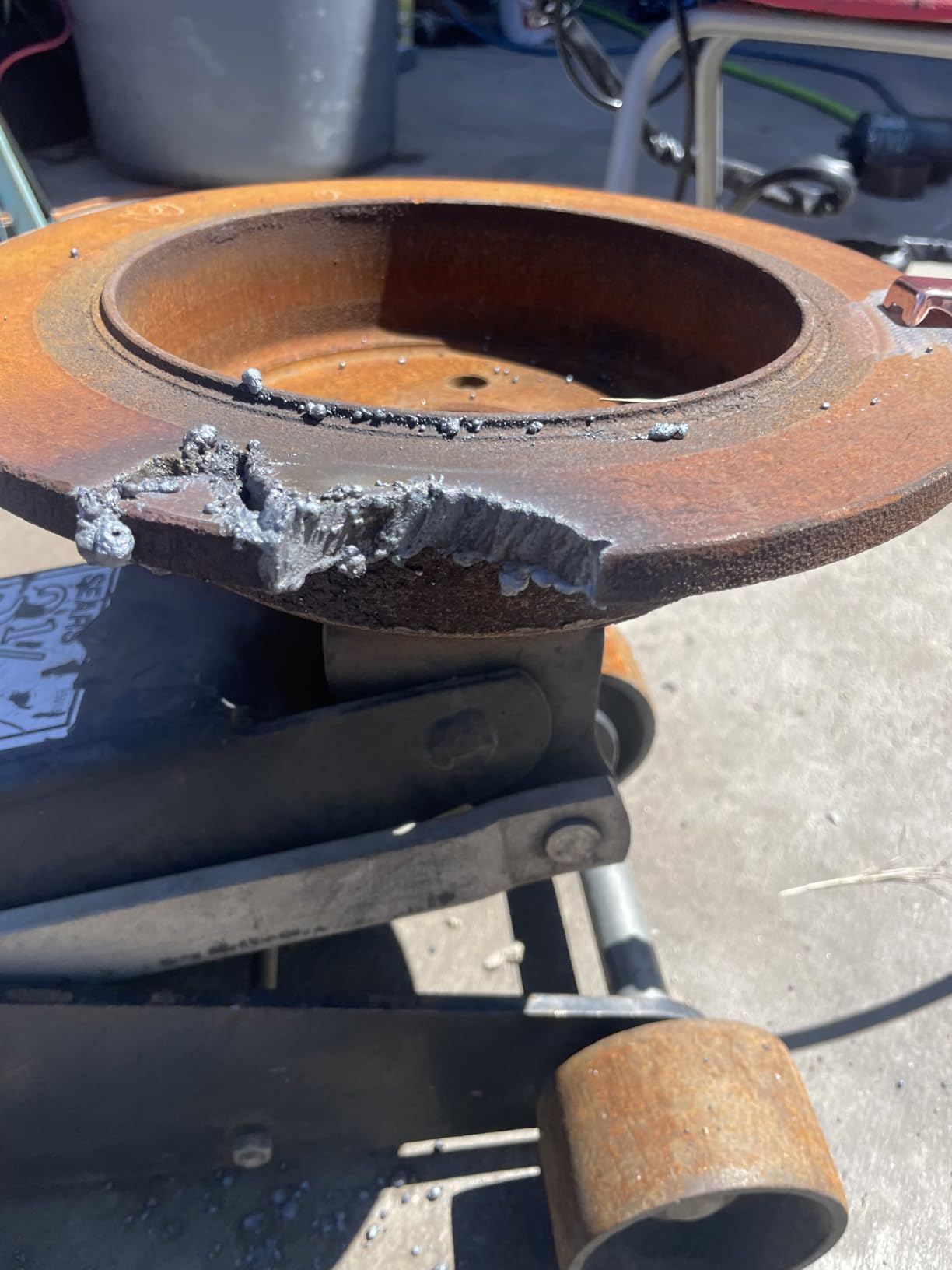
The LED display is more useful than it looks. It shows voltage, current and error codes in real time, so when a cut starts misbehaving you can see whether the machine is browning out on supply voltage instead of guessing. The pre-installed metal-cased air filter with a quick-connect NPT fitting means setup is genuinely a one-job affair.
The smart fan cooling is advertised to cut noise by up to 30 percent and double cooling efficiency, which matters more on a 50 percent duty cycle machine than the marketing suggests. Overload, overheat and overcurrent protection with error codes give you a clear reason for a shutdown instead of a mystery trip.
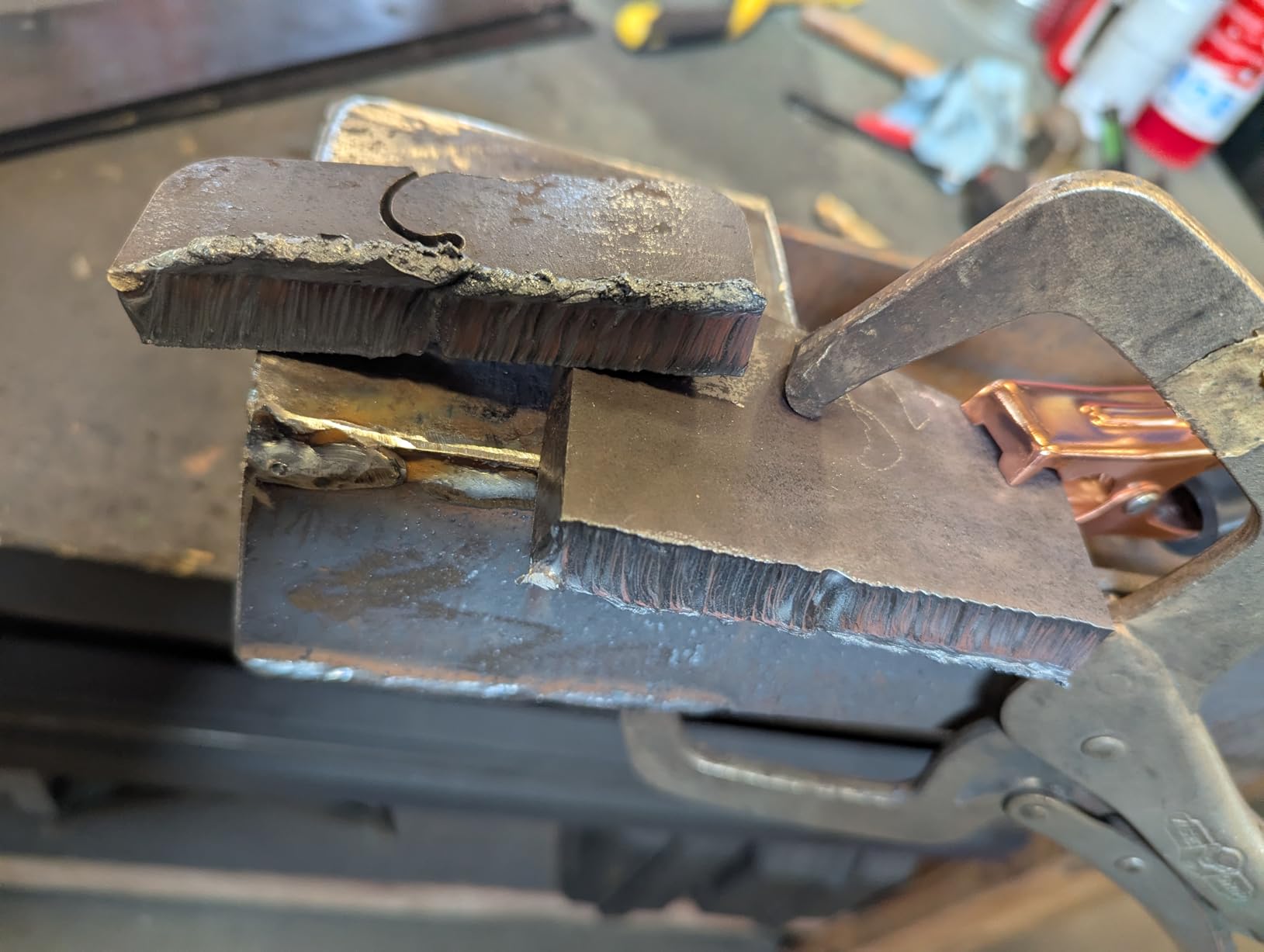
What holds up on plate at 1/2 inch
At 1/2 inch on 220V the CUT50 produces a clean cut with minimal cleanup, which is the figure that matters for trailer frames, chassis work and structural repairs. Garage fabricators consistently rate it as an affordable compact unit for that thickness.
Adjustable post-flow matters more than most buyers realise. Extending the post-cut air time from the default cools the nozzle and electrode while the machine is still hot, and it is the single biggest lever on consumable life for a machine at this amperage. The 2T and 4T trigger modes also let you lock the arc on for long seams without holding the trigger, which reduces hand fatigue on heavy plate.
Where buyers report problems
A minority of owners report an inconsistent arc that starts and stops partway through a cut, and cut finish on thin material is described as average rather than refined. If you plan to do decorative work on 14 gauge or thinner, this is not the machine.
Two smaller frustrations: the air fitting arrives as a hard line rather than the quick connect most shops expect, and there is no laminated settings chart for amperage and PSI, which means you are writing your own numbers down during the first session.
3. PrimeWeld CUT60 60A – Best for Production Duty Cycle
PRIMEWELD CUT60 60Amp Non-Touch Pilot Arc PT60 Torch Plasma Cutter 110V/220V Dual Voltage 3 Year Warranty
60A output
60 percent duty cycle at 60 amps
PT60 blow-back torch
3 year US warranty
Pros
- Highest average rating in the set at 4.8 stars
- 60 percent duty cycle at full 60 amps for sustained cutting
- Continuous pilot arc handles expanded rusted and painted metal
- PT60 blow-back torch with Euro central connection
- Three year warranty with US-based support
Cons
- Premium-tier machine that few buyers can justify
- Smaller published review base than the lower-tier models
- 20 by 11 by 19 inch package is bulky
The CUT60 is the only machine here with a clearly published sustained-output figure: 60 percent duty cycle at the full 60 amps. For a shop cutting plate all day, that number is what separates a production tool from an occasional-use cutter, because it tells you how long you can hold the arc before the thermal protection steps in.
The PT60 blow-back pilot arc torch with a Euro central connection is a meaningful upgrade over the entry machines in this list. Blow-back ignition means the pilot arc runs inside the torch rather than starting through high-frequency ignition, so it plays well in a shop with CNC controllers, computers and radio gear nearby.
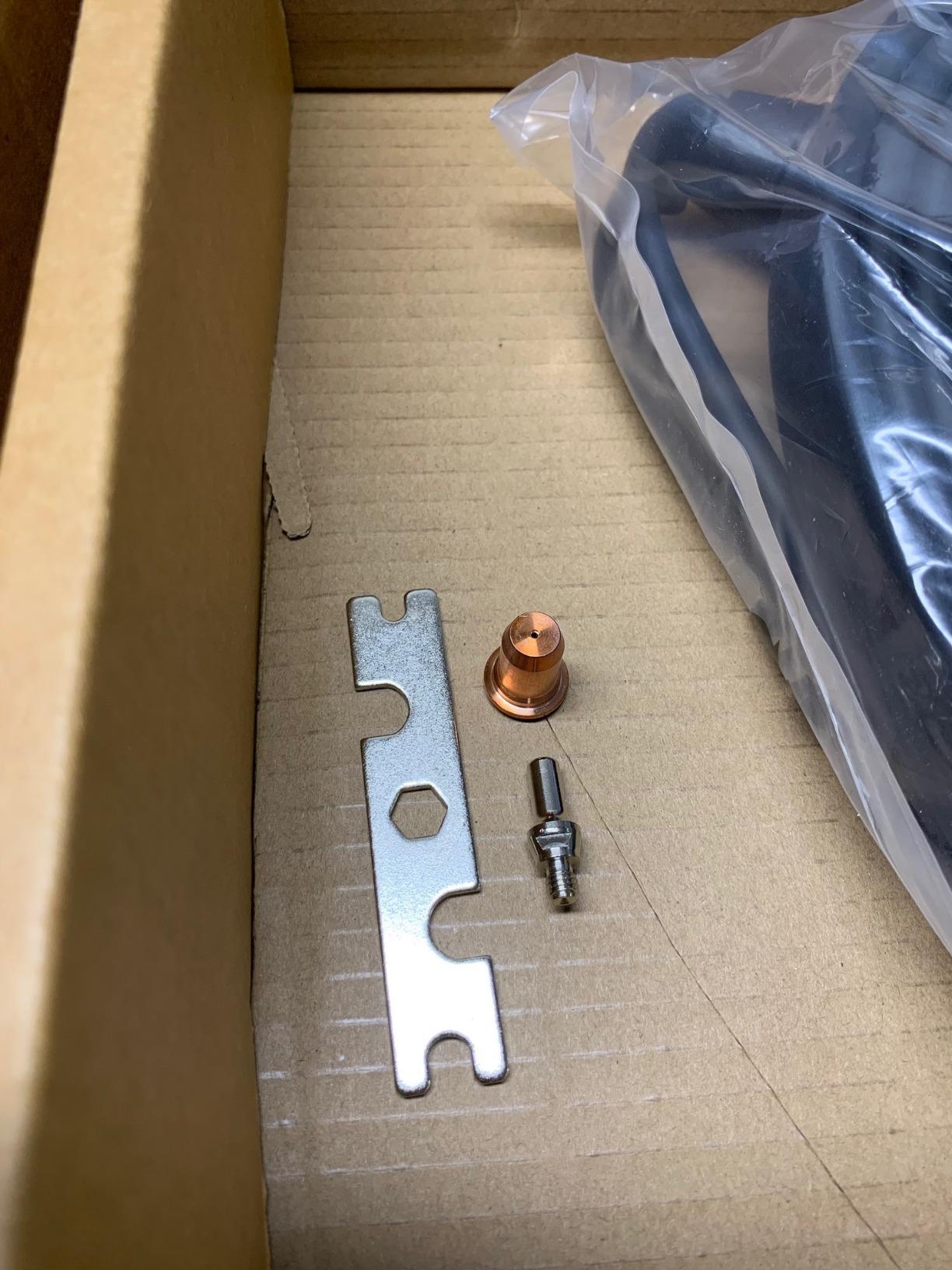
Continuous pilot arc is the feature that earns it a place on thick or dirty work. The arc stays live while you position the torch, so you can start on painted steel, expanded metal or heavy rust without the nozzle touching down and fouling. On 1/2 inch and heavier plate that positioning time adds up fast.
The three-year warranty backed by US-based support is the strongest support commitment in the roundup. Owners of cheaper machines repeatedly describe having to chase fittings and manuals on their own, so a support line that actually answers is worth something when a torch stops striking at 4pm on a Friday.
How the duty cycle affects thick-plate work
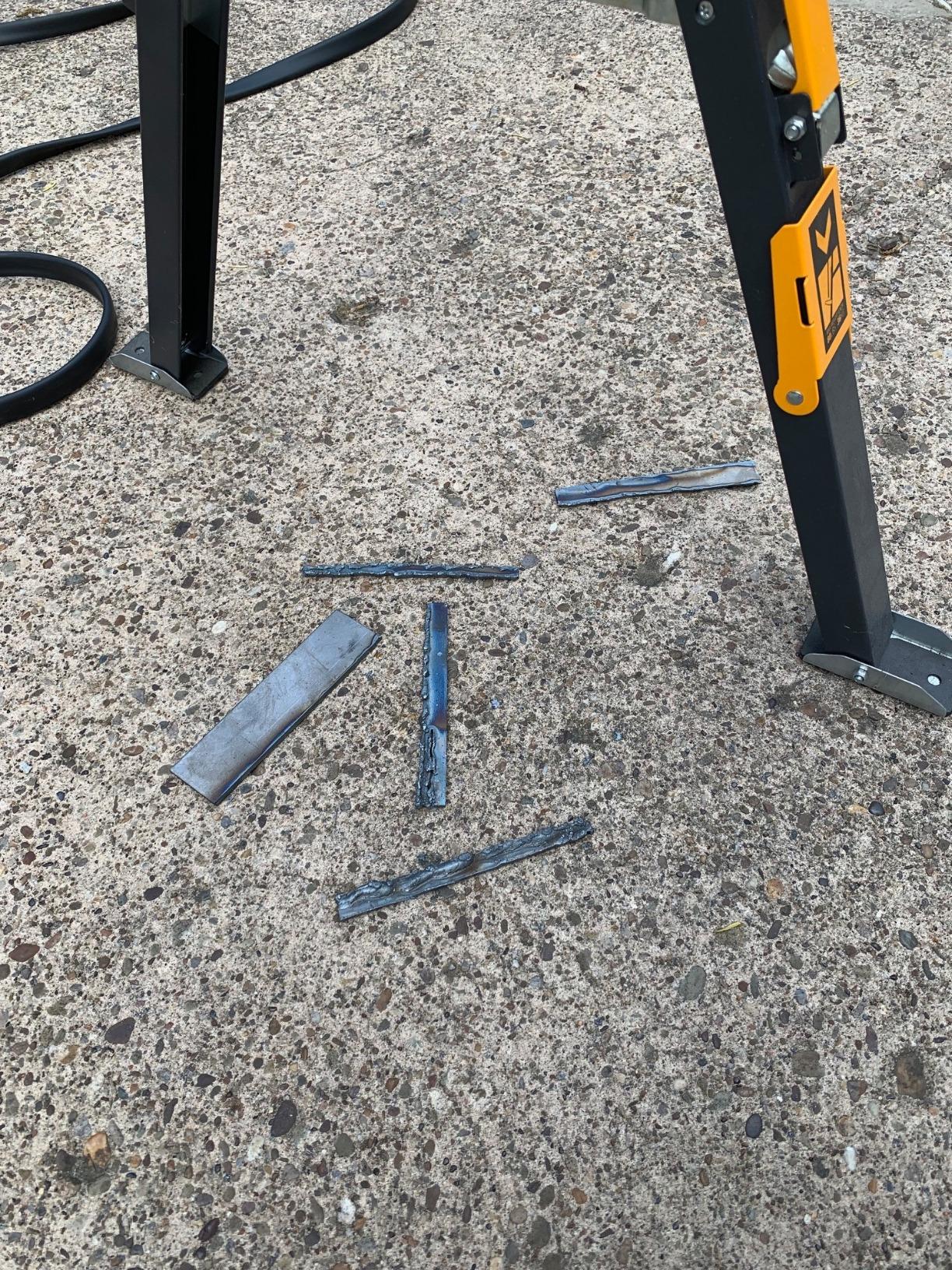
A 60 percent duty cycle at 60 amps means roughly ten minutes of cutting in every sixteen at full output before the machine needs to cool. On 3/8 to 1/2 inch plate with frequent pierce points, that is enough for most shop schedules including layout, fit-up and welding between cuts.
For a single 60 percent duty cycle machine, 40 percent is the common rating on 50 and 55 amp machines in this roundup. The practical difference shows up on long production runs: a higher duty cycle machine spends more of the day cutting and less of it paused with the fan spinning down.
Where buyers report problems
The obvious one is where it sits relative to every budget unit here, and you are paying partly for the duty cycle, partly for the PT60 torch and partly for the warranty. The review base is also the second smallest in the roundup at 486 ratings, so there is less long-term field history than on the LOTOS and ARCCAPTAIN models.
It is also not the machine to buy if you cut thick plate twice a month. At 40 percent duty cycle territory on cheaper machines, occasional users overpay for capability they never use.
4. YESWELDER CUT-65DS PRO 60A – Best for Shared Shops
YESWELDER 60A Non-HF Plasma Cutter, Non-Torch Pilot Arc, 110/220V
60A non-HF blow-back start
5/8 inch clean at 220V
IPT40 pilot torch
IP21 rated
Pros
- Non-HF blow-back start is safe near other powered equipment
- 5/8 inch clean cut at 220V for the amperage class
- Digital display shows air pressure
- voltage and current
- Non-touch pilot arc improves cut quality and consumable life
- PT
- 2T and 4T modes with 5 to 20 second post-flow
Cons
- Cut finish needs practice to stay narrow
- Setup of torch ground clamp and air supply has a learning curve
- One year warranty is the shortest here
- Weight is not listed in the specifications
This machine exists for one specific reason: it starts without high-frequency ignition. In a shared shop where a CNC controller, a laptop and a radio are all within a few feet, blow-back start removes the interference problem entirely rather than asking you to work around it.
On paper the cutting figures are strong for the class. It is rated for a 5/16 inch clean cut at 110V and 5/8 inch at 220V, with a 63/64 inch maximum at 220V. That 110V figure of 5/16 inch is honest for a 60 amp machine and better than most competitors bother to state.
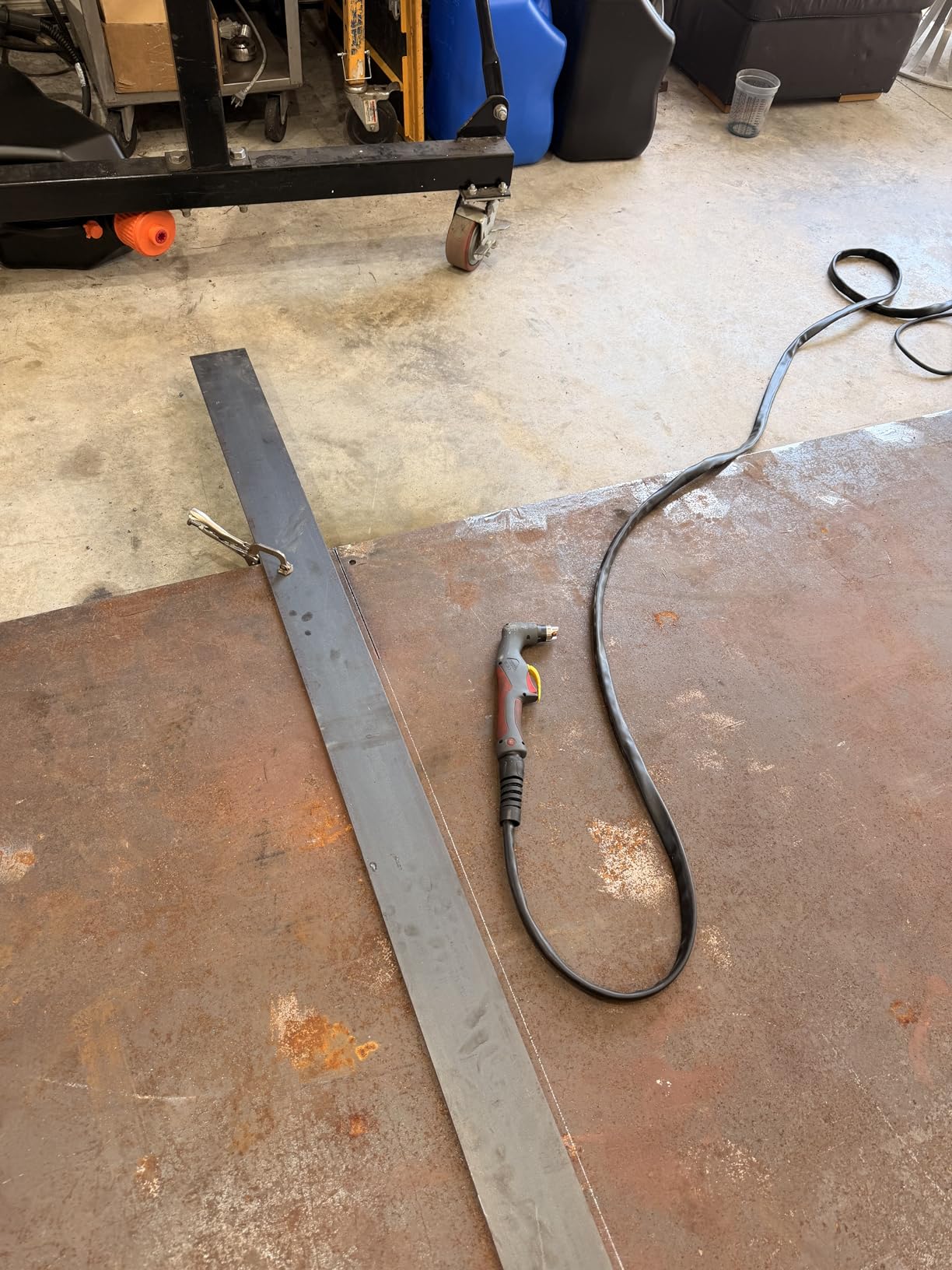
The IPT40 non-touch pilot arc torch is a solid standard torch rather than a proprietary design, which makes consumables easier to source than with machines that use sealed connector sets. The digital display reporting air pressure, voltage and current with error codes is genuinely useful when a cut starts going wrong and you need to know whether it is the machine or your air supply.
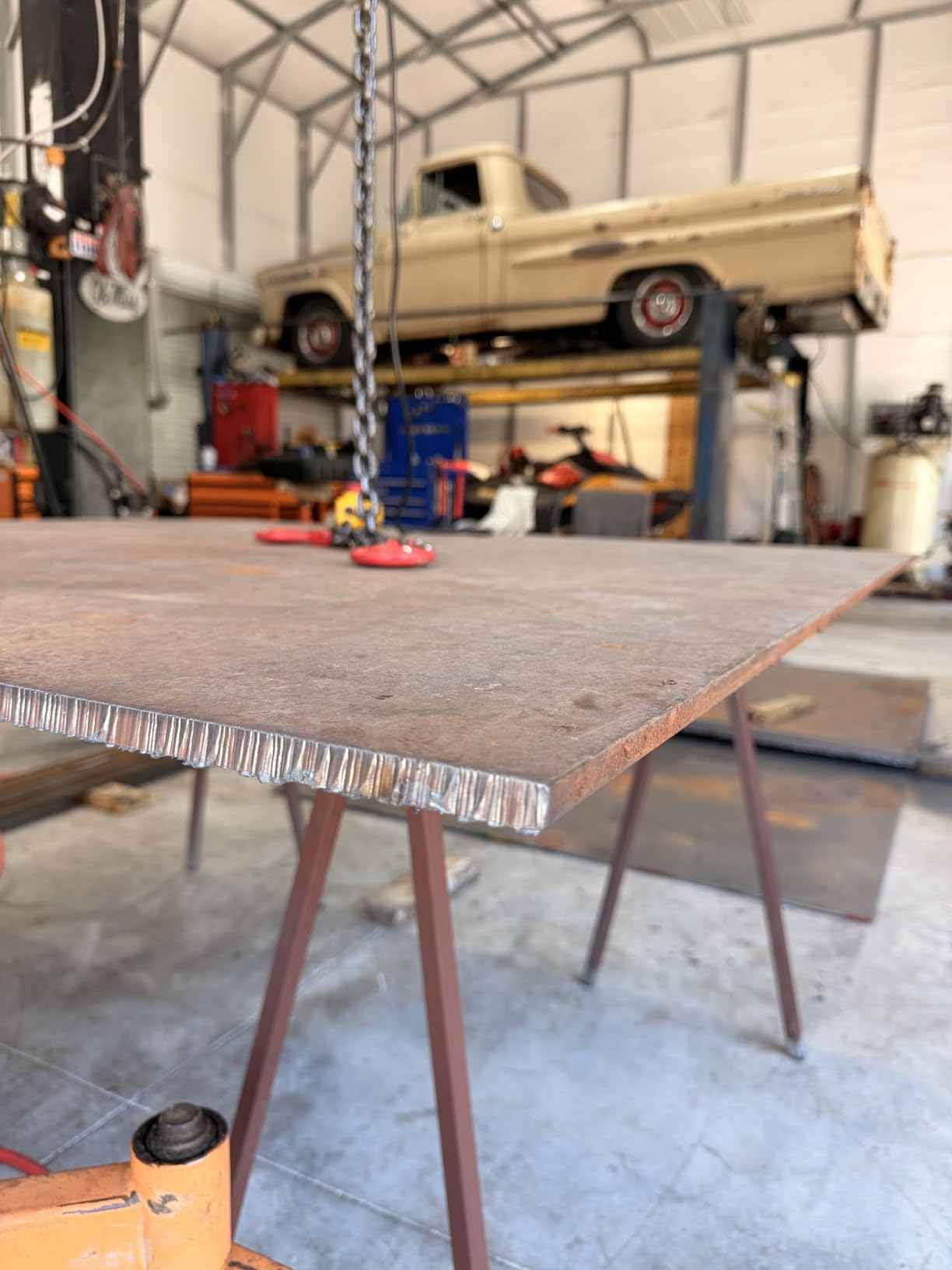
Post-flow is adjustable from 5 to 20 seconds. On thicker work, extending it keeps the nozzle cool through the cut instead of only after it, and that shows up directly in how the kerf finishes on the exit side of the plate.
Where the non-HF start actually pays off
If your shop has a CNC plasma table, a frequency-inverter-driven motor, or a radio receiver on the same bench, HF start machines cause real problems. Signal noise bleeds into controllers, and the symptom is erratic torch behaviour that gets blamed on the machine rather than the ignition method.
The IP21 water rating also means this machine tolerates a damp shop better than bare-panel competitors. For outdoor and farm work where condensation and dust are constant, that is a reasonable reliability margin.
Where buyers report problems
The cut finish takes practice to keep narrow. That is a technique issue rather than a machine fault, but it means first-time owners should budget an evening with scrap plate before touching work they care about. Setup of the torch, ground clamp and air supply is also reported as less intuitive than it should be for a first machine.
The one year warranty is the shortest in the roundup, and the listed weight is not published, which makes planning a shop cart harder than it should be.
5. SILATU STC850P 85A – Best for Heavy Plate on a Budget
SILATU 85A Plasma Cutter Machine, Non-Touch Pilot Arc, 110V/220V, Large LED
85 amps at 220V
32mm maximum cut
60 percent duty cycle
250 LPM at 70 PSI
Pros
- Largest cutting capacity per dollar in the set
- Handles 3/4 to 1 inch stock
- Adjustable 3 to 15 second pilot arc duration conserves consumables
- Large bright display shows pressure voltage and current
- Includes a 13 foot P-80 torch and long ground cable
Cons
- Poorly written instructions are the most repeated complaint
- Needs a large compressor at about 250 LPM and 70 PSI
- Only a one year warranty against three years elsewhere
- 24.2 pounds is heavy to move alone
The STC850P is the amperage outlier in this roundup. At 85 amps on 220V with a 60 percent duty cycle, it delivers a recommended maximum cut of 32mm, which is more than an inch of steel, and it does it at a price point well below the machines rated near a full inch cleanly.
That output comes with a voltage caveat worth understanding. On 110V the same machine only manages 15 to 40 amps, which drops the recommended maximum cut to 15mm. If you plan to cut heavy plate, this machine belongs on a 220V circuit, not an extension cord from a garage outlet.
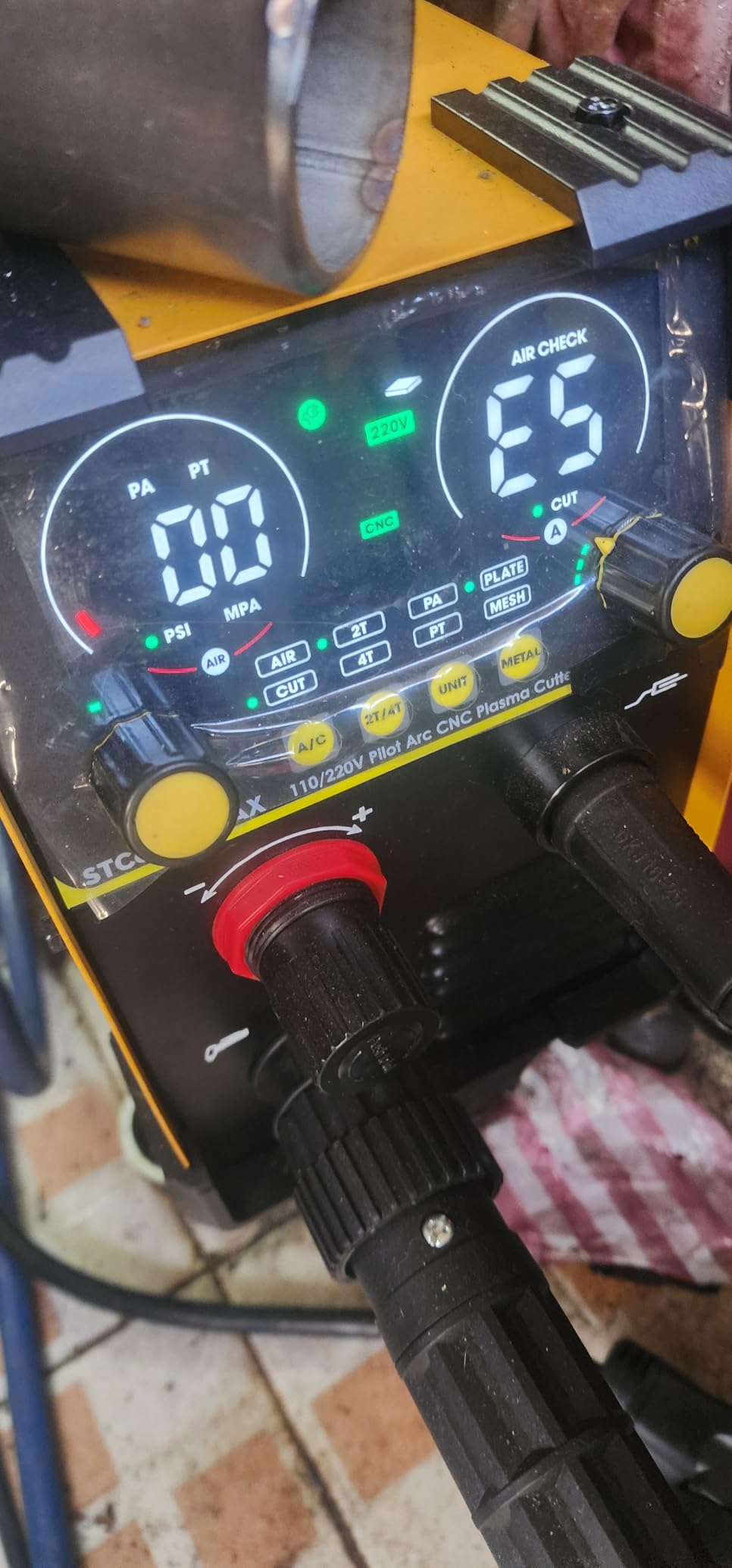
The adjustable pilot arc duration from 3 to 15 seconds is the feature experienced users notice most. Long pilot arc on tough starts and short pilot arc between cuts means the arc does not sit there eating an electrode while you reposition, which cuts consumable cost noticeably on batch work.
Air sensor technology with a rear-mounted filter and quick-connect fitting, plus PT, 2T, 4T and PA operating modes, give you the trigger behaviour you need for both hand cutting and grid work. The large digital display with error codes is easy to read from standing position.
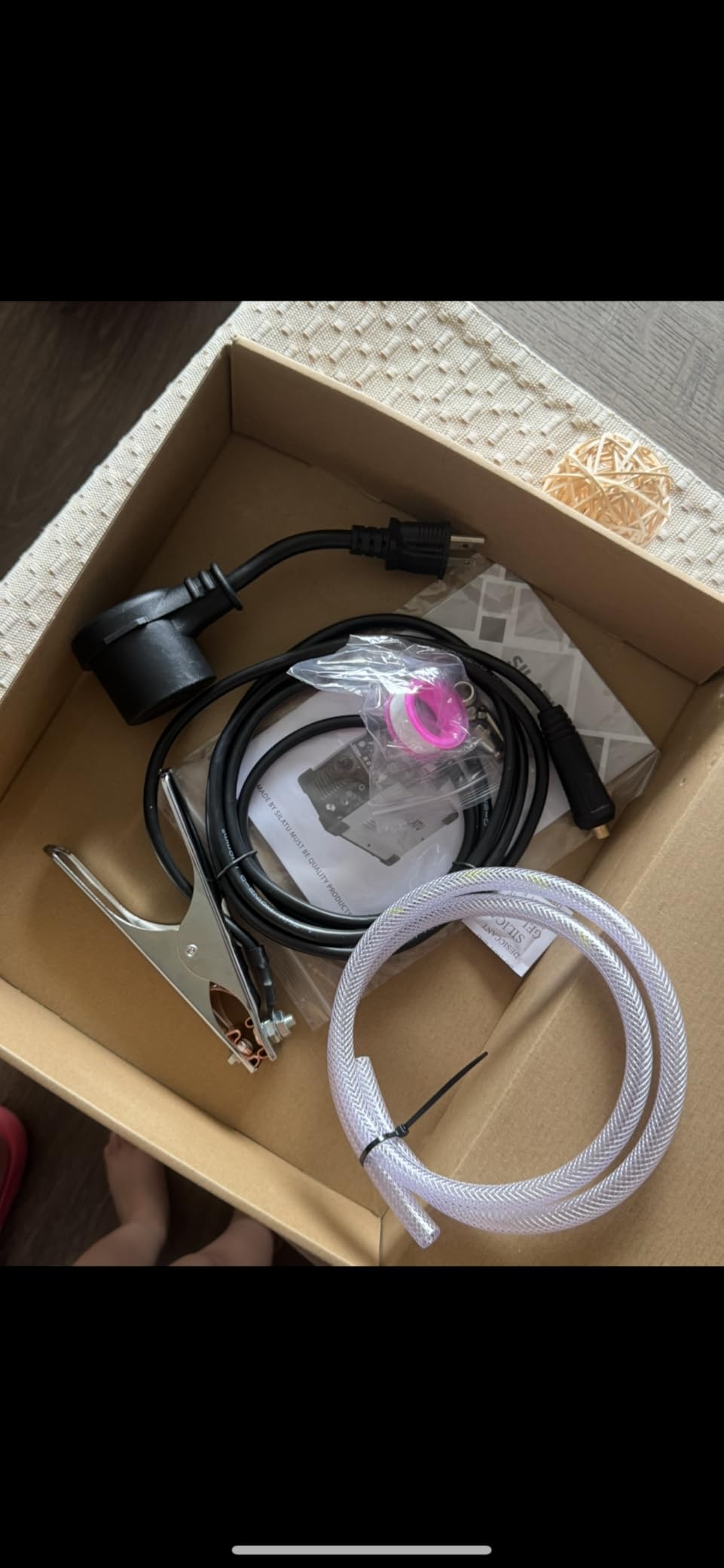
What 85 amps actually gets you on plate
Owners treat this as a value high-amperage machine and report clean cuts on 1/4 to 3/8 inch steel, with the headroom to move into 3/4 inch and beyond. Arc force at 85 amps pushes the kerf through dense material rather than stalling in it, which is the difference between a cut that runs and a cut that stops.
The quiet cooling fan is a real quality-of-life detail. A shop that runs cutting for hours will notice a machine that is not roaring, and the 2T and 4T modes let you set longer cuts without holding the trigger down.
Where buyers report problems
Documentation is the near-universal complaint. Experienced welders explicitly ask for better instructions, and the settings that actually matter on an 85 amp machine, air pressure and amperage, are exactly what a thin manual leaves out.
The air demand is real too. This machine asks for roughly 250 liters per minute at 70 PSI, which is more than a small pancake compressor can deliver. And at 24.2 pounds with a one year warranty, it is a heavier purchase with thinner backing than some rivals in this roundup.
6. LOTOS LTP8000 80A – Best for True 1 Inch Work
Lotos LTP8000 80 A Plasma Cutter with Pilot ARC Metal Cutter, 1 inch Clean Cut, Brown
20 to 80A output
1 inch ideal cut
1.5 inch maximum cut
60 percent duty at 80A
Pros
- Only machine in this set rated at a 1 inch ideal cut
- 60 percent duty cycle at 80A and 100 percent at 50A
- Non-touch pilot arc with minimal slag on rough and painted surfaces
- Compatible with BCON40 and BCON90 consumable sets
- One owner cut over 20 feet of 1 inch iron without changing consumables
Cons
- 38 pounds is the heaviest here and not field portable
- Cut finish is not as clean as premium commercial machines
- One owner reported a coil failure after about two hours
- Not compatible with CNC table setups
This is the answer to what plasma cutter can cut 1 inch thick steel within reach of a serious shop machine. It is rated 20 to 80 amps with a 1 inch ideal cut and a 1.5 inch maximum, and it is the only machine in this roundup that puts the 1 inch figure in the ideal column rather than the severance column.
The duty cycle numbers are unusually well specified. Sixty percent at the full 80 amps means you can hold heavy cuts without the machine bailing out, and dropping to 50 amps gives you 100 percent duty cycle, so there is a genuine continuous setting when you want it.
Non-touch pilot arc with minimal slag on rough, painted and rusty surfaces is what makes the difference on full-inch plate. When the arc starts, it stays centred through the thickness instead of hunting, and the slag blows out from underneath the kerf rather than rolling over the top edge.
Consumable compatibility is broader than it sounds. The machine works with BCON40 and BCON90 sets, so you are not locked to one proprietary part number, and 2T and 4T modes handle long straight cuts in plate without a trigger hold. The pre-installed NPT 1/4 inch Type-D plug and air filter regulator get you cutting without a plumbing session.
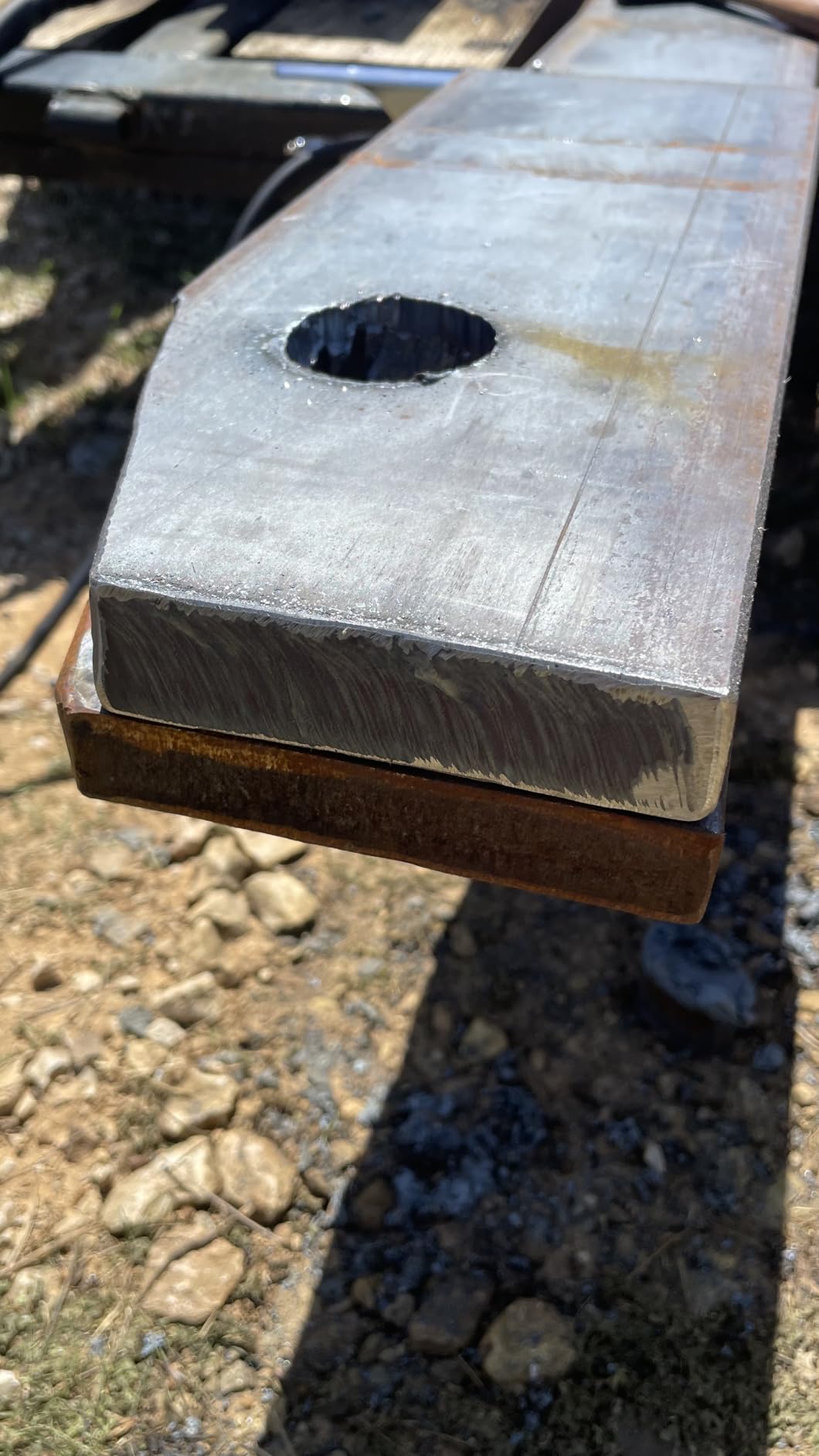
How it handles full-inch work in practice
Farm and fabrication owners confirm real 1 inch cutting ability and describe 1/2 inch cuts as clean and fast. One owner reports cutting more than 20 feet of 1 inch iron without replacing consumables, which suggests the torch design is doing its job on sustained heavy work rather than only surviving short bursts.
The electrical spec sheet is written for a real shop: 210 to 250V single phase at 50/60Hz with a recommended 60 amp breaker. It also handles stainless, alloy steel, copper and aluminum, so it is not a mild-steel-only tool.
Where buyers report problems
At 38 pounds this is not a field-portable machine, and anyone cutting at a truck bed or on a job site will feel that immediately. The cut finish also does not match premium commercial equipment, so if you need a weld-ready edge straight off the plate with minimal grinding, expectations need adjusting.
One owner reported a coil burn-out after roughly two hours of use, and the machine is not compatible with CNC table setups. With 116 ratings it is also the least-reviewed product here, so there is less field history behind it than the 2400 ratings behind the LTP5505D.
7. PrimeWeld CUT50D 50A – Best for First-Time Owners
PrimeWeld 50A Air Inverter Plasma Cutter, Portable Plasma Cutting Machine, Premium and Rugged Plasma Cutter Kit, Automatic Dual Voltage 110V/220V AC with Plasma Torch, 1/2″ Clean Cut, CUT50D
50A air inverter
1/2 inch clean cut
Automatic 110V/220V
Pre-plumbed rear panel
Pros
- 1/2 inch clean cut with fast cuts on cold roll steel
- Pre-plumbed rear panel with brass quick connect needs no hose setup
- Comes with torch extra air line and power adapter
- Responsive US-based customer service and warranty repair
- Cuts rusted material without difficulty
Cons
- Several air fittings leaked and needed resealing
- Instruction manual is largely unusable
- Power cord is shorter than ideal and may need an adapter
The CUT50D rates 4.7 stars across 668 ratings, which is the second highest satisfaction score in this roundup, and the reason is simple: it arrives ready to cut. The rear panel is pre-plumbed with a brass quick connect, so there is no air hose assembly to build before the first cut.
For a first machine that is a bigger deal than the specification sheet suggests. New owners lose the first afternoon to air fittings and regulator questions, and this one removes that step entirely. It cuts 1/2 inch cold roll steel in seconds and handles rusted material, which covers the two jobs most people buy a plasma cutter for.
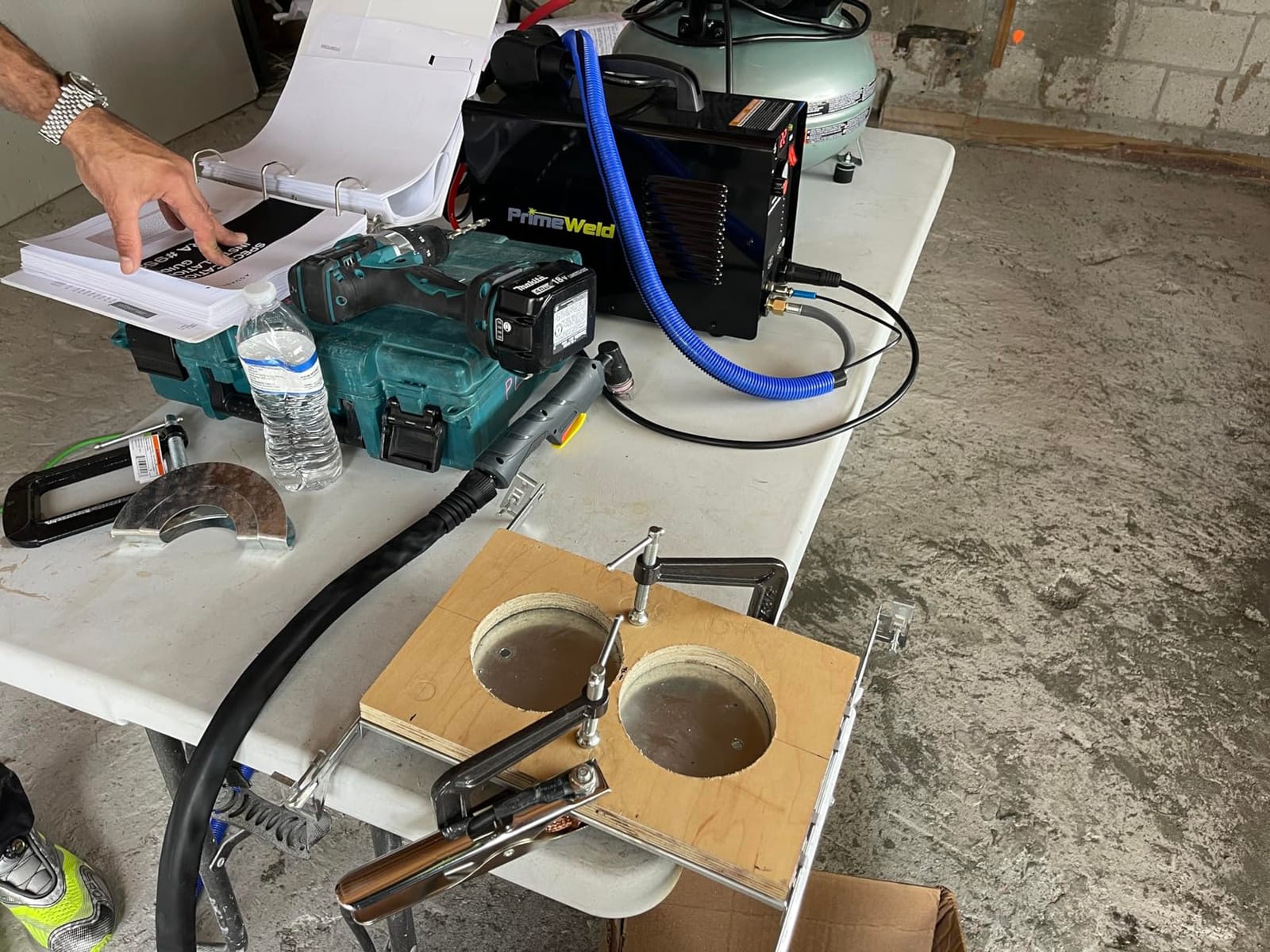
The AG60 torch with a trigger guard is a standard design, so consumables are easy to find and the trigger guard is a genuine safety improvement over bare torches. A 220V to 120V power adapter is included, which means one machine works in the shop and at a different outlet on a job site.
Automatic 110V/220V dual voltage sensing handles the switching for you. There is no mode switch to forget, which removes one of the more common ways first-time buyers end up with a disappointing first cut.
What makes it friendly for a first cut
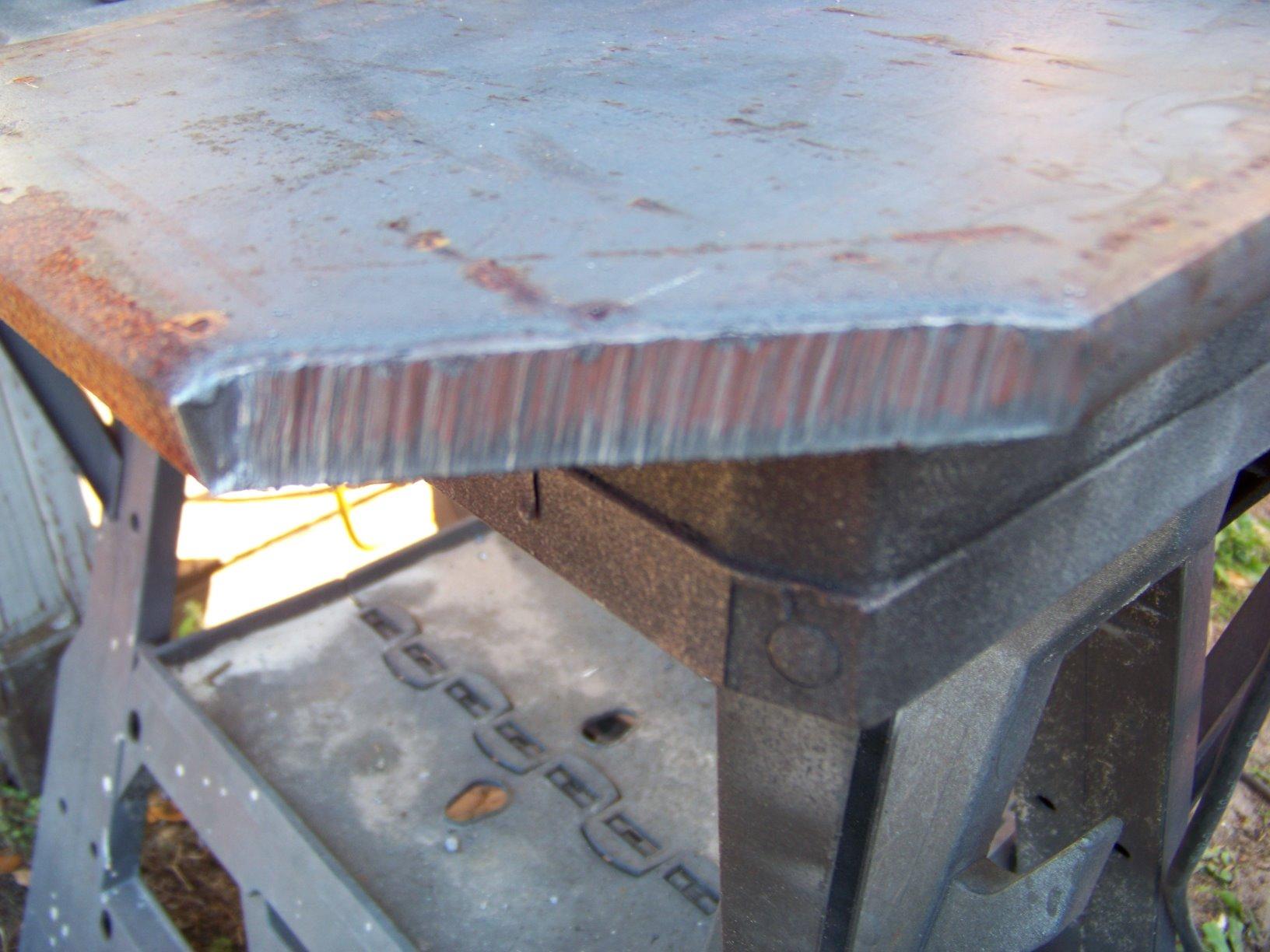
Owners regularly compare the output to much more expensive professional machines, and the practical result is a clean 1/2 inch cut without a learning curve in amperage selection. The 50 amp inverter has enough headroom that 1/2 inch is within easy reach rather than at the edge of capability.
Service is the quiet strength here. Owners describe PrimeWeld handling warranty shipping and repairs directly, which turns a potential dead machine into a solved problem rather than a return-to-sender mystery.
Where buyers report problems
Air fittings, both internal and external, are the most reported issue. Several owners had to reseal them, which points to assembly quality on the fittings rather than to the machine itself. Expect to check every connection the first time you set it up.
The manual is described as largely unusable, so plan on learning the settings from your own testing. The power cord is also shorter than ideal for a bench layout and may need an adapter or extension to reach your wall outlet.
8. ARCCAPTAIN iControl CUT55 Pro – Best App-Controlled Cutter
ARCCAPTAIN iControl CUT55 Pro Plasma Cutter Machine, 55Amp, 120V/240V
55A MCU digital control
1/2 inch quality cut
3/4 inch maximum
App control to 10 meters
Pros
- App control and monitoring from up to 10 meters away
- Three year warranty is among the longest here
- Intelligent post-blow scaling from 5 to 10 seconds by current range
- Pre-installed air regulator and filter for fast setup
- Smart fan cuts noise by 50 percent
Cons
- App connectivity is an added dependency for parameter changes
- Newer model with a shorter review history
- 19.46 pounds is heavy for the output
- HF start is not suitable near sensitive electronics
The CUT55 Pro is the only machine in this roundup with real app-based control, letting you adjust and monitor parameters from up to 10 meters away. That sounds like a gimmick until you are standing on a ladder holding a torch on a trailer frame and realise you can drop the amperage without walking back to the machine.
The cutting spec is 12mm, or 1/2 inch, as a quality cut with a 20mm, or 3/4 inch, maximum on MCU digital control. The intelligent post-blow scaling is the more useful feature day to day, because it sets post-flow from 5 to 10 seconds based on the current range rather than leaving you to guess after every adjustment.
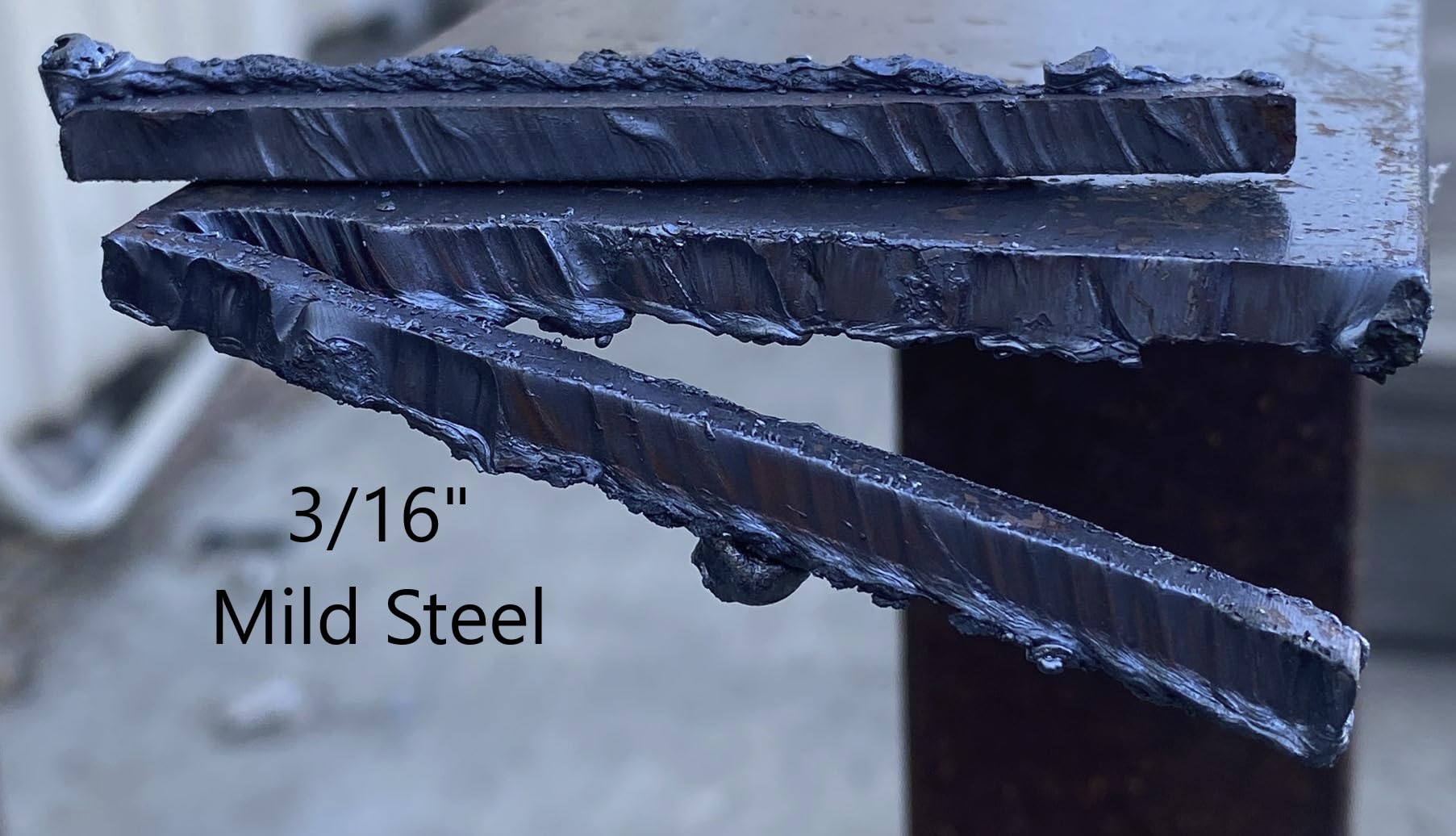
Setup is fast because the air regulator and filter are pre-installed. The smart fan is advertised to cut noise by 50 percent, double cooling efficiency and lower failure risk by 70 percent, which is the sort of claim that matters on a machine you run for long sessions.
The box also includes a 10 foot AG60 cutting torch, a 10 foot air hose and a 10 foot earth clamp, so the cable lengths are not the problem they are on lighter machines.
When remote control earns its place
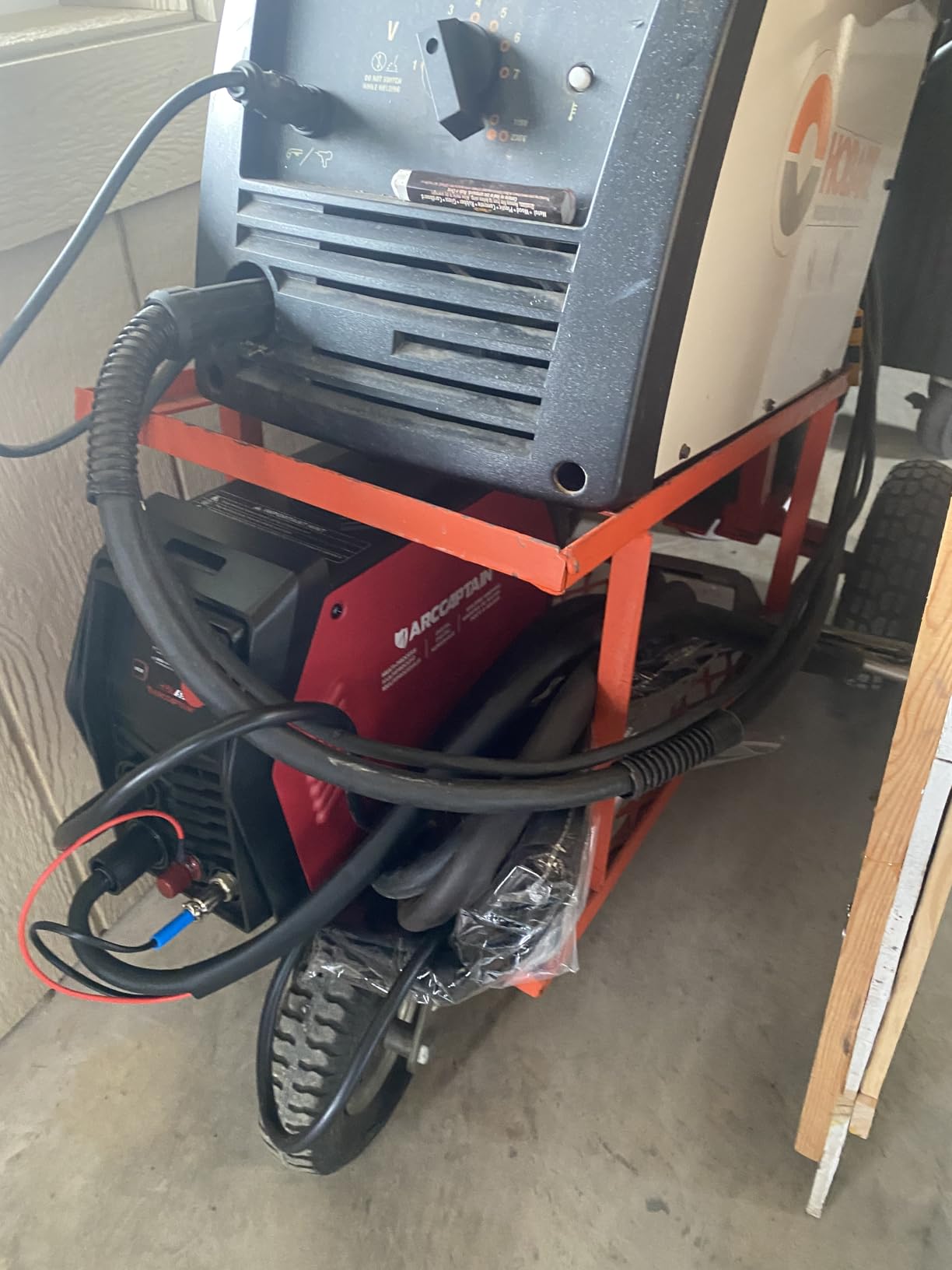
Setting amperage mid-cut is genuinely useful on thick plate, where a 55 amp machine on 3/4 inch benefits from dropping output as the kerf deepens. The app also lets you monitor current draw while you size the job, which takes some of the guesswork out of first attempts.
Its best-seller rank in the plasma cutting category reflects real market demand, which is worth noting when you are weighing an unproven model against a well-established one.
Where buyers report problems
The app is a dependency, not just a convenience. If you need to change amperage and the connection drops, you are walking to the machine anyway. And because this model uses high-frequency non-touch pilot arc start, it is the wrong choice for a shop with a CNC controller or sensitive electronics nearby.
As a recent release with 528 ratings, it also has less long-term field history than the PrimeWeld and LOTOS models, and few owners comment on cut quality in detail yet. At 19.46 pounds it is heavier than the output class suggests.
9. TOOLIOM CUT-50 PRO – Best Non-Touch Arc on an Entry Budget
TOOLIOM 50A Non-Touch Pilot Arc Plasma Cutter, Dual Voltage 110/220V
20 to 50A output
5/8 inch ideal at 220V
3/4 inch maximum
AG60 pilot torch
Pros
- Non-touch pilot arc torch cuts stainless alloy mild steel copper and aluminum
- Tool-free 110V/220V connection makes moving between outlets easy
- Digital display tracks air pressure voltage and current live
- Post-flow cooling of 5 to 20 seconds extends consumable life
- 1/4 inch clean cut at 110V
Cons
- Lowest average rating in this set with a 12 percent one-star share
- Listed weight of 21.6 pounds is heavy for a 50 amp machine
- Cut quality reports are more mixed than same-price rivals
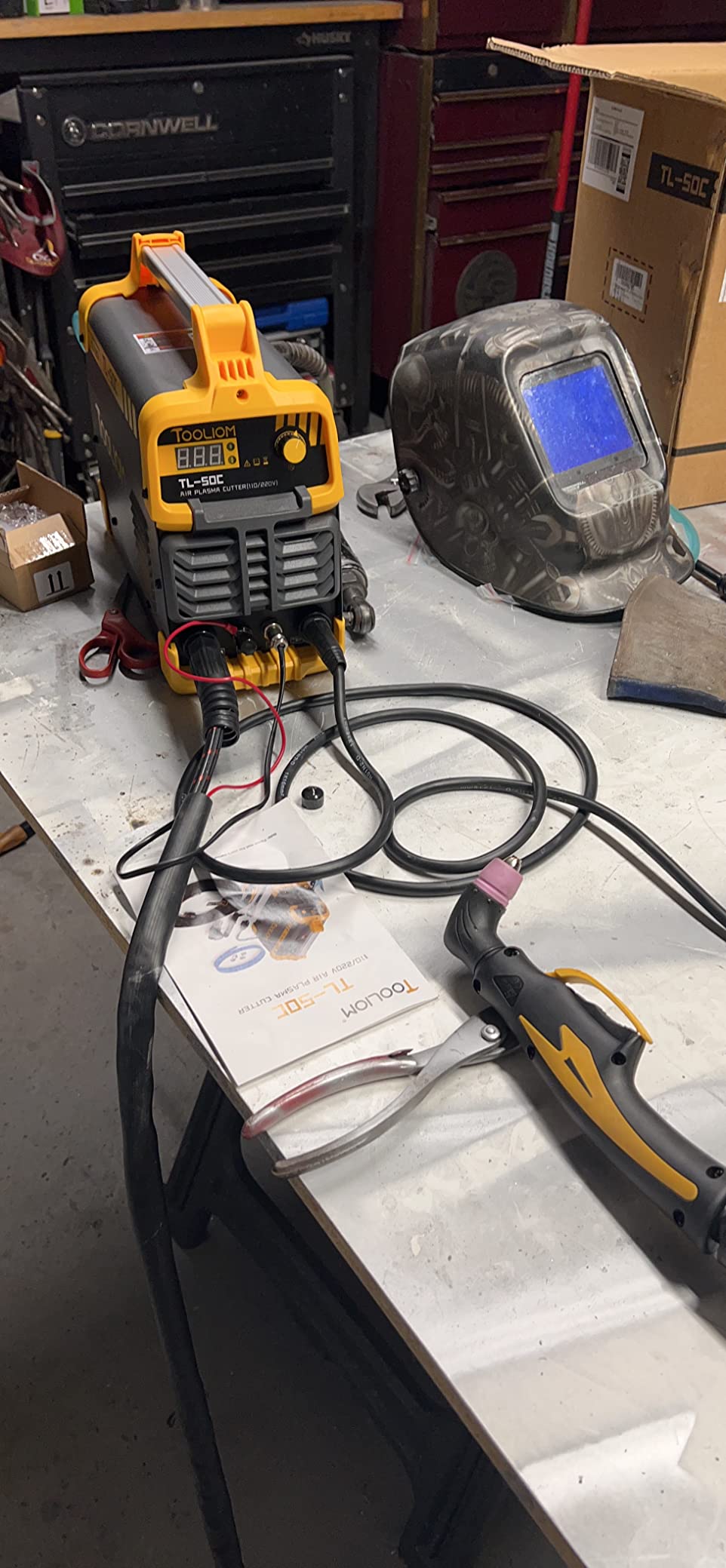
The CUT-50 PRO puts a non-touch pilot arc on an entry-level machine, which is unusual because most cutters in this price bracket use a touch-arc torch. The AG60 pilot arc torch reduces electrode burning and extends consumable life, and it cuts stainless, alloy, mild steel, copper and aluminum without the nozzle touching down.
Its published figures are honest and specific: 1/4 inch ideal clean cut at 110V and 5/8 inch at 220V, with a maximum of 1/2 inch at 110V and 3/4 inch at 220V. Maximum air pressure is 50 PSI at 110V and 65 PSI at 220V, so you know what your regulator has to deliver.
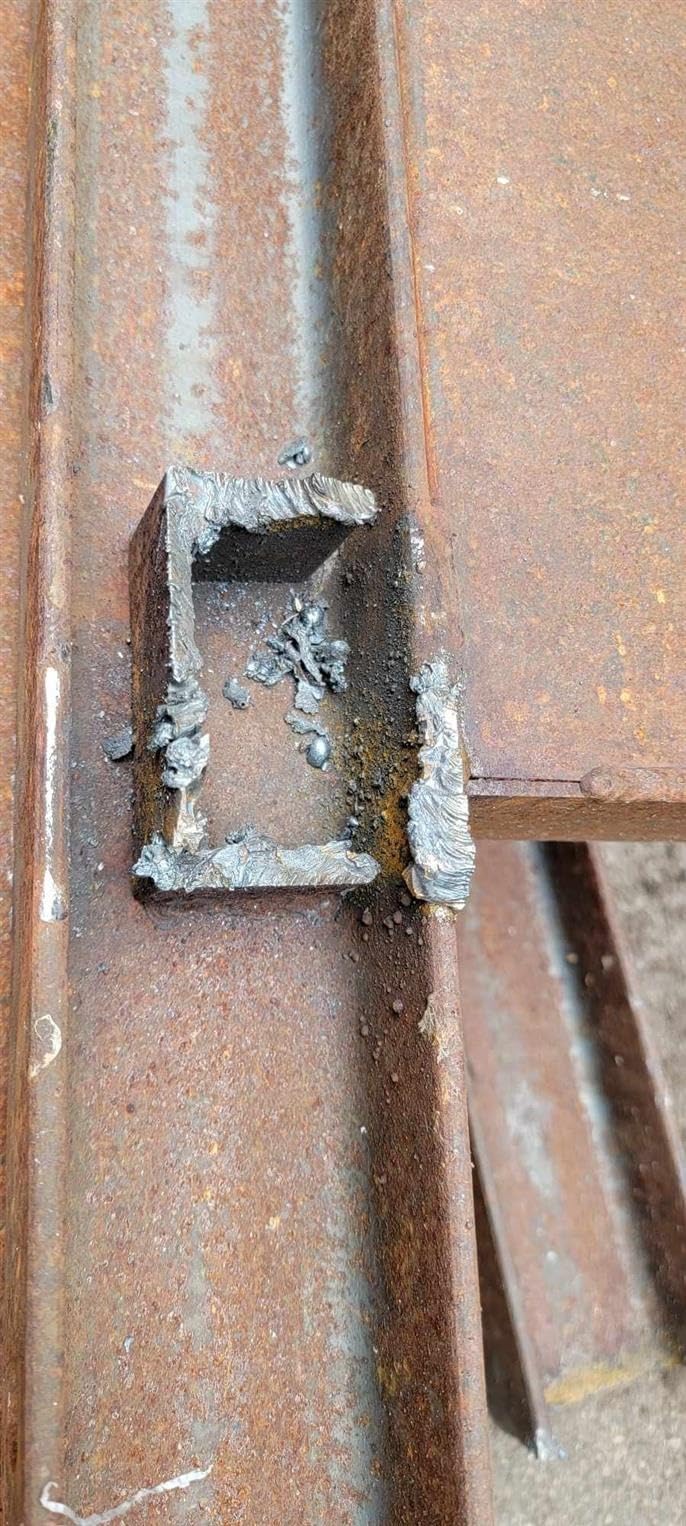
The tool-free 110V/220V connection is a small but real convenience when you move between outlets, and the large digital display for air pressure, voltage and current is easier to read than most machines at this level. Post-flow cooling runs 5 to 20 seconds, which is a wide enough range to tune for thick plate.
For the money, the feature list matches machines costing more. The question is whether the build holds up over time, and that is where the reviews split.
Where it makes sense to buy
If your thick-steel work tops out around 1/2 inch and you want a non-touch pilot arc plus a digital readout without stepping up a tier, this machine delivers that combination. The 3/4 inch maximum at 220V gives you headroom to attempt thicker stock with a slower travel speed, provided you accept some finishing work afterwards.
The tool-free voltage connection also makes it a reasonable second machine to keep on a job site alongside a bigger unit.
Where buyers report problems
Its 4.1 average rating is the lowest in this roundup, with a 12 percent one-star share, which is a meaningful signal about consistency. Cut quality reports are more mixed than rivals at the same price, and that matters more on thick plate, where an inconsistent arc turns a clean kerf into a slaggy one.
The listed weight of 21.6 pounds is also noticeably heavier than similar 50 amp machines, so the portability advantage of this class is largely lost.
10. Reboot RBC6000D 60A – Budget Pick
Reboot 60A Plasma Cutter Dual Voltage 120V/240V, 1/2″ Clean Cut IGBT Inverter, Portable Metal Cutting Machine with Torch & Tips – RBC6000D 2025 Upgraded (Pre-Installed Air Regulator)
60A IGBT inverter
5/8 inch at 240V
Touch arc PT31 torch
Pre-installed regulator
Pros
- Lowest entry point in the roundup with a 1/2 inch clean cut
- Cuts 1/4 inch steel quickly with minimal dross
- Pre-installed air regulator simplifies first setup
- Intuitive controls with clear PSI guidance for beginners
- Compact body that is easy to store
Cons
- Touch arc start requires the torch to contact the workpiece
- Several reviews report failures within weeks
- 120V operation trips breakers above about 18 amps
- Warranty requires buyer-paid return shipping
- Listed weight differs between spec fields
The RBC6000D is the cheapest way into this roundup and it is genuinely capable on light and medium plate. It cuts 1/2 inch steel at 35 amps on 120V and 5/8 inch at full 60 amps on 240V, with dual voltage auto-detection across 10 to 35 amps at 120V and 30 to 60 amps at 240V.
One thing to know before you buy: this is a touch-arc model with a PT31 consumable set, not a pilot arc machine. The torch must contact the workpiece to start, which means no starting through rust and paint without first grinding a bare spot, and the PT31 torch is a smaller consumable platform than the PT60 and P-80 torches used by the heavier machines here.
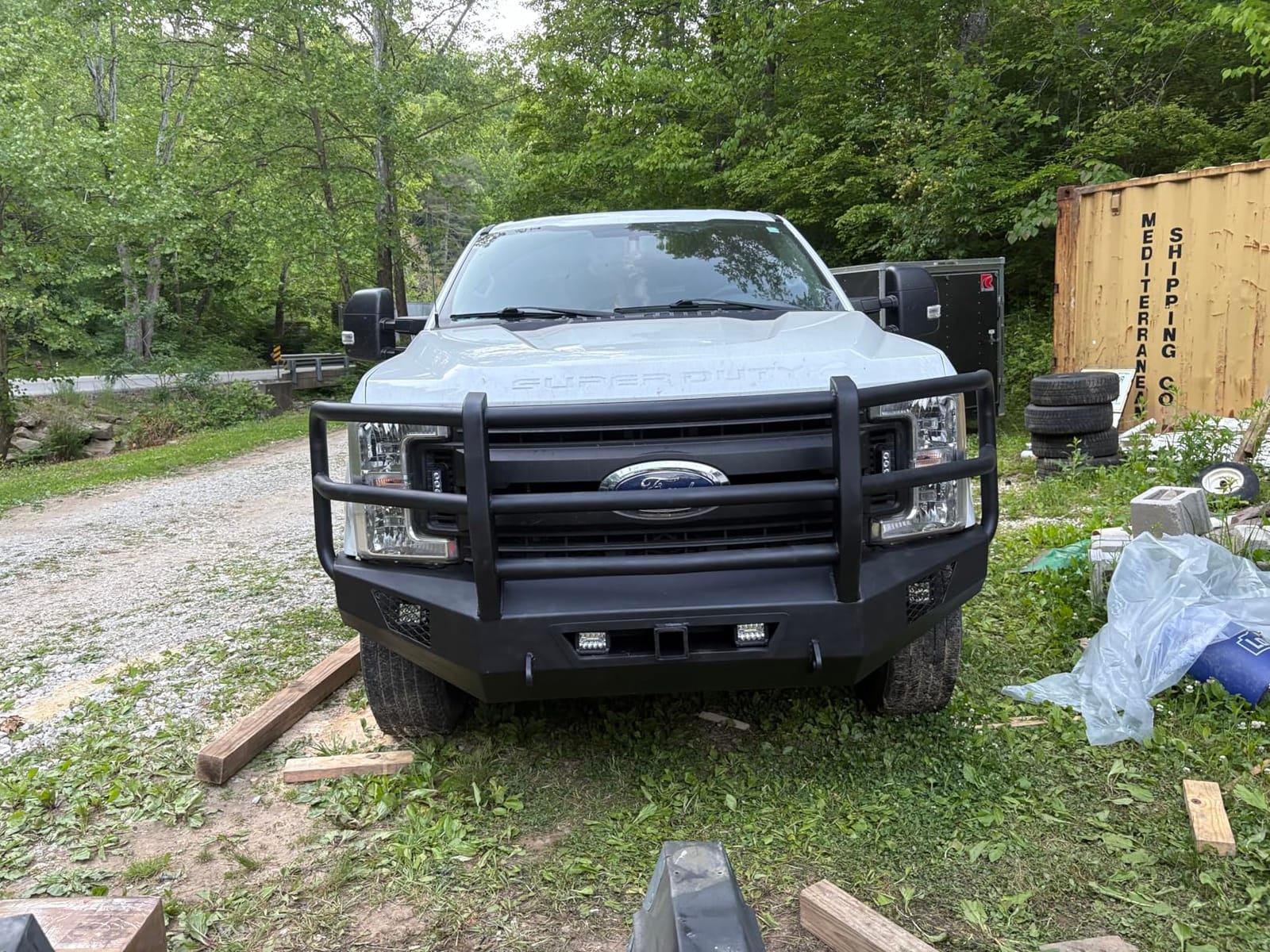
The air requirements are clearly stated, which is rarer than it should be. Guidance is 70 to 75 PSI, and the machine needs 90 PSI at 60 LPM or above, with a recommended breaker of 50 amps on 120V and 40 amps on 240V.
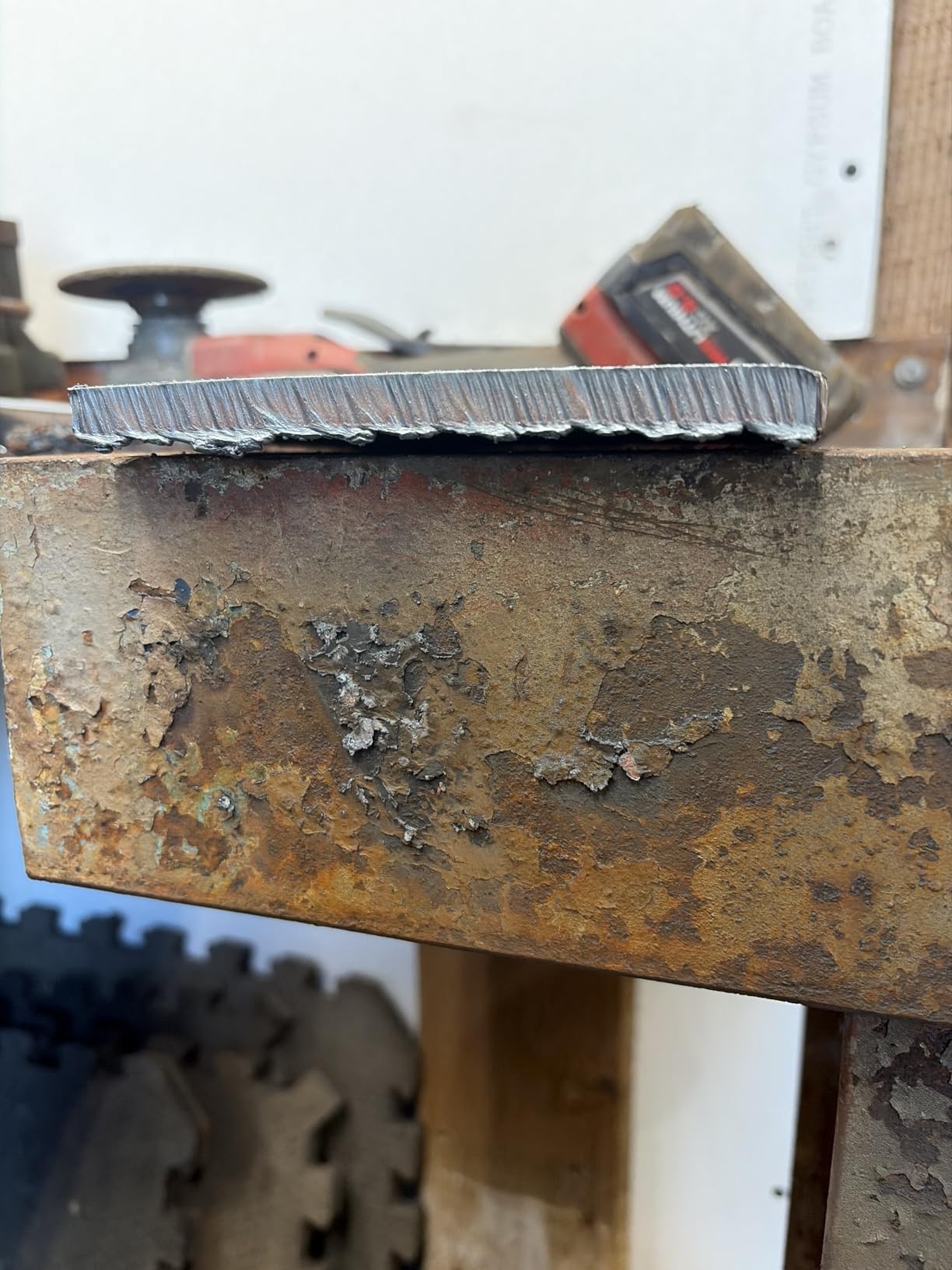
Satisfied owners say it cuts 1/4 inch steel quickly with minimal dross, and the pre-installed air regulator and intuitive controls make it a reasonable first machine. The PSIs guidance printed for beginners is more helpful than most documentation in this category.
When it makes sense
If your thick-steel work is occasional, mostly 1/4 inch and occasionally 1/2 inch, and you already have a compressor that puts out 90 PSI at 60 LPM, this machine handles the job. The touch-arc limitation rarely matters on clean mild steel, which is what most occasional users cut.
The compact body also stores easily, which matters in a garage where a 38-pound shop machine would be dead weight.
Where buyers report problems
The reliability reports are the real concern. Multiple reviews describe units failing within weeks, some with no power after a single use. Warranty handling requires the buyer to pay return shipping and excludes machines older than two months, which makes an early failure a much bigger problem than it would be with a US-based service operation.
On 120V the output limit means breakers trip above roughly 18 amps, so it needs a dedicated circuit. The listed weight also differs between the specification fields on the listing, so treat published weight figures for this model with caution.
Plasma vs Oxy-Fuel: Where the Crossover Happens
Plasma wins decisively on thin and medium material. It starts instantly, cuts 1/4 inch plate far faster than an oxy-fuel torch, leaves a narrower kerf and does not need a bottle staged at the work. For anything up to about 3/8 inch, there is no real argument.
The crossover shows up above that. Owner reports on mainstream machines consistently describe clean cuts to 3/8 inch, with the consensus being that beyond that, oxy-fuel moves faster with a better result on very thick plate. The reason is physical: an oxy-fuel flame carries enough energy to preheat a large volume of steel, while a plasma arc concentrates its energy into a narrow kerf and pushes the heat sideways.
That preheat matters at full inch and above, where you are trying to make molten metal run out of the cut faster than it cools. Plasma handles this by forcing air through the kerf to blow the slag out, and at very high amperage that works well. But on the most stubborn material, a preheat is simply more efficient.
The practical rule we use: below 1/2 inch, plasma. Between 1/2 inch and 3/4 inch, plasma with a slower travel speed. At 1 inch and heavier, plasma if you own a machine rated for it and you have the compressor, oxy-fuel if you are buying cylinders specifically for occasional heavy cuts. And if you already run a plasma machine, keep an oxy-fuel torch on the wall for the odd full-inch job rather than trying to force an undersized cutter.
Compressed Air Setup for Thick Steel Cutting
An undersized compressor is the number one cause of disappointing cuts on thick plate, and the machine manuals here are unusually specific about it. Use those figures rather than a general rule of thumb.
ARCCAPTAIN CUT50: 55 PSI at 12mm on 110V, 75 PSI at 18mm on 220V, with an air flow capacity of 150 liters per minute.
SILATU STC850P: 60 PSI at 15mm on 110V, 70 PSI at 32mm on 220V, with 250 liters per minute recommended. This is the highest demand in the roundup.
TOOLIOM CUT-50 PRO: maximum 50 PSI at 110V and 65 PSI at 220V.
Reboot RBC6000D: 70 to 75 PSI operating guidance, with a requirement of 90 PSI at 60 LPM or above.
LOTOS LTP8000: single phase 210 to 250V with 50 amps of input current and a recommended 60 amp breaker, plus a pre-installed air filter regulator.
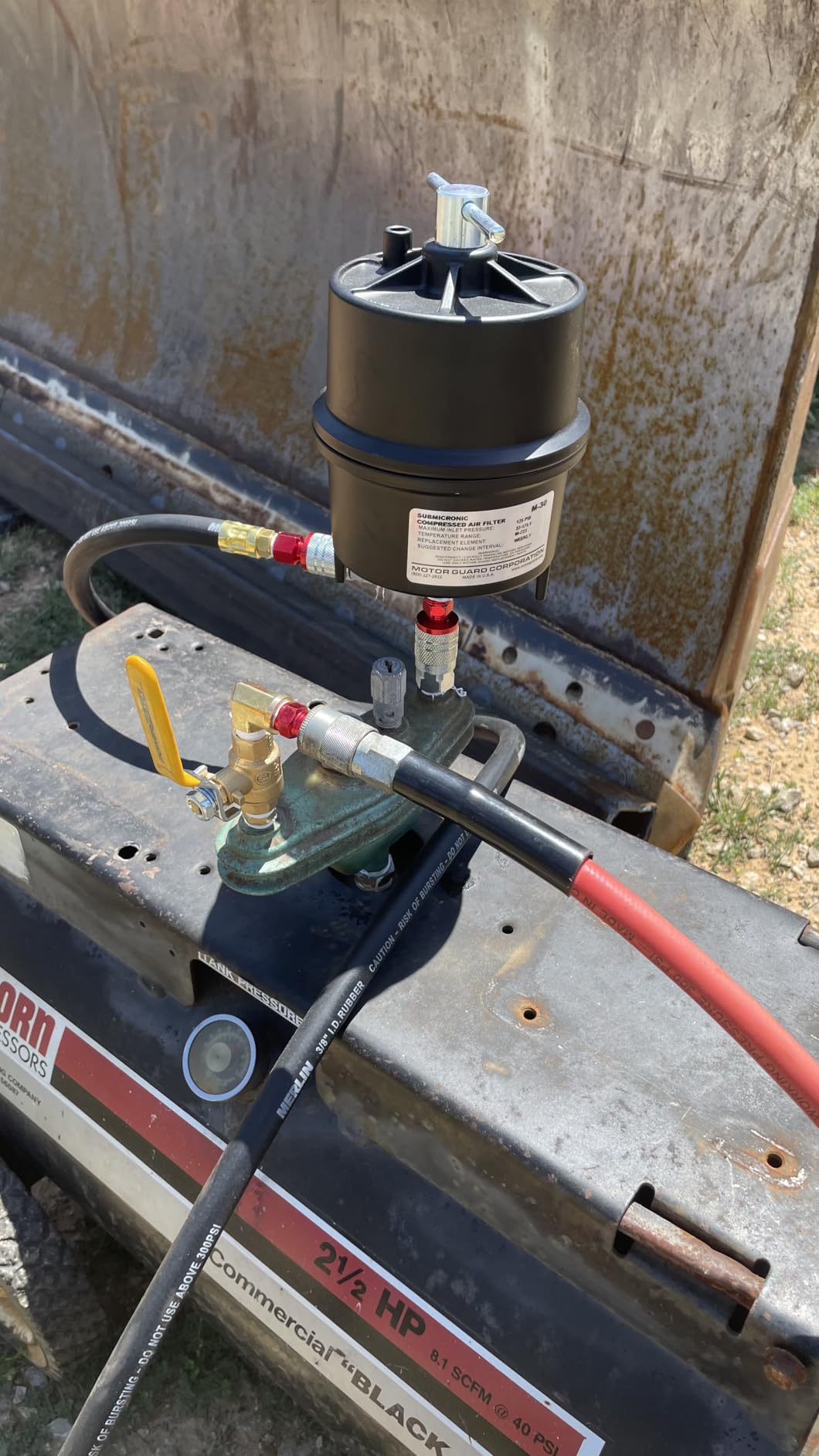
The setup chain runs tank, water separator, inline filter, regulator, then machine. The water separator keeps tank moisture out of the torch, and the inline filter catches what the separator misses. Skipping either is the fastest route to short electrode life, and owners who add both report noticeably longer consumable intervals.
Check the gauge at the machine, not the tank. A tank alone reads high pressure that collapses the moment a larger nozzle opens, so a torch that worked fine at 1/4 inch can starve at 5/8 inch. If your compressor cannot hold the specified PSI at the machine, the cut will widen and droop regardless of what the machine is rated for.
On amperage and voltage for heavy work, the pattern is consistent across these manuals: use 220V for anything at or above 1/2 inch. The SILATU shows it most clearly, dropping from 32mm maximum cut at 85 amps on 220V to 15mm at 40 amps on 110V. Same machine, different outlet, very different result.
How to Choose a Plasma Cutter for Thick Steel
Matching the machine to the plate you actually cut is the whole decision. Work through these factors in order, and the amperage question answers itself before you look at brand.
1. Set your honest thickest material. Not the thickest thing you might buy, but the thickest thing you cut regularly. Write down three thicknesses you actually work in. If the largest is 1/2 inch, every 50 and 55 amp machine here will serve you. If it is 3/4 inch, you need 60 amps and a 220V circuit. If it is 1 inch or heavier, your realistic shortlist in this roundup is the LOTOS LTP8000 and the SILATU STC850P.
2. Read clean cut before maximum cut. A machine rated 3/4 inch maximum that cleans at 1/2 inch is more useful than one that barely reaches 3/4 inch with heavy dross. The YESWELDER states both figures clearly, which is a good sign about the honesty of the rest of its spec sheet.
3. Check the voltage you can supply. Nearly all of these machines are dual voltage, and nearly all of them lose real output on 110V. The ARCCAPTAIN CUT50 drops to 35 amps and 12mm on 110V, and the SILATU drops to 15 to 40 amps. If your thick plate work happens at 220V, confirm the machine delivers full output there before buying.
4. Pick your arc start type based on your shop. Non-touch pilot arc lets you start through paint, rust and expanded metal, which matters on farm, demolition and restoration work. Non-high-frequency blow-back start additionally avoids the interference problems HF ignition causes near CNC controllers and computers. Note that the ARCCAPTAIN CUT55 Pro uses high-frequency non-touch start, so it is not the right pick for an electronics-heavy shop.
5. Translate duty cycle into your actual schedule. A 40 percent duty cycle is fine if you cut thick plate an hour a week. It is not fine if you cut for six hours. The PrimeWeld CUT60 at 60 percent at full 60 amps and the SILATU at 60 percent are the two machines here with published sustained-output figures, and the LOTOS LTP8000 adds a 100 percent setting at 50 amps.
6. Price the torch and consumables, not just the machine. A PT31 torch on the Reboot is the least expensive consumable platform here, while the PT60 torch on the PrimeWeld CUT60 and the BCON40 and BCON90 sets on the LOTOS LTP8000 sit higher. Over a year of heavy cutting, consumables can exceed what you paid for the machine. The advantage of the LOTOS consumables is breadth, since two compatible sets are supported rather than one.
7. Look at warranty length and where support sits. Three years appears on the ARCCAPTAIN CUT50, the CUT55 Pro and the PrimeWeld CUT60. One year appears on the YESWELDER, the SILATU and the Reboot. The Reboot warranty also requires buyer-paid return shipping and excludes machines older than two months, which matters most if the failure risk is your main concern.
8. Plan the electrical install before the machine arrives. Machines around 60 amps and up generally want a 220V circuit, and the LOTOS LTP8000 calls for a recommended 60 amp breaker on 210 to 250V single phase. Anything above 100 amps moves into three-phase 240V territory with different wiring requirements. Checking your panel before you buy avoids the most common regret in this category.
9. Match portability to where you cut. The spread here runs from 13 pounds on the ARCCAPTAIN CUT50 to 38 pounds on the LOTOS LTP8000. That is not a trivial difference if the work happens on a trailer, at a farm gate or on a job site rather than at a fixed bench.
10. Decide whether you need a CNC-compatible machine at all. If you already own a table, check compatibility before buying. The LOTOS LTP8000 is specifically noted as not compatible with CNC table setups, and HF-start machines can interfere with controllers. Adding a dedicated non-HF machine alongside a table is a common shop arrangement.
Safety and First-Cut Setup for Thick Plate
Plasma cutting produces UV light intense enough to damage eyes and skin in seconds, and the noise, sparks and molten metal are worse on heavy plate than on thin. Treat the safety setup as part of the purchase decision rather than an afterthought.
Wear a proper welding helmet with the correct shade for your amperage, plus safety glasses underneath so you are not relying on a helmet flip-up at the wrong moment. Ventilate properly, open the curtains, and cut outside or with extraction when you can. Clear the area of anything combustible and keep a fire extinguisher within reach, because the slag coming out the far side of a thick cut is molten and it travels.
Leather gloves, a leather apron and non-meltable clothing matter more on thick plate than on thin, because the workpiece stays hot well after the cut. Watch the back face of the plate as well as the kerf. On full-inch material the exit side is where most of the danger sits.
For the first cut, work through this sequence on scrap plate of the same thickness. Set pierce height low enough that the nozzle sits just above the surface without touching. Set amperage for the thickness using the machine’s own chart, starting near the middle of the recommended range rather than the maximum. Set air pressure to the specified figure and confirm it at the machine, not the tank. Then set post-flow long enough to cool the consumables through the cut rather than only after it.
Start your travel speed conservatively on the first pass and speed up until the slag starts rolling under the cut rather than blowing out. If the kerf widens as the cut progresses, you are travelling too fast for the amperage. If slag rolls over the top edge, you are too slow or the air is starving. Grind a test coupon and look at the edge, because that finished edge tells you more than any display readout.
Frequently Asked Questions
How thick of steel can a plasma cutter cut through?
Most portable plasma cutters cut 1/4 inch to 1/2 inch of mild steel cleanly, with a maximum severance figure of about 1/2 inch to 3/4 inch. A 50 amp machine typically cleans at 3/8 to 1/2 inch, a 60 amp machine holds about 5/8 inch, and you need 80 amps or more for a practical 1 inch clean cut. Always check clean cut ratings rather than maximum cut claims.
What is the maximum thickness a plasma cutter can cut?
The maximum severance figure on a typical 50 to 60 amp machine is 1/2 inch to 3/4 inch, while the LOTOS LTP8000 at 80 amps is rated for a 1 inch ideal cut with a 1.5 inch maximum. Maximum severance means the arc will blow through, not that the edge will be clean, so expect heavy dross and grinding on anything rated only at maximum.
What is the best plasma cutter for cutting 1 inch thick steel?
Within this roundup the LOTOS LTP8000 80A is the only machine rated at a 1 inch ideal cut, with a 1.5 inch maximum and a 60 percent duty cycle at full output. The SILATU STC850P at 85 amps is the nearest budget step, rated for a 32mm maximum cut on 220V, though it needs 250 liters per minute of air at 70 PSI.
What plasma cutter can cut 1/2 inch thick steel?
Most of the machines in this roundup handle 1/2 inch cleanly on 220V. The LOTOS LTP5505D is rated at 5/8 inch clean cut, the ARCCAPTAIN CUT50 cuts 1/2 inch easily on 220V with minimal cleanup, and the PrimeWeld CUT50D reaches 1/2 inch in seconds on cold roll steel. Running thick plate on 110V reduces output noticeably, so use 220V where you can.
How many amps do I need to cut thick steel?
For 1/4 to 1/2 inch mild steel, 40 to 50 amps is enough. For 5/8 inch, aim for 60 amps. For 3/4 inch, 60 to 85 amps. For a clean 1 inch cut, you need 80 amps or more. Amps alone are not the whole story, because a machine on 110V delivers far less than its nameplate output, and duty cycle decides whether you can hold that output for a long cut.
Final Verdict for Thick Steel Cutting in 2026
The best plasma cutters for thick steel in this roundup start at 60 amps, and the machine that proves it best is the LOTOS LTP5505D. It holds a 5/8 inch clean cut, weighs 16 pounds, and starts through rust and paint without touching down. For value, the ARCCAPTAIN CUT50 cuts 1/2 inch on 220V at 13 pounds. For sustained shop work, the PrimeWeld CUT60 gives you a published 60 percent duty cycle at full output with a three-year US-backed warranty.
If your work crosses 3/4 inch regularly, move up to the SILATU 85A and budget compressor capacity to match. If it reaches a full inch, the LOTOS LTP8000 is the pick, and you should plan for oxy-fuel on the hardest jobs. Check the button on your machine for current pricing, and if your shop is still set up for lighter work, our home shop plasma cutter guide is the place to start.