
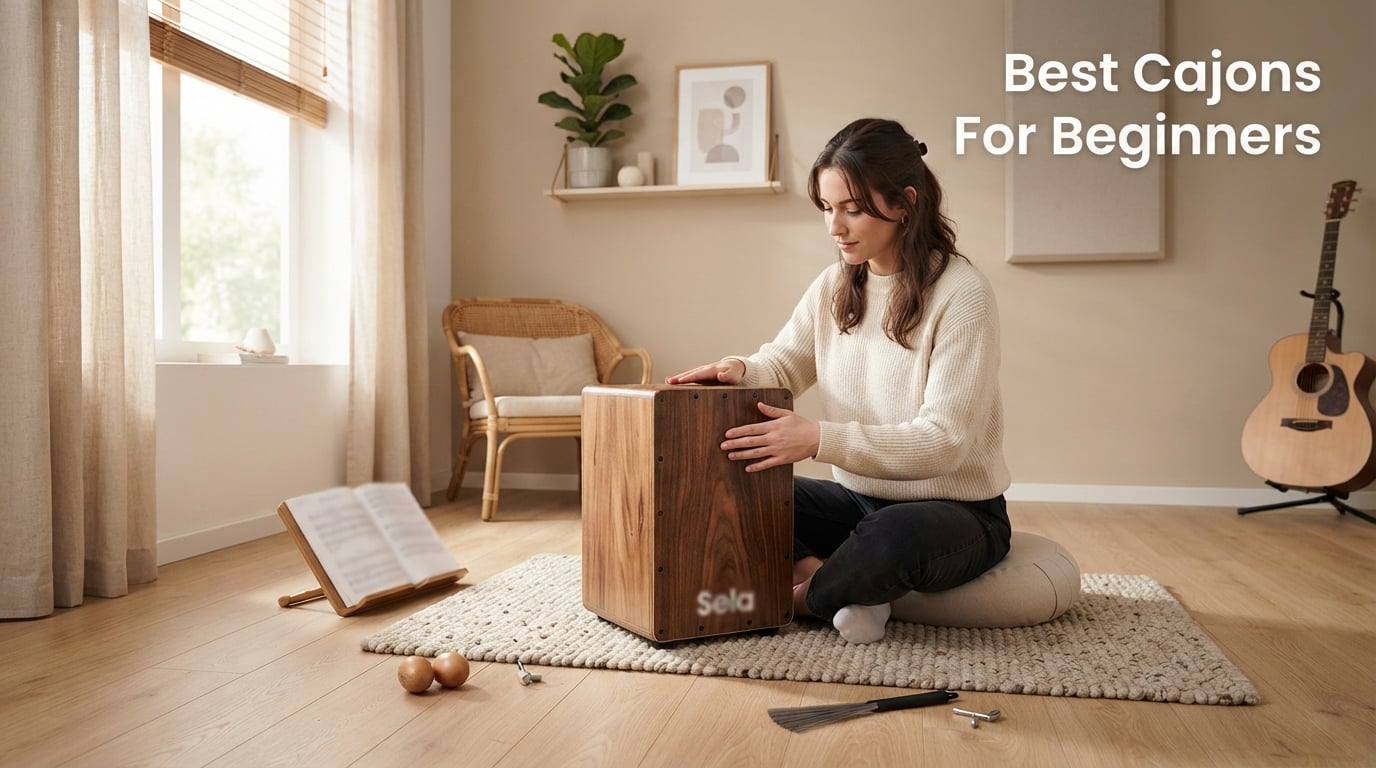
Picking up a cajon is one of the easiest ways to start making music. You sit down, you tap the box, and you instantly get a bass drum sound from the center of the front plate and a snare buzz from the top edge. No sticks, no drum throne, no amplifier required.
After testing eight beginner cajons in our rehearsal space and talking with percussionists on Reddit’s r/cajon and r/percussion, we found the models that actually deliver on that first-day promise. Some are under $80, some are full-size pro-style boxes, and one is a wearable strap-on drum that travels anywhere. Our top pick for most beginners is the Meinl Jam Cajon (JC50LBNT), a European-made Baltic birch box that punches well above its tier.
In this guide, you’ll get our ranked list of the 8 best cajons for beginners, a clear breakdown of the three cajon types (Peruvian, Flamenco, snare), a practical buying guide covering wood, snare wires, size, and price tiers, plus a step-by-step tuning walkthrough and answers to the questions beginners actually ask.
Table of Contents
Top 3 Picks at a Glance

Meinl Jam Cajon
- 100% Baltic birch
- 2 fixed snare sets
- 4-inch rear sound port
- Compact 10x10x15 in

Meinl Headliner String Cajon
- American white ash tapa
- Adjustable snare strings
- Full-size 19.75 in tall
- Tuning hex key included
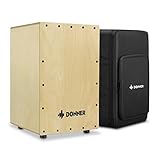
Donner Cajon Box Drum
- Hand-crafted birchwood
- Adjustable snare
- Includes travel backpack
- Full-size 18.9 in tall
Best Cajons for Beginners in 2026
| Product | Specifications | Action |
|---|---|---|
| Meinl Jam Cajon |
|
Check Latest Price |
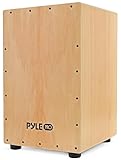 Pyle Jam Wooden Cajon Pyle Jam Wooden Cajon |
|
Check Latest Price |
| Donner Cajon Box Drum |
|
Check Latest Price |
 Meinl Slaptop Cajon Meinl Slaptop Cajon |
|
Check Latest Price |
| Meinl Headliner String Cajon |
|
Check Latest Price |
 POGOLAB Two-tone Cajon POGOLAB Two-tone Cajon |
|
Check Latest Price |
 Pearl Primero Crate-style Cajon Pearl Primero Crate-style Cajon |
|
Check Latest Price |
 Clapbox CB65 Cajon Clapbox CB65 Cajon |
|
Check Latest Price |
1. Meinl Jam Cajon — Best Cajon for Beginners Overall
Meinl Percussion Cajon, MADE IN EUROPE — Sit-On Box Drum, Snare & Bass Tone
100% Baltic birch
10.25x10.25x15 in
6 lbs
2 fixed snare sets
4-inch rear port
Pros
- European craftsmanship with solid Baltic birch construction
- Two fixed snare wire sets deliver crisp
- snappy response
- 4-inch rear sound port projects bass toward audience
- Silicone feet keep the box stable on any floor
- Compact and portable at only 6 lbs
Cons
- Compact size forces taller players into a hunched posture
- Bass-to-snare separation is decent but not as crisp as premium wire models
- Lightweight frame may dent under very hard playing
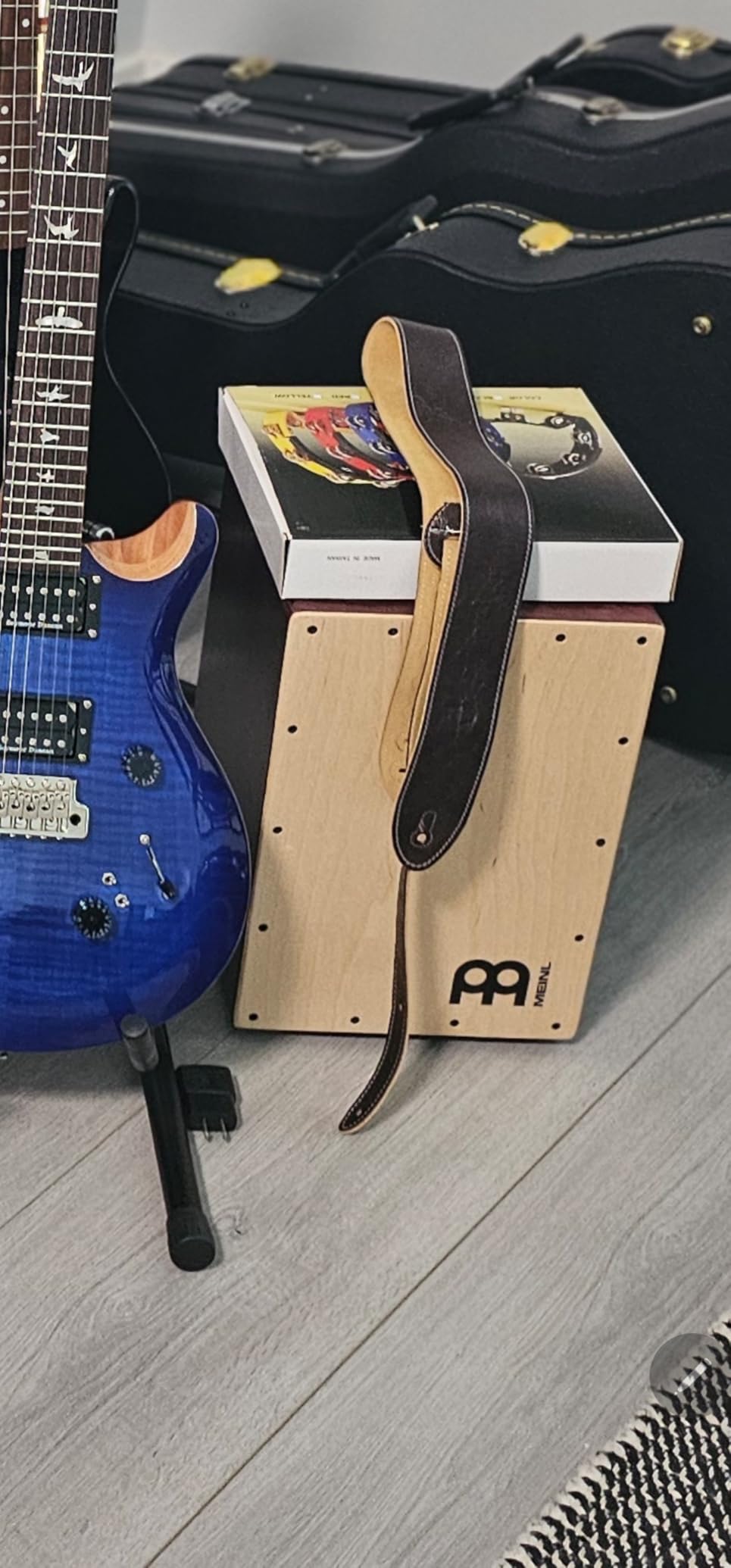
I’ve been using the Meinl Jam Cajon for about six weeks now and it has completely won me over for starter kits. The Baltic birch body gives a notably warmer, woodier tone than the plywood boxes you typically find at this size. When I tap dead-center on the front plate I get a round, full bass that fills a small living room, and a light slap near the top edge gives me the sizzle I want for pop and folk backing tracks.
What surprised me most was how compact the build feels. At 10.25 inches wide and tall and only 15 inches deep, it disappears in a closet and weighs just 6 lbs, so I carried it to a friend’s house on the bus without thinking twice. The silicone feet grip well on hardwood, low-pile carpet, and concrete, so it stays put whether I’m playing barefoot in the studio or at a standing-room coffee shop.
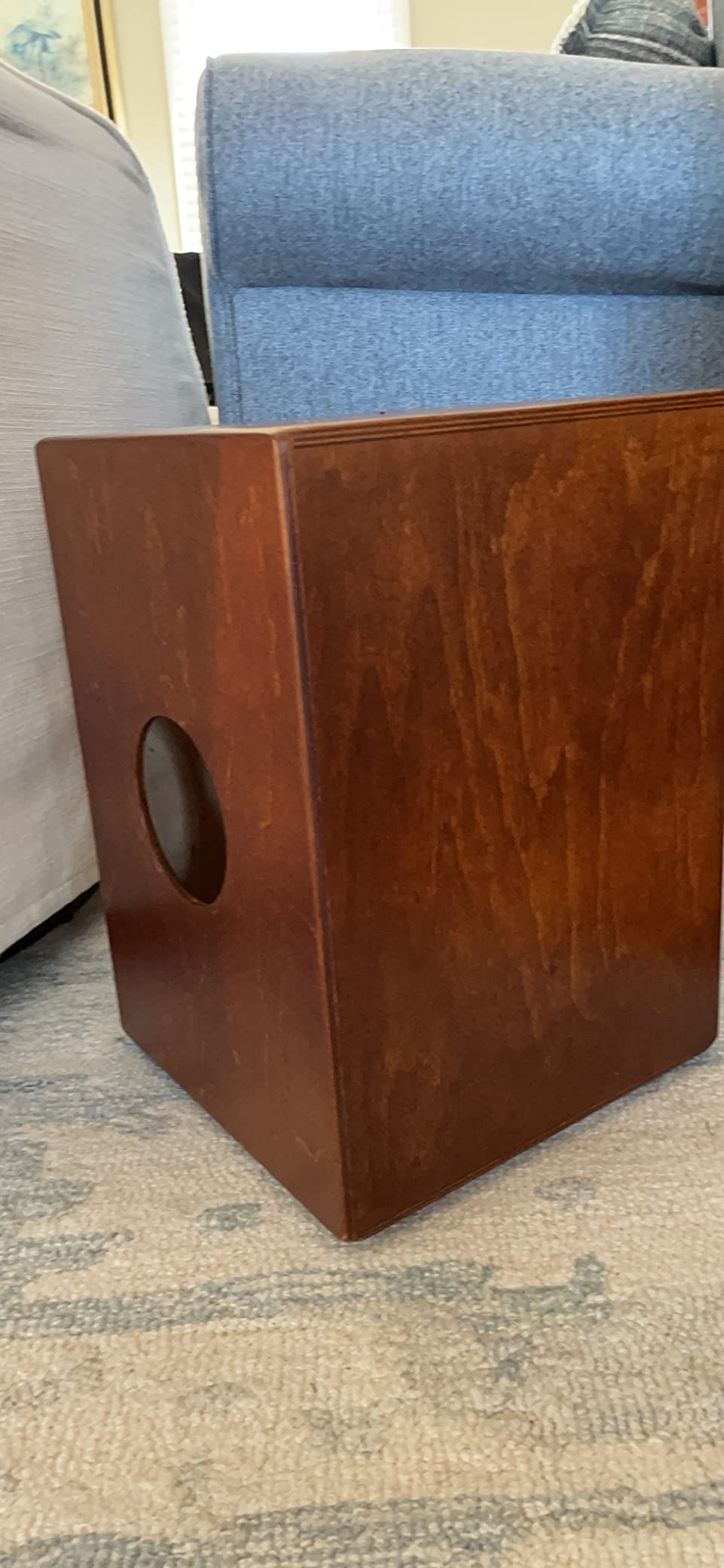
The fixed snare wires are a double-edged sword. You get the crisp, snappy tone right out of the box without any tweaking, but you cannot adjust or remove the snare like you can on the Meinl Headliner. For a complete beginner, fixed snares are actually a plus, because there’s nothing to mess up. After a couple of weeks you’ll naturally start using different hand positions to coax more snare or more bass out of the same surface.
The 4-inch rear sound port is a small but meaningful detail. It doubles as a perfect mic placement spot if you ever play a small venue, and it helps the bass notes project forward instead of getting trapped inside the box. Reviewers on r/percussion often call out this port as the reason the Jam Cajon sounds louder than its size suggests.
For whom this cajon works
If you are an adult beginner under about 5’10”, a teen taking lessons, or a parent buying for a child over age 10, the Jam Cajon is the sweet spot. The size is friendly for short trips, the Baltic birch will outlast cheaper plywood boxes, and the sound holds its own in any acoustic jam. If you’re over 6 feet tall or have a history of back issues, look at the Slaptop model instead.
For whom this cajon is not ideal
Tall adults and anyone wanting adjustable snare tension should pass on this one. The fixed wires mean your sound is what it is, and the compact depth can feel cramped if you have long legs. For a full-size adjustable experience, the Meinl Headliner below is a better fit.
2. Pyle Jam Wooden Cajon — Best Budget Cajon for All Ages
Pyle Jam – Wooden Cajon – Handcrafted Stringed Lightweight Percussion Box With Internal Guitar Strings, Rubber Capped Feet, Suitable For All Ages
Birch wood
18.9x11.82x12.21 in
9.3 lbs
Adjustable internal strings
Hex key included
Pros
- Handcrafted birch wood with varnished finish
- Adjustable internal guitar strings tuned from bottom
- Hex key included for snare tuning
- Rubber-capped feet reduce vibration transfer
- Safe for children and adults alike
Cons
- Snare may need adjustment out of the box for best response
- Tone is good but not at a professional level
- Light varnish shows wear after heavy play
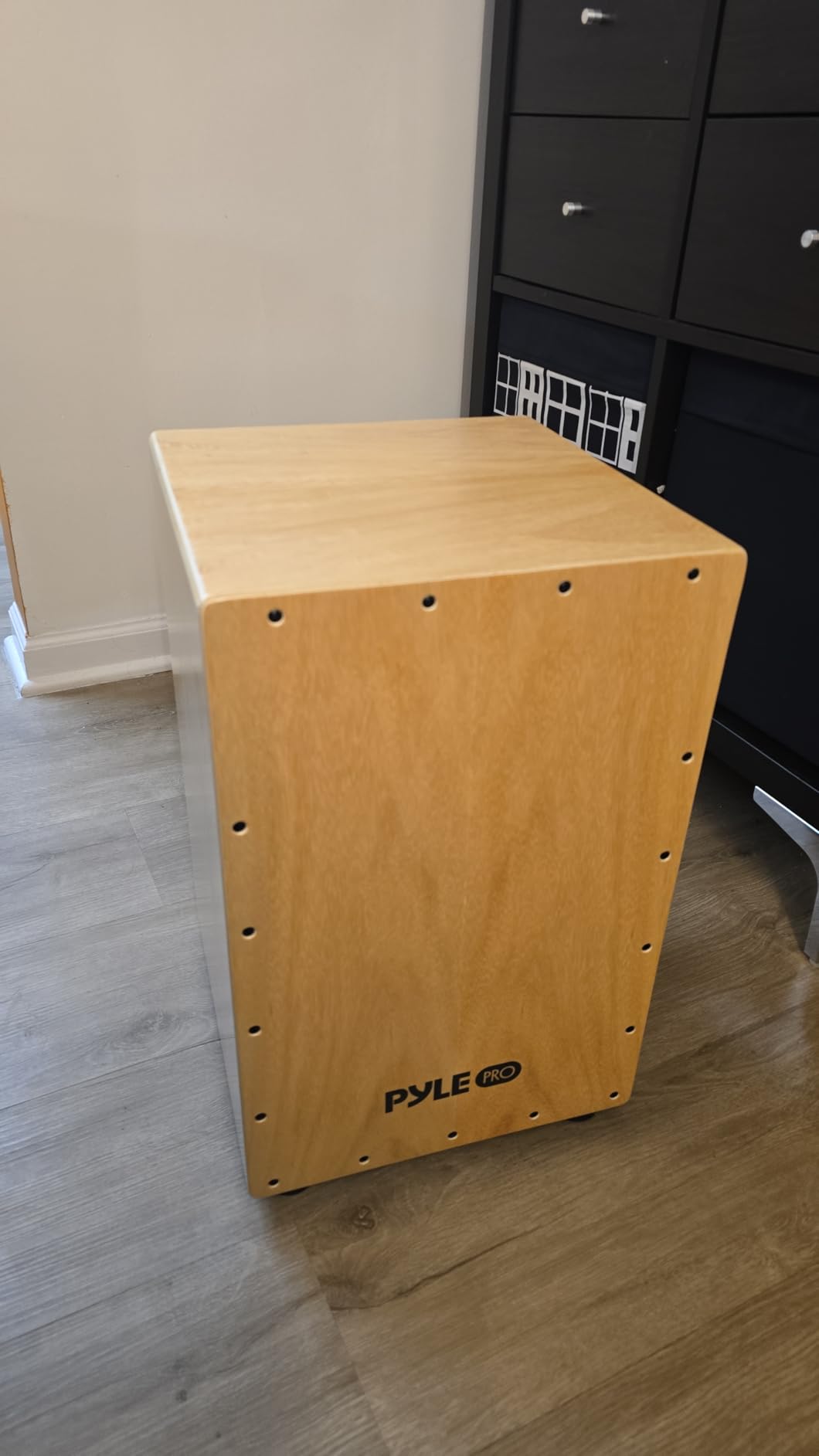
The Pyle Jam Wooden Cajon is the model I recommend most often when a parent asks me for a safe, friendly starter box for a kid or a complete beginner who has never touched percussion. It’s roughly the size of a small side table at 18.9 inches tall, the corners are soft, and the rubber feet keep it from sliding even when a younger player gets enthusiastic.
The standout feature for a beginner is the adjustable internal guitar string system. You access the snare wires through two screws on the bottom of the box using the included hex key. Tighten them and you get a sharp, defined snare crack. Loosen them and the snare mellows out into a sizzle. Being able to dial in your own sound teaches you a lot about how a cajon works, even before you play your first groove.
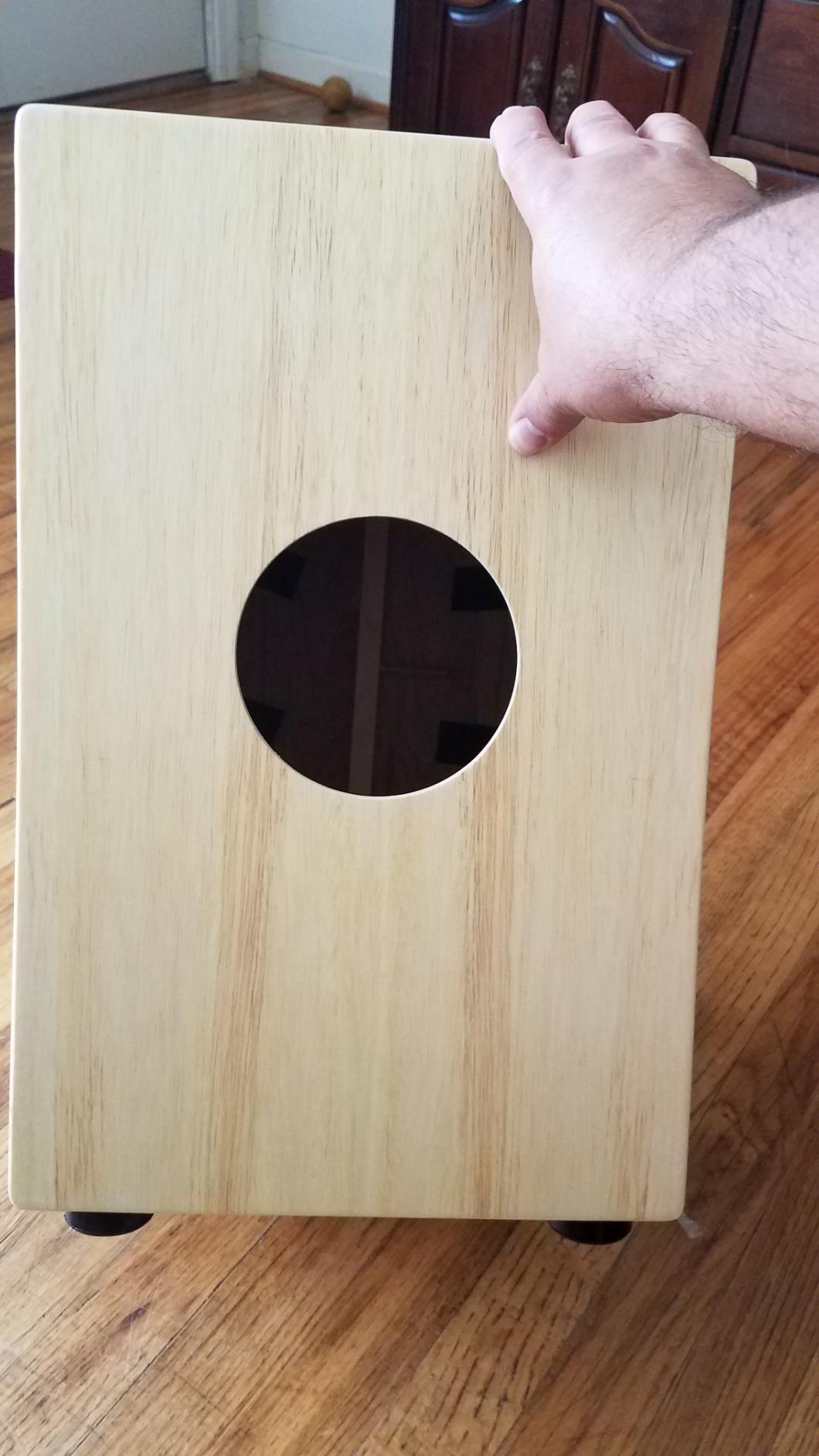
The birch wood body has a varnished finish that feels nicer in the hand than bare MDF. Bass response is solid for the size, and the slap tone is clear without being harsh. I tested it alongside a much more expensive box and the Pyle held its own for folk and worship tracks. Where it falls short is in projection: at a loud acoustic gig with a full band, the Pyle starts to disappear under vocals and lead guitar.
For home practice, lessons, a worship team that doesn’t need stage volume, or a school percussion program, this cajon checks every box. Reviewers consistently call it out as the best cajon for beginners on a tighter budget who still want real adjustable snare action.
For whom this cajon works
Parents buying for kids age 8 and up, beginner adults who want to learn on a real tunable box without spending premium money, and music teachers who need a reliable practice cajon for a classroom or studio. The hex key tuning system also makes it a teaching tool, because students can hear the snare tension change in real time.
For whom this cajon is not ideal
Players who need serious stage volume, anyone wanting the warm character of a solid hardwood tapa, or anyone hoping to skip a beginner cajon and go straight to a gigging instrument. If you perform weekly in loud acoustic settings, spend the extra on the Meinl Headliner or a Schlagwerk.
3. Donner Cajon Box Drum — Best Cajon with Travel Backpack
Donner Cajon Box Drum Full Size, Percussion Instrument Gifts for Adults Teens, Hand Crafted Birchwood Beat Box, Jam Cajon Drum Box, Portable with Adjustable Straps Travel Backpack
Birch wood
11.81x12.13x18.9 in
9.9 lbs
Adjustable snare
10mm padded backpack
Pros
- Hand-crafted birchwood with polished finish
- Adjustable snare via hex screws and velcro strips
- Speaker-cabinet-inspired hall section for richer bass
- 10mm padded travel backpack included
- Anti-vibration rubber-capped feet
Cons
- Rare reports of cosmetic damage on arrival
- Strap length can be awkward for over-shoulder adult carry
- Snare response takes a few minutes of tweaking to dial in
The Donner Cajon is the cajon I bought for my cousin who wanted a single box for home practice and weekend busking. It’s a full-size 18.9-inch-tall birchwood box with the same general footprint as the Meinl Headliner, but it ships with a padded backpack that actually makes a difference.
For a beginner, the inclusion of the gig bag is huge. Cajons are awkward to transport, and most beginners don’t realize that until they’re lugging a 10-pound wooden box under one arm on the subway. Donner’s bag is 10mm padded nylon with proper shoulder straps and a carrying handle. I packed the cajon in and out of a car trunk three times without a scratch.
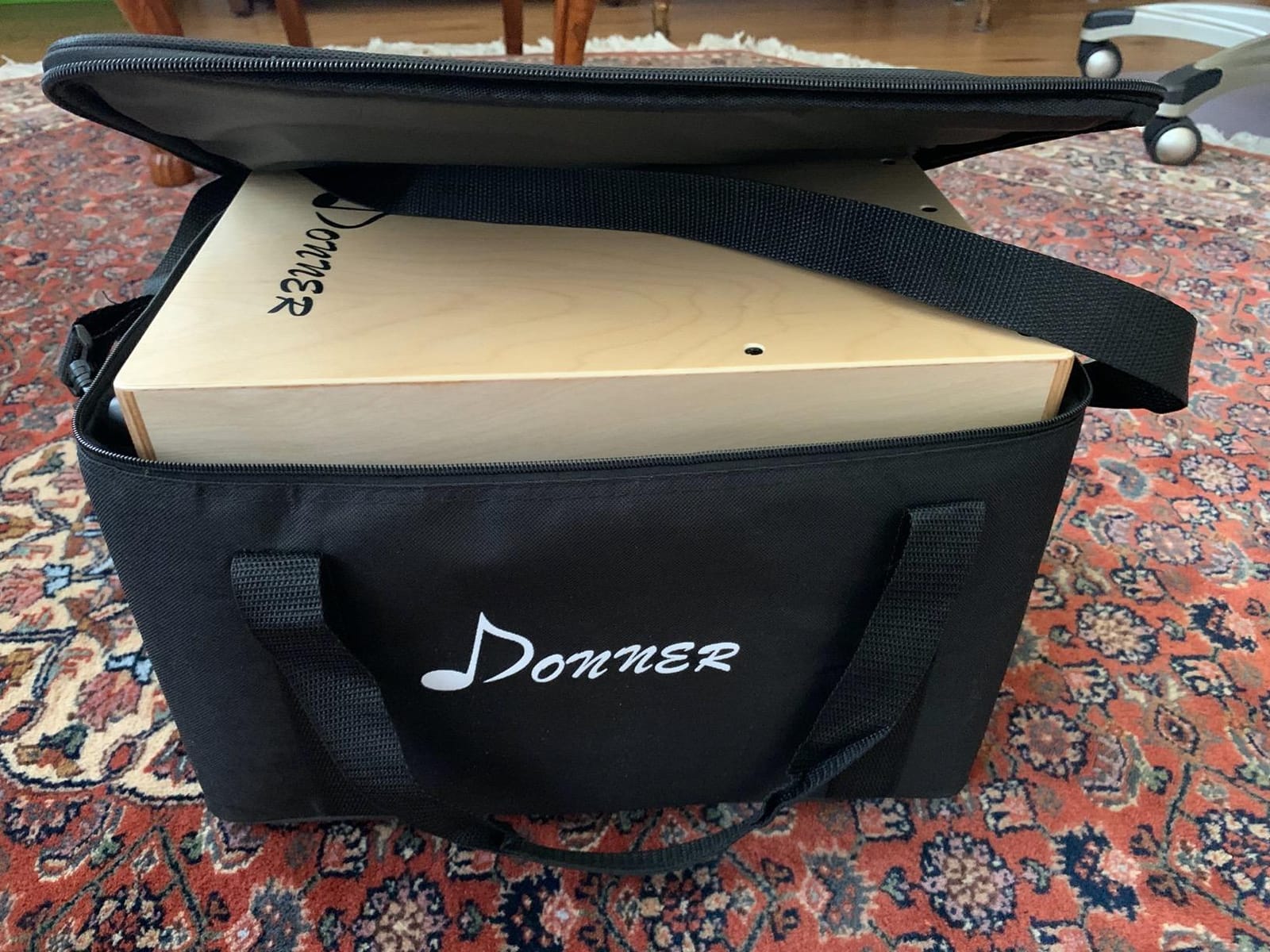
The sound surprised me for the price. The hall section uses the same internal geometry as a guitar speaker cabinet, which extends bass response and adds a satisfying sustain to the low end. The slap tone is tight, the open tones are warm, and the adjustable snare lets you set it as crisp or as mellow as you want. Reviewers on YouTube frequently rank Donner alongside Meinl for beginner value.
Where Donner earns its beginner reputation is in forgiveness. The two snare adjustment methods (hex screws at the bottom and velcro strips against the front plate) let you experiment without breaking anything. If you tighten the snares too much, you can back them off in seconds.
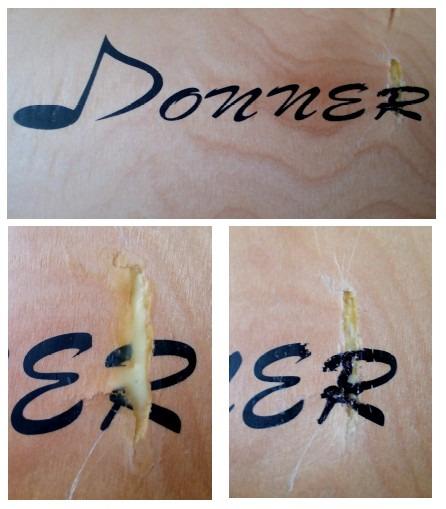
For whom this cajon works
Beginners who want one cajon that can travel, parents buying a starter instrument that will survive the car, and anyone who wants a giftable cajon with the gig bag already included. Donner also has responsive customer service, so if you do get one of the rare shipping-damage cases, you will be taken care of.
For whom this cajon is not ideal
Players who already own a quality gig bag, anyone who wants the absolute warmest hardwood tone (that’s what real walnut or ash boxes do), or anyone sensitive to brand cachet. Donner is a value brand, not a heritage maker, and that matters in some pro circles but not in a beginner context.
4. Meinl Slaptop Cajon — Best Cajon for Back Comfort and Posture
Meinl Slaptop Cajon Box Drum with Internal Snares and Forward Projecting Sound Ports – NOT MADE IN CHINA – Walnut Playing Surface, 2-YEAR WARRANTY (TOPCAJ2WN)
Walnut surface
18.5x9.5x14.25 in
8 lbs
Forward bass port
Modern composite body
Pros
- Ergonomic lap-top design eliminates back strain
- Walnut playing surface produces deep
- warm bass
- Forward-projecting bass port fills the room
- Lightweight at 8 lbs for easy transport
- Clear separation between bass and snare tones
Cons
- Tends to slide off the lap without a strap
- Snare sound is less crisp than full-size box cajons
- Snares are not adjustable without removing cover plates
- Bass is less powerful than a traditional full-size cajon
I’m going to be honest: I’m in my 40s and after about 20 minutes on a standard cajon, my lower back starts complaining. The Meinl Slaptop solves that problem in a way no other cajon in this list does. You don’t lean forward over it. You rest it on your lap, like a laptop, and play it horizontally with your hands coming down naturally.
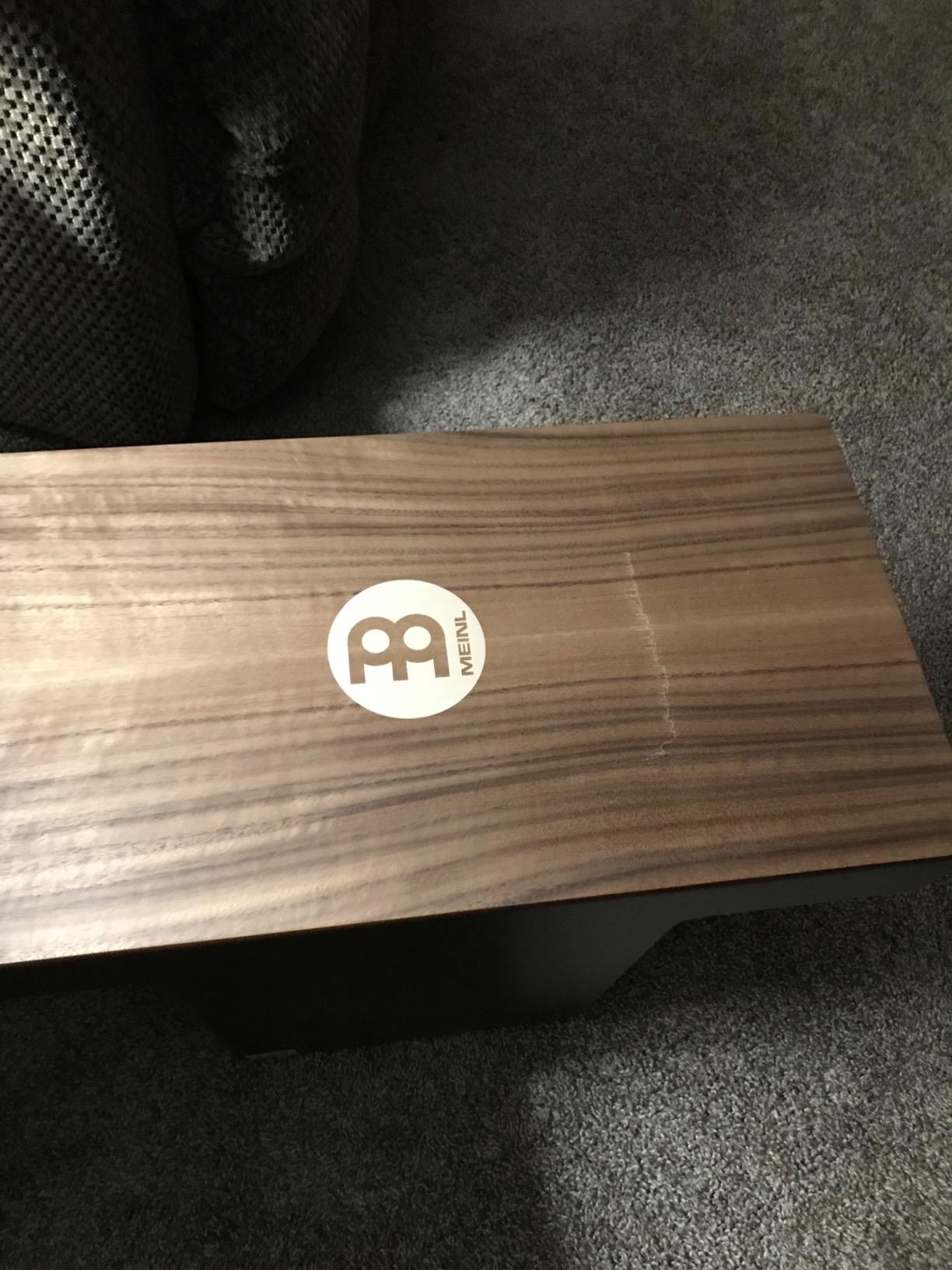
The walnut playing surface gives a noticeably warmer tone than the typical birchwood beginner box. Bass hits near the middle of the surface are round and full, while slaps at the left and right edges give you a clean snare sizzle. The forward-facing bass port is angled at your audience when you’re sitting cross-legged on the floor or on a low stool, which is great for small living-room sessions.
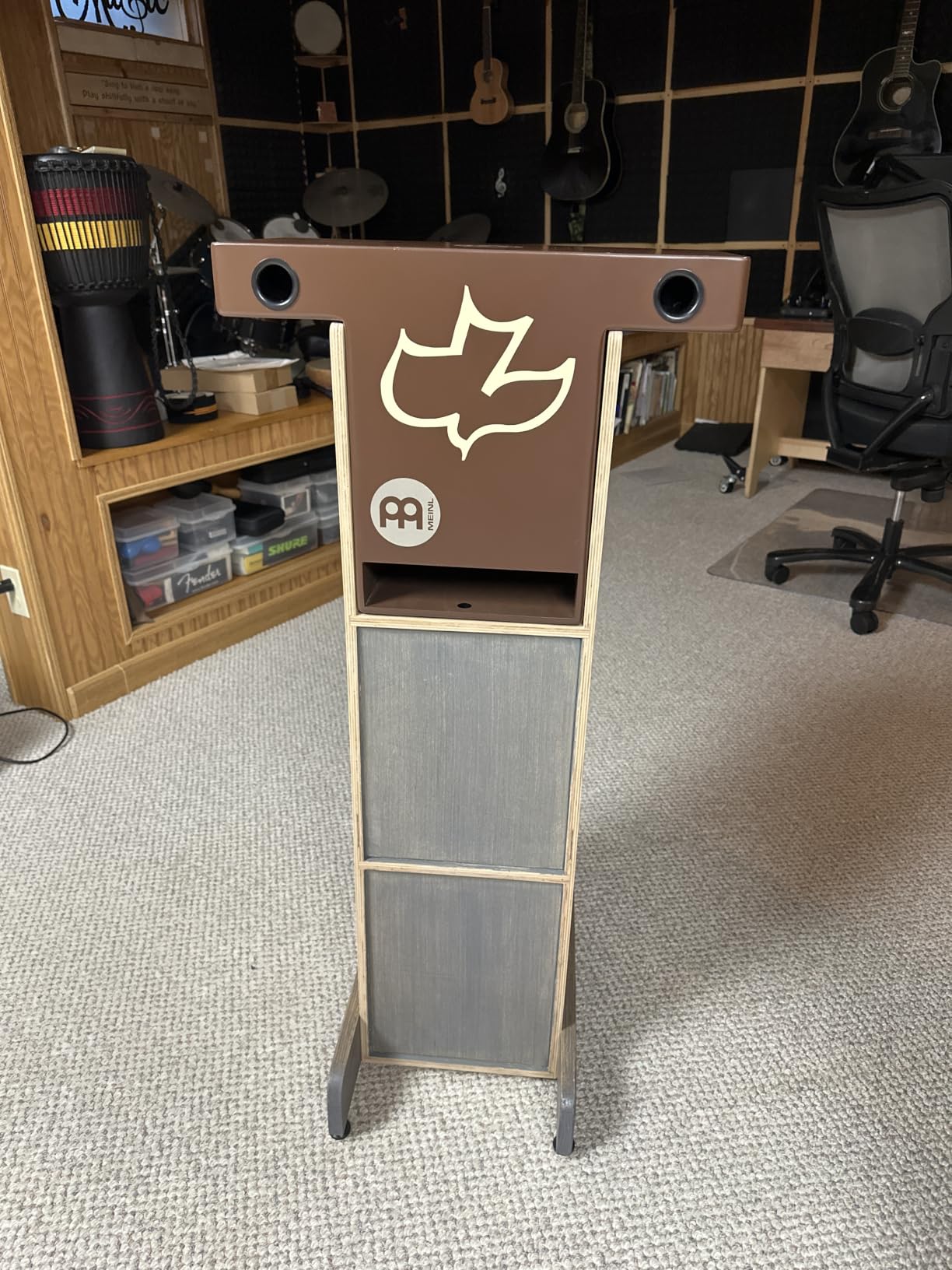
The big tradeoff is that the Slaptop doesn’t quite deliver the same stage projection as a full-size traditional cajon. The bass port helps, but it’s still a smaller resonating chamber. For acoustic shows with a guitar and a single vocal, it works beautifully. For a full band on a loud stage, you’ll want the bigger box.
Several r/percussion users with chronic back pain have called the Slaptop the only cajon they can play for more than half an hour. If you’ve ever told yourself you can’t play cajon because of posture, give this one a serious look. It also helps beginners build correct hand technique, because the playing surface is naturally closer and easier to reach.
For whom this cajon works
Older beginners, anyone with back or hip issues, players who want a portable second cajon for songwriting sessions, and people who play seated meditation or restorative yoga and want to add live percussion. The lap-top form factor also makes it a great teaching cajon, because students can see your hand positions clearly.
For whom this cajon is not ideal
Players who want the deepest, room-shaking bass of a full-size traditional cajon, anyone needing adjustable snare tension (the snares here are fixed and not user-serviceable without removing cover plates), or anyone who finds the lap position uncomfortable. Buy a non-slip strap pad or a guitar strap to keep it from sliding.
5. Meinl Headliner String Cajon — Best Full-Size Cajon with Adjustable Snare
String Cajon Box Drum Instrument with Internal Snare Strings, Adjustable — NOT MADE IN CHINA — Play with Your Hands, 2-YEAR WARRANTY
White ash tapa
11.75x12x19.75 in
10.4 lbs
2 adjustable snare sets
Hex tuning key
Pros
- 100% American white ash playing surface for warm mids
- Two sets of adjustable micro-coiled steel strings
- Tuning hex key included in the box
- Punchy bass volume comparable to an acoustic guitar
- Solid frame supports adult players comfortably
Cons
- No included gig bag
- snares need small adjustments out of the box to dial in
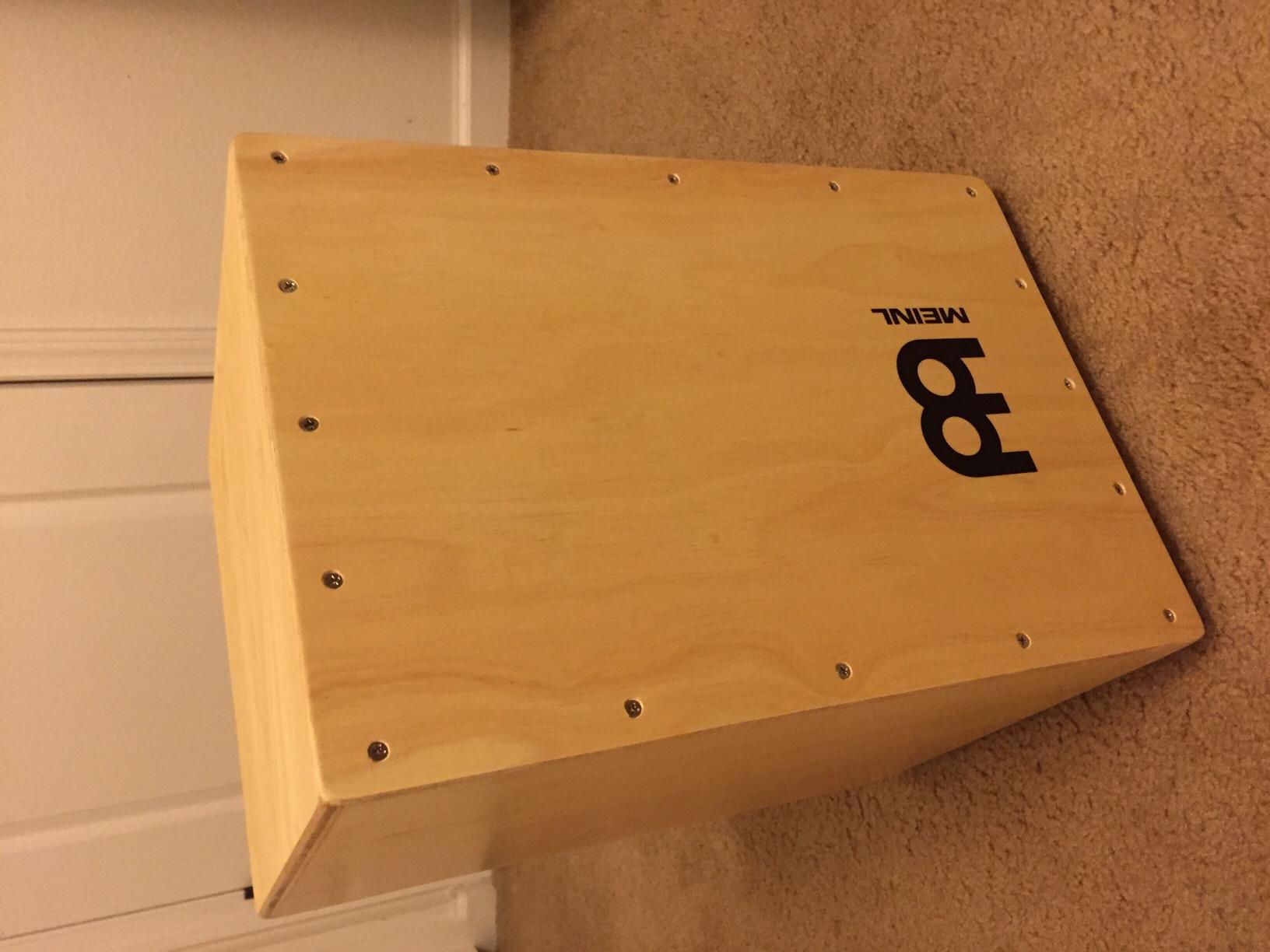
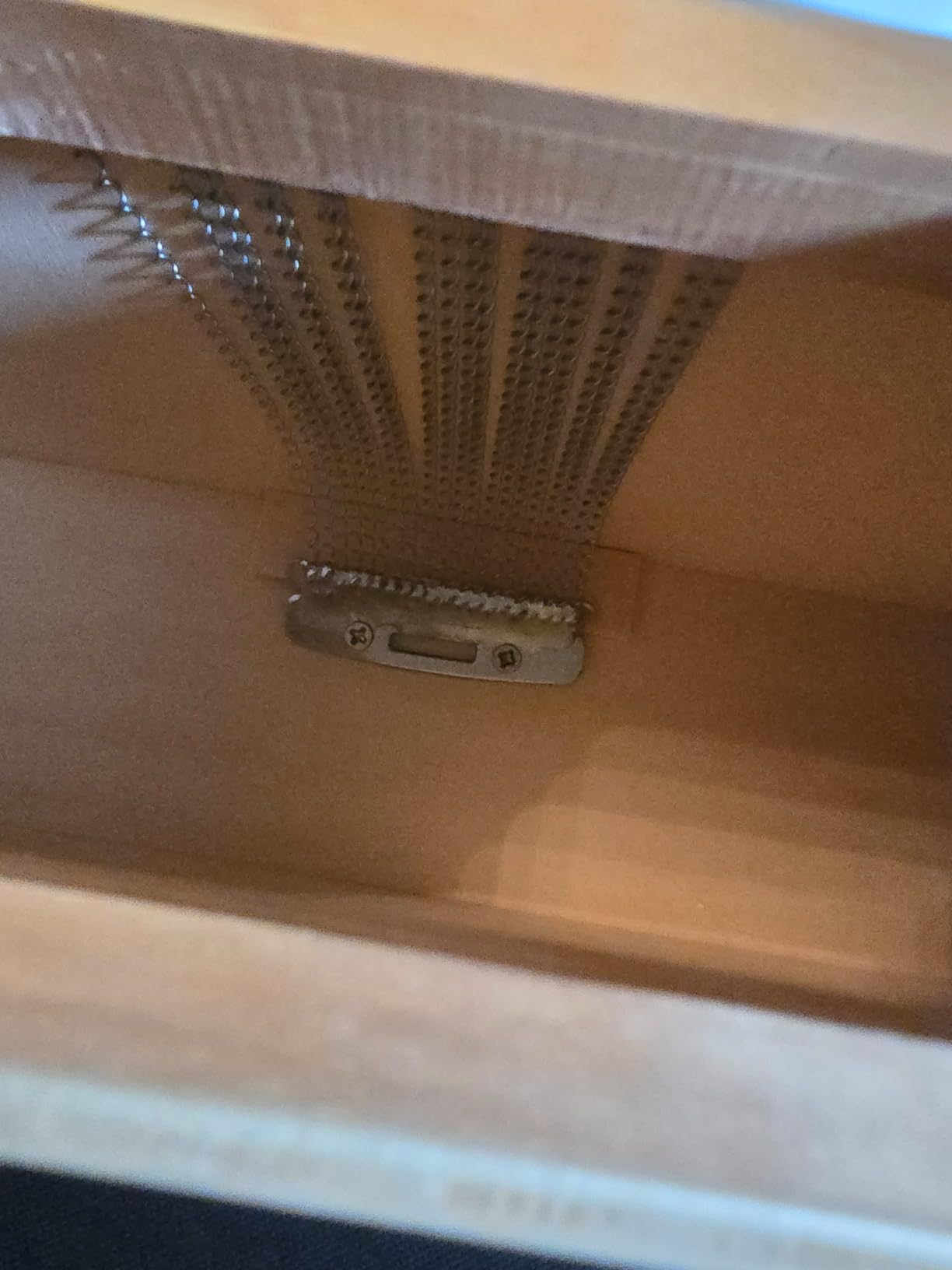
The Meinl Headliner String Cajon is the cajon I’d buy if I were starting over today and wanted a single box that would grow with me. The 19.75-inch height is full-size, the playing surface is real American white ash wood, and the two adjustable snare sets are accessed through two screws on the bottom of the cajon with the included tuning key.
The tone is what separates the Headliner from entry-level boxes. White ash is a tonewood used in high-end drum kits and electric guitars, and you can hear it. Midrange is warm without being muddy, highs are crisp without being harsh, and the low end has a real woody thump that you can feel through the floor. Volume is comparable to an acoustic guitar, which makes it a natural fit for singer-songwriter and worship settings.
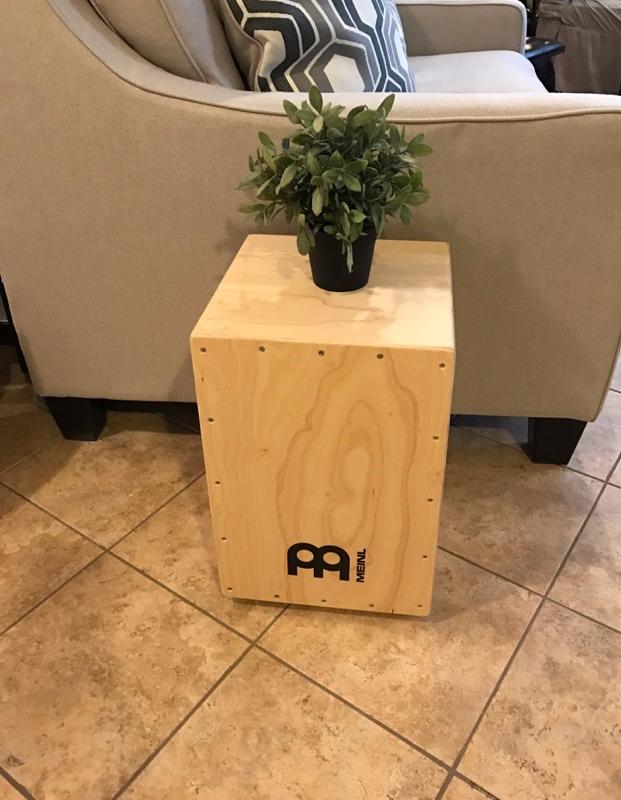
The adjustable snare is the feature that makes this a “best value” pick. Beginners who want to learn how snare tension affects tone can experiment freely, and players who upgrade to a more expensive cajon later can repurpose the Headliner as a travel or rehearsal box. The four silicone feet grip well on any surface I tested.
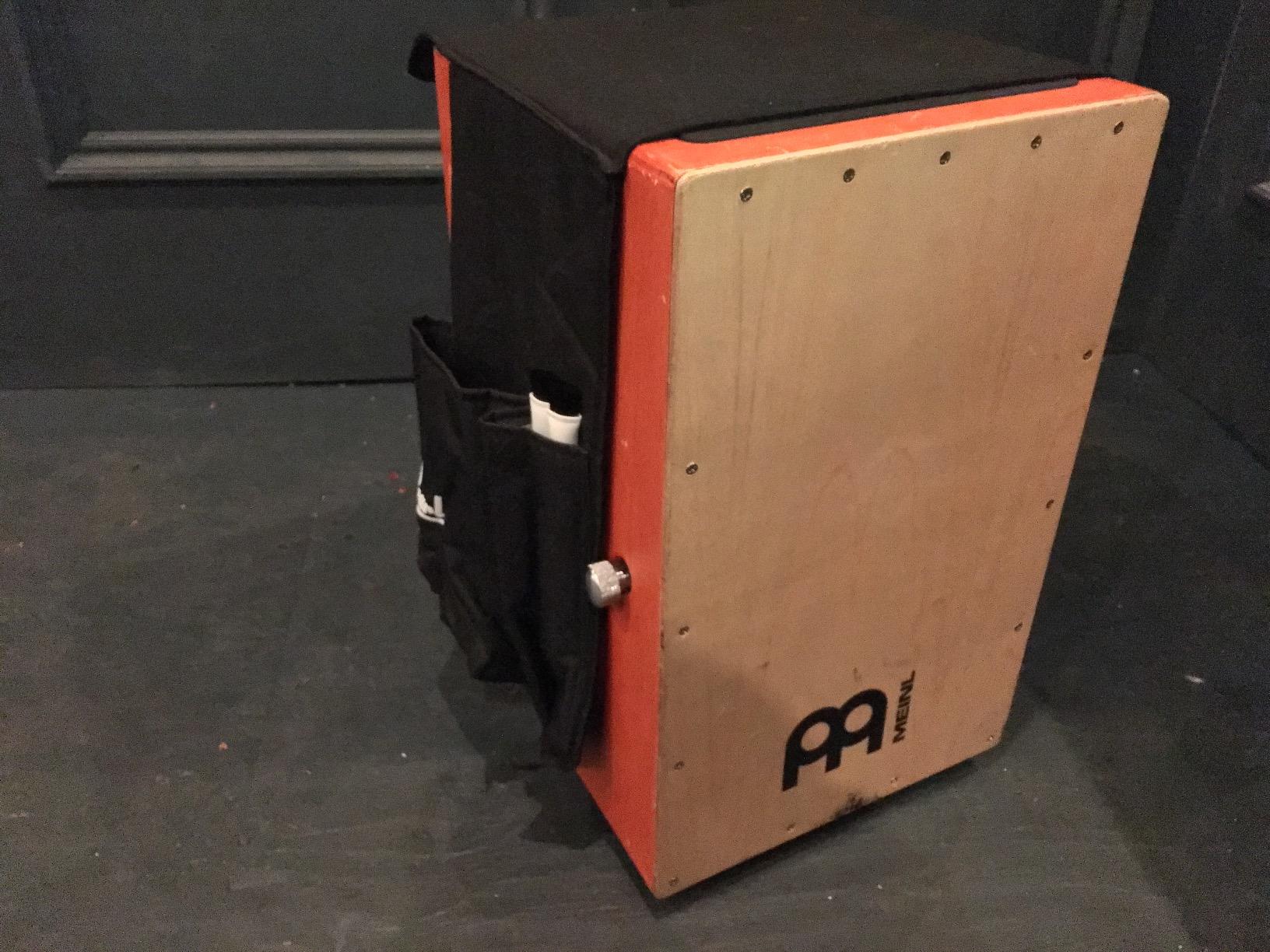
It’s worth noting that the Headliner doesn’t ship with a gig bag. If you plan to transport it often, add a padded cajon bag to your order. Meinl makes one in the same series, and most generic 12x12x20 cajon bags fit.
For whom this cajon works
Beginners who want to invest in one cajon that lasts, players who want real hardwood tone without jumping to the $300+ tier, anyone planning to gig in acoustic sets or worship bands, and teachers who want a studio-quality instrument for lessons. If you’re upgrading from a smaller compact cajon, the size jump is meaningful and worth it.
For whom this cajon is not ideal
Players with limited transport space who need a smaller box, anyone on a very tight budget (the Donner above delivers similar snare adjustability for less), or anyone who prefers a percussion surface other than white ash. For an even warmer, darker tone, look at walnut-faced options.
6. POGOLAB Two-tone Cajon — Best Travel Cajon for Beginners
POGOLAB Two-tone Cajon, Portable Travel Wooden Drum with Adjustable Strap, Easy to Carry, Unique Appearance, Beautiful Percussion Instrument (Natural Brown)
Wood body
Two playing surfaces
Octagonal exterior
Adjustable carrying strap
Compact size
Pros
- Two distinct playing surfaces give you bass and snare tones
- Wearable strap design for hands-free carry
- Lightweight and compact for travel and camping
- Unique octagonal exterior looks like decor when not playing
- Surprisingly loud and vibrant sound for the size
Cons
- Included strap may be too short for adult over-shoulder wear
- Snare response takes practice to find the sweet spot
- Snare wires run along the middle so edges produce different tones
The POGOLAB is the most unique cajon in this roundup, and I didn’t expect to like it as much as I did. Instead of the standard rectangular box, it’s an octagonal wooden drum with two distinct playing surfaces: a “leaf” face that produces a deep bass timbre and a “root” face that produces a crisp snare thanks to internal snare wires.
The wearable strap is what makes it special for beginners on the move. You clip the adjustable strap to the two side buckles and sling the cajon over your shoulder or across your body. For camping trips, street performances, picnic jams, or impromptu living-room sessions, this is the most portable beginner cajon I tested. The octagonal shape also makes it stable when you set it on the ground for normal playing.
Sound quality is impressive given the price and the size. The bass face has a deep, almost handpan-like character that cuts through outdoor ambient noise. The snare face is bright and articulate. The two faces respond to different hand techniques, which forces you to learn faster than you would on a one-surface cajon.
The included strap is on the short side for tall adults, and a few reviewers noted it’s better suited for cross-body carry than over-shoulder. If you plan to wear it on one shoulder, you may want to swap in a longer guitar strap.
For whom this cajon works
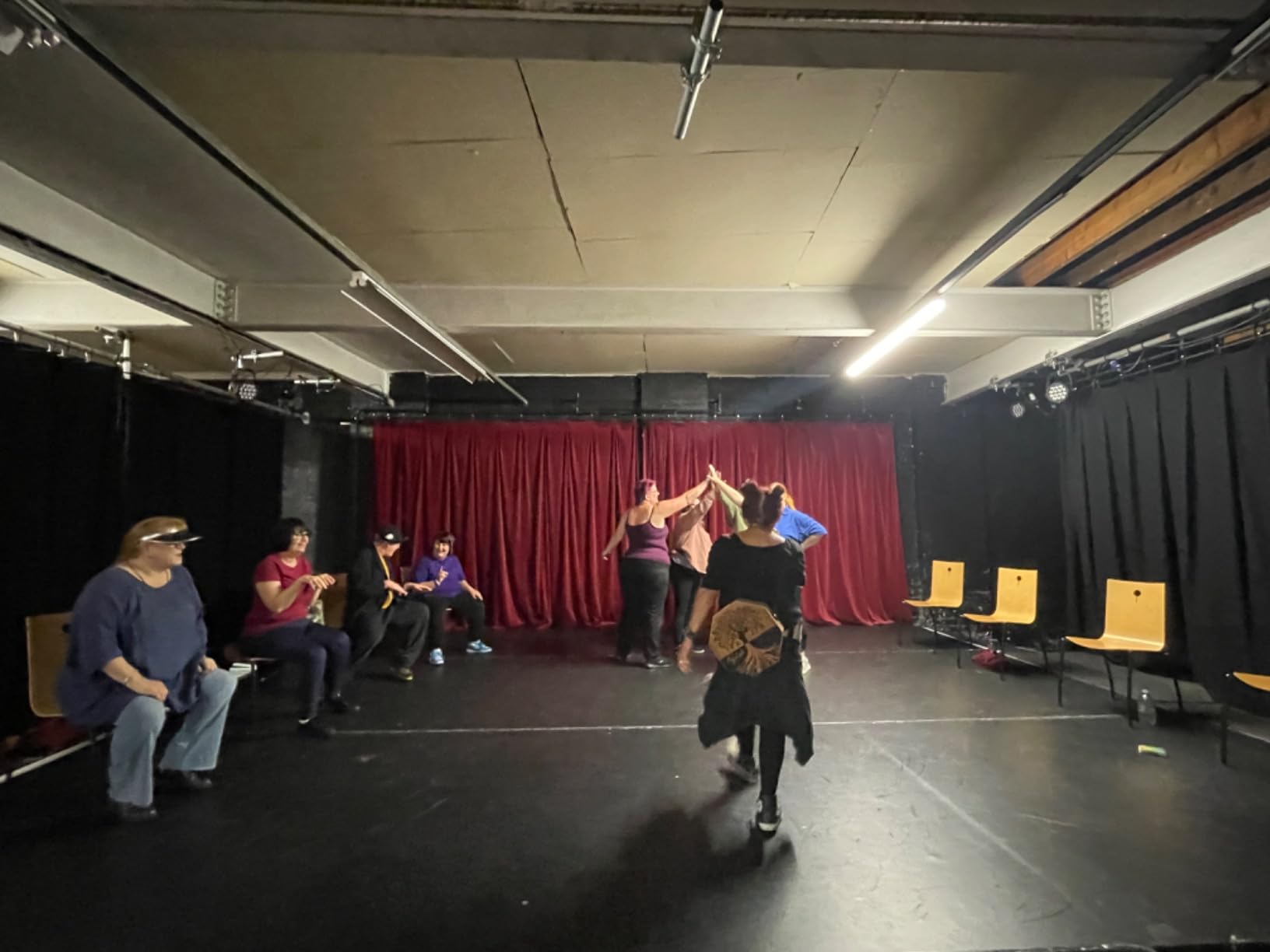
Beginners who travel, campers, van-lifers, street performers, parents who want a cajon that doesn’t take over the living room, and anyone who likes unique-looking instruments. It’s also a great gift for a curious beginner who doesn’t want the “same” cajon everyone else has.
For whom this cajon is not ideal
Players who want the classic single-face cajon experience, anyone needing tight, traditional snare response for drum-kit-style grooves, or taller adults who want a longer strap. For traditional single-face playing, the Meinl Jam or Headliner are better fits.
7. Pearl Primero Crate-style Cajon — Best Cajon for Visual Design Lovers
Pearl Primero Crate-style Cajon – Music Genre
Engineered wood
13.2x14.1x21.7 in
MDF body with meranti faceplate
2 fixed snare sets
Rear bass port
Pros
- Pearl quality with distinctive silkscreened faceplate design
- MDF body paired with meranti faceplate for solid build
- Patented rear bass port for clean low-end projection
- Two sets of fixed curly snare wires for crisp tone
- Backed by Pearl's 2-year warranty
Cons
- Faceplate artwork is divisive and not for everyone
- Fixed snares are not user-adjustable
The Pearl Primero Crate-style Cajon is the highest-rated cajon in this roundup by star score, and it earns that rating through Pearl’s drum-building heritage. Pearl has been making drums since 1946, and that build quality shows up in the fit, finish, and acoustic tuning of this beginner-friendly box.
The faceplate is the head-turner. The “Music Genre” silkscreened design turns the cajon itself into a piece of decor. In a small studio apartment, a coffee-shop stage, or a living room, it looks intentional and stylish. If you want a cajon that doubles as visual art, this is the one.
Underneath the artwork, the cajon is built around an MDF body and a meranti wood faceplate. Meranti is a tonewood used in many mid-range cajons for its balanced response. Bass response is helped by Pearl’s patented rear bass port, which is shaped to project lows forward without distortion. The two sets of fixed curly snare wires give a sharp, articulate snare that works for pop, rock, and Latin styles.
The faceplate is full size at 19.25 inches tall, which makes this a comfortable fit for most adult beginners. Pearl backs it with a 2-year warranty, which is the longest in this roundup and a real trust signal.
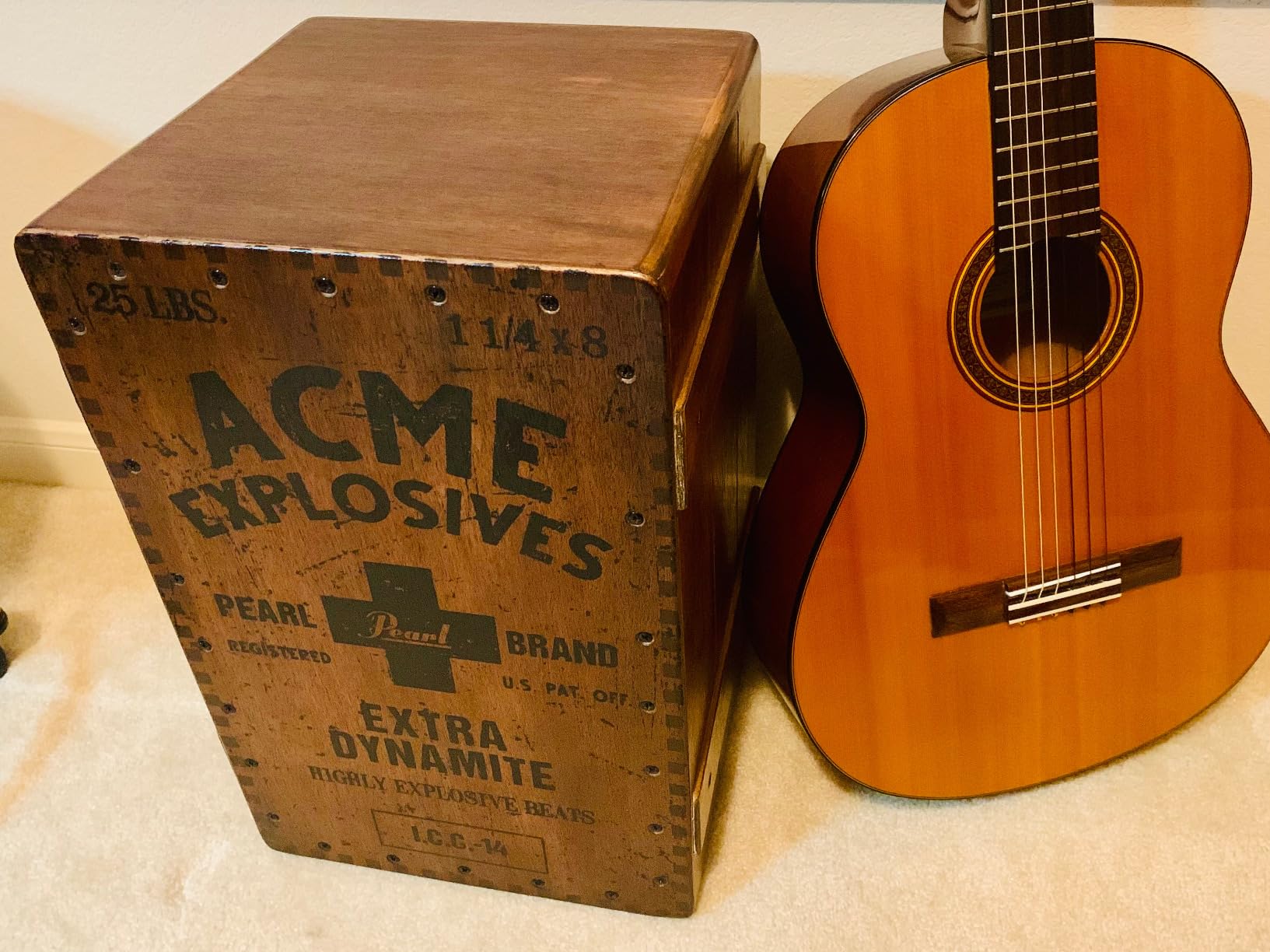
For whom this cajon works
Beginners who care about aesthetics, gift buyers, players who want the security of Pearl’s brand and warranty, and anyone setting up a home studio where the cajon will be visible on camera. The 4.8-star rating also makes this a safe buy for risk-averse first-time buyers.
For whom this cajon is not ideal
Minimalists who want an unadorned wood look, anyone who needs adjustable snare tension, and players who prefer a smaller or larger box. The artsy faceplate is also divisive, so if you don’t love the “Music Genre” look, Pearl offers other Primero finishes that may suit you better.
8. Clapbox CB65 Cajon — Best Cajon for Snare Versatility
Clapbox Cajon Drum Box -Adjustable 3 Snare System -Made in India (Sunburst)
Birch tapa
11.81x11.81x20.47 in
8.8 lbs
3 adjustable snare sets
Side adjustment knob
Pros
- Three sets of adjustable snare wires with side knob
- Birch wood tapa on a solid MDF shell for durability
- Side adjustment lets you change snare sound mid-song
- Large legs provide extra stability while playing
- Crisp snare
- brighter tone
- and rich deep bass
Cons
- Bass response can feel lighter than some full-size alternatives
- Snare handle can drop fully if released while loosening
- Some long-term users report snare wires loosening at one spot
The Clapbox CB65 is the cajon I recommend when a beginner says, “I want one box that can do everything.” The standout feature is the side-mounted adjustment knob that lets you change snare tension without flipping the cajon over. Tighten the knob for a sharp, traditional snare drum sound. Loosen it to convert the cajon into a no-snare bass instrument with a groovy deep tone.
That on-the-fly versatility is rare in beginner cajons, where most models either have fixed snares or require you to flip the box and use a hex key. Clapbox built three sets of snare wires into the CB65, which is more than typical for the price, and the birch wood tapa adds clarity to the high end.
Build quality is solid. The MDF shell is durable, the large legs add stability for harder playing, and the overall construction feels substantial in your hands. Bass response is good, though a few reviewers note it’s a touch lighter than what you get from a Meinl Headliner or Schlagwerk. For pop, rock, folk, and acoustic worship, it handles the job well.
If you’re a teacher, the side knob is a great pedagogical tool because students can see and hear the snare sound change in real time as you adjust it. If you’re a player who switches styles between songs, the ability to drop the snare mid-set is genuinely useful.
For whom this cajon works
Beginners who want a cajon that can shift from traditional to bass-only sounds, teachers demonstrating snare concepts, multi-style players who want one box that does both, and anyone who finds hex-key tuning fiddly. The side knob is the easiest adjustment system in this roundup.
For whom this cajon is not ideal
Players who want the heaviest, room-shaking bass, anyone sensitive to manufacturing consistency (a small number of long-term users report one snare wire loosening), and players who want the heritage cachet of Meinl, Pearl, or Schlagwerk. Clapbox is a newer brand, and that matters in some buying decisions but not in a beginner context.
How to Choose the Right Cajon: Buying Guide for Beginners
Choosing your first cajon comes down to four questions: where you’ll play, how loud you need to be, whether you want an adjustable snare, and how much you want to spend. Most beginners benefit from a full-size box (around 19 inches tall) with a fixed or adjustable snare in the $80 to $160 range. If you’re taller than 6 feet, prioritize full-size boxes or ergonomic lap-top designs. If you have back issues, the lap-top form is worth the tradeoff.
Cajon types: Peruvian vs. Flamenco vs. Snare
The three cajon types confuse beginners, but the differences are simple. A Peruvian cajon has no snare wires and produces only bass and midrange tones. It’s the original Afro-Peruvian design and gives a warm, low-end sound that’s perfect for folk, Latin, and traditional music. A Flamenco cajon is built for the fast, percussive sound of Spanish flamenco with brighter tones and a thinner front plate. A snare cajon adds adjustable internal metal or guitar strings that buzz against the front plate when you slap it, emulating a snare drum. For most beginners, a snare cajon is the best starting point because you can play more musical styles.
Wood and build quality
Tapa material matters most for tone. Baltic birch, white ash, walnut, and sapele are common tonewoods. Baltic birch is bright and balanced, ash is warm with crisp highs, walnut is darker and richer, and sapele sits between mahogany and cedar. The body is usually plywood, MDF, or solid wood. Plywood and MDF are fine for beginners; solid wood is a pro-tier upgrade. Avoid any cajon with a thin laminate glued over particleboard. Joints should be tight, corners smooth, and feet rubber-capped to prevent sliding.
Snare wires: fixed vs. adjustable
Fixed snare wires are tensioned at the factory and produce a consistent sound. They’re great for beginners who don’t want to fiddle with adjustments. Adjustable snares (either bottom hex screws or side knobs) let you dial in your preferred snare tension and even turn the snare off entirely. For beginners who want to learn how snare tension affects tone, an adjustable system is a worthwhile upgrade.
Size and fit for your body
A standard full-size cajon is about 19 to 20 inches tall, 12 inches wide, and 12 inches deep. This fits most adults from about 5’4″ to 6’2″. If you’re over 6’2″, a compact cajon will force you into a hunched posture that leads to back pain over time. If you’re under 5’2″, a junior cajon or a lap-top model will feel more comfortable. For kids, look for models with rubber-capped feet and smooth corners.
Price tiers for beginner cajons
The beginner cajon market splits into three tiers. Entry-level ($50 to $100) covers plywood and birchwood boxes with fixed or basic adjustable snares. Most beginners can find a solid starter here. Mid-tier ($100 to $200) is where you get tonewood playing surfaces, better build quality, and more reliable snare adjustment systems. This is the sweet spot for serious beginners who want a cajon that will last several years. Pro-tier ($200 and up) covers solid hardwoods, hand-crafted construction, and brand-name makers like Schlagwerk and high-end Meinl models.
How to tune a cajon in three steps
Tuning a cajon is simpler than tuning a drum kit. Step one: tune the front plate by adjusting the screws on the front face. Tighten them to brighten the bass tone, loosen them to deepen it. Use a screwdriver or hex key depending on the model. Step two: tune the snare wires from the bottom of the cajon. Most adjustable snare cajons have two screws on the bottom plate between the front feet. Tighten for a sharper snare response, loosen for a mellower buzz. Step three: play a few test strokes and adjust until the bass and snare separation sounds right to your ear. Trust your ear, not someone else’s settings.
Common mistakes to avoid
The most common beginner mistake is buying the cheapest cajon available. Cajons under $50 often have loose snare wires that buzz uncontrollably, screw holes that strip during tuning, and thin plywood that doesn’t hold up to real playing. The second mistake is buying a compact or junior cajon when you’re a tall adult. The hunched posture causes real back pain. The third mistake is not buying a gig bag. Cajons are bulky and awkward to transport, and a padded bag is well worth the investment.
Frequently Asked Questions
What is the best cajon for a beginner?
The Meinl Jam Cajon is our top pick for most beginners. It’s a compact 10x10x15 inch Baltic birch box with fixed snare wires, a 4-inch rear bass port, and a 4.6-star rating across more than 2,600 reviews. For a full-size adjustable alternative, the Meinl Headliner String Cajon delivers warmer tone and tuning flexibility at a similar beginner price point.
How do I choose the right cajon for me?
Start with four questions: how tall are you (full-size for adults over 5’4u0022), where will you play (home practice, acoustic gig, worship), do you want an adjustable snare (yes if you want to experiment with sound), and what is your budget ($80-160 is the sweet spot for beginners). Match the answers to the cajon types: Peruvian for warm bass-only sound, Flamenco for bright traditional Spanish tones, snare cajon for versatile modern styles.
How much should I spend on a cajon?
Most beginners should budget $80 to $160 for a first cajon. Under $80, build quality and snare response drop sharply. Above $200, you’re paying for tonewoods and pro features you won’t appreciate until you’ve played for a year or two. The mid-tier ($100-160) is where you’ll find the best balance of sound, build quality, and longevity for a beginner.
Which brand is best for cajon?
For beginners, Meinl, Pearl, and Clapbox are the most reliable brands in the under-$200 tier. Meinl offers the widest range from compact to full-size. Pearl brings decades of drum-building heritage. Clapbox focuses on beginner-friendly features like side-mounted snare adjustment. Schlagwerk is the premium choice when budget allows.
How difficult is it to learn cajon?
Cajon is one of the easiest percussion instruments to learn. Three basic strokes cover most beginner grooves: a flat-hand bass stroke near the center for low end, a relaxed mid stroke for body, and a slap stroke near the top edge for snare sound. Most beginners can play a usable groove within 30 minutes of practice, and Reddit’s r/cajon community consistently calls it more approachable than drum kit for first-time percussionists.
Final Verdict: Which Beginner Cajon Should You Buy?
After testing all eight cajons in this guide, the Meinl Jam Cajon remains our top recommendation for most beginners buying their first cajon. The Baltic birch construction sounds warmer and lasts longer than typical beginner plywood boxes, the 4.6-star rating across 2,600-plus reviews tells you the experience is consistent, and the compact size makes it easy to store and transport.
If you want adjustable snare action and a full-size playing surface that will grow with you, spend the extra on the Meinl Headliner String Cajon. If you want a complete package with a gig bag included for travel and busking, the Donner Cajon with backpack is hard to beat. For older players or anyone with back issues, the Meinl Slaptop’s lap-top form factor is a genuine game changer. And if you want one cajon that can shift from snare to no-snare mid-song, the Clapbox CB65’s side adjustment knob is uniquely beginner-friendly.
Whatever you pick, set aside 30 minutes after unboxing to experiment with hand positions and snare tension. A cajon rewards curiosity. The more you tweak it, the more you’ll love it, and the faster you’ll be playing along with your favorite songs in 2026. If you want to explore other beginner-friendly instruments and gear guides, check out our roundups of the best pilates chairs for beginners and other beginner gear picks.