
The best board games for 2 players are the ones built around a single opponent rather than diluted across a table of four. Our shortlist starts with 7 Wonders Duel, the ancient-world card battler that packs a full engine builder into about half an hour, and it also covers the fast abstract fillers, the family classics, and the tile-laying duels that fill the gap between them.
Two people at a table face a problem that four players rarely hit: there is nobody to blame when the game stalls, and nowhere to hide a bad hand. A good two-player design tightens that pressure into something readable in a single evening, then finishes before anyone checks the time. We spent the last few months putting eleven candidates through that filter, tracking setup time, downtime, learning curve, and how each one behaved across repeat plays.
One term matters before we get into the list. A two-player-only game ships with rules built for exactly two and does not scale to a third seat without breaking, while a game that scales up rebalances its board and components when only two people show up. Several picks below are strictly two-player, which is a feature on a date night and a limitation if you host a group. We flag which is which so you can buy for the right situation.
For bigger tables, we have separate coverage of big-box games for game nights and strategy board games for adults that stretch well past two seats.
Table of Contents
Top 3 Picks for the Best Board Games for 2 Players


Battleship Classic
- Salvo option for advanced play
- Portable folding cases
- No batteries needed

Pressman Mancala
- 48 glass stones
- Hinged folding wooden board
- Learn the rules in one sitting
These three cover the widest range of situations. 7 Wonders Duel is the deepest game here and the one we recommend to almost anyone. Battleship Classic is the pick when the other player is nine or ninety. Pressman Mancala is the pick when you want a two-player game tonight, nothing to learn, and a box that folds into a drawer.
Quick Overview: The Best Board Games for 2 Players in 2026
| Product | Specifications | Action |
|---|---|---|
| 7 Wonders Duel |
|
Check Latest Price |
| Battleship Classic |
|
Check Latest Price |
| Pressman Mancala |
|
Check Latest Price |
 Othello Othello |
|
Check Latest Price |
 Quoridor Quoridor |
|
Check Latest Price |
 Onitama Onitama |
|
Check Latest Price |
 Stratego Stratego |
|
Check Latest Price |
 Splendor Duel Splendor Duel |
|
Check Latest Price |
 The Lord of the Rings Duel for Middle-Earth The Lord of the Rings Duel for Middle-Earth |
|
Check Latest Price |
 BOOP BOOP |
|
Check Latest Price |
 Azul Duel Azul Duel |
|
Check Latest Price |
Play times above are the manufacturers’ own estimates. Treat them as a floor rather than a promise: every game here ran slightly long once both players stopped rushing, and none of them needed a timer to stay civil.
1. 7 Wonders Duel Review: The Best Overall Two-Player Board Game
Asmodee 7 Wonders Duel Board Game BASE GAME – Intense Two-Player Battles in the Ancient World, Strategy Game for Kids and Adults, Ages 10+, 2 Players, 30 Minute Playtime
Players: 2
Ages: 10+
Play time: 30 min
Mechanics: card drafting, area control
Pros
- Three separate ways to win keeps the finish unpredictable
- Engine building lets the trailing player stay competitive
- Shuffles its card pyramid every game
- Illustrated cards do the rule teaching
Cons
- Rulebook assumes prior board game knowledge
- Long list of exceptions to the core rules
- Wonder cards can warp over time
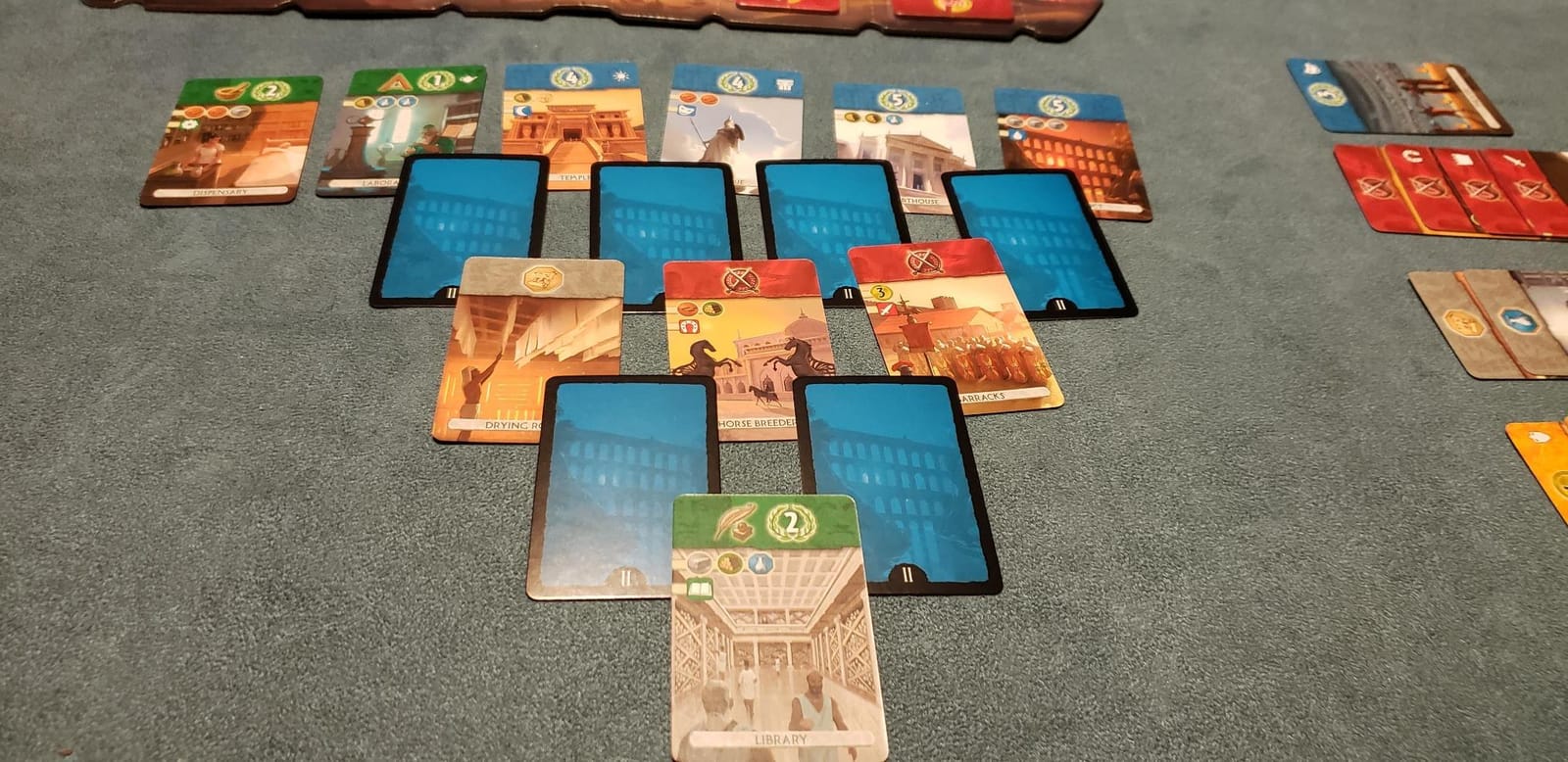
This is the game we hand to a couple who each own one board game box. You draft cards for three rounds to build a civilization, then play out the scored symbols on your own board, and every single turn both of you are looking at the other person’s military strength. Setup is a two-minute shuffle, and the box measures roughly 8 by 8 by 2 inches, so it lives on a coffee table rather than a shelf.
What makes it the best board game for 2 players in our testing is the three-way win condition. You can win by invading the opposing capital, by locking science symbols, or by out-scoring on raw points, and that means a player down on the army track is still calculating instead of sulking. Losing narrowly because your opponent chased a different path feels fair, which is rare in a game this short.
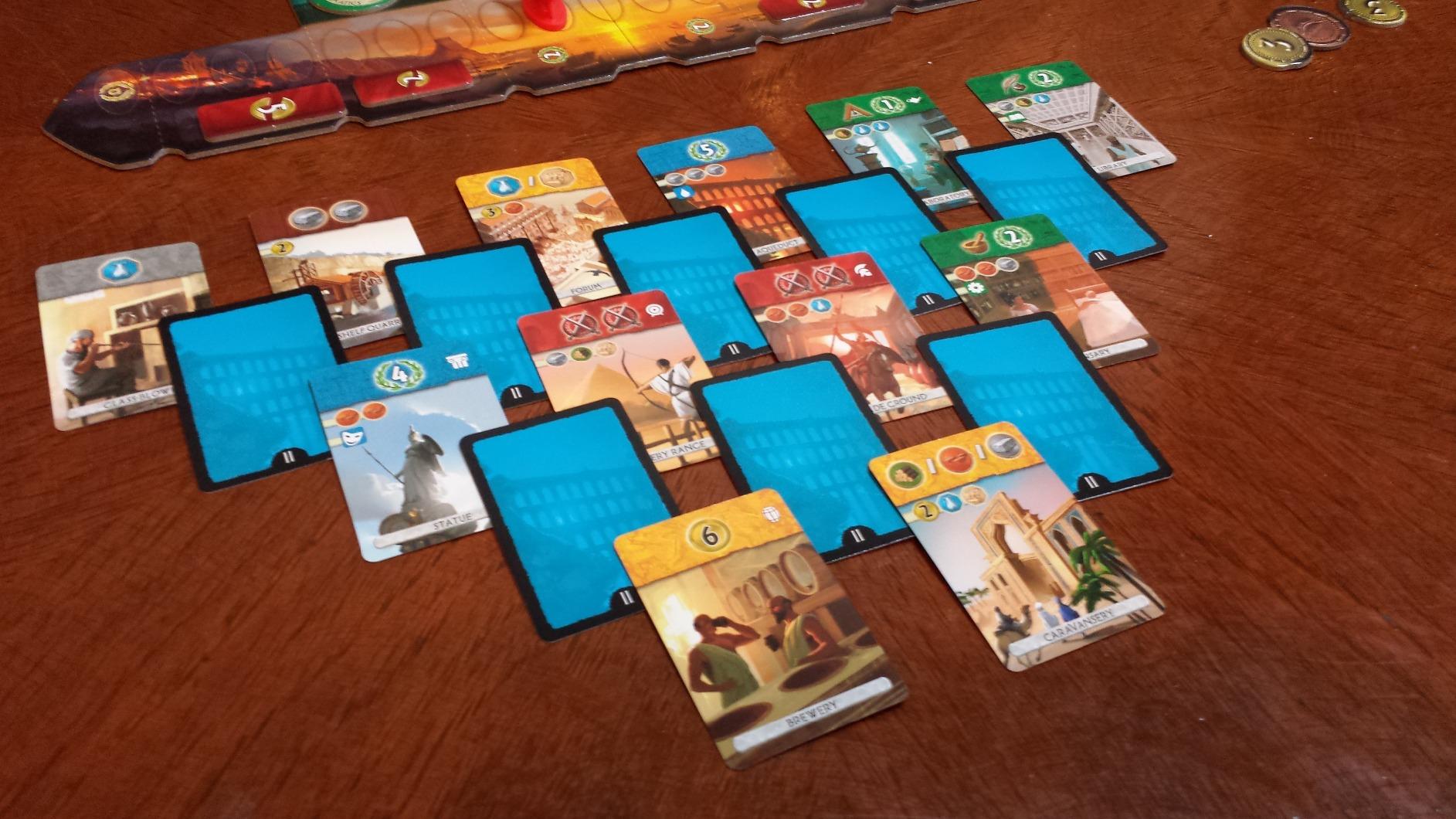
The catch is onboarding. The rulebook is written for people who have played the parent game or something like it, and reviewers regularly call out the number of exceptions bolted onto the basic turn structure. Our advice: play one throwaway round first with a shared reference sheet, and expect round two to be noticeably cleaner.
Weighing the decision, the balance is good enough that a beginner and a veteran can share a game without either feeling carried. Over repeat plays we never hit a situation where one player had no path to a comeback, which is the failure mode that ruins most 30-minute duels.
Why two players suits this game so well
Card drafting needs opponents. With four players the pyramid reshuffles and the tension drops; with two, every card you take is a card your opponent cannot see you want. The area control element also shrinks naturally to a single shared front, so the map stays readable without a rulebook page devoted to it.
This is a strictly two-player design. It is not a trimmed four-player game, so nothing is unbalanced, but it will not accommodate a third person at the table.
Where this game frustrates people
The resource math adds up fast. By the middle rounds you are pricing several goods at once while tracking what your opponent can afford, and if you dislike arithmetic under time pressure this is not the pick. The price-setting system in particular creates long pauses where both players are staring at nothing.
Second, the components are paper-heavy. Cards warp over time, and the cards are smaller than standard card size, so if you have trouble reading small print under low light, expect that here too.
2. Othello Review: The Best Value Two-Player Board Game
Ravensburger Othello – Classic Strategy Board Game for 2 Players – Easy to Learn, Hard to Master – Fast-Paced Family Fun – Ages 8+
Players: 2
Ages: 8+
Play time: 20 min
Mechanics: grid placement, disc flipping
Pros
- Rules take under a minute to explain
- Slide out drawers store every piece in the board
- High rating across thousands of reviews
- Compact footprint for shelves and travel
Cons
- English instructions only
- Limited variety once the flip pattern is learned
- Average build quality by modern standards
Othello is the cheapest way into a genuinely deep two-player game, and this edition fixes the storage problem that ruined cheap copies for years. Every disc and the instruction sheet live in drawers built into the sides of the board, so setup is unbox, slide, play. The whole thing runs about 20 minutes, which makes it the default answer when two people want a game and only have half an hour.
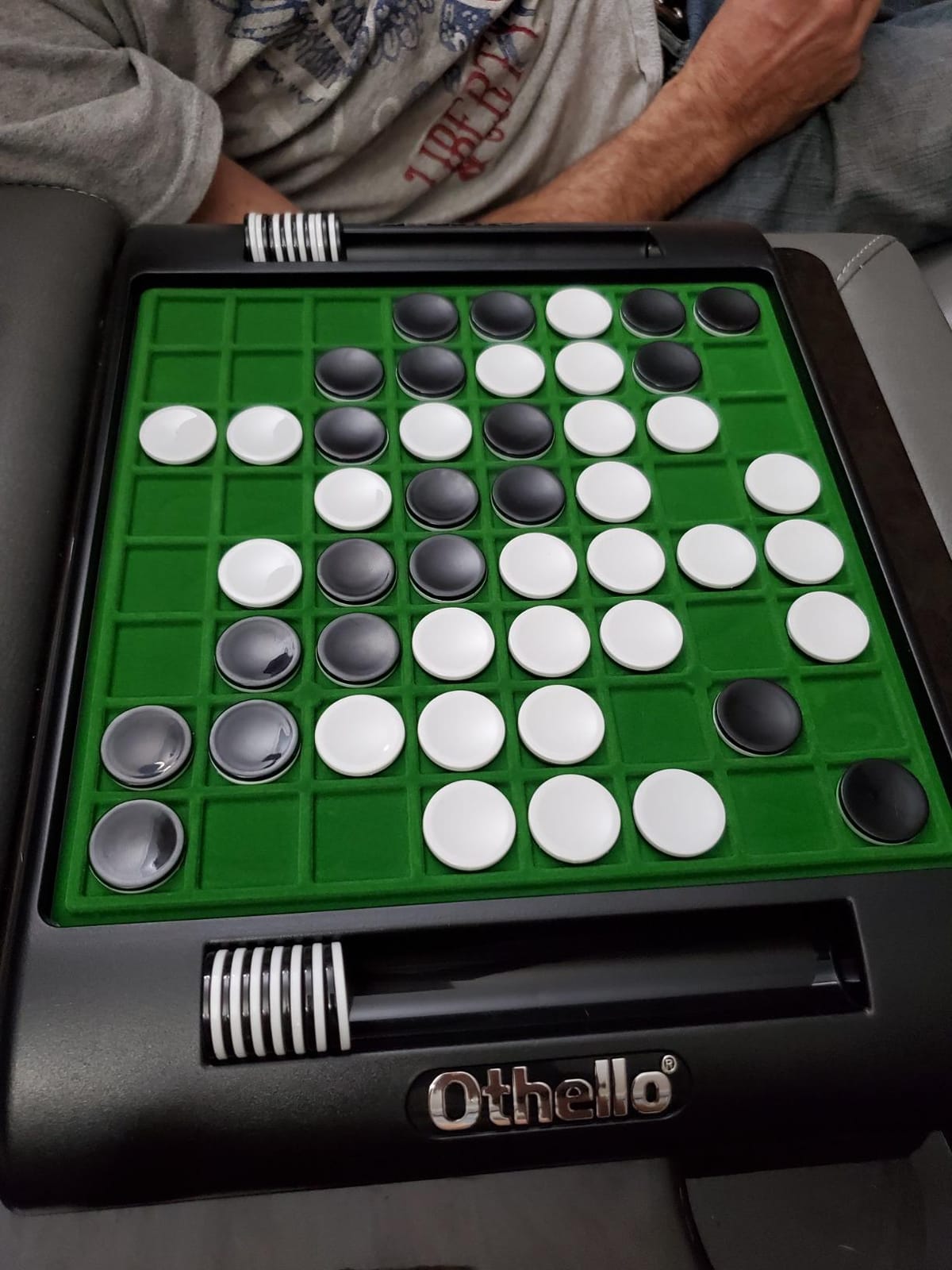
The mechanic is one sentence long: place a disc, and any opposing discs sandwiched between your new disc and an existing one of yours flip to your colour. A child understands it immediately, and an experienced player still loses to a well-timed corner placement a decade later. That combination is genuinely rare in family games.
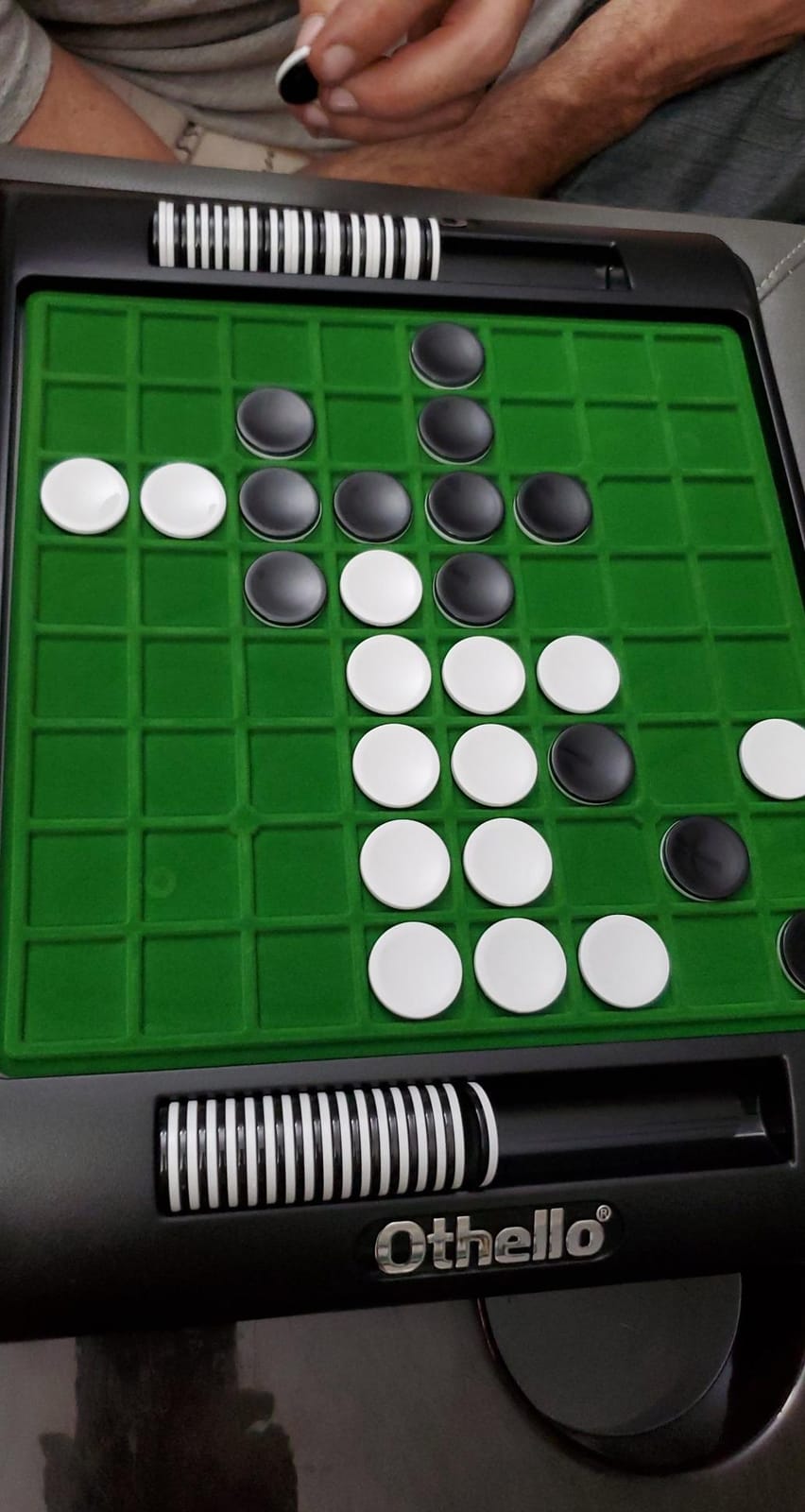
Across our sessions the board felt the most tactile of anything on this list. The playing surface is felt rather than printed cardboard, and the reversible discs slide smoothly with a weight that suggests they will survive years of play. The 11.5 by 14.38 inch footprint is the one real storage consideration, since it will not stack in a shallow cabinet.
Reviewers repeatedly single out the same two weaknesses, and they are fair. Instructions come in English only, and once you have internalised the flip pattern the game leans on positional repetition rather than new situations. If you want a title that changes shape every time, keep looking; if you want a clean, fast, endlessly familiar duel, this is it.
Why two players suits this game so well
Othello was designed head to head and never needed adjusting. There is no third-party variable, no scaling issue, and no downtime because both players act constantly. For couples or roommates with mismatched schedules, a 20-minute game that starts from the unboxing is about as easy as commitment gets.
It is also a strictly two-player design. Adding a third player is not supported by the included rules.
Where this game frustrates people
Replayability is the honest weak point. The board has 64 spaces and no variable elements, so a practised pair will converge on the same openings. It plays better as a warm-up before a longer game than as the main event for players who already know it cold.
The other friction is physical rather than strategic. Older players with limited vision can struggle to track many discs of one colour near the end, since the black and white contrast is doing all the work. No dexterity is required, but sustained visual tracking is.
3. Quoridor Review: The Most Compact for Classic Abstract Duels
Quoridor – Over 1 Million Sold! Mensa Select Winner | Wooden Abstract Strategy Game for Adults and Families | Ages 8+ | 2 to 4 Players | 1 Minute to Learn, 15 Minutes to Play
Players: 2 to 4
Ages: 8+
Play time: 15 min
Mechanics: grid movement, blocking
Pros
- Rules teachable in about a minute
- Solid stained wooden pieces that look good set up
- Deep blocking strategy that rewards repeats
- Scales cleanly from two to four players
Cons
- Board is bulkier than card-sized abstracts
- Wooden fences are awkward for small hands
- Depth only appears after several plays
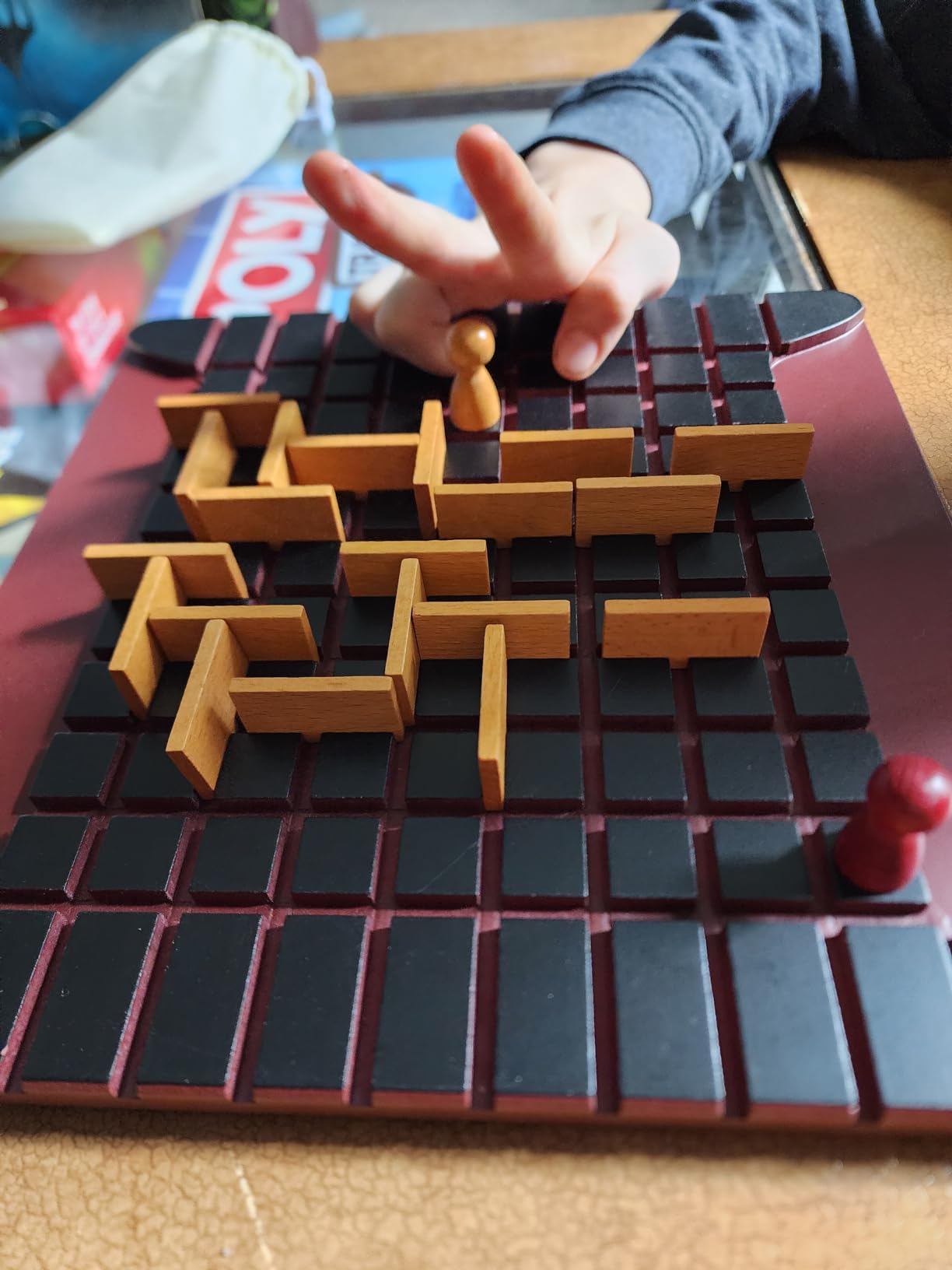
Quoridor is the game you leave out on the coffee table because it looks that good. The board is stained wood rather than painted, the four pawns slot neatly into their starting holes, and the folding fences stand upright in their slots. It sells over a million copies for a reason that has little to do with nostalgia: every move is either an advance or a wall, and there is no third option.
Each turn you either step your pawn one square or spend your one standing fence to block a square. Reach the far side of your opponent’s start line to win. That single decision per turn is why the game survives contact with two players so well, because both sides spend the whole game reading the other’s remaining path rather than their own plan.
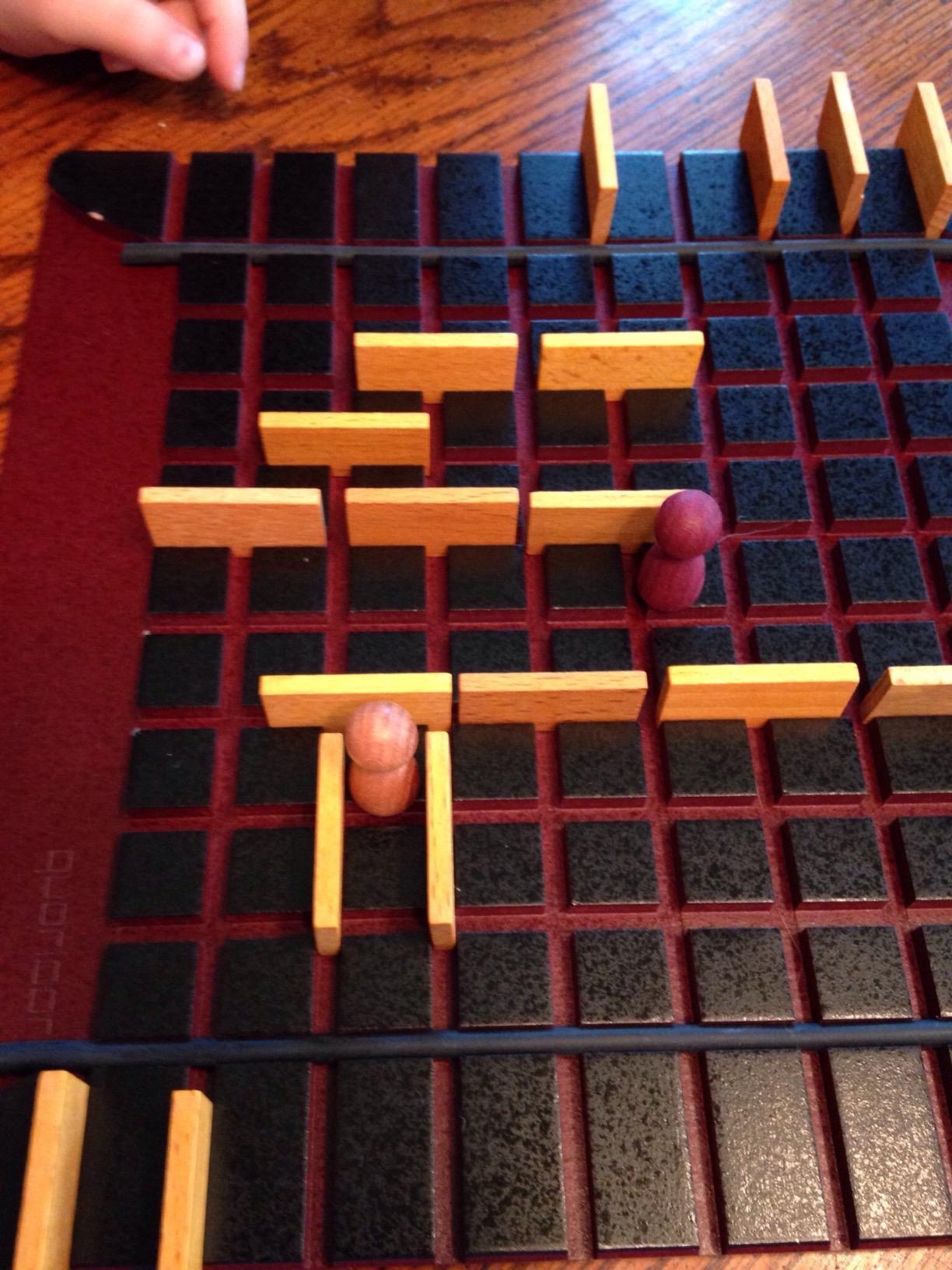
Setup takes about a minute and the play time is 15 minutes, though first-timers tend to run longer because they are working out where walls can legally go. Once you know the placement rules the games compress to the stated time almost exactly. There is no downtime in the sense that matters: you are never waiting on a third party because there is no third party.
The main drawback is physical. The board is a little over 11 inches square, so it will not fit in a jacket pocket the way a card game does, and the fences are small enough that players with limited dexterity can find placement fiddly. If you travel by plane and want a game in your carry-on, this is the wrong box.
Why two players suits this game so well
Unlike most abstracts, Quoridor plays at two to four players with no rule changes, so it is one of the few picks here that serves both a date night and a later group session. The board rebuilds quickly, and the fence count stays balanced at every count.
At two players the game becomes a pure duel with maximum tension, because each wall you place is a direct attack on your opponent’s route. With more players, the blocking becomes less pointed, which is the only real loss at higher counts.
Where this game frustrates people
The first few plays feel thin. Reviewers often describe it as taking several sessions before the blocking depth appears, and that is accurate: the opening moves are obvious and the interesting decisions happen once fences accumulate near the middle.
It is also a game with no theme, no narrative, and no luck. Players who need a story or a dice roll tend to find it cold, and the wooden fences need careful handling around younger children given the small-parts warning on the box.
4. Onitama Review: The Best Two-Player Game for Quick Filler Sessions
Arcane Wonders Onitama, 2-Player Abstract Duel with Modular Movement Cards
Players: 2
Ages: 8+
Play time: 10 min
Mechanics: card movement, capture
Pros
- Full tactical depth in a 10 minute game
- Shared movement cards keep every game different
- Distinct master and student pawns read clearly
- Travel friendly box size
Cons
- Movement cards are easy to misplace
- Martial arts theme will not appeal to young children
- Very few physical components
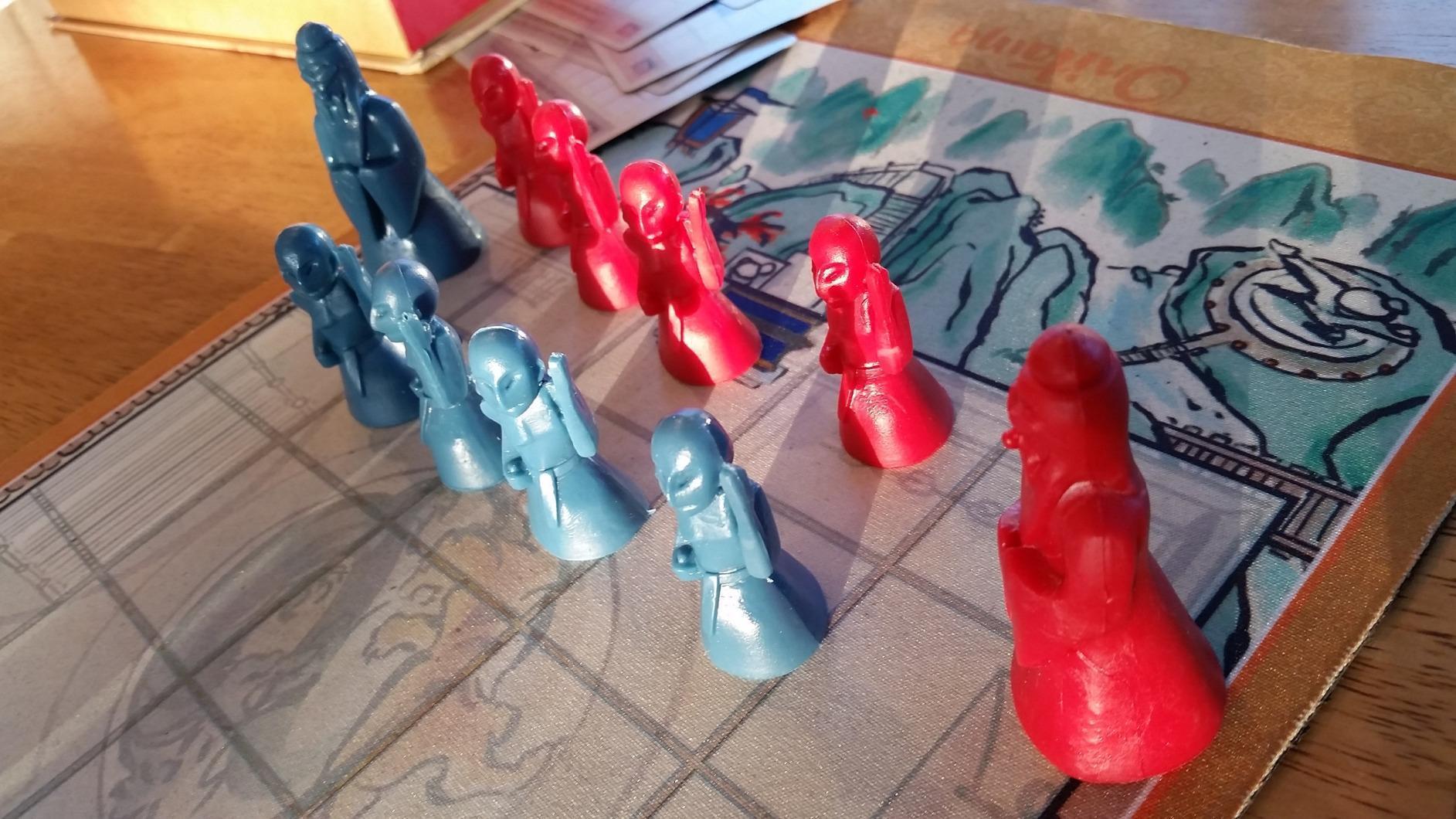
Onitama is the shortest game in our lineup and the one we play most often. The board is a 5 by 5 grid, two pawns per side, and five movement cards shared between both players. You choose one of the two face-up cards, move, and the card flips to the bottom of the stack. That shared deck is the whole trick: the moves available to you and to your opponent come from the same five cards.
Two ways to win keeps the tension high. Capture the opponent’s master, or walk your own master into their temple. The positioning game underneath is closer to chess than anything else in this roundup, and it fits in a gap between other activities where a 30-minute game would not fit.
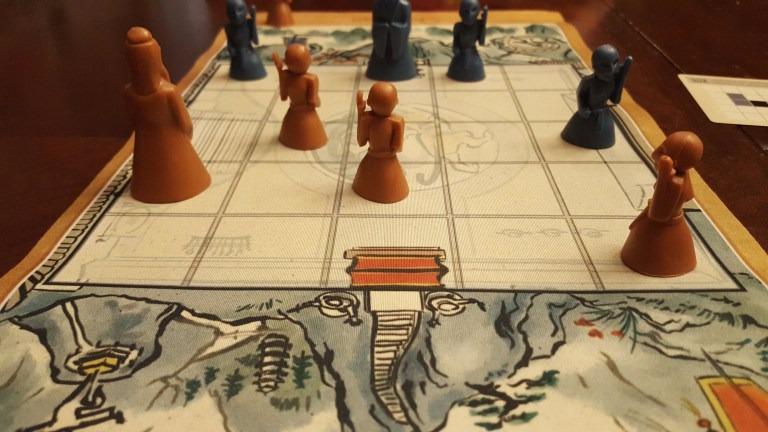
The box measures under 11 inches long and includes a folded board, so it packs flat and survives being thrown in a bag between sessions. Setup is dealing five cards and placing pawns, which takes about thirty seconds. Our games ran 8 to 14 minutes consistently, with longer games happening when both players refused to commit to an engagement.
The complaints in reviews cluster around handling rather than design. The cards are thin enough to slip, and once a movement card goes missing under a sofa the game stops until you reconstruct what it said from memory. Keep the small parts in a tray or a zip bag and this becomes a non-issue.
Why two players suits this game so well
Perfect information duels thrive at two. Every card is visible, every pawn is on the board, and there is no hidden hand to wait on, which eliminates downtime entirely. Two players also mean the shared card pool stays contested for all ten moves.
This is a strictly two-player design, and the included rules cover only the head to head version. There is no third seat and no adaptation for one.
Where this game frustrates people
The abstraction is real. There is no theme beyond the martial arts framing on the cards, so players who want narrative or flavour will not find it here. Younger children often lose interest quickly because the pieces are pawns on a grid rather than anything with a face on it.
The recommended age on the box is 14 and up even though the manufacturer also markets the grid for ages 8+, so treat younger players as a stretch. And because the whole game is cards and a handful of pawns, expect very little physical presence on the table.
5. Splendor Duel Review: The Best Two-Player Card Strategy Game
Splendor Duel Board Game – Two-Player Strategy Game for Intense Gem Collecting Battles – Fun Family Game for Kids and Adults, Ages 10+, 2 Players, 30 Minute Playtime, Made by Space Cowboys
Players: 2
Ages: 10+
Play time: 30 min
Mechanics: gem collection, set building
Pros
- Tighter and more competitive than the four player original
- Privileges let you attack the opponent directly
- Ten Crowns gives a new win path
- Compact box travels well
Cons
- Cards run smaller than standard size
- Only two pearl tokens exist
- Strictly a two player design
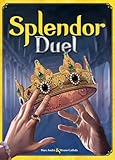
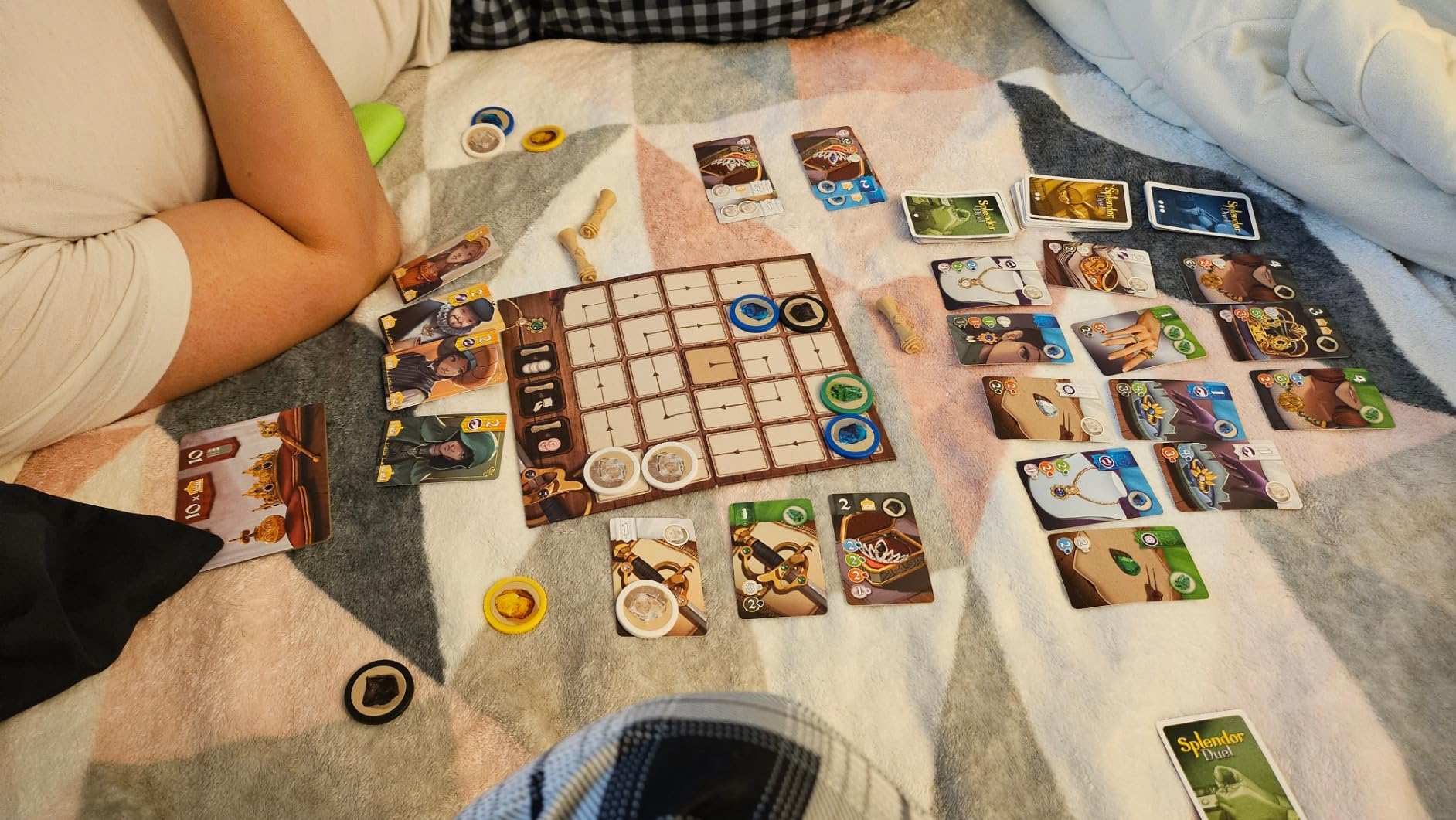
Splendor Duel takes the gathering and set-building loop that makes the original a group favourite and squeezes it into a head to head that actually works. You collect gems, claim development cards, and reserve noble tiles worth victory points at game end. The duel edition adds privileges, cards that let you take a gem or a card directly out of your opponent’s supply.
That single addition changes the feel. In the four-player game nobody can threaten you because two other people stand between you. Here, a privilege held in reserve is a real threat, and reviewers consistently describe the result as tenser and more interactive than the game it came from.
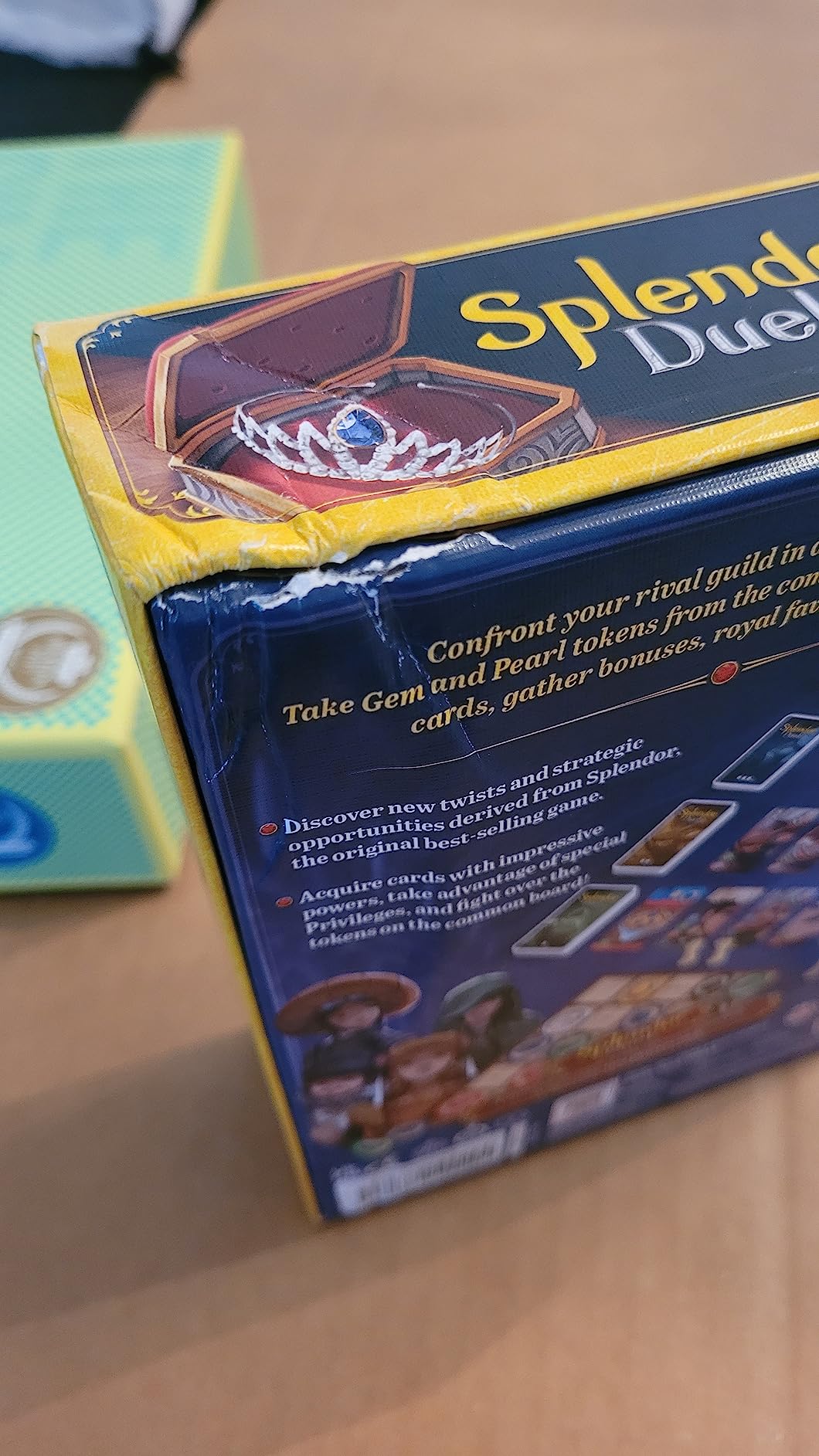
Setup takes a few minutes because there are 67 jewel cards to sort by tier, and the 25 plastic gem tokens need organizing by colour. Play runs about 30 minutes as advertised. The box is 7 by 5 by under 2 inches, one of the more portable options here, and the components list includes a common board, a rules booklet, four royal cards, and a bag for the tiles.
The most repeated complaint concerns card size. Cards are noticeably smaller than a standard playing card, and several buyers with tired eyes or older players mention struggling to read the requirements at the table. This is a design decision rather than a defect, but it is worth knowing if you plan to play in dim lighting.
Why two players suits this game so well
Set building usually needs opponents to compete for the same gem tiers, and at two players every gem in the supply is contested by exactly one other person. The privileges mechanic only makes sense with a single rival, since the whole point is reaching into their supply.
Note that this is a strictly two-player design. Several reviewers treat the absence of a larger count as a downside, and if your household regularly hosts four, the original Splendor serves that better.
Where this game frustrates people
Two pearls exist in the box, and a number of reviewers argue that a single pearl is the strongest card in the game. If you dislike a swing mechanic, that is a real concern rather than a nitpick.
The other friction is sorting. Sixty-seven cards divided into tiers need organizing before play, and putting them back afterwards is a chore, which adds teardown time to a game billed at 30 minutes. Card size and teardown together are the two complaints we heard most often.
6. Azul Duel Review: The Best Two-Player Tile-Laying Game
Asmodee Azul Duel Board Game – Competitive Head-to-Head Tile-Placement Strategy Game, Stunning Mosaic Art and Quick Gameplay for Kids & Adults, Ages 8+, 2 Players, 30-45 Minute Playtime
Players: 2
Ages: 8+
Play time: 30 to 45 min
Mechanics: tile drafting, pattern building
Pros
- Beautiful mosaic artwork and satisfying acrylic tiles
- Variable setup keeps games from repeating
- Balances planning against light luck
- Even scoring keeps close games close
Cons
- Cardboard player boards and tower feel thin
- Rules need a second read or a video
- Less competitive than heavier duels
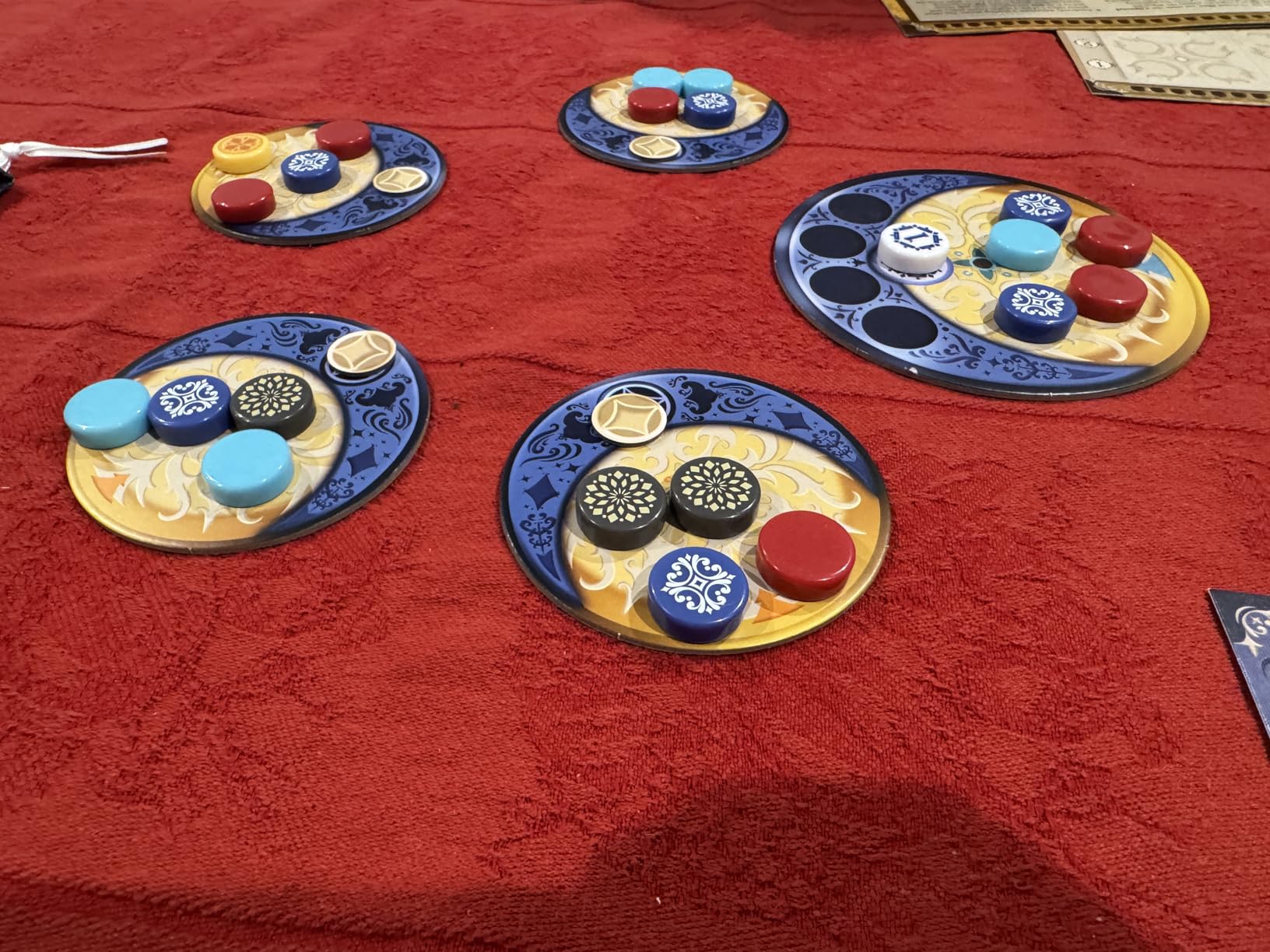
Azul Duel is the tile-laying pick, and its appeal is as much visual as strategic. Seventy-five acrylic tiles go into a drafting tower, both players take turns drawing them, and the goal is to build floor and wall patterns on your own board without leaving unfilled gaps. The Portuguese design for shadow theatre translates into patterns that look like stained glass once the game ends.
This is the newest and least proven entry in the lineup, and the 4.4 average reflects that. It carries the lowest rating of our eleven picks, largely because of component complaints rather than design ones. The tiles themselves are the good part: thick, weighty, and satisfying to place.
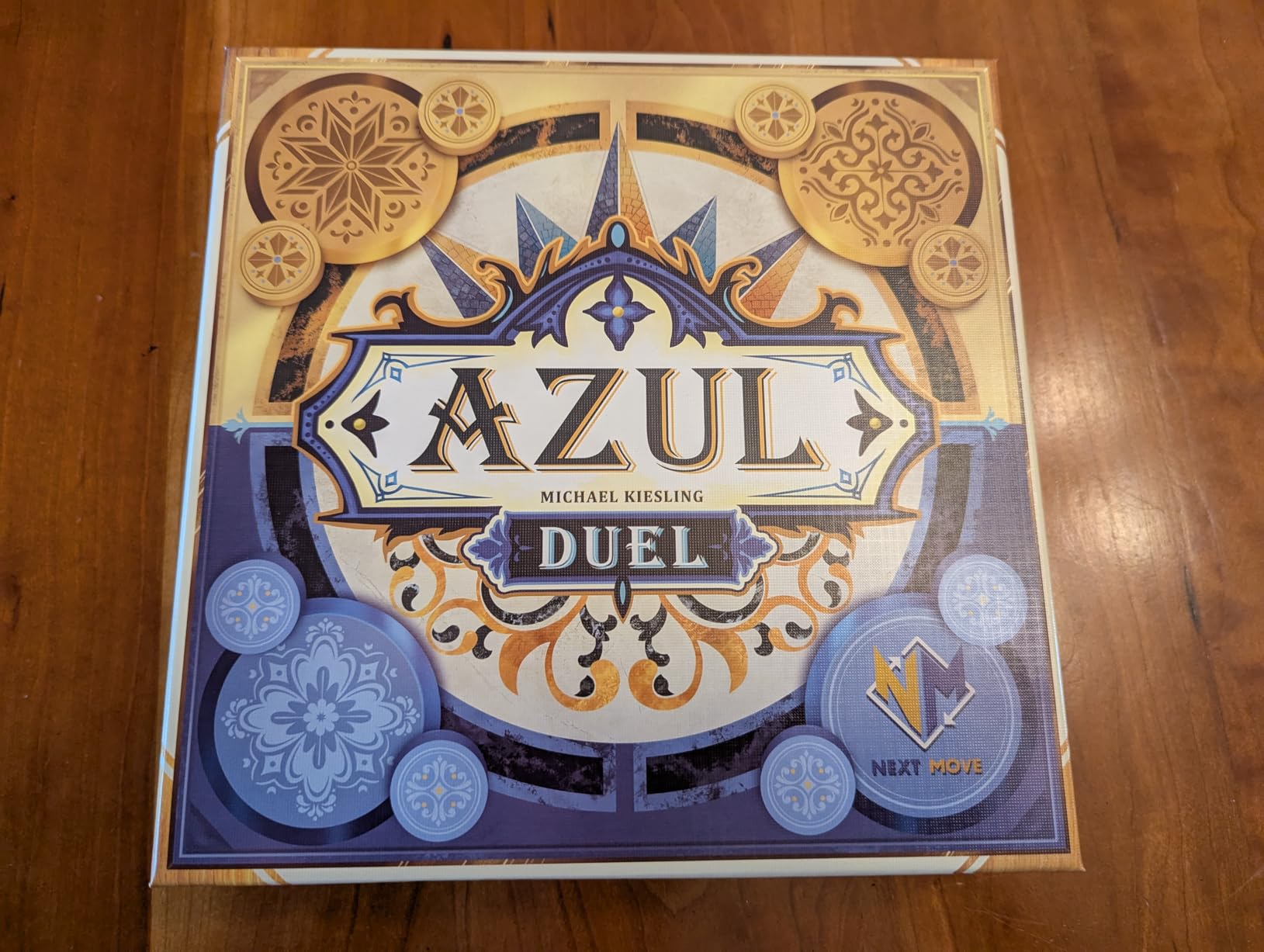
Play time is quoted at 30 minutes but the manufacturer also lists 30 to 45, and our games landed at the longer end. Setup is the quickest of the mid-weight games, roughly five minutes for two boards, four tokens, scoring markers, and the dome-plate tower. Play is continuous with no dead turns, since both players draft on every round.
The consistent complaint across reviews is the flimssy cardboard. Player boards and the tower are thin board material while the tiles are acrylic, so the contrast is obvious the moment you touch it. Rules also take more than one read, with several buyers describing the floor penalty and pattern-scoring sections as needing a video walkthrough.
Why two players suits this game so well
Tile drafting scales naturally: at two players the tower cycles between exactly two people, which makes every reveal feel like a direct contest rather than one turn in a chain. Variable setup means the opening board differs each game, so the design does not collapse into memorised patterns.
The game is built for two players, though it does include four player tokens and four scoring markers, which suggests room for a variant. It is sold as a duel and the included rules centre on the head to head version.
Where this game frustrates people
It is the least competitive game on this list. Reviewers describe it as a pleasant, low-conflict experience that lacks the knife-edge tension of a pure abstract duel, which is exactly the trade-off that makes it work for couples who dislike losing badly.
Component durability is the bigger issue. Thin player boards and a thin tower at this specification level disappoint buyers who expected the durability of the original game, and the rulebook’s scoring section is the part most likely to slow a first-time player.
7. Stratego Review: The Best Two-Player Game for Bluffing and Deduction
Jumbo, Stratego – Original, Strategy Board Game, 2 Players, Ages 8 Year Plus
Players: 2
Ages: 8+
Play time: 45 min
Mechanics: hidden information, bluffing
Pros
- Zero luck involved in the outcome
- Clear rulebook that new players read quickly
- Sorting trays and screen included
- Folding board packs flat
Cons
- Two players only
- which limits group nights
- Takes a few games to grasp the tactics
- Artwork quality varies between pieces
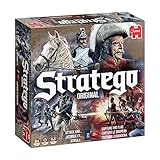
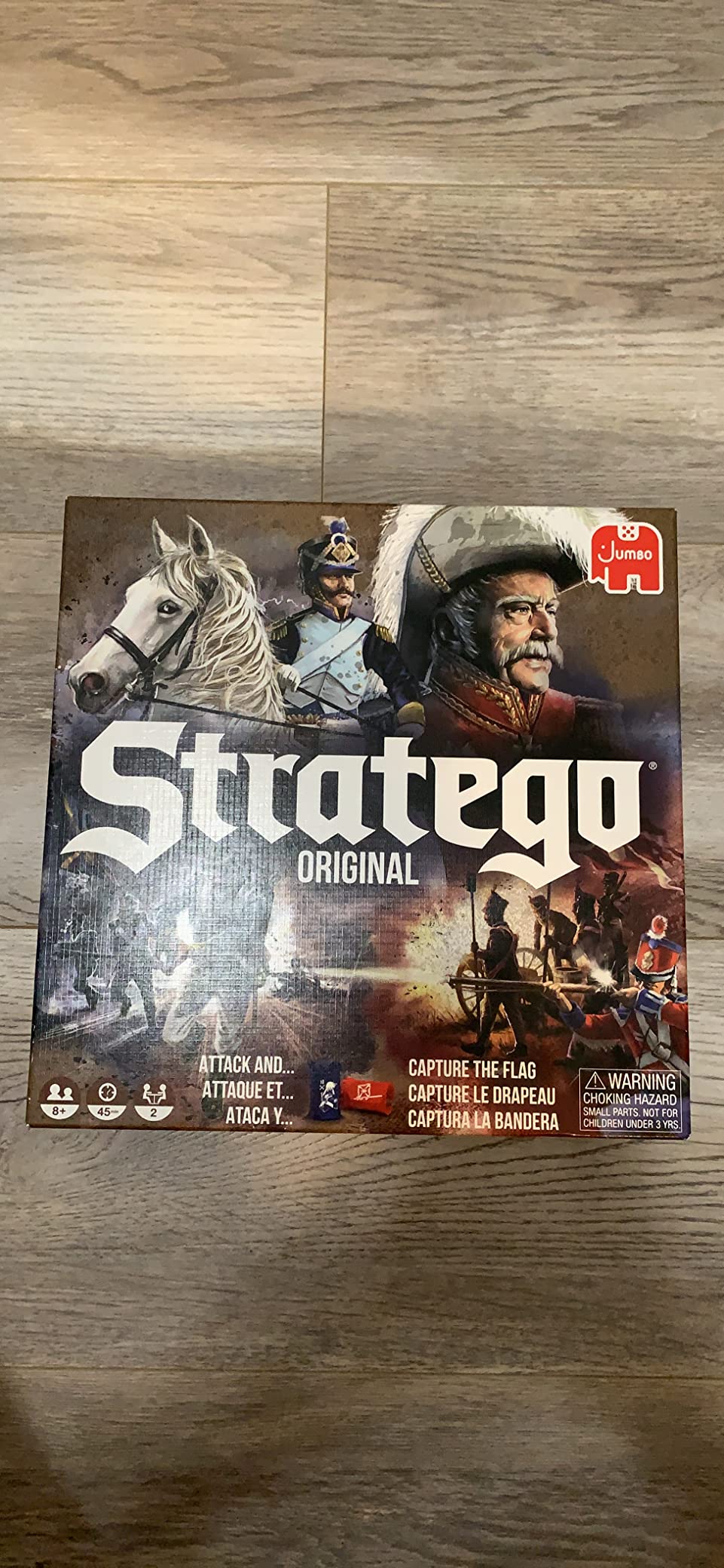
Stratego is the only hidden-information game in this roundup, and that makes it feel nothing like the rest. Every piece starts face down on your half of the board, and the entire game is one player trying to guess what is under the next piece. There is no dice and no draw, so when you lose you know exactly which reveal decided it.
Piece ranks run from marshal down to spy, with miners and bomb specialists sitting in the middle as traps. The rulebook is short and clearly written, which is why children as young as eight often join a game after one read-through. Each side gets 40 pre-printed pieces, a screen to hide your ranks, and sorting trays to keep them straight.
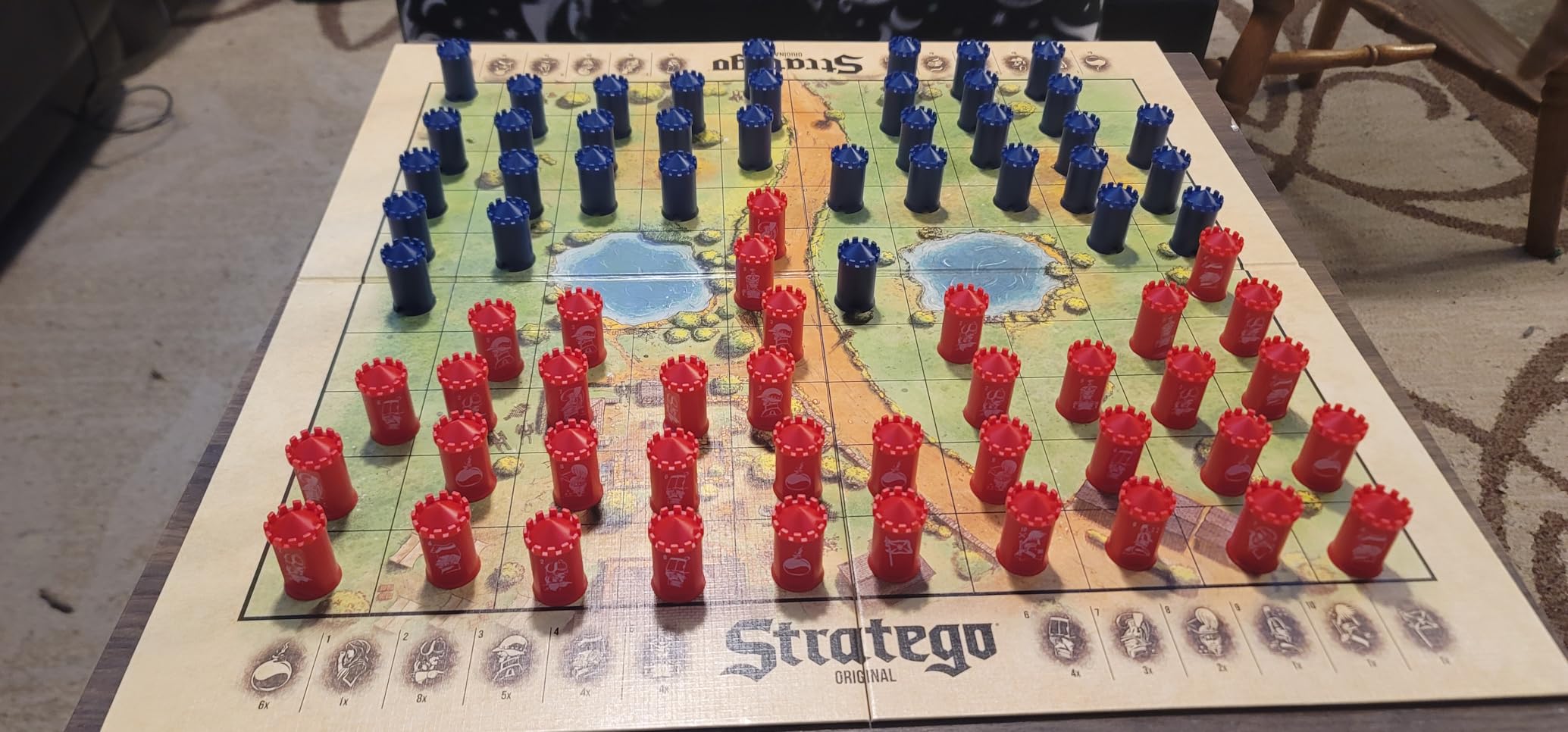
Setup takes about five minutes and play runs near the 45 minute estimate. The folding board collapses flat and returns to the box, which helps with storage, though at roughly 10.5 inches square it needs real shelf space. Teardown is slow, because you are putting 80 pieces back into trays.
The honest weakness is repetition. Once two players know each other’s habits, the mind games flatten. Reviewers also note that the two-player limit is not adjustable, and that the pre-printed artwork quality is inconsistent across the piece range even when the plastic itself feels solid.
Why two players suits this game so well
Hidden information games usually break at low player counts because there is too much room to manoeuvre. With only one opponent and a narrow board, every approach is a guess and every guess is fifty percent wrong, which is the tension Stratego needs to work.
This is a strictly two-player design and reviewers list that limitation first among the cons. If you want a group game that also handles two, look elsewhere on this list.
Where this game frustrates people
Players who dislike thinking about hidden state tend to lose interest. A bad guess can hand over three pieces in a row, and losing streaks feel harsh with no luck to blame. Reviews also note it takes a few games before the deeper tactics such as sacrificing spies or holding marshals back become obvious.
Anyone sensitive to militaristic imagery may find the theme unappealing, and the 80-piece count makes it one of the more involved setups here in terms of putting away afterwards.
8. Battleship Review: The Best Two-Player Game for Kids and Grandparents
Hasbro Gaming Battleship Classic Board Game | Strategy Games for Kids and Adults | Ages 7+ | 2 Players | Fun Kids Games | Family Games
Players: 2
Ages: 7+
Play time: 30 min
Mechanics: deduction, grid targeting
Pros
- Rules explained in under two minutes
- Folding cases clip together for travel
- No batteries or screens needed
- Works for children and adults together
Cons
- Large grid and many pegs can stretch games longer
- Hundreds of small pegs are easily lost
- Limited strategic depth against a strong opponent
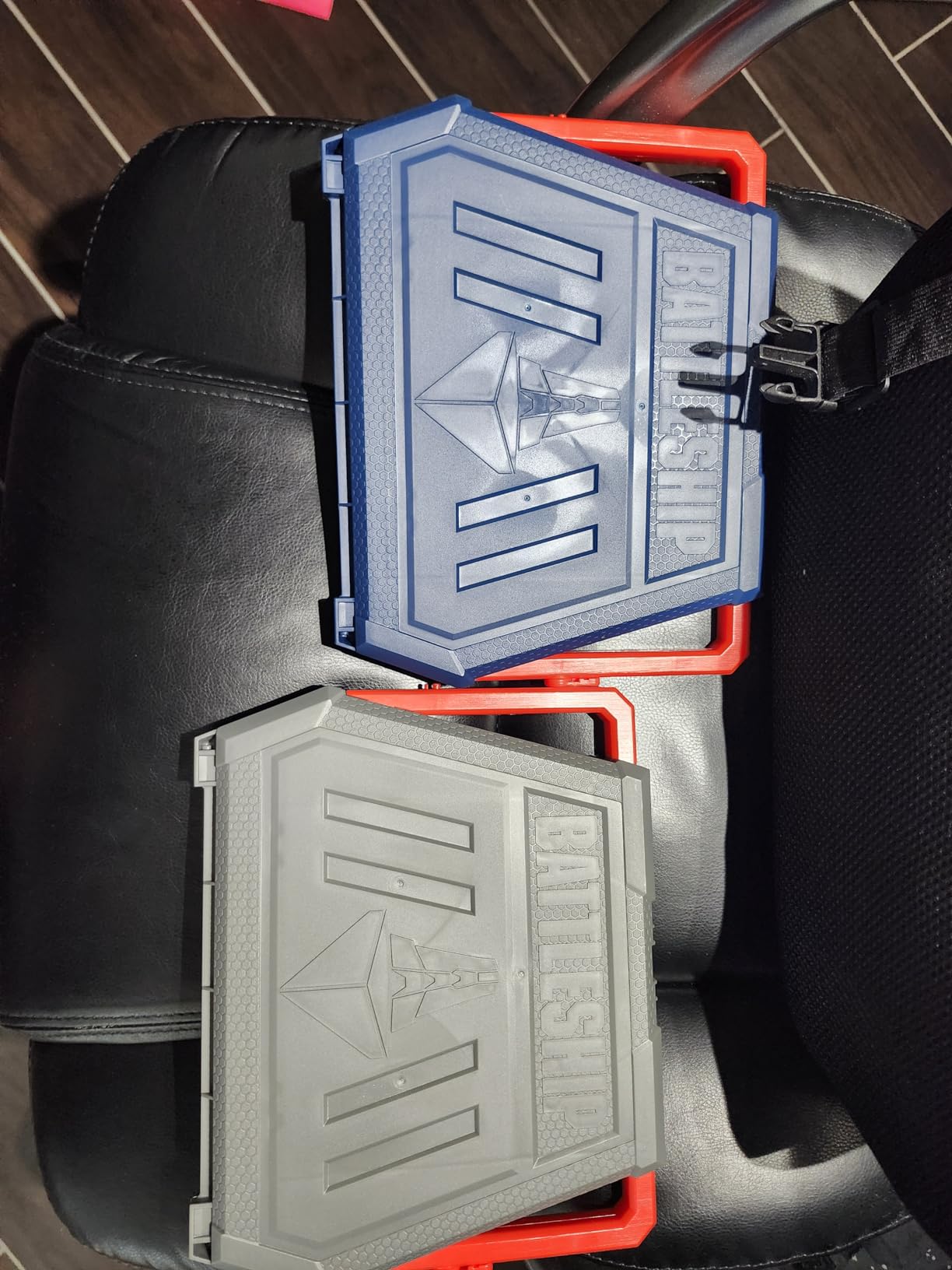
Battleship is the most reliably accessible two-player game made, and this version fixes the biggest flaw in cheap copies by putting the boards in folding cases. Each half snaps or clips together for play and folds shut for storage, with the fleet kept inside. You can hand the whole thing to someone on a train and it stays intact in a bag.
The rules are one guess per turn: call a coordinate, get a hit or a miss peg, and keep going until a whole vessel is sunk. The optional salvo feature lets an experienced player fire at two or three squares at once, which restores some pace to expert versus beginner matches.

Setup takes five minutes or less since neither player has to memorize a fleet; the board is printed with grid references. Manufacturer estimates put play at 30 minutes, and reviewers report that experienced pairs often stretch well past that because the grid is large and each attempt needs more pegs than you expect.
The component list includes two portable battle cases, 10 plastic vessels, 73 red hit pegs, and 168 green miss pegs. That peg count is the most repeated complaint in reviews, since pieces scatter and go missing. Keep a small container nearby and the problem disappears.
Why two players suits this game so well
Deduction with perfect information and no hidden hand means both players engage every single turn, so nobody sits out. It is also one of very few games where a seven-year-old and a grandparent are genuinely matched rather than the child being carried.
This is a strictly two-player design, and no rule adjustments are needed because nothing about the game depends on player count.
Where this game frustrates people
Against a practised opponent the game becomes a probability exercise rather than a contest of nerve, and some players find that thin after a few sessions. Reviewers specifically note limited strategic depth compared with heavier deduction games.
Practical issues dominate the complaints: long games on the big grid, a large number of loose small parts, and plastic case halves that occasionally arrive cracked. If your household has toddlers, the small parts warning is worth taking seriously.
9. BOOP Review: The Best Two-Player Game for Date Night
Smirk and Dagger BOOP 2-Player Cat Strategy Board Game
Players: 2
Ages: 10+
Play time: 20 to 30 min
Mechanics: chain reaction placement
Pros
- Chain reactions create constant swings each turn
- Rules are intuitive from the first game
- 32 crafted wooden cat pieces
- Sessions fit a single evening
Cons
- Small wooden pieces are fiddly for younger hands
- Fixed grid scoring can feel repetitive
- Lower ceiling than heavier abstract duels
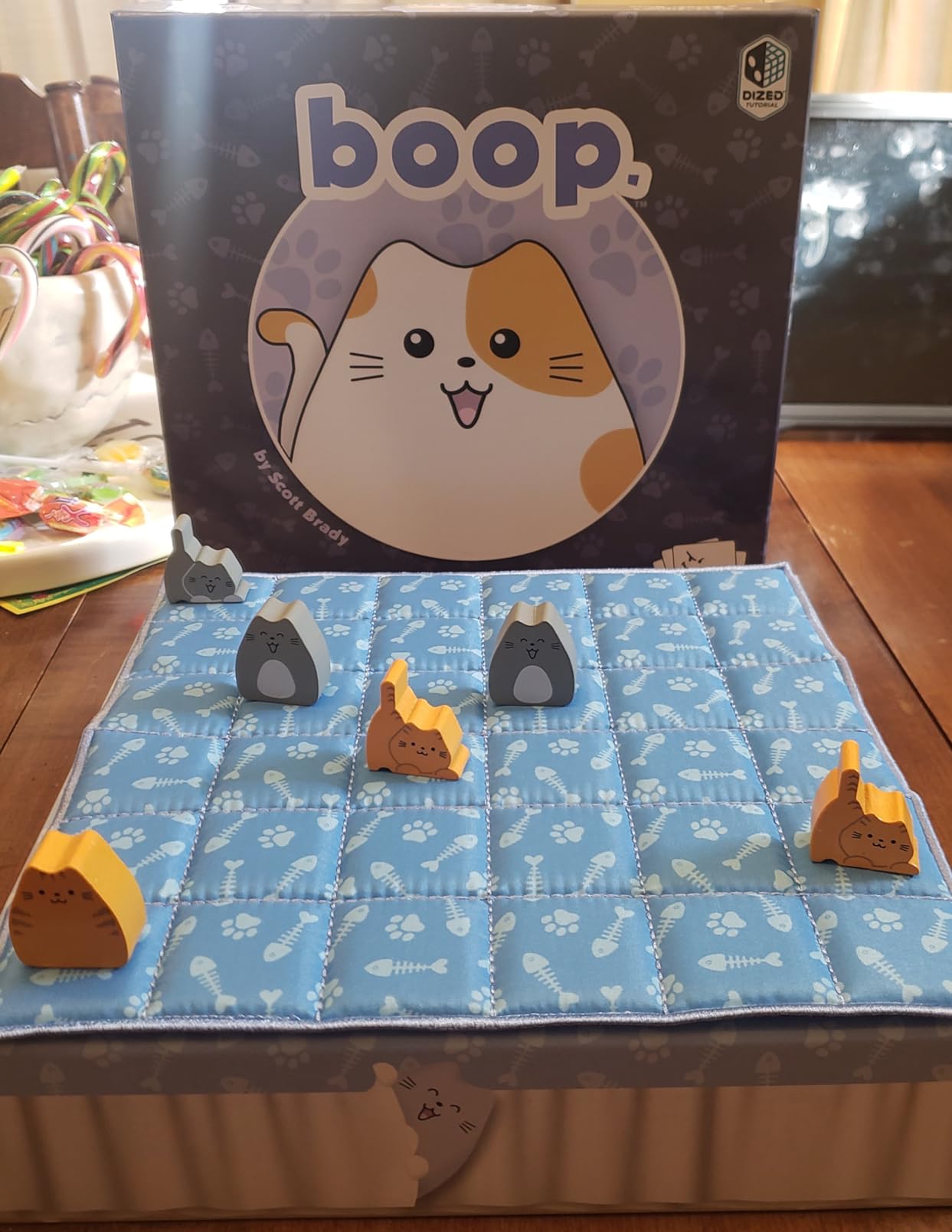
BOOP is the game we recommend for couples specifically, because the theme does most of the work. You are placing kittens on a quilted bed board, and every placement pushes adjacent pieces one square in the direction you moved. Since pushed pieces can trigger further pushes, a single tap near a crowded cluster rearranges half the board.
Scoring is based on colour groups on the board, which means your plan keeps changing as pieces slide. Nobody sits idle: your opponent’s move is always the move that ruined your arrangement, and the light theme keeps the tone friendly even when the board gets mean.
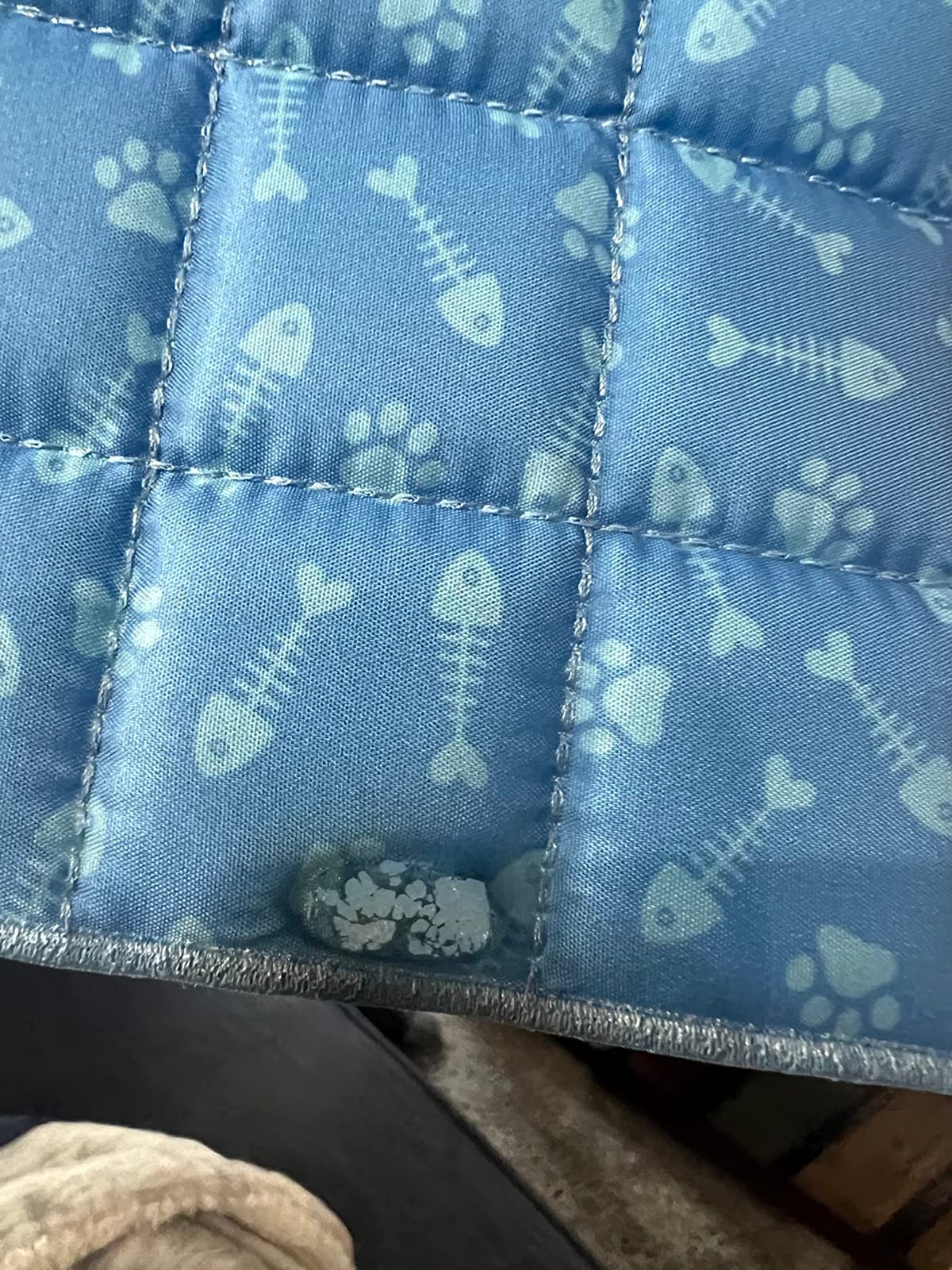
Sessions run 20 to 30 minutes as advertised, with setup that amounts to laying out the board and taking the wooden pieces out of the insert. The box is 9.5 inches square and 2 inches deep, so it is compact on a shelf and simple to carry. Total weight is a little under 300 grams, which makes it one of the more portable picks here.
The 4.7 rating reflects a wide agreement that the rules are learnable in one game and the chain reactions are more satisfying than they look on paper. The cons reviewers mention are consistent: the pieces are small enough to be awkward for younger hands, and a fixed grid plus simple scoring means experienced pairs start repeating positions.
Why two players suits this game so well
Push mechanics are far more satisfying in a duel because every board state is contested by exactly one person. With more players, a push chain would flatten several opponents at once and the tension would dissipate. At two, it always lands on you.
The game is sold and designed for two players. Age guidance on the box lists 10 and up in the listing while the manufacturer line lists 14 and up, so plan for older children and adults.
Where this game frustrates people
Players who want deep strategy tend to hit a ceiling here. Reviewers describe the strategic range as narrower than a serious abstract duel, and after many plays the scoring patterns feel settled. It is a friendly game rather than a competitive one.
Small parts are the practical concern. The 32 wooden cat pieces are fiddly for children and easy to misplace, and the components carry a small-parts choking warning that matters in a house with young kids.
10. The Lord of the Rings Duel for Middle-Earth Review: The Best Themed Two-Player Game
Asmodee The Lord of The Rings: Duel for Middle-Earth Board Game – Epic Strategy Game of Power and Conquest for Kids and Adults, Ages 10+, 2 Players, 30 Minute Playtime
Players: 2
Ages: 10+
Play time: 30 min
Mechanics: card drafting, chapters
Pros
- Uses the proven 7 Wonders Duel engine with Middle-earth art
- Asymmetric sides feel genuinely different
- Three immediate win conditions
- Minimal components for a themed game
Cons
- Late game resource limits can feel luck driven
- Terse rulebook and thin player aids
- Less competitive than the base game for some
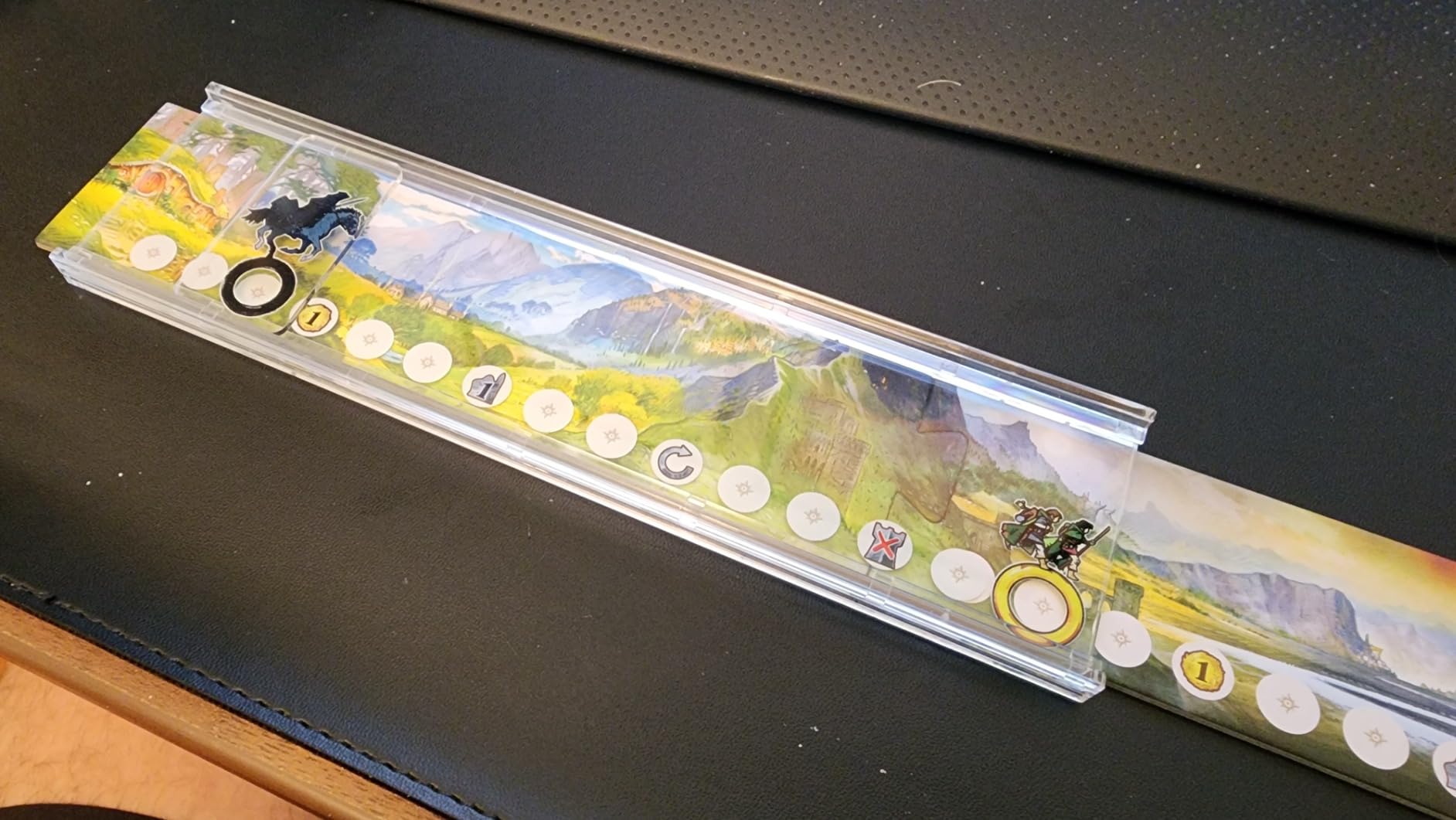
If your household watches the films but has never enjoyed a heavy eurogame, this is the bridge. The rules engine is 7 Wonders Duel with different cards and a Lord of the Rings frame: you play as the Fellowship trying to destroy the One Ring, or as Sauron trying to conquer Middle-earth. The components are cards, pawns, tokens, coins, seven tiles, and two boards.
The asymmetry matters more than it sounds. Reviewers describe the two sides as genuinely different playstyles rather than a reskin, and the three immediate win conditions keep the last chapter unpredictable. Frodo and Sauron are named on the box, which is doing more marketing work than any of the mechanics.
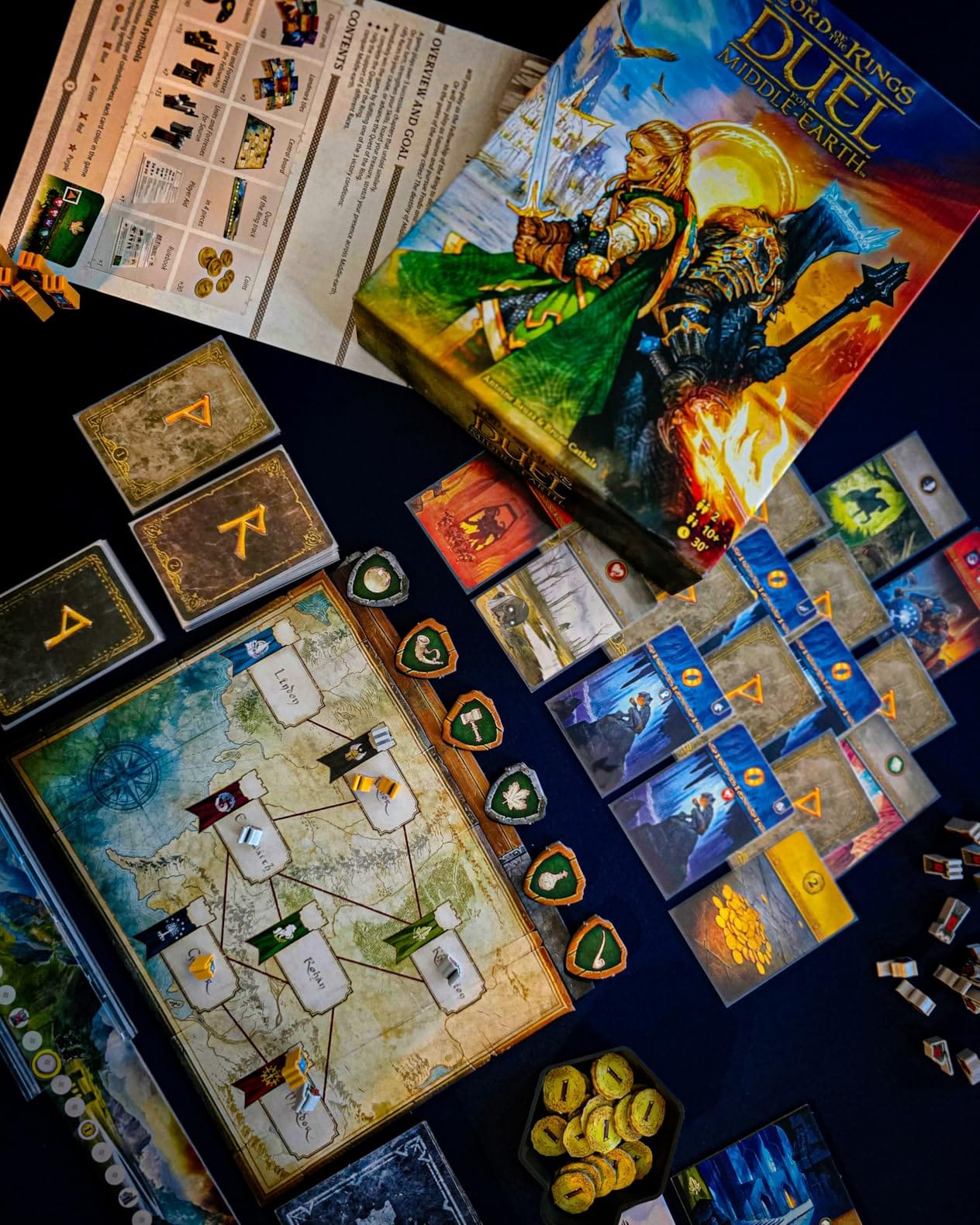
Setup is fast and the game runs 20 to 30 minutes in practice despite the 30 minute listing, largely because the three chapters resolve quickly. The box is unusually thin at roughly 8.7 by 2.4 inches, and the total weight is 650 grams, so it stands up on a shelf instead of taking a flat one. The component count is high for a game this small, which speaks well of the production.
The critical note is that the rulebook is terse and there is only a single helpsheet. If you have not played the base game this is not a friendly introduction, and reviewers who came in cold recommend reading a walkthrough first. Later chapters also compress the available resources, which several buyers describe as making outcomes feel luck-based rather than earned.
Why two players suits this game so well
The underlying system is a dedicated duel design, not a four-player game with the third seat removed, so nothing is overpowered or idle. The theme also carries an unusual amount of weight at two, because the Fellowship versus Sauron framing only reads properly in a one against one matchup.
This is a strictly two-player game. It is also more demanding than most entries here, so it suits players who already know a drafting engine rather than complete newcomers.
Where this game frustrates people
Reviewers split on competitiveness. Some find the themed version less cutthroat than the base game, and others report that the final chapter’s resource limits hand wins to whoever draws well. If competitive tension matters most to you, test this one carefully before committing.
The learning curve is the other real issue. A terse rulebook, thin player aids, and rule exceptions that build on an already layered system make this the least accessible pick in the roundup despite the friendly age rating of 10 and up.
11. Mancala Review: The Most Versatile Two-Player Counting Classic
Pressman Mancala Board Game | Fun Classic Table for Adults & Kids | Includes 48 Glass Mancala Stones and Wood Hinged Playing Board | 2 Players, Ages 6+
Players: 2
Ages: 6+
Play time: variable
Mechanics: counting, sowing
Pros
- One of the most reviewed board games available
- Rules understandable in a single sitting
- Hinged wooden board folds for storage
- Glass stones feel substantial in hand
Cons
- Limited variety once the pattern is learned
- Glass stones can chip if dropped
- Simplicity limits long-term depth
Mancala is the entry point. Nobody reads a rulebook for it, because the rule is that you scoop the stones from your own cups and drop them one by one into the next cups going your direction, and the last stone landing in an empty cup of yours captures that row. Everything past that is arithmetic, which is the appeal for parents and the limitation for hobbyists.
Play time is not fixed, and players choose it themselves by deciding when to empty the store. Short games take a few minutes, long ones run as long as anyone keeps sweeping stones. That flexibility is part of why it adapts to any household, from a parent and child to two adults with nothing else to do.
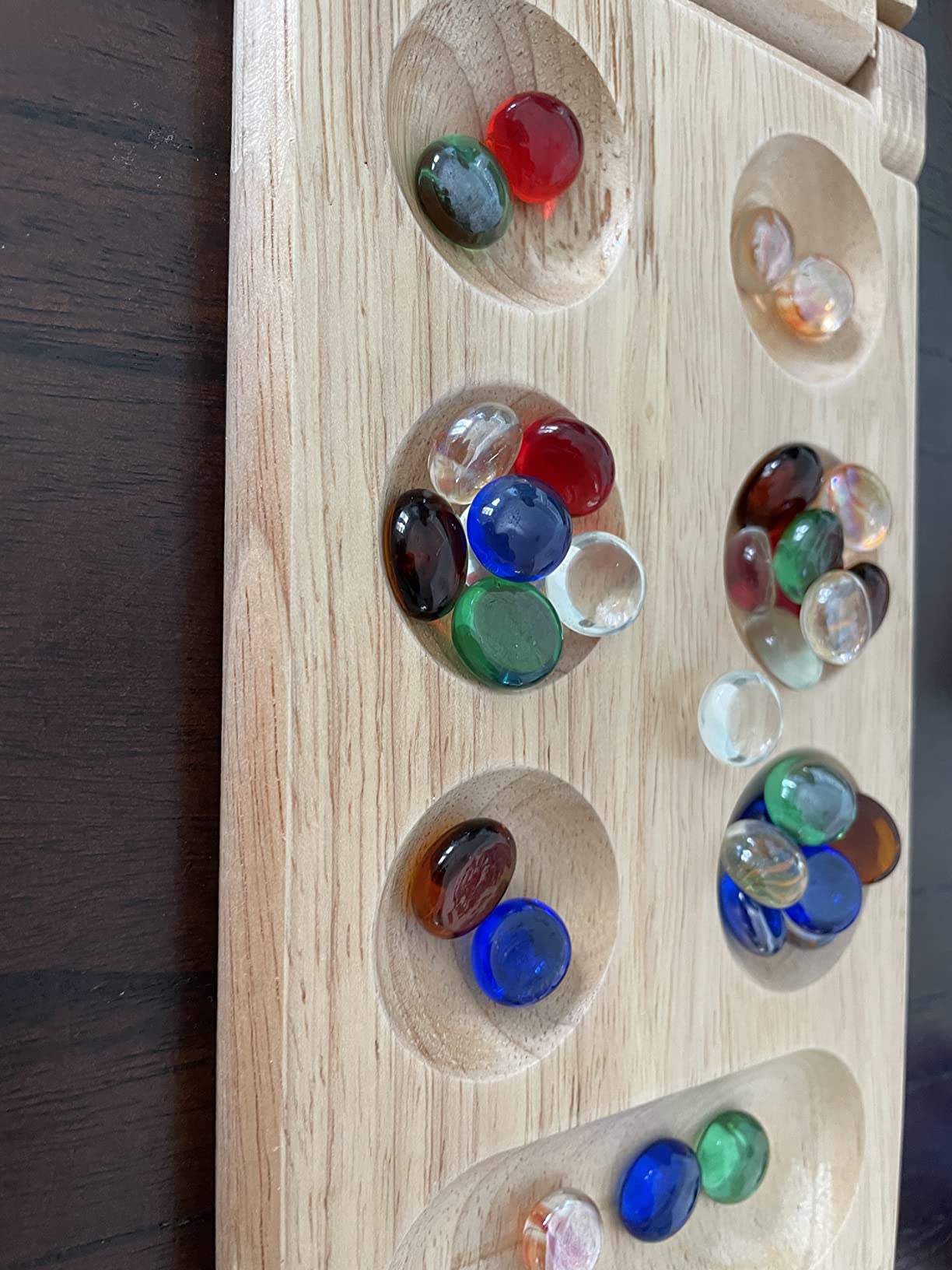
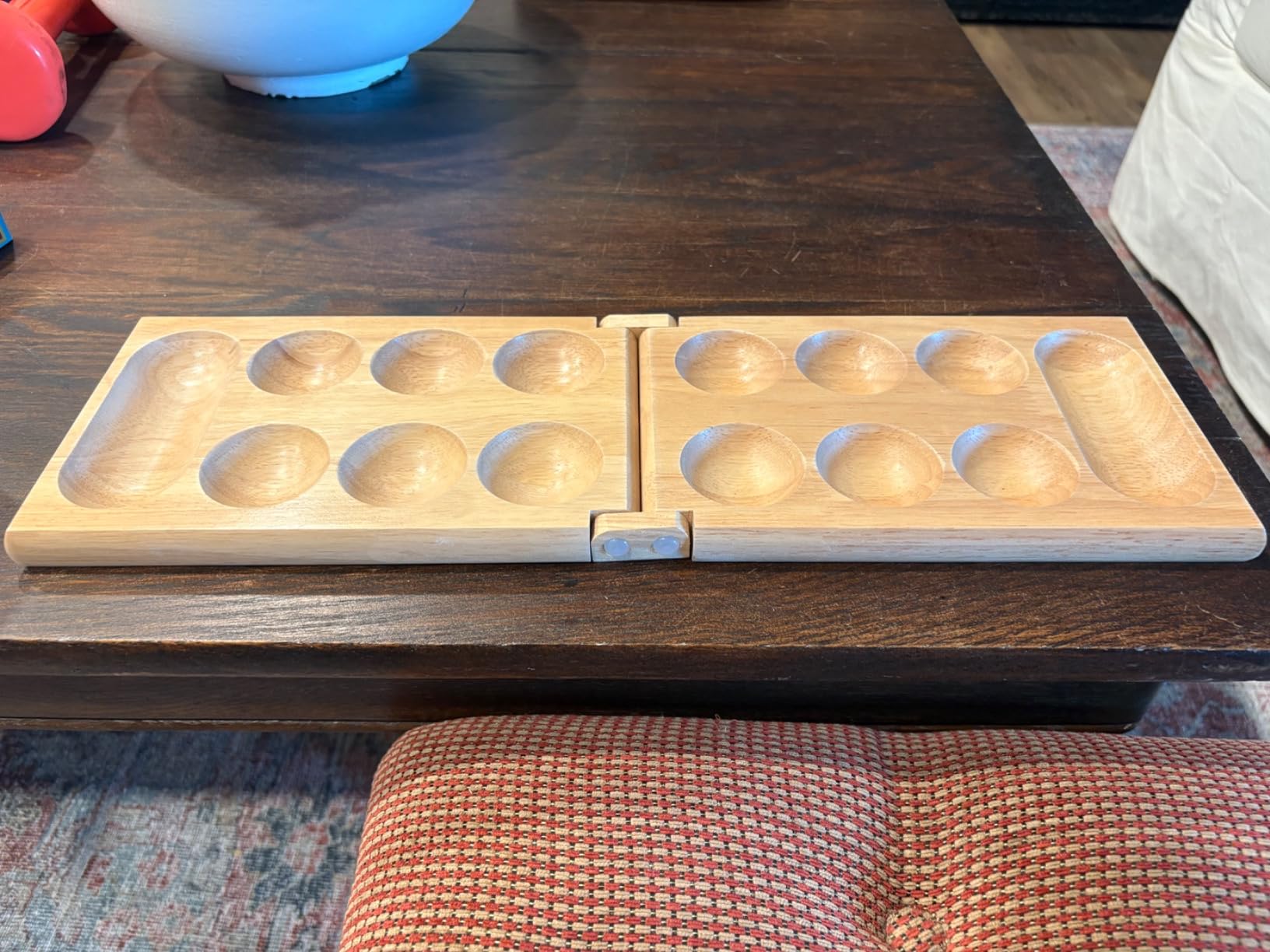
The build is the surprise. This is a hinged wooden board that folds in half, roughly 9 inches long and 6.5 inches wide when closed, which makes it one of the most storage-friendly picks here. The 48 glass stones carry real weight in the hand, and the board includes a set of instructions in the box. It weighs about 1.4 pounds, so it is portable without being delicate.
The rating sits at 4.7 across more than fifteen thousand reviews, which makes this the most reviewed game in the roundup by a wide margin. The recurring comments are almost always the same pair: a delighted, durable classic that anyone can play, and a game that becomes repetitive once both players know the pattern.
Why two players suits this game so well
The design is strictly two-player and always has been, so there is no scaling question at all. More importantly, there is no hidden information, no downtime, and no rules knowledge required, which makes it the safest recommendation we can make for two people who have never played a strategy game together.
Its age range starts at 6, so it works for a parent and child, a sibling pair, or two adults. It is also the only pick here that quietly doubles as a counting exercise for young children.
Where this game frustrates people
Experienced players exhaust the strategic options quickly. Once both sides recognize good scoop patterns, the outcome becomes predictable and the appeal drops, which is the single most common criticism in reviews.
The glass stones are a durability trade-off. They feel far better than plastic in play, but they chip or crack if dropped on a hard floor, so it is worth keeping this version away from very young children despite the 6 and up guidance.
Which Two-Player Board Games Fit Your Time Window
Play time is the filter couples and roommates actually use, and the runtime printed on a box is a starting point rather than a promise. Our games all ran slightly long once both players stopped rushing. Here is how the lineup splits when you sort by the time you genuinely have.
Under 20 minutes: Onitama, Othello, and Mancala
Onitama is the shortest at roughly 10 minutes and needs about half a minute of setup, which makes it the only game here that fits between two other activities. Othello runs about 20 minutes and stores every piece inside its own board. Mancala has no fixed length at all, because players decide when to sweep the store, so a short game takes only a few minutes.
None of these three punish you for finishing fast. They are the picks for a tired weeknight, a lunch break, or a pairing still early enough that a 45-minute commitment feels like too much.
20 to 35 minutes: 7 Wonders Duel, Splendor Duel, BOOP, Battleship, and The Lord of the Rings Duel
The middle band holds five of our eleven picks, and it is where most households will land. 7 Wonders Duel, Splendor Duel, and the Lord of the Rings Duel each claim 30 minutes on the box, and all three held close to it. BOOP claims 20 to 30 and usually finishes near the top of that range. Battleship claims 30 but stretches past it against an experienced opponent, because the grid is large and each attempt needs more pegs than you expect.
Setup time varies more inside this band than play time does. 7 Wonders Duel and BOOP are playable within a minute or two of opening the box. Splendor Duel needs several minutes to sort 67 jewel cards into tiers, and Battleship needs no memory setup at all because the grids are printed.
35 minutes and longer: Azul Duel and Stratego
Stratego runs about 45 minutes and takes roughly five minutes to set up with 40 pieces per side across two halves. Azul Duel is listed at both 30 and 30 to 45 minutes, and our games landed at the longer end of that.
These two are the commitment picks. They are also the two where the value sits in the depth rather than the length, so they suit players who already know they enjoy strategy games.
How to Choose the Best Board Games for 2 Players
Every two-player game fails one of four ways: it takes too long, it takes too much explaining, it takes up too much space, or it cannot be replayed. Work through those four filters in order and the choice makes itself. Time is the hardest constraint because couples and roommates plan an evening around it, so start there.
Factor in setup time and teardown
Most roundups quote play time and ignore everything before and after it, which is a mistake for a two-player evening. Quoridor, Onitama, Othello, and Mancala are playable within a minute or two of opening the box. Stratego, Splendor Duel, and Azul Duel need three to five minutes of sorting components first, and putting them back afterwards takes longer than playing some of them.
If the plan is a game after dinner with a half-hour window, subtract your setup time from the play time before you commit. A 45 minute game with a ten minute setup is a one hour commitment, not a 45 minute one.
Pick your complexity level
Hobbyists rate complexity on a one to five community scale, where anything below two is a light game and above four is heavy. We cannot quote verified weight figures for these titles, so we use our own read of how they played. Light means learnable in a single sitting: Othello, Mancala, Battleship, BOOP, and Onitama.
Medium sits in the middle: Quoridor, Splendor Duel, Azul Duel, and 7 Wonders Duel. Heavy means a rulebook, a helpersheet, and a walkthrough: Stratego and the Lord of the Rings Duel. If one player in your household has never played a modern strategy game, start light and move up.
Decide between two-player-only and games that scale up
A two-player-only game is designed, balanced, and tested at exactly two. A game that scales up adjusts its components for different counts. On this list only Quoridor genuinely plays from two to four with no rule changes, and Azul Duel includes tokens and markers for a larger variant. The rest are two-player-only by design, which is a strength at a date night and a limitation at a group session.
The reverse case matters too. A game designed for three to four players that merely tolerates two often produces empty turns, dead seats, and unbalanced power cards. Our testing turned up none of those problems in this lineup, which is part of why every pick here is built for the head to head.
Check storage, portability and accessibility
Storage is the quietest factor and the most common complaint on hobby forums. Flat and thin wins: Onitama folds to under 11 inches long, Battleship folds into cases, Mancala and Othello keep their pieces inside, and the Lord of the Rings Duel is thin enough for a shelf. Quoridor, Stratego, and Azul Duel need real space.
Accessibility is worth a quick check too. All eleven games rely on rules reading rather than dexterity, which rules out the fine-motor concerns that trip up other tabletop hobbies. Colour matters more: Othello depends on high black and white contrast, while Aztec and Azul Duel-style boards may be harder to parse for colourblind players with a full tile layout in front of them. Language is a factor only in Othello, which ships with English instructions alone.
A gateway progression for new players
Buy in this order and you will not lose anyone. Start with Mancala or Othello, which teach nothing and last half an hour. Move to Quoridor or BOOP for real decisions without rule overhead. Then Splendor Duel or 7 Wonders Duel for engine building, and only then Stratego or the Lord of the Rings Duel for hidden information and heavier systems.
If you want to compare what a heavier shelf looks like, our picks for premium board games for families cover the collector end, and our cooperative game guide covers the shared-objective alternative, since every game on this list is competitive.
Frequently Asked Questions
What are some good games for two people?
Our top three are 7 Wonders Duel for depth in about 30 minutes, Othello for a 20-minute game anyone can learn, and Quoridor for a portable abstract duel. Add Battleship Classic when one player is young or inexperienced, and BOOP when you want something light that still has tactical decisions.
Which of these games are played by only two people?
A two-player-only game has rules and balance built for exactly two competitors. All eleven games on this list are two-player designs. Nine of them are strictly two-player with no third seat supported, and Quoridor is the one pick that also plays from two to four players with no rule changes. Azul Duel ships with tokens and markers for a larger variant, but is sold as a duel.
What are the best strategy board games for two players?
For weight and depth, 7 Wonders Duel is our pick, with three separate win conditions and a 30-minute runtime. Splendor Duel is the best card-based strategy option, and Quoridor is the strongest pure abstract. Onitama delivers chess-like tactics in about 10 minutes if you want something shorter.
What are the 10 most popular board games in this roundup?
By review volume, the most played of our picks are Mancala, 7 Wonders Duel, Battleship Classic, Othello, Quoridor, Onitama, Stratego, Splendor Duel, the Lord of the Rings Duel, and BOOP. Mancala leads on total reviews, while 7 Wonders Duel leads on rating among the heavily reviewed titles.
What is the best two-player co-op board game?
None of our picks are cooperative, because every game on this list is a head to head duel. For shared objectives at two players, start with our separate guide to cooperative board games, which covers co-op titles built for pairs rather than trimmed-down group games.
How long does a two-player board game take to play?
It depends entirely on the title. Onitama runs about 10 minutes, Othello about 20, BOOP 20 to 30, and 7 Wonders Duel, Splendor Duel, and the Lord of the Rings Duel about 30. Azul Duel lands between 30 and 45 minutes, Stratego runs about 45, and Mancala lasts as long as you want it to.
The Best Board Games for 2 Players in 2026: Our Final Picks
After eleven candidates and a lot of teardown, the best board games for 2 players split cleanly by what you need from an evening. If you want the deepest game in the shortest session, 7 Wonders Duel is the answer, and its 30-minute runtime plus three win conditions make it the one we recommend to almost everyone. It asks for patience with a confusing rulebook, so read through it before the first game rather than during it.
If you want a game that starts the moment it leaves the box, Onitama gives you ten minutes of chess-like tactics and Othello gives you twenty minutes of near-perfect depth. Quoridor sits between them with wooden pieces worth leaving on the table, and it is the only pick here that still works when a third and fourth person show up.
For lighter evenings, BOOP and Battleship Classic carry different kinds of fun, and Pressman Mancala remains the safest buy for a household where one player has never touched a strategy game. Whichever you pick, start with the time budget rather than the theme, and the rest of the decision follows. Our other board game coverage includes charcuterie board sets if you are building out a game night setup rather than a shelf of duels.