
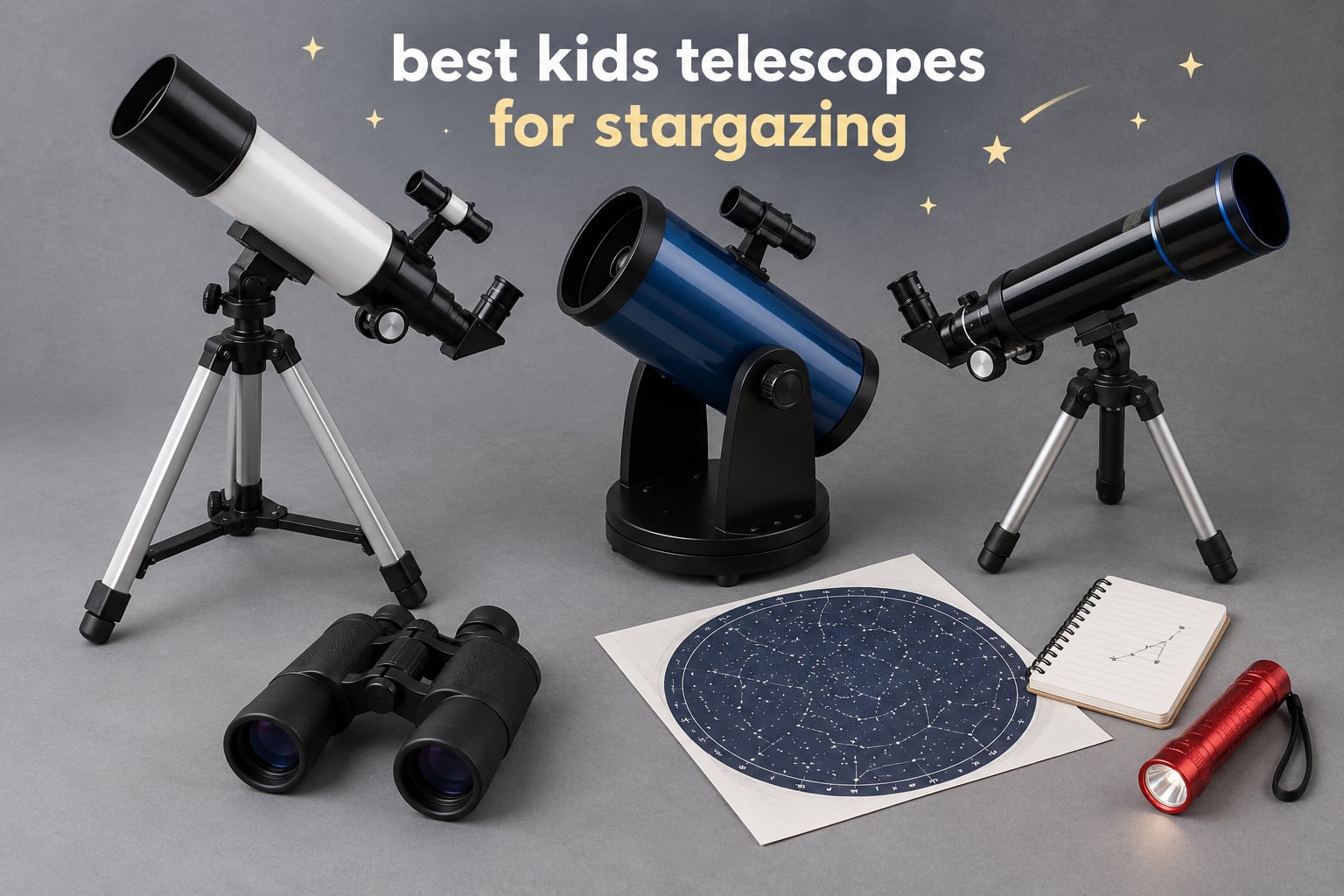
Most disappointing kids telescopes are not faulty. They are advertised with a magnification figure the optics physically cannot deliver, bolted to legs that shake, and handed to a child who cannot hold a steady image and concludes the whole thing is broken.
The best kids telescopes for stargazing all follow one rule: aperture beats magnification. Aperture is the diameter of the lens or mirror that gathers light, in millimetres, and it decides how much detail you can actually resolve. Our top pick, the Gskyer 70mm, has a 70mm aperture, which gives it an honest ceiling near 140x rather than the inflated numbers on most toy boxes.
We picked ten scopes that are real working telescopes rather than projector toys, sorted by the age of the child who will use them. That matters more than any spec, because a telescope your eight year old can actually aim gets used. Updated for 2026, these ten picks cover ages five through thirteen.
Top 3 Kids Telescope Picks for 2026

Gskyer 70mm Refractor
- 70mm aperture and 400mm focal length
- Fully coated glass
- Two eyepieces plus a 3x Barlow lens
- Carry bag and phone adapter

EACONN 80mm Refractor
- 80mm aperture and 600mm focal length
- K20mm and K9mm eyepieces for 30x-66x
- Backpack and slow-motion controls
- Two year warranty

Koolpte 70mm Refractor
- 70mm aperture and 500mm focal length
- 25mm and 10mm eyepieces plus 3x Barlow
- Phone adapter and carrying case
- Adjustable aluminum tripod
All 10 Telescopes Compared at a Glance in 2026
| Product | Specifications | Action |
|---|---|---|
| Gskyer 70mm Refractor |
|
Check Latest Price |
 Blue Marble NASA Lunar Scope Blue Marble NASA Lunar Scope |
|
Check Latest Price |
| Koolpte 70mm Refractor |
|
Check Latest Price |
| EACONN 80mm Refractor |
|
Check Latest Price |
 ECOOPRO 70mm Refractor ECOOPRO 70mm Refractor |
|
Check Latest Price |
 MEEZAA 80mm Refractor MEEZAA 80mm Refractor |
|
Check Latest Price |
 Luzsco 50mm Refractor Luzsco 50mm Refractor |
|
Check Latest Price |
 Hawkko 80mm Refractor Hawkko 80mm Refractor |
|
Check Latest Price |
 Wow in the World Telescope Kit Wow in the World Telescope Kit |
|
Check Latest Price |
 MaxUSee Lunar Telescope MaxUSee Lunar Telescope |
|
Check Latest Price |
Sun Safety: Never Point an Unfiltered Telescope at the Sun
A telescope concentrates sunlight far beyond what the unaided eye can handle. Pointing one at the Sun without a certified solar filter over the front aperture can cause permanent eye damage in an instant, and the same is true of the finderscope.
The safest family rule is simpler than any accessory list: do not point any telescope at the Sun at all. If a solar session is planned, buy a filter made for that aperture and fit it over the front of the tube, never over the eyepiece. One scope below, the Luzsco 50mm, ships with a moon filter. A moon filter is not a solar filter and offers no protection against the Sun.
1. Gskyer 70mm Refractor: Best Overall Telescope for Kids Stargazing
Gskyer Telescope, 70mm Aperture 400mm AZ Mount Astronomical Refracting Telescope for Kids Beginners – Travel Telescope with Carry Bag, Phone Adapter and Wireless Remote.
70mm aperture
400mm focal length
Fully coated glass
Altazimuth mount
1 year warranty
Pros
- Most reviewed telescope here with over 22k ratings
- 70mm aperture resolves lunar craters sharply
- Two eyepieces plus a 3x Barlow cover up to 120x
- Carry bag makes it genuinely portable
- Phone adapter and wireless remote for first photos
Cons
- Manual altazimuth needs constant repositioning as objects drift
- Finder scope alignment is fiddly at first
- Plans shine brightest against the Moon not planets
This is the scope I keep coming back to because the spec sheet and the owner reviews agree. Seventy millimetres of aperture on a 400mm f/5.7 fully coated tube gives bright, sharp lunar images, and 22k reviews mean almost every common question has already been answered by someone else.
It is a short tube on an adjustable aluminum tripod, which matters with a child. A shorter optical tube is less likely to be knocked over, and the whole thing fits in the supplied carry bag for a car or a backpack to a darker site.
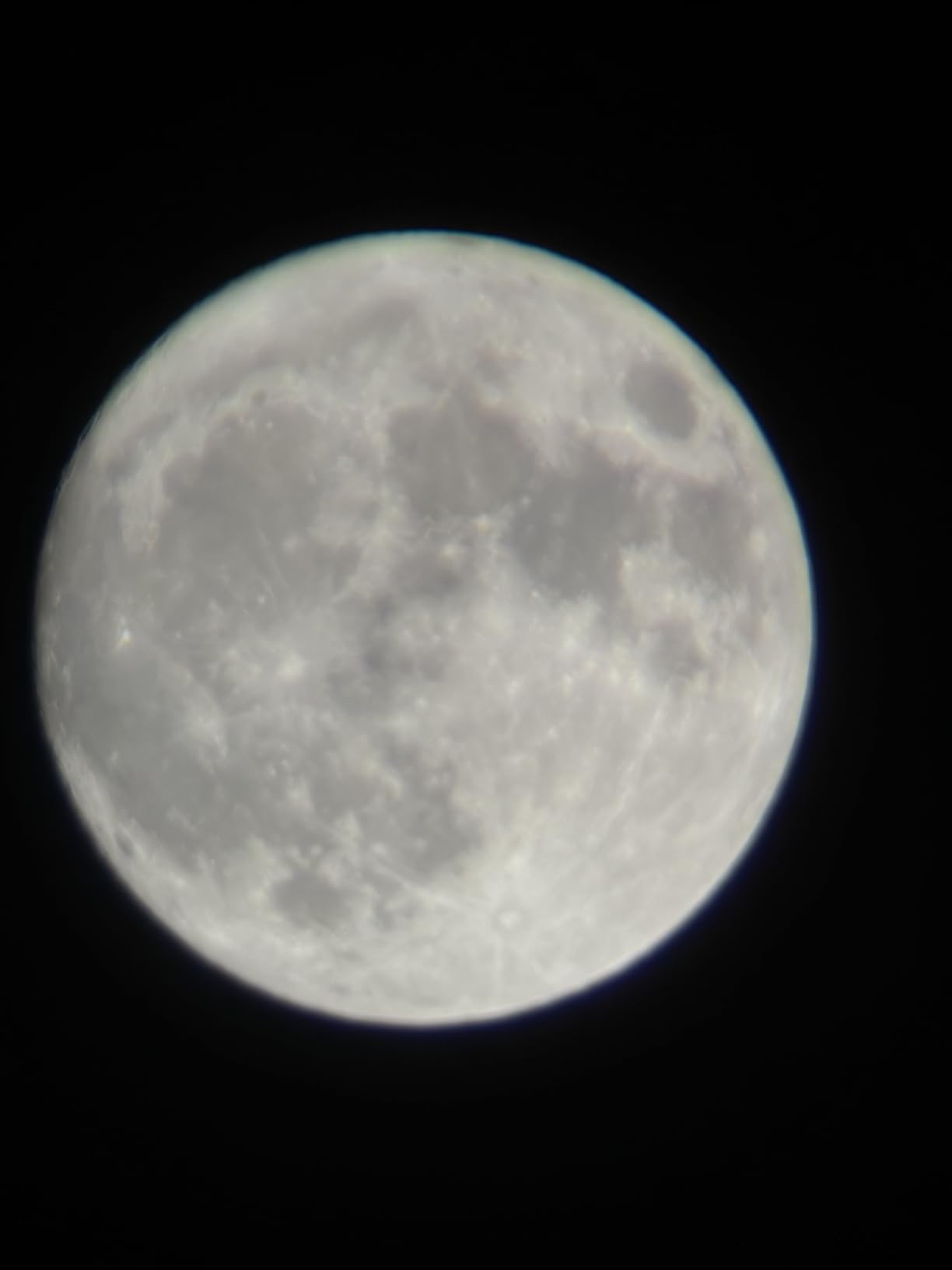
The accessory bundle is unusually useful at this bracket: two replaceable eyepieces, a 3x Barlow lens, a 5×24 reflex finder with crosshairs, a smartphone adapter and a wireless remote. That adapter is what converts a look-at-a-crater toy into something that produces a shareable first photo of the Moon.
Here is the honest limit. A 400mm focal length is short, so this is a wide-field, low-power instrument. Craters, maria and bright stars look great, and Jupiter’s moons are obvious. Saturn’s rings appear, but without the crisp separation a longer tube delivers.
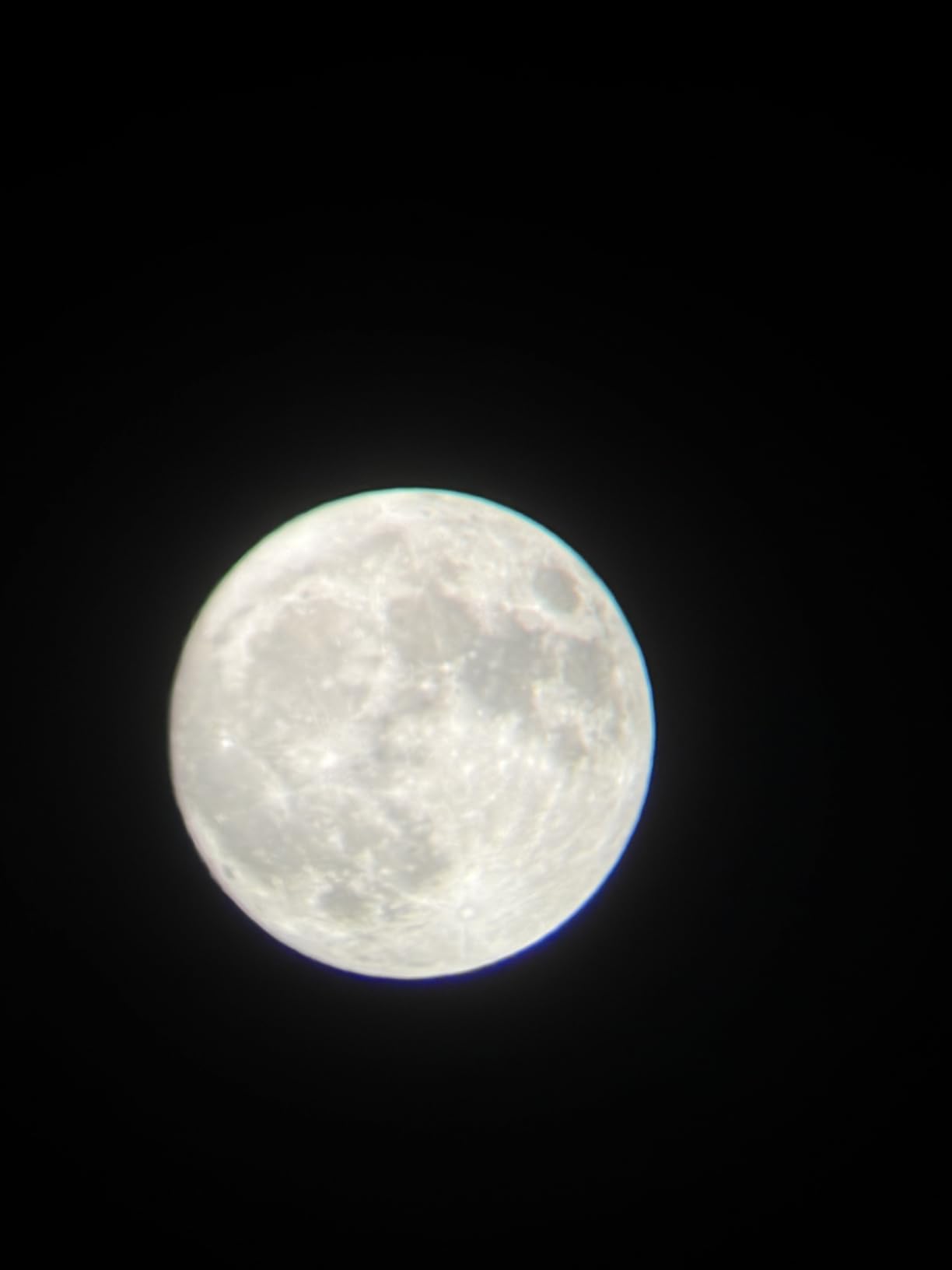
Who this scope suits
Ages six and up with an adult nearby, and any child whose first target is the Moon. The carry bag is the detail people miss: a telescope that can travel to a park or a friend’s dark driveway gets used far more than one that lives in a cupboard.
Where it falls short
There is no motorised tracking, so every few minutes an adult nudges the tube to keep a planet centered. Plan to handle that yourself rather than the child. The finder also takes ten minutes of real patience to align, and then aiming becomes easy forever.
2. Blue Marble NASA Lunar Scope: Simplest First Scope for Ages 8 to 12
NASA Lunar Telescope for Kids Ages 8-12 with Tripod and Finder Scope
90x lunar magnification
Finder scope included
Tabletop tripod
Ages 8 and up
Battery powered
Pros
- Very easy to assemble and point
- Light frame suits a tabletop tripod
- Low and high power eyepieces simplify first views
- Learning guide helps younger kids
- Battery powered so no cable to trip over
Cons
- Very light frame is easy to knock over and can bend
- Flimsy tabletop tripod shakes and makes focusing hard
- Limited aperture means planets show as plain discs
- Instructions are vague and focus is difficult
This is deliberately the simplest thing on the list, and for a child who has never looked through a telescope that simplicity is the feature. It ships with a tabletop tripod, a finder scope, low and high power eyepieces, a dust cap and an educational guide, with no assembly puzzle to lose interest in.
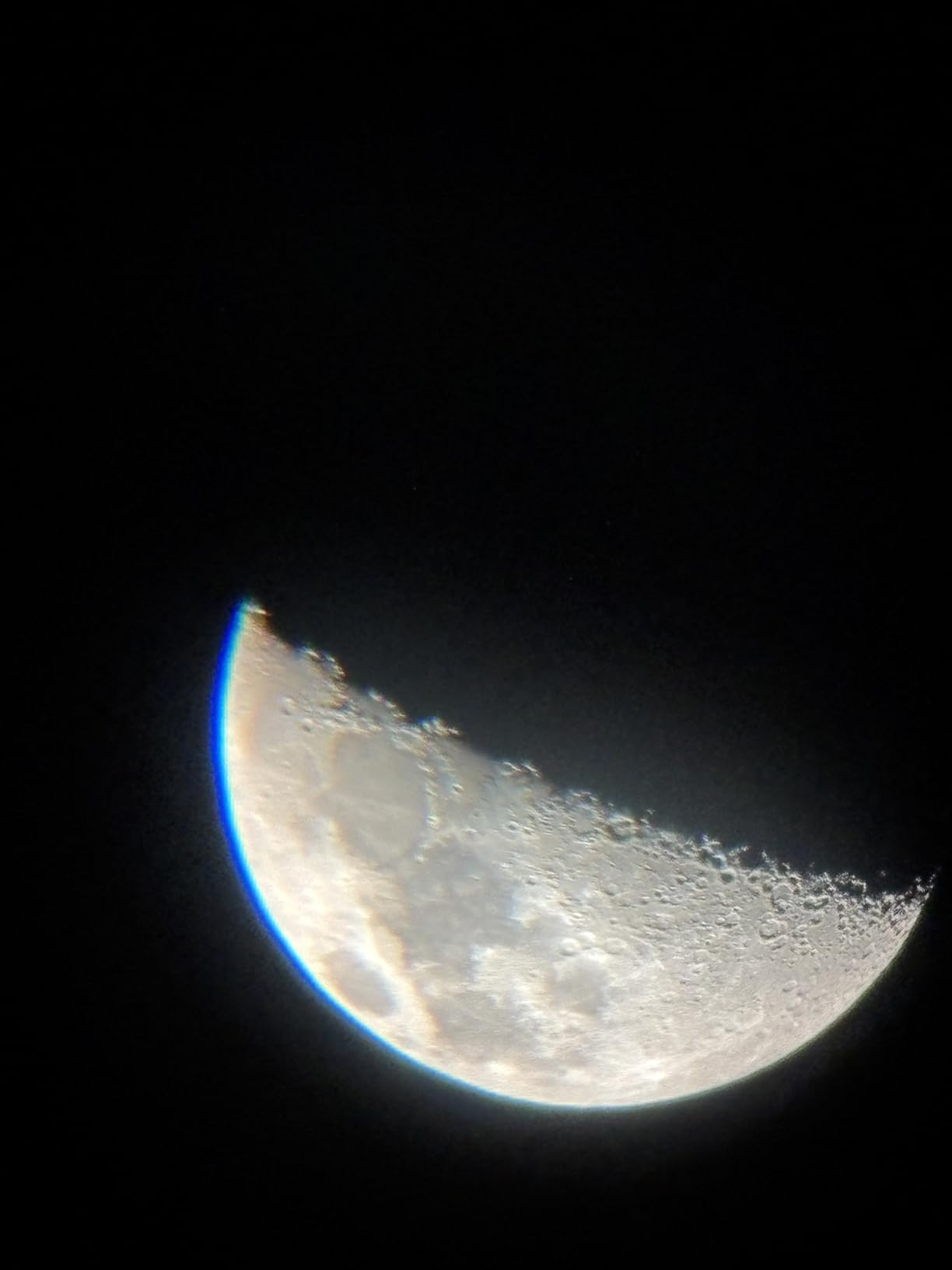
Held at the right height on a table it does what it says: it puts the Moon in the eyepiece, and for most children that first moment is the whole hobby in one frame. Venus at twilight is about the limit beyond that.
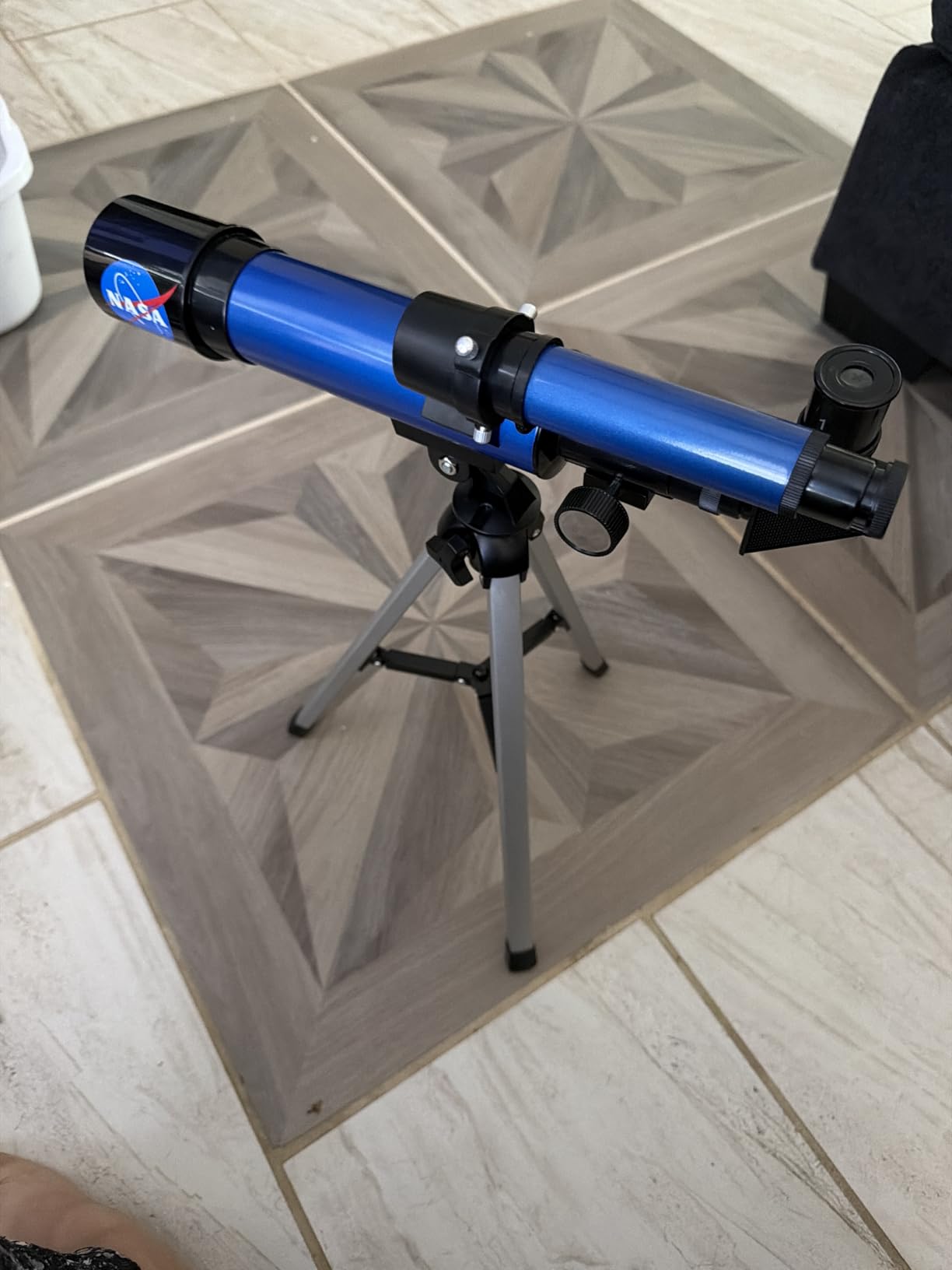
The honest caveat is the build. Reviewers describe a light frame that is easy to knock over and a tripod that shakes enough to make focusing frustrating. That is survivable for a stationary Moon target at low power and genuinely annoying at 90x.
It is rated for ages eight and up but works best around age ten with an adult handling the tripod. Under seven, our honest recommendation is binoculars rather than any telescope.
Who this scope suits
A child aged eight to twelve who wants the simplest possible introduction, especially one who loses interest during setup. It is also a good back patio scope where the target never changes and sessions stay short.
Where it falls short
Do not buy it expecting planets to look like planets. With this aperture they resolve as small discs, which is exactly the disappointment that makes a child conclude the telescope is broken. The light frame can bend or break if dropped, so it lives on a shelf between sessions.
3. Koolpte 70mm Refractor: Best Bundle for a Gift
Koolpte Telescope for Kids, 70mm/500mm AZ Refractor for Beginners, White
70mm aperture
500mm focal length
Fully coated
Altazimuth mount
1 year warranty
Pros
- Longer 500mm tube gives more magnification than most 70mm kits
- Two eyepieces plus a 3x Barlow and finder included
- Carrying case and tripod ship in the box
- Phone adapter and wireless remote included
Cons
- Narrow field of view limits sprawling sky objects
- Manual altazimuth tracking means constant repositioning
- Included eyepieces limit performance on faint targets
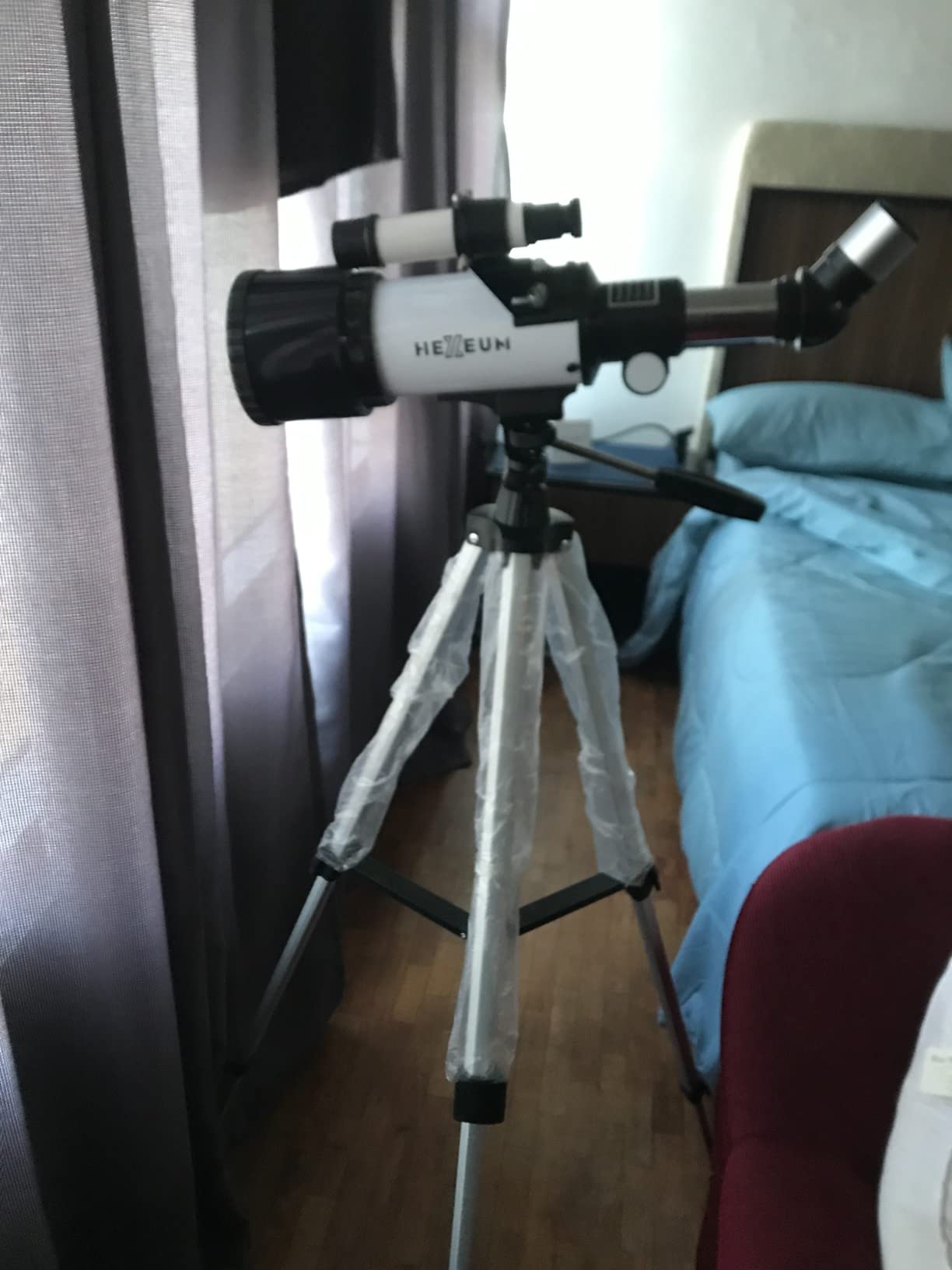
The Koolpte is the most complete package in this bracket, and that completeness is the selling point when you are buying a birthday present for a beginner. Two eyepieces, a 3x Barlow, a 5×24 finder scope, a phone adapter, a wireless remote, a carrying case and an adjustable tripod are all in the box.
Optically it is a 70mm aperture with a 500mm focal length, meaningfully longer than the Gskyer. Longer focal length means more magnification from the same eyepiece, so you get more reach on the Moon and a chance at Jupiter’s moons, at the cost of a narrower field.
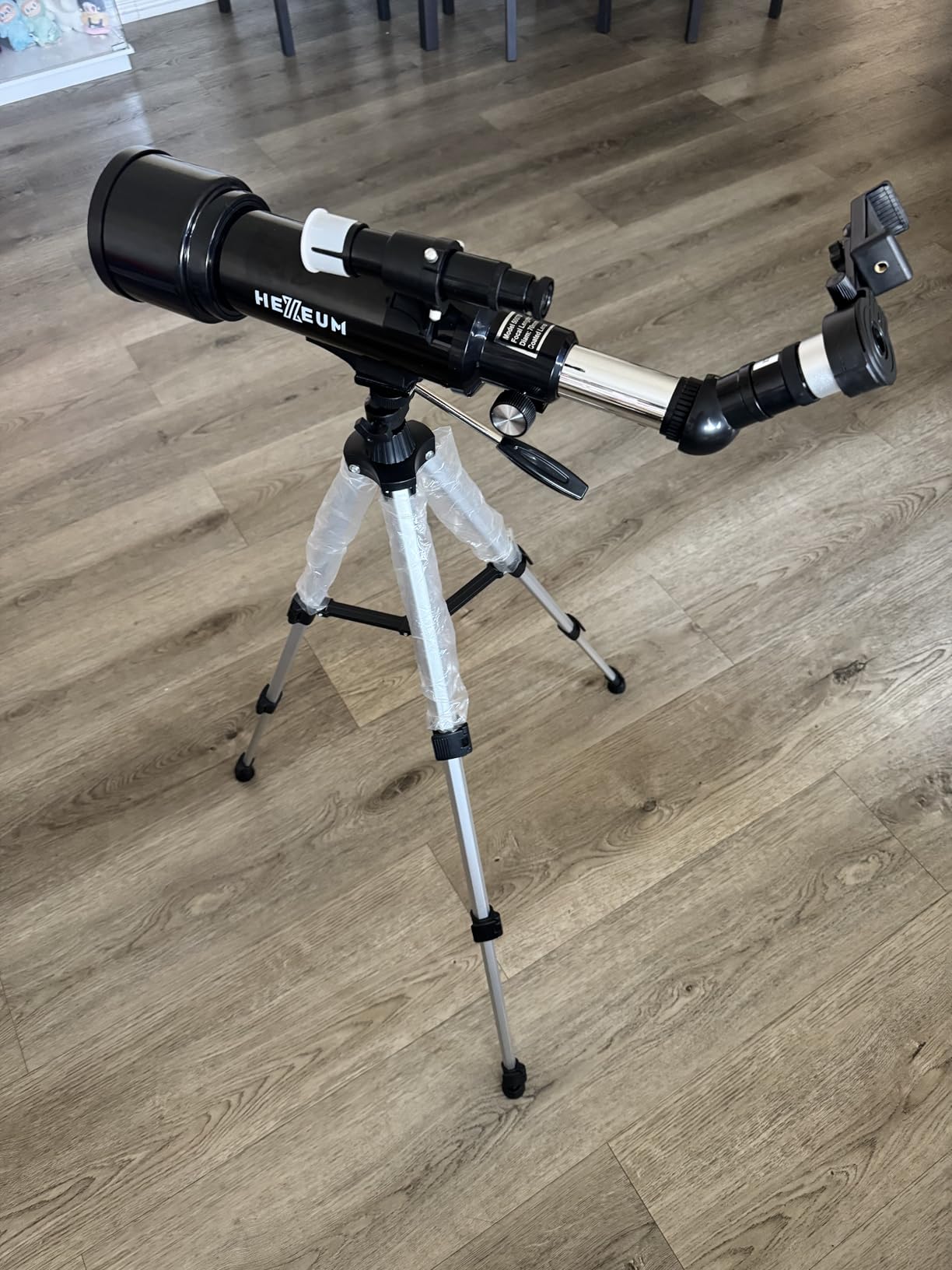
Our advice is to use the 25mm eyepiece first and resist the 10mm and the Barlow until the child has found the Moon twice in a row. Starting at high power is the most common beginner mistake and produces a dim, wobbly image that looks like a defect.
Because everything is bundled, the opening session is low friction: assemble, carry the case to the garden, point, focus. Roughly two thirds of owners give it five stars.
Who this scope suits
Gift buyers, and families who want one box containing everything with no second purchase. The case also makes it a good camping and holiday-lodge telescope, since nothing gets left at home.
Where it falls short
The 500mm focal length produces a narrow field, so sweeping the sky takes practice. Beginners often expect the cinematic sweep shown in promotional footage and think something is wrong. The bundled eyepieces are also entry-level, which shows on faint targets.
4. EACONN 80mm Refractor: Best Value for the Aperture You Get
Telescopes for Adults Astronomy, 80mm Aperture 600mm Refractor Telescope for Kids & Beginners, Compact and Portable Travel Telescopio with Backpack
80mm aperture
600mm focal length
Multi-coated optics
Slow-motion controls
2 year warranty
Pros
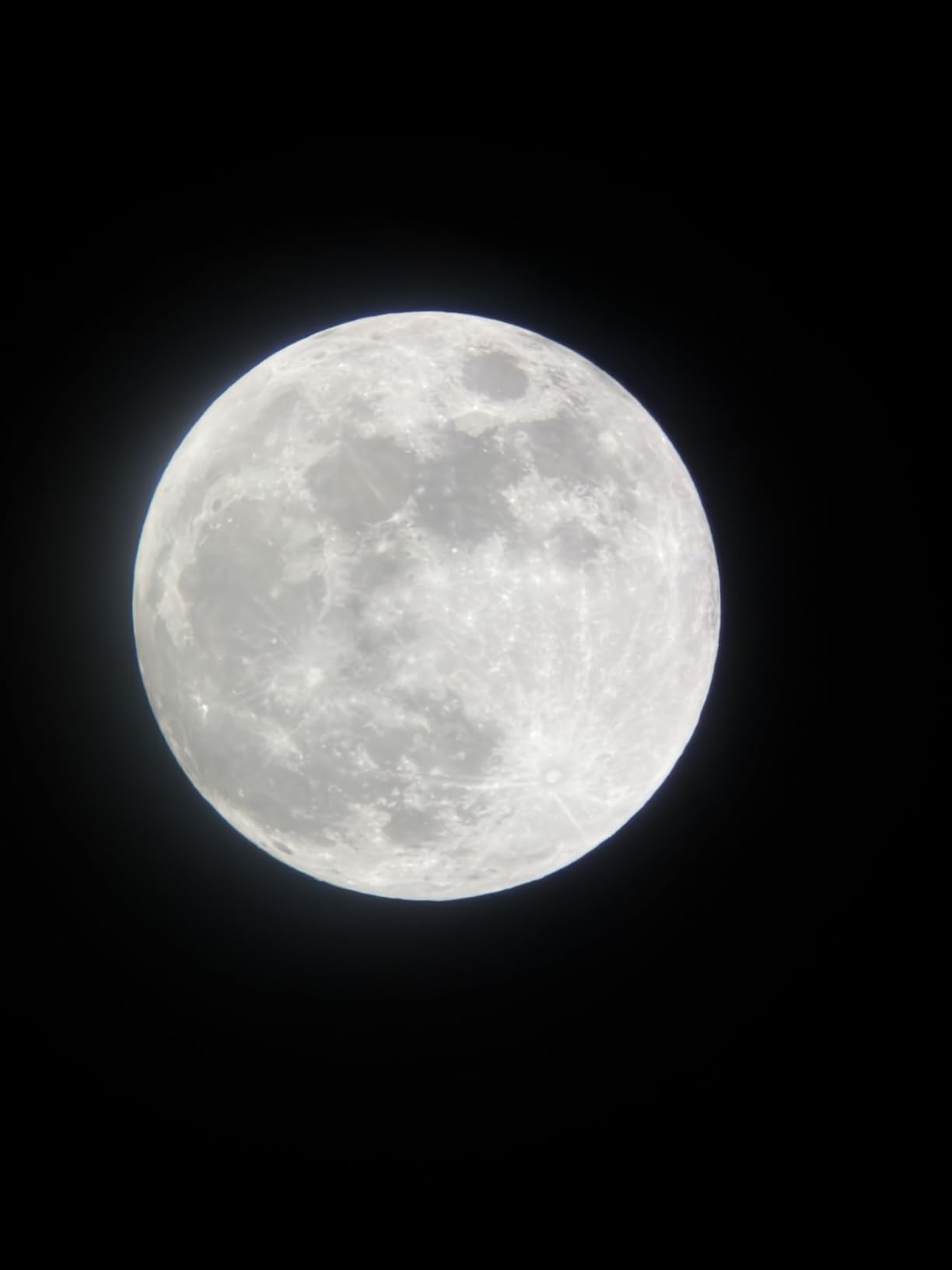
- 80mm aperture shows craters
- Saturn's rings and Jupiter's moons
- Backpack holds every part for travel to darker skies
- Quick assembly with written and video instructions
- K20mm and K9mm eyepieces give 30x-66x
- Two year warranty is the longest here
Cons
- Tripod is low which causes neck strain for adults
- Knobs and tripod feel cheap and unstable
- Phone adapter is sized for smaller phones
- Plastic eyepiece threading can strip
Here is the arithmetic that matters most in this roundup. Aperture drives light gathering and detail resolution, and it is the one number marketing cannot fake. The EACONN gives you 80mm of aperture, more than any other scope here.
In practice 80mm opens up real targets: lunar craters with real shadow depth, Saturn’s rings as a ring rather than a dot, and Jupiter’s moons moving across the disc over an evening. You get a 5×24 finder, K20mm and K9mm eyepieces, slow-motion controls, a phone adapter and a backpack.
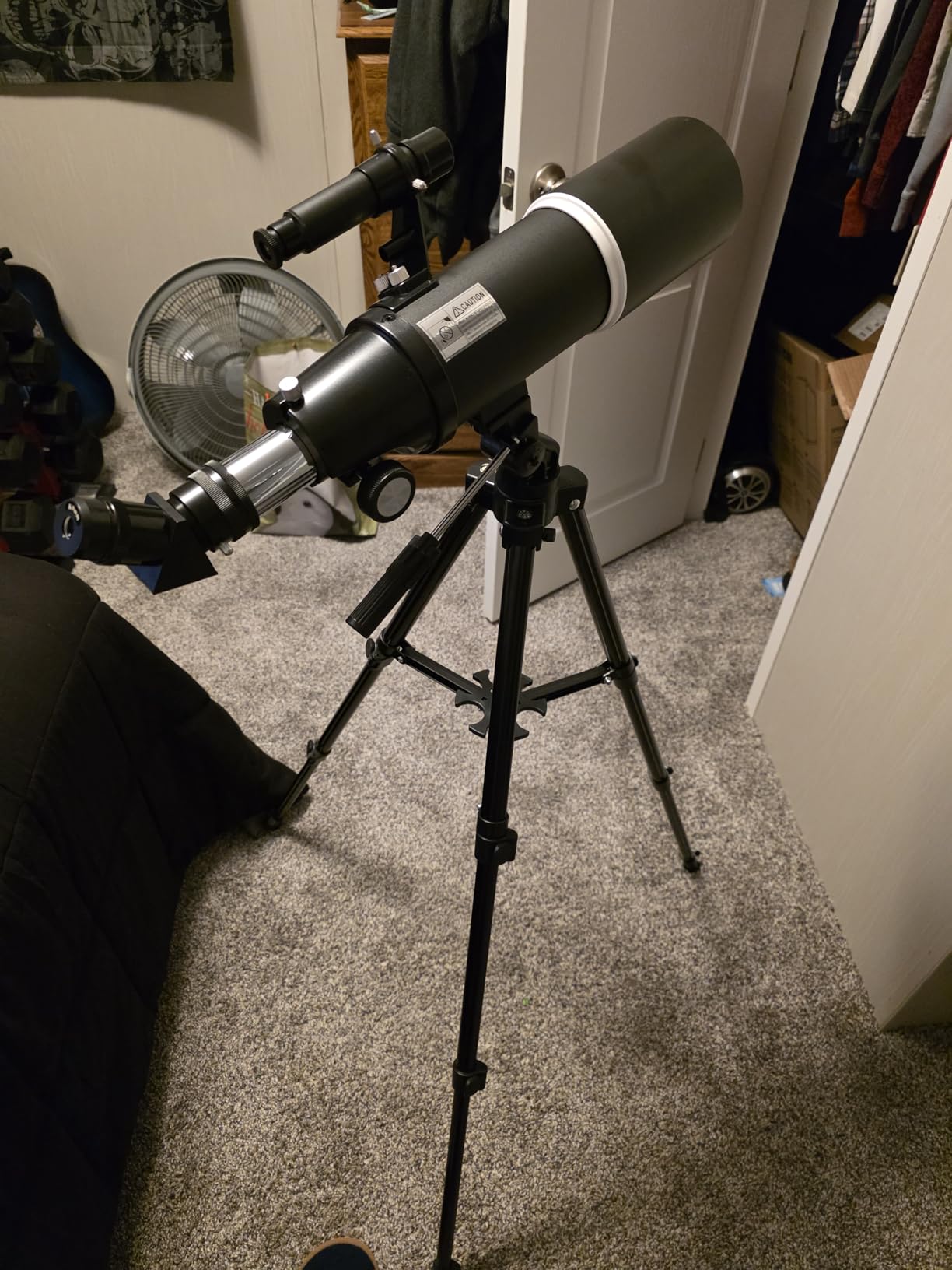
Those slow-motion controls are the detail we like most. On a long tube, small hand movements swing the view wildly, and the fine adjustment cables let an adult nudge a planet back to center without losing it entirely.
Assembly is quick and the instructions are unusually good, with printed steps and video. Reviewers note that children around eight to twelve can operate the controls with little guidance.
Who this scope suits
Any child aged seven and up who wants to see planets rather than only craters, and any family that travels. Everything fits in the backpack, which matters if you live somewhere with bright skies. Our refractor telescopes for planets guide is the next step after this one.
Where it falls short
The tripod is the repeated complaint and it is specific: too short, causing neck strain for adults, with knobs and legs that feel cheap and unstable. Expect to stand at an awkward angle. The phone adapter also fits smaller phones and can unbalance the tube.
5. ECOOPRO 70mm Refractor: Best for Daytime Birding Too
Telescope for Kids & Adults, 70mm Aperture 360mm Refractor (15X-150X)
70mm aperture
360mm focal length
Multi-coated glass
7.9 degree field of view
1.4 kg
Pros
- Wide 7.9 degree field makes finding targets easy
- Assembles in under 30 minutes with no tools
- Light at 1.4 kg so a child can carry it
- Works for birding and scenery as well as the night sky
- Tool-free quick release design
Cons
- Tripod is under two feet tall so it needs a table
- Mount lock knob does not hold the tube and it loses focus
- Moon map text is blurry and the star chart is not a real map
- Light build can break if knocked over
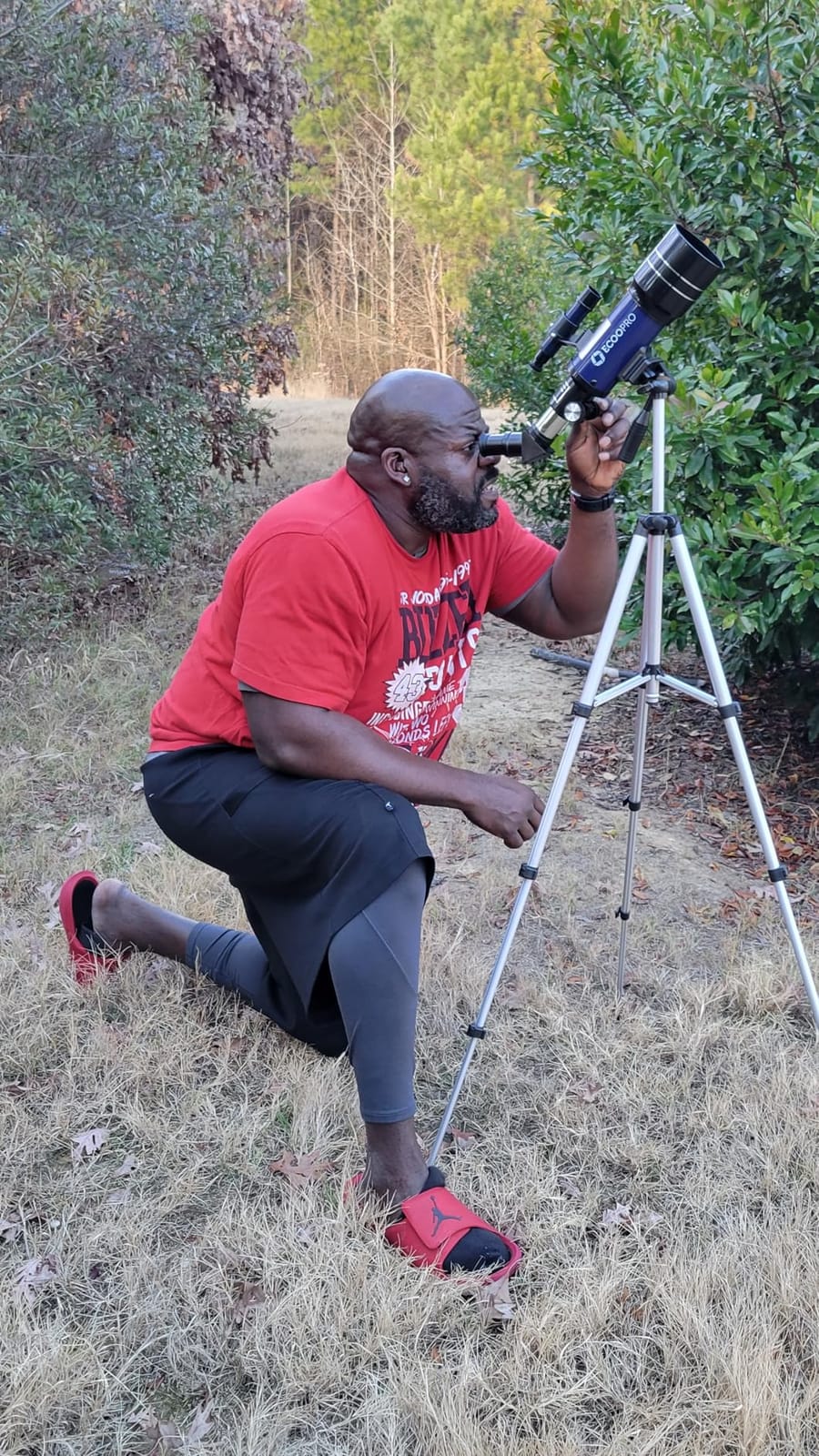
This one earns a place for a reason the other 70mm scopes do not: a 7.9 degree field of view. The sky feels far less cramped, and the same scope works in daylight for birdwatching or scenery, which keeps children engaged when they are not observing at night.
Optically it is a 70mm aperture with a 360mm focal length, fully multi-coated, supplied with K25mm and K10mm Kellner eyepieces for 51x to 128x and a 5×24 finder. The 25mm eyepiece gives a lovely wide view with the terminator visible across the disc.
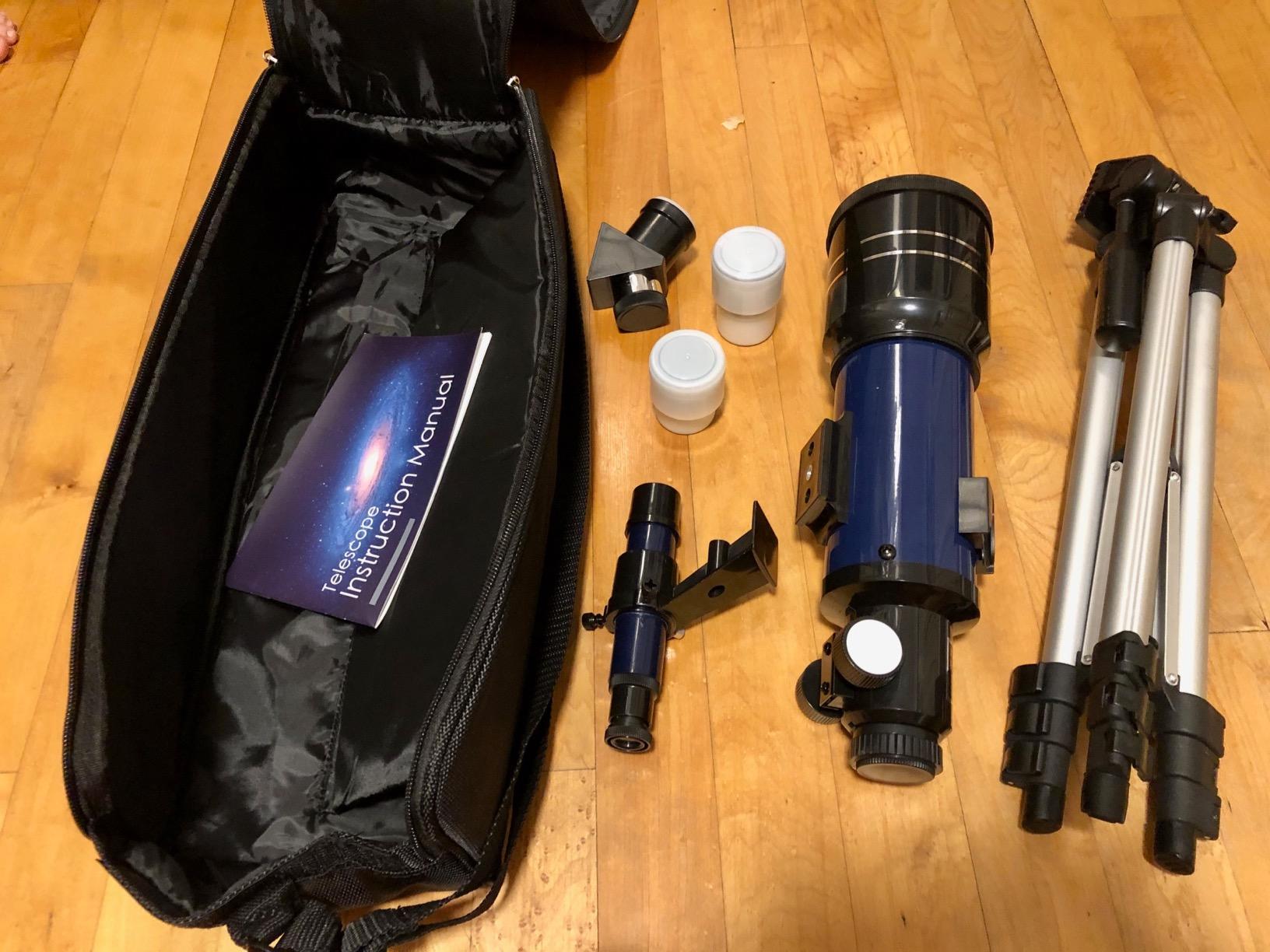
At 1.4 kg it is light enough for a child to carry out to the garden themselves, and tool-free assembly takes under half an hour with nothing needed but their hands.
The mounting is where it falls down, and this is the specific issue to know: the mount lock knob does not hold the tube, so the scope flops forward and loses focus. Several owners bought a separate tripod to fix it.
Who this scope suits
A child aged six to ten who will use the telescope in daylight as well as at night, and any family near woodland or open ground. A wide field is genuinely useful for tracking a moving bird. See also our binoculars for stargazing guide.
Where it falls short
The tripod is under two feet tall, which forces you to work at a table. The printed moon map text is blurry and the star chart is not a real constellation map, so use a phone app instead. The build is light, so it will not survive an enthusiastic seven year old knocking it over.
6. MEEZAA 80mm Refractor: Highest Rated with the Tallest Adjustable Tripod
MEEZAA Telescope for Adults & Kids, 80mm Aperture 500mm Refractor
80mm aperture
500mm focal length
Fully multi-coated
Tripod adjusts 16.92 to 44.48 inches
Zenith mirror
Pros
- Highest rated scope in this roundup at 4.4 out of 5
- 80mm aperture gives bright detailed lunar and planet views
- Tripod spans child to adult height
- Waterproof backpack holds every accessory
- Phone adapter works well for lunar photos
Cons
- Included eyepieces limit faint targets
- Altazimuth mount has no tracking so objects drift
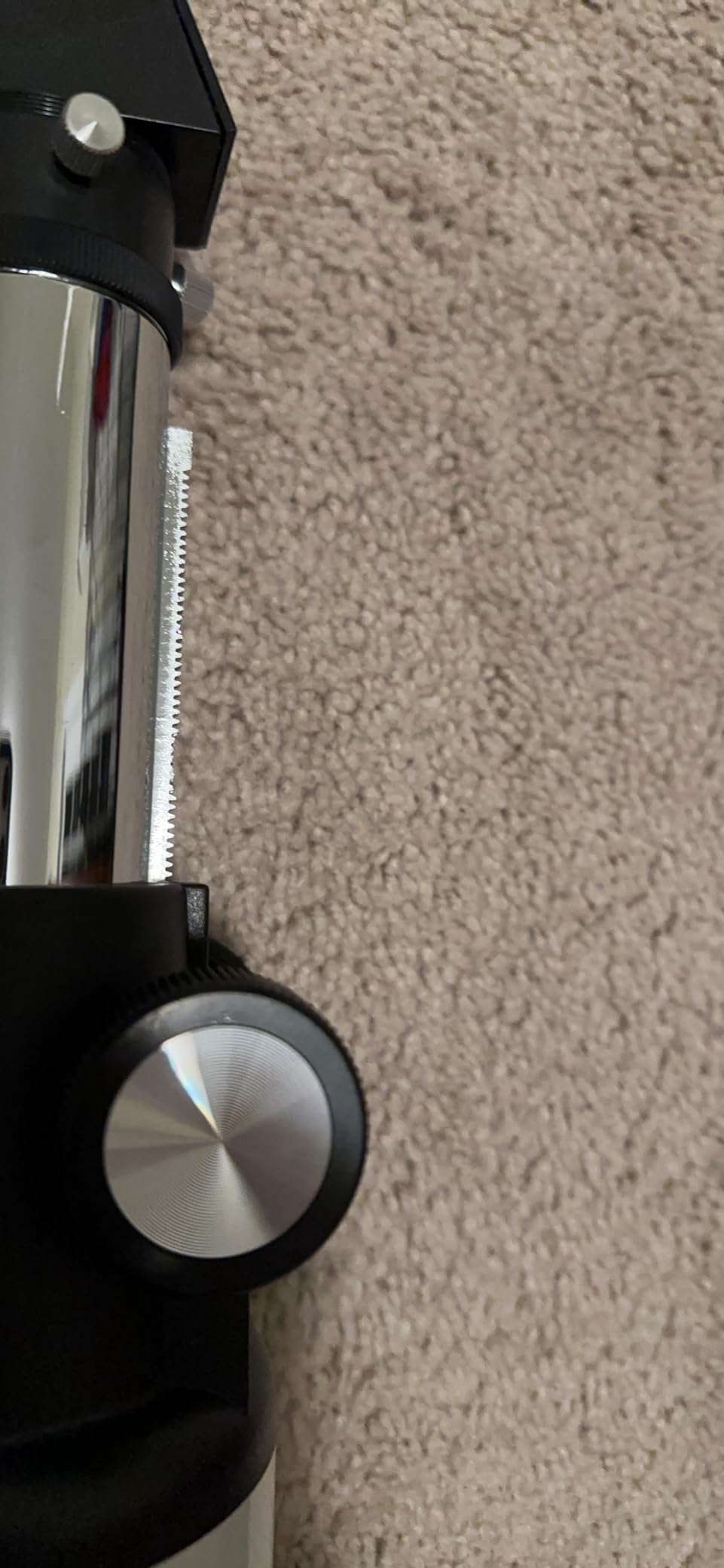
- Adjustment knob can strip after repeated use
- Not stable in strong wind
The MEEZAA is the highest rated scope we looked at, and the reason is not the number but what it does with it. The tripod adjusts from under 17 inches to over 44, so a six year old and a full-grown adult can both use the same eyepiece in the same session.
Optically it is an 80mm aperture with a 500mm focal length and fully multi-coated optics, so it matches the EACONN for aperture while being shorter. You get 25mm and 10mm eyepieces plus a 3x Barlow for 20x to 150x, a finder scope, a 45 degree zenith mirror, a phone adapter and a waterproof backpack.
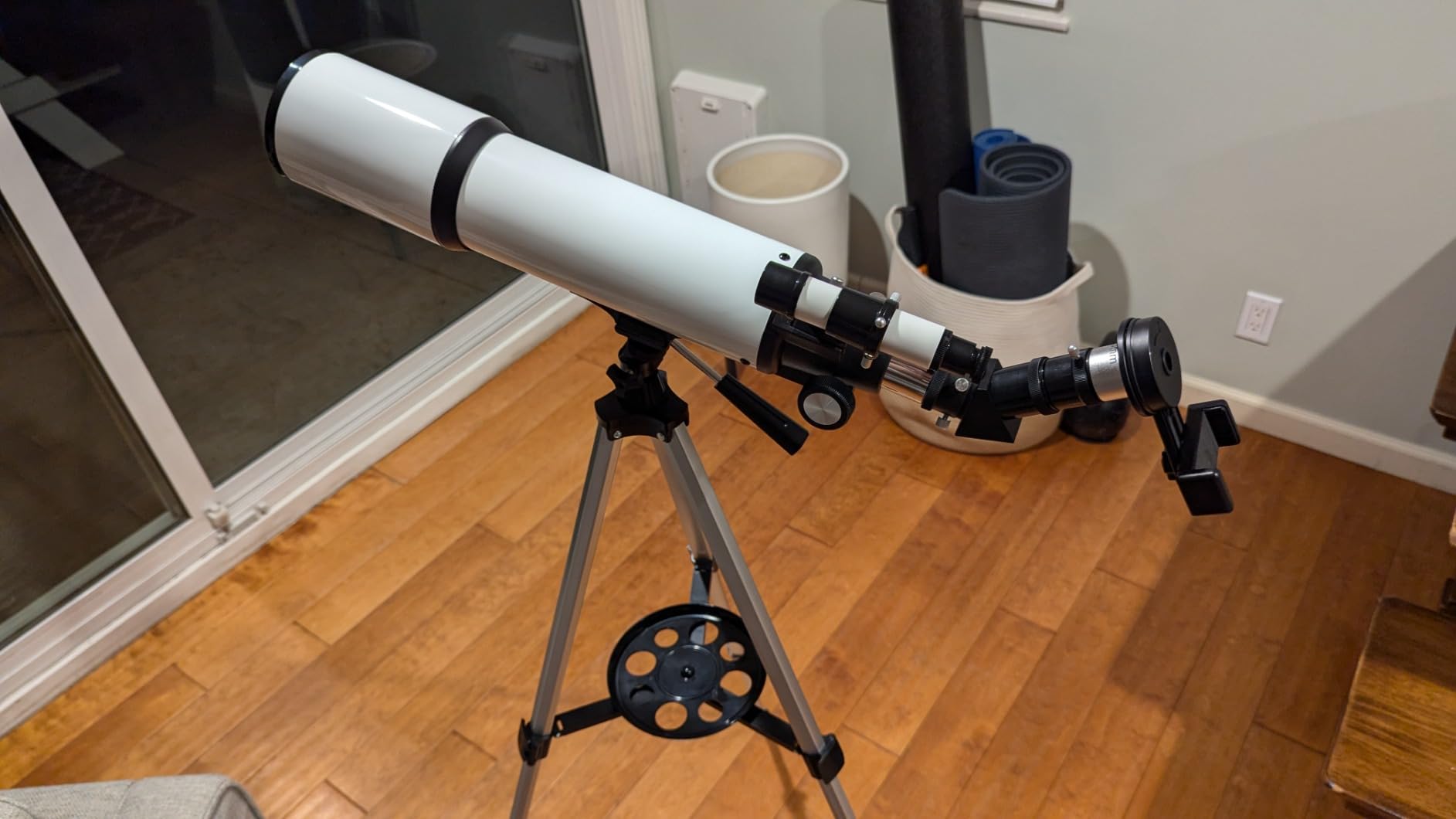
That backpack matters more than it sounds. It is the difference between a telescope used once at Christmas and one that comes out whenever the sky clears. The zenith mirror also stops the image appearing upside down, which confuses children before it interests them.
The tripod length is the practical win that most compact kids scopes miss, because it lets the child reach the focus knob without an adult crouching behind them.
Who this scope suits
Families with children of different ages sharing one telescope, and anyone who wants a portable 80mm aperture scope. Space-themed sticker sheets are included, which sounds minor but keeps a seven year old engaged during the twenty minutes before it gets properly dark.
Where it falls short
Its review base of 645 is far smaller than the Gskyer’s 22k, so the long-term reliability picture is less well established. The bundled eyepieces limit faint targets, and it is not stable in strong wind, so use a windbreak in an open field.
7. Luzsco 50mm Refractor: Best Budget Pick for Ages 6 to 12
Telescope for Kids, 50mm 100x Beginner Telescope with Tripod
50mm aperture
100x magnification
Multi-coated
Fixed mount
Designed for ages 6-8
Pros
- Lowest entry point in the roundup
- Complete set with eyepieces
- Barlow finderscope and moon filter
- Setup itself teaches patience and problem-solving
- Light at 600 g so children can carry it
- Screen-free activity for backyard and camping
Cons
- 50mm aperture and fixed mount limit resolution
- Designed as an educational toy rather than for detail
- Modest optics compared with the 70-80mm scopes
- Planets show as small discs
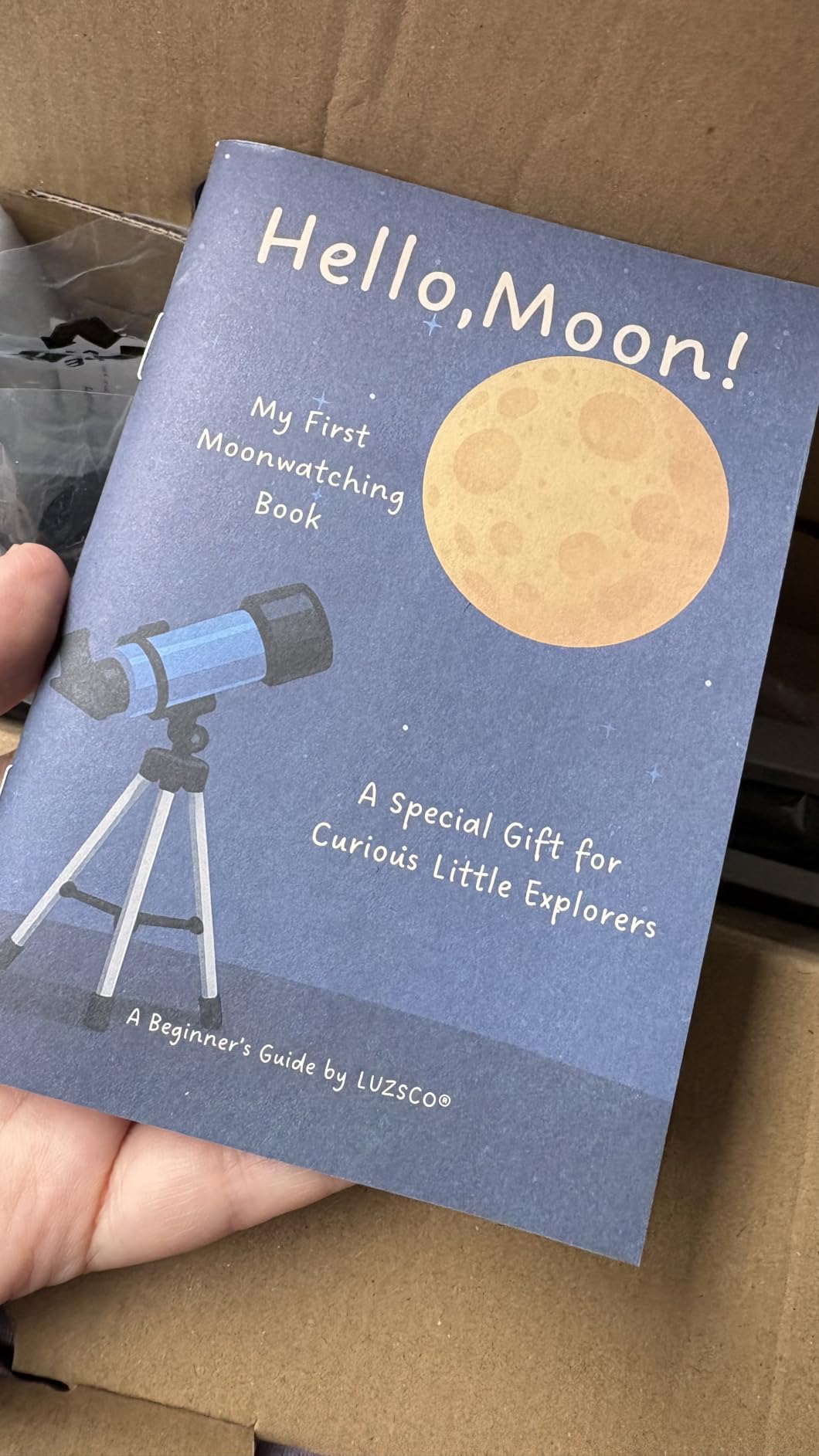
This is the honest budget answer, and we want to be straight about what it is: a 50mm aperture refractor with a fixed mount, aimed at children aged six to eight. It is not going to show Saturn’s rings. It will show you the Moon, and for a six year old that is the entire event.
What you get is a complete beginner set: two eyepieces, a Barlow lens, a finderscope, a moon filter, a tripod and the objective lens. It weighs 600 g, needs no power, and works immediately on a car journey to a campsite.
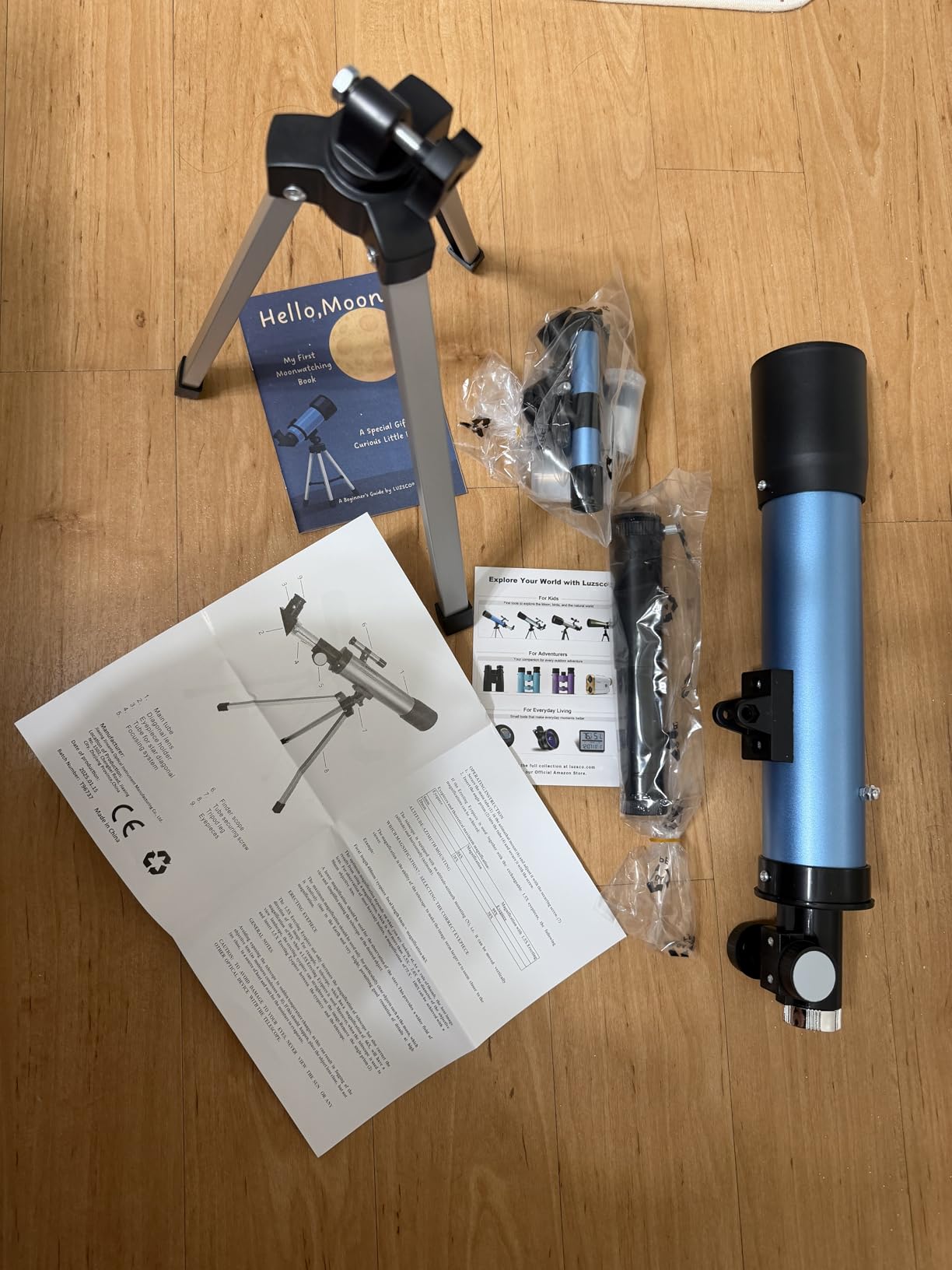
The fixed mount is the significant limitation. A fixed mount cannot be adjusted in height or angle once set, so you choose your observing spot rather than aiming freely. For a child standing in one spot watching the Moon rise, that can be perfectly acceptable.
On the moon filter: it reduces glare and increases contrast on the lunar surface, which children enjoy, and it does nothing at all for the Sun. It is not a solar filter.
Who this scope suits
A first telescope for a child aged six to eight, particularly a birthday gift on a tight budget. Assembly is part of the fun and teaches patience and problem-solving, which is a real benefit at this age.
Where it falls short
Fifty millimetres of aperture is the whole story: planets show as small discs and faint deep sky objects are out of reach. If a child gets bored after a few months that is useful information rather than a wasted purchase, and a 70mm refractor is the upgrade.
8. Hawkko 80mm Refractor: Best for Travel and Personalisation
Hawkko Portable Telescope for Kids & Beginners 80mm Aperture 500mm
80mm aperture
500mm focal length
Fully multi-coated objective
4-stage tripod
2 year warranty
Pros
- 80mm multi-coated lens captures more light than 70mm designs
- 20x-150x range from two eyepieces and a Barlow
- Sticker sheets in space and solar system themes
- Phone adapter for family photos
- Backpack sized to hold everything
Cons
- Only 169 reviews so less long-term feedback
- Altazimuth mount requires manual repositioning as objects move
- Narrower field than shorter 70mm tubes
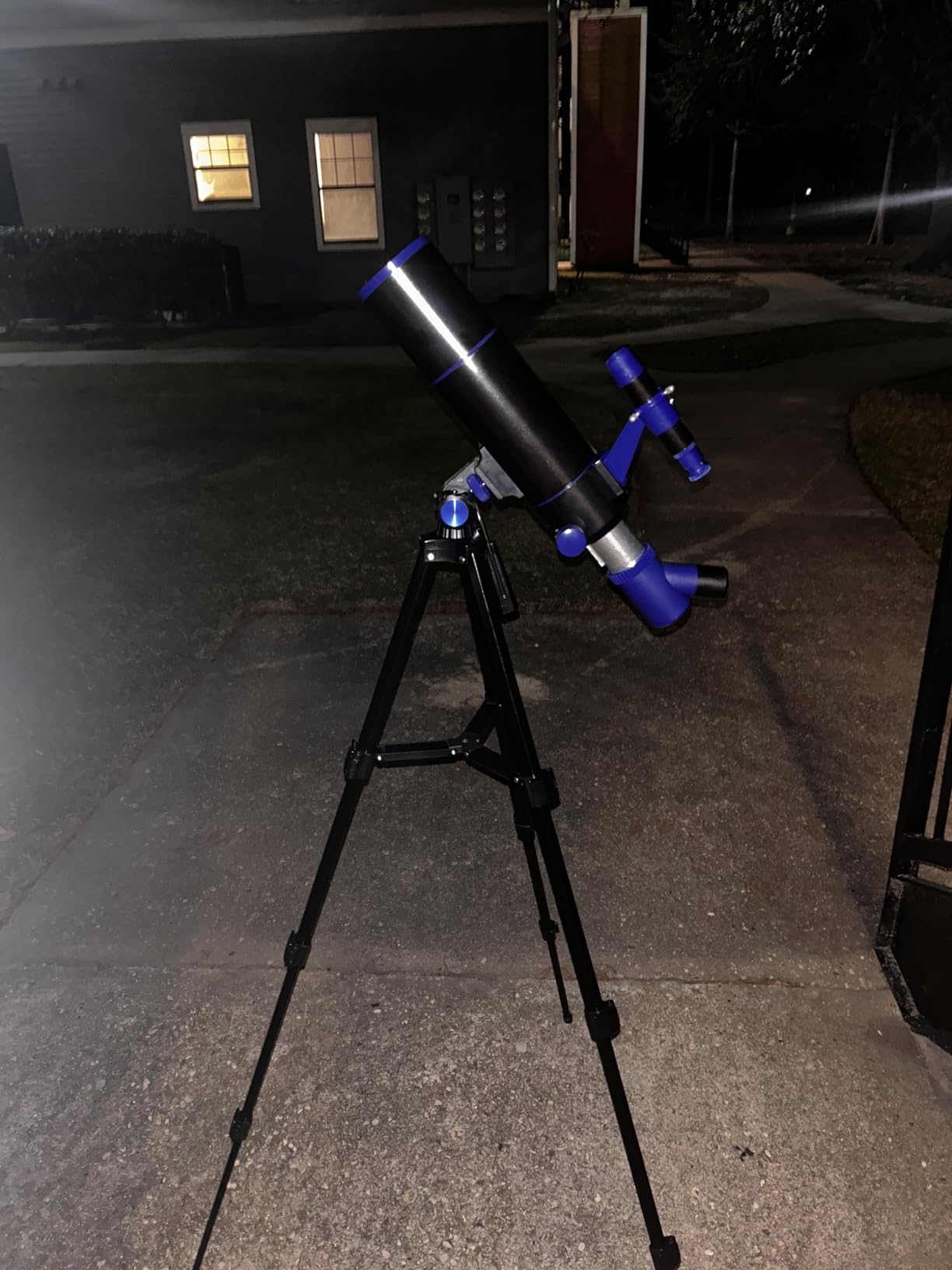
The Hawkko competes on packaging and portability rather than optics. You get a fully multi-coated 80mm objective on a 500mm focal length tube, 25mm and 10mm eyepieces with a 3x Barlow for 20x to 150x, a phone adapter, a four-stage tripod, decorative sticker sheets and a backpack sized to hold the whole kit.
That backpack specification is rare at this level. Combined with the two year manufacturer warranty, it makes this a good choice if you expect to move between a garden, a balcony and a holiday site, especially when the sky rather than the glass is the limiting factor.
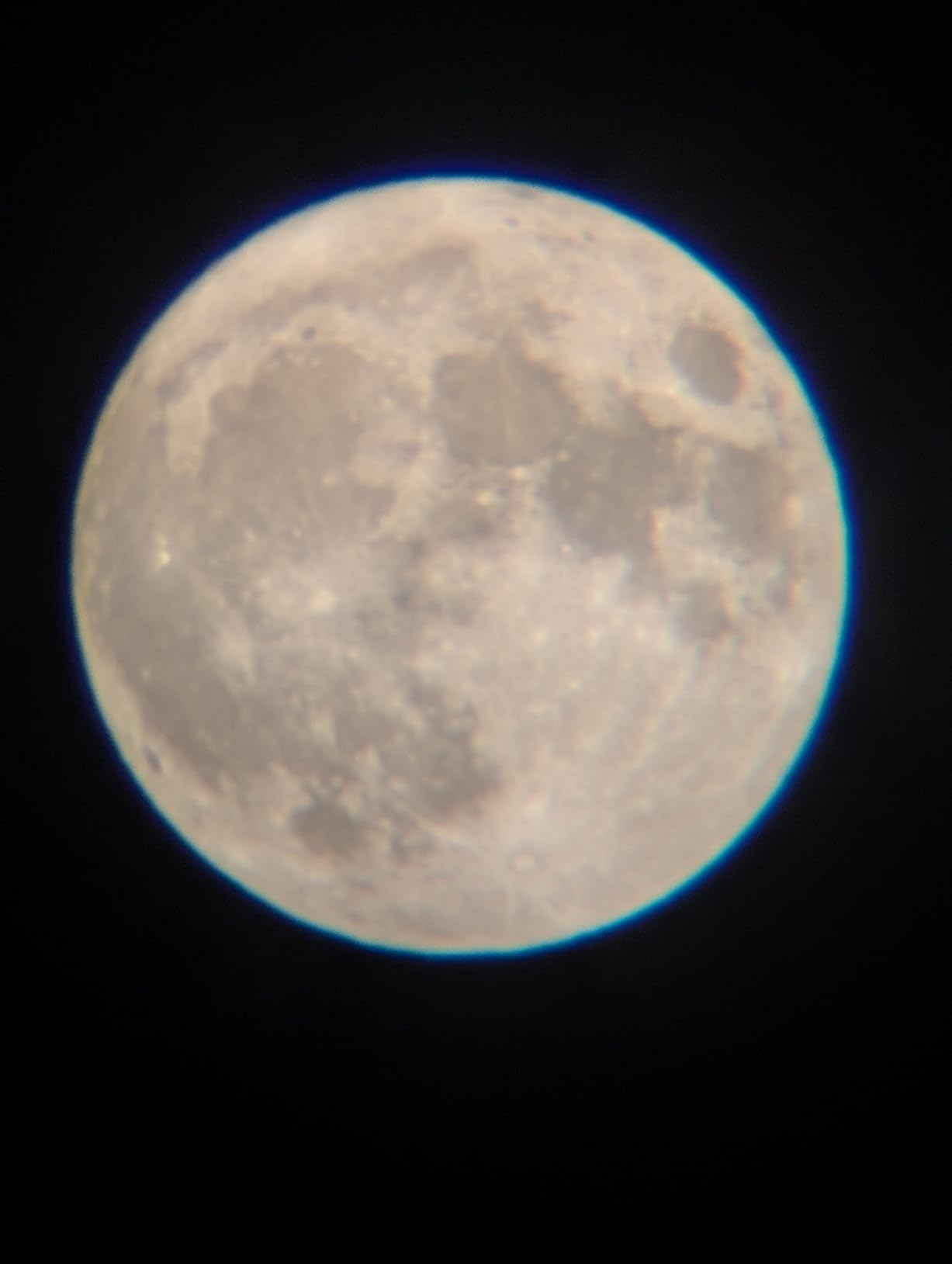
The sticker sheets are what reviewers mention most warmly, and it is not a gimmick. Letting a child personalise the telescope before the first session gives them ownership of the object, which changes how long they stay engaged.
With 169 reviews the long-term owner picture is thinner than for the higher-volume scopes. That does not make it a poor choice, but you are trusting the design rather than a large body of independent feedback.
Who this scope suits
A family that travels and wants one bag carrying a complete telescope. It also suits a child who treats astronomy as a hobby rather than a school project, since the stickers and phone adapter support a social, shareable version of stargazing.
Where it falls short
As with every altazimuth mount on this list, there is no tracking, so objects drift out of frame within minutes and an adult has to reposition. At 500mm focal length the field is narrower than the ECOOPRO’s, so sweeping the sky is less pleasant.
9. Wow in the World Telescope and Astronomy Kit: Best Educational Set for Ages 6 and Up
Wow in the World Kids’ Telescope & Astronomy Kit, 25x & 50x Magnification, Adjustable 48” Tripod, Includes Star Wheel & Companion Audio Content, Intro to Astronomy for Ages 6+ by Thames & Kosmos
25x and 50x magnification
48 inch adjustable tripod
Star wheel and illustrated guide
Audio content
Ages 6 and up
Pros
- Tall 48 inch tripod works for kids and adults
- 25x and 50x eyepieces plus a focus knob make aiming easy
- Star wheel and guide give a real target list
- Audio content from the Wow in the World podcast
- Build feels more substantial than toy scopes
Cons
- Image quality stays blurry even at full focus for some users
- All-plastic construction feels cheap in places
- 50x ceiling limits what can be resolved
- Takes practice to find and focus on targets
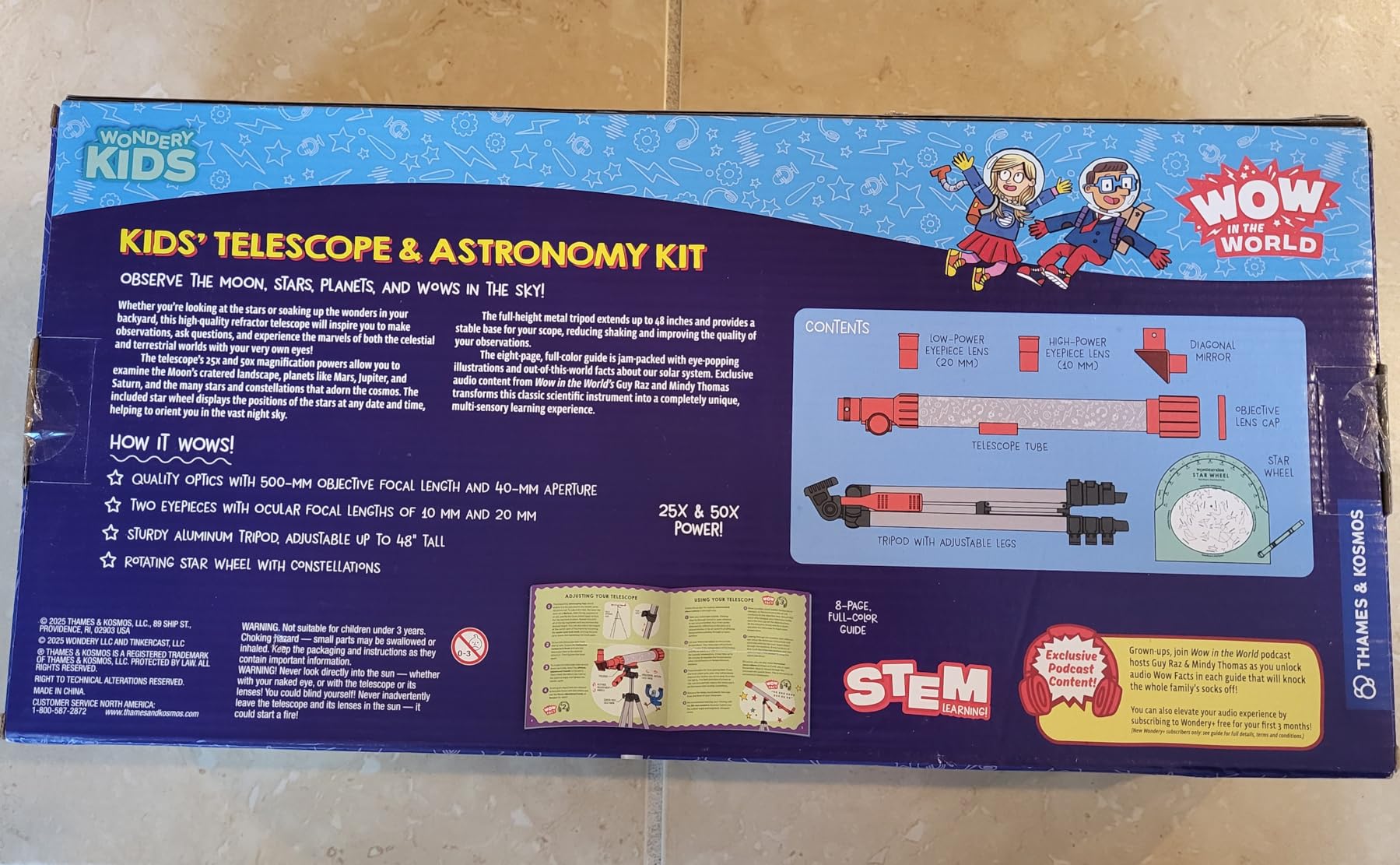
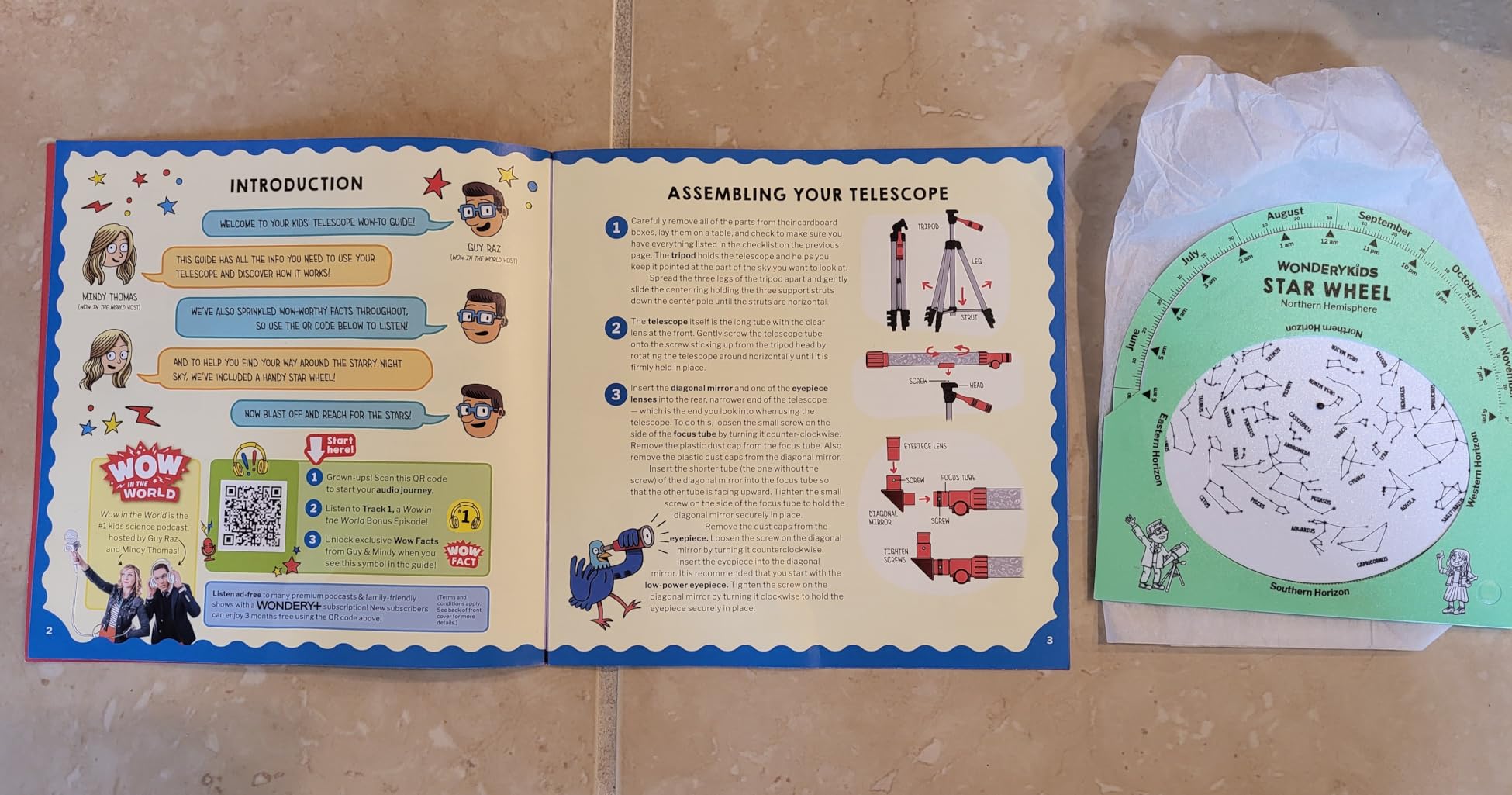
This is the only pick sold as a complete learning kit rather than as a telescope, and that is the point. It comes with a 48 inch adjustable aluminum tripod, 25x and 50x eyepieces, a focus knob and altitude handle, a star wheel for Northern Hemisphere constellations, an eight-page illustrated guide and audio content from the Wow in the World podcast.
For a child aged six who cannot yet aim a telescope but can engage with a story about why the Moon changes shape, the educational layer carries this one. The star wheel gives a beginner a concrete list of things to look for instead of scanning an apparently empty sky.
Be clear-eyed about the optics. At 25x and 50x with a small objective the image is soft, and reviewers commonly report blurriness that persists at full focus. This is not a scope for resolving craters in detail.
The tripod being 48 inches tall is the practical win, since most compact kids scopes force an adult to crouch. Here the child can reach the focus knob, and that independence is worth something.
Who this scope suits
A child aged six to eight whose interest is in space as a subject rather than in optics. It also works as a shared birthday gift where an adult runs the session, since the tall tripod suits an adult bending over a small child. Our beginner telescope guide covers the full picture.
Where it falls short
The 50x ceiling is the limit, soft focus is the most common complaint, and owners who wanted a sharper image generally recommend spending more on a 70mm refractor. All-plastic construction also feels cheap, so expect this to be outgrown rather than kept.
10. MaxUSee Lunar Telescope: Best Set with Binoculars Included
MaxUSee Lunar Telescope for Kids and Astronomy Beginners, Refractor Telescope with Finder Scope and 3 Eyepieces, Travel Telescope with Compact HD Binoculars for Moon Viewing Bird Watching Sightseeing
50mm aperture
18x-135x range
Bundled 8x21 binoculars
Three eyepieces
Moon and star map
Pros
- Bundled 8x21 binoculars add daytime bird watching
- Three eyepieces plus an erecting eyepiece give a wide range
- Each lens has its own storage container
- Moon and star map included
- Two year manufacturer warranty
Cons
- Shakes noticeably and is hard to hold in focus
- Feels delicate and cheaply made
- Hard to locate anything other than the Moon
- Tripod is short which strains shorter users
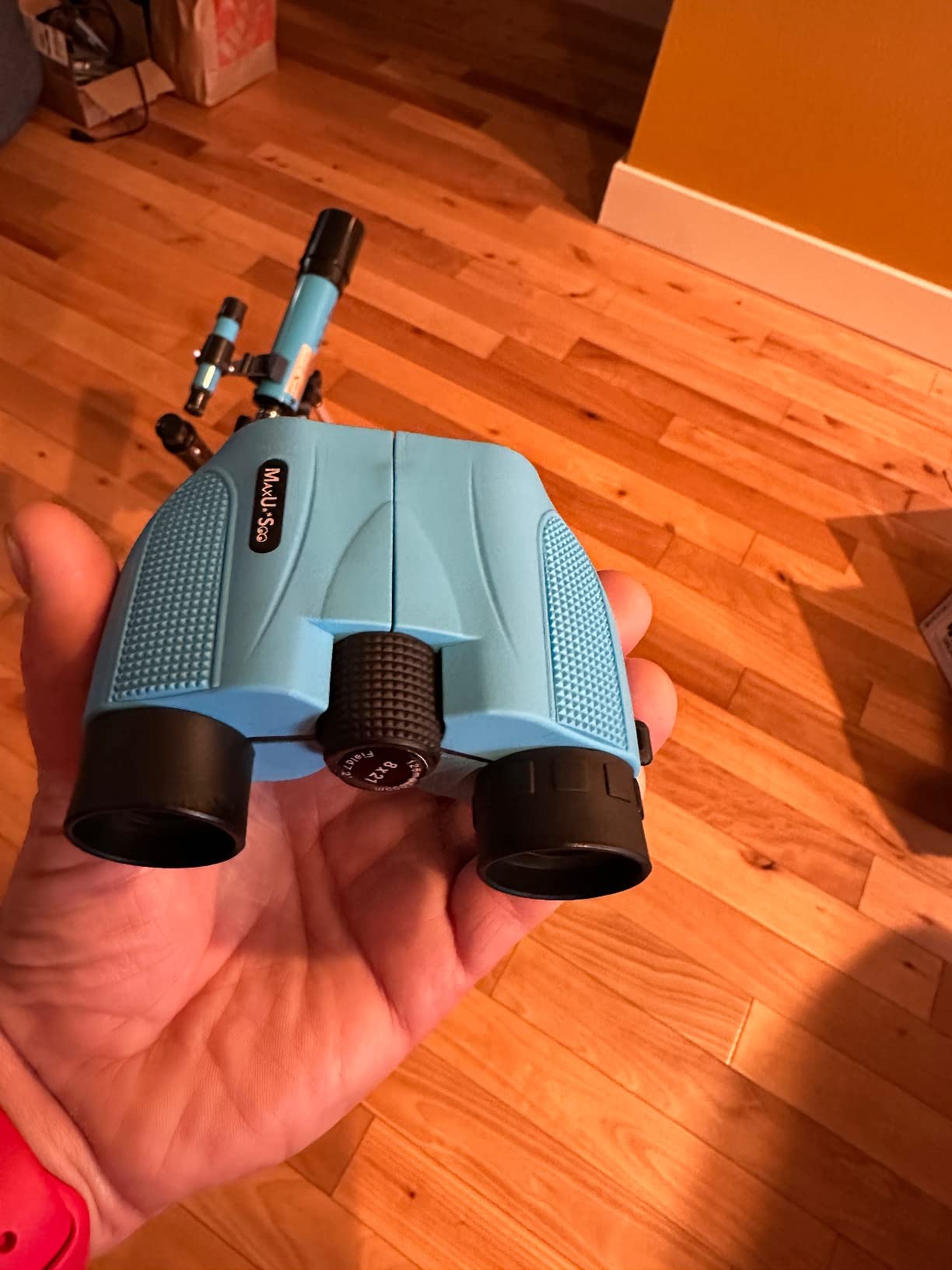
What makes this one unusual is the bundled pair of 8×21 fully multi-coated Bak4 binoculars. For a family with a younger child, that is arguably the more valuable half, because binoculars work in daylight, need no setup, cannot be ruined by a wobbling tripod, and let a four or five year old look at the same Moon.
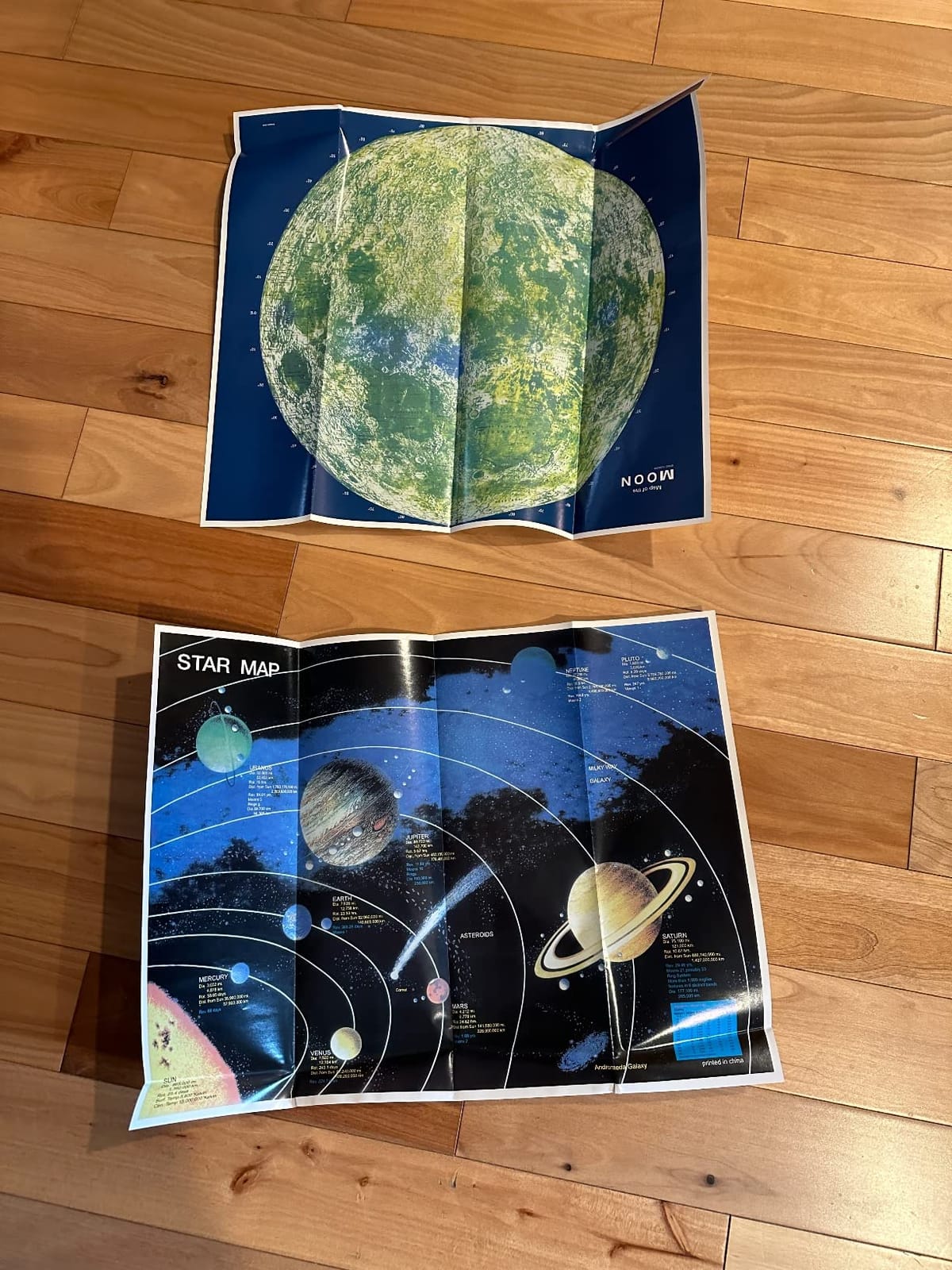
The telescope side is a 50mm aperture refractor with roughly 500mm focal length, three interchangeable eyepieces at 20mm, 12.5mm and 4mm plus a 1.5x erecting eyepiece covering 18x to 135x, a 5×24 finder scope, a moon mirror, a moon and star map and a two year warranty.
The moon mirror corrects the orientation, so what a child sees in the eyepiece looks like the Moon they drew in their notebook. Small detail, real effect on how long a session lasts.
The honest limitation is vibration. Reviewers describe noticeable shaking that makes holding focus difficult, and a scope that feels delicate. Treat it as a Moon-and-Venus instrument rather than a planet-viewing one.
Who this scope suits
A family with children spread across two age bands, where the younger child needs something they can use independently. The binoculars solve the age problem that no telescope on this list does, and they keep the gift useful long after the telescope is outgrown.
Where it falls short
Shake is the recurring theme, and combined with a short tripod it strains shorter users. Holding a planet steady with this scope is not realistic, so the Moon is the target that works. It also reads as delicate, so store it on a shelf.
Buying Guide: How to Choose a Telescope Your Child Will Use
Start With Aperture, Not the Magnification Number
Aperture is the diameter of the lens or mirror that collects light, in millimetres, and it is the most important number on any spec sheet. Focal length is how far light travels inside the tube, in millimetres, and a longer focal length gives more magnification from the same eyepiece but a narrower field of view.
Magnification is how much bigger an object looks. It is the number sellers shout about, the number parents buy on, and the number that lies most often. A useful working rule is that maximum useful magnification is about twice the aperture in millimetres: a 70mm scope has an honest ceiling near 140x, a 50mm scope tops out around 100x. A 500x claim on a 50mm aperture is decorative.
This explains the most common complaint on forums and in reviews. A child cranks a toy scope to maximum power, gets a dim, distorted, shaking image and concludes the telescope is broken. It is not broken, it is being pushed past what the glass can support.
Refractor, Reflector or Compound: Which Type Suits a Child
A refractor uses a lens, needs no maintenance, holds collimation forever and is sealed against dust. That is why nine of the ten scopes here are refractors, and it is the right default. The cost is chromatic aberration, a coloured fringe around high contrast objects, visible on cheap 70mm scopes and largely gone above 80mm.
A reflector uses mirrors and gives more aperture for less money. The trade-off is collimation, the periodic realignment of the mirrors, which is the one maintenance task a parent may face. A compound uses a mirror plus a corrector lens for long focal length in a short tube, with no collimation, but the price jumps well beyond this roundup.
When a child heads toward thirteen and beyond, plan toward a tabletop Dobsonian rather than buying a fourth small refractor. A stable base beats any specification on this list, and our beginner Dobsonian telescopes guide covers the step up.
Altazimuth or Equatorial: Keep the Mount Simple
An altazimuth mount moves the tube up and down and left and right. It is intuitive, has nothing to break and needs no polar alignment, which is why every scope on this list uses one. It is the correct choice for a child and for nearly every beginner.
An equatorial mount is aligned to the Earth’s axis so it can track an object with one adjustment. That is useful for long sessions and astrophotography, but the alignment procedure is fiddly and it is where a lot of family telescopes get abandoned. Our astrophotography beginners guide covers that stage when the child is older.
What to Buy by Age, From 5 to 13
Ages four to six: binoculars, honestly, not a telescope. They need no setup, survive rough handling, work in daylight and can be pointed in under a second. A child under six cannot aim or focus a telescope reliably, and a failed first attempt is how a hobby dies. Our binoculars guide for stargazing is worth reading first.
Ages six to eight: the Luzsco 50mm or the Wow in the World kit, both simple, screen-free and educational. Ages eight to twelve: the Gskyer 70mm is our top pick, the Koolpte for a better gift package, the ECOOPRO for daylight use. Seventy millimetres is where the Moon becomes genuinely interesting.
Ages twelve and up: move up to aperture. The EACONN or MEEZAA at 80mm is the next step, since Saturn’s rings and Jupiter’s moons become real targets. Beyond that, plan toward a tabletop Dobsonian rather than a fourth small refractor.
What Your Child Can Actually See From a Backyard
The Moon is by far the best first target and it rewards every aperture on this list with craters, mountains and maria in strong relief. Venus shows as a bright point that changes shape over weeks rather than a detailed world. Jupiter becomes a striped disc with four moons that shift position across an evening, and the Great Red Spot is visible through an 80mm scope on a steady night.
Saturn’s rings resolve as a ring around the planet with 80mm, though the gap between the rings needs more aperture than any scope here provides. Mars stays a small orange dot, which disappoints almost every parent who has seen photographs of it.
Deeper objects are the honest casualty: star clusters and the Orion Nebula appear as faint fuzzy patches, never as the coloured clouds in photographs. In a city or suburb, light pollution is the limiting factor, not the telescope, so find a darker site or make the Moon the primary target.
Accessories Worth Buying and the Ones to Ignore
A red flashlight is the most useful accessory and the cheapest. It preserves the dark adaptation that lets you see faint objects, and a phone screen will destroy your night vision completely. A moon filter is a worthwhile second purchase for contrast on the lunar surface.
Ignore the box-filler kits. Bundles of plastic adapters, unlabelled colour lenses and a smartphone eyepiece camera rarely fit correctly and add clutter to a setup a child already finds intimidating. A phone stargazing app is more useful than all of it.
Frequently Asked Questions
What is the best beginner telescope for a child?
The Gskyer 70mm refractor is the best beginner telescope for a child aged six to twelve. It has a 70mm aperture, a 400mm focal length, fully coated optics, two eyepieces with a 3x Barlow lens, a finder scope and a carry bag, and it holds a 4.3 rating across more than 22,000 reviews.
Is a cheap telescope any good?
Under roughly 30 dollars the optics and mount usually are not usable, and any magnification claim on the box should be ignored. Apply the 2x aperture rule instead: a 70mm aperture gives an honest ceiling near 140x and a 50mm aperture tops out around 100x. A claimed 500x is never real.
What kind of telescope is appropriate for a 7-year-old?
A simple tabletop scope or a lightweight 70mm refractor used with adult help. At seven a child cannot aim or focus reliably, so binoculars are a genuinely good option at this age, and a tabletop mount that stays put is more useful than a tall tripod the child cannot control.
What is the best telescope for viewing planets for kids?
The EACONN 80mm refractor is the strongest planetary option here. An 80mm aperture resolves Jupiter’s four moons, shows Saturn’s rings as a ring rather than a dot, and gives real detail on lunar craters. Jupiter needs roughly 40mm of aperture for its moons and Saturn’s rings need about 50mm.
What is the best budget-friendly telescope for kids?
Among the picks here the Luzsco 50mm is the lowest-cost option and it suits children aged six to eight who want a screen-free activity. Its 50mm aperture and fixed mount limit detail, so for real planetary viewing the next step up is a 70mm refractor rather than a cheaper scope.
Final Verdict: Which Kids Telescope to Buy
The best kids telescopes for stargazing share one characteristic: honest specs and a mount that does not shake. Our top pick, the Gskyer 70mm refractor, wins because 70mm of aperture at a sensible price with 22k reviews behind it is a combination nothing else here matches.
Buy the EACONN 80mm if planets are the goal, the Koolpte if you want one complete gift box, the MEEZAA if the family travels, and binoculars instead of any telescope if your child is under six. Start at low power, aim at the Moon, and never point it at the Sun. Updated for 2026.