
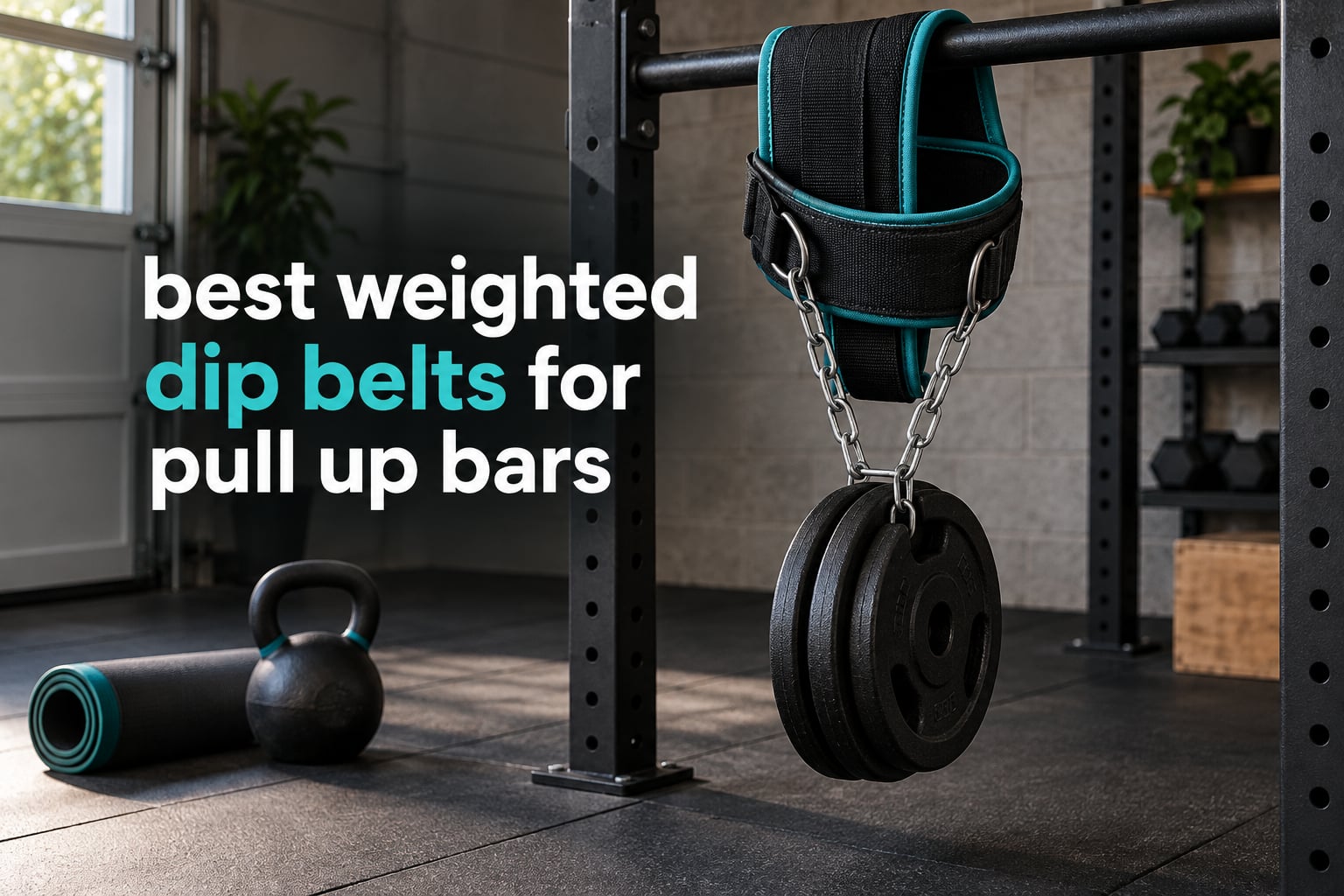
Most pull-up bars hit a ceiling fast. Twenty clean reps become twenty grindy reps, then the reps stop, and no amount of extra bodyweight movements gets you past it. A weighted dip belt is the cheapest way past that wall: it wraps your hips, hangs a plate below your centre of mass, and turns a bodyweight pull-up into a loaded one. Choosing among the best weighted dip belts for pull up bars is harder than it looks, though, because the differences that matter show up only at the bottom of a heavy rep.
Two failure modes decide almost every purchase. The first is hip pinching, when a narrow belt or one that rides up onto your stomach concentrates the whole load into a strip of bruised skin above the hip bones. The second is plate swing, when a loading system that is too long lets the weight drift forward and crack into your knees or shins on the way up. Get either one wrong and you will quietly stop adding weight, which defeats the entire point.
So this roundup is built on published specifications rather than adjectives. Every belt below states a capacity figure its manufacturer or retailer actually publishes, and where a listing publishes nothing at all, we say so instead of guessing. We also looked hard at the two things competitors mostly skip: how much room the loading system leaves beneath a low home pull-up bar, and how each belt feels when the chain is loaded past 100 lb.
If your bar is mounted in a doorway rather than a garage, start with our guide to the best pull-up bars for doorways, because clearance and mounting height change which dip belt you should buy. Updated for 2026, this roundup covers eight belts across neoprene, nylon and leather builds, with chain, strap and carabiner loading systems.
Top 3 Picks for Weighted Dip Belts in 2026

DMoose Fitness Dip Belt
- 350 lb published capacity
- 36 inch steel chain
- Neoprene back padding
What a Dip Belt Does on a Pull-Up Bar
Yes, a dip belt is the standard tool for weighted pull-ups, and it works the same way it does for weighted dips. The belt fastens around your hips just above the hip bones, the load hangs from a chain, strap or rope below you, and gravity adds resistance to every rep without you holding anything between your legs.
In practice, four things decide whether it works for you:
Position. Sit the belt on the hip bones, not the stomach and not the upper thigh. Too high and the load pulls you into a hollow back; too low and it pinches.
Load it. Thread plates onto the chain or clip them to the carabiners before you step up to the bar, especially if the chain is short.
Set length. Shorten the loading system until the plate clears the floor and your legs at the bottom of the rep.
Brace and add gradually. Squeeze the glutes, keep the ribs down, and add weight in small jumps rather than doubling it.
One note on terminology: the capacity number a brand prints is a working load, not a breaking test, and it only means something alongside the weakest component in the system. If a belt is rated 500 lb but its carabiners are rated far lower, the carabiners are your real limit.
Best Weighted Dip Belts for Pull Up Bars in 2026
The table below is the whole roundup at a glance. Every row carries the published capacity, the loading system with its length, and the padding material, because those three specs decide comfort and clearance before any other feature matters.
| Product | Specifications | Action |
|---|---|---|
| DMoose Fitness Dip Belt |
|
Check Latest Price |
 AQF Dip Belt AQF Dip Belt |
|
Check Latest Price |
 HAWK Sports Dip Belt HAWK Sports Dip Belt |
|
Check Latest Price |
 Dark Iron Fitness Leather Dip Belt Dark Iron Fitness Leather Dip Belt |
|
Check Latest Price |
 Gymreapers Dip Belt Gymreapers Dip Belt |
|
Check Latest Price |
 Iron Bull Advanced Dip Belt V2 Iron Bull Advanced Dip Belt V2 |
|
Check Latest Price |
 Seektop Dip Belt Seektop Dip Belt |
|
Check Latest Price |
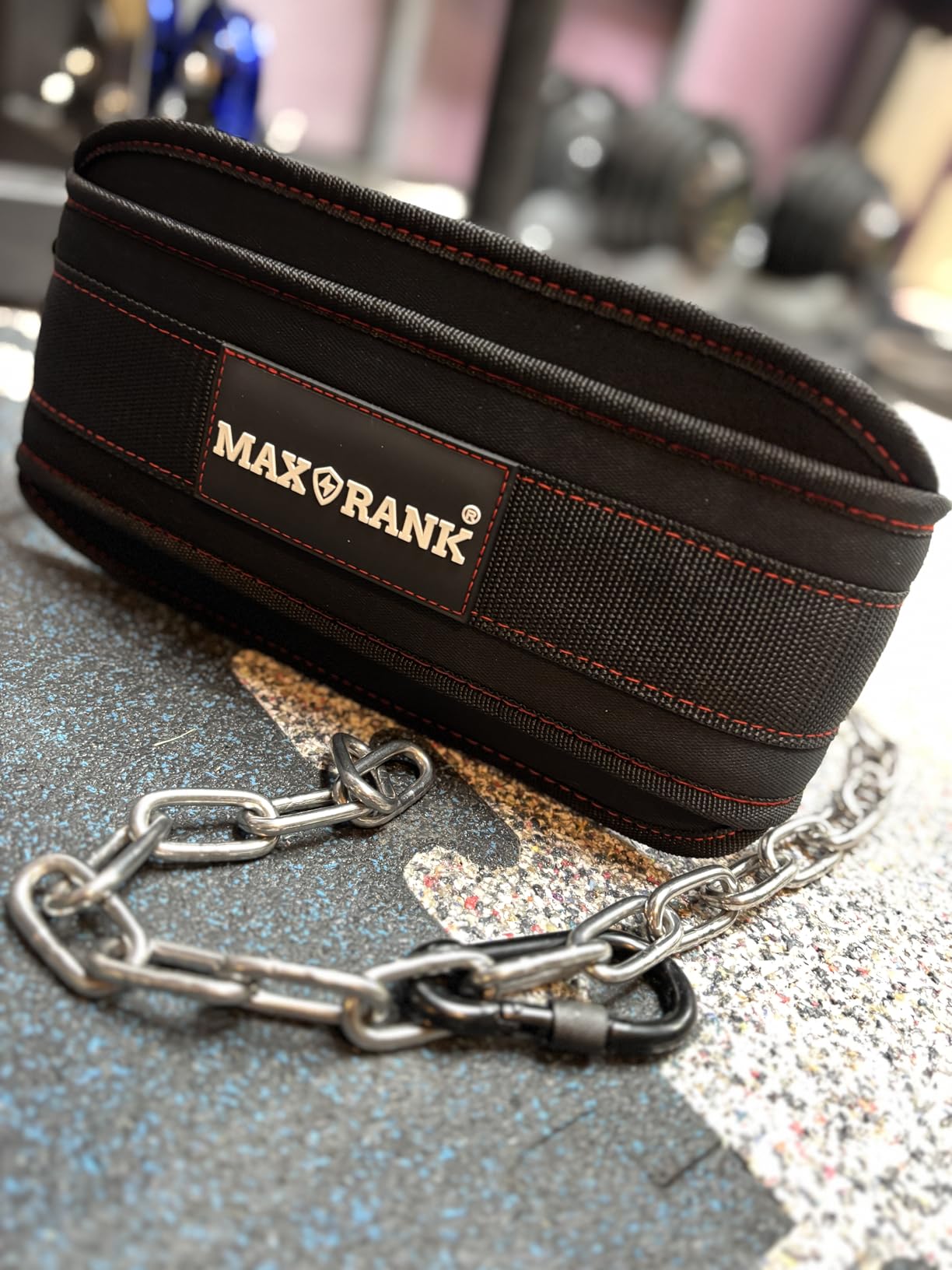
 MAXRANK Dip Belt MAXRANK Dip Belt |
|
Check Latest Price |
1. DMoose Fitness Dip Belt: The Most Proven All-Rounder
DMoose Fitness Dip Belt For Weightlifting – Weighted Pull Up and Squat Belt with Chain for Intense Workouts – Heavy Duty Stainless Steel Chain & Coated D-Ring – Weight Dipping Belt for Dips – Black
350 lb published capacity
36 inch steel chain
Thick neoprene back padding
Hook and loop closure
Pros
- Deep review history of real heavy loading
- Thick neoprene spreads load across hips
- Reinforced stitching and strong carabiners
- Works for weighted dips and pull-ups
Cons
- One-size belt leaves excess length on smaller waists
- Can ride down during very heavy weighted dips
- Carabiner gate is small for larger fingers
- Occasional reports of chain loop stitching tears
The DMoose Fitness Dip Belt publishes a 350 lb capacity and carries more owner reviews than any other belt in this roundup by a wide margin. That review volume matters: with 7513 ratings averaging 4.6 stars and roughly 80 percent at five stars, the padding and chain have been tested by thousands of people loading real plates, not by a handful of sponsored posts.
What makes it work on a pull-up bar specifically is the padding depth. The back panel is 100 percent neoprene and the listing states a 2 inch item thickness, which spreads the chain’s pull across a wider band of lower back and hip rather than concentrating it in a narrow line. Users consistently credit it with reducing lower back and hip strain during extended sessions rather than just surviving a few sets.
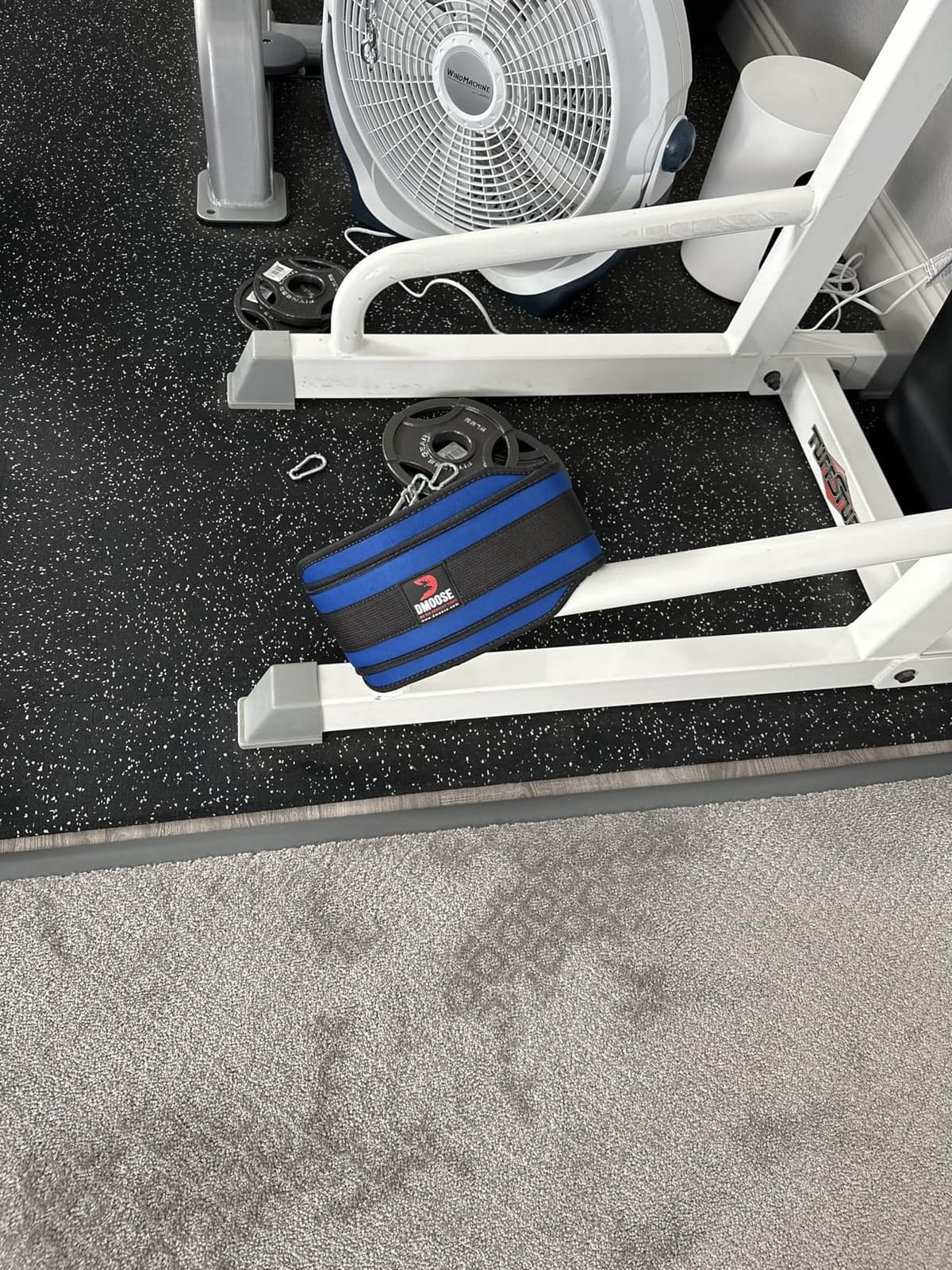
The construction is straightforward: a 36 inch heavy-duty steel chain, a neoprene body with reinforced stitching, and a hook and loop closure. The chain is described as able to fit multiple plates, which is the part that matters for progressive overload, because a short chain forces you to unload every time you change weight. The whole belt weighs 12.64 ounces, light enough that you forget it is there on the second set.
Two honest drawbacks. Reviewers on smaller frames report the belt can slide from the stomach down toward the hips during very heavy weighted dips, which is a positioning problem you manage with a tighter closure rather than a different belt. Others mention that the carabiner gate is small and fiddly with larger fingers, and a few have reported a chain loop stitching tear after long-term use, so inspect that loop before every session.
Will the Belt Fit Your Waist?
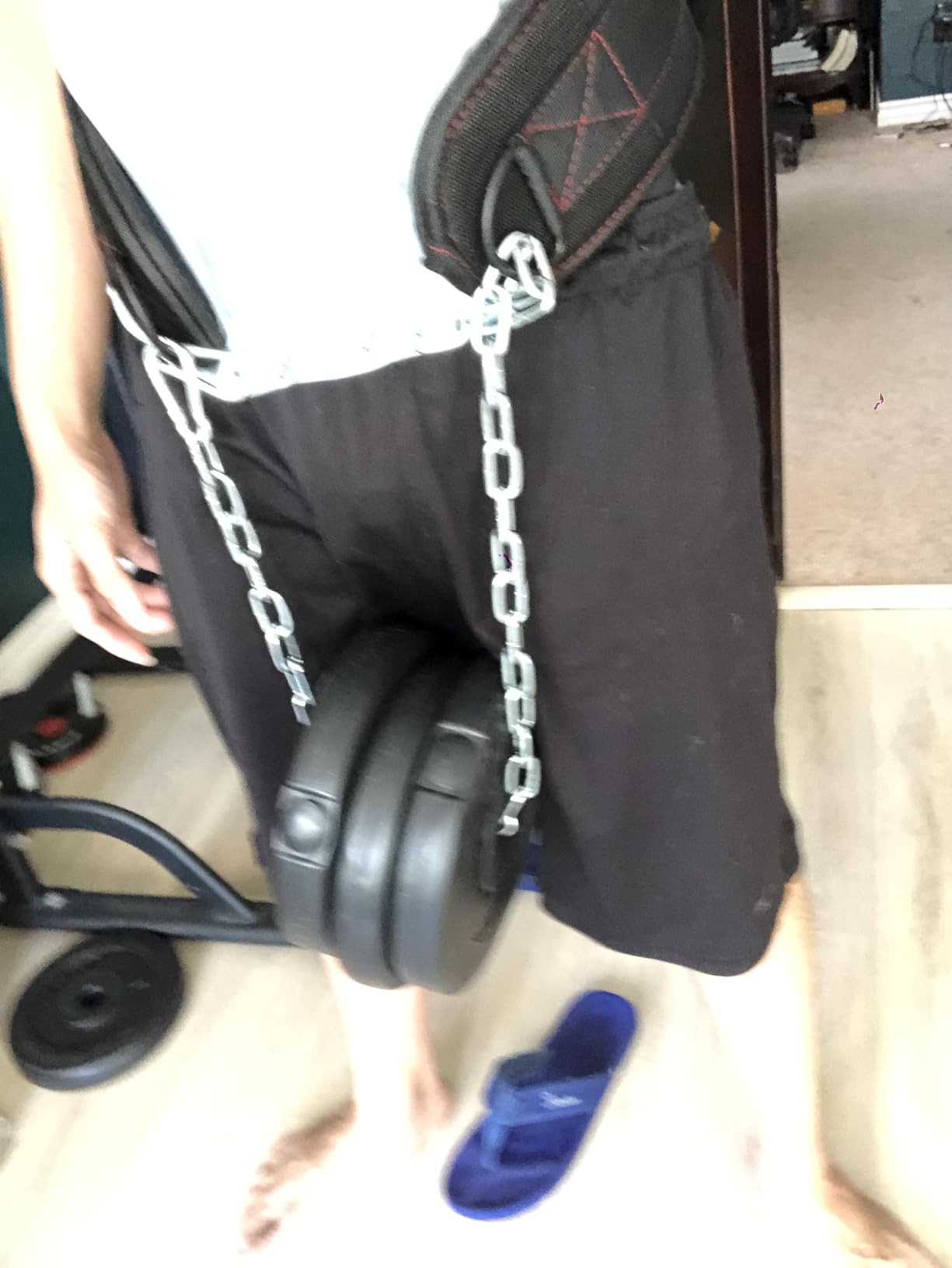
The listing gives a 90 cm waist size and a universal size label, which works out to roughly a 35 inch reference measurement. If you measure well under that, the excess length has to go somewhere, and hook and loop closure handles that better than a fixed buckle, but the belt will still feel loose at the front. Measure your true waist rather than your trouser size, and if you are in the low 30s range, the Seektop or MAXRANK options with published 22 to 46.3 inch ranges are a better fit.
Can You Hang Plates Clear of the Floor?
With a 36 inch chain, you have enough length for a stack of plates on a standard-height bar, and reviewers report the chain takes multiple plates without complaint. On a low-mounted doorway bar, shorten it. The important test is simple: load the plate, hang from the bar, and check that at the top of a full lockout the plate is not resting on the ground or resting against your shins.
2. AQF Dip Belt: Budget Pick With Locking Carabiners
AQF Dip Belt with 36″ Steel Chain – Neoprene Padded Back Support Belt
No published capacity
36 inch 5-gauge steel chain
Two straight-gate locking carabiners
Neoprene contoured back
Pros
- 4.7 star average across 3398 reviews
- Locking carabiners hold plates securely
- Soft neoprene less stiff than leather
- Works for pull-ups and belt squats
Cons
- No published load rating from the manufacturer
- Chain is longer than necessary and hangs low
- Sides feel stiff for some exercises
The AQF Dip Belt averages 4.7 stars across 3398 reviews, one of the highest ratings in the roundup, and it comes with the hardware most budget belts quietly omit: two straight-gate locking carabiners. A locking gate is the single cheapest upgrade you can make to a dip belt, because a snap gate can drift open under repeated plate changes and you will not notice until the set is over.
The loading system is a 36 inch, 5-gauge steel chain. The belt body is a contoured, neoprene-backed design built from heavy-duty polypropylene with reinforced stitching, and the listing describes an ergonomic shape meant to stay put rather than slip. In practice reviewers describe it as snug, with back padding that does not dig into the lower spine, and the soft neoprene is less stiff than leather through a long session.
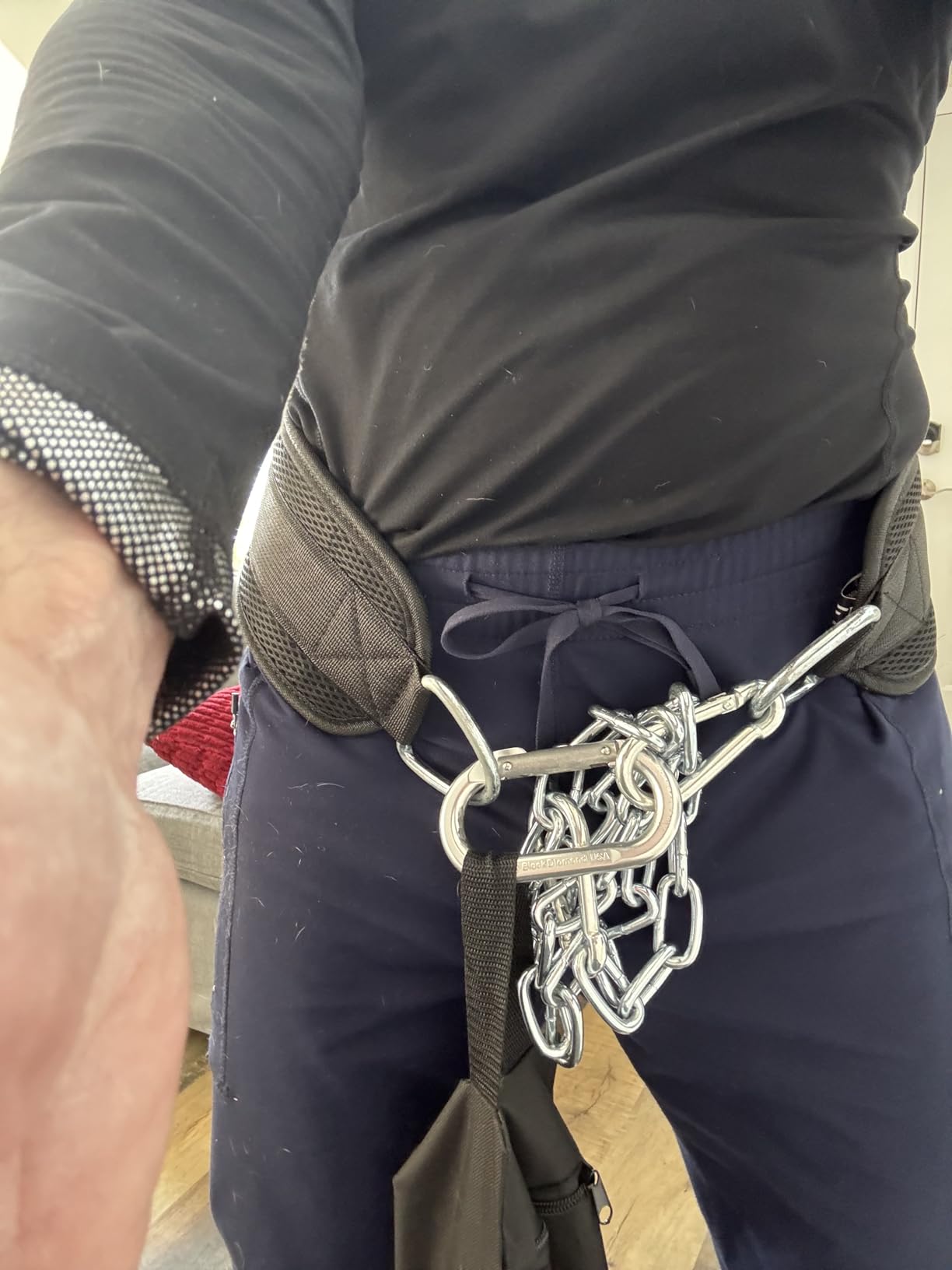
The honest limitation here is published data, not build quality. Unlike most belts in this roundup, the AQF listing does not publish a maximum load rating, so we cannot tell you what working load the manufacturer claims. That is not a disqualifier at moderate loads, and thousands of owners use it for weighted pull-ups, dips and belt squats, but if you are heading past 200 lb you are trusting hardware nobody has quantified.
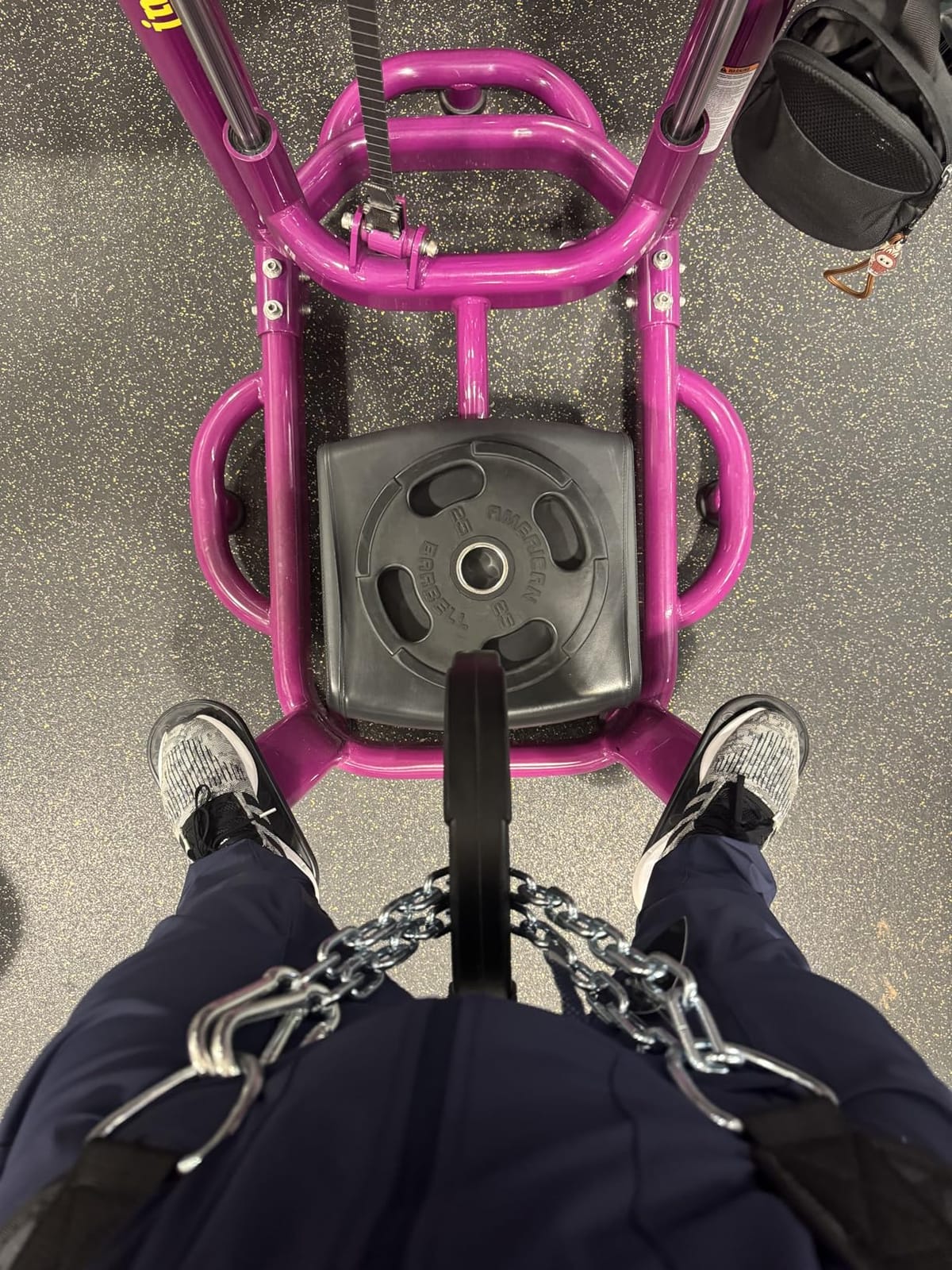
At 800 g, this is a heavier belt than several rivals, and reviewers note the chain hangs a little lower than strictly necessary. That is a benefit on a tall bar and a liability in a low-clearance space, so measure your hang point before committing. Colour options are wide, including camo, which tells you the brand invests in the trim as well as the hardware.
Does AQF Publish a Load Rating?
No. The technical details list the chain gauge, the carabiner type, the belt weight and the dimensions, but no maximum load figure. Our editorial rule for this roundup is to flag that rather than estimate, because a marketplace listing with no stated rating gives you no way to know whether the belt, the chain or the carabiners is the limiting component.
How Does It Behave at Heavy Dips?
Reviewers report strong construction and secure chain and carabiner performance, with the recurring minor complaint being chain length and some side stiffness on movements that compress the belt. For weighted dips specifically, that is a fair trade: the contoured back holds the load in place and the locking carabiners keep the plate from escaping mid-set.
3. HAWK Sports Dip Belt: One of the Widest Back Panels Here
Hawk Sports Dip Belt with Chain for Bodyweight Exercises, Black 6″ Padded Weightlifting Belt with 36″ Steel Chain and D-Ring Carabiners, Lift 300 lbs. of Dumbbells, Kettlebells, or Weight Plates
300 lb published capacity
6 inch contoured back panel
36 inch steel chain
D-ring carabiners
Pros
- One of the widest back panels here at 6 inches
- Double-stitched 4 mm neoprene mesh
- Thick foam padding with rounded edges
- D-ring carabiners for fast plate changes
Cons
- Nylon and foam build gives less support than leather at extreme loads
- Chain attachment is a fixed closure with no buckle adjustment
- Heaviest budget build at 1.1 lb
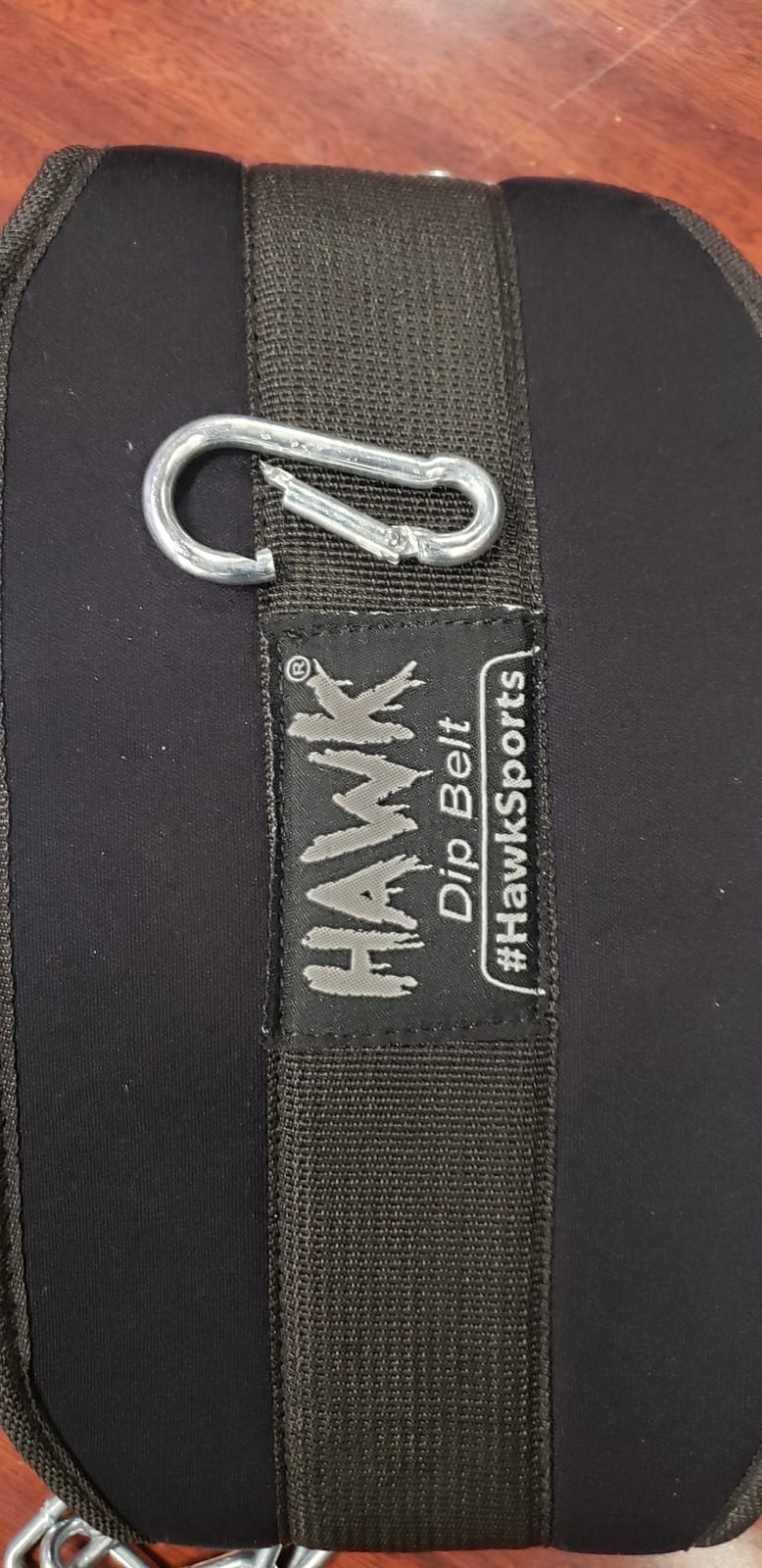
The HAWK Sports Dip Belt is the pick if your complaint about other belts is back support rather than load capacity. It publishes a 300 lb rating and carries a 6 inch wide contoured back panel, one of the widest documented in this roundup, built from 4 mm double-stitched neoprene mesh with thick foam padding and rounded edges that reduce chafing on the lower back.
That width is the point. A wide panel spreads the chain’s downward pull across more of the lumbar and hip region, which is why this belt tends to feel stable in weighted dips where narrower belts roll. Reviewers also like the D-ring carabiners, which allow quick weight changes without unclipping anything, and the 77 percent five-star share suggests the build holds up as advertised for typical use.
Where it trades away is material. The construction is nylon and foam rather than thick neoprene or leather, and that shows up under extreme loading, where reviewers note it gives less supportive feel than a premium leather belt. The chain attachment is also a fixed closure with no buckle adjustment, so fit depends entirely on where you position the belt rather than on how you tighten it.
For a beginner or intermediate adding 20 to 60 lb to pull-ups, that is entirely adequate. For a lifter heading toward maximal loads, a stiffer belt body becomes the limiting factor sooner. The belt weighs 1.1 lb, which is the heaviest of the budget options here, mostly due to the wide padding and mesh construction.
Why the 6 Inch Back Panel Matters
Load on a dip belt is a downward pull applied at a point on your body, and the wider the panel that spreads it, the lower the pressure at any single point of skin. Over a heavy pull-up set, that is the difference between mild pressure and a bruise you can feel for a week. It is also why a wide panel feels more stable: less of the belt rolls under load.
What Does the Fixed Chain Closure Cost You?
It removes fine adjustment. With a buckle or hook and loop belt you can tighten the body to your exact waist before loading, which reduces roll. Here, positioning is the only lever, so a few extra seconds spent centring the belt above the hip bones pays back on every set.
4. Dark Iron Fitness Leather Dip Belt: Best Leather Build
Dark Iron Fitness Dip Belt – Padded Leather Weight Lifting Belts w/ 40 Inch Strap for Squats & Pull Ups – Men & Women Weightlifting up to 270lbs
270 lb published capacity
100 percent genuine leather
40 inch strap
Quick release carabiners and D-rings
Pros
- Genuine leather resists heavy loading
- Pillow-like padding without bulk
- Quick release carabiners accept up to 6 Olympic plates
- Buckle closure adjusts across waist sizes
Cons
- Heaviest belt in the roundup at 1.2 lb
- 40 inch strap gives less clearance than a chain
- 270 lb rating is below several chain-based rivals
The Dark Iron Fitness Dip Belt is the traditionalist’s option: 100 percent genuine leather with reinforced stitching, a metal buckle closure that adjusts across waist sizes, and pillow-like padding designed to stay light rather than bulky. It publishes a 270 lb rating for the long 40 inch strap, with quick release carabiners and D-rings that accept up to six Olympic plates.
Leather is the reason this one holds up over years rather than seasons. In the r/bodyweightfitness recommendation thread that ranks at the top of the results for this query, community consensus repeatedly separates chain from strap and rope on exactly this point, with the line that nylon and rope wear through friction while a chain is close to indestructible. A leather body paired with a replaceable loading strap follows the same logic, and reviewers here favour it for durability and for staying comfortable under load.
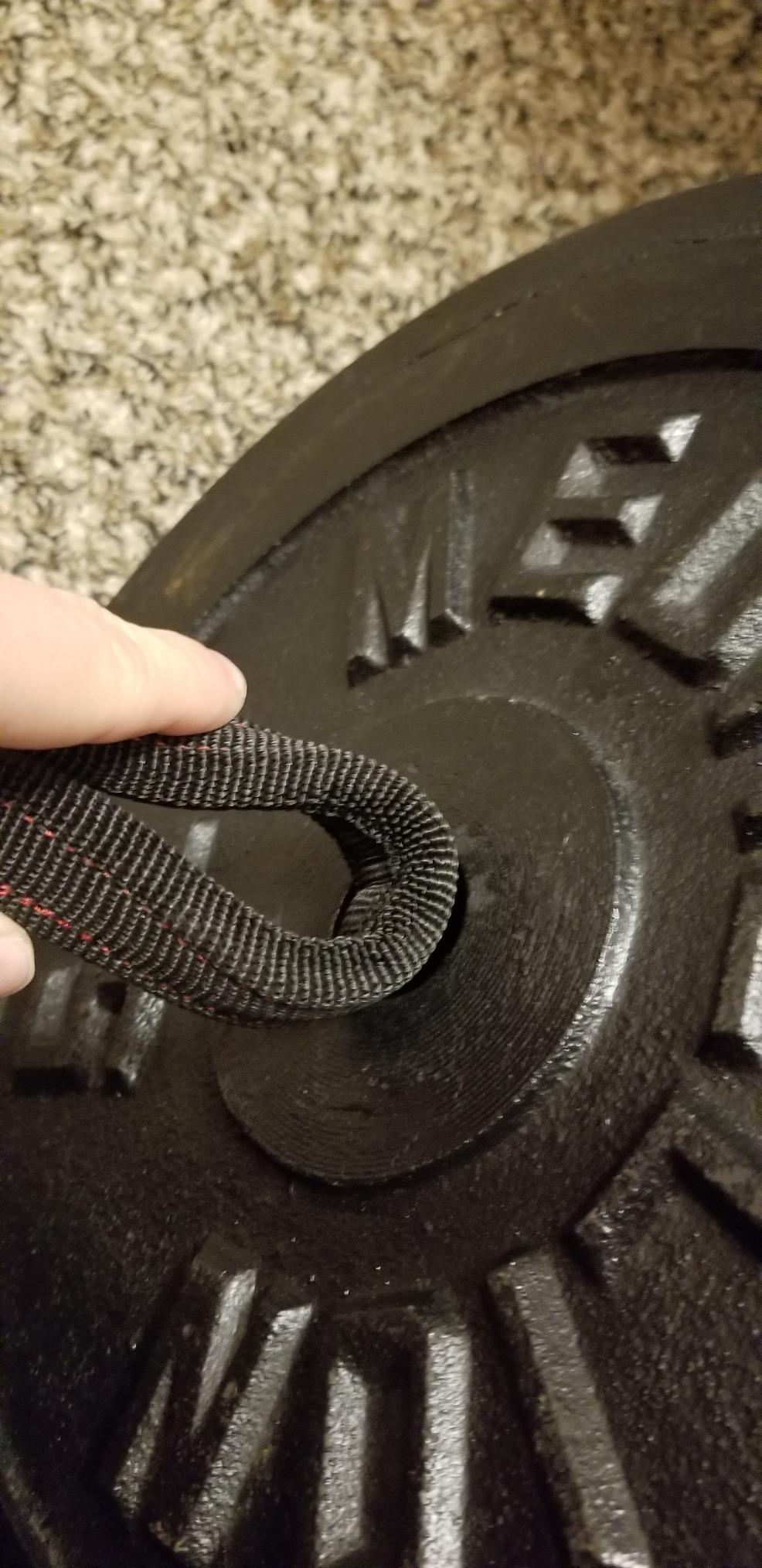
The trade-offs are real. At 1.2 lb it is a heavy belt, and it publishes a 270 lb rating that several nylon competitors beat on paper. The 40 inch strap is also shorter than the 36 to 38 inch chains carried by most rivals, which means less plate clearance underneath a low bar, and it is the wrong choice if you are stacking multiple bumper plates.
What you get in return is a buckle fit that actually adapts to you. If your waist is at an awkward point between sizes, or you have found that hook and loop belts loosen through a session, a metal buckle and adjustment strap is the more predictable system, and the padding is described as staying comfortable without the bulk of a foam panel.
Leather Break-In and Long-Term Wear
New leather is stiff, and the first few sessions are the ones where new belts get abandoned. Worn regularly, leather conforms to your hip shape and stops shifting, which is exactly the behaviour you want under load. Keep it away from standing moisture, wipe sweat off after a session, and store it flat, and it will outlast several nylon belts.
How Do Sizing and Strap Length Limit You?
The listing gives a 40 inch strap length and a medium size with a 40 inch reference waist, and the buckle plus adjustment strap is what lets it fit a range of bodies. The 40 inch strap is the constraint: it clears less vertical space than a 36 inch chain, so on a doorway bar measure your hang point and plate diameter together before loading.
5. Gymreapers Dip Belt: Best Chain Quality and Washable Design
Gymreapers Dip Belt With Chain For Weightlifting, Pull Ups, Dips – Heavy Duty Steel Chain For Added Weight Training (Black)
300 lb published capacity
38 inch steel chain
Contoured padded back support
Hook and loop closure
Pros
- High quality chain and oversized carabiners
- Chain fully detaches so the belt can be machine washed
- Contoured padding stays comfortable under load
- Handles heavy loading such as 200 lb dips
Cons
- 38 inch chain is on the short side
- Plate must be loaded before the belt goes on
- Belt can pinch upper leg skin at very heavy loads
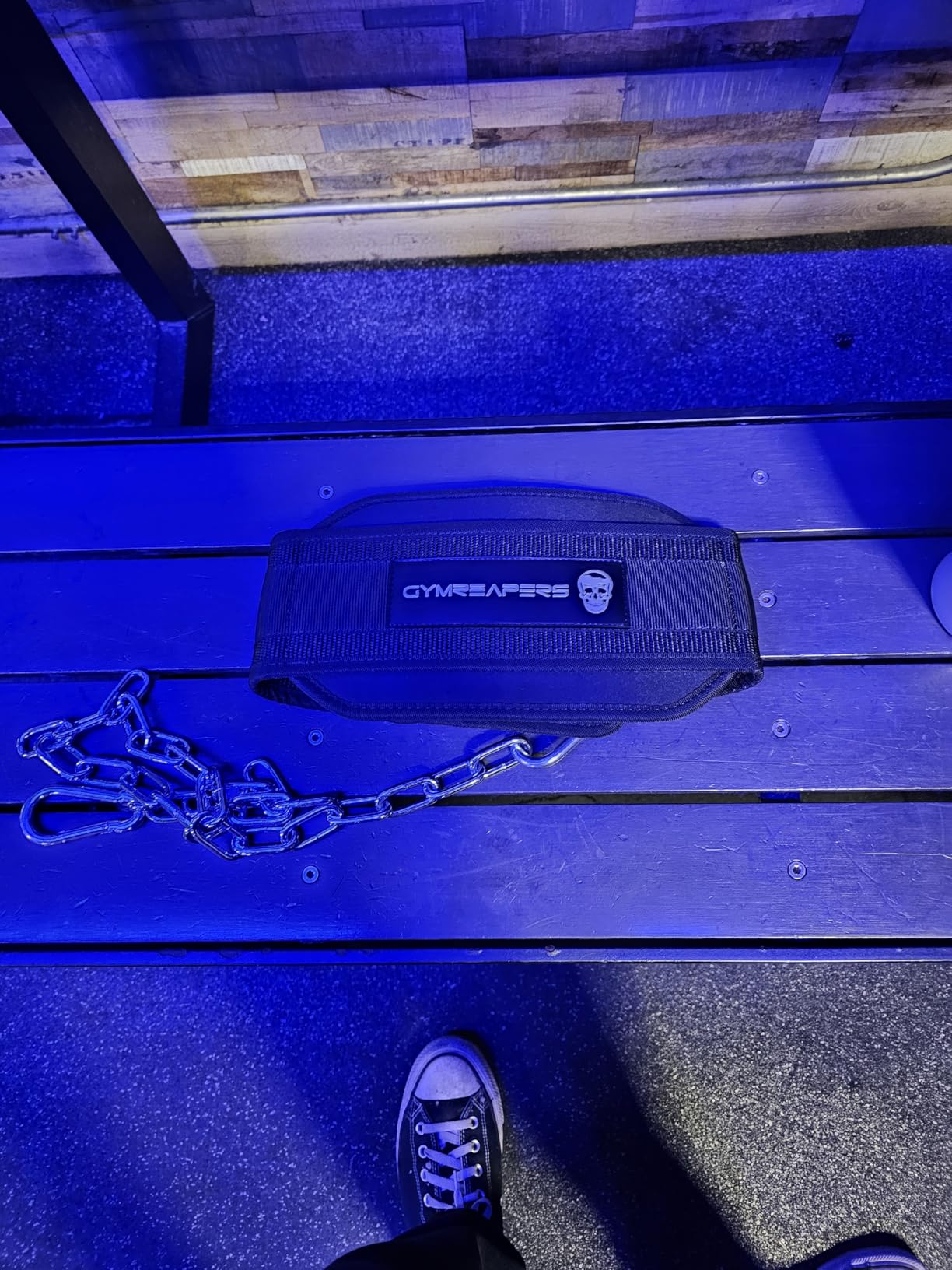
The Gymreapers Dip Belt publishes a 300 lb capacity, carries a 4.7 star average across 2266 reviews, and sits at the number four rank in Weight Lifting Belts on the category bestseller list, which tells you how much traffic it actually takes. The hardware is where the money went: reviewers single out the chain quality and the oversized carabiners that resist bending.
The design detail we like most is that the chain fully detaches, so the belt body can go in a washing machine. Sweat and neoprene odour are the reason many belts end up in a drawer, and a detachable loading system means you can wash the part that absorbs sweat without destroying the part that carries the load. The contoured padded back is described as reducing pressure on the lower back and hips under heavy loading.
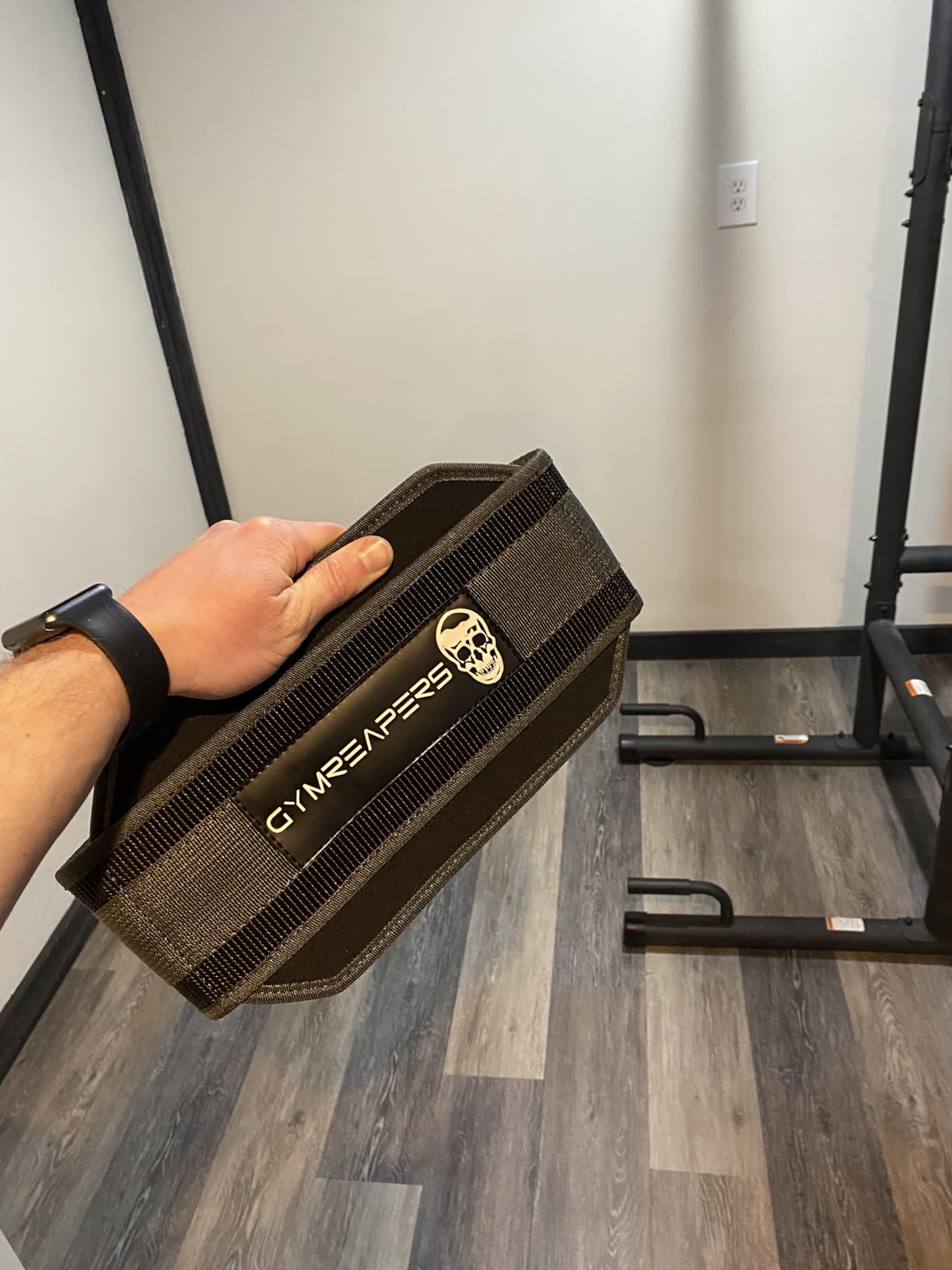
The catch is chain length. At 38 inch, this is one of the shorter loading systems here, and reviewers note the practical consequence directly: you have to load your plates before you put the belt on, not after. If you train near a rack of loose plates that is a minor inconvenience. If your system is fixed, it changes your whole setup order.
There is also a specific comfort note for pull-up work: under very heavy loading and fast transitions, the belt can pinch skin at the upper leg. Slower eccentrics and keeping the belt a centimetre higher on the hips reduce it. A handful of owners also report metallic paint flaking off the hardware over time, which is cosmetic rather than structural.
Short Chain Changes Your Setup Routine
A short chain is not a flaw, it is a workflow. With 38 inch you cannot thread a plate after the belt is on, so your sequence becomes: belt open, plates on, carabiners closed, belt fastened, then approach the bar. Do it that way every session and the length stops being a nuisance. It also gives you better floor clearance on a low bar, which is the trade most home lifters should take.
What About Washing and Hardware Wear?
The detachable chain is the reason this belt outlasts most of its rivals. Wash the neoprene body on a cool cycle, air dry it, and re-clip a clean chain every session. Inspect the carabiner gates and the paint on the rings a few times a year, and replace rather than repair any gate that feels gritty.
6. Iron Bull Advanced Dip Belt V2: Most Versatile With Three Anchor Points
Advanced Dip Belt V2 – Heavy-Duty Weighted Belt with Reinforced Back, Chain & Nylon Strap – 3-Point Anchor D-Rings for Dips, Pull-Ups, Squats & More (Large)
Reinforced back with three D-ring anchors
Includes steel chain and nylon strap
Industrial-grade nylon webbing
Lifetime warranty
Pros
- Three D-ring anchors suit dips and sled pulls
- Chain and nylon strap both included
- Five sizes from Small V2 to XX-Large V2
- Lifetime warranty
Cons
- No published load rating on the listing
- Sizing runs small and can pinch at the hips
- Nylon strap wears faster than the chain
- Hip padding thinner than some rivals
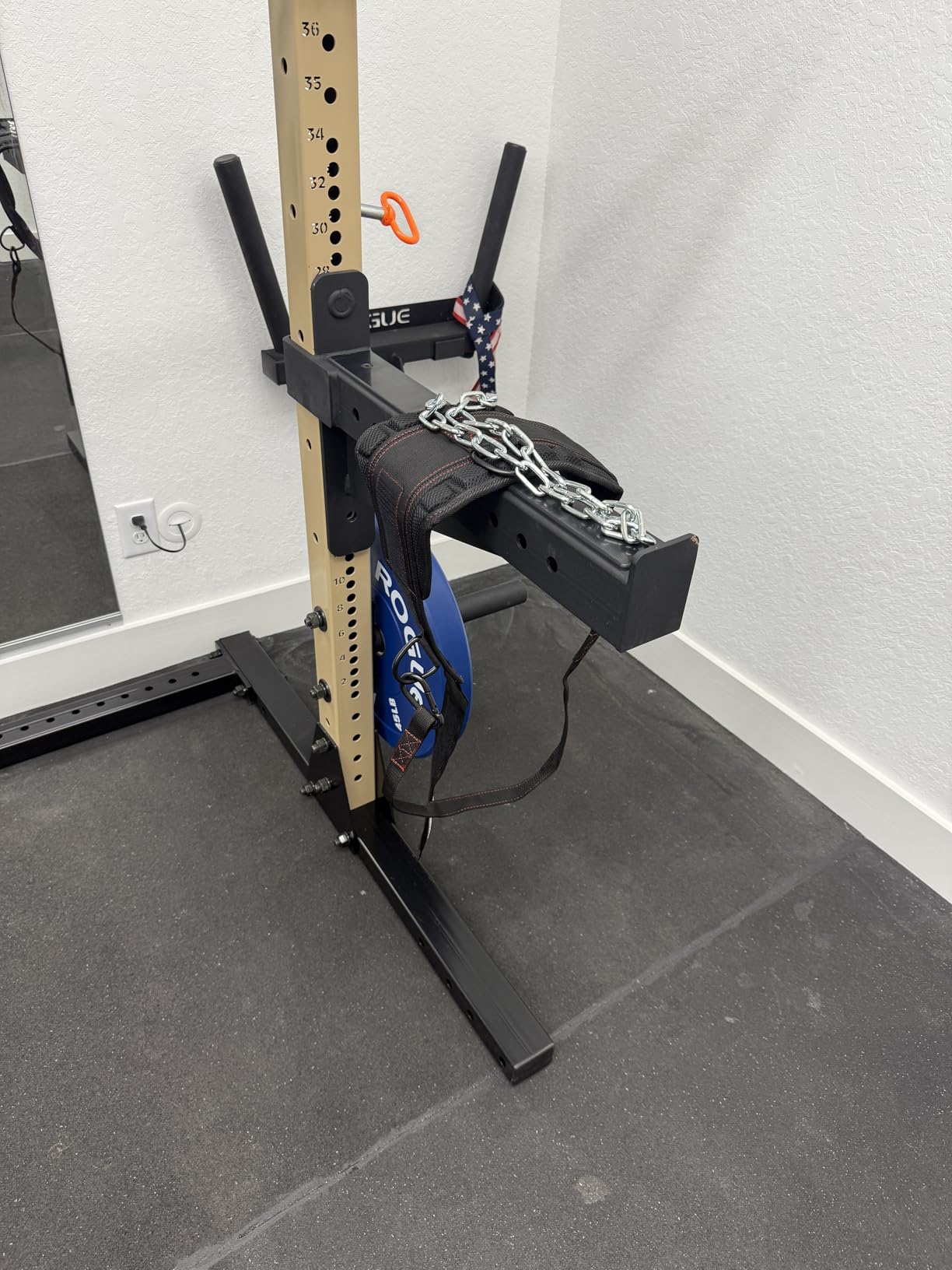
The Iron Bull Advanced Dip Belt V2 uses a three-point D-ring anchor layout on a reinforced back section, and no other belt here does, which changes what you can do with it. Three attachment points let you place the load centre, left or right, which reviewers use for dips, sled pulls, cable rows and belt squats rather than only vertical hanging.
It ships with both a heavy-duty steel chain and a high-strength nylon strap, so you can choose per session rather than per belt. The body is industrial-grade nylon webbing with reinforced thread and a buckle closure, and the listing is unusually honest about sizing: it tells you to measure your true waist rather than use your pants size, with a sizing chart in the listing images and five sizes from Small V2 to XX-Large V2.
Two things to weigh. The listing publishes no load rating, which by our editorial rule makes this an unverified figure rather than a weak one, and the included nylon strap is the component most likely to need replacing first, since friction eats webbing long before it touches steel. The 4.5 star average is the lowest in the roundup, with a 3 percent one-star share, and reviews point to sizing and strap lifespan rather than any failure of the belt body itself.
What you get in return is a lifetime warranty, the only warranty length stated by any belt in this list, and a belt that is not solely a pull-up accessory. If you already own a landmine or a sled, this one earns its place in a way a plain chain belt does not.
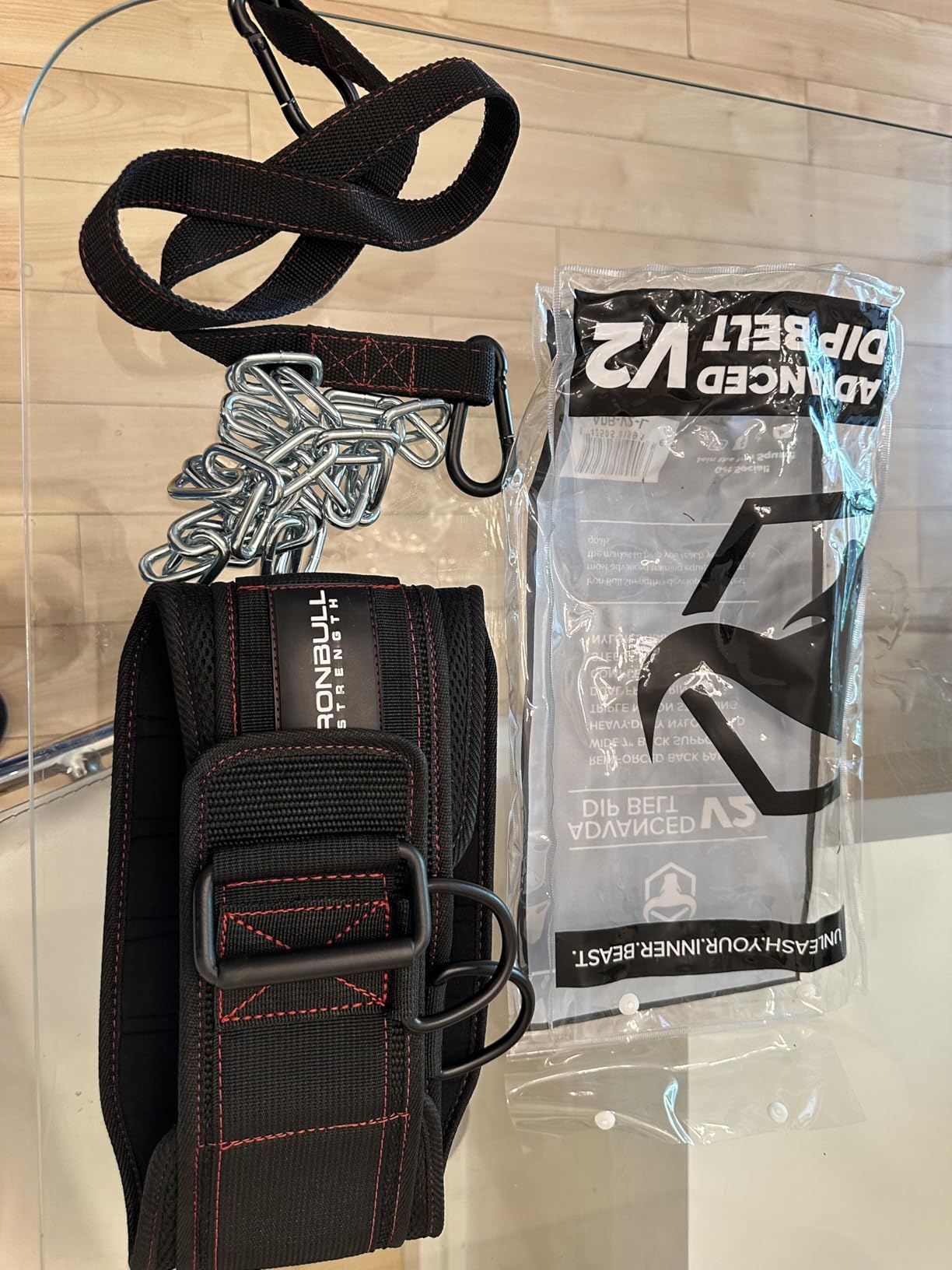
Choosing the Right Size
Because the sizing runs small, do not guess. Measure your true waist at the narrowest point above the hip bones, then order against the chart in the listing images. Reviews specifically flag hip pinching as the symptom of ordering too small, and that pinching is the exact failure mode that ends weighted pull-up programs early.
Chain Versus the Included Nylon Strap
Use the chain for anything heavy, and save the strap for moderate loads and exercises where you want less clatter. A recurring community line in bodyweight fitness circles is that nylon daisy chains and ropes wear out from friction and need replacing even when the belt body is fine, so plan for that as a consumable rather than a surprise expense.
7. Seektop Dip Belt: Best Fit for Small Frames
Seektop Dip Belt With Chain for Weightlifting, Dips, Pull Ups and Squats
350 lb maximum load capacity
8 mm cushioned neoprene back
38 inch by 5 mm steel chain
Fits 22 to 46.3 inch waists
Pros
- 8 mm cushioning spreads load with no pressure points
- Published 22 to 46.3 inch waist range suits small and large frames
- Polished chain surface reduces skin friction
- Double stitching in high-stress zones
Cons
- Edges around the hook fasteners can be sharp
- Neoprene retains sweat over long sessions
- Highest share of one-star reviews in the roundup
The Seektop Dip Belt is the sizing answer for anyone who has been squeezed by one-size-fits-most belts. It publishes a 22 to 46.3 inch waist range, one of the two widest documented ranges in this roundup and the reason women and smaller-framed lifters searching for a dip belt that fits should start here. It rates to 350 lb and pairs that with 8 mm cushioned neoprene and an ergonomic back design.
Comfort is the headline, and the specs back it up. Reviewers describe the wide 8 mm padding as distributing weight across the hips without pressure points, and the polished chain surface as avoiding scratches and skin abrasion, which is a real upgrade over a raw mill-finish chain grinding against your legs at the bottom of a kipping pull-up.
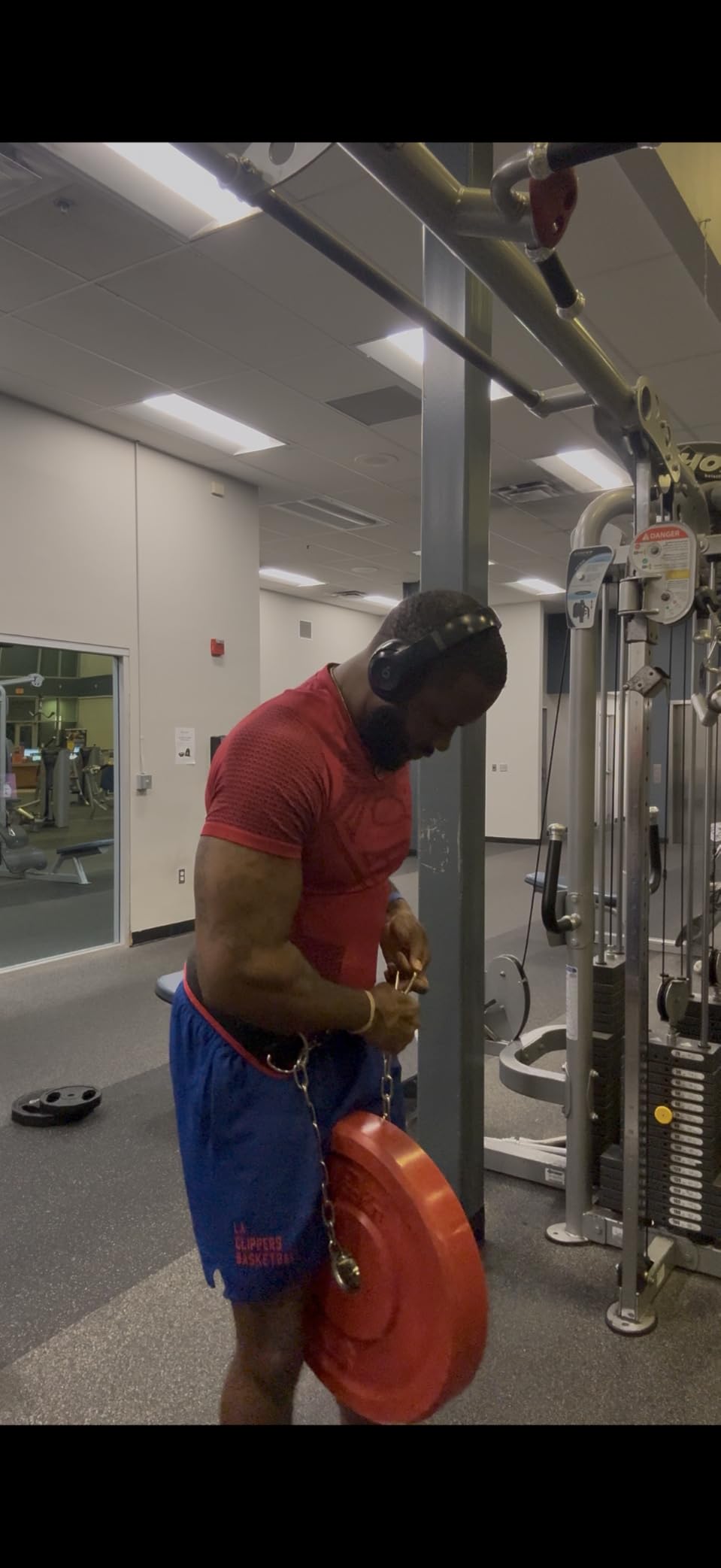
The 38 inch by 5 mm chain is long enough for a generous stack of plates, and two high-hardness locking carabiners keep the load secure. The double stitching in high-stress zones is the detail reviewers credit with durability under heavy squats, deadlifts and weighted pull-ups, and size adjustment is quick, which matters more than it sounds when you are changing weight every few minutes.
The two recurring complaints are honest ones. The edges around the hook fasteners can be sharp and have caused small cuts, so file or cover them before first use. And neoprene retains sweat over long sessions no matter what the listing claims, so wipe it down and let it air out between sessions.
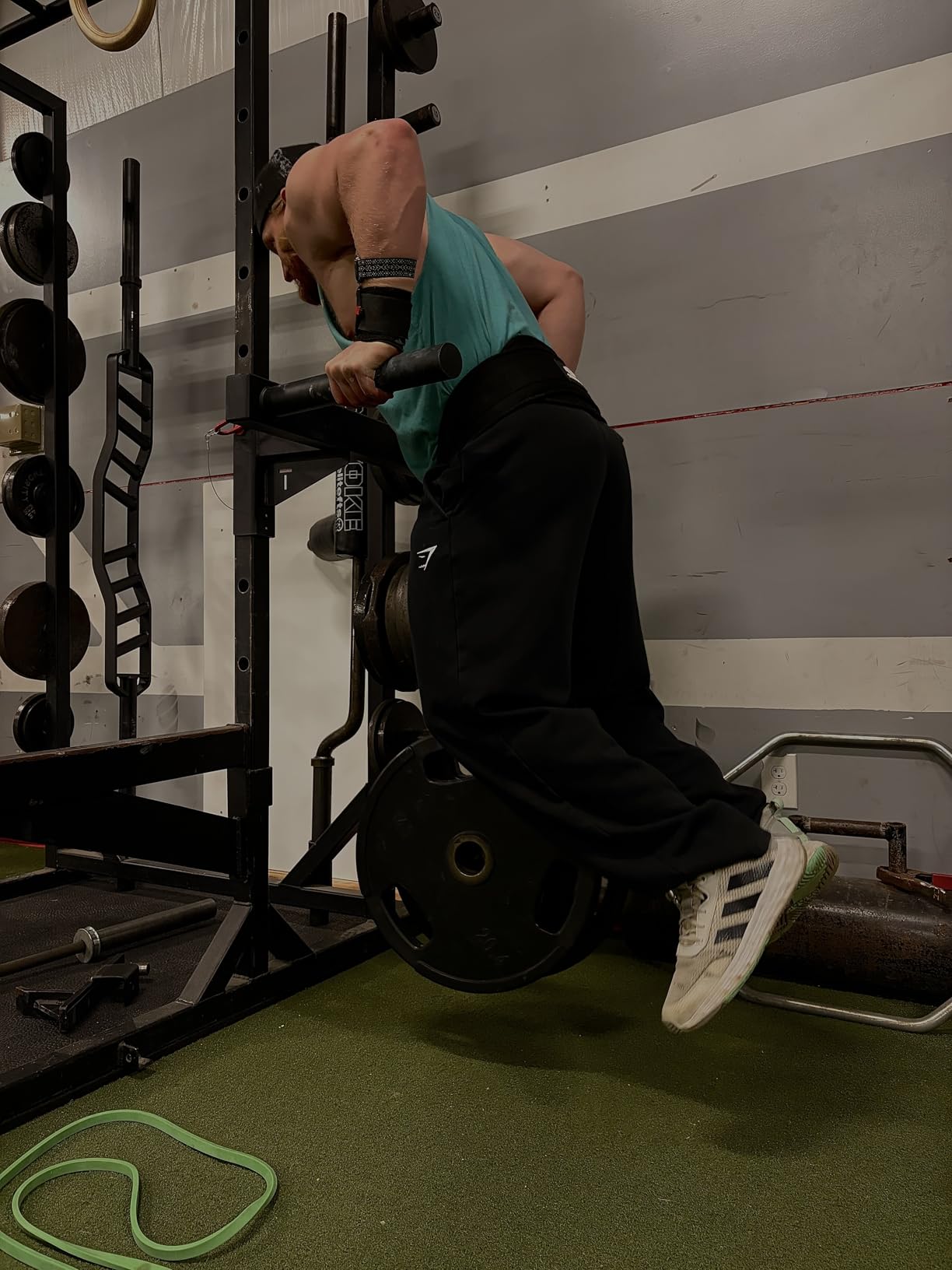
Waist Range and Small-Fit Lifters
A 22 inch lower bound is unusually low and it is the reason this belt fits frames that bounce off one-size belts. Measure first anyway, because a published range is not a guarantee, and check that the hook and loop closure has enough overlap to grip at the low end. If you are near the top of the range, the 7 inch listed width helps the belt stay put.
Edges, Odor and Care
Run a finger along the hook fasteners before your first session and soften any sharp edge. For odour, hang the belt up rather than leaving it in a bag, and wipe the neoprene after a hot session. The anti-odour claim on the listing slows things down; it does not stop it.
8. MAXRANK Dip Belt: Best Value With a Generous Stated Rating
MAXRANK Dip Belt With 37″ Chain for Weightlifting, 550LBS for Dips & Pullup
550 lbs stated capacity
37 inch 5 mm iron chain up to 42 inch
Fits 22 to 46.3 inch waists
Neoprene padded
Pros
- Highest stated capacity figure in the roundup
- Thick well-padded neoprene that does not pinch
- Locking carabiners and D-rings adjust easily
- Handles 100+ lb in practice according to owners
Cons
- Stated capacity looks optimistic for a nylon-wrapped chain
- Some owners want a longer chain
- Capacity copy varies between listings
The MAXRANK Dip Belt publishes a 550 lb capacity, the highest stated figure in this roundup, alongside a 37 inch chain of 5 mm iron that reaches 42 inch total with the carabiners, two high-hardness locking carabiners, and a 22 to 46.3 inch waist range. Owners rate the padding at 4.7 stars across 732 reviews, with the chain thickness singled out as better than most belts at this cost.
Comfort is the reason it scores well despite the modest price position. Reviewers report thick, well-padded neoprene that does not pinch under weight, a chain thicker than rivals in the same bracket, and easy adjustment via the locking carabiners and D-rings. Several owners describe handling more than 100 lb without issue in practice, which is a useful anchor when the printed number is hard to trust.
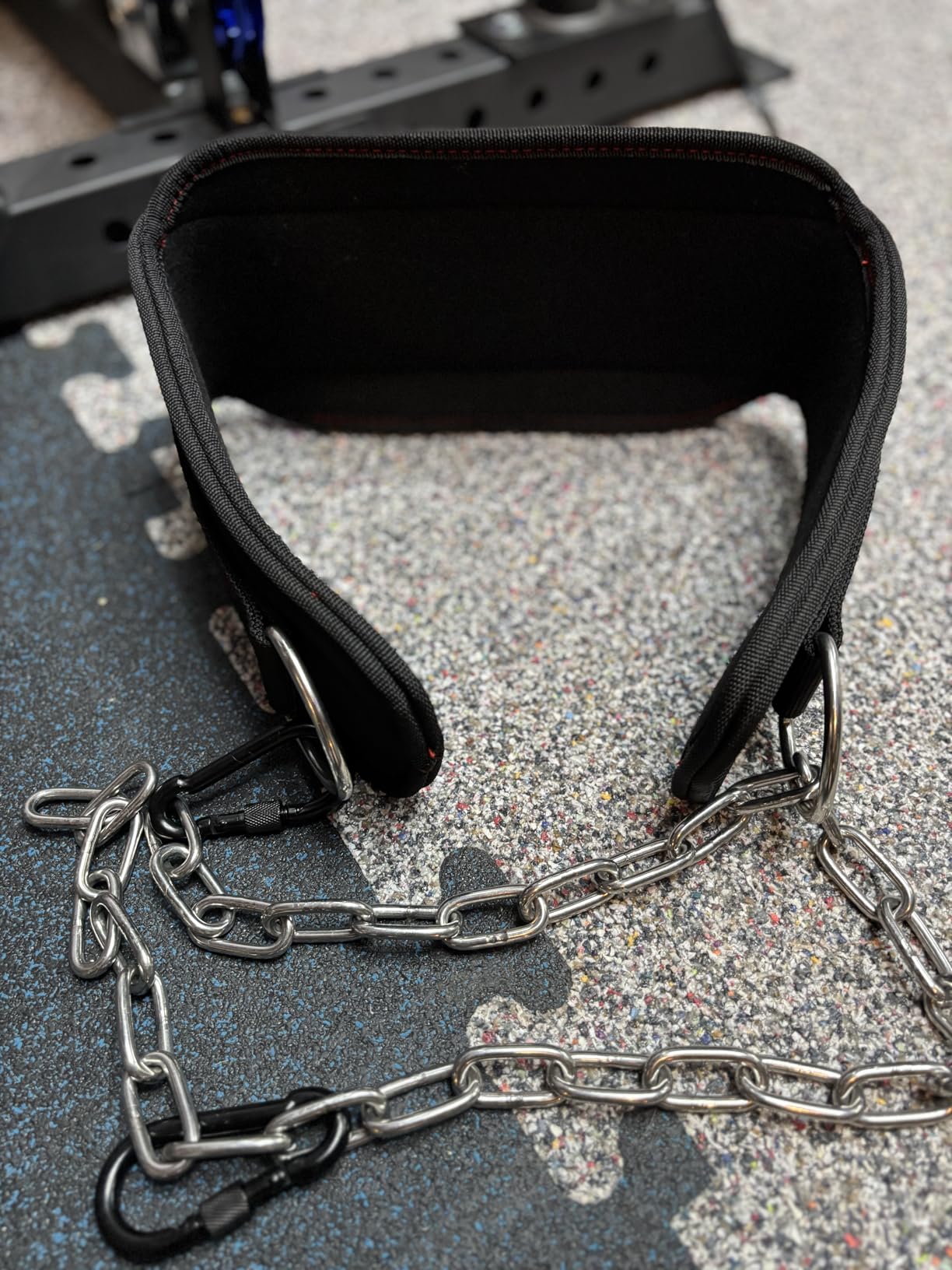
Now the honest part. The stated 550 lb rating looks optimistic for a nylon-wrapped chain, and the listing copy has varied, with some descriptions quoting a higher figure. A capacity number that changes between versions of the same listing is not a specification you should load 500 lb against. Treat the printed rating as a marketing ceiling, and use the lowest published limit anywhere in your system as your actual working limit.
The second drawback is minor but real: a few owners would prefer a longer chain, which matters if you plan to stack bumper plates. Everything else, the padding, the hardware, the waist range, is genuinely strong, which is why this is the value pick rather than the last resort.
Reading the 550 lb Claim Critically
Published capacity is only meaningful when it is consistent and when you can trace it to a component. When a listing quotes different numbers in different places, treat the figure as unverified. Judge on the chain gauge, the stitching and the carabiner rating, and load progressively until you find your own ceiling rather than adopting someone else’s marketing figure.
Chain Length and Plate Clearance
At 37 inch, or 42 inch with carabiners, this is a mid-length system: enough for a solid stack of standard plates on a normal bar, not enough for bumper plates without a shorter bar clearance check. Measure the drop from your hang point to the floor, add your plate diameter, and confirm you have room before the first heavy set.
Chain vs Strap vs Rope: Which Loading System for a Pull-Up Bar
This is the question community threads answer most often, and the short version is that a chain is the default for weighted pull-ups. Steel does not stretch, does not fray, and does not quietly weaken under friction, and a chain shortens by simply pulling links through a carabiner, which is far more repeatable than re-tying a rope.
Chain. The most durable option and the easiest to adjust, because links remove themselves. The costs are noise, weight and clothing wear. A steel chain on a pull-up bar is loud in a shared space, and over months it will chew a hole in thin trousers where it crosses your thigh on a kipping rep.
Nylon strap or daisy chain. Quieter, lighter and far kinder to clothing, and they absorb shock rather than transmitting it as a jolt to your hips. The trade is lifespan: the recurring line in r/homegym and r/bodyweightfitness discussion is that fabric loading straps wear through from friction and need replacing while the belt body is still fine. If you choose one, treat it as a consumable and know how you will replace it.
Rope. The traditional streetlifting choice, easy to shorten permanently by cutting and re-tying, and easy to mark at intervals for repeatable length. It is the quietest of the three and the least pleasant against bare skin, because it abrades rather than pinches.
For most home lifters on a shared wall, the practical compromise is a chain belt for heavy work and a strap for lighter days, or a chain with a leg sleeve. If sound carries through to the rooms either side of your training space, our guide to sound bars for home bars covers the same noise problem for a different piece of kit.
How to Pick a Dip Belt for a Low-Clearance Home Pull-Up Bar
Most home bars hang lower than commercial rigs, and almost no roundup addresses what that means for a dip belt. The chain or strap has to be long enough to clear the plates and short enough that the plate does not hit the floor or your shins at the top of the rep. Longer is not better here.
Measure before you buy. Note the height from your hang point to the floor, add your plate diameter plus about 5 cm of working room, and whatever length is left is your maximum loading length. If that number is under 30 inch, a 36 to 38 inch chain needs shortening, and that is a five-minute job with a carabiner or two.
Where clearance is genuinely tight, prefer a shorter system over a longer one. The Gymreapers 38 inch chain and the Dark Iron 40 inch strap are the best fits for high mounting, while the DMoose 36 inch chain gives you the most adjustability for tight spaces. A belt with a detachable or adjustable loading system beats a fixed one in a low-ceilinged room, because you can set the length once and stop thinking about it.
Also check the bar itself. If you train from a doorway unit, the mounting height and the swing of a doorway frame are separate issues from belt clearance, and it is worth reading our doorway pull-up bar guide before combining a heavy belt with a frame-mounted bar.
Dip Belt vs Weightlifting Belt vs Weight Vest
Two of the most common questions in this space are whether a dip belt can double as a weightlifting belt, and which of the three to buy first. They are not interchangeable, because they load different things.
A dip belt hangs weight from your hips for vertical pulling and pressing. A weightlifting belt compresses your abdomen for squats, deadlifts and overhead work, and it supports your spine rather than loading it. Using one as the other is the common mistake: a weightlifting belt has no hardware for hanging a plate, and a dip belt offers no abdominal support, so bracing under load is on you.
A weight vest loads you symmetrically from the shoulders and chest, which keeps your body line more vertical and puts less stress on the lower back, but the load is limited by how much you can carry and it moves with your torso. For a beginner building toward weighted pull-ups, a vest is the gentlest starting point. For a lifter who already pulls strict weighted sets for a long time, a dip belt scales further and costs less per increment of added weight.
Our short version: buy the dip belt if your goal is weighted pull-ups, dips and muscle-ups, and pair it later with a proper lifting belt if you add barbell work to the same program.
How to Load a Dip Belt Safely and Set the Chain Length
Position the belt on the hip bones. Not the stomach, where it pulls you into a rounded, hollow-backed position, and not the upper thigh, where it pinches skin. Sit it in the crease above the hip point.
Load the plates first if the chain is short. Thread your plates onto the chain, then close the carabiners, then fasten the belt. If your loading system is long enough, the order can be reversed, but consistent order prevents dropped plates.
Set the chain length for clearance. Stand under the bar, hang, and shorten the loading system until the plate clears the floor and your legs at the top of the rep.
Test-swing before you pull. Give the plate two small lateral swings. If it travels far enough to reach your knees, shorten the system or reduce the plate diameter before adding weight.
Brace and add weight gradually. Squeeze the glutes, keep the ribs down, and add plates in small jumps. Jumping straight from bodyweight to 100 lb is how people end up with a bruised hip and a lost habit.
Before every session, run a quick inspection: check the stitching where the chain or strap meets the belt body, look for elongated or deformed carabiner gates, run the chain through a gloved hand looking for kinks or damaged links, and confirm the buckle or hook and loop is fully closed before you step off the floor.
If a nylon strap or rope does eventually fray, that is normal and it is not a reason to retire the belt. Many manufacturers and community guides describe cutting the worn length out and re-tying or re-terminating at a load-rated point, which restores the system in minutes. Steel chain, by contrast, is the part most likely to outlast the belt body.
Which Weighted Dip Belt Is Right for You?
Three questions decide the answer, and they are the same three the buying guides ask. How much weight will you hang, do you care about chain versus strap, and what is your budget.
Adding your first 20 to 60 lb, or training in a small space. Look at the HAWK Sports Dip Belt for its 6 inch back panel and the Seektop for its 8 mm cushioning and 22 inch lower waist bound. Both are quiet on the hips, and both publish figures you can read.
Training in a shared home gym where chain noise carries. The Iron Bull Advanced Dip Belt V2 ships with a nylon strap as well as a chain, so you can use the strap for most sets and save the chain for heavy days. Its three D-ring anchors also make it useful for sled pulls and cable work.
Heading past 150 lb, or pulling strict and heavy. The DMoose Fitness Dip Belt has the deepest review history in the roundup at a published 350 lb, and the Dark Iron leather belt is the one to consider if durability over a decade matters more than weight on the scale. If you want the best hardware and the shortest chain, look at Gymreapers.
Uncertain about the load, and on a budget. The MAXRANK belt is the value pick, but load it progressively rather than believing the printed 550 lb. If you are training in an apartment and the noise is the deciding factor, weigh that before the spec sheet, and if you are building a full home setup our leather belt guide is worth a read before you consider a lifting belt for barbell work.
Frequently Asked Questions
What is the best belt for weighted dips and pull-ups?
A padded dip belt with a published load rating, wide back padding and a secure chain or strap is the right tool for both. For all-round use the DMoose Fitness Dip Belt is our top pick, with the HAWK Sports belt offering the widest back panel for heavier bodyweights. Load the belt just above the hip bones and add weight gradually.
Can I use a dip belt for weighted pull-ups?
Yes, and it is the standard way to load a pull-up. Fasten the belt above the hip bones, thread your plates onto the chain, shorten the loading system until the plate clears the floor and your legs, then brace your core before you pull. Loading the plates before you put the belt on is easier with a short chain.
Which is better for weightlifting, a dip belt or a weightlifting belt?
They do different jobs, so neither replaces the other. A dip belt hangs weight from your hips for weighted pull-ups, dips and muscle-ups, while a weightlifting belt compresses your abdomen to support your spine under barbell loads. You cannot hang a plate from a weightlifting belt, and a dip belt gives you no abdominal support.
Can you use a dip belt as a weight belt?
Only in the sense that it adds external load. It cannot replace a weightlifting belt for squats, deadlifts or overhead pressing, because it provides no trunk compression or spinal support. If your program mixes barbell and bodyweight work, budget for both pieces of kit.
How long should a dip belt chain be?
Long enough that the plate clears the floor and your legs at the top of the rep, and no longer. Most belts ship with a 36 to 38 inch chain, and that is usually correct for a standard bar. On a low-mounted home bar, shorten it until the plate hangs clear, and check that a swing cannot reach your knees.
Should a dip belt sit above or below the hips?
Above. Set it on the hip bones, in the crease where your torso meets your pelvis. Sitting on the stomach pulls you into a rounded position and strains the lower back, while sitting on the upper thigh pinches skin and bruises badly under heavy load. If it slides during a set, tighten the closure and reposition before adding weight.
Bottom Line on Weighted Dip Belts for Pull Up Bars in 2026
Pick by load, by clearance and by published data. For most lifters the DMoose Fitness Dip Belt is the one to buy: a stated 350 lb capacity, thick neoprene padding, a 36 inch chain that adjusts easily, and more owner reviews of real heavy loading than anything else we found. The Gymreapers Dip Belt is the runner-up if chain and carabiner quality and a washable body matter most, and the AQF Dip Belt covers the budget slot with locking carabiners, provided you accept that it publishes no load rating.
Add width and fit with the HAWK Sports belt or the Seektop, add leather longevity with the Dark Iron Fitness belt, and add anchor versatility with the Iron Bull Advanced Dip Belt V2. Whichever you choose, set the belt on the hip bones, size the loading system to your bar clearance, and treat the lowest published rating in your system as your working limit. That discipline is what separates the best weighted dip belts for pull up bars from the cheapest one that happens to fit a plate.