
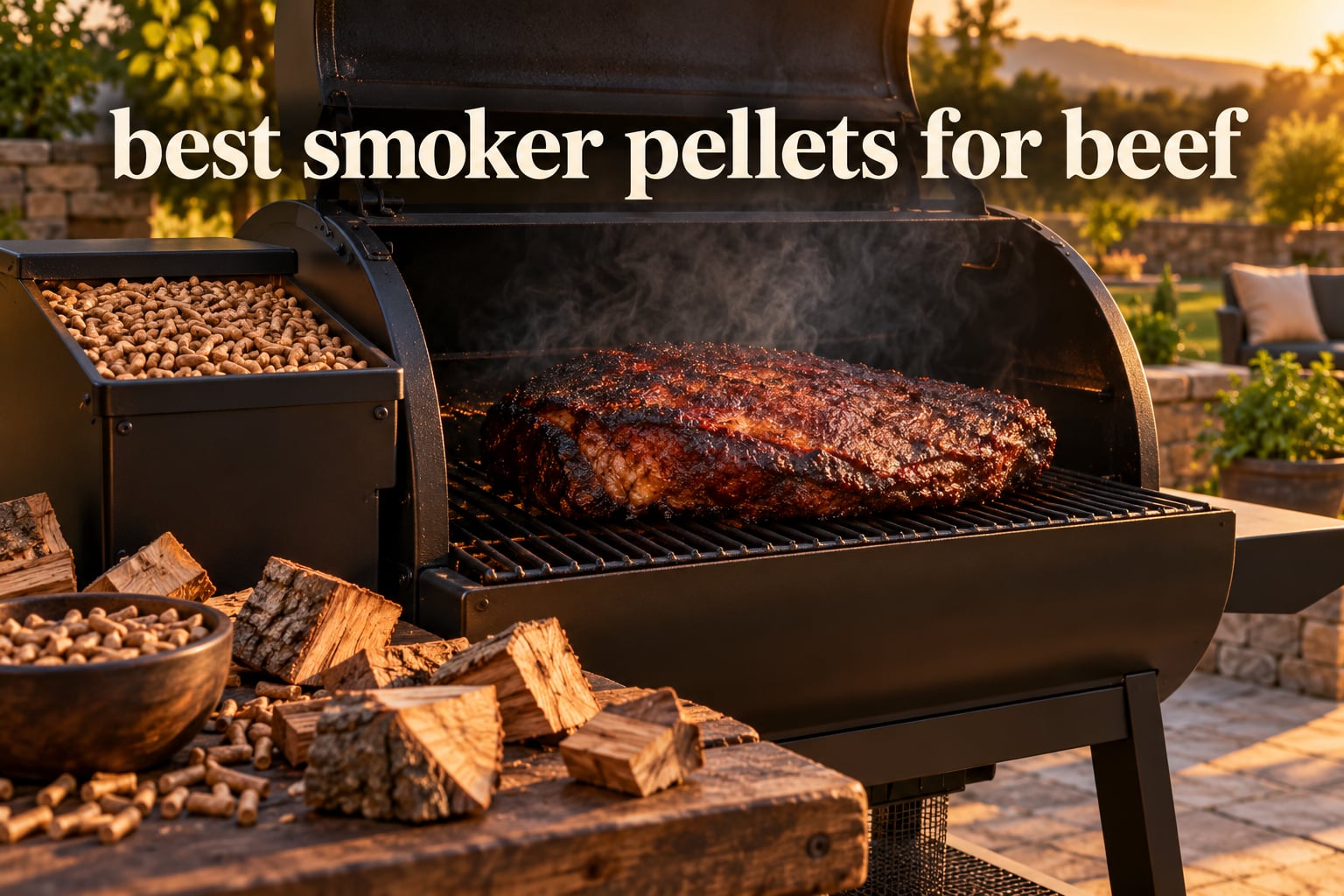
Hickory, oak and mesquite are the three best smoker pellet flavors for beef. Hickory gives the bold, savory, bacon-like smoke that holds up across a twelve-hour brisket, oak delivers a cleaner medium-heavy smoke that lets the beef and the fat cap speak for themselves, and mesquite supplies the most intense, earthy character, best reserved for short cooks on hearty cuts. Everything softer, including maple, apple and cherry on their own, tends to wash out before the brisket is done.
That is the short version. The long version is that pellet choice matters more than most first-time beef cookers expect, because beef is a strongly flavored meat with deep rendered fat. The wood has to register through hours of low-temperature smoking without turning bitter or drowning out the bark, and a pellet that burns dirty or crumbles to powder in the hopper will undo a good cook no matter what technique you use.
We spent weeks going through the eight bags below, comparing smoke intensity, composition, ash behavior, bag economics and how each one fed a pellet hopper through a long cook. We also read through what cooks actually report on the smoking forums about blends, fillers and dust, because that is where the sharpest complaints live. If you want the wider field rather than just beef, our broader BBQ wood pellet ranking covers the same category for pork, poultry and seafood too.
Below is the direct answer first, then the picks, then the reasoning behind how we ranked them for 2026.
Table of Contents
Top 3 Smoker Pellets for Beef

Traeger Signature Blend
- Hickory maple and cherry blend
- 100% all-natural hardwood
- No binders low ash
- 18 lb bag

Camp Chef Competition Blend
- Maple hickory and cherry
- 100% pure virgin hardwood
- Kiln-dried low moisture
- 20 lb bag

Bear Mountain Mesquite
- 100% all-natural mesquite
- No fillers or binders
- Bold smoke for beef and ribs
- Two 20 lb bags
The Traeger Signature Blend takes the top spot because it is the most proven combination of flavor balance, clean burn and sheer volume of real-world cooks behind it. Camp Chef earns the value slot for a kiln-dried pure hardwood blend that costs less per pound and behaves predictably, and Bear Mountain Mesquite is the pick when you want the heaviest smoke in the category.
Best Smoker Pellets for Beef in 2026 at a Glance
| Product | Specifications | Action |
|---|---|---|
| Traeger Signature Blend Hardwood Pellets 18 lb |
|
Check Latest Price |
 recteq Ultimate Premium Hardwood Blend 40 lb recteq Ultimate Premium Hardwood Blend 40 lb |
|
Check Latest Price |
| Camp Chef Competition Blend 20 lb |
|
Check Latest Price |
 Pit Boss Hickory Blend 15 lb Pit Boss Hickory Blend 15 lb |
|
Check Latest Price |
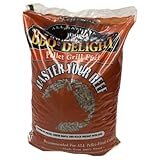 BBQrs Delight Master Your Beef Blend 20 lb BBQrs Delight Master Your Beef Blend 20 lb |
|
Check Latest Price |
 Bear Mountain Hickory Wood Pellets 40 lb Bear Mountain Hickory Wood Pellets 40 lb |
|
Check Latest Price |
 Lumber Jack 100% Hickory Pellets 20 lb Lumber Jack 100% Hickory Pellets 20 lb |
|
Check Latest Price |
| Bear Mountain Mesquite Wood Pellets 2 x 20 lb |
|
Check Latest Price |
Best for a first brisket: Traeger Signature Blend. The blend is mild enough not to fight a twelve-hour cook, and the review history is deep enough that you will find other cooks reporting the same results.
Best for a long, low-and-slow weekend: recteq Ultimate Blend in the 40 lb bag. Red oak, white oak and hickory with no fillers, and one bag covers most of a long cook plus your next one.
Best balance of cost and purity: Camp Chef Competition Blend. Kiln-dried virgin hardwood in a manageable 20 lb bag.
Best for pure hickory purists: Pit Boss Hickory Blend or Bear Mountain Hickory, depending on how much you want to buy at once.
Best for a beef-specific blend: BBQrs Delight Master Your Beef, which is the only bag in this group built around beef rather than adapted to it.
Best for the heaviest smoke: Bear Mountain Mesquite. Read the mesquite warning further down before you commit it to a long cook.
Best Pellet Flavors for Beef: Hickory, Oak, Mesquite and the Rest
Beef takes strong wood better than poultry or seafood does, which is why the classic barbecue woods are the classic beef woods. Here is how each species behaves in a pellet smoker, ranked on our smoke intensity scale where 1 is barely perceptible and 5 is billowing.
Hickory: strong, savory, classic, slightly bacon-like. The consensus bold choice for beef and the only single species that reliably punches through a long brisket without turning acrid. Our smoke intensity call: 5 out of 5. It also has a natural sweetness underneath the smoke, which is why it works so well on beef rib and chuck roast.
Oak: clean, medium-heavy, savory, neutral enough to let the meat lead. Red and white oak are the backbone of Texas-style beef cooking, and on a pellet grill they produce steady, even smoke that builds bark without adding a distinct woody signature. Our smoke intensity call: 3 out of 5. If you only ever buy one wood for a mixed beef diet, oak is the safe answer.
Mesquite: bold, earthy, intense, sometimes resinous. The heaviest smoke in the category and the one most likely to dominate a cut. Our smoke intensity call: 5 out of 5. It is superb on a tri-tip seared hot and finished with a short smoke, and a mistake on a twelve-hour brisket where it can turn bitter on the back end.
Cherry: mild, sweet, delicate, very low ash. Cherry is a blending wood rather than a solo wood for beef. Our smoke intensity call: 2 out of 5 on its own, which is exactly why the popular 50/50 oak and cherry combination works so well on long briskets. We explain the blending math in the buying guide.
Maple: sweet, light, almost caramel. Good as a background note in a blend, too soft to carry a large beef cut alone. Smoke intensity: 2 out of 5.
Pecan: mild, nutty, slightly sweet, medium smoke. Pecan sits between hickory and cherry and is the reason several beef-specific blends use it as the base. Smoke intensity: 3 out of 5.
Apple: sweet, light, very clean, faint. Lovely on pork and poultry, largely wasted on a packer brisket. Smoke intensity: 1 out of 5.
One important note on long cooks: the smoke intensity above describes the wood at the start of a cook. Flavors that are bold at hour one are the ones that can turn acrid by hour ten, which is why several picks below are blends rather than single species.
1. Traeger Signature Blend Hardwood Pellets – the Best All-Round Smoker Pellets for Beef
Traeger Grills Signature Blend 100% All-Natural Wood Pellets for Smokers and Pellet Grills, BBQ, Bake, Roast, 18 lb. Bag
Hickory, maple and cherry
100% all-natural hardwood
No binders, low ash
18 lb bag
Pros
- Balanced hickory maple and cherry smoke that registers without overpowering beef
- Consistent dependable burn with low ash and no binders
- Explicitly built for beef plus poultry pork lamb seafood and vegetables
- Made in USA from hardwoods in American mills
Cons
- 18 lb bag is heavy to pour and has no carry handle
- Some buyers find the Signature Blend flavor subtle next to a single-species hickory
This is the bag we keep coming back to for beef, and after repeated cooks our position has not changed. Traeger built the Signature Blend around hickory, maple and cherry, which on paper sounds like a compromise and in practice is the reason it works. The hickory carries the smoke, the maple rounds it and the cherry keeps a sweet edge that plays well with the fat cap on a brisket.
What makes it our editor’s choice is not the flavor description. It is that the burn is boring, and we mean that as a compliment. Traeger controls moisture content tightly, and the result is a pellet that lights quickly, feeds predictably through the auger and leaves very little ash behind after a long cook. On a twelve-hour brisket you are not thinking about your pellet hopper, which is the highest compliment a fuel can earn.
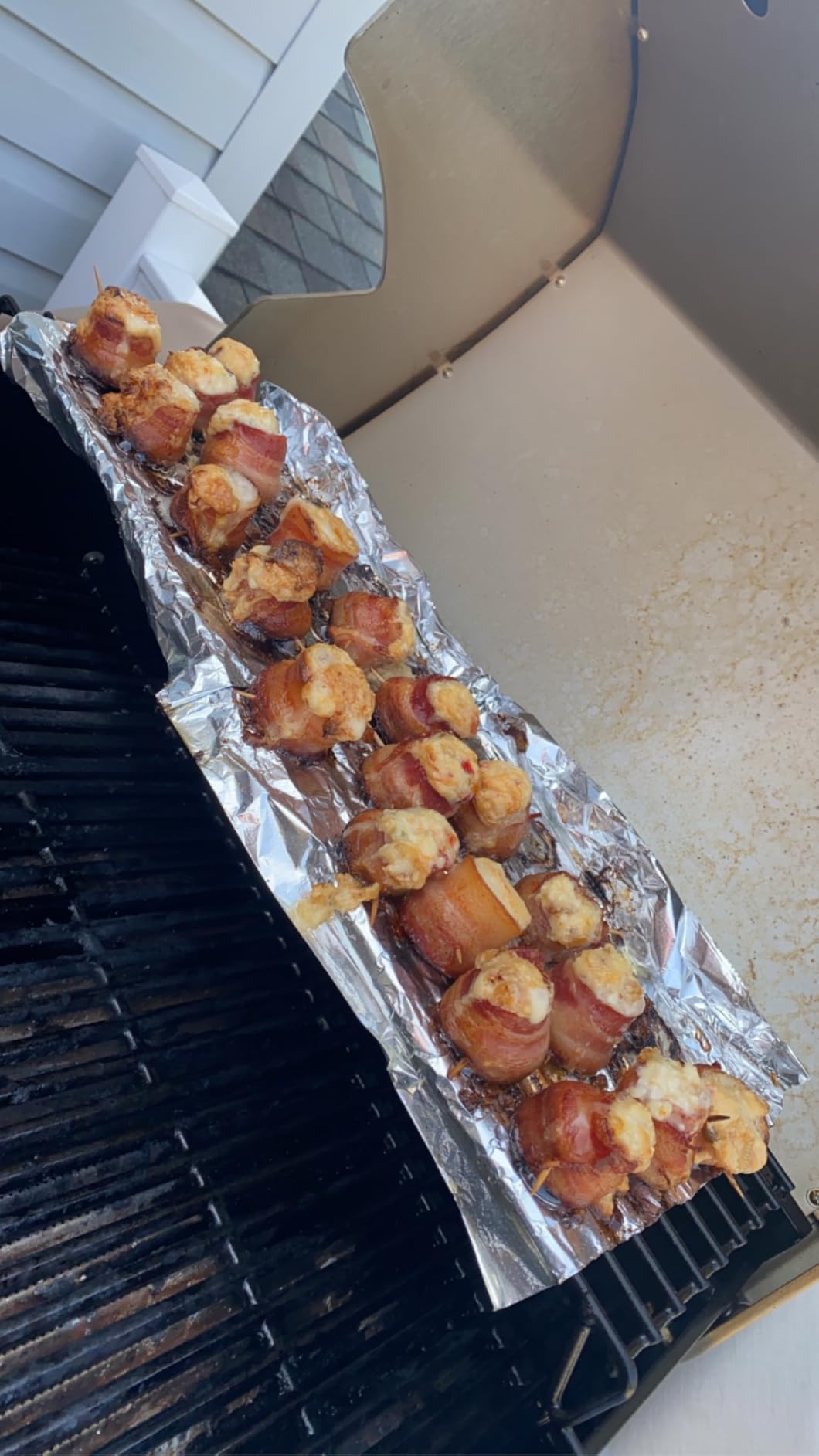
Composition-wise it is one of the cleaner bags in the category. The listing states all-natural hardwood pellets made in American mills, with no binders, clean burn and low ash called out explicitly. Those are not decorative claims, because binder content is the single variable most likely to leave a gray, acrid film on your meat and a gritty taste in the smoke ring.
On a scale of 1 to 5 for beef, we put this blend at a 3. It is a middle smoke, which on a big cut is a feature rather than a limitation. It is also the bag we would hand to someone smoking their first brisket, because the flavor will not fight a cook that is already going wrong for a dozen other reasons. The Traeger pellet debate you will find online mostly concerns brand reputation, and we address that further down.
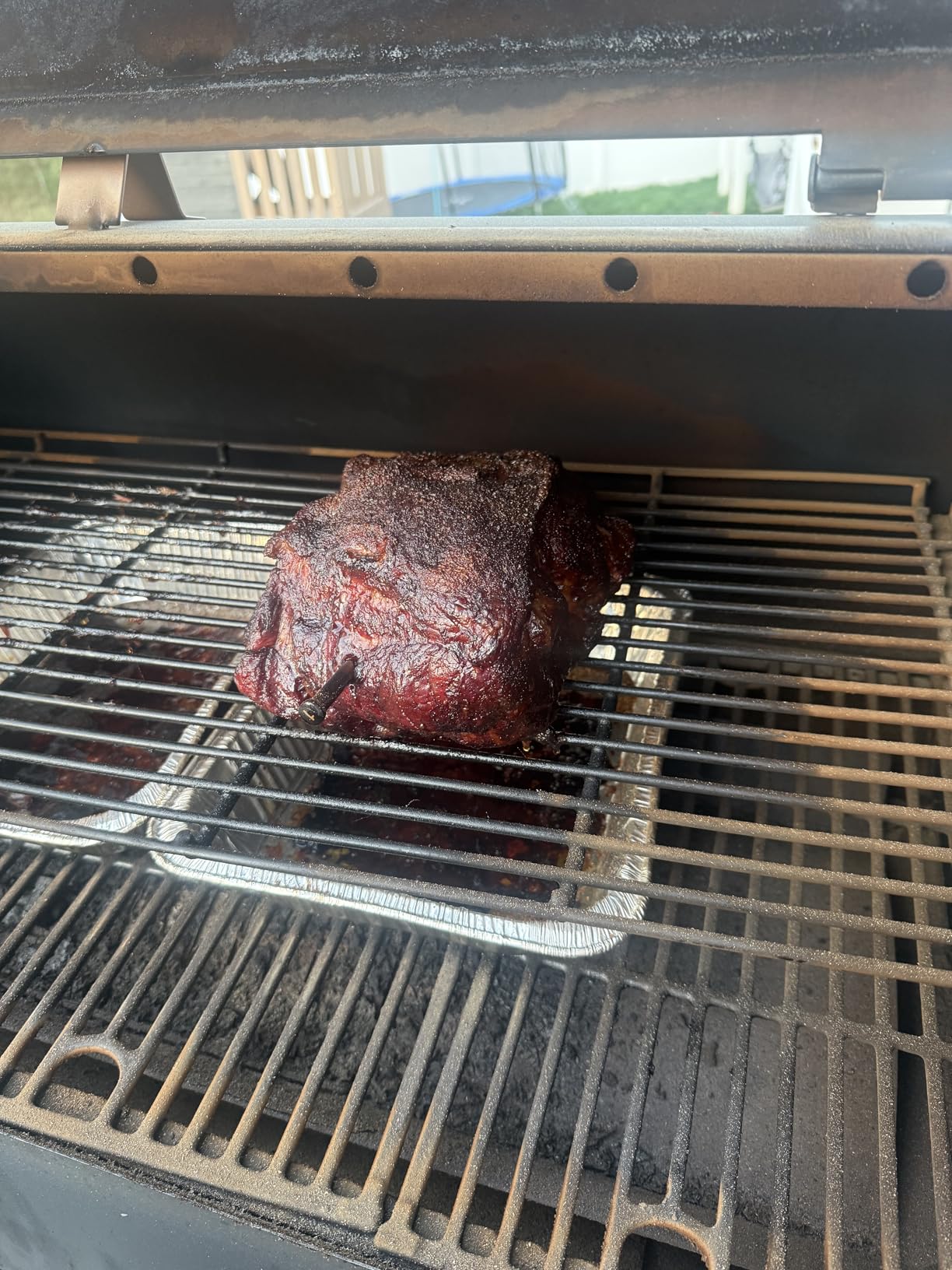
What you get in the hopper on a brisket run
At an 18 lb bag this is a middle-format buy, and it has a practical upside worth naming. It is heavy to pour and there is no carry handle, which is a genuine annoyance, but it is a size that fits in a normal vehicle and leaves usable fuel in the hopper at the end of a long cook rather than a half-empty bag going stale in a garage corner.
Because the burn is clean and the ash production is low, the same bag tends to stretch across more than one cook for most people. If you smoke beef once a month rather than weekly, this is the format that does not punish you for a slow pace.
Who should pass on this blend
If you are chasing the loudest possible smoke flavor on a short, hot cook, this is too polite. Reviewers report that some buyers find the Signature Blend subtle compared with a dedicated single-wood hickory or mesquite pellet, and we agree. On a reverse-seared steak with twenty minutes of smoke, you will barely notice it is there.
It is also the wrong choice if you need one bag to carry an entire competition entry with no refilling. The 40 lb formats exist for that reason, and they are covered below.
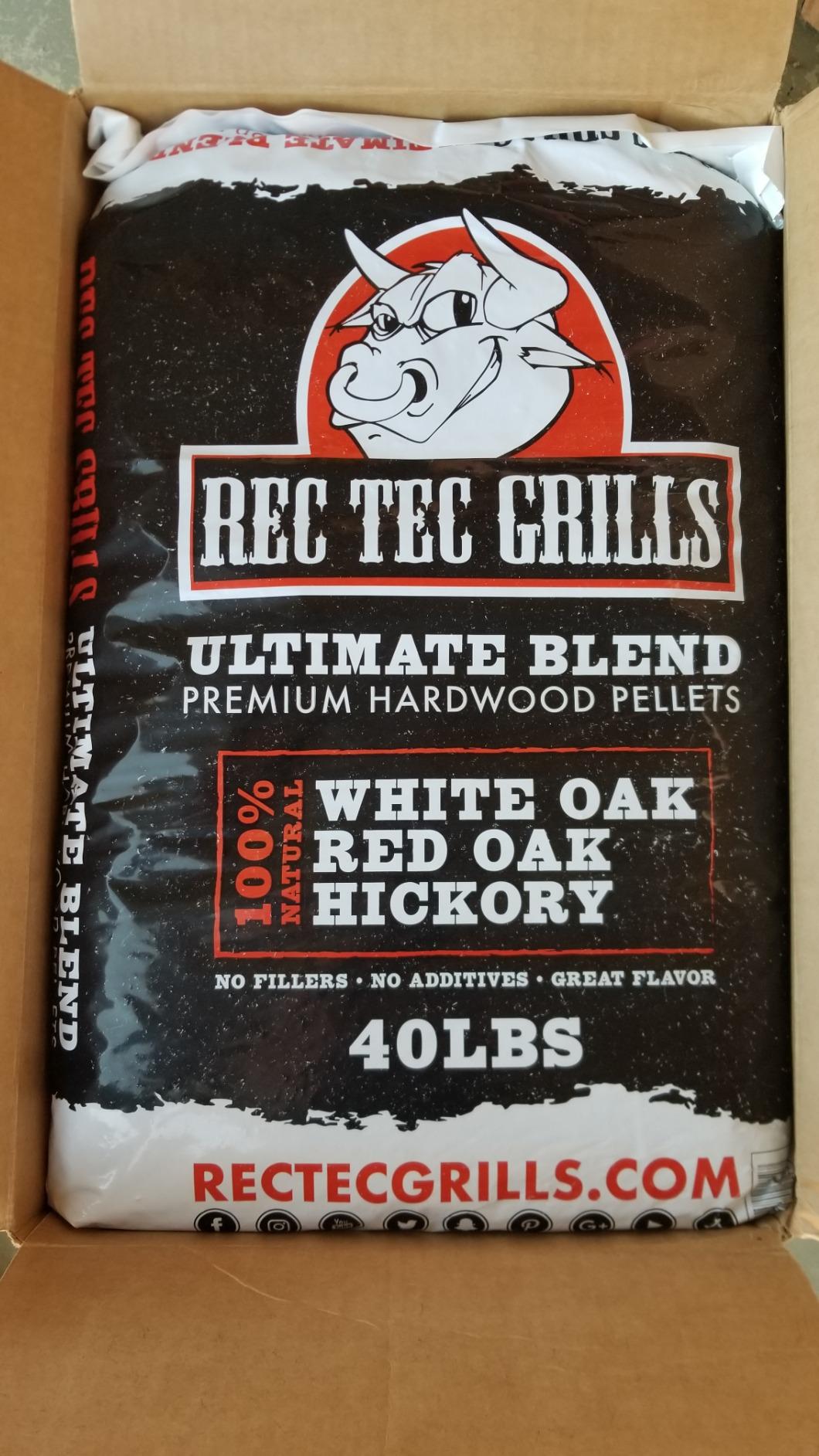
2. recteq Ultimate Premium Hardwood Blend – Best for Long Low-and-Slow Beef Cooks
recteq Ultimate Premium Hardwood Grilling Cooking Pellet Barbecue BBQ Grill Smoker Blend with Red Oak, White Oak, Hickory Wood Pellets for Smokers, 40 Pound Bag
Red oak, white oak and hickory
No fillers, binders or preservatives
40 lb bag
Made in USA
Pros
- Premium proprietary blend of red oak white oak and hickory
- Free of fillers binders and preservatives
- Made in the USA
- Works in all pellet grills
Cons
- 40 lb bag is a heavy lift and unwieldy for smaller cooks
This is the pick for anyone whose idea of a weekend includes a fourteen-hour brisket and a sixteen-hour rack of beef ribs. Two thirds of the blend is oak, split between red and white, with hickory providing the backbone. That ratio matters: oak is what carries the smoke quietly for hours, and the hickory fraction is what keeps it from tasting flat at the three-hour mark.
The composition claim is the reason we like it. The listing states no fillers, binders or preservatives, which puts it in the same category as the cleanest bags in this roundup. A 40 lb bag also changes the economics of a long cook, since running out of fuel at hour six is a genuinely stressful way to lose a brisket.
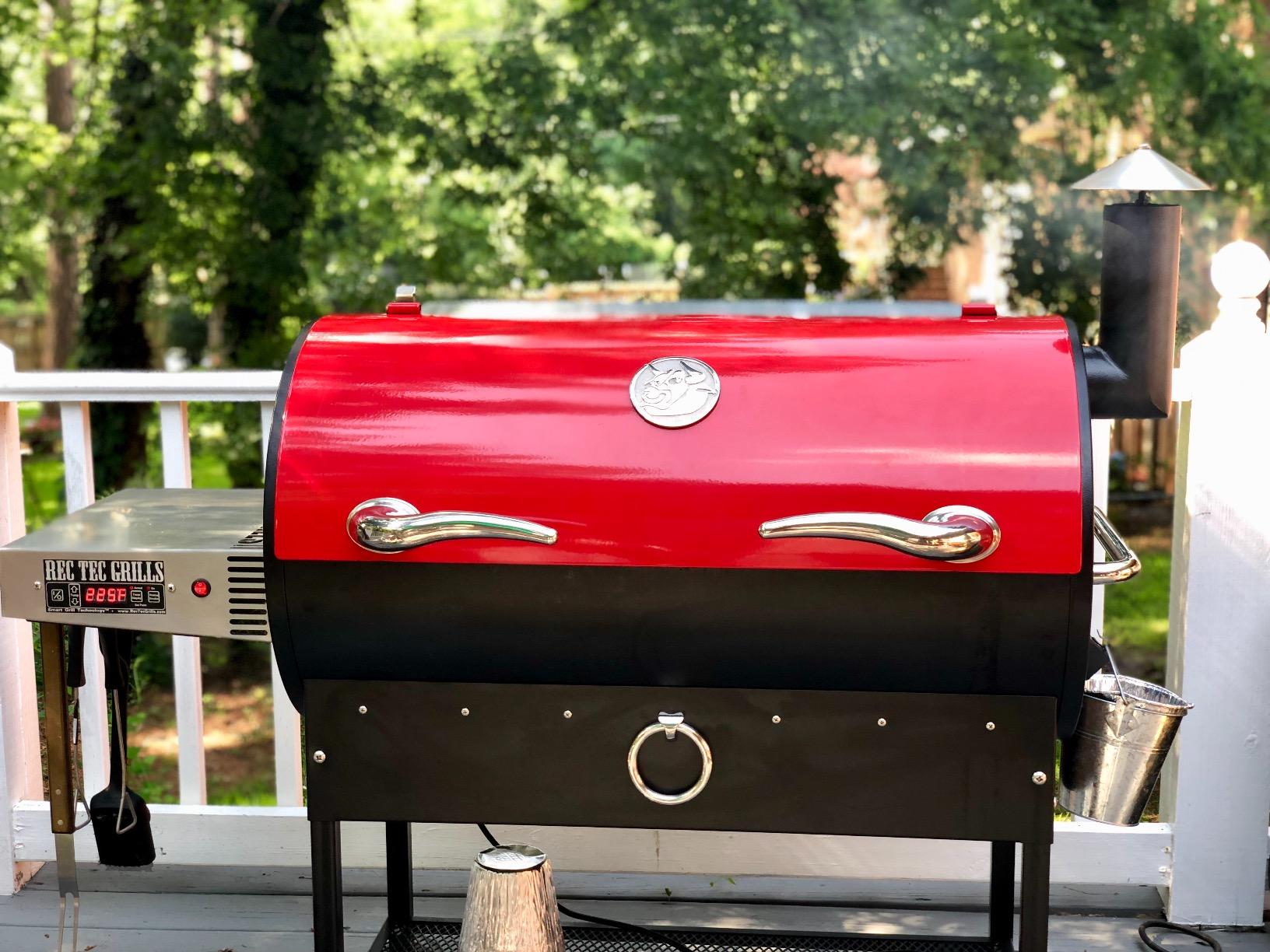
Burn behavior is where oak-forward blends earn their keep. Oak is a denser, slower-burning wood than maple or cherry, and blends built on it tend to hold a steady temperature without the auger cycling hard every few minutes. On a pellet smoker that stability translates directly into even bark development, which is the visual difference between a brisket that looks cooked and one that looks handled.
Our smoke intensity call for this blend is a 3 out of 5, same band as most beef blends, but it holds that level longer than most. That sustained, medium smoke is why it pairs well with a large cut where you want flavor built up in layers rather than stamped on at the end. It is also listed as working in all pellet grills, so cross-brand use is not a concern.
Where this bag earns its price back
Bulk only pays off if you actually cook often, and that is the honest caveat here. If you fire up the smoker two or three times a year, a 40 lb bag leaves you with a large quantity of pellets in storage, and storage is where quality degrades. We cover the storage details in the buying guide, but the short version is that pellets want to be kept dry and sealed.
For a household that cooks beef weekly, or for anyone who wants to cover a holiday cook without a mid-cook run to the store, the math works in your favor. The lift is real, though. Forty pounds is not a bag you want to wrestle into a car trunk, and that is the one drawback reviewers consistently raise.
Who should choose something else
If your beef cooking is mostly steaks, burgers or a single weekend brisket, this bag is oversized for the job. The flavor profile is also deliberately restrained, so a cook chasing maximum smoke intensity will find a single-wood hickory or mesquite bag more satisfying.
One more consideration for first-time buyers: because oak leads this blend, the smoke reads as clean and meaty rather than obviously woody. Some people love that. Others who grew up on a strongly smoky brisket will want more hickory in the mix and should look at the hickory-dominant options below.
3. Camp Chef Competition Blend – Best Value Smoker Pellets for Beef
Camp Chef Competition Blend BBQ Pellets, Hardwood Pellets for Grill, Smoke, Bake, Roast, Braise and BBQ, 20 lb. Bag
Maple, hickory and cherry
100% pure virgin hardwood
Kiln-dried low moisture
20 lb bag
Pros
- Versatile maple hickory and cherry blend that works well with beef
- 100% pure virgin hardwoods and not a byproduct
- No oils chemicals or binders for an efficient burn
- Kiln-dried for low moisture hot burn and less ash
- Made in the USA and safe in all pellet grills and smokers
Cons
- Blend is milder than a dedicated single-wood hickory or mesquite pellet
Camp Chef calls this a jack of all trades and the label backs that up: maple, hickory and cherry, in a 20 lb bag, made in the USA, described as 100 percent pure virgin hardwoods rather than a byproduct. For the money, that combination of purity claims and drying process is hard to argue with, which is why this is our value pick.
The kiln-drying step is the detail most people skip past and the one that matters most in practice. Low moisture means a hot, fast-burning pellet that produces less ash and consumes more slowly, so you get more usable cook time per pound and a firebox that stays easier to manage through an overnight cook.
The blend itself is a smart fit for beef. Maple supplies sweetness that plays against the smoke, hickory supplies the savory weight, and cherry keeps the finish light. Our smoke intensity call is a 3 out of 5 with a slightly sweeter edge than the oak-forward options, and on a chuck roast or a packer brisket that sweetness reads as a pleasant rather than a distracting note.
Camp Chef states the pellets are safe in all pellet grills, smokers and barbecues, so the same bag works regardless of what is in your garage. That flexibility is part of why this shows up so often in forum recommendations as an everyday all-purpose bag rather than a specialist for one cook.
Why this is the smart first bag to buy
Twenty pounds is the format most first-time pellet buyers should actually be shopping. It is heavy enough to complete a full brisket with margin, light enough to move without a second person, and it stores more easily than a bulk bag if you are not cooking weekly. The specification detail on this listing is also unusually complete, so you are not guessing at bag size, weight or ingredients before you buy.
Because it is a blend rather than a single wood, it is also a low-risk place to start. If you decide midway through a brisket that you want more hickory, you have not wasted half a bag on a flavor you cannot stand.
Where it falls short
The honest limitation is flavor intensity. Reviewers looking for a bold single-wood profile find this blend on the milder side, and we agree. If your goal is a heavily smoked, competition-style brisket with a deep smoke ring, this will not get you there alone. Pair it with a hickory or mesquite bag and you have a serious blending setup.
It is also worth noting that a blend is a compromise by design. If you cook a lot of different proteins and want one bag that handles beef, pork, poultry, baking and vegetables, that is a strength rather than a shortfall. This is a general-purpose fuel that happens to be excellent on beef.
4. Pit Boss Hickory Blend – Best for a Bold Straight Hickory Smoke
Pit Boss Hickory Blend 100% All Natural Hardwood BBQ Pellets, 15 lb Bag
100% all-natural hickory
0% additives, fillers or glues
Less ash and less wood dust
15 lb bag
Pros
- Bold classic hickory smoke that pairs naturally with brisket ribs and burgers
- 0% additives fillers glues binders or artificial flavors
- Low moisture for quick ignition and consistent smoke on long cooks
- Reduced ash and wood dust keeps the grill cleaner and airflow better
- Works with all major pellet grills smokers smoke tubes and pizza ovens
Cons
- 15 lb bag is the smallest format in the range
- so long cooks need a restock plan
This is the hickory answer for cooks who want the real thing. No maple, no cherry, no softening agents, just hickory hardwood with zero percent additives, fillers, glues, binders, chemicals or artificial flavors. The listing also calls out reduced ash and reduced wood dust, which are the two quality tells experienced pellet buyers actually look for.
Hickory has been the consensus bold choice for beef in the smoking communities for years, and cooking with it teaches you what hickory actually tastes like. It is savory, slightly sweet underneath, and it is strong enough to register clearly through a long cook. Our smoke intensity call is a 5 out of 5, the top of the scale.
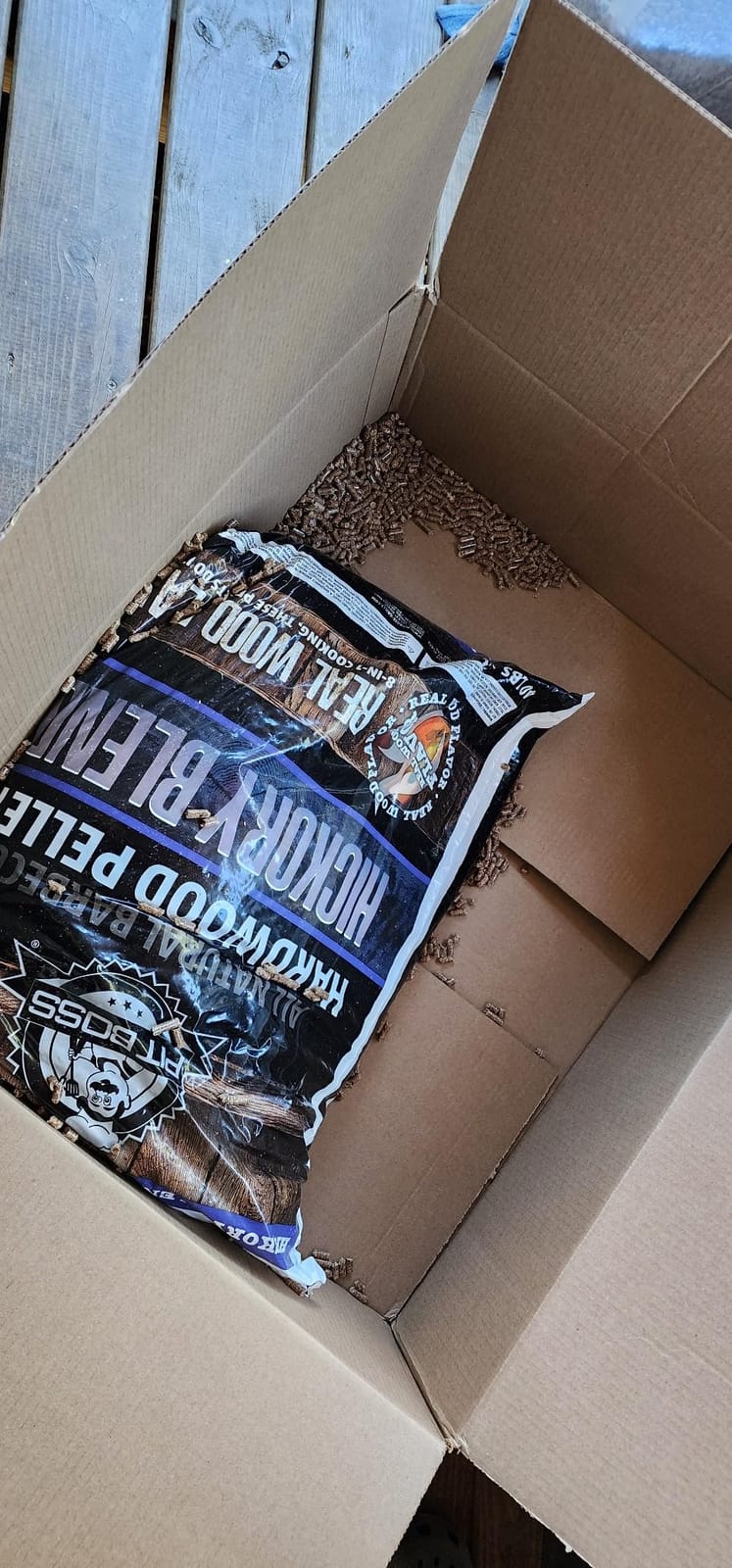
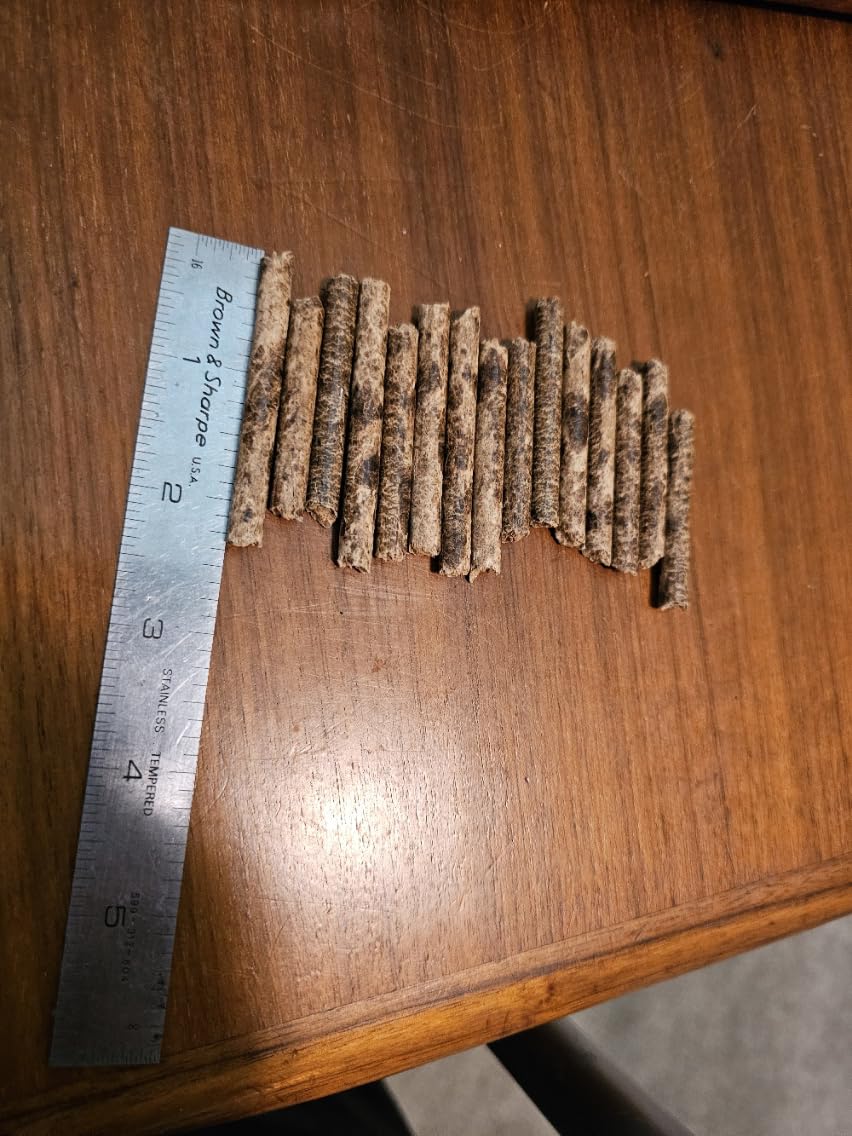
The low-moisture engineering is what keeps that intensity from becoming a problem. Pellets that are properly dried burn hot and complete combustion rather than smoldering wet, and that is the difference between visible white smoke that tastes like wood and a thin, acrid haze. The listing describes optimal moisture content for quick ignition, efficient combustion, dependable heat output and consistent smoke throughout long cooks, which is exactly the set of properties a brisket run depends on.
The 15 lb bag is the trade-off. It is the smallest format in the range, so a twelve-hour brisket plus ribs in the same weekend means a mid-cook restock. Plan for two bags or keep a second bag sealed and ready, because the last thing you want is an auger running dry at the four-hour mark.
How to run hickory on a long beef cook
Hickory is at its best in the first half of a long cook and more delicate in the second. If you are cooking a full packer brisket, a common approach is to start on hickory to build the smoke ring and bark, then move to something milder for the tenderizing hours. You do not need a second grill to do this, just a second bag on the shelf and a hopper you can empty and refill.
On shorter beef cooks, ribs or tri-tip, run hickory start to finish without hesitation. That is where it really earns its reputation, and where the intensity is an asset instead of a risk.
Compatibility and brand reputation
This pellet is listed as designed for all major pellet grill brands, pellet smokers, smoke tubes and pellet-fed appliances, and it is also made in the USA from responsibly harvested North American hardwood. Cooks on the Pit Boss forums rate the hickory profile well for beef, while their experience with the brand’s competition blend has been far more mixed.
If you own a Traeger, a Pit Boss, a Recteq or something else entirely, there is no compatibility barrier here. Pellet burn rate differences between brands are real but small, and they are about temperature recovery rather than flavor. We cover that further down.
5. BBQrs Delight Master Your Beef Blend – Best Beef-Specific Blend for Brisket and Ribs
BBQR’s Delight Master Your Beef Wood Pellets for Smoker & Grill, Bold Smoky BBQ Smoking Pellet Blend for Beef, Brisket & Steak, 20 lb Bag
Pecan, sugar maple and black walnut
Built for brisket, steak and ribs
20 lb bag
Made in the USA
Pros
- Formulated specifically for beef cuts including brisket steak and ribs
- Balanced trio of mild pecan sweet sugar maple and intensely smoky black walnut
- Also adds savory depth to chicken turkey and other meats
- Made in the USA with reliable burn performance
Cons
- Smaller review base than the mainstream hickory blends
- Long-term consistency data is thinner
Every other bag in this roundup was designed as a general-purpose pellet and adapted to beef. This one was built the other way around. The blend is pecan for a mild base, sugar maple for sweetness and black walnut for the intensely smoky lift, and the stated purpose is to enhance rich beef cuts like brisket, steak and ribs.
That makes it the most interesting pick here, and the one we would most want to see more long-term data on. A black walnut component is unusual. It is an assertive wood, and using it deliberately as the top note of a beef blend is a confident design choice that most general-purpose brands would not make.
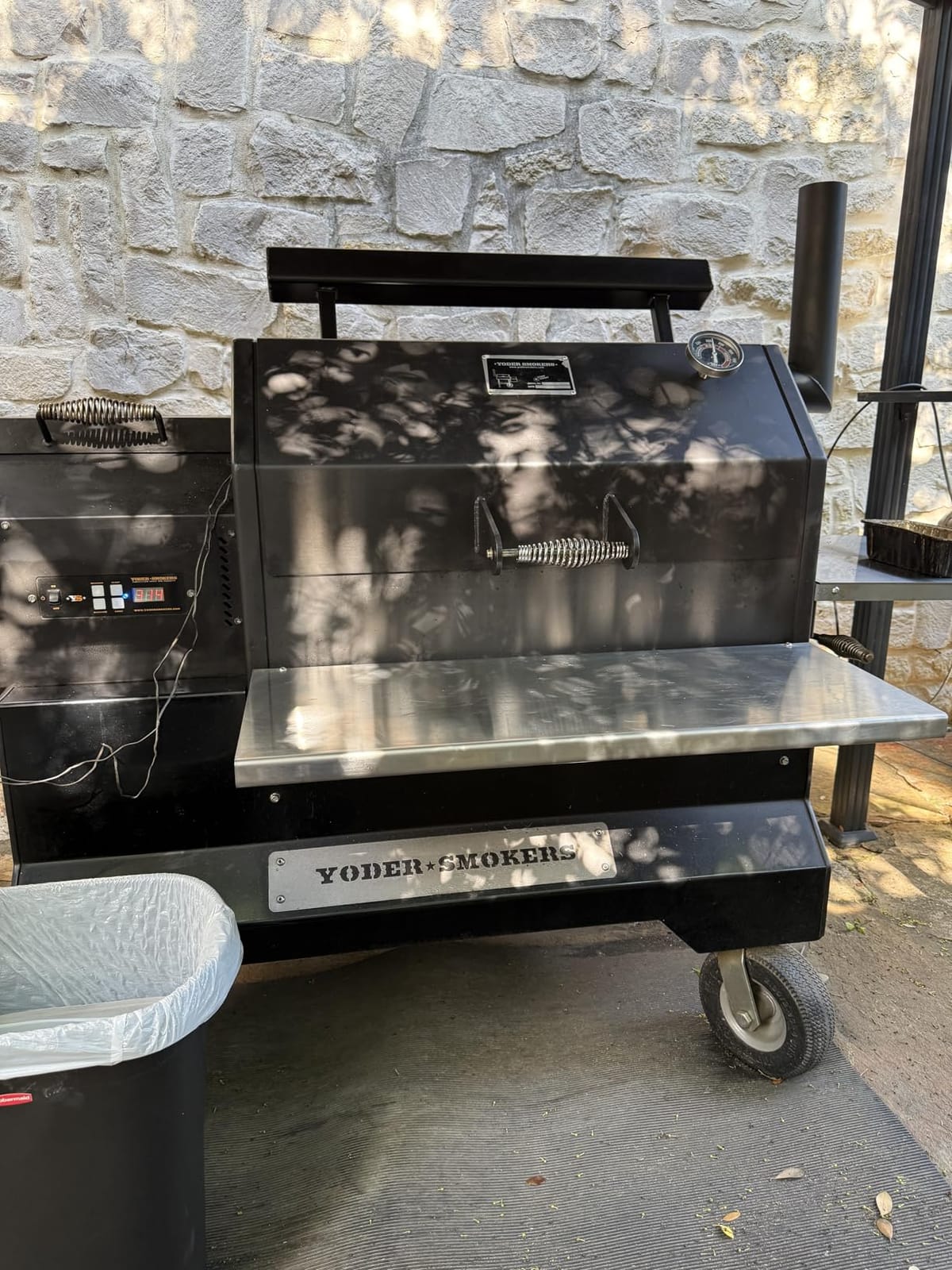
On paper the flavor architecture is well suited to beef. Pecan is a classic Texas pairing with brisket, maple softens the edges, and black walnut provides the depth that keeps a long cook interesting. Our smoke intensity call is a 4 out of 5, heavier than a typical oak and cherry mix but lighter than pure mesquite, which is a sensible landing point for a beef-specific blend.
The 20 lb bag is a sensible size, and the same bag is listed as working on poultry as well as beef, which matters if you are not running a beef-only household. Made in the USA with hardwoods, and the flavor profile description suggests a reliable burn rather than a novelty blend.
Why a beef-specific blend is worth trying
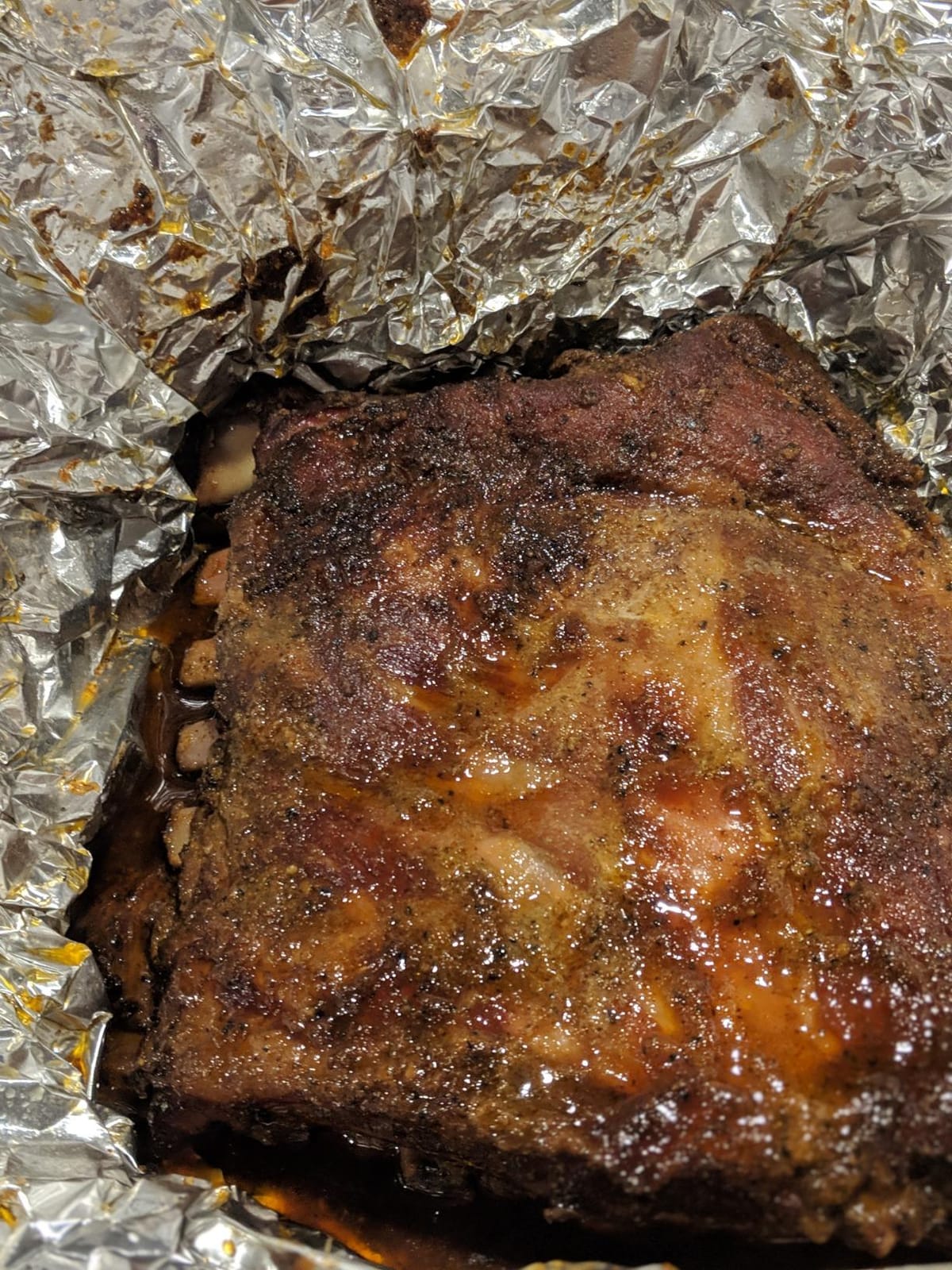
The argument for a purpose-built blend is that a general one is optimized for the average cook across many proteins. A beef blend can spend its whole budget on the flavors that complement beef specifically, which in this case means building around walnut rather than splitting the profile across five woods. For a cook who eats beef three or four times a week, that is a real advantage.
It is also a low-commitment experiment. At 20 lb you can run a full cook, see whether the walnut note appeals to you, and return to a mainstream hickory or oak blend if it does not.
What to watch before you commit
The main limitation is the review base. With a few hundred ratings rather than tens of thousands, you have far less long-term data on consistency between batches. For a brand that changes its blend ratios over time, that is a genuine risk, and it is the main reason this bag does not sit higher in our ranking despite an appealing design.
We would also pair it rather than rely on it solo if you want maximum smoke. A blend with this profile works beautifully on a chuck roast or a trimmed brisket, but if you are chasing a competition-box look you will still want a hickory bag to push the smoke ring further.
6. Bear Mountain Hickory Wood Pellets – Best Bulk Hickory for Frequent Beef Cooks
Bear Mountain Hickory Wood Pellets for Smoker and Grill, 40lb Bag
100% all-natural hickory
No additives or fillers
Low moisture for consistent smoke
40 lb bag
Pros
- Well-balanced sweet and smoky hickory that suits red meat
- Pure hardwood with no additives or fillers
- Low moisture content yields consistent smoke production
- Works across a wide range of outdoor cooking equipment
- 40 lb bag reduces restocking for frequent grilling sessions
Cons
- Some buyers report occasional ash or clinker at the bottom of the bag
With more than fourteen thousand ratings, this is one of the most thoroughly proven hickory pellets available, and it is our pick for cooks who want hickory in bulk. The flavor is described as a well-balanced sweet and smoky hickory, which is a slightly softer take on the wood than a single-species pitmaster blend.
The listing states all-natural hardwood with no additives or fillers, and the smoke character is credited to low moisture content rather than to additives. That is the right mechanism. Smoke flavor comes from incomplete combustion of clean, dry wood, not from oils sprayed onto a pellet, and a bag that explains the burn chemistry on its label is generally a bag that gets the burn chemistry right.
Our smoke intensity call is a 4 out of 5. Bear Mountain hickory reads as a more balanced sweet-and-smoky profile than a dedicated hickory blend, which makes it a good choice for beef ribs and roasts where you want the smoke to season the meat without dominating the rendered fat flavor.
Low ash is listed as a feature, and low ash matters for more than cleanliness. A dirty firebox restricts airflow, which starves the burn and turns a clean-burning pellet into a thin, smoky one. Keeping the pot clean is one of the simplest ways to protect the flavor of the wood you paid for.
When a 40 lb bag is the right call
Buy the 40 lb format if you smoke beef at least weekly, run long cooks, or split sessions with a group. The bag is listed as a generous supply designed to cover numerous grilling sessions without frequent restocking, and for a monthly-cook household that is simply more fuel than you can use before quality degrades in storage.
This pellet is also a good candidate for a two-bag strategy. Run it as your primary beef fuel, then keep a small bag of a more assertive wood for the final high-heat sear or a short smoke on steaks.
What the lower star average actually reflects
At 4.6 stars this sits just below the hickory blends above it, and the reason is mostly format rather than function. The recurring complaint in reviews is occasional ash or clinker at the bottom of the bag. On a large-format bag you are always going to find some fines, because 40 pounds of pellets handling generates dust, and that complaint is common across the whole category.
For occasional cooks the real drawback is the weight. Forty pounds is a two-person lift, it is expensive to replace if you only cook a dozen times a year, and any unused portion needs proper storage. For frequent cooks none of that applies.
7. Lumber Jack 100% Hickory Pellets – Best Pure Single-Wood Hickory
Lumber Jack 100% Hickory BBQ Grilling Pellets – 20 lbs.
100% hickory
Single-species hardwood
20 lb bag
Classic beef smoke profile
Pros
- Single-species 100% hickory for a clean
- classic beef smoke profile
- Simple straightforward hardwood pellet with no blend to interpret
- 20 lb bag size suits weekend cooks
Cons
- Listing carries minimal specification and feature detail
- Smaller review base than the leading hickory pellet brands
Lumber Jack is the name that comes up most often when experienced cooks are asked which pellet brand they trust, and the reason is simple: it is a single species. No blend, nothing to interpret, just 100 percent hickory in a 20 lb bag. If you want to know exactly what your brisket is absorbing for the next ten hours, this is the bag that answers that question cleanly.
On the forums, cooks credit this brand and Bear Mountain for the same reason, describing the pellets as made from whole wood with nothing else in them. A single-species hickory pellet is the reference point against which blended bags are judged, and having one in your rotation makes judging the blends much easier.
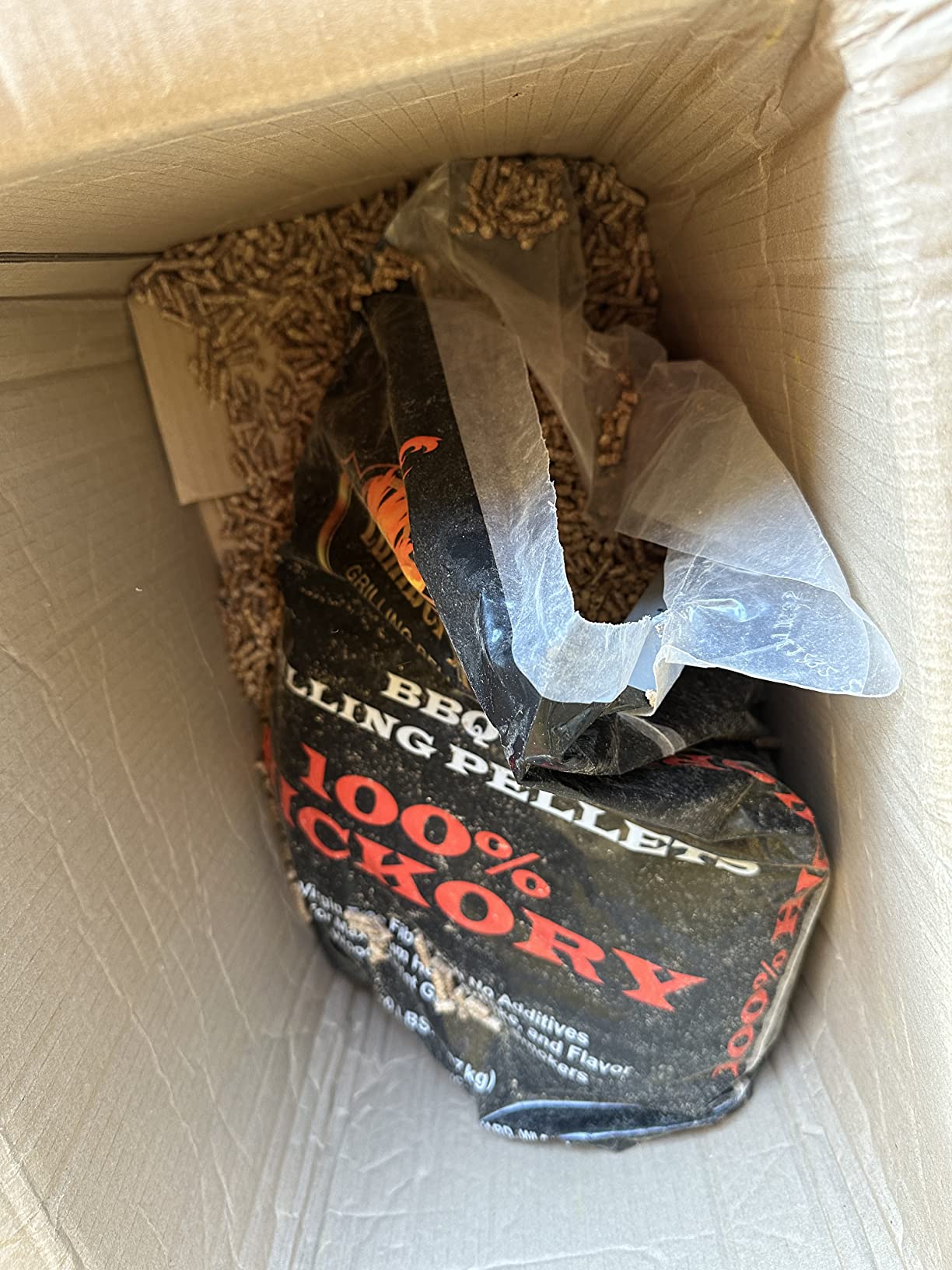
Our smoke intensity call is a 5 out of 5, and with nothing to soften it you will taste the wood directly. That is the appeal for anyone chasing a classic, bold beef smoke. It is also why we would not make this your only bag if you are new to pellet smoking, because there is no fallback flavor if the intensity turns out to be more than you like.
Burn behavior with pure hickory is straightforward. The wood is dense, it burns hot and it produces a consistent smolder, which is why a single-species pellet tends to hold smoke output steadily through a long cook rather than fading as blends with lighter woods sometimes do.
What a single-species pellet teaches you
Cooking one bag of pure hickory is the fastest way to calibrate your palate. Blends taste good, but they hide the wood. Once you know what hickory tastes like on its own, you can taste the maple in a blend, notice when a bag is washing out by hour six, and tell whether an off taste is coming from the wood or from a binder. That knowledge transfers to every other bag you ever buy.
For a specific cook, pure hickory is at its best on beef ribs, smoked sausage and a short-to-medium brisket where you want the classic barbecue flavor front and center.
Why the thin listing matters before you buy
Be aware that this listing publishes very little detail. There are no bullet points describing the wood, no stated additives policy, no burn claims, just the flavor, the weight and the bag size. That is not necessarily a quality problem, but it does mean you are buying on brand reputation rather than on manufacturer detail.
Pair it with a bag that publishes its composition clearly, like the Camp Chef or Pit Boss options above, and you can compare your results. On our list, the honest reason this is not higher is the smaller review base, which means less evidence about batch-to-batch consistency over time.
8. Bear Mountain Mesquite Wood Pellets – Best Bold Mesquite for Short Beef Cooks
Bear Mountain 2-Pack Mesquite BBQ Wood Pellets for Smoker and Grill, 20 lb Bag – All-Natural Hardwood for Outdoor Barbecue Smoking and Grilling with Bold Smoke Flavor
100% all-natural mesquite
No fillers or additives
Two 20 lb bags
Bold smoke for beef and ribs
Pros
- Bold robust mesquite smoke profile well suited to beef brisket and ribs
- All-natural mesquite hardwood sawdust with no fillers binders or additives
- Low moisture supports steady ignition and predictable smoke
- Usable in pellet grills smokers or a smoker box and pellet tube on gas charcoal and electric grills
- Two 20 lb bags reduce refilling on extended projects
Cons
- Mesquite is intense and can dominate lighter cuts of beef
- Weight of two full bags is a heavy lift
Mesquite is the most polarizing wood in barbecue and the one most often misused on beef. It is the boldest, earthiest smoke available, and in the right hands it produces the most distinctly barbecue-flavored beef you can cook. The mistake is using it for a cook that lasts ten hours, where that same intensity turns acrid.
This bag is pure mesquite hardwood sawdust with no fillers, binders or additives, made at low moisture for steady ignition and predictable smoke output. Two 20 lb bags mean forty pounds, so you have enough for a long project or two, and the mesquite will still be a deliberate choice rather than a compromise.
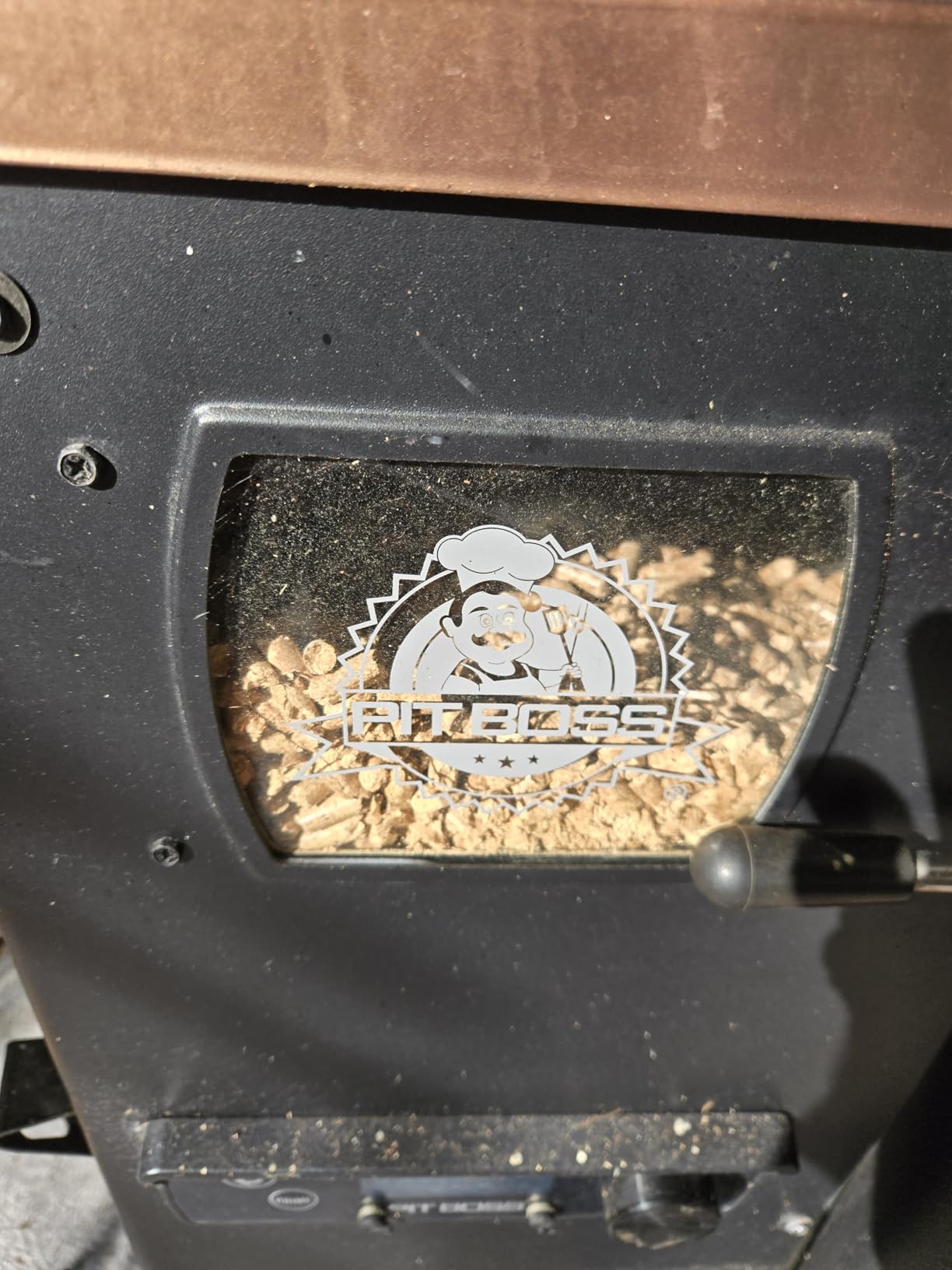
Our smoke intensity call is a 5 out of 5, tied for the heaviest in this roundup and unmatched in how distinctly it reads on the palate. It is not a background note. If you want to be able to taste the wood in every bite of beef, this is the bag that gets you there, and buyers reviewing it rate the strong clean mesquite character on hearty cuts very highly.
Compatibility is unusually broad. It is designed for pellet grills and smokers, and it is also listed for use with gas, charcoal and electric grills through a smoker box or pellet tube, which makes it a practical bridge if you are not exclusively a pellet cook.
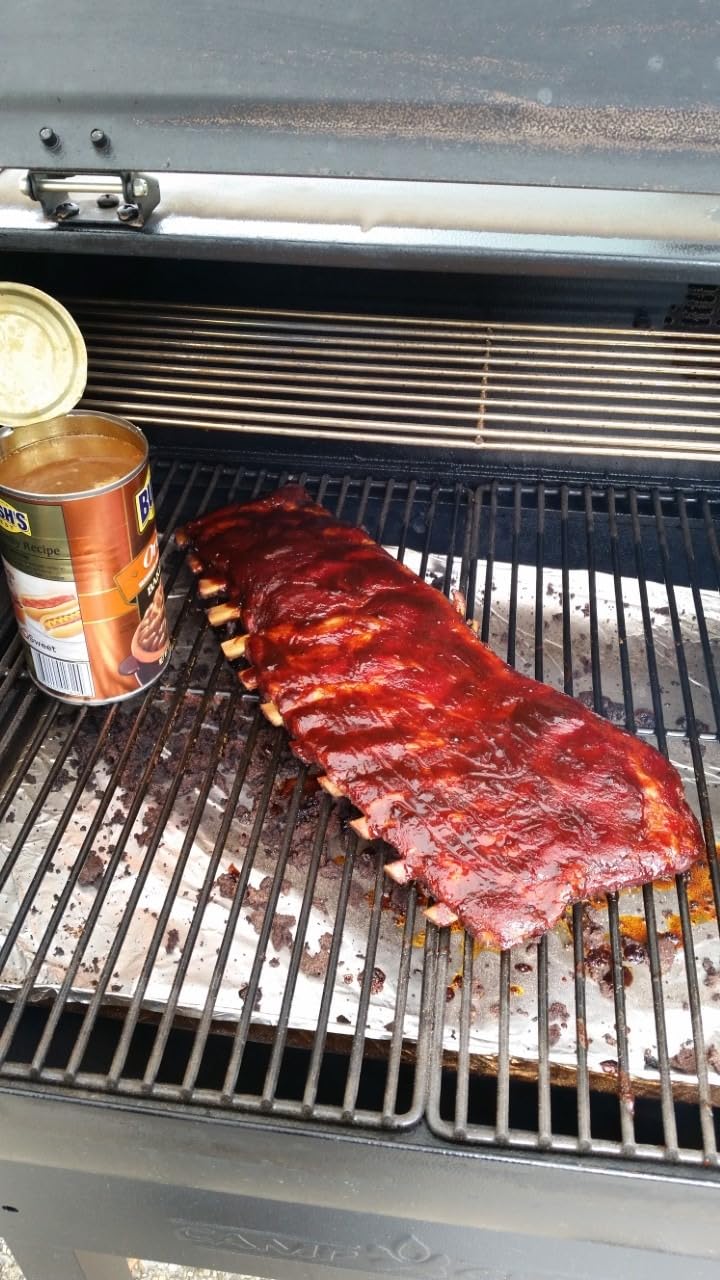
When mesquite is the right call on beef
Short cooks on hearty cuts are where this wood shines. A tri-tip finished with a short smoke, a thick-cut steak with a smoke sear, beef ribs moved hot and fast, or a chuck roast that cooks in a few hours rather than half a day will all showcase mesquite properly. The boldness is a feature because the cook is too short for it to turn.
It is also a good blending partner. A common approach is a heavier ratio of mesquite with a balancing wood rather than a fifty-fifty mix, and we would lean toward two parts mesquite to one part oak for a tri-tip if you want the wood to be unmistakable but the finish to stay clean.
When to keep it away from the brisket
On a long cook, mesquite is the wood most likely to taste you out of a good piece of beef. Reviewers note that mesquite is intense and can dominate lighter cuts, and on a large brisket that dominance compounds hour after hour. This is exactly why so many experienced cooks reach for a blend on a twelve-hour cook and save the mesquite for the sear.
The forty-pound total weight is also worth flagging, since it is two full bags rather than one. If you do not cook mesquite regularly, buy the smaller format first so you are not storing a heavy bag of an intense wood indefinitely.
How to Choose Smoker Pellets for Beef
Once you have narrowed the flavor profile, the buying decision is mostly about label literacy and logistics. These are the questions that separate a good pellet bag from a disappointing one, and none of them require a degree in wood science.
100% hardwood versus a blend: what the bag label actually means
A label reading 100 percent hardwood or 100 percent pure hardwood means the pellet is made only from ground wood of that species, or those species, with nothing else added. A label reading blend means the manufacturer is combining woods, which is a completely normal and often good thing, but the bag should still be required to disclose anything else in the mix.
The controversy people run into online is about binders, which are wood glue or starch used to hold a pellet together. A small amount of binder is not a quality problem in itself. What matters is whether the bag tells you it is there. The picks above that explicitly state no binders, no fillers, no oils, chemicals or preservatives give you the clearest picture, and every one of those claims is taken directly from the manufacturer listings rather than inferred.
Two more label tells worth looking for are low ash and low moisture. Low ash means less residue in your firebox and better airflow. Low moisture means a hotter, more complete burn with better smoke quality. Bags that make both claims, such as the Camp Chef and Pit Boss options, are telling you something specific about their manufacturing.
How many bags of pellets a brisket actually uses
The honest answer is that it depends on your grill, your hopper size and your setpoint, which is why nobody can give you a single number that holds for everyone. What you can do is measure it yourself, and we recommend every serious brisket cook do this once before worrying about it again.
Fill your hopper to a known weight, note the weight, and weigh the remaining pellets after a full cook. Do that for one long brisket and you have a real number for your own setup, which is the only number that matters. Repeat the measurement on a second cook and you will also see how much that number drifts with weather and starting temperature.
As a general planning rule, the people who run out of pellets are usually the ones with small hoppers cooking a large cut at a higher setpoint than necessary. Holding a lower and steadier temperature reduces consumption, which is another argument for a clean-burning pellet with low ash. If you want to work through the math on temperature control for long cooks, our smoker recipe book picks cover the cook side in more detail.
Four checks for spotting degraded pellets
Check one: dust and fines in the bag. A light dusting at the bottom is normal. A heavy layer of powder means the pellets were handled roughly or have been sitting in a humid space, and powder in a hopper bridges and starves the auger.
Check two: broken pellets and inconsistent diameter. Whole, uniform pellets feed evenly. A bag full of halves and crumbs burns faster, feeds unpredictably and produces more dust in the firebox.
Check three: visible moisture or discoloration. Pellets that look damp, stained or have a musty smell will not ignite cleanly and will produce a thin, weak smoke. Wood pellets do not spoil like food, but moisture ruins them.
Check four: will the grill reach temperature? If a bag cannot get your smoker up to temperature, it has absorbed too much moisture. That is the fastest and most decisive test there is, and it takes about fifteen minutes.
One more smell test that catches most problems: open the bag and smell it. Clean hardwood pellets smell like wood. A bag that smells like chemicals, varnish or perfume is one you do not want to light.
Are Traeger and Pit Boss pellets interchangeable?
Yes. Any hardwood pellet will burn in any pellet grill, and the compatibility notes on the bags in this roundup all confirm it. The differences people argue about online are mostly about temperature recovery and the auger, not about flavor or safety.
The real controversy people have with Traeger pellets is not about the wood. It is a brand reputation argument, and it is mostly unfair to the product. Traeger is a large operation that makes its pellets in American mills, and the Signature Blend here is made from hardwoods with no binders, which is the same composition claim made by the independent brands in this roundup. Judge the bag in front of you, not the logo on it.
Pit Boss hickory has a strong positive reputation among beef cooks for the opposite reason: it is a single bold wood with nothing to soften it. The negative reports that circle the brand tend to attach to its competition blend rather than its hickory. This is a good example of why you should judge a specific bag instead of a brand name.
Storage, re-bagging and blending two woods
Pellets are a hygroscopic product, which simply means they pull moisture out of the air. Once you open a bag, keep the original bag sealed, or transfer the pellets into a sealed plastic bin with a gasket lid and keep that indoors in a room with stable humidity. Do not store them in a damp shed or an unheated garage, and never leave the hopper loaded for months.
Blending two woods is the single best upgrade available to a pellet cook, and it is cheap. The two combinations worth knowing are a 50/50 mix of oak and cherry for long briskets, which adds sweetness and keeps the smoke balanced across ten hours, and a heavier hickory-forward mix such as two parts hickory to one part oak if you want the beef flavor to read clearly. For mesquite, keep the ratio heavier on mesquite and the cook short.
Blending is easier than it sounds. Fill the hopper with one wood, light it, let it establish, then pour the second bag in on top. The two burn together and you get a consistent mix for the remainder of the cook. If you want to take the same idea further, a whiskey smoker kit is a different flavor category entirely, useful for finishing beef after the smoke phase.
One last piece of gear worth mentioning for anyone layering smoke: a cocktail smoker gun gives you a concentrated hit of wood smoke in seconds, which is useful for finishing a steak without a long pellet cook.
Frequently Asked Questions
What’s the best wood to smoke beef with?
Hickory, oak and mesquite are the best three woods for beef. Hickory is the bold, savory, slightly bacon-like choice and the only single species strong enough to carry a twelve-hour brisket. Oak is the clean, medium-heavy all-rounder that lets the beef and the fat cap lead, and it is the safest wood to buy first. Mesquite is the boldest and earthiest, best reserved for short cooks on hearty cuts. Cherry, maple, pecan and apple are blending woods on beef because they are too light to carry a large cut alone.
What pellets produce the most smoke flavor?
Pure mesquite and pure hickory produce the most smoke flavor, both sitting at the top of a five-point smoke intensity scale. Mesquite is the heaviest and most earthy, and it can dominate lighter cuts or turn bitter on a long cook. Hickory delivers a strong, savory, slightly sweet smoke that holds up through long cooks. Among blends, a blend with a hickory or walnut component produces more smoke than an oak and cherry or maple-forward blend. Higher smoke flavor also means a cleaner burn matters more.
Are Pit Boss or Traeger pellets better?
Both brands make hardwood pellets that burn correctly in any pellet grill, so compatibility is not the deciding factor. Pit Boss hickory is a single bold wood that beef cooks rate highly, while the Traeger Signature Blend mixes hickory, maple and cherry for a more balanced, everyday smoke. The reputation argument around Traeger is about the brand rather than the pellet, since the Signature Blend is made from hardwoods with no binders. Judge the bag in front of you and the label detail rather than the logo.
How many bags of pellets do you need to smoke a brisket?
It depends on your grill, your hopper size and your setpoint, so measure your own setup rather than trusting a generic number. Weigh your hopper full, note the weight, and weigh what remains after a full brisket cook. That gives you a real burn rate for your own smoker. Two bags is a sensible minimum for a single large brisket on a small hopper, and a 40 lb bag usually covers a long cook plus your next one. Holding a lower, steadier temperature reduces consumption.
Are hickory pellets good for brisket?
Hickory is the most popular choice for brisket, and the reason is flavor strength. It is savory with a natural sweetness underneath, and it is one of the few single-species pellets strong enough to still register on the palate at hour ten of a long cook. The risk is that it becomes acrid late in a very long cook, so a common approach is to start on hickory to build the smoke ring and bark, then switch to oak or cherry for the tenderizing hours. Mesquite is the one to avoid on a long brisket.
How to tell if smoking pellets are bad?
Check four things before you light a bag. First, look at the dust and fines at the bottom, since a heavy layer of powder means rough handling or humidity and will bridge in the hopper. Second, look for uniform pellet diameter rather than a bag of broken halves. Third, look for visible moisture, staining or a musty smell, and be suspicious of any chemical or perfume scent. Fourth, try the fifteen-minute temperature test, because pellets that cannot get the grill up to temperature have absorbed too much moisture.
The Bottom Line on Smoker Pellets for Beef
The best smoker pellets for beef are the Traeger Signature Blend, and it wins for the boring reasons that matter most on a long cook. A balanced hickory, maple and cherry profile, a clean burn, low ash, no binders and the deepest proven track record in the category. Start there, learn what a well-made blend tastes like, and adjust from there.
If your cooking runs long and frequent, the recteq Ultimate Blend gives you the oak-forward backbone in a bag big enough to cover the whole cook. If you want pure hickory with nothing softening it, go with Pit Boss or Lumber Jack. If you want the heaviest smoke in the category and the patience to use it well, Bear Mountain Mesquite is the bag.
Whichever you choose, buy a bag that states its wood and its additives plainly, keep it sealed and dry, and blend two woods on your next long cook. That last step is the cheapest flavor upgrade available, and it is the one experienced beef cooks use most often. Fire it up for 2026, and check the label before you fill the hopper.