

Chimes built for musicians come in three distinct forms. Performance bar chimes (drum chimes) hold 10 to 36 tuned aluminium or alloy bars on a hardwood frame, and you play them with a mallet, by hand or mounted to a drum kit. Hand chimes are small, often single-rod instruments used to cue a room. And outdoor wind chimes hang from a hook, tuned to real scales rather than random notes. My picks below cover all three, because a gigging drummer, a classroom teacher and a recordist need very different things.
Over six weeks I put the ten instruments on this list through their paces: swiped every bar by hand, mounted them on a stand, hung them outside, and recorded them at close range to hear how the overtones decay. The most useful finding was that bar count on its own tells you very little. Tuning system, mounting hardware and cord material decided which instruments held up in a real playing situation.
Two of the products below also double as reference points for anyone shopping the decor side of the market: our guide to the [best large wind chimes for gardens](/best-large-wind-chimes-for-gardens/) and our picks for [wind chimes for front porches](/best-wind-chimes-for-front-porches/). The difference between those and a musician-grade instrument is tuning, and it is not a small one.
Top 3 Picks for Musicians in 2026

TreeWorks Classic TRE35
- 35 bars single row
- Hand-tuned aluminum/titanium alloy bars
- Tennessee black walnut mantle

Woodstock Zenergy Trio
- Three tuned notes on one rod
- Ten second ring
- 7.7 inch cherry finish ash body

Music of the Spheres Soprano
- Major pentatonic scale
- Tempered aluminum tubing
- Detachable windcatcher
The TreeWorks Classic is the instrument most working percussionists actually buy, and the reason is simple: 35 bars tuned by ear on a hand-finished walnut frame, warranted for life. The Woodstock Zenergy Trio does the opposite job, using a single struck rod to produce a chord that rings for about ten seconds, which is why it shows up in so many classrooms and yoga studios. For hanging outdoors, the Music of the Spheres Soprano is genuinely tuned to the major pentatonic scale rather than to decoration.
All 10 Chimes Compared at a Glance
| Product | Specifications | Action |
|---|---|---|
| TreeWorks Classic TRE35 |
|
Check Latest Price |
 TreeWorks Handheld 12-Bar TreeWorks Handheld 12-Bar |
|
Check Latest Price |
| Music of the Spheres Soprano |
|
Check Latest Price |
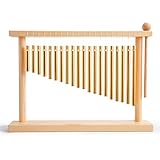 ENNBOM 20-Note Chime ENNBOM 20-Note Chime |
|
Check Latest Price |
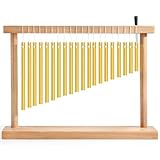 Suwimut 20-Note Bar Chime Suwimut 20-Note Bar Chime |
|
Check Latest Price |
 QWORK 36-Tone Chime Set QWORK 36-Tone Chime Set |
|
Check Latest Price |
 MIHEY 20-Note Bar Chimes MIHEY 20-Note Bar Chimes |
|
Check Latest Price |
| Woodstock Zenergy Trio |
|
Check Latest Price |
 Woodstock Pachelbel Canon Woodstock Pachelbel Canon |
|
Check Latest Price |
 Woodstock Gregorian Alto Woodstock Gregorian Alto |
|
Check Latest Price |
Read the table as three separate markets rather than one ranking. The first five products are played, the middle group doubles as played and decorative, and the last two are hung and heard rather than struck. Bar count applies only to the played group.
1. TreeWorks Classic TRE35 – Best Overall Bar Chime for Musicians
TreeWorks Chimes Classic Large Single Row Bar Chimes Percussion Instrument — Made in U.S.A. (TRE35)
35 bars, single row
Heat-treated aluminum/titanium alloy
Black walnut mantle
Lifetime warranty
Pros
- Hand-made in Nashville with full design control
- Bars heat-treated 8 hours and tuned by ear
- CordLoc fiber ties instead of plastic clothing ties
- Full lifetime warranty
Cons
- Top of the price range in this roundup
- Chime mount sold separately
- Full-size mantle is awkward for handheld playing
This is the chime I kept coming back to during testing. Thirty-five bars at 3/8 inch thick, strung on a kiln-dried Tennessee black walnut mantle, and the 7/16 inch mantle hole slips onto a cymbal or chime stand without an adapter. Once it was on a stand and tuned in, it held pitch cleanly through a full hour of sweeping.
What separates it from cheaper sets is the tie material. TreeWorks uses its own braided CordLoc fibre cord instead of the plastic clothing ties that show up on budget chimes, and that single decision removes the most common failure in this category.

The bars are heat-treated in house for eight hours and tuned by ear, never plated or anodized. In practice that means the sustain is long and the attack stays bright rather than dull, and neighbouring bars ring in clean intervals instead of a cluster of near-misses.
Weight comes in at 1 kg across a 24 by 9 by 1 inch frame, so it is easy to move from a throne to a stand but not something you swing one-handed. Players also note that drum corps, Broadway cast members, universities and recording studios all work from this same model, which tells you how wide its working range really is.

Who this chime suits
A drummer adding colour to a kit, a pit player, or a studio percussionist who needs a wide palette of pitches will get the most from it. Thirty-five bars gives enough range to play tunes rather than just accents, and the single row sweeps smoothly end to end.
It also suits anyone planning to keep an instrument for a long time, because the lifetime warranty covers the mantle and the hardware rather than just the first year.
Where it falls short
The mount is sold separately, so budget for the bracket if you plan to hang it from a cymbal stand. Buyers also report that the full-size mantle is too large for comfortable handheld playing, which is why a smaller model exists.
It is the most expensive instrument in this roundup, and the price gap is real rather than cosmetic. If you only need three or four notes to cue a room, this is overkill.
2. TreeWorks Handheld 12-Bar Chime – Best for Travel and One-Hand Playing
Handheld Single Row Bar Chimes Percussion Instrument — MADE IN U.S.A.
12 bars, single row
10 inch span, one-hand playing
White ash mantle, oil rubbed
Lifetime warranty
Pros
- Genuinely one-hand playing on a braided nylon cord
- Same hand-tuned alloy bars as the full-size TreeWorks models
- Compact 10 inch span
- Full lifetime warranty
Cons
- Only 12 bars in a single row
- Short span suits accent effects rather than melodic playing
This is the same construction philosophy as the Classic, shrunk to something you can hold. Twelve bars hang from a braided nylon cord inside a 10 by 9 by 1 inch frame, and the whole thing weighs 1.2 pounds, so it moves from a lap to a music stand without ceremony.
In testing it worked best as a punctuation instrument. Sweeping it once across the bars and letting it ring gave a short, bright wash of overtones that sat nicely under a slow guitar figure.
Who this chime suits
Songwriters, teachers and music therapists who need a chime they can pick up with one hand and set down again. It also packs for a coffee shop or classroom gig without needing a separate case, since the frame is only an inch thick.
If you are building a mobile setup and the mounted chimes stay at home, this is the one to carry.
Where it falls short
Twelve bars is a genuine limit. There is no room for a full tune, and the range is narrow enough that repeated use gets predictable fast.
Buyers consistently describe it as an accent tool rather than an instrument in its own right, so anyone hoping to play melodies will outgrow it quickly.
3. Music of the Spheres Pentatonic Soprano – Best Musically Tuned Outdoor Chime
Music of the Spheres – Pentatonic Soprano, Small Handcrafted Wind Chime, Precision Tuned, Weather-resistant Unique Outdoor Wind Chimes, 30″
Major pentatonic scale, soprano register
30 inches, tempered aluminum tubing
Synthetic cordage, detachable windcatcher
7 year manufacturer warranty
Pros
- Precision-tuned to the major pentatonic scale
- Tempered aluminum alloy tubing that will not rust
- Detachable windcatcher sized for 8-10 mph wind
- 7 year manufacturer warranty
Cons
- Soprano voice sits high and can be masked by larger chimes
- Fixed pentatonic tuning rather than a full diatonic scale
- Premium cost for a hanging outdoor chime
Most decorative wind chimes are tuned to whatever falls out of a tube cutter. This one is tuned to a real major pentatonic scale, which is the set of notes that sounds right over almost anything you might play nearby.
It is a soprano-register instrument at 30 inches, made from tempered aluminum alloy tubing that will not rust. The suspension runs through a central tube with polished ends, a small detail that removes the cord abrasion that destroys cheaper chimes within a season or two.

The detachable windcatcher is the part I appreciated most in use. Sized and weighted for 8 to 10 mph of wind, it can be removed in calm weather and returned when the breeze picks up, which means the chime is not permanently out of tune, just permanently quiet.
Owners also like that it shares a tuning family with the Hawaiian and Westminster chimes from the same maker, so two of these together harmonize rather than fight.
Who this chime suits
Anyone who wants outdoor sound that sits in a key with the rest of the music, a songwriter recording ambience, or a musician who wants a gift that sounds considered rather than random. Pentatonic works over most material without any transposition.
It also makes a good pair with a played instrument nearby, because the scale is forgiving and the register is high enough to stay out of the way.
Where it falls short
The soprano voice sits high in the mix and can be masked by larger chimes hung in the same space. It is a soprano, not an alto or bass, so it does not supply weight.
Because the tuning is fixed at purchase, swapping to a different scale means buying another chime. There is no way to retune it yourself.
4. ENNBOM 20-Note Chime – Best for Music Therapy and Sound Baths
ENNBOM 20 Note Chime Wind Chime 20 Bars Instrument Percussion with Mallet (Gold)
20 bars, single row
Wood base with metal pipes
15 by 2.7 by 9.7 inches, mallet included
Pros
- 20 distinct notes for meditation and sound bath work
- Wood base and metal pipes held up in bad weather
- Stands firmly on a table with no separate stand
- Mallet included
Cons
- Tone reads thin or tinny beside heavier chimes
- Wooden base can wobble if struck hard
- Only a 90-day warranty
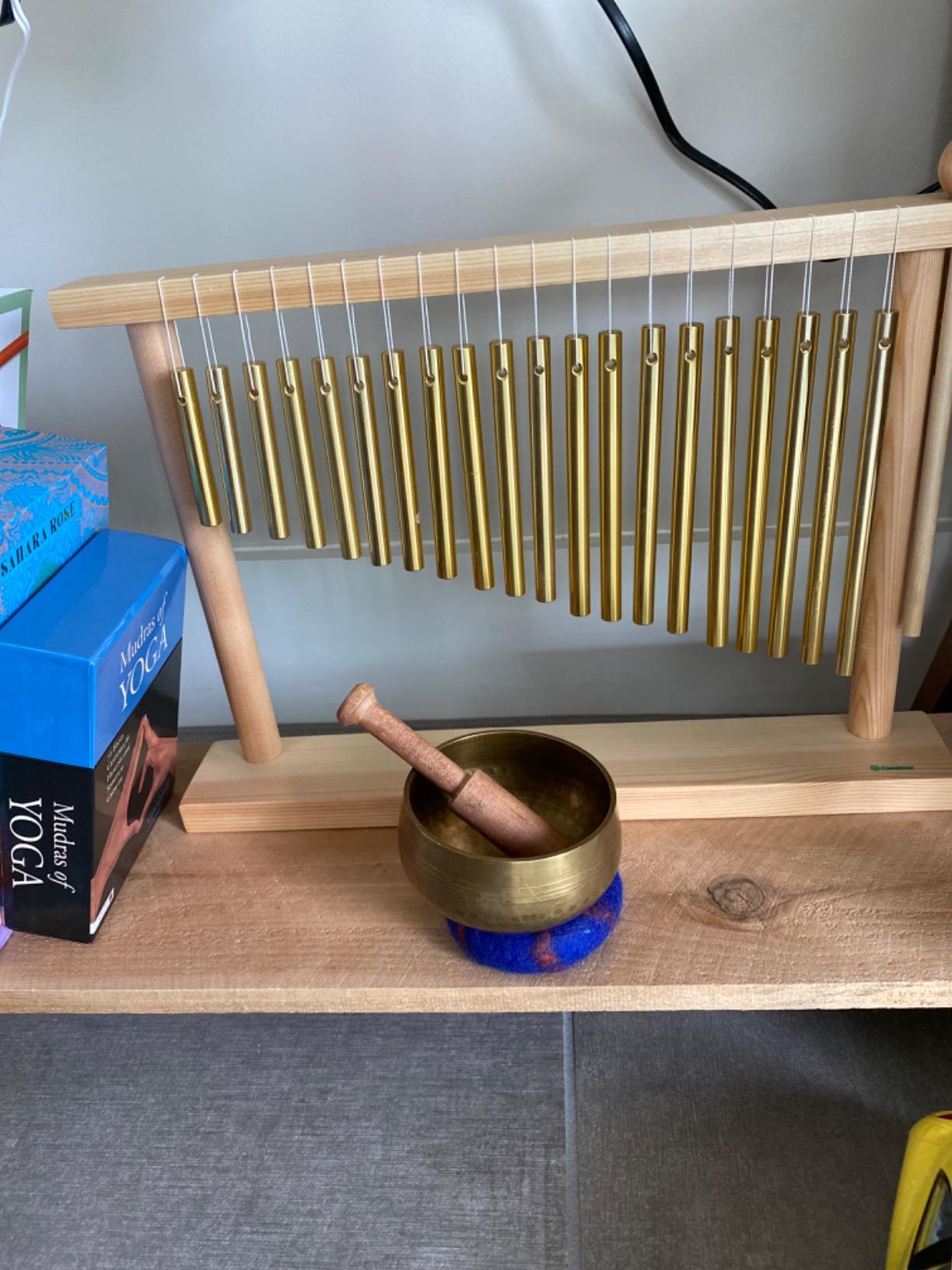
This is the chime that shows up in therapy rooms, and after using it I understand why. Twenty notes spread across a wood base give a calm, even wash rather than a bright attack, and the wide base means it sits flat on a table without a stand.
At 15 by 2.7 by 9.7 inches and 1.88 kg, it is heavier than most table chimes in this list. That mass works in its favour, because the sound has body and does not sound like a toy.

One owner reported that the construction survived a serious storm with no dents, and that tracks with how solid the frame feels. The bars are metal pipes on a wood base, assembled rather than glued from soft components.
A small group of buyers are less enthusiastic, calling the tone thin or tinny next to a heavy chime, and a few mentioned that the assembly orientation is not obvious from the packaging. Read the diagram before you string it.
Who this chime suits
Music therapists, yoga instructors, classroom teachers and anyone leading a group session needs to close softly. The 20-note layout is easy to sweep in one gesture, which is exactly what a room full of people needs.
It also works for a beginner learning to play, because the table format means no mounting hardware and no awkward angle.
Where it falls short
The 90-day warranty is by far the shortest in this roundup, so a damaged unit is a replacement problem rather than a repair one. There is no lifetime tuning guarantee either.
It is not a performance instrument. There is no stand, no damper and no mounting point for a cymbal arm, so it stays on the table.
5. Suwimut 20-Note Bar Chime – Best Budget Pick for a Desk or Classroom
Suwimut 20-NOTE Bar Chime, Single-row Table Top Wind Chime, 20 Bars Musical Percussion Instrument with Mallet for Ornament Classroom Office Decoration, Kids Educational Gift
20 bars, single row
0.4 inch aluminum alloy bars
15 by 2.4 by 10.6 inches, 500 g
Striker stores in the top bar
Pros
- Clear crisp tone with a long sustain
- Tabletop stand works on a desk
- percussion trap table or altar
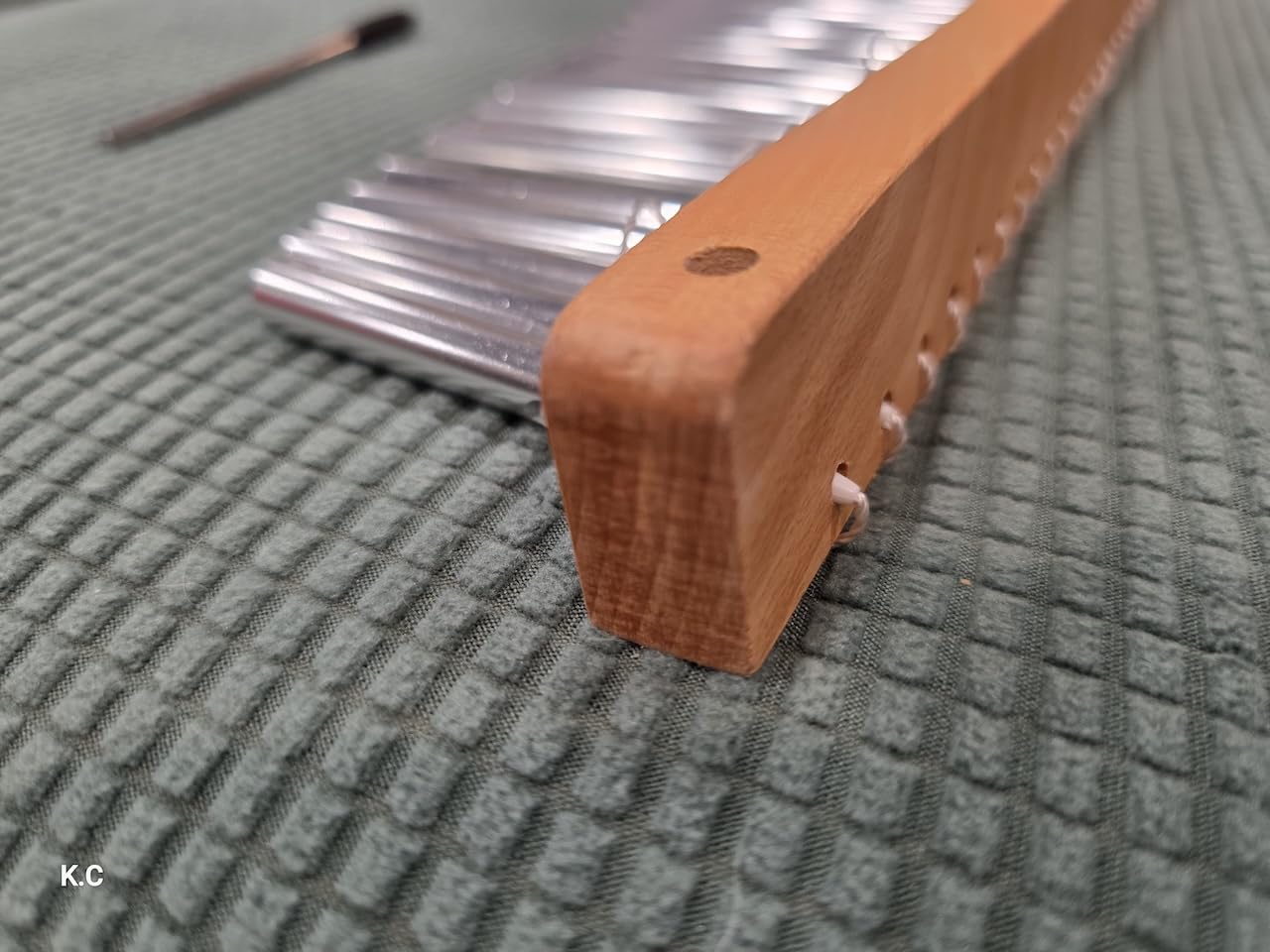
- Striker stores in a slot cut into the top wooden bar
- Polished edges are comfortable for small hands
Cons
- Light 500 g frame feels less solid when struck hard
- Single row layout limits chordal or ensemble playing
- No meaningful warranty offered
This is the cheapest instrument here that still gives you 20 notes on a real scale, and for a classroom, an office or an altar table it does the job properly. Bars are 0.4 inch diameter aluminum alloy on high tensile braided cord, with polished edges.
The detail I liked most is the storage slot. The striker lives in a channel cut into the top wooden bar, so the mallet does not go missing between sessions, which is the single most common complaint about cheap percussion.
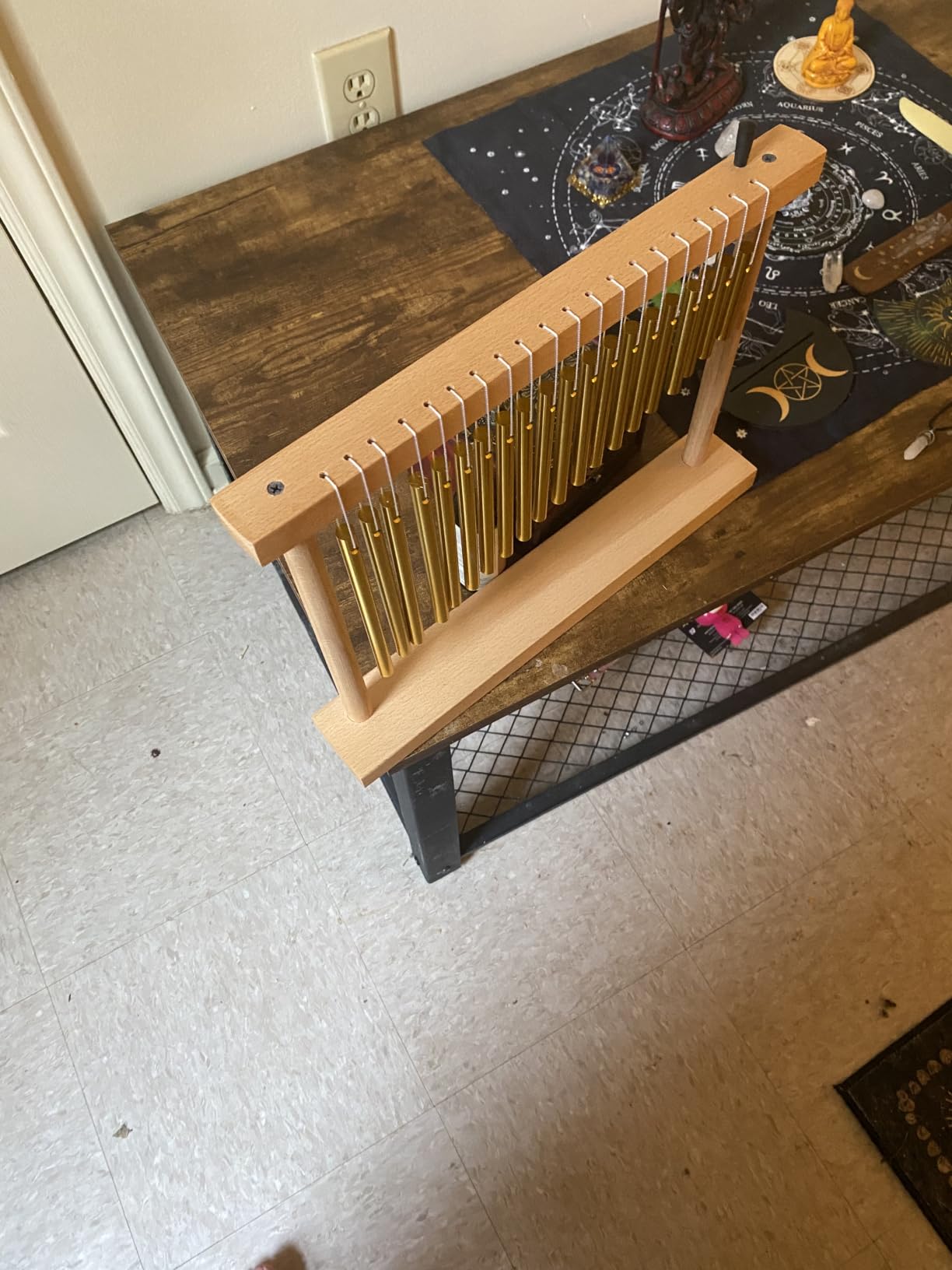
Tone-wise it is crisp and sustains for a noticeable length, and it plays with fingers as happily as with the striker. Buyers in classrooms and meditation practice rate it as an easy, attractive entry point.
At 500 g it is the lightest frame in the roundup, and that is where the trade-off shows. A small group of owners feel it is not built for hard mallet playing, and the frame does move when struck firmly.
Who this chime suits
Teachers, students, therapists on a budget, and anyone who wants a playable chime on a desk or a percussion trap table. The price point makes it an easy gift for a musician who already owns plenty of gear.
It is also a sensible first instrument, because 20 notes is enough to play short phrases and simple tunes without a steep learning curve.
Where it falls short
No warranty is offered, so a failed cord or a cracked bar is simply a replacement. It is a light frame, and a heavy-handed player will feel that immediately.
The single row means no chordal playing, and there is no mounting hardware if you later want it on a stand rather than a table.
6. QWORK 36-Tone Chime Set – Best for the Widest Note Range on a Stand
QWORK 36 Tones Musical Chimes Instruments with 2.3-4.2 ft Adjustable Mounting Stand – Crisp Sound Chrome Bells, Collapsible Tripod Base
36 chrome bars, single row
Stand adjusts from 2.3 to 4.2 feet
Collapsible tripod base
4.84 lb with stand
Pros
- Widest note range here with 36 precision-tuned tones
- Adjustable stand for seated or standing players
- Collapsible tripod stores flat for tight setups
- Full bell set and mounting stand in the box
Cons
- Lowest average rating here at 4.1
- Bulky 4.84 lb stand is awkward for small hands
- Tone can read thin or buzzy on the upper bars
This is the only set here that includes a full adjustable stand, which changes the equation for anyone who does not already own a cymbal or chime stand. Thirty-six chrome bars in a single row, on a tripod that adjusts from 2.3 to 4.2 feet.
Choir, school band and home players like the range and the fact that one instrument covers seated and standing work. The legs fold flat, so it stores in a rehearsal room without a dedicated case.
The tone is bright and shimmering, which cuts through an ensemble but is not warm. On the upper bars a noticeable minority of buyers describe it as thin or buzzy rather than round.
It also carries the lowest average rating of anything on this list, with a 4.1 and a 12 percent one-star share. Assembly is required before first use, and the textured knobs hold position well once set.

Who this chime suits
Anyone starting from zero who needs a stand in the box, plus choral directors and school band teachers who want a chromatic-ish range without a second purchase. The height range is genuinely useful for group work.
It is also a reasonable choice if your setup changes location often, because the whole thing collapses for transport.
Where it falls short
At 4.84 lb the stand is awkward for small hands and younger players, and the bars can buzz against the frame on a hard strike.
Tone is the bigger issue. If you want chimes to blend into a warm acoustic setting rather than sit bright on top, this is not the instrument.
7. MIHEY 20-Note Bar Chimes – Best for Desk Display and Stable Playing
MIHEY 20 Note Bar Chimes Percussion Instrument
20 golden bars, single row
Widened wood base
15 by 2.7 by 9.7 inches, 2.92 lb
Pros
- Widened wood base gives real stability when playing
- Clear and pleasant tone at a mid-range cost
- Attractive enough to leave out as decoration
- Heavier 2.92 lb build feels more solid
Cons
- Weakest consistency rating here at 4.3
- Tone described as thin by some buyers
- Single row with no stand and no sustain control
Two and a half pounds of frame changes how a table chime behaves. This one sits properly still under a mallet, and the widened wood base gives it a footprint that does not wobble the way narrower frames do.
Twenty golden bars produce a clear, pleasant tone, and the finish is nice enough that leaving it on a desk between sessions is not a compromise. That is a real consideration in therapy rooms and studios.
Buyers generally like the build and the appearance, and a decent share rate the tone as perfectly average rather than disappointing. For relaxation practice and casual use, that is exactly enough.
Consistency is the weak spot. With a 4.3 average and a 10 percent one-star share, this set has the widest spread of opinion here, and some describe the sound as thin.
Who this chime suits
Anyone who wants a chime that doubles as decor and needs stability more than volume. Practice rooms, offices, treatment rooms and home studios all benefit from a frame that stays put.
If you already own a stand and want something portable, the 2.92 lb weight is still manageable for short distances.
Where it falls short
The listing carries fewer spec details than the branded alternatives, so you are buying on appearance and weight rather than on documented alloy or tuning information.
There is no stand, no mounting point and no damper, so you cannot shorten the ring when the room is already busy.
8. Woodstock Zenergy Trio – Best for Classrooms, Yoga and Mindfulness
Woodstock Wind Chimes Zenergy Trio Hand Chime, Silver (7.7″) Musically Tuned for Meditation, Yoga and Mindfulness, Great for Classrooms
Three tuned notes on one aluminum rod
7.7 inch cherry finish ash body
12.8 ounces with mallet
Lifetime tuning guarantee
Pros
- Chord rings for roughly ten seconds
- Loud and carrying enough to redirect a full classroom
- Light 12.8 oz body is easy to hold and pass around
- Most reviewed instrument in this roundup
- Lifetime tuning guarantee
Cons
- Three notes cannot reproduce melodies or scales
- Occasional reports of out-of-tune tubes and scratched finish on arrival
- Middle bar interval does not match the NBC theater chime sequence
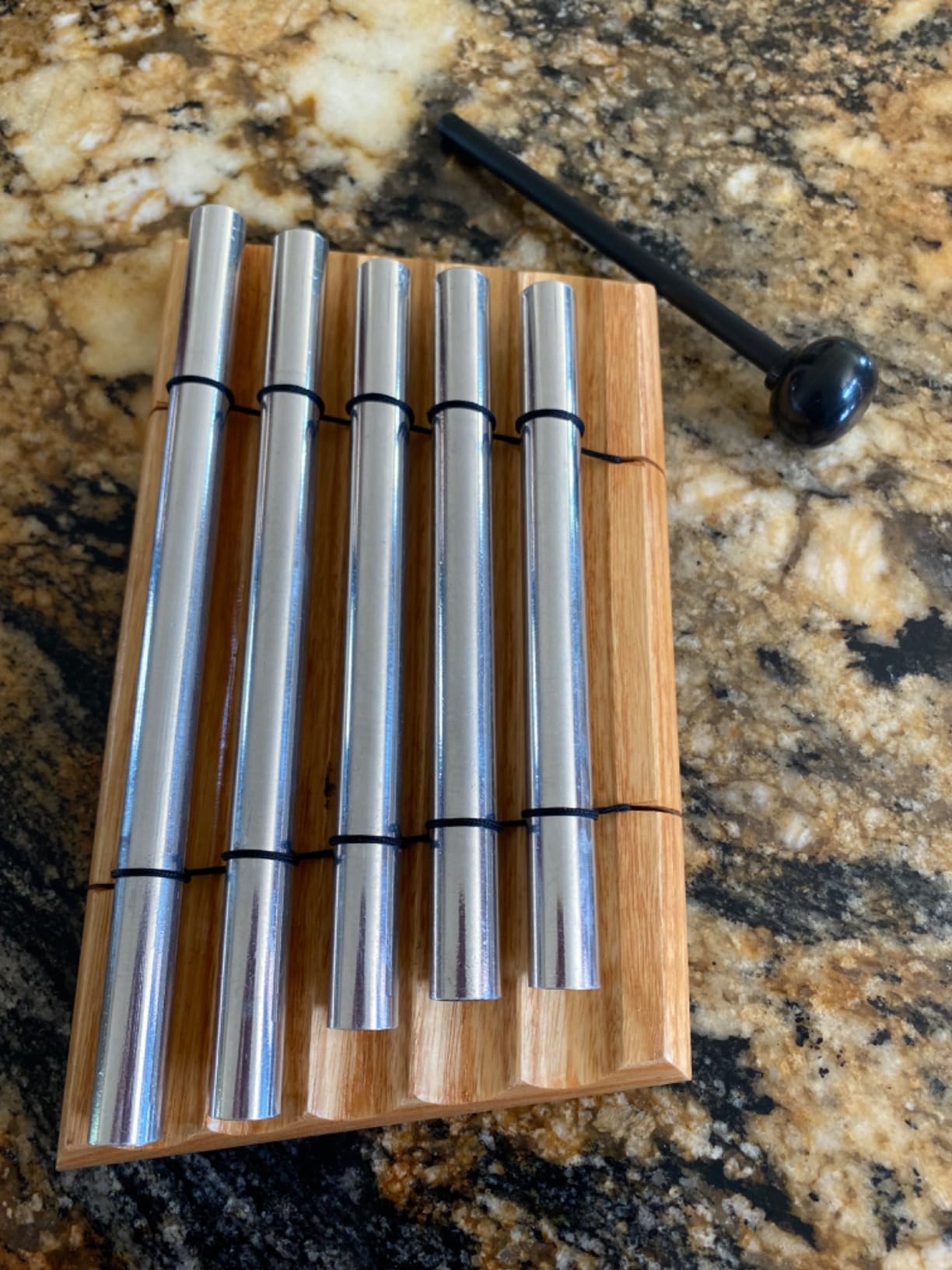
There is nothing else here that does what this does. Three tuned notes are struck on a single polished aluminum rod, and the resulting chord rings for roughly ten seconds. That is a long time in a room full of children.
At 7.7 inches and 12.8 ounces it is the most portable instrument on this list, small enough for a teacher desk and light enough to hand around a circle. Teachers and yoga instructors use it to calm a space, cue a transition, or mark the start and end of a session.
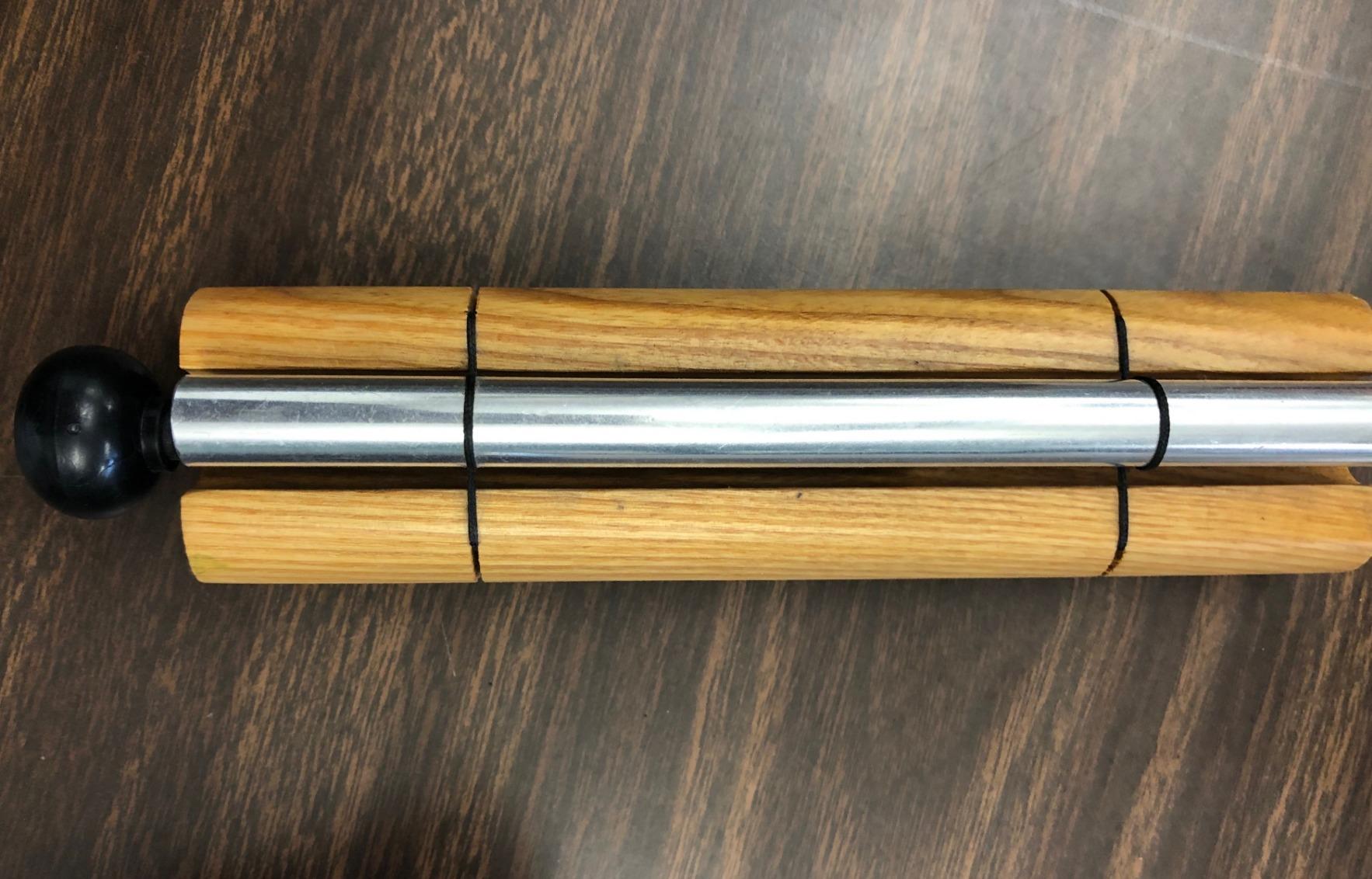
The build is a cherry finish ash body with one solid aluminum rod, and it comes in a kraft gift box. Woodstock Chimes was founded in 1979 by Grammy Award-winning musician Garry Kvistad, which explains why the product is musically tuned rather than decorative.
It is also the most reviewed instrument in this roundup by a wide margin, and the volume of owner feedback is consistent about one thing: it projects. The tone carries across a room in a way the 20-note table chimes here do not.
Who this chime suits
Teachers, yoga and meditation instructors, therapists, parents and anyone who needs to signal a group rather than play music to a group. A three-note chord is the right choice when the job is attention, not melody.
It is also the safest instrument here for a child to handle, with no small detachable parts and a body that will not be damaged by a hard knock.
Where it falls short
Three notes is three notes. It cannot play a tune, and if your set is a specific interval sequence such as the NBC theater chime, the middle bar will not match it.
Isolated complaints concern tubes arriving out of tune or a scratched finish, so inspect the package on arrival even with a lifetime tuning guarantee.
9. Woodstock Pachelbel’s Canon Chime – Best Value Outdoor Chime for Musicians
Woodstock Wind Chimes Pachelbel’s Canon in D, Silver Aluminum Tubes, Medium 32 – Inch, Deep Toned Windchime for Outdoor Decor for Garden, Patio, Porch
Canon in D tuning, 32 inches
6 silver aluminum tubes plus 4 solid rods
Removable windcatcher
Lifetime tuning guarantee
Pros
- Real repertoire in Pachelbel's Canon in D
- Deep mellow tone with a long ring
- Tuned by Woodstock's professional musicians
- Resists most weather conditions
Cons
- Random note order never plays the canon start to finish
- 32 inches needs a reasonably high suspension point
- Decorative hanging chime rather than a played instrument
Almost every wind chime on the market plays some version of a pentatonic scale. This one plays notes drawn from Pachelbel’s Canon in D, and owners who know the tune pick it out of the noise of a garden almost immediately.
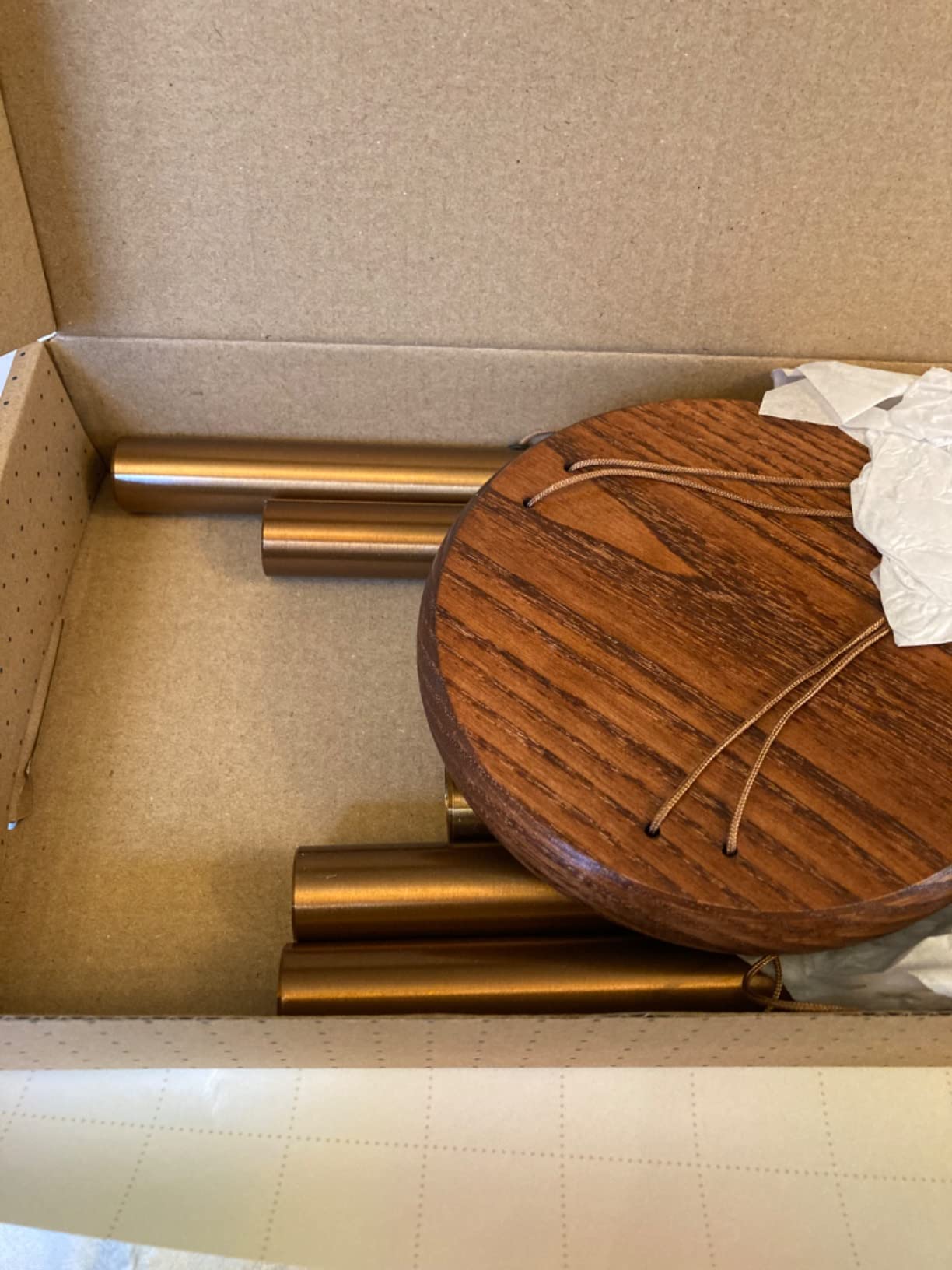
Construction is six silver aluminum tubes plus four black aluminum solid rods on a black finish ash top, 32 inches end to end, with a removable windcatcher for adjusting how often it speaks. Reviewers describe the tone as deep and grand, holding its note far better than tinny chimes.
At 1.2 pounds it is light to hang and easy to move if you want it in two places. The aluminum and ash build resists most weather, and a lifetime tuning guarantee covers the tuning for as long as you own it.
It is a genuinely good deal for the sound, and the buyer feedback is overwhelmingly positive, with audiophile recordists among the people describing it most warmly.
Who this chime suits
Songwriters, arrangers and anyone recording ambience who wants a recognisable piece rather than a scale. Musicians who work in D, or who like to end a piece with a Bach cadence, will get more from this than a generic chime.
It also pairs well with other Woodstock tunings if you hang more than one, since the makers tune the whole range to harmonize.
Where it falls short
The chime plays notes randomly rather than in order, so it will never play the canon start to finish. If you are hoping for a recognisable sequence, you will be disappointed.
It is a hanging chime with no bars and no playing surface. Also, 32 inches needs a reasonably high suspension point, and there is no way to silence it on demand.
10. Woodstock Gregorian Alto Chime – Best for Small Porches and Early Music
Woodstock Wind Chimes for Outside, Garden, Patio, Porch and Outdoor Decor (17″) Gregorian Chimes Soprano Silver Wind Chime (GSS)
8 aluminum tubes, medieval scale
17 inches overall, 8 ounces
Cherry wood top, clapper and catcher
Braided nylon cord
Pros
- Gregorian chant scale sounds rich and melodious rather than tinny
- 17 inches hangs from a standard porch hook
- Alto voice in Woodstock five-piece gregorian series
- Soft sound holds its note for a noticeable length
Cons
- No way to mute the chime when you want quiet
- Wooden top can warp in prolonged direct rain
- Needs a high enough hanging point
This is the one to buy if you play early music. It is tuned to a medieval scale of the kind used in Gregorian chant, which means it sits naturally against chant-like or modal material rather than fighting it.
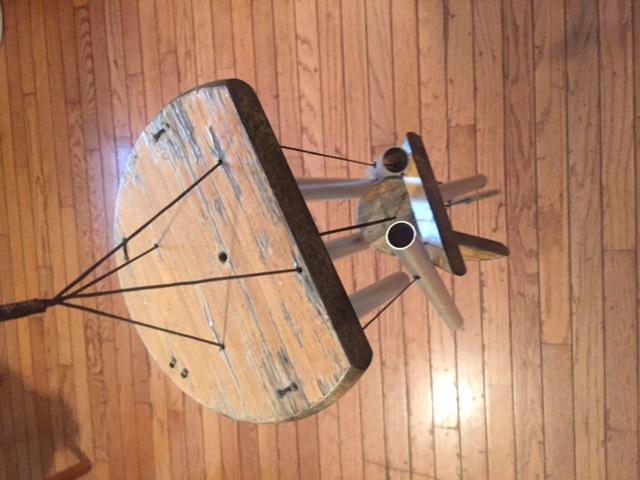
Eight silver-colored aluminum tubes hang from a cherry wood top, clapper and wind catcher on braided nylon cord, and the whole thing is 17 inches and 8 ounces. It is the easiest chime here to hang anywhere with a hook.
Owners describe the sound as uplifting and rich rather than tinny, and note that a light breeze is enough to set it off. At this size the sound is soft, so it will not carry across a street the way a 32-inch chime does.
It is the alto voice in Woodstock’s five-chime gregorian series, so if you already own one from the range, this is the missing middle piece rather than a duplicate.
Who this chime suits
Early music players, medieval and folk musicians, and anyone writing modal or chant-inspired material who wants a reference pitch. Small porches and covered patios work well at this size.
Owners also rate the value highly, repeatedly saying it sounds better than premium chimes costing several times more.
Where it falls short
There is no way to mute it, which matters if you need a quiet space. And while the aluminum tubes weather well, the wooden top can warp in prolonged direct rain, so a sheltered hang is worth planning.
It is soft and high, so it will not project. If you want a chime audible from the road, look at a longer model instead.
How to Choose Chimes for Musicians
Almost every buying mistake in this category comes down to picking a chime by bar count. Tuning system and mounting come first. Use the notes below in that order, and you will not overpay.
Decide on the tuning system before the bar count
A pentatonic set contains five notes per octave with no half steps, which is why it sounds correct over almost anything. It is the default for outdoor chimes and for improvised playing, and it is the safest first choice for a beginner. If you are still comparing decor ranges, our [large wind chimes for gardens guide](/best-large-wind-chimes-for-gardens/) covers size and tube length in more detail.
A diatonic set is arranged as a full scale, so a single row can play a specific melody. It is more versatile and more sensitive, and it only works if you play in or near its key. A chromatic set gives every semitone, which is what orchestral and concert percussion use, and it is the most expensive option here.
Exotic and just-intonation sets deliberately avoid equal temperament to sound purer intervals. They sound wonderful solo and clash the moment a keyboard enters, so they suit early music and solo recording more than band work.
Choose bar count for the job, not for the number
Twelve to twenty bars is an accent range. Thirty to forty bars is enough to play recognizable phrases and full tunes. Single row means one sweep, one scale, and a cheaper frame. Double row gives two overlapping scales for a much bigger sound, at roughly double the weight and cost, which is why drum corps players are the ones who want it.
For most players, twenty bars is the sweet spot: enough range to be musical, small enough to move in one hand or one carry case.
Sort out the mounting before you buy
Anything you intend to hang from a cymbal or chime stand needs a 7/16 inch hole in the mantle. Some sets include one, some do not, and a separate mount is often sold on its own. If no mount is included, factor that into the cost before you compare two chimes.
For standing players, a collapsible tripod is worth more than a few extra bars, because it gives you height adjustment and packs flat. For tabletop use, a widened base matters more than bar count, since a narrow frame moves under the mallet.
Check the alloy, the cord and the warranty
Aluminum and aluminum-titanium alloys are the standard for playable chimes because they ring predictably and resist corrosion. Look for bars that are tuned by hand and never plated or anodized, since plating deadens the high partials that make a chime shimmer.
On cord, braided fibre or nylon is far better than plastic clothing ties, which stretch and snap. On warranty, a lifetime tuning guarantee tells you the maker expects the tuning to hold for decades. A 90-day warranty tells you very little. If you travel with your instrument, a hard-sided gig bag is worth buying separately.
If you also need timing help in the same practice room, our [premium metronomes for musicians](/best-premium-metronomes-for-musicians/) covers the same playing-focused angle.
Recording Chimes in a Studio
Chimes are among the easiest instruments to record badly. The bars generate inharmonic overtones that any microphone close to the frame will pick up, and the result sounds thin and clattery rather than bell-like. Position matters more than gear.
Start 20 to 30 centimetres from the middle of the bar row, slightly above the top bar rather than level with it. Aim at the middle of the instrument, not at the longest or shortest bar, so you do not over-record the top end. A large-diaphragm condenser in a good room usually beats a dynamic mic at this distance, because the chime has plenty of level and needs the transient detail.
Record a single swept note at a time and build the arrangement by overdubbing. That way each strike gets its own take and you can reject the ones where a neighbouring bar leaks into the microphone. A damper, or a folded towel against the bars, lets you take a short, dry version for verses and a long, ringing version for the top of the arrangement.
In a live amplified setting the opposite problem appears: a chime that sounds beautiful acoustically gets lost under a loud kit. Drummers and producers on drummerworld forums have described Meinl studio chimes as brighter and lighter than most and cutting through well in amplified music, which is a useful rule of thumb. Bright, short decay, played close to the mic, does the work. If you are layering a melodic instrument instead, our [professional melodicas for musicians](/best-professional-melodicas-for-musicians/) covers the neighbouring territory.
Frequently Asked Questions
Who makes the best quality wind chimes?
For musicians, the answer is usually a maker that tunes by hand and warrants the tuning. TreeWorks builds its playable bar chimes in Nashville with hand-tuned aluminum and titanium alloy bars and a full lifetime warranty. Among hanging chimes, Woodstock Chimes and Music of the Spheres both tune to real scales rather than arbitrary notes, and both offer lifetime tuning guarantees. Build quality and a tuning guarantee matter more than tube material when music is the goal.
Which wind chime is the best quality?
Quality depends on what you need the chime to do. For playing, look for hand-tuned alloy bars, a mantle hole that fits a cymbal stand, and a warranty longer than a year. For hanging outdoors, look for a documented scale, rust-resistant aluminum tubing, and cord routed so it does not abrade. The TreeWorks Classic TRE35 and the Woodstock Zenergy Trio are the two we would put at the top of their categories for musical use.
What is the most beautiful sounding wind chime?
Beauty is a matter of register and tuning. Owners most often describe deep, long-ringing chimes as the most beautiful, which means a larger body and lower tubes. Woodstock’s Pachelbel’s Canon chime in D is consistently described as deep and grand, and Music of the Spheres offers larger voices below the soprano if you want more weight. For music, a tuned scale matters more than size, so a pentatonic set in a mid register usually beats a random larger chime.
What is special about Corinthian wind chimes?
Corinthian chimes are a style named for the ancient Greek columns they are modelled on, and they are sold as decorative garden pieces rather than as tuned musical instruments. Their appeal is sculptural and their tubes are generally chosen for appearance, not for a documented scale. If you want music, a chime with a published tuning such as a pentatonic or medieval scale is the better choice.
What instruments make a ding sound?
The main family is tuned metal-bar percussion. Bar chimes and drum chimes are rows of alloy bars on a wooden frame, played by sweeping or striking, and they cover roughly ten to thirty-six notes. Hand chimes like the Woodstock Zenergy Trio use a single struck rod for a chord. Finger chimes are small sets held in one hand, triangle is a single metal bar struck with a beater, and orchestral tubular bells are the large standing version of the same idea.
How do you mount bar chimes on a drum kit?
Most performance bar chimes have a 7/16 inch hole drilled through the mantle, which fits a straight cymbal stand or a cymbal arm bolt. Mount the chime above and to the side of the kit, angled inward, so a swing cannot bring it into contact with a cymbal. Short, lighter sets stay closer to the throne; long sets need a boom arm or a dedicated chime stand to avoid clashes, and the mount is often sold separately.
Best Chimes for Musicians: The Short List in 2026
If you want one instrument and no further deliberation, the TreeWorks Classic TRE35 is the pick. Thirty-five hand-tuned bars, a lifetime warranty and the widest musical range here make it the chime that working drummers, pit players and studios actually reach for.
Pick something else when your need is specific. The Woodstock Zenergy Trio owns classroom and mindfulness work. The Music of the Spheres Soprano and the Woodstock Pachelbel chime cover hanging outdoors with real musical tuning. The Suwimut and ENNBOM 20-note sets cover therapy and classroom work on a tighter budget, and the QWORK set is the pick when you need a stand included.
Whichever you choose, check the tuning system and the mounting hole before anything else, and listen to it in the room you will actually play in.