
If you have ever tried a beer that made your mouth pucker like a Warhead candy, you already know what a sour beer tastes like.
These tart, acidic brews have taken craft beer menus by storm over the past decade. They offer a flavor punch that nothing else in the beer world quite matches.
My first real experience with sour beer happened at a small brewery in Boulder. I ordered what I thought was a light, refreshing wheat beer and got hit with a wave of lemon-like tartness that made my eyes widen.
Was this beer bad? Why was it so tangy? Within about three sips, I was completely hooked and found myself chasing that same quenching zip on every tap list I encountered.
This guide exists because I have spent years walking newcomers through the world of sour beers at Prohibition Denver. I want to share what I have learned so you can approach your first sour with confidence instead of confusion.
Table of Contents
What Is Sour Beer?
Sour beer is craft beer intentionally brewed for a tart, acidic, or funky flavor profile. Unlike standard beers that aim for balance and smoothness, sour beers embrace sharp, mouth-puckering qualities.
These qualities come from wild yeast and specific bacteria. The pH of these beers typically hovers between 3.0 and 3.5, which gives them that signature zip you feel on your tongue.
Here is something important to understand. Sour beer is not spoiled beer.
When a regular beer goes bad, it develops off-flavors that taste like wet cardboard or nail polish remover. Sour beer, by contrast, gets its tartness from carefully managed fermentation using specific microorganisms.
These microorganisms create lactic acid and acetic acid as byproducts. Brewers add these cultures on purpose, controlling the process to deliver predictable, enjoyable tartness rather than accidental spoilage.
The sour beer category traces its roots back centuries to Belgian brewing traditions. In regions like Flanders, brewers discovered that the local microbiome produced unique tart qualities in their beers.
Today, American craft breweries have embraced and expanded these techniques. The resulting styles range from mildly tangy to intensely sour.
How Sour Beer Gets Its Tartness
The tartness in sour beer comes from two main sources: bacteria and wild yeast. Understanding these cultures helps explain why sour beers taste so different from everything else in your glass.
Lactobacillus is the primary bacteria responsible for sourness in many beer styles. This microorganism consumes sugars in the wort and produces lactic acid as a result.
The same bacteria show up in yogurt and sourdough bread. They create that sharp, tangy quality you recognize in those foods.
Brewers often add Lactobacillus during fermentation in a process called kettle souring. The bacteria work in controlled tanks to acidify the beer before the actual brewing fermentation begins.
Acetobacter is another bacterium that produces acid. It creates acetic acid instead of lactic acid.
Acetic acid gives vinegar its character. In small amounts it can add pleasant complexity to sour beer.
Too much Acetobacter, however, and the beer tastes like salad dressing. Skilled brewers manage this bacterium carefully to keep it in check.
Brettanomyces, often called simply Brett, is a wild yeast strain. It produces earthy, funky, barnyard-like flavors.
Unlike the clean fermentation character of typical brewing yeast, Brett adds rustic complexity that many sour beer lovers crave. It can work for months or years inside oak barrels, slowly transforming the beer into something complex and layered.
Pediococcus is a bacterium that contributes both tartness and a thick, creamy mouthfeel. It shows up in some Belgian styles and creates a velvety quality that balances sharp acidity.
Kettle Souring vs Traditional Aging
Brewers use two main approaches to create sour beer. The first is kettle souring, a modern method where bacteria are added to the beer in a tank called a kettle.
The beer sits at warm temperature for a day or two while the bacteria produce lactic acid. Then the brewer boils the beer to kill the bacteria before adding traditional fermentation yeast.
This approach delivers clean, predictable tartness. It avoids the funk that comes from extended aging.
The second approach involves traditional aging in oak barrels, sometimes for years. In this method, wild microorganisms from the brewery environment colonize the barrels over time.
Beers left in these barrels develop complex profiles. They layer tartness, funk, and oak character in ways that no shortcuts can replicate.
This is how classic Belgian styles like Flanders Red and Lambic are made.
Spontaneous fermentation is the most traditional method, used in Belgium for Gueuze and other classic styles. Brewers expose hot wort to open air, allowing whatever microorganisms happen to be present in the brewery to inoculate the beer naturally.
The resulting beers develop unique flavor profiles. They reflect their specific environment, much like terroir in wine.
Main Sour Beer Styles
Sour beers come in several distinct styles, each with its own character and history. Learning these categories helps you find what appeals to your palate.
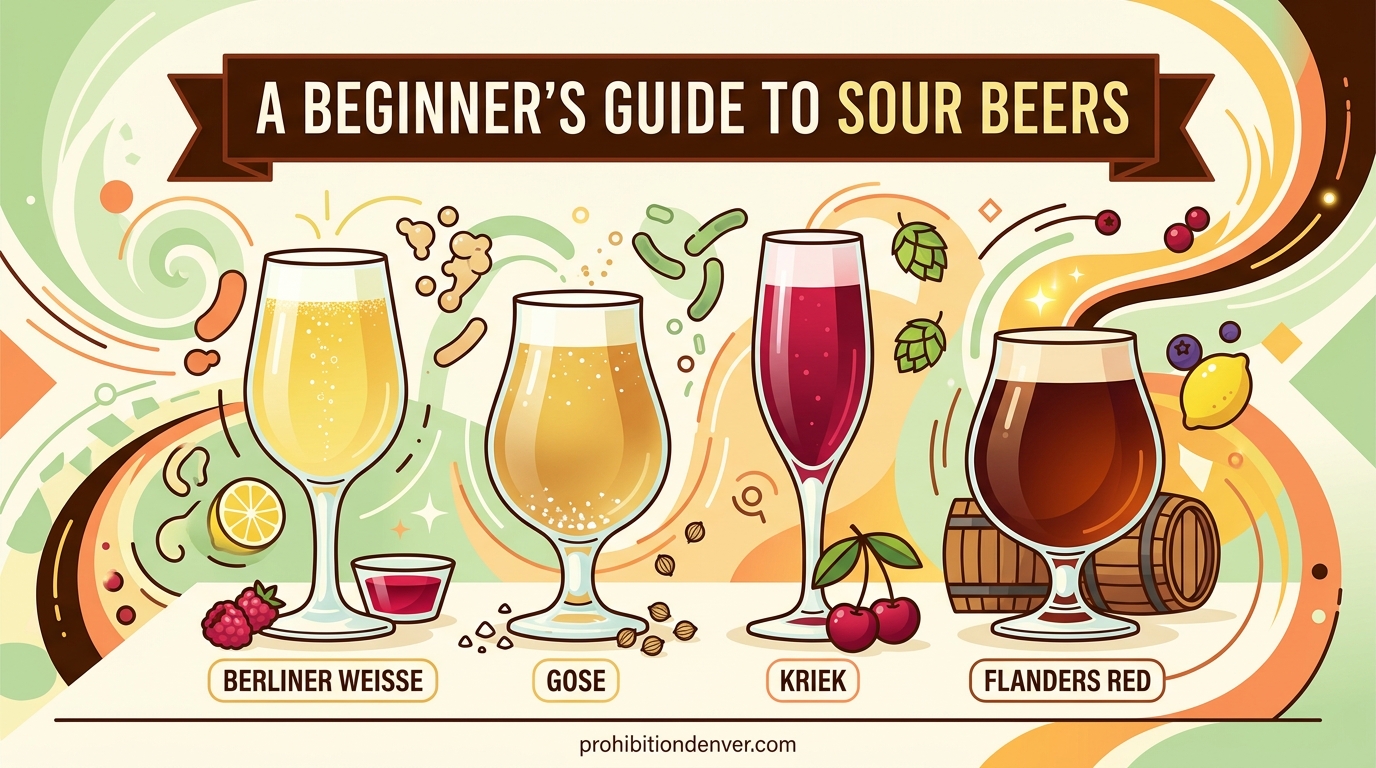
Berliner Weisse
Berliner Weisse originated in Germany. It represents one of the most accessible entry points into sour beer.
This light, effervescent style typically shows around 3% alcohol. It delivers refreshing lemon-like tartness that makes it incredibly sessionable.
Weisse means wheat in German. These beers contain a large proportion of wheat in the grain bill, which contributes a soft, rounded body that balances the acidity.
Traditional Berliner Weisse is often served with fruit syrup. Either raspberry or woodruff herb mellows the tartness.
Craft breweries in Colorado have embraced this style and put their own spins on it. They add everything from passion fruit to Mosaic hops for modern variations.
Oarsman from The Colorado Sour House is an excellent example. It delivers bright tartness without overwhelming your palate, making it perfect for a hot day or as an introduction to sour beers if you find the category intimidating.
Lambic
Lambic is the granddaddy of sour beer styles. It is produced exclusively in the Pajottenland region of Belgium near Brussels.
Unlike most beer styles that use cultivated yeast strains, Lambic relies on spontaneous fermentation. The beer is exposed to the natural microbiology of the region during a lengthy aging process.
Straight Lambic is the base style. It is a young to mid-aged sour beer that showcases the funky, citric qualities of spontaneous fermentation.
Most of what you find in the States labeled as Lambic is actually a blend or a modern American interpretation.
Gueuze is what happens when brewers blend young and old Lambics and bottle them for a second fermentation. The carbonation in the bottle creates a Champagne-like effervescence.
The flavor profile combines tangy citrus with earthy funk and a long, complex finish. Duchesse de Bourgogne is a widely available example that showcases what Gueuze can achieve.
Fruit Lambic represents another dimension of this style. Brewers add whole fruits to the fermentation, typically cherries (Kriek), raspberries (Framboise), or other options.
The fruit integrates with the sour base to create wines-like beverages. They offer sweetness, tartness, and fruit character in harmony.
Rodenbach makes an excellent Kriek that demonstrates the style beautifully.
Gose
Gose originated in Leipzig, Germany. It has a distinctive personality shaped by its salt content.
The name comes from the Gose River. Traditional versions include coriander and salt in addition to sour fermentation.
The salt adds a mineral quality. It enhances the thirst-quenching nature of the beer.
Modern American interpretations of Gose often dial back the salt and embrace fruit additions. These beers work exceptionally well as summer sippers because the tartness and light body make them incredibly refreshing on hot days.
The coriander adds a subtle spice that complements fruit variations.
West Point Barrel House in Colorado produces variations that show how versatile the style can be when breweries approach it with creativity.
Flanders Red and Flanders Brown
Flanders Red is a rich, complex sour beer from Belgium. It ages for extended periods in oak barrels.
The flavor profile combines deep malt character with sharp acidity. The oak influence adds vanilla and tannic qualities that make the beer taste almost wine-like.
The acidity acts like a palate cleanser. It cuts through rich foods and leaves your mouth ready for the next bite.
Rodenbach Red is the classic example of the style. It is widely available and demonstrates exactly what makes Flanders Red special.
The beer offers layers of complexity that unfold as you drink. It starts with sharp tartness and moves into caramel and dark fruit notes before a clean, refreshing finish.
Flanders Brown shares the same sour fermentation but uses darker malts. These produce a nuttier, more caramel-forward flavor profile.
These beers tend to be slightly less acidic than their red counterparts. They offer a rounder, more approachable character.
Duchesse de Bourgogne is an excellent entry point into this style.
Best Sour Beers for Beginners
Knowing where to start makes a huge difference when you are new to sour beer. The beer community has tested countless options, and certain beers consistently emerge as perfect first experiences.
Rodenbach Red should be at the top of your list. This Belgian classic delivers everything that makes sour beer compelling without overwhelming your palate.
The balance between tartness, malt depth, and oak influence creates a beer that feels sophisticated rather than shocking. I have recommended it to dozens of people who thought they did not like sour beer.
Nearly all of them came back surprised by how much they enjoyed it.
Duchesse de Bourgogne offers another excellent entry point. This Flanders Brown shows that sour beer can be rich and satisfying rather than palate-assaulting.
The caramel and dark fruit notes give it something for your taste buds to hold onto. The acidity keeps things interesting.
Berliner Weisse styles like Oarsman provide the most accessible introduction possible. The low alcohol and gentle tartness mean you can sip slowly and let your palate adjust to the sensation.
Add some fruit syrup if you want. Or drink it plain to understand what the base style offers.
Monk’s Cafe from Philadelphia is frequently recommended in online sour beer communities as a good introductory sour. It strikes a balance between complexity and approachability that makes it perfect for curious newcomers.
For those who want to explore the fruit-forward side of sour beer, any Kriek or Framboise from quality producers gives you sweetness and tartness together.
The fruit makes the sourness more friendly. You still learn what the style is about.
Homebrewers who want to try making sour beer should start with kettle souring. This modern technique is more predictable than traditional methods.
It allows you to create a clean, controlled tartness without specialized equipment or years of aging. Pitch Lactobacillus into your wort, keep it warm for 24 to 48 hours, boil to stop the process, then ferment normally.
You can create a pleasant sour base that teaches you the fundamentals. Only after that should you invest in oak barrels and wild cultures.
Food Pairing and Glassware
Sour beer pairs wonderfully with food. The acidity acts like a palate cleanser, resetting your taste buds between bites.
This makes sour beers particularly effective companions for rich, fatty, or fried foods.
Berliner Weisse works beautifully with light fare like salads, seafood, and cheese boards. The refreshing tartness keeps your palate awake and ready for the next bite.
Try it with goat cheese or a fresh cevich. See how well the styles complement each other.
Flanders Red excels with heartier dishes. The rich malt backbone and sharp acidity cut through braised meats, stews, and roasted vegetables in ways that standard beers cannot match.
I have found it particularly effective with tomato-based dishes and barbecue. The acidity cuts through the fattiness of smoked meats.
Fruit Lambics pair naturally with desserts, especially those featuring the same fruit used in the beer. Cherry lambic with chocolate cherry torte creates seamless harmony on the table.
Raspberry lambic with fruit tart works equally well. Any fruit-forward sour with a cheese course can open up new dimensions of flavor.
Gose works as an aperitif or a companion to light snacks. The salt and coriander make it ideal for pretzels and cured meats.
It also matches well with Mexican food. The acidity cuts through the heat and richness of the cuisine.
For glassware, a tulip glass works well for most sour styles. The shape narrows at the top to concentrate aromatics.
The bowl allows you to appreciate the beer’s color and carbonation. Some styles like Gueuze are traditionally served in Champagne flutes to highlight the carbonation.
A quality tulip glass works fine if that is what you have.
Your Next Steps
Now that you understand the basics, the real fun begins. Find a brewery or bottle shop that carries quality sour beers and ask for recommendations based on what you learned here.
Start with something accessible like a Berliner Weisse or Rodenbach Red. Then branch out from there based on what excites your palate.
Pay attention to what you like and why you like it. Do you prefer the bright, refreshing tartness of kettle-soured beers?
Or does the complex funk of barrel-aged styles appeal to you more? Your preferences will guide your exploration and help you discover your favorite corners of the sour beer world.
Join online communities like the sour beer subreddits and beer forums. The people who frequent these spaces love sharing recommendations and helping newcomers find their footing.
Denver and Boulder have excellent craft beer scenes. Prohibition Denver works to highlight the best of what local breweries offer.
Keep an eye on our recommendations as we discover new sour beers worth trying.