
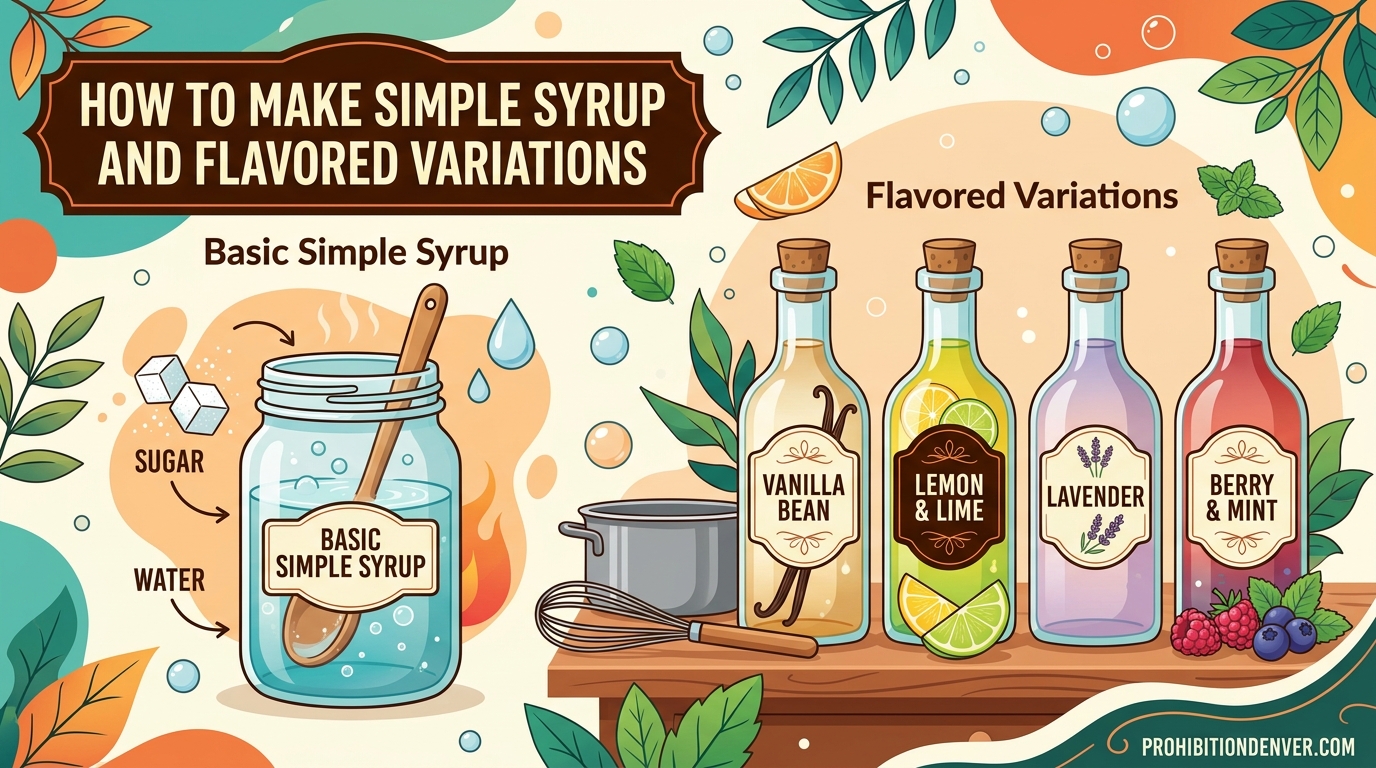
Simple syrup is a liquid sweetener made by dissolving sugar in water, and it is one of the most useful ingredients you can keep in your kitchen. Whether you are mixing cocktails, sweetening iced coffee, or brushing layers onto a cake, knowing how to make simple syrup at home saves you money and opens the door to endless flavor possibilities. The best part? It takes less than 10 minutes from start to finish.
I have been making simple syrup for years, both behind the bar at home and in my own kitchen. In that time, I have tested dozens of flavored variations, from classic mint to roasted peach, and I have learned what works and what ends up as a cloudy mess. This guide covers everything you need: the basic recipe, ratio comparisons, flavored simple syrup recipes with exact steeping times, storage tips, and troubleshooting for the problems most people run into.
If you have ever wondered why your homemade syrup turned cloudy, why it crystallized in the fridge, or what the difference is between a 1:1 and 2:1 ratio, you will find the answers here. Let us start with the foundation.
Table of Contents
How to Make Simple Syrup: The Basic Recipe
The standard simple syrup recipe uses a 1:1 ratio, which means equal parts sugar and water by volume. This is the ratio most bartenders use, and it is the one I recommend starting with if you are new to making syrup at home.
Here is what you will need:
- 1 cup granulated white sugar
- 1 cup water
- A small saucepan
- A whisk or spoon for stirring
- A clean glass jar or bottle for storage
- A fine-mesh strainer (optional, for flavored syrups)
Step 1: Combine sugar and water. Add the sugar and water to your saucepan. Stir gently to wet the sugar. You do not need to wait for it to dissolve yet.
Step 2: Heat over medium-low. Place the saucepan on the stove over medium-low heat. Stir occasionally with a whisk or spoon. The sugar will begin dissolving within the first minute.
Step 3: Wait for full dissolution. Continue stirring gently until the liquid runs completely clear with no visible sugar granules on the bottom. This usually takes 3 to 5 minutes. You do not need to bring it to a rolling boil. A gentle simmer is enough.
Step 4: Remove from heat and cool. Take the saucepan off the heat. Let the syrup cool in the pan for about 15 minutes before transferring it to a storage container.
Quick cooling method: If you need simple syrup right away, pour the hot syrup into a heatproof bowl and set that bowl inside a larger bowl filled with ice water. Stir for 2 to 3 minutes and it will be ready to use. I use this trick all the time when I decide to make a cocktail on the spur of the moment.
Once cooled, transfer your simple syrup to a clean glass bottle or mason jar. Seal it tightly and store it in the refrigerator. A basic 1:1 simple syrup will keep for about 3 to 4 weeks refrigerated.
One important note: you can actually make simple syrup without any heat at all. The cold process method involves shaking or stirring equal parts sugar and cold water in a jar until the sugar dissolves completely. This takes about 5 to 10 minutes of vigorous shaking. The result is slightly less viscous than the heated version, but it works well and preserves delicate flavors better if you are planning to add fresh herbs or fruit afterward.
Simple Syrup Ratio: 1:1 vs 2:1 Explained
The ratio question comes up constantly, and it is one of the most debated topics among home bartenders. Both ratios produce a liquid sweetener, but they behave differently in drinks and have different shelf lives.
Standard simple syrup (1:1 ratio) uses equal parts sugar and water. It has a lighter consistency, dissolves easily into cold drinks, and is the most versatile option for everyday use. I reach for 1:1 when I am making iced tea, lemonade, or lighter cocktails where I want sweetness without adding too much body.
Rich simple syrup (2:1 ratio) uses two parts sugar to one part water. It is thicker, sweeter per ounce, and lasts longer in the refrigerator because the higher sugar concentration acts as a natural preservative. Many professional bartenders prefer the 2:1 ratio for spirit-forward cocktails like Old Fashioneds and daiquiris because it adds richness without diluting the drink as much.
Here is a practical way to think about the difference:
- Use 1:1 for: iced tea, iced coffee, lemonade, light cocktails, non-alcoholic drinks, baking applications
- Use 2:1 for: Old Fashioneds, daiquiris, mai tais, any cocktail where you want sweetness with less dilution
- Use demerara sugar with 2:1 for: a deeper, caramel-like flavor that pairs beautifully with whiskey and rum drinks
One thing I learned from bartending friends: if you switch from 1:1 to 2:1 syrup in a cocktail recipe, you generally need to use about half as much. A recipe calling for 0.5 ounces of 1:1 syrup would use roughly 0.25 ounces of 2:1 syrup instead.
Rich simple syrup also resists crystallization better because of its higher sugar content. If you have ever had your homemade syrup turn grainy after a week in the fridge, switching to a 2:1 ratio can help prevent that problem.
Fruit-Infused Simple Syrup Recipes
Fruit syrups are where homemade simple syrup really shines. The flavors are brighter and more vibrant than anything you can buy in a store, and they take almost no extra effort beyond the basic recipe. The key is using ripe, flavorful fruit and straining thoroughly to avoid the stringy texture that many people complain about.
Strawberry Simple Syrup
This is one of the most popular fruit syrups, and for good reason. It adds a fresh, sweet berry flavor to cocktails, sparkling water, and even pancakes.
Ingredients: 1 cup sugar, 1 cup water, 1 cup fresh strawberries (hulled and sliced)
Make your basic simple syrup as described above. Once the sugar dissolves completely, add the sliced strawberries and simmer gently for 5 minutes. Use a spoon or potato masher to lightly crush the berries against the side of the pan. Remove from heat and let the mixture steep for 20 minutes. Strain through a fine-mesh strainer, pressing gently on the fruit to extract as much liquid as possible. Do not force the pulp through the strainer, or you will end up with a cloudy, stringy syrup. Let it cool, then bottle and refrigerate. This syrup keeps for about 2 weeks.
Raspberry Simple Syrup
Raspberry syrup has a tart, slightly tangy flavor that balances well in cocktails. It is especially good paired with gin or champagne.
Ingredients: 1 cup sugar, 1 cup water, 1 cup fresh or frozen raspberries
Follow the same process as the strawberry syrup, but simmer the raspberries for only 3 to 4 minutes. Raspberries break down faster than strawberries, and overcooking them can create an unpleasant texture. Steep for 15 minutes off the heat, then strain carefully. I recommend using a double layer of cheesecloth for the clearest result. The natural pectin in raspberries can make the syrup slightly thicker, which is normal and actually desirable in most cocktails.
Peach Simple Syrup
Fresh peach syrup tastes like summer in a bottle. For even deeper flavor, try roasting the peach slices at 400 degrees Fahrenheit for 15 minutes before adding them to the syrup.
Ingredients: 1 cup sugar, 1 cup water, 1 large ripe peach (pitted and sliced)
Prepare your basic syrup, add the peach slices, and simmer for 5 to 7 minutes until the fruit softens. Gently mash the peaches and steep for 20 minutes. Strain through a fine-mesh strainer. Peach syrup pairs beautifully with bourbon, vodka, and sparkling water. It will keep refrigerated for about 2 weeks.
General fruit syrup tips: Always use the ripest fruit you can find. Underripe fruit will not give you enough flavor. If you are using frozen fruit, thaw it completely and drain excess liquid first. And always strain your fruit syrups carefully to avoid the stringy texture that many Reddit users report. A fine-mesh strainer or cheesecloth is your best friend here.
Herb-Infused Simple Syrups (Mint, Rosemary, and More)
Herb syrups add complexity and freshness to both alcoholic and non-alcoholic drinks. The trick with herbs is getting the steeping time right. Too short and you get barely any flavor. Too long and the syrup can taste bitter or grassy.
Mint Simple Syrup
Mint syrup is essential for mojitos, juleps, and iced tea. It is also one of the easiest herb syrups to make.
Ingredients: 1 cup sugar, 1 cup water, 1 cup packed fresh mint leaves
Make your basic syrup and bring it to a gentle simmer. Remove from heat immediately and stir in the mint leaves. Do not simmer the mint, or it will turn bitter and lose its fresh flavor. Cover the pan and let the mint steep for 15 to 20 minutes. Strain out the leaves, let the syrup cool, and bottle it. Mint syrup keeps for about 2 to 3 weeks refrigerated.
Rosemary Simple Syrup
Rosemary syrup has an earthy, piney flavor that works wonderfully in gin cocktails and fall-themed drinks. A little goes a long way.
Ingredients: 1 cup sugar, 1 cup water, 3 to 4 fresh rosemary sprigs
Prepare the basic syrup and add the rosemary sprigs once the sugar has dissolved. Simmer gently for 2 to 3 minutes. Remove from heat and steep for 30 minutes. The longer steep brings out the woody, aromatic qualities of rosemary without turning it bitter. Strain and store. This syrup keeps well for up to 4 weeks refrigerated.
Basil and Thyme Syrups
Basil syrup brings a peppery, slightly sweet flavor that pairs well with strawberry or lemon cocktails. Use the same method as mint syrup, but steep for only 10 minutes. Basil loses its bright flavor quickly and can become muddy if steeped too long.
Thyme syrup follows the same approach as rosemary. Simmer for 2 minutes and steep for 20 to 25 minutes. It adds a subtle, earthy warmth to whiskey-based drinks and hot toddies.
Spice and Flavor-Infused Simple Syrups
Spice-based syrups are perfect for coffee drinks, autumn cocktails, and dessert applications. These syrups tend to have longer shelf lives because the spices themselves have antimicrobial properties.
Vanilla Simple Syrup
Vanilla syrup is one of the most versatile syrups you can make. I use it in coffee, over oatmeal, in whipped cream, and in cocktails. It is genuinely useful to have a bottle of this in your refrigerator at all times.
Ingredients: 1 cup sugar, 1 cup water, 1 vanilla bean (split and scraped) or 2 teaspoons pure vanilla extract
If using a vanilla bean, add the split pod and scraped seeds to the saucepan with the sugar and water before heating. Simmer for 5 minutes, then remove from heat and steep for 30 minutes. Strain out the pod. If using vanilla extract instead, make the basic syrup first, let it cool slightly, then stir in the extract. The extract method is faster but produces a slightly less complex flavor. Vanilla syrup keeps for 4 to 6 weeks refrigerated.
Cinnamon Simple Syrup
Cinnamon syrup is fantastic in hot drinks, rum cocktails, and anything that needs a warm, spicy sweetness.
Ingredients: 1 cup sugar, 1 cup water, 2 to 3 cinnamon sticks (or 1 tablespoon ground cinnamon)
For the cleanest result, use whole cinnamon sticks instead of ground cinnamon. Simmer the sticks in the syrup for 8 to 10 minutes. Remove from heat and steep for 30 minutes to 1 hour for a stronger flavor. Remove the sticks and bottle. If you use ground cinnamon, the syrup will be cloudier but still flavorful. To clarify ground cinnamon syrup, strain it through a coffee filter after cooling.
Ginger Simple Syrup
Ginger syrup adds a spicy kick to cocktails, sparkling water, and tea. It is one of my personal favorites for making homemade ginger ale.
Ingredients: 1 cup sugar, 1 cup water, 1/2 cup fresh ginger (peeled and thinly sliced)
Simmer the ginger slices in the syrup for 10 minutes. Remove from heat and steep for 30 minutes to 1 hour, depending on how strong you want the ginger flavor. Strain and bottle. The longer you steep, the spicier and more intense the result.
Lavender Simple Syrup
Lavender syrup has a floral, slightly perfume-y quality that is wonderful in lemonade, iced tea, and gin cocktails. The trick is not overdoing it. Too much lavender tastes soapy rather than floral.
Ingredients: 1 cup sugar, 1 cup water, 1 tablespoon dried culinary lavender
Simmer the lavender in the syrup for just 2 to 3 minutes. Remove from heat and steep for 15 minutes maximum. Strain immediately through a fine-mesh strainer. Taste it. If you want more lavender flavor, you can always make another batch with a longer steep. But you cannot undo an over-steeped, soapy-tasting syrup.
Honey Simple Syrup
Honey syrup is not technically a simple syrup, but it serves the same purpose and is far easier to mix into cold drinks than straight honey. This is one of those recipes I wish I had learned sooner.
Ingredients: 1 cup honey, 1 cup warm water
No cooking required. Combine honey and warm water in a jar. Stir or shake until the honey dissolves completely, which takes about 2 to 3 minutes. Let it cool and store in the refrigerator. A 1:1 honey-to-water ratio works for most uses. For a richer version, use 2 parts honey to 1 part water. Honey syrup keeps for 4 to 6 weeks refrigerated.
How to Store Simple Syrup (Shelf Life and Refrigeration)
Proper storage is the difference between a syrup that lasts 4 weeks and one that grows mold in 4 days. Here is what you need to know.
Always refrigerate. Simple syrup should be stored in the refrigerator in a clean, airtight glass container. I prefer mason jars or glass bottles with tight-fitting lids. Glass is better than plastic because it does not absorb odors or flavors.
Shelf life by type:
- Basic 1:1 simple syrup: 3 to 4 weeks refrigerated
- Rich 2:1 simple syrup: 4 to 6 weeks refrigerated (higher sugar content preserves it longer)
- Fruit-infused syrups: 2 weeks refrigerated (the fruit matter introduces elements that shorten shelf life)
- Herb-infused syrups: 2 to 3 weeks refrigerated
- Spice-infused syrups: 4 to 6 weeks refrigerated
- Honey syrup: 4 to 6 weeks refrigerated
How to tell if your syrup has gone bad: Look for cloudiness that was not there when you made it, visible mold (usually white, green, or pink spots on the surface), a fermented or sour smell, or bubbles forming in the sealed container. If you notice any of these signs, throw the syrup away. It is not worth the risk.
Can bacteria grow in simple syrup? Yes, but the high sugar concentration makes it difficult. A 1:1 ratio provides enough sugar to slow bacterial growth significantly, and a 2:1 ratio is even more resistant. However, once you add fruit, herbs, or other organic matter, the sugar concentration alone is not enough to prevent spoilage. That is why flavored syrups have shorter shelf lives and why refrigeration is essential.
Freezing simple syrup: You can freeze simple syrup for up to 6 months. Pour it into ice cube trays for convenient single-use portions. Thaw in the refrigerator or at room temperature. The texture may change slightly after freezing, but the flavor stays intact.
Make-ahead tips: I like to make a large batch of basic simple syrup every few weeks and flavor small portions as needed. This approach saves time and lets me experiment with different flavors without committing an entire batch to one variation.
Common Simple Syrup Problems and How to Fix Them
After reading through dozens of forum threads and troubleshooting my own mistakes over the years, these are the most common problems people encounter when making simple syrup at home.
Crystallization (grainy, sandy texture): This is the number one complaint. Crystallization happens when sugar molecules re-bond after the syrup cools. It is more common with 1:1 syrups and especially common when the syrup is stored at cold refrigerator temperatures. To prevent it, make sure the sugar dissolves completely during heating. You can also add a small pinch of cream of tartar or a few drops of lemon juice to the syrup while heating. The acid inhibits crystallization. If your syrup has already crystallized, you can fix it by gently reheating the syrup with a splash of water and stirring until the crystals dissolve.
Cloudy syrup: Cloudiness can come from several sources. If you used raw or brown sugar, some cloudiness is natural and expected. If you used white sugar and the syrup is cloudy, you may not have dissolved the sugar completely, or you may have boiled it too vigorously. Try heating the syrup again gently and stirring until it runs clear. For fruit syrups, some cloudiness is normal, but you can reduce it by straining through a finer mesh or cheesecloth.
Stringy or slimy texture: This problem comes up most often with fruit syrups, and it is almost always caused by pectin. Fruits like raspberries and peaches contain natural pectin that thickens when heated. To minimize stringiness, simmer the fruit for less time, strain through a double layer of cheesecloth instead of pressing the fruit through a single strainer, and avoid mashing the fruit too aggressively. A gentle press is enough.
Mold growth: Mold means the syrup was contaminated or stored improperly. Always use a clean spoon when scooping syrup. Never dip a used spoon or your fingers into the storage jar. Make sure the jar is clean and dry before filling it. And always refrigerate the syrup promptly after making it.
Syrup is too thin or too thick: If your syrup is thinner than expected, you may have used too much water or not heated it long enough. Reheat and simmer a few more minutes to reduce the liquid. If it is too thick, simply stir in a small amount of water until it reaches the consistency you want.
Creative Ways to Use Simple Syrup Beyond Cocktails
Simple syrup is not just for cocktails. Once you start making it at home, you will find uses for it everywhere in the kitchen.
Coffee and tea: Stir flavored simple syrup into iced coffee, iced tea, or hot tea for instant sweetness that dissolves evenly. Vanilla, cinnamon, and lavender syrups are especially good in coffee. Mint and peach syrups work beautifully in iced tea.
Lemonade and homemade sodas: Simple syrup is the secret to perfect lemonade because it sweetens without leaving undissolved sugar at the bottom of the glass. Mix 1 cup lemon juice, 1 cup simple syrup, and 4 to 5 cups cold water. For homemade soda, combine flavored syrup with sparkling water to taste.
Baking: Brush simple syrup onto cake layers before frosting to keep them moist. This is a standard technique in professional baking. You can flavor the syrup with vanilla, almond extract, or liqueur for extra depth. I use it on every layer cake I make.
Desserts: Drizzle fruit syrups over ice cream, yogurt, pancakes, or waffles. Strawberry and peach syrups are particularly good here.
Mocktails: Not every drink needs alcohol. Combine flavored syrups with sparkling water, citrus juice, and fresh herbs for sophisticated non-alcoholic drinks. A splash of mint syrup in sparkling water with a squeeze of lime is genuinely refreshing.
Marinades and glazes: Herb syrups like rosemary and thyme work as a base for marinades. Mix them with olive oil, garlic, and salt for a quick glaze on roasted vegetables or grilled meats.
FAQ
What is the correct ratio for making simple syrup?
The standard ratio is 1:1, meaning equal parts sugar and water by volume. For a richer syrup that lasts longer and adds more sweetness with less dilution, use a 2:1 ratio (two parts sugar to one part water). Both are correct, but they serve different purposes. The 1:1 ratio is best for everyday use, while 2:1 is preferred by many bartenders for spirit-forward cocktails.
Is simple syrup 2 to 1 or 1 to 1?
Both ratios are valid, and the choice depends on your needs. A 1:1 ratio (equal parts sugar and water) produces a lighter syrup ideal for iced tea, coffee, and casual use. A 2:1 ratio (two parts sugar to one part water) creates rich simple syrup that is thicker, sweeter, and lasts longer in the refrigerator. Professional bartenders often prefer 2:1 for cocktails because it sweetens drinks without adding as much liquid.
How do you make simple syrup and how long does it last?
To make simple syrup, combine equal parts sugar and water in a saucepan, heat over medium-low while stirring until the sugar dissolves completely (about 3 to 5 minutes), then cool and store in the refrigerator. A basic 1:1 syrup lasts 3 to 4 weeks refrigerated. A rich 2:1 syrup lasts 4 to 6 weeks. Flavored syrups with fruit or herbs last about 2 weeks.
Can bacteria grow in simple syrup?
Yes, bacteria and mold can grow in simple syrup, though the high sugar concentration makes it difficult. A 2:1 ratio is more resistant to spoilage than 1:1. Flavored syrups with fruit or herbs are more susceptible because the organic matter provides nutrients for microbial growth. Always refrigerate your syrup, use clean utensils, and discard any syrup that looks cloudy, smells sour, or shows visible mold.
How to use simple syrup in cocktails?
Simple syrup replaces granulated sugar in cocktails because it dissolves instantly without leaving grit. Use about 0.25 to 0.5 ounces of 1:1 syrup per drink as a starting point. For classic cocktails, an Old Fashioned uses 0.25 ounces of rich syrup, a daiquiri uses 0.75 ounces of standard syrup, and a mojito uses 0.5 to 0.75 ounces of mint-infused syrup. Flavored syrups let you add complexity to any cocktail recipe.
Learning how to make simple syrup and flavored variations is one of those small kitchen skills that pays off constantly. The basic recipe takes minutes, the ratio adjustments let you customize sweetness and body, and the flavored variations turn ordinary drinks into something special. Start with the standard 1:1 recipe, experiment with a few fruit or herb infusions, and do not be afraid to adjust ratios and steeping times to match your own taste. Once you have a bottle of homemade vanilla or mint syrup in your refrigerator, you will wonder why you ever bought the store-bought version.