
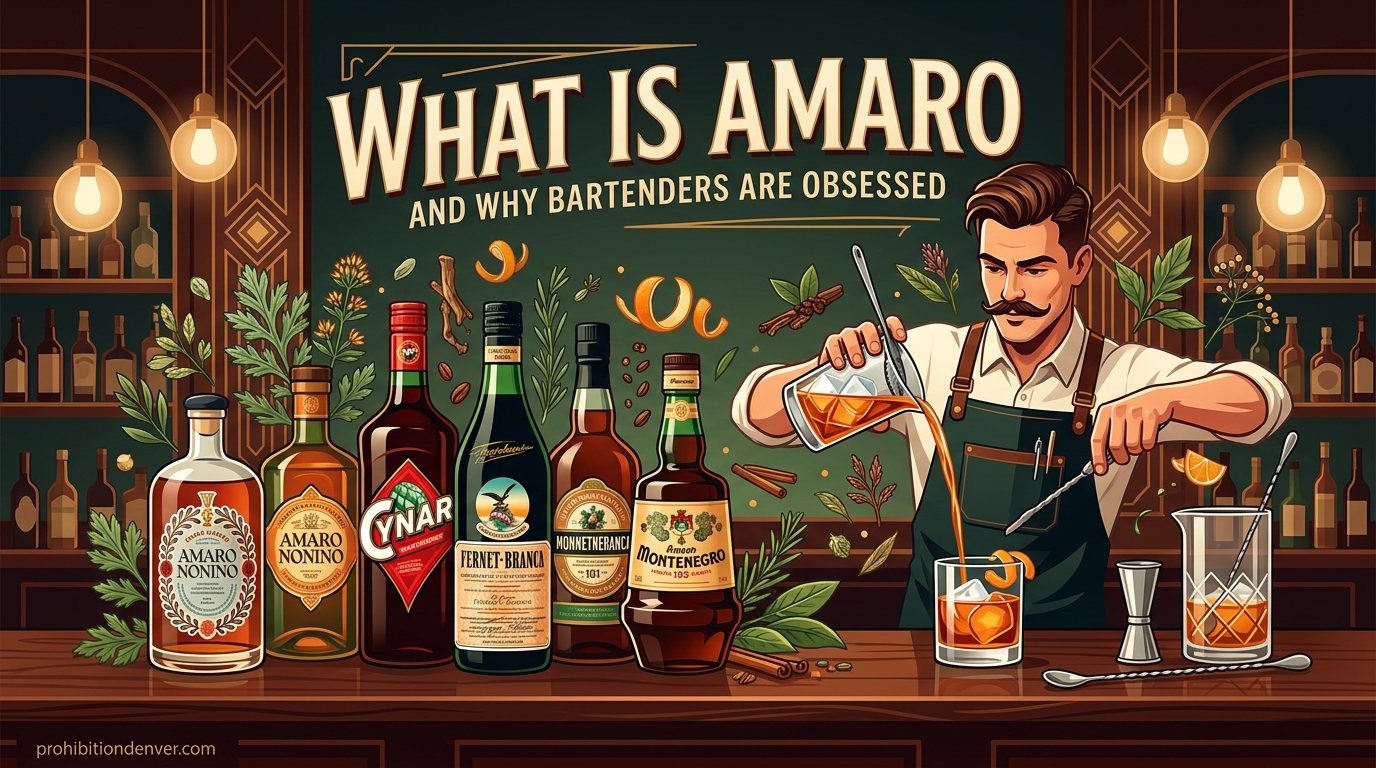
Amaro is an Italian bittersweet herbal liqueur traditionally served as a digestivo after meals. Made by infusing a base spirit with dozens of botanicals, including gentian root, citrus peel, aromatic bark, and wild herbs, amaro delivers a complex flavor that swings between bitter and sweet in every sip. The word “amaro” literally translates to “bitter” in Italian, and the plural form is “amari.”
Walk into any serious cocktail bar in 2026, and you will probably spot a shelf lined with dark, mysterious bottles behind the bartender. Those are amari, and the people pouring drinks behind that bar almost certainly have strong opinions about every single one of them. The bartender obsession with amaro is not a passing trend. It has been building for well over a decade, and it shows no signs of slowing down.
I have spent years exploring amaro, from my first tentative sip of Averna to building a small collection of my own. What started as curiosity quickly turned into a genuine appreciation for what these bottles can do. In this guide, I will break down exactly what amaro is, how it gets made, how to drink it, and why bartenders across the country cannot stop talking about it.
Table of Contents
What Is Amaro? A Clear Definition
Amaro belongs to a broad category of Italian herbal liqueurs that are defined by their bittersweet flavor profile. Unlike many spirits that are defined by a single base ingredient, amaro is defined by its production method: macerating or infusing a blend of botanical ingredients into a spirit base, then sweetening and often aging the result. Every producer uses a different, closely guarded recipe, which means no two amari taste exactly alike.
The base spirit is typically grape brandy or a neutral grain spirit. Producers steep a mixture of herbs, roots, flowers, bark, citrus peels, and spices into this base over weeks or months. Common botanicals include gentian root (for bitterness), wormwood, rhubarb, chamomile, saffron, mint, and anise. After the infusion period, the liquid is sweetened with simple syrup or honey and then aged in barrels or steel tanks to allow the flavors to marry.
Most amari fall somewhere between 16% and 40% alcohol by volume, making them lighter than many base spirits but stronger than wine. They occupy a comfortable middle ground that works equally well sipped slowly after dinner or mixed into a cocktail.
What Does Amaro Taste Like?
Describing the flavor of amaro is a bit like describing the color of a sunset, because it changes depending on which bottle you open. At its core, amaro delivers a push-and-pull between bitterness and sweetness, layered with herbal, floral, and citrus notes. Some amari lean earthy and root-like, almost like drinking a spiced tea made from forest floor botanicals. Others are bright and citrus-forward with a gentle bitter finish. The most intense bottles hit you with an almost medicinal bitterness that gradually reveals caramel, mint, and dark fruit underneath.
If you have never tried amaro, imagine the bitterness of a good espresso, the herbal complexity of a craft gin, and the smooth sweetness of a liqueur all meeting in one glass. That tension between flavors is exactly what keeps people coming back.
The History Behind Amaro: From Monasteries to Modern Bars
Amaro’s story begins in the monasteries and apothecaries of medieval Italy. Monks originally created herbal tonics and elixirs for their medicinal properties, believing that bitter herbs could aid digestion, cure ailments, and restore balance to the body. These early formulations were functional remedies, not recreational drinks. Each monastery developed its own proprietary blend of local herbs, roots, and spices, and these recipes were treated as closely guarded secrets passed down through generations of monks.
Over centuries, what started as medicine slowly evolved into a cultural tradition. By the 1800s, amaro production had moved beyond monastery walls and into commercial distilleries across Italy. Families like the Brancas (Fernet-Branca, first produced in 1845) and the Montenegros (Amaro Montenegro, first produced in 1885) began commercializing their recipes, and regional variations flourished throughout the country. Northern Italian amari tended to be lighter and more alpine in character, while southern varieties were darker, sweeter, and more intense.
In Italian culture, amaro became deeply woven into the fabric of daily life. It was served at the end of meals as a digestivo, offered to guests as a gesture of hospitality, and consumed during social gatherings as a way to extend the evening. The ritual of pouring a small glass of amaro after dinner is still a beloved tradition in Italian households today.
The spirit remained largely unknown outside of Italy until the craft cocktail renaissance of the late 2000s and early 2010s. As bartenders began exploring forgotten ingredients and classic techniques, amaro found its way onto cocktail menus in cities like New York, San Francisco, and Chicago. Once bartenders started tasting it, the obsession took hold fast.
How Amaro Is Made: From Botanicals to Bottle
The production of amaro follows a general framework, but every producer puts their own spin on the process. There is no regulated recipe or required ingredient list, which is what makes the category so diverse and exciting.
The Base Spirit
Most amari start with a grape brandy or neutral grain spirit as the foundation. Some producers use wine or grape must as their base instead. The alcohol content of this base typically ranges from 40% to 95% ABV before infusion. The base spirit is essentially a canvas that carries the botanical flavors without overpowering them.
Botanical Infusion
This is where the magic happens. Producers select anywhere from a dozen to over a hundred different botanicals for their recipes. The exact blend is almost always a closely held family secret. Common ingredients include gentian root, wormwood, rhubarb root, cinchona bark, chamomile, lemon peel, orange peel, star anise, juniper, sage, thyme, and saffron.
There are three primary methods for extracting flavor from these botanicals:
Maceration: The botanicals are soaked directly in the base spirit for weeks or months. This is the most common method and produces rich, full-bodied flavors.
Percolation: The spirit is pumped through a basket of botanicals repeatedly, similar to how drip coffee works. This method tends to extract more delicate aromatic compounds.
Distillation: Some producers distill certain botanicals separately and then blend the distillates back together. This gives precise control over individual flavor components.
Sweetening and Aging
After infusion, the bitter herbal extract is sweetened with simple syrup, honey, or caramel to balance the bitterness. The level of sweetness varies dramatically between brands, which is part of why the category spans such a wide flavor range. Once sweetened, the amaro may be aged in oak barrels, chestnut casks, or stainless steel tanks for anywhere from a few months to several years. Aging softens harsh edges and allows the many flavors to integrate into a cohesive whole.
What makes amaro production so special is that no two producers approach it the same way. A recipe created in the Italian Alps with mountain herbs will taste entirely different from one made on the Sicilian coast with Mediterranean botanicals. That regional individuality is a huge part of the appeal.
How to Drink Amaro: A Beginner’s Guide
One of the things I love most about amaro is its versatility. There is no single “right” way to drink it, and experimenting with different serving styles is half the fun. Here are the main ways people enjoy amaro, from the simplest to the most creative.
Neat, at Room Temperature
The most traditional way to drink amaro is neat, poured into a small glass at room temperature. This is how Italians have been drinking it for centuries, typically at the end of a meal. A standard pour is about one to two ounces. Drinking it neat lets you experience the full spectrum of flavors without any dilution or distraction. If you want to understand what a particular amaro is really about, try it this way first.
On the Rocks
Pouring amaro over a large ice cube changes the experience in subtle but meaningful ways. The cold temperature mutes some of the alcohol heat and sweetness while emphasizing the bitter and herbal notes. As the ice slowly melts, it gently dilutes the liqueur, which can open up flavors that were hiding at room temperature. This is a great approach for beginners who find neat amaro a bit intense.
With Soda Water
Mixing amaro with sparkling water is a refreshing option, especially during warmer months. A two-ounce pour of amaro topped with soda water and a citrus twist creates a light, effervescent drink that highlights the botanical aromatics. This style is popular in Italy as an aperitivo, served before a meal to stimulate the appetite.
In Cocktails
This is where amaro really shines for the creative drinker. Bartenders love amaro because it adds layers of complexity that no other single ingredient can replicate. A half-ounce of amaro in a cocktail introduces bitterness, sweetness, herbal depth, and aromatic intrigue all at once. Some well-known amaro cocktails include the Negroni (which uses Campari), the Black Manhattan (which swaps vermouth for amaro), the Paper Plane (which uses Amaro Nonino), and the Boulevardier.
If you are just getting started with amaro in cocktails, try substituting a half-ounce of a medium-bodied amaro like Averna or Montenegro for the vermouth in your next Manhattan. The result will surprise you in the best way possible.
A Beginner’s Tasting Progression
One of the biggest pain points I hear from people curious about amaro is that they do not know where to start. With hundreds of bottles on the market, it can feel overwhelming. Here is a simple progression I recommend:
Step 1 – Start light: Amaro Nonino or Amaro Montenegro. Both are gentle, approachable, and slightly sweet with mild bitterness. Think of them as the gateway amari.
Step 2 – Move to medium: Averna or Cynar. These introduce more herbal complexity and a firmer bitter edge while remaining balanced and enjoyable.
Step 3 – Go bold: Fernet-Branca or Brucello. These are intensely bitter, polarizing, and deeply rewarding once your palate adjusts. Fernet-Branca is the one that separates casual sippers from true amaro devotees.
Why Bartenders Are Obsessed With Amaro
This is the question at the heart of our topic, and it deserves a real answer. The bartender obsession with amaro is not random or performative. It comes from a deep appreciation for what this spirit brings to the craft of bartending. Let me break down the specific reasons amaro has become the darling of the bar world.
Unmatched Versatility Behind the Bar
Amaro is one of the most versatile ingredients a bartender can work with. It functions as a modifier, a base spirit, a float, a rinse, or a substitute for multiple other ingredients. A single bottle of amaro can replace sweet vermouth in a Manhattan, add bitterness to a sour, or provide a finishing touch to a tiki drink. For bartenders who build drinks from scratch, that kind of flexibility is invaluable.
Complexity That Rewards Exploration
Unlike many spirits that reveal their full character within the first sip, amaro is a slow burn. The flavor evolves as it sits in the glass, changes temperature, and interacts with other ingredients. Bartenders tend to be curious people by nature, drawn to ingredients that keep revealing new layers the more they work with them. Amaro rewards that curiosity every single time.
The Bartender’s Handshake
In bar culture, ordering a Fernet-Branca or a shot of amaro has become a kind of secret handshake between bartenders. When a bartender visits another bar after their shift and orders a Fernet, they are signaling that they are part of the tribe. It is a gesture of solidarity and shared passion. This cultural ritual has been documented across the industry and is one of the main reasons amaro spreads so quickly through the bartender community.
The 50/50 Shot Phenomenon
If you spend enough time around bartenders, you will eventually hear about the 50/50 shot. This is equal parts Fernet-Branca and Fernet-Branca Menta (the mint-flavored version), served ice cold as a shooter. It is bracing, intense, and oddly addictive. The 50/50 has become a bona fide ritual in cocktail bars across the country. Bartenders pour it for each other at the end of a long shift, to celebrate a busy night, or simply because it is Tuesday. It is one of those things that sounds strange to outsiders but makes perfect sense once you have had one.
Amaro Collecting as a Passion
Many bartenders do not just drink amaro. They collect it. Building an amaro collection has become a genuine hobby among industry professionals, with enthusiasts hunting down rare bottles, vintage releases, and small-batch regional Italian amari that never make it to wide distribution. I have walked into bartender apartments and seen shelves holding thirty or forty different bottles, each with a story about where it was found and what makes it special. This collector mentality deepens the obsession and creates a sense of community among those who share the passion.
The American Craft Amaro Movement
The obsession is not limited to Italian imports anymore. American craft distilleries have started producing their own amari using locally foraged botanicals, and bartenders are paying attention. Brands like Green Chartreuse, St. George Spirits, and Forthave have created distinctly American expressions that draw on regional ingredients like sage, Douglas fir, and desert herbs. This domestic amaro movement gives bartenders even more to explore and talk about, fueling the obsession from a new angle.
Popular Amari You Should Know
The world of amaro is vast, but a handful of bottles show up on nearly every serious bar shelf. Here are the ones I think every amaro newcomer should be aware of, organized roughly by intensity.
Amaro Nonino: Light, delicate, and slightly sweet with notes of orange, tangerine, and caramel. One of the most approachable amari and a favorite for cocktail mixing. Works beautifully in the Paper Plane cocktail.
Amaro Montenegro: Balanced and floral with a gentle bitterness and notes of vanilla, orange peel, and herbs. Created in 1885 in Bologna, it is produced using a process that involves 40 botanicals. An excellent starting point for anyone new to the category.
Averna: A Sicilian amaro with a rich, round body and flavors of molasses, dried fruit, licorice, and herbs. The bitterness is present but well-tempered by sweetness. Often served on the rocks with an orange twist.
Cynar: Made with artichoke leaves among its 13 botanicals, Cynar is earthy, vegetal, and deeply savory with a moderate bitterness. It is widely used in cocktails and has experienced a surge in popularity in 2026. The artichoke connection surprises people, but the flavor works brilliantly.
Fernet-Branca: The icon. Intensely bitter, mentholated, and almost medicinal, Fernet-Branca is the amaro that bartenders love most. It is polarizing, and many people hate it on first taste, but it rewards persistence. Produced in Milan since 1845 using 27 herbs from four continents. If there is one bottle that represents the bartender obsession, this is it.
Amaro vs Similar Spirits: Clearing Up the Confusion
One of the most common questions people ask when they first encounter amaro is how it relates to other familiar Italian spirits. The distinctions are important, and the confusion is understandable since many of these drinks share certain characteristics. Let me clear things up.
Amaro vs Amaretto
These two get confused constantly because their names sound similar, but they are completely different drinks. Amaretto is an almond-flavored liqueur that is sweet, nutty, and dessert-like. It contains no significant bitterness and is made primarily from apricot kernels or almond extract. Amaro, on the other hand, is defined by its bitterness and complex herbal profile. They share Italian heritage and liqueur classification, but that is where the similarities end. If you order one expecting the other, you will be in for a surprise.
Amaro vs Campari
This one is tricky because Campari technically is an amaro. It is a bitter Italian herbal liqueur. However, in practice, the spirits industry and most bartenders treat Campari as its own category. Campari is lighter in body than most amari, has a distinctive bright red color (now achieved without insect-derived dye), and tends to be less sweet with a more uniform flavor profile. It is almost always used as a cocktail ingredient rather than sipped neat. So yes, Campari is an amaro, but most amaro enthusiasts think of it as a separate thing.
Amaro vs Aperol
Aperol is another spirit that falls under the broad bitter liqueur umbrella, but it is significantly lighter, sweeter, and less bitter than most amari. Aperol has a bright orange color and flavors of bitter orange, rhubarb, and herbs. It is best known as the star of the Aperol Spritz and is almost always consumed as an aperitivo before a meal. Most amari are considerably more intense and are typically served as digestivi after a meal.
Amaro vs Bitters
Cocktail bitters like Angostura or Peychaud’s are highly concentrated flavor extracts used in dashes to modify cocktails. They are not meant to be consumed on their own. Amaro, by contrast, is a full-strength liqueur designed to be sipped and enjoyed on its own or used as a cocktail ingredient in much larger quantities. The relationship is there in the “bitter” concept, but the applications are entirely different. Think of bitters as seasoning and amaro as the main course.
FAQ
Is amaro the same as Aperol?
No, amaro and Aperol are not the same. While both are Italian bitter liqueurs, Aperol is significantly lighter, sweeter, and less bitter than most amari. Aperol has a bright orange color and is typically served as an aperitivo before meals, often in an Aperol Spritz. Amaro is a broader category of bittersweet herbal liqueurs that tend to be darker, more complex, and more bitter. Aperol is more of a cousin to amaro than a member of the family.
What is the 50% rule in bartending?
The 50% rule, often called the 50/50 shot, refers to a bartender tradition of serving equal parts Fernet-Branca and Fernet-Branca Menta (the mint version) as a chilled shooter. It has become a cultural ritual in cocktail bars where bartenders pour 50/50 shots for each other at the end of a shift as a sign of camaraderie and shared passion for the craft.
Do Italians drink amaro straight?
Yes, Italians traditionally drink amaro straight (neat) at room temperature, typically as a digestivo after a meal. A standard pour is about one to two ounces served in a small glass without ice. This is the most common and traditional way amaro has been consumed in Italy for centuries. Some Italians also enjoy it with a splash of soda water or on the rocks, especially during warmer weather.
What does an amaro taste like?
Amaro tastes like a complex combination of bitter, sweet, herbal, and citrus flavors. The bitterness comes from roots like gentian, while the sweetness comes from added sugar or honey. Depending on the specific bottle, you might taste notes of citrus peel, mint, anise, caramel, dark chocolate, dried fruit, earthy herbs, or medicinal botanicals. The flavor swings between bitter and sweet with every sip, and the best amari reveal new layers the longer you sit with them.
Conclusion: Why You Should Give Amaro a Try
Understanding what is amaro opens the door to one of the most rewarding categories in the spirits world. It is a drink with deep Italian roots, incredible diversity, and a flavor profile that challenges and rewards your palate in equal measure. Whether you sip it neat after dinner, mix it into a cocktail, or chase it as a 50/50 shot with a bartender friend, amaro offers an experience that no other spirit category can match.
The bartender obsession is not hype. It is a genuine appreciation for an ingredient that brings complexity, versatility, and tradition to everything it touches. My advice is simple: start with something approachable like Amaro Montenegro or Nonino, give your palate time to adjust to the bitterness, and work your way toward the more intense bottles at your own pace. Amaro is not a spirit you learn to love overnight. It is one that grows on you slowly, sip by sip, until you find yourself with a shelf full of bottles and a story about every one of them.
If you are in Denver and want to explore amaro in person, come see us. We would love to pour you a taste and help you find the bottle that starts your own obsession.