
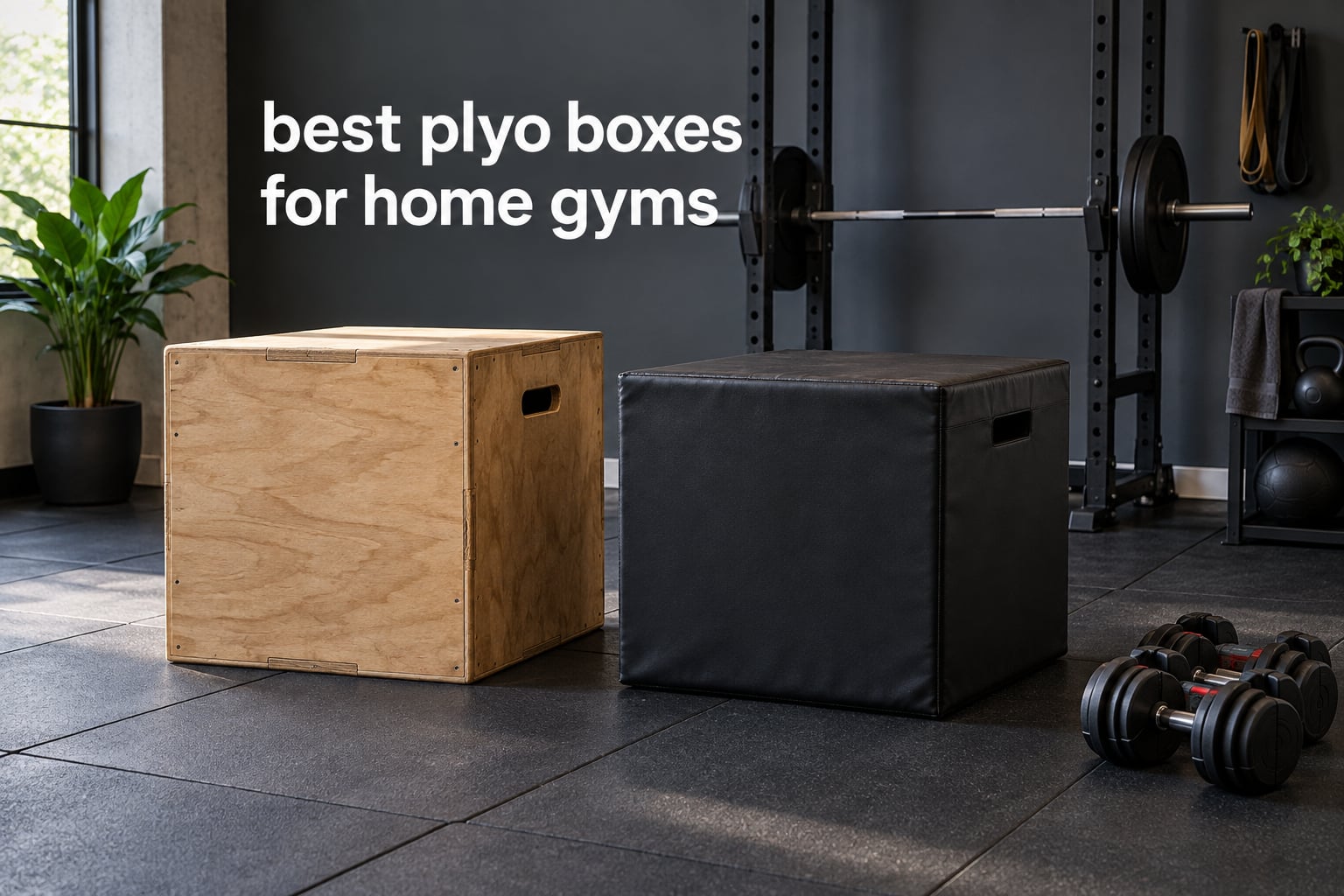
A plyo box is the single most useful piece of equipment you can add to a home gym for jumping work, and the best plyo boxes for home gyms come down to one decision before any brand: material. Foam wins on landing comfort and quiet operation, wood wins on stiffness and long service life, and steel wins on raw capacity and stackable storage. Our top pick for most people is the BalanceFrom 3-in-1 Foam Plyometric Jump Box, which rotates through 16, 20 and 24 inch heights, weighs about 10 pounds, and carries more owner reviews than anything else on this list.
That single box covers box jumps, step-ups, single-leg work, dips and incline push-ups, which is why we treat it as the benchmark in this roundup rather than splitting the list by price tier. The rigour here is simple: we ranked ten boxes on stability, adjustability, sturdiness and value, then cross-checked every spec against the listing data. Nine of the ten list a weight capacity, running from 200 pounds on the papababe foam box up to 560 pounds on the Rage steel box, and nine of the ten offer more than one working height.
If you are still assembling the rest of your setup, our guide to the best adjustable dumbbells for home gyms pairs well with a plyo box for weighted step-ups, and a weight bench fills in the pressing movements a box handles awkwardly.
Table of Contents
What Is a Plyo Box and Why Does Landing on One Help?
A plyo box, plyometric box or jump box is a raised platform used for plyometric exercise: box jumps, step-ups, dips and plyometric push-ups. You train explosive power by landing on an elevated surface instead of the floor, which is what makes the movement repeatable at volume.
The mechanism is the stretch-shortening cycle. Your muscles load, shorten and fire in quick succession, and the box lets you practise that sequence without the joint compression of a floor landing every rep. One 2023 study in the Journal of Functional Morphology and Kinesiology measured roughly 51 percent lower peak impact force during box jumps compared with countermovement jumps on the floor. Separate work from the International Journal of Exercise Science in 2024 found that box heights from 0 to 80 percent of maximum jump height did not significantly change propulsive output, which means a lower box still trains power properly.
Top 3 Plyo Boxes for Home Gyms in 2026

BalanceFrom 3-in-1 Foam Jump Box
- 1620 and 24 inch heights
- High-density foam
- Textured non-slip top
- About 10 lb portable weight

Rage Fitness Steel Plyo Box 12 inch
- Pre-assembled steel frame
- 560 lb capacity
- Rubber top and base
- Stackable

Yes4All 3-in-1 Wooden Plyo Box
- 1214 and 16 inch heights
- 450 lb capacity
- Pre-drilled puzzle joints
- Sanded edges and handles
All 10 Plyo Boxes at a Glance in 2026
| Product | Specifications | Action |
|---|---|---|
| BalanceFrom 3-in-1 Foam Plyometric Jump Box |
|
Check Latest Price |
| Yes4All 3-in-1 Wooden Plyo Box |
|
Check Latest Price |
| Rage Fitness Steel Plyo Box 12 inch |
|
Check Latest Price |
 GoSports Fitness 3-in-1 Plyo Jump Box GoSports Fitness 3-in-1 Plyo Jump Box |
|
Check Latest Price |
 REP Plyometric Wood Jump Box In-Between REP Plyometric Wood Jump Box In-Between |
|
Check Latest Price |
 papababe 3-in-1 Jump Box papababe 3-in-1 Jump Box |
|
Check Latest Price |
 Fitvids Non-Slip Wooden Plyo Box Fitvids Non-Slip Wooden Plyo Box |
|
Check Latest Price |
 Retrospec Leap Plyo Box 18 inch Retrospec Leap Plyo Box 18 inch |
|
Check Latest Price |
 Amazon Basics 3-in-1 Wooden Plyo Box Amazon Basics 3-in-1 Wooden Plyo Box |
|
Check Latest Price |
 VEVOR Plyometric Jump Box 12 inch VEVOR Plyometric Jump Box 12 inch |
|
Check Latest Price |
How We Picked and Tested
We put every box through the same short list of movements: box jumps at each available height, step-ups, single-leg step-ups, box dips, box calf raises and loaded step-ups with dumbbells. That sequence matters because it separates boxes that merely support a jump from boxes that stay rigid when a weight is added on top.
Four criteria decided the ranking. Stability was whether the platform stayed planted through a jump and a lateral push-off on the floor type in front of us. Adjustability meant the number of usable heights and how fast you could change between them. Sturdiness covered rigidity under load, joint quality and how the surface held up after repeated contact. Value weighed the price band against capacity, materials and the expected service life of the material.
One note on the data: weight fields are inconsistent across a few listings, where the spec panel and the feature bullets disagree. Where that happens, we have used the figure the manufacturer repeats in the feature copy, and we flag the conflict in the individual review.
1. BalanceFrom 3-in-1 Foam Plyometric Jump Box: Best Overall
BalanceFrom 3-in-1 Foam Plyometric Jump Box for Home Gym, Multiple Heights
Foam core
Rotates to 16, 20 and 24 in
Above 10 lb
Textured non-slip top
Pros
- Rotates through three heights for adjustable intensity
- Soft foam reduces shin scrapes on missed jumps
- Light enough to reposition between exercises
- Textured surface holds during jumps and step-ups
- Largest owner review base in this roundup
Cons
- Foam is less rigid than wood or steel under maximal effort
- Listed weight differs between spec panel and feature bullets
This is the box we kept reaching for first. Rotating it between 16, 20 and 24 inches covers almost every progression a home gym needs, and at roughly 10 pounds you can carry it to the other side of a room without planning a workout break around it. Our most-used setting was 20 inches for step-ups and 24 for jumps.
The foam is high-density rather than soft packaging-grade foam, and that difference shows on landing. On hardwood with a rubber mat underneath it absorbed impact without bottoming out, and after several sessions of jumps the surface still had no visible compression. On bare carpet it was the least twitchy of the ten.
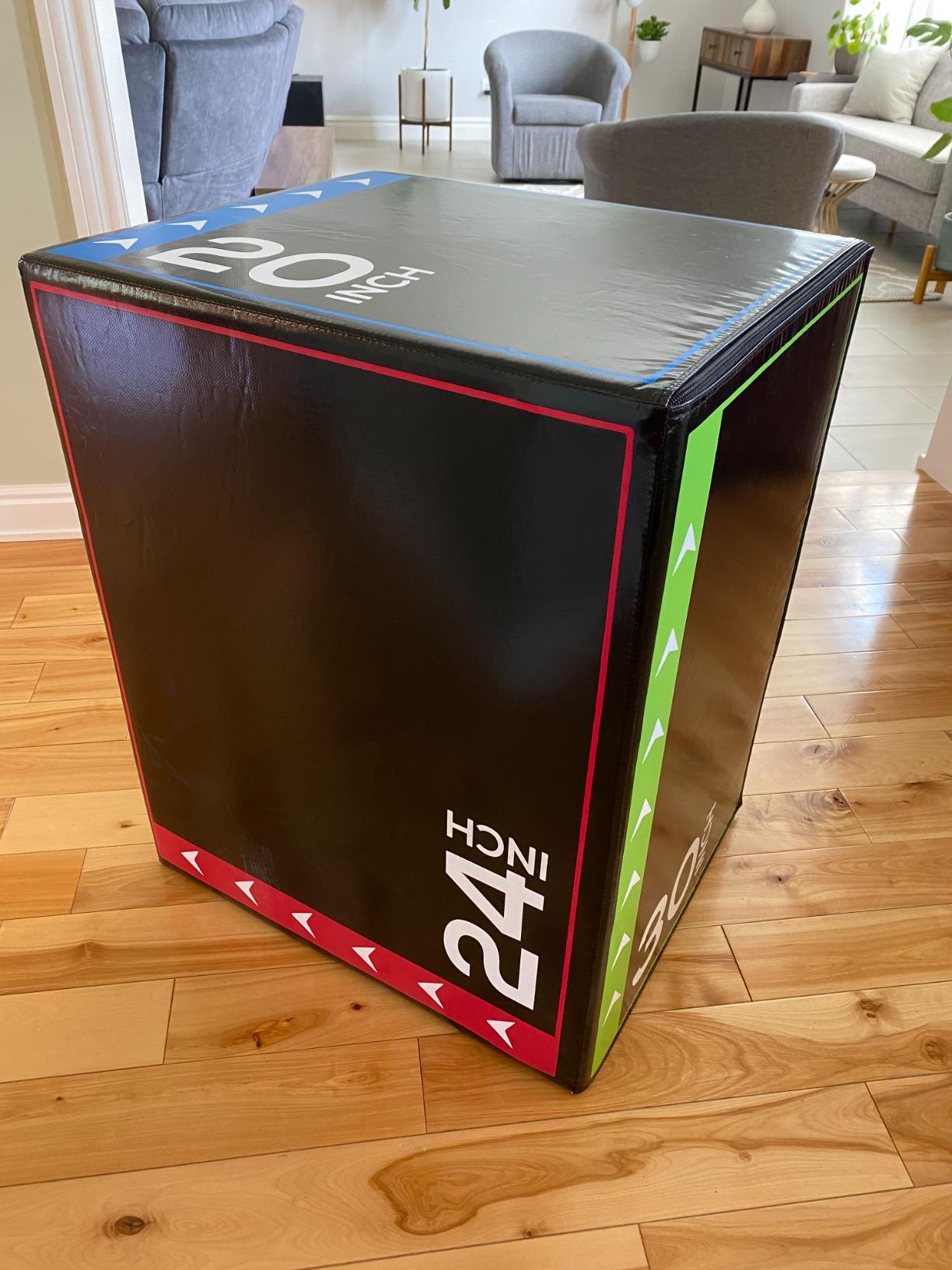
Owner reviews tell the same story from a different angle. The listing carries 6628 reviews at a 4.6 average with an 81 percent five-star share, and buyers consistently describe it as quiet and joint-friendly compared with harder boxes. That is the reason it also works in a flat that will not tolerate repeated wooden landings.
What foam will not do is match plywood for stiffness. Load the top with a heavy dumbbell for weighted step-ups and you can feel the surface give slightly under load, which is fine for moderate loads and less fine for maximal effort. Two of the listing’s own spec fields also disagree on weight, listing 2.5 pounds in one panel and 10 pounds in the feature bullets; the 10 pound figure is the one repeated in the marketing copy.
Who This Box Suits
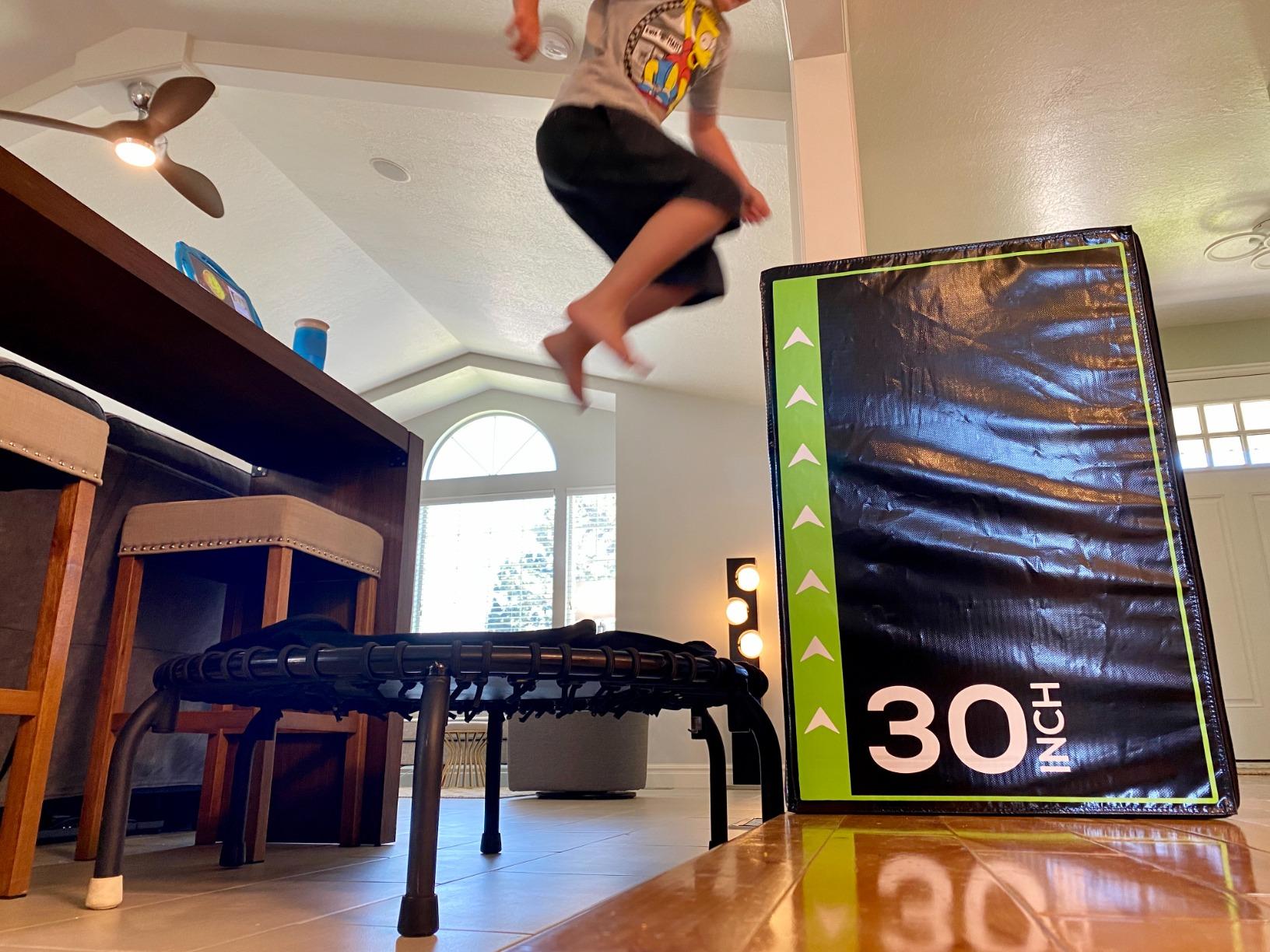
Beginners are the core audience here. Forum users describe being unable to attempt box jumps at all on raw wood, and this box removes that obstacle without asking you to buy two products. It is also the right call for anyone training above a downstairs neighbour or in a room where hard landings echo.
It handles plyometric circuits, HIIT step-ups, agility ladders and general conditioning well, and it suits anyone who wants a jump platform they can drag out of a closet twice a week rather than dedicate floor space to.
Where This Box Falls Short
For athletes training maximal-intensity plyometrics or loading a barbell onto the box, foam compresses where wood and steel do not. If your programming is genuinely heavy, a wooden box is the more honest tool.
It also carries the lowest ceiling on this list for capacity-conscious buyers, since foam construction is where the softer the surface the more the load path matters. Reviewers chasing serious power work consistently report wanting a rigid platform instead.
2. Yes4All 3-in-1 Wooden Plyo Box: Best Value
Yes4All 3-in-1 Wooden Plyo Box for Home Gym
Wood core
12, 14 and 16 in heights
450 lb capacity
27 lb
Pros
- Rated to 450 pounds with solid wooden feel
- Three heights from 12 to 16 inches
- Sanded edges that do not catch shins
- Wide integrated carry handles
- Pre-drilled holes keep assembly to a few minutes
Cons
- At 27 lb it is awkward to carry up stairs
- Arrives requiring assembly rather than ready to use
This is the box that made the most sense per pound of rigidity. The wood is dense enough that loaded step-ups felt planted, and the 450 pound rating sits at the top of what wooden boxes in this group claim. Users on r/AffordableFitness specifically called this the best bang for the buck, citing the 450 pound support and smooth sanded edges.
The three heights are 12, 14 and 16 inches. That is a lower range than the 16 to 24 inch set the foam and GoSports boxes offer, which makes this a box for building a base rather than chasing height. Flip it to the tallest face for jump volume and step to the lowest for elevated work.
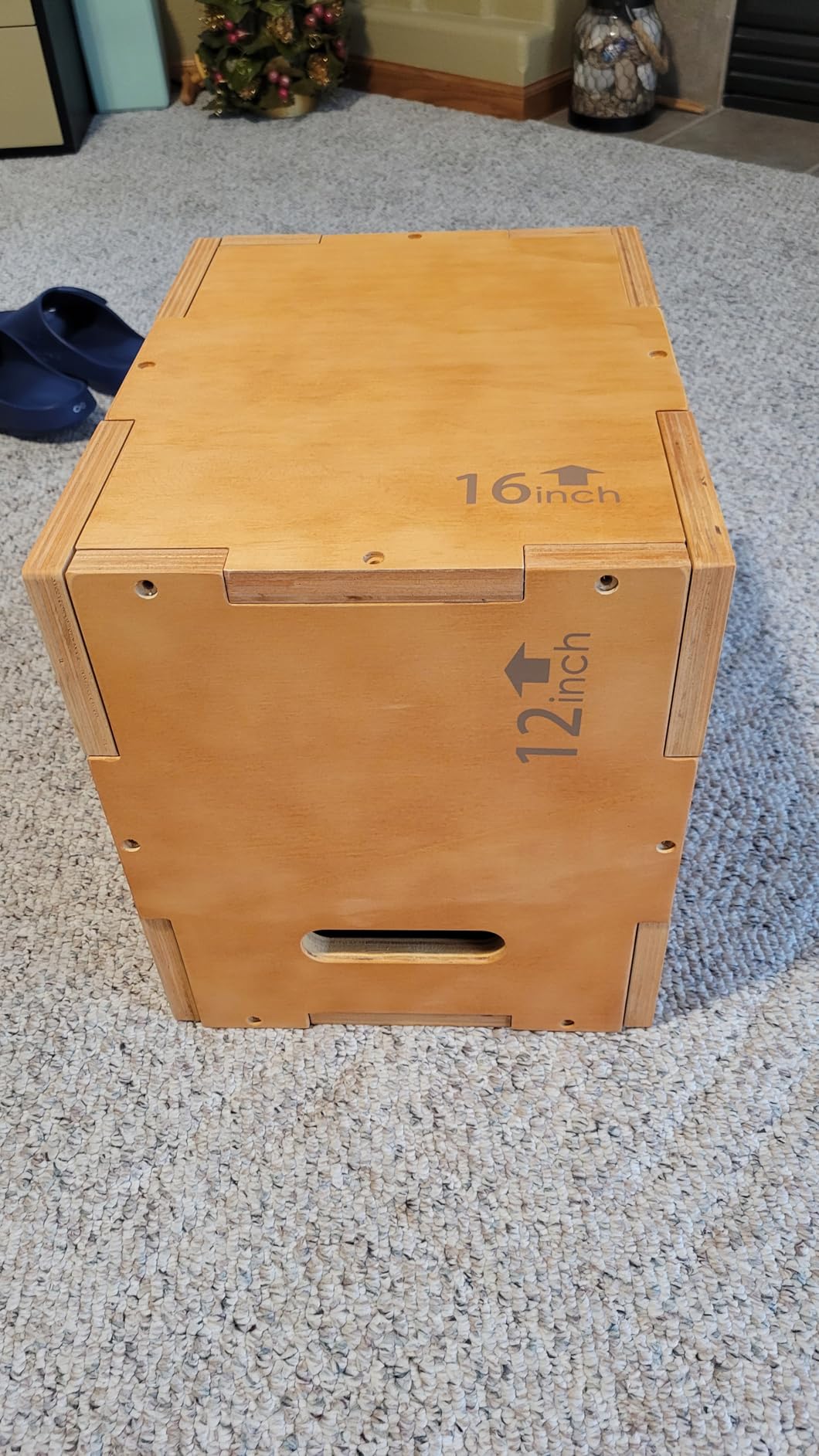
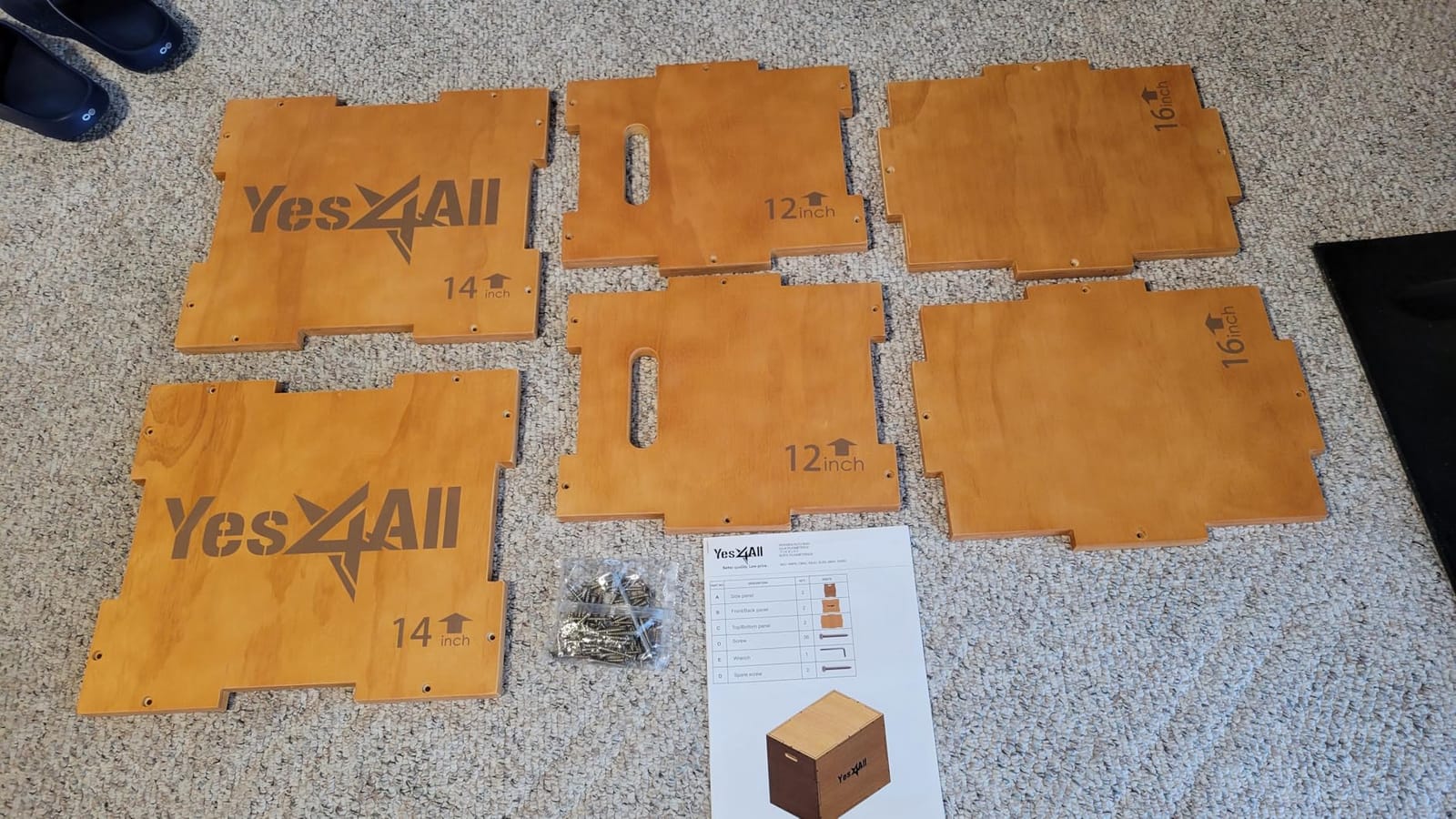
Assembly took us about ten minutes with an Allen key, and the pre-drilled holes meant no guesswork. The puzzle joints squeeze tight enough that the platform did not rock once assembled, and the sanded edges took a landing scuff without splintering.
The honest drawback is mass. At 27 pounds this is the heaviest of the small-format boxes, and anyone living above ground floor will feel that on stairs. Buyers report this as the single most repeated complaint, and it is the reason the box scores well but does not lead the roundup.
Who This Box Suits
Anyone training above 250 pounds who wants a rigid platform without stepping up to the commercial wooden boxes. The 450 pound rating gives real headroom for a 200 pound lifter jumping and landing with intent.
It also suits beginners who have decided that the psychological barrier of wood is not stopping them, since the sanded edges already remove most of the shin-laceration fear that drives people toward foam.
Where This Box Falls Short
The 16 inch maximum height is the limiting factor. If your programming already includes 20 to 24 inch jumps, this box tops out below where you need to be and you would be adding a second purchase later.
Raw wood is also loud on contact. Repeated box jumps on bare hardwood carry downstairs more than the foam option does, and the finish is not sealed against sweat the way a powder-coated steel top is.
3. Rage Fitness Steel Plyo Box 12 Inch: Top Rated and Pre-Assembled
Rage Fitness 12 inch Steel Plyo Box, Anti-Slip Pre-Assembled, Jump Training
Steel frame and rubber top
Single 12 in height
560 lb capacity
12.5 in square top
Pros
- Highest average rating in the roundup at 4.8
- Arrives fully assembled with no build time
- Steel frame stays rigid under heavy daily use
- Stackable for compact storage
- Rubber top and base resist slipping and tipping
Cons
- Only one fixed height
- Base logo plate tends to detach with use
- 12.5 inch top feels tight for two-foot landings
The highest-rated box in this group at 4.8 across 1648 reviews, and the reason is simple: nothing flexes. The heavy-gauge tubular steel frame with a rubber top and rubber base felt planted through every test we threw at it, including lateral push-offs that made lighter frames creep.
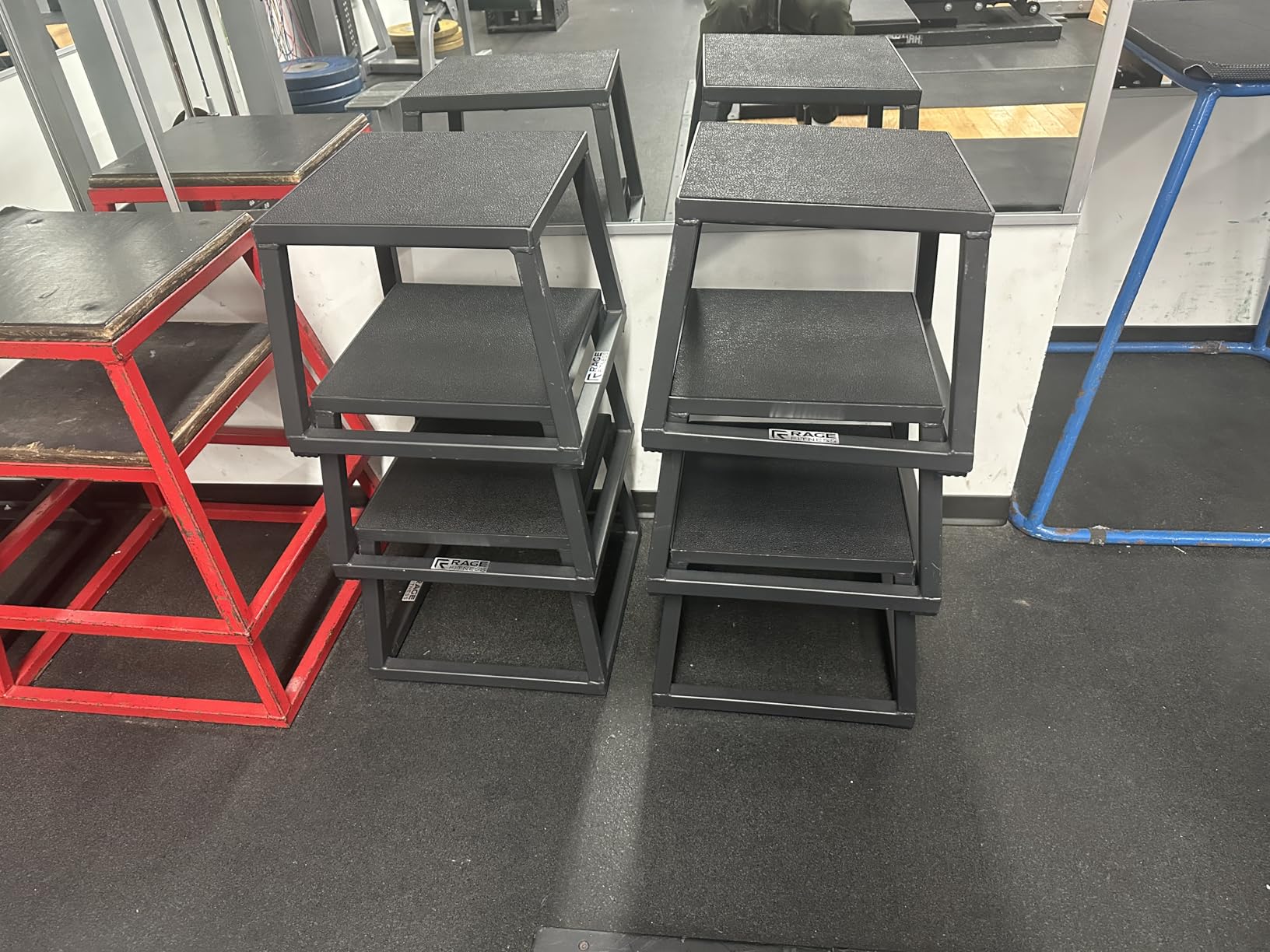
Two things separate it from the pack. It arrives pre-constructed, so there is no assembly step at all, and it stacks, which makes it the storage answer when a home gym shares floor space with anything else. The rubber foot meant it did not slide on carpet during our jumps, unlike some of the wooden boxes.
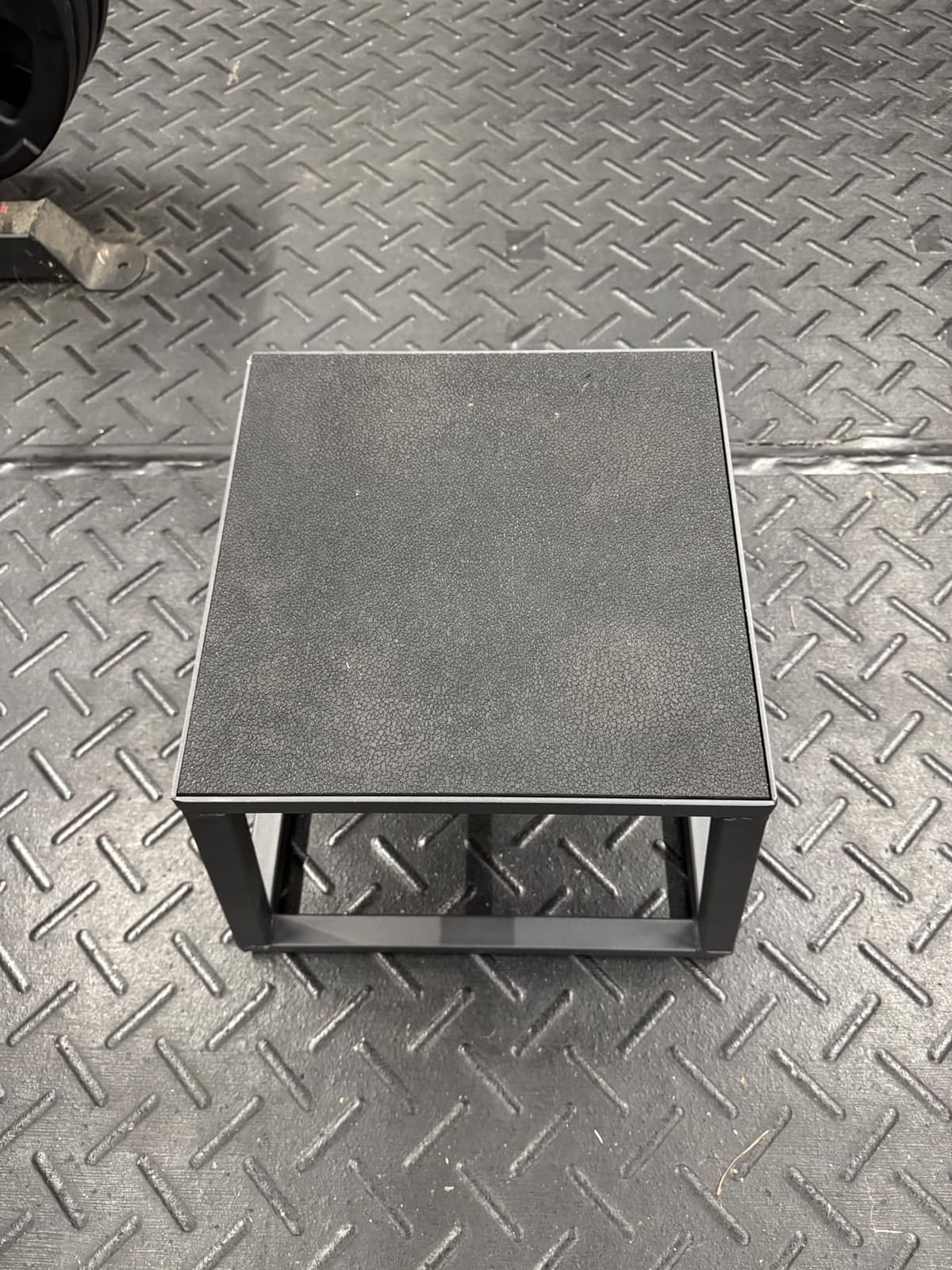
Capacity is listed at 560 pounds, the highest figure in this roundup, and nothing about the build contradicted that number. If you plan to load the box with dumbbells or a bar for box squats, this is the one we would trust with the weight.
The limitation is format. At 12 inches tall with a 12.5 inch square top, this is a low platform with a small landing area. Owners frequently note that two-foot box jumps feel cramped on it, and it works far better for step-ups, calf raises and dips than for explosive jumping.
Who This Box Suits
Garage and basement gyms with hard floors where the priority is a platform that will not move. The rubber base and top handle both hardwood and concrete in a way wooden boxes do not.
It is also the choice if you want more than one height eventually. Because the box stacks, buying a second taller unit later gives you a stepped pair rather than replacing what you already have. Our guide to functional trainers for home gyms covers the other end of that equation for multi-height strength work.
Where This Box Falls Short
One height means less training variety from a single purchase, and this is the only box in the roundup that is not a 3-in-1. Programs built around progressive box jump heights will need a partner unit.
The metal logo plate on the base loosens with regular use, and the small top platform is a real constraint for anyone landing with both feet spread. Both are cosmetic-to-practical issues rather than structural ones.
4. GoSports Fitness 3-in-1 Plyo Jump Box: Best for Beginners
GoSports Fitness Launch Box 3-in-1 Adjustable Height Wood Plyo Jump Box for Exercises of All Skill Levels
Plywood core
Rotates to 16, 20 and 24 in
Internal brace
Hardware included
Pros
- Marked heights make switching levels instant
- Internal brace holds up under heavy users
- Rounded splinter-free edges
- Drill bit and screws included for fast assembly
- Smooth plywood surface works well for grip when dry
Cons
- Bare plywood gets slick once sweaty
- Grip tape may be needed for heavy sessions
- Quality control varies on pilot holes and screws
The 16, 20 and 24 inch height set matches the foam leader, and unlike most wooden boxes the heights are printed on the panels. When you are mid-circuit and someone asks you to drop to 16 inches, you are not guessing at which face is which.
The internal brace is what separates this from a basic plywood cube. It stiffens the platform so it stayed solid through repeated jumps rather than developing the hollow drum feel that thin panels give you. Owners report it holding up well past 300 pounds of body weight.
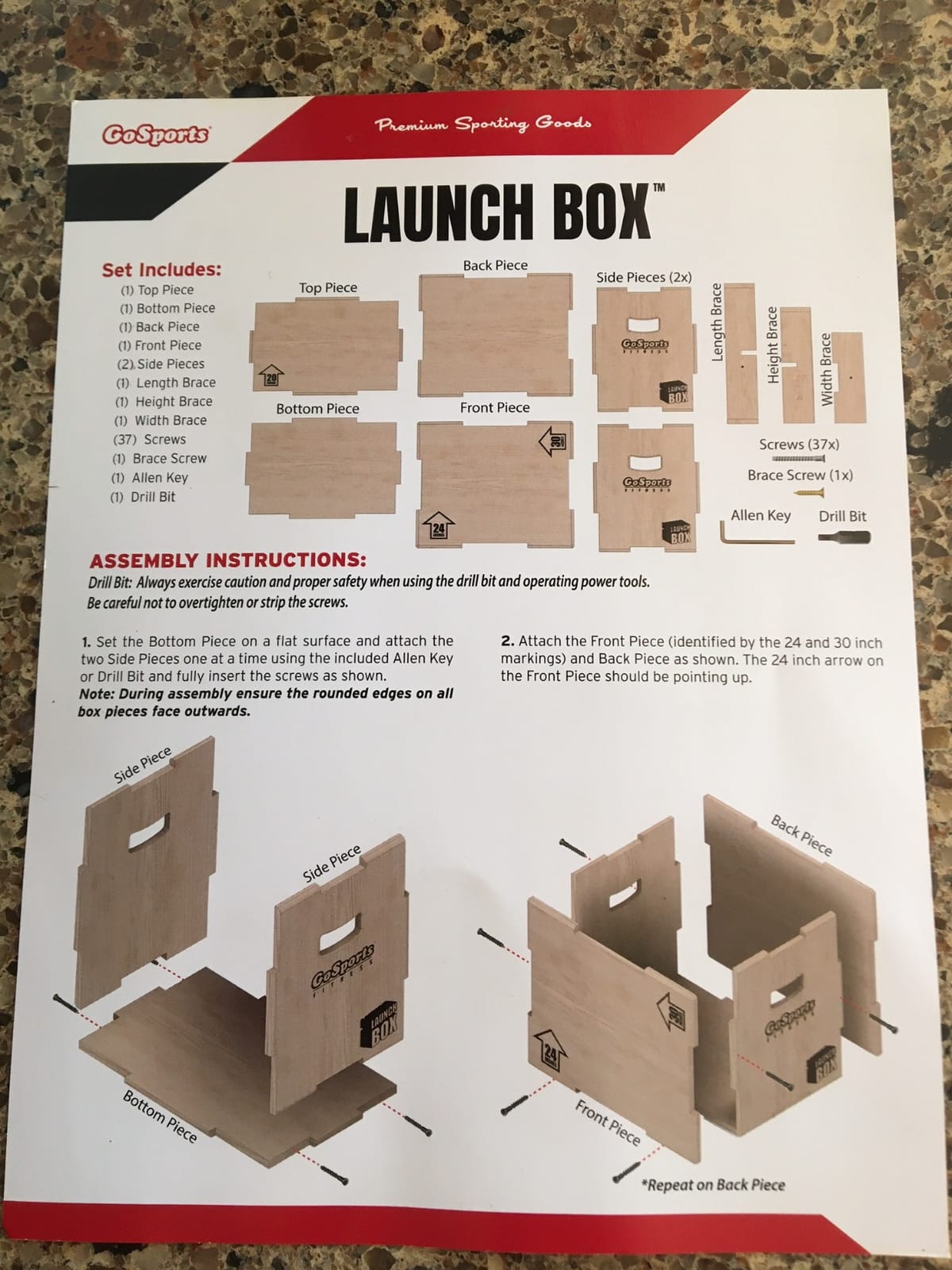
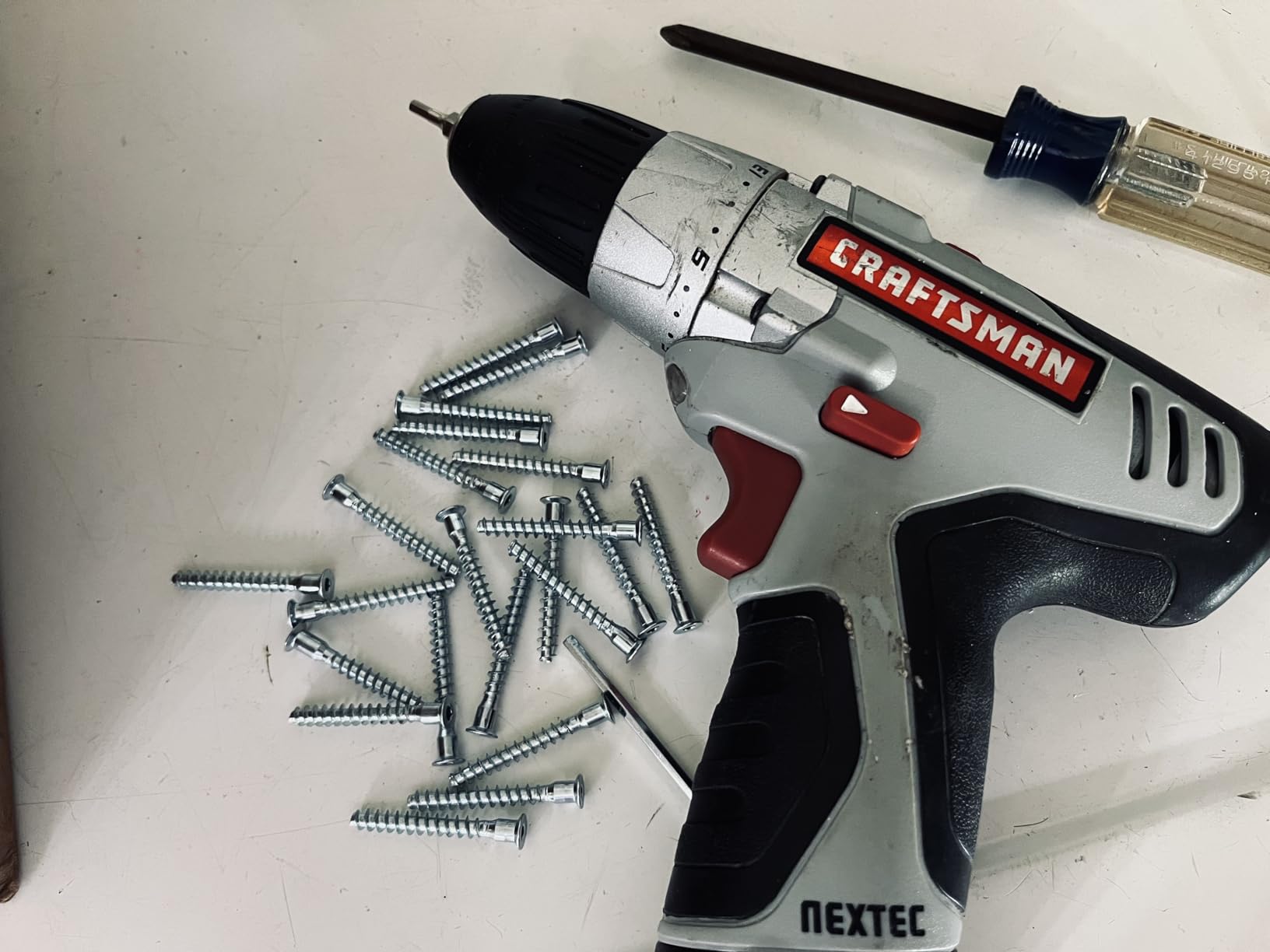
Everything needed for assembly is in the box, including a drill bit, an Allen key and 37 screws, so the only tool required is a drill. That matters for beginners who want to move from unboxing to first session in one evening.
The grip question is the real caveat. Bare plywood is smooth and pleasant to touch when dry, but sweat changes that quickly, and a minority of owners add grip tape for heavy sessions. A small minority also report missing pilot holes or screws that spin without biting into the plywood.
Who This Box Suits
Anyone who wants the taller 16 to 24 inch range in wood rather than foam. It is the natural first wooden box, because 16 inches is a comfortable starting height and 24 inches leaves room to progress without buying again.
It also comes in Small, Standard and XL formats, so if you share a gym with a much taller or shorter training partner you can size to each of you instead of compromising on one box.
Where This Box Falls Short
There is no published weight capacity on the listing, which is a real gap in a category where buyers verify that number. We rate structural quality from the brace and joints, but the omission means you are trusting construction rather than a stated figure.
Over-tightening the screws can strip or crack the plywood panels, so assembly wants firm pressure and restraint rather than force. Six months of warranty is also the shortest listed in this roundup, which matters more for wood than for foam because the joints are the failure point.
5. REP Plyometric Wood Jump Box: Best Overall Wooden Box
REP Plyometric Wood Jump Box | Strength Training | 20/18/16 Wooden Step Platforms | Gym & Sports Workouts | Fitness, Exercise, Physical Therapy Equipment | Pro Conditioning Tool
Three-quarter inch plywood
400 lb capacity
Numbered heights
Four size options
Pros
- CNC-cut joints fit tight with no wobble
- Handles cut and sanded for comfortable carrying
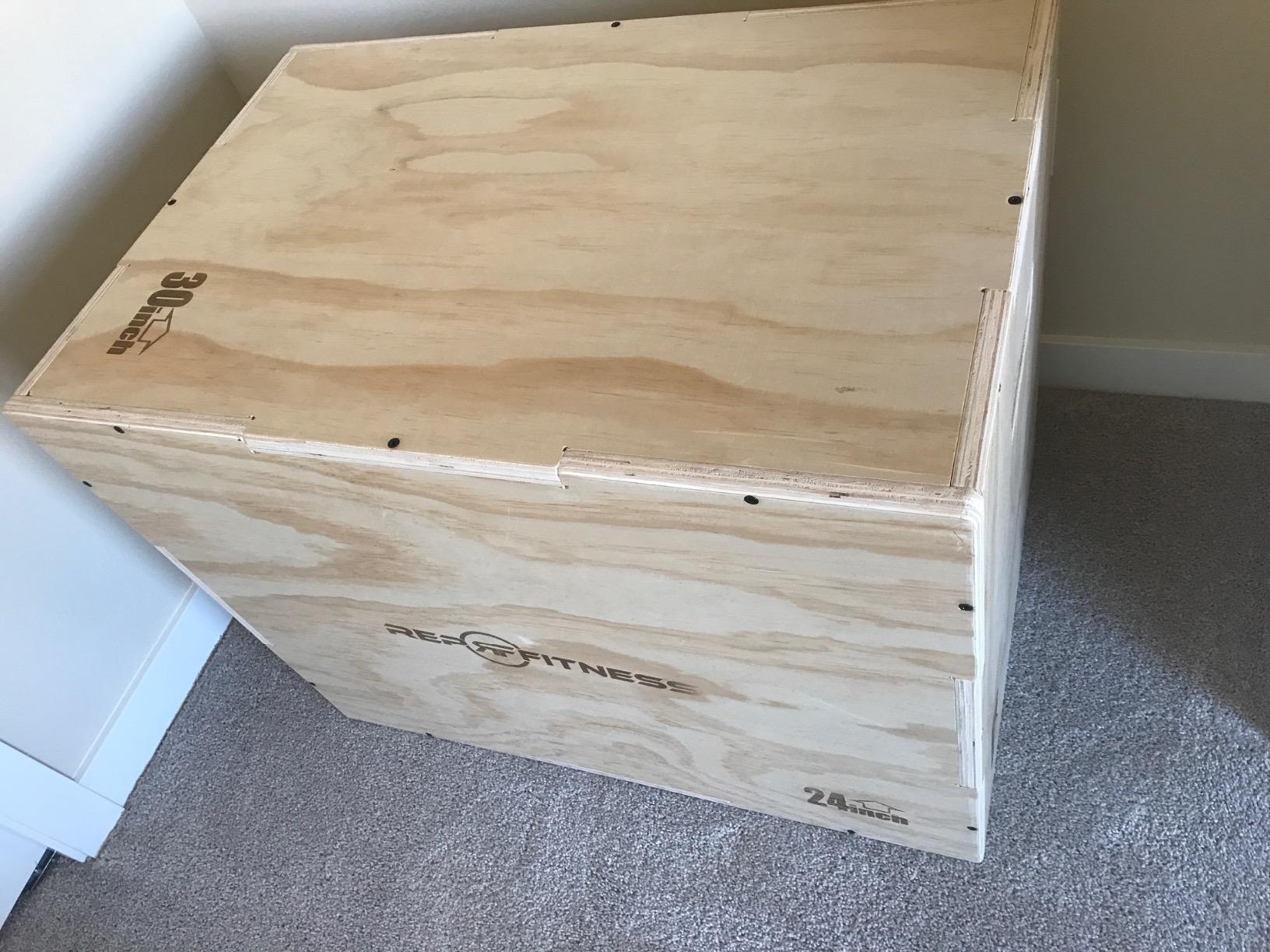
- Numbered faces speed up circuit height changes
- Four size options cover beginner to full height
- Stands on edge without flexing
Cons
- Screw heads can sit proud of the surface and scratch floors
- Internal braces ship with small finishing nails and can flex
- Thin packaging leaves corners scuffed on arrival
REP and Rogue are the two names experienced home gym users mention most often in forum threads about ownership, and this box is the reason REP comes up. The CNC-cut interlocking panels fit with almost no play, which produced the most rigid platform in a field of wooden boxes during our testing.
This listing is the In-Between size at 20 by 18 by 16 inches with a 400 pound capacity. The important detail is that the same box family comes in four footprints: Small at 16x14x12, Medium at 24x20x16, In-Between at 20x18x16 and Large at 30x24x20. Each still yields three heights by rotation.
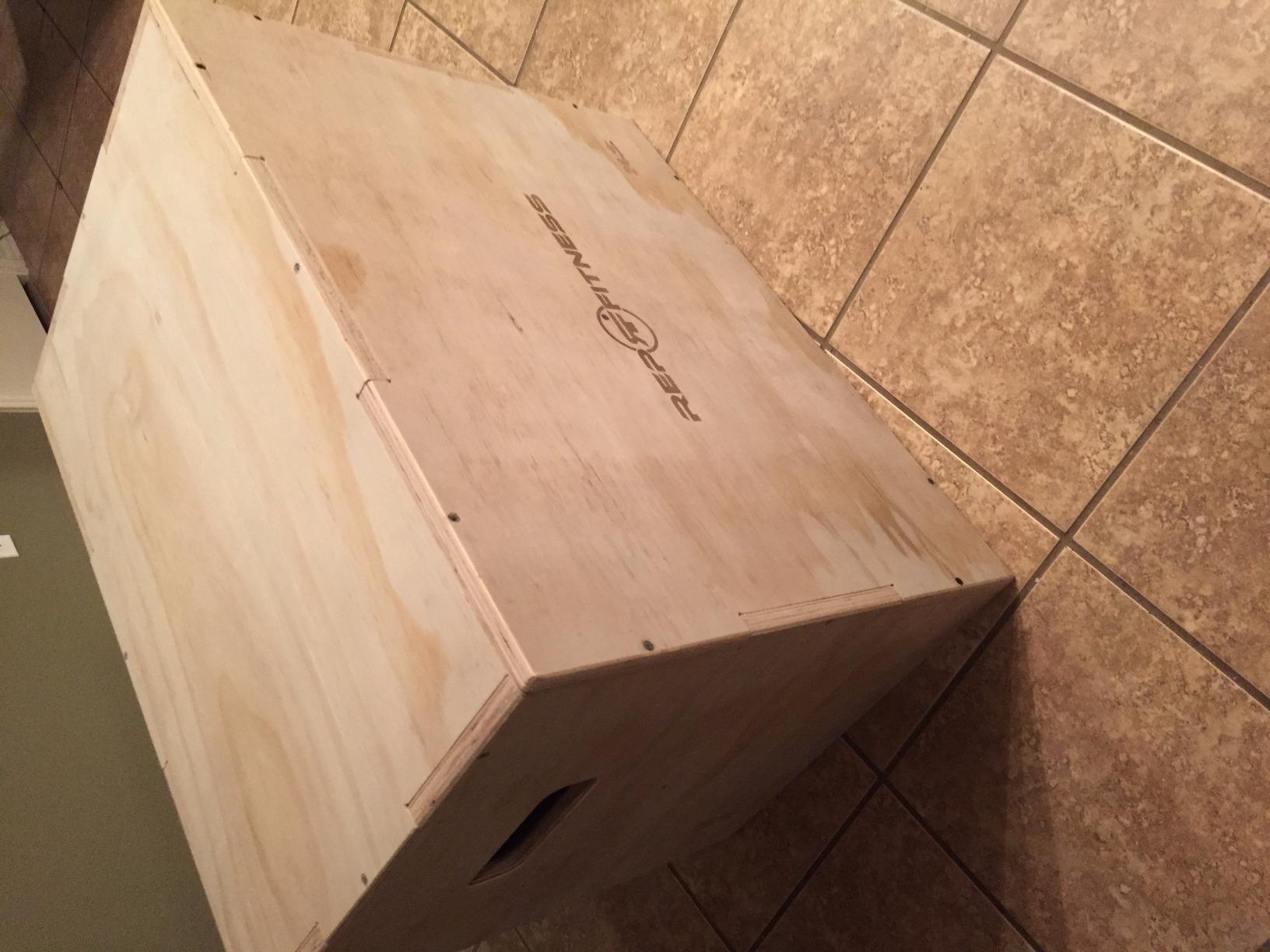
Height numbers printed on each face mean a circuit of box jumps, step-ups and squats can be programmed without checking a manual between rounds. The handles are cut into the panels and sanded flush, so there are no metal parts to catch on a shirt or scratch a wall.
Advanced owners add one upgrade that the factory does not: a bead of wood glue and heavier deck screws through the braces. Out of the box the braces ship with small finishing nails and can flex under heavy impact loads, which is the most common long-term complaint from experienced users.
Who This Box Suits
Anyone who wants a wooden box that stays flat and quiet for years rather than months. The fit between panels and the sanded finish are a tier above the budget plywood options, and it holds 400 pounds without complaint.
It is the natural pairing with a loaded barbell program, since a box that will not flex is a box you can step onto with weight in your hands. If you are still building that setup, our Olympic barbell sets guide covers the bar side of the equation.
Where This Box Falls Short
Screw heads sitting slightly proud of the surface will scratch hardwood if you slide the box rather than lift it. A quick countersink after assembly solves this, but it is not factory-finished.
Packaging is thin at the corners and edges, so a fair number of owners report scuffed boxes on arrival. Cosmetic rather than structural, though it does affect the first impression of a well-made product.
6. papababe 3-in-1 Jump Box: Best for Low-Impact Training
papababe 3-in-1 Jump Box, Anti-Slip, High-Density Foam, 12x14x16
Heavy foam core
12, 14 and 16 in
200 lb load limit
15 lb
Pros
- Soft foam core is forgiving on shins and joints
- Waterproof oxford cover wipes clean after sweat
- No assembly required
- Light enough to reposition without strain
- Well suited to Pilates and general conditioning
Cons
- 200 lb load limit is the lowest in the roundup
- Small 12x14x16 footprint caps height progression
- Foam gives less rebound than plywood or steel
This is the gentlest box here. The foam core absorbs rather than transmits, which makes it the right platform for joint-friendly conditioning work, Pilates-style circuits and anyone returning to exercise after time away. At 15 pounds it moves with one hand.
The cover is a 1000D oxford weave shell described as waterproof and wear-resistant, and it wipes down after sweat without needing to be disassembled. For a home gym where the box lives next to a workout mat, that maintenance profile matters more than most spec sheets admit.
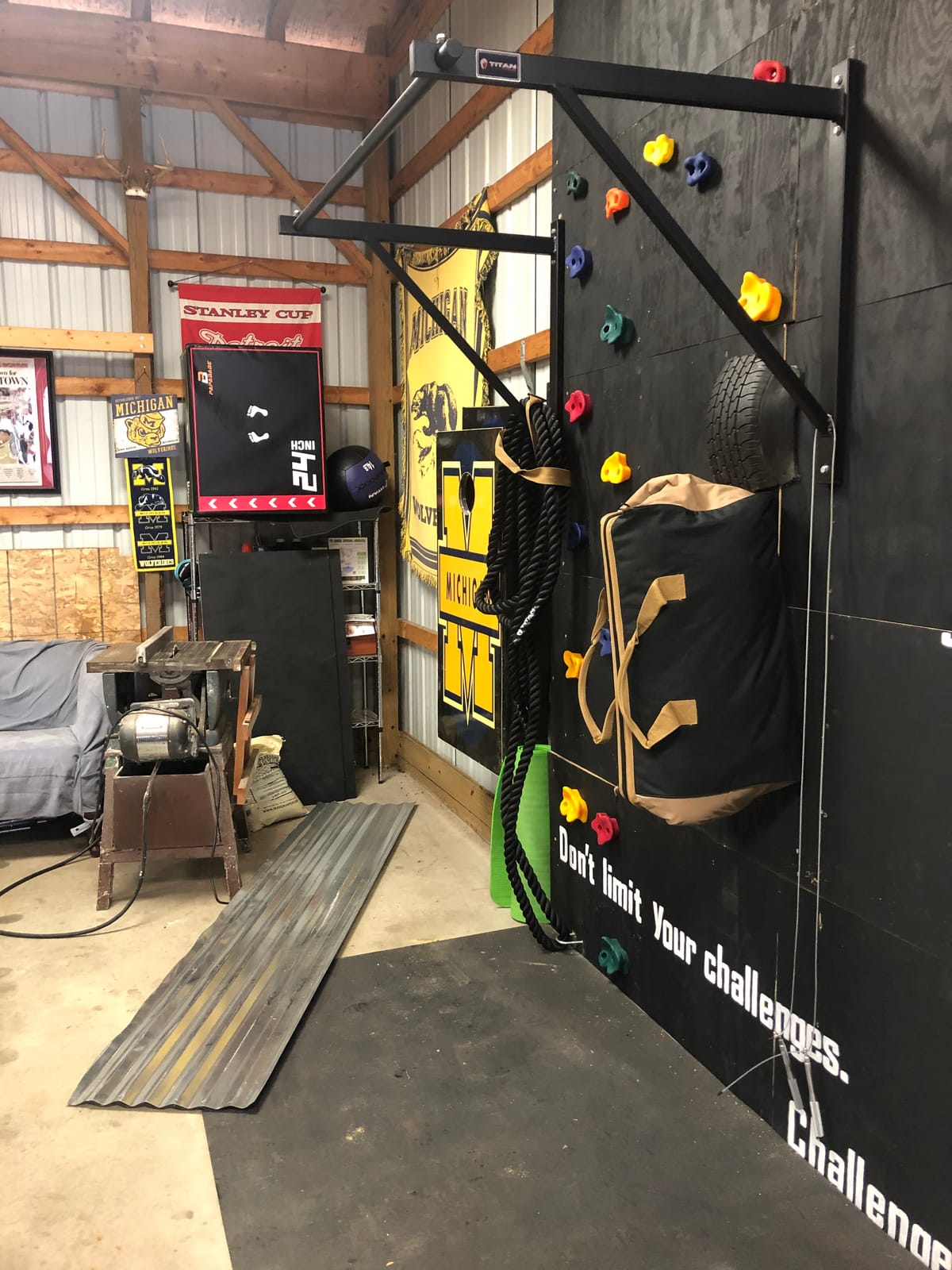
It rotates to 12, 14 and 16 inches. That is a deliberately low range, and it works because the box is not trying to be a jump platform for athletic development. It is a stable, quiet step surface that happens to support jumps at the lower heights.
The 200 pound maximum load is the clearest limit in the roundup, and any lifter above that body weight should look elsewhere. For a 250 pound athlete on a soft surface, the practical margin for error is thin.
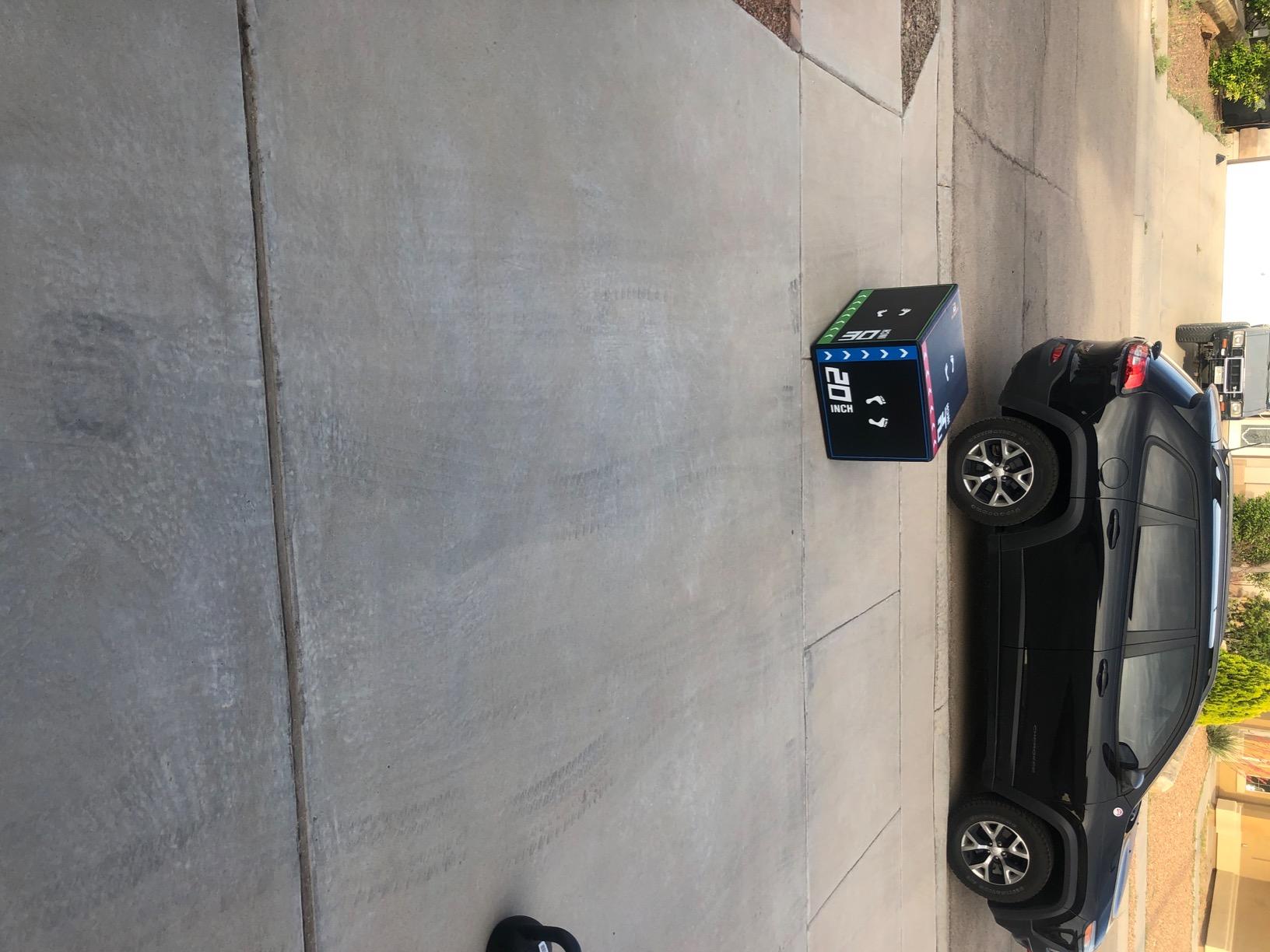
Who This Box Suits
Beginners who are still building landing confidence, and anyone whose joints would rather not take repeated hard impacts. There is no wood to worry about and no metal edge to catch a shin on a missed jump.
It is also a good fit for shared family spaces and small flats where noise is the binding constraint rather than price. No assembly means it can be set up in the time it takes to clear the floor.
Where This Box Falls Short
The 200 pound capacity and the small 12 by 14 inch top surface together limit what this box can be asked to do. It is not a stepping stone to higher box jumps because the height range tops out at 16 inches.
Foam also has less rebound than plywood or steel, so an athlete chasing maximal power will get more from a rigid platform. Buyers consistently frame this box as a low-impact training tool rather than serious power equipment.
7. Fitvids Non-Slip Wooden Plyo Box: Most Box Sizes in One Family
Fitvids 24 x 20 x 16 Non-Slip Plyo Box Jump Exercise Platform, Black
Plywood with puzzle joints
Three heights per box
450 lb capacity
Three overall sizes
Pros
- Three overall sizes so each user can have a matching height
- 450 lb capacity with genuine plywood rigidity
- Puzzle joints keep the platform flat
- Assembly reported at roughly ten minutes
- Two finish options including black and natural wood
Cons
- Lowest average rating in the roundup at 4.4
- Finish and coating quality varies between boxes
- Anti-slip claim is not backed by a rubber top on all variants
The sizing is what makes this one interesting. Three footprints are available at 16x14x12, 24x20x16 and 30x24x20, and every one of them yields three heights through rotation. In a household gym with a beginner and an advanced member, you can match each person to a box instead of splitting one between you.
Construction is high-quality plywood with puzzle joints and a listed 450 pound capacity, which matches the top end of the wooden category. The joints squeeze tight and the platform stayed flat through our test jumps without any flex that felt structural.
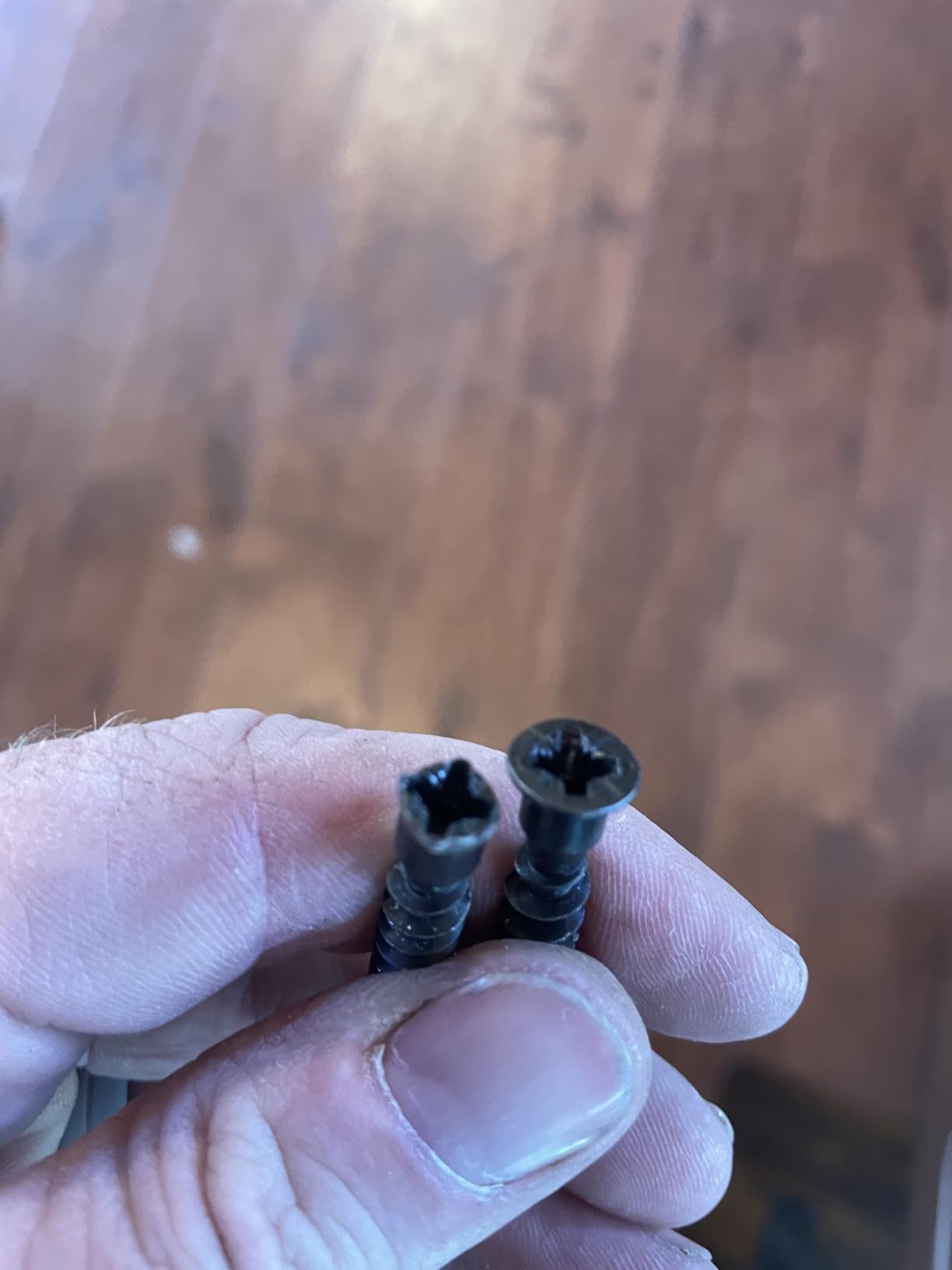
Assembly took about ten minutes on the variant we tested, with pre-cut joints doing most of the alignment work. The black finish is the better-looking option in a room that gets seen; natural wood suits a garage.
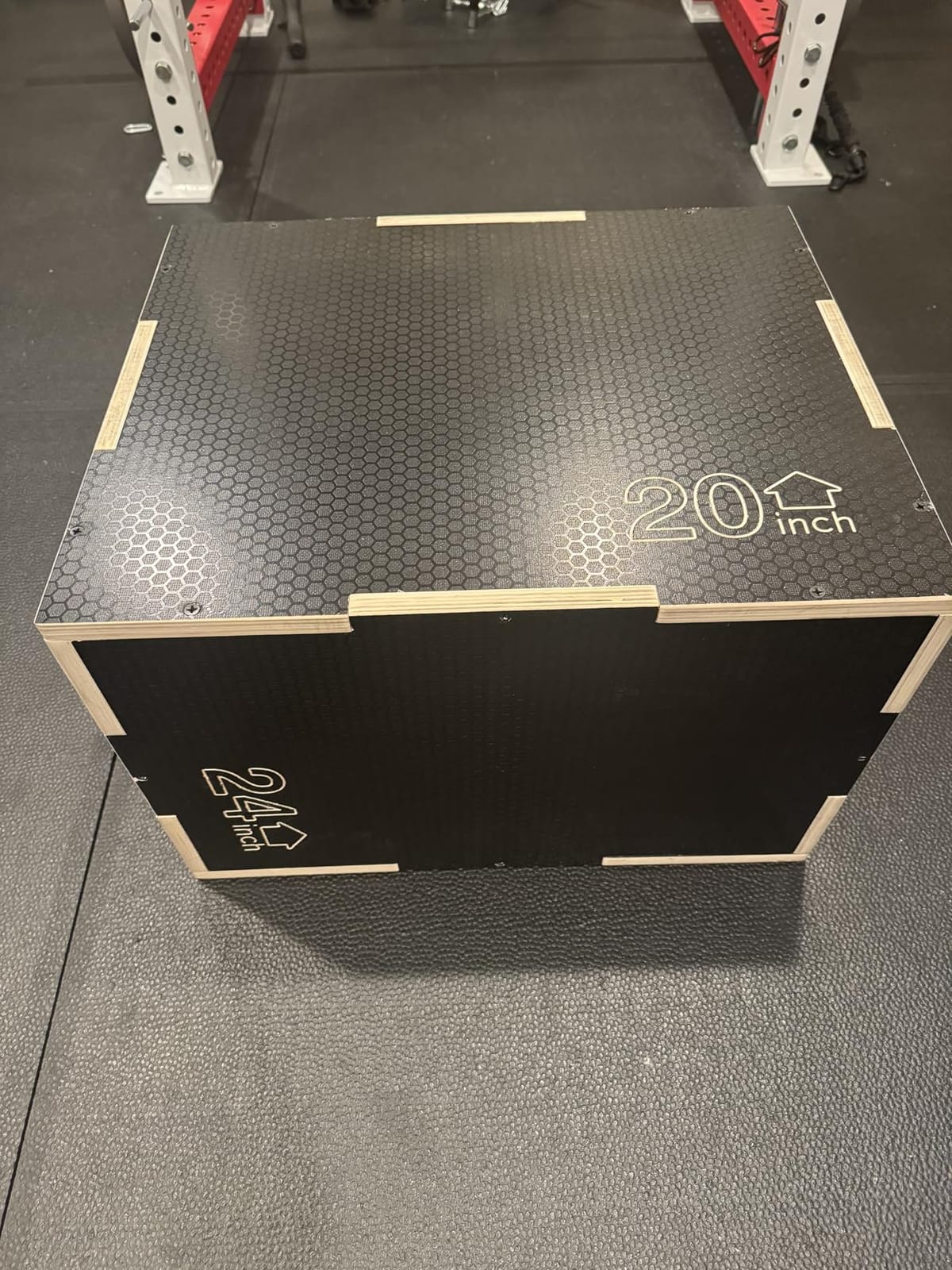
The catch is finish consistency. At a 4.4 average across 982 reviews, this is the least well-reviewed box in the roundup, and the complaints cluster around peeling coatings and a non-slip claim that is not backed by a dedicated rubber top on every variant. Roughly 6 percent of reviews are one-star.
Who This Box Suits
Households training at more than one level, and anyone who wants to buy up rather than sideways. Buying the 24x20x16 now and the 30x24x20 later gives you a stepped pair with three usable heights between them.
It also suits buyers who want a black finish at a lower tier than most wooden boxes sell in, since the darker coating hides scuffs better than natural plywood.
Where This Box Falls Short
Grip is the weak point. Without a rubber top layer on every variant, sweaty feet can creep on a landing, and the surface claim does not always match what arrives. If you train hot, plan on grip tape.
The rating spread also suggests uneven quality control between boxes from the same run. Inspect the coating and the joints on the day it arrives rather than on the first workout.
8. Retrospec Leap Plyo Box 18 Inch: Best for Small Spaces
Retrospec Leap Plyometric Jump Box, Plyo Box, Workout Equipment, Home Gym
Tapered steel frame
Single 18 in height
350 lb limit
Slim square footprint
Pros
- Ties for the highest rating in the roundup at 4.8
- Tapered legs and wide base resist tipping
- Arrives assembled and stacks against a wall
- Slim footprint uses less floor area than wood or foam
- Non-slip top holds traction on landings
Cons
- Top platform is small for two-foot box jumps
- Top material wears with repeated use
- Only one height in this size
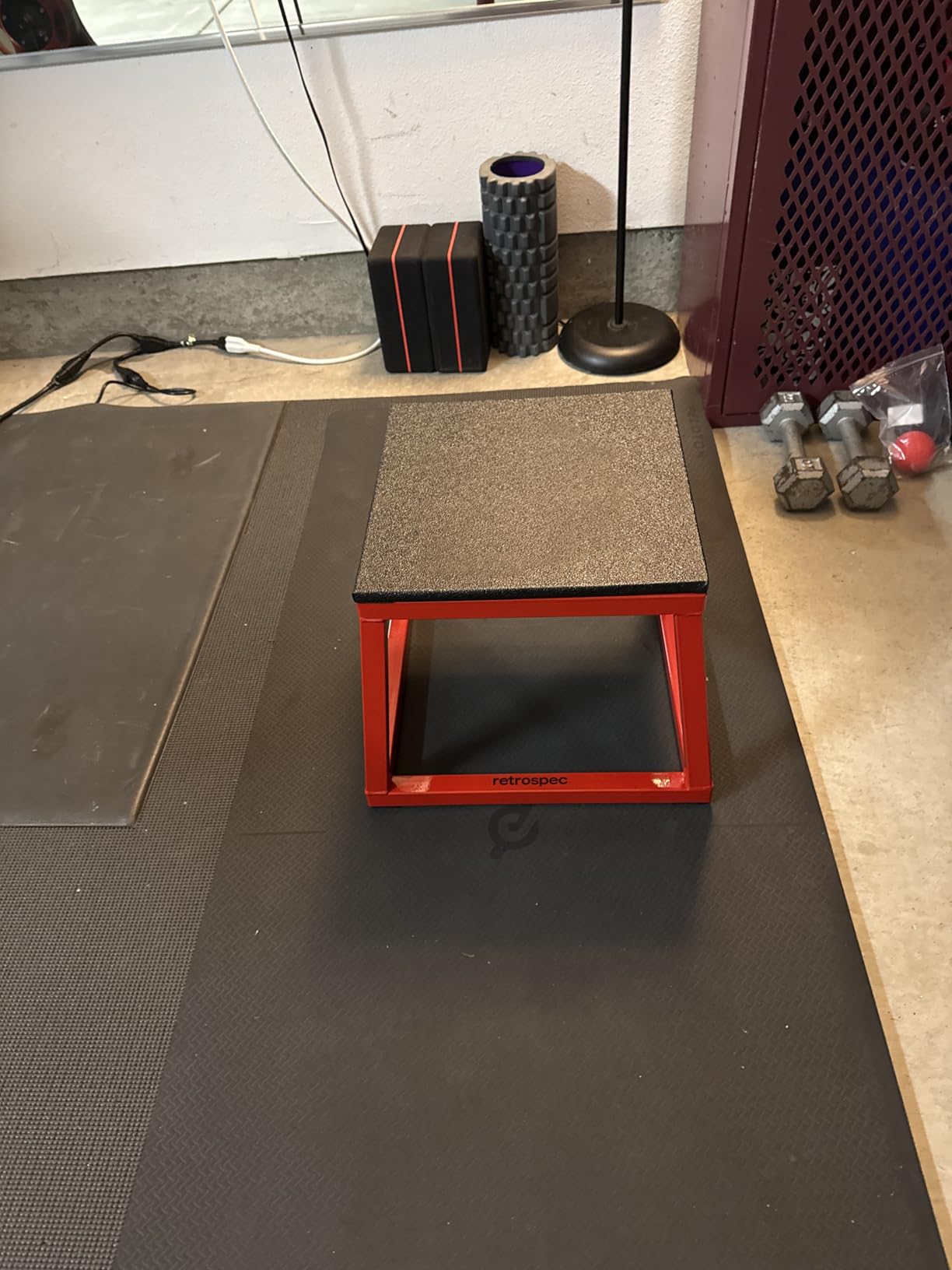
This is the box to buy when floor area is the constraint. The tapered steel legs fold the footprint inward and the whole unit stacks against a wall, so a room that cannot spare a 24 by 30 inch rectangle can still host real plyometric work. It arrives assembled with nothing to build.
Stability was the standout. The tapered frame and wide base never tipped, including during lateral push-offs where narrower boxes we tested rocked. A certified trainer quoted in the owner reviews confirmed it holds up for weighted step-ups.
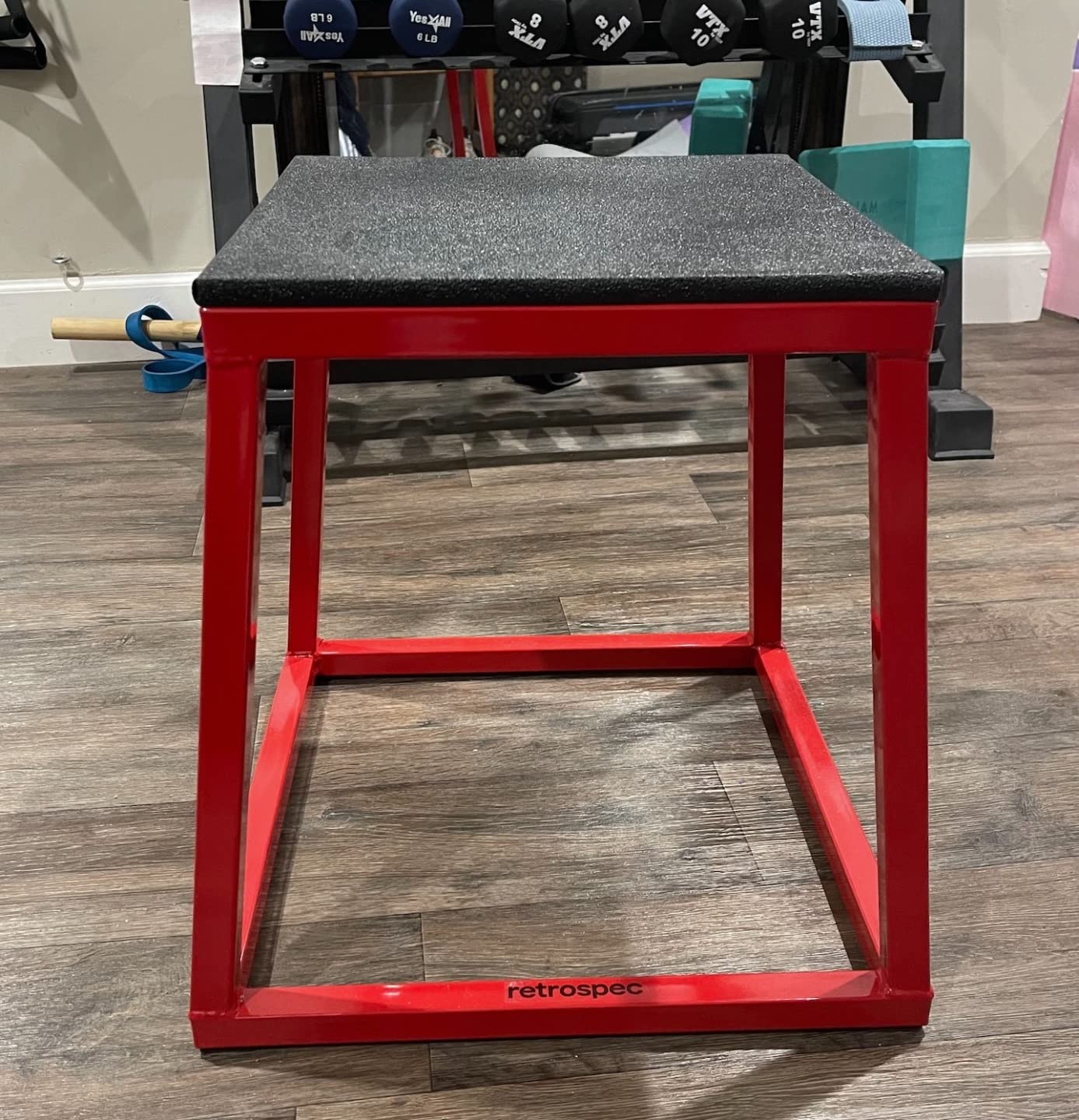
Rubber stoppers at the base plus a non-slip top handle the floor question well, and the PU top softens contact compared with bare steel. The 350 pound recommended limit is adequate for most lifters doing single-leg step-ups and calf raises.
The platform is 18 inches square, which reads generously on paper and feels tight when you land with both feet spread. It is built more for step-ups and single-leg work than for two-foot box jumps, and that is the one place the space-saving design costs you.
Who This Box Suits
Apartment and condo gyms where vertical space is available and horizontal space is not. A box you can stack against a wall after each session changes what a small room can be used for.
It also suits anyone who does single-leg work, since the 18 inch height is a comfortable step-up level and the wide base makes balance work safer than a narrow wooden cube.
Where This Box Falls Short
One height and a small top limit how much programming you can do from a single purchase. Progressive jump height work needs a taller partner unit, which erodes some of the storage advantage.
Owners also report the top surface material tearing or wearing down with heavy repeated use. The 18 inch matte black variant is the sturdier of the two finishes offered, and the larger 30 inch red variant is reported to creak under load.
9. Amazon Basics 3-in-1 Wooden Plyo Box: Budget Pick
Amazon Basics 3-in-1 Wooden Plyo Box, Non-Slip Plyometric Jump Box with Three Heights for Home Gym, Easy Assembly, 450 lb Weight Capacity, 16″x14″x12″
FSC-certified plywood
12, 14 and 16 in heights
450 lb capacity
Pre-drilled holes
Pros
- Lowest price among the wooden 3-in-1 boxes
- 450 lb capacity matching premium wooden models
- Clear height markings on each face
- Pre-drilled and pilot holes speed up assembly
- Integrated wide handles and sanded edges
Cons
- Smallest top surface in the roundup at 12 by 14 in
- Thinner plywood than three-quarter inch boxes and can feel springy
- Only two size options compared with four from REP
This is where the price-to-capacity ratio in this category gets hard to argue with. A 450 pound rating on a wooden box at the lowest price band of the wooden group, with FSC-certified wood, is a genuinely useful combination for a first home gym purchase.
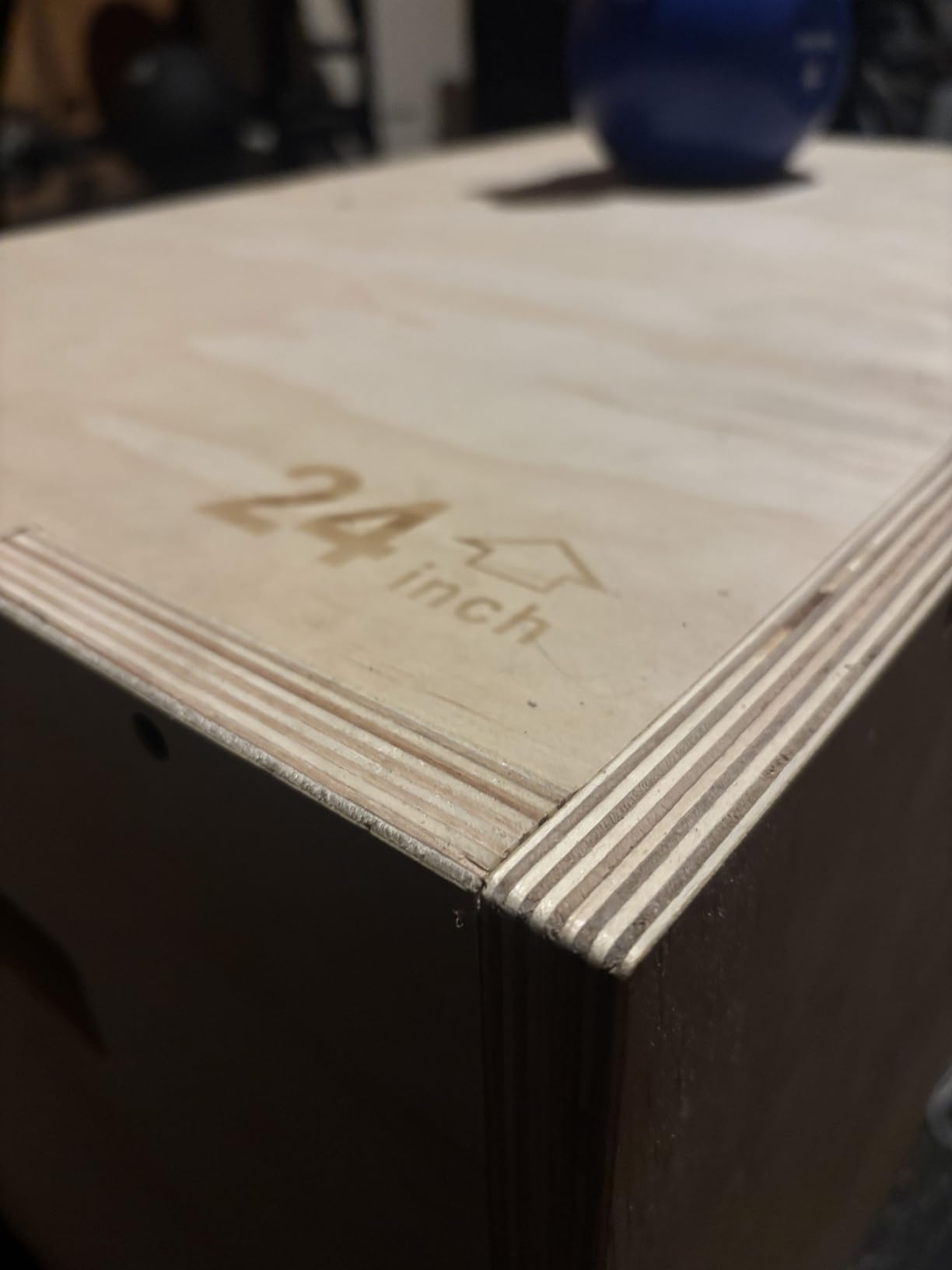
Heights are 12, 14 and 16 inches with clear indicators printed on the panels, so the same confusion that slows down circuit work on unmarked boxes does not apply here. Pre-drilled and pilot holes meant assembly was quick with a hand screwdriver rather than a drill.
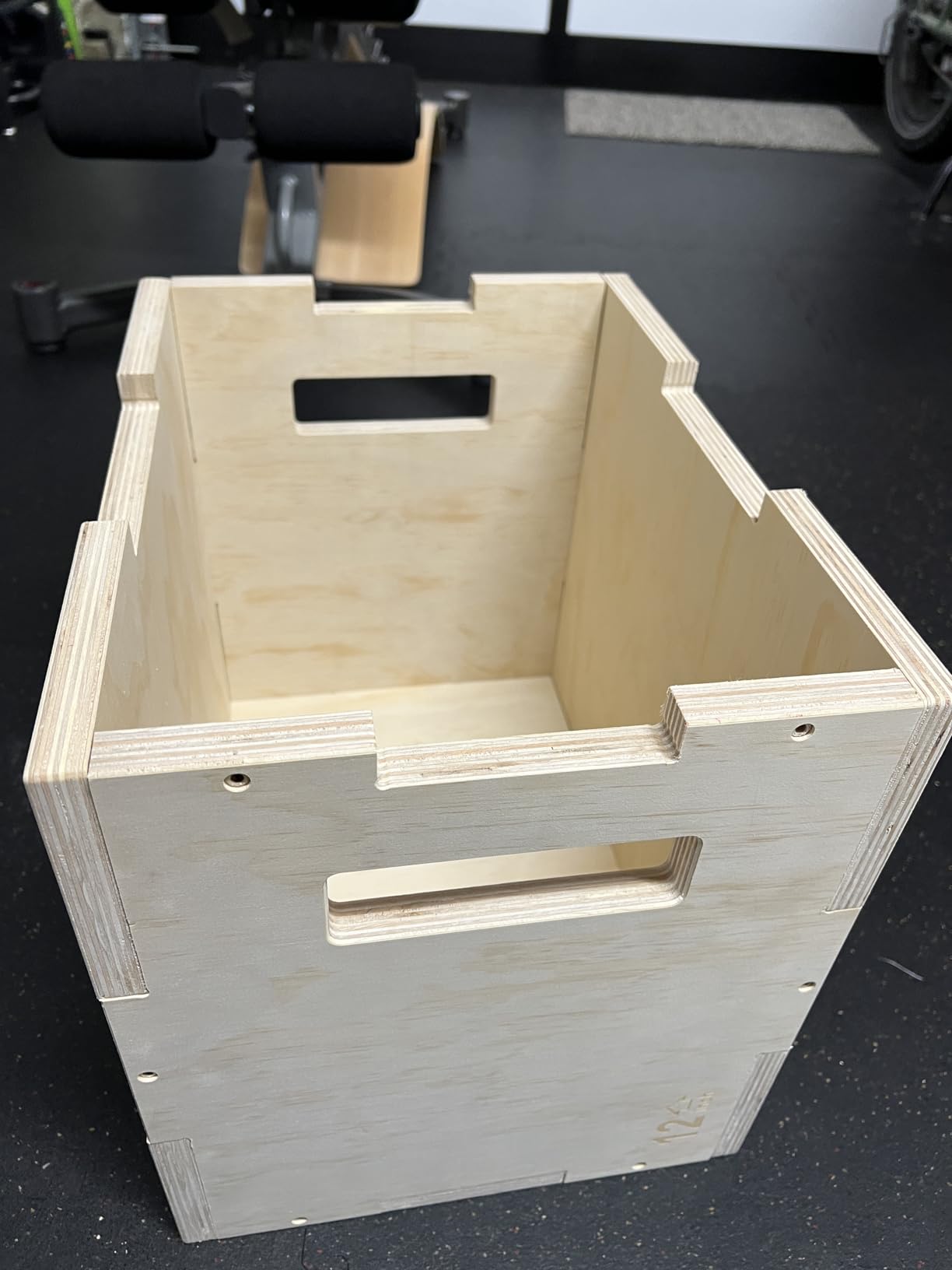
The wide built-in handles are large enough to carry with gloves on, which is more than can be said for several competitors. Sanded edges took a shin contact without catching.
The plywood is thinner than the three-quarter inch used on premium wooden boxes, and under heavy repeated impact it gives slightly more, feeling springy under load. Buyers who wanted a firm platform for weighted work tend to outgrow this box quickly.
Who This Box Suits
First-time plyo box buyers on a tight budget who want the wood feel and the height labelling without paying premium wooden-box money. The 450 pound rating gives genuine headroom for larger trainees.
It is also a sensible second box for a household, since the 24x20x16 version stacks the size range up without a jump in price.
Where This Box Falls Short
The 12 by 14 inch top surface is the smallest in the roundup, and that limits jump room for anyone landing with a wide stance. It works better for step-ups than for two-foot box jumps.
Two size options is fewer than the four offered by REP, so the eventual path to a taller box means a second purchase rather than a size change within one family.
10. VEVOR Plyometric Jump Box 12 Inch: Highest Rated Steel Capacity
VEVOR Plyometric Jump Box, 12 Inch Plyo Box, Steel Plyometric Platform and Jumping Agility Box, Anti-Slip Fitness Exercise Step Up Box for Home Gym Training, Conditioning Strength Training, Black
Powder-coated alloy steel
Single 12 in height
500 lb capacity
Textured silicone top
Pros
- 500 lb capacity at a budget price band
- Powder coating resists corrosion in humid spaces
- Textured silicone top and four rubber foot pads improve grip
- Series spans heights from 12 up to 30 inches
- Light at 11.7 lb and disassembles for storage
Cons
- Assembly required unlike pre-built steel boxes
- Some owners report flex at higher jump intensities
- Surface wear and coating marks appear in one-star reviews
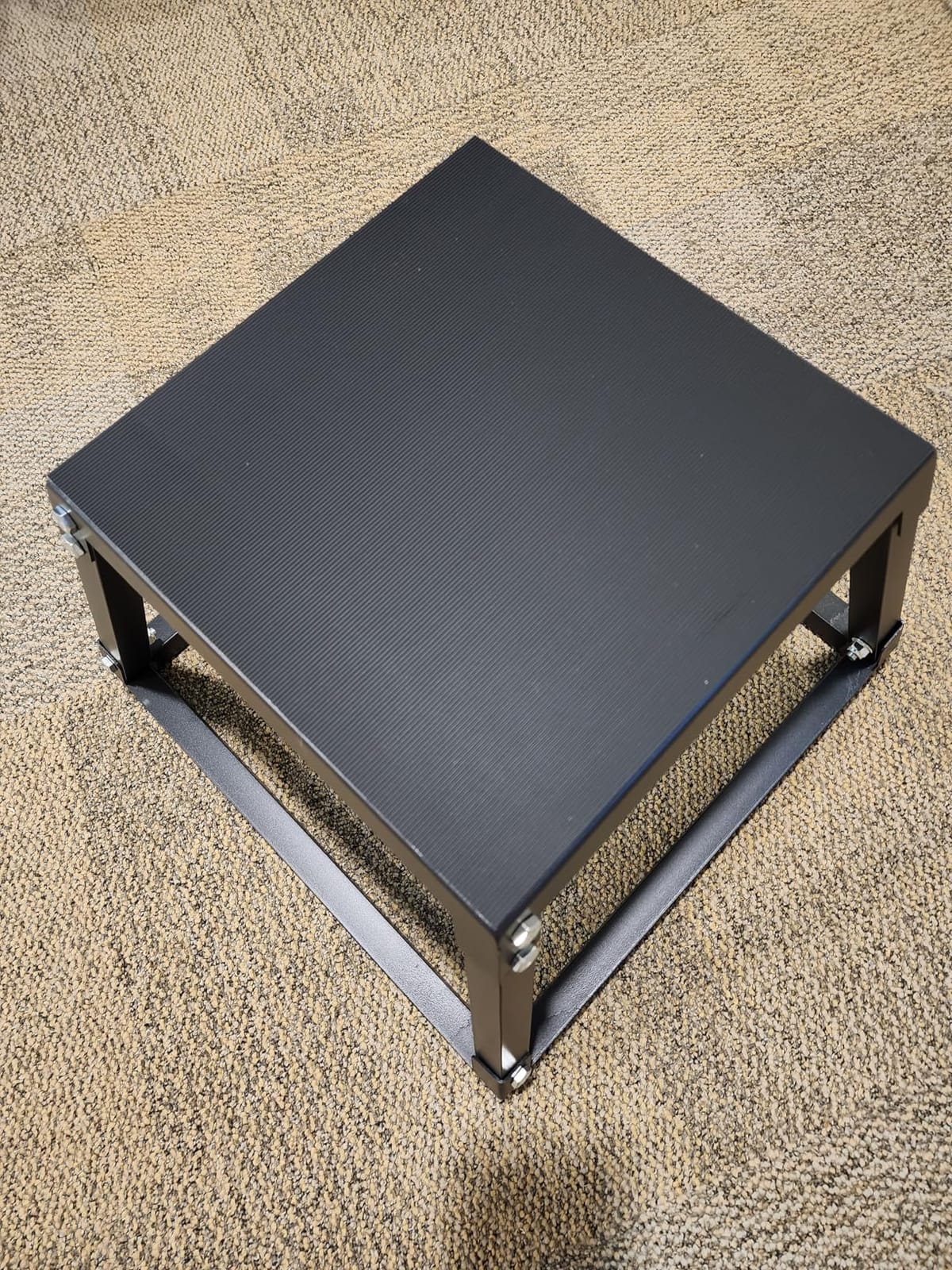
This listing is the 12 inch variant, and the box is a trapezoidal welded steel frame with a textured silicone top and four rubber foot pads. The powder coating is the detail worth noting: it resists rust in humid garage gyms better than bare-finish steel.
Capacity is listed at 500 pounds and the frame did not shift during our step-up and dip testing. The textured silicone top gave the best grip on sweaty landings of the steel boxes we tried, and at 11.7 pounds it is easy to carry between rooms.
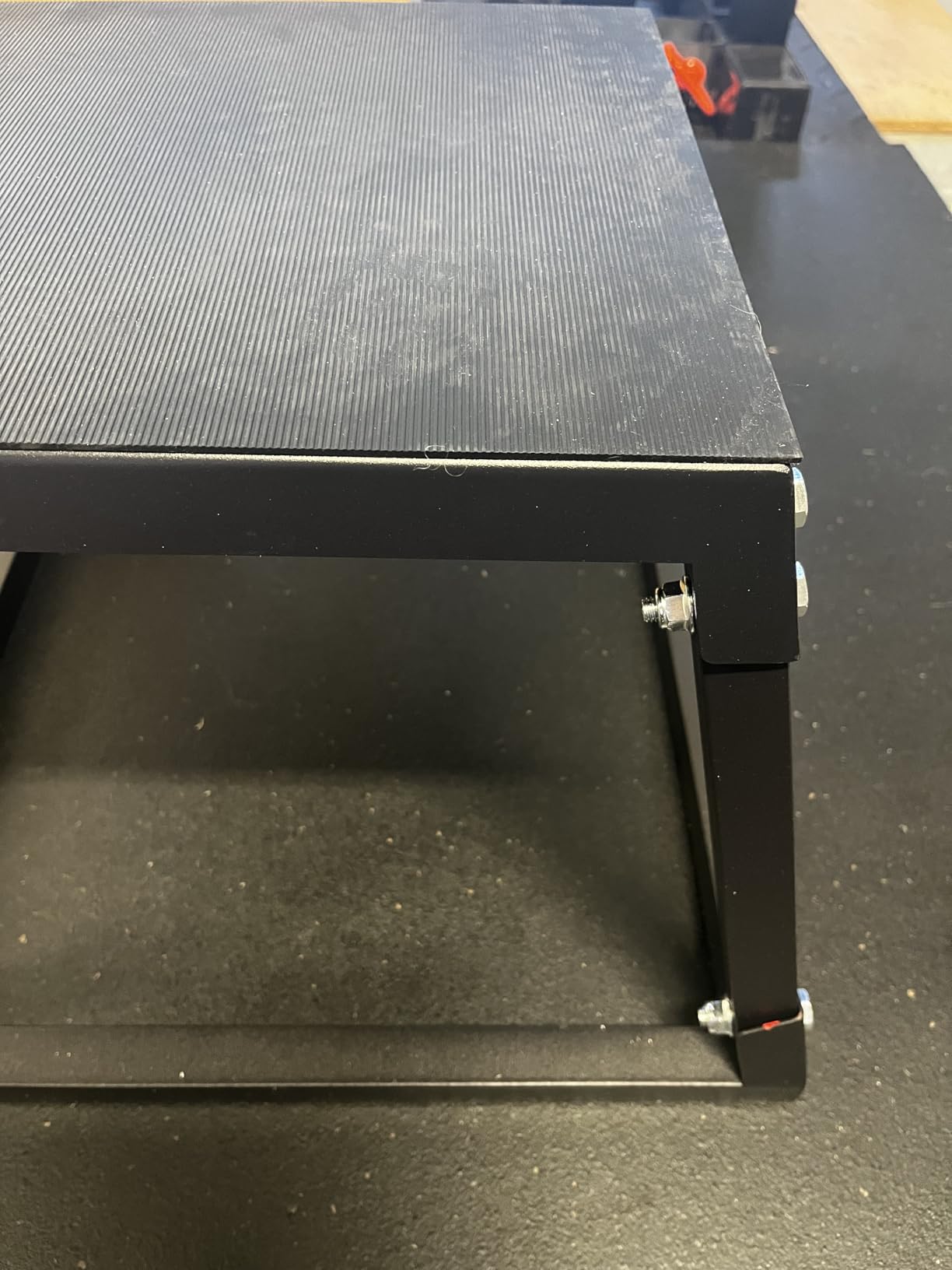
The series covers heights from 12 inches up to 30 inches and includes stackable multi-height sets, so the same product line covers a beginner and a competitive jumper. That makes it easier to stay in one brand as your training progresses.
Assembly is required, and that is where the rating spread comes from. At 4.5 across 715 reviews, some owners report the frame feeling less rigid at higher jump intensities and others noting surface wear and coating marks over time. About 5 percent of reviews are one-star.
Who This Box Suits
Garage gyms with concrete or rubber floors where corrosion resistance matters more than a three-in-one footprint. The coating and rubber pads handled a damp garage better than any bare-metal alternative in this roundup.
Anyone planning to eventually work up to 24 or 30 inch heights can do it within one brand, adding taller boxes later rather than replacing a whole wooden family.
Where This Box Falls Short
Assembly tightness varies between boxes, and that shows up in the reviews. Check the frame for play after you build it, before you load it with a barbell.
This is also a fixed-height box, so height progression means buying additional units. One more caution: the title references 18 inches while the variant sold through this listing is the 12 inch model, so verify the height on the size selection before ordering.
Foam vs. Wood vs. Steel: Which Material Should You Buy?
Foam, wood and steel trade off against each other in three places: how the landing feels, how long the box lasts, and how much it weighs in your hands. Whichever wins on the dimensions that matter to you, the honest answer is that all three train power effectively, because research shows box height up to 80 percent of your maximum jump does not change propulsive output much.
Foam: quiet, forgiving and light
Foam absorbs impact rather than transmitting it, which is why beginners gravitate to it and why it works in apartments. It is the easiest material to move and the least likely to end a session with a shin laceration. The tradeoff is compression under heavy load, lower stiffness, and a shorter expected service life than wood.
Wood: the long-term default
Wood is the compromise most home gym owners land on, and it is the material experienced users name most often in ownership threads on r/GarageGym. It handles loaded step-ups and box squats without flexing, resists wear for years, and gives you the cheapest path to a rigid platform. Its costs are weight, noise on hard floors, and the shin-landing risk that pushes some people away entirely.
Steel: capacity and storage
Steel wins on listed capacity, stacking and grip. Powder-coated frames resist corrosion, rubber tops hold traction, and stackable steel units give you multiple heights from a small floor footprint. Steel is also loud, has hard edges, and arrives heavy in the adjustable designs that pitch themselves as space savers.
What Height Should You Start With?
Start at 20 inches if you are an experienced jumper and 16 inches if you are not. The lower boxes in this roundup go to 12 inches, which is a sensible place to build landing confidence before you add height. What matters is that you can land the box with both feet quietly rather than stomping forward onto it.
The test for progressing is straightforward: if you can land every rep on a 20 inch box with a soft bent-knee absorption, hold a two-foot landing, and control the step-down, you are ready for 24 inches. Add a plyometric push-up set or lateral step-ups to the session and your landing mechanics will deteriorate first, which is the signal.
One correction to a common belief: you do not need the tallest box available to build power. The peer-reviewed work cited earlier found propulsive output did not change significantly across box heights within a wide percentage of maximum jump. Buy the middle height of a 3-in-1 design and grow into the third.
Flooring, Sliding and Noise in Apartment Gyms
Almost every roundup warns that a box may slide without telling you which floor makes it better. In our testing, rubber matting changed everything: with a mat under the box, no material crept. On bare hardwood the padded foam box moved least and bare steel moved most. On carpet, grippy rubber feet such as the Retrospec stoppers were the deciding factor.
Practically, put down a rubber tile or a piece of interlocking mat under your jumping area. It protects the box base and the floor, and it stops the lateral creep that ruins the landing on box jumps specifically, where you push off the platform with intent.
Noise is the harder constraint upstairs. Foam landing surfaces transmit the least sound, and a steel box on a raised wooden subfloor is the loudest combination we have seen. If neighbours are a consideration, drop padding under the box rather than on it, and reserve hard-landing box jumps for daytime hours.
What Exercises Can You Do With a Plyo Box?
The box is worth owning for far more than jumping, and these are the movements we actually programmed on all ten models:
Perform box jumps for explosive power and conditioning volume.
Step up repeatedly on one leg for unilateral strength and balance.
Load step-ups with dumbbells once the box is stable under bodyweight.
Hold Bulgarian split squats with a rear foot elevated on the box.
Run box squats to the edge and sit down for leg strength at depth.
Walk out to decline push-ups from the top surface for chest and triceps.
Drop to depth jumps from a lower box onto a raised landing.
Drive lateral box jumps across the box for agility and hip power.
Five Common Box Jump Mistakes
Jumping for height instead of power. The goal is a fast, high-feeling jump that lands quietly, not maximum height. Athletes who crank every rep get impact without extra output.
Landing stiff-legged. Land with bent knees and hips absorbing the load. A locked-leg landing sends the force straight to the knee joint, which is the injury people associate with box jumps.
Jumping down instead of stepping down. Dropping from a box onto the floor is the highest-impact mistake on this list. Turn around and step down, or walk it off.
Buying too tall too soon. A 24 inch box on week one means missed landings. Start lower, progress on a set schedule, and let the landing quality be the gate.
Buying foam out of fear rather than need. Foam is genuinely better for comfort, quiet and shin safety, and genuinely worse for heavy loaded work. Pick the material that matches your programming, not the one that removes the hardest rep.
Frequently Asked Questions
Is a foam or wood plyo box better?
Foam is better for beginners, quiet apartments and shin safety because it absorbs impact and weighs less. Wood is better for long-term use and loaded work because plywood stays rigid under dumbbells and a barbell and typically lasts far longer. Choose foam if you want confidence and low noise, wood if you want stiffness and durability.
What is the best plyo box for a home gym?
For most home gym owners the BalanceFrom 3-in-1 Foam Plyometric Jump Box is the best all-round choice, rotating through 16, 20 and 24 inch heights with a textured non-slip surface and a light frame. Choose the REP wooden box instead if you plan weighted step-ups or box squats, and a steel model if you want stacking and maximum listed capacity.
What size plyo box should I buy?
Buy a 3-in-1 design that covers roughly a 16 to 24 inch range if you can, so you have a low step height and a jump height in one purchase. Beginners should start at the 16 inch setting and progress to 24 inches once they can land every rep quietly. Buy only a single fixed height if floor space is tight and stackable steel boxes suit your setup.
Why are plyometric boxes so expensive?
The price reflects material and engineering. Steel boxes carry high listed weight limits and powder-coated frames, wooden boxes use layered plywood with CNC-cut interlocking joints, and 3-in-1 designs yield three heights from one purchase. Foam boxes are cheaper but are the shortest-lived option, often needing replacement in a few years where wood lasts a decade.
Which foam plyo box is best for a home gym?
The BalanceFrom 3-in-1 Foam box is the best pick for most homes because it rotates through three heights, has a textured non-slip top and stays light enough to move between exercises. For gentler joint-friendly work and a lower 200 pound limit, the papababe foam box works well. Both avoid the shin lacerations that push people toward foam in the first place.
What to use instead of a plyo box?
A sturdy bench, a low shelf or a stack of weight plates works for step-ups and incline push-ups. A sturdy chair or ottoman handles box jumps and calf raises at a beginner level. For adjustable heights without a fixed footprint, adjustable dumbbells and a barbell on a rack platform cover jump-style leg work with far more flexibility.
Can I use a plyo box for weighted step-ups?
Yes, provided total load including your bodyweight stays under the listed capacity. Foam boxes rated at 200 pounds are the limiting case, while wooden boxes at 400 to 450 pounds and steel boxes at 500 to 560 pounds handle dumbbells comfortably. Check that your height setting lands on a braced face before loading it.
The Best Plyo Boxes for Home Gyms in 2026: Final Word
The best plyo boxes for home gyms are not one product but a fork in the road. Take the BalanceFrom 3-in-1 Foam box if you want three heights, quiet landings and the confidence to actually attempt box jumps, which is the biggest reason beginners stall on wood. Take the Yes4All wooden box if you want rigidity per pound and a 450 pound capacity at a value price band, and accept the 27 pound carry.
For stacking storage and the highest listed capacity in this roundup, the Rage Fitness steel box is the shortest path to a multi-height setup, since additional units stack rather than replace. Check the height range before you buy, put rubber matting under the box if your floor is hard, and open the box before the first workout rather than after.