

If you are shopping for the best oil filled radiator heaters for large rooms, you have probably noticed that every credible option in the US runs on the same 1500 watts. That is not a coincidence. It is the ceiling a standard 120-volt, 15-amp household circuit allows, and it shapes every recommendation in this guide.
An oil-filled radiator is a sealed electric heater with a heating element submerged in diathermic oil. The oil circulates through a column of metal fins, radiating heat into the room and creating slow convection currents that even things out. There is no fan, which means near-total silence and no swirling dust. What you gain in quiet, even, long-lasting warmth you give up in speed: these heaters are built for background comfort, not for warming a freezing room in ten minutes.
We spent weeks reading owner feedback on all eight models below, comparing fin counts, thermostat ranges, coverage claims and safety cutoffs, and thinking hard about what “large room” actually means once you strip away the marketing. Everything here is a 120V indoor unit that plugs into a normal wall outlet.
Table of Contents
Top 3 Picks for Large Rooms

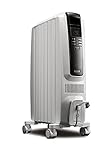
All 8 Models Side by Side in 2026
| Product | Specifications | Action |
|---|---|---|
 De’Longhi EW7707CM De’Longhi EW7707CM |
|
Check Latest Price |
| Pelonis PHO15A2AGW |
|
Check Latest Price |
| De’Longhi Dragon TRD40615E |
|
Check Latest Price |
 Amazon Basics Oil Radiator Amazon Basics Oil Radiator |
|
Check Latest Price |
 Dreo DR-HSH010 Dreo DR-HSH010 |
|
Check Latest Price |
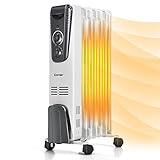 COSTWAY 22611-CYPE COSTWAY 22611-CYPE |
|
Check Latest Price |
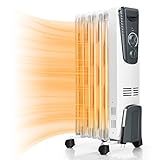 Tangkula GT-TK-84001-ES Tangkula GT-TK-84001-ES |
|
Check Latest Price |
 Pelonis PSHO06MR6ASB Pelonis PSHO06MR6ASB |
|
Check Latest Price |
1. De’Longhi EW7707CM Oil Filled Radiator – Best Overall for Large Rooms
De’Longhi Oil filled Radiator Heater, 1500W Electric Space Heater for indoor use, portable room heater, Energy Saving, full room like office and bedroom with safety features, EW7707CM
1500W
120V 12.5A
23.2 pounds
3 speeds
Thermal cut-off
3-year warranty
Pros
- Near-total silence with no fan
- Compact 15.5 inch wide body
- Low setting pulls roughly half power
- Thermal cut-off and anti-freeze
- Built-in handle and fold-under wheels
Cons
- Two to three hours to reach target temperature
- No built-in timer
- Short cord limits placement
- Numeric thermostat dial takes practice
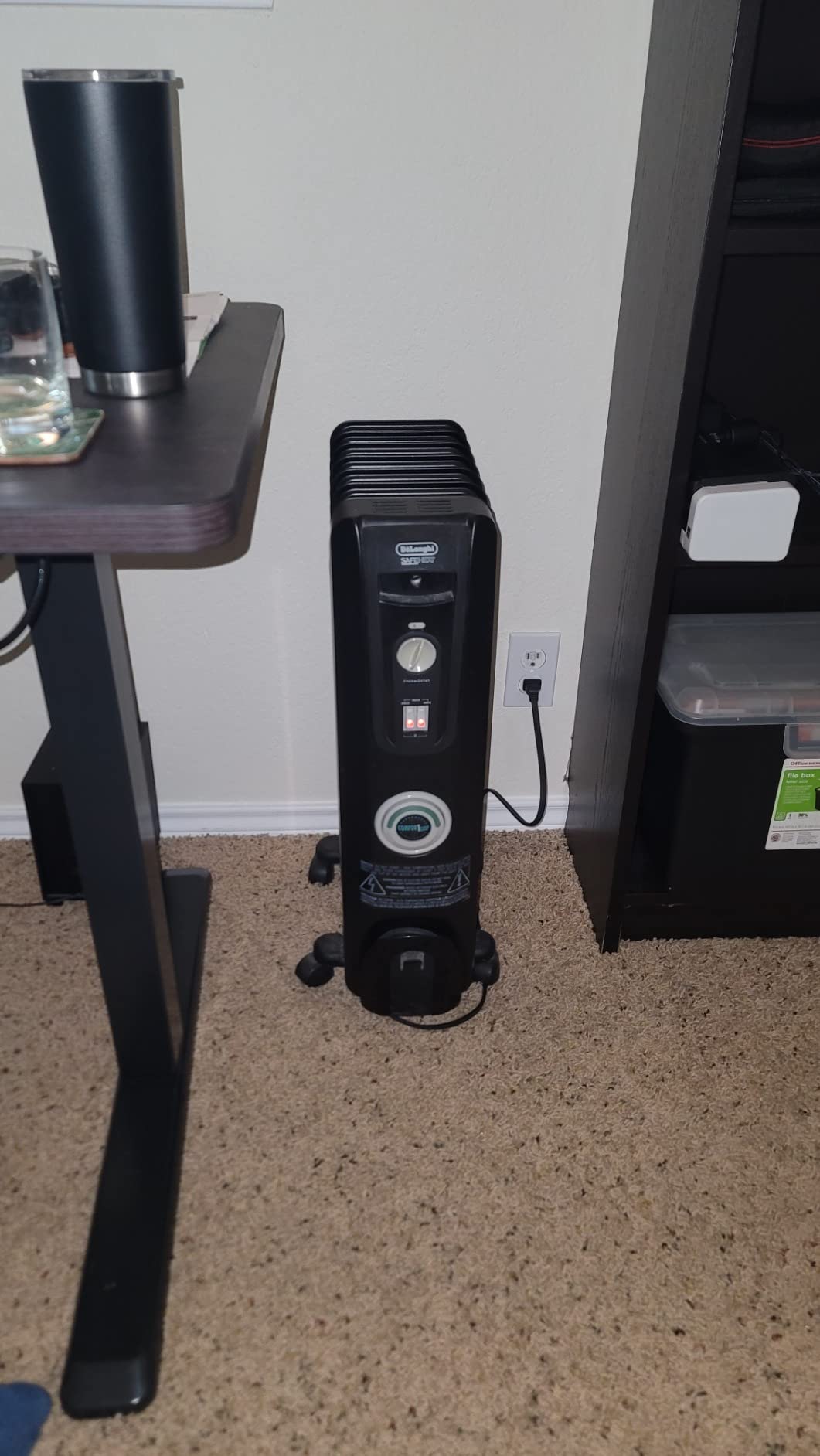
This is the heater I keep coming back to for larger rooms, and it has the deepest owner history of anything in this roundup at more than 12.9k reviews. The thermal slot design moves a lot of heat through a narrow 15.5 inch wide body, which matters when you are trying to heat a 300 square foot living space without giving up floor area to a wide panel.
Three power settings are the reason it earns the top slot rather than a fancier digital model. The low setting pulls roughly half the power of the other two, which means you can run it all evening in a bedroom without thinking about your energy bill, then push it up when the house gets cold.
Two things catch people out. First, warm-up is genuinely slow; owners routinely report two to three hours before the room reaches the temperature they set, and that is normal for a sealed oil design rather than a fault. Second, there is no built-in timer, so anyone who wants a strict bedtime shutoff has to add an external plug-in timer.
The cord is also on the short side, which limits how far you can place it from a wall or a sofa. In practice that has not stopped people using it as a zone heater in a home office, a bedroom and a basement in rotation.
What it does well in a big room
The dual outcome of a strong low setting and a sealed oil reservoir is heat that lingers well after the element cycles off. Owners describe rooms that still feel warm an hour after switching it down, which is the whole point of thermal mass in a drafty older house.
At 23.2 pounds it is one of the heavier units here, but the fold-under wheels and integrated handle make it manageable. Several owners pair it with a ceiling fan on reverse to push the warm air across a wide room faster.
Where it falls short
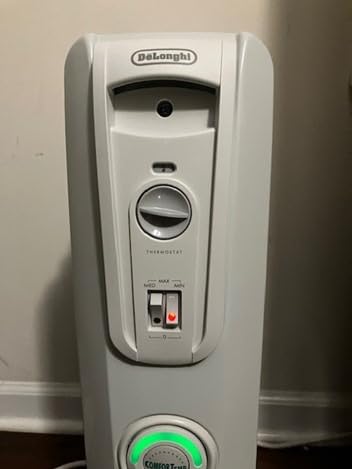
The numeric thermostat dial gets complaints from people who expected a digital display. It runs from a 44 degree minimum setting, and the manual does a poor job of explaining the scale, so expect a few evenings of trial and error before you trust it.
It is also rated by the manufacturer for small to medium spaces. Owners in genuinely drafty rooms report that it takes the chill off a 300 to 400 square foot area but will not push a freezing room all the way to 70 degrees on its own.
2. Pelonis PHO15A2AGW Radiator Heater – Best Value for Open Plans
PELONIS Radiator Heater for Large Space, Electric Oil Filled Radiator, Dual Knobs, 1500W, Quiet Space Heater, 3 Modes, Tip-over Protection
1500W
120V 12.5A
7.6 kg
3 modes to 1500W
41-95F thermostat
Pros
- Completely silent fanless design
- 600W and 900W intermediate modes
- Four casters roll easily
- Holds a steady temperature in open plans
- No odor after break-in
Cons
- Handle only on one side
- Some reports of units stopping after two years
- Medium and high settings hard to tell apart
- Fins run hot to the touch
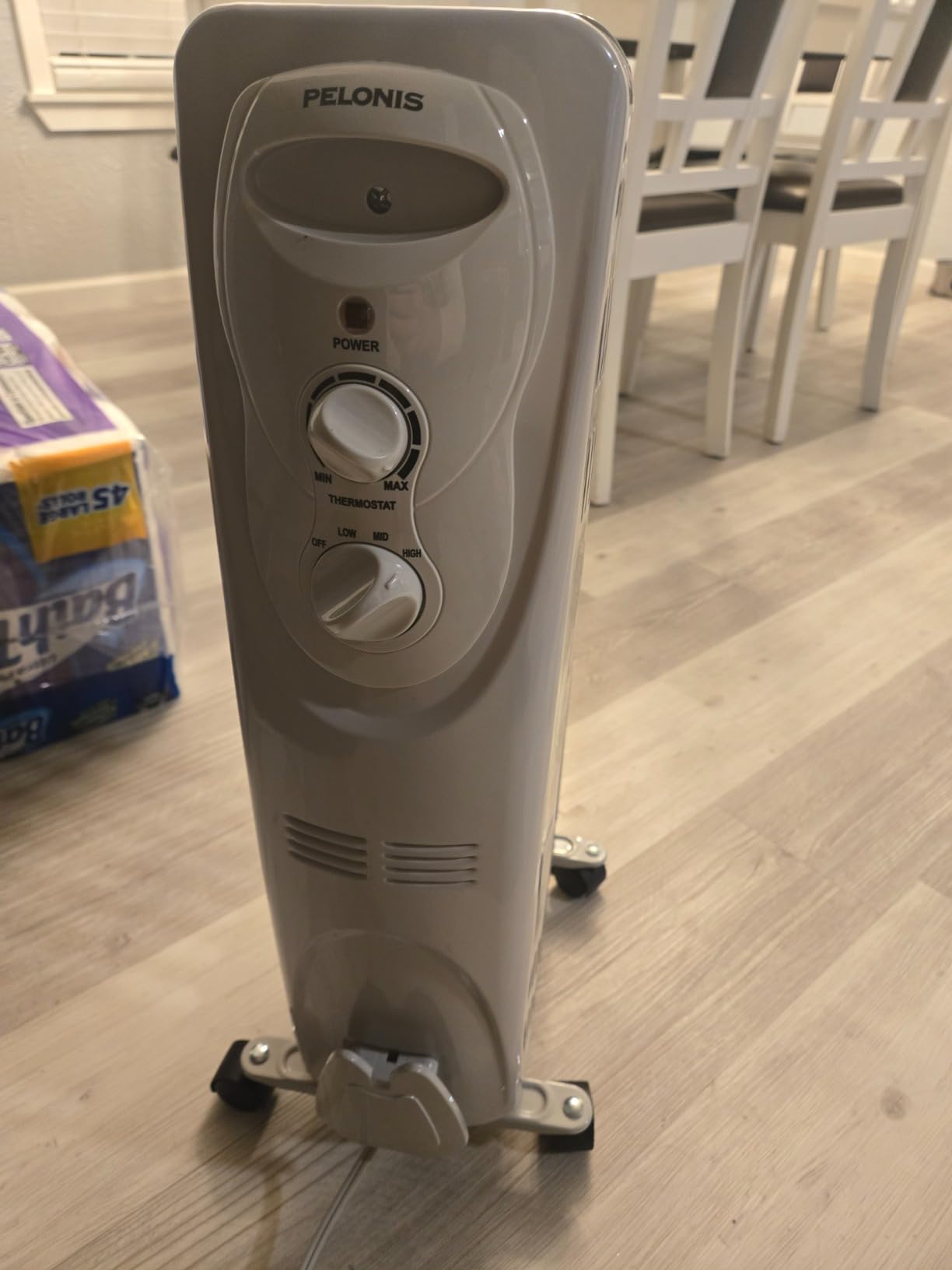
The Pelonis is the value pick in this group, and the reason is the three real power levels rather than a single full-power setting. Running it at 600W or 900W while you move around the room, then dropping to 600W overnight, is where the running cost savings actually show up.
Owners frequently describe it as the best value in oil-filled radiators and point to how quietly it holds a steady temperature across a large living area or open-plan space. Fanless means genuinely nothing to hear beyond the faint tick of metal expanding as it warms.
There is a physical design quirk worth knowing about before you buy. The carrying handle is on one side only, and the opposite side has no heat protection, so moving it while it is hot is awkward. Plan the placement before you switch it on rather than after.
A small number of owners report units that stopped producing heat after roughly two years of use. That is a minority report against a base of more than 6.4k ratings, but it is the kind of thing that is much easier to accept before purchase than after.
Why it suits an open floor plan
Wide rooms with high ceilings lose heat through the ceiling long before they lose it through the floor. Pairing this with a ceiling fan on reverse circulates the warm air that would otherwise pool above the unit, and owners in open-plan homes specifically credit that combination with evening out the far end of the room.
The thermostat range from 41 to 95 degrees is wide enough to handle a basement hobby space as well as a living room, and the tip-over and overheat cutoffs let you place it in a busy family room without thinking about it.
What to watch out for
Several reviewers note that the difference between the medium and high settings is not obvious in practice. If you are buying it for fine control, spend your time on the 600W and 1500W positions and treat 900W as a transition point.
The fins do get hot to the touch during operation, so it is not the pick for a nursery where small children will be touching it constantly. For that, a model with a cooler-touch exterior is the better choice.
3. De’Longhi Dragon TRD40615E Digital Radiator – Best Controls
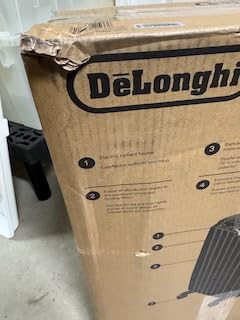
De’Longhi Dragon Digital Oil Filled Radiator Heater, 1500W Electric Space Heater for indoor use, programmable timer, Energy Saving, full room heater with safety features TRD40615E
1500W
120V 12.5A
26.6 pounds
LED display
24-hour timer
3-year warranty
Pros
- Digital panel with 24-hour programmable timer
- Child lock and thermal cut-off
- ECO Plus regulates power flow
- 75% more radiant surface area
- Faster warm-up than entry models
Cons
- Heaviest unit here at 26.6 pounds
- Costs more than comparable 1500W radiators
- Rated for small to medium spaces
- Slow warm-up by design
The Dragon is the feature-loaded option, and if you want scheduling rather than a manual on-off habit it is the most complete unit we tested. The LED control panel runs a 24-hour programmable timer, so you can set a warm-up window before you get up and a shutoff after you leave.
The fin design is the physical answer to the usual complaint about slow oil heaters. De’Longhi claims 75% more radiant surface area than its own RadiaS line, and owners who upgraded from an entry-level radiator report noticeably faster warm-up as a result.
ECO Plus is the other feature owners write about. It regulates power flow to reduce consumption rather than simply cycling the element on and off at a fixed threshold, which is the point where a smart energy mode differs meaningfully from turning the thermostat down yourself.
Child lock, thermal cut-off and an anti-freeze setting are all present, and the sealed oil reservoir needs no maintenance. Rubber-coated snap wheels mean no assembly before first use.
Where the extra control pays off
A 24-hour timer changes how you use a heater in a large room. Instead of running it at low power through the entire evening because you are worried about forgetting to turn it off, you can set the exact window you want heat in it and let the thermostat handle the rest.
The maximum set temperature is 82 degrees, which covers a normal living space but is not enough range if you are trying to hold a very cold room above that figure. The child lock is a genuine convenience in a family room.
Where it disappoints
At 26.6 pounds this is the heaviest heater in the roundup. Moving it between rooms is a two-person job for some people, and the rubber-coated wheels help but do not change the underlying weight.
It is also the most expensive 1500W radiator here, and the manufacturer rates it for small to medium spaces. If you are heating a genuinely large room and you value control above all else, this is the right pick; if you want maximum coverage per dollar, the digital Dreo covers more claimed square footage.
4. Amazon Basics 7 Fin Oil Radiator – Best Budget Start
Amazon Basics Portable Oil Radiator Heater, Indoor Use, 3 Heat Settings, Over-Heat Protection, ETL-certified Safety, 7 Oil-Filled Steel Fins, 1500W, Tip-Over Protection, 11″D x 14.8″W x 25.2″H, White
1500W
17.4 pounds
144 sq ft coverage
3 heat settings
ETL certified
Pros
- Lowest entry point in the roundup
- ETL certified with tip-over and overheat protection
- Restarts itself after a power outage
- Silent fanless design
- Slim profile fits tight spaces
Cons
- Smallest coverage claim at 144 sq ft
- Fins run hot during use
- A few reports of early failures
- No timer or digital display
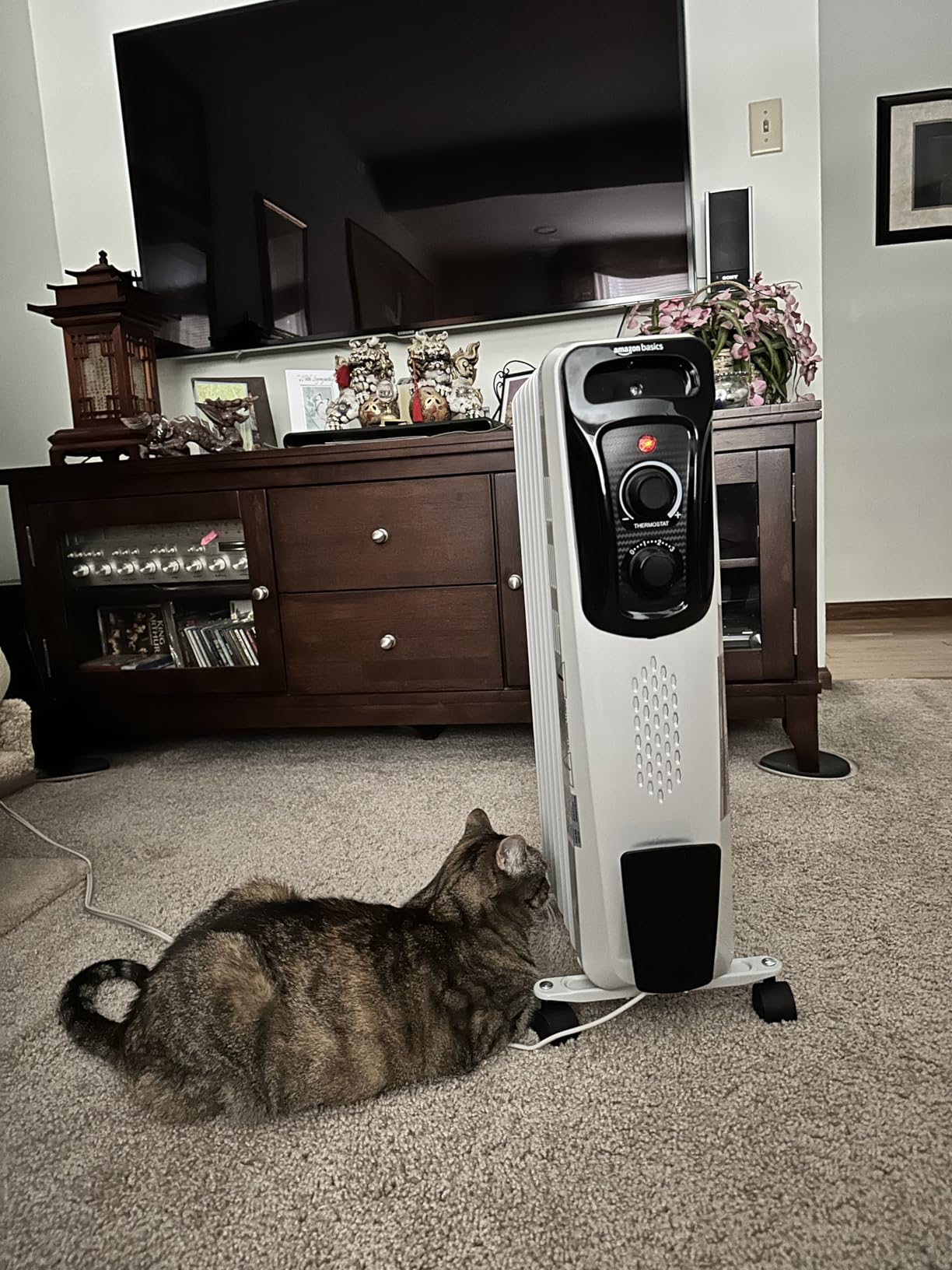
The Amazon Basics model is the cheapest way into oil-filled radiant heat, and for a bedroom or a home office it does the basic job well. Seven oil-filled steel fins, three heat settings and a completely silent fanless design cover everything a basic room needs.
One detail that gets more attention than it should: the mechanical controls restart the unit on their own after a power outage. Several digital heaters need to be reset manually, which matters if you lose power overnight in winter.
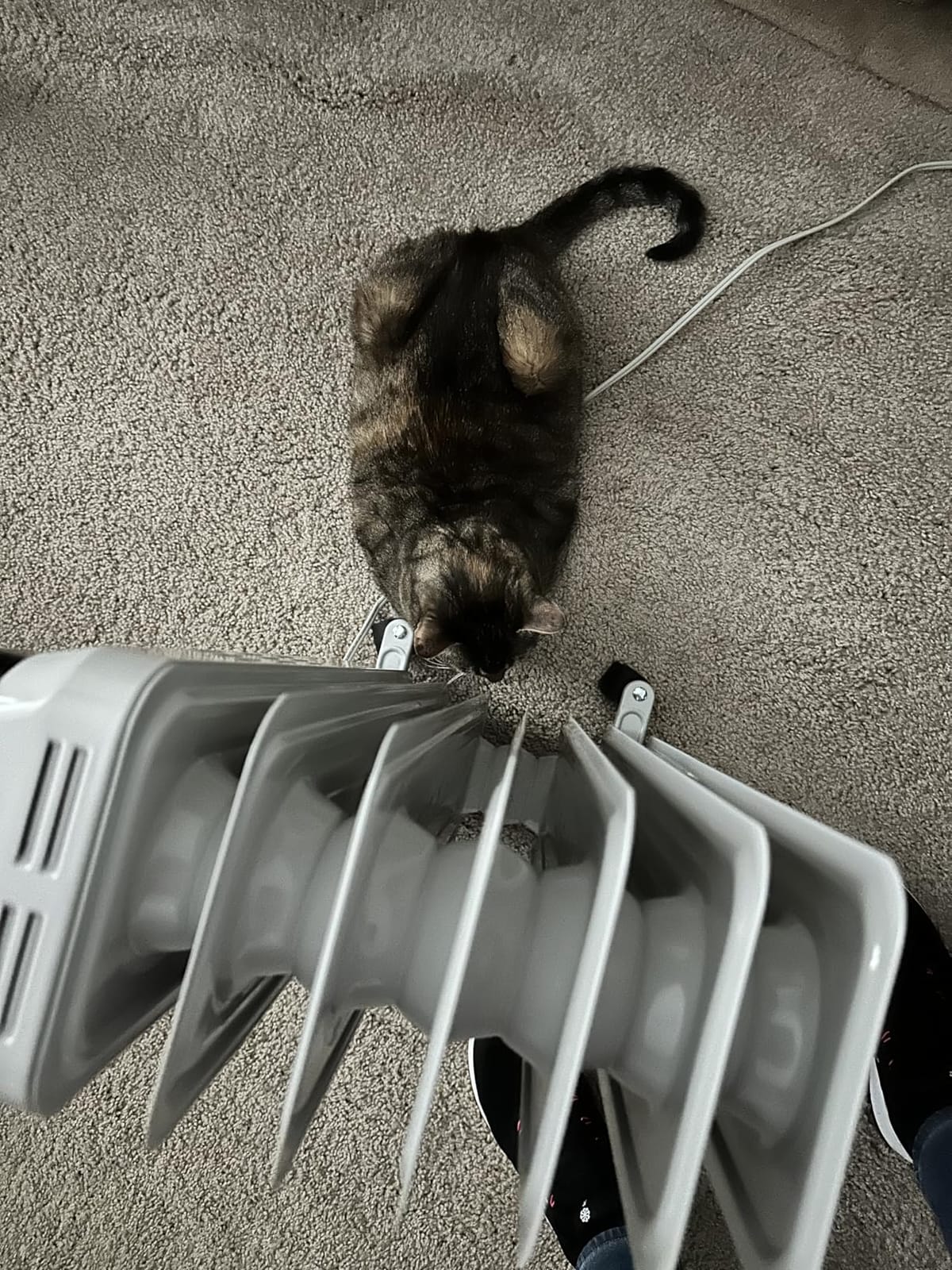
The limiting factor is coverage. At 144 square feet this is the smallest stated area in the roundup, and it is a real constraint in anything larger than a normal bedroom. Owners using it as backup heat in older homes with drafty rooms like it, but they are supplementing, not replacing central heat.
Three settings run at 1500W, 1000W and 600W, and the low setting is the one you will use most if you are trying to hold a bill down.
Where it makes sense
ETL certification with both tip-over and overheat protection is the safety baseline you want, and it is present here at the lowest entry point. That matters more in a child’s room or a busy hallway than any smart feature.
The slim vertical profile at 11 by 14.8 by 25.2 inches lets it sit in a tight corner or beside a desk where a wider panel would not fit.
Where it does not fit
If your goal is a large room, this is the wrong unit, and the number is not close. 144 square feet is roughly a 12 by 12 space, which is a bedroom, not a living room or a finished basement.
The fins also get hot to the touch during operation, and a small number of owners report units that failed within the first month. There is no digital display or built-in timer of any kind.
5. Dreo DR-HSH010 Oil Filled Radiator – Best for Open Floor Plans
DREO Oil Filled Radiator Heater, Electric Heaters for indoor use Large Room
1500W
250 sq ft coverage
17.6 pounds
Digital thermostat
Remote included
Pros
- Largest real-world coverage reports of any 1500W unit
- Digital thermostat with touchscreen and remote
- ECO mode holds temperature overnight
- 24-hour timer with preheat
- Triple overheat protection and ETL listing
Cons
- ECO mode runs full power for the first 40 minutes
- Display gives off a faint whine unless switched off
- No indication of active power level in thermostat mode
- Actual draw measures below the stated 1500W
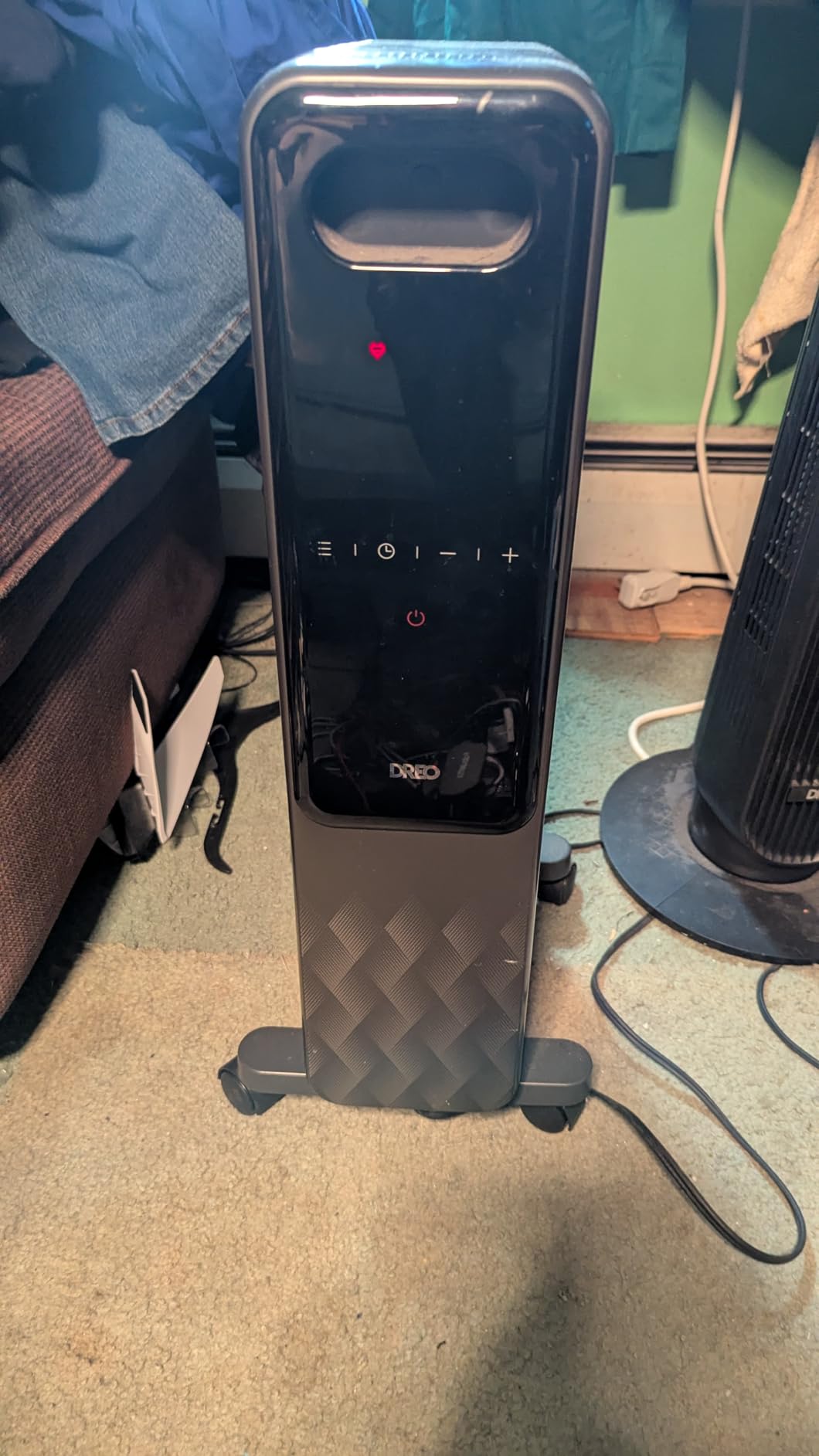
This is the heater we would point someone toward for a genuinely large room. At 250 square feet of claimed coverage and a digital thermostat that holds a set point precisely, it handles spaces that leave the other dial-controlled units visibly straining.
One owner’s 350 square foot basement hobby room went from 58 degrees to a 72 degree set point in roughly an hour. That is faster than most oil-filled radiators of any price, and it is the number that matters when you are choosing between them.
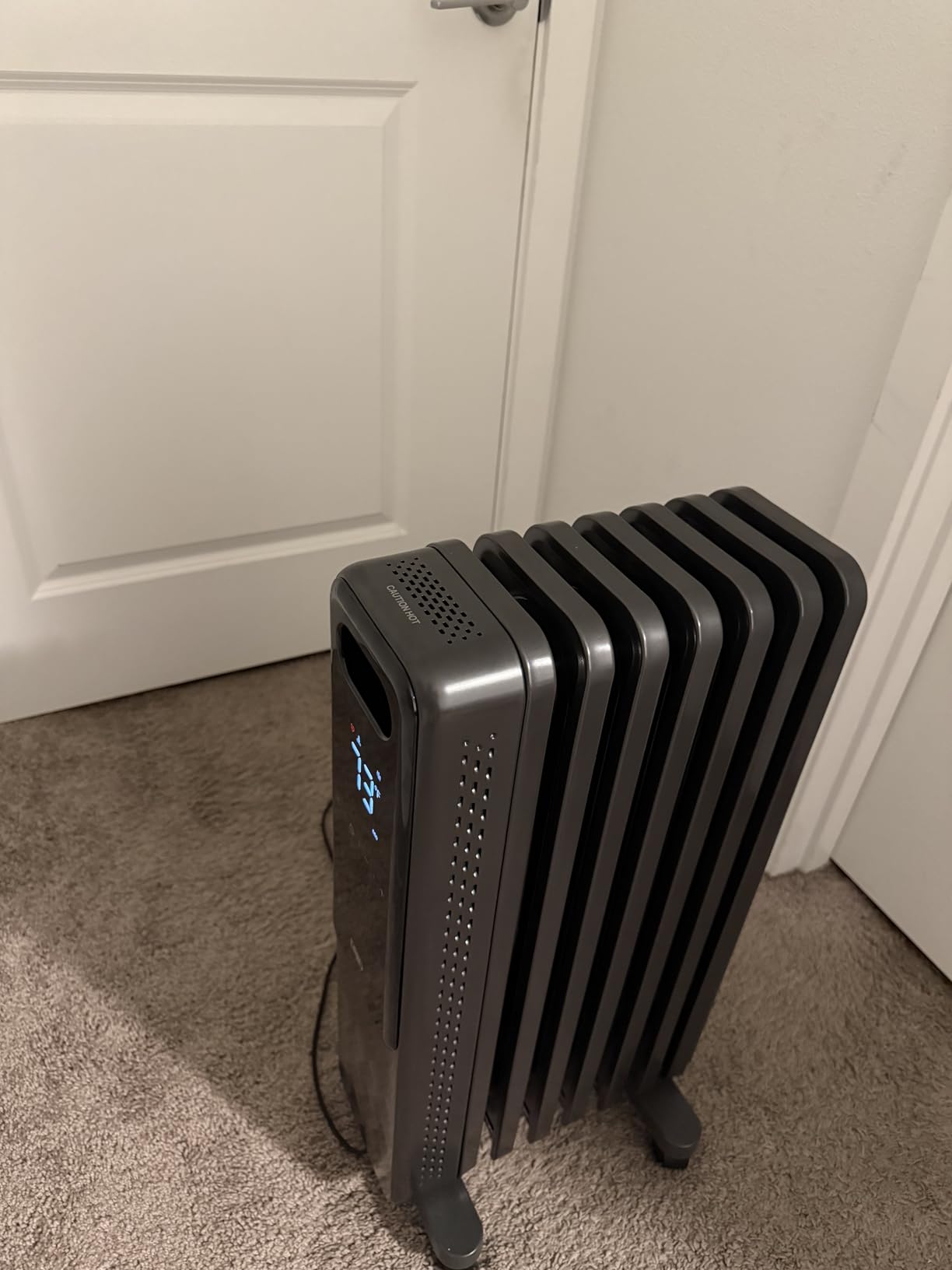
The controls are the other strength. A touchscreen, LED display, included remote and a 24-hour timer with preheat scheduling give you the same feature set as the De’Longhi Dragon at a lower price, with a child lock and a screen-off mode alongside.
Safety coverage is thorough: triple overheat protection, tilt protection, fire-resistant material, a burn-proof plug and an ETL listing. Wheels attach by hand with wing nuts, so there is no assembly step.
Why it covers the most ground
Seven advanced fins spread heat across a wide column, and 360 degree hot air circulation gets that heat off the surface rather than letting it rise straight up. The practical difference is a room that feels evenly warm instead of warm directly in front of the unit.
ECO mode holds a room within about a degree of the set temperature overnight, which is why it works as background heat for a large open space rather than only as a spot heater near a chair.
What the reviews flag
The most-discussed issue is the first 40 minutes of ECO mode running at full power regardless of the thermostat setting. The manufacturer describes this as intentional, to warm the oil quickly, but it is the opposite of what the label suggests in practice.
The LCD emits a faint high-pitched whine unless you turn the display off, which is a real problem in a bedroom. The screen also does not show which power level is active while the thermostat is running, and measured draw came in slightly below the stated 1500W.
6. COSTWAY 22611-CYPE Oil Filled Radiator – Best for Simple Dial Controls
COSTWAY Oil Filled Radiator Heater, 1500W Portable Space Heater with Adjustable Thermostat, 3 Heat Settings, Overheat and Tip-Over Protection, Electric Oil Heater for Indoor Use, Bedroom, Office
1500W
18 pounds
3 modes to 1500W
Sealed oil reservoir
Casters and handle
Pros
- Seven oil-filled thermal slots
- 600W/900W/1500W modes
- No digital menu to learn
- Works with an external timer or smart plug
- Sealed reservoir never needs refilling
- Tip-over and overheat shutoff
Cons
- No remote
- display or built-in timer
- Slow response rather than instant warm air
- Fin surface still runs hot
- Modest review base
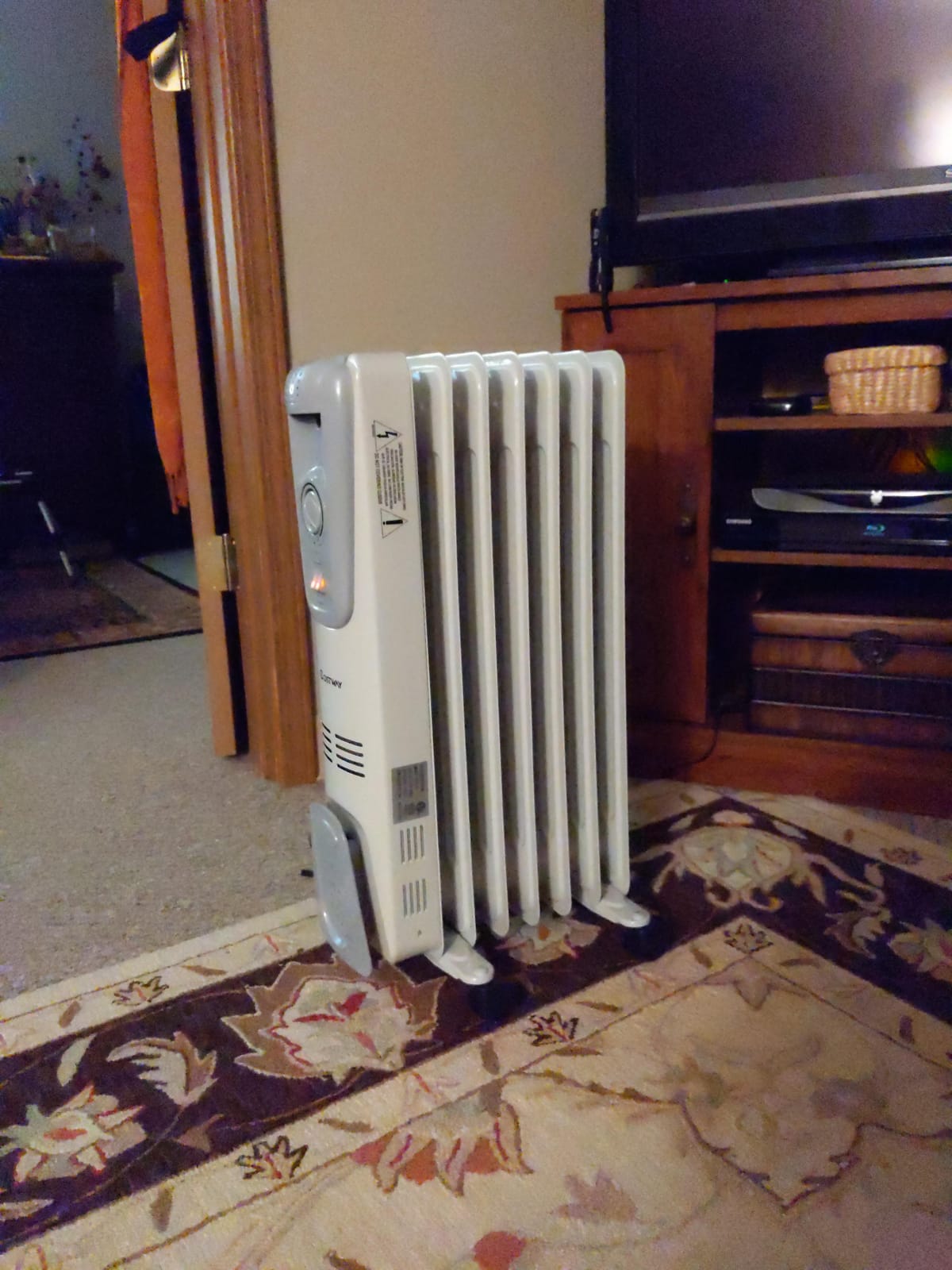
The COSTWAY is a no-frills appliance that does one thing well: steady radiant heat for bedrooms and offices. There is nothing on the control panel to learn, and reviewers generally treat that simplicity as a feature rather than a shortfall.
Mechanical controls have a practical advantage that digital models do not. Because there is no electronics to lose their settings, the unit works directly with an external outlet timer or a smart plug, which is how several owners automate it.
Seven oil-filled thermal slots dissipate heat while keeping the outer surface cooler than a bare fin design would. The reservoir is permanently sealed, so there is no refilling and no leak risk over a decade of use.
Four caster wheels, a front carry handle and a cord wrap make it easy to move between rooms and store in a closet when the season ends.
Why older buyers and beginners like it
Two knobs and a thermostat dial are a short learning curve. Owners of advanced digital radiators frequently complain about tiny timer segments that are unusable at normal viewing distance, and this heater sidesteps the problem entirely by leaving timing to an external device.
For a bedroom or a study where you want background warmth on a predictable schedule, that division of labour works well.
What you give up
There is no remote control, no display and no built-in timer, so any scheduling is external. Radiant heat also takes time to take effect rather than blowing warm air immediately, which is the design working as intended.
Its review base of roughly 1.5k ratings is smaller than the models above it, so long-term durability is less well documented. Owners planning to keep a heater for a decade of winters are usually better served by a longer warranty.
7. Tangkula GT-TK-84001-ES Electric Oil Heater – Best for Silent Bedrooms
TANGKULA Electric Oil Heater, 1500W Oil Filled Radiator Heater w/Tip-over and Overheating Protection, Portable Radiant Heater with Adjustable Thermostat, 3 Heating Modes for Home Office
1500W
20 pounds
215 sq ft coverage
4.2 lbs sealed oil
40-59F thermostat
Pros
- Strong radiant output for the price
- Completely silent with no fan
- Multiple owners report no burnt smell on break-in
- Works with an external smart plug or timer
- Automatic overheat and tip-over shutoff
Cons
- Can take hours to warm a space
- Narrow listed thermostat range of 40-59F
- One reported cracked fin on arrival
- No timer or digital display
The Tangkula carries the highest rating of any model here alongside a much smaller review base, and it earns its place for one specific reason: owners repeatedly report no burnt or chemical smell on break-in. That is a real differentiator, since the manufacturing-residue odor is the reason some people return an otherwise good radiator.
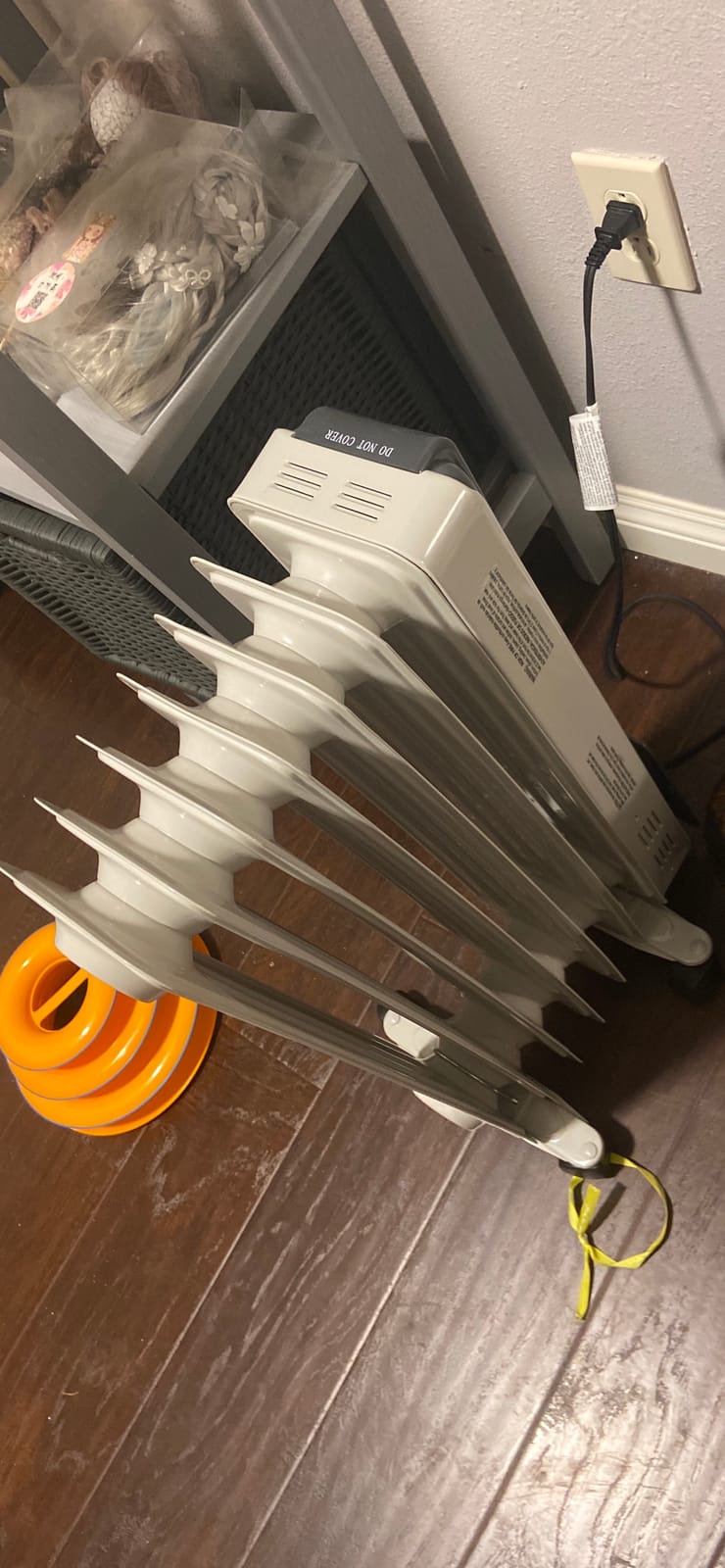
On output, owners describe substantial heat from the unit, enough to warm a large apartment. Seven thermal slots filled with 4.2 pounds of oil give it more thermal mass than lighter budget models.

It is completely silent, which is the whole selling point in a bedroom. There is no fan, no cycling click beyond the occasional expansion tick, and no indicator blinking to wake you up.
Four caster wheels and a removable base with a cord wrap make it portable and easy to store between seasons.
Why it suits a sleeping space
Silent operation plus a sealed oil reservoir plus an absence of off-gassing is exactly the combination parents and light sleepers describe wanting. The radiant heat also does not dry the air the way a ceramic fan heater does, which matters in a winter bedroom.
Coverage is claimed at 215 square feet, comfortably above the entry-level models and enough for a generous bedroom or a small office.
What to know before you buy
Speed is the recurring complaint. Several reviewers note it takes hours to warm a space even on the high setting, so it suits steady background comfort rather than quick recovery when you walk in from the cold.
The listed thermostat range of 40 to 59 degrees is narrow compared with competitors that reach 95, and there is no timer or display. One reviewer received a unit with a cracked fin, which the seller resolved with a credit.
8. Pelonis PSHO06MR6ASB Oil Filled Radiator – Best Stated Coverage Area
PELONIS Oil Filled Radiator Heater for Indoor Use Large Room with Remote, Electric Space Heater with Thermostat, Energy Efficient with ECO Mode, 24H Timer, Quiet, Overheat & Tip-Over Protection, 1500W
1500W
280 sq ft coverage
M-shaped fins
41-95F thermostat
Remote and 24H timer
Pros
- Largest stated coverage in the roundout
- M-shaped fins add 34.6% dissipation area
- Near-zero fanless noise
- Thermostat adjustable in 1 degree steps
- Remote control and 24-hour timer
Cons
- Smallest review base so durability is less proven
- Still slow to warm the room
- Feature-rich design takes more floor space
This is the newest model here and the one with the biggest stated coverage figure. At 280 square feet it claims more than any other 1500W unit in this roundup, and the M-shaped fins are rated to increase heat dissipation area by 34.6 percent over a standard fin.
The control set matches the Dreo closely: three power levels, ECO mode, a 41 to 95 degree thermostat adjustable in single-degree steps, a large LED touchscreen, a remote control and a 24-hour timer.
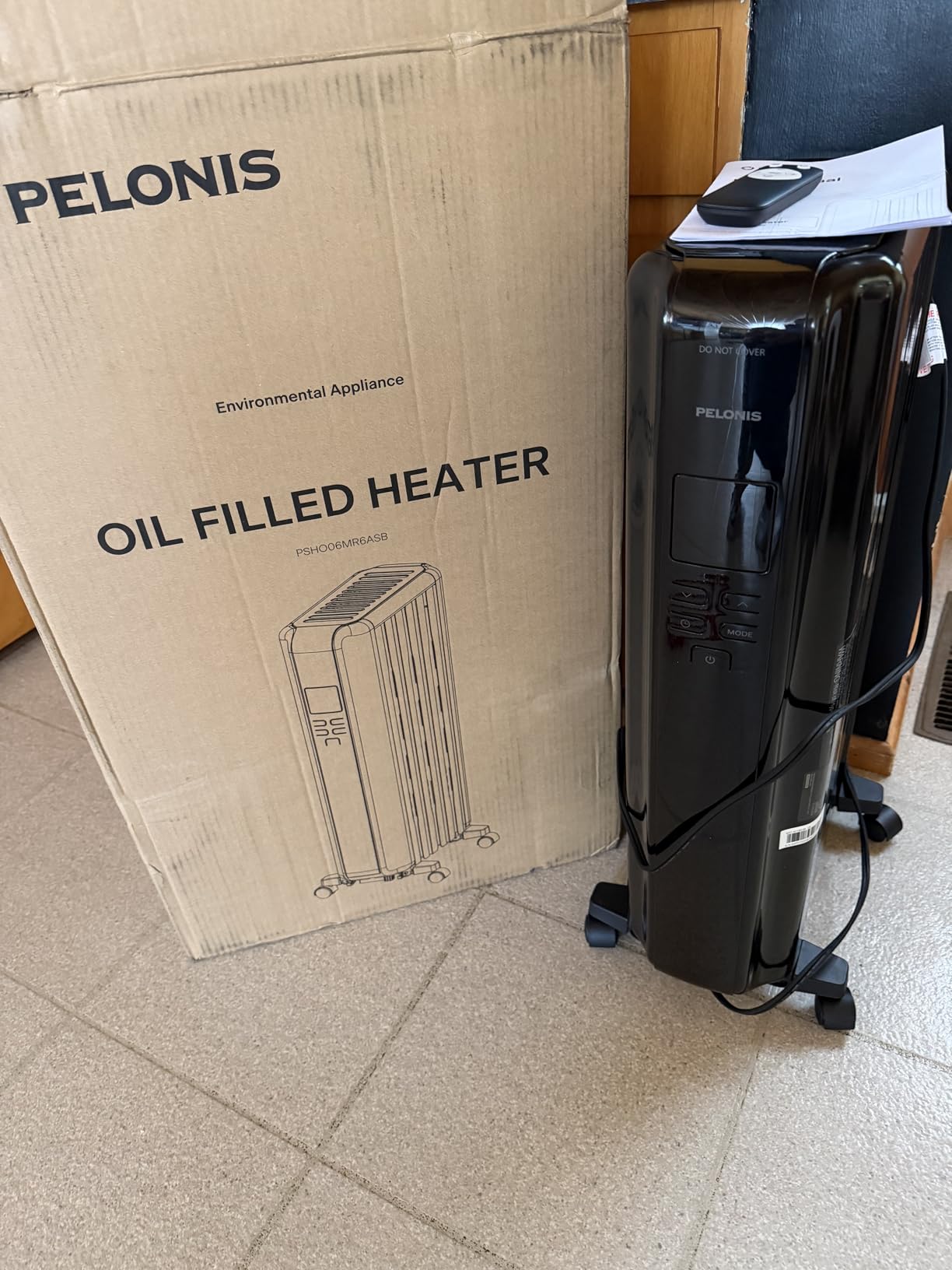
Buyers who want the most room coverage per watt at this price point point to the 280 square foot rating combined with the upgraded fin geometry, and to how quietly it runs in an office or bedroom setting.
Overheat and tip-over protection are both present, and universal freewheels plus handles cover moving it between rooms.
Why the coverage number is useful
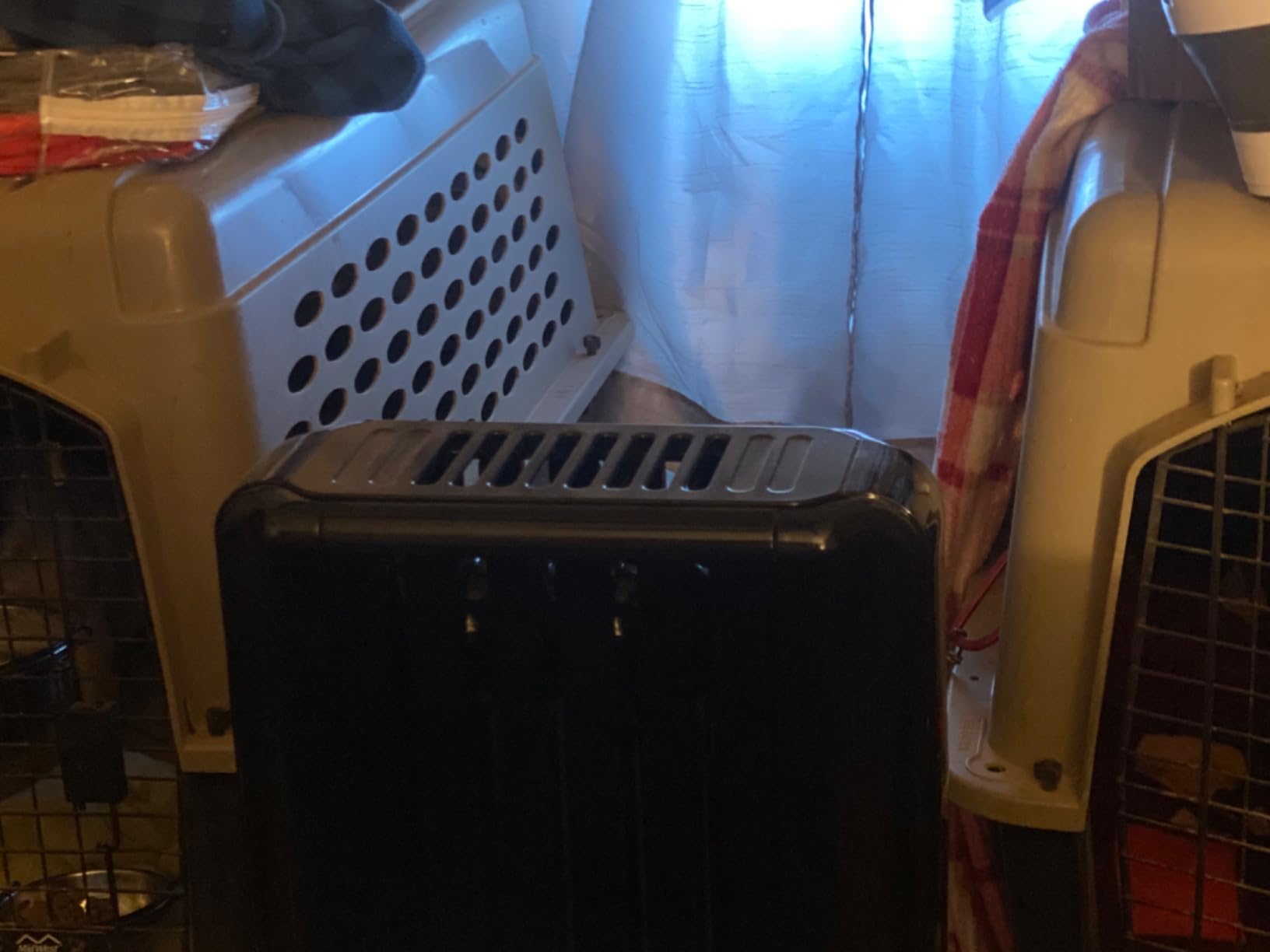
For a 300 to 400 square foot room with normal insulation and moderate drafts, this is the model whose claimed area actually leaves headroom. Every other 1500W unit in this list is sized at or below its target room.
Near-zero noise makes it a reasonable bedroom option despite the larger control panel.
The caveat worth weighing
Its review base is the smallest here at 273 ratings. That is not a quality signal, it is an evidence gap: nobody has yet documented this heater surviving three or four winters, and that is exactly the information you want for an appliance expected to run for a decade.
Radiant heat still takes time before a room feels warm, and the feature-rich body occupies more space than a dial-only model. If you like the Dreo’s controls but want the wider coverage claim, this is the closest match in the roundup.
How to Choose an Oil Filled Radiator for a Big Room
Match the wattage to the room, not to the label
A standard US wall circuit on 120V and 15 amps supports a continuous load of about 1800 watts, and a space heater is treated as continuous. That is why every legitimate 1500W unit plugs into a normal outlet. If you see a 2500W oil-filled radiator marketed for US homes, read the electrical spec closely: models that size are built for 240V circuits in some markets, and buyers discover the mismatch after delivery rather than before.
The practical translation is simple. A 1500W oil-filled radiator is genuinely comfortable in a room up to about 250 square feet with normal insulation. In a drafty 300 to 400 square foot room with high ceilings, it will take the chill off and hold a workable temperature, but it will not pull a freezing space up to 70 degrees on its own. Anyone shopping for heaters that must cover big open volumes should also look at our guide to the best space heaters for large rooms, which compares oil-filled designs against high-wattage ceramic and infrared units.
The circuit limit nobody warns you about
Do not run two 1500W heaters on the same 15-amp circuit. Together they draw more than the circuit is rated for continuously, which trips the breaker and creates a genuine fire risk behind the wall. If you need more heat than one unit delivers, the second heater belongs on a different circuit, and in most homes that means a different wall and sometimes a different breaker.
Extension cords and power strips are the other place people go wrong. A heater draws current for hours at a stretch, and a cord or strip under that load can overheat at a connection point that is hidden behind furniture. Plug the heater directly into a wall outlet, and use a GFCI-protected outlet if the room has any moisture exposure.
Use two units for rooms above 400 square feet
Once you pass roughly 400 square feet, a single sealed-oil column stops being enough no matter how good the controls are. The strategy that works is two separate 1500W radiators, each on its own circuit, positioned at opposite ends of the room.
Placing them apart matters more than choosing between them. Two units on the same wall create one hot spot and leave the far corners cold. Split to opposite ends and let the convection currents meet in the middle, and coverage becomes roughly rectangular instead of radial. Keep in mind that buying two also doubles the electricity draw, so a thermostat-driven ECO mode on each one is worth the money at that point.
Oil-filled, infrared or ceramic
Oil-filled radiators win on silence and heat retention. Infrared panels warm a person almost instantly because they target the body rather than the air, which makes them good for a desk or a sofa but poor at raising the temperature of a whole room. Ceramic fan heaters do the opposite: they move a lot of air quickly and then stop, so they are efficient for ten minutes and wasteful for a whole evening.
For a large room you intend to heat for hours at a time, oil-filled is the right family. If the goal is instant comfort in one spot, look elsewhere in our space heater roundup instead. Keeping the same room in use through a closed-up winter also means thinking about what is in the air, and our picks for the best air purifiers for large rooms cover that side of winter comfort.
Work out the running cost before you commit
Running cost is simple arithmetic. A 1500W heater draws 1.5 kWh per hour. At a residential rate of roughly 15 cents per kWh, that is about 22 cents per hour, or around 5 dollars for a full 24 hours at maximum output.
Real usage is lower because the thermostat cycles the element. Running the low 600W or 700W setting for eight hours a night instead of 1500W for eight hours cuts the daily figure substantially. Over a heating season the difference between full power and low power is often larger than the difference between two heaters of the same wattage.
Homeowners on heating forums consistently ask whether a small portable heater is cheaper than raising central heat for the whole house. The answer depends entirely on how many rooms need warmth: running one 1500W radiator to hold a single bedroom is usually the cheapest option available, while trying to heat an entire home with portable units reverses the arithmetic quickly.
Place it where the convection can work
Radiators need airflow on all sides. Leave several inches of clearance from walls, curtains and furniture, and never push one into a corner where it cannot circulate. A unit stuffed against a sofa works much harder for the same heat output.
Position near an exterior wall or window rather than in the center of the floor. Heat rises, and placing the unit at the coldest point of the room lets the warm air it produces travel through the space rather than straight up to the ceiling. Pairing it with a ceiling fan on reverse spreads the heat across a wide area faster than the radiator alone.
The safety features that are not optional
Tip-over protection and overheat protection are the two cutoffs you should not compromise on. Both stop the element in exactly the failure situations that matter: a heater knocked over by a pet or a child, and one left running in an enclosed space with the thermostat failed.
A child lock matters more in a room where small children will touch the fins. A cool-touch exterior matters more in a nursery. Certification labeling, whether ETL or UL, is a quick visual check that the unit was independently tested rather than assembled without inspection.
Finally, expect an odor on first use. New oil radiators commonly smell faintly of manufacturing residue or protective coating for the first few hours, and the smell dissipates. Discussion boards report it lasting one to three days in most cases, and it is the reason some people return a perfectly good unit. If you are sensitive to it, the models whose owners most often report no break-in odor are worth considering.
Frequently Asked Questions
What is the best oil heater for a large room?
The De’Longhi EW7707CM is our top pick for large rooms because its 1500W output, three genuinely different power settings and sealed oil reservoir hold steady heat quietly over a wide area. For very large open spaces, the Dreo DR-HSH010 claims 250 sq ft of coverage with a digital thermostat that holds set temperature overnight. Neither heats a freezing drafty room instantly; both are built for hours of background comfort.
Are oil-filled heaters good for large rooms?
Yes, within limits. A 1500W oil-filled radiator works well up to roughly 250 sq ft with normal insulation, and it can hold a workable temperature in a drafty 300 to 400 sq ft room. It will not bring a freezing open-plan space up to 70 degrees on its own. Above 400 sq ft, most owners get better results from two units on separate circuits placed at opposite ends of the room.
How much does it cost to run a 1500 watt oil heater for 24 hours?
A 1500W heater draws 1.5 kWh per hour. At a typical residential rate near 15 cents per kWh, that works out to roughly 22 cents per hour, or about 5 dollars across a full 24 hours at maximum output. Actual cost is lower because the thermostat cycles the element off. Running the low setting instead of high cuts daily usage substantially over a heating season.
Are infrared heaters better than oil-filled heaters?
It depends on what you want. Infrared panels warm a person within seconds because they target the body rather than the air, which makes them useful at a desk or on a sofa. Oil-filled radiators are quieter, do not dry the air, and keep releasing stored heat long after the element switches off, which makes them better for holding a whole large room over several hours.
What are the downsides of using an oil-filled radiator?
The main drawbacks are slow warm-up, typically two to three hours on a cold start, and a short cord that limits placement away from walls and furniture. Fins can run hot enough to touch during operation, which matters in a child’s room. Most units also lack a built-in timer, so overnight scheduling may need an external plug-in timer or smart plug.
Can I use an oil filled radiator with an extension cord or power strip?
No. A space heater is a continuous high-draw load, and an extension cord or power strip can overheat at a connection point that is often hidden behind furniture. Plug the heater directly into a wall outlet. Also avoid running two 1500W heaters on the same 15-amp circuit; they will exceed the continuous load limit and trip the breaker.
The Best Oil Filled Radiator Heater for Large Rooms
Every model above is a 1500W, 120V unit, and that shared ceiling explains most of what separates them: controls, fin geometry, coverage claims and how well the heat spreads once the oil is warm. For the best all-round choice we keep recommending the De’Longhi EW7707CM, because three real power levels and a sealed reservoir deliver steady, silent heat across a wide area. If your room is at the top of the range, the Dreo DR-HSH010 gives you the largest usable coverage with a digital thermostat, and above 400 square feet the answer is two units on separate circuits rather than one bigger heater.
Whichever you pick, plug it directly into a wall outlet, give it clearance on all sides, and let it run for an hour or two before judging it. These heaters reward patience that ceramic fan heaters never ask for. If you are still weighing options, our picks for the best space heaters for large rooms compare oil-filled designs against the alternatives side by side.